
At least 11 die in storm-hit Gaza from cold and collapsing buildings
cross-posted from: lemmy.ml/post/40295315
By Mera Aladam
12 December 2025 10:20 GMT
Overall, at least 13 buildings - already partly damaged from Israeli bombing - collapsed due to heavy rain and strong winds, according to the Gaza-based Government Media Office. Some people remain trapped under the rubble, with others wounded.Meanwhile, over 27,000 tents of displaced families have been destroyed or swept away by floods and strong winds. More than 250,000 displaced people have been affected by rain, floods, and collapsing shelters.
Over 4,300 distress calls have been made across the Gaza Strip since the storm began earlier this week, the Ministry of Interior and National Security said.
Despite limited resources, the ministry said search-and-rescue civil defence teams, along with police, are doing their best to help people.

At least 11 die in storm-hit Gaza from cold and collapsing buildings
By Mera Aladam
12 December 2025 10:20 GMTOverall, at least 13 buildings - already partly damaged from Israeli bombing - collapsed due to heavy rain and strong winds, according to the Gaza-based Government Media Office. Some people remain trapped under the rubble, with others wounded.Meanwhile, over 27,000 tents of displaced families have been destroyed or swept away by floods and strong winds. More than 250,000 displaced people have been affected by rain, floods, and collapsing shelters.
Over 4,300 distress calls have been made across the Gaza Strip since the storm began earlier this week, the Ministry of Interior and National Security said.
Despite limited resources, the ministry said search-and-rescue civil defence teams, along with police, are doing their best to help people.
At least 11 die in storm-hit Gaza from cold and collapsing buildings
At least 11 Palestinians have died in storm-hit Gaza from cold and collapsing buildings within the last 24 hours.Mera Aladam (Middle East Eye)

like this
[Patch Notes] 0.4.0 Hotfix 8
0.4.0 Hotfix 8
- Fixed the Stash always opening to a tab with Abyss Affinity set.
- Fixed 3 instance crashes.

Early Access Patch Notes - 0.4.0 Hotfix 8 - Forum - Path of Exile
Path of Exile is a free online-only action RPG under development by Grinding Gear Games in New Zealand.Path of Exile
[Patch Notes] 0.4.0 Hotfix 7
0.4.0 Hotfix 7
- Lowered the ignite buildup and damage of the burning ground created from the map mod "Flaming"

Early Access Patch Notes - 0.4.0 Hotfix 7 - Forum - Path of Exile
Path of Exile is a free online-only action RPG under development by Grinding Gear Games in New Zealand.Path of Exile
[Patch Notes] 0.4.0 Hotfix 6
0.4.0 Hotfix 6
- Boss Damage Reduction will now fall off faster

Early Access Patch Notes - 0.4.0 Hotfix 6 - Forum - Path of Exile
Path of Exile is a free online-only action RPG under development by Grinding Gear Games in New Zealand.Path of Exile
[Patch Notes] 0.4.0 Hotfix 5
0.4.0 Hotfix 5
- Reduced the damage of certain Monster burning ground skills as they were dealing incorrect damage, for example the burning ground from Uxmal, the Beast Lord

Early Access Patch Notes - 0.4.0 Hotfix 5 - Forum - Path of Exile
Path of Exile is a free online-only action RPG under development by Grinding Gear Games in New Zealand.Path of Exile
Israel’s expanding ‘Yellow Line’ swallows Gaza districts and uproots families
By Maha Hussaini in Gaza City, occupied Palestine
13 December 2025 09:44 GMT
“From the first day we came back, we heard bombardment, demolitions and gunfire,” Hamed said.“It would start at sunset and continue until dawn.”
At first, they assumed the explosions were far away, believing the Yellow Line was still distant.
But now, Hamed can see the yellow concrete blocks placed by Israeli forces from his window – a sight that wasn’t there just weeks ago.
Across Gaza, the temporary demarcation line has been shifting, creeping ever closer to densely populated areas and fuelling fears of renewed displacement and violence by Israel.

Israel’s expanding ‘Yellow Line’ swallows Gaza districts and uproots families
When Ahmed Hamed returned to his home in Gaza City after the ceasefire, it stood about 1.5km west of the so-called “Yellow Line” enforced by Israel. Two months on, that distance has shrunk to roughly 200 metres.Maha Hussaini (Middle East Eye)
Israel’s expanding ‘Yellow Line’ swallows Gaza districts and uproots families
cross-posted from: lemmy.ml/post/40294347
By Maha Hussaini in Gaza City, occupied Palestine
13 December 2025 09:44 GMT
“From the first day we came back, we heard bombardment, demolitions and gunfire,” Hamed said.“It would start at sunset and continue until dawn.”
At first, they assumed the explosions were far away, believing the Yellow Line was still distant.
But now, Hamed can see the yellow concrete blocks placed by Israeli forces from his window – a sight that wasn’t there just weeks ago.
Across Gaza, the temporary demarcation line has been shifting, creeping ever closer to densely populated areas and fuelling fears of renewed displacement and violence by Israel.
Israel’s expanding ‘Yellow Line’ swallows Gaza districts and uproots families
By Maha Hussaini in Gaza City, occupied Palestine
13 December 2025 09:44 GMT“From the first day we came back, we heard bombardment, demolitions and gunfire,” Hamed said.“It would start at sunset and continue until dawn.”
At first, they assumed the explosions were far away, believing the Yellow Line was still distant.
But now, Hamed can see the yellow concrete blocks placed by Israeli forces from his window – a sight that wasn’t there just weeks ago.
Across Gaza, the temporary demarcation line has been shifting, creeping ever closer to densely populated areas and fuelling fears of renewed displacement and violence by Israel.
Israel’s expanding ‘Yellow Line’ swallows Gaza districts and uproots families
When Ahmed Hamed returned to his home in Gaza City after the ceasefire, it stood about 1.5km west of the so-called “Yellow Line” enforced by Israel. Two months on, that distance has shrunk to roughly 200 metres.Maha Hussaini (Middle East Eye)
like this
American Socialists Aren’t Tired of Winning

American Socialists Aren’t Tired of Winning
More than 100 democratic socialist elected officials, staffers, and organizers from across the US met in New Orleans for the third How We Win conference last weekend. The gathering demonstrated American socialists’ growing influence and confidence.jacobin.com
copymyjalopy likes this.

Drone strike in southern Sudan kills 6 UN peacekeepers
Port Sudan (Sudan) (AFP) – Six United Nations peacekeepers from Bangladesh were killed on Saturday in a drone strike on Sudan's southern Kordofan region, the UN mission said, with Dhaka sharply condemning the attack.The United Nations Interim Security Force for Abyei (UNISFA) said "six troops were killed and six injured", including four seriously, when a drone hit their camp in Kadugli, the capital of South Kordofan state.
All of the victims are from Bangladesh, it said.
UN chief Antonio Guterres condemned the "horrific" attack, saying it "may constitute war crimes under international law".
"Attacks as the one today in South Kordofan against peacekeepers are unjustifiable. There will need to be accountability," he said in a statement.
Bangladesh's interim leader Muhammad Yunus in a statement said he was "deeply saddened" by the attack, and put the toll at six dead and eight wounded.
He asked the UN to ensure that his country's personnel were offered "any necessary emergency support".
"The government of Bangladesh will stand by the families in this difficult moment," Yunus added.
Dhaka's foreign ministry said it "strongly condemned" the attack.
>UN peacekeepers are deployed to Abyei, a disputed region between Sudan and South Sudan.
A medical source had earlier told AFP that the strike on a United Nations facility in Kadugli killed at least six people, with witnesses saying they were UN employees."Six people were killed in a bombing of the UN headquarters while they were inside the building," the medical source at the city's hospital said.
Eyewitnesses said a drone had hit the UN facility.
The Sudanese army published a video on its Facebook page showing fires blazing and two columns of smoke rising from the UNISFA base.
The army-aligned government based in Port Sudan issued a statement condemning the attack and accusing the paramilitary Rapid Support Forces (RSF) of being behind it.
In a statement, the Sovereignty Council headed by army chief General Abdel Fattah al-Burhan called the attack a "dangerous escalation".
The RSF in a statement on Telegram said it rejected "the claims and allegations... regarding an air attack that targeted the United Nations headquarters in Kadugli, and the accompanying false accusations against our forces of being behind it through the use of a drone".
Meanwhile, Sudanese Prime Minister Kamil Idris said that "the terrorist rebel militia has met all the conditions to be classified as a terrorist group", and urged the UN to "bring the perpetrators to justice".
Kadugli, where famine was declared in early November, has been besieged for a year and a half by the RSF.
...

Back to Bipolarity: How China's Rise Transformed the Balance of Power Free || Jennifer Lind
Conclusion:
“Let me tell you something,” President Barack Obama told Congress during his 2016 State of the Union address, “the United States of America is the most powerful nation on Earth,” he said. “Period. Period. It's not even close.” In case anyone did not get the message, Obama repeated “it's not even close” two more times, while the audience applauded.155 But was it close? And how close must a country get to the United States to challenge it in a great power competition? This article contributes to such debates by creating an inductive method for comparing national power, both to validate common metrics and to establish thresholds for great power capabilities.
This method has shown, first, that thresholds for great power are far lower than many scholars assume. The balance of power is often highly uneven among great powers—even between superpowers. Countries that engaged other great powers in dangerous security competitions often had far inferior material capabilities.
Second, China is either within or well past what constitutes the historical normal range for great powers. In fact, in contrast to the argument that the United States enjoys a substantial lead, I find that China today is a superpower whose capabilities on most dimensions exceed those of the Soviet Union at its Cold War peak. Third, contrary to assertions that the world remains unipolar or has shifted into multipolarity, this article has shown that the world is bipolar. India and Russia are indeed influential regional powers, and India's continued rise may, in the medium term, shift the system into multipolarity. As of 2024, though, the system is bipolar.
The shift from a unipolar, U.S.-dominated system to a bipolar system has important implications for international politics. Engaged in a security competition with a superpower rival, China has both the motivation and the resources to shape international politics in ways that protect its interests. Indeed, Beijing already supports authoritarian leaders in a variety of ways, contributing to a global trend of democratic decline.156 China's contestation of human rights and other norms is transforming multilateral institutions’ activities and agendas.157 China's political and economic support has already affected the balance of power in the Russo-Ukrainian War and strengthens Iran vis-à-vis the United States and Europe.158 Furthermore, China has transformed the balance of power in East Asia, which elevates the risk of war over Taiwan and creates the risk of war and nuclear escalation between China and the United States.159 By threatening U.S. regional power projection, China's great power rise calls into question the credibility of U.S. security guarantees of its regional allies and threatens the alliance system at the core of current U.S. grand strategy. After 1990, the shift from bipolarity to unipolarity transformed U.S. foreign policy and international politics. Today, the shift from unipolarity to bipolarity makes another transformation likely.
https://direct.mit.edu/isec/article/49/2/7/125214/Back-to-Bipolarity-How-China-s-Rise-Transformed
Back to Bipolarity: How China's Rise Transformed the Balance of Power Free || Jennifer Lind
Conclusion:
“Let me tell you something,” President Barack Obama told Congress during his 2016 State of the Union address, “the United States of America is the most powerful nation on Earth,” he said. “Period. Period. It's not even close.” In case anyone did not get the message, Obama repeated “it's not even close” two more times, while the audience applauded.155 But was it close? And how close must a country get to the United States to challenge it in a great power competition? This article contributes to such debates by creating an inductive method for comparing national power, both to validate common metrics and to establish thresholds for great power capabilities.
This method has shown, first, that thresholds for great power are far lower than many scholars assume. The balance of power is often highly uneven among great powers—even between superpowers. Countries that engaged other great powers in dangerous security competitions often had far inferior material capabilities.
Second, China is either within or well past what constitutes the historical normal range for great powers. In fact, in contrast to the argument that the United States enjoys a substantial lead, I find that China today is a superpower whose capabilities on most dimensions exceed those of the Soviet Union at its Cold War peak. Third, contrary to assertions that the world remains unipolar or has shifted into multipolarity, this article has shown that the world is bipolar. India and Russia are indeed influential regional powers, and India's continued rise may, in the medium term, shift the system into multipolarity. As of 2024, though, the system is bipolar.
The shift from a unipolar, U.S.-dominated system to a bipolar system has important implications for international politics. Engaged in a security competition with a superpower rival, China has both the motivation and the resources to shape international politics in ways that protect its interests. Indeed, Beijing already supports authoritarian leaders in a variety of ways, contributing to a global trend of democratic decline.156 China's contestation of human rights and other norms is transforming multilateral institutions’ activities and agendas.157 China's political and economic support has already affected the balance of power in the Russo-Ukrainian War and strengthens Iran vis-à-vis the United States and Europe.158 Furthermore, China has transformed the balance of power in East Asia, which elevates the risk of war over Taiwan and creates the risk of war and nuclear escalation between China and the United States.159 By threatening U.S. regional power projection, China's great power rise calls into question the credibility of U.S. security guarantees of its regional allies and threatens the alliance system at the core of current U.S. grand strategy. After 1990, the shift from bipolarity to unipolarity transformed U.S. foreign policy and international politics. Today, the shift from unipolarity to bipolarity makes another transformation likely.
https://direct.mit.edu/isec/article/49/2/7/125214/Back-to-Bipolarity-How-China-s-Rise-Transformed
The Multipolar Mirage || Why America and China Are the World’s Only Great Powers
Archive: archive.ph/iAXca
Highlight: "In East Asia, China will likely move to enforce its own version of the Monroe Doctrine. Beijing will continue to use incremental tactics and economic coercion against neighbors to pressure them to decouple or distance themselves from Washington. In coming years, the extent to which Beijing attempts to eject the United States from its region politically and militarily will likely define the principal arena of U.S.-Chinese strategic rivalry. “Don’t make us choose” has been the mantra of many East Asian countries, including some U.S. treaty allies. But under bipolarity, the luxury of choice is not one afforded to small countries in a superpower’s backyard. Countries will be forced to choose, and choose correctly according to their neighbor, or risk the consequences. The return of bipolarity means it’s time to remember—with regret and trepidation—the nature, intensity, and global reach of superpower competition."

The Multipolar Mirage: Why America and China Are the World’s Only Great Powers
Why America and China are the world's only great powers.Jennifer Lind (Foreign Affairs Magazine)
MAHA Moms Are Angry at the E.P.A. Lee Zeldin Is Trying to Win Them Back.
A split is emerging within Trump’s base as health activists accuse Mr. Zeldin of leading the agency to prioritize chemical industry interests over public health.


Schedule for Social Web Developer Room at FOSDEM 2026

reshared this
Pull-Effekt: Sachsen bietet Exklusivausbildung für faschistische Jurist*innen
Wer gegen die allgemeinen Menschenrechte ankämpft, sollte im Gerichtssaal nur auf der Anklagebank etwas zu sagen haben – so zumindest die Theorie in Deutschland seit den Nürnberger Prozessen. Anders sieht man das in Sachsen. Hier werden Faschist*innen auch nach höchstrichterlichen Urteilen noch Rosen auf den Weg gestreut.
Doch der Reihe nach: Im Oktober 2022 entschied der Sächsische Verfassungsgerichtshof (SächsVerfGH) in einem umstrittenen Urteil, dass Sachsen dem Dritten Weg-Kader Matthias Bauerfeind, sein Rechtsreferendariat ermöglichen müsse. In Bayern und Thüringen war der langjährige Neonazi mit seinen Klagen – wie in vergleichbaren Fällen aller Bundesländer seit einem Leiturteil von 1975 üblich – gescheitert. Bauerfeind zog im bayerischen Fall sogar vor das zuständige Bundesgericht und verlor – allerdings zu spät, denn da war der Neonazi, dank der eigensinnigen Auslegung des höchsten sächsischen Gerichts, bereits fertig ausgebildeter Volljurist. Tür und Tor stehen neonazistischen Jurist*innen seitdem in Sachsen offen.
Matthias Bauerfeind
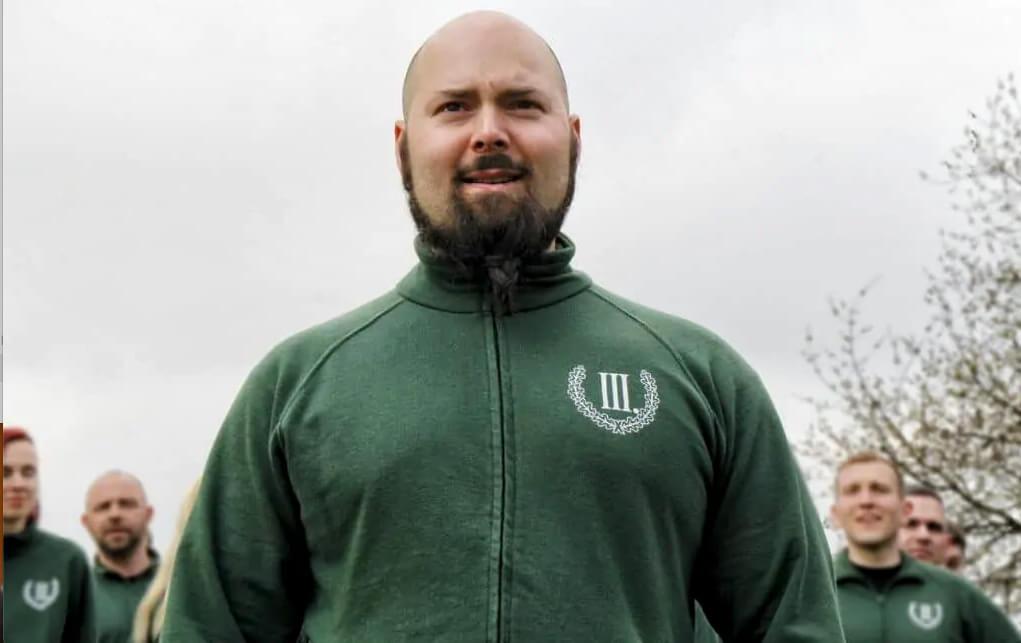
Der 1984 geborene Matthias Bauerfeind war von 2005 bis 2012 Funktionär der NPD und ab 2009 Kern einer Kameradschaft im „Freies Netz Süd“. Von 2005 bis 2013 wurde er fünf Mal verurteilt, u.a. wegen Widerstands gegen Vollstreckungsbeamte und Verwendens von Kennzeichen verfassungswidriger Organisationen. Nach dem Verbot des „Freien Netz“ im Jahr 2014, baute er als „stellvertretender Gebietsleiter Süd“ den Dritten Weg in Bayern mit auf. Dokumentiert sind beispielsweise seine Auftritte 2016 in Nürnberg, 2017 in Fulda und 2019 in Kempten. Bemerkenswert, aber wenig überraschend: Zuletzt fiel der auf Strafrecht spezialisierte Bauerfeind damit auf, dass er von mehreren baden-württembergischen AfD-Kreistagsfraktionen das anwaltliche Mandat in Verwaltungssachen erhielt.
Wir wollen euch hier den jüngsten Fall des sächsischen Sonderwegs vorstellen:
Im Mai 2025 wurde der Faschist John Hoewer aufgrund seiner Tätigkeit und Publikationen bei der Jungen Alternativen, dem extrem rechten Verein Ein Prozent, und dem offen faschistischen Jungeuropa Verlag als Rechtsreferendar in Rheinland-Pfalz abgelehnt. In seiner Begründung schrieb das Gericht in Koblenz, dass es in einer „wehrhaften“ Demokratie „(…) dem Staat [nicht] zuzumuten [sei], verfassungsuntreue Bewerber in den Vorbereitungsdienst aufnehmen zu müssen.“
Doch dann bewarb sich Hoewer in Sachsen.
Nachdem das Oberlandesgericht (OLG) Hoewer zwei mal aus Zweifel an seiner Verfassungstreue ablehnte, entschied das Oberverwaltungsgericht (OVG) Bautzen im November 2025, dass Hoewer unverzüglich seine juristische Ausbildung beim Oberlandesgericht (OLG) Dresden aufnehmen dürfe. Das OVG Bautzen sah sich dabei an das kritisierte Sonderurteil des SächsVerfGH gebunden. Es bekräftigte seine Zweifel an der Richtigkeit dieses Urteils sogar nachdrücklich. Trotzdem verzichtete es auf eine Weiterleitung des Falls an das zuständige Bundesgericht (BVerfG), welches 2024 im Fall Bauerfeind doch eindeutig im Widerspruch zum SächsVerfGH entschieden hatte. Eine verpasste Gelegenheit. Und so bleibt das Motto der sächsischen Rechtspraxis vorerst: Nur weil man Faschisten ablehnen kann, heißt das noch lange nicht, dass man sie auch ablehnen muss. Denn in Sachsen reicht es seit 2022 nicht aus, nachweislich einer menschenverachtenden Ideologie anzuhängen. Man muss sich schon strafbar machen im Kampf gegen die freiheitlich demokratische Grundordnung.
John Hoewer

Der neu-rechte Kader John Hoewer, Jahrgang 1987, ist im April 2025 von seinem stellvertretenden Vorstandsposten bei Ein Prozent zurückgetreten. Zwei Monate nachdem er sich erstmals in Sachsen beworben hatte. Dabei ist ihm ein aktives Eintreten gegen die „freiheitliche demokratische Grundordnung“, welches dem Bundesverfassungsgericht 2024 als Ablehnungsgrund für ein Rechtsreferendariat genügte, wahrlich nicht schwer nachzuweisen:
Schon im Januar 2017 soll Hoewer in handgreiflichen Auseinandersetzungen mit linken Demonstranten in einem Hörsaal der Universität Magdeburg verwickelt gewesen sein. Im April 2017 dann begleitete er den laut eigener Aussage den „Rechtsradikalen“ Philip Stein zu einer Veranstaltung der italienischen Faschisten von Casa Pound in Rom. Ebenfalls 2017, im Juli, besuchte John Hoewer gemeinsam mit weiteren AfDlern, JNlern und anderen Neonazis das „Deutschland-Seminar“ der extrem rechten Braunschweiger Burschenschaft Thuringia. Im Jahr 2021 nahm John Hoewer nachweislich an Kampfsportrainings mit anderen Neonazis der Jungen Alternative, der AfD und der NPD (heute Die Heimat) in Berlin Weißensee teil. Im Jahr 2022 war Hoewer dann Beisitzer im Verbandsrat der extrem rechten Deutschen Burschenschaft (DB). Ja, Hoewer ist Burschenschaftler, und zwar bei Germania Köln, Raczeks Breslau zu Bonn, und dort fechtet er vor NS-“Kunst“ mit Hakenkreuz. Die Burschenschaft ist übrigens die, die 2011 einen Antrag bei der DB einbrachten, der als „Ariernachweis“ bekannt wurde. Geschenkt, dass Hoewer auch jahrelang zum Jungen Alternative Landesvorstand in Sachsen-Anhalt gehörte und mindestens von Januar 2018 bis März 2025 für den AfD-Fraktionsvize im Bundestag, Sebastian Münzenmaier (Mainzer Burschenschaft Germania Halle), als Mitarbeiter angestellt war.
Diese Gesetzeslage und Rechtssprechung, der sächsische Sonderweg, ist in Deutschland einmalig. Im Raum steht der Verdacht, dass die Entscheidung des Sächsischen Verfassungsgerichtshofes von 2022 dem geltenden Bundesrecht widerspricht. Dass es auch anders geht, zeigt das Nachbarland Thüringen. So wies das Thüringer Verfassungsgericht im November 2025 eine AfD-Klage ab und entschied, dass Personen nicht zum juristischen Vorbereitungsdienst zugelassen werden sollen, wenn sie gegen die freiheitlich-demokratische Grundordnung verstoßen.
Doch Bauerfeind und Hoewer sind nicht die einzigen, denen der sächsische Sonderweg zugutekam. Der Neonazi Brian Engelmann durfte bereits im November 2018 sein Rechtsreferendariat in Chemnitz antreten, obwohl man um sein Weltbild wusste – im selben Monat stand er für seine Beteiligung am Überfall auf den alternativen Leipziger Stadtteil Connewitz mit anderen Neonazis vor Gericht. Und selbst nachdem sein Urteil von einem Jahr und vier Monaten auf Bewährung im Jahr 2020 für rechtskräftig erklärt wurde, entschied das Oberlandesgericht Dresden (OLG), dass Engelmann seine juristische Ausbildung abschließen dürfe. Jetzt ist der Mann mit den Hakenkreuzen auf der rechten Schulter Volljurist und in der Rechtsanwaltskanzlei des Leipziger Szene-Anwalts Arndt Hohnstädter angestellt.
Brian Engelmann
Der 1992 in Freital geborene Brian Engelmann ist mehrfach vorbestrafter Gewalttäter und Kampfsportler. Schon 2012 griff Engelmann in eine Auseinandersetzung in einer Dresdner Diskothek ein. Dabei brach er dem Angreifer mehrere Gesichtsknochen und zerstörte ihm diverse Zähne, als er ihm gegen den Kopf trat. Im selben Jahr zog Engelmann für sein Jura-Studium nach Leipzig und fiel dort bald als Teil des “Bushido Sportcenter Leipzig” (ehemals “Bushido Free Fight Team”) von Marko Zschörner auf. In den folgenden Jahren trat Engelmann immer wieder als MMA-Kämpfer bei einschlägigen Veranstaltungen in Erscheinung. So gab es z.B. 2013 einen Kampf in Köthen gegen Kevin Kraft – ein weiterer Neonazi, dem zusammen er schließlich am 11.01.2016, im Nachgang des Angriffs auf Leipzig-Connewitz, von der Polizei festgesetzt wurde. Gemeinsam mit Mitgliedern der Neonazi-Struktur „HooNaRa“ („Hooligans, Nazis, Rassisten“), wie beispielsweise Martin Krause, arbeitete Engelmann jahrelang beim Leipziger Sicherheitsunternehmen “Black Rainbow Security”. Auch nach Abschluss seines zweiten Staatsexamens trat Engelmann weiterhin bei Neonazi-Milieu-Veranstaltungen, wie 2023 bei „Ostdeutschland kämpft“, auf.
Eine Gesetzesänderung, wie aktuell gefordert, oder eine juristische Entscheidung auf höchster Ebene lassen zwei Jahre nach dem SächsVerfGH-Urteil immer noch auf sich warten. Immerhin scheint nun endlich auch die Sächsische Landesregierung, in Person der Justizministerin Constanze Geiert (CDU), gemerkt zu haben, dass etwas faul ist im Freistaat Sachsen. So will man am Bundesverfassungsgericht mit einer abstrakten Normenkontrolle gegen die diesbezügliche Rechtsauslegung des eigenen, Sächsischen Verfassungsgerichts vorgehen. Bis dahin bleibt genau zu beobachten, wie sich der „Pull-Effekt“ auf faschistische Jurist*innen nach Sachsen weiterentwickelt.
#AfD #BrianEngelmann #EinProzent #JN #JohnHoewer #MatthiasBauerfeind #NPD


Rechte Referendare in Sachsen: Landesregierung zieht gegen Landesrichter vor Gericht
Eine eigenwillige Gesetzesauslegung lockt rechte Referendare nach Sachsen. Das Justizministerium will jetzt gegensteuern und hofft auf das Bundesverfassungsgericht.Steffen Winter (DER SPIEGEL)
reshared this
Expert says Dems have "once-in-a-generation" chance to flip hundreds of seats across the nation - LGBTQ Nation
Sweeping Democratic victories in off-year elections seem to be foreshadowing a very good midterms for the party, and one expert believes it’s even bigger than that.“This is a once-in-a-generation opportunity to fundamentally transform legislative power,” Heather Williams, president of the Democratic Legislative Campaign Committee (DLCC), which focuses on electing Democrats to statehouses, told Mother Jones.

Expert says Dems have "once-in-a-generation" chance to flip hundreds of seats across the nation - LGBTQ Nation
The Democratic Legislative Campaign Committee believes Dems can "fundamentally transform legislative power" if they do 2026 right.Molly Sprayregen (LGBTQ Nation)
copymyjalopy likes this.
Kilgore Trout doesn't like this.
How feasible would it be to host Mastodon, Pixelfed, Lemmy, Friendica, or Matrix over Tor/I2P?

San Silvestro 2025
✨ Cari amici, siete pronti a salutare l'anno vecchio a ritmo di funky jazz? Dopo le magiche serate estive, torniamo da Antonio per una notte di San Silvestro indimenticabile: mentre gusterete un esclusivo Menù di Pesce, saremo noi ad accompagnare la vostra cena e il brindisi di mezzanotte con la nostra musica dal vivo.
🎺🎤 🎸 🎹 🥁
Non mancate, trasformiamo insieme la pizzeria in un club esclusivo per una sera – prenotate subito il vostro tavolo! 🥂🎶
A New Report Reveals the Real Reason Democrats Lost in 2024
"It wasn’t because Biden voters shifted to Trump—but because so many of them stayed home."
We must not repeat this same mistake again. Remember to always vote in every election and consider volunteering to knock on doors. It can make a difference. There are elections that are decided with just a small number of votes.

A New Report Reveals the Real Reason Democrats Lost in 2024
It wasn’t because Biden voters shifted to Trump—but because so many of them stayed home. Here’s how Democrats can motivate them once more.The New Republic
China’s subsea centre could power 7,000 DeepSeek conversations a second: report

China’s subsea data centre could power 7,000 DeepSeek conversations a second: report
Computing power in underwater computing cluster off Hainan will be used in AI training, game production and marine research: state media.Holly Chik (South China Morning Post)
reshared this
You’ll have to watch carefully the number to look at is total energy consumption.
Feel free to explain why people’s energy bills and my energy demand from data centers slated grow exponentially
Un semplice analizzatore di chat whatsapp
Per quelli che non vogliono impazzire a leggere chat di gruppo infinte.
Andrebbe un po' affinata, se possibile senza arrivare a usare l'AI per leggerezza.
AAA cercasi affilatori di spade

GitHub - suoko/WhatsAppChatSummarizer
Contribute to suoko/WhatsAppChatSummarizer development by creating an account on GitHub.GitHub
like this
reshared this
un sistema per creare un sommario delle chat con millemila messaggi non letti.
Non so se genera anch un albero stimato delle conversazioni, per rimediare alla coglionagine di quelli che non menzionano mai il messaggio cui rispondono
Informatica (Italy e non Italy 😁) reshared this.

reshared this
Informatica (Italy e non Italy 😁) reshared this.
ti potrebbero fare santo. Allora dovresti aggiungere:
- calendario dei compleanni, degli scioperi e delle attività extra scolastiche
- rubrica dei contatti, chi è genitore di chi
- quanti soldi devo dare per regali/cassa comune e a chi
Questo almeno fino alla primaria, poi dalle medie non c'è più la chat dei genitori, vero? VERO?
Informatica (Italy e non Italy 😁) reshared this.
Informatica (Italy e non Italy 😁) reshared this.
Ah, ti piacerebbe, ora che arriva la nostra onda ce la infileranno fino all'università 😁
Per le medie mi spiace ma c'è ancora, moooolto più soft ma c'è.
In effetti capire chi è genitore di chi sarebbe fattibile con un "reverse engineering", di solito il genitore parla del proprio figlio (che c'è o non c'è a un evento), esattamente quello che faccio io per ripescare i numeri di telefono.
Andrebbe trovata una micro ai fatta in kotlin da trainare con i fiumi di chat che abbiamo.
E magari integrarlo in fluffy chat.
Volevo quasi sentire lo sviluppatore di raccoon se conviene switchare a kmp subito o vedere di migliorarla prima e poi switchare.
Informatica (Italy e non Italy 😁) reshared this.
Si, questo fa poco, ho provato qualche ai con python ma è veramente un casino capire le chat di gruppo e costruirci dei dati aggregati (esattamente come è difficile per noi umani)
Questo è quel che fa per ora:
Il testo viene suddiviso in righe. Ogni riga che inizia con un pattern riconosciuto come data/ora di WhatsApp (es. 10/12/25, 11:55 - ...) viene trattata come l'inizio di un messaggio. Viene estratta la data e confrontata con un insieme di date relative agli ultimi N giorni (di default, 10). Solo i messaggi appartenenti a queste date target vengono considerati.
Filtro per Parole Chiave: Per ogni messaggio filtrato per data, il testo del messaggio stesso (esclusa la parte del mittente e potenzialmente link/menzioni) viene confrontato con un insieme predefinito di parole chiave (es. "compiti", "riunione", "evento", "compilare", "sondaggio", "importante", "per venerdì", ecc.).
Identificazione Messaggi Significativi: Se una qualsiasi delle parole chiave è presente nel testo del messaggio (in forma minuscola e con corrispondenza parziale), il messaggio viene considerato significativo. Vengono estratti:
    La data del messaggio.
    Il mittente (numero o nome).
    Il testo del messaggio.
    Eventuali riferimenti temporali trovati all'interno del testo (es. "venerdì", "alle 15", "prossima settimana") utilizzando espressioni regolari.
    Una categoria assegnata automaticamente in base a quale insieme specifico di parole chiave (es. " Incontri / Eventi", " Compiti / Verifiche") è stato trovato nel messaggio.
Formattazione del Riassunto: I messaggi identificati come significativi vengono poi raggruppati:
    Prima per data, in ordine cronologico inverso (dal giorno più recente).
    Poi all'interno di ogni data, vengono raggruppati per la categoria assegnata.
    Infine, all'interno di ogni categoria e data, vengono elencati i singoli messaggi, mostrando mittente, testo e eventuali riferimenti temporali trovati.
Output: Il risultato finale è un testo formattato che rappresenta un riassunto contestuale e organizzato dei messaggi significativi trovati negli ultimi N giorni, evidenziando argomenti come appuntamenti, compiti, richieste, eventi, ecc., raggruppati in modo logico per facilitarne la lettura.
In sintesi, non è un vero e proprio "riassunto" AI, ma piuttosto un filtro contestuale basato su parole chiave con una riorganizzazione e formattazione del risultato.
macfranc likes this.
Informatica (Italy e non Italy 😁) reshared this.
I miglioramenti veloci da fare sono:
- tag "evento da confermare"
- creazione evento calendario dove devi solo confermare l'aggiunta dell'evento
Il miglioramento complesso sarebbe di incrementare il dizionario e migliorare il processo di analisi.
AI kids' toys give explicit and dangerous responses in tests

AI kids' toys give explicit and dangerous responses in tests
AI-powered kids' toys like Miko 3 have hit shelves this holiday season, claiming to rely on sophisticated chatbots to animate interactive robots for children.Kevin Collier (NBC News)
Trump Gives Big Tech Friends an Early Christmas Gift With Order Against State AI Regulations
US President Donald Trump on Thursday signed an executive order aimed at preventing state-level regulation of the burgeoning artificial intelligence industry, a gift to tech corporations that bankrolled his inauguration and are currently funding his White House ballroom project.
Trump's order instructs the US Justice Department to establish an AI Litigation Task Force with a single mandate: sue states that enact AI laws that the administration deems "onerous and excessive." The order also threatens to withhold federal funding from states that implement AI regulations.
Public Citizen, a watchdog group that has tracked increasingly aggressive AI influence-peddling in Congress and the administration, said Trump's order "grants his greedy Big Tech buddies’ Christmas wish."
"This reward to Big Tech is a disgraceful invitation to reckless behavior by the world’s largest corporations and a complete override of the federalist principles that Trump and MAGA claim to venerate," said Robert Weissman, Public Citizen's co-president. "Everyone should understand why this is happening: During and since the last election cycle, Big Tech has spent at least $1.1 billion on campaign contributions and lobby expenditures. Big Tech corporations poured money into Trump’s inaugural committee and to pay for his garish White House ballroom. A major Big Tech and AI investor is serving as Trump’s 'AI czar' and driving administration policy."
"While Trump has ensured the federal government is doing almost nothing to address the harms that AI is already causing, states are moving forward with sensible AI regulation," Weissman added. "These include efforts to address political deepfakes, nonconsensual intimate deepfakes, algorithmic pricing manipulation, consumer protection measures, excessive data center electricity and water demand, and much more. Big Tech is whining about these modest measures, but there is zero evidence that these rules are impeding innovation; in fact, they are directing innovation in more positive directions."
Jenna Sherman, a campaign director focused on tech and gender at Ultraviolet Action, said Trump's order "only has one group of winners: his wealthy donors in the tech sector."
"Every other person loses from this wildly unpopular move. And not just in theory, as stripping away state AI regulations puts many—namely, women and children—at risk of real harm," said Sherman. "These harms of AI—which the Trump and the tech sector are clearly happy to ignore—are already here: non-consensual deepfake porn sexualizing women and girls, children being led to suicidal ideation by AI chatbots, and AI-powered scams and crimes targeting older Americans, especially women, to name but a few."
The US Chamber of Commerce and other corporate lobbying organizations representing tech giants such as Microsoft and Google celebrated the order, predictably characterizing it as a win for "small businesses."
The leaders of California and other states that have proposed and finalized AI regulations were defiant in the face of Trump's threats of legal action and funding cuts."
"President Trump and Davis Sacks aren’t making policy—they’re running a con," said California Gov. Gavin Newsom, referring to the scandal-plagued White House AI czar. "Every day, they push the limits to see how far they can take it. California is working on behalf of Americans by building the strongest innovation economy in the nation while implementing commonsense safeguards and leading the way forward."
Trump signed the order after the Republican-controlled Congress repeatedly rejected efforts to tuck a ban on state AI regulations into broader legislation.
"After months of failed lobbying and two defeats in Congress, Big Tech has finally received the return on its ample investment in Donald Trump," Sen. Ed Markey (D-Mass.) said in a statement Thursday. "With this executive order, Trump is delivering exactly what his billionaire benefactors demanded—all at the expense of our kids, our communities, our workers, and our planet."
"A broad, bipartisan coalition in Congress has rejected the AI moratorium again and again," he added, "and I intend to keep that streak going. I will use every tool available to challenge this indefensible and irresponsible power grab. We will defeat it again."

Trump Calls for GOP to Ram Through AI Regulation Ban in Must-Pass Military Spending Bill
"If lawmakers are serious about AI governance, they must create strong, enforceable national protections as a regulatory floor—not wipe out state laws so Big Tech can operate without consequence," said one consumer advocate.julia-conley (Common Dreams)

La leggenda di Tellaro, la città salvata dai pirati grazie ad un polpo gigante, da Storia Che Passione di Nicola Comerci
Il pacifico paesino che conta meno di 600 abitanti, in provincia della Spezia, ha una vicenda molto particolare, dove gli avvenimenti storici si mescolano in maniera molto fantasiosa con elementi leggendari
storiachepassione.it/la-leggen…

La leggenda di Tellaro, la città salvata dai pirati grazie ad un polpo gigante
Tellaro, il comune comune di 600 abitanti salvato da un polpo gigante durante un'invasione dei pirati Saraceni...Nicola Comerci (Storia Che Passione)
Trump Gives Big Tech Friends an Early Christmas Gift With Order Against State AI Regulations
cross-posted from: hexbear.net/post/7023619
cross-posted from: news.abolish.capital/post/1318…
US President Donald Trump on Thursday signed an executive order aimed at preventing state-level regulation of the burgeoning artificial intelligence industry, a gift to tech corporations that bankrolled his inauguration and are currently funding his White House ballroom project.
Trump's order instructs the US Justice Department to establish an AI Litigation Task Force with a single mandate: sue states that enact AI laws that the administration deems "onerous and excessive." The order also threatens to withhold federal funding from states that implement AI regulations.
Public Citizen, a watchdog group that has tracked increasingly aggressive AI influence-peddling in Congress and the administration, said Trump's order "grants his greedy Big Tech buddies’ Christmas wish."
"This reward to Big Tech is a disgraceful invitation to reckless behavior by the world’s largest corporations and a complete override of the federalist principles that Trump and MAGA claim to venerate," said Robert Weissman, Public Citizen's co-president. "Everyone should understand why this is happening: During and since the last election cycle, Big Tech has spent at least $1.1 billion on campaign contributions and lobby expenditures. Big Tech corporations poured money into Trump’s inaugural committee and to pay for his garish White House ballroom. A major Big Tech and AI investor is serving as Trump’s 'AI czar' and driving administration policy."
"While Trump has ensured the federal government is doing almost nothing to address the harms that AI is already causing, states are moving forward with sensible AI regulation," Weissman added. "These include efforts to address political deepfakes, nonconsensual intimate deepfakes, algorithmic pricing manipulation, consumer protection measures, excessive data center electricity and water demand, and much more. Big Tech is whining about these modest measures, but there is zero evidence that these rules are impeding innovation; in fact, they are directing innovation in more positive directions."
Jenna Sherman, a campaign director focused on tech and gender at Ultraviolet Action, said Trump's order "only has one group of winners: his wealthy donors in the tech sector."
"Every other person loses from this wildly unpopular move. And not just in theory, as stripping away state AI regulations puts many—namely, women and children—at risk of real harm," said Sherman. "These harms of AI—which the Trump and the tech sector are clearly happy to ignore—are already here: non-consensual deepfake porn sexualizing women and girls, children being led to suicidal ideation by AI chatbots, and AI-powered scams and crimes targeting older Americans, especially women, to name but a few."
The US Chamber of Commerce and other corporate lobbying organizations representing tech giants such as Microsoft and Google celebrated the order, predictably characterizing it as a win for "small businesses."
The leaders of California and other states that have proposed and finalized AI regulations were defiant in the face of Trump's threats of legal action and funding cuts."
"President Trump and Davis Sacks aren’t making policy—they’re running a con," said California Gov. Gavin Newsom, referring to the scandal-plagued White House AI czar. "Every day, they push the limits to see how far they can take it. California is working on behalf of Americans by building the strongest innovation economy in the nation while implementing commonsense safeguards and leading the way forward."
Trump signed the order after the Republican-controlled Congress repeatedly rejected efforts to tuck a ban on state AI regulations into broader legislation.
"After months of failed lobbying and two defeats in Congress, Big Tech has finally received the return on its ample investment in Donald Trump," Sen. Ed Markey (D-Mass.) said in a statement Thursday. "With this executive order, Trump is delivering exactly what his billionaire benefactors demanded—all at the expense of our kids, our communities, our workers, and our planet."
"A broad, bipartisan coalition in Congress has rejected the AI moratorium again and again," he added, "and I intend to keep that streak going. I will use every tool available to challenge this indefensible and irresponsible power grab. We will defeat it again."
From Common Dreams via This RSS Feed.


Trump Gives Big Tech Friends an Early Christmas Gift With Order Against State AI Regulations
cross-posted from: news.abolish.capital/post/1318…US President Donald Trump on Thursday signed an executive order aimed at preventing state-level regulation of the burgeoning artificial intelligence industry, a gift to tech corporations that bankrolled his inauguration and are currently funding his White House ballroom project.
Trump's order instructs the US Justice Department to establish an AI Litigation Task Force with a single mandate: sue states that enact AI laws that the administration deems "onerous and excessive." The order also threatens to withhold federal funding from states that implement AI regulations.
Public Citizen, a watchdog group that has tracked increasingly aggressive AI influence-peddling in Congress and the administration, said Trump's order "grants his greedy Big Tech buddies’ Christmas wish."
"This reward to Big Tech is a disgraceful invitation to reckless behavior by the world’s largest corporations and a complete override of the federalist principles that Trump and MAGA claim to venerate," said Robert Weissman, Public Citizen's co-president. "Everyone should understand why this is happening: During and since the last election cycle, Big Tech has spent at least $1.1 billion on campaign contributions and lobby expenditures. Big Tech corporations poured money into Trump’s inaugural committee and to pay for his garish White House ballroom. A major Big Tech and AI investor is serving as Trump’s 'AI czar' and driving administration policy."
"While Trump has ensured the federal government is doing almost nothing to address the harms that AI is already causing, states are moving forward with sensible AI regulation," Weissman added. "These include efforts to address political deepfakes, nonconsensual intimate deepfakes, algorithmic pricing manipulation, consumer protection measures, excessive data center electricity and water demand, and much more. Big Tech is whining about these modest measures, but there is zero evidence that these rules are impeding innovation; in fact, they are directing innovation in more positive directions."
Jenna Sherman, a campaign director focused on tech and gender at Ultraviolet Action, said Trump's order "only has one group of winners: his wealthy donors in the tech sector."
"Every other person loses from this wildly unpopular move. And not just in theory, as stripping away state AI regulations puts many—namely, women and children—at risk of real harm," said Sherman. "These harms of AI—which the Trump and the tech sector are clearly happy to ignore—are already here: non-consensual deepfake porn sexualizing women and girls, children being led to suicidal ideation by AI chatbots, and AI-powered scams and crimes targeting older Americans, especially women, to name but a few."
The US Chamber of Commerce and other corporate lobbying organizations representing tech giants such as Microsoft and Google celebrated the order, predictably characterizing it as a win for "small businesses."
The leaders of California and other states that have proposed and finalized AI regulations were defiant in the face of Trump's threats of legal action and funding cuts."
"President Trump and Davis Sacks aren’t making policy—they’re running a con," said California Gov. Gavin Newsom, referring to the scandal-plagued White House AI czar. "Every day, they push the limits to see how far they can take it. California is working on behalf of Americans by building the strongest innovation economy in the nation while implementing commonsense safeguards and leading the way forward."
Trump signed the order after the Republican-controlled Congress repeatedly rejected efforts to tuck a ban on state AI regulations into broader legislation.
"After months of failed lobbying and two defeats in Congress, Big Tech has finally received the return on its ample investment in Donald Trump," Sen. Ed Markey (D-Mass.) said in a statement Thursday. "With this executive order, Trump is delivering exactly what his billionaire benefactors demanded—all at the expense of our kids, our communities, our workers, and our planet."
"A broad, bipartisan coalition in Congress has rejected the AI moratorium again and again," he added, "and I intend to keep that streak going. I will use every tool available to challenge this indefensible and irresponsible power grab. We will defeat it again."
From Common Dreams via This RSS Feed.
Trump Calls for GOP to Ram Through AI Regulation Ban in Must-Pass Military Spending Bill
"If lawmakers are serious about AI governance, they must create strong, enforceable national protections as a regulatory floor—not wipe out state laws so Big Tech can operate without consequence," said one consumer advocate.julia-conley (Common Dreams)

Trump Gives Big Tech Friends an Early Christmas Gift With Order Against State AI Regulations
cross-posted from: hexbear.net/post/7023619
cross-posted from: news.abolish.capital/post/1318…
US President Donald Trump on Thursday signed an executive order aimed at preventing state-level regulation of the burgeoning artificial intelligence industry, a gift to tech corporations that bankrolled his inauguration and are currently funding his White House ballroom project.
Trump's order instructs the US Justice Department to establish an AI Litigation Task Force with a single mandate: sue states that enact AI laws that the administration deems "onerous and excessive." The order also threatens to withhold federal funding from states that implement AI regulations.
Public Citizen, a watchdog group that has tracked increasingly aggressive AI influence-peddling in Congress and the administration, said Trump's order "grants his greedy Big Tech buddies’ Christmas wish."
"This reward to Big Tech is a disgraceful invitation to reckless behavior by the world’s largest corporations and a complete override of the federalist principles that Trump and MAGA claim to venerate," said Robert Weissman, Public Citizen's co-president. "Everyone should understand why this is happening: During and since the last election cycle, Big Tech has spent at least $1.1 billion on campaign contributions and lobby expenditures. Big Tech corporations poured money into Trump’s inaugural committee and to pay for his garish White House ballroom. A major Big Tech and AI investor is serving as Trump’s 'AI czar' and driving administration policy."
"While Trump has ensured the federal government is doing almost nothing to address the harms that AI is already causing, states are moving forward with sensible AI regulation," Weissman added. "These include efforts to address political deepfakes, nonconsensual intimate deepfakes, algorithmic pricing manipulation, consumer protection measures, excessive data center electricity and water demand, and much more. Big Tech is whining about these modest measures, but there is zero evidence that these rules are impeding innovation; in fact, they are directing innovation in more positive directions."
Jenna Sherman, a campaign director focused on tech and gender at Ultraviolet Action, said Trump's order "only has one group of winners: his wealthy donors in the tech sector."
"Every other person loses from this wildly unpopular move. And not just in theory, as stripping away state AI regulations puts many—namely, women and children—at risk of real harm," said Sherman. "These harms of AI—which the Trump and the tech sector are clearly happy to ignore—are already here: non-consensual deepfake porn sexualizing women and girls, children being led to suicidal ideation by AI chatbots, and AI-powered scams and crimes targeting older Americans, especially women, to name but a few."
The US Chamber of Commerce and other corporate lobbying organizations representing tech giants such as Microsoft and Google celebrated the order, predictably characterizing it as a win for "small businesses."
The leaders of California and other states that have proposed and finalized AI regulations were defiant in the face of Trump's threats of legal action and funding cuts."
"President Trump and Davis Sacks aren’t making policy—they’re running a con," said California Gov. Gavin Newsom, referring to the scandal-plagued White House AI czar. "Every day, they push the limits to see how far they can take it. California is working on behalf of Americans by building the strongest innovation economy in the nation while implementing commonsense safeguards and leading the way forward."
Trump signed the order after the Republican-controlled Congress repeatedly rejected efforts to tuck a ban on state AI regulations into broader legislation.
"After months of failed lobbying and two defeats in Congress, Big Tech has finally received the return on its ample investment in Donald Trump," Sen. Ed Markey (D-Mass.) said in a statement Thursday. "With this executive order, Trump is delivering exactly what his billionaire benefactors demanded—all at the expense of our kids, our communities, our workers, and our planet."
"A broad, bipartisan coalition in Congress has rejected the AI moratorium again and again," he added, "and I intend to keep that streak going. I will use every tool available to challenge this indefensible and irresponsible power grab. We will defeat it again."
From Common Dreams via This RSS Feed.

Trump Gives Big Tech Friends an Early Christmas Gift With Order Against State AI Regulations
cross-posted from: news.abolish.capital/post/1318…US President Donald Trump on Thursday signed an executive order aimed at preventing state-level regulation of the burgeoning artificial intelligence industry, a gift to tech corporations that bankrolled his inauguration and are currently funding his White House ballroom project.
Trump's order instructs the US Justice Department to establish an AI Litigation Task Force with a single mandate: sue states that enact AI laws that the administration deems "onerous and excessive." The order also threatens to withhold federal funding from states that implement AI regulations.
Public Citizen, a watchdog group that has tracked increasingly aggressive AI influence-peddling in Congress and the administration, said Trump's order "grants his greedy Big Tech buddies’ Christmas wish."
"This reward to Big Tech is a disgraceful invitation to reckless behavior by the world’s largest corporations and a complete override of the federalist principles that Trump and MAGA claim to venerate," said Robert Weissman, Public Citizen's co-president. "Everyone should understand why this is happening: During and since the last election cycle, Big Tech has spent at least $1.1 billion on campaign contributions and lobby expenditures. Big Tech corporations poured money into Trump’s inaugural committee and to pay for his garish White House ballroom. A major Big Tech and AI investor is serving as Trump’s 'AI czar' and driving administration policy."
"While Trump has ensured the federal government is doing almost nothing to address the harms that AI is already causing, states are moving forward with sensible AI regulation," Weissman added. "These include efforts to address political deepfakes, nonconsensual intimate deepfakes, algorithmic pricing manipulation, consumer protection measures, excessive data center electricity and water demand, and much more. Big Tech is whining about these modest measures, but there is zero evidence that these rules are impeding innovation; in fact, they are directing innovation in more positive directions."
Jenna Sherman, a campaign director focused on tech and gender at Ultraviolet Action, said Trump's order "only has one group of winners: his wealthy donors in the tech sector."
"Every other person loses from this wildly unpopular move. And not just in theory, as stripping away state AI regulations puts many—namely, women and children—at risk of real harm," said Sherman. "These harms of AI—which the Trump and the tech sector are clearly happy to ignore—are already here: non-consensual deepfake porn sexualizing women and girls, children being led to suicidal ideation by AI chatbots, and AI-powered scams and crimes targeting older Americans, especially women, to name but a few."
The US Chamber of Commerce and other corporate lobbying organizations representing tech giants such as Microsoft and Google celebrated the order, predictably characterizing it as a win for "small businesses."
The leaders of California and other states that have proposed and finalized AI regulations were defiant in the face of Trump's threats of legal action and funding cuts."
"President Trump and Davis Sacks aren’t making policy—they’re running a con," said California Gov. Gavin Newsom, referring to the scandal-plagued White House AI czar. "Every day, they push the limits to see how far they can take it. California is working on behalf of Americans by building the strongest innovation economy in the nation while implementing commonsense safeguards and leading the way forward."
Trump signed the order after the Republican-controlled Congress repeatedly rejected efforts to tuck a ban on state AI regulations into broader legislation.
"After months of failed lobbying and two defeats in Congress, Big Tech has finally received the return on its ample investment in Donald Trump," Sen. Ed Markey (D-Mass.) said in a statement Thursday. "With this executive order, Trump is delivering exactly what his billionaire benefactors demanded—all at the expense of our kids, our communities, our workers, and our planet."
"A broad, bipartisan coalition in Congress has rejected the AI moratorium again and again," he added, "and I intend to keep that streak going. I will use every tool available to challenge this indefensible and irresponsible power grab. We will defeat it again."
From Common Dreams via This RSS Feed.
Trump Calls for GOP to Ram Through AI Regulation Ban in Must-Pass Military Spending Bill
"If lawmakers are serious about AI governance, they must create strong, enforceable national protections as a regulatory floor—not wipe out state laws so Big Tech can operate without consequence," said one consumer advocate.julia-conley (Common Dreams)
Trump’s Politicization of the Military is Creating Divisions Within the Bipartisan Regime
cross-posted from: news.abolish.capital/post/1344…
Nearly half a year after President Trump first deployed hundreds of National Guard forces to Los Angeles, the Senate Armed Services Committee held a hearing on the domestic use of the military. The hearing, held on December 11, comes as Trump has expanded his use of the National Guard, deploying forces to Washington D.C., Chicago, Portland, and Memphis, and has threatened several other cities. Though not covered by the hearing, domestic militarization also continues at the U.S.-Mexico border where the military now controls a third of all U.S. southern borderlands, with the Navy recently taking control of the border along California.Trump’s use of the military domestically has been an attack on cities with large Black, immigrant, and progressive communities where opposition to the Right is strong. It is a blatant attempt by the president to turn the U.S. military into a force for carrying out his domestic agenda. This move is a test for the stability of the U.S. regime where the military has a long tradition of remaining outside of domestic affairs. As this crisis has escalated, Democrats have increasingly raised alarm over Trump’s actions — including several with ties to the military and national security, who have released a video calling on troops to disobey illegal orders.
The committee was clearly divided along partisan lines as they questioned a panel of three witnesses: Department of Defense Principal Deputy General Council, Charles Young III; Principal Deputy Assistant Secretary of Defense for Homeland Defense and Americas Security Affairs, Mark Ditlevson; and United States NORTHCOM Commander, General Gregory Guillot.
Republicans expressed total agreement with the domestic use of the military. Even as rifts have emerged within the Republican Party over many of Trump’s most extreme policies, there appeared to be unity from those on the committee who argued that Trump was restoring law and order. At certain points in the hearing, the specter of the 2020 uprising against the police loomed. In fact, some of the first remarks of the hearing, made by committee chairman Senator Roger Wicker, harkened back to 2020, claiming that Democrats made widespread calls to defund the police. Wicker even cited the “police-free zone” established in Seattle.
In reality, the Democrats maneuvered to co-opt widespread radicalization against the police and their systemic racism, then used Biden’s presidency to ramp up police funding. Of course, Republicans will never admit this, and they instead used the hearing to make all sorts of unsubstantiated claims about cities being full of violent crime and illegal immigrants flooding the United States with drugs. This totally false depiction of Democrat-run cities is the only way Republicans can try to justify Trump’s domestic use of the military and federal police forces who are terrorizing immigrants and U.S.-born communities alike.
Most Americans oppose the deployment of the National Guard in U.S. cities and many have mobilized against the deployments. However, as Democratic senator Tammy Duckworth said in her opening remarks, her motivation to call the hearing came from the recent shooting of two National Guard soldiers in D.C., one of whom died. This set a tone which was apparent throughout the hearing: for the Democrats, the main concern is that Trump’s use of the military to enforce his political agenda risks the stability of this repressive institution which still holds more prestige than most other institutions in the United States. Duckworth clarified this in later remarks, saying “I fear the day when Americans stop thanking our troops for their service because they’re afraid of our troops.”
Other Democrats echoed this sentiment, while also raising concern over how these deployments risk distracting U.S. troops from training for wars with adversaries including China and Russia, and how the deployments with no clear mission or timeframe risk hurting troops’ morale. They questioned what, if any, protections troops might have if they refuse to comply with orders from Trump that go against the constitution; raised alarm over Trump’s talk of fighting “an enemy within”; and in some cases even strongly criticized ICE as a violent force only accountable to the president. But underlying even the most combative criticisms from Democrats was the aim of preserving the prestige of the military as an institution and the overall stability of the U.S. regime.
For their part, the witnesses made no indication of disagreement with Trump’s agenda. This could be because they agree with him ideologically, but it is just as likely that they know Trump and Defense Secretary Pete Hegseth would take swift action to fire any defense officials who offer even a slight criticism of the administration’s agenda. The result was mostly mundane, bureaucratic non-answers, but at times alarming like when Senator Mazie Hirono asked Young if it is an illegal order for the president to order troops to shoot Americans in the streets. Young refused to give a straight answer, instead saying, “orders to that effect would depend on the circumstances.”
Despite the divide over Trump’s use of the military, and as fierce as some of the Democrats were in challenging these National Guard deployments, it must be understood that their desire to preserve the credibility of the military is not a stance that should be taken by workers, youth, and broader sectors in the United States who want to resist the Far Right. While Trump’s wide-scale and partisan use of the military is unprecedented, the domestic use of the military exists throughout U.S. history. The National Guard is a force that was created from the militias which committed genocide of Indigenous communities throughout the United States. Since then, it has been used to crush militant workers’ actions and uprisings against racial injustice. This is the institution which infamously killed students for protesting the Vietnam War.
Trump’s use of the military must be opposed, and troops should be encouraged to refuse orders to repress protests in U.S. cities. But the Left cannot lose sight of the role of the military as a force meant for repression of workers domestically and in service of U.S. imperialism. Unlike the Democrats, our goal is not to preserve a violent, anti-worker institution. It is to oppose the military and its repressive role whether those under its boot live in the United States or anywhere else.
The post Trump’s Politicization of the Military is Creating Divisions Within the Bipartisan Regime appeared first on Left Voice.
From Left Voice via This RSS Feed.

Trump administration creates new militarized zone in California along southern US border
Trump hands 760 acres of California public land to the navy for a new defense zone, deepening border militarizationVictoria Bekiempis (The Guardian)


reshared this

Scoperta in Liguria la più antica prova di convivenza diretta tra umani e cani domestici (da National Geographic)
Circa 14.400 anni fa il cane era già parte integrante delle attività dei gruppi umani. Lo rivela una ricerca italiana finanziata dalla National Geographic Society condotta nella Grotta della Bàsura (Toirano)
nationalgeographic.it/scoperta…

Scoperta in Liguria la più antica prova di convivenza diretta tra umani e cani domestici
National GeographicCirca 14.400 anni fa il cane era già parte integrante delle attività dei gruppi umani. Lo rivela una ricerca italiana finanziata dalla National Geographic Society condotta nella Grotta della Bàsura.
What thick BnW film for easy manual development ?
Hello there
I just developed two black and white film rolls. That was a painful experience, because of my bad choice of film:
👿 The Lucky SHD400 is too thin, curling on itself like crazy, slipping on the reel.
🫤 The Lomography earl grey 100 is a bit thicker, better catch on reel’s sides and locking ball.
I wish next rolls will be easier to feed on the reel, any advices ?
Until now nothing beats the Kikipan 320. But it’s not produced anymore.
Asking AI seems only to praise most expensive films, not sure if it is true or biased.
Also I tired asking on the mastodon and associated platform first with not much luck.
Hopefully lemmy is better suited for that kind of open question ?


"I was forced to use AI until the day I was laid off." Copywriters reveal how AI has decimated their industry
[...]How have the copywriters been faring, in a world awash in cheap AI text generators and wracked with AI adoption mania in executive circles? As always, we turn to the workers themselves. And once again, the stories they have to tell are unhappy ones. These are accounts of gutted departments, dried up work, lost jobs, and closed businesses. I’ve heard from copywriters who now fear losing their apartments, one who turned to sex work, and others, who, to their chagrin, have been forced to use AI themselves.Readers of this series will recognize some recurring themes: The work that client firms are settling for is not better when it’s produced by AI, but it’s cheaper, and deemed “good enough.” Copywriting work has not vanished completely, but has often been degraded to gigs editing client-generated AI output. Wages and rates are in free fall, though some hold out hope that business will realize that a human touch will help them stand out from the avalanche of AI homogeneity.

"I was forced to use AI until the day I was laid off." Copywriters reveal how AI has decimated their industry
Copywriters were one of the first to have their jobs targeted by AI firms. These are their stories, three years into the AI era.Brian Merchant (Blood in the Machine)
adhocfungus likes this.
SNCC’s Ghosts, the Fourth Republic, and the Crisis of Liberalism
Every republic has founding quarrels. India has Nehru, Gandhi, and Ambedkar arguing over whether the new state would be socialist, village-centered, or liberal-constitutional. Pakistan has Iqbal and Jinnah wrestling with what it means to build a Muslim homeland out of the wreckage of the Raj. South Africa has Mandela and the ANC leadership negotiating, under the gaze of the old security state and with the memory of Biko hovering over the room, what a post-apartheid constitution should guarantee and what it cannot yet touch. Across Latin America, the transitions out of military rule and the new constitutions of the 1980s and 1990s posed the same question in different accents: how far to curb markets, the generals, and the old oligarchies without igniting a counterrevolution.In the United States, we can name three such moments without much effort. The First Republic is born from Madison, Hamilton, and the Anti-Federalists arguing over the reach of the new federal government. The Second emerges from Lincoln, Douglass, Sumner, and Stevens fighting over slavery and Reconstruction. The Third is the New Deal order of Roosevelt, Frances Perkins, Walter Reuther, and Southern barons battling over the mass-party welfare state that remade capitalism without abolishing it. Their disagreements over federal power, race, and markets still structure our politics.
What we lack is a comparable language, and an equivalent cast of founders, for the Fourth American Republic: the constitutional order created when Black Americans forced the United States to dismantle de jure apartheid and finally extend formal citizenship across the color line. Between Brown v. Board and the Voting Rights Act, the country became, on paper, a multiracial democracy layered onto the New Deal’s economic regime. Yet the people who argued most intensely about what that democracy should be are rarely treated as framers. They are remembered as “civil-rights leaders,” not as architects of a new order.
This matters because the arguments we now conduct under the heading “the crisis of liberalism” are downstream of that unfinished founding. Jerusalem Demsas reaches back to Locke and Shklar to ask what liberalism is for: how a diverse society lives together without turning politics into permanent retribution. Matthew Yglesias looks at the institutional language of contemporary anti-racism and hears an illiberal turn: groups displacing individuals, neutral rules and objectivity treated as domination, universal rights and due process treated as obstacles. My own response has been that much of what he calls “postliberal” is not an external invasion but liberalism’s own cramped, elite offspring: a professional style that promises recognition inside institutions while leaving the political economy largely intact. Those are contemporary arguments, but they are not necessarily new arguments. They are, in softened and professionalized form, the arguments that forged and divided the founding generation of the Fourth Republic.
The Student Nonviolent Coordinating Committee was the crucible where many of those fights were conducted. SNCC’s organizers—John Lewis, Stokely Carmichael, Bob Moses, Ella Baker, Diane Nash, Fannie Lou Hamer, James Forman—and allied figures like Bayard Rustin and Martin Luther King Jr. fought over the meaning of American liberalism, the role of racism and capitalism, and the future of the Democratic Party. Their debates, as Founding Fathers and Mothers of a new republic, set the terms of the settlement that followed. Their breakup left unresolved tensions that still shape what counts as “liberal,” what counts as “identity politics,” and the Democratic Party.

SNCC’s Ghosts, the Fourth Republic, and the Crisis of Liberalism
Liberalism versus nationalism, social democracy versus identity politics: the Fourth Republic’s buried quarrels and the search for a new American order.Waleed Shahid (Waleed’s Substack)
The Dark Forest Theory of the Internet

The Dark Forest Theory of the Internet
And its creatures: Humans, Trolls, Bots, Ailiens, Clones, and MetaratsCharlotte Dune (Charlotte Dune's Lagoon)
The Dark Forest Theory of the Internet

The Dark Forest Theory of the Internet
And its creatures: Humans, Trolls, Bots, Ailiens, Clones, and MetaratsCharlotte Dune (Charlotte Dune's Lagoon)
The Dark Forest Theory of the Internet

The Dark Forest Theory of the Internet
And its creatures: Humans, Trolls, Bots, Ailiens, Clones, and MetaratsCharlotte Dune (Charlotte Dune's Lagoon)
BrikoX
in reply to xiao yun • • •Yes it does. But it's telling that the same words were never used when Israel attacked UN peacekeepers in Lebanon non fucking stop.