
Did We Overestimate the Potential Harm from Microplastics?

Over the past years there have appeared in the media increasingly more alarming reports about micro- and nanoplastics (MNPs) and the harm that they are causing not only in the environment, but also inside our bodies. If some of the published studies were to be believed, then MNPs are everywhere inside our bodies, from our blood and reproductive organs to having deeply embedded themselves inside our brains with potentially catastrophic health implications.
Early last year we covered what we thought we knew about the harm from MNPs in our bodies, but since then more and more scientists have pushed back against these studies, calling them ‘flawed’ and questioning the used methodology and conclusions. Despite claims of health damage in mice, institutions like the German federal risk assessment institute also do not acknowledge evidence of harm to human health from MNPs.
All of which raises the question whether flawed studies have pushed us into our own Chicken Little moment, and whether it’s now time to breathe a sigh of relief that the sky isn’t falling after all.
Measuring Many Tiny Things
One of the problems with making statements about the amount of MNPs in the body pertains to the way that this is measured. Rather than sliding samples under a microscope and doing manual counting, the typical method involves a method like pyrolysis-gas chromatography-mass spectrometry (Py-GC-MS). For biological samples you first want to remove the organic components before pyrolysis, lest the subsequent mass spectrometry step produces false positives rather than an objective polymer analysis.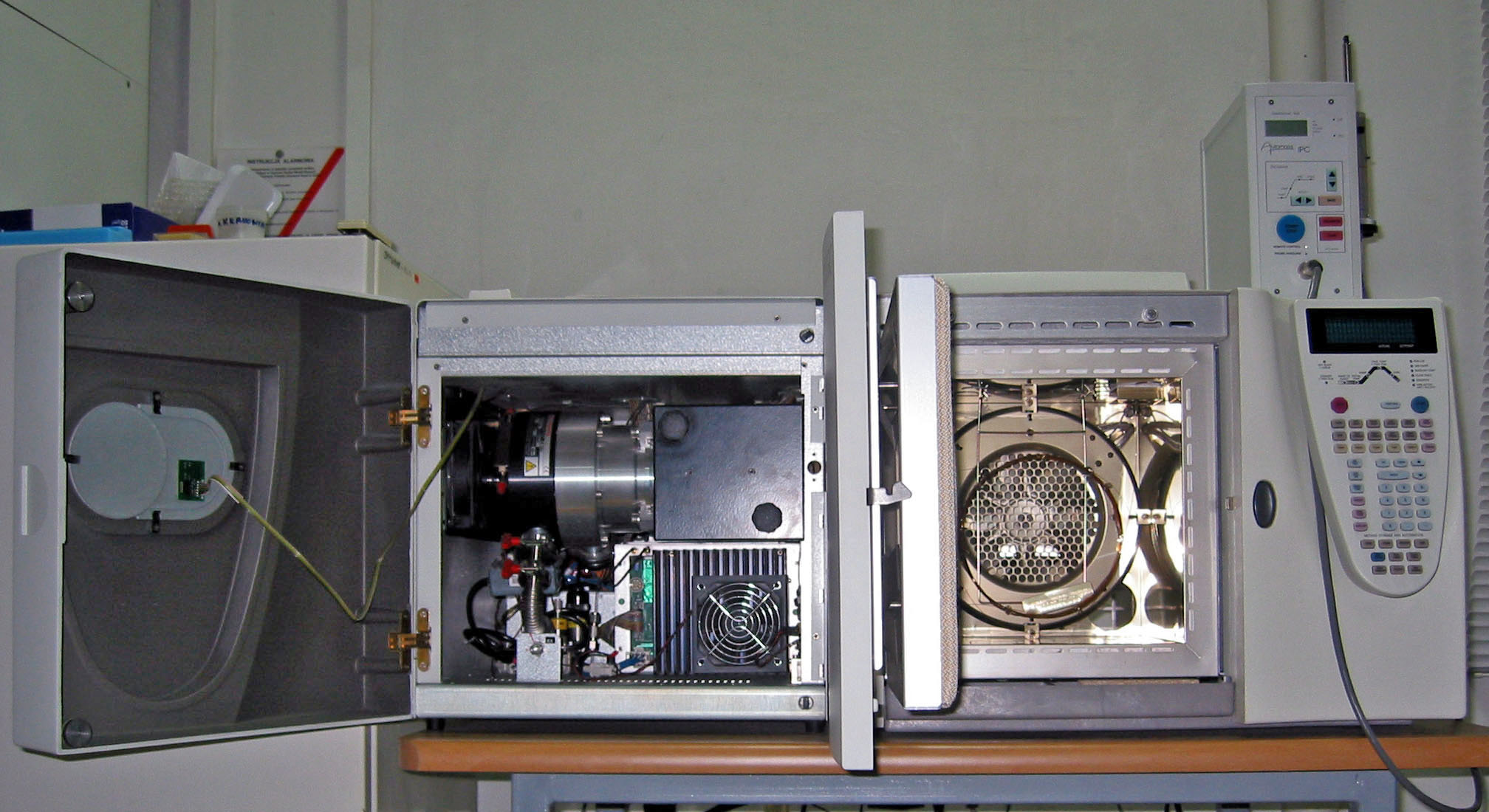
Py-GC-MS involves rapidly heating the sample in an inert atmosphere or vacuum. This cleaves large molecules into smaller fragments which can then be separated using a gas chromatography column and classified in combination with a mass spectrometer. With both results combined, the likely original materials in the sample can thus be deduced. This means that you are not literally counting MNP particles in the sample or measuring them, but quite literally vaporizing said sample and analyzing the debris cloud. Obviously this comes with some major asterisks.
A 2024 paper by Marthinus Brits et al. as published in Microplastics and Nanoplastics explored the use of Py-GC-MS for determining the amount of MNPs in human blood. Using whole blood samples they found mostly polyethylene (PE) polymer, with a mean of 268 ng/mL of MNPs across all 68 samples, with a call to investigate the health impact of this finding.
In response to this paper a correspondence by Bianca Wilhelmus et al. was submitted to the journal, in which one of the complaints was a lack of detail on the Py-GC-MS fingerprints using which the polymers were purportedly detected. It was also noted that with sub-micrometer MNP particles you’d need millions of them in a sample to really register, which is far above what had typically been found in human body fluids.
To this Brits et al. replied with among other things the admission that the quantitative analysis of MNPs using Py-GC-MS is still in early stages of development. To the issue of quantity it was noted that most of the MNPs are significantly larger than a micrometer, so they were still fairly confident of their findings.
It’s important to note more recent studies here, such as the 2025 study by Cassandra Rauert et al. in Environmental Science & Technology, in which also a study on using Py-GC-MS for detecting MNPs in blood was performed. Its conclusion was that this detection method has trouble detecting PE and PVC polymers, and the estimated exposure concentrations are testing the detection limits of this technique.
Contamination
One of the problems with trying to measure MNPs in a sample is that of environmental MNP contamination, as MNPs are being shed and distributed all around us, whether it’s from e.g. polyester clothing, plastic surfaces and tools, or carried in from outside. This makes it a real chore to make sure that in a laboratory setting such contamination does not ruin the findings, as with a recent study on MNPs in bottled water by Qian et al. in PNAS.
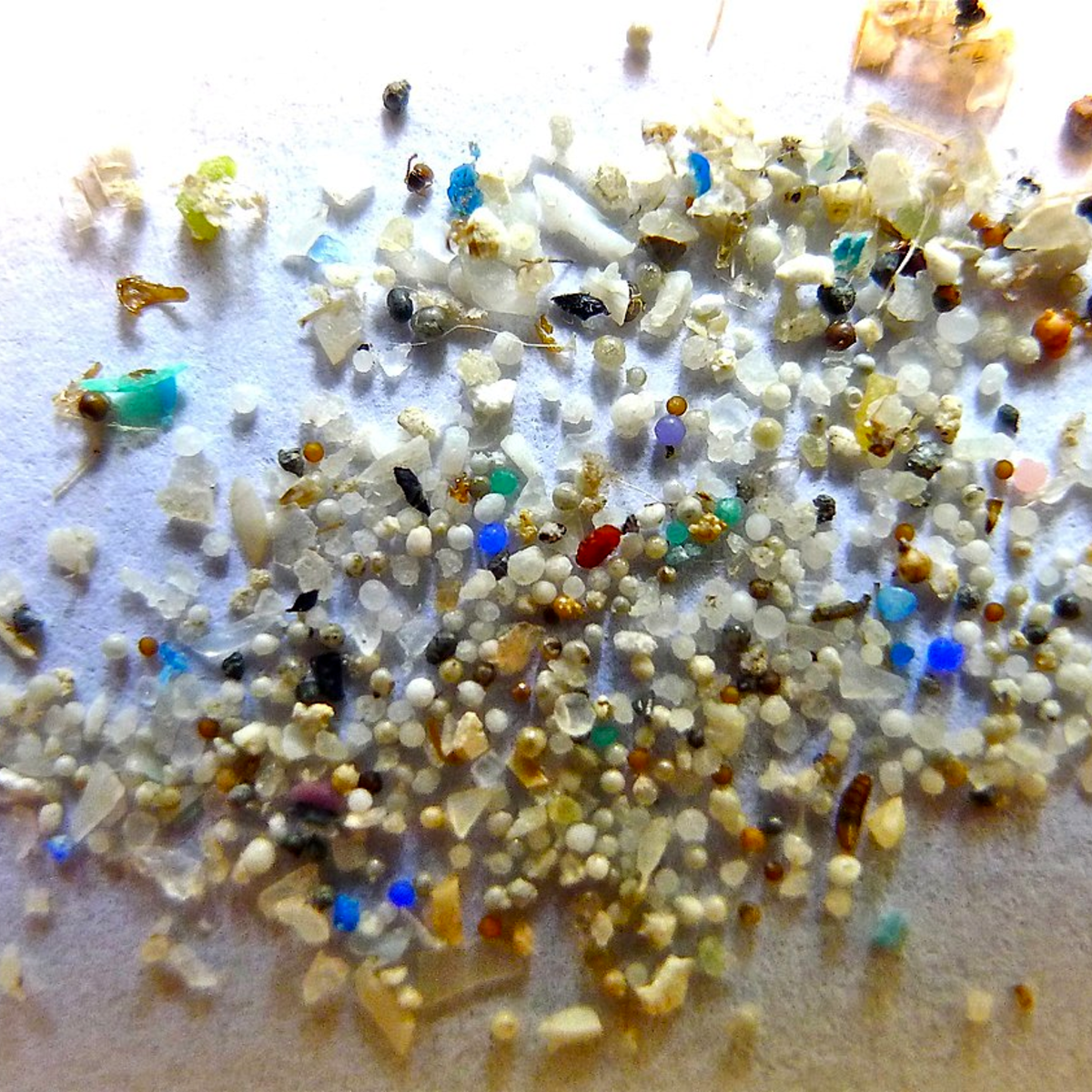
Rather than Py-GC-MS, this used stimulated Raman scattering, but also led to accusations of contamination due to improper procedures, with the finding that the ultra-pure filtered Milli-Q water that was used for a blank (i.e. control) contained as many MNPs as the bottled water. This and other issues were suggested as invalidating the findings. While Qian et al. acknowledged that using the Milli-Q water as a blank was resultingly improper, they disagreed with the premise that this invalidated the study’s findings.
Another type of contamination can come from the aforementioned biological tissue, such as in the early 2025 study on MNPs in the human brain and other organs by Nihart et al. as published in Nature Medicine. This analyzed tissue samples from human cadavers using, among other methods, Py-GC-MS, leading them to conclude that especially our brains are full of PE polymers, with major implications for Alzheimer’s and dementia research, for instance.
This assessment subsequently got challenged (full article) by Monikh et al. in a November 2025 published commentary, with the authors noting that Nihart et al.’s samples from the human liver, kidney and brain all have in common that they contain significant amounts of fatty tissue (lipids), which when subjected to pyrolysis produce fragments that are easily mistaken for PE polymer fragments.
When it comes to detecting polymers in such biological samples, it is absolutely essential to strip away the biological material, without affecting the sample that will ultimately be analyzed. In this case the processing method appears to have been flawed, leading to subsequent contamination. This was acknowledged by the team, in a reply by some of the study authors.
Empirical Correlation
Although it seems like we can at least conclude that our brains aren’t overflowing with PE polymer fragments, but that they are just filled with phospholipids in particular, this doesn’t necessarily take away all our concerns. After all, didn’t some studies find real, empirical evidence for MNPs causing actual damage? Especially since it seems harmful in mice, according to a 2025 study using starch-based plastics.
As highlighted by Baroni et al. in a September 2025 review paper on MNPs in the brain as published in Nanomaterials, the enduring problem that we are dealing with right now is one of a lack of information, a scarcity of standard detection methods and a total lack of longitudinal studies in humans.
Although we have health databases that span decades in countries with strong public healthcare systems, trying to figure out whether certain health trends are due to MNPs using their data is borderline lunacy, as you cannot realistically account for all confounding factors. Thus we are mostly stuck at this point trying to figure out how to actually effectively measure the presence of MNPs.
Methodology
The aforementioned Py-GC-MS and SRS methods are two tools available to us here, but clearly moving from measuring MNPs in water to measuring them in biological tissues is still a challenging topic. When we look at the established science of MNPs in water, we got a range of options, as illustrated by this application note by ThermoFisher Scientific:
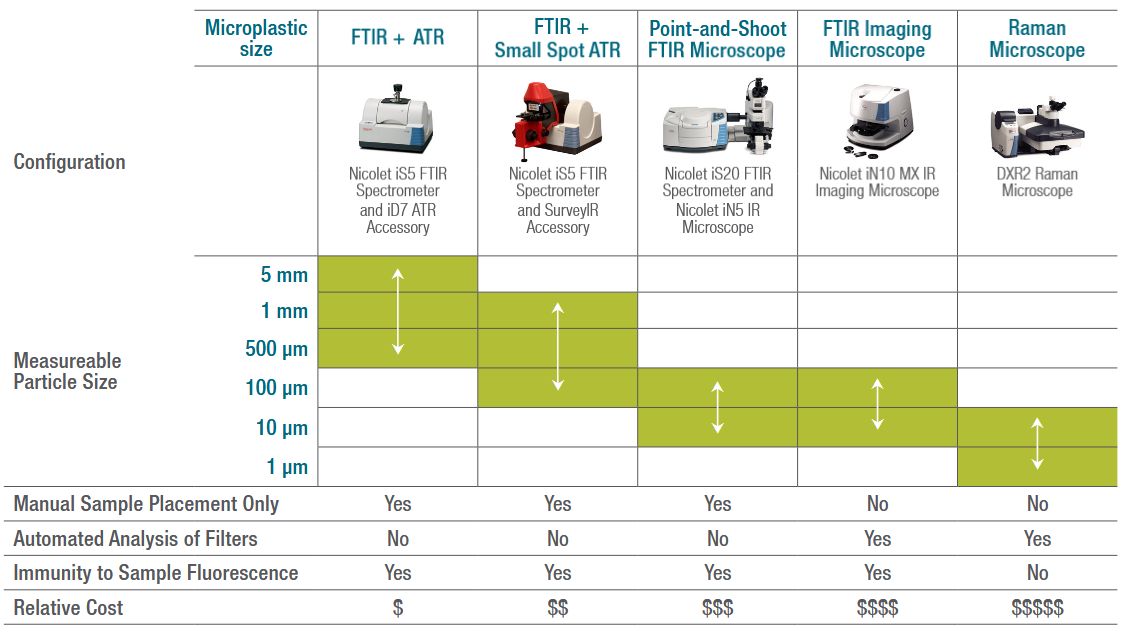
In order to measure not just the relatively large microplastic particles, but also the much smaller nanoplastics which are more likely to interact with biological systems, you are pretty limited here already. With only Raman spectroscopes applicable for such fine analysis, it’s little wonder that Py-GC-MS is being applied to biological samples.
Maybe once we have figured out the right methodology for Py-GC-MS and potentially other approaches will we be able to tell with some certainty how many of these polymer fragments are in our bodies right now, and how much of it will simply pass through rather than take up permanent residence. On the bright side, there’s no clear epidemiological evidence of MNPs being actively harmful to us, yet.
Although the sky hasn’t been confirmed to be falling, it is still looking somewhat unsteady. For that reason alone it is probably in our own best interest to use the precautionary principle here, as it’s better to have begun today to find ways to reduce and prevent the spread of MNPs, rather than to regret not having done so tomorrow.