


reshared this


Liberals discontinue temporary funding supports for CBC - The Wire Report
https://www.thewirereport.ca/2026/03/02/liberals-discontinue-temporary-funding-supports-for-cbc/?utm_source=flipboard&utm_medium=activitypub
Posted into The Wire Report @the-wire-report-TheHillTimes

Liberals discontinue temporary funding supports for CBC
Government funding for CBC/Radio-Canada is set to fall by $192 million during the 2026-27 fiscal year, as Ottawa opted not to continue provisional funding boosts for the public broadcaster.Davis Legree (The Wire Report)
War Powers Debate Escalates After US Strike on Iran | Balance of Show: Late Edition 03/02/2026
https://www.bloomberg.com/news/videos/2026-03-03/balance-of-show-late-edition-03-02-2026-video?utm_source=flipboard&utm_medium=activitypub
Posted into Bloomberg Television @bloomberg-television-bloomberg

Check out this.. hold on let me see what I've got..
Cat watching Frieren: Beyond Journey's End.

#AureFreePress #Israel #Iran


#nature #photo #RufousCrownedSparrow #sparrow #NaturePhotography
#photography #birds #birders #BirdWatching #BirdWatchers #California #LosAngeles #BirdPhoto #GriffithPark #DailyBird #BirdsOfPixelfed #BirdADay #DailyBird #BirdIfTheDay #LARiver #LosAngelesRiver #BirdsOfMastodon #Cute #NaturePhotos #LAWildlife

#pabllovittar #coreiadosul #melon #music #idol

India’s Pronto formalizes house help as its valuation jumps 8× in under a year
https://techcrunch.com/2026/03/02/indias-pronto-formalizes-house-help-as-its-valuation-jumps-8x-in-under-a-year/?utm_source=flipboard&utm_medium=activitypub
Posted into Startup News @startup-news-Techcrunch

India's Pronto formalizes house help as its valuation jumps 8× in under a year | TechCrunch
Pronto handles 18,000 daily bookings and plans rapid expansion as it races rivals to digitize India's largely offline home services market.Jagmeet Singh (TechCrunch)

BREAKING NEWS
US citizens told to immediately depart multiple Middle East countries due to "serious safety risks"
#AureFreePress #News #press #Breaking #BreakingNews

Artist: Slightly Smiling
Support: slightlysmiling.bandcamp.com/
Title: Telephone Line
Album: Being
Show: Pop
Watch live: tv.theindiebeat.fm/?t=17725010…

Bollette, come la tempesta sui mercati sta per colpire luce e gas. Occhio alle tariffe variabili
https://www.repubblica.it/economia/2026/03/03/news/bollette_gas_luce_tariffe_variabili_fisse_aumento-425196003/?utm_source=flipboard&utm_medium=activitypub
Pubblicato su Economia - La Repubblica @economia-la-repubblica-repubblica

Bollette, come la tempesta sui mercati sta per colpire luce e gas. Occhio alle tariffe variabili
Un’analisi di Assium stima tra i 207 e quasi 600 euro la spesa annua in più che potrebbe derivare dal rialzo del prezzo del gas. Il consiglio? Tenere d’occhio …Federico Formica (la Repubblica)


In Qaryut, dozens of settlers invaded Qaryut and fired live fire at the villagers, killing two @ Genocide.live
Jewish terrorism continues to rage, under the auspices and encouragement of the government and under the smokescreen of the initiated war. Today in Qaryut, Nablus Governorate, settlers burned vehicles and fired live fire at the villagers.tiktokgenocide.com
Aerei, scali nel caos. Gli Emirati provano a ripartire dopo il blocco
https://www.repubblica.it/economia/2026/03/03/news/iran_guerra_aeroporti_voli_cancellazioni-425196421/?utm_source=flipboard&utm_medium=activitypub
Pubblicato su Economia - La Repubblica @economia-la-repubblica-repubblica

Aerei, scali nel caos. Gli Emirati provano a ripartire dopo il blocco
Il conto a carico dei turisti. Assoutenti: “Tour operator e agenzie di viaggi rifiutano il rimborso dei pacchetti acquistati”Aldo Fontanarosa (la Repubblica)
Nomine Mps, resta il nodo Lovaglio fumata nera sulla lista del cda
https://www.repubblica.it/economia/2026/03/03/news/nomine_mps_resta_il_nodo_lovaglio_fumata_nera_sulla_lista_del_cda-425196312/?utm_source=flipboard&utm_medium=activitypub
Pubblicato su Economia - La Repubblica @economia-la-repubblica-repubblica

Nomine Mps, resta il nodo Lovaglio fumata nera sulla lista del cda
Restano 48 ore per scegliere i 20 nomi in tempo per l’assemblea del 15 aprile. Il capoazienda avrebbe al momento una “minoranza di blocco” per evitare l’esclus…Andrea Greco (la Repubblica)
Volano petrolio e gas, l’Europa brucia 314 miliardi. Ora si teme il ritorno dell’inflazione
https://www.repubblica.it/economia/2026/03/03/news/iran_petrolio_gas_prezzi_stretto_hormuz-425196159/?utm_source=flipboard&utm_medium=activitypub
Pubblicato su Economia - La Repubblica @economia-la-repubblica-repubblica

Volano petrolio e gas, l’Europa brucia 314 miliardi. Ora si teme il ritorno dell’inflazione
I pasdaran: Stretto di Hormuz chiuso, colpiremo chi passa. Le Borse pagano pegno. Imprese in allarme per l’elevata instabilità. In arrivo rincari…Filippo Santelli (la Repubblica)

Conti, il deficit supera il 3%, uscita dall’infrazione più lontana
https://www.repubblica.it/economia/2026/03/03/news/istat_conti_pubblici_pil_il_deficit_supera_il_3_uscita_dall_infrazione_piu_lontana-425196056/?utm_source=flipboard&utm_medium=activitypub
Pubblicato su Economia - La Repubblica @economia-la-repubblica-repubblica

Conti, il deficit supera il 3%, uscita dall’infrazione più lontana
L’Istat fotografa un indebitamento più alto rispetto alle stime. Giorgetti: “Dati provvisori, colpo di coda del Superbonus”. Spese per la Difesa a…Rosaria Amato (la Repubblica)
Precipita da 15 metri, muore un altro operaio all’ex Ilva di Taranto: “Sciopero immediato”
https://bari.repubblica.it/cronaca/2026/03/03/news/precipita_da_15_metri_muore_operaio_ex_ilva_taranto_sciopero_immediato-425196096/?utm_source=flipboard&utm_medium=activitypub
Pubblicato su Economia - La Repubblica @economia-la-repubblica-repubblica

Precipita da 15 metri, muore un altro operaio all’ex Ilva di Taranto: “Sciopero immediato”
La vittima aveva 36 anni ed era un addetto alle pulizie dell’indotto: è il secondo incidente fatale da gennaio. I pm indagano per omicidiola Repubblica
Ex Ilva, intesa con Flacks appesa a un filo. Il governo davanti a un bivio
https://www.repubblica.it/economia/2026/03/03/news/intesa_con_flacks_appesa_a_un_filo_il_governo_davanti_a_un_bivio-425196073/?utm_source=flipboard&utm_medium=activitypub
Pubblicato su Economia - La Repubblica @economia-la-repubblica-repubblica

Ex Ilva, intesa con Flacks appesa a un filo. Il governo davanti a un bivio
Il fondo Usa potrebbe abbandonare la trattativa. La scelta dell’esecutivo tra mantenere il ciclo a carbone o puntare subito sui forni elettrici con la…Raffaele Lorusso (la Repubblica)
Minnesota launches investigation that could bring charges against federal immigration officers
https://apnews.com/article/bovino-minnesota-immigration-minneapolis-good-pretti-0ace82ca68846109fbf6d30439e6f0f1?utm_source=flipboard&utm_medium=activitypub
Posted into Top Stories @top-stories-AssociatedPress
トンチンカンな答え多いー

EUA não descartam envio de tropas ao Irã e falam em “superioridade aérea” - Gazeta Brasil- Notícias do
Em meio à escalada, o Comando Central dos EUA confirmou que o CENTCOM registrou um incidente de fogo amigo: o Kuwait teria abatido por engano três caças F-15EGazeta Brasil
Mostre, concerti, eventi sportivi, convegni... il calendario (dal 6 al 27 marzo) organizzato dall'assessorato e dalla commissione Pari Opportunità del Comune di Lucca è estremamente ricco. Intanto il Rendiconto di Genere INPS ha fotografato un'Italia in cui le condizioni di svantaggio delle donne nell’ambito noitv.it/2026/02/il-mese-delle…

Just tinkering with the new Share button for Mastodon, so far just added it to my "free reading" page in a pretty trivial way. I'll do a more thorough integration with my site when I have more time and after some major changes on the site.
#mastodon #share #reading #free #ebooks
stuartwhitmoreauthor.com/info/…
Free Reading - Stuart J. Whitmore
Free books and other digital content from author Stuart J. Whitmorewww.stuartwhitmoreauthor.com
🐧Armbian 26.2 Introduces Linux kernel 6.18 LTS Images and Imager Upgrades
「 A key feature is the availability of Linux kernel 6.18 LTS images for multiple supported platforms, thus improving hardware support and compatibility for modern SBCs and embedded systems. Newly supported hardware in Armbian 26.2 includes the SpacemiT MusePi Pro, Radxa Rock 4D, OrangePi RV2, and Odroid M2 」
#armbian #sbc #linux #opensource linuxiac.com/armbian-26-2-intr…

Armbian 26.2 Introduces Linux kernel 6.18 LTS Images and Imager Upgrades
Armbian 26.2 Goa introduces expanded SBC support, Linux 6.18-based images, and continued enhancements for Rockchip and Allwinner platforms.Bobby Borisov (Linuxiac)
Ricardo Antonio Piana likes this.
SNES Controllers are (Almost) SPI-Compatible

Considering that the Serial Peripheral Interface bus semi-standard has been around since the early 1980s, it’s perhaps not that shocking that the controllers of the Super Nintendo Entertainment System (SNES) would take at least some strong design hints for the used protocol. This does however raise the question of exactly how compatible a SNES controller is when connected to the SPI master peripheral of any random MCU. Recently [James Sharman] set out to answer this question decisively.
The impetus for answering this question came after [James] designed a separate SNES controller board for his homebrew computer system, which led to many comments on that video saying that he could just have hooked the controller up to the SPI board in said homebrew system.
Here the short answer is that the SNES controller protocol is very close to SPI Mode-1, with a similar arrangement of clock/data/chip select (latch) lines and clocking. If you think of the SNES controller as an SPI device with just a MISO line, you’re basically there already. The only niggle that popped up was that the ‘MISO’ line does not get pulled into a high-impedance state when the active-low latch connection is pulled high.
This was fixable by introducing a 74HC125 tri-state buffer IC, after which both the original SD card and twin SNES controllers could be used simultaneously.
youtube.com/embed/NGiFlDPaB0o?…
LED Printers: The Quiet Achievers You May Not Have Heard Of

Many different types of printers have entered the market over the years. Most of us are intimately familiar with the common inkjet and laser, both of which can be found in homes and offices all over the world. Then there are those old dot matrix printers that were so noisy in use, thermal printers, and even solid ink printers that occupied a weird niche for a time.
However, very little attention is ever paid to the LED printer. They’re not actually that uncommon, and they work in a very familiar way. It’s just that because these printers are so similar to an existing technology, they largely escaped any real notability in the marketplace. Let’s explore the inner workings of the printer tech that the world forgot.
Blinding Lights
To understand the LED printer, it helps to first understand the laser printer, and before that, the photocopier. Indeed, it was the latter technology that spawned the xerographic process that underpins all three machines.
Xerography is a compound word, from the Greek words xeros (dry) and graphia (writing). It’s where the Xerox company earned its name, and the process is at the heart of the photocopier. In the modern form we’re all familiar with, a photocopier relies on the use of a cylindrical drum, coated in a photoconductive material. This drum can be given an electrostatic charge, which remains on the surface when in darkness, but is conducted away when exposed to light. In a photocopier, the drum is exposed to light from a scanning lamp passing over a document. Where the document has light sections, the charges on the drum are conducted away, and where there are dark sections, the charge remains. The drum is then exposed to tiny particles of toner, which are attracted to the charged areas on the drum. A corona wire is then used to generate an opposite charge to that of the toner, pulling it off the drum and onto a piece of paper to replicate the original document. It’s then merely a matter of heating the paper to fuse the toner in place by melting it, and then the completed document is fed out of the photocopier. It’s this final step that gives fresh photocopies their characteristic warm feel and mild plasticky smell.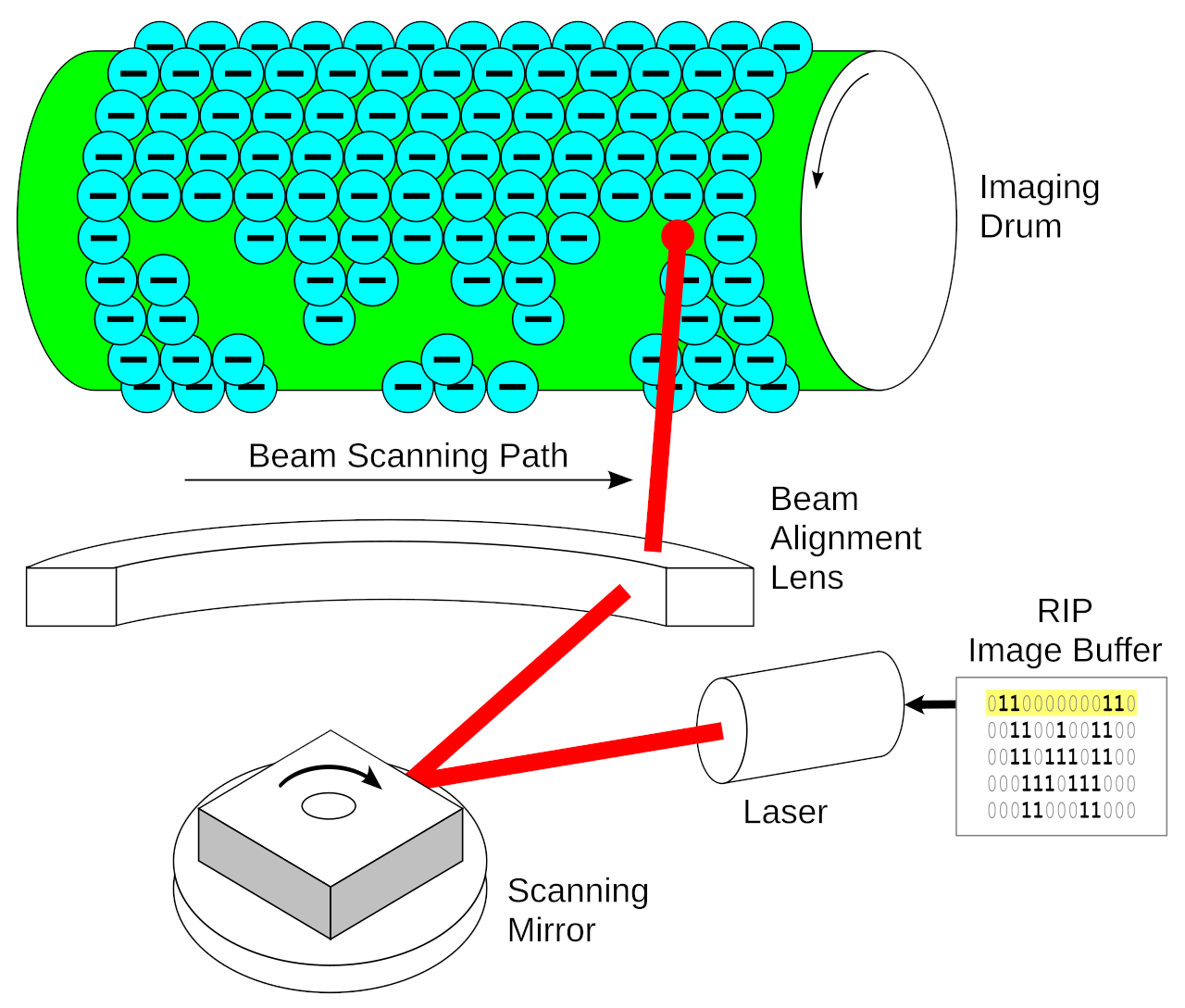
It wasn’t long before the xerography process was applied beyond mere photocopies. Xerox engineer Gary Starkweather realized in 1969 that a scanning laser beam could be used to draw directly on to the drum in place of the scanning lamp of a photocopier. A few years later, this led to the development of a prototype which proved the concept, and by 1976, the first commercial laser printer was on the market.
These printers were prized for their high speed and initially used in data center roles, before smaller desktop-sized units reached the market in the 1980s. Laser printers vary in construction, but most use a single laser diode with a rotating mirror that scans the beam over the drum. The beam is modulated as the mirror scans and the drum rotates to only remove charges from the drum in light areas that are not to have toner deposited. For color printing, some laser printers implement multiple drums, one for each color of toner—cyan, magenta, yellow, and key (black)—with four scanning lasers required in turn. The paper is passed over each, picking up one layer of toner at a time before it’s fused into the paper to create the final image. Some printers have also added a “transfer belt” to ease registration issues in color printers, wherein the drums deliver each color of toner to a belt, and the belt then delivers the toner to the paper in one fell swoop.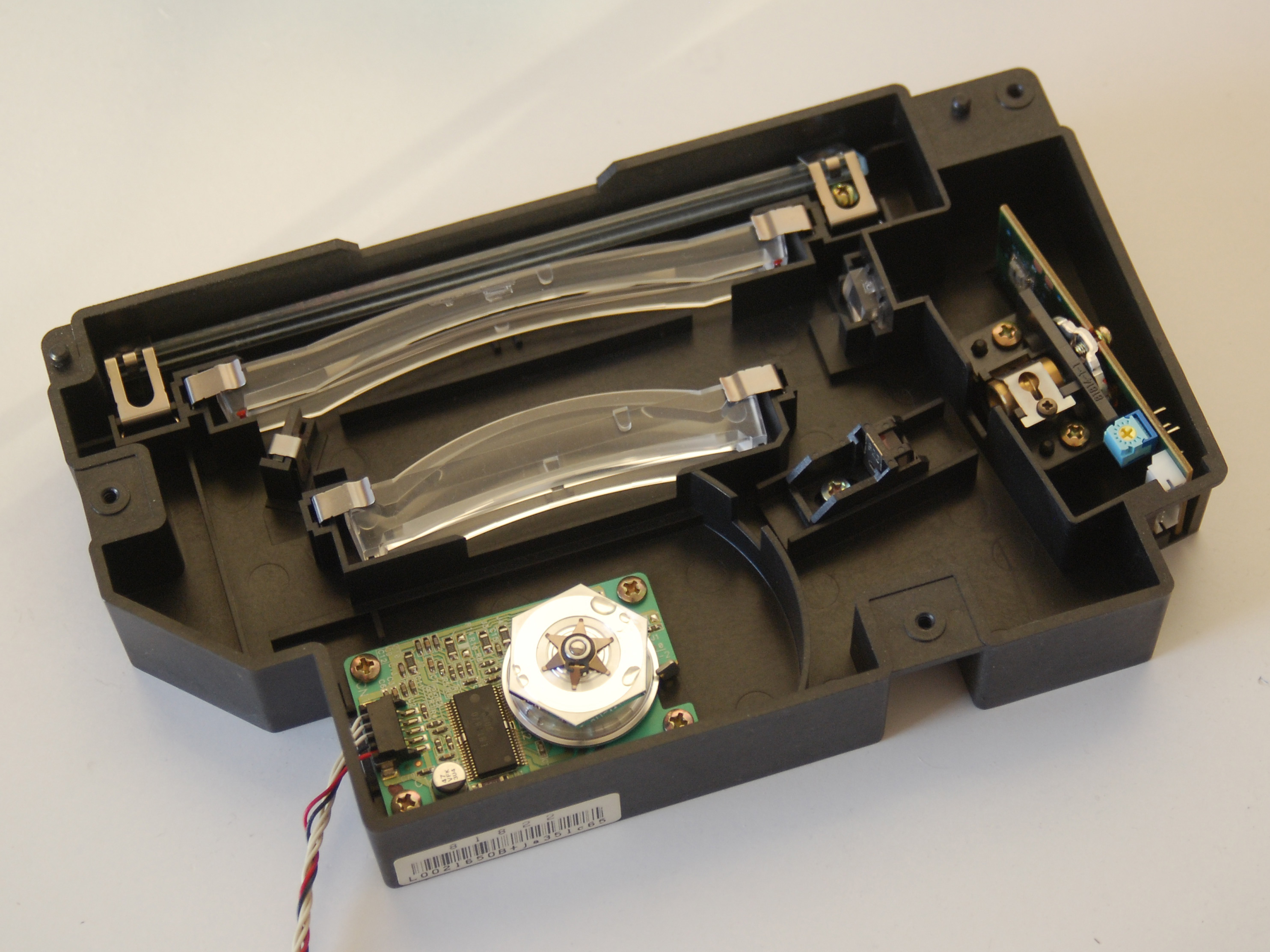
Laser printers are capable, high-speed printing machines, but they are expensive and do have a lot of moving parts. Engineers at Oki eventually realized it was possible to replace the combined laser diode and spinning mirror assembly with something simpler and more solid-state. Thus was born the LED printer, first developed in 1981 and commercialized in 1986. Rather than scanning a laser beam across a cylindrical drum, the LED printer has a line array of tiny individual LEDs that remove charges from the drum instead. The printer otherwise works in pretty much exactly the same way—only the method of discharging the drum was changed.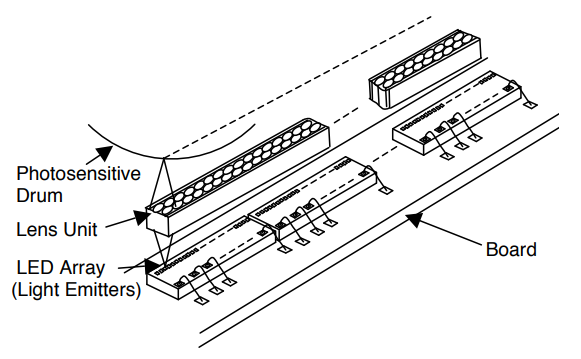
LED printers are generally a bit cheaper to manufacture, and can sometimes print faster than comparable laser printers. In part, this is because the line array can flash a segment of the drum all at once versus a laser beam which must be scanned across it. Where laser printers routinely offer 1200 x 2400 DPI resolution, it took LED printers some time to reach the same heights, as fitting 1200 LEDs into a single inch is no mean feat. However, Oki was able to achieve this milestone by 1997, while some cheaper models sit at the 600 DPI level instead. Meanwhile, in 2024, Canon did produce a LED-type printer using OLED technology, which enabled resolutions up to 4800 x 2400 DPI. The higher light emitter density possible with OLED technology allowed this leap forward.
Notably, most color LED printers tend to use a transfer belt setup, in which each LED/drum unit delivers toner to the belt which is then deposited on the paper in one pass. This is why LED printers tend to have similar print speeds for color and black-an-white use. This was an advantage over older color laser printers that didn’t use transfer belts, but instead had a color page make four separate passes over a drum, slowing printing down significantly.
youtube.com/embed/l-pjrBZC7kU?…
Canon leveraged OLED technology to produce an LED-type printer with far superior resolution to traditional designs.
Funnily enough, some LED printers fly under the radar and are sold as “laser printers” despite not containing a laser. This is because, to the end user, the technology is not particularly different—the printers still use a charged drum for printing and still use toner to make an image. LED printers never differentiated themselves enough to make a big splash with disinterested consumers and commercial buyers who just want well-printed documents at the end of the day. LED printers mostly just look like laser printers and work similarly enough that few ever noticed the difference. Often, an LED printer will show up on e-commerce sites with “laser” scattered around the marketing copy because many understand them to be essentially the same thing from a user perspective.
LED printers are unlikely to become a household name any time soon, even if you have one in your household—if only because their close association with laser printing technology means most people never noticed they existed in the first place. In any case, next time you’re sitting at a table at your friend’s wedding with a bunch of people you’ve never met before, you now have an incredibly tedious technical lecture you can deliver to impress everybody at dinner. Spread the word about LED printers, because they’ve failed to do it themselves!

Peter Krauth: Silver Price Cycle Still Early, Mania Years Away
Peter Krauth of Silver Stock Investor and Silver Advisor shares his thoughts on silver price activity and where the white metal is in the cycle — in his view,BOCVIP

I need to get a new mask since my old Vogmask had its over-the-nose metal thing break. That company seems to have gone out of business. (Dammit.)
Does anyone have recommendations on masks that will actually seal over the top of your nose, so your breath isn't perpetually fogging up your glasses? And which are easy to carry, e.g. in a pocket or something? 😷 #MaskUp #WearAMask
Still happy with my Flo
flomask.com/products/flo-mask-…

Flo Mask Pro (Adult Mask)
In-Stock: Ships within 3-5 business days Choose expedited shipping and email us your order number if need your mask by a specific date: breathe@flomask.com Description Flo Mask Pro is optimized to fit 90%+ of the world's adult population.Flo Mask
Cynus Chess Robot: a Chess Board With a Robotic Arm
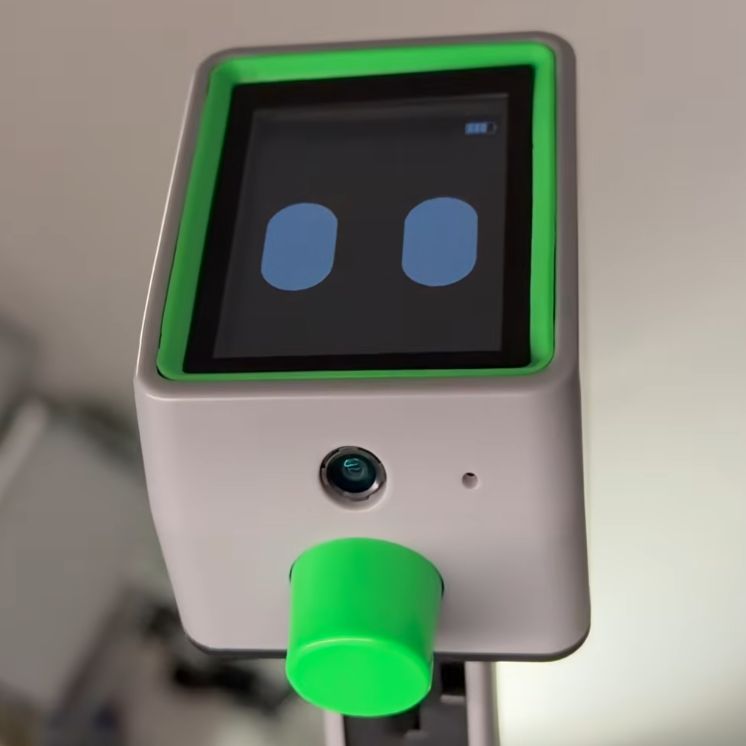
There are many chess robots, most of which require the human player to move the opposing pieces themselves, or have a built-in mechanism that can slide the opposing pieces around to their new location. Ideally, such a chess robot would move the pieces just like how a human would, of course. That’s pretty much the promise behind the Manya Cynus chess robot, which [Matt] over at the Techmoan YouTube channel bought from the Kickstarter campaign.

Advertising itself as a ‘Portable AI Chess Robot’, the Manya Cynus chess robot comes in the form of a case that unfolds into a chess board and also contains the robotic arm that contains the guts of the operation. Powered by the open source Stockfish chess engine, it can play games against a human opponent at a few difficulty levels without requiring any online connectivity or a companion app. It moves its own pieces by picking up the metal-cored chess pieces with its arm, while its front display tries to display basic emotions with animated eyes. A 3-MP downward-facing camera is located on the head section, along with a microphone.
As for how well it works, [Matt] isn’t the best chess player, but he had a fair bit of fun with the machine. His major complaints circle around how unfinished the firmware still feels, with e.g., invalid moves basically ignored with only a barely visible warning popping up on the screen. In general, he’d rather classify it as an interesting development kit for a chess robot, which is where the BLE 5.1-based interface and a purported Python-based development environment provided by Manya seem to come into focus.
From the site, it’s not clear where this documentation and software can be found, and the chess robot appears to be fully sold out on the Kickstarter page. In addition to this, a promised companion app seems to have gone AWOL, too.
With no clear support or even availability, it would seem that this is less of a crowdfunding scam and more of a confusing product which may or may not become available again, yet which could perhaps provide inspiration to some DIY projects, as the basic principle seems sound enough. Or, keep it simple and use a gantry.
youtube.com/embed/fha3WC-3DOg?…

Linux 7.0 Shows Off Nice Performance Gains For Databases In Small AMD EPYC Servers
Last week with my ongoing testing of the in-development Linux 7.0 kernel I found nice performance improvements for PostgreSQL and other workloads when testing on a 128-core AMD EPYC 9755 'Turin' serverlxer.com
Riad, 'due droni contro l'ambasciata Usa, incendio' - Medio Oriente - Ansa.it
https://www.ansa.it/sito/notizie/mondo/mediooriente/2026/03/03/riad-due-droni-contro-lambasciata-usa-incendio_3068f1ea-5994-4b18-931a-4a89530760dd.html?utm_source=flipboard&utm_medium=activitypub
Pubblicato su ESTERI @esteri-AgenziaAnsa

Riad, 'due droni contro l'ambasciata Usa, incendio' - Medio Oriente - Ansa.it
Un attacco con due droni ha provocato un incendio nell'ambasciata Usa a Riad: lo ha fatto sapere il ministero della Difesa saudita. La notizia è riportata dai media internazionali. (ANSA)Agenzia ANSA
Homemade Liquid Oxygen Demonstrates Paramagnetism

Liquid nitrogen isn’t exactly an everyday material, but it’s acquired conveniently enough to be used in extreme overclocking experiments, classroom demonstrations, chemistry and physics experiments, and a number of other niche applications. Liquid oxygen, by contrast, is dangerous enough that it’s only really used in rocket engines. Nevertheless, [Electron Impressions] made some of his own, and beyond the obvious pyrotechnic experimentation, demonstrated its unusual magnetic properties. Check out the video, below.
The oxygen in this case was produced by electrolysis through a proton-exchange membrane, which vented the hydrogen into the atmosphere and routed the oxygen into a Dewar flask mounted at the cold end of a Stirling cryo-cooler. The cooler had enough power to produce about 30 to 40 milliliters of liquid oxygen per hour, enough to build up an appreciable amount in short order. As expected, the pale blue liquid caused burning paper to disappear in a violent flame, and a piece of paper soaked in it almost exploded when ignited.
More interestingly, a piece of oxygen-soaked paper could also be picked up with a strong enough magnet. This is due to molecular oxygen’s paramagnetism, which is too weak to be significant in a gas made of quickly-moving molecules, but becomes noticeable in a liquid. When some liquid oxygen was poured onto a strong magnet, it stuck to the edges of the magnet, whereas liquid nitrogen just splashed away. Even as the liquid oxygen evaporated, it was possible to faintly see some of the cold vapours sticking close to the magnet. [Electron Impressions] tried to create a kind of coil gun by wrapping a coil around a test tube containing liquid oxygen, but it didn’t really work. Any effect was imperceptible among the disturbances caused by boiling oxygen and the physical jolt of the power supply connecting.
It’s not a process we’ve seen before, but the boiling point of liquid nitrogen is lower than the boiling point of oxygen, so if you have a convenient source of liquid nitrogen, it’s simple enough to make liquid oxygen.
youtube.com/embed/UPJS0mtUoME?…
D
in reply to D • • •reshared this
Oblomov reshared this.