
Guidano gli scuolabus ma con contratti diversi: autisti in agitazione
Vengono applicati "due diversi Contratti Collettivi Nazionali di Lavoro, quello dell’autonoleggio e quello della multiservizi, ai dipendenti che svolgono la stessa mansione"

Artist: bgm (@bgm)
Support: fromabasement.com/
Title: Shitty Gear
Album:
Show: Pop
Watch live: tv.theindiebeat.fm/?t=17725008…


#Mastodon #Statistics 2026-03-03 02:00 CET
Number of active instances: 10 507
Number of users: 10 387 194
Number of statuses: 1 172 116 297
Number of users last 4h: 327
Number of statuses last 4h: 80 062
Help me keep stats and server running! 💻📊 Even a small monthly contribution makes a big difference. Support here: patreon.com/FediverseStatistic… 🙏


Accidental Climate Engineering With Disintegrating Satellites

For many decades humankind has entertained the notion that we can maybe tweak the Earth’s atmosphere or biosphere in such a way that we can for example undo the harms of climate change, or otherwise affect the climate for our own benefit. This often involves spreading certain substances in parts of the atmosphere in order to reflect or retain thermal solar radiation or induce rain.
Yet despite how limited in scope these attempts at such intentional experiments have been so far – with most proposals dying somewhere before being implemented – we have already embarked on a potentially planet-wide atmospheric reconfiguration that could affect life on Earth for centuries to come. This accidental experiment comes in the form of rocket stages, discarded satellites, and other human-made space litter that burn up in the atmosphere at ever increasing rates.
Rather than burning up cleanly into harmless components, this actually introduces metals and other compounds into the upper parts of the atmosphere. What the long-term effects of this will be is still uncertain, but with the most dire scenarios involving significant climate change and ozone layer degradation, we ought to figure this one out sooner rather than later.
Nobody Hears You Burn In Space

Although Earth’s atmosphere looks pretty peaceful if you’re gazing at it from a space station in LEO or from a commercial airliner at cruising altitude, it’s actually constantly being assaulted. Everything from radiation to meteoroids, as well as the occasional asteroid are constantly making an attempt at inflicting real harm. This ranges all the way up to another mass-extinction event, but a meteoroid will settle for at the very least flattening another forest or inconveniencing a home owner.
Fortunately the atmosphere provides another feature beyond allowing us to not suffocate: by providing strong friction, the resulting high temperatures and intense plasma formation tend to burn up any object that tries to enter it at high velocity.
A less extreme form of this comes in the form of aerobraking, which is what spacecraft use to reduce their velocity relative to the planet; by creating enough friction in the atmosphere to shed kinetic energy, yet not heating up the spacecraft’s exterior to the point where things begin to melt, is incredibly helpful if one wishes to avoid having to resort to Plan B, being the violence of lithobraking.
This incinerator feature of the atmosphere is also very useful when it comes to the question of where the trash goes, whether it’s literal trash from the International Space Station, or things like discarded rocket stages and fairings, all the way to satellites that have reached their end of life stage. Yet much like the medieval solutions to waste disposal, the theme here is very much an ‘out of sight, out of mind’ approach, which is understandable as long as the volume of waste is still relatively small.
Running The Numbers
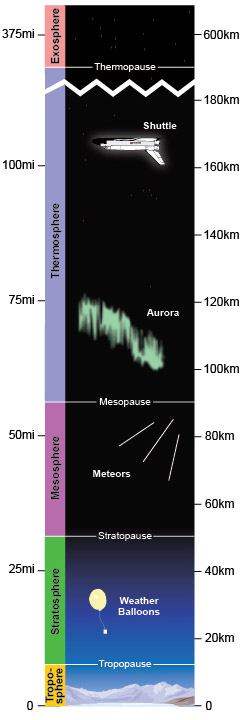
When a human-made object disintegrates in the atmosphere, it’s reduced to its base compounds, after interaction with the super-heated plasma that forms around said object. With the commonly used aluminium, for example, this means the production of aluminium oxide.
By far the largest amount of mass that will be burning up in the atmosphere over the coming years is formed by LEO internet constellations such as Starlink, which have a cumulative mass of over 10,000 tons. In addition, the second stage of the Falcon 9 rockets that are currently used to launch Starlink v1 and v1.5 satellites into LEO also burns up in the atmosphere. Recently, such a Falcon 9 stage suffered a mishap that caused it to disintegrate over Europe, rather than the typical trajectory over remote parts of Earth’s oceans.
This provided the perfect natural experiment. Batteries onboard satellites contain lithium, and because it’s relatively scarce in the atmosphere, it makes a great marker for the effects of satellites burning up on re-entry.
In the article by Robin Wing et al., as published in Communications Earth & Environment, the upper atmosphere measurements by a resonance lidar in Germany allowed for a ten-fold increase in atomic lithium to be measured after the stage had disintegrated near Ireland at an altitude of 100 km. Air currents subsequently dispersed the atomic debris over the rest of Europe.
Most notable perhaps was that the plume of atomic lithium was being detected at the same altitude of 100 km, after advecting for 1,600 km, placing ablation and dispersal in the mesosphere and lower thermosphere (MLT). Normally this plume would be dispersed far away from instruments, making it a fortuitous event from a scientific perspective that it could be measured like this.
Lithium is just one tracer for the debris plume, but there are many other metals. Here also lies the issue with comparing purely the mass of asteroids and rocket stages burning up in the atmosphere versus meteoroids and asteroids doing the same. The latter aren’t usually composed of intricate collections of metal alloys, rare earths and composite materials, but generally more boring things that we’d generously call ‘rocks’ or ‘gravel’, with the occasional iron variant mixed in.
As noted by Robin Wing et al., this feature makes artificial sources relatively easy to distinguish from natural ones. Since within the next decades re-entering satellites are projected to match or exceed 40% of natural meteoroid influx, the question remains of what these substances hanging around in Earth’s atmosphere will do to it and consequently life in Earth’s biosphere.
Potential Impact
Back in 1987 the Montreal Protocol was signed. This banned the use of chlorofluorocarbons (CFCs) after it was found that the large-scale release of CFCs into the atmosphere from refrigeration systems and other sources had resulted in a significant depletion of the ozone layer. This layer is found primarily in Earth’s stratosphere and is essential for blocking harmful ultraviolet radiation which would otherwise irradiate the surface, in particular UV-C.
Although it’s currently projected that the ozone will have completely regenerated by 2045, a worrying 2024 research letter by José P. Ferreira et al. from the American Geophysical Union (AGU) with accompanying press release suggests that the massive rise in satellites burning up in the atmosphere over the coming decades could add so much aluminium oxides to the atmosphere that it could revert this ozone layer regeneration process.
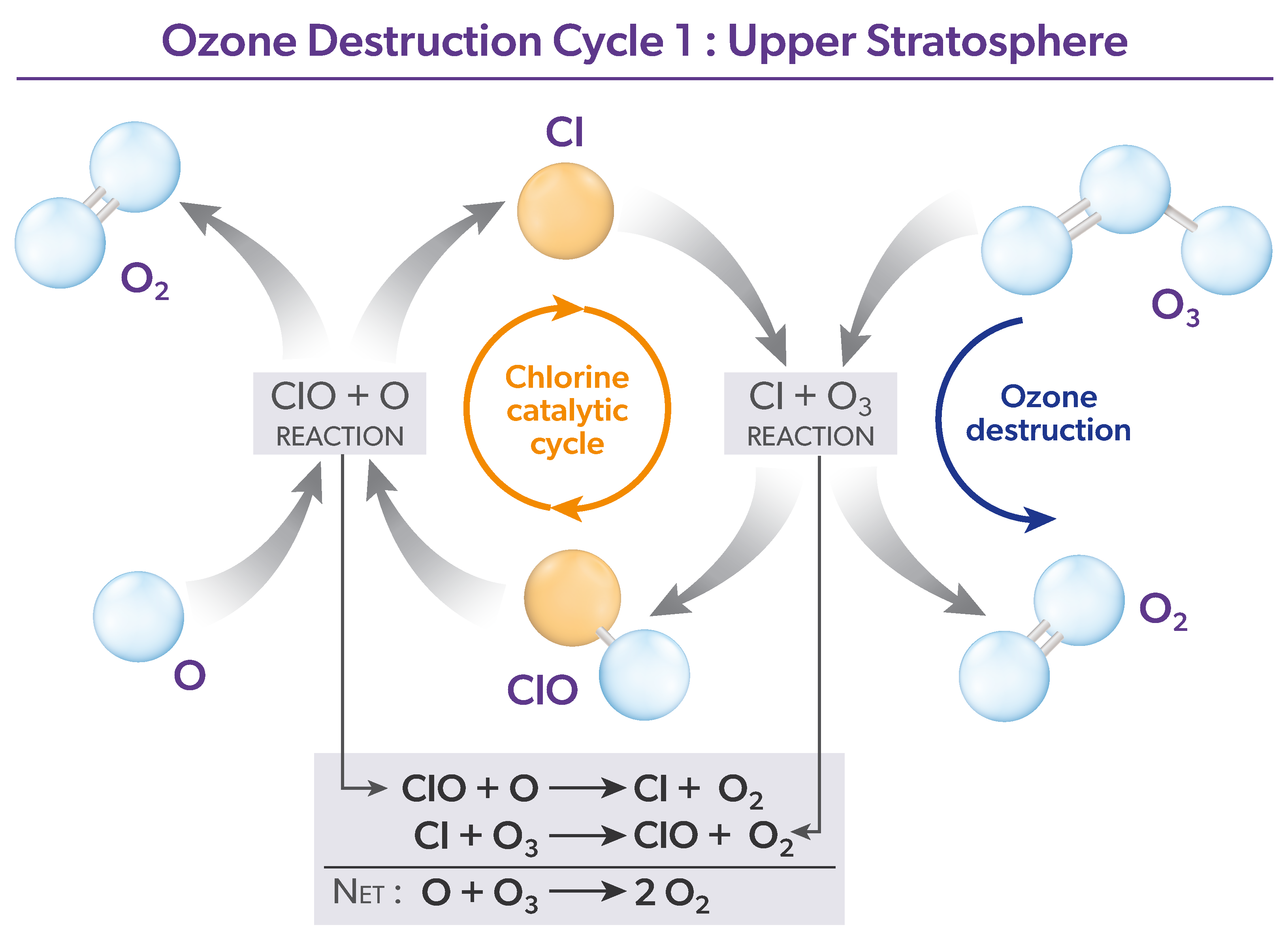
Using an atomic-scale molecular dynamics simulation they found that a typical 250 kg satellite upon its fiery demise in Earth’s atmosphere releases about 30 kg of aluminium oxide nanoparticles. These may remain in the atmosphere for decades, meanwhile acting as a catalyst for chlorine activation and thus ozone depletion.
With currently projected mass of mega-constellation satellites burning up in the atmosphere, we’d be looking over 360 tons of aluminium oxides per year being added. As a catalyst, these aluminium oxides would not be used up, but would keep depleting the ozone layer as fast as the input products (ClO or Cl) are added.
This is just one potential impact that we might see as we keep adding all of these foreign substances to the atmosphere. Fortunately there’s nothing that says that we cannot have all our satellites and still dodge these issues.
Reduce, Reuse, Recycle
The central issue here is that we have always treated the atmosphere similarly to the way that early medieval cities treated the local waterways. In their case it only took a few cholera- and other assorted epidemics to realize that maybe it was best to not use the waterways both for waste and drinking water. Similarly, we are now at a point where we’re beginning to realize that tossing our waste into the atmosphere may not be such a good plan, albeit it largely for financial reasons.
For many decades, it’s been accepted that rockets and satellites are effectively disposable, single-use items. Even the infamous STS (‘Shuttle’) program didn’t really push it much past ‘intense refurbishing’. Only recently has it become fashionable to reuse rockets and capsules, with the SpaceX Falcon 9 rocket’s first stage currently being the world-leader when it comes to partial reuse. Unfortunately its second stage still is burned up, as we saw with the analysis by Robin Wing et al.

This is an example of on-orbit satellite servicing, which can take many forms. At its most basic it will just drag a satellite to a specific orbit, but it can also entail actual servicing, refueling and repairs. This was actually one of the concepts behind the Shuttle, with the Hubble Telescope being serviced and upgraded during a number of missions.
Unfortunately with the STS program’s in-orbit repair feature remaining mostly a pleasant dream due to the high cost of such a mission, we may one day see satellites being refueled and repaired by robotic systems. Although fully reusable rockets seem to be just around the horizon with SpaceX Starship and kin leading the way, we can only hope that we can soon figure out a way to make it cheaper to just repair a satellite than to toss it and launch a new one.


James Talarico’s style of politics could change the direction of the Democratic Party. But first, the peacemaker will have to prove that he can throw a punch.
motherjones.com/politics/2026/…

The Texas Senate primary is a battle for the Democratic Party's soul.
James Talarico is a "choir boy." Jasmine Crockett is a "street fighter." Their race will set the tone for the midterms clash to come.Mother Jones

Deepfakes, Stalking, Drohungen: Wie verbreitet digitale Gewalt wirklich ist
netzpolitik.org/2026/deepfakes…


Supreme Court Blocks California Policy That Prohibited Outing Trans Kids
https://www.huffpost.com/entry/supreme-court-gender-school-mirabelli-v-bonta_n_69810d97e4b009bf7bded09c?utm_source=flipboard&utm_medium=activitypub
Posted into News & Politics @news-politics-huffingtonpost

Supreme Court Blocks California Policy That Prohibited Outing Trans Kids
The case, Mirabelli v. Bonta, focused on whether parents can be notified if their child expresses gender nonconformity or changes pronouns at school.Levi Kalish (HuffPost)
L.A.’s Notorious Trio of Graffiti-Covered Skyscrapers Finally Finds a Buyer
https://www.wsj.com/real-estate/commercial/l-a-s-notorious-trio-of-graffiti-covered-skyscrapers-finally-finds-a-buyer-de0dcee2?mod=Flipboard&utm_source=flipboard&utm_medium=activitypub
Posted into Real Estate @real-estate-WSJ

#BertKaempfert
youtube.com/watch?v=YKuHdOxj46…
- YouTube
Profitez des vidéos et de la musique que vous aimez, mettez en ligne des contenus originaux, et partagez-les avec vos amis, vos proches et le monde entier.www.youtube.com
Statt Transparenzgesetz: Berliner Landesregierung will Informationsfreiheit beschneiden
netzpolitik.org/2026/statt-tra…

Mark Zuckerberg’s $170 Million Mansion Buy Breaks Miami Price Records
https://www.wsj.com/real-estate/luxury-homes/mark-zuckerberg-indian-creek-florida-home-1b5ef572?mod=Flipboard&utm_source=flipboard&utm_medium=activitypub
Posted into Real Estate @real-estate-WSJ
Ivana Trump’s Manhattan Townhouse Sells at a Big Discount
https://www.wsj.com/real-estate/luxury-homes/ivana-trump-manhattan-townhouse-03bdae1c?mod=Flipboard&utm_source=flipboard&utm_medium=activitypub
Posted into Real Estate @real-estate-WSJ
ICYMI: Updates from the 3/1 Meeting
ICYMI
Arizona – the Arizona Pirate Party hosted their first in-person rally yesterday at the Marana Aquatic and Recreation Center. Blase and new AZPP Young Pirates Rep Jane both gave speeches. You can look back at last night’s rally here.
Committees – IT committee met last Wednesday and discussed a move from or a bridge connecting to Discord, with the end goal to ultimately move away from Discord entirely. Work projects for new designs, merchandise and other Pirate related visual elements have been sent down to both Outreach and Press Committee as action items.
Massachusetts – the Massachusetts Pirate Party has been at work electing a new Pirate Council. Ballots were sent out on February 13th and were due back on the 27th.
Nevada – As of today (3/2), Hunter Rand has formally filed for his candidacy. Just out the Facebook post announcing it here.
#ProjectNoCap – Per Captain’s request, the next meeting the Pirate National Committee holds (on 3/8) will feature a discussion on formally endorsing Mr. Beat’s #ProjectNoCap. While not formally adopting to our platform (at least, not currently being considered at present moment), #ProjectNoCap would fall under the “Opening Up the Government” aspect of our platform. Come 3/9, the Pirate Party should have an idea of how committed we will be towards the project moving forward.
Volunteers – As if our search for volunteers is ever over. We’re seeking Pirates from all 50 states and six territories, but especially those from Arizona, California, Colorado, Florida, Idaho, Illinois, Indiana, Kansas, Massachusetts, Michigan, New York, North Carolina, Ohio, Pennsylvania, Texas and West Virginia. If you don’t see your state, don’t think we don’t want or need you, too. In fact, not seeing your state might be even more reason to get involved. After all, Michigan and Colorado are newer additions, meaning folks come aboard all the time. See what sticks, see if this is right for you (it is).

Torino, previsioni meteo del 3 marzo 2026
Torino, martedì 3 marzo 2026: piogge deboli nella notte, mattino nuvoloso, pomeriggio con schiarite e massime fino a 14°CValeria Cavallo (Quotidiano Piemontese)
Riad, 'due droni contro l'ambasciata Usa, incendio' - Ultima ora - Ansa.it
https://www.ansa.it/sito/notizie/topnews/2026/03/03/riad-due-droni-contro-lambasciata-usa-incendio_3dbac52b-8cc6-4467-853c-1e3d33cb410e.html?utm_source=flipboard&utm_medium=activitypub
Pubblicato su ANSA Ultima ora @ansa-ultima-ora-AgenziaAnsa

Riad, 'due droni contro l'ambasciata Usa, incendio' - Ultima ora - Ansa.it
Un attacco con due droni ha provocato un incendio nell'ambasciata Usa a Riad: lo ha fatto sapere il ministero della Difesa saudita. La notizia è riportata dai media internazionali. (ANSA)Agenzia ANSA
IRAN WAR DAY 3: ALLIES IN DISARRAY
#AngelicaOung #Taipology #Iran #Mideast #MiddleEast #MideastWar #Geopolitics #USA #Israel #Hegemony
youtube.com/watch?v=UZA9yqLZtk…
- YouTube
Profitez des vidéos et de la musique que vous aimez, mettez en ligne des contenus originaux, et partagez-les avec vos amis, vos proches et le monde entier.www.youtube.com
The Independent | #Gaza is rapidly running out of its limited fuel supply, and Palestinians are reported to be “frantically buying groceries” after #Israel closed all crossings into the strip following the #US -Israeli attacks on #Iran .
Locals have been rushing to markets to buy food, just months after facing painful food scarcity due to an Israeli blockade last year, which led to famine in some areas, according to Associated Press and Al Jazeera.
independent.co.uk/news/world/m…

Panic buying and stockpiling in Gaza as border crossings closed after US-Israeli strikes on Iran
Fears of return to famine spark rush for food and supplies following border closures Israel says will last 'until further notice'Harry Cockburn (The Independent)
New Comic Strip Found: Pearls Before Swine - 2026-03-02 gocomics.com/pearlsbeforeswine…
#comicstrip #pearlsbeforeswine

RE: infosec.exchange/@mnordhoff/11…
Two AWS regions have hit by drones.
Matt Nordhoff (@mnordhoff@infosec.exchange)
Lengthy update on https://health.aws.amazon.com/health/status earlier. It begins: > **Mar 02 4:19 PM PST** We are providing an update on the ongoing service disruptions affecting the AWS Middle East (UAE) Region (ME-CENTRAL-1) and the AWS Middle Eas…Matt Nordhoff (Infosec Exchange)
reshared this

Almost half of the U.S. consumers use TikTok as a search engine
The app’s use as a discovery tool is rising as users turn to its short-form videos and personalized content to find information, according to research from Adobe.Andrew Hutchinson (Social Media Today)
reshared this
#RussiaIsATerroristState

Police detain members of draft evasion scheme in Odesa
Police in Odesa have uncovered representatives of a public organization who created a scheme to evade mobilization into the ranks of the Armed Forces of Ukraine (AFU); five individuals have been detained. — Ukrinform.Ukrinform
artist: Mathew Brady Studio, active 1844 - 1894
source: National Portrait Gallery
notes: The Frederick Hill Meserve Collection comprises more than five thousand […]
#Art #Design #Museum #Gallery #MastodonArt #MastoArt #Culture #Random
npg.si.edu/object/npg_NPG.81.M…


Artist: The Fraglebay
Support: shop.basspistol.com/bpist-v004…
Title: Bättre Tider
Album: Bättre Tider
Show: Pop
Watch live: tv.theindiebeat.fm/?t=17725005…


Digital Convenience vs Digital Control: Rethinking the EU Identity Wallet
In the age of rapid digital evolution, the world has increasingly come to resemble a global village, at our doorstep and just a click away. Digital technologies have reduced physical barriers, allowing people to work, study, and access services across borders with unprecedented ease.
But as digital systems become deeply embedded in everyday life, a fundamental question arises: Does digital convenience come at the cost of digital autonomy? As identity, authentication, and access move online, concerns about privacy, power, and institutional control are becoming central to the European digital debate.
In a progressively digital world, proving one’s identity online and across multiple geographic locations can be just as important as showing identification in person. From the European Union’s perspective, this is where eIDAS comes into play. The eIDAS Regulation, a set of European Union rules, has been updated to introduce a new concept: the EU Digital Identity Wallet.
It refers to the EU legal framework that regulates:
- Electronic identification (digital IDs)
- Electronic authentication (verifying identity online)
- Trust services (like digital signatures, seals, and certificates)
The framework was established under the eIDAS Regulation to ensure that digital identities and electronic transactions are secure and legally recognised across all European Union Member States.
In simple terms, eIDAS is the law that enables people and businesses in the EU to use digital identities and trust digital documents across borders.
A Brief Background: Timeline
- 2014: eIDAS 1.0 regulation – First time establishment of legal frameworks for the cross-border recognition of national eID schemes. The implementation was unsuccessful due to low adoption and limited private-sector integration.
- 2021: A proposal floated by the European Commission, amending the 2014 regulation, to introduce a “European Digital Identity” framework, based on personal digital wallets.
- 2022-2023: Pilot projects introduced in April 2023. The objective was to test the wallets’ ability to process eHealth payments, driving licenses, and educational credentials.
- 2023-2024: A political consensus was reached in November 2023, and the EU regulation 2024/1183 came into force on 20 May 2024.
- The exercise over all the above-mentioned years culminated in a decision that all Member States must provide their citizens with digital wallets by the end of 2026.
Why Digital Wallets Are Important: Policymakers’ Perspective
The EU’s Digital Decade Policy Programme 2030 aims to ensure that, by 2030, people across the Union can use a trusted, voluntary digital identity recognised everywhere in the EU and that gives users control over their personal data in online interactions.
If the timeline of eIDAS evolution is followed, the framework has experienced substantial change. eIDAS 1.0, introduced in 2014, focused primarily on the cross-border recognition of existing government-issued IDs. On the other hand, eIDAS 2.0 mandates that member states issue interoperable wallets that require verified attributes such as age, address, etc.
As proclaimed by the European Parliament, “The European Declaration on Digital Rights and Principles” also emphasises that everyone has the right to safe, secure, and privacy-protective digital technologies and services. This includes access to a reliable digital identity that protects individuals from risks such as data breaches, identity fraud, and unlawful exploitation of personal details. It further stresses that people should have control over how their data is used and shared.
Overall, a harmonised digital identity framework is intended to reduce digital barriers across Member States, strengthen transparency, and empower citizens and residents to benefit from digital services while protecting their rights.
But the roadmap to the European digital future is not without hurdles and blind spots. Under eIDAS regulations, every member state must provide its citizens with at least one digital wallet that can be used seamlessly across Europe. To facilitate a hassle-free exchange of information among wallet issuers and service providers, the European Commission adopted a Common Union Toolbox in June 2021, comprising common standards, technical specifications, guidelines, and best practices. Despite such steps, certain technical, administrative, and infrastructural gaps have been identified.
Implementation and Structural Challenges
- Uneven digital readiness: Member States differ significantly in digital infrastructure. While some operate advanced electronic ID systems, others still rely heavily on traditional identification processes. This disparity may result in uneven rollout and effectiveness across the Union.
- Governance and power dynamics: Digital identity systems don’t just make services easier. They also change who holds power online. Depending on how they are managed, these systems can either give people more control or put more power in the hands of governments and big tech companies.
- Interoperability and technical complexity: For cross-border functionality, national systems must communicate securely and consistently. This requires common standards, certification mechanisms, rigorous testing, and long-term coordination.
- Public trust and adoption: Privacy safeguards alone are not enough. Citizens must be able to trust that the system will not enable surveillance, misuse, or cybersecurity vulnerabilities. Transparency and accountability will be central to adoption.
- Administrative alignment: Even though the EU sets the rules, each country is responsible for implementing them. Aligning laws, procedures, and technical systems across all countries is complicated and time-consuming.
Core Civil Society Concerns
While policymakers frame eIDAS 2.0 and the European Digital Identity Wallet as tools for integration and empowerment, civil rights parties and digital rights organisations have identified core civil society concerns that the eIDAS framework has failed to address. The European Pirates are among those digital rights advocates who argue that the risks to citizens require far greater scrutiny.
The European Pirates, along with Pirate members across the EU, have highlighted concerns that focus less on the idea of digital identity itself and more on how the system could operate in practice. Below is a list of the shortcomings of the eIDAS framework from the civil society’s perspective:
- Surveillance and loss of anonymity: The wallet could enable cross-sector linking of activities such as finance, health, and transport. Critics argue that insufficient safeguards for anonymous or pseudonymous use may normalise routine identification in everyday interactions.
- Over-identification and weak data minimisation: Users may be required to disclose more personal information than necessary, undermining the GDPR principle of data minimisation.
- Centralisation and power concentration: Even though the system is described as user-controlled, it could end up being run mostly by government-approved providers and big platforms, leading to power imbalances.
- Web security risks linked to Qualified Website Authentication Certificates (QWACs): Mandatory recognition of government-designated certificates may weaken existing browser trust models. Critics warn this could introduce vulnerabilities and potentially compromise encrypted communications.
- De facto mandatory use and exclusion: Even if legally voluntary, widespread institutional implementation by banks, employers, and public services could make the wallet practically unavoidable. Those without smartphones, digital literacy, or reliable access to technology may face exclusion.
- Function creep and systemic risk: There are concerns that the wallet’s scope could gradually expand beyond identification. At the same time, a widely adopted identity infrastructure could become a high-value target for cyberattacks, increasing systemic security risks.
- Oversight and accountability gaps: Civil society organisations call for stronger independent oversight, open technical standards, and systematic audits to ensure the system complies with fundamental rights.
Alternative Approach
Addressing the risks posed by the eIDAS regulation to civil rights and internet freedom is of paramount importance to convert a well-intended plan into an impactful policy. If the European Digital Identity Wallet is to align with and uphold the European values of freedom and democracy, several safeguards must be put in place.
In this context, the European Pirates, in close consultation with the member Pirate Parties, have put forth a few recommendations as a formal submission to the European Citizens’ Initiative, as measures to counter the normalisation of compulsory identification – a price to be a part of a digital society.
Here are the recommendations:
- Strictly voluntary participation: The use of any EU digital identity solution must remain optional and should never become a compulsory requirement for accessing services.
- Decentralised and privacy-respecting design: The system should avoid a centralised structure or a permanent universal identifier and instead be built on a privacy-friendly, distributed architecture.
- Mandatory use of Zero-Knowledge Proofs: Privacy-enhancing technologies such as Zero-Knowledge Proofs should be embedded as a required technical standard to enable verification of specific attributes without revealing unnecessary personal data.
- Transparent regulation of relying parties: Entities that depend on the wallet for verification should be subject to clear registration, accountability, and transparency rules to minimise misuse or overreach.
- No compulsory QWAC requirements: Browsers must retain the autonomy to evaluate and reject insecure certificates, without being forced to accept government-designated website authentication certificates.
- Technological neutrality and digital sovereignty: The framework should prevent dependency on a narrow set of dominant, particularly non-European, technology providers and support a diverse technological ecosystem.
- Safeguarding non-digital access: Traditional, offline alternatives must remain available to ensure that no individual is excluded from essential services due to digital barriers.
Closing Reflections
The EU Digital Identity Wallet represents a structural shift in how identity, access, and trust are managed in digital society. It reflects the European Union’s ambition to build an interoperable and secure digital ecosystem.
Yet the core question remains unresolved: will this infrastructure strengthen digital rights, or test their limits?
Digital convenience must not come at the cost of digital autonomy. A European Digital Identity framework worthy of its name must reinforce decentralisation, privacy-by-design, transparency, and democratic accountability.
The future of Europe’s digital space should not only be efficient and interoperable. It must remain fundamentally rights-based.
March 8 will be the last time most residents of British Columbia have to change their clocks. Premier David Eby says the province is permanently adopting daylight time. Here's more from @cbcnews.

Now that I have self-hosted Forgejo actions building this blog and transferring it to the host, almost everything is great. The one pebble in the shoe of my transition has been the tags. I refactored them recently to take out the spaces and wordcase them
Now that I have self-hosted Forgejo actions building this blog and transferring it to the host, almost everything is great. The one pebble in the shoe of my transition has been the tags.
I refactored them recently to take out the spaces and wordcase them in both views and pages to make it more friendly to pushing to the fediverse. The only problem with that is that in the process of Bridge Fed ... bridging to the fed all the tags would get congolomerated into one great big concatenated mess. I have been lamenting this.
Tonight I really dug down into my Eleventy templates. I realized that the "p-category" class was assigned to a div and that div wrapped all the tags. It was not being assigned one by one but only one was assigned and it encompassed all of them. So maybe garbage in garbage out?
I wrapped each individual tag with a span and gave each a "p-category" class. This is the first post being pushed since that change. If you see this on Mastodon or other fediverse clients and it has a bunch of individual tags, then succcess. If not, then I guess I will just start pulling my hair out.
"Portrait of a Man with Hibiscus Flower (Félix)," Glyn Philpot, 1932.
Philpot (1884-1937) was an English painter known mostly for his portraits. Early in his career he was very Realist, and very similar to John Singer Sargent. Like Sargent, he had a good income from his portraits, which gave him room to travel and experiment artistically.
Late in his life, as we see here, he began to experiment with Modernism. Philpot, although a typical British white guy, began to be noted for his portraits of Black people, and how he portrayed them with dignity and sensitivity.
At this point in his career, his work was also expressing the conflict between his devout Catholicism and his own homosexuality. Philpot had a longtime partnership with another artist, Vivian Forbes, which ended a few years before Philpot's passing, from a stroke.
The identity of the sitter here is unknown; all that is known is his first name, Félix.
Happy Portrait Monday!
From a private collection
#Art #PortraitMonday #GlynPhilpot #QueerHistory #LGBTQ

Pirate Party condemns unlawful US seizure of tankers
It weighs on our hearts that our government has decided to take action against the crews shipping oil. Just as we are against civil asset forfeiture, this too is an action that just steals from those sailors who are simply trying to make a living. With zero due process in international waters, Trump has directed our military to steal from those who do not align with his political stance.
This is not a dissent against our military brothers and sisters, who carried out the raids. They did so without harming the ships or the people, preforming at a level of excellence we have come to expect from them. Instead, this is a top down action that put both our military personnel and the merchant marine in harms way. They were not transporting illegal goods. They were transporting oil.
Those in the administration claim this is to stop tyranny while they are acting tyrannical. They claim this is for justice while holding no due process nor giving those arrested the right to representation. They claim the crews are breaking international law and are part of a shadow fleet, so does that mean the US is the end-all be-all of policing international trade?
We must not let this distract us from the real issues. We must push back again those who think they are above the law. No one is above the law and we all deserve justice with due process.
Image Source: Public Domain, Link.
Artist: The
Support: theindiebeat.fm
Title: Indie
Album: Beat
Show: Pop
Watch live: tv.theindiebeat.fm/?t=17725005…

Sources: OpenAI and the DOD have agreed to add more surveillance protections to a recent AI deal; Sam Altman approached DOD's Emil Michael to rework the deal (Maria Curi/Axios)
axios.com/2026/03/03/openai-pe…
techmeme.com/260302/p45#a26030…

Sources: OpenAI and the DOD have agreed to add more surveillance protections to a recent AI deal; Sam Altman approached DOD's Emil Michael to rework the deal
By Maria Curi / Axios. View the full context on Techmeme.Techmeme
Technology Channel reshared this.

.
.
#texturetuesday #travelogue #traveldiaries #Kyiv #Ukraine #amazingukraine #art #design #StandWithUkraine #SupportUkraine #beauty #Freedom #travel #travelphotography #monument #architecture #culture

ABC News: Passengers evacuate by slides after engine fire on United flight at LAX
abcnews.com/video/130697566/?u…

Video Passengers evacuate by slides after engine fire on United flight at LAX
Passengers aboard a Boeing 787 Dreamliner were forced to evacuate by slides after the United Airlines flight landed at Los Angeles International Airport with its left engine in flames.ABC News
Tim Chambers
in reply to Mother Jones • • •