
Kei Truck Looks Like a Giant Power Tool

Kei trucks are very versatile vehicles, but their stock powerplant can leave a bit to be desired. If you need more power, why not try an electric conversion?
[Ron “Mr. G” Grosinger] is a high school auto shop and welding teacher who worked with his students to replace the 40 hp gas motor in this Daihatsu Hijet with the 127 hp of a Hyper 9 electric motor. The motor sits in the original engine bay under the cab and is mated to the stock transmission with a custom adapter plate made from plate steel for less than $150. We really appreciate how they left all the electronics exposed to see what makes the conversion tick.
The faux battery was made by a foam sculptor friend out of urethane foam shaped with a carving knife and then painted. It slides on a set of unistrut trolleys and reveals the 5 salvaged Tesla battery modules that power the vehicle. The fold down sides of the truck bed allow easy access to anything not already exposed if any tweaking is necessary.
We’ve seen a kei truck become a camper as well or an ebike powered with actual power tool batteries. If you’re thinking of your own electric conversion, which battery is best?
youtube.com/embed/usfm76aCqd4?…
Keebin’ with Kristina: the One with the RollerMouse Keyboard

I just love it when y’all send in your projects, so thanks, [Kai]! But were do I even begin with this one? Okay, so, first of all, you need to know that [Kai Ruhl] built an amazing split keyboard with plenty of keys for even someone like me. Be sure to check it out, because the build log is great reading.
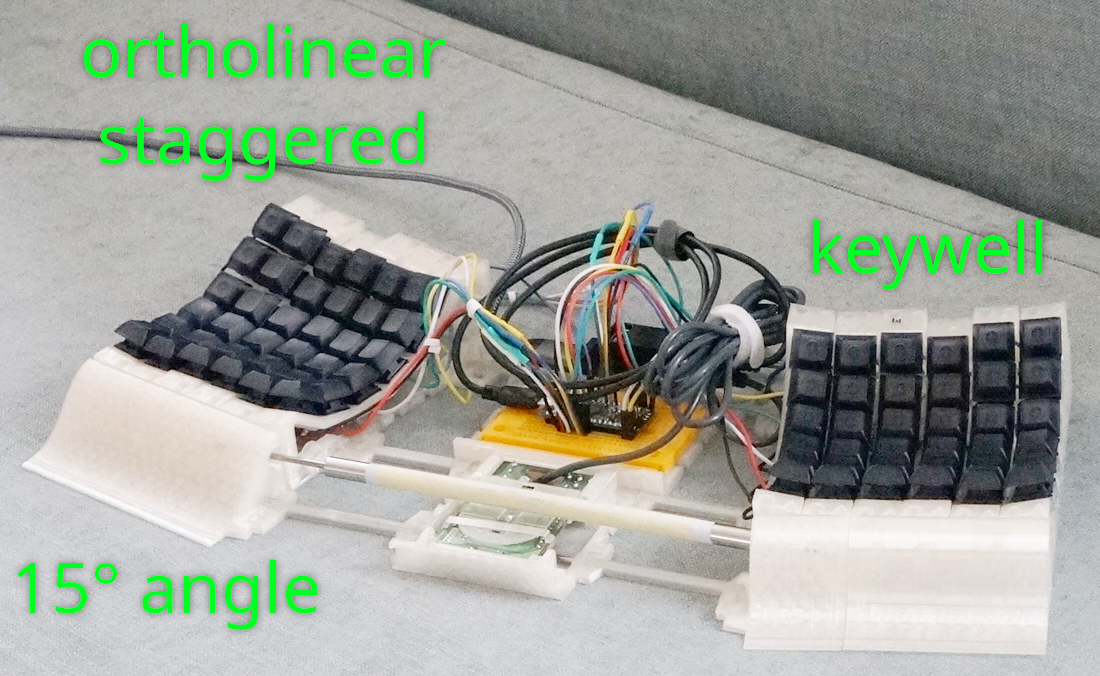
Essentially, this is an ortholinear split with a built-in roller bar mouse, which basically acts like a cylindrical trackball. There’s an outer pipe that slides left/right and rolls up and down, and this sits on a stationary inner rod. The actual mouse bit is from a Logitech M-BJ69 optical number.
[Kai] found it unpleasant to work the roller bar using thumbs, so mousing is done via the palm rests. You may find it somewhat unpolished with all that exposed wiring in the middle. But I don’t. I just worry about dust is all. And like, wires getting ripped out accidentally.
All Work and No Play Makes Jack a Dull Boy
As I write this, a terrible snowpocalypse is snuggling up to the southern and mid-western states. What a time to watch The Shining and check out the dullboy prototype by [Blind_Heim].
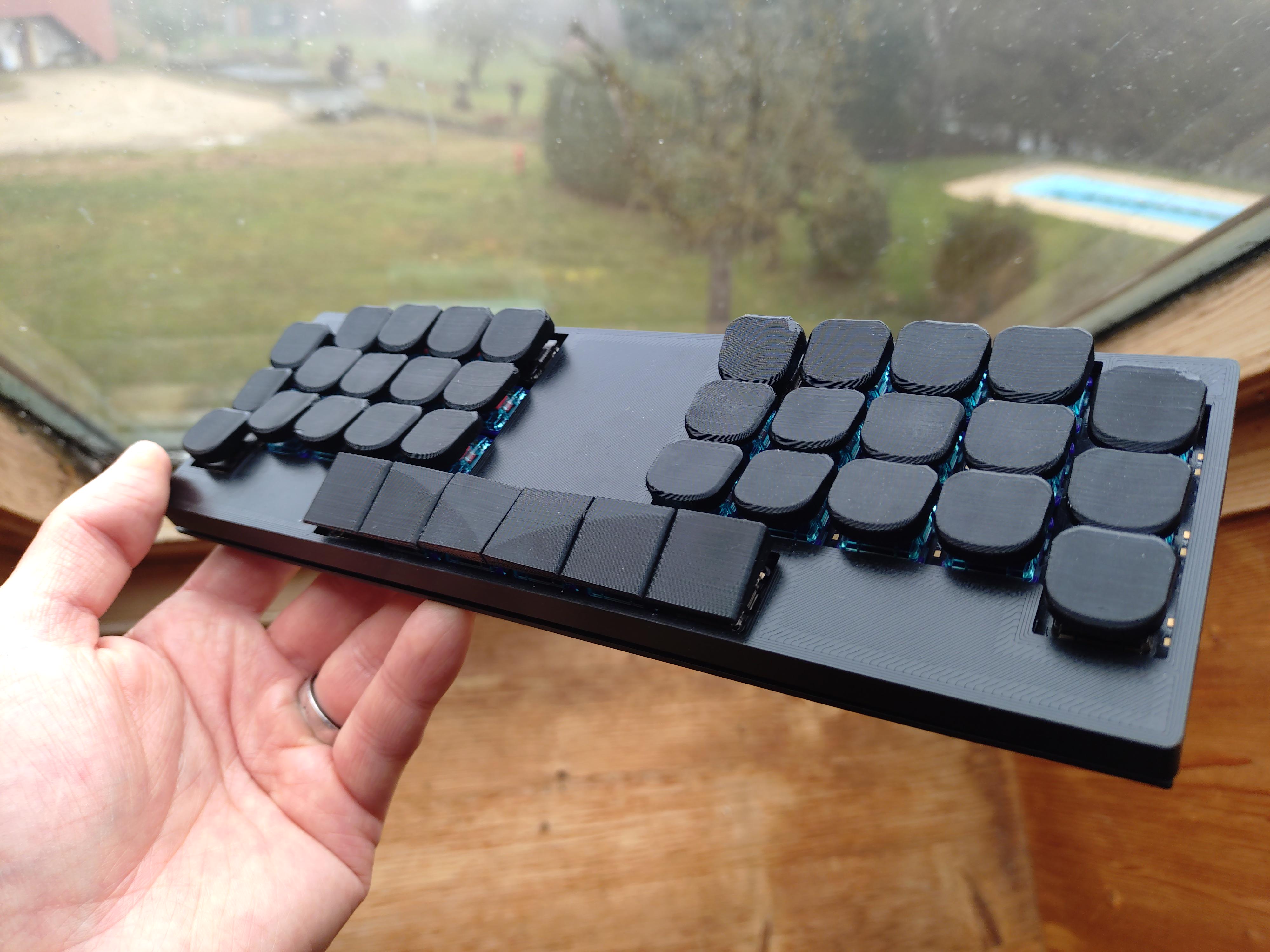
Rev 1 shown here has a nice!nano and supports v1 chocs only. Rev 2 will support v1 and v2, and will have a 40 mm Cirque trackpad in that middle space there. Rev 2 will also be open-source and entirely free of copyright, so watch out for that.
Regarding those thumb keys, [Blind_Heim] says that they wanted something ergonomic and monoblock at first, and so the angles were just for looks. But after using it, he realized they were actually quite useful when it comes to determining which key is which without having to look.
The Centerfold: Downtown Busy Town Is the Place to Be
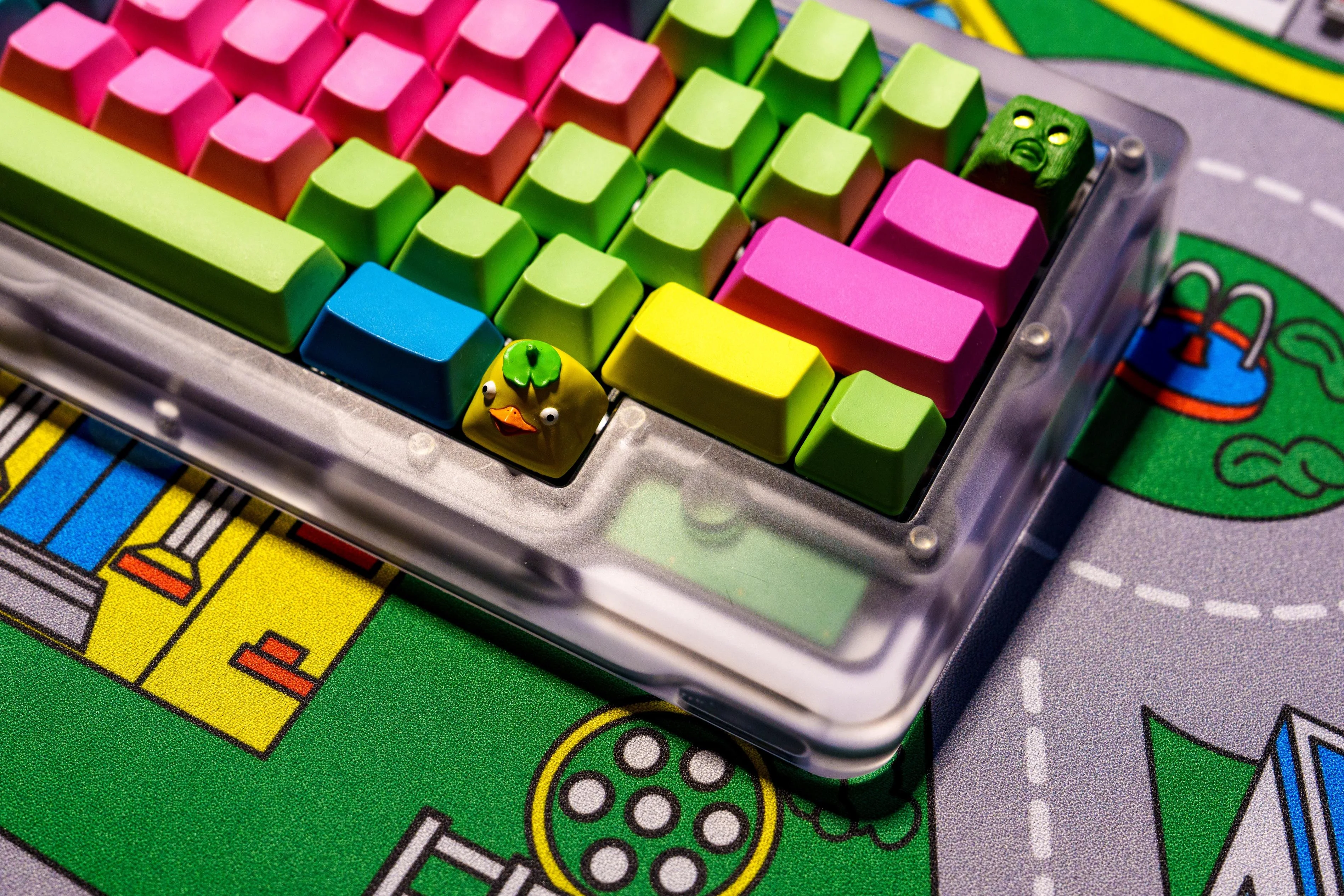
As for the keyboard, that’s a Norbauer Heavy Grail Ghost of Christmas Future edition, which was of course a limited release that’s long sold out. I’m sure there are other transparent bodies out there, but good luck finding a bug-eyed, duck-faced keycap.
Do you rock a sweet set of peripherals on a screamin’ desk pad? Send me a picture along with your handle and all the gory details, and you could be featured here!
Historical Clackers: the Saturn
The Virtual Typewriter Museum calls the 1899 Saturn “one of the most impractical machines ever, built with proverbial precision in Switzerland”.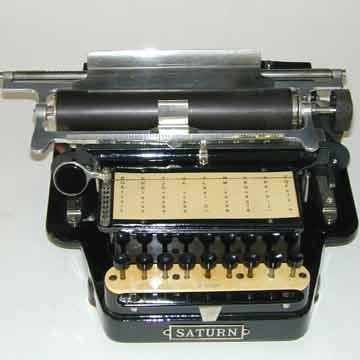
The operation of this blind writer is pretty interesting, and that’s putting it politely. There are nine U-shaped type bars: four on each side beneath the carriage, and one in the middle that swings up from behind.
Each of these type bars holds eight characters, and these are selected by moving a wire up and down the index card using that giant round selector button the left side. The you would strike one of the nine keys corresponding to the column your character appears in.
Evidently the lower case characters were laid out differently than the upper case, which made it even more difficult to use. But hey, Swiss precision.
There is not a lot of information out there about the Saturn, but the Virtual Typewriter Museum does have more shots of various angles.
Finally, a Keyboard Made of Marble and Ceramic
Apparently there was a Kickstarter near the end of 2025 for this thing. Well, this is the first I’ve heard of it. This here is the Keychron Q16 HE 8K ceramic and marble keyboard, which debuted at CES.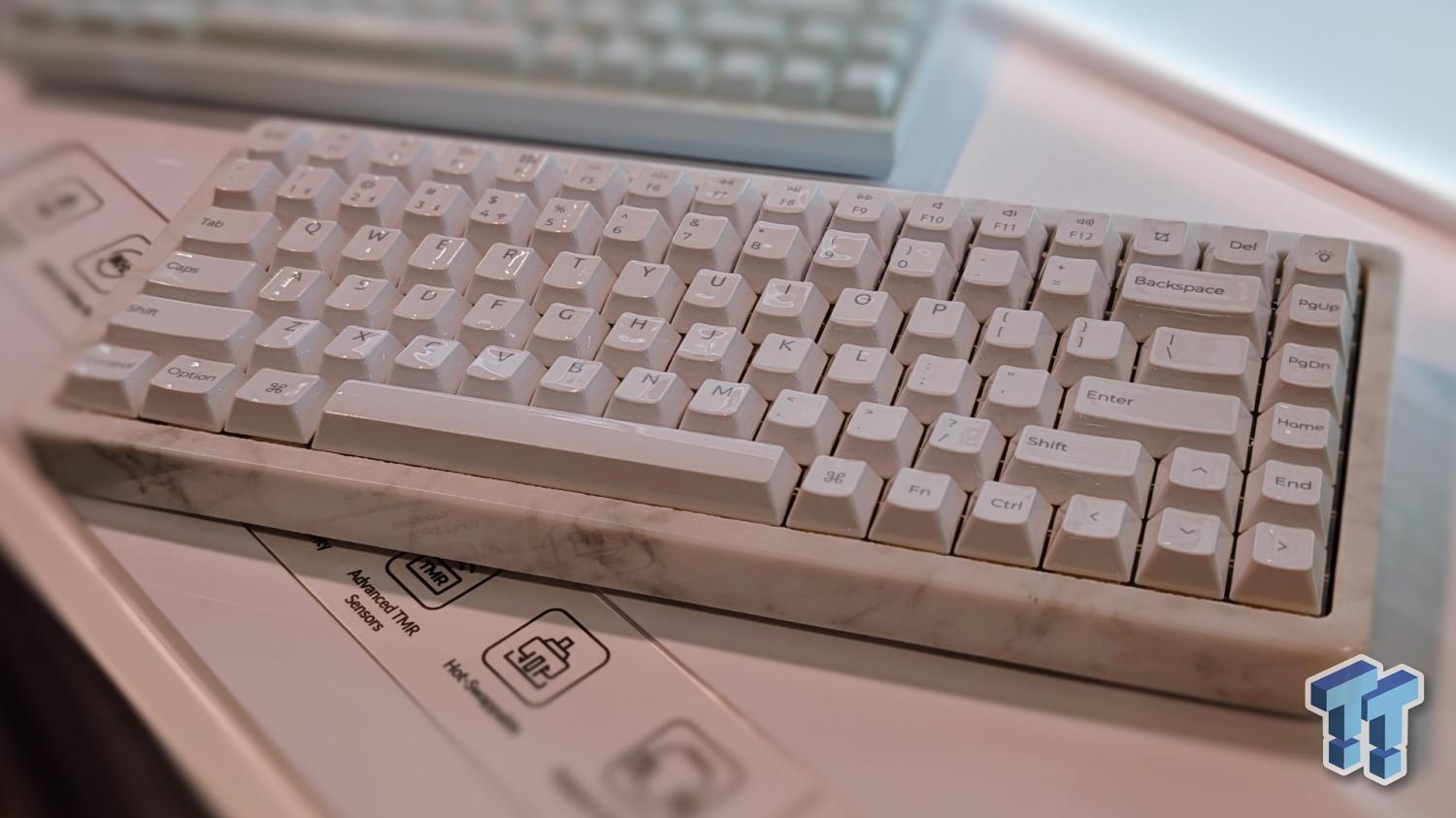
This is a luxury keyboard for sure, right down to the pre-lubed Keychron ultra-fast Lime magnetic switches which features Tunnel Magnetoresistance (TMR) and per-key adjustable actuation.
They say it’s built for gaming, but I don’t know. I think it’s built for whatever you want to use it for. It will be available in April. I sincerely hope that it’s like typing on little coffee cups, and it probably sounds amazingly thocky.
Now Tweak Town doesn’t have a whole lot to say about this keyboard, so I found a review to go with it. [YouallareToxic] has quite a bit to say about the keyboard. I think the biggest takeaway from this review is that this keyboard sounds like no other. [YouallareToxic] likens it to a frog guiro. A what? Check out the video below.
youtube.com/embed/X32OXzj6pPo?…
Got a hot tip that has like, anything to do with keyboards? Help me out by sending in a link or two. Don’t want all the Hackaday scribes to see it? Feel free to email me directly.
FLOSS Weekly Episode 863: Opencast: That Code is There for a Reason

This week Jonathan chats with Olaf Andreas Schulte and Lars Kiesow about Opencast, the video management system for education. What does Opencast let a school or university accomplish, how has that changed over the last decade, and what exciting new things are coming? Watch to find out!
youtube.com/embed/vgiw87_EEJo?…
Did you know you can watch the live recording of the show right on our YouTube Channel? Have someone you’d like us to interview? Let us know, or have the guest contact us! Take a look at the schedule here.
play.libsyn.com/embed/episode/…
Direct Download in DRM-free MP3.
If you’d rather read along, here’s the transcript for this week’s episode.
Places to follow the FLOSS Weekly Podcast:
Theme music: “Newer Wave” Kevin MacLeod (incompetech.com)
Licensed under Creative Commons: By Attribution 4.0 License
hackaday.com/2026/02/04/floss-…
A Keyboard for Anything, Without a Keyboard

There are many solutions for remote control keyboards, be they Bluetooth, infrared, or whatever else. Often they leave much to be desired, and come with distinctly underwhelming physical buttons. [konkop] has a solution to these woes we’ve not seen before, turning an ESP32-S3 into a USB HID keyboard with a web interface for typing and some physical keyboard macro buttons. Instead of typing on the thing, you connect to it via WiFi using your phone, tablet, or computer, and type into a web browser. Your typing is then relayed to the USB HID interface.
The full hardware and software for the design is in the GitHub repository. The macro buttons use Cherry MX keys, and are mapped by default to the common control sequences that most of us would find useful. The software uses Visual Studio Code, and PlatformIO.
We like this project, because it solves something we’ve all encountered at one time or another, and it does so in a novel way. Yes, typing on a smartphone screen can be just as annoying as doing so with a fiddly rubber keyboard, but at least many of us already have our smartphones to hand. Previous plug-in keyboard dongles haven’t reached this ease of use.
I, Integrated Circuit

In 1958, the American free-market economist Leonard E Read published his famous essay I, Pencil, in which he made his point about the interconnected nature of free market economics by following everything, and we mean Everything, that went into the manufacture of the humble writing instrument.
I thought about the essay last week when I wrote a piece about a new Chinese microcontroller with an integrated driver for small motors, because a commenter asked me why I was featuring a non-American part. As a Brit I remarked that it would look a bit silly were I were to only feature parts made in dear old Blighty — yes, we do still make some semiconductors! — and it made more sense to feature cool parts wherever I found them. But it left me musing about the nature of semiconductors, and whether it’s possible for any of them to truly only come from one country. So here follows a much more functional I, Chip than Read’s original, trying to work out just where your integrated circuit really comes from. It almost certainly takes great liberties with the details of the processes involved, but the countries of manufacture and extraction are accurate.
First, There’s The Silicon
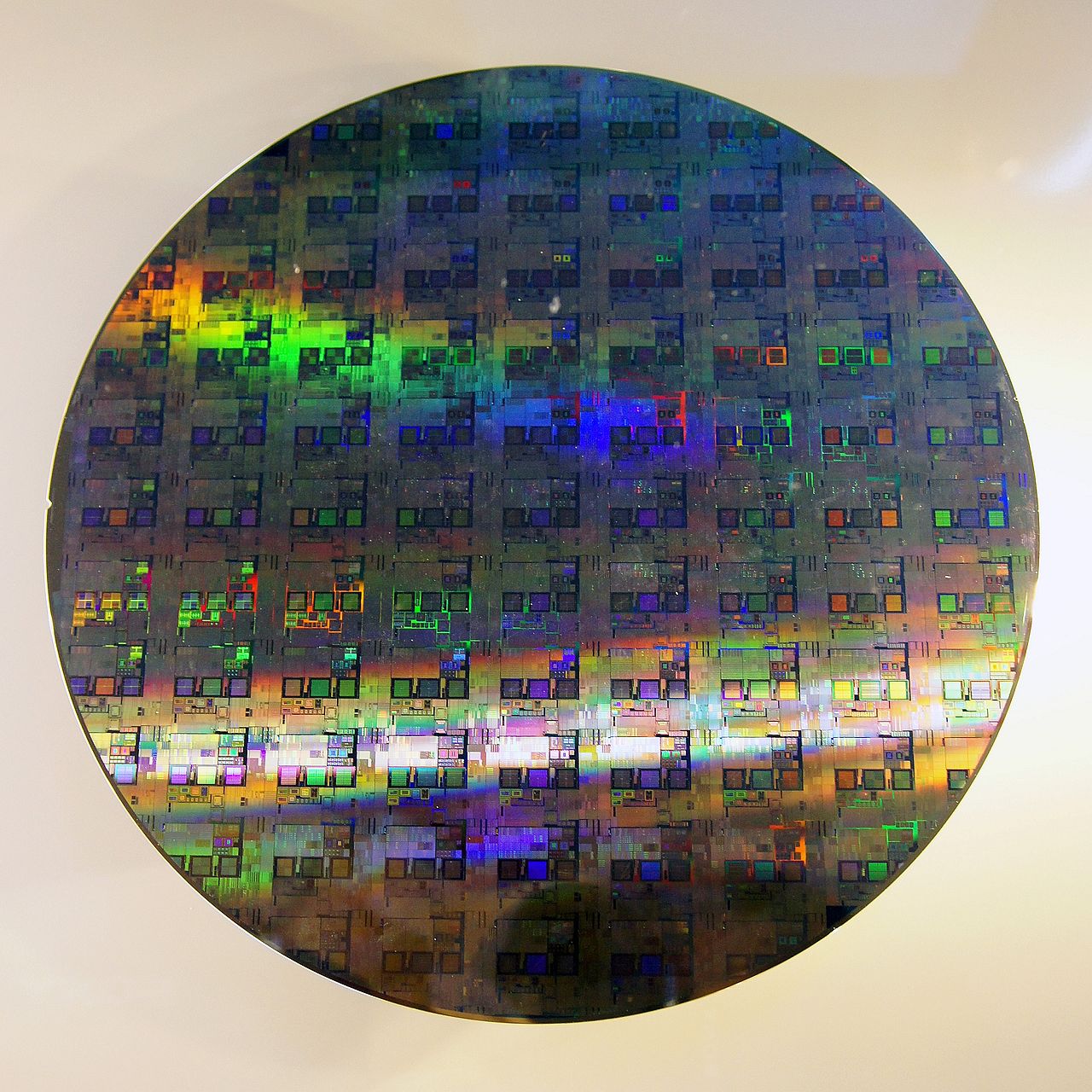
An integrated circuit, or silicon chip, is as its name suggests, made of silicon. Silicon is all around us in rocks and minerals, as silicon dioxide, which we know in impure form as sand. The world’s largest producer of silicon metal is China, followed by Russia, then Brazil. So if China and Russia are off the table then somewhere in Brazil, a Korean-made continuous bucket excavator scoops up some sand from a quarry.
That sand is taken to a smelting plant and fed with some carbon, probably petroleum coke as a by-product from a Brazilian oil refinery, into a Taiwanese-made submerged-arc furnace. The smelting plant produces ingots of impure silicon, which are shipped to a wafer plant in Taiwan. There they pass through a German-made zone refining process to produce the ultra-pure silicon which is split into wafers. Taiwan is a global centre for semiconductor foundries so the wafers could be shipped locally, but our chip is going to be made in the USA. They’re packed in a carton made from Canadian wood pulp, and placed in a container on a Korean-made ship bound for an American port. There it’s unloaded by a German-made container handling crane, and placed on a truck for transport to the foundry. The truck is American, made in the great state of Washington.
Then, There’s The Package And Leads
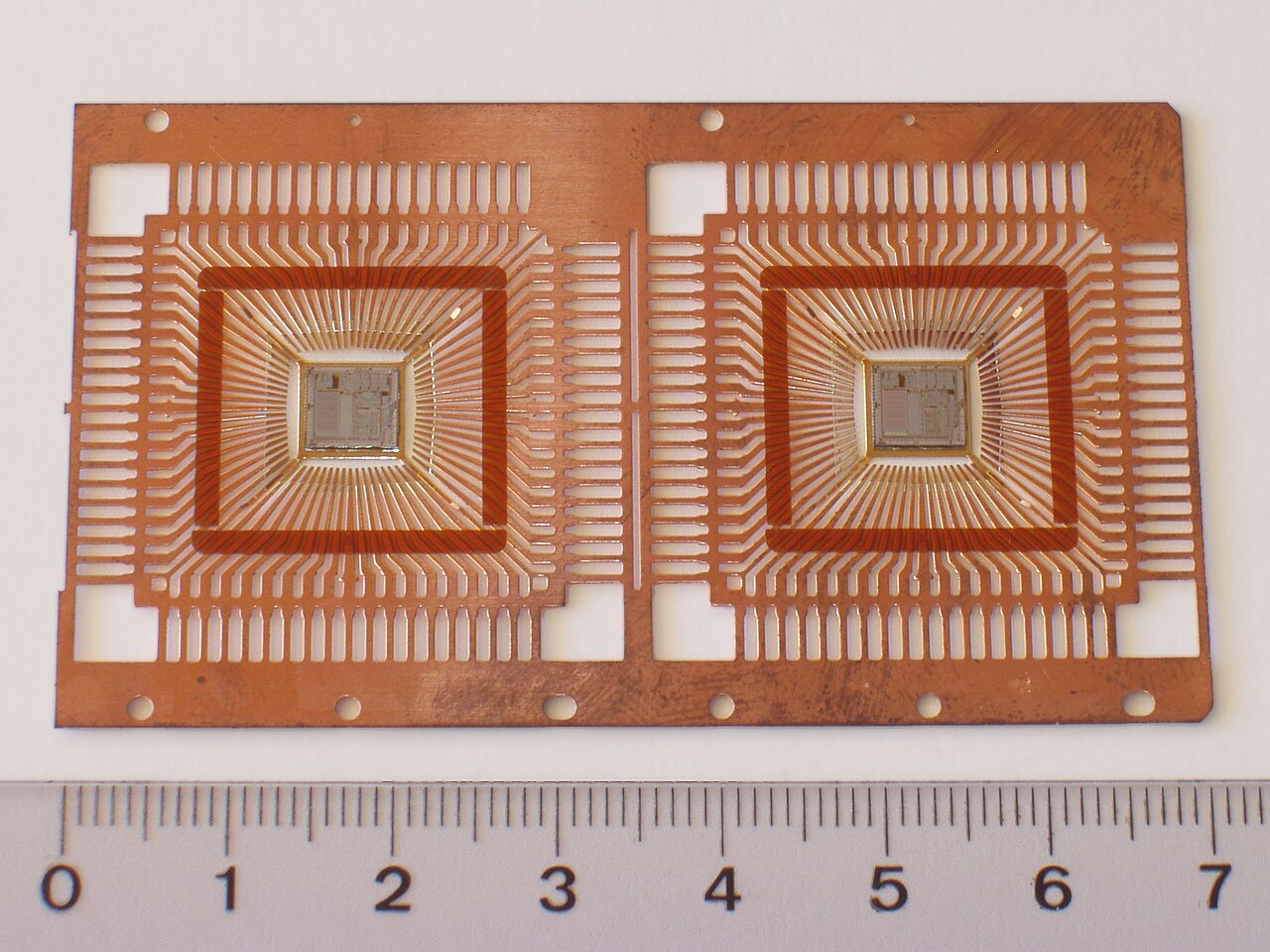
Our integrated circuit is the chip itself, but in most cases it’s not just the bare chip. It’s supplied potted in an epoxy case, and with its contacts brought out to some kind of pins. The epoxy is a petrochemical product, while the lead frame is either stamped or chemically etched from metal sheet and plated.
So, somewhere in the Chilean Atacama desert, an American-made dragline excavator is digging out copper ore from the bottom of a huge pit. The ore is loaded into Japanese-made dump trucks, from where it’s driven to a rail head and loaded into ore carrier cars. The American-made locomotives take it to a refining plant where machinery installed by a Finnish company smelts and refines it into copper ingots. These are shipped to Sweden aboard a German-made ship, unloaded by a German-made crane, and delivered to a specialised metal refiner on a Swedish-made truck.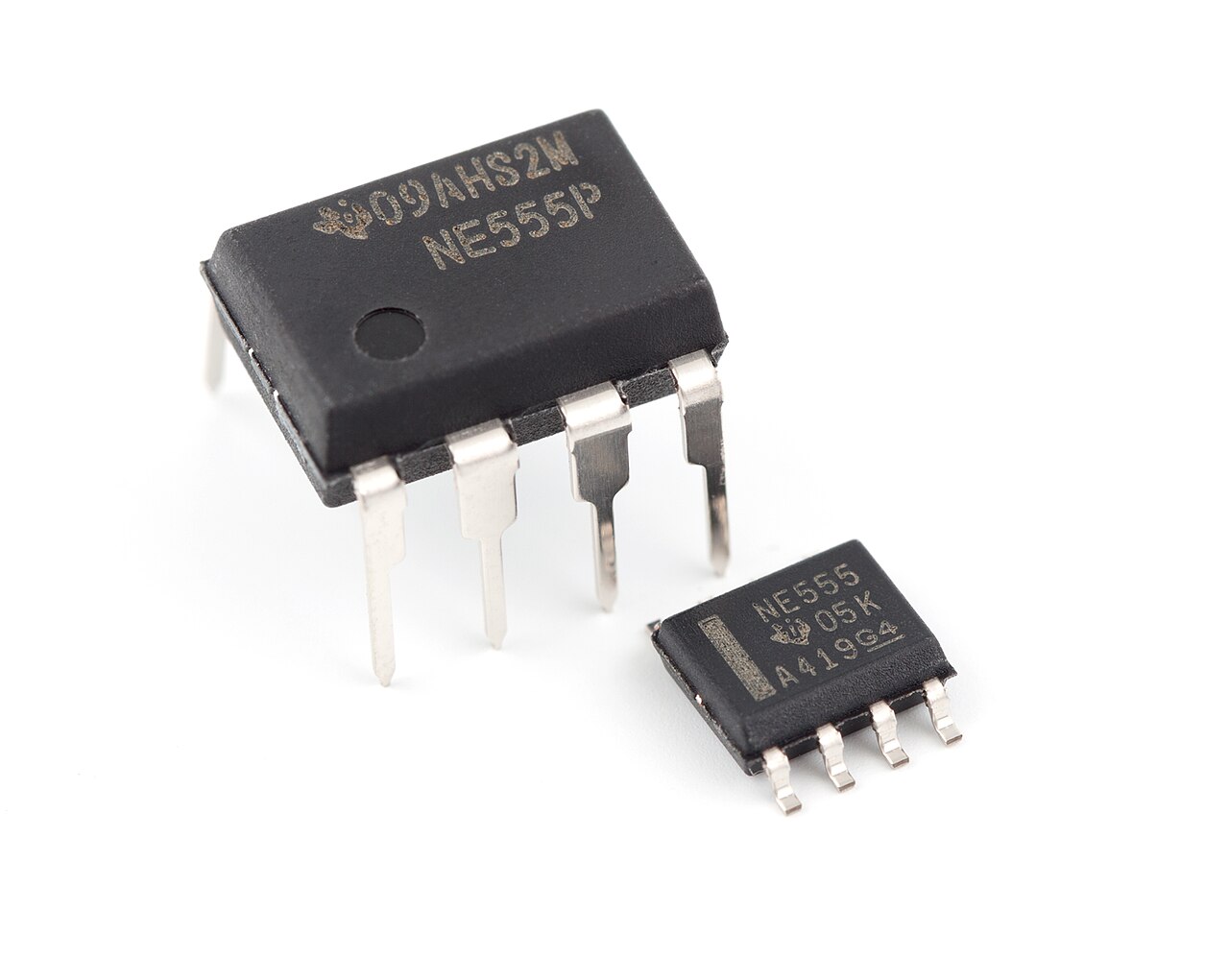
Meanwhile underground in Ontario, Canada, Swedish-made machinery scoops up nickel ore and loads it onto a Swedish-made mine truck. At the nickel refining plant, which is Canadian-made, the sulphur and iron impurities are removed, and the resulting nickel ingots travel by rail behind a Canadian-made (but American designed) locomotive to a port, where an American made crane loads them into an Italian-made ship bound for Sweden. Another German crane and Swedish truck deliver it to the metal refiner, where a Swedish-made plant is used to create a copper-nickel alloy.
A German-made rolling plant then turns the alloy into a thin sheet, shipped in a roll inside a container on a Japanese-made container ship bound for the USA. Eventually after another round of cranes, trains, and trucks, all American this time, it arrives at the company who makes lead frames. They use a Japanese-made machine to stamp the sheet alloy and create the frames themselves. An American-made truck delivers them to the chip foundry.
At a petrochemical plant in China, bulk epoxy resin, plasticisers, pigments, and other products are manufactured. They are supplied in drums, which are shipped on a Chinese-made container ship to an American port where American cranes and trucks do the job of delivering them to an epoxy formulation company. There they are mixed in carefully-selected proportions to produce American-made epoxy semiconductor moulding compound, which is delivered to the chip foundry on an American-made truck.
Bringing all Those Countries’ Parts Together
The foundry now has the silicon wafers, lead frames, and epoxy it needs to make an integrated circuit. There are many other chemicals used in its process, but for simplicity we’ll take those three as being the parts which make an IC. What they don’t yet have is an integrated circuit to make. For that there’s a team of high-end engineers in a smart air-conditioned office of an American semiconductor company in California. They are integrated circuit designers, but they don’t design everything. Instead they buy in much of the circuit as intellectual property, which can come from a variety of different countries. Banging the drum as a Brit I’m sure you’ll all know that ARM cores come from Cambridge here in the UK, just to name the most obvious example. So British, German, Dutch, American, and Canadian IP is combined using American software and the knowledge of American engineers, and the resulting design is sent to the foundry.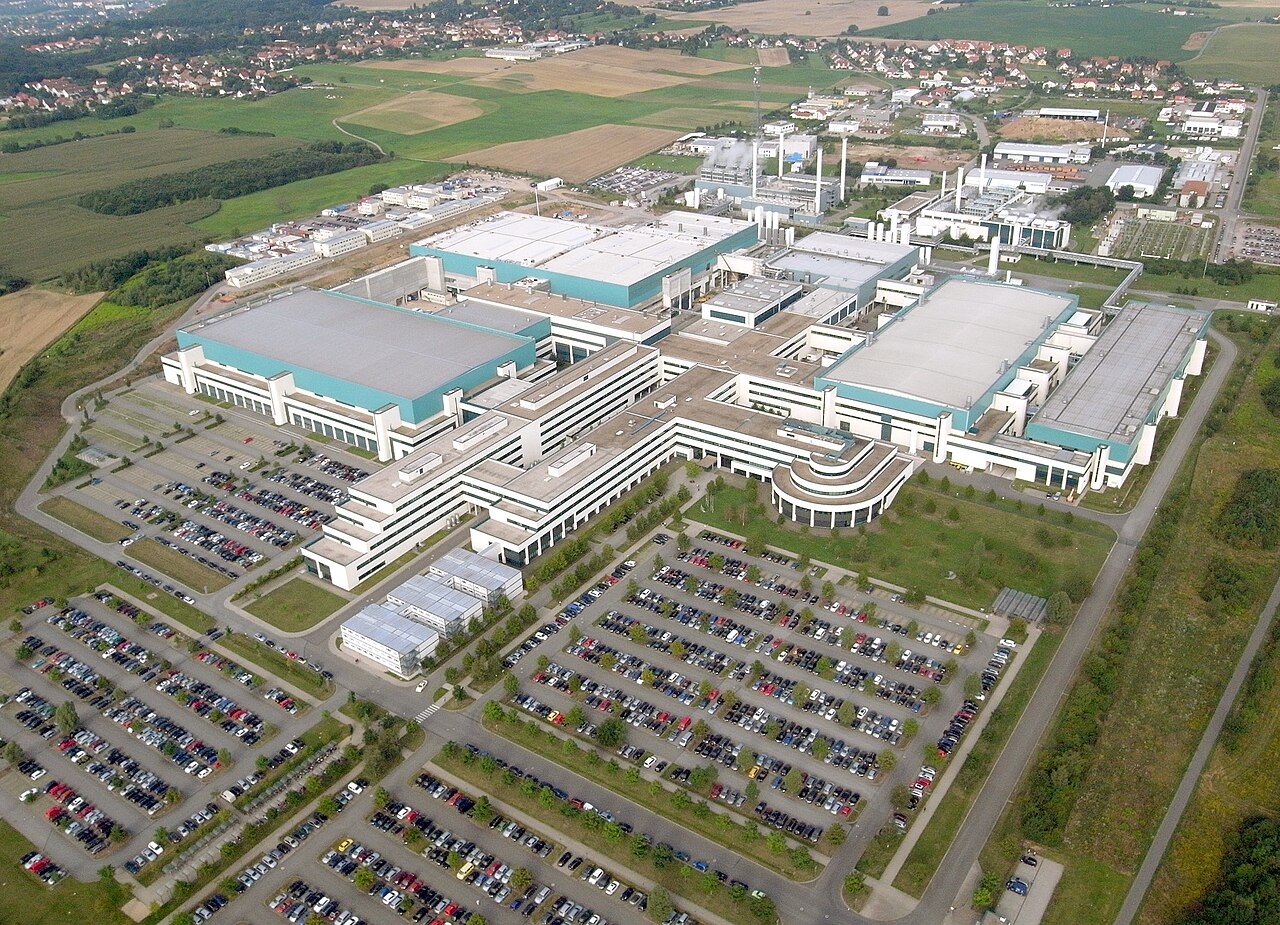
The process machinery of an integrated circuit foundry lies probably at the most bleeding edge of human technology. The machines this foundry uses are mostly from Eindhoven in the Netherlands, but they are joined by American, German, Japanese, and even British ones. Even then, those machines themselves contain high-precision parts from all those countries and more, so that Dutch machine is also in part American and German too.
Whatever magic the semiconductor foundry does is performed, and at the loading bay appear cartons made from Canadian wood pulp containing reels made from Chinese bulk polymer, that have hundreds of packaged American-made integrated circuits in them. Some of them are shipped on an American truck to an airport, from where they cross the Atlantic in the hold of a pan-European-manufactured jet aircraft to be shipped from the British airport in a German-made truck to an electronics distributor in Northamptonshire. I place an order, and the next day a Polish bloke driving an American-badged van that was made in Turkey delivers a few of them to my door.
The above path from a dusty quarry in Brazil to my front door in Oxfordshire is excessively simplified, and were you to really try to find every possible global contribution it’s likely there would be few countries left out and this document would be hundreds of pages long. I hope mining engineers, metallurgists, chemists, and semiconductor process engineers will forgive me for any omissions or errors. What I hope it does illustrate though is how connected the world of manufacturing is, and how many sources come together to produce a single product. Read’s 1958 pencil is alive and well.


Anlasslose Massenüberwachung: Harter Stand für die Vorratsdatenspeicherung
netzpolitik.org/2026/anlasslos…
