
Retrotechtacular: The Noisy Home Computer from 1967

[Rex Malik] didn’t need an alarm clock. That’s because he had one of two “home computer terminals” next to his bed and, as you can see in the video below, it made quite a racket. The terminal looks like an ASR33 with some modifications. In 1967, it was quite a novelty and, of course, it didn’t have any real processing power. It connected to an “invisible brain” ten miles away.
What do you do with a computer in 1967? Well, it looks like you could trade stocks. It also apparently managed his shopping list and calendar. His young son also learned some letters and numbers. We’d love to hear from the young [Mr. Malik] today to find out what kind of computer he’s using now.
The BBC announcer made some fair predictions. One day, they supposed, every home would have a computer “point” to plug in a rented terminal. They were saying the rent was, at that time, £30 a week. That was relatively steep in those days. Especially considering it couldn’t play Doom or download cat memes.
We couldn’t help but notice that [Malik’s] bedroom had a single bed. With the TeleType going off at all hours, we aren’t really surprised. While it might not be able to download cat memes, the old TeleTypes could download a text-based web page. Well, once there was a web, anyway. This beats the kitchen computer, although we have to admit that at least the kitchen device was really a computer in your home.
youtube.com/embed/w6Ka42eyudA?…

How to Use the AT24C32 EEPROM for 4KB External Memory for Microcontrollers

Over on YouTube [Electronic Wizard] explains how to use the AT24C32 EEPROM for external memory for microcontrollers.
He begins by explaining that you don’t want to try modifying your microcontroller flash memory for storing settings, you want to use a separate EEPROM for that. Sometimes your microcontroller will have EEPROM memory attached, but you might still find yourself needing to attach more. The AT24C32 EEPROM is a 4KB non-volatile memory chip. It’s available in various 8-pin packages and two voltage levels, either 2.7 to 5.5 volts or 1.8 to 5.5 volts, and it’s programmed using the I2C protocol.
The AT24C32 has three address pins, A{0,1,2}, a Serial Data pin (SDA), a Serial Clock Input (SCL), and a Write Protect pin. He explains how to use the address pins to set the device I2C address and goes into some detail about how the I2C protocol works. Microcontrollers usually have an API for talking to I2C devices, for STM32 controllers that is functions such as HAL_I2C_Master_Transmit(). He refers the viewer to the datasheet for how to accomplish various write and read operations over I2C. The AT24C32 uses 16 bits for addresses of which only 12 are relevant (13 bits are relevant for the 8KB version of the EEPROM the AT24C64).
If you’re interested in EEPROMs you might also like to read Erasing EEPROMs Isn’t Always As Easy As It Seems and How Do You Test If An EEPROM Can Hold Data For 100 Years?
youtube.com/embed/_Ke4A_McTEY?…
The Incrediplotter: Voice Controlled Plotter from Repurposed Printer

There’s something uniquely satisfying about a pen plotter. Though less speedy or precise than a modern printer, watching a pen glide across the page, mimicking human drawing, is mesmerizing. This project, submitted by [Jacob C], showcases the Incrediplotter, a brilliant repurposing of a 3D printer built by him and his brother.
Starting with a broken 3D printer, [Jacob C] and his brother repurposed its parts to create a voice-controlled pen plotter. They 3D-printed custom components to adapt the printer’s framework for plotting. An STM32 Blue Pill running Klipper controls two TMC2208 motor drivers for the x- and y-axes, while a small standalone servo manages the pen’s height.
The unique twist lies in the software: you can speak to the plotter, and it generates a drawing based on your prompt without needing to select an image. The process involves sending the user’s voice prompt to Google Gemini, which generates an image. The software then converts this image into an SVG compatible with the plotter. Finally, the SVG is translated into G-Code and sent to the plotter to start drawing.
Thanks to [Jacob C] for sharing this impressive project. It’s a fantastic example of repurposing a broken machine, and the voice-to-image feature adds a creative twist, enabling anyone to create unique artwork. Be sure to check out our other featured plotter hacks for more inspiration.
youtube.com/embed/jlRw-0B5N8U?…
A Love Letter to Internet Relay Chat

Although kids these days tend to hang out on so-called “Social Media”, Internet Relay Chat (IRC) was first, by decades. IRC is a real-time communication technology that allows people to socialize online in both chat rooms and private chat sessions. As a decentralized communication protocol, anyone can set up an IRC server and connect multiple servers into networks, with the source code for these servers readily available ever since its inception by a student, and IRC clients are correspondingly very easy to write. In a recent video [The Serial Port] channel dedicates a video to IRC and why all of this makes it into such a great piece of technology, not to mention a great part of recent history.
Because of the straightforward protocol, IRC will happily work on even a Commodore 64, while also enabling all kinds of special services (‘bots’) to be implemented. Even better, the very personal nature of individual IRC networks and channels on them provides an environment where people can be anonymous and yet know each other, somewhat like hanging out at a local hackerspace or pub, depending on the channel. In these channels, people can share information, help each other with technical questions, or just goof off.
In this time of Discord, WhatsApp, and other Big Corp-regulated proprietary real-time communication services, it’s nice to pop back on IRC and to be reminded, as it’s put in the video, of a time when the Internet was a place to escape to, not escape from. Although IRC isn’t as popular as it was around 2000, it’s still alive and kicking. We think it will be around until the end days.
youtube.com/embed/6UbKenFipjo?…
Arriva Cephalus! Il gruppo ransomware che attacca tramite la sostituzione DLL
A metà agosto, i ricercatori hanno incontrato il ransomware Cephalus in due incidenti separati. Tra le recenti emergenze di famiglie come Crux e KawaLocker, una richiesta di riscatto che iniziava con le parole “Siamo Cephalus” ha attirato l’attenzione. In entrambi i casi, gli aggressori hanno ottenuto l’accesso iniziale tramite RDP utilizzando credenziali compromesse senza autenticazione a più fattori e hanno utilizzato il servizio cloud MEGA per potenzialmente far trapelare i dati.
L’aspetto più rilevante della catena di attacco è stato il metodo di lancio del ransomware. I criminali hanno fatto ricorso alla sostituzione delle DLL utilizzando il componente legittimo SentinelOne: il file SentinelBrowserNativeHost.exe è stato avviato dalla directory Download, prelevando la libreria SentinelAgentCore.dll, che a sua volta ha caricato il file data.bin con il codice ransomware.
Su uno degli host, il tentativo è stato bloccato da Microsoft Defender, mentre sull’altro è stata avviata la crittografia. Non sono stati rilevati parametri della riga di comando durante l’avvio, il che indica indirettamente l’assenza di una distribuzione “di rete” tra le condivisioni disponibili.
È importante sottolineare che entrambe le organizzazioni interessate utilizzavano effettivamente i prodotti SentinelOne. Allo stesso tempo, il fatto che SentinelBrowserNativeHost.exe sia finito nella cartella Download appare insolito: la telemetria ha mostrato milioni di avvii legittimi di questo file eseguibile nelle infrastrutture dei clienti al giorno, ma non dalla cartella Download degli utenti, il che rende tale posizione un buon indicatore di attività sospetta. I moderni sistemi SIEM sono in grado di rilevare tali anomalie: ad esempio, la regola DLL_Side_Loading in MaxPatrol SIEM rileva la sostituzione della creazione della libreria nella cartella con il file binario e il suo successivo caricamento nel processo.
Prima della crittografia, Cephalus cerca di privare il sistema di qualsiasi possibilità di ripristino e di accecare le difese. E’ stato osservato l’eliminazione delle copie shadow del volume e una sequenza di comandi PowerShell e modifiche al registro volte a disabilitare i componenti di Windows Defender , aggiungere esclusioni e interrompere i servizi correlati. Queste azioni hanno preceduto la creazione della nota e il processo di crittografia stesso, il che corrisponde alle tattiche tipiche dei gruppi moderni.

Un altro dettaglio sono le note con le richieste. Nei casi rilevati, il testo iniziava con una presentazione diretta (“Siamo Cephalus”), conteneva affermazioni sul furto di “dati riservati” e istruzioni per contattarli. A differenza delle varianti precedentemente pubblicate sui social network, la nota era indirizzata al dominio dell’organizzazione vittima e includeva link a due “articoli di giornale” su precedenti attacchi Cephalus, presumibilmente per aumentare la pressione e dare un’apparenza di “notorietà“. In alcuni casi, alla vittima veniva chiesto di seguire il link GoFile e, con una password, di controllare un campione dei file presumibilmente rubati.
In entrambi gli incidenti, MEGAsync non era solo un endpoint per lo scambio, ma anche nella linea di processo sull’host: MEGAcmdUpdater.exe veniva avviato e, in uno degli incidenti, persino tramite Task Scheduler. Questo rientra nel modello della doppia estorsione, in cui la crittografia è integrata da un’esfiltrazione preliminare.
L’insieme delle caratteristiche tecniche forma già un profilo riconoscibile. Le osservazioni includevano l’estensione “.sss” per i file crittografati e il file di note “recover.txt”. Gli artefatti includono il percorso C:Users[user]Downloads come directory di lavoro dell’operatore, il nome della workstation Desktop-uabs01 e i checksum dei componenti della catena: SHA-256 per SentinelBrowserNativeHost.exe – 0d9dfc113712054d8595b50975efd9c68f4cb8960eca010076b46d2fba3d2754 e per SentinelAgentCore.dll – 82f5fb086d15a8079c79275c2d4a6152934e2dd61cc6a4976b492f74062773a7.
Cephalus si inserisce nel familiare panorama dei ransomware, ma combina vecchi punti di ingresso con una tecnica di avvio non banale tramite un eseguibile legittimo. Le implicazioni pratiche per i difensori rimangono rilevanti: chiudere RDP senza MFA, monitorare lanci anomali di SentinelBrowserNativeHost.exe, soprattutto dalle directory utente, limitare o controllare l’uso di MEGA e strumenti simili e monitorare qualsiasi tentativo di interferire con le impostazioni e i servizi di Windows Defender. Maggiore è la visibilità delle azioni prima della crittografia, maggiore è la possibilità di fermare l’attacco prima che compaiano “note” e tempi di inattività.
L'articolo Arriva Cephalus! Il gruppo ransomware che attacca tramite la sostituzione DLL proviene da il blog della sicurezza informatica.
Ore Formation Processes, Part Two: Hydrothermal Boogaloo

There’s a saying in mine country, the kind that sometimes shows up on bumper stickers: “If it can’t be grown, it has to be mined.” Before mining can ever start, though, there has to be ore in the ground. In the last edition of this series, we learned what counts as ore (anything that can be economically mined) and talked about the ways magma can form ore bodies. The so-called magmatic processes are responsible for only a minority of the mines working today. Much more important, from an economic point of view, are the so-called “hydrothermal” processes.
Image: “Gyser Yellowstone” by amanderson2, CC BY 2.0
When you hear the word “hydrothermal” you probably think of hot water; in the context of geology, that might conjure images of Yellowstone and regions like it : Old Faithful geysers and steaming hot springs. Those hot springs might have a role to play in certain processes, but most of the time when a geologist talks about a “hydrothermal fluid” it’s a lot hotter than that.
Is there a point on the phase diagram that we stop calling it water? We’re edging into supercritical fluid territory, here. The fluids in question can be hundreds of degrees centigrade, and can carry things like silica (SiO2) and a metal more famous for not dissolving: gold. Perhaps that’s why we prefer to talk about a “fluid” instead of “water”. It certainly would not behave like water on surface; on the surface it would be superheated steam. Pressure is a wonderful thing.
Let’s return to where we left off last time, into a magma chamber deep underground. Magma isn’t just molten rock– it also contains small amounts of dissolved gasses, like CO2 and H2O. If magma cools quickly, the water gets trapped inside the matrix of the new rock, or even inside the crystal structure of certain minerals. If it cools slowly, however? You can get a hydrothermal fluid within the magma chamber.
Peg It as a Pegmatite
This can create what’s called a pegmatite deposit. Strictly speaking, “pegmatite” refers to rock with a specific texture; when we’re talking about ore, we’re almost always referring to granitic pegmatites: that is, granite rocks with this texture. That texture is big crystals: centimeter size or bigger. Crystals grow large in a pegmatite deposits in part because of the slow cooling, but in part because of the action of the hydrothermal fluid that is squeezed out of the slowly-cooling rock.
Again, we’re talking about a fluid that’s hundreds of degrees Celsius: seriously supercritical stuff. It can carry a lot of ions. Circulating through the magma chamber, this ion-rich fluid brings each crystal all the metal ions it needs to grow to its full potential. Maybe that’s a garnet the size of your fist, or feldspar crystals like pink playing cards. The ions in the fluid can be leftovers from the earlier melt, but may also include material scoured from surrounding rocks.
Aside from the spectacular granite counter tops and semiprecious gems that sometimes come out of these deposits, granitic pegmatites come in two types: lithium-rich and rare-earth element rich. The lithium rich pegmatites are often called LCT deposits, the letters standing for Lithium, Cesium and Tantalum, the metals of interest. Those–especially the first and last–are not exactly metals of low consequence in this electronic era. That goes double for the rare-earth elements. Especially in North America, there’s a great deal of active prospecting searching for these increasingly valuable deposits.
Image: Mataresephotos, CC-BY-3.0
Mines have been sunk to extract boron, fluorine, tin, and uranium from pegmatite deposits as well. Of particular note to Hackaday readers would be the mineral Muscovite, a course-grained mica often found in pegmatites, among other locales. Muscovite mica has excellent dielectric properties and fractures easily into thin sheets, making it very useful in capacitors and high voltage applications. The high thermal stability and voltage tolerance of mica capacitors makes them invaluable even today in niche applications, even though ceramics have taken over most of their original uses.
One thing to note about these deposits is that they are not necessarily going to be restricted to Earth. Don’t let the “hydro” in “hydrothermal” fool you– this process is occurring deep underground, in a magma chamber with no access to any surface water. The H2O involved is coming up from the mantle, and the mantle of every rocky body does contain trace water. That even holds true for the Earth’s moon; while older sources will declare that no hydrothermal processes are possible there, newer work has led to a reevaluation of how “wet” lunar rock really is, and re-opened the possibility of lunar pegmatites. Given that, there’s no reason not to expect the process to be at work on every rocky body in the solar system. Look for granitic rock, and you might find an interesting pegmatite.
Orogenic Ores
If the hydrothermal fluid stays put in a magma chamber, it can create pegmatite deposits, but if it breaks free, you’ll find something completely different. Running through faults, fissures, and cracks in the surrounding rock, the somewhat-lower-temperature fluid will have a different mineral content depending both on the melt and the host rock. These hydrothermal vein deposits are sometimes called orogenic ore deposits, because they are often associated with mountain building, which geologists call orogeny.
That doesn’t mean you need to look near mountains: the gold fields of Kirkland Lake, mentioned last time, are actually an orogenic deposit, and Kirkland Lake sits near the middle of the Canadian Shield, as far from any (modern) mountains as you are likely to find. There may have been mountains there, once, but they were eroded away by the time the Dinosaurs walked the Earth. What you will find there are shocking white veins of quartz shooting through the granite of the Canadian Shield– evidence of the hydrothermal fluid’s ability to carry dissolved silica through fissures of the rock– interspersed with flecks and pebbles of gold. Most gold started in hydrothermal deposits like this one, but in an ironic twist, most of the gold humans have mined is actually from a different type of deposit we’ll get to later. For now we’ll say there are secondary processes at work on this planet and leave it at that.
Gold isn’t the only thing to be found in these hydrothermal veins: native silver and copper mines have also been found chasing quartz veins. Cobalt, Molybdenum, even Tin and Tungsten may be found, though not necessarily in native form. To a geologist, note that the word “native” has nothing to do with tribal affiliation, and everything to do with elemental composition. “Native” metals are just that: metals. Native copper is a lump of Cu, not chemically bound into any mineral.
As you might imagine, native metals are among the most desirable of ores, as they often require very little by way of refining. For that reason, until perhaps Greenland or Antarctica’s melting glaciers expose new lands to prospecting, you’re not likely to ever see a new mine producing native copper.
The redox conditions of the fluid are hugely important here: as you might imagine, native metals aren’t going to precipitate from an oxidizing fluid. Redox reactions are hard enough in chemistry class, though; bring them into the world of geochemistry and it gets hugely complicated. Nature is a messy system with too many variables to easily predict.
That’s something many a prospector has found out to his chagrin, for not every vein of quartz will bear metals. On the other hand, enough quartz veins do that “look for veins of quartz” was common advice for prospectors once upon a time. Not all metal-bearing veins may not be entirely quartz, either; many contain quite a lot of carbonate minerals like calcite. The hydrothermal fluid may start out with different amounts of metals dissolved within it, depending on the source magma; it may also scour more or different minerals from the host rocks it flows through. Veins may go on for miles of nothing but quartz before something in composition of the rock, or its temperature, or the pH causes the fluid to start depositing valuable minerals. Geology can be a crapshoot like that.
Of Course It’s More Complex
The above description is somewhat misleading as it makes it sound like vein deposits can only be produced from hydrothermal fluid coming from magma, but that is untrue. It is also possible that surface water (called “meteoric” water by geologists who want to confuse you into thinking about space rocks) can trickle down through fractured rocks until it
Image: Navicore, CC-BY-3.0
reaches a hot-zone and picks up elements by dissolving minerals. A mix of meteoric and “crustal” water (that is, water from magma) may be present in a balance that changes over time. It should also be noted that this water can form a convective circuit, down to the hot zone (or melt) to pick up new minerals, then circulate upwards to deposit them in colder rock. Because this circulating fluid is cooler than in the case of fluids coming directly from a melt (“only” three or four hundred degrees Celsius) , they are sometimes called “epithermal” fluids, and the resulting veiny deposits can be called “epithermal” deposits. Those temperatures are not too far off from what you might find in geyser country. While I’m not suggesting anyone go digging under Old Faithful right now, it might be an interesting locality in a few million years or so.
Epithermal/orogenic/quartz vein deposits don’t need meteoric water– crustal water can be enough–but I have seen no references suggesting they might be found on the Moon. Mars, on the other hand, seems to have every condition required, so there may well be gold in them thar’ Arean hills. Meteorites believed to have come from Vesta show evidence of quartz veinlets as well, so don’t count out larger planetoids when talking about hydrothermal processes either.
There are other high-temperature hydrothermal deposits other than granitic pegmatites we haven’t yet gotten into; there are also several lower-temperature types that are likely to be exclusive to Earth. This entry in our series is getting long enough, however, so we will return to the theme of hydrothermal ore deposits another day.
Making an Ultralight Helicopter

Ultralight aviation provides an excellent pathway for those who want to fly, but don’t want to get licensed. These quite often cheap and cheerful DIY aircraft often hide some excellent engineering underneath. This is no more true than in [ultralight helicopter’s] four-year-long helicopter build saga!
While most ultralight builds are fixed-wing, a rotocraft can meet all the legal definitions of ultralight aviation. This helicopter is an excellent example of what’s possible with a lot of time and patience. The construction is largely aluminium with some stainless steel on the skids. A 64-horsepower Rotax 582UL engine powers the two-bladed main rotor and tail rotor. The drivetrain features a multi-belt engine coupler and three gearboxes to ensure correct power output to the two rotors.
It features a control layout familiar to any helicopter pilot with foot pedals that control the rotor pitch for anti-torque control. A cyclic in front of the pilot controls the rotor’s cyclical movements, resulting in forward and sideways flight control. A collective with integrated throttle controls the overall main rotor pitch for altitude and climb control. Finally, a simple clutch sits next to the collective for engine start and idles.
The build was meticulous, with nearly everything from the swashplate to the gearboxes custom-machined. The balance and alignment of everything, from the rotor blades to the input trim, had to be checked. The build is a masterpiece of home workshop engineering.
We’ve seen ultralights before, so make sure to check out this electric fixed-wing ultralight next! Or, if you want really light, try foam.
youtube.com/embed/gbVudZv2ugg?…
GPS And Its Little Modules

Ever want to find your device on the map? Think we all do sometimes. The technology you’ll generally use for that is called Global Positioning System (GPS) – listening to a flock of satellites flying in the orbit, and comparing their chirps to triangulate your position.
The GPS system, built by the United States, was the first to achieve this kind of feat. Since then, new flocks have appeared in the orbit, like the Galileo system from the European Union, GLONASS from Russia, and BeiDou from China. People refer to the concept of global positioning systems and any generic implementation as Global Navigation Satellite System (GNSS), but I’ll call it GPS for the purposes of this article, and most if not all advice here will apply no matter which one you end up relying on. After all, modern GPS modules overwhelmingly support most if not all of these systems!
We’ve had our writers like [Lewin Day] talk in-depth about GPS on our pages before, and we’ve featured a fair few projects showing and shining light on the technology. I’d like to put my own spin on it, and give you a very hands-on introduction to the main way your projects interface with GPS.
Little Metal Box Of Marvels
Most of the time when you want to add GPS into your project, you’ll be working with a GPS module. Frankly, they’re little boxes of well-shielded magic and wonder, and we’re lucky to have them work for us as well as they do. They’re not perfect, but all things considered, they’re generally pretty easy to work with.
GPS modules overwhelmingly use UART connections, with very few exceptions. There have been alternatives – for instance, you’ll find a good few modern GPS modules claim I2C support. In my experience, support for those is inferior, but Adafruit among others has sure made strides in making I2C GPS modules work, in case your only available interface is an I2C bus. The UART modus operandi is simple – the module continuously sends you strings of data, you receive these strings, parse them. In some cases, you might have to send configuration commands to your GPS module, but it’s generally not required.
Getting coordinates out of a GPS module is pretty simple in theory – listen for messages, parse them, and you will start getting your coordinates as soon as the module collects enough data to determine them. The GPS message format is colloquially known as NMEA, and it’s human readable enough that problems tend to be easy to debug. Here’s a few example NMEA messages from Wikipedia, exactly as you’d get them from UART:
$GPGGA,092750.000,5321.6802,N,00630.3372,W,1,8,1.03,61.7,M,55.2,M,,*76
$GPGSA,A,3,10,07,05,02,29,04,08,13,,,,,1.72,1.03,1.38*0A
$GPGSV,3,1,11,10,63,137,17,07,61,098,15,05,59,290,20,08,54,157,30*70
$GPGSV,3,2,11,02,39,223,19,13,28,070,17,26,23,252,,04,14,186,14*79
$GPGSV,3,3,11,29,09,301,24,16,09,020,,36,,,*76
And the great part is, you don’t even need to write comma-separated message parsers, of course, there are plenty of libraries to parse GPS messages for you, and a healthy amount of general software support on platforms from Linux to microcontroller SDKs. GPS modules are blindingly simple as far as interfacing goes, really. Feed your module 3.3 V or whatever else it wants, and it’ll start giving you location data, at least, eventually. And, a GPS module’s usefulness doesn’t even end here!
Bring Your Own Battery

Have you ever seen a battery input pin on the module you’re using, or maybe even a battery socket? That’s for preserving the GPS satellite data and clock state while the module is not powered – making it that much faster to get your position after device bootup. This is known as “hot fix”, as opposed to a “cold fix”, when the module wakes up without any awareness which satellites it should be looking out for. Essentially, a backup battery cuts initial position lock time from minutes down to seconds, and it’s a must have for a battery-powered project.
Apart from getting the location fix way faster, a backup battery helps in more than one way. Because a GPS module’s inner workings depend so much on having a precise time source, you also get a rudimentary battery-backed RTC module, and with automatic time-setting directly from satellites, too! All in all, I do heavily recommend you make sure you wire up a backup battery to your GPS. Another nice thing GPS modules can provide you with is PPS – Pulse Per Second, an extremely precise 1Hz signal. There’s a number of specific things you can do with that, for instance, a pretty precise clock, but if you want more inspiration, our recent One Hertz Challenge has a large number of novel ideas that might just be a good fit for the PPS signal.
Let’s look at the “cold fix” scenario. No battery, or perhaps, powering up your module for the first time? GPS satellite signals have to be distinguished from deep down below the noise floor, which is no small feat on its own, and finding the satellites takes time in even favorable circumstances. If you can’t quite get your module to locate itself, leaving your house might just do the trick – or, at least, putting your board onto the windowsill. After you’ve done that, however, as long as you’ve got a backup battery going on, acquiring a fix will get faster. While the battery is present, your module will know and keep track of the time, and, importantly, which satellites to try and latch onto first.
The Bare Necessities
If you want to be able to wire up a GPS modem into your board anytime, you only really need to provide 4 pins on a pin header: 3.3 V, GND, and two UART pins. Frankly, most of the time, you’ll only need RX for receiving the GPS data, no configuration commands required, which means most of the time you can skimp on the TX pin. This is thanks to the fact that GPS as a technology is receive-only, no matter what your grandmother’s news sources might suggest. Apart from that, you might have to provide an antenna – most modems come with one integrated, but sometimes you’ll need to fetch one.
GPS antennas are split into passive and active antennas – if you’ve seen a GPS module, you’ve likely seen active antennas, and they’re generally considered to be superiour. An active antenna is an antenna that includes an on-antenna amplifier chip, which helps filter out induced noise. In an average hacker project, an active antenna tends to be more workable, unless you’re making something that is meant to be in view of the sky at all times, for instance, a weather balloon. For such purposes, a passive antenna will work pretty well, and it will consume less power, too. Want to learn more? I’ve previously covered a blog post about modifying the internals of an active antenna, and it’s a decent case study.
If you’re putting a GPS module instead of using a standalone module, you won’t need to bring a power cable to the antenna, as power is injected into the same coaxial cable. However, you might need to add an extra inductor and a cap-two to support powering the antenna – watch out for that in the datasheet. Plus, treat antenna tracks with respect, and make sure to draw the antenna track with proper impedance. Also, remember to provide decoupling, and if you’re able at all, an RTC battery socket too – a CR1220 socket will work wonders, and the cells are cheap!
Increasingly Interconnected World
Recently, you’ll be getting more and more tech that comes with GPS included by default – it’s cheap, reasonably easy to add, very nice to have, and did I mention cheap? There’s also been a trend for embedding modules into 3G/4G/5G modem modules – most of them support things like active antennas, so, just wire up an antenna and you’ll know your coordinates in no time, perfect for building a tiny GSM-connected tracker for your valuables.
Want to learn more about GPS? It’s a marvellous kind of tech, and recently, we’ve been covering a fair few wonderful explainers and deep-dives, so check them out if you want to learn more about what makes GPS tick. Until then, you have everything you could want to slap GPS onto your board.
AUKUS Pillar 2 e il caso Palantir: la sfida tecnologica dell’Occidente

Dal nucleare al digitale, AUKUS si espande. Quando nel 2021 venne annunciata l’alleanza AUKUS, l’attenzione era tutta sul Pillar 1: la costruzione di sottomarini a propulsione nucleare per l’Australia, una scelta strategica destinata a spostare equilibri nel Pacifico. Ma col tempo, il vero terreno di gioco si è rivelato il Pillar 2: intelligenza artificiale, quantum computing, ipersonica, cyber, sistemi autonomi marittimi, guerra elettronica. In sostanza, le tecnologie che determineranno la superiorità militare di domani.
Pillar 2: promesse e rischi
Il secondo pilastro promette risultati rapidi, come gli algoritmi di AI già condivisi per la caccia ai sottomarini. Un segnale che l’alleanza non vuole solo difendere, ma innovare. Tuttavia, la strada è irta di ostacoli: riforme normative come quelle dell’ITAR americano, lacune nei finanziamenti pubblici per la ricerca precoce, difficoltà a trasformare prototipi in capacità operative. Non mancano critiche: l’ASPI australiano ha avvertito che senza un focus chiaro, il Pillar 2 rischia di restare una “pila di buone intenzioni” priva di impatti militari concreti.
L’offensiva di Palantir a Londra
In questo quadro si inserisce Palantir, la società americana di big data e intelligenza artificiale, legata fin dalla nascita nel 2003 agli apparati di intelligence. Dopo aver consolidato la sua presenza negli Stati Uniti e vinto un contratto miliardario con il NHS britannico, Palantir punta a diventare il motore tecnologico del Pillar 2. A Londra, la società ha organizzato eventi mirati a sedurre i decisori AUKUS, con dimostrazioni di AI per la difesa irregolare e l’intelligence, e con ex alti funzionari britannici nel ruolo di ambasciatori presso stakeholder politici e industriali.
Il ruolo chiave di Damian Parmenter
Emblematica è la parabola di Damian Parmenter, ex direttore generale AUKUS al Ministero della Difesa britannico, passato nel luglio 2025 a Palantir come Senior Counsellor. Un insider prezioso per comprendere dinamiche e priorità del progetto, ma anche fonte di sospetti di conflitti d’interesse. L’ACOBA, l’ente britannico che regola i rapporti post-governativi, ha imposto vincoli stringenti: no lobbying verso il governo UK, no uso di informazioni privilegiate, no attività sui contratti britannici per due anni. Palantir ha assicurato la compliance con programmi di formazione interna. Ma la mossa resta significativa: avere un ex coordinatore AUKUS a bordo significa rafforzare la propria credibilità nel cuore dell’alleanza.
Le dinamiche geoeconomiche
Il Pillar 2 non è solo difesa, ma anche industria. Gli Stati Uniti spingono perché partner come Australia e Regno Unito riducano i tempi di adozione e accettino regole comuni per la condivisione dei dati e degli algoritmi. In gioco non c’è solo la sicurezza, ma anche l’accesso a mercati miliardari per le società di AI, di software e di sensoristica. Palantir, con piattaforme come Gotham e Foundry, cerca di posizionarsi come attore irrinunciabile, pronto a tradurre gli obiettivi politici di AUKUS in soluzioni pratiche.
Verso una nuova corsa tecnologica
Nel 2025, test congiunti USA, UK e Australia hanno già mostrato algoritmi capaci di elaborare in tempo reale i dati provenienti da sonoboe per la lotta antisommergibile. È un assaggio della trasformazione in corso: la guerra sottomarina, per decenni dominio della potenza di fuoco e della silenziosità degli scafi, si gioca ora sulla velocità di calcolo e sulla qualità dei dati. Ma la sfida è duplice: da un lato accelerare l’innovazione, dall’altro evitare che il progetto si frammenti sotto il peso di interessi nazionali e rivalità industriali.
Conclusione: AUKUS come stress test dell’Occidente
Il Pillar 2 dell’AUKUS rappresenta un banco di prova per la capacità delle democrazie occidentali di tradurre la cooperazione politica in innovazione tecnologica condivisa. Palantir è l’esempio di come attori privati possano inserirsi in questa partita, colmando gap e dettando tempi. Ma resta aperta la questione fondamentale: l’alleanza saprà trasformare algoritmi e prototipi in deterrenza reale contro la Cina, o resterà intrappolata tra vincoli burocratici e burocrazie nazionali? La risposta deciderà non solo il futuro dell’AUKUS, ma la tenuta stessa della supremazia tecnologica occidentale nell’Indo-Pacifico.
L'articolo AUKUS Pillar 2 e il caso Palantir: la sfida tecnologica dell’Occidente proviene da InsideOver.
La più grande rete pirata di streaming sportivo è stata chiusa
Le autorità egiziane e l’Alliance for Creativity and Entertainment (ACE) affermano di aver chiuso Streameast, la più grande rete illegale di streaming sportivo al mondo, e di aver arrestato due dei presunti operatori della piattaforma.
Streameast, attivo dal 2018, è un servizio di streaming gratuito, supportato da pubblicità, che offre accesso a contenuti HD da emittenti autorizzate.
Secondo ACE, Streameast gestisce 80 domini che complessivamente generano 136 milioni di visite mensili. La piattaforma ha attirato 1,6 miliardi di visite lo scorso anno, principalmente da Stati Uniti, Canada, Regno Unito, Filippine e Germania.
La piattaforma pirata offre streaming illegali di campionati di calcio tra cui la Premier League inglese, la Liga spagnola, la Serie A italiana, la Bundesliga tedesca, la Ligue 1 francese, la Primeira Liga portoghese e la MLS americana.
Streameast trasmetteva anche partite delle nazionali di calcio della Coppa del Mondo FIFA, degli Europei UEFA e della UEFA Nations League, oltre alla Copa America, e tornei internazionali per club come la Champions League e l’Europa League.
Streameast offriva inoltre agli spettatori i principali sport americani, tra cui NFL (football americano), NBA (basket), NHL (hockey), MLB (baseball), nonché trasmissioni PPV di boxe, MMA e vari eventi di sport motoristici da tutto il mondo (come Formula 1 e MotoGP).
I primi segnali di problemi con il sito di streaming pirata sono comparsi la scorsa settimana, quando gli utenti di Reddit hanno iniziato a segnalare problemi di accesso al sito e il mancato caricamento di streaming e chat. Poco dopo, i funzionari dell’ACE hanno dichiarato che le operazioni della piattaforma erano state interrotte dalle forze dell’ordine egiziane.
“La chiusura di Streameast è una grande vittoria per tutti coloro che investono e fanno affidamento sull’ecosistema dello sport in diretta”, ha affermato ACE. “Questa operazione criminale ha prosciugato i ricavi dello sport a ogni livello e ha messo a rischio i tifosi di tutto il mondo”.
Secondo il New York Times, due persone sono state arrestate nel governatorato di Giza, in Egitto. La polizia ha confiscato i loro computer portatili, smartphone, contanti e diverse carte di credito.
Secondo quanto riferito, gli investigatori hanno collegato il servizio di streaming a una società fittizia degli Emirati Arabi Uniti, che sarebbe stata utilizzata dal 2010 per riciclare 6,2 milioni di dollari di entrate pubblicitarie e 200.000 dollari in criptovalute.
Ottanta domini precedentemente di proprietà di Streameast ora reindirizzano i visitatori al sito “Watch Legally” di ACE , che contiene link a piattaforme legali.
Tuttavia, secondo Torrent Freak, l’operazione delle forze dell’ordine e di ACE non ha avuto ripercussioni sullo Streameast originale, ma ha eliminato una rete di 80 domini clone che copiavano solo il “marchio” Streameast. Allo stesso tempo, i cloni hanno generato ancora più traffico pirata rispetto all’originale.

I rappresentanti del servizio pirata hanno dichiarato di non avere alcun legame con questi siti falsi e hanno anche osservato: “Non siamo nemmeno egiziani”.
L'articolo La più grande rete pirata di streaming sportivo è stata chiusa proviene da il blog della sicurezza informatica.
What most don't understand about Brussels' take on tech
IT'S MONDAY, AND THIS IS DIGITAL POLITICS. I'm Mark Scott, and you find me in Brussels amid a flurry of transatlantic squabbles over trade, tech and, well, almost everything else. If you see me in the EU Quarter this week, say hello!

— The European Union can appear to blow hot and cold on digital policymaking. That's almost 100 percent down to the bloc's internal dynamics, and not its international alliances.
— Washington and Brussels just handed down dual antitrust decisions against Google. Both tell us a lot about the diverging approach to digital competition.
— The top AI chatbots still return a lot of false information when queried about world events.
Let's get started:
The Sixteen-Year Odyssey to Finally Emulate the Pioneer LaserActive Console

The 1993 Pioneer LaserActive certainly ranks high on the list of obscure video games. It was an odd duck; it used both a LaserDisc for data storage and provided compatibility with a range of existing video game consoles. Due to the rarity and complexity of this system, emulating it has proven to be a challenge. The Ares emulator version 146 is the first to officially add support for the LaserActive. You’d expect getting to that point to be a wild journey. It was, and [Read Only Memo] documented the author’s ([Nemesis]) quest to emulate the odd little machine.
The LaserActive had a brief lifespan, being discontinued in 1996 after about 10,000 units sold. Its gimmick was that in addition to playing regular LaserDiscs and CDs, it could also use expansion modules (called PACs) to support games for other consoles, including the Sega Genesis and the NEC TurboGrafx-16. You could also get PACs for karaoke or to connect to a computer.
By itself, that doesn’t seem too complex, but its LaserDisc-ROM (LD-ROM) format was tough. The Mega LD variation also presented a challenge. The LD-ROMs stored entire games (up to 540 MB) that were unique to the LaserActive. Finding a way to reliably dump the data stored on these LD-ROMs was a major issue. Not to mention figuring out how the PAC communicates with the rest of the LaserActive system. Then there’s the unique port of Myst to the LaserActive, which isn’t a digital game so much as an interactive analog video experience, which made capturing it a complete nightmare.
With that complete, another part of gaming history has finally been preserved and kept playable. Sure, we have plenty of Game Boy emulators. Even tiny computers now are powerful enough to do a good job emulating the systems of yesterday.
CrowdStrike Threat Hunting Report 2025: l’AI usata dal cybercrime per attacchi su larga scala
Oltre 320 aziende sono state violate da gruppi legati alla Corea del Nord(DPRK) con attacchi potenziati dall’AI generativa. Gli attori delle minacce sfruttano gli agenti AI rendendo i sistemi autonomi il nuovo perimetro di attacco dell’ambiente aziendale
CrowdStrike ha pubblicato il Threat Hunting Report 2025, che rivela una nuova fase degli attacchi informatici moderni: gli avversari stanno sfruttando la GenAI per ampliare le operazioni e accelerare gli attacchi – prendendo sempre più di mira gli agenti di AI autonomi che stanno trasformando le attività aziendali. Il rapporto rivela come gli attori delle minacce stiano puntando agli strumenti utilizzati per sviluppare agenti AI – ottenendo accesso, rubando credenziali e diffondendo malware – un chiaro segnale che i sistemi autonomi e le identità generate dai sistemi sono diventati una componente centrale della superficie di attacco delle aziende.

Principali risultati emersi dal Threat Hunting Report
Basato sulle informazioni raccolte dagli esperti di threat hunting e analisti di intelligence di CrowdStrike, che monitorano oltre 265 avversari identificati, il report rivela che:
- Gli avversari utilizzano l’AI come arma su larga scala: l’avversario FAMOUS CHOLLIMA, legato alla Corea del Nord, ha utilizzato l’AI generativa per automatizzare ogni fase del suo programma di attacchi perpetrati dall’interno delle aziende: dalla creazione di curriculum falsi alla conduzione di colloqui tramite deepfake, fino all’esecuzione di compiti tecnici sotto false identità. Le tattiche degli avversari potenziate dall’AI stanno trasformando le tradizionali minacce interne in operazioni scalabili e persistenti. L’avversario EMBER BEAR, di matrice russa, ha utilizzato l’IA generativa per amplificare le narrative filorusse, mentre l’avversario CHARMING KITTEN, legato all’Iran, ha impiegato esche di phishing create da LLM(Large Language Models) per colpire entità negli Stati Uniti e nell’Unione Europea.
- L’AI agentica è la nuova superficie di attacco: CrowdStrike ha osservato diversi criminali informatici sfruttare le vulnerabilità negli strumenti utilizzati per costruire gli agenti di AI, ottenendo l’accesso senza autenticazione, stabilendo la persistenza, rubando le credenziali e diffondendo malware e ransomware. Questi attacchi dimostrano come la rivoluzione dell’AI agentica stia ridefinendo la superficie di attacco aziendale, trasformando i flussi di lavoro autonomi e le identità non umane nella nuova frontiera di violazione da parte degli avversari.
- Il malware creato con l’AI generativa diventa realtà: gli attori eCrime e hacktivisti con competenze tecniche di basso livellostanno abusando dell’AI per generare script, risolvere problemi tecnici e creare malware, automatizzando compiti che in passato richiedevano competenze avanzate. Funklocker e SparkCat sono le prime prove che il malware sviluppato con l’AI generativa non è più solo teorico, è già una realtà.
- SCATTERED SPIDER accelera gli attacchi cross-domain basati sull’identità: il gruppo è riemerso nel 2025 con tattiche più veloci e aggressive, sfruttando il vishing e l’impersonificazione dei team di supporto help desk per reimpostare le credenziali, aggirare l’MFA (autenticazione a più fattori) e muoversi lateralmente negli ambienti SaaS e cloud. In un caso, il gruppo è passato dall’accesso iniziale alla crittografia diffondendo ransomware in meno di 24 ore.
- Gli avversari legati alla Cina guidano la continua ondata di attacchi al cloud: le intrusioni nel cloud sono aumentate del 136%, con gli avversari di matrice cinese responsabili del 40% di questa crescita.GENESIS PANDA eMURKY PANDA hanno eluso i sistemi di rilevamento sfruttando errori di configurazione del cloud e l’uso di accessi trusted.
“L’era dell’AI ha ridefinito il modo in cui le aziende operano e il modo in cui gli avversari attaccano. Stiamo vedendo i criminali usare l’AI generativa per ampliare le attività di social engineering, accelerare le operazioni e abbassare la barriera d’ingresso per le intrusioni manuali”
Ha affermato Adam Meyers, head of counter adversary operations, CrowdStrike.
“Allo stesso tempo, gli avversari stanno prendendo di mira proprio i sistemi di AI che le aziende stanno implementando. Ogni agente AI è un’identità sovrumana: autonoma, veloce e profondamente integrata, che li rende obiettivi di alto valore. Gli avversari trattano questi agenti come fossero infrastrutture, attaccandoli allo stesso modo in cui prendono di mira le piattaforme SaaS, le console cloud e gli account privilegiati. Proteggere la stessa AI che alimenta il business è il nuovo terreno su cui si sta evolvendo la guerra cibernetica oggi”.
Scarica il CrowdStrike 2025 Threat Hunting Report
L'articolo CrowdStrike Threat Hunting Report 2025: l’AI usata dal cybercrime per attacchi su larga scala proviene da il blog della sicurezza informatica.
DK 10x01 - Due passi indietro, ma uno avanti
Google dichiarata monopolista se la cava con un nulla di fatto. E la Corte Generale dell'Unione dice che gli USA garantiscono un livello di protezione per i dati personali equivalente alla UE. Certo, e come no. Ma in questa desolazione, non scordiamoci che, a volte, semplici persone che fanno semplici scelte possono portare il cambiamento che fiumi di dollari impediscono.
spreaker.com/episode/dk-10x01-…
Building a Rotary Evaporator for the Home Lab

The rotary evaporator (rotovap) rarely appears outside of well-provisioned chemistry labs. That means that despite being a fundamentally simple device, their cost generally puts them out of reach for amateur chemists. Nevertheless, they make it much more convenient to remove a solvent from a solution, so [Markus Bindhammer] designed and built his own.
Rotary evaporators have two flasks, one containing the solution to be evaporated, and one that collects the condensed solvent vapors. A rotary joint holds the evaporating flask partially immersed in a heated oil bath and connects the flask’s neck to a fixed vapor duct. Solvent vapors leave the first flask, travel through the duct, condense in a condenser, and collect in the second flask. A motor rotates the first flask, which spreads a thin layer of the solution across the flask walls, increasing the surface area and causing the liquid to evaporate more quickly.
Possibly the trickiest part of the apparatus is the rotary joint, which in [Markus]’s implementation is made of a ground-glass joint adapter surrounded by a 3D-printed gear adapter and two ball bearings. A Teflon stopper fits into one end of the adapter, the evaporation flask clips onto the other end, and a glass tube runs through the stopper. The ball bearings allow the adapter to rotate within a frame, the gear enables a motor to drive it, the Teflon stopper serves as a lubricated seal, and the non-rotating glass tube directs the solvent vapors into the condenser.
The flasks, condenser, and adapters were relatively inexpensive commercial glassware, and the frame that held them in place was primarily made of aluminium extrusion, with a few other pieces of miscellaneous hardware. In [Markus]’s test, the rotovap had no trouble evaporating isopropyl alcohol from one flask to the other.
This isn’t [Markus]’s first time turning a complex piece of scientific equipment into an amateur-accessible project, or, for that matter, making simpler equipment. He’s also taken on several major industrial chemistry processes.
youtube.com/embed/2_aZYARTpUw?…
Telegram come piattaforma di Command & Control per attività criminali e il ruolo della Threat Intelligence
Nel panorama odierno della sicurezza informatica, una delle tendenze più preoccupanti è l’abuso di piattaforme di messaggistica legittime per scopi malevoli. In particolare, Telegram è sempre più sfruttata da gruppi criminali come infrastruttura di Command & Control (C2), ovvero un sistema centralizzato per gestire attacchi informatici, ricevere dati rubati e coordinare operazioni illecite. Questo fenomeno rappresenta una sfida significativa per le aziende, poiché l’uso di servizi legittimi rende più difficile rilevare e bloccare tali attività.
Gli attaccanti sfruttano le API pubbliche di Telegram per creare bot automatizzati in grado di ricevere comandi e trasmettere dati rubati. Il processo tipico prevede una prima fase di compromissione, spesso attraverso campagne di phishing o malware, seguita dall’installazione di un agente malevolo sui dispositivi delle vittime. Una volta ottenuto l’accesso, gli hacker utilizzano i bot Telegram per mantenere il controllo a distanza, evitando la necessità di server dedicati e riducendo drasticamente il rischio di essere scoperti.
La facilità con cui è possibile configurare questi bot, unita alla crittografia integrata nella piattaforma, rende Telegram particolarmente attraente per i criminali informatici. In aggiunta, poiché si tratta di un servizio ampiamente utilizzato per scopi legittimi, il traffico generato dai bot malevoli passa inosservato tra le normali comunicazioni, complicando ulteriormente il lavoro dei team di sicurezza.
Il gruppo di cybercriminali Lazarus, legato alla Corea del Nord, è noto per la sua capacità di evolversi costantemente, adottando tattiche sempre più evolute per rendere i suoi attacchi il più invisibili possibile ed efficaci. Una delle sue strategie prevede l’utilizzo Telegram, per i motivi detti in precedenza. Nella campagna “Operation Blacksmith”, Lazarus ha sfruttato la vulnerabilità Log4Shell per diffondere il trojan NineRAT. Questo malware consente agli hacker di controllare da remoto i sistemi compromessi appoggiandosi a Telegram come canale di comando e controllo.
Questa tattica dimostra la crescente sofisticatezza dei cybercriminali che non solo sfruttano vulnerabilità note, ma adattano strumenti comuni per scopi criminali. Per le aziende, il rischio è chiaro. Difendersi da gruppi così avanzati richiede non solo aggiornamenti costanti, ma anche specialisti di Threat Intelligence in grado di identificare comportamenti anomali anche all’interno di servizi apparentemente sicuri.
La lezione appresa è evidente: in un panorama cyber sempre più complesso, anche le app che usiamo ogni giorno possono diventare veicoli di intrusione. Sta al responsabile della cybersecurity adottare strategie idonee per cercare di mitigare le minacce sempre più ingegnose. Il flusso di attacco si può riassumere con il seguente schema in cui i cybercriminali applicano (ma non solo) le tecniche descritte nel MITRE T1102.002 (Web Service: Bidirectional Communication) e la T1567 (Exfiltration Over Web Service).
Un’azienda specializzata in Cybersecurity e Threat Intelligence come Olympos Consulting gioca un ruolo fondamentale nell’aiutare le organizzazioni a proteggersi da queste minacce avanzate. Attraverso un approccio proattivo e basato sull’analisi dei dati Olympos è in grado di intercettare le azioni che queste infrastrutture criminali compiono ed intervenire prima che possano causare danni significativi.

La collaborazione con un partner specializzato come Olympos Consulting offre alle organizzazioni diversi vantaggi nella lotta contro queste minacce ibride.
In primo luogo, il team di esperti può implementare sistemi di rilevamento avanzati in grado di identificare comunicazioni sospette verso bot Telegram, anche quando queste sono camuffate all’interno di traffico legittimo. Analizzando il traffico di rete e rilevando le richieste provenienti da un host e dirette all’API api.telegram.org, è un chiaro indizio del fatto che l’host sta utilizzando l’API di Telegram per operazioni di comando e controllo (C2) o per l’esfiltrazione di dati.
In secondo luogo, attraverso assesment opportuni, il team è in grado di valutare la resilienza dell’infrastruttura aziendale e individuare eventuali vulnerabilità che potrebbero essere sfruttate dai Threat Actor.
A completamento, emette bollettini di Threat Intelligence che permettono alle aziende di anticipare minacce avanzate, adottare contromisure mirate e rafforzare la propria postura di sicurezza in linea con gli standard di compliance di settore. Affidarsi alla loro analisi esperta non solo riduce i rischi cyber, ma avvicina le organizzazioni agli obblighi normativi, trasformando la cybersecurity da adempimento a vantaggio competitivo.
Un ulteriore aspetto cruciale è la formazione del personale, poiché molti di questi attacchi iniziano con tecniche di ingegneria sociale. Educare i dipendenti a riconoscere tentativi di phishing e altre minacce può ridurre significativamente il rischio di compromissione. L’uso di piattaforme di messaggistica come infrastrutture C2 da parte dei Threat Actor rappresenta una sfida complessa per la cybersecurity, ma con gli strumenti e le competenze giuste è possibile mitigarne i rischi.
Aziende come Olympos Consulting dimostrano come un approccio basato sulla threat intelligence, possa fare la differenza nella protezione dei dati e dei sistemi aziendali. Mentre gli attaccanti continuano a innovare le loro tecniche, è fondamentale che anche le difese evolvano di conseguenza. Investire in soluzioni proattive e in partnership strategiche con esperti di cybersecurity non è più un’opzione, ma una necessità per qualsiasi organizzazione che voglia garantire la propria sicurezza in un panorama digitale sempre più ostile.
Se vuoi verificare che le tue difese siano davvero efficaci contro queste minacce, scrivi a Olympos Consulting per una consulenza personalizzata qui: info@olymposconsulting.it
Rendi la tua azienda un obiettivo più difficile per i cybercriminali con il supporto di esperti che parlano la lingua del business!
L'articolo Telegram come piattaforma di Command & Control per attività criminali e il ruolo della Threat Intelligence proviene da il blog della sicurezza informatica.
Smartphone Sensors Unlocked: Turn Your Phone into a Physics Lab

These days, most of us have a smartphone. They are so commonplace that we rarely stop to consider how amazing they truly are. The open-source project Phyphox has provided easy access to your phone’s sensors for over a decade. We featured it years ago, and the Phyphox team continues to update this versatile application.
Phyphox is designed to use your phone as a sensor for physics experiments, offering a list of prebuilt experiments created by others that you can try yourself. But that’s not all—this app provides access to the many sensors built into your phone. Unlike many applications that access these sensors, Phyphox is open-source, with all its code available on its GitHub page.
The available sensors depend on your smartphone, but you can typically access readings from accelerometers, GPS, gyroscopes, magnetometers, barometers, microphones, cameras, and more. The app includes clever prebuilt experiments, like measuring an elevator’s speed using your phone’s barometer or determining a color’s HSV value with the camera. Beyond phone sensors, the Phyphox team has added support for Arduino BLE devices, enabling you to collect and graph telemetry from your Arduino projects in a centralized hub.
Thanks [Alfius] for sharing this versatile application that unlocks a myriad of uses for your phone’s sensors. You can use a phone for so many things. Really.
youtube.com/embed/VBNgNMhrT0Q?…
IO E CHATGPT E15: Il problem solving creativo
Pensare “fuori dagli schemi” non è facile, specie sotto pressione. ChatGPT può aiutarti a generare alternative, vedere da altri punti di vista, rompere i soliti binari mentali. Ne parliamo in questo episodio.
zerodays.podbean.com/e/io-e-ch…
The Saga of Hacking a Bambu X1 Carbon

Bambu Labs make indisputably excellent printers. However, that excellence comes at the cost of freedom. After a firmware release earlier this year, Bambu printers could only work with Bambu’s own slicer. For [Proper Printing], this was unacceptable, so printer modification was in order.
First on the plate was the pesky Bambu Labs nozzle. They are a pain to replace, and specialty sizes like 1.8mm are nonexistent. To remedy this flaw, a Bambu Labs compatible heat sink, an E3D V6 ring heater, and a heat break assembly are required. The ring heater was needed for clearance with the stock Bambu shroud. With the help of a 3D-printed jig, fresh holes were cut and tapped into the heat sink to make room for the E3D heat break. Some crimping to salvaged connectors and a bit of filing on the heat sink for wire routing, and Bob’s your uncle!
But this was just the tip of the iceberg. To complete this project, the entire printer needed to run on FOSS firmware. To that end, a fan was sacrificed to mount a Big Tree Tech control board. Most everything ended up connecting to the new board without issue, except for the extruder. The X1’s extruder runs over some kind of communication protocol, presumably CAN bus. So instead, [Proper Printing] made a custom mount for the ubiquitous Orbiter extruder. The whole project was nicely tied up with a custom-made screen mount.
After much debugging, the printer does, in fact, live and print. The parts it creates are OK at best, especially considering the effort put into the printer. But there are other ways of printer liberation, so if you have an X1 Carbon in need of hacking, make sure to check out [Joshua Wise’s] journey to custom X1 firmware!
youtube.com/embed/z6Solk2XQcY?…
Hackaday Links: September 7, 2025

Two weeks ago, it was holographic cops. This week, it’s humanoid robot doctors. Or is it? We’re pretty sure it’s not, as MediBot, supposedly a $10,000 medical robot from Tesla, appears to be completely made up. Aside from the one story we came across, we can’t find any other references to it, which we think would make quite a splash in the media if it were legit. The article also has a notable lack of links and no quotes at all, even the kind that reporters obviously pull from press releases to make it seem like they actually interviewed someone.
Still, as speculative as this article appears to be, it’s an interesting read because it demonstrates the divide between what people think the future will look like and what it actually looks like when we get there. MediBot, presumably based on Tesla’s Optimus platform, is reportedly capable of “monitoring patient vitals in real time.” In a world of FitBits and other wearables, do we really need a humanoid robot to do that? And what about the touted ability to perform “basic medical procedures such as wound cleaning and administering injections”? Does anyone think anthropomorphic robotic hands are going to have anywhere near the kind of fine motor skills needed to handle delicate tasks like those in the foreseeable future? We don’t know what the future holds for robotic doctors, but we’re pretty sure it’s going to look like something other than a human being.
Did the ancient Mesopotamians have the equivalent of Bitcoin? Of course not, but according to this article, their method of recordkeeping was a form of distributed ledgering that predates the blockchain by about 4,000 years. The clay tablets that Assyrian scribes used to record everything from sales invoices to marriage contracts were the key to the system. While some of the tablets, with their cuneiform markings made by sharpened reeds, were just left to dry naturally, others were fired in kilns to literally set the records in stone. Add to that immutability the distributed nature of their scribe network, which kept copies of tablets in geographically distributed locations, and the use of cylinder seals, which were rolled across wet clay to form impressions that served as a sort of proto-2FA, and the sophistication of their form of recordkeeping really comes into focus. Blockchain analogies aside, one thing that really stands out is how early in history the mechanisms of bureaucracy were established; we’d barely learned how to grow enough food to run a surplus before the pencil-pushers popped up.
Back in July, we covered a really cool ASCII Moon phase tracker that had caught our eye. ASCII art is always cool, and adding in the astronomy angle and interactivity makes it even cooler. We stumbled across a similar project, ASCII Side of the Moon, which gives a lower-resolution but still accurate rendering of the current phase of the moon. What we like about this one is that you can call it up from a terminal, which makes it more consistent with our earlier discovery of a repository of Telnet games and demos. The other thing we like about this one is that it accurately tracks lunar liberation, which is the slight wobble in the Moon’s orbit. There’s a slider control on the ASCII Side of the Moon web page that lets you bounce through the phases and see the wobble over a period of two years. Pretty cool.
Also cool, albeit with a very “Web 1.0” vibe, is this “Atlas of the Universe.” It’s exactly what the name on the tin implies — a collection of maps of the universe, starting with our solar system and progressing all the way up to a 14-billion light-year view of the visible universe. We appreciate the 12.5-ly map the most, as it lists some of the star systems made famous in science fiction over the years, such as Tau Ceti, Alpha Centauri, the Eridani system, and the infamous Wolf 359. The larger-scale maps, showing where we are within our galaxy and just how far it is to even the next-closest galaxy, are pretty humbling, too.
And finally, we know we’ve plugged Tomáš Zeman‘s YouTube channel before, but in its infinite wisdom, The Algorithm has decided to push his airliner maintenance videos to us this week, and who are we to argue? What Tomáš shows in the videos is a mix of the extremely exotic and the strangely familiar. Like anyone working on a modern car, he spends a lot of time just getting access to the parts, but when he does, the procedures for replacing them seem very approachable. That’s not to play down his obvious encyclopedic knowledge of the Airbus airframe and engines, of course; it’s just that at the end of the day, it’s all about turning wrenches. We do wish he’d spend some time discussing why he’s replacing parts, like the hydraulic pump in the video below. Was it defective? If so, what were the diagnostic processes? Do jets have the equivalent of an OBD-II port scanner? Or perhaps the part was replaced simply because some service interval had been crossed. Inquiring minds want to know.
youtube.com/embed/8POrfhLLAc0?…
Minaccia Houthi o incidente misterioso? Il Mar Rosso paralizza Asia e Medio Oriente
Come abbiamo riportato questa mattina, diversi cavi sottomarini nel Mar Rosso sono stati recisi, provocando ritardi nell’accesso a Internet e interruzioni dei servizi in Asia e Medio Oriente. Microsoft ha dichiarato che il servizio cloud Azure di Microsoft ha subito un impatto significativo, con rallentamenti nella trasmissione dei dati tra Asia ed Europa attraverso il Medio Oriente.
Come sappiamo, il Mar Rosso rappresenta un nodo cruciale per le comunicazioni globali, collegando Europa, Africa e Asia, e ospita cavi sottomarini strategici come SEA-ME-WE-3 e AAE-1. Questi cavi gestiscono il 99% della trasmissione dati internazionale, e il loro danneggiamento ha conseguenze dirette sulle comunicazioni digitali tra i tre continenti.
Il blocco dei cavi sottomarini
NetBlocks, che monitora l’accesso a Internet, ha affermato che “una serie di interruzioni dei cavi sottomarini nel Mar Rosso hanno interrotto la connettività Internet in diversi paesi”, tra cui India e Pakistan.
Il cavo Sud-est asiatico-Medio Oriente-Europa occidentale (SEAME-4) è gestito da Tata Communications, parte di un conglomerato indiano, mentre il cavo India-Medio Oriente-Europa occidentale (IMWE) è gestito da un altro consorzio supervisionato da Alcatel-Lucent.

Huthi o un disservizio accidentale?
Anche persone hanno iniziato a preoccuparsi che il gruppo armato ribelle yemenita “Movimento della Gioventù” (Huthi), oltre ad attaccare le navi mercantili che attraversavano la regione del Mar Rosso, avesse preso di mira anche i cavi sottomarini del Mar Rosso per fare pressione su Israele affinché ponesse fine alle sue operazioni militari nella regione. Gli Houthi continuano a minacciare frequentemente la sicurezza del Mar Rosso. All’inizio del 2024, il governo yemenita ha accusato il gruppo di pianificare attacchi contro i cavi sottomarini nel Mar Rosso. Diversi cavi sono stati successivamente recisi, ma gli Houthi all’epoca hanno negato ogni responsabilità.
Secondo alcune indiscrezioni, gli utenti degli operatori di telecomunicazioni statali degli Emirati Arabi Uniti si sarebbero lamentati della minore velocità di Internet. Microsoft ha attuato misure per ridistribuire il traffico di rete e ottimizzare i percorsi, ma la riparazione dei cavi richiede imbarcazioni specializzate e può durare settimane o mesi. Al momento, la causa del distacco è sconosciuta, anche se incidenti simili in passato sono stati attribuiti a operazioni navali, fenomeni geologici o errori umani. L’episodio ha riacceso preoccupazioni sulla vulnerabilità delle infrastrutture digitali.
Gli analisti evidenziano che, in un mondo sempre più digitale, interruzioni di questo tipo influenzano in maniera significativa i servizi di rete intercontinentali e le piattaforme cloud. L’evento sottolinea la necessità per governi e aziende di rafforzare backup e percorsi alternativi dei dati per evitare interruzioni diffuse.
Microsoft ha confermato che i dati che normalmente transitano attraverso il Medio Oriente potrebbero subire maggiore latenza, mentre il traffico non collegato a questa regione non è stato influenzato. Azure ha reindirizzato i servizi attraverso percorsi alternativi, garantendo la continuità del traffico dati.
Microsoft e l’Unità 8200 israeliana sulla striscia di Gaza
In parallelo, un rapporto ha rivelato una collaborazione tra Microsoft e l’Unità 8200 israeliana per monitorare e archiviare tutte le telefonate provenienti dalla Striscia di Gaza e dalla Cisgiordania. Il progetto sfrutta la tecnologia cloud di Azure e rappresenta uno dei più grandi programmi di sorveglianza al mondo.
Secondo il rapporto, il CEO Satya Nadella ha permesso all’Unità 8200 di accedere a una sezione dedicata di Azure per archiviare, monitorare e analizzare le telefonate, con utilizzo diretto nelle operazioni militari israeliane. Sebbene l’esercito israeliano controlli le comunicazioni nella regione, la partnership con Microsoft consente la registrazione quotidiana delle chiamate civili e militari.
L'articolo Minaccia Houthi o incidente misterioso? Il Mar Rosso paralizza Asia e Medio Oriente proviene da il blog della sicurezza informatica.
Maurice Brings Immersive Audio Recording to the Masses

Immersive audio is the new hotness in the recording world. Once upon a time, mono was good enough. Then someone realized humans have two ears, and everyone wanted stereo. For most of us, that’s where it stopped, but audio connoisseurs kept going into increasingly baroque surround-sound setups — ending in Immersive Audio, audio that is meant to fully reproduce the three-dimensional soundscape of the world around us. [DJJules] is one of those audio connoisseurs, and to share the joy of immersive audio recording with the rest of us, he’s developed Maurice, a compact, low-cost immersive microphone.
Maurice is technically speaking, a symmetrical ORTF3D microphone array. OTRF is not a descriptive acronym; it stands for Office de Radiodiffusion Télévision Française, the fine people who developed this type of microphone for stereo use. The typical stereo ORTF setup requires two cardioid microphones and angles them 110 degrees apart at a distance of 17 cm. Maurice arrays four such pairs, all oriented vertically and facing 90 degrees from one another for fully immersive, 8-channel sound. All of those microphones are thus arrayed to capture sound omnidirectionally, and give good separation between the channels for later reproduction. The mountings are all 3D printed, and [DJJules] kindly provides STLs.
Recording eight audio channels simultaneously is not trivial for the uninitiated, but fortunately, [DJJules] includes a how-to in his post. We particularly like his tip to use resistor color coding to identify the DIN cables for different microphone channels. Playback, too, requires special setup and processing. [DJJules] talks about listening on his 7.1.4 stereo setup, which you can find in a companion post. That’s a lot of speakers, as you might imagine.
There are high-end headphones that claim to reproduce an immersive sound field as well, but we can’t help but wonder if you’d miss the “true” experience without head tracking. Even with regular department-store headphones, the demo recordings linked via the Instructable sound great, but that probably just reflects the quality of the individual microphones.
Audio can be a make-or-break addition to VR experiences, so that would seem to be an ideal use case for this sort of technology. Maurice isn’t the only way to get there; we previously focused on [DJJules]’s ambisonic microphone, which is another way to reproduce a soundscape. What do you think, is this “immersive audio” the new frontier of Hi-Fi, or do we call it a stereo for a reason? Discuss in the comments!
Retrotechtacular: Exploring the Moon on Surveyor 1

Aside from a few stand-out programs — looking at you, Star Trek — by the late 1960s, TV had already become the “vast wasteland” predicted almost a decade earlier by Newton Minnow. But for the technically inclined, the period offered no end of engaging content in the form of wall-to-wall coverage of anything and everything to do with the run-up to the Apollo moon landings. It was the best thing on TV, and even the endless press conferences beat watching a rerun of Gilligan’s Island.
At the time, most of the attention landed on the manned missions, with the photogenic and courageous astronauts of the Mercury, Gemini, and Apollo programs very much in the limelight. But for our money, it was the unmanned missions where the real heroics were on display, starring the less-photogenic but arguably vastly more important engineers and scientists who made it all possible. It probably didn’t do much for the general public, but it sure inspired a generation of future scientists and engineers.
With that in mind, we were pleased to see this Surveyor 1 documentary from Retro Space HD pop up in our feed the other day. It appears to be a compilation of news coverage and documentaries about the mission, which took place in the summer of 1966 and became the first lunar lander to set down softly on the Moon’s surface. The rationale of the mission boiled down to one simple fact: we had no idea what the properties of the lunar surface were. The Surveyor program was designed to take the lay of the land, and Surveyor 1 in particular was tasked with exploring the mechanical properties of the lunar regolith, primarily to make sure that the Apollo astronauts wouldn’t be swallowed whole when they eventually made the trip President Kennedy had mandated back in 1961.
The video below really captures the spirit of these early missions, a time when there were far more unknowns than knowns, and disaster always seemed to be right around the corner. Even the launch system for Surveyor, the Atlas-Centaur booster, was a wild card, having only recently emerged from an accelerated testing program that was rife with spectacular failures. The other thing the film captures well is the spacecraft’s nail-biting descent and landing, attended not only by the short-sleeved and skinny-tied engineers but by a large number of obvious civilians, including a few lucky children. They were all there to witness history and see the first grainy but glorious pictures from the Moon, captured by a craft that seemed to have only just barely gotten there in one piece.
The film is loaded with vintage tech gems, of course, along with classic examples of the animations used at the time to illustrate the abstract concepts of spaceflight to the general public. These sequences really bring back the excitement of the time, at least for those of us whose imaginations were captured by the space program and the deeds of these nervous men and women.
NASA wants to return to the moon. They also want you to help. Turns out making a good landing on the moon is harder than you might think.
youtube.com/embed/pA5j0bO54Z0?…
Image Recognition on 0.35 Watts

Much of the expense of developing AI models, and much of the recent backlash to said models, stems from the massive amount of power they tend to consume. If you’re willing to sacrifice some ability and accuracy, however, you can get ever-more-decent results from minimal hardware – a tradeoff taken by the Grove Vision AI board, which runs image recognition in near-real time on only 0.35 Watts.
The heart of the board is a WiseEye processor, which combines two ARM Cortex M55 CPUs and an Ethos U55 NPU, which handles AI acceleration. The board connects to a camera module and a host device, such as another microcontroller or a more powerful computer. When the host device sends the signal, the Grove board takes a picture, runs image recognition on it, and sends the results back to the host computer. A library makes signaling over I2C convenient, but in this example [Jaryd] used a UART.
To let it run on such low-power hardware, the image recognition model needs some limits; it can run YOLO8, but it can only recognize one object, runs at a reduced resolution of 192×192, and has to be quantized down to INT8. Within those limits, though, the performance is impressive: 20-30 fps, good accuracy, and as [Jaryd] points out, less power consumption than a single key on a typical RGB-backlit keyboard. If you want another model, there are quite a few available, though apparently of varying quality. If all else fails, you can always train your own.
Such edge AI projects as these are all about achieving better performance with limited resources; if your requirements aren’t too demanding, you can run speech recognition on much more limited devices. Of course, there are also some people who try to make image recognition less effective.
youtube.com/embed/8gu19fvKv3M?…
Theremin-Style MIDI Controller Does It With Lasers

Strictly speaking, a Theremin uses a pair of antennae that act as capacitors in a specific R/C circuit. Looking at [aritrakdebnath2003]’s MIDI THEREMIN, we see it works differently, but it does play in the manner of the exotic radio instrument, so we suppose it can use the name.
The MIDI THEREMIN is purely a MIDI controller. It sends note data to a computer or synthesizer, and from there, you can get whatever sound at whatever volume you desire. The device’s brain is an Arduino Uno, and MIDI-out for the Arduino has been a solved problem for a long while now.
In fact, we’ve seen Arduino-based Theremins before, but where this project differs is in the use of TOF sensors over the traditional ultrasonic sensors. In this case, the instrument uses VL53LOX TOF sensors controlled over I2C, along with an Adafruit library to interface with them.
As with all theremin-style instruments, distance from one sensor manages pitch and the other volume. Time-of-flight optical sensors are designed to provide a smoother, more precise, and more stable output than ultrasonic ones, and this tends to be the case in our experience. According to [aritrakdebnath2003], this makes the instrument more playable, and we believe it. You can download a demo video as an MP4 from the project at Step 5 if you want to hear it in action.
If you haven’t gotten enough theremins yet, we’ve covered many over the years–including one based on a Commodore 64. Be warned. If you want to build this one, you’ll need a lot of bread.
Attacco informatico a Salesloft: il chatbot Drift temporaneamente disattivato
Salesloft ha annunciato che avrebbe temporaneamente disattivato il suo chatbot basato sull’intelligenza artificiale Drift il 5 settembre, dopo che diverse aziende sono state colpite da un massiccio attacco alla supply chain. L’incidente ha provocato il furto di massa di token di autenticazione.
L’attacco informatico a Salesloft
Ricordiamo che la scorsa settimana è emerso che degli hacker hanno compromesso la piattaforma di automazione delle vendite Salesloft e hanno rubato i token OAuth e di aggiornamento dei client dal suo agente di intelligenza artificiale Drift, progettato per l’integrazione con Salesforce (nessuna relazione con Salesloft).
Come riferito in seguito dai rappresentanti di Google, l’attacco è durato dall’8 al 18 agosto 2025, è stato di vasta portata e ha interessato, tra le altre cose, i dati di Google Workspace.

Salesloft Drift è una piattaforma per l’integrazione del chatbot Drift basato sull’intelligenza artificiale con Salesforce, consentendo alle aziende di sincronizzare conversazioni, lead e ticket di supporto con il proprio CRM. Drift può anche integrarsi con una varietà di servizi, tra cui Salesforce e altre piattaforme (Slack, Pardot, Google Workspace, ecc.) per semplificare il processo.
Una disattivazione temporanea
Gli sviluppatori spiegano che la disattivazione di Drift fornirà il percorso più rapido per un’analisi completa dell’applicazione e contribuirà inoltre a rafforzare la sicurezza dell’applicazione e della relativa infrastruttura, ripristinandone la piena funzionalità.
“Il chatbot Drift non sarà disponibile sui siti dei clienti e tutte le funzionalità di Drift, tra cui Drift Fastlane e Drift Email, saranno disabilitate durante questo periodo”, afferma l’azienda, ma non ha ancora annunciato una data esatta in cui il servizio tornerà online.
L’azienda sottolinea che la sua massima priorità in questo momento è garantire l’integrità e la sicurezza dei propri sistemi e dei dati dei clienti. Salesloft sta collaborando con gli esperti di sicurezza informatica di Mandiant e Coalition per rispondere all’incidente.
Gli esperti di Google attribuiscono l’attacco a un cluster di minacce con nome in codice UNC6395 (GRUB1 nella classificazione di Cloudflare). I ricercatori ritengono che la compromissione di Salesloft Drift potrebbe aver potenzialmente colpito più di 700 organizzazioni.
L’attribuzione dell’attacco informatico
Sebbene inizialmente si pensasse che la violazione dei dati avesse interessato solo le integrazioni di Drift con Salesforce, in seguito si è scoperto che qualsiasi piattaforma integrata con Drift era vulnerabile. Tuttavia, il metodo con cui gli aggressori hanno inizialmente ottenuto l’accesso a Salesforce Drift rimane sconosciuto.
Molte grandi aziende hanno già segnalato che questo attacco alla supply chain ha colpito i loro sistemi. Tra le aziende di sicurezza informatica colpite figurano Zscaler , Proofpoint e Palo Alto Networks , le piattaforme SaaS Workiva , PagerDuty ed Exclaimer , Cloudflare e così via.
L'articolo Attacco informatico a Salesloft: il chatbot Drift temporaneamente disattivato proviene da il blog della sicurezza informatica.
Anker Soundcore Space A40 Earbuds Teardown

Wireless earbuds are notoriously tiny. Want to see inside? [MCH170] did and published a Soundcore Space A40 Teardown.
In this teardown, you’ll see inside the charging case and one of the earbuds. Starting with the case, removing the back cover revealed the charging coil and a few screws holding the PCB in place. Removing the screws allows for removing the coil. The main PCB and the magnets that hold the earbuds in place are then visible. The microcontroller is an SS881Q from Sinhmicro. The back side of the main circuit board has a handful of SMD components, including some status LEDs. The battery is a 13450 with a nominal voltage of 3.72V and a capacity of 800mAh or 2.967Wh.
He then goes on to have a look inside one of the earbuds, which were not working prior to disassembly. The earbuds are held together with friction clips. The top of the PCB has two ribbon cables that need to come off. The top ribbon connects to the battery, and the bottom one is for the speaker and charging connections. The three pogo pins connect the touch sensor, which is installed in the outer casing. The back of the PCB is densely populated with SMD components. The main IC is a WQ7033AX Bluetooth audio SoC from WUQI Microelectronics. Under the PCB, we find the battery and the speaker. The battery has a nominal voltage of 3.85V and a capacity of 53mAh, equivalent to 0.204Wh.
All in all, an interesting look into some fairly state-of-the-art technology! If you’re interested in earphones, you might like to check out Cheap DIY High Impedance Earphones. Or, perhaps you’d rather convert an old pair to twice as much wireless.
Arresto di Toha: il futuro del mercato nero dopo la chiusura di XSS
L’arresto del presunto amministratore del forum in lingua russa XSS[.]is, soprannominato Toha, è diventato un punto di svolta per l’intero mercato nero. Secondo le forze dell’ordine, il 22 luglio 2025, un uomo di 38 anni è stato arrestato in Ucraina nell’ambito di un’indagine condotta per diversi anni dalla polizia francese, dall’Europol e dai servizi ucraini. L’indagine lo ha individuato come organizzatore del commercio di strumenti dannosi, database e accessi illegali, nonché come beneficiario di attacchi ransomware.
Dalla rinascita di DaMaGeLaB a XSS
La stima del possibile profitto è altalenante e suscita polemiche, ma l’importo menzionato supera i sette milioni di euro. Il forum XSS stesso è operativo dal 2013 e un tempo si chiamava DaMaGeLaB. Si posizionava come una piattaforma con meccanismi di reputazione e un rigoroso tabù sugli attacchi ai paesi della CSI. Toha è considerato un veterano degli anni 2000, ex membro di vecchie piattaforme come Hack-All ed Exploit[.]in, coinvolto nel rilancio di DaMaGeLaB con il marchio XSS nel 2018, dopo l’arresto del precedente admin con il nickname Ar3s. I ricercatori associano Toha al nome Anton Avdeev, ma non vi è ancora alcuna conferma ufficiale da parte delle forze di sicurezza, il che si spiega con le indagini in corso e i tentativi di identificare altri partecipanti.
La detenzione non ha colpito solo l’immagine di XSS, ma anche la consueta logica di fiducia. Il dominio pubblico su Internet aperto è diventato rapidamente indisponibile, ma l’Onion Mirror è rimasto al suo posto. Il forum ha avviato una nervosa “pulizia” dei vecchi thread, i moderatori sono rimasti in silenzio per molto tempo e gli utenti hanno iniziato a discutere su chi controllasse l’infrastruttura. Il 3 agosto, il nuovo amministratore ha annunciato che tutti i servizi erano stati trasferiti su altri server, che nuovi indirizzi erano stati lanciati nel clearweb e nel darknet e che il backend e Jabber non erano stati presumibilmente intercettati.

Ha affermato di aver informato i moderatori in una discussione chiusa il 27 luglio sulla situazione attuale, ma che la richiesta è stata ignorata. Secondo questa versione, alcuni moderatori hanno abbandonato il progetto e hanno aperto un proprio forum Onion chiamato DamageLib, inviando contemporaneamente inviti personali agli utenti di XSS e sostenendo che il vecchio sito fosse completamente sotto il controllo della polizia.
La migrazione verso DamageLib e i benefici di Exploit
DamageLib è stato il principale beneficiario della prima ondata di migrazione. Entro il 27 agosto, 33.487 account erano registrati, ovvero quasi due terzi del database XSS, che include 50.853 utenti. Tuttavia, non c’è stata alcuna discussione vivace. Nel primo mese, su DamageLib sono apparsi 248 argomenti e 3.107 messaggi, mentre oltre 14.400 post pubblici sono stati registrati su XSS nell’ultimo mese intero prima del sequestro del dominio.
Un’altra reazione degna di nota del mercato è stata evidenziata dalle statistiche sul traffico. Secondo SimilarWeb, Exploit ha registrato un’impennata di quasi il 24% durante il periodo di maggiore turbolenza attorno a XSS; il picco è stato raggiunto il 24 luglio, dopodiché il traffico ha iniziato a scendere a valori normali e XSS è crollato. Gli utenti evitano palesemente il nuovo dominio XSS[.]pro sull’Internet aperto, ed è importante ricordare che stiamo parlando specificamente del traffico clearweb.
Il cambio del team XSS aggiunse benzina sul fuoco. I vecchi moderatori furono bannati e al loro posto furono sostituiti dai nickname Flame, W3W e Locative. La reputazione dei primi due sul sito era quasi pari a zero, il che causò una forte reazione. Iniziarono discussioni e blocchi per commenti critici, i partecipanti esperti scomparvero dalle discussioni o iniziarono a scrivere meno frequentemente.
Per ridurre la gravità della situazione, l’amministratore incaricò un noto personaggio underground con il nickname Stallman, attivo su Exploit, XSS, RAMP, Rutor e Runion, di moderare. Un post separato del 18 agosto affermava che Stallman era di fatto il leader della comunità dei ransomware e avrebbe supervisionato le sezioni dedicate ai venditori e alle fughe di notizie. Questo riportò immediatamente alla ribalta il vecchio conflitto risalente all’era Toha, quando LockBit fu bannato da XSS dopo minacce personali all’amministrazione. Sul forum iniziarono ad apparire richieste di ripristinare l’avatar di LockBit e i commentatori iniziarono a discutere se il nuovo team avrebbe allentato il precedente divieto di parlare di estorsori. Non vi è alcuna conferma di un simile cambio di rotta, ma il fatto stesso della nomina di Stallman alimentava i sospetti.
La crisi nella fiducia in XSS
La crisi di fiducia è stata aggravata dalla storia del deposito. Su XSS, hanno svolto il ruolo di ancora finanziaria di reputazione e, dopo l’arresto, la questione di “chi e come restituirà il denaro” è diventata centrale. Gli utenti stimano le passività totali a 50-55 bitcoin, che a fine agosto ammontano a circa 6,17 milioni di dollari. Il nuovo amministratore ha ammesso che non ci sono fondi per il rimborso completo e ha messo ai voti diverse opzioni per pagamenti parziali.
L’idea principale nella discussione era quella di pagare una percentuale uguale dell’importo a tutti coloro che fossero riusciti a presentare una richiesta di prelievo, con circa il 40,8% dei voti a favore. Un riepilogo separato includeva richieste completate per 7,015942 BTC e 480,527 LTC, ricalcolate a circa 788 mila dollari e 54,7 mila dollari. Il 28 agosto, l’amministratore ha riferito di aver trasferito importi proporzionali ai richiedenti e alcuni destinatari lo hanno confermato pubblicamente. Allo stesso tempo, i partecipanti si sono lamentati del fatto che le sezioni commerciali erano inondate di offerte da parte di nuovi arrivati senza verifica e che gli annunci pubblicitari rivolti ai paesi della CSI tornavano senza un’adeguata moderazione, sebbene ciò fosse precedentemente vietato dalle regole.
Il meccanismo dei Nickname fantasma
Nel frattempo, DamageLib stava sviluppando il proprio modello di fiducia. Nelle prime settimane, i moderatori cryptocat, fenix, sizeof, zen, stringray, rehub e altri hanno chiesto ai nuovi arrivati di non utilizzare vecchi nickname per ridurre i rischi di attribuzione. In seguito, il team ha annunciato gli “account fantasma”. Secondo la loro idea, si tratta di una riserva di nomi noti con verifica successiva, in modo che i precedenti proprietari possano restituire i nickname e la reputazione accumulata.
Il meccanismo ha sollevato dubbi, ma ci sono state segnalazioni secondo cui alcuni partecipanti avevano già ripristinato le proprie identità. In una discussione sulla legittimità dei moderatori, hanno citato la corrispondenza con il team Exploit. Un utente con il nickname Fax ha fatto riferimento a un messaggio di un moderatore Exploit di nome Quake3, che confermava che era stato l’ex team XSS a essere dietro il lancio di DamageLib. Parallelamente, vecchi nickname come antikrya e Ar3s sono stati notati su entrambe le piattaforme, sebbene la loro verifica su DamageLib non sia sempre possibile. Lo stesso Stallman si è registrato su DamageLib come Stallman2 il 27 agosto e afferma di continuare a moderare XSS[.]pro solo per riavere indietro il suo deposito, definendo XSS un progetto sotto il controllo della polizia.
Anche il profilo tecnico di XSS stava cambiando in corso d’opera. L’amministratore ha dichiarato di collaborare con il team di darkcode.technology, che con il nickname del forum DCT si presentava come sviluppatore e fornitore della soluzione anti-DDoS Ghost FastFlux per i nuovi indirizzi nel clearweb e nel darknet. Secondo loro, la tecnologia è in fase di test e potrebbe teoricamente diventare un prodotto, ma non è in vendita. A livello di utente, questo ha avuto scarso effetto sul senso dell’ordine. Il mercato ha continuato a funzionare, ma sempre più annunci pubblicitari sembravano di bassa qualità e fraudolenti, e il tentativo di introdurre un abbonamento a pagamento per filtrare lo spam si è rapidamente rivelato un fallimento. Nei thread di discussione si è parlato di rimuovere del tutto la sezione commerciale. Su DamageLib, si è svolto un dibattito parallelo sull’opportunità di consentire conversazioni sugli estorsori. Hanno prevalso cauti “a favore”, il che riflette un tentativo di intercettare l’agenda in cui XSS non può o non osa dare una risposta chiara.
La mancanza di personalità e simboli
Ciò che rimane è uno strato di personalità e simboli, che nell’underground sono sempre più importanti delle interfacce. Gli utenti si preoccupano apertamente della scomparsa di vecchie autorità e notano la rara comparsa di nickname come c0d3x, lisa99, stepany4, proexp, e scrivono anche che è impossibile verificare quando altri partecipanti noti hanno effettuato l’ultimo accesso ai loro account. La sfiducia è rafforzata dai ban mirati per i post critici e dall’incertezza stessa su chi prende le decisioni e perché. In questo contesto, parte del pubblico ricorda percorsi di backup come Exploit, RAMP e Verified, sebbene anche qui si parli di “esca” e controllo esterno.
Considerando il quadro generale, XSS[.]pro appare come una piattaforma con una qualità di trading scadente, meccanismi finanziari dolorosi e motivazioni non del tutto chiare da parte della nuova amministrazione.
DamageLib ha rapidamente raccolto una serie di registrazioni, ma non è ancora riuscita a trasformarle in un flusso stabile di discussioni significative. L’intersezione delle basi di utenti è enorme e l’attenzione della community non è focalizzata sulle transazioni, ma su questioni fondamentali di fiducia. Sono la trasparenza della gestione, regole chiare su argomenti delicati come gli estorsori, normative di verifica prevedibili e una chiusura onesta della questione dei depositi a determinare chi diventerà il punto di attrazione.
Per ora, è opportuno parlare di una pausa e della ricerca di un nuovo equilibrio, e non di un vincitore.
L'articolo Arresto di Toha: il futuro del mercato nero dopo la chiusura di XSS proviene da il blog della sicurezza informatica.
Teardown of a Cheapish EBL Multi-Cell NiMH Charger

People think about NiMH cell chargers probably as much as they think about batteries, unless it’s time to replace the cells in whatever device they’re installed in. This doesn’t make a teardown of one of these marvels any less interesting, especially when you can get an 8-bay charger with eight included NiMH cells for a cool $25 brand new. The charger even has USB ports on it, so it’s got to be good. Cue a full teardown by [Brian Dipert] over at EDN to see what lurks inside.

Of note is that [Brian] got the older version of EBL’s charger, which requires that two cells of the same type are installed side-by-side instead of featuring per-bay charging. This is a common feature of cheaper chargers, and perhaps unsurprisingly the charger was struggling with NiMH cells that other chargers would happily charge.
Opening up the unit required hunting for hunting plastic clips, revealing the rather sparse internals. Unsurprisingly, there wasn’t a lot to look at, with the two USB ports apparently wired directly into the AC-to-DC section. There’s a CRE6536 AC-DC power management IC, the full-bridge rectifier and an unmarked 16-pin IC that presumably contains all of the charger logic. On the positive side, the mains-powered charger didn’t catch on fire (yet), but for anyone interested in leaving battery chargers unattended for extended periods of time, perhaps look at a more reputable brand.
Reverse Engineering a (Toy) Fire Engine

Your kid has a toy remote control fire truck. You have an RTL SDR. See where this is going? [Jacob] couldn’t resist tearing into the why and how of the truck’s remote control protocol.
The entire process began with a basic GNU Radio setup to determine the exact frequency of the signal. Then a little analysis suggested that it might be using amplitude shift keying. That is, the information is in the amplitude of the signal, where one possible amplitude is completely off in some cases.
Some FFT decoding started to reveal the coding when someone pressed a remote button. None of the standard GNU Radio blocks would get the right decoding, so that called for a custom Python block.
When you get to the end of the post, don’t forget to scan back up to the top where the final diagram is. It will make more sense after you’ve read the post, although it is reasonably straightforward except for the custom block, of course.
This is a great example of how you can reverse engineer something like this. Cheap SDRs and computers make something like this less of a science project and more of an afternoon puzzle to solve. What will he do with it? Our guess is nothing. And we totally get that.
Toys can have sophisticated wireless tech, surprisingly. Not just new ones, either.
Camera and ChArUco Keep the Skew Out of Your 3D Prints

Do you or a loved one suffer from distorted 3D prints? Does your laser cutter produce parallelograms instead of rectangles? If so, you might be suffering from CNC skew miscalibration, and you could be entitled to significant compensation for your pain and suffering. Or, in the reality-based world, you could simply fix the problem yourself with this machine-vision skew correction system and get back to work.
If you want to put [Marius Wachtler]’s solution to work for you, it’s probably best to review his earlier work on pressure-advance correction. The tool-mounted endoscopic camera he used in that project is key to this one, but rather than monitoring a test print for optimum pressure settings, he’s using it to detect minor differences in the X-Y feed rates, which can turn what’s supposed to be a 90-degree angle into something else.
The key to detecting these problems is the so-called ChArUco board, which is a hybrid of a standard chess board pattern with ArUco markers added to the white squares. ArUco markers are a little like 2D barcodes in that they encode an identifier in an array of black and white pixels. [Marius] provides a PDF of a ChArUco that can be printed and pasted to a board, along with a skew correction program that analyzes the ChArUco pattern and produces Klipper commands to adjust for any skew detected in the X-Y plane. The video below goes over the basics.
For as clever and useful as ChArUco patterns seem to be, we’re surprised we haven’t seen them used for more than this CNC toolpath visualization project (although we do see the occasional appearance of ArUco). We wonder what other applications there might be for these boards. OpenCV supports it, so let us know what you come up with.
youtube.com/embed/WQilddTZJRA?…
No Plans for the Weekend? Learn Raytracing!

Weekends can be busy for a lot of us, but sometimes you have one gloriously free and full of possibilities. If that’s you, you might consider taking a gander at [Peter Shirley]’s e-book “Learning Raytracing in One Weekend”.
This is very much a zero-to-hero kind of class: it starts out defining the PPM image format, which is easy to create and manipulate using nearly any language. The book uses C++, but as [Peter] points out in the introduction, you don’t have to follow along in that language; there won’t be anything unique to C++ you couldn’t implement in your language of choice.
There are many types of ray tracers. Technically, what you should end up with after the weekend ends is a path tracer. You won’t be replacing the Blender Cycles renderer with your weekend’s work, but you get some nice images and a place to build from. [Peter] manages to cram a lot of topics into a weekend, including diffuse materials, metals, dialectrics, diffraction, and camera classes with simple lens effects.
If you find yourself with slightly more time, [Peter] has you covered. He’s also released books on “Raytracing: The Next Week.” If you have a lot more time, then check out his third book, “Raytracing: The Rest of Your Life.”
This weekend e-book shows that ray-tracing doesn’t have to be the darkest of occult sciences; it doesn’t need oodles of hardware, either. Even an Arduino can do it..
I Padri Fondatori della Community Hacker
La cultura hacker è nata grazie all’informatico Richard Greenblatt e al matematico Bill Gosper del Massachusetts Institute of Technology (MIT). Tutto è iniziato nel famoso Tech Model Railroad Club (TMRC) del MIT, di cui abbiamo parlato molte volte su Red Hot Cyber.
Oggi vorrei parlare del programmatore e informatico Richard Greenblatt, nato il giorno di Natale del 1944 a Portland, nell’Oregon. Greenblatt era un esperto giocatore di scacchi e dall’età di nove anni smontava vecchie radio e televisioni per capire come funzionavano al loro interno.
Costruiva anche amplificatori, modulatori, oscilloscopi e persino una macchina fotografica di base, puramente per interesse.
Il TMRC e i primi computer donati al MIT
Greenblatt si iscrisse al MIT nell’autunno del ’62 e durante il suo secondo anno di università entrò a far parte del Tech Model Railroad Club insieme a Bill Gosper. Entrambi sarebbero stati in seguito considerati i “padri fondatori” della comunità degli hacker.
Dal 1961 il MIT disponeva di due grandi computer. Il primo era il gigantesco IBM 709, soprannominato “The Hulking Giant” (il gigante massiccio) dai membri del TMRC. Oltre al gigante IBM, c’era anche un TX-O.

La maggior parte degli studenti del MIT era attratta dall’IBM 709, che in seguito divenne il 704, creando così un certo disprezzo nei confronti di esso da parte dei membri del Club. Il TMRC preferiva l’efficiente TX-O, inizialmente sviluppato per scopi militari: uno dei primi computer realizzati con transistor che aveva persino un monitor collegato, una novità per l’epoca!
Successivamente, la DEC (Digital Equipment Corporation) donò all’università un altro computer, il PDP-I. Rispetto all’Hulking Giant e al TX-O, il PDP era molto più piccolo. Inoltre, era dotato di un monitor e di un telescrivente collegati, come abbiamo visto nel video di Steve Russell sul gioco “Spacewar!”.

Il primo gioco creato al TMRC: Spacewar!
Gli studenti del MIT adoravano giocare a “Spacewar!” con le luci spente nella Kluge Room, dove era installato sul PDP-I. Con le luci spente, i loro volti erano misteriosamente illuminati dalla luce del monitor, nel famoso Edificio 26. Pensiamo che tutto questo accadeva nei primi anni 60 ed era pura fantascienza!

Negli anni ’60, il costo di questi computer era proibitivo. A differenza della relativa accessibilità dei computer odierni, il costo all’epoca era di circa 120.000 dollari USA e l’accessibilità a questi fantastici strumenti era riservata solo al mondo accademico e a pochissime altre organizzazioni.
In quel periodo Peter Samson, membro del club, aveva scritto un programma in Fortran per “The Hulking Giant”, in grado di automatizzare gli scambi sulla grande rete di modellini di treni ospitata nella grande sala del Tech Model Railroad Club.
Richard, ispirato da Samson, iniziò a scrivere un compilatore Fortran che avrebbe funzionato sul nuovo PDP-I, poiché il PDP-I fu immediatamente adottato dal club come computer di riferimento.

La nascita della cultura hacker
La creazione di un nuovo programma, o anche di un compilatore, era considerata un’impresa davvero notevole per quel periodo soprattutto per ragazzi dell’università. Tuttavia, la cosa più sorprendente in tutto questo, attraverso un esercizio straordinario, era stato sviluppato un nuovo metodo che avrebbe portato a continui e incredibili miglioramenti in così poco tempo.
Era l’hacking, ovvero, effettuare cose strabilianti attraverso un metodo empirico di sperimentazione errori e correzioni.
Inoltre, nonostante il software per il computer fosse molto complesso, l’esplorazione e lo studio utilizzando questo nuovo metodo, consentiva non solo di comprendere il sistema in modo diverso (più rapido rispetto allo studio formale), ma anche di comprendere la tecnologia in modo completamente diverso, un processo mai visto prima.

Dall’hacking al laboratorio di intelligenza artificiale
Greenblatt, sotto l’influenza di Alan Kotok, iniziò poi a lavorare presso il laboratorio di intelligenza artificiale (AI) del MIT, dove dalla metà di novembre del 1966 sviluppò un programma di scacchi chiamato “MAC Hack” o “Greenblatt Chess Program”. Questo software fu pubblicato nel 1969, dopo aver partecipato a diciotto tornei e centinaia di partite di scacchi individuali. Greenblatt, insieme a Tom Knight, aveva anche scritto un sistema operativo molto influente per i PDP, chiamato “Incompatible Time Sharing”.
Nel 1979, Greenblatt fondò la Lisp Machines Inc. (LMI), una società che costruiva e commercializzava computer che funzionavano con il software e il linguaggio di programmazione Lisp. La sua azienda era in concorrenza con la Symbolics, fondata in modo simile dai suoi ex colleghi del MIT AI.
Il MIT Tech Model Railroad Club era frequentato da persone come Greenblatt, Alan Kotok, Peter Samson, Steve Russell e Bill Gosper (co-fondatore con Greenblatt della comunità hacker e autore di HACKMEM). Essi avevano una visione chiara del loro obiettivo principale al MIT: esplorare e comprendere la tecnologia in un modo totalmente nuovo.
Questo approccio divenne noto come “hacking“.
L'articolo I Padri Fondatori della Community Hacker proviene da il blog della sicurezza informatica.
Scopri il Dark Web: accesso, segreti e link utili della rete onion
Il Dark Web è una parte della rete che non può essere raggiunta con i normali browser (Chrome, Firefox, Edge). Per accedervi è necessario utilizzare strumenti specifici come il Tor Browser, che garantisce anonimato e consente di visitare i cosiddetti servizi onion.
Molti associano il Dark Web unicamente ad attività criminali, ma in realtà non è così: si tratta di un ambiente complesso che ospita sia contenuti leciti che illeciti.
Ma come si entra e quali sono le risorse presenti nel dark web utilizzabili al primo accesso?
Come accedere al Dark Web con Tor Browser
Accedere al Dark Web non è complicato, ma richiede strumenti specifici per garantire anonimato e sicurezza. A differenza del web tradizionale, i siti con estensione .onion non sono accessibili tramite browser comuni come Chrome o Safari.
Per navigare in questa parte nascosta della rete è necessario utilizzare il Tor Browser, un software gratuito e open-source sviluppato per proteggere la privacy degli utenti. Una volta installato, Tor permette di connettersi alla rete onion e visitare i siti in modo anonimo, senza che la propria posizione o identità possano essere facilmente tracciate.
- Vai sul sito ufficiale di Tor Project e clicca nella sezione Download
- Scarica la versione di Tor Browser per il tuo sistema operativo (Windows, macOS, Linux o Android).
- Installa il browser come faresti con qualsiasi altro software.
- Una volta avviato, Tor si connetterà automaticamente alla rete onion.
- A questo punto sarai connesso alla rete onion e potrai inserire un indirizzo
.onionnella barra di ricerca ed esplorare i contenuti.
⚠️ Nota importante: accedi solo a link sicuri e legittimi. Navigare su siti non verificati può comportare rischi legali e di sicurezza.
Per aumentare ulteriormente il livello di sicurezza, è consigliabile utilizzare Tor Browser su un computer dedicato o, in alternativa, all’interno di una macchina virtuale. Questo approccio riduce i rischi di contaminazione del sistema principale, isola eventuali file dannosi e rende più semplice mantenere separata la navigazione sul Dark Web dalle attività quotidiane.

Un’altra buona pratica è combinare l’uso di Tor con una VPN affidabile. In questo modo, la connessione internet viene prima instradata attraverso un server VPN e successivamente sulla rete Tor, aggiungendo un ulteriore livello di anonimato. Questa strategia, conosciuta come Tor over VPN, protegge l’utente da eventuali monitoraggi da parte del provider internet e rafforza la difesa contro tentativi di tracciamento.
Cos’è il Dark Web?
Il Dark Web è una porzione del Deep Web (ovvero l’insieme delle pagine non indicizzate dai motori di ricerca tradizionali). Non tutto ciò che si trova nel Dark Web è illegale: accanto a marketplace di droga, armi e ransomware, esistono anche:
- siti di giornali internazionali per garantire l’accesso in Paesi con censura;
- strumenti di privacy e comunicazione sicura;
- repository accademici, archivi digitali e biblioteche;
- social network alternativi.
A cosa serve la rete onion?
La rete onion (cipolla) prende il nome dal suo metodo di funzionamento: ogni comunicazione viene incapsulata in strati di crittografia. Quando i dati viaggiano, passano attraverso vari nodi della rete Tor, ognuno dei quali rimuove uno “strato” senza conoscere né il mittente né il destinatario finale.
Questo sistema garantisce anonimato, sicurezza e resistenza alla censura.
Per questo motivo il Dark Web viene utilizzato da:
- giornalisti e attivisti in regimi autoritari;
- dissidenti politici che vogliono comunicare in sicurezza;
- cittadini comuni che desiderano proteggere la propria privacy.
Risorse lecite nella rete onion
Qui trovi una selezione di risorse legittime e sicure disponibili sul Dark Web, suddivise per categoria.
Search Engines
Archivi e Biblioteche
Social Networking & Comunicazione
News & Publications
Privacy e Sicurezza
Conclusione
Il Dark Web non è solo criminalità: è anche uno strumento fondamentale per la libertà di espressione, la privacy e la circolazione delle informazioni.
Navigare con consapevolezza ti permette di scoprire un mondo fatto di conoscenza, sicurezza e informazione libera.
Se vuoi conoscere davvero come funziona il Dark Web, ad ottobre partirà laquinta Live Class del corso Dark Web & Cyber Threat Intelligence organizzato da Red Hot Cyber. Il percorso formativo sarà guidato dal prof. Pietro Melillo, docente universitario ed esperto di sicurezza informatica con anni di esperienza nel campo della cyber threat intelligence.
Durante la live class verranno approfonditi i meccanismi di funzionamento della rete onion, le principali minacce che popolano i forum underground e i marketplace del dark web, insieme alle tecniche utilizzate per raccogliere e analizzare informazioni utili in ambito OSINT e HUMINT. Non solo teoria, ma anche pratica, grazie a laboratori operativi e simulazioni su scenari reali.
Al termine del corso, i partecipanti otterranno la certificazione Cyber Threat Intelligence Professional (CTIP), riconosciuta da Red Hot Cyber. Un’occasione unica per professionisti della cybersecurity, forze dell’ordine, analisti e tutti coloro che vogliono acquisire competenze concrete su un tema cruciale per la sicurezza digitale.
L'articolo Scopri il Dark Web: accesso, segreti e link utili della rete onion proviene da il blog della sicurezza informatica.
The Most Personalized Font is Your Own Handwriting

When making a personal website, one will naturally include a personal touch. What could be more personal than creating a font from your own handwriting? That’s what [Chris Smith] has done, and it looks great on his blog, which also has a post summarizing the process.
Like most of us [Chris] tried to use open-source toolkits first, but the workflow (and thus the result) was a bit wanting. Still, he details what it takes to create a font in Inkscape or Font Forge if anyone else wants to give it a try. Instead he ended up using a web app called Calligraphr designed for this exact use case.
Fair warning: the tool is closed-source and he needed to pay to get all the features he wanted — specifically ligatures, glyphs made from two joined letters. By adding ligatures his personalized font gets a little bit of variation, as the ‘l’ in an ‘lf’ ligature (for example) need not be identical to the stand-alone ‘l’. In a case of “you get what you pay for” the process worked great and to the credit of the folks at Calligraphr, while it is Software-As-Service they offer a one-time payment for one month’s use of the “pro” features. While nobody likes SaS, that’s a much more user-friendly way to do it — or perhaps “least-user-hostile”.
All [Chris] had to do was write out and scan a few sheets that you can see above, while the software handled most of the hard work automagically. [Chris] only had to apply a few tweaks to get the result you see here. Aside from websites, we could see a personalized font like this being a nice touch to laser cut, CNC or even 3D printed projects. If you don’t want a personalized touch, the “Gorton” lettering of retro machinery might be more to your liking.
Geoffrey Hinton rilevazioni shock: Meglio fidarsi della Cina che di Zuckerberg!
Geoffrey Hinton, noto come il “padrino dell’intelligenza artificiale”, ha recentemente condiviso le sue riflessioni in un incontro con il Financial Times. Nonostante l’immagine pubblica che lo ha dipinto come un “informatore dell’IA” dopo le dimissioni da Google nel 2023, Hinton ha chiarito che la decisione è stata dettata più dall’età e dalla volontà di godersi la pensione che da una rottura improvvisa. Tuttavia, ha ammesso di aver colto l’occasione per parlare apertamente dei rischi legati all’intelligenza artificiale.
Il colloquio, svoltosi durante un pranzo a Londra, ha evidenziato le sue posizioni critiche verso i governi occidentali, in particolare gli Stati Uniti, accusati di trascurare la regolamentazione dell’IA a favore della competizione geopolitica con la Cina. Hinton ha dichiarato che, al contrario, la Cina prende molto seriamente la questione della sicurezza, grazie anche al background tecnico dei suoi funzionari.
Nel luglio 2025, durante la Conferenza mondiale sull’intelligenza artificiale a Shanghai, Hinton ha ribadito le sue preoccupazioni. A 77 anni, nonostante la salute precaria, ha tenuto un discorso di apertura in cui ha avvertito dei pericoli di “crescere una tigre per creare problemi”, sottolineando i rischi connessi allo sviluppo incontrollato di sistemi sempre più potenti. Ha però riconosciuto che l’IA ha un valore insostituibile in settori cruciali come medicina, istruzione e clima.
Hinton ha proposto una cooperazione internazionale per stabilire “linee rosse” comuni, invitando i Paesi a condividere soluzioni per mantenere la natura benigna dell’intelligenza artificiale. Secondo lui, un approccio collaborativo è indispensabile soprattutto di fronte a minacce come attacchi informatici, manipolazione dell’opinione pubblica e sviluppo di armi autonome. In questa prospettiva, ha firmato con oltre 20 esperti lo Shanghai Consensus on International Dialogue on AI Safety.
Oltre al dibattito tecnico, Hinton ha espresso giudizi critici sulla natura orientata al profitto dei dirigenti delle principali aziende americane, compresi Elon Musk e Sam Altman. Quando gli è stato chiesto di chi si fidasse di più, ha risposto con una citazione ironica del senatore Lindsey Graham, paragonando la scelta a un dilemma senza vie sicure.

Infatti quando il giornalista, con la solita arroganza e pregiudizio occidentale, lo ha incalzato chiedendogli se poteva credere “alla volontà della Cina di salvaguardare gli interessi dell’intera umanità”, Hinton ha risposto: “Puoi fidarti degli Stati Uniti? O puoi fidarti (del CEO ) Zuckerberg?”
L’incontro in Cina ha permesso a Hinton di conoscere da vicino le politiche e le pratiche di governance tecnologica locali. Ha sottolineato che la percezione diffusa in Occidente, secondo cui la Cina antepone lo sviluppo tecnologico alla sicurezza, è infondata. Al contrario, ha osservato un forte impegno nel bilanciare innovazione e regolamentazione, al punto che diversi esperti stranieri hanno dichiarato di voler redigere rapporti per correggere tale immagine.
Infine, Hinton ha ricordato il legame storico della sua famiglia con la Cina, citando parenti che vi si trasferirono a metà del Novecento e contribuirono allo sviluppo agricolo del Paese. Questo filo personale ha reso la sua prima visita ancora più significativa, consolidando la convinzione che la Cina avrà un ruolo centrale nella governance internazionale della sicurezza dell’intelligenza artificiale.
L'articolo Geoffrey Hinton rilevazioni shock: Meglio fidarsi della Cina che di Zuckerberg! proviene da il blog della sicurezza informatica.
Knowing That It Is Possible

We like to think that we can do almost anything. Give me a broken piece of consumer electronics, and I’ll open it up and kick the capacitors. Give me an embedded Linux machine, and I’ll poke around for a serial port and see if it’s running uboot. But my confidence suddenly pales when you hand me a smartphone.
Now that’s not to say that I’ve never replaced a broken screen or a camera module with OEM parts. The modern smartphone is actually a miracle of modularity, with most sub-assemblies being swappable, at least in principle, and depending on your taste for applying heat to loosen up whatever glue holds the damn things together.
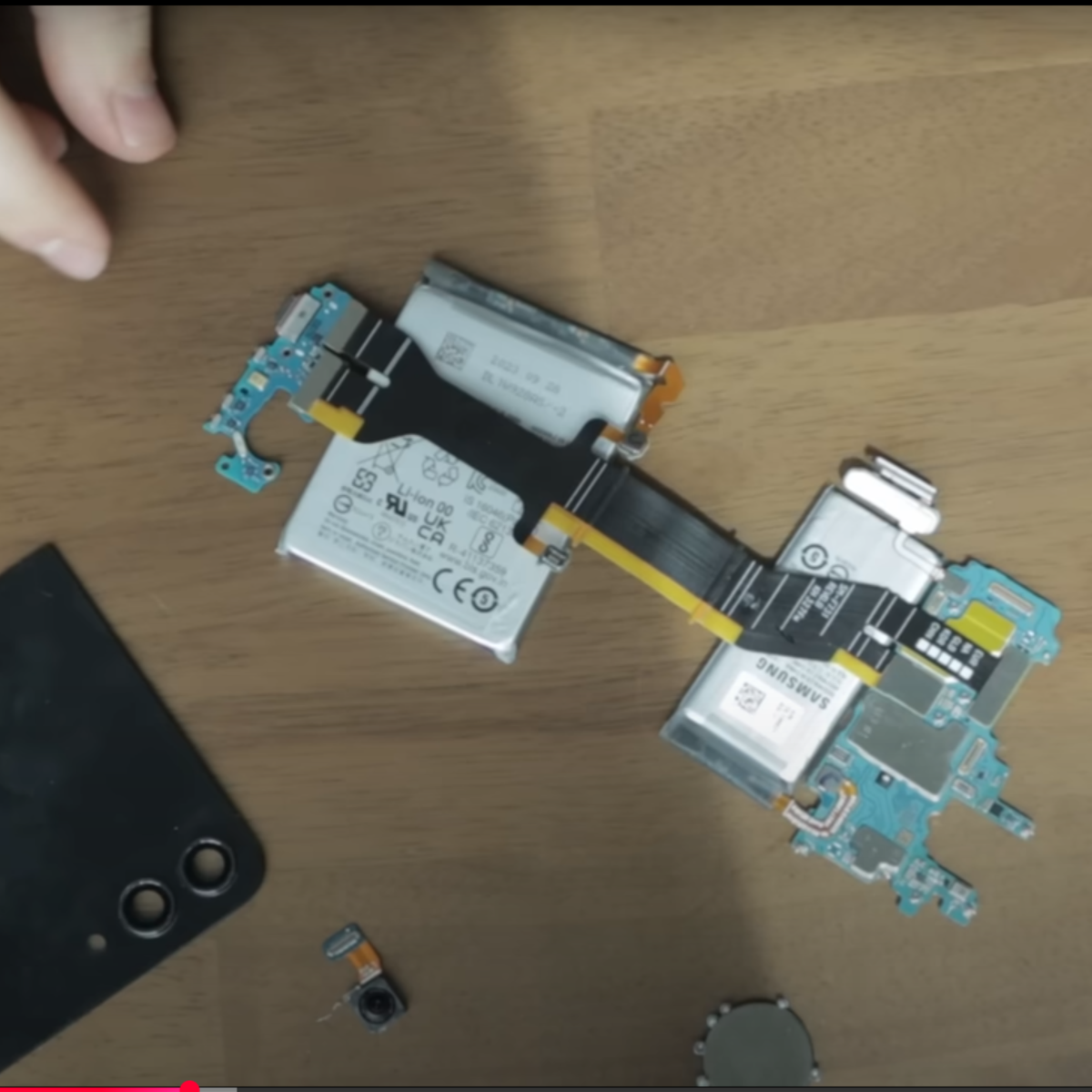
That reminded me of [Scotty Allen]’s forays into cell-phone hackery that culminated in his building one completely from parts, and telling us all about it at Supercon ages ago. He told me that the turning point for him was realizing that if you have access to the tools to put it together and can get some of the impossibly small parts manufactured and/or assembled for you, that it’s just like putting a computer together.
So now I’ve seen two examples. [Scotty] put his together from parts, and [Marcin] actually got a new daughterboard made that interfaces with the USB to add a keyboard. Hardware hacking on a cellphone doesn’t sound entirely impossible. You’d probably want a cheap old used one, but the barrier to entry there isn’t that bad. You’ll probably have to buy some obscure connectors – they are tiny inside smartphones – and get some breakout boards made. But maybe it’s possible?
Anyone have more encouragement?
This article is part of the Hackaday.com newsletter, delivered every seven days for each of the last 200+ weeks. It also includes our favorite articles from the last seven days that you can see on the web version of the newsletter. Want this type of article to hit your inbox every Friday morning? You should sign up!
38 milioni di Numeri di telefono di Italiani in vendita nel Dark Web. E’ che Smishing Sia!
Sette italiani su dieci hanno il proprio numero di telefono incluso in questa banca dati. Ma cosa significa attualmente disporre di un tale quantitativo di numeri telefonici concentrati all’interno di un determinato territorio?
Un nuovo annuncio comparso sul forum underground XSS in lingua russa, accessibile su presentazione nella sua versione onion, ha destato particolare preoccupazione all’interno della comunità della sicurezza informatica. Nel post, i ricercatori di DarkLab, hanno rilevato la vendita di un enorme database contenente oltre 38 milioni di numeri di telefono di cittadini italiani, con un prezzo fissato a diverse migliaia di dollari.

A cosa può servire un elenco di numeri di telefono “in target”
La disponibilità di un simile archivio rappresenta un rischio concreto, poiché anche il solo numero di telefono, se combinato con informazioni basilari come la località, può essere sfruttato per orchestrare campagne di Smishing, ovvero truffe tramite SMS che inducono l’utente a cliccare link malevoli o a fornire dati sensibili.
Gli attacchi di Smishing si distinguono per la loro capacità di apparire estremamente credibili: i criminali possono impersonare enti noti, banche, corrieri o aziende di servizi, convincendo le vittime a interagire con messaggi che sembrano legittimi. Nel caso di un database così vasto, le campagne potrebbero essere mirate a specifiche aree geografiche, aumentando l’efficacia della truffa.
Non solo cittadini comuni, ma anche aziende e organizzazioni di rilievo rischiano di essere coinvolte. Conoscendo i numeri di telefono dei dipendenti o dei clienti, gli attaccanti potrebbero creare siti fake che imitano perfettamente portali aziendali per carpire credenziali, dati bancari o altre informazioni riservate. Un esempio concreto potrebbe riguardare l’invio di SMS falsi di aggiornamento password da parte di una banca, o la finta conferma di consegna pacchi da parte di un corriere noto.
Un rischio duplice
Il rischio è duplice: da un lato la sottrazione diretta di dati personali e finanziari delle vittime, dall’altro la possibilità di accedere ad account aziendali critici, con conseguenze devastanti per la sicurezza delle informazioni e la reputazione delle imprese coinvolte.
Particolare attenzione deve essere posta nei confronti delle categorie più vulnerabili, come gli anziani e i giovani, che spesso non hanno piena consapevolezza dei rischi legati al mondo digitale. La mancanza di esperienza o di sensibilità verso queste minacce rende tali fasce della popolazione obiettivi privilegiati per i cybercriminali.

La vicenda del database in vendita sul forum XSS ribadisce ancora una volta l’importanza di sviluppare una cultura della sicurezza informatica diffusa. Non aprire link sospetti, non fornire mai dati personali tramite SMS e verificare sempre le comunicazioni con le fonti ufficiali sono regole fondamentali per difendersi da questo tipo di frodi.
Che cos’è lo Smishing
Lo Smishing è una forma di attacco informatico che sfrutta gli SMS come veicolo di truffa. Il termine deriva dalla fusione di “SMS” e “phishing” e rappresenta una delle minacce più diffuse e insidiose degli ultimi anni.
Nella pratica, le vittime ricevono un messaggio di testo che sembra provenire da una fonte attendibile, come una banca, un corriere, un ente governativo o un servizio online. All’interno dell’SMS è solitamente presente un link che rimanda a un sito fasullo, creato ad arte per somigliare a quello legittimo.
Una volta cliccato il link, l’utente può essere indotto a inserire dati sensibili (come credenziali, codici OTP, numeri di carta di credito) oppure a scaricare malware che compromettono il dispositivo. In altri casi, l’SMS invita a contattare un numero di telefono truffaldino dove un finto operatore cerca di estorcere informazioni.
L’efficacia dello Smishing risiede nella fiducia che molti utenti ripongono negli SMS, considerati ancora oggi un canale “sicuro” e diretto. Proprio questa percezione induce molte persone a sottovalutare il pericolo, rendendo gli attacchi estremamente redditizi per i criminali.
L'articolo 38 milioni di Numeri di telefono di Italiani in vendita nel Dark Web. E’ che Smishing Sia! proviene da il blog della sicurezza informatica.
Spinning Top Chair Revisited

Designer furniture generally comes with excellent aesthetics and (sometimes) functionality. However, such furniture comes with a price to match. One such piece of furniture is the Magis Spun Chair. It’s a striking piece with a fun party trick to match: it works like a top spinning while you sit inside. However, it has a prohibitively expensive price tag of $1,200 to match. That’s why [Morley Kert] is on a mission to build one for less.
This isn’t [Morley]’s first time building a spinning chair. The first attempt featured numerous 3D printed pieces glued together. It did not inspire confidence in spinning, nor was it a striking piece of furniture. So a revisit was in order.
This time around the chair’s construction was CNC milled plywood. Some surfaces featured 3D carving, but the majority were left raw with carving the final shape handled manually. Despite its size, the chair only took four and a half sheets of 3/4 inch plywood by hollowing out the base allowing for more efficient use of material. Once the router had completed the pieces, they were stacked and glued together. Each layer was aligned with hidden dowels making the assembly process fairly straightforward.
However, while usable, the chair looked rather unfinished, so [Morley] went to town on it with a power carving angle grinder. To ensure even carving on the circular profile of the chair, he placed it, or for some sections glued it, on an electronic lazy Susan. After some practice, the carving process turned out really well with a well-shaped and professional looking chair. Some wood varnish and a large amount of sanding finished up the chair very nicely for a total material cost of under $500.
We were happy to see the completion of this chair building saga. If you want to see [Morley] make even more designer furniture for cheap, make sure to check out his other 3D printed chair!
youtube.com/embed/HFTrzJ_9QzM?…
Faux Potentiometers Use Magnets, No Contacts

Ever tear open a potentiometer? If you haven’t, you can still probably guess what’s inside. A streak of resistive material with some kind of contact that moves across it as you rotate the shaft, right? Usually, you’d be right, but [T. K. Hareedran] writes about a different kind of pot: ones that use magnetic sensing.
Why mess with something simple? Simplicity has its price. Traditional units may not be very accurate, can be prone to temperature and contamination effects, and the contact will eventually wear out the resistive strip inside. However, we were a little curious about how a magnetic potentiometer could offer a resistive output. The answer? It doesn’t.
Really, these would be better described as rotary encoders with a voltage output. They aren’t really potentiometers. The SK22B mentioned in the article, for example, requires a 5 V input and outputs somewhere between 10% and 90% of that voltage on the ersatz wiper pin.
That makes the devices much easier to puzzle out. The linearity of a device like that is better than a real pot, and, of course, the life expectancy is greatly increased. On the other hand, we’d rather get one with quadrature or I2C output and read it digitally, but if you need a voltage, these devices are certainly an option.
[T. K.] goes on to show how he fabricated his own non-contact sensor using photosensors and a gray-coded wheel with a single track. You do need to be careful about where you position the sensors, though.
Could you make a real non-contact resistive pot? Seems like you could get close with an FET output stage, but it wouldn’t be as generally applicable as a good old-fashioned smear of carbon. If you have a better idea, drop it in the comments or build it and give us a tip.
Want a 20A-capable device? Build it. Want to see how we like to read encoders?