Cybersecurity & cyberwarfare ha ricondiviso questo.

Suspected Russian hackers deploy CANFAIL #malware against #Ukraine
securityaffairs.com/187976/hac…
#securityaffairs #hacking #malware #Russia
Cybersecurity & cyberwarfare ha ricondiviso questo.

Suspected Russian hackers deploy CANFAIL #malware against #Ukraine
securityaffairs.com/187976/hac…
#securityaffairs #hacking #malware #Russia
Cybersecurity & cyberwarfare ha ricondiviso questo.

The media in this post is not displayed to visitors. To view it, please go to the original post.

Dimentica i fiori, quest'anno puntiamo alla privilege escalation! 🔐

C'è chi regala cioccolatini e chi, invece, ti consegna le chiavi del kernel.

In un'esistenza piena di glitch, l'amore è l'unica patch zero-day che risolve ogni falla!

Cerca qualcuno che non tema i tuoi crash di sistema, ma che sia pronto a fare il reboot insieme a te.❤️💻

#CyberMeme #CodingLove #HackerAmore #Root #SanValentino #redhotcyber #hacking #cti #ai #online #it #cybercrime #cybersecurity #technology #news #cyberthreatintelligence #innovation #privacy

Cybersecurity & cyberwarfare ha ricondiviso questo.

The media in this post is not displayed to visitors. To view it, please go to the original post.

Gemini sfruttato dagli hacker di Stato: la minaccia cresce, Google interviene

📌 Link all'articolo : redhotcyber.com/post/gemini-sf…

#redhotcyber #news #intelligenzaartificiale #gemini #google #cybersecurity #hacking #malware #ai

Cybersecurity & cyberwarfare ha ricondiviso questo.

The media in this post is not displayed to visitors. To view it, please go to the original post.

📣 ISCRIVITI AL WEBINAR GRATUITO DI PRESENTAZIONE DEL CORSO "CYBER OFFENSIVE FUNDAMENTALS" – LIVELLO BASE 🚀

📅 Martedì 17 Febbraio Orario: 18:00
Per ricevere il link: 📞 379 163 8765 ✉️ formazione@redhotcyber.com

#redhotcyber #formazione #pentesting #pentest #formazioneonline #ethicalhacking #cybersecurity

Cybersecurity & cyberwarfare ha ricondiviso questo.

The media in this post is not displayed to visitors. To view it, please go to the original post.

La corsa cinese ai robot AI accelera: Xiaomi lancia la sua mossa chiave

📌 Link all'articolo : redhotcyber.com/post/la-corsa-…

All’inizio sembra quasi una notizia come tante, una di quelle che scorrono veloci. Poi però ti fermi, rileggi, e capisci che qualcosa si sta muovendo sul serio.

Nel mondo della #robotica e dell’intelligenza artificiale, soprattutto in #Cina, il ritmo è diventato incalzante, quasi febbrile. Il 12 febbraio #Xiaomi ha deciso di fare il suo ingresso ufficiale in questa partita affollata, scegliendo una strada che ormai è tutto tranne che neutrale: l’open source.

A cura di Carolina Vivianti

#redhotcyber #news #robotica #intelligenzaartificiale #opensource #robotics0 #alibabacloud #qwen3vl4binstruct #collaborazione #sviluppo #velocita #influenza #ecosistema #xiaomi

Rock Sphere Machine Produces Off the Charts Satisfaction


The media in this post is not displayed to visitors. To view it, please log in.

[Michigan Rocks] says he avoided making rock spheres for a long time on account of the time and cost he imagined was involved. Well, all that is in the past in light of the fabulous results from his self-built Rock Sphere Machine! Turns out that it’s neither costly to make such a machine, nor particularly time-consuming to create the spheres once things are dialed in. The video is a journey of the very first run of the machine, and it’s a great tour.
The resulting sphere? Super satisfying to hold and handle. The surface is beyond smooth, with an oil-like glossy shine that is utterly dry to the touch.
The basic concept — that of three cordless drills in tension — is adapted from existing designs, but the implementation is all his own. First a rough-cut rock is held between three diamond bits. The drills turn at 100 RPM while a simple water reservoir drips from above. After two hours, there’s a fair bit of slurry and the rock has definitely changed.

[Michigan Rocks] moves on to polishing, which uses the same setup but with progressively-finer grinding pads in place of the cutting bits. This part is also really clever, because the DIY polishing pads are great hacks in and of themselves. They’re made from little more than PVC pipe end caps with hex bolts as shafts. The end caps are filled with epoxy and topped with a slightly concave surface of hook-and-loop fastener. By doing this, he can cut up larger fuzzy-backed polishing pads and stick the pieces to his drill-mounted holders as needed, all the way down to 6000 grit. He shows everything about the pads at the 11:55 mark, and it’s an approach worth keeping in mind.

What is the end result like? See for yourself, but we think [Michigan Rocks] sums it up when he says “I wish you could feel this thing, it feels so smooth. It’s so satisfying to roll around in your hands. I’m so happy I made this machine. This is awesome.”

We’ve seen machines for making wooden spheres but this one makes fantastic use of repurposed stuff like inexpensive cordless drills, and the sort of wood structures anyone with access to hand tools can make.

youtube.com/embed/FSE1GE1mz2k?…

Thanks to [AloofPenny] for the tip.


hackaday.com/2026/02/13/rock-s…

Cybersecurity & cyberwarfare ha ricondiviso questo.

The media in this post is not displayed to visitors. To view it, please go to the original post.

Un milione di dati di italiani in vendita: il business nel Dark Web colpisce ancora!

📌 Link all'articolo : redhotcyber.com/post/un-milion…

Nel sottobosco digitale – tra canali chiusi, nickname effimeri e messaggi che durano pochi minuti – è comparso un annuncio che fa tremare i polsi: 1,1 milioni di “leads” #italiani messi in vendita come merce qualsiasi. Numeri di telefono con prefisso +39, email personali, nominativi, indicazioni di interesse.

Tutto impacchettato e prezzato. Tutto, soprattutto, italiano.

A cura di Bajram Zeqiri di Paragon

#redhotcyber #news #cybersecurity #hacking #darkweb #furtoDati #leads #datiPersonali #sicurezzaInformatica #frode #criminalitaInformatica #protezioneDati #vulnerabilita #privacy

reshared this

Cybersecurity & cyberwarfare ha ricondiviso questo.

The media in this post is not displayed to visitors. To view it, please go to the original post.

Buon Compleanno, Spacewar! L'alba dell'Hacking e del Gaming Moderno.

#Spacewar #SteveRussell #Hacking #Innovation #Retrogaming #MIT #DigitalHistory #InsertCoin #Bologna

Cybersecurity & cyberwarfare ha ricondiviso questo.

The media in this post is not displayed to visitors. To view it, please go to the original post.

Riassunto della settimana (Episodi 223-227) camisanicalzolari.it/riassunto…

Why Diamond Transistors Are So Hard To Make


The media in this post is not displayed to visitors. To view it, please log in.

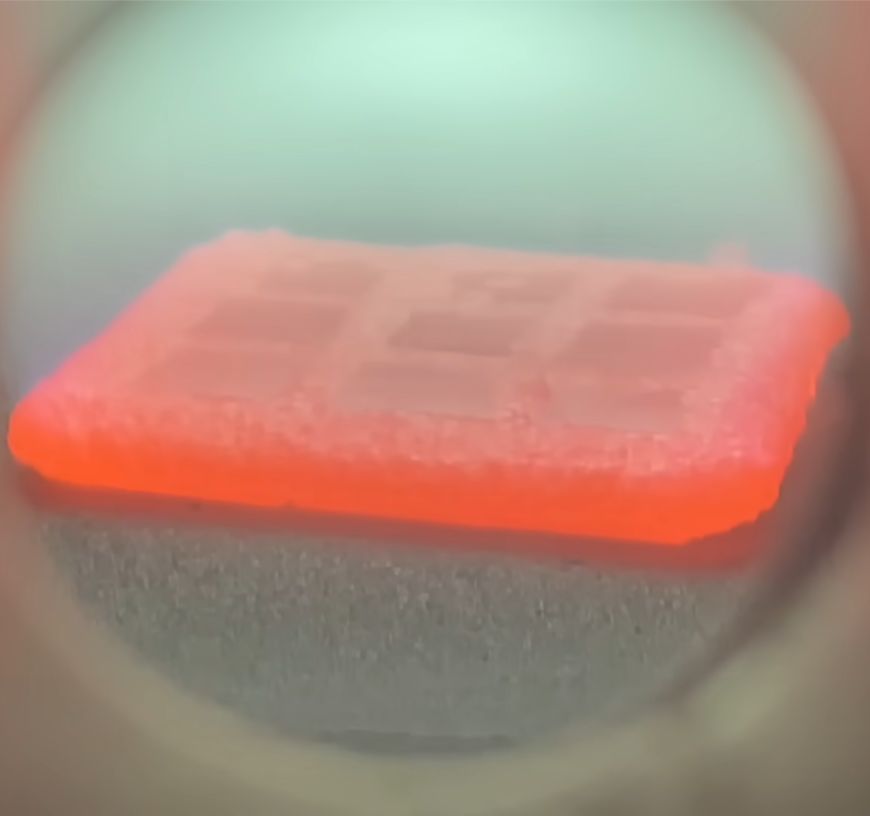
Many things about diamonds seem eternal, including the many engineering problems related to making them work as a silicon replacement in semiconductor technology. Yet much like a diamond exposed to a stream of oxygen-rich air and a roughly 750°C heat source, time will eventually erase all of them. As detailed in a recent [Asianometry] video, over the decades the challenges with creating diamond wafers and finding the right way to dope pure diamond have been slowly solved, even if some challenges still remain today.

Diamond is basically the exact opposite as silicon when it comes to suitability as a semiconductor material, with a large bandgap (5.5 eV vs the 1.2 of silicon), and excellent thermal conductivity characteristics. This means that diamond transistors are very reliable, albeit harder to switch, and heat produced during switching is rapidly carried away instead of risking a meltdown as with silicon semiconductors.

Unlike silicon, however, diamond is much harder to turn into wafers as you cannot simply melt graphite and draw perfectly crystallized diamond out of said molten puddle. The journey of getting to the state-of-the art soon-to-be-4″ wafers grown on iridium alongside the current mosaic method is a good indication of the complete pain in the neck that just this challenge already is.

Mosaic method of growing a diamond wafer, as filmed by Asianometry.Mosaic method of growing a diamond wafer, as filmed by Asianometry.
Doping with silicon semiconductors is done using ion implantation, but diamond has to be special and cannot just have phosphorus and boron implanted like its sibling. The main challenge here is that of availability of charge carriers from this doping, with diamond greedily hanging on to these charge carriers unless you run the transistor at very high temperatures.

Since you can only add so much dopant to a material before it stops being that material, a more subtle solution was sought. At this point we know that ion implantation causes damage to the diamond lattice, so delta-doping – which sandwiches heavily doped diamond between non-doped diamond – was developed instead. This got P-type transistors using boron, but only after we pacified dangling carbon electron bonds with hydrogen atoms and later more stable oxygen.

State-of-the art switching with diamond transistors is currently done with MESFETs, which are metal-semiconductor field-effect transistors, and research is ongoing to improve the design. Much like with silicon carbide it can take a while before all the engineering and production scaling issues have been worked out. It’s quite possible that we’ll see diamond integrated into silicon semiconductors as heatsinks long before that.

Assuming we can make diamond work for semiconductor transistors, it should allow us to pack more and smaller transistors together than even before, opening up many options that are not possible with silicon, especially in more hostile environments like space.

youtube.com/embed/NLmd5vL0zmk?…


hackaday.com/2026/02/13/why-di…

R2D2 Gets New Brains


The media in this post is not displayed to visitors. To view it, please log in.

While it is fun to get toys that look like your favorite science fiction props, it is less fun when the electronics in them don’t measure up to the physical design. [Steve Gibbs] took a Hasbro R2D2 toy robot and decided to give it a brain upgrade along with enhanced sensors. You can see a video of the robot doing its thing and some build details below.

In this case, the toy from Hasbro was not working at all, so [Steve] saved it from the dumpster. Instead of a repair, he decided to just gut it and rebuild it with modern electronics. The ultrasonic sensor on the forward toe is a dead giveaway.

The robot responds to voice commands better than the original and can play sound effects and clips from Star Wars. You can also control the robot with a phone app. The new or upgraded sensors include microphones, a PIR sensor, a photoresistor to sense light, a smoke and CO2 sensor, a computer vision camera, and, of course, the ultrasonic range finder.

Some motors and the original speaker are in use, but R2 now sports additional LEDs and servos. All the extras required some surgery on the plastic body. Instead of regular batteries, the ‘bot now uses a LiPo battery, so the old battery compartment was cut out to make more room.

Even if you aren’t a die-hard Star Wars fan, this is a fantastic project, and May the 4th is right around the corner. These toys aren’t cheap, but if you can score one with bad electronics, you might be able to find something cheap or — like Steve — even free.

These toys are popular hacking targets. Now [Steve] needs a pit droid.

youtube.com/embed/9G0J15jvJCM?…


hackaday.com/2026/02/13/r2d2-g…

Inside Raiders of the Lost Ark (Atari Style)


The media in this post is not displayed to visitors. To view it, please log in.

It’s a bit ironic that an Atari 2600 game based on Raiders of the Lost Ark — a movie about archaeology — is now the subject of its own archaeological expedition as [Dennis Debro] and [Halkun] spent time reverse-engineering the game. Luckily, they shared their findings, so you can enjoy it the same way you can visit a king’s tomb without having to discover it and dig for it. If you don’t remember the game, you might enjoy the demo from [Speedy Walkthroughs] in the video below.

If you are only used to modern software, you might think this is little more than someone dumping the program code and commenting it. However, on these old, limited systems, you have to really understand the actual architecture because there are so many things you have to manage that are specific to the hardware.

For example, the game has two 4K ROM banks that use a strange switching mechanism. The entire game is built around the NTSC television signal. Everything is oriented toward generating the 60 Hz frame rate. Game logic runs during the vertical blanking and over-scan sections to prevent strange visible artifacts due to software running.

This is a fascinating look inside game coding as it existed around 1982. Of course, you can also run everything using emulation. Usually, our reverse engineering is more hardware-related. But we do love these old games, too.

youtube.com/embed/j3Py3T5J3e0?…


hackaday.com/2026/02/13/inside…

Custom Clamshell Cyberdeck Shows Off Underlighting


The media in this post is not displayed to visitors. To view it, please log in.

Cyberdecks are great projects, and [Salim Benbouziyane]’s scratch-built CM Deck is a fantastic specimen. It’s a clamshell-style cyberdeck with custom split keyboard, trackpad, optional external WiFi antenna, and some slick underlighting thanks to a translucent bottom shell. There’s even a hidden feature that seems super handy for a cyberdeck: a special USB-C port that, when plugged in to another host (like another computer), lets the cyberdeck act as an external keyboard and trackpad for that downstream machine.
The CM Deck is built around the Raspberry Pi Compute Module 5, which necessitates a custom PCB but offers more design freedom.
Notably, the CM Deck is custom-built around the Raspberry Pi Compute Model 5. When we first peeped the CM5 the small size was striking, but of course that comes at the cost of having no connectors, supporting hardware, or heat management. That’s something [Salim] embraced because it meant being able to put connectors exactly where he wanted them, and not have to work around existing hardware. A custom PCB let him to lay out his cyberdeck with greater freedom, less wasted space, and ultimately integrate a custom-built keyboard (with RP2040 and QMK firmware).

Even the final enclosure is custom-made, with 3D printing being used to validate the design and PCBway providing finished plastic shells in addition to manufacturing the PCBs. [Salim] admits that doing so was an indulgence, but his delight at the quality of the translucent purple undercarriage is palpable.

[Salim]’s video (embedded below) is a deep dive into the whole design and build process, and it’s a great watch for anyone interested in the kind of work and decisions that go into making something like this. Experienced folks can expect to nod in sympathy when [Salim] highlights gotchas like doing CAD work based on the screen’s drawings, only to discover later that the physical unit doesn’t quite match.

The GitHub repository contains the design files for everything, so give it a browse if you’re interested. [Salim] is no stranger to clean builds, so take a moment to admire his CRT-style Raspberry Pi terminal as well.

youtube.com/embed/U5GZeMm5nhI?…

Thanks [Keith Olson] for sharing the tip!


hackaday.com/2026/02/13/custom…

Garante privacy e Inl: i 3 profili di illiceità nelle ispezioni su centri logistici di Amazon


@Informatica (Italy e non Italy)
Dopo le indagini di Report su software di tracciamento, telecamere pervasive e presunti dossier sui dipendenti, il Garante privacy e l’Ispettorato Nazionale del Lavoro avviano un’azione di vigilanza sui centri logistici

Hackaday Podcast Episode 357: BreezyBox, Antique Tech, and Defusing Killer Robots


The media in this post is not displayed to visitors. To view it, please log in.

In the latest episode of the Hackaday Podcast, editors Elliot Williams and Tom Nardi start things off by discussing the game of lunar hide-and-seek that has researchers searching for the lost Luna 9 probe, and drop a few hints about the upcoming Hackaday Europe conference. From there they’ll marvel over a miniature operating system for the ESP32, examine the re-use of iPad displays, and find out about homebrew software development for an obscure Nintendo handheld. You’ll also hear about a gorgeous RGB 14-segment display, a robot that plays chess, and a custom 3D printed turntable for all your rotational needs. The episode wraps up with a sobering look at the dangers of industrial robotics, and some fascinating experiments to determine if a decade-old roll of PLA filament is worth keeping or not.

Check out the links below if you want to follow along, and as always, tell us what you think about this episode in the comments!

html5-player.libsyn.com/embed/…

Download this episode in DRM-free MP3 on your ESP32 with BreezyBox for maximum enjoyment.

Where to Follow Hackaday Podcast

Places to follow Hackaday podcasts:


News:


What’s that Sound?


Interesting Hacks of the Week:


Quick Hacks:


Can’t-Miss Articles:


hackaday.com/2026/02/13/hackad…

MyMiniFactory has Acquired Thingiverse Bringing Anti-AI Focus


The media in this post is not displayed to visitors. To view it, please log in.

One of the best parts of 3D printing is that you can freely download the plans for countless model from sites like Thingiverse, Printables, and others. Yet with the veritable flood of models on these sites you also want to have some level of quality. Here recent news pertaining to Thingiverse is probably rather joyful, as with the acquisition of Thingiverse by MyMiniFactory, it should remain one of the most friendly sites for sharing 3D printing models.

Although Thingiverse as a concept probably doesn’t need much introduction, it’s important here to acknowledge the tumultuous times that it has gone through since its launch in 2008 as part of MakerBot. Both were acquired by Stratasys in 2013, and this has lead to ups and downs in the relationship with Thingiverse’s user base.

MyMiniFactory was launched in 2013 as a similar kind of 3D printing object-sharing platform as Thingiverse, while also offering crowdsourcing and paid model options. In the MyMiniFactory blog post it’s stated that these features will not be added to Thingiverse, and that nothing should change for Thingiverse users in this regard.

What does change is its joining of the ‘SoulCrafted‘ initiative, which is an initiative against machine-generated content, including so-called ‘AI slop’. There will be a live Q & A on February 17th during which the community can pitch their questions and ideas, along with a dedicated Thingiverse group.


hackaday.com/2026/02/13/mymini…

The Engineering of the Falkirk Wheel


The media in this post is not displayed to visitors. To view it, please log in.

We live in an age where engineering marvels are commonplace: airplanes crisscross the sky, skyscrapers grow like weeds, and spacecraft reach for the stars. But every so often, we see something unusual that makes us take a second look. The Falkirk Wheel is a great example, and, even better, it is functional art, as well.

The Wheel links two canals in Scotland. Before you click away, here’s the kicker: One canal is 35 meters higher than the other. Before 1933, the canals were connected with 11 locks. It took nearly a day to operate the locks to get a boat from one canal to the other. In the 1930s, there wasn’t enough traffic to maintain the locks, and they tore them out.

Fast Forward


In the 1990s, a team of architects led by [Tony Kettle] proposed building a wheel to transfer boats between the two canals. The original model was made from [Tony’s] daughter’s Lego bricks.

The idea is simple. Build a 35-meter wheel with two cassions, 180 degrees apart. Each cassion can hold 250,000 liters of water. To move a boat, you fill the caissons with 500 tonnes of water. Then you let a boat into one of them with its weight displacing an equal amount of water, so the caissons stay at the same weight.

Once you have a balanced system, you just spin the wheel to make a half turn. There are 10 motors that require 22.5 kilowatts, and each half turn consumes about 1.5 kilowatt-hours.

Not Lockless


The wheel actually raises boats up 24 m, so the remaining 11 m still requires two locks. But this is a far cry from the eleven locks the system replaces. The structure has a foundation with 30 concrete piles down on the bedrock. The wheel itself uses 14,000 bolts to avoid welds that might fatigue under stress.

As you’d expect, the caissons have to turn with the wheel in order to stay level, somewhat like a Ferris Wheel. This works using three 8-meter gears. It takes about four minutes for the wheel to make a half turn. You can watch it work in the video below.

Why?


We were a bit disappointed that there doesn’t seem to be any reason to connect the two canals except as a tourist attraction. On the other hand, about half a million visitors go every year, so it does have an economic impact. As far as we know, this is the world’s only rotating boat lift. It certainly is artistic compared to, say, the historic Anderton Lift.

We love big engineering. Even the ones that seem commonplace.

youtube.com/embed/qHO9gARac-w?…

Featured image: “FalkirkWheelSide” by Sean Mack.


hackaday.com/2026/02/13/the-en…

Qualcosa è andato storto. Come i social network e l’intelligenza artificiale ci hanno rubato il futuro


The media in this post is not displayed to visitors. To view it, please log in.

«Qualcosa è andato storto. Come i social network e l’intelligenza artificiale ci hanno rubato il futuro», è un potente atto d’accusa nei confronti della tecnologia che ci rende dipendenti da smartphone, tablet e computer. Pubblicato da Solferino pochi mesi fa, è già un caso editoriale. Alla settima ristampa ha venduto circa 20.000 copie. Un successo, per un paese dove un italiano su due legge meno di un libro all’anno.

E il motivo di questo successo è che il libro spiega, in parole chiare e comprensibili, senza peli sulla lingua, che cosa le aziende come Meta/Facebook e TikTok, sono state e sono pronte a fare pur di catturarci davanti allo schermo, per vendere il nostro tempo di attenzione agli inserzionisti e così facendo terremotando psiche, sentimenti e percezioni degli utenti, soprattutto di quelli più giovani.

Già, perché, Riccardo Luna, è lui l’autore del libro, ripercorrendo le origini della Rete, che lui stesso da direttore di Wired candidò a premio nobel per la pace, racconta come questa si sia ormai popolata di app che recintano i nostri interessi e argomenta come la Rete, da utopia democratica dei primi anni 2000 sia stata colonizzata dall’affarismo di Big Tech che non ritiene di dover rispondere a nessuno del proprio operato. Aziende guidate da imprenditori tech che anziché dedicare le loro enormi ricchezze a sfamare il mondo, a contrastare gli effetti perversi del cambiamento climatico e a favorire pace e democrazia, lucrano su sistemi che creano rabbia e violenza, i social network a cui hanno messo il turbo degli algoritmi capaci di innescare i circuiti del piacere che scattano quando vediamo il like sotto il nostro post e ci rendono frustrati quando non li vediamo. Meccanismi che sfruttano anche la solitudine, l’incertezza sessuale e le delusioni dei più giovani per renderli sempre meno sicuri di se stessi e sempre più dipendenti dal feed del social preferito.

Temi già sollevati da altri prima di lui, certamente, come Nicholas Carr, Jaron Lanier, l’italiano Jacopo Franchi. Autori che hanno raccontato gli effetti dannosi dello scrolling infinito, quel modo di usare i social senza smettere mai e che, lungi dall’essere una cosa naturale innescata dalla curiosità, è un comportamento ingegnerizzato per le piattaforme da tecnologi e psicologi sociali in modo da trattenere chiunque, sia esso bambino o un adulto, appiccicati allo smartphone grazie all’algoritmo di selezione dei contenuti. A proposito, tu che leggi lo sapevi che basta un centinaio di video visti per riorganizzare l’algoritmo?

«Qualcosa è andato storto. Come i social network e l’intelligenza artificiale ci hanno rubato il futuro», Riccardo Luna, Solferino, 2025.


dicorinto.it/articoli/recensio…

Cybersecurity & cyberwarfare ha ricondiviso questo.

New threat actor UAT-9921 deploys #VoidLink against enterprise sectors
securityaffairs.com/187969/ai/…
#securityaffairs #hacking #malware
Cybersecurity & cyberwarfare ha ricondiviso questo.

NEW: Fintech lending giant Figure confirmed hackers stole “a limited number of files” after an employee was socially engineered.

The notorious hacking group ShinyHunters claimed responsibility for the hack in a post on its dark web leak site, saying the company did not pay a ransom.

techcrunch.com/2026/02/13/fint…

Cybersecurity & cyberwarfare ha ricondiviso questo.

The media in this post is not displayed to visitors. To view it, please go to the original post.

CRI-MI-NA-LI.
Fino al 2027 non posso rinnovare i documenti che scadono nel 2026.

Ma la scabbia vi deve venire!
Vi deve mordere il millepiedi della mestizia!

in reply to Claudia

Devi capire che il consolato è una particella del suolo italiano all'estero, quindi funziona tutto come in Italia, cioè male.
I geniacci del ministero degli esteri, o chi per essi, hanno deciso inoltre che era una buona idea far passare TUTTI gli italiani all'estero per il collo di bottiglia di un solo sito dove poter prendere appuntamento per rinnovare i documenti. Il risultato è eclatante ma per il motivo sbagliato.
Questa voce è stata modificata (3 mesi fa)
Cybersecurity & cyberwarfare ha ricondiviso questo.

NEW: A sex toy maker notified customers that it suffered a data breach where a hacker stole customer names, email addresses, and historical email correspondence, “which may include order details or customer service inquiries.”

The company, Tenga, is not saying how many customers are affected.

It's also unclear if this only includes data from U.S. customers, as the email notification we obtained came from Tenga Store USA, but the company is Japanese and sells in several countries.

techcrunch.com/2026/02/13/sex-…

reshared this

in reply to Lorenzo Franceschi-Bicchierai

UPDATE: Tenga spokesperson told us that after a forensic review, the company found that the breach affected "600 people in the US."

"We have already proactively contacted those who may have been impacted to ensure their safety and provide guidance," the spokesperson said.

techcrunch.com/2026/02/13/sex-…

3D Printing Pneumatic Channels With Dual Materials for Soft Robots


The media in this post is not displayed to visitors. To view it, please log in.

Pneumatics are a common way to add some motion to soft robotic actuators, but adding it to a robot can be somewhat of a chore. A method demonstrated by [Jackson K. Wilt] et al. (press release, preprint) involves using a 3D printing to extrude two materials: one elastomeric material and a fugitive ink that is used to create pneumatic channels which are dissolved after printing, leaving the empty channels to be filled with air.

By printing these materials with a rational, multi-material (RM-3DP) custom nozzle it’s possible to create various channel patterns, controlling the effect of compressed air on the elastomeric material. This way structures like hinges and muscles can be created, which can then be combined into more complex designs. One demonstrated design involves a human-like hand with digits that can move and grasp, for example.

In the demonstration the elastomeric material is photopolymerizable polyurethane-acrylate resin, with the fugitive ink being 30 wt% Pluronic F-127 in water. The desired pattern is determined beforehand with a simulation, followed by the printing and UV curing of the elastomeric resin.

As is typical of soft robotics implementations, the resulting robots are more about a soft touch than a lot of force, but could make for interesting artificial muscle designs due to how customizable the printing process is.

youtube.com/embed/BK9K_mJjlxE?…


hackaday.com/2026/02/13/3d-pri…

Cybersecurity & cyberwarfare ha ricondiviso questo.

The media in this post is not displayed to visitors. To view it, please go to the original post.

Dalla disinformazione agli hacker. Il pre-attacco russo alle Olimpiadi italiane

📌 Link all'articolo : redhotcyber.com/post/dalla-dis…

#redhotcyber #news #olimpiadiinvernali #disinformazione #attacchiinformatici #cybersecurity #hacking #malware

reshared this

Cybersecurity & cyberwarfare ha ricondiviso questo.

The media in this post is not displayed to visitors. To view it, please go to the original post.

La gestione degli accessi ai sistemi informativi: un tema cruciale per le imprese

📌 Link all'articolo : redhotcyber.com/post/la-gestio…

#redhotcyber #news #sicurezzainformatica #hacking #violazioneprivacita #aziendaitaliana #datipersonali

Cybersecurity & cyberwarfare ha ricondiviso questo.

The media in this post is not displayed to visitors. To view it, please go to the original post.

So, I hope it goes without saying for almost everyone, but don't do shit like this.

The first issue mentioning a fork was totally fair, spamming every thread in the issue tracker without permission from the maintainer is not.

in reply to Filippo Valsorda

@whitequark @untitaker @dave_andersen I read that whole response. I agree.

My first joking comment (to prove I read it) was going to be that there is a single character typo: "Now would be a good time too." That 'too' should be 'to'. But upon re-reading, it seems he really did mean 'too.'

But I think the focus needs to be upon velocity, not copyright. Low effort submissions used to be quick to respond to: they wouldn't have great code. Now they seem to have great code.

Cybersecurity & cyberwarfare ha ricondiviso questo.

Attackers exploit #BeyondTrust CVE-2026-1731 within hours of PoC release
securityaffairs.com/187962/unc…
#securityaffairs #hacking
Cybersecurity & cyberwarfare ha ricondiviso questo.

The media in this post is not displayed to visitors. To view it, please go to the original post.

’Il vero prezzo dell’Intelligenza Artificiale? Lo scontrino è tra dati e silicio

📌 Link all'articolo : redhotcyber.com/post/il-vero-p…

L’intelligenza artificiale è ovunque. La usiamo per scrivere email, generare immagini, cercare #informazioni, analizzare #dati.

L’Intelligenza #Artificiale non serve solo ad analizzare #dati, è diventata silenziosamente una componente strutturale del #software moderno. Ma mentre celebriamo la “magia” dell’AI lato #applicativo, c’è un conto fisico, materiale e molto concreto che sta arrivando sulla scrivania di tutti, anche di chi l’AI non la usa, non la vuole e non la ha mai richiesta. Non è una scelta individuale: è un costo #sistemico.

A cura di Manuel Roccon

#redhotcyber #hacking #cti #ai #online #it #cybercrime #cybersecurity #technology #news #cyberthreatintelligence #innovation #privacy

Cybersecurity & cyberwarfare ha ricondiviso questo.

“La decisione giusta per motivi ingiusti”. Guido Scorza spiega le motivazioni che l'hanno convinto a dimettersi dal collegio del #GarantePrivacy

Dal caso Ray-ban Meta ai rapporti con il suo studio legale E-Lex, dalle spese contestati ai mesi di fuoco nel collegio: il racconto dell'avvocato che ha fatto un passo indietro dopo lo scandalo che ha colpito l'Autorità

wired.it/article/guido-scorza-…

@privacypride

reshared this

AI, negli Usa la polizia adotta il software AI che geolocalizza le foto. Come funziona GeoSpy


@Informatica (Italy e non Italy)
Dalla Florida alla California, negli Stati Uniti le forze dell’ordine iniziano a sperimentare nuovi strumenti di AI per l’analisi geospaziale delle immagini. Gli uffici dello sceriffo di Miami-Dade e il Los Angeles Police

Cybersecurity & cyberwarfare ha ricondiviso questo.

The media in this post is not displayed to visitors. To view it, please go to the original post.

Telefono Azzurro, il mio messaggio per il Safer Internet Day 2026 camisanicalzolari.it/telefono-…
Cybersecurity & cyberwarfare ha ricondiviso questo.

Google: state-backed hackers exploit #Gemini AI for cyber recon and Attacks
securityaffairs.com/187958/hac…
#securityaffairs #hacking

Restoration of Antique Clock With Unique Oscillator


The media in this post is not displayed to visitors. To view it, please log in.

The classic design of a mechanical clock generally consists of a display, a way to store energy, a way to release that energy at regular intervals, and a mechanism to transmit it where it needs to go. Most of us might be imagining a pendulum or a balance wheel, but there have been many other ways to maintain a reliable time standard with a physical object beyond these two common methods. This clock, for example, uses a rolling ball bearing as its time standard and [Tommy Jobson] discusses its operation in depth during a restoration.

The restoration of this clock, which [Tommy] theorizes was an amateur horological project even when it was new, starts by dismantling the clock nearly completely. The clock was quite dirty, so in addition to being thoroughly cleaned it also needed a bit of repair especially involving a few bent pins that stop the table’s rotation. These pins were replaced with stronger ones, and then everything in the clock’s movement was put back together. The tray carrying the ball bearing needed to be cleaned as well, and [Tommy] also added a lacquer to help preserve the original finish as long as possible. From there it was time to start calibrating the clock.

The ball bearing itself rolls back and forth along an inclined plane on a series of tracks. When it gets to the end it hits a lever which lets a bit of energy out of the movement, tilting the table back in the other direction to repeat the process. This is a much more involved process for getting an accurate time interval than a pendulum, so [Tommy] had a lot of work to do here. But in the end he was able to bring it back to life with an accuracy fairly close to a pendulum clock.

Ball bearings are a pretty popular medium for clock builds even in the modern era. This one uses them in a unique display, and a more recent version goes even further by using marbles to display digits directly.

youtube.com/embed/_6IgX2WxFDI?…

Thanks to [Keith] for the tip!


hackaday.com/2026/02/13/restor…

Cybersecurity & cyberwarfare ha ricondiviso questo.

The media in this post is not displayed to visitors. To view it, please go to the original post.

📣 ISCRIVITI AL WEBINAR GRATUITO DI PRESENTAZIONE DEL CORSO "CYBER OFFENSIVE FUNDAMENTALS" – LIVELLO BASE 🚀

📅 Data Webinar: Martedì 17 Febbraio ore 18

Per ricevere il link al webinar e per iscrizioni: 📞 379 163 8765 ✉️ formazione@redhotcyber.com

🔗 Programma: redhotcyber.com/linksSk2L/cybe…
🎥 Intro del prof: youtube.com/watch?v=0y4GYsJMoX…

Attraverso laboratori isolati e replicabili, potrai sperimentare:
✅Ricognizione e analisi delle vulnerabilità
✅Exploitation controllata e post-exploitation in sicurezza
✅Uso professionale di strumenti come Nmap, Metasploit, BloodHound e Nessus

Per info e iscrizioni: 📞 379 163 8765 ✉️ formazione@redhotcyber.com

#redhotcyber #formazione #pentesting #pentest #formazioneonline #ethicalhacking #cybersecurity #penetrationtesting #cti #cybercrime #infosec #corsi #liveclass #hackerhood #pentesting

Truffe telefoniche con abuso di piattaforme Saas legittime: come proteggersi


@Informatica (Italy e non Italy)
L'abuso del SaaS è un'evoluzione strategica nelle tattiche di phishing, dove la truffa telefonica elude il controllo, consentendo alle campagne di bypassare le tecnologie di rilevamento focalizzate sui link malevoli e di spostare la fase finale di

Cybersecurity & cyberwarfare ha ricondiviso questo.

U.S. CISA adds SolarWinds Web Help Desk, Notepad++, Microsoft Configuration Manager, and Apple devices flaws to its Known Exploited Vulnerabilities catalog
securityaffairs.com/187937/sec…
#securityaffairs #hacking
Cybersecurity & cyberwarfare ha ricondiviso questo.

The media in this post is not displayed to visitors. To view it, please go to the original post.

227 – Mondo del lavoro: Percorsi di studio da scegliere camisanicalzolari.it/227-mondo…

reshared this

Cybersecurity & cyberwarfare ha ricondiviso questo.

The media in this post is not displayed to visitors. To view it, please go to the original post.

Progetto abbandonato? Alto rischio di attacchi alla supply chain. Il caso AgreeTo

📌 Link all'articolo : redhotcyber.com/post/progetto-…

#redhotcyber #news #cybersecurity #hacking #malware #ransomware #phishing #microsoft #outlook #supplychain

Cybersecurity & cyberwarfare ha ricondiviso questo.

The media in this post is not displayed to visitors. To view it, please go to the original post.

Apple risolve una vulnerabilità zero-day sfruttata in attacchi mirati

📌 Link all'articolo : redhotcyber.com/post/apple-ris…

#redhotcyber #news #cybersecurity #hacking #vulnerabilita #zeroday #apple #sicurezzainformatica

reshared this