Custom Beach Robot Handles the Hard Work


The media in this post is not displayed to visitors. To view it, please log in.

A day at the beach can involve hauling a surprising amount of gear, from coolers, towels, blankets, chairs, and umbrellas, and if children are involved the amount of beach stuff needed seems to go nonlinear very quickly. Some turn to beach carts with large, low-pressure pneumatic tires, but even that seemed like too much work for [John] who built this remote controlled cart for his summertime needs.

The cart is based around an old cargo rack from an e-bike. To mount all of the robotic components, a sheet of plywood was cut and attached to the underside. Two motors are used to drive the rear wheels independently, allowing for differential steering rather than adding the complexity of a steering system. Some safety features are built in to this design as well, including lights for night driving, a start button controlling a relay for the motors and electronics, and a time-of-flight sensor to stop the robot if it encounters an obstacle.

The ESP32 at the center of the build ties all of the electronics together, and a smartphone app lets the user remotely pilot the rover. It’s not autonomous (yet) but a fair alternative to dragging all of one’s beach gear through the sand without any assistance. You could also minimize your excursions through the sand by timing your visits at high tide, but [John] is out on the Great Lakes so this may be of marginal utility here.

youtube.com/embed/K6y0kSSMVfw?…


hackaday.com/2026/07/30/custom…

Cybersecurity & cyberwarfare ha ricondiviso questo.

The media in this post is not displayed to visitors. To view it, please go to the original post.

Aerei a terra a causa del computer. Un migliaio di voli dell’American Airlines non sono decollati

📌 Link all'articolo : redhotcyber.com/post/aerei-a-t…

Carolina Vivianti

#redhotcyber #cybersecurity #cybercrime #hacking #cti #ai #privacy #news #technology

reshared this

Cybersecurity & cyberwarfare ha ricondiviso questo.

Idiots.

“US government lists fictional nation Wakanda as trade partner”

bbc.com/news/world-us-canada-5…

Best-Ever Brainstem Map Created by Indian Scientists


The media in this post is not displayed to visitors. To view it, please log in.

The elusive brainstem is a small, yet critical part of our brain: the slightest damage to it could prove fatal. But how it works is not fully understood today. Indian Scientists at SGBC (Sudha Gopalakrishnan Brain Centre) work to change that by producing the most detailed map of it ever seen.

Instead of more costly methods, this map was created with a high-resolution microscope. Starting with three samples, (45W fetus, 9Y and 54Y) the brain stems were imaged using MRI and BFI (Block Face Imaging), then sliced into 20/40µm pieces, imaged, annotated using in-house software and added to the dataset. From a combination of these images, MRI and BFI scans, they created a 3D model of the brainstem that you can explore in your browser.

The new research gives vital data needed for neurological research, and could help advance research on a wide range neurological diseases from Parkinson’s to Alzheimer’s.
You can find the paper here, which has not yet been peer reviewed at time of writing.

Via BBC.


hackaday.com/2026/07/30/best-e…

Rebuilding an Obsolete IC to Save a Betacam SP Tapedeck


The media in this post is not displayed to visitors. To view it, please log in.

Betacam is not the Betamax you may have had at home– it was a professional format that lived on into the 21st century, in the “SP” form. In many places, it would have been the last tape format in use. So it is perhaps understandable that [ldursw] decided to recreate an obsolete and unobtainable IC to save a Sony broadcast-grade editing Video Tape Recorder (VTR). Still mad, perhaps, but in a way we very much appreciate.

The Sony BVW-75 VTR had an odd flaw where the output lacked colour, unless paused with dynamic tracking off. Then colour would appear, but only in odd stripes. Clearly the chroma circuit was at fault. Some sluthing found that a sync separator IC– that separates the sync pulses that keep everything moving together, if the name didn’t give it away– wasn’t behaving correctly. More sluthing found that the chip in question was no longer available. Luckily, the concept of a sync separator hasn’t quite given up the ghost, and another part was available. It just didn’t fit, used a different voltage, and had an inverted output. No biggie! [ldursw] added a voltage regulator, an inverter, and a video amplifier chip, then after breadboard testing put them on a PCB with pins that match the original IC’s form-factor, making it a plug-in replacement.

That’s a GitHub link at the start of this article, by the way, so he’s open sourced the solution for anyone who needs a Toshiba TA7357P video sync separator. We don’t know who else needs this, but we’re willing to bet that whoever does, really needs it. On behalf of whoever that might be, we offer sincere thanks to [ldursw] for the hack, and for submitting it to our tips line.

This reminds us a little bit of a tape deck repair we featured previously, reviving another Sony format– D-1 tapes–to archive old media.


hackaday.com/2026/07/30/rebuil…

Cybersecurity & cyberwarfare ha ricondiviso questo.

Researchers Expose #Flying #Eagle Criminal Ecosystem Behind Fake Chinese Police App
securityaffairs.com/196369/cyb…
#securityaffairs #hacking
Cybersecurity & cyberwarfare ha ricondiviso questo.

L’origine degli zuccheri

@scienza

ilblogdellasci.wordpress.com/2…

Diego Tesauro Fra le molecole base per la vita, così come la conosciamo sulla Terra, oltre gli amminoacidi che costituiscono le proteine, le nucleobasi che formano le “lettere” del DNA e dell’RNA, ci sono i carboidrati. Una questione centrale, nella … Continua a leggere →

The media in this post is not displayed to visitors. To view it, please log in.

RedRelay: la società fantasma cinese che nasconde le operazioni cyber del PLA dietro un brevetto per spiare Telegram


@Informatica (Italy e non Italy)
Il collettivo Intrusion Truth ha identificato Guangdong Chanming, una società invisibile online che avrebbe costruito RedRelay (ORBWEAVER), l'ORB network usata da APT15/Ke3chang e da


RedRelay: la società fantasma cinese che nasconde le operazioni cyber del PLA dietro un brevetto per spiare Telegram


Non ha un sito web, non ha un catalogo prodotti pubblico, non ha nemmeno un’insegna. Eppure Guangdong Chanming Technology, una società con sede nel Guangdong praticamente invisibile su internet, avrebbe costruito e gestito per anni una delle infrastrutture di offuscamento più utilizzate dagli APT cinesi legati all’Esercito Popolare di Liberazione: la rete RedRelay, nota nella letteratura di threat intelligence occidentale anche come ORBWEAVER. A smascherarla è stato il collettivo di ricercatori indipendenti Intrusion Truth, che da oltre otto anni applica tecniche di OSINT per identificare le persone e le società dietro le operazioni di cyberspionaggio di Pechino.

Cos’è una ORB network e perché fa paura ai difensori


Le “Operational Relay Box” network, o ORB network, sono infrastrutture di proxy multi-hop costruite aggregando router domestici compromessi, VPS commerciali e dispositivi IoT, con l’obiettivo di far rimbalzare il traffico degli attaccanti attraverso molteplici salti prima di raggiungere il bersaglio finale. Google Mandiant e Microsoft le descrivono da anni come uno degli sviluppi più insidiosi nel tradecraft delle APT cinesi: a differenza di una singola VPN o di un bulletproof hosting, un ORB network cambia continuamente topologia, mescola traffico legittimo e malevolo sugli stessi nodi e rende quasi inutile il blocco per indirizzo IP, perché l’infrastruttura di oggi non è quella di domani. Gruppi come Volt Typhoon hanno già dimostrato quanto queste reti complichino l’attribuzione e la difesa perimetrale nelle infrastrutture critiche occidentali.

Da Free Connect a RedRelay: la genesi del progetto


Secondo la ricostruzione di Intrusion Truth, RedRelay nasce come evoluzione di Free Connect (FCN), un tool VPN sviluppato in origine come progetto personale da Wang Huiping, oggi co-fondatore di Guangdong Chanming. Il codice, un tempo ospitato su GitHub sotto lo pseudonimo “boywhp”, è stato progressivamente trasformato in un prodotto commerciale a duplice uso: da un lato uno strumento di anonimizzazione generico, dall’altro un’infrastruttura su misura per operazioni offensive. I ricercatori sono risaliti a Wang incrociando un numero di telefono registrato su documenti societari con un indirizzo email legato al progetto FCN, un classico errore operativo che il collettivo sfrutta sistematicamente per deanonimizzare gli sviluppatori di tool “dual use” cinesi.

Sul piano tecnico, campioni VirusTotal riconducibili al dominio associato a FCN includono file identificati come stn.exe, mentre le versioni Linux del tool utilizzano un comando distintivo che ha condotto gli analisti a “bulbature”, un artefatto già associato in passato alla famiglia di malware WHIPWEAVE, anch’essa collegata all’ecosistema RedRelay/ORBWEAVER.

I brevetti che tradiscono lo scopo reale


La parte più interessante dell’indagine riguarda i brevetti e i copyright software depositati da Guangdong Chanming presso gli uffici cinesi competenti. Almeno due brevetti descrivono esplicitamente flussi di traffico anonimizzati e multi-hop coerenti con il comportamento osservato di RedRelay. Ma l’elenco dei prodotti registrati va ben oltre l’anonimizzazione: tra i titoli figurano un “Internet Security Access System”, un “Multi-functional Security Proxy”, un “Anti-traceability Network”, un sistema di “Network Vulnerability Testing”, un “Android Secret Extraction System” e, particolarmente rilevante, un “Telegram Data Collection System”. Si tratta di capacità che, cumulate, disegnano il profilo di un fornitore di strumenti di sorveglianza ed estrazione dati su misura per operazioni statali, non di un’azienda di cybersecurity difensiva come vorrebbe far credere l’assenza quasi totale di presenza pubblica.

Il cliente: non solo intelligence, ma anche polizia


Gli elementi più sensibili emersi dall’indagine riguardano i clienti. Documenti di procurement riconducibili a canali dell’Esercito Popolare di Liberazione citano la fornitura da parte di Guangdong Chanming di un “Anonymous Network System” a un’unità di stanza nel distretto di Haidian, a Pechino, area storicamente associata alla PLA Cyberspace Force. Le analisi open source collegano inoltre l’uso di RedRelay a diversi cluster di cyberspionaggio cinese tracciati da anni dall’industria della threat intelligence sotto etichette come APT15, Ke3chang, Vixen Panda, Red Vulture, Playful Dragon e Nylon Typhoon, gruppi storicamente attivi contro ministeri degli esteri, ambasciate e contractor della difesa in Europa e Asia. Secondo Intrusion Truth, a queste attribuzioni si aggiungerebbero designazioni interne cinesi come l’Unità 61046 e l’VIII Ufficio del CSF (Cyberspace Force), sebbene questo livello di attribuzione resti – come sempre in questi casi – basato su indizi convergenti più che su prove dirette e verificabili da terzi.

Non meno significativo è che tra i clienti indicati compaia anche il Ministero della Pubblica Sicurezza, l’apparato che gestisce le forze di polizia cinesi: un dettaglio che conferma quanto il confine tra sorveglianza interna e cyberspionaggio esterno, nel modello cinese dei contractor privati “dual use”, sia ormai strutturalmente sfumato – lo stesso schema documentato in passato per fornitori come i900 e la galassia legata a APT41 e Silk Typhoon.

Due righe per i difensori


Per i team di detection, la lezione principale è che il blocklisting basato su indirizzi IP o su singoli domini è una difesa in costante ritardo contro le ORB network: RedRelay, come le altre infrastrutture simili, ruota continuamente nodi residenziali e commerciali compromessi. È più efficace investire in detection comportamentale (pattern di traffico anomali verso servizi di collaborazione, orari di attività non coerenti con l’utenza reale, fingerprint TLS associati a tool come FCN/stn), condivisione di intelligence tra organizzazioni sullo stesso settore e monitoraggio delle infrastrutture note collegate a WHIPWEAVE. Per le organizzazioni che gestiscono comunicazioni sensibili su Telegram o piattaforme simili, la conferma dell’esistenza di un “Telegram Data Collection System” commerciale cinese è un promemoria che l’app di messaggistica, da sola, non garantisce alcuna protezione dall’intelligence statale se l’endpoint o l’account è nel mirino.

Indicatori e riferimenti noti

Società identificata: Guangdong Chanming Technology Co., Ltd.
Persona chiave: Wang Huiping (co-fondatore, ex sviluppatore progetto "Free Connect / FCN", GitHub handle "boywhp")
Infrastruttura: RedRelay (alias ORBWEAVER), ORB network multi-hop
Artefatti noti: stn.exe (Windows), comando distintivo Linux collegato a "bulbature"
Famiglia malware collegata: WHIPWEAVE
Prodotti brevettati/registrati: Internet Security Access System, Multi-functional Security Proxy,
  Anti-traceability Network, Network Vulnerability Testing System, Android Secret Extraction System,
  Telegram Data Collection System, File Transfer Network
Clienti riportati: unità PLA Cyberspace Force (distretto di Haidian, Pechino), Ministero della Pubblica Sicurezza
Gruppi APT collegati: APT15 / Ke3chang / Vixen Panda / Red Vulture / Playful Dragon / Nylon Typhoon
Designazioni interne citate: Unità 61046, VIII Ufficio CSF

L’indagine di Intrusion Truth, pubblicata il 27 luglio 2026 e ripresa nei giorni successivi da Risky Business, GBHackers e altre testate di settore, si inserisce in un filone di ricerca ormai consolidato: dal caso i-Soon del 2024 alle rivelazioni su altri fornitori “fantasma” del ministero della Sicurezza di Stato, l’ecosistema dei contractor privati cinesi continua a produrre errori operativi sufficienti a far emergere, poco alla volta, l’architettura reale dietro le campagne di cyberspionaggio più persistenti contro obiettivi occidentali.

The media in this post is not displayed to visitors. To view it, please log in.

Operation Double Barrel: quando lo spionaggio di stato nordcoreano condivide l’infrastruttura con il ransomware Gunra


@Informatica (Italy e non Italy)
Un'advisory congiunta di NIS, NPA, KISA e FSI, basata su AhnLab ASEC, svela un anno e mezzo di attacchi state-sponsored contro la Corea del Sud tramite i backdoor Struggle/SIGNBT


Operation Double Barrel: quando lo spionaggio di stato nordcoreano condivide l’infrastruttura con il ransomware Gunra


Un’advisory congiunta pubblicata il 30 luglio 2026 da National Intelligence Service, National Police Agency, KISA e Financial Security Institute sudcoreani, basata sull’analisi di AhnLab ASEC, ricostruisce oltre un anno di attività di un gruppo state-sponsored contro cittadini e aziende della Corea del Sud. Il dato più interessante non è la campagna di spionaggio in sé, ma la sua sovrapposizione tecnica con episodi attribuiti al ransomware Gunra: stessa vulnerabilità sfruttata, stesse impronte SSH, stessa infrastruttura di rete. Gli analisti l’hanno battezzata Operation Double Barrel.

Un anno e mezzo di infiltrazione silenziosa


Secondo ASEC, tra il 2025 e la prima metà del 2026 un attore state-sponsored ha sfruttato in modo continuativo vulnerabilità in software di sicurezza finanziaria diffuso in Corea del Sud — la categoria di plugin e moduli di autenticazione che le banche e i portali pubblici sudcoreani impongono spesso agli utenti per operazioni online, un ecosistema già colpito in passato da gruppi legati alla Corea del Nord proprio per la sua ubiquità e per i privilegi elevati con cui questi moduli girano sui sistemi degli utenti.

Il vettore di accesso iniziale ha seguito due binari paralleli: watering hole su siti legittimi sudcoreani nei settori media, istruzione, sanità e manifatturiero, e spear-phishing con link malevoli inviati direttamente ai bersagli. In entrambi i casi l’obiettivo era far raggiungere alla vittima una pagina che sfruttasse la vulnerabilità nel software finanziario per installare un backdoor.

Gli impianti: Struggle e Brandoor


ASEC identifica due famiglie di backdoor principali nella campagna: Struggle, tracciato anche come SIGNBT 3.0, e Brandoor, alias COPPERHEDGE. Non sono nomi nuovi per chi segue le operazioni nordcoreane: SIGNBT è una famiglia storicamente associata al cluster Andariel dell’ombrello Lazarus, mentre COPPERHEDGE è un impianto documentato da anni negli advisory CISA/US-CERT sotto l’etichetta HIDDEN COBRA, usato in particolare contro exchange di criptovalute e istituzioni finanziarie. La loro presenza in questa campagna rafforza l’attribuzione a un attore nordcoreano, anche se il report ASEC, in linea con la prassi delle agenzie sudcoreane, evita l’attribuzione esplicita in favore della dicitura “gruppo state-sponsored”.

Oltre ai due backdoor principali, l’advisory cita strumenti aggiuntivi per l’escalation di privilegi e la consegna di payload successivi, elemento che suggerisce un kit modulare adattato caso per caso a seconda del bersaglio e dei privilegi ottenuti nella fase di accesso iniziale.

Il secondo barile: Gunra ransomware


Gunra è un gruppo ransomware relativamente giovane, emerso sui data leak site nel 2025 con un locker dual-platform per Windows e Linux; la variante Linux, analizzata a fondo da ASEC in report precedenti, si è rivelata tecnicamente fragile a causa di un generatore di numeri casuali difettoso nell’implementazione della cifratura, un dettaglio che in alcuni casi ha permesso il recupero dei file senza pagare il riscatto.

Ciò che rende rilevante Operation Double Barrel è che alcuni incidenti attribuiti a Gunra hanno riutilizzato le stesse vulnerabilità nel software finanziario coreano sfruttate dal gruppo state-sponsored, e mostrano sovrapposizioni in malware, impronte delle chiavi SSH e infrastruttura di rete, inclusi indirizzi usati per il download di payload e per il reverse tunneling. ASEC non si spinge a dichiarare che si tratti dello stesso gruppo, ma ipotizza tecniche, strumenti o infrastruttura condivisi, oppure una collaborazione limitata tra i due attori.

Lo scenario non è inedito: negli ultimi anni diversi ricercatori hanno documentato episodi in cui operatori legati alla Corea del Nord hanno sperimentato il ransomware come ulteriore fonte di finanziamento, affiancandolo alle tradizionali operazioni di furto di criptovalute e spionaggio economico. Se confermata, una relazione anche solo infrastrutturale tra un cluster di spionaggio statale e una gang ransomware indipendente solleva interrogativi non banali su come Pyongyang stia monetizzando l’accesso ottenuto per scopi di intelligence, eventualmente “affittandolo” o rivendendolo a operatori criminali con obiettivi finanziari.

Timeline


  • 2025 — inizio dello sfruttamento delle vulnerabilità nel software di sicurezza finanziaria coreano; primi impianti Struggle/SIGNBT 3.0 e Brandoor/COPPERHEDGE osservati in campagne watering hole e spear-phishing.
  • 2025 – H1 2026 — incidenti paralleli attribuiti al ransomware Gunra riutilizzano le stesse vulnerabilità e mostrano sovrapposizioni infrastrutturali.
  • 30 luglio 2026 — NIS, NPA, KISA e FSI pubblicano l’advisory congiunta “Operation Double Barrel”; AhnLab ASEC rilascia i report tecnici in coreano e inglese con IoC completi.


Due righe per i difensori


Per i team di difesa, anche fuori dalla Corea del Sud, il caso offre due lezioni. La prima: i moduli di sicurezza aggiuntivi imposti da settori regolamentati (banking security software, plugin di autenticazione, agent antifrode) restano un bersaglio ad alto ritorno per gli attaccanti, proprio perché godono di privilegi elevati e fiducia implicita da parte dell’utente. La seconda: il monitoraggio delle infrastrutture ransomware non può più prescindere dalla correlazione con il tracking degli APT, perché la separazione tra “cybercrime a scopo di lucro” e “operazioni di intelligence statale” nel caso nordcoreano è sempre più sfumata. Chi gestisce threat intelligence dovrebbe incrociare sistematicamente IoC di gruppi ransomware emergenti con quelli degli intrusion set nordcoreani noti, cercando sovrapposizioni di infrastruttura anche quando l’attribuzione formale resta incerta.

Indicatori di compromissione

Nome operazione: Operation Double Barrel
Enti coinvolti nell'advisory: NIS, NPA, KISA, FSI (Corea del Sud)
Fonte tecnica: AhnLab ASEC
Backdoor identificati: Struggle (alias SIGNBT 3.0), Brandoor (alias COPPERHEDGE)
Gruppo ransomware collegato: Gunra
Vettori di accesso iniziale: watering hole su siti legittimi coreani (media, istruzione,
  sanità, manifatturiero), spear-phishing con link malevoli
Vulnerabilità sfruttate: falle in software di sicurezza finanziaria coreano
Indicatori tecnici condivisi tra le due campagne: impronte di chiavi SSH, indirizzi IP
  di download e reverse tunneling, credenziali riutilizzate
Report completi: [AhnLab] Operation Double Barrel (KOR/ENG) (2026.07.30)
MITRE ATT&CK: T1189 Drive-by Compromise, T1566.002 Spearphishing Link,
  T1190 Exploit Public-Facing Application, T1105 Ingress Tool Transfer,
  T1059 Command and Scripting Interpreter, T1003 OS Credential Dumping,
  T1021.004 Remote Services: SSH, T1071.001 Application Layer Protocol: Web Protocols,
  T1078 Valid Accounts

Fonte: AhnLab ASEC, advisory congiunta NIS/NPA/KISA/FSI.

Cybersecurity & cyberwarfare ha ricondiviso questo.

The media in this post is not displayed to visitors. To view it, please go to the original post.

:hacker: :antifa_100: Oggi, a @pesaro, #MarcelTop presenterà il suo lavoro artistico e di ricerca sulla #sorveglianza di massa e sulle tecnologie usate per monitorare il potere. Illustrerà Reversed Surveillance, un progetto nato dalle proteste di Parigi del 2023 che associa i volti dei poliziotti ai loro numeri identificativi per favorire responsabilità e trasparenza. L'incontro affronterà anche temi come il neonazismo online e il monitoraggio delle forze dell'ordine in diversi Paesi.
Cybersecurity & cyberwarfare ha ricondiviso questo.

Rovigo, completata in anticipo la nuova rotatoria "da Ponta": eliminati i semafori.

Il semaforo infinito ora non esiste più, era davvero molto lento, anche se ormai ci avevo fatto l'abitudine!

@rovigo

Conclusi i lavori prima del previsto all'incrocio tra viale della Pace, via Gramsci e largo Lucotti Fabbron. La nuova rotatoria è già operativa e punta a rendere più fluida la viabilità.
lapiazzaweb.it/news/attualita/…

#Rovigo #Viabilita

reshared this

Fixing a JMicron-Based M.2 USB Enclosure That Stopped Working


The media in this post is not displayed to visitors. To view it, please log in.

As useful as USB-to-M.2 SSD adapters are, sometimes you come across a bit of a dud. A case in point is the Orico-branded TCM2-C3 that features both an attractive clear case and in its earlier revisions a JMicron controller-based circuit that apparently degrades over time, causing erratic boot behavior. After implementing a fix a few years ago, [Mark Furneaux] can happily report that the thus fixed enclosures are still working.

These faulty board revisions feature the JMicron JMS583 controller IC, which has a 1.0V core voltage input pin. Apparently to save power, Orico designed the board to target the minimum ~-0.95V core voltage per the datasheet. Apparently due to component drift or degradation, this lower core voltage is after a while often not enough any more to start the controller, which thus translates into an unresponsive USB device and presumably some panic about lost data.

Although [Mark] doesn’t describe the fix in detail, it entails bumping up this core voltage to something closer to the nominal 1.0V, which restores functionality at the cost of presumably a measurable amount of extra heat production by said controller.

Later versions of the Orico TCM2-C3 enclosure switched from this JMicron controller to a Realtek one, which so far appears to be noticeably more reliable. Although Orico kept the same model name, the transparent enclosure makes it at least a snap to see which revision you are dealing with.

youtube.com/embed/Y6X1v1zW5gw?…


hackaday.com/2026/07/30/fixing…

Cybersecurity & cyberwarfare ha ricondiviso questo.

Why #brand #impersonation is becoming an initial access vector
securityaffairs.com/196359/hac…
#securityaffairs #hacking
Cybersecurity & cyberwarfare ha ricondiviso questo.

The media in this post is not displayed to visitors. To view it, please go to the original post.

The media in this post is not displayed to visitors. To view it, please go to the original post.

✨ Operation Double Barrel: quando lo spionaggio di stato nordcoreano condivide l’infrastruttura con il ransomware Gunra
#CyberSecurity
insicurezzadigitale.com/operat…

@informatica


Operation Double Barrel: quando lo spionaggio di stato nordcoreano condivide l’infrastruttura con il ransomware Gunra


Un’advisory congiunta pubblicata il 30 luglio 2026 da National Intelligence Service, National Police Agency, KISA e Financial Security Institute sudcoreani, basata sull’analisi di AhnLab ASEC, ricostruisce oltre un anno di attività di un gruppo state-sponsored contro cittadini e aziende della Corea del Sud. Il dato più interessante non è la campagna di spionaggio in sé, ma la sua sovrapposizione tecnica con episodi attribuiti al ransomware Gunra: stessa vulnerabilità sfruttata, stesse impronte SSH, stessa infrastruttura di rete. Gli analisti l’hanno battezzata Operation Double Barrel.

Un anno e mezzo di infiltrazione silenziosa


Secondo ASEC, tra il 2025 e la prima metà del 2026 un attore state-sponsored ha sfruttato in modo continuativo vulnerabilità in software di sicurezza finanziaria diffuso in Corea del Sud — la categoria di plugin e moduli di autenticazione che le banche e i portali pubblici sudcoreani impongono spesso agli utenti per operazioni online, un ecosistema già colpito in passato da gruppi legati alla Corea del Nord proprio per la sua ubiquità e per i privilegi elevati con cui questi moduli girano sui sistemi degli utenti.

Il vettore di accesso iniziale ha seguito due binari paralleli: watering hole su siti legittimi sudcoreani nei settori media, istruzione, sanità e manifatturiero, e spear-phishing con link malevoli inviati direttamente ai bersagli. In entrambi i casi l’obiettivo era far raggiungere alla vittima una pagina che sfruttasse la vulnerabilità nel software finanziario per installare un backdoor.

Gli impianti: Struggle e Brandoor


ASEC identifica due famiglie di backdoor principali nella campagna: Struggle, tracciato anche come SIGNBT 3.0, e Brandoor, alias COPPERHEDGE. Non sono nomi nuovi per chi segue le operazioni nordcoreane: SIGNBT è una famiglia storicamente associata al cluster Andariel dell’ombrello Lazarus, mentre COPPERHEDGE è un impianto documentato da anni negli advisory CISA/US-CERT sotto l’etichetta HIDDEN COBRA, usato in particolare contro exchange di criptovalute e istituzioni finanziarie. La loro presenza in questa campagna rafforza l’attribuzione a un attore nordcoreano, anche se il report ASEC, in linea con la prassi delle agenzie sudcoreane, evita l’attribuzione esplicita in favore della dicitura “gruppo state-sponsored”.

Oltre ai due backdoor principali, l’advisory cita strumenti aggiuntivi per l’escalation di privilegi e la consegna di payload successivi, elemento che suggerisce un kit modulare adattato caso per caso a seconda del bersaglio e dei privilegi ottenuti nella fase di accesso iniziale.

Il secondo barile: Gunra ransomware


Gunra è un gruppo ransomware relativamente giovane, emerso sui data leak site nel 2025 con un locker dual-platform per Windows e Linux; la variante Linux, analizzata a fondo da ASEC in report precedenti, si è rivelata tecnicamente fragile a causa di un generatore di numeri casuali difettoso nell’implementazione della cifratura, un dettaglio che in alcuni casi ha permesso il recupero dei file senza pagare il riscatto.

Ciò che rende rilevante Operation Double Barrel è che alcuni incidenti attribuiti a Gunra hanno riutilizzato le stesse vulnerabilità nel software finanziario coreano sfruttate dal gruppo state-sponsored, e mostrano sovrapposizioni in malware, impronte delle chiavi SSH e infrastruttura di rete, inclusi indirizzi usati per il download di payload e per il reverse tunneling. ASEC non si spinge a dichiarare che si tratti dello stesso gruppo, ma ipotizza tecniche, strumenti o infrastruttura condivisi, oppure una collaborazione limitata tra i due attori.

Lo scenario non è inedito: negli ultimi anni diversi ricercatori hanno documentato episodi in cui operatori legati alla Corea del Nord hanno sperimentato il ransomware come ulteriore fonte di finanziamento, affiancandolo alle tradizionali operazioni di furto di criptovalute e spionaggio economico. Se confermata, una relazione anche solo infrastrutturale tra un cluster di spionaggio statale e una gang ransomware indipendente solleva interrogativi non banali su come Pyongyang stia monetizzando l’accesso ottenuto per scopi di intelligence, eventualmente “affittandolo” o rivendendolo a operatori criminali con obiettivi finanziari.

Timeline


  • 2025 — inizio dello sfruttamento delle vulnerabilità nel software di sicurezza finanziaria coreano; primi impianti Struggle/SIGNBT 3.0 e Brandoor/COPPERHEDGE osservati in campagne watering hole e spear-phishing.
  • 2025 – H1 2026 — incidenti paralleli attribuiti al ransomware Gunra riutilizzano le stesse vulnerabilità e mostrano sovrapposizioni infrastrutturali.
  • 30 luglio 2026 — NIS, NPA, KISA e FSI pubblicano l’advisory congiunta “Operation Double Barrel”; AhnLab ASEC rilascia i report tecnici in coreano e inglese con IoC completi.


Due righe per i difensori


Per i team di difesa, anche fuori dalla Corea del Sud, il caso offre due lezioni. La prima: i moduli di sicurezza aggiuntivi imposti da settori regolamentati (banking security software, plugin di autenticazione, agent antifrode) restano un bersaglio ad alto ritorno per gli attaccanti, proprio perché godono di privilegi elevati e fiducia implicita da parte dell’utente. La seconda: il monitoraggio delle infrastrutture ransomware non può più prescindere dalla correlazione con il tracking degli APT, perché la separazione tra “cybercrime a scopo di lucro” e “operazioni di intelligence statale” nel caso nordcoreano è sempre più sfumata. Chi gestisce threat intelligence dovrebbe incrociare sistematicamente IoC di gruppi ransomware emergenti con quelli degli intrusion set nordcoreani noti, cercando sovrapposizioni di infrastruttura anche quando l’attribuzione formale resta incerta.

Indicatori di compromissione

Nome operazione: Operation Double Barrel
Enti coinvolti nell'advisory: NIS, NPA, KISA, FSI (Corea del Sud)
Fonte tecnica: AhnLab ASEC
Backdoor identificati: Struggle (alias SIGNBT 3.0), Brandoor (alias COPPERHEDGE)
Gruppo ransomware collegato: Gunra
Vettori di accesso iniziale: watering hole su siti legittimi coreani (media, istruzione,
  sanità, manifatturiero), spear-phishing con link malevoli
Vulnerabilità sfruttate: falle in software di sicurezza finanziaria coreano
Indicatori tecnici condivisi tra le due campagne: impronte di chiavi SSH, indirizzi IP
  di download e reverse tunneling, credenziali riutilizzate
Report completi: [AhnLab] Operation Double Barrel (KOR/ENG) (2026.07.30)
MITRE ATT&CK: T1189 Drive-by Compromise, T1566.002 Spearphishing Link,
  T1190 Exploit Public-Facing Application, T1105 Ingress Tool Transfer,
  T1059 Command and Scripting Interpreter, T1003 OS Credential Dumping,
  T1021.004 Remote Services: SSH, T1071.001 Application Layer Protocol: Web Protocols,
  T1078 Valid Accounts

Fonte: AhnLab ASEC, advisory congiunta NIS/NPA/KISA/FSI.

Cybersecurity & cyberwarfare ha ricondiviso questo.

NEW: Since the advent of LLMs experts have warned that AI would usher in an era of countless bugs, putting pressure on defenders to keep up with hackers.

We are starting to see hard data backing up that prediction. In just one month, Google fixed as many bugs in Chrome as in the previous two years.

techcrunch.com/2026/07/30/goog…

Cybersecurity & cyberwarfare ha ricondiviso questo.

The media in this post is not displayed to visitors. To view it, please go to the original post.

The media in this post is not displayed to visitors. To view it, please go to the original post.

✨ RedRelay: la società fantasma cinese che nasconde le operazioni cyber del PLA dietro un brevetto per spiare Telegram
#CyberSecurity
insicurezzadigitale.com/redrel…

@informatica


RedRelay: la società fantasma cinese che nasconde le operazioni cyber del PLA dietro un brevetto per spiare Telegram


Non ha un sito web, non ha un catalogo prodotti pubblico, non ha nemmeno un’insegna. Eppure Guangdong Chanming Technology, una società con sede nel Guangdong praticamente invisibile su internet, avrebbe costruito e gestito per anni una delle infrastrutture di offuscamento più utilizzate dagli APT cinesi legati all’Esercito Popolare di Liberazione: la rete RedRelay, nota nella letteratura di threat intelligence occidentale anche come ORBWEAVER. A smascherarla è stato il collettivo di ricercatori indipendenti Intrusion Truth, che da oltre otto anni applica tecniche di OSINT per identificare le persone e le società dietro le operazioni di cyberspionaggio di Pechino.

Cos’è una ORB network e perché fa paura ai difensori


Le “Operational Relay Box” network, o ORB network, sono infrastrutture di proxy multi-hop costruite aggregando router domestici compromessi, VPS commerciali e dispositivi IoT, con l’obiettivo di far rimbalzare il traffico degli attaccanti attraverso molteplici salti prima di raggiungere il bersaglio finale. Google Mandiant e Microsoft le descrivono da anni come uno degli sviluppi più insidiosi nel tradecraft delle APT cinesi: a differenza di una singola VPN o di un bulletproof hosting, un ORB network cambia continuamente topologia, mescola traffico legittimo e malevolo sugli stessi nodi e rende quasi inutile il blocco per indirizzo IP, perché l’infrastruttura di oggi non è quella di domani. Gruppi come Volt Typhoon hanno già dimostrato quanto queste reti complichino l’attribuzione e la difesa perimetrale nelle infrastrutture critiche occidentali.

Da Free Connect a RedRelay: la genesi del progetto


Secondo la ricostruzione di Intrusion Truth, RedRelay nasce come evoluzione di Free Connect (FCN), un tool VPN sviluppato in origine come progetto personale da Wang Huiping, oggi co-fondatore di Guangdong Chanming. Il codice, un tempo ospitato su GitHub sotto lo pseudonimo “boywhp”, è stato progressivamente trasformato in un prodotto commerciale a duplice uso: da un lato uno strumento di anonimizzazione generico, dall’altro un’infrastruttura su misura per operazioni offensive. I ricercatori sono risaliti a Wang incrociando un numero di telefono registrato su documenti societari con un indirizzo email legato al progetto FCN, un classico errore operativo che il collettivo sfrutta sistematicamente per deanonimizzare gli sviluppatori di tool “dual use” cinesi.

Sul piano tecnico, campioni VirusTotal riconducibili al dominio associato a FCN includono file identificati come stn.exe, mentre le versioni Linux del tool utilizzano un comando distintivo che ha condotto gli analisti a “bulbature”, un artefatto già associato in passato alla famiglia di malware WHIPWEAVE, anch’essa collegata all’ecosistema RedRelay/ORBWEAVER.

I brevetti che tradiscono lo scopo reale


La parte più interessante dell’indagine riguarda i brevetti e i copyright software depositati da Guangdong Chanming presso gli uffici cinesi competenti. Almeno due brevetti descrivono esplicitamente flussi di traffico anonimizzati e multi-hop coerenti con il comportamento osservato di RedRelay. Ma l’elenco dei prodotti registrati va ben oltre l’anonimizzazione: tra i titoli figurano un “Internet Security Access System”, un “Multi-functional Security Proxy”, un “Anti-traceability Network”, un sistema di “Network Vulnerability Testing”, un “Android Secret Extraction System” e, particolarmente rilevante, un “Telegram Data Collection System”. Si tratta di capacità che, cumulate, disegnano il profilo di un fornitore di strumenti di sorveglianza ed estrazione dati su misura per operazioni statali, non di un’azienda di cybersecurity difensiva come vorrebbe far credere l’assenza quasi totale di presenza pubblica.

Il cliente: non solo intelligence, ma anche polizia


Gli elementi più sensibili emersi dall’indagine riguardano i clienti. Documenti di procurement riconducibili a canali dell’Esercito Popolare di Liberazione citano la fornitura da parte di Guangdong Chanming di un “Anonymous Network System” a un’unità di stanza nel distretto di Haidian, a Pechino, area storicamente associata alla PLA Cyberspace Force. Le analisi open source collegano inoltre l’uso di RedRelay a diversi cluster di cyberspionaggio cinese tracciati da anni dall’industria della threat intelligence sotto etichette come APT15, Ke3chang, Vixen Panda, Red Vulture, Playful Dragon e Nylon Typhoon, gruppi storicamente attivi contro ministeri degli esteri, ambasciate e contractor della difesa in Europa e Asia. Secondo Intrusion Truth, a queste attribuzioni si aggiungerebbero designazioni interne cinesi come l’Unità 61046 e l’VIII Ufficio del CSF (Cyberspace Force), sebbene questo livello di attribuzione resti – come sempre in questi casi – basato su indizi convergenti più che su prove dirette e verificabili da terzi.

Non meno significativo è che tra i clienti indicati compaia anche il Ministero della Pubblica Sicurezza, l’apparato che gestisce le forze di polizia cinesi: un dettaglio che conferma quanto il confine tra sorveglianza interna e cyberspionaggio esterno, nel modello cinese dei contractor privati “dual use”, sia ormai strutturalmente sfumato – lo stesso schema documentato in passato per fornitori come i900 e la galassia legata a APT41 e Silk Typhoon.

Due righe per i difensori


Per i team di detection, la lezione principale è che il blocklisting basato su indirizzi IP o su singoli domini è una difesa in costante ritardo contro le ORB network: RedRelay, come le altre infrastrutture simili, ruota continuamente nodi residenziali e commerciali compromessi. È più efficace investire in detection comportamentale (pattern di traffico anomali verso servizi di collaborazione, orari di attività non coerenti con l’utenza reale, fingerprint TLS associati a tool come FCN/stn), condivisione di intelligence tra organizzazioni sullo stesso settore e monitoraggio delle infrastrutture note collegate a WHIPWEAVE. Per le organizzazioni che gestiscono comunicazioni sensibili su Telegram o piattaforme simili, la conferma dell’esistenza di un “Telegram Data Collection System” commerciale cinese è un promemoria che l’app di messaggistica, da sola, non garantisce alcuna protezione dall’intelligence statale se l’endpoint o l’account è nel mirino.

Indicatori e riferimenti noti

Società identificata: Guangdong Chanming Technology Co., Ltd.
Persona chiave: Wang Huiping (co-fondatore, ex sviluppatore progetto "Free Connect / FCN", GitHub handle "boywhp")
Infrastruttura: RedRelay (alias ORBWEAVER), ORB network multi-hop
Artefatti noti: stn.exe (Windows), comando distintivo Linux collegato a "bulbature"
Famiglia malware collegata: WHIPWEAVE
Prodotti brevettati/registrati: Internet Security Access System, Multi-functional Security Proxy,
  Anti-traceability Network, Network Vulnerability Testing System, Android Secret Extraction System,
  Telegram Data Collection System, File Transfer Network
Clienti riportati: unità PLA Cyberspace Force (distretto di Haidian, Pechino), Ministero della Pubblica Sicurezza
Gruppi APT collegati: APT15 / Ke3chang / Vixen Panda / Red Vulture / Playful Dragon / Nylon Typhoon
Designazioni interne citate: Unità 61046, VIII Ufficio CSF

L’indagine di Intrusion Truth, pubblicata il 27 luglio 2026 e ripresa nei giorni successivi da Risky Business, GBHackers e altre testate di settore, si inserisce in un filone di ricerca ormai consolidato: dal caso i-Soon del 2024 alle rivelazioni su altri fornitori “fantasma” del ministero della Sicurezza di Stato, l’ecosistema dei contractor privati cinesi continua a produrre errori operativi sufficienti a far emergere, poco alla volta, l’architettura reale dietro le campagne di cyberspionaggio più persistenti contro obiettivi occidentali.

Cybersecurity & cyberwarfare ha ricondiviso questo.

RedRelay: la società fantasma cinese che nasconde le operazioni cyber del PLA dietro un brevetto per spiare Telegram


Il collettivo Intrusion Truth ha identificato Guangdong Chanming, una società invisibile online che avrebbe costruito RedRelay (ORBWEAVER), l'ORB network usata da APT15/Ke3chang e da altri cluster legati al PLA. Tra i brevetti depositati, anche un sistema per la raccolta dati da Telegram.
The media in this post is not displayed to visitors. To view it, please go to the original post.

Non ha un sito web, non ha un catalogo prodotti pubblico, non ha nemmeno un’insegna. Eppure Guangdong Chanming Technology, una società con sede nel Guangdong praticamente invisibile su internet, avrebbe costruito e gestito per anni una delle infrastrutture di offuscamento più utilizzate dagli APT cinesi legati all’Esercito Popolare di Liberazione: la rete RedRelay, nota nella letteratura di threat intelligence occidentale anche come ORBWEAVER. A smascherarla è stato il collettivo di ricercatori indipendenti Intrusion Truth, che da oltre otto anni applica tecniche di OSINT per identificare le persone e le società dietro le operazioni di cyberspionaggio di Pechino.

Cos’è una ORB network e perché fa paura ai difensori


Le “Operational Relay Box” network, o ORB network, sono infrastrutture di proxy multi-hop costruite aggregando router domestici compromessi, VPS commerciali e dispositivi IoT, con l’obiettivo di far rimbalzare il traffico degli attaccanti attraverso molteplici salti prima di raggiungere il bersaglio finale. Google Mandiant e Microsoft le descrivono da anni come uno degli sviluppi più insidiosi nel tradecraft delle APT cinesi: a differenza di una singola VPN o di un bulletproof hosting, un ORB network cambia continuamente topologia, mescola traffico legittimo e malevolo sugli stessi nodi e rende quasi inutile il blocco per indirizzo IP, perché l’infrastruttura di oggi non è quella di domani. Gruppi come Volt Typhoon hanno già dimostrato quanto queste reti complichino l’attribuzione e la difesa perimetrale nelle infrastrutture critiche occidentali.

Da Free Connect a RedRelay: la genesi del progetto


Secondo la ricostruzione di Intrusion Truth, RedRelay nasce come evoluzione di Free Connect (FCN), un tool VPN sviluppato in origine come progetto personale da Wang Huiping, oggi co-fondatore di Guangdong Chanming. Il codice, un tempo ospitato su GitHub sotto lo pseudonimo “boywhp”, è stato progressivamente trasformato in un prodotto commerciale a duplice uso: da un lato uno strumento di anonimizzazione generico, dall’altro un’infrastruttura su misura per operazioni offensive. I ricercatori sono risaliti a Wang incrociando un numero di telefono registrato su documenti societari con un indirizzo email legato al progetto FCN, un classico errore operativo che il collettivo sfrutta sistematicamente per deanonimizzare gli sviluppatori di tool “dual use” cinesi.

Sul piano tecnico, campioni VirusTotal riconducibili al dominio associato a FCN includono file identificati come stn.exe, mentre le versioni Linux del tool utilizzano un comando distintivo che ha condotto gli analisti a “bulbature”, un artefatto già associato in passato alla famiglia di malware WHIPWEAVE, anch’essa collegata all’ecosistema RedRelay/ORBWEAVER.

I brevetti che tradiscono lo scopo reale


La parte più interessante dell’indagine riguarda i brevetti e i copyright software depositati da Guangdong Chanming presso gli uffici cinesi competenti. Almeno due brevetti descrivono esplicitamente flussi di traffico anonimizzati e multi-hop coerenti con il comportamento osservato di RedRelay. Ma l’elenco dei prodotti registrati va ben oltre l’anonimizzazione: tra i titoli figurano un “Internet Security Access System”, un “Multi-functional Security Proxy”, un “Anti-traceability Network”, un sistema di “Network Vulnerability Testing”, un “Android Secret Extraction System” e, particolarmente rilevante, un “Telegram Data Collection System”. Si tratta di capacità che, cumulate, disegnano il profilo di un fornitore di strumenti di sorveglianza ed estrazione dati su misura per operazioni statali, non di un’azienda di cybersecurity difensiva come vorrebbe far credere l’assenza quasi totale di presenza pubblica.

Il cliente: non solo intelligence, ma anche polizia


Gli elementi più sensibili emersi dall’indagine riguardano i clienti. Documenti di procurement riconducibili a canali dell’Esercito Popolare di Liberazione citano la fornitura da parte di Guangdong Chanming di un “Anonymous Network System” a un’unità di stanza nel distretto di Haidian, a Pechino, area storicamente associata alla PLA Cyberspace Force. Le analisi open source collegano inoltre l’uso di RedRelay a diversi cluster di cyberspionaggio cinese tracciati da anni dall’industria della threat intelligence sotto etichette come APT15, Ke3chang, Vixen Panda, Red Vulture, Playful Dragon e Nylon Typhoon, gruppi storicamente attivi contro ministeri degli esteri, ambasciate e contractor della difesa in Europa e Asia. Secondo Intrusion Truth, a queste attribuzioni si aggiungerebbero designazioni interne cinesi come l’Unità 61046 e l’VIII Ufficio del CSF (Cyberspace Force), sebbene questo livello di attribuzione resti – come sempre in questi casi – basato su indizi convergenti più che su prove dirette e verificabili da terzi.

Non meno significativo è che tra i clienti indicati compaia anche il Ministero della Pubblica Sicurezza, l’apparato che gestisce le forze di polizia cinesi: un dettaglio che conferma quanto il confine tra sorveglianza interna e cyberspionaggio esterno, nel modello cinese dei contractor privati “dual use”, sia ormai strutturalmente sfumato – lo stesso schema documentato in passato per fornitori come i900 e la galassia legata a APT41 e Silk Typhoon.

Due righe per i difensori


Per i team di detection, la lezione principale è che il blocklisting basato su indirizzi IP o su singoli domini è una difesa in costante ritardo contro le ORB network: RedRelay, come le altre infrastrutture simili, ruota continuamente nodi residenziali e commerciali compromessi. È più efficace investire in detection comportamentale (pattern di traffico anomali verso servizi di collaborazione, orari di attività non coerenti con l’utenza reale, fingerprint TLS associati a tool come FCN/stn), condivisione di intelligence tra organizzazioni sullo stesso settore e monitoraggio delle infrastrutture note collegate a WHIPWEAVE. Per le organizzazioni che gestiscono comunicazioni sensibili su Telegram o piattaforme simili, la conferma dell’esistenza di un “Telegram Data Collection System” commerciale cinese è un promemoria che l’app di messaggistica, da sola, non garantisce alcuna protezione dall’intelligence statale se l’endpoint o l’account è nel mirino.

Indicatori e riferimenti noti

Società identificata: Guangdong Chanming Technology Co., Ltd.
Persona chiave: Wang Huiping (co-fondatore, ex sviluppatore progetto "Free Connect / FCN", GitHub handle "boywhp")
Infrastruttura: RedRelay (alias ORBWEAVER), ORB network multi-hop
Artefatti noti: stn.exe (Windows), comando distintivo Linux collegato a "bulbature"
Famiglia malware collegata: WHIPWEAVE
Prodotti brevettati/registrati: Internet Security Access System, Multi-functional Security Proxy,
  Anti-traceability Network, Network Vulnerability Testing System, Android Secret Extraction System,
  Telegram Data Collection System, File Transfer Network
Clienti riportati: unità PLA Cyberspace Force (distretto di Haidian, Pechino), Ministero della Pubblica Sicurezza
Gruppi APT collegati: APT15 / Ke3chang / Vixen Panda / Red Vulture / Playful Dragon / Nylon Typhoon
Designazioni interne citate: Unità 61046, VIII Ufficio CSF

L’indagine di Intrusion Truth, pubblicata il 27 luglio 2026 e ripresa nei giorni successivi da Risky Business, GBHackers e altre testate di settore, si inserisce in un filone di ricerca ormai consolidato: dal caso i-Soon del 2024 alle rivelazioni su altri fornitori “fantasma” del ministero della Sicurezza di Stato, l’ecosistema dei contractor privati cinesi continua a produrre errori operativi sufficienti a far emergere, poco alla volta, l’architettura reale dietro le campagne di cyberspionaggio più persistenti contro obiettivi occidentali.
Cybersecurity & cyberwarfare ha ricondiviso questo.

Operation Double Barrel: quando lo spionaggio di stato nordcoreano condivide l’infrastruttura con il ransomware Gunra


Un'advisory congiunta di NIS, NPA, KISA e FSI, basata su AhnLab ASEC, svela un anno e mezzo di attacchi state-sponsored contro la Corea del Sud tramite i backdoor Struggle/SIGNBT 3.0 e Brandoor/COPPERHEDGE. Sorprendente la sovrapposizione tecnica con episodi del ransomware Gunra: stesse vulnerabilità, stesse impronte SSH, stessa infrastruttura.
The media in this post is not displayed to visitors. To view it, please go to the original post.

Un’advisory congiunta pubblicata il 30 luglio 2026 da National Intelligence Service, National Police Agency, KISA e Financial Security Institute sudcoreani, basata sull’analisi di AhnLab ASEC, ricostruisce oltre un anno di attività di un gruppo state-sponsored contro cittadini e aziende della Corea del Sud. Il dato più interessante non è la campagna di spionaggio in sé, ma la sua sovrapposizione tecnica con episodi attribuiti al ransomware Gunra: stessa vulnerabilità sfruttata, stesse impronte SSH, stessa infrastruttura di rete. Gli analisti l’hanno battezzata Operation Double Barrel.

Un anno e mezzo di infiltrazione silenziosa


Secondo ASEC, tra il 2025 e la prima metà del 2026 un attore state-sponsored ha sfruttato in modo continuativo vulnerabilità in software di sicurezza finanziaria diffuso in Corea del Sud — la categoria di plugin e moduli di autenticazione che le banche e i portali pubblici sudcoreani impongono spesso agli utenti per operazioni online, un ecosistema già colpito in passato da gruppi legati alla Corea del Nord proprio per la sua ubiquità e per i privilegi elevati con cui questi moduli girano sui sistemi degli utenti.

Il vettore di accesso iniziale ha seguito due binari paralleli: watering hole su siti legittimi sudcoreani nei settori media, istruzione, sanità e manifatturiero, e spear-phishing con link malevoli inviati direttamente ai bersagli. In entrambi i casi l’obiettivo era far raggiungere alla vittima una pagina che sfruttasse la vulnerabilità nel software finanziario per installare un backdoor.

Gli impianti: Struggle e Brandoor


ASEC identifica due famiglie di backdoor principali nella campagna: Struggle, tracciato anche come SIGNBT 3.0, e Brandoor, alias COPPERHEDGE. Non sono nomi nuovi per chi segue le operazioni nordcoreane: SIGNBT è una famiglia storicamente associata al cluster Andariel dell’ombrello Lazarus, mentre COPPERHEDGE è un impianto documentato da anni negli advisory CISA/US-CERT sotto l’etichetta HIDDEN COBRA, usato in particolare contro exchange di criptovalute e istituzioni finanziarie. La loro presenza in questa campagna rafforza l’attribuzione a un attore nordcoreano, anche se il report ASEC, in linea con la prassi delle agenzie sudcoreane, evita l’attribuzione esplicita in favore della dicitura “gruppo state-sponsored”.

Oltre ai due backdoor principali, l’advisory cita strumenti aggiuntivi per l’escalation di privilegi e la consegna di payload successivi, elemento che suggerisce un kit modulare adattato caso per caso a seconda del bersaglio e dei privilegi ottenuti nella fase di accesso iniziale.

Il secondo barile: Gunra ransomware


Gunra è un gruppo ransomware relativamente giovane, emerso sui data leak site nel 2025 con un locker dual-platform per Windows e Linux; la variante Linux, analizzata a fondo da ASEC in report precedenti, si è rivelata tecnicamente fragile a causa di un generatore di numeri casuali difettoso nell’implementazione della cifratura, un dettaglio che in alcuni casi ha permesso il recupero dei file senza pagare il riscatto.

Ciò che rende rilevante Operation Double Barrel è che alcuni incidenti attribuiti a Gunra hanno riutilizzato le stesse vulnerabilità nel software finanziario coreano sfruttate dal gruppo state-sponsored, e mostrano sovrapposizioni in malware, impronte delle chiavi SSH e infrastruttura di rete, inclusi indirizzi usati per il download di payload e per il reverse tunneling. ASEC non si spinge a dichiarare che si tratti dello stesso gruppo, ma ipotizza tecniche, strumenti o infrastruttura condivisi, oppure una collaborazione limitata tra i due attori.

Lo scenario non è inedito: negli ultimi anni diversi ricercatori hanno documentato episodi in cui operatori legati alla Corea del Nord hanno sperimentato il ransomware come ulteriore fonte di finanziamento, affiancandolo alle tradizionali operazioni di furto di criptovalute e spionaggio economico. Se confermata, una relazione anche solo infrastrutturale tra un cluster di spionaggio statale e una gang ransomware indipendente solleva interrogativi non banali su come Pyongyang stia monetizzando l’accesso ottenuto per scopi di intelligence, eventualmente “affittandolo” o rivendendolo a operatori criminali con obiettivi finanziari.

Timeline


  • 2025 — inizio dello sfruttamento delle vulnerabilità nel software di sicurezza finanziaria coreano; primi impianti Struggle/SIGNBT 3.0 e Brandoor/COPPERHEDGE osservati in campagne watering hole e spear-phishing.
  • 2025 – H1 2026 — incidenti paralleli attribuiti al ransomware Gunra riutilizzano le stesse vulnerabilità e mostrano sovrapposizioni infrastrutturali.
  • 30 luglio 2026 — NIS, NPA, KISA e FSI pubblicano l’advisory congiunta “Operation Double Barrel”; AhnLab ASEC rilascia i report tecnici in coreano e inglese con IoC completi.


Due righe per i difensori


Per i team di difesa, anche fuori dalla Corea del Sud, il caso offre due lezioni. La prima: i moduli di sicurezza aggiuntivi imposti da settori regolamentati (banking security software, plugin di autenticazione, agent antifrode) restano un bersaglio ad alto ritorno per gli attaccanti, proprio perché godono di privilegi elevati e fiducia implicita da parte dell’utente. La seconda: il monitoraggio delle infrastrutture ransomware non può più prescindere dalla correlazione con il tracking degli APT, perché la separazione tra “cybercrime a scopo di lucro” e “operazioni di intelligence statale” nel caso nordcoreano è sempre più sfumata. Chi gestisce threat intelligence dovrebbe incrociare sistematicamente IoC di gruppi ransomware emergenti con quelli degli intrusion set nordcoreani noti, cercando sovrapposizioni di infrastruttura anche quando l’attribuzione formale resta incerta.

Indicatori di compromissione

Nome operazione: Operation Double Barrel
Enti coinvolti nell'advisory: NIS, NPA, KISA, FSI (Corea del Sud)
Fonte tecnica: AhnLab ASEC
Backdoor identificati: Struggle (alias SIGNBT 3.0), Brandoor (alias COPPERHEDGE)
Gruppo ransomware collegato: Gunra
Vettori di accesso iniziale: watering hole su siti legittimi coreani (media, istruzione,
  sanità, manifatturiero), spear-phishing con link malevoli
Vulnerabilità sfruttate: falle in software di sicurezza finanziaria coreano
Indicatori tecnici condivisi tra le due campagne: impronte di chiavi SSH, indirizzi IP
  di download e reverse tunneling, credenziali riutilizzate
Report completi: [AhnLab] Operation Double Barrel (KOR/ENG) (2026.07.30)
MITRE ATT&CK: T1189 Drive-by Compromise, T1566.002 Spearphishing Link,
  T1190 Exploit Public-Facing Application, T1105 Ingress Tool Transfer,
  T1059 Command and Scripting Interpreter, T1003 OS Credential Dumping,
  T1021.004 Remote Services: SSH, T1071.001 Application Layer Protocol: Web Protocols,
  T1078 Valid Accounts

Fonte: AhnLab ASEC, advisory congiunta NIS/NPA/KISA/FSI.

Pizza Eye Surgery Saves Hemispherical Projector


The media in this post is not displayed to visitors. To view it, please log in.

The newly surgerized internals

If you ever make it to DNA Pizza in San Francisco, you may feel as though you’re being watched. The Eye of the Pizza is Upon You. Or, it was, until the out-of-production and now very expensive spherical projector gave up the ghost during a power outage. It’s back, though! Thanks to proprietor [Jamie Zawinski] and some cheap, absolutely-not-supposed-to-be-in-there replacement parts.

The saga started long ago, back in 2017, when [Jamie] got ahold of a Gekkin WorldEye hemispherical projector. It looks like those were meant for the educational market, to show planets and the like, but [Jamie] instead put a big eye on it, thanks in part to work by [PaintYourDragon]. It looked great, as you can see from the demo video embedded below. There it sat, staring down patrons for nine long years, until the power company did what is known in the business as “an oopsie” and turned the WorldEye into an expensive paperweight.

Not to be deterred, [Jamie] got the cheapest projector he could find and an equally-bargain-bin fisheye lens originally meant for macro photography, and mashed them into the Gekkin case without a care for such fripperies as focal length. A little surgery later, and as [Jamie] puts it, “The Eye of Pizza is, Once Again, Upon You”. In spite of the projector being 16:9, thus not quite projecting across the whole surface of the dome and the image fuzzing a touch at the edges, the result works far better than it should for the amount of engineering that went into it. [Jamie] expects further improvements can come from tweaking the image on the software side, but it looks like the current iteration is good enough for pizza parlor decor.

We’ve featured another of [Jamie]’s hacks before, when he built a Linux payphone. Weirdly enough, this isn’t the first time the WorldEye has received a projector transplant around here.

youtube.com/embed/BiNpfP7lMNs?…


hackaday.com/2026/07/30/pizza-…

Cybersecurity & cyberwarfare ha ricondiviso questo.

Cybercriminals Are Leveraging #Autonomous #AI #Offensive Security Agents
securityaffairs.com/196331/ai/…
#securityaffairs #hacking
Cybersecurity & cyberwarfare ha ricondiviso questo.

The media in this post is not displayed to visitors. To view it, please go to the original post.

Flipper One sorprende ancora: eSIM e connessione globale senza roaming. Quando arriva?

📌 Link all'articolo : redhotcyber.com/post/flipper-o…

Luigi Zullo

#redhotcyber #cybersecurity #cybercrime #hacking #cti #ai #privacy #news #technology

reshared this

Cybersecurity & cyberwarfare ha ricondiviso questo.

NEW: OpenAI’s hack against Hugging Face was novel because it was fully autonomous and AI-powered, but the rogue agent acted mostly human-like.

And Hugging Face could have done a better job at spotting and stopping the attack with better traditional cybersecurity defenses, experts explained.

“I’d call it more of a defensive failure than exceptionally good offense. Hugging Face's tooling actually correlated the activity into an attack signal, but failed to raise the criticality and page the on-call team, which cost them time,” said Kyle Ryan, the Head of R&D at Pensar, a startup that develops continuous hacking AI agents. “From there, humans still had to recognize the severity and respond.”

techcrunch.com/2026/07/30/in-t…

Questa voce è stata modificata (14 ore fa)

Wrangling Datacenter GPUs Into a Desktop


The media in this post is not displayed to visitors. To view it, please log in.

As we’ve seen many times before, there’s usually some way wrangle a bit more life out of what would otherwise be considered old and obsolete technology. Perhaps one thing that has been passed over by the masses a bit to early is older datacenter GPUs, which is understandable in one sense because of the rate NVIDIA is pumping out new ones, but these cards have plenty of useful life left in them for the average person, as [Andrew] demonstrates.

The cards [Andrew] is using are Tesla V100s of 2017 vintage. Despite being older hardware they have high-speed memory which allows them to run modern LLMs locally, competitively with online models. In this test, Gemma 4 26B and Qwen3 35B are run, with Gemma being a bit faster because it fits entirely in GPU memory and Qwen3 being a bit more capable but more hungry for resources. [Andrew] built a PCI card that can host two V100s, allowing these larger models to fit completely in memory.

Even though these don’t perform at the same level as the latest top-tier online models, they’re surprisingly capable and also have the benefit of running completely locally. This might be concerning for those looking at the global economy being propped up by companies that essentially have no moat for motivated users, especially as more and more datacenter hardware becomes available on the secondhand market. While this build by [Andrew] goes into detail on getting the software stack up and running, we recently featured another build using the same GPUs that focuses a bit more on hardware for those looking to get started with local hosting.


hackaday.com/2026/07/30/wrangl…

Cybersecurity & cyberwarfare ha ricondiviso questo.

Adform, a web advertising firm, have been hacked and have been serving a supply chain attack to steal crypto doublepulsar.com/adform-compro…
in reply to Kevin Beaumont

I didn't cover it in the blog but it does an amusing thing where aside from hijacking the clipboard, it also rewrites browser forms already filled in to change wallet addreses, lol. So if you browse an autofill form it replaces that too.

One of the big crypto firm execs sits on Adform's executive, I think they may have been hit in the incident by this.

in reply to Kevin Beaumont

We can only hope that this might, for someone somewhere, move the needle on "adblocking is untrusted code restriction, which is security".

That's one area where, stubbornly, running untrusted and untrustworthy code is treated as some sort of respectable obligation, even by outfits that are otherwise at least somewhat buttoned down about execution.

Cybersecurity & cyberwarfare ha ricondiviso questo.

The media in this post is not displayed to visitors. To view it, please go to the original post.

Bruh... there's a "master key" that grants access to every Cosmos DB on Azure? Wut?

wiz.io/blog/cosmosescape-takin…

in reply to Catalin Cimpanu

I see this and know why it was incredibly bad. I also know on my server I have a user "root" that gives full access to every Mariadb database on the server and a backup user that has full read access to every Mariadb database to facilitate doing backups.

Yes, I know the scale is vastly different and it was microsloppy having a single key for a huge number of datacentres but this is just what I and many other server owners do scaled up to ridiculous size.

Cybersecurity & cyberwarfare ha ricondiviso questo.

#Analog #Devices Discloses Data Breach After Unauthorized System Access
securityaffairs.com/196320/dat…
#securityaffairs #hacking
Cybersecurity & cyberwarfare ha ricondiviso questo.

Turkish messenger Bip and South Korean messenger KakaoTalk have stopped working in Russia about the same time authorities charged Durov.

Something, something, ban all IM services until citizens use the state-owned MAX, bla bla

currenttime.tv/a/problema-v-ra…

reshared this

Cybersecurity & cyberwarfare ha ricondiviso questo.

📺 Srsly Risky Biz: Chipping away at Chinese AI risks

risky.biz/video/srsly-risky-bi…

reshared this

Cybersecurity & cyberwarfare ha ricondiviso questo.

And that's us updated, #MastodonAppUK is now running Mastodon 4.6.

I do need to update our fork for the latest bug patches but that will probably be a weekend job.

You may need to refresh your page.

reshared this

in reply to Ryan Wild

Well done, though the “upgrade” of Mastodon software has broken both of the smartphone apps I can use in UbuntuTouch (not your fault, but more work for the app maintainers). So now have to use the browser instead, which is OK I guess, for now. Bit of a downgrade in user experience though.
in reply to 𝔸𝕟𝕔𝕚𝕖𝕟𝕥 𝕊𝕠𝕦𝕟𝕕𝕤 🔉

@ancientsounds Out of curiosity, can Ubuntu Touch install Debian packages? There is a .deb package for the Mastodon Raccoon app.

You can find it here: github.com/LiveFastEatTrashRac…

Download link here: github.com/LiveFastEatTrashRac…

in reply to informapirata ⁂

@informapirata
Thanks for the tip. It is possible to install .deb packages (in the Libertine sandbox) in Ubuntu Touch, but unless the UI is configured for a mobile device's small touchscreen, it's not a solution for adding “apps” (though it would be OK if you attach a full-size monitor, kbd and mouse).

Now I'm just using Mastodon in the browser, and that's working fine: no app needed!

in reply to 𝔸𝕟𝕔𝕚𝕖𝕟𝕥 𝕊𝕠𝕦𝕟𝕕𝕤 🔉

@ancientsounds The app was developed for mobile, so it supports all touch input. There might be some issues with event handling, but I think if you tried it, you could provide valuable feedback to the developer @akesiseli
in reply to 𝔸𝕟𝕔𝕚𝕖𝕟𝕥 𝕊𝕠𝕦𝕟𝕕𝕤 🔉

@ancientsounds That's a bit weird, I didn't think the API Differences between 4.5 and 4.6 were that significant to have caused things to actually break on apps.

I'm not sure what options you have for apps on there but the official Mastodon app should work (If you can run Android / IOS apps).

The folks at @ubports might also have some suggestions on apps that should work as Mastodon.Social has been updated for a while now so hoping there are some working apps you can use!

Cybersecurity & cyberwarfare ha ricondiviso questo.

The media in this post is not displayed to visitors. To view it, please go to the original post.

Arriva il trojan Dolphin X! I criminali ora usano l’IA per decidere chi colpire

📌 Link all'articolo : redhotcyber.com/post/arriva-il…

Luigi Zullo

#redhotcyber #cybersecurity #cybercrime #hacking #cti #ai #privacy #news #technology

reshared this

OctLurk and SilkLurk: newly identified tailored backdoors in cyber-espionage campaign in Central Asia


The media in this post is not displayed to visitors. To view it, please log in.


Introduction


We have been tracking two new backdoors, OctLurk and SilkLurk, observed in attacks against government organizations primarily in Central Asia since January 2025. Identified victims are located in Afghanistan, Kyrgyzstan, Tajikistan, Uzbekistan, Kazakhstan, and the Syrian Arab Republic. These organizations operate across several sectors, including healthcare, research, government offices, ministries of foreign affairs, logistics, law‑enforcement agencies, urban planning and facilities management, and public educational establishments.

The backdoor loaders are customized for each victim and use information from the victim’s machine to decrypt the payload. Both the loaders and the backdoors are heavily obfuscated, making analysis more complicated. OctLurk and SilkLurk can download and inject additional plugins to perform further malicious actions, including launching command shells, performing file system activity, synthesizing keyboard and mouse events, network scanning, credential dumping, keylogging, password theft from browsers, email collection, and remote access. Furthermore, the attackers deployed a specialized utility we named LurkProxy, which we also cover in this report. While it has a highly similar architecture to the OctLurk backdoor, it is not a backdoor itself.

Our investigation shows that the same threat actor operates both SilkLurk and OctLurk , and some victims infected with SilkLurk also contain OctLurk. We assess with medium confidence that the same actor is behind both backdoors, and that they are Chinese‑speaking. However, at the time of publication, we couldn’t attribute this activity to any known group.

OctLurk

OctLurk Deployment


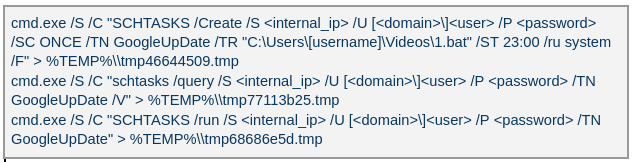
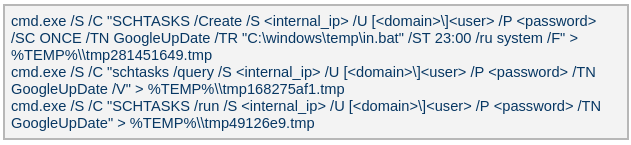
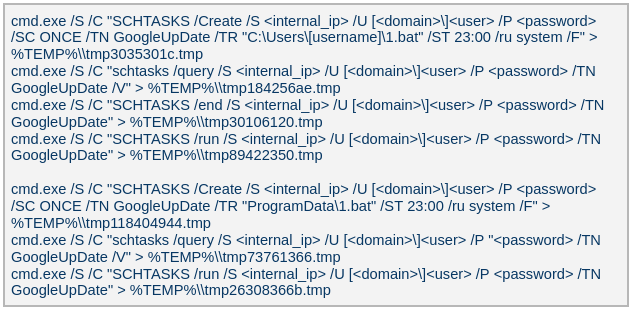
The attacker created a scheduled task named GoogleUpDate on remote machines using admin credentials. The task runs once with System account privileges right after it was created, executing the batch script located at C:\Users\<username>\Videos\1.bat (MD5 6ecf84fb18f6747ed08d7598364d853a). Prior to executing the task, the actor queries its status. It is then run, as shown below.

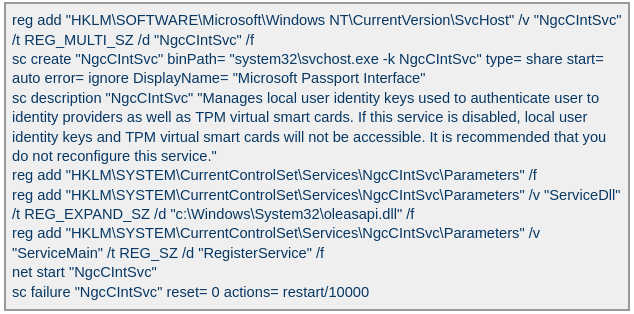
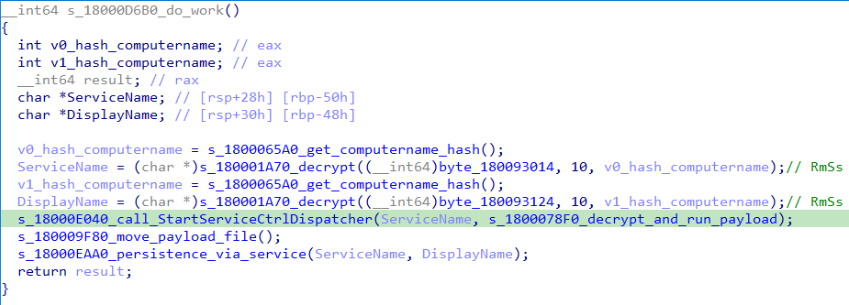
The 1.bat script creates a service named NgcCIntSvc, which loads the loader DLL named oleasapi.dll (MD5 082d49ef9f14e6811d68c7e0e82e5069). The ServiceMain parameter in the service’s registry entry is set to invoke the RegisterService function of oleasapi.dll as shown below.


LurkPoxy Deployment


In another case, the attacker at first checked connectivity to the domain dns[.]ssentialserv[.]xyz as shown below. At the time of our research, the domain was resolving to the address 154[.]196[.]162[.]76 which is used as a LurkProxy C2 server.

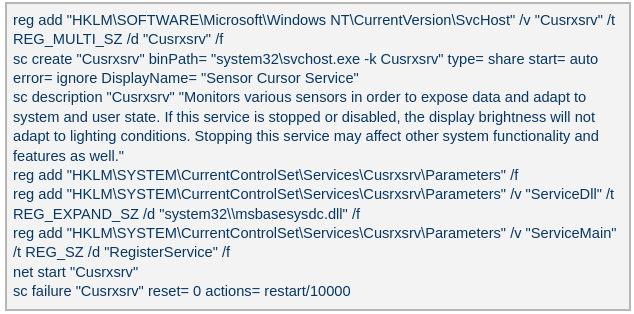
After confirming that the C2 server was reachable, the attacker executed the batch script C:\Users\[username]\Desktop\auto.bat (MD5 b874123a80fc4f40e06872b9cb54ebc6). The script created a service named Cusrxsrv, which loads a DLL named msbasesysdc.dll. In the service registry, the ServiceMain parameter was set to call the RegisterService function of msbasesysdc.dll as shown below.

We identified several service names — specitsrc, cmtastsvc, PNRPHostSvc, vmictimerosync, and vmicagent — that the attackers used to load a malicious DLL onto compromised machines.

OctLurk loader


The loader DLL exports two methods, Refresh and RegisterService. The previously created service first calls RegisterService, which in turn invokes Refresh, the method that contains the malicious code. To locate the payload, the loader double-XOR-decrypts and then zlib-decompresses a set of hard‑coded bytes, yielding the payload file path. The payload bytes itself undergoes the same double‑XOR decryption and zlib decompression to produce the backdoor DLL bytes.

The double‑XOR decryption uses two distinct multibyte keys:

  • Key 1: hard‑coded in the loader
  • Key 2: derived from the serial number of the C: drive

The backdoor DLL is reflectively injected into memory and its entry point is executed. The loader can then call the DLL’s exported methods either by name or by ordinal; both the method name and the ordinal number are hard‑coded in the loader and are decrypted using the same double‑XOR and zlib‑decompression process applied to the payload path and bytes.

OctLurk backdoor


The loader invokes the backdoor’s curl_easy_escape function (ordinal 2). The backdoor then creates a stream socket using a hard‑coded C2 address (dns[.]multitoconference[.]com) and port 443. It gathers the following information from the victim machine:

  • OS information as RTL_OSVERSIONINFOW structure
  • Computer name
  • User name
  • Local host name
  • Local IP address in format %u.%u.%u.%u, with local hostname-to-IP-address translation
  • Current local date and time as SYSTEMTIME struct

To encrypt the collected data, the backdoor employs a hard‑coded XOR key, which in most cases we observed was the string FDrertgr##@QEWASGkio865ehyf98foidsjzhug874392dfsREFDfdsAGH43wea98h. In addition, it generates 0x53 (83) random bytes — this length is also hard‑coded in the sample — and uses them as a second XOR key. The collected victim information is first compressed with zlib (deflate), and then XOR‑encrypted twice, first with the hard‑coded string key and then with the randomly generated byte sequence. The final data is arranged as follows:

  • 0x00: randomly generated XOR key bytes (size 83 bytes)
  • 0x53: compressed data size
  • 0x57: compressed data in the following format: <uncompressed_size> <deflate(data)>
  • 0x57 + compressed_data_size: randomly generated bytes (from 14 to 41 bytes)

The backdoor initially transmits a 16‑byte header that specifies the size of the incoming data packet, as shown below. It then sends the actual data packet.

  • 0x00: randomly picked 10 chars from the string “zyxwvutsrqponmlkjihgfedcbaABCDEFGHIJKLMNOPQRSTUVWXYZ9876543210-_”
  • 0x0A: \x00\x00
  • 0x0C: next_packet_size

The first packet received is 16 bytes long, and its last four bytes specify the size of the subsequent data packet. The format of the subsequent data packet is shown below.

  • 0x00: XOR key; size 83 bytes
  • 0x53: compressed data size
  • 0x57: compressed data in the format: <uncompressed_size> <deflate(data)>

The received data is decrypted using a double‑XOR method: first with the XOR key contained in the packet, then with a hard‑coded XOR key. After the XOR decryption, the data is zlib decompressed. The data may be a command or a plugin code.

OctLurk loads plugins from the C2 server directly into memory to perform various tasks. Each plugin exports two methods — ins_ctl_db and oct_lk_col — with the actual functionality implemented in oct_lk_col. Our analysis shows that the plugins listed below are commonly deployed on victim machines.

  • Command Shell: provides a command shell
  • File Manager: performs filesystem interaction
  • Interaction Manager: synthesizes keyboard and mouse events

The table below provides a detailed description of operations performed by these plugins, where each switch case value denotes command ID.

Plugin typeDescription
File Manager● case 0x10020: for each drive, retrieve the following information: volume GUID path, drive letter, volume name, file system name, drive type, volume serial number, total size in bytes, and free space in bytes.
● case 0x10030: search for a file that matches a specified name and retrieve the following information: file attributes, creation time, last access time, last write time, file size, the file’s name, and its short (8.3) name.
● case 0x10040: recursively list all files in a specified location, including only those whose size, creation time, last write time, and last access time fall within the threshold values defined by C2. For each listed file, retrieve the following details: file attributes, creation time, last access time, last write time, file size, file name and alternative name for the file
● case 0x10050: use the ShellExecuteExW API to open the specified file path, which may be an executable, a document, or a folder.
● case 0x10051: execute the specified command line using the CreateProcessAsUserW API.
● case 0x10060: perform the following file‑system operations: copy, delete, move, and rename — using the SHFileOperationW API.
● case 0x10070: create a directory.
● case 0x10080: set the attributes for a file or directory.
● case 0x10090: for the filename provided by C2, set the file created, last accessed, and last modified timestamps to the values received from C2.
● case 0x20010: get the size of a file.
● case 0x20020: read a file from the system in chunks, starting at a specified offset.
● case 0x20030: calculate the CRC32 of each file data chunk, and retrieve the file created, last accessed, and last written times.
● case 0x20040: close the file handle and free the associated metadata (file path, handle, and size).
● case 0x20110: create a file at the specified path and write the bytes received from C2 into it. Then set the file created, last accessed, and last modified times using the timestamps supplied by C2.
Command Shell● case 0x3E9: launch cmd.exe as shell.
● case 0x3EA: send the exit command to close the command shell.
● case Default: if a command string is received from the C2 and the shell is running, write the command to the shell. Then read the shell’s output and send it back to the C2.
If a command string is received from the C2 server and the shell is not already running, execute the command using C:\Windows\System32\cmd.exe /S /C "<command_string>" > %TEMP%\tmp%d%x.tmp where %d and %x are random values. Afterwards, read the output from the temporary file tmp%d%x.tmp and then delete the file.
Interaction Manager● case 0x3E9: capture the entire screen as a BMP image.
● case 0x3EA: capture the entire screen at specified intervals.
● case 0x3EC: retrieve clipboard data.
● case 0x3ED: copy the data to the clipboard.
● case 0x3F3: MOUSEEVENTF_LEFTDOWN: set the cursor to the specified position and press the left mouse button.
● case 0x3F5: MOUSEEVENTF_LEFTDOWN | MOUSEEVENTF_LEFTUP: move the cursor to the specified position, then press and release the left mouse button.
● case 0x3F6: MOUSEEVENTF_RIGHTDOWN: set the cursor to the specified position and press the right mouse button.
● case 0x3F7: MOUSEEVENTF_RIGHTUP: set the specified cursor position and release the right mouse button.
● case 0x3F8: MOUSEEVENTF_MOVE: move the mouse cursor to specific coordinates, simulating a mouse movement event.
● case 0x3F9: MOUSEEVENTF_WHEEL: move the mouse wheel by a specified amount.
● case 0x3FD: press the key indicated by the virtual‑key code.
● case 0x3FE: KEYEVENTF_KEYUP: release the key identified by the virtual-key code.
● case DEFAULT: MOUSEEVENTF_LEFTUP: move the cursor to the specified position and release the left mouse button.

Post-compromise activity


The attacker used the command‑shell plugin installed via the OctLurk backdoor to perform the following actions:

Victim fingerprinting


The attacker used admin credentials to create a scheduled task named GoogleUpDate on remote machines. This task runs once with System account privileges, executing the script located at C:\windows\temp\in.bat (MD5 45cf5916fab4272a1313c26e67aa9220, 4e6d5c4770d5a822d7fcce6a74f7ad73). After querying the task’s status, the attacker triggers its execution, as shown below.

The batch script runs a series of commands that collect comprehensive information about the machine’s hardware, software, and network configuration as shown in the table below. The results are saved in three files — info.txt, <hostname>.datb, and <hostname>_logs.datb — all stored in the %TEMP% directory.

CommandDescription
chcp 1256Changes the system’s code page to 1256, which supports Arabic characters.
powershell $PSVersionTableRetrieves the version information of PowerShell.
qwinstaViews all active sessions on the local machine.
klist sessionsDisplays a list of logon sessions on this computer (Including Kerberos).
TASKLIST /VLists all running tasks with detailed information.
findstr /i /c:”explorer.exe”Searches for explorer.exe in a case-insensitive manner. Used together with TASKLIST /V.
wevtutil qe Security /f:text /c:5 /rd:true /q:”*[System[(EventID=4624)]] and *[EventData[Data[@Name=’LogonType’]=10]]”Retrieves the last 5 events from the Security event log where the event ID is 4624 (successful logon event) and the logon type is 10 (remote interactive logon e.g., Remote Desktop Protocol).
powershell “ipconfig|select-string v4 -context 1,3”Uses PowerShell to filter ipconfig output for IPv4 addresses.
ipconfig /allDisplays detailed network configuration information.
WHOAMI /allDisplays detailed information about the current user, including their security identifiers (SIDs), privileges, group memberships, and authentication details.
WMIC /Node:localhost /Namespace:\root\SecurityCenter2 Path AntiVirusProduct Get displayName /Format:List | findstr “=”Retrieves information about installed antivirus software.
powershell Get-NetTCPConnectionRetrieves information about TCP connections.
netstat -ano | findstr LISTENINGShows listening ports.
netstat -ano | findstr ESTABLISHEDDisplays established connections.
cmd.exe /c netstat -ano | findstr “EST” | findstr -v 127.0.0.1Filters established connections excluding the loopback address.
powershell.exe “get-wmiobject -query ‘select * from win32_process’ | Select-Object ProcessId,ProcessName,CommandLine,ExecutablePath,CreationDate | Where-object {$_.ProcessId -eq 500} | Format-List”Retrieves detailed information about a specific process.
reg query HKLM /s /f “ProfileImagePath” /t REG_EXPAND_SZSearches the Windows Registry under HKEY_LOCAL_MACHINE (HKLM) for entries where the value name is “ProfileImagePath” and the type is REG_EXPAND_SZ. It points to the location of a user’s profile folder.
cmd.exe /c dir /b c:\usersLists the contents of the C:\Users directory.
wmic startup get caption,command | findstr exeFilters startup items for executable files.
powershell “get-MpComputerStatus”Retrieves the status and configuration details of Microsoft Defender Antivirus (formerly Windows Defender) on a Windows system.
reg query “HKEY_LOCAL_MACHINE\SOFTWARE\Microsoft\Windows Defender\Features” /v “TamperProtection”Queries whether Microsoft Defender antivirus’s tamper protection is enabled.
reg query “HKLM\SOFTWARE\Microsoft\Windows Defender\Exclusions” /sQueries exclusion settings for Microsoft Defender Antivirus. This is where you can configure files, folders, processes, and extensions that should be excluded from being scanned by Defender.
wevtutil gli SecurityConfigures the Security event log.
wevtutil gl Security /f:xmlRetrieves events from the Security log in XML format.
wevtutil gli “Windows PowerShell”Configures the Windows PowerShell event log.
wevtutil gl “Windows PowerShell” /f:xmlRetrieves events from the Windows PowerShell log in XML format.
wevtutil gli SystemConfigures the System event log.
wevtutil gl System /f:xmlRetrieves events from the System log in XML format.
schtasks /query /fo LIST /v | findstr “TaskName> Status> ‘Task To Run’> ‘Run As User’>”Lists all scheduled tasks in verbose mode and extracts the following fields: Status, Task To Run, Run As User, and TaskName.
systeminfoDisplays detailed system information.
powershell “Get-WmiObject -Class Win32_BIOS | Format-list”Retrieves BIOS information.
powershell “Get-WMIObject -Class Win32_PhysicalMemory | Format-list”Retrieves physical memory information.
powershell “Get-WMIObject -Class Win32_Processor | Format-list”Retrieves processor information.
powershell “Get-WMIObject -Class Win32_DiskDrive | Format-list”Retrieves disk drive information.
netsh interface ipv4 show interfacesDisplays information about IPv4 interfaces.
powershell “gwmi Win32_NetworkAdapter | Format-list”Provides hardware-level and driver-level information about adapters.
powershell “gwmi Win32_NetworkAdapterConfiguration | Format-list”Provides network configuration details, such as IP address, DNS, DHCP status, etc.
ipconfig /allDisplays detailed network configuration.
netstat -e -sDisplays detailed network protocol statistics.
certutil -urlcacheDisplays URL cache entries.
ipconfig /displaydnsDisplays the contents of the DNS client resolver cache.
Event log collection


The attackers ran commands to export successful logon events for remote interactive logons (e.g., Remote Desktop Protocol) and to query those events for specific users.


Credential harvesting
Impacket — secretsdump


Attackers ran a malicious file named Adobe.exe (MD5 32a5985543433a4f60da2fafd873b927), which is a portable‑executable version of Impacket’s secretsdump.py tool. Using this tool, they extracted password hashes from domain controllers, the critical servers in an Active Directory environment. Immediately after harvesting the hashes, they issued commands to list all members of the “Domain Controllers” group, likely to identify and target additional domain controllers for further compromise.


Keylogger


Attackers dropped and executed a keylogger located at C:\Users\Public\Pictures\AnyDesk.exe (MD5: 2a571f6cee42a17d873f4c942649813f). They then created a scheduled task named AnyDesk to run the keylogger whenever any user logged on as shown below.

The keylogger creates two files: C:\Users\Public\Libraries\msect\dev0, which stores captured keystrokes, and C:\Users\Public\Libraries\msect\dev1, which holds clipboard data. Before writing to these files, the captured data is encoded by subtracting 2 from each byte.

Browser Password Decryptor


The Browser Password Decryptor tool C:\users\[username]\libraries\64.exe (MD5 37dc84e4bcad92fa28f1e7778d088283) is used to extract passwords from browsers. The tool offers two options: -help to extract passwords from Chrome and -exit to extract passwords from Firefox. For Chrome, the tool targets the Login Data and Local State databases located at %LOCALAPPDATA%\Google\Chrome\User Data\Default\Login Data and %LOCALAPPDATA%\Google\Chrome\User Data\Local State, respectively. The Local State contains the master key, which is essential for decrypting encrypted login information stored in the Login Data database file. For Firefox, the tool targets the logins.json file located at %APPDATA%\Mozilla\Firefox\Profiles\{profile folder}. The logins.json file in Firefox stores encrypted usernames and passwords for websites.

Remote access : Pandora FMS agents (Pandora RC agent)


Pandora RC agent provides remote control of a victim’s computer, allowing attackers to monitor and manipulate the system. Using administrative credentials, the attacker creates a scheduled task named GoogleUpDate on the compromised machines. This task runs once with System account privileges and executes the script 1.bat, which can be found at either C:\Users\[username]\1.bat or C:\ProgramData\1.bat (MD5 5e26df131ff0a679a0a2699b723b46e3). The task’s status is first queried, then it is executed, as shown below.

The batch script 1.bat executes a command that downloads and installs the Pandora RC agent using the arguments shown below.

  • EHUSER: a Pandora RC user
  • STARTEHORUSSERVICE: start the agent after the installation finishes (default = 1)
  • EHORUSINSTALLFOLDER: specify the folder where you want to install the agent (default: %ProgramFiles%\_agent)
  • DESKTOPSHORTCUT: 0: do not create a desktop shortcut


Network scan: FSCAN


Fscan is a comprehensive internal‑network scanning tool that offers a range of functions, including network discovery, vulnerability assessment, reverse‑shell creation, and brute forcing of common services. The executable is dropped to %TEMP%\fc.exe (MD5: cf903e4a1629aa0582fd0363b5786676) and writes its output to %TEMP%\result.txt. Using Fscan, both internal and public networks were scanned to identify services running on specific ports, such as Secure Shell (SSH) on port 22 and MySQL on port 3306. The tool also attempted to access these services using credentials from the password file pp.txt.


Email harvesting


The attackers used the curl command to connect to an email server, authenticate with a username and password, and issue a command to select the Inbox folder. Typically, the goal is to:

  • Verify that a connection to the email server is working
  • Authenticate the user
  • Prepare the Inbox folder for reading or manipulating messages (e.g., listing, fetching, or deleting emails)


LurkProxy


In a similar manner to the OctLurk backdoor, the attacker also deployed another implant we named LurkProxy, which uses a heavily obfuscated version of the OctLurk loader. While LurkProxy has a nearly identical architecture to the OctLurk backdoor, its primary role is to proxy network traffic. Like the OctLurk, it exports a function named curl_escape_easy, which the loader invokes. Once executed, LurkProxy listens on all interfaces on hard‑coded port 64980 and establishes a TLS‑encrypted connection to the C2 server (154[.]196[.]162[.]76). The C2 communication uses a proprietary binary protocol, where each packet is compressed with zlib, encrypted with a double‑XOR scheme, and follows the structure outlined below.

OffsetDataType
0x00 (00)Unused
0x08 (08)Packet control flags. Bit 0 indicates high priority packet, bit 1 indicates single packetbit array
0x0C (12)Command numberint
0x10 (16)Handler number (unique identifier for each proxy client in the first mode)int
0x14 (20)Command integer argumentint
0x18 (24)Unused
0x1C (28)Data 1 payload sizeint
0x20 (32)Data 2 payload sizeint
0x24 (36)Data 1 byte streambytes
0x24 (36) + NData 2 byte streambytes

LurkProxy can function as a reverse proxy in two distinct modes as described below. The mode is selected by a static flag, meaning the proxy can operate in only one mode at a time. In the implant we examined, the first (SOCKS5) mode was used.

Mode 1: SOCKS5 proxy

When a client connects, LurkProxy sends to the C2 the command 0x1000010, indicating that the connection has been established and includes the target address in the packet data. The C2 server then opens a connection to that address, enabling bidirectional communication through the appropriate commands.

Mode 2: transparent proxy

In this mode, the target address and port are hard‑coded. Upon startup, LurkProxy immediately connects to the predefined target via the C2 channel using the same command. All subsequent client connections are routed through this single, fixed target. This mode handles raw network traffic directly, bypassing the SOCKS5 layer.

Command IDDirectionDescriptionArguments
0x1000010Implant -> C2When a new proxy client connects, it creates a proxy session and notifies C2 of the successful configurationTarget port in command integer argument
UTF-16 encoded connection hostname in data 1
0x1000010C2 -> ImplantUsed to control the session, allowing it to pause or stop proxyingAction in command integer argument (1 to pause, or any other value to terminate)
0x1000030Implant -> C2Sent when the LurkProxy is shut down
0x1000050Implant -> C2Forwards the received bytes from the client to C2Raw TCP bytes in data 1
0x1000050C2 -> ImplantForwards the received bytes from the proxy target to the clientRaw TCP bytes in data 1

SilkLurk

Deployment


The attacker created a service that executes legitimate binaries, such as NetSetSvc.exe (NVIDIA debug dump), nvgwls.exe (NVIDIA background tool responsible for autotuning), RtkSmbus.exe (Realtek Semiconductor’s noise‑cancelling program), and RtkNGUI64.exe (Realtek High‑Definition Audio Manager), to side‑load malicious loader DLLs: nvml.dll, vulkan-1.dll, RtkSmbusLoc.dll, and RtkNGUI64Loc.dll, respectively. These DLLs act as a loader that will inject SilkLurk backdoor into the process memory.

SilkLurk loader


SilkLurk loader working logic

The loader first verifies that it is running within the legitimate executable that loads it. Next, it moves the payload file (in the analyzed sample, it was named OneDrive.dat) from its module location (C:\ProgramData\Microsoft\Network\Connections in the analyzed sample) to the hard‑coded payload path (C:\ProgramData\Microsoft OneDrive\setup in the analyzed sample). Note that the hard-coded payload path may vary depending on the loader.

Next, the loader creates a service named RmSs to maintain persistence. The service will run the legitimate module binary (C:\ProgramData\Microsoft\Network\Connections\nvgwls.exe) that loads the malicious loader (vulkan-1.dll). The service is configured with the parameters mentioned below. Additionally, the service configuration is modified to restart the service in the event of a failure. Finally, the loader starts the service.

  • Service Type: SERVICE_WIN32_OWN_PROCESS
  • Start Type: SERVICE_AUTO_START
  • Error Control: SERVICE_ERROR_NORMAL

On service start, loader calls StartServiceCtrlDispatcher, which will invoke ServiceProc. The ServiceProc then calls the routine s_1800078F0_decrypt_and_run_payload. This routine computes a 32-bit hash (dword) of the victim’s computer name. The dword hash is used by a custom algorithm made up of arithmetic and logical operations to decrypt the hardcoded payload file path. The payload bytes themselves are decrypted with the same algorithm that decoded the file path. By using the victim’s computer name in the decryption of both the file path and the payload bytes, the loader becomes specific to each victim. The decrypted bytes contain shellcode with the following structure:

Shellcode offsetDescription
0x000 (0)Stub code, which performs reflective code injection
0x770 (1904)Hardcoded value 0x11113F68, XORed with the computer name hash
0x774 (1908)Hardcoded byte 0xD9, used as XOR key to decrypt import DLL names and APIs
0x775 (1909)Size of the encrypted backdoor
0x779 (1913)Encrypted backdoor data blob

The stub code decrypts and injects the backdoor blob into memory. To decrypt the blob, it first computes a dword hash of the computer’s name. This hash is then fed into a custom algorithm — a series of arithmetic and logical operations — that performs the decryption. This algorithm differs from the one used to decrypt the payload file.

The IMAGE_DOS_HEADER of the backdoor binary is zeroed out. Information in the IMAGE_NT_HEADERS, such as ImageSize and NumberOfSections, is XOR-decrypted using the hash of the computer name. The first three sections are decrypted again using a custom algorithm (a series of arithmetic and logical operations) before being injected into memory.

During import resolution, DLL names and API names are XOR‑decrypted using a hard‑coded single‑byte key. After the import DLL is loaded and the API addresses are resolved, the DLL and API name strings are zeroed out.

During relocation, the size of each relocation block, the value of each relocation entry, and the bytes to be relocated are XOR‑decrypted using the dword hash of the computer name. Afterward, the entry point is also XOR‑decrypted with the same hash and then invoked.

SilkLurk backdoor


The backdoor contains a hardcoded configuration of 0x4AC (1196) bytes, with the first 0x10 (16) bytes holding a mutex string and the remaining 0x49C (1180) bytes comprising encrypted configuration data; this configuration is written to a hardcoded filename (e.g., 2470b666bece868f, 27879a4df1a740ff) that differs across samples and is placed in the %APPDATA% directory. The configuration is decrypted using a custom algorithm involving a series of arithmetic and logical operations that is distinct from the algorithm used to decrypt the encrypted backdoor blob and payload file. The configuration has the following structure:

OffsetDescription
0x00 (000)C2 Host 1
0x64 (100)C2 Host 2
0xC8 (200)C2 Host 3
0x12C (300)C2 Host 4
0x190 (400)Port for C2 Host 1
0x192 (402)Port for C2 Host 2
0x194 (404)Port for C2 Host 3
0x196 (406)Port for C2 Host 4
0x198 (408)Unknown 21 bytes
0x1AD (429)Proxy address 1
0x22A (554)Proxy username 1
0x2A7 (679)Proxy password 1
0x324 (804)Proxy address 2
0x3A1 (929)Proxy username 2
0x41E (1054)Proxy password 2

The backdoor creates a TCP socket and connects to the C2 server defined in the configuration. If proxy details are provided, it attempts to establish the C2 connection through the proxy. The proxy request uses the following format:
CONNECT %s:%d HTTP/1.1
Proxy-Connection: Keep-Alive
Host: %s:%d
Connection: keep-alive
User-Agent: Mozilla/5.0 (Windows NT 10.0; Win64; x64) AppleWebKit/537.36 (KHTML, like Gecko)
Chrome/86.0.4240.75 Safari/537.36
After successfully connecting to the C2 server, it generates a random 32‑byte (0x20) network key that will be used to encrypt and decrypt network packets. This key is appended to the magic dword, as shown in the table below, creating a 40‑byte block that is then encrypted with a custom algorithm: a series of arithmetic and logical operations that differs from the one used to decrypt the configuration.

Field offsetField size (in bytes)Field value
0x00 (00)0x04 (04)0x0C7FFBE86h (magic dword)
0x04 (04)0x04 (04)0
0x08 (08)0x20 (32)Network key (will be used to encrypt and decrypt network traffic)

It then prepares a packet to send the key to the command‑and-control server, as shown in the table below. The packet contains a 0xC (12‑byte) header, a 0x28 (40‑byte) block of encrypted network‑key data (see the table above), and a randomly generated payload whose size ranges from 0x14 (20) to 0xB4 (180) bytes.

Field offsetField size (in bytes)Field value
0x00 (00)0x08 (08)data_size (encrypted_key_data + random_bytes_size)
0x08 (08)0x04 (04)data_size XORed with 0x39
0x0C (12)0x28 (40)Encrypted network key data (as mentioned in above table)
0x34 (52)size between 0x14 (20) and 0xB4 (180)Random data bytes

After sending the key, the backdoor collects the following victim information: local computer name, DNS domain assigned to the local computer, user’s logon name, processor architecture, OS major version and build number, host IP address, current process ID, tick count value, and backdoor module name. The collected victim information is first compressed and then encrypted using the network key. The custom algorithm (a series of arithmetic and logical operations) used to encrypt collected victim information is different from the algorithms used to decrypt the configuration and encrypt the network key. Before sending the victim information, a 0x0F (15) byte header is generated and encrypted using the same custom algorithm used to encrypt the collected victim data. The header follows the format as shown in the table below.

Field offsetField size (in bytes)Field value
0x00 (00)0x04 (04)0xC7FFBE86 (magic dword)
0x04(04)0x04 (04)Message type (1 means victim information)
0x08 (08)0x04 (04)Data size (size of encrypted victim information)
0x0C (12)0x01 (01)Compression flag (1 means compressed)
0x0D (13)0x02 (02)Size of random bytes, between 0x14 and 0x96 bytes

Finally, the encrypted header and victim information are formatted as shown below and transmitted to the C2 server.
<random_dword><encrypted header><encrypted victim information><random bytes>
Once the backdoor has transmitted the victim information, it waits for a 0x13‑byte (19‑byte) response from the C2 server. This response follows the structure presented in the table below.

Field offsetField size (in bytes)Field value
0x00 (00)0x04 (04)Random dword
0x04 (04)0x0F (15)Encrypted header data

The encrypted header contained in the response is decrypted with the network key that was generated and shared with the C2 server. After decryption, the header retains the same size and structure as the one used in the victim information message.

The message type field in the header (offset 0x04) determines which operation (command) to perform. Next, the backdoor figures out the size of the command data to receive by adding up the size of the encrypted data (found at position 0x08 in the received header) and the size of the random bytes (found at position 0x0D in the received header). The received command data is first decompressed, based on the compression flag located at position 0x0D in the received header, and then decrypted using the custom algorithm that was used to encrypt the sent data. The backdoor supports the following commands:

Command (message type)Description
03Based on subcommand, perform the following operations:
00: Get target system’s local time
01: Set sleep time in milliseconds, after which to reconnect to the C2 server
04Send current backdoor configuration
05Update backdoor configuration
06Receive and inject additional payloads (plugins) into memory. Based the on subcommand, perform the following operations:
01: Inject payload (plugin) bytes into memory and execute payload’s entry point
03: Call export method of injected plugin

Post-compromise activity


The threat actor operating the SilkLurk backdoor first used it to invoke cmd.exe to launch PowerShell. Within PowerShell, they ran commands such as net use to connect to shared network resources with administrative credentials. After establishing the connection, they searched the shared drives for confidential documents to exfiltrate. Once the search was complete, they disconnected from the network share to erase evidence of which internal servers had been accessed. To archive the stolen data, they employed legitimate archiving tools: WinRAR and 7‑Zip.

Below are the paths and names of the WinRAR and 7Zip binaries used by the attackers.

WinRAR18dc8bff47cc282508354771d0c8cf8cC:\Users\[username]\Libraries\RecordedTV.exe
C:\Users\[username]\Libraries\recordutil.exe
7Zip9a1dd1d96481d61934dcc2d568971d06C:\windows\vss\7z.exe

Second-stage payload

PlugX


The SilkLurk backdoor opened a command shell (cmd.exe). Using this shell, the attacker executed the file C:\ProgramData\microsoft\html help\kmsonline.exe (MD5: 3c9a1ba8e0c7475706adc6376e9d7b7c). The kmsonline.exe binary acted as a dropper for the PlugX malware, deploying the malicious files listed below.
C:\ProgramData\Symantec\RasTls.exe - Legitimate Binary (MD5 62944e26b36b1dcace429ae26ba66164)
C:\ProgramData\Symantec\RasTls.dll - PlugX Loader Dll (MD5 ef59aad625eebda8650aec5820d6ce69)
C:\ProgramData\Symantec\RasTls.dll.res - PlugX Payload file
Our Kaspersky Threat Attribution Engine (KTAE) also identified a strong degree of similarity between kmsonline.exe (MD5: 3c9a1ba8e0c7475706adc6376e9d7b7c) and PlugX.

PlugX was configured to communicate with the C2 domain gycudore[.]kozow[.]com and the IP address 64[.]7[.]198[.]130. Below are the extracted configuration fields from PlugX.

Config field nameValue
Injection Target Process%SystemRoot%\system32\svchost.exe
Home Directory%ALLUSERSPROFILE%\Symantec
Persistence NameSymantecRAS
Service Display NameSymantecRAS
Service DescriptionSymantec RAS Services
Campaign IDKG_MFA

Infrastructure


The threat infrastructure relies on VPS servers. Some OctLurk and LurkProxy C2 addresses are referenced in a public report by Kazakhstan’s State Technical Service (STS) company. According to available data, a campaign targeting critical infrastructure in Kazakhstan was discovered in March 2025. During this campaign, attackers employed the TrustFall (STS internal designation) remote access malware, also known as MystRodX (Qianxin) and SilentRaid (Cisco) and designed for Linux-based operating systems. Subsequently, in October 2025, STS researchers found additional TrustFall samples, while also discovering its new C2 servers via active probing. Notably, three observed TrustFall C2 addresses were also leveraged by OctLurk and LurkProxy. This overlap points to shared infrastructure across multiple OS-targeting campaigns, though it remains unclear whether these activities ran concurrently or at different times.

Attribution


We identified multiple artifacts confirming that OctLurk and SilkLurk are operated by the same threat actor. Several users infected with OctLurk were also found to be infected with SilkLurk, and in some cases both malware families used the same staging directory. Below are examples of these artifacts.

  1. In one incident, the attackers created the service C:\Windows\system32\svchost.exe -k ExAstSrc -s ExAstSrc to deploy OctLurk. They used OctLurk to obtain a command shell and were observed dropping the SilkLurk loader vulkan-1.dll (MD5 be4731c09734da2e8eb6814a9c82f266) via this shell, as shown below.
  2. In another incident, we observed attackers using the same directory C:\ProgramData\intel\ to drop both the OctLurk and SilkLurk loader DLLs.
OctLurkC:\ProgramData\intel\mscastrac.dll (MD5 7c2f64461bb519c6cbf1fc687675514c)
C:\ProgramData\intel\msbasesysdc.dll (MD5 f4578e869a735cfad691f927bae3e638)
SilkLurkC:\ProgramData\intel\vulkan-1.dll (MD5 2f18472866f38c1e1c2c5c14b9a6ab56)

In one incident, the attacker used SilkLurk to obtain a command shell (cmd.exe) and then deployed and executed the PlugX malware. The PlugX sample was configured to contact gycudore[.]kozow[.]com as its command‑and‑control (C2) server, while the SilkLurk backdoor used ctyuhjerf[.]kozow[.]com for C2. PlugX is a well‑known modular remote‑access Trojan (RAT) that has been active since at least 2008 and historically linked to Chinese-speaking threat actors. This suggests that both OctLurk and SilkLurk were also developed and operated by a Chinese‑speaking actor, although at this time, we cannot attribute this activity to a known threat group.

Conclusions


The emergence of the OctLurk and SilkLurk multi‑plugin malware framework highlights how threat actors continuously refine their tactics to evade detection and maintain control over compromised networks. Both families operate primarily in memory, leaving only a minimalistic loader on disk that relies on machine‑specific data (OctLurk uses the drive serial number, and SilkLurk uses the computer name) to decode payload locations and contents. This victim‑specific encoding makes reverse engineering and automated detection considerably harder.

In addition to sophisticated obfuscation, the attackers establish redundant access channels, harvest credentials, and deploy well‑known remote access and monitoring tools. These secondary pathways ensure persistence even if the original infection vector is discovered or neutralized.

Indicators of Compromise


Additional IoCs are available to customers of our Threat Intelligence Reporting service. For more details, contact us at intelreports@kaspersky.com.

Backdoor domains and IPs

OctLurk C2


dns[.]multitoconference[.]com
tj[.]tajikistandip[.]com
fm01[.]clouddevicemetrics[.]com
confbase[.]mdpsupport[.]net
digital[.]leroymerling[.]com
api2[.]annoyingremote[.]com
about[.]blsouqs[.]com
ssl[.]blsouqs[.]com
45[.]138[.]157[.]165

LurkProxy C2


dns[.]ssentialserv[.]xyz
154[.]196[.]162[.]76

SilkLurk C2


tyhbgtyuj[.]gleeze[.]com
95[.]179[.]210[.]138
wedfcvbn[.]gleeze[.]com
45[.]77[.]136[.]228
rgnojb[.]casacam[.]net
95[.]179[.]141[.]26
ctyuhjerf[.]kozow[.]com
45[.]32[.]152[.]50
212[.]11[.]39[.]138
195[.]86[.]120[.]2
uyhvfredc[.]accesscam[.]org
154[.]196[.]187[.]73
45[.]61[.]149[.]112
wedfcvbn[.]gleeze[.]com
45[.]77[.]136[.]228
gycudore[.]kozow[.]com
64[.]7[.]198[.]130

Loaders

OctLurk loader


082d49ef9f14e6811d68c7e0e82e5069 oleasapi.dll
f4578e869a735cfad691f927bae3e638 msbasesysdc.dll
7c2f64461bb519c6cbf1fc687675514c mscastrac.dll

SilkLurk loader


8269d6ba1b6842f9152c90cf7add9b93 vulkan-1.dll

PlugX dropper


3c9a1ba8e0c7475706adc6376e9d7b7c kmsonline.exe

PlugX loader


ef59aad625eebda8650aec5820d6ce69 RasTls.dll

OctLurk backdoor


a0cc7accc79abb0287aaba825d0351f0

OctLurk File Manager plugin


a56cce62930a6bee80d679b4c495a340

OctLurk Command Shell plugin


1415a78b75de7db4ba3d1e61d7db4501

OctLurk Interaction Manager plugin


a4d550a3ba0cd073fe3839b99d98a7a8

Impacket’s secretsdump (not available)


32a5985543433a4f60da2fafd873b927 Adobe.exe

Keylogger


2a571f6cee42a17d873f4c942649813f AnyDesk.exe

Browser password stealer


37dc84e4bcad92fa28f1e7778d088283 x64.exe

FSCAN


cf903e4a1629aa0582fd0363b5786676 fc.exe

Batch scripts (not available)


6ecf84fb18f6747ed08d7598364d853a 1.bat
b874123a80fc4f40e06872b9cb54ebc6 auto.bat
45cf5916fab4272a1313c26e67aa9220 in.bat
4e6d5c4770d5a822d7fcce6a74f7ad73 in.bat
5e26df131ff0a679a0a2699b723b46e3 1.bat

Archive utilities

WinRAR


18dc8bff47cc282508354771d0c8cf8c RecordedTV.exe, recordutil.exe

7zip


9a1dd1d96481d61934dcc2d568971d06 7z.exe

File paths

OctLurk file paths


C:\Users\[username]\Videos\1.bat
C:\Windows\System32\oleasapi.dll
C:\Windows\Media\Welcome01.wav
C:\windows\temp\in.bat
C:\Users\[username]\1.bat
C:\ProgramData\1.bat
C:\Windows\System32\msbasesysdc.dll
C:\Windows\System32\Waavsstrace.dll
C:\Windows\System32\SystemSettings.Publishing.dll
C:\Windows\System32\msdctries.dll
C:\Users\Public\Pictures\AnyDesk.exe
C:\Users\Public\Libraries\msect\dev0
C:\Users\Public\Libraries\msect\dev1
C:\users\[username]\libraries\64.exe
C:\ProgramData\Ehorus\
%TEMP%\fc.exe

SilkLurk file paths


C:\programdata\microsoft\network\connections\nvgwls.exe
C:\ProgramData\Veeam\EndpointData\nvgwls.exe
c:\ProgramData\microsoft\network\connections\vulkan-1.dll
C:\ProgramData\microsoft\network\downloader\vulkan-1.dll
C:\ProgramData\intel\vulkan-1.dll
C:\Users\Public\Music\vulkan-1.dll
C:\ProgramData\HP\NCCOM\vulkan-1.dll
C:\ProgramData\intel\gcc\vulkan-1.dll
C:\Windows\System32\0409\vulkan-1.dll
C:\ProgramData\veeam\endpointdata\vulkan-1.dll
C:\ProgramData\plug\vulkan-1.dll
C:\Program Files\nvidia corporation\display.nvcontainer\plugins\vulkan-1.dll
C:\ProgramData\microsoft onedrive\setup\vulkan-1.dll
C:\vmware\vmware tools\vmware vgauth\schemas\vulkan-1.dll
C:\ProgramData\nvidia\ngx\vulkan-1.dll
C:\ProgramData\microsoft\microsoft\vulkan-1.dll
C:\ProgramData\usoprivate\updatestore\vulkan-1.dll
C:\ProgramData\Microsoft OneDrive\setup\OneDrive.dat
C:\ProgramData\NVIDIA\DisplayDriverContainer1.log
C:\ProgramData\Microsoft\Diagnosis\ETLLogs\ETL.log
C:\ProgramData\NVIDI\NGX\ngx.dat
C:\ProgramData\Intel\GCC\2024.log
C:\ProgramData\veem\pyshellext.amd64.log
C:\ProgramData\Microsoft\RtkNGUI\RtkNGUI64.exe
C:\ProgramData\microsoft\rtkngui\RtkNGUI64Loc.dll
C:\ProgramData\realtek\audio\RtkNGUI64Loc.dll
C:\realtek\audio\RtkNGUI64Loc.dll
C:\ProgramData\USOPrivate\UpdateStore\Store.dat
C:\ProgramData\Microsoft\Crypto\Keys\Store.key
C:\DrvPath\Network\Lan\Realtek\NetSetSvc.exe
C:\drvpath\network\lan\realtek\nvml.dll
C:\microsoft\network\connections\nvml.dll
C:\ProgramData\microsoft\network\connections\nvml.dll
C:\Windows\System32\0419\nvml.dll
C:\veeam\nvml.dll
C:\microsoft\network\nvml.dll
C:\ProgramData\hp\nvml.dll
C:\usoprivate\updatestore\nvml.dll
c:\nvidia corporation\display.nvcontainer\plugins\nvml.dll
C:\Users\Public\Pictures\image.png
C:\Users\Public\Documents\My Pictures\image.png
C:\ProgramData\Realtek\Audio\RtkSmbus.exe
C:\ProgramData\realtek\audio\RtkSmbusLoc.dll
C:\rtksmbusact\RtkSmbusLoc.dll
C:\ProgramData\rtksmbusact\RtkSmbusLoc.dll
C:\realtek\audio\RtkSmbusLoc.dll

PlugX file paths


C:\ProgramData\microsoft\html help\kmsonline.exe
C:\ProgramData\Symantec\RasTls.exe
C:\ProgramData\Symantec\RasTls.dll
C:\ProgramData\Symantec\RasTls.dll.res

WinRAR and 7z file paths


C:\Users\[username]\Libraries\RecordedTV.exe
C:\Users\[username]\Libraries\recordutil.exe
C:\windows\vss\7z.exe


securelist.com/octlurk-silklur…

RC Telemetry Board Lets Virtual Crewmember Help You Race Better


The media in this post is not displayed to visitors. To view it, please log in.

Logging and telemetry in remote controlled racing is a great thing, and not only does [jwachlin]’s Open RC Spotter do a fantastic job of that, it has quite a few clever tricks up its sleeve that make it extra special.

Open RC Spotter is an ESP32-based hardware platform for high performance RC car racing that reads from various sensors (including IMU, GPS, temperature, battery, and IR receiver for IR lap beacons) to create a filtered stream of readings that include position, velocity, lap time, battery voltage, and more.
Got RC car telemetry? Feed it to a virtual race engineer for real-time voice feedback.
This data gets logged to an SD card, but can also be broadcast wirelessly via ESP-NOW to a receiver that can in turn send it over serial USB, or do whatever else one wishes. There’s also a neat feature that fires up a temporary WiFi access point on demand so log files can be downloaded with a web browser, no need to hook up a cable.

So far, so cool. But there’s still another nifty feature. Open RC Spotter supports the Crew Chief telemetry protocol. Crew Chief is a piece of free Windows software that serves as a companion application for sim racing. It acts as a virtual race crew member, providing spoken information based on live telemetry read from supported racing sims.

Since Open RC Spotter supports the same telemetry format, one can use the virtual race engineer with RC car racing by simply feeding Open RC Spotter‘s serial data to the Crew Chief application. The RC telemetry data isn’t as rich as what comes from the racing sim APIs, but it’s more than enough to be useful.

People come up with all kinds of neat ideas when it comes to RC racing, and most of them depend on having access to good data. For example, a load cell in the steering mechanism can provides the data for force-feedback steering. We’ve even seen LiDAR and a depth camera used to automatically compute optimal racing lines.


hackaday.com/2026/07/30/rc-tel…
Cybersecurity & cyberwarfare ha ricondiviso questo.

#FCC Restricts New Foreign Robots and Inverters Over Security Risks
securityaffairs.com/196308/sec…
#securityaffairs #hacking

Toy Ghouls’ new toy: the GenieLocker ransomware


The media in this post is not displayed to visitors. To view it, please log in.


Introduction


The new GenieLocker ransomware family has been active since March 2026. It has been used in attacks against organizations in the Russian Federation, primarily in the manufacturing sector, and attributed to the Toy Ghouls group by open-source intelligence (link in Russian).

The Toy Ghouls, also known as Bearlyfy, Labubu and Laboo.boo, is a financially motivated extortion group, which previously relied on third-party encryption Trojans like RedAlert, LockBit, and Babuk. GenieLocker, apparently a custom design, upgrades their toolkit and reduces their reliance on third-party software. We discovered multiple samples of this Trojan in two variants: PE builds for Windows and ELF builds for Linux and ESXi.

Technical details

Modus operandi


We described typical TTPs and modus operandi of the Toy Ghouls threat actor in the previous post (link in Russian).

In this article, we aim to thoroughly describe the capabilities of Windows and Linux builds of the custom encryption Trojan GenieLocker. To give more context, we will also provide a brief overview of the attack that took place at the end of March 2026, where GenieLocker was deployed on the victim’s systems.

Initial Access


During the incident, the attackers first entered the environment through an OpenVPN connection originating from an external partner’s network. They likely exploited the trusted relationship with that partner and used stolen, yet still valid, credentials to connect.

Discovery and Credential Access


After breaching the target’s network, the attackers installed additional tools on the compromised hosts, including OpenSSH, socks5.exe, SoftPerfect Network Scanner, and Mimikatz. They employed SoftPerfect Network Scanner for discovery and used Mimikatz to dump credentials. Forensic analysis also shows that they accessed the KeePassXC password manager already installed on several compromised machines, likely attempting to extract the stored credentials from the KeePass databases.

Lateral Movement and Command and Control


Lateral movement was performed by using RDP to reach Windows machines and SSH for Linux servers. The widespread deployment of the encryption Trojan was conducted with the legitimate utilities PsExec and PAExec. Additionally, the attackers established a reverse SSH tunnel to communicate with their command‑and‑control server.

Impact


During the impact phase, the attackers encrypted files on the compromised Windows machines with the PE version of the GenieLocker ransomware. On the compromised Linux and ESXi servers, they stopped active virtual machines and encrypted their disks using the ELF version of GenieLocker.

The tactics, techniques, and procedures seen here match those documented in earlier attacks attributed to the Toy Ghouls group. As in those prior incidents, forensic analysis found no evidence of data exfiltration, which is typical behavior for this threat actor. Toy Ghouls have not employed a double‑extortion model and do not run a data‑leak website.

Encryption Trojan for Windows


The Windows version of GenieLocker (MD5: 5d62c1349b8981c396c9a23f4f8f053c) is primarily written in C, but compiled with the C++ libraries using Microsoft Visual C/C++. The malware incorporates several ransom‑related capabilities, including process termination, service shutdown, debugger evasion, and a sophisticated encryption routine. For its cryptographic operations, it relies on the open‑source libsodium library.

Aligned with the recent trend supported by our expertise, as observed in attacks of some other ransomware strains, GenieLocker doesn’t save the ransom notes on the victim’s system. The Trojan doesn’t contain any attackers’ contact info or negotiation addresses. Instead, the attackers will need to deliver the ransom demands and contacts manually during the attack. This approach may be an attempt by the GenieLocker developers to avoid proactive detection of the ransomware process being triggered by the creation of multiple readme files.

GenieLocker help message

Arguments and launch


GenieLocker supports multiple arguments for configuring its behavior.

ArgumentDescription
First argument“Secret” argument, hex string value
-p, –percent NPercentage of file content to encrypt
-r, –recursiveProcess directories recursively
-l, –log <filename>Set path for log file
-h, –helpShow help message
Last argumentPath to encrypt

GenieLocker expects the first argument to be a hex string referred to in the malware code as the “secret argument”, which is required for the ransomware to start. Most likely, the purpose of this is to avoid execution on sandboxes and other automated analysis environments. Another reason may be to prevent unauthorized usage by other threat actors.

Checking the secret argument

The secret argument is a hex value with a variable size that does not exceed 4096 bytes. This hex string value is converted to bytes and hashed with the SHA‑256 algorithm. The result is compared to a hardcoded value. If they match, the literal string session is appended to the secret value, and the whole string is hashed with BLAKE2b‑256, but the resulting hash is never used. This may be a part of a feature still in development.

Secret value hashing

Anti-debugging


GenieLocker contains multiple methods to inspect if its process is under debugging. After launch it makes the first check named Environment check and uses WinAPI functions IsDebuggerPresent and CheckRemoteDebuggerPresent to detect the debugger.

Environment check
Environment check

After the secret argument validation, GenieLocker starts a new parallel thread called watchdog. It runs in an infinite loop that performs a number of checks to detect well-known debuggers every 500 milliseconds. If at least one of the checks fails, the whole GenieLocker process immediately terminates.

Watchdog checks
Watchdog checks

The only thing worth elaborating on is that the GenieLocker process calculates the CRC32 of its .text section when the watchdog thread is starting, saves the resulting hash, and then recalculates it again in every loop and compares with the initial value. In case the code in this section is modified by the debugger or other program, this method allows the Trojan to detect this modification.

Preparing for encryption


GenieLocker contains multiple exclusion lists. For example, it does not encrypt folders with names from the list below. Among those, there are mostly system folders, which are skipped to avoid corrupting the OS.
$recycle.bin;config.msi;$windows.~bt;$windows.~ws;windows;boot;program files;program files (x86);programdata;system volume information;tor browser;windows.old;intel;msocache;perflogs;x64dbg;public;all users;default;microsoft;appdata
The Trojan also avoids encrypting the following system Windows files.
autorun.inf;boot.ini;bootfont.bin;bootsect.bak;desktop.ini;iconcache.db;ntldr;ntuser.dat;ntuser.dat.log;ntuser.ini;thumbs.db;GDIPFONTCACHEV1.DAT;d3d9caps.dat
The file extensions below are excluded from encryption as well.
386;adv;ani;bat;bin;cab;cmd;com;cpl;cur;deskthemepack;diagcab;diagcfg;diagpkg;dll;drv;exe;hlp;icl;icns;ico;ics;idx;ldf;lnk;mod;mpa;msc;msp;msstyles;msu;nls;nomedia;ocx;prf;ps1;rom;rtp;scr;shs;spl;sys;theme;themepack;wpx;lock;key;hta;msi;pdb;search-ms;MD
Furthermore, the Trojan contains an exclusion list for host names. The malware retrieves the computer name using GetComputerNameA and checks it against this list, but in the sample in question, the list is empty.

Output for whitelisted hosts

If the host name is not excluded, GenieLocker starts to kill processes that could be using the files of interest and therefore prevent the Trojan from encrypting them. These processes are listed below. The Trojan stops them by using the TerminateProcess function.
sql;oracle;ocssd;dbsnmp;synctime;agntsvc;isqlplussvc;xfssvccon;mydesktopservice;ocautoupds;encsvc;firefox;tbirdconfig;mydesktopqos;ocomm;dbeng50;sqbcoreservice;excel;infopath;msaccess;mspub;onenote;outlook;powerpnt;steam;thebat;thunderbird;visio;winword;wordpad;notepad;calc;wuauclt;onedrive;1c;vmwp;vmms;vmcompute;mssqlserver
Additionally, the Trojan stops the following services using ControlService with the SERVICE_CONTROL_STOP control code.
vss;sql;svc$;memtas;mepocs;msexchange;sophos;veeam;backup;GxVss;GxBlr;GxFWD;GxCVD;GxCIMgr;1c;Mssqlserver;vmwp;vmms;vmcompute;mssqlserver;agent_ovpnconnect
Finally, GenieLocker starts encryption threads and searches for all available drives, including network shares, to encrypt them.

Threads info output
Threads info output

File encryption and cryptography


The extension for the encrypted files is hardcoded in the Trojan’s body. In the sample under review, it is .03ffc1c4a3da0f02. Before starting to encrypt each file, GenieLocker creates two auxiliary files:

  • a lock file: <filename.fileext>.03ffc1c4a3da0f02.lock
  • a journal: <fileext>.03ffc1c4a3da0f02.journal

The lock file helps to protect files from double encryption by other threads or instances. Inside this file, the Trojan stores the current PID obtained from the GetCurrentProcessId function.

The journal file contains the hardcoded string VCJOURN, value 1 (possibly version), some unused zeroed fields, total blocks to encrypt, and the count of blocks that are actually encrypted. The last field is a CRC32 hash sum for the integrity check of the journal content.

Journal content
Journal content

By default GenieLocker encrypts files using 0x1000000-byte chunks. If the argument -p is passed (it sets the percentage of the file contents to be encrypted), the ransomware calculates how many chunks with 0x1000000 size are necessary to encrypt the specified percentage. Each chunk has a random position inside the file. Regardless of whether the percentage is set, even if it is zero, the first chunk in the beginning of the file will be encrypted anyway.

The Trojan encrypts the file content using the Authenticated Encryption with Associated Data (AEAD) algorithm XChaCha20-Poly1305, with a unique key and nonce for each file. The Trojan also adds a footer that contains the data necessary for future decryption and metadata. The metadata parts are encrypted using the same cipher and key as the file contents, but with a different nonce. The file key is encrypted using the Curve25519-XSalsa20-Poly1305 scheme, with the attackers’ master public key hardcoded in the Trojan’s body.

The metadata of each encrypted file contains the following fields.

Value or nameSize (bytes)Description
version1Hardcoded byte with value 1, most likely the version.
encryption_percent1Percentage of file content to encrypt, value from -p argument.
file_nonce24Nonce used during encryption of the file content.
original_filesize8Original size of the file before encryption.
total_chunk_count8Max count of chunks inside the current file.
chunk_size4Size of a single encrypted chunk (by default, 0x1000000 bytes on Windows and 0x400000 on ESXi and Linux).
remain_size4The number of bytes remaining after splitting the file content into chunks.
blake2b_digest_of_chunks32BLAKE2b-256 hash calculated from the original data of all chunks before they are encrypted. Used for integrity checks.
chunk_count4Number of chunks that were encrypted.
extension64A string with the additional ransomware extension.
poly1305_tags (array)16 bytes per chunkArray of Poly1305 tags of encrypted chunks.
bitmaskvaries, one bit per each chunkChunks bitmask; if set, the chunk is encrypted; otherwise, it is not.

The chunks bitmask contains as many bits as the maximum number of chunks inside a file at 100%. If a bit at a specific index is set to 1, the chunk is encrypted. The value 0 means that the chunk is not encrypted. Since the Trojan encrypts files based on the percentage value, it needs to know which chunks were encrypted.

Metadata structure at the end of an encrypted file (without a Poly1305 tags array or bitmask)

Encryption Trojan for ESXi and Linux


Compared with its Windows counterpart, the Linux and ESXi version of GenieLocker (MD5: 9201e35e2993612612919a3c71302cab) is simpler: there is no secret argument, anti‑debugging techniques, or exclusion lists. However, the sample has ESXi-specific features, such as double‑fork support and the ability to modify the Welcome Message. The sample has the version v1 and, similarly to the Windows version, uses the libsodium library for cryptography.

ESXi version description

The command‑line help output mirrors LockBit’s styling, reinforcing the theory that GenieLocker’s creators set out to craft a LockBit‑style replacement for their own operations.

LockBit output design, possibly the source layout for the GenieLocker ESXi variant

Based on the default path of the encryption directory /vmfs/volumes, we can assume that this version is intended primarily for ESXi. Nonetheless, it can still be executed on Linux distributions.

ArgumentDescription
-p <perc>Percentage of file content to encrypt
-j <workers>Number of encryption threads
-r <dir>Process directories recursively
-w <sec>Delay before start
-dDaemonizing the process
-l <logfile>Path to log file
ESXi and Linux features


This build allows daemonizing its process with the -d flag, employing the classic double‑fork method so the new process becomes fully detached from its parent.

This variant also modifies the /etc/vmware/welcome file, which contains the Welcome Message (Message of the Day) on the ESXi operating system. On Linux distributions, it does not change anything, because they use different paths for the Message of the Day. In the GenieLocker sample examined here, the message is left empty.

Additionally, the ESXi version supports a few basic features that are not included in the Windows version. For instance, there is a launch‑delay option and the ability to set the number of encryption worker threads. This build also includes several features that already exist in the Windows variant, such as configuring the percentage of a file to encrypt, choosing the target directory, and setting the log file location.

File encryption


The encryption scheme for files is identical to the Windows version. The Trojan uses XChaCha20-Poly1305 to encrypt the file content and metadata, and Curve25519-XSalsa20-Poly1305 for key encryption.

File encryption summary

Victims


According to KSN telemetry, GenieLocker detections are overwhelmingly concentrated on endpoints located in the Russian Federation. In the March 2026 campaign, the primary sector under siege was manufacturing, with construction trailing closely, followed by financial services, retail, and technology.

Conclusions


Toy Ghouls are ramping up their campaign against Russian enterprises. The rollout of their home‑grown encryption Trojan GenieLocker marks a major upgrade to the group’s ransomware toolkit. By engineering bespoke ransomware that runs natively on Windows, Linux, and ESXi, the actor has cut their dependence on off‑the‑shelf ransomware families and unified the cryptographic backbone across all targeted platforms.

Kaspersky’s products detect this malware as Trojan-Ransom.Win64.Agent.genie, HEUR:TrojanRansom.Win64.Generic, Trojan-Ransom.Linux.Agent.genie.

Indicators of compromise


Additional information about this threat is available to customers of the Kaspersky Threat Intelligence Reporting service. Contact: intelreports@kaspersky.com.

GenieLocker for Windows


A50EAAF514F4F84E61CA2455A8789753 kftd.exe, genie_encrypt.exe
F08F476F26B01D142CA73923DE65FC0C
FD46A80C2F45577263328984EDF7F4DC
DE3CFBB50F66079BFEE20A6F64E59433
780C8F4C6F077DA4DA96582987920362
D87D0B01D95ACC936B7DC47B8F41937A run.exe, genie_encrypt.exe
34A7F28E0BB69B0D49BACC88BDF20AC1 run.exe, run2.exe, genie.exe
5D62C1349B8981C396C9A23F4F8F053C genie_encrypt.exe
A8842616C9057D5CF6E1FE1FA8C3C160
34B8828635F88078735799A3C1AC8E28
D3E06EB34D8EEE7EF92CAC3AD0A20FF5
C68B6862725777651085650DB34947FC consultant.exe
9CD514FF2809CE0B993E3B8649E82A94
824CA1E906CC073EE5B0F3519DF69A8F
25480DAD40152EF3D0C6D38EECC9BD9B
7DAD78584795AA5C160520CC6ACCF260
18F61C6D686CFFD131C9FD3F3437064B tempo.exe, kernel.exe
9969A8221312DBA70DD5CBDDF83A146C
F7B9E36E94163A9A303160945F99267A
B893EAFED0659F70D4AC250F09073723
D661CF666B9ACBAB7CFEAE1127A261A9 genie.exe
3A4479B51890373BFC4A011EF41FE376
58C0DDA52B8F069660166D61FD74F911

GenieLocker for Linux and ESXi


9201E35E2993612612919A3C71302CAB vzdump

C2


89[.]125.66.101


securelist.com/genielocker-ran…

A Capable KVM Built With The ESP32


The media in this post is not displayed to visitors. To view it, please log in.

[Evgenij Spitsyn] spotted a KVM build on these very pages some time ago. That inspired their own build, leveraging the versatility of the ESP32-P4 microcontroller.

The concept is straightforward. Named the ESPKVM, the device is designed to hook up to a computer’s HDMI and USB ports. It captures the video output, while presenting itself as a standard keyboard and mouse device. In this way, it allows remote control of the machine over IP. It achieves this feat with the aid of the Toshiba TC358743 HDMI-to-CSI bridge, which is essentially the video capture hardware of the build.

The video output of the machine is streamed in MJPEG or H.264 format. The device is capable of serving up storage from a micro SD card or the onboard flash, as well as handling things like power/reset control and wake-on-LAN. All in all, it’s a very complete package, and full of useful features. Just don’t use it over the public internet yet — [Evgenij] notes it hasn’t been reviewed for potential security holes yet, even though it has some basic authentication features baked in.

If you’ve got an ESP32-P4 ready to go with a TC358743 HDMI bridge, you can actually head over to the ESPKVM website and flash the code right in your browser to get going. Meanwhile, if you found this build interesting, you might like to scope out the one that inspired it. If you’re cooking up similar utility hacks, be sure to notify the Hackaday tipsline.


hackaday.com/2026/07/30/a-capa…

Use Your Head While Trimming Trees


The media in this post is not displayed to visitors. To view it, please log in.

[Attoparsec] occasionally rides a bicycle for transportation, but with the major downside of doing this in North America, a place where bicycle infrastructure is generally neglected. From snow removal, maintenance, separation from cars, or even existing in the first place, the places bicyclists use are generally last to be cared for. One of these deficiencies is landscaping maintenance, with plant growth routinely extending into travel ways. Rather than continue to get hit in the face by tree branches, [Attoparsec] took matters into his own hands, or in this case, head.

Since he’s riding down the bike path anyway, the original thought was to add a trimmer to the front of the bicycle. This has a notable downside of being dangerous to others, so instead he added a string trimmer to his helmet. The electric trimmer was scavenged from an old handheld landscaping tool, with a 3D printed mount designed in CAD to cleanly mount to his bicycle helmet. It’s wired to a control on the handlebar, so when a branch is coming up it can be activated by hand and then pruned without much thought other than properly aiming one’s head.

By most measures this eccentric contraption seems to work quite well. There’s not enough torque to affect the rider’s head in any negative way, the strings are long enough to reach far enough to trim the leaves and branches before they can impact the rider’s face, and it’s safe for other users of the bike path. [Attoparsec] calls this “guerrilla urban landscaping”, a bit different from other forms of guerrilla gardening we have seen before.

youtube.com/embed/g6iRBKOiye8?…


hackaday.com/2026/07/29/use-yo…

Questo account è gestito da @informapirata ⁂ e propone e ricondivide articoli di cybersecurity e cyberwarfare, in italiano e in inglese

I post possono essere di diversi tipi:

1) post pubblicati manualmente
2) post pubblicati da feed di alcune testate selezionate
3) ricondivisioni manuali di altri account
4) ricondivisioni automatiche di altri account gestiti da esperti di cybersecurity

NB: purtroppo i post pubblicati da feed di alcune testate includono i cosiddetti "redazionali"; i redazionali sono di fatto delle pubblicità che gli inserzionisti pubblicano per elogiare i propri servizi: di solito li eliminiamo manualmente, ma a volte può capitare che non ce ne accorgiamo (e no: non siamo sempre on line!) e quindi possono rimanere on line alcuni giorni. Fermo restando che le testate che ricondividiamo sono gratuite e che i redazionali sono uno dei metodi più etici per sostenersi economicamente, deve essere chiaro che questo account non riceve alcun contributo da queste pubblicazioni.

reshared this