Cybersecurity & cyberwarfare ha ricondiviso questo.

youtube.com/watch?v=hSLE5Psfs6…

Il Muppet Show come ragione di vita, sempre!

W l'analogico e l'animazione tradizionale!

Cybersecurity & cyberwarfare ha ricondiviso questo.

The media in this post is not displayed to visitors. To view it, please go to the original post.

Non puoi riavviare la tua mente. Eppure la stai lasciando senza patch

📌 Link all'articolo : redhotcyber.com/post/non-puoi-…

Passiamo ore a ottimizzare il nostro lavoro, i nostri tool e i nostri #processi, ma abbiamo dimenticato di proteggere l’unico #sistema operativo che non possiamo riavviare: la nostra mente. Il problema non è la #tecnologia, è la velocità.

Abbiamo eliminato ogni attrito, rendendo l’accesso alle distrazioni istantaneo. Senza latenza, non siamo più i progettisti della nostra vita: siamo automi che rispondono a impulsi esterni.

A cura di Daniela Farina

#redhotcyber #news #gestionedeltempo #produttivita #distrazioni #autocontrollo #impulsivita #gestionestress #benesserementale #salutementale #resilienza #mindfulness #selfcare #crescitaspersonale

Il 64% delle applicazioni web accede a dati sensibili senza autorizzazione


@Informatica (Italy e non Italy)
Lo sostiene una ricerca pubblicata dall’azienda di cyber security Reflectiz che, riconoscendo nell’accesso non autorizzato a dati sensibili una tendenza strutturale, evidenzia un deficit delle applicazioni web
L'articolo Il 64% delle applicazioni web accede a dati sensibili senza autorizzazione

A New and Strangely Strong Kind of Plastic


The media in this post is not displayed to visitors. To view it, please log in.

A small piece of brown plastic is held in two pairs of tweezers under a heat gun, and is being twisted.

As anyone who extrudes plastic noodles knows, the glass transition temperature of a material is a bit misleading; polymers gradually transition between a glass and a liquid across a range of temperatures, and calling any particular point in that range the glass transition temperature is a bit arbitrary. As a general rule, the shorter the glass transition range is, the weaker it is in the glassy state, and vice-versa. A surprising demonstration of this is provided by compleximers, a class of polymers recently discovered by researchers from Wageningen University, and the first organic polymers known to form strong ionic glasses (open-access article).

When a material transforms from a glass — a hard, non-ordered solid — to a liquid, it goes through various relaxation processes. Alpha relaxations are molecular rearrangements, and are the main relaxation process involved in melting. The progress of alpha relaxation can be described by the Kohlrausch-Williams-Watts equation, which can be exponential or non-exponential. The closer the formula for a given material is to being exponential, the more uniformly its molecules relax, which leads to a gradual glass transition and a strong glass. In this case, however, the ionic compleximers were highly non-exponential, but nevertheless had long transition ranges and formed strong glasses.

The compleximers themselves are based on acrylate and methacrylate backbones modified with ionic groups. To prevent water from infiltrating the structure and altering its properties, it was also modified with hydrophobic groups. The final glass was solvent-resistant and easy to process, with a glass transition range of more than 60 °C, but was still strong at room temperature. As the researchers demonstrated, it can be softened with a hot air gun and reshaped, after which it cools into a hard, non-malleable solid.

The authors note that these are the first known organic molecules to form strong glasses stabilized by ionic interactions, and it’s still not clear what uses there may be for such materials, though they hope that compleximers could be used to make more easily-repairable objects. The interesting glass-transition process of compleximers makes us wonder whether their material aging may be reversible.


hackaday.com/2026/02/09/a-new-…

Cybersecurity & cyberwarfare ha ricondiviso questo.

The media in this post is not displayed to visitors. To view it, please go to the original post.

📣 ISCRIVITI AL WEBINAR GRATUITO DEL CORSO "CYBER OFFENSIVE FUNDAMENTALS" – LIVELLO BASE 🚀

📅 Data Webinar: Martedì 17 Febbraio
🕕 Orario: 18:00
🖥️ Google Meet

🔗 Programma: redhotcyber.com/linksSk2L/cybe…
🎥 Intro del prof: youtube.com/watch?v=0y4GYsJMoX…

Attraverso laboratori isolati e replicabili, potrai sperimentare:
✅Ricognizione e analisi delle vulnerabilità
✅Exploitation controllata e post-exploitation in sicurezza
✅Uso professionale di strumenti come Nmap, Metasploit, BloodHound e Nessus

Per ricevere il link al webinar e per iscrizioni: 📞 379 163 8765 ✉️ formazione@redhotcyber.com

#redhotcyber #formazione #pentesting #pentest #formazioneonline #ethicalhacking #cybersecurity #penetrationtesting #cti #cybercrime #infosec #corsi #liveclass #hackerhood #pentesting

reshared this

Cybersecurity & cyberwarfare ha ricondiviso questo.

The media in this post is not displayed to visitors. To view it, please go to the original post.

La CISA ordina alle agenzie statunitensi di rafforzare la sicurezza dei dispositivi edge

📌 Link all'articolo : redhotcyber.com/post/la-cisa-o…

#redhotcyber #news #cybersecurity #sicurezzainformatica #vulnerabilita #malware #hacking #ransomware

reshared this

Cybersecurity & cyberwarfare ha ricondiviso questo.

Romania’s national oil pipeline firm #Conpet reports cyberattack
securityaffairs.com/187736/cyb…
#securityaffairs #hacking

Pendulum Powered Battery


The media in this post is not displayed to visitors. To view it, please log in.

While the average person would use a standard charger to top off their phone, [Tom Stanton] is no average man. Instead, he put mind to matter with an entire pendulum battery system.

Using the inductive effects of magnets on copper coils, [Tom] found the ability to power small components. With that in mind, the only path was forward with a much larger pendulum. A simple diode rectifier and capacitors allow for a smoother voltage output. The scale of the device is still too small to power anything insane, even the phone charging test is difficult. One thing the device can do is juice up the electromagnetic launcher he put together a couple years back to hurl an RC plane into the air.

The useful applications of pendulum power storage might not be found in nationwide infrastructure, but the application on this scale is certainly a fun demonstration. [Tom] has a particular fascination with similar projects where practical application comes second to novelty. For a perfect example of this, check out his work with air powered planes!

youtube.com/embed/uqmT1GzRXWI?…


hackaday.com/2026/02/08/pendul…

Cybersecurity & cyberwarfare ha ricondiviso questo.

The media in this post is not displayed to visitors. To view it, please go to the original post.

223 – Spesso usano “AI Open Source” per ingannarci camisanicalzolari.it/223-spess…
Cybersecurity & cyberwarfare ha ricondiviso questo.

The media in this post is not displayed to visitors. To view it, please go to the original post.

TikTok sotto accusa dalla Commissione europea: il punto di vista del MOIGE

📌 Link all'articolo : redhotcyber.com/post/tiktok-so…

#redhotcyber #news #TikTok #DigitalServicesAct #CommissioneEuropea #MOIGE #SicurezzaOnline

Cybersecurity & cyberwarfare ha ricondiviso questo.

The media in this post is not displayed to visitors. To view it, please go to the original post.

Attenzione alla truffa Apple Pay: come evitare di cadere nella trappola

📌 Link all'articolo : redhotcyber.com/post/attenzion…

#redhotcyber #news #truffeonline #sicurezzainformatica #applepay #phishing #truffeapple #protezionedatidigitali

Cybersecurity & cyberwarfare ha ricondiviso questo.

The media in this post is not displayed to visitors. To view it, please go to the original post.

Non è l’attacco informatico a farti cadere. È solo l’abitudine!

📌 Link all'articolo : redhotcyber.com/post/non-e-lat…

#redhotcyber #news #guerraibride #sicurezzanazionale #zonegrigie #degradosociale #normalità #allert

Cybersecurity & cyberwarfare ha ricondiviso questo.

The media in this post is not displayed to visitors. To view it, please go to the original post.

Il gioco è gratis, il malware no (e lo stai pagando carissimo)

📌 Link all'articolo : redhotcyber.com/post/il-gioco-…

Un gioco gratuito può rivelarsi l’acquisto più costoso quando si trasforma in un #accesso al computer. I #ricercatori di sicurezza #informatica mettono in guardia da una campagna che si nasconde nei programmi di #installazione di giochi piratati e rilascia silenziosamente un malware chiamato RenEngine, che altro non è che un loader per PC.

A cura di Carolina Vivianti

#redhotcyber #news #malware #cybersecurity #sicurezzainformatica #hacking #minacceinformatiche #renengine #unloaderpc #malwaregratuito #giochipiratati #sicurezzadigital #protezionevirus #malwareanalisi

Kodak MC3: Everything But a Phone In 2001


The media in this post is not displayed to visitors. To view it, please log in.

One of the constants in consumer electronics is that designers will try to put as many features into a single device as possible, whether it’s a Walkman with a radio tuner or a new class of devices that crams a photo and video camera in the same enclosure as a music player. At the time that the Kodak MC3 was released this made it a rather unique device, with it in hindsight being basically a smartphone without the phone, as [Tech Tangents] aptly notes in his recent video on the device.

Six years before Apple’s iPhone would be announced, and eight years before the first iPod with a video camera, the Kodak MC3 was in many respects bleeding edge technology targeted straight at tech enthusiasts. For less than $300 you got VGA-quality images, CompactFlash storage, and MP3 playback capability. The videos it produced were 320×240 resolution, h.263 encoded MOVs with a maximum length of 4 seconds at 20 FPS, or 4 minutes with a 64 MB CF card.

The unit that [Tech Tangents] got used came with a 128 MB CF card, but couldn’t use a 2 GB CF card, which is a shame. The screen on it got a lot of flak for not not having a backlight, but this was common for the era, as were the poor viewing angles. Ditto for the poor video quality, as anyone who invested in consumer digital cameras in the early 2000s can attest to. In that respect this Kodak device was probably a bit too ambitious with its features for the era, maybe to compensate for it completely missing the boat on the rise of digital camera technology around the time.

youtube.com/embed/dq2KLhKRH6Q?…


hackaday.com/2026/02/08/kodak-…

Hackaday Links: February 8, 2026


The media in this post is not displayed to visitors. To view it, please log in.

Hackaday Links Column Banner

We start this week with a bit of a good news/bad news situation. On February 6th, the Relativistic Heavy Ion Collider (RHIC) was shut down after 25 years of operation. Located at Brookhaven National Laboratory in Upton, New York, the RHIC was the only operating particle collider in the United States, and along with the Large Hadron Collider (LHC), was one of only two heavy-ion colliders in existence.

So that’s the bad news. The good news is that the RHIC is going dark so that the Electron-Ion Collider (EIC) can take its place. Planned for activation in the mid-2030s, the EIC will occupy the same tunnel as the RHIC and reuse much of the same hardware. As the name implies, it will be used to collide electrons.

Switching gears (no pun intended) to the world of self-driving cars, Waymo’s chief safety officer, Dr. Mauricio Peña, made a surprising admission this week during a U.S. Senate hearing. When asked what his company’s vehicles do when they are presented with a situation that their on-board systems can’t resolve, Dr. Peña explained that they would contact a human “remote assistance operator.” He further clarified that these individuals, located both in the US and the Philippines, don’t literally drive the car remotely. Still, Senator Ed Markey of Massachusetts questioned not only the company’s transparency on the issue of remote assistance, but the idea that individuals overseas could be making decisions on how vehicles should operate on US roadways.

While on the subject of a hyped-up technology that hasn’t quite delivered, CNN posed an interesting question — in an article titled “No, but seriously: What’s going on with bitcoin?“, David Goldman pointed out that the cryptocurrency recently dropped below $63,000 USD for the first time in over a year and a half (as of today, it has rebounded slightly to just under $71,000). He goes on to explain that global uncertainty and rapidly improving AI technology are partly to blame, although we’re honestly not quite sure how that second one works. But more importantly, he theorizes that the market is returning to where it was before the 2024 presidential election. Then candidate Trump embraced the digital currency and promised to remove restrictions he claimed were holding it back. This naturally caused a bump in Bitcoin value after he won the White House, but as those changes have yet to materialize, the excitement is apparently wearing off.

In software news, the remaining Windows users who still haven’t been beaten into submission by Microsoft will have another feature taken away from them; as of February, the operating system’s integrated 3D Viewer is officially being deprecated. The tool allows users to inspect various types of 3D files, including STLs, and was added to Windows back when Microsoft was convinced “mixed reality” was going to be a thing. Anyone who has 3D Viewer installed will still be able to use it, but it will no longer be available for download officially from Microsoft. On the bright side, the web-based alternative that Microsoft recommends seems pretty slick.

Those holding out hope for life on the Red Planet will be excited to read the recent report from NASA which claims that the organic compounds discovered on Mars by the Curiosity rover can’t be fully explained by non-biological processes. In other words, while there are geological processes that could have produced some of the molecules detected, and some could have been deposited on the planet by meteorites, none of the possibilities studied could account for them all. The researchers caution that this doesn’t mean there is current or active life on the Martian surface, however, as we still don’t fully understand the timescales required to break these molecules down. Curiosity might have sniffed out the signs of life, but that life could still have died off billions of years ago.

On the subject of space, a recent post about the number of satellites in low-Earth orbit by mathematician John Cook got some debate going. He runs the numbers and argues that given the current number of LEO satellites (~12,500), and the area of space that they operate in, each bird has roughly 100,000,000 km³ to itself. Not exactly the close quarters flying that we’ve been hearing so much about recently with the proliferation of satellite constellations such as SpaceX’s Starlink. That said, others were quick to point out that his math only really works out if all the satellites were evenly distributed, which is obviously not the case in the real world. So while his estimate is probably a bit too generous, it still helps put into context just how mind-bogglingly big space actually is.

Finally, for those who would prefer to scroll endlessly through something a bit more intellectually stimulating than social media, check out Xikipedia. This open source project takes the content from the Simple English Wikipedia and turns it into a never ending feed that you can browse, complete with an algorithm that will suggest articles to you based on your personal interests. What do you call the opposite of doomscrolling — maybe knowledgescrolling?


See something interesting that you think would be a good fit for our weekly Links column? Drop us a line, we’ve love to hear about it.


hackaday.com/2026/02/08/hackad…

L'intelligenza artificiale rende la parte facile più facile e quella difficile più difficile

Un mio amico ha recentemente partecipato a un dibattito pubblico su come le organizzazioni di ingegneria possano supportare al meglio i propri ingegneri. I temi emersi non sono stati una sorpresa:

Sacrificare la qualità rende difficile sentirsi orgogliosi del proprio lavoro. Nessun riconoscimento della velocità attuale. Se corriamo per raggiungere un obiettivo, l'aspettativa diventa quella di continuare a correre, per sempre.

blundergoat.com/articles/ai-ma…

@Intelligenza Artificiale

reshared this

Cybersecurity & cyberwarfare ha ricondiviso questo.

Cambiamenti nell'uso dei social media negli Stati Uniti, 2020-2024: declino, frammentazione e polarizzazione persistente

Utilizzando dati rappresentativi a livello nazionale tratti dagli studi elettorali nazionali americani (ANES) del 2020 e del 2024, questo articolo traccia il cambiamento del panorama dei social media negli Stati Uniti a seconda delle piattaforme, dei dati demografici e delle politiche.

arxiv.org/abs/2510.25417

@informatica

Cybersecurity & cyberwarfare ha ricondiviso questo.

Perché dovresti smettere di usare Face ID subito

I blocchi biometrici come il riconoscimento facciale sono facili da impostare, ma grazie a una scappatoia legale, sono più facili da aggirare per le forze dell'ordine rispetto a un codice di accesso.

pcmag.com/explainers/why-you-s…

@privacypride

reshared this

Cybersecurity & cyberwarfare ha ricondiviso questo.

#Flickr moves to contain data exposure, warns users of phishing
securityaffairs.com/187753/hac…
#securityaffairs #hacking

Wooden Case Makes a 2026 TV Stylish


The media in this post is not displayed to visitors. To view it, please log in.

The middle of the 20th century produced a revolution in understated stylish consumer design, some of which lives on today. The reality of living in a 1950s or ’60s house was probably to be surrounded by the usual mess of possessions from many past decades, but the promise was of a beautiful sleek and futuristic living space. Central to this in most homes would have been the TV set, and manufacturers followed the trends of the age with cases that are now iconic. Here in 2026 we put up with black rectangles, but fortunately there’s Cordova Woodworking with a modern take on a retro TV cabinet.

We’ve put the build video below, and it’s a wonderfully watchable piece of workshop titillation in a fully-equipped modern shop. While we appreciate they’ve put the design up for sale, we think many Hackaday readers could come up with their own having already been inspired. One thing we notice over the originals is that they use “proper” wood for their case, when we know the ’60s version would have had veneer-faced ply or chipboard.

The result is a piece of furniture which nicely contains the modern TV and accessories, but doesn’t weigh a ton or dominate the room in the way one of the originals would have, much less emit that evocative phenolic hot-electronics smell. We’d have one in our living room right now. Meanwhile if you’d like a wallow in mid-century TV, we have you covered.

youtube.com/embed/5RI6_DHBPfM?…


hackaday.com/2026/02/08/wooden…

Habit Detection For Home Assistant


The media in this post is not displayed to visitors. To view it, please log in.

Computers are very good at doing exactly what they’re told. They’re still not very good at coming up with helpful suggestions of their own. They’re very much more about following instructions than using intuition; we still don’t have a digital version of Jeeves to aid our bumbling Wooster selves. [Sherrin] has developed something a little bit intelligent, though, in the form of a habit detector for use with Home Assistant.

In [Sherrin]’s smart home setup, there are lots of things that they wanted to fully automate, but they never got around to implementing proper automations in Home Assistant. Their wife also wanted to automate things without having to get into writing YAML directly. Thus, they implemented a sidecar which watches the actions taken in Home Assistant.

The resulting tool is named TaraHome. When it detects repetitive actions that happen with a certain regularity, it pops up and suggests automating the task. For example, if it detects lights always being dimmed when media is playing, or doors always being locked at night, it will ask if that task should be set to happen automatically and can whip up YAML to suit. The system is hosted on the local Home Assistant instance. It can be paired with an LLM to handle more complicated automations or specific requests, though this does require inviting cloud services into the equation.

We’ve featured lots of great Home Assistant hacks over the years, like this project that bridges 433 MHz gear to the smart home system. If you’ve found your own ways to make your DIY smart home more intelligent, don’t hesitate to notify the tipsline!


hackaday.com/2026/02/08/habit-…

Cybersecurity & cyberwarfare ha ricondiviso questo.

The media in this post is not displayed to visitors. To view it, please go to the original post.

Oggi la concentrazione di certe persone è crollata a livelli così drammatici che non riescono a finire un discorso neanche se c'è qualcuno che

@azzate

Cybersecurity & cyberwarfare ha ricondiviso questo.

Container, cloud, blockchain, intelligenza artificiale: è sempre la solita vecchia storia, afferma il veterano Red Hatter

Il vero avversario della sovranità digitale è il marketing "IT aziendale", secondo un ingegnere di Red Hat che si è scagliato in modo divertente contro le ripetute ondate di sciocchezze che il ciclo di hype del settore emette.

theregister.com/2026/02/08/wav…

@informatica

in reply to :manjaro: Anon

Sì, ormai è il mio mantra.

Le aziende che non offrono al mercato servizi digitali probabilmente non hanno bisogno di nessuna di queste tecnologie.

Ma poi, come Cassandra (e il vero @calamarim non me ne voglia!) vengo guardato con un sorriso di compatimento. E magicamente nessuno si ricorda che qualcuno aveva ragione e l'aveva detto.

Io spero per il meglio e mi preparo sempre al peggio.

reshared this

Cybersecurity & cyberwarfare ha ricondiviso questo.

Software libero: il vantaggio competitivo nell’era cloud e AI

Il software FOSS offre vantaggi economici e strategici alle aziende nell’era cloud e intelligenza artificiale. L’analisi del TCO dimostra superiorità rispetto alle soluzioni proprietarie. Flessibilità multi-cloud, autonomia tecnologica e sostenibilità ambientale rendono l’open source la scelta vincente

agendadigitale.eu/industry-4-0…

@informatica

Investigating the Science Claims Behind the Donut Solid State Battery


The media in this post is not displayed to visitors. To view it, please log in.

Earlier this year Donut Lab caused quite the furore when they unveiled what they claimed was the world’s first production-ready solid state battery, featuring some pretty stellar specifications. Since then many experts and enthusiasts in the battery space have raised concerns that this claimed battery may not be real, or even possible at all. After seeing the battery demonstrated at CES’26 and having his own concerns, [Ziroth] decided to do some investigating on what part of the stated claims actually hold up when subjected to known science.

On paper, the Donut Lab battery sounds amazing: full charge in less than 10 minutes, 400 Wh/kg energy density, 100,000 charge cycles, extremely safe and low cost. Basically it ticks every single box on a battery wish list, yet the problem is that this is all based on Donut’s own claims. Even aside from the concerns also raised in the video about the company itself, pinning down what internal chemistry and configuration would enable this feature set proves to be basically impossible.

In this summary of research done on Donut’s claimed battery as well as current battery research, a number of options were considered, including carbon nanotube-based super capacitors. Yet although this features 418 Wh/kg capacity, this pertains only to the basic material, not the entire battery which would hit something closer to 50 Wh/kg.

Other options include surface-redox sodium-ion chemistry with titanium oxide. This too would allow for fast charging and high endurance, but Donut has already come out to state that their battery is not capacitor-based and uses no lithium, so that gets shot down too.

Combined with the ‘cheap’ and ‘scalable’ claims this effectively shoots down any potential battery chemistry and architecture. Barring some amazing breakthrough this thus raises many red flags, especially when you consider Donut Lab’s major promises for investors that should make any reasonable person feel skittish about pouring money into the venture.

Sadly, it seems that this one too will not be the battery breakthrough that we’re all waiting for. Even new chemistries like sodium-ion are struggling to make much of inroads, although lithium-titanate shows real promise. Albeit it not with amazing power density increases that would make it better than plain lithium-ion for portable applications.

youtube.com/embed/V8mkD6g9Ujc?…


hackaday.com/2026/02/08/invest…

Cybersecurity & cyberwarfare ha ricondiviso questo.

Parrhesepstein: piattaforma AI open source per analizzare i file Epstein. Grazie a @nagaye per la segnalazione!

9 agenti investigativi autonomi, ricerca semantica su migliaia di documenti declassificati, mappa dei voli, grafi delle connessioni e analisi delle reti di influenza. Uno strumento costruito per esercitare la parrhesia: dire la verità al potere... perché la libertà non è un’opinione, è un dovere epistemologico.

github.com/Pinperepette/parrhe…

@aitech

sociale.network/@nagaye/116034…


🔴 Parrhesepstein: piattaforma AI open source per analizzare i file #Epstein. Testatela. 9 agenti investigativi autonomi, ricerca semantica su migliaia di documenti declassificati, mappa dei voli, grafi delle connessioni e analisi delle reti di influenza.
By Andrea Amani aka Pinperepette #EpsteinFiles
github.com/Pinperepette/parrhe…
cc: @gubi @informapirata @quinta

in reply to Francesco Costa

@costafrancesco94 quello infatti è l'utilizzo più praticato nella comunità scientifica. In quei casi la tecnologia degli llm è utile per consentire ai sistemi di analisi di cogliere eventi espressi in linguaggio naturale

@nagaye @aitech

Intelligenza Artificiale reshared this.

in reply to informapirata ⁂

@costafrancesco94 Qui secondo me iniziamo ad inoltrarci nel tema dei sistemi complessi, multi livello che comprende anche l'aspetto psico antropologico dell'essere umano riflesso nelle AI. Parafrasando Jung 😅 la ricerca delle risposte alle mie domande riflettendo-mi nelle AI come campo potenziale (esce la visione di F.Faggin) della coscienza individuale. Non solo quantistica e calcolo delle probabilità, ma relazioni in sistemi complessi. Deliri della mia mente ricorsiva 😅

Intelligenza Artificiale reshared this.

Cybersecurity & cyberwarfare ha ricondiviso questo.

SECURITY AFFAIRS #MALWARE NEWSLETTER ROUND 83
securityaffairs.com/187732/mal…
#securityaffairs #hacking
Cybersecurity & cyberwarfare ha ricondiviso questo.

Security Affairs #newsletter Round 562 by Pierluigi #Paganini – INTERNATIONAL EDITION
securityaffairs.com/187727/sec…
#securityaffairs #hacking

Upgrading The E-mu Audity 20 Years After Factory Support Ended


The media in this post is not displayed to visitors. To view it, please log in.

If you purchased an E-mu Audity 2000 ROMpler back in 1998, you almost certainly got a rig with the 1.00 firmware. It was fine, if a little limited, particularly where upgradability was concerned. E-mu would later offer firmware upgrades over MIDI with the 2.00 firmware, but to get the 2.00 firmware, you needed to ship the box back to E-mu. Or you did… until now.

Realizing that E-mu is long gone and they weren’t going to handle any further firmware upgrades, [Ray Bellis] set about finding another way to help aggrieved operators with gear stuck on v1.00. [Ray] had managed to lay hands on a Audity 2000 service manual as well as the official 2.00 upgrade kit in an estate sale, and set about reverse engineering it to help the community. It turned out that upgrading from 1.00 to 2.00 required the use of a special boot ROM and a flash device containing the upgraded firmware image. Booting from the special ROM required the use of a jumper, and when engaged, the ROM would copy the updated image to the device itself.

[Ray] didn’t want to duplicate the standard upgrade device, as that seemed a little difficult what with parts availability in 2026. Instead, he crafted his own ROM that, with compression, contained the necessary firmware upgrade image and could all be stuffed inside a single 512 KB chip. All you need to do is flash the custom upgrade ROM to an AM29F040B PLCC32 NOR flash chip, pop it in the empty PLCC32 socket on the mainboard, and away you go. This will get you a machine upgraded to the final v2.01 firmware delivered by E-mu before its demise.

It’s a finicky bit of work, but it’s a great way to get new functionality out of an old Audity 2000. We’ve featured similar work before regarding aging Yamaha synths, too. If you’ve got your own backdoor methods for giving older music hardware a new lease on life, don’t hesitate to notify the tipsline.


hackaday.com/2026/02/08/upgrad…

Cybersecurity & cyberwarfare ha ricondiviso questo.

I've always wanted better tools to read and navigate—not edit!—source code.

For example, it's incredible to me that there is no iPad app that does LSP features plus bookmarks, navigation tree, etc.

Maybe now that LLMs made it more people's job to read code, we'll get good code reading tools?

Cybersecurity & cyberwarfare ha ricondiviso questo.

#DKnife toolkit abuses routers to spy and deliver malware since 2019
securityaffairs.com/187716/hac…
#securityaffairs #hacking #linux #malware

Upgrading An Old Macbook With an Old Processor


The media in this post is not displayed to visitors. To view it, please log in.

The Core Duo processor from Intel may not have been the first multi-core processor available to consumers, but it was arguably the one that brought it to the masses. Unfortunately, the first Core Duo chips were limited to 32-bit at a time when the industry was shifting toward 64-bit. The Core 2 Duo eventually filled this gap, and [dosdude1] recently completed an upgrade to a Macbook Pro that he had always wanted to do by replacing the Core Duo processor it had originally with a Core 2 Duo from a dead motherboard.

The upgrade does require a bit more tooling than many of us may have access too, but the process isn’t completely out of reach, and centers around desoldering the donor processor and making sure the new motherboard gets heated appropriately when removing the old chip and installing the new one. These motherboards had an issue of moisture ingress which adds a pre-heating step that had been the cause of [dosdude1]’s failures in previous attempts. But with the new chip cleaned up, prepared with solder balls, and placed on the new motherboard it was ready to solder into its new home.

Upon booting the upgraded machine, the only hiccup seemed to be that the system isn’t correctly identifying the clock speed. A firmware update solved this problem, though, and the machine is ready for use. For those who may be wondering why one would do something like this given the obsolete hardware, we’d note that beyond the satisfaction of doing it for its own sake these older Macbooks are among the few machines that can run free and open firmware, and also that Macbooks that are a decade or older can easily make excellent Linux machines even given their hardware limitations.

youtube.com/embed/-bEsigp_oG4?…


hackaday.com/2026/02/08/upgrad…

Cybersecurity & cyberwarfare ha ricondiviso questo.

The media in this post is not displayed to visitors. To view it, please go to the original post.

E se oggi ricevessi 2.000 Bitcoin in regalo? Su Bithumb è successo davvero

📌 Link all'articolo : redhotcyber.com/post/e-se-oggi…

#redhotcyber #news #erroreumano #bithumb #flashcrash #cryptovalute #bitcoin #scambicriptovalute #erroreinformatico #cybersecurity #hacking

Cybersecurity & cyberwarfare ha ricondiviso questo.

The media in this post is not displayed to visitors. To view it, please go to the original post.

222 – Come ci rubano l’account WhatsApp camisanicalzolari.it/222-come-…

reshared this

Cybersecurity & cyberwarfare ha ricondiviso questo.

The media in this post is not displayed to visitors. To view it, please go to the original post.

Lanciato Claude Opus 4.6: 500 0day scoperti nei test dagli ingegneri di Anthropic

📌 Link all'articolo : redhotcyber.com/post/lanciato-…

#redhotcyber #news #intelligenzaartificiale #linguaggiodimacchina #cybersecurity #sicurezzainformatica #vulnerabilita #progettiopensource

Cybersecurity & cyberwarfare ha ricondiviso questo.

The media in this post is not displayed to visitors. To view it, please go to the original post.

Oggi compie 40 anni la “Dichiarazione di indipendenza del Cyberspazio”.

📌 Link all'articolo : redhotcyber.com/post/la-dichia…

#redhotcyber #news #storiadiinternet #ciberindipendenza #hacking #cyberspazio #libertadigital #internet #indipendenzadelcyberspazio #tecnologia

555-Based Square-Wave and Triangle-Wave Function Generator Build for Beginners


The media in this post is not displayed to visitors. To view it, please log in.

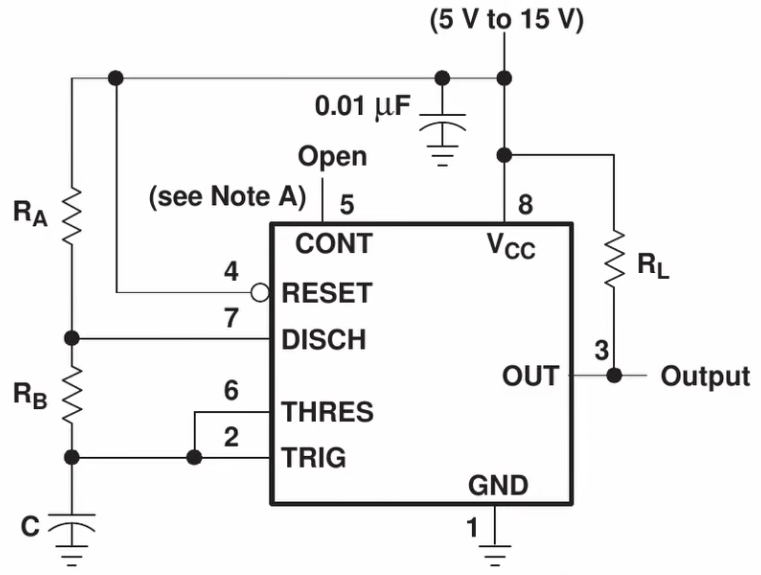
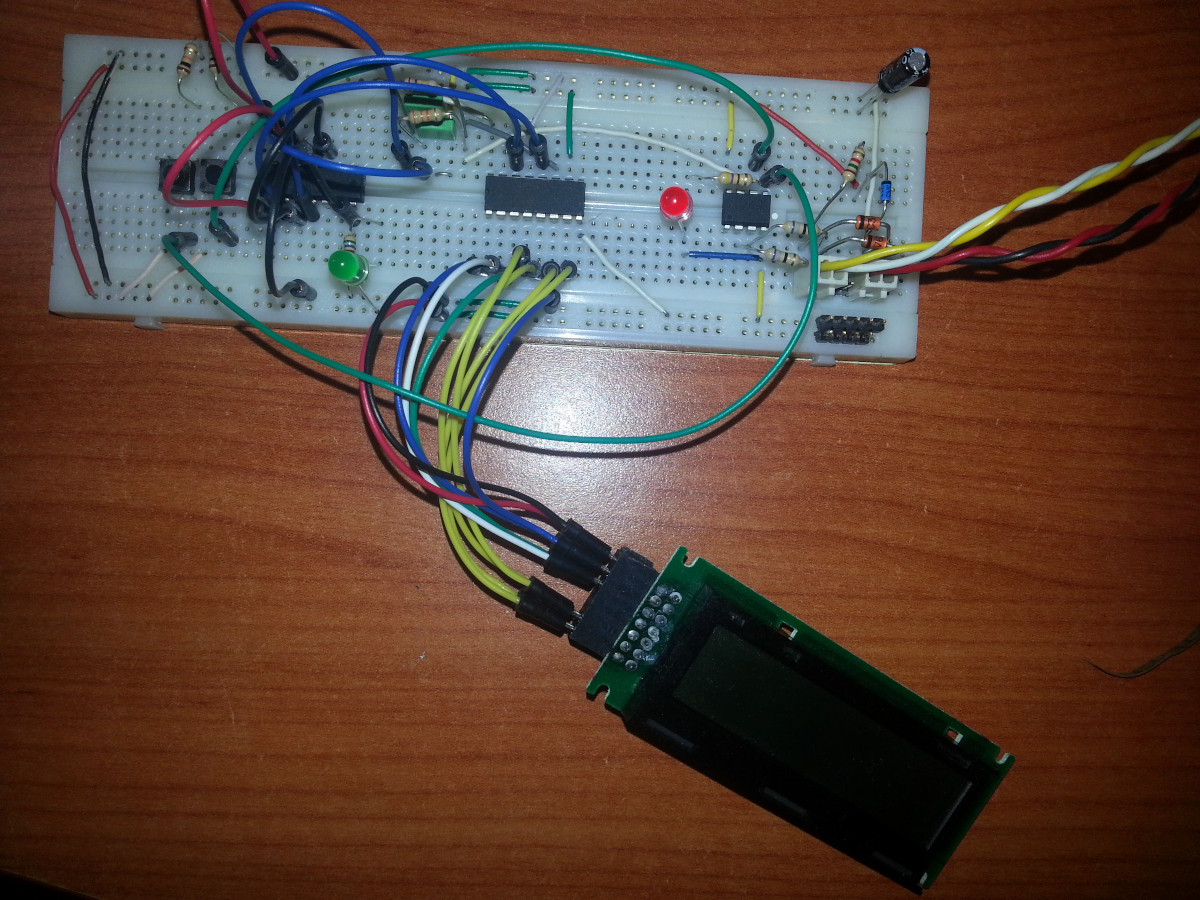
The function generator circuit on a breadboard

Over on YouTube [Andrew Neal] has a Function Generator Build for Beginners.

This is the 555 circuit we are building taken from the datasheetAs beginner videos go this one is fairly comprehensive. [Andrew] shows us how to build a square-wave generator on a breadboard using a 555 timer, explaining how its internal flip-flop is controlled by added resistance and capacitance to become a relaxation oscillator. He shows how to couple a potentiometer to vary the frequency.

He then adds an integrator built from a TL082 dual op amp to convert the circuit to a triangle-wave generator, using its second op amp to build a binary inverter. He notes that a binary inverter is usually implemented with a comparator, but he uses the op amp because it was spare and could be put to good use. Again, potentiometers are added for frequency control, in this case a 1 MΩ pot for coarse control and a 10 kΩ pot for fine control. He ends with a challenge to the viewer: how can this circuit be modified to be a sine-wave generator? Sound off in the comments if you have some ideas!

If you’re interested to know more about function generators check out A Function Generator From The Past and Budget Brilliance: DHO800 Function Generator.

youtube.com/embed/KfFmZIZ67MM?…


hackaday.com/2026/02/07/555-ba…

A Simple Desktop Pomodoro Timer


The media in this post is not displayed to visitors. To view it, please log in.

Pomodoro timers are a simple productivity tool. They help you work in dedicated chunks of time, usually 25 minutes in a sitting, before taking a short break and then beginning again. [Clovis Fritzen] built just such a timer of his own, and added a few bonus features to fill out its functionality.

The timer is based around the popular ESP32-S2 microcontroller, which has the benefit of onboard WiFi connectivity. This allows the project to query the Internet for things like time and date updates via NTP, as well as weather conditions, and the value of the Brazilian Real versus the American dollar. The microcontroller is paired with an SHT21 sensor for displaying temperature and humidity in the immediate environment, and an e-paper display for showing timer status and other relevant information. A button on top of the device allows cycling between 15, 30, 45, and 60 minute Pomodoro cycles, and there’s a buzzer to audibly call time. It’s all wrapped up in a cardboard housing that somehow pairs rather nicely with the e-paper display aesthetic.

If Pomodoro is your chosen method of productivity hacking, a project like this could suit you very well. We’ve featured a few similar builds before, too.

youtube.com/embed/SVaGj3V3i5E?…


hackaday.com/2026/02/07/a-simp…

When Clever Hardware Hacks Bite Back: A Password Keeper Device Autopsy


The media in this post is not displayed to visitors. To view it, please log in.

Sometimes you have this project idea in your mind that seems so simple and straightforward, and which feels just so right that you have to roll with it. Then, years later you stumble across the sad remnants of the tearful saga and the dismal failure that it portrays. Do you put it away again, like an unpleasant memory, or write it up in an article, as a tearful confession of past sins? After some coaxing by a friend, [Alessandro] worked up the courage to detail how he set about making a hardware-only password keeper, and why it failed.

The idea was so simple: the device would pretend to be a keyboard and type the passwords for you. This is not that unusual, as hardware devices like the Mooltipass do something similar. Even better, it’d be constructed only out of parts lying around, including an ATtiny85 and an HD44780 display, with bit-banged USB connectivity.
Prototyping the hardware on a breadboard.
Overcoming the challenge of driving the LC display with one pin on the MCU required adding a 74HC595 demultiplexer and careful timing, which sort of worked when the stars aligned just right. Good enough, but what about adding new passwords?

This is where things quickly skidded off the tracks in the most slapstick way possible, as [Alessandro] solved the problem of USB keyboard HID devices being technically ‘output-only’, by abusing the indicator statuses for Caps Lock, Num Lock, and Scroll Lock. By driving these from the host PC in just the right way you can use them as a sort of serial protocol. This incidentally turned out to be the most reliable part of the project.

Where the project finally tripped and fell down the proverbial flight of stairs was when it came to making the bit-banged USB work reliably. As it turns out, USB is very unforgiving with its timing unlike PS/2, making for an infuriating user experience. After tossing the prototype hardware into a box, this is where the project gathered dust for the past years.

If you want to give it a try yourself, maybe using an MCU that has more GPIO and perhaps even a USB hardware peripheral like the STM32F103, ESP32-S3 or something fruit-flavored, you can take a gander at the project files in the GitHub repository.

We’re always happy to see projects that (ab)use the Lock status indicators, it’s always been one of our favorite keyboard hacks.


hackaday.com/2026/02/07/when-c…

180 Shots on a Roll with the Little Stupid Camera


The media in this post is not displayed to visitors. To view it, please log in.

If you want to play with the coolest kids on the block when it comes to photography, you have to shoot film. Or so say the people who shoot film, anyway. It is very true though that the chemical medium has its own quirks and needs a bit of effort in a way digital cameras don’t, so it can be a lot of fun to play with.

It’s expensive though — film ain’t cheap, and if you don’t develop yourself there’s an extra load of cash. What if you could get more photos on a roll? It’s something [Japhy Riddle] took to extremes, creating a fifth-frame 35mm camera in which each shot is a fifth the size of the full frame.
The focal plane of a 35mm camera with tape masking most of the frameWe’re slightly worried about that much sticky tape next to the shutter, but hey.
Standard 35mm still film has a 24x36mm frame, in modern terms not far off the size of a full-size SD card. A standard roll of film gives you 36 exposures. There are half-frame cameras that split that frame vertically to give 72 exposures, but what he’s done is make a quarter-frame camera.

It’s a simple enough hack, electrical tape masking the frame except for a vertical strip in the middle, but perhaps the most interesting part is how he winds the film along by a quarter frame. 35mm cameras have a take-up reel, you wind the film out of the cartridge bit by bit into it with each shot, and then rewind the whole lot back into the cartridge at the end. He’s wound the film into the take-up reel and it winding it back a quarter frame at a time using the rewind handle, for which we are guessing he also needs a means to cock the shutter that doesn’t involve the frame advance lever.

We like the hack, though we would be worried about adhesive tape anywhere near the shutter blind on an SLR camera. It delivers glorious widescreen at the cost of a bit of resolution, but as an experimental camera it’s in the best tradition. This is one to hack into an unloved 1970s snapshot camera for the Shitty Camera Challenge!

youtube.com/embed/_SCyquRGmqk?…


hackaday.com/2026/02/07/180-sh…