The Privacy Post ha ricondiviso questo.

The media in this post is not displayed to visitors. To view it, please go to the original post.

ESP32 Brings New Features To Classic Geiger Circuit
poliverso.org/display/0477a01e…
ESP32 Brings New Features To Classic Geiger Circuit There’s no shortage of Geiger counter projects based on the old Soviet SBM-20 tube, it’s a classic circuit that’s easy enough even for a beginner to implement — so long as they don’t get bitten by the 400 volts going into the tube, that is. Toss in a microcontroller, and not only does that circuit get even easier to put


ESP32 Brings New Features To Classic Geiger Circuit

There’s no shortage of Geiger counter projects based on the old Soviet SBM-20 tube, it’s a classic circuit that’s easy enough even for a beginner to implement — so long as they don’t get bitten by the 400 volts going into the tube, that is. Toss in a microcontroller, and not only does that circuit get even easier to put together and tweak, but now the features and capabilities of the device are only limited by how much code you want to write.

Luckily for us, [Omar Khorshid] isn’t afraid of wrangling some 0s and 1s, and the result is the OpenRad project. In terms of hardware, it’s the standard SBM-20 circuit augmented with a LILYGO ESP32 development board that includes a TFT display. But where this one really shines is the firmware.

With the addition of a few hardware buttons, [Omar] was able to put together a very capable interface that runs locally on the device itself. In addition, the ESP32 serves up a web page that provides some impressive real-time data visualizations. It will even publish its data via MQTT if you want to plug it into your home automation system or other platform.

Between the project’s Hackaday.io page and GitHub repository, [Omar] has done a fantastic job of documenting the project so that others can recreate it. That includes providing the schematics, KiCad files, and Gerbers necessary to not only get the boards produced and assembled, but modified should you want to adapt the base OpenRad design.

This project reminds us of the uRADMonitor, which [Radu Motisan] first introduced in 2014 to bring radiation measuring to the masses. This sort of hardware has become far more accessible over the last decade, bringing the dream of a globally distributed citizen-operated network of radiation and environmental monitors much closer to reality.

youtube.com/embed/kaBPnBUhCXA?…


The Privacy Post reshared this.

The Privacy Post ha ricondiviso questo.

The media in this post is not displayed to visitors. To view it, please go to the original post.

Lockbit 3.0 dichiara un attacco alla Federal Reserve. Possibile compromissione di 33 terabyte
poliverso.org/display/0477a01e…
Lockbit 3.0 dichiara un attacco alla Federal Reserve. Possibile compromissione di 33 terabyte In una significativa escalation nel campo della sicurezza informatica redhotcyber.com/rubriche/alla-…, il noto redhotcyber.com/post/il-ransom…


Lockbit 3.0 dichiara un attacco alla Federal Reserve. Possibile compromissione di 33 terabyte

In una significativa escalation nel campo della sicurezza informatica, il noto gruppo ransomware Lockbit 3.0 ha rivendicato la responsabilità di un attacco informatico ai danni della Federal Reserve degli Stati Uniti.

La dichiarazione è stata fatta attraverso un post sul sito di leak del Dark Web associato all’attore ransomware, suscitando allarmi nei settori finanziari e governativi.

La Presunta Violazione


Il 23 giugno 2024, alle 20:27 UTC, Lockbit 3.0 ha annunciato di aver compromesso i sistemi della Federal Reserve, acquisendo un impressionante totale di 33 terabyte di informazioni bancarie sensibili.

I dati, secondo quanto riportato, includono dettagli confidenziali sulle attività bancarie degli americani, che, se confermati, rappresenterebbero una delle più grandi violazioni di dati finanziari della storia.

Il post, intitolato “federalreserve.gov”, descrive la struttura della Federal Reserve, evidenziando il suo ruolo nella distribuzione del denaro attraverso dodici distretti bancari nel paese, comprese le principali città come Boston, New York City, Philadelphia, Richmond, Atlanta, Dallas, Saint Louis, Cleveland, Chicago, Minneapolis, Kansas City e San Francisco.

Richiesta di Riscatto e Minacce


Nella loro dichiarazione, Lockbit 3.0 ha emesso un ultimatum severo: la Federal Reserve ha 48 ore per assumere un nuovo negoziatore e licenziare quello attuale, che i cybercriminali hanno dispregiativamente definito come un “idiota clinico” per aver valutato la segretezza bancaria degli americani a $50.000. Il gruppo ransomware è noto per le sue tattiche di negoziazione aggressive, spesso richiedendo somme esorbitanti per prevenire la diffusione dei dati rubati.

Implicazioni e Reazioni


Le potenziali conseguenze di questa violazione sono immense. Se le affermazioni si rivelassero accurate, l’esposizione di una quantità così vasta di informazioni sensibili potrebbe avere conseguenze disastrose per la privacy individuale, la stabilità finanziaria e la sicurezza nazionale. La Federal Reserve, responsabile della supervisione della politica monetaria nazionale, della regolamentazione delle banche e del mantenimento della stabilità finanziaria, è un componente critico dell’infrastruttura finanziaria degli Stati Uniti.

Le istituzioni finanziarie, gli esperti di sicurezza informatica e le agenzie governative sono indubbiamente in stato di massima allerta. Un attacco di questa portata evidenzia le vulnerabilità anche nei sistemi più sicuri e vitali. Le implicazioni si estendono oltre la minaccia immediata dell’esposizione dei dati; pongono rischi significativi alla fiducia nel sistema finanziario statunitense.

Il Panorama della Sicurezza Informatica


Lockbit 3.0 fa parte di una tendenza crescente di gruppi ransomware sofisticati che prendono di mira organizzazioni di alto valore, richiedendo riscatti in cambio della non divulgazione dei dati rubati. Il loro modus operandi tipico coinvolge la crittografia dei dati e la minaccia di rilasciarli pubblicamente a meno che le loro richieste finanziarie non vengano soddisfatte. Il gruppo è stato collegato a diversi attacchi di alto profilo negli ultimi anni, consolidando la sua reputazione come una minaccia informatica formidabile.

Risposta Federale e Garanzie Pubbliche


Al momento, la Federal Reserve non ha confermato pubblicamente la violazione né fornito dettagli sugli sforzi in corso per affrontarla. Tuttavia, dato il carattere critico dell’istituzione, è previsto che le agenzie federali, tra cui l’Agenzia per la Sicurezza Informatica e delle Infrastrutture (CISA) e l’FBI, siano attivamente coinvolte nella gestione della situazione.

Le misure di garanzia pubblica saranno probabilmente una priorità per mantenere la fiducia nel sistema finanziario. La violazione serve come promemoria chiaro dell’importanza di difese robuste contro la sicurezza informatica e della necessità di una vigilanza continua contro minacce informatiche sempre più sofisticate.

Conclusione


L’attacco informatico dichiarato da Lockbit 3.0 contro la Federal Reserve è una sveglia per tutti i settori dipendenti dall’infrastruttura digitale. Man mano che la situazione si sviluppa, sarà cruciale monitorare la risposta della Federal Reserve, l’efficacia delle misure di sicurezza informatica federali e le implicazioni più ampie per la sicurezza nazionale e la stabilità finanziaria.

In un mondo in cui le minacce informatiche stanno diventando sempre più complesse e pervasive, questo incidente evidenzia l’urgenza di strategie di sicurezza informatica migliorate e di una cooperazione internazionale per combattere il ransomware e proteggere le infrastrutture critiche da futuri attacchi.

L'articolo Lockbit 3.0 dichiara un attacco alla Federal Reserve. Possibile compromissione di 33 terabyte proviene da il blog della sicurezza informatica.


The Privacy Post reshared this.

The Privacy Post ha ricondiviso questo.

A recent report by the EU concludes that the @EC_NGI program has had a significant impact on shaping a sustainable, sovereign, and EU-aligned tech landscape.

op.europa.eu/en/publication-de…

The survey results indicate that NGI solutions cater to diverse ecosystems and have an active external community, fostering collaboration & innovation within the FOSS community.

🧵

reshared this

in reply to Free Software Foundation Europe

The FSFE is proud to participate in NGI! Since November 2018, we have been a partner organisation of Next Generation Internet Zero , coming under the overall NGI umbrella.

The FSFE team provides support to NGI0 grantee projects on legal and licensing issues, as well as helping them to become REUSE compliant.

in reply to Free Software Foundation Europe

Hummm this is the #geekproblem talking to the #burocracy not actually what's happening. Though the #EU tech #openweb funding is doing some good the majority of this tech funding has been poorer down the drain hamishcampbell.com/how-to-work… any movement to prosecution on any of this?

#NGI #NLnet #EU

The Privacy Post ha ricondiviso questo.

The media in this post is not displayed to visitors. To view it, please go to the original post.

Esclusivo! Parla il Gruppo Hacker Dietro l’Attacco alla ASST Rhodense intervistato da RHC. La supply-chain è fondamentale!
poliverso.org/display/0477a01e…
Esclusivo! Parla il Gruppo Hacker Dietro l’Attacco alla ASST Rhodense intervistato da RHC. La supply-chain è fondamentale! Recentemente, l’ASST Rhodense redhotcyber.com/post/emergenza… è stata bersaglio di un grave attacco


Esclusivo! Parla il Gruppo Hacker Dietro l’Attacco alla ASST Rhodense intervistato da RHC. La supply-chain è fondamentale!

Recentemente, l’ASST Rhodense è stata bersaglio di un grave attacco informatico perpetrato dal gruppo ransomware Cicada3301. Questo attacco ha portato al furto di un’enorme quantità di dati sensibili, tra cui informazioni personali e mediche, con conseguenze importanti per le strutture sanitarie di Garbagnate Milanese, Bollate, Rho e Passirana.

Il furto di 1 terabyte di dati, poi pubblicato integralmente sul Data Leak Site (DLS) del gruppo criminale, ha messo ancora una volta in luce le vulnerabilità delle istituzioni sanitarie italiane, che spesso presentano una postura cibernetica limitata e non adeguatamente preparata a fronteggiare le minacce più sofisticate.

In questo contesto, Red Hot Cyber ha sempre ribadito uno tra i principi fondamentali della sicurezza informatica: “Devi conoscere i demoni per imparare a contrastarli.” Conoscere i “demoni”, ovvero conoscere come operano i cyber-criminali, non solo ci aiuta a comprendere le loro motivazioni e il loro metodi (o meglio dire quello che in termini tecnici si chiamiamo come Tecniche, Tattiche e Procedure o TTPs dell’attore malevolo), ma ci permette anche di sviluppare le difese informatiche più efficaci, capaci di contrastarli sul loro stesso terreno.
Il data leak site (DLS) di Cicada3301 come si presenta oggi, con quattro vittime.
Comprendere quindi come ragionano e operano i threat actors è essenziale per migliorare le difese cibernetiche e prevenire attacchi futuri e fare consapevolezza del rischio, ma soprattutto “lesson learned”, ovvero evitare che tali episodi si verifichino nuovamente in futuro.

Nell’ottica di aumentare la consapevolezza sui rischi informatici e di migliorare le difese delle strutture sanitarie italiane, abbiamo deciso di intervistare direttamente il gruppo Cicada3301, che ha colpito la ASST Rhodense. Questa intervista non ha l’intento di giustificare o promuovere le azioni dei cybercriminali, che rimangono sempre azioni perseguibili dalla legge.

Vuole altresì fornire una maggiore comprensione delle minacce, allo scopo di sensibilizzare le organizzazioni sul rischio informatico e incoraggiare dirigenti ed organi di vigilanza a rafforzare le misure di sicurezza degli ospedali, patrimonio base a tutela della salute di tutti i cittadini italiani.
L’interfaccia TOX Messenger. Il luogo dove si è tenuta l’intervista a Cicada3301
1 – RHC: Salve ragazzi. Siete un gruppo nato da poco che prende il nome da “Cicada 3301”, una misteriosa organizzazione che in tre diverse occasioni ha pubblicato una serie di enigmi molto complessi al fine di reclutare capaci crittoanalisti. Ci potete raccontare l’origine di questo nome?
Cicada3301: Ciao! Sì, in effetti, la nostra azienda prende il nome da quell’organizzazione. Diventeremo per molte aziende un puzzle irrisolvibile, che non potrà essere risolto senza pagare un riscatto.

2 – RHC: Siete da poco entrati nel circus del cybercrime. Quali sono i vostri obiettivi e la vostra propensione? Affermarvi come un RaaS di valore oppure operare da soli? Al momento avete degli affiliati?
Cicada3301: Il nostro obiettivo principale è fare soldi. Attualmente lavoriamo esclusivamente con partner che gestiscono con successo i loro compiti.

3 – RHC: Sul vostro sito ad oggi sono presenti 4 violazioni. Molte cyber gang (come Lockbit e in passato Conti e BlackCat) definirono delle rigide regole dove oltre non era possibile spingersi. Stiamo parlando di Ospedali, Scuole, organizzazioni sanitarie e pediatriche. Quali sono i vostri limiti in tal senso?
Cicada3301: Ci avviciniamo a ciascuna organizzazione individualmente, valutando attentamente tutte le possibili conseguenze. Se concludiamo che il nostro attacco non rappresenta una minaccia per la vita e la salute della popolazione civile, decidiamo di procedere con le azioni contro l’obiettivo. Analizziamo attentamente tutti i rischi e ci assicuriamo che le nostre azioni non portino a conseguenze indesiderabili per persone innocenti prima di iniziare un attacco.

4 – RHC: Noi siamo Italiani e abbiamo seguito con molto interesse la violazione all’ASST Rhodense, perchè gli ospedali fanno parte delle infrastrutture critiche del nostro paese e dovrebbero essere protette al meglio per rendere tutti i cittadini più al sicuro. Come mai avete preso di mira questa struttura?
Cicada3301: I dettagli specifici dell’attacco non ci sono noti poiché l’azienda è stata attaccata dal nostro partner. Sappiamo però che si trattava di una grande rete con un’ampia infrastruttura e molti dispositivi.

5 – RHC: Nel caso specifico avete acquistato l’accesso da un broker (IaB), acquistato accessi da infostealer, oppure è stata una attività mirata? Potete raccontarcela dal punto di vista tecnico?
Cicada3301: L’accesso non è stato acquistato, ma è stato ottenuto sfruttando una vulnerabilità RCE in uno dei sistemi dell’azienda appaltatrice per infiltrarsi nella rete.

6 – RHC: Secondo voi, come mai il cybercrime da circa tre anni è catalizzato verso gli ospedali? A parte il fatto che i pagamenti avvengono prima per la paura di perdita di vite umane, ma relativamente ai dati, ci potete spiegare chi è interessato al loro acquisto nelle underground?
Cicada3301: In precedenza vigeva la regola di non prendere di mira gli ospedali e per questo motivo le forze dell’ordine dei vostri paesi erano più indulgenti nei nostri confronti. Tuttavia, come dimostra la pratica, l’aggressività nei nostri confronti è aumentata, il che significa che anche la nostra aggressività è cresciuta.

7 – RHC: Spesso riportiamo che occorre conoscere come opera chi attacca per imparare a difendersi. Visto che ora la vicenda si è conclusa, potete dirci, dal punto di vista tecnico, come siete entrati nelle infrastrutture IT dell’ASST Rhodense? Che vulnerabilità avete utilizzato?
Cicada3301: Il nostro partner ha riferito di aver avuto accesso alla rete di un appaltatore che serve l’ospedale. Ciò significa che inizialmente è stato sferrato un attacco contro l’appaltatore, consentendo al nostro partner di accedere alla rete dell’ospedale. Presto potremmo pubblicare sul nostro blog informazioni sulla società appaltatrice responsabile delle sofferenze dell’ospedale.

8 – RHC: Una volta dentro, quanti giorni siete rimasti all’interno delle infrastrutture IT della ASST Rhodense?
Cicada3301: Circa un anno.

9 – RHC: Avete fatto dei movimenti laterali? Come era la sicurezza complessiva interna dell’ospedale? C’erano sistemi e software obsoleti che avete sfruttato?
Cicada3301: Non possiamo commentare i nostri metodi di lavoro. La sicurezza dell’ospedale era ad un livello medio.

10 – RHC: Dovendo dare un valore, in una scala da 1 a 5, quanto erano sicure le infrastrutture della ASST Rhodense?
Cicada3301: 3.

11 – RHC: Non siete i soli e non sarete gli ultimi a colpire un ospedale.
Secondo voi, quali sono le principali debolezze nella sicurezza informatica degli ospedali oggi?
Cicada3301: Scarsa qualifica degli amministratori di sistema e di tutto il personale responsabile della sicurezza informatica.

12 – RHC: Quali misure preventive è possibile adottare, dal vostro punto di vista, per proteggere al meglio gli ospedali da attacchi simili al vostro? Nello specifico della ASST Rhodense, per attivare un miglioramento, secondo voi, da dove occorrerebbe iniziare?
Cicada3301: Per proteggere gli ospedali da attacchi informatici simili a quelli che potremmo condurre, è possibile adottare le seguenti misure preventive:

  • Aggiornamenti software regolari.
  • Installazione e aggiornamento regolare di programmi di protezione antivirus e malware.
  • Formare i dipendenti a riconoscere gli attacchi di phishing e altre minacce informatiche.
  • Sviluppare e implementare rigorose politiche di sicurezza dei dati.
  • Implementazione di tecnologie per monitorare la rete e rilevare attività sospette.
  • Creare regolarmente backup e archiviarli in luoghi sicuri.
  • Implementazione dell’autenticazione a più fattori e rigide regole di gestione degli accessi.

13 – RHC: Come descrivereste l’attuale postura di sicurezza informatica degli ospedali italiani rispetto agli standard internazionali? Sono messi così male rispetto al resto del mondo?
Cicada3301: La sicurezza delle istituzioni governative in tutto il mondo è a un livello basso.

14 – RHC: Quali sono i segnali d’allarme che le strutture sanitarie dovrebbero monitorare per individuare potenziali attacchi?
Cicada3301: Per un monitoraggio efficace dell’attività di rete, i programmi antivirus o i sistemi EDR devono essere configurati correttamente per rilevare questi segnali.

15 – RHC: Quali sono i rischi futuri che gli ospedali devono prepararsi ad affrontare in termini di sicurezza cibernetica?
Cicada3301: Se il livello di sicurezza rimane lo stesso, gli ospedali dovranno prepararsi a nuovi attacchi.

16 – RHC: Avete mai collaborato con altre gang di ransomware o gruppi di hacker? Se sì, in che modo?
Cicada3301: Non collaboriamo con i concorrenti.

17 – RHC:Avete incontrato conflitti o rivalità con altre gang di ransomware?
Cicada3301: Naturalmente ci evolviamo costantemente per essere i migliori tra i concorrenti.

18 – RHC: Ora vi faremo delle domande secche e vorremmo delle risposte secche. Cominciamo! Remote code Execution (RCE) o Privilege Escalation?
Cicada3301: RCE.

19 – RHC: Policy and Procedure o Security Assessment?
Cicada3301: Security Assessment.

20 – RHC: Open Source o Closed Source?
Cicada3301: Solo codice open source.

21 – RHC: Vi ringraziamo veramente per questa intervista. Facciamo queste interviste per far comprendere ai nostri lettori che la cybersecurity è una materia prettamente tecnica e che per poter vincere la lotta contro il cybercrime occorre essere più forti di voi, che notoriamente siete spesso un passo avanti a tutti. Volete dire qualcosa o fare qualche considerazione che possa essere interessante per i nostri lettori?
Cicada3301: Le nostre attività stimolano le aziende a migliorare continuamente la sicurezza informatica per contrastare le nostre azioni. Fungiamo da utile contrappeso, promuovendo il miglioramento della sicurezza informatica in tutto il mondo.
Durante la comunicazione con i rappresentanti dell’ASST Rhodense, questi si sono rifiutati di pagare il riscatto, evitando così conseguenze negative per i cittadini del loro paese. Tuttavia, di buon umore, abbiamo mostrato pietà e abbiamo fornito gratuitamente la chiave di decrittazione. In risposta, non abbiamo ricevuto una sola parola di gratitudine.

Conclusione


Con questa intervista, abbiamo evidenziato l’urgenza di rafforzare la protezione delle strutture sanitarie italiane contro le minacce informatiche. Gli ospedali, in quanto custodi di dati sensibili e cruciali per la salute pubblica, devono essere trattati alla stregua delle infrastrutture critiche nazionali, come le reti telefoniche, ferroviarie ed elettriche. È imperativo che vengano implementate misure di sicurezza al pari di quelle applicate sotto il regime di “golden power”, garantendo così una difesa robusta e resiliente contro qualsiasi attacco cibernetico.

Gli ospedali, anche se non specificatamente nominati nei decreti Golden Power, rientrano nella categoria delle infrastrutture critiche che richiedono una protezione speciale. Dato il ruolo centrale che rivestono nella salute pubblica e nella sicurezza nazionale, sarebbe opportuno considerarli con la stessa attenzione riservata ad altre infrastrutture critiche come le reti di trasporto, energia e telecomunicazioni. La protezione delle strutture sanitarie deve essere una priorità strategica per garantire la resilienza e la sicurezza del paese contro minacce sia fisiche che cibernetiche.

Solo attraverso una protezione adeguata e una alta attenzione e preparazione strategica possiamo assicurarci che le nostre strutture sanitarie siano pronte a fronteggiare le minacce del futuro, salvaguardando così non solo la sicurezza dei dati, ma anche la nostra salute e il benessere di noi tutti cittadini.

Riportiamo di seguito l’intervista originale in lingua inglese:
1 - RHC: Hi guys. You are a newly formed group named after "Cicada 3301," a mysterious organization that on three different occasions published a series of very complex puzzles in order to recruit capable cryptanalysts. Can you tell us about the origin of this name?
Cicada3301: Hello! Yes, indeed, our company is named after that organization. We will become an unsolvable puzzle for many companies, one that cannot be solved without paying a ransom.

2 - RHC: You have recently entered the cybercrime circus. What are your goals and propensity? Establish yourself as a valuable RaaS or operate on your own? Do you currently have affiliates?
Cicada3301: Our main goal is to make money. Currently, we work exclusively with partners who successfully manage their tasks.

3 - RHC: There are 4 violations on your site to date. Many cyber gangs (like Lockbit and in the past Conti and BlackCat) defined strict rules where beyond that it was not possible to go. We are talking about Hospitals, Schools, health and pediatric organizations. What are your limitations in this regard?
Cicada3301: We approach each organization individually, carefully evaluating all possible consequences. If we conclude that our attack does not pose a threat to the life and health of the civilian population, we decide to proceed with actions against the target. We thoroughly analyze all risks and ensure that our actions will not lead to undesirable consequences for innocent people before initiating an attack.

4 - RHC: We are Italian and we have been following the breach at ASST Rhodense with a lot of interest, because hospitals are part of the critical infrastructure of our country and should be protected to the best of our ability to make all citizens safer. How did you come to target this facility?
Cicada3301: The specific details of the attack are unknown to us since the company was attacked by our partner. However, we know it was a large network with extensive infrastructure and many devices.

5 - RHC: In the specific case did you purchase access from a broker (IaB), purchased access from infostealer, or was it a targeted activity? Can you tell us about it from a technical perspective?
Cicada3301: Access was not purchased but was obtained by exploiting an RCE vulnerability in one of the contractor company's systems to infiltrate the network.

6 - RHC: Why do you think cybercrime for the last three years or so has been catalyzed toward hospitals? Aside from the fact that payments happen first because of the fear of loss of life, but relative to data, can you tell us who is interested in buying it in the underground?
Cicada3301: Previously, there was a rule that we do not target hospitals, and because of this, law enforcement agencies in your countries were more lenient towards us. However, as practice shows, aggression from your side towards us is only increasing, which means that our aggression has also grown.

7 - RHC: We often report that you need to know how the attacker operates in order to learn how to defend yourself. Since this has now been concluded, can you tell us, from a technical point of view, how did you get into the IT infrastructure of ASST Rhodense? What vulnerabilities did you use?
Cicada3301: Our partner reported that they gained access to the network of a contractor serving the hospital. This means that an attack was initially carried out on the contractor, allowing our partner to gain access to the hospital's network. We may publish information about the contractor company responsible for the hospital's suffering on our blog soon.

8 - RHC: Once inside, how many days did you stay within the IT infrastructure of ASST Rhodense?
Cicada3301: About one year.

9 - RHC: Did you do any lateral movement? How was the overall internal security of the hospital? Were there outdated systems and software that you exploited?
Cicada3301: We cannot comment on our working methods. The hospital's security was at an average level.

10 - RHC: Having to give a value, on a scale of 1 to 5, how secure was the infrastructure of ASST Rhodense?
Cicada3301: 3

11 - RHC: You are not the only ones and you will not be the last to hit a hospital.
In your opinion, what are the main weaknesses in cybersecurity in hospitals today?
Cicada3301: Low qualification of system administrators and all personnel responsible for cybersecurity.

12 - RHC: What preventive measures can be taken, from your perspective, to best protect hospitals from attacks similar to yours? Specific to ASST Rhodense, to enable improvement, where do you think you would need to start?
Cicada3301: To protect hospitals from cyberattacks similar to those we might conduct, the following preventive measures can be taken:
- Regular software updates.
- Installation and regular updating of antivirus and malware protection programs.
- Training employees to recognize phishing attacks and other cyber threats.
- Developing and implementing strict data security policies.
- Implementing technologies to monitor the network and detect suspicious activity.
- Regularly creating backups and storing them in secure locations.
- Implementing multi-factor authentication and strict access management rules.

13 - RHC: How would you describe the current cybersecurity posture of Italian hospitals compared to international standards? Are they that bad compared to the rest of the world?
Cicada3301: The security of government institutions worldwide is at a low level.

14 - RHC: What are the warning signs that healthcare facilities should monitor for potential attacks?
Cicada3301: For effective network activity monitoring, antivirus programs or EDR systems must be properly configured to detect these signals.

15 - RHC: What future risks should hospitals prepare for in terms of cybersecurity?
Cicada3301: If the security level remains the same, hospitals will have to prepare for new attacks.

16 - RHC:Have you ever collaborated with other ransomware gangs or hacker groups? If so, in what ways?
Cicada3301:We do not cooperate with competitors.

17 - RHC:Have you encountered conflicts or rivalries with other ransomware gangs?
Cicada3301: Naturally, we constantly evolve to be the best among competitors.

18 - RHC: Now we are going to ask you some dry questions and we would like some dry answers. Let's start. Remote code Execution or Privilege Escalation?
Cicada3301: RCE.

19 - RHC: Policy and Procedure or Security Assessment?
Cicada3301: Security assessment.

20 - RHC: Open Source or Closed Source?
Cicada3301: Only open-source code.

21 - RHC:We really thank you for this interview. We do these interviews to make our readers understand that cybersecurity is a purely technical subject and that in order to be able to win the fight against cybercrime we need to be stronger than you, who are notoriously often one step ahead of everyone.
Would you like to say anything or make any points that might be of interest to our readers?
Cicada3301: Our activities stimulate companies to continuously improve cybersecurity to counter our actions. We serve as a useful counterbalance, promoting the improvement of cybersecurity worldwide.
During communication with representatives of ASST Rhodense, they refused to pay the ransom, thus avoiding negative consequences for their country's citizens. However, in a good mood, we showed mercy and provided the decryption key for free. In response, we did not receive a single word of gratitude.
L'articolo Esclusivo! Parla il Gruppo Hacker Dietro l’Attacco alla ASST Rhodense intervistato da RHC. La supply-chain è fondamentale! proviene da il blog della sicurezza informatica.


The Privacy Post reshared this.

The Privacy Post ha ricondiviso questo.

The media in this post is not displayed to visitors. To view it, please go to the original post.

BlackByte: Il Ritorno della Gang di dopo alcuni mesi di inattività
poliverso.org/display/0477a01e…
BlackByte: Il Ritorno della Gang di dopo alcuni mesi di inattività Negli ultimi anni, il panorama della cybersecurity è stato segnato da continui attacchi redhotcyber.com/post/il-ransom…, con gruppi criminali che si evolvono costantemente per eludere le difese. Uno di questi gruppi, noto come BlackByte, è


BlackByte: Il Ritorno della Gang di dopo alcuni mesi di inattività

Negli ultimi anni, il panorama della cybersecurity è stato segnato da continui attacchi ransomware, con gruppi criminali che si evolvono costantemente per eludere le difese. Uno di questi gruppi, noto come BlackByte, è recentemente tornato in azione dopo mesi di inattività, rilanciando la sua strategia di doppia estorsione e introducendo un nuovoData Leak Site (DLS).

Origini e Metodi Operativi di BlackByte


Blackbyte DLS

BlackByte è emerso come una minaccia significativa nel luglio 2021, rapidamente attirando l’attenzione delle autorità come l’FBI e il Secret Service statunitense. Questo gruppo è noto per sfruttare vulnerabilità nei sistemi informatici per ottenere l’accesso non autorizzato e distribuire il loro ransomware. Una delle tecniche più comuni utilizzate da BlackByte è l’uso di vulnerabilità note nei server Microsoft Exchange, un metodo che è stato sfruttato anche da altri gruppi ransomware​​​​.

Modello di Business: Ransomware-as-a-Service (RaaS)


BlackByte opera secondo un modello di Ransomware-as-a-Service (RaaS), che consente ad affiliati di utilizzare il ransomware in cambio di una percentuale dei profitti. Questo modello di business permette una diffusione più ampia del ransomware e una maggiore difficoltà nel tracciare e fermare le operazioni del gruppo. Gli affiliati di BlackByte possono personalizzare gli attacchi e sfruttare il ransomware per colpire specifici obiettivi​​.

Ransomnote del gruppo Blackbyte

Tecniche di Infiltrazione e Attacco


BlackByte utilizza una varietà di tecniche per infiltrarsi nei sistemi delle vittime. Queste includono:

  • Phishing: L’invio di email di phishing per ingannare gli utenti e ottenere credenziali di accesso.
  • Living-off-the-Land Binaries (LoLBins): Utilizzo di strumenti già presenti nei sistemi operativi per evitare la rilevazione.
  • AnyDesk: Un software di gestione remota spesso utilizzato per il controllo dei sistemi infettati e per il movimento laterale all’interno della rete​​​​​​.


Evoluzione e Miglioramenti


Dopo un periodo iniziale di attività, la gang ha apportato modifiche significative al proprio ransomware. Ad esempio, una versione iniziale del ransomware aveva una vulnerabilità che permetteva alle vittime di decrittare i propri file senza pagare il riscatto. Questa vulnerabilità è stata rapidamente corretta nelle versioni successive, che hanno introdotto metodi di crittografia più complessi e l’uso di più chiavi di crittografia per ogni attacco​​.

Doppia Estorsione


Una caratteristica distintiva degli attacchi di BlackByte è la doppia estorsione. Oltre a crittografare i dati delle vittime, la gang minaccia di pubblicare i dati rubati su un Data Leak Site (DLS) accessibile tramite Tor. Questo approccio mette una doppia pressione sulle vittime, costringendole a pagare per evitare sia la perdita di dati che danni reputazionali​​​​.

Un Nuovo Inizio


Dopo l’ultimo attacco noto a marzo 2024, BlackByte è scomparso dai radar, facendo pensare a molti che il gruppo fosse stato smantellato o che avesse cessato le attività.

Post apparso sul DLS di blackbyte dell’ultima vittima di Marzo 2024

Tuttavia, un recente annuncio sul loro nuovo DLS suggerisce il contrario. Il messaggio (vedi immagine) informa che ora è possibile scaricare i file delle aziende tramite indirizzi Tor, con un sistema rinnovato che promette di rendere più facile la visualizzazione e il download dei dati rubati.

Banner “new info”

Dettagli del Nuovo DLS


Il nuovo DLS di BlackByte rappresenta un’evoluzione significativa rispetto ai loro precedenti tentativi. La piattaforma aggiornata permette una navigazione più intuitiva e l’accesso a una lista di aziende con relativi file compromessi. Questo sistema, che sfrutta la rete Tor per garantire l’anonimato, consente ai criminali di operare con maggiore sicurezza e di raggiungere un pubblico più ampio di potenziali acquirenti di dati sensibili.

Vittime Note


Nel corso della sua attività, BlackByte ha colpito diverse organizzazioni di rilievo, tra cui:

  1. Aziende Manifatturiere: Imprese del settore industriale hanno subito gravi interruzioni operative a causa della crittografia dei loro sistemi di controllo.
  2. Istituzioni Sanitarie: Ospedali e cliniche sono stati costretti a sospendere le operazioni a causa dell’inaccessibilità ai dati dei pazienti, mettendo a rischio vite umane.
  3. Enti Governativi: Agenzie governative hanno visto compromessi dati sensibili e classificati, con conseguenze potenzialmente devastanti per la sicurezza nazionale.


Implicazioni e Misure di Difesa


Il ritorno di BlackByte con una strategia rinnovata sottolinea l’importanza di un approccio proattivo alla cybersecurity. Le organizzazioni devono investire in soluzioni di sicurezza avanzate, come la segmentazione della rete, il monitoraggio continuo delle anomalie e la formazione dei dipendenti su pratiche di sicurezza informatica. Inoltre, è essenziale avere piani di risposta agli incidenti ben definiti e regolarmente testati per minimizzare i danni in caso di attacco.

Conclusione


BlackByte rappresenta una delle tante minacce nel mondo in continua evoluzione della cybersecurity. Il loro ritorno e l’adozione di un nuovo DLS dimostrano come i gruppi ransomware continuino a innovare per massimizzare i loro profitti. Per le organizzazioni, la consapevolezza delle minacce e l’adozione di misure di sicurezza adeguate sono cruciali per difendersi da questi attacchi sempre più sofisticati.

Resta da vedere come si evolverà la situazione e quali altre sorprese BlackByte riserverà nel prossimo futuro. Nel frattempo, la comunità globale della cybersecurity deve rimanere vigile e collaborare per contrastare queste minacce persistenti.

L'articolo BlackByte: Il Ritorno della Gang di dopo alcuni mesi di inattività proviene da il blog della sicurezza informatica.


The Privacy Post reshared this.

The Privacy Post ha ricondiviso questo.

The media in this post is not displayed to visitors. To view it, please go to the original post.

Bit of OpenSCAD Code Caps off Wiremold
poliverso.org/display/0477a01e…
Bit of OpenSCAD Code Caps off Wiremold Wiremold is great stuff — it’s relatively cheap, easy to work with, and offers all sorts of adapters and angle pieces which take the hassle out of running (and hiding) wires. But [Dr. Gerg] found a shortcoming of this otherwise very flexible product: since each run is intended to start and end in a surface mounted box, he couldn’t find an end cap that


Bit of OpenSCAD Code Caps off Wiremold

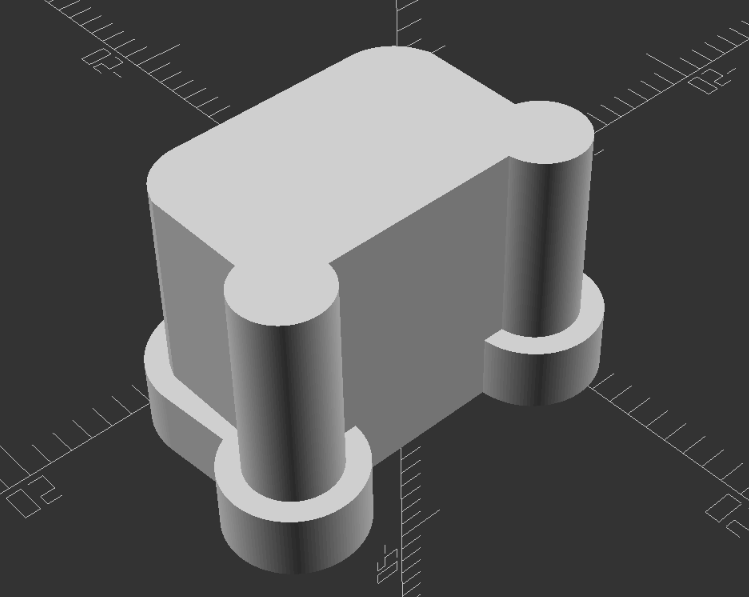
Wiremold is great stuff — it’s relatively cheap, easy to work with, and offers all sorts of adapters and angle pieces which take the hassle out of running (and hiding) wires. But [Dr. Gerg] found a shortcoming of this otherwise very flexible product: since each run is intended to start and end in a surface mounted box, he couldn’t find an end cap that would let him close off a section.

The solution? A desktop 3D printer and a chunk of OpenSCAD code telling it what to extrude. When you break it down, the Wiremold profile is fairly straightforward, and can be easily described with geometric primitives. A handful of cylinders, a cube or two, tie it all together with the hull() function, and you’re there.

We’d say this would be a fantastic project to cut your OpenSCAD teeth on, but since [Dr. Gerg] was kind enough to share the source code, you don’t have to figure it out on your own. Though there’s still benefit in reading over it if you’re looking for some practical examples of how the “Programmers Solid 3D CAD Modeller” gets things done.

So why would you want a Wiremold endcap? In the case of [Dr. Gerg], it sounds like he was trying to cover up a short run of wire that was running vertically. But we could imagine other applications for this basic design now that it’s out in the wild. For example, a short length of Wiremold outfitted with a pair of printed caps could make for a nice little enclosure if you’ve got a small project that needs protecting.


The Privacy Post reshared this.

The Privacy Post ha ricondiviso questo.

Le AI diagnosticheranno il Parkinson 7 anni prima che arrivano i sintomi
poliverso.org/display/0477a01e…
Le AI diagnosticheranno il Parkinson 7 anni prima che arrivano i sintomi Un gruppo di scienziati britannici e tedeschi hanno fatto un passo avanti nella diagnosi precoce di uno dei disturbi neurodegenerativi più comuni: il morbo di Parkinson. I ricercatori dell’University College di Londra e del Göttingen Medical Center hanno sviluppato un innovativo esame


Le AI diagnosticheranno il Parkinson 7 anni prima che arrivano i sintomi

Un gruppo di scienziati britannici e tedeschi hanno fatto un passo avanti nella diagnosi precoce di uno dei disturbi neurodegenerativi più comuni: il morbo di Parkinson. I ricercatori dell’University College di Londra e del Göttingen Medical Center hanno sviluppato un innovativo esame del sangue utilizzando l’intelligenza artificiale in grado di identificare i pazienti ad alto rischio di sviluppare la malattia sette anni prima che compaiano i sintomi caratteristici.

La malattia di Parkinson è accompagnata da tremori agli arti, rigidità muscolare e lentezza nei movimenti. Nelle fasi finali può portare a seri problemi di deglutizione e di parola, nonché a disturbi cognitivi più gravi come la demenza. Causa anche gravi problemi di equilibrio e coordinazione, aumentando il rischio di cadute e lesioni gravi.

Oggi la diagnosi si basa esclusivamente sulla valutazione visiva dei disturbi motori, che tuttavia compaiono dopo una significativa morte delle cellule nervose nel cervello.

Il nuovo sviluppo utilizza algoritmi di apprendimento automatico per analizzare otto biomarcatori contenuti nel sangue che modificano i loro indicatori nella malattia di Parkinson. Durante gli studi clinici, il sistema di intelligenza artificiale ha dimostrato un’accuratezza del 100% nella diagnosi di una malattia già sviluppata. Ma gli scienziati hanno deciso di andare oltre.

Lo studio si è concentrato su persone con disturbo comportamentale del sonno REM (RBD), in cui i pazienti mettono in atto fisicamente i loro sogni, spesso accompagnati da urla, spinte e parole mentre dormono. Circa l’80% dei malati di RHD sviluppa un gruppo di patologie neurodegenerative note come sinucleinopatie, la cui caratteristica principale è l’accumulo della proteina patologica alfa-sinucleina nelle cellule cerebrali. A questa famiglia appartiene la malattia di Parkinson.

Analizzando i campioni di sangue di pazienti affetti da RPHD, l’intelligenza artificiale ha concluso che il 79% di essi aveva un profilo di biomarcatori simile a quello dei pazienti con Parkinson. Inoltre, dopo aver tracciato il destino di queste persone per dieci anni, gli scienziati si sono convinti dell’accuratezza delle previsioni: 16 delle persone esaminate hanno effettivamente sviluppato la malattia di Parkinson e in alcuni i primi sintomi sono comparsi esattamente sette anni dopo i test.

“Il punto chiave è che man mano che diventano disponibili nuove opzioni terapeutiche, è fondamentale diagnosticare i pazienti in una fase preclinica, prima che si sviluppino i sintomi”, spiega il professor Kevin Mills, uno degli autori principali dello studio. “Non possiamo ripristinare i neuroni morti, ma salvare quelli rimanenti è del tutto possibile. Pertanto, la diagnosi precoce apre opportunità per un intervento medico tempestivo e può potenzialmente prevenire completamente o almeno rallentare in modo significativo il processo degenerativo”.

Ora un team di scienziati sta lavorando per migliorare ulteriormente il metodo. Uno dei coautori, il professor Kailash Bhatia, sta conducendo il test sull’accuratezza del test nelle persone ad alto rischio, come quelli con una predisposizione genetica alla malattia. Parallelamente si cercano finanziamenti per sviluppare una modifica ancora più semplice e indolore del test basato sulla colorazione del sangue capillare, che in futuro consentirebbe di individuare la malattia anche prima.

Oltre all’elevata precisione, il vantaggio innegabile del test è la sua natura non invasiva rispetto alle punture del liquido cerebrospinale utilizzate nei moderni studi clinici su questa patologia. Inoltre, il test può distinguere il Parkinson da disturbi neurodegenerativi simili, come l’atrofia multisistemica o la demenza a corpi di Lewy.

L'articolo Le AI diagnosticheranno il Parkinson 7 anni prima che arrivano i sintomi proviene da il blog della sicurezza informatica.


The Privacy Post reshared this.

The Privacy Post ha ricondiviso questo.

Journalists facing online threats: a growing risk to democracy [Promoted content]
poliverso.org/display/0477a01e…
Journalists facing online threats: a growing risk to democracy [Promoted content]Ensuring journalists' safety is crucial for democracy, as threats lead to self-censorship and under-reporting. Despite Europe being relatively safe, online threats are rising, particularly against women and minorities. New EU legislation aims to enhance protection and


Journalists facing online threats: a growing risk to democracy [Promoted content]


Ensuring journalists' safety is crucial for democracy, as threats lead to self-censorship and under-reporting. Despite Europe being relatively safe, online threats are rising, particularly against women and minorities. New EU legislation aims to enhance protection and cooperation with online platforms.


euractiv.com/section/digital/o…


The Privacy Post reshared this.

The Privacy Post ha ricondiviso questo.

The media in this post is not displayed to visitors. To view it, please go to the original post.

Kernel Hack Brings Windows XP to the 486
poliverso.org/display/0477a01e…
Kernel Hack Brings Windows XP to the 486 The venerable Intel 486 was released in 1989 as the successor to the extremely popular Intel 386. It was the minimum recommended processor for Windows 98. (Surprisingly, the Windows 95 minimum was a 386!) But by the time XP rolled around, you needed at least a 233 MHz Pentium to install. Or at least that was the case until recently when an


Kernel Hack Brings Windows XP to the 486

The venerable Intel 486 was released in 1989 as the successor to the extremely popular Intel 386. It was the minimum recommended processor for Windows 98. (Surprisingly, the Windows 95 minimum was a 386!) But by the time XP rolled around, you needed at least a 233 MHz Pentium to install. Or at least that was the case until recently when an extremely dedicated user on MSFN named [Dietmar] showed how he hacked the XP kernel so it could run on the classic chip!

The biggest issue preventing XP from working on earlier processors is an instruction introduced on the Pentium: CMPXCHG8B. This instruction compares two 8-byte values and takes different actions depending on an equality test. It either copies the 8 bytes to a destination address or loads it into a 64-bit register. Essentially, it does what it says on the tin: it CoMPares and eXCHanGes some values. If you want to dig into the nitty-gritty details, you can check out this info on the instruction taken from the x86 datasheet.

Without getting too technical, know that this instruction is vital for performance when working with large data structures. This is because one instruction moves 8 bytes at a time, unlike the older CMPXCHG instruction, which only moves a single byte. Essentially, [Dietmar] had to find every usage of CMPXCHG8B and replace it with an equivalent series of CMPXCHG instructions.

On a side note, the once well-known and devastating Pentium F00F bug was caused by a faulty encoding of the CMPXCHG8B instruction. This allowed any user, even unprivileged users, to completely lock up a system, requiring a full reset cycle!

So [Dietmar] was successful, and now you can run the German version of Windows XP on either a real 486 or an emulated one. The installer is available on the Internet Archive and there’s a detailed video below demonstrating installing it on the 86Box virtual machine host.

youtube.com/embed/zqsKbE0qH2I?…

Thanks to [DosFox] for the tip!


The Privacy Post reshared this.

The Privacy Post ha ricondiviso questo.

The media in this post is not displayed to visitors. To view it, please go to the original post.

Hackaday Links: June 23, 2024
poliverso.org/display/0477a01e…
Hackaday Links: June 23, 2024 When a ransomware attack targets something like a hospital, it quickly becomes a high-profile event that understandably results in public outrage. Hospitals are supposed to be backstops for society, a place to go when it all goes wrong, and paralyzing their operations for monetary gain by taking over their information systems is just beyond the pale. Tactically, thoug


Hackaday Links: June 23, 2024

Hackaday Links Column Banner

When a ransomware attack targets something like a hospital, it quickly becomes a high-profile event that understandably results in public outrage. Hospitals are supposed to be backstops for society, a place to go when it all goes wrong, and paralyzing their operations for monetary gain by taking over their information systems is just beyond the pale. Tactically, though, it makes sense; their unique position in society seems to make it more likely that they’ll pay up.

Which is why the ongoing cyberattack against car dealerships is a little perplexing — can you think of a less sympathetic victim apart from perhaps the Internal Revenue Service? Then again, we’re not in the ransomware business, so maybe this attack makes good financial sense. And really, judging by the business model of the primary target of these attacks, a company called CDK Global, it was probably a smart move. We had no idea that there was such a thing as a “Dealer Management System” that takes care of everything from financing to service, and that shutting down one company’s system could cripple an entire industry, but there it is.

Water may seem like the enemy for anyone who gets in trouble while swimming, but it’s really time that they’re fighting. Even a strong swimmer can quickly become exhausted fighting wind and waves; add in the hypothermia that’ll eventually set in even in water as warm as a bath, and the difference between life and death can come down to seconds. Getting help to a floundering swimmer isn’t easy, though, as lifeguards can only swim so fast.

But a new remotely operated rescue boat aims to change that, by getting to someone in trouble as fast as possible. Named EMILY, for “Emergency Integrated Lifesaving Lanyard,” the unit is a compact electrically powered rescue boat that can be rapidly deployed by lifeguards, who remotely pilot it to the victim. The boat’s deck is covered with what looks like survival gear, most of which would probably be of more use to the lifeguard upon their arrival than to the swimmer, who would likely just use the boat for flotation. As such, this makes way more sense than sending a drone out there, which at best could only drop a life ring. At $12,000 a piece, these boats aren’t cheap, but for the families who lost their kids in 2022 who donated them, they probably seem like quite a bargain. Here’s hoping they pay off.

We can’t be sure, but we’ve got a vague memory of playing a game called Lunar Landing way back in the day. It would likely have been on a TRS-80 in our local Radio Shack store, and if memory serves, we never got particularly good at the text-based simulator. Happily, though, we can now at least attempt to foist our lack of skills off on a 55-year-old bug in the software. Recently discovered by the excellently named Martin C. Martin while trying to optimize the fuel burn schedule to land softly with the most fuel remaining — the key to a high score, as we recall — the bug makes it so a tiny change in burn rate gives wildly different results. The post-mortem of his search and the analysis of the code, written by high school student Jim Storer only months after the real moon landing in 1969, is very interesting. We especially appreciated the insights into how Storer wrote it, revealed via personal communications. It’s a great look at a piece of computer history, and hats off to both Storer and Martin — although we haven’t seen a CVE posted for this yet.

We know that Minitel terminals are highly collectible, but this is ridiculous. Granted, the Minitel occupies a unique place in computer history, and the boxy design of the original CRT and keyboard terminal was not without its charms. But this particular terminal seems to have had a Very Bad Day in the recent past and is now on the chopping block for a mere €430. To be fair, the eBay user in France has listed the Dalí-esque Minitel as an objet d’art; at that price, we’d like to at least get some usable parts from it to fix other terminals, but that doesn’t seem likely. Somebody will probably buy it, though — no accounting for taste.

And finally, AnimaGraffs is back, this time with a deep dive into the Bell 407 helicopter. We’ve been big fans of his work for a while and have featured a few of his videos in this space, including his look inside the SR-71 Blackbird spy plane. The new video is richly detailed and includes not only the engineering that goes into rotorcraft but also the physics that makes them work and makes them so challenging to fly. Enjoy!

youtube.com/embed/u1lU64CG8p8?…


The Privacy Post reshared this.

The Privacy Post ha ricondiviso questo.

The media in this post is not displayed to visitors. To view it, please go to the original post.

The Best DIY PCB Method?
poliverso.org/display/0477a01e…
The Best DIY PCB Method? Now before you start asking yourself “best for what purpose?”, just have a look at the quality of the DIY PCB in the image above. [ForOurGood] is getting higher resolution on the silkscreen than we’ve seen in production boards. Heck, he’s got silkscreen and soldermask at all on a DIY board, so it’s definitely better than what we’re producing at home.The cost here is mostly


The Best DIY PCB Method?

Now before you start asking yourself “best for what purpose?”, just have a look at the quality of the DIY PCB in the image above. [ForOurGood] is getting higher resolution on the silkscreen than we’ve seen in production boards. Heck, he’s got silkscreen and soldermask at all on a DIY board, so it’s definitely better than what we’re producing at home.

The cost here is mostly time and complexity. This video demonstrating the method is almost three hours long, so you’re absolutely going to want to skip around, and we’ve got some relevant timestamps for you. The main tools required are a cheap 3018-style CNC mill with both a drill and a diode laser head, and a number of UV curing resins, a heat plate, and some etchant.

[ForOurGood] first cleans and covers the entire board with soldermask. A clever recurring theme here is the use of silkscreens and a squeegee to spread the layer uniformly. After that, a laser removes the mask and he etches the board. He then applies another layer of UV soldermask and a UV-curing silkscreen ink. This is baked, selectively exposed with the laser head again, and then he cleans the unexposed bits off.

In the last steps, the laser clears out the copper of the second soldermask layer, and the holes are drilled. An alignment jig makes sure that the drill holes go in exactly the right place when swapping between laser and drill toolheads – it’s been all laser up to now. He does a final swap back to the laser to etch additional informational layers on the back of the board, and creates a solder stencil to boot.

This is hands-down the most complete DIY PCB manufacturing process we’ve seen, and the results speak for themselves. We would cut about half of the corners here ourselves. Heck, if you do single-sided SMT boards, you could probably get away with just the first soldermask, laser clearing, and etching step, which would remove most of the heavy registration requirements and about 2/3 of the time. But if it really needs to look more professional than the professionals, this video demonstrates how you can get there in your own home, on a surprisingly reasonable budget.

This puts even our best toner transfer attempts to shame. We’re ordering UV cure soldermask right now.

youtube.com/embed/zn12kizaSsg?…


The Privacy Post reshared this.

The Privacy Post ha ricondiviso questo.

The media in this post is not displayed to visitors. To view it, please go to the original post.

Rescued iMac G4 Restored and Upgraded With Mac Mini M1 Guts
poliverso.org/display/0477a01e…
Rescued iMac G4 Restored and Upgraded With Mac Mini M1 Guts hackaday.com/wp-content/upload… abandoned iMac G4s, looking for a loving home… (Credit: Hugh Jeffreys)The Apple iMac G4 was also lovingly referred to as the ‘Apple iLamp’ due to its rather unique design with the jointed arm on which the display


Rescued iMac G4 Restored and Upgraded With Mac Mini M1 Guts


Three abandoned iMac G4s, looking for a loving home... (Credit: Hugh Jeffreys)Three abandoned iMac G4s, looking for a loving home… (Credit: Hugh Jeffreys)
The Apple iMac G4 was also lovingly referred to as the ‘Apple iLamp’ due to its rather unique design with the jointed arm on which the display perches. Released in 2002 and produced until 2004, it was the first iMac to feature an LCD. With only a single-core G4 PowerPC CPU clocked at around 1 GHz, they’re considered e-waste by the average person.

That’s how [Hugh Jeffreys] recently found a triplet of these iMacs abandoned at an industrial site. Despite their rough state, he decided to adopt them on the spot, and gave one of them a complete make-over, with a good scrub-down and a brand-new LCD and Mac Mini M1 guts to replace the broken G4 logic board.

The chosen iMac had a busted up screen and heavily corroded logic board that looked like someone had tried to ‘fix’ it before. A new (used) 17″ LCD was installed from a MacBook Pro, which required the use of a Realtek RTD2660-based display controller to provide HDMI to LVDS support. The new logic board and power supply were sourced from a Mac Mini featuring the M1 SoC, which required a 3D printed adapter plate to position everything inside the iMac’s base. Wiring everything up took some creative solutions, with routing the wires through the flexible monitor arm the biggest struggle. The WiFi antenna on the Mac Mini turned out to be riveted and broke off, but the iMac’s original WiFi antenna could be used instead.

Although some clean-up is still needed, including better internal connector extensions, the result is a fully functional 2024 iMac M1 that totally wouldn’t look out of place in an office today. Plus it’s significantly easier to adjust the monitor’s angle and height compared to Apple’s official iMac offerings, making it the obviously superior system.

youtube.com/embed/LSifWtQXgCI?…


The Privacy Post reshared this.

The Privacy Post ha ricondiviso questo.

Bill Gates: “L’intelligenza Artificiale Non Sostituirà l’ingegneria del software”
poliverso.org/display/0477a01e…
Bill Gates: “L’intelligenza Artificiale Non Sostituirà l’ingegneria del software” Bill Gates, il cofondatore di Microsoft discute spesso degli effetti dell’intelligenza artificiale redhotcyber.com/post/che-cose-… sul mondo. In una recente intervista, ha affermato che


Bill Gates: “L’intelligenza Artificiale Non Sostituirà l’ingegneria del software”

Bill Gates, il cofondatore di Microsoft discute spesso degli effetti dell’intelligenza artificiale sul mondo. In una recente intervista, ha affermato che l’intelligenza artificiale non può sostituire gli esseri umani, in particolare gli ingegneri del software.

L’intelligenza artificiale sostituirà gli ingegneri del software?


ChatGPT, lanciato nel 2022, ha iniziato a far discutere se l’intelligenza artificiale possa sostituire gli esseri umani. Prima questi chatbot erano solo chatbot conversazionali ma non è stato difficile far scrivere codice o scrivere poesie facendo comprendere le loro potenzialità.

Versioni più intelligenti dell’intelligenza artificiale sono arrivate più tardi. Insieme a questi sforzi cominciarono a sorgere anche preoccupazioni. Diversi esperti di tecnologia hanno affermato che l’intelligenza artificiale può togliere posti di lavoro alle persone nel prossimo futuro.

Ad esempio, la capacità dell’intelligenza artificiale (AI) di scrivere codice in pochi minuti ora frustra gli ingegneri del software i quali stanno avendo preoccupazione per il loro futuro occupazionale.

Questo è ciò che ha detto Bill Gates


Il cofondatore di Microsoft Bill Gates discute spesso dell’impatto dell’intelligenza artificiale sul mondo. In una recente intervista, ha affermato che l’intelligenza artificiale non può sostituire gli esseri umani, in particolare gli ingegneri del software.

Ha anche detto che anche se arrivasse l’era dell’intelligenza artificiale, avremmo comunque bisogno di questi ingegneri. Gates ha parlato con il creatore di Zerodha Nikhil Kamath nel primo episodio, “People By WTF”. Nel suo discorso di 30 minuti, Gates ha parlato degli inizi di Microsoft e dell’impatto dell’intelligenza artificiale sull’ingegneria del software.

il futuro è ottimista


Bill Gates è ottimista riguardo al futuro dei lavori di ingegneria del software, sebbene sia preoccupato per il crescente impatto dell’intelligenza artificiale. Crede che l’intelligenza artificiale possa aiutare gli ingegneri e migliorare il loro lavoro.

Ad esempio, è possibile creare strumenti didattici specifici utilizzando l’intelligenza artificiale. Inoltre, ha menzionato alcuni progetti in corso di successo in India e negli Stati Uniti. Gates ha affermato: “La cosa migliore di questa tecnologia è che può aiutare in molte aree importanti e può anche fornire nuovi modi di apprendere”.

L'articolo Bill Gates: “L’intelligenza Artificiale Non Sostituirà l’ingegneria del software” proviene da il blog della sicurezza informatica.


The Privacy Post reshared this.

The Privacy Post ha ricondiviso questo.

The media in this post is not displayed to visitors. To view it, please go to the original post.

TSMC’s Long Path From Round to Square Silicon Wafers
poliverso.org/display/0477a01e…
TSMC’s Long Path From Round to Square Silicon Wafers hackaday.com/wp-content/upload… of Czochralski-grown silicon.Most of us will probably have seen semiconductor wafers as they trundle their way through a chip factory, and some of us may have wondered about why they are round. This roundness is an


TSMC’s Long Path From Round to Square Silicon Wafers


Crystal of Czochralski-grown silicon.Crystal of Czochralski-grown silicon.
Most of us will probably have seen semiconductor wafers as they trundle their way through a chip factory, and some of us may have wondered about why they are round. This roundness is an obvious problem when one considers that the chip dies themselves are rectangular, meaning that a significant amount of the dies etched into the wafers end up being incomplete and thus as waste, especially with (expensive) large dies. This is not a notion which has escaped the attention of chip manufacturers like TSMC, with this particular manufacturer apparently currently studying a way to make square substrates a reality.

According to the information provided to Nikkei Asia by people with direct knowledge, currently 510 mm x 515 mm substrates are being trialed which would replace the current standard 12″ (300 mm) round wafers. For massive dies such as NVidia’s H200 (814 mm2), this means that approximately three times as many would fit per wafer. As for when this technology will go into production is unknown, but there exists significant incentive in the current market to make it work.

As for why wafers are round, this is because of how these silicon wafers are produced, using the Czochralski method, named after Polish scientist [Jan Czochralski] who invented the method in 1915. This method results in rod-shaped crystals which are then sliced up into the round wafers we all know and love. Going square is thus not inherently impossible, but it will require updating every step of the process and the manufacturing line to work with this different shape.


The Privacy Post reshared this.

The Privacy Post ha ricondiviso questo.

Microchip del futuro: 170 volte in più la loro capacità grazie ai micro condensatori
poliverso.org/display/0477a01e…
Microchip del futuro: 170 volte in più la loro capacità grazie ai micro condensatori Nel tentativo di creare dispositivi più piccoli ed efficienti dal punto di vista energetico, i ricercatori stanno lavorando per integrare i sistemi di stoccaggio dell’energia direttamente sui microchip, riducendo così al minimo la perdita di energia durante il


Microchip del futuro: 170 volte in più la loro capacità grazie ai micro condensatori

Nel tentativo di creare dispositivi più piccoli ed efficienti dal punto di vista energetico, i ricercatori stanno lavorando per integrare i sistemi di stoccaggio dell’energia direttamente sui microchip, riducendo così al minimo la perdita di energia durante il trasferimento tra i componenti. I ricercatori del Lawrence Berkeley Laboratory e dell’Università della California, Berkeley, hanno sviluppato “microcondensatori” che risolvono questo problema.

Realizzati con film sottili di ossido di afnio e ossido di zirconio, questi condensatori utilizzano materiali e metodi di produzione già utilizzati nella produzione di chip. Ciò che rende unici i nuovi microcondensatori è la loro capacità di immagazzinare molta più energia grazie all’utilizzo di materiali con capacità negativa.

I condensatori sono i componenti di base dei circuiti elettrici che immagazzinano energia in un campo elettrico tra due piastre metalliche separate da un dielettrico. Sono in grado di rilasciare rapidamente energia e hanno una durata maggiore rispetto alle batterie. Tuttavia, i condensatori tradizionali hanno una bassa densità di energia, che ne ha limitato l’uso in applicazioni ad alta potenza.

I ricercatori hanno superato queste limitazioni sviluppando film sottili di HfO2-ZrO2 con un effetto capacitivo negativo. Ottimizzando la composizione, hanno ottenuto una facile polarizzazione del materiale anche con un piccolo campo elettrico. Per aumentare la capacità dei film, il team ha aggiunto strati atomicamente sottili di ossido di alluminio attraverso diversi strati di HfO2-ZrO2, che hanno permesso loro di aumentare lo spessore del film fino a 100 nm mantenendo le proprietà desiderate.

Questi film sono stati integrati in strutture tridimensionali di microcondensatori, raggiungendo livelli di prestazioni record con una densità di energia nove volte superiore e una densità di potenza 170 volte superiore rispetto ai migliori condensatori elettrostatici. Tali progressi aprono nuove opportunità per la miniaturizzazione dei sistemi di accumulo dell’energia nei microdispositivi, come i dispositivi Internet of Things (IoT), i sistemi edge computing e i processori di intelligenza artificiale.

La fase successiva del lavoro dei ricercatori riguarderà l’ampliamento della tecnologia e la sua integrazione in microchip a tutti gli effetti con un ulteriore miglioramento della capacità negativa delle pellicole.

L'articolo Microchip del futuro: 170 volte in più la loro capacità grazie ai micro condensatori proviene da il blog della sicurezza informatica.


The Privacy Post reshared this.

The Privacy Post ha ricondiviso questo.

The media in this post is not displayed to visitors. To view it, please go to the original post.

Fixed Point Math Exposed
poliverso.org/display/0477a01e…
Fixed Point Math Exposed If you are used to writing software for modern machines, you probably don’t think much about computing something like one divided by three. Modern computers handle floating point quite well. However, in constrained systems, there is a trap you should be aware of. While modern compilers are happy to let you use and abuse floating point numbers, the hardware is often woefull


Fixed Point Math Exposed

If you are used to writing software for modern machines, you probably don’t think much about computing something like one divided by three. Modern computers handle floating point quite well. However, in constrained systems, there is a trap you should be aware of. While modern compilers are happy to let you use and abuse floating point numbers, the hardware is often woefully slow. It also tends to eat up lots of resources. So what do you do? Well, as [Low Byte Productions] explains, you can opt for fixed-point math.

In theory, the idea is simple. Just put an arbitrary decimal point in your integers. So, for example, if we have two numbers, say 123 and 456, we could remember that we really mean 1.23 and 4.56. Adding, then, becomes trivial since 123+456=579, which is, of course, 5.79.

But, of course, nothing is simple. Multiplyting those two numbers gives you 56088 but that’s 5.6088 and not 560.88. So keeping track of the decimal point is a little more complicated than the addition case would make you think.

How much more complicated is it? Well, the video covers a lot but it takes an hour and half to do it. There’s plenty of code and explanations so if you haven’t dealt with fixed point math or you want a refresher, this video’s worth the time to watch.

Want to do 3D rendering on an ATMega? Fixed point is your friend. We’ve done our own deep dive on the topic way back in 2016.

youtube.com/embed/i1phJl-0v54?…


The Privacy Post reshared this.

The Privacy Post ha ricondiviso questo.

The media in this post is not displayed to visitors. To view it, please go to the original post.

Nearly 30 Years of FreeDOS and Looking Ahead to the Future
poliverso.org/display/0477a01e…
Nearly 30 Years of FreeDOS and Looking Ahead to the Future hackaday.com/wp-content/upload…, the friendly FreeDOS mascot.The first version of FreeDOS was released on September 16 of 1994, following Microsoft’s decision to cease development on MS-DOS in favor of Windows. This version 0.01 was still an Alpha release, with 0.1


Nearly 30 Years of FreeDOS and Looking Ahead to the Future


Blinky, the friendly FreeDOS mascot.Blinky, the friendly FreeDOS mascot.
The first version of FreeDOS was released on September 16 of 1994, following Microsoft’s decision to cease development on MS-DOS in favor of Windows. This version 0.01 was still an Alpha release, with 0.1 from 1998 the first Beta and the first stable release (1.0, released on September 3 2006) still a while off. Even so, its main developer [Jim Hall] and the like-minded developers on the FreeDOS team managed to put together a very functional DOS using a shell, kernel and other elements which already partially existed before the FreeDOS (initially PD-DOS, for Public Domain DOS) idea was pitched by [Jim].

Nearly thirty years later, [Jim] reflects on these decades, and the strong uptake of what to many today would seem to be just a version of an antiquated OS. When it comes to embedded and industrial applications, of course, a simple DOS is all you want and need, not to mention for a utility you boot from a USB stick. Within the retro computing community FreeDOS has proven to be a boon as well, allowing for old PCs to use a modern DOS rather than being stuck on a version of MS-DOS from the early 90s.

For FreeDOS’ future, [Jim] is excited to see what other applications people may find for this OS, including as a teaching tool on account of how uncomplicated FreeDOS is. In a world of complicated OSes that no single mortal can comprehend any more, FreeDOS is really quite a breath of fresh air.


The Privacy Post ha ricondiviso questo.

The media in this post is not displayed to visitors. To view it, please go to the original post.

Sapphire Werewolf, usa strumenti open source per rubare dati
poliverso.org/display/0477a01e…
Sapphire Werewolf, usa strumenti open source per rubare dati Gli esperti riferiscono che il gruppo di redhotcyber.com/post/i-padri-f… Sapphire Werewolf, attivo dal marzo 2024, ha già attaccato più di 300 organizzazioni russe dei settori dell’istruzione, dell’informatica, dell’industria militare e aerospaziale. L’obiettivo


Sapphire Werewolf, usa strumenti open source per rubare dati

Gli esperti riferiscono che il gruppo di hacker Sapphire Werewolf, attivo dal marzo 2024, ha già attaccato più di 300 organizzazioni russe dei settori dell’istruzione, dell’informatica, dell’industria militare e aerospaziale. L’obiettivo principale degli hacker è lo spionaggio e utilizzano uno strumento open source altamente modificato per rubare dati.

Secondo gli analisti di BI.ZONE, gli attacchi Sapphire Werewolf iniziano solitamente con e-mail di phishing con collegamenti creati utilizzando un servizio di abbreviazione URL (t.ly). Gli utenti caduti nella truffa credevano di scaricare documenti ufficiali, ma invece hanno scaricato un file dannoso che, una volta aperto, installava l’infostealer Amethyst.

“Dalla fine del 2023 all’inizio del 2024, i gruppi finalizzati allo spionaggio hanno iniziato a utilizzare attivamente i ladri di informazioni. Tuttavia gli aggressori non devono necessariamente sviluppare tali programmi da zero. Ad esempio, il ladro Amethyst, utilizzato dal gruppo Sapphire Werewolf, è una modifica del malware open source SapphireStealer, che gli aggressori hanno modificato per adattarli ai loro scopi”, spiega Oleg Skulkin, responsabile di BI.ZONE Threat Intelligence.

Per evitare che le vittime si insospettissero, contemporaneamente al download del malware è stato aperto un “documento distraente”. La decisione sull’avvio di un procedimento penale, un volantino della Commissione elettorale centrale o un decreto del Presidente della Federazione Russa. Gli aggressori hanno utilizzato il servizio di abbreviazione degli URL per lo stesso scopo: consentiva di far sembrare legittimi i collegamenti.

L’infostealer ruba i dati dai dispositivi compromessi, inclusi database di password, cookie, cronologia del browser, siti popolari e pagine salvate (dai browser Chrome, Opera, Yandex, Brave, Orbitum, Atom, Kometa, Edge Chromium, Torch, Amigo, CocCoc, Comodo Dragon , Epic Privacy Browser, Elements Browser, CentBrowser, 360 Chrome, 360 Browser), testo e altri documenti, nonché file di configurazione, inclusi FileZilla e SSH, e persino dati che consentono l’accesso all’account Telegram della vittima. Tutte queste informazioni sono state raccolte in un archivio e trasferite al server di controllo degli hacker, il cui ruolo è svolto da un bot di Telegram.

L'articolo Sapphire Werewolf, usa strumenti open source per rubare dati proviene da il blog della sicurezza informatica.


The Privacy Post reshared this.

The Privacy Post ha ricondiviso questo.

The media in this post is not displayed to visitors. To view it, please go to the original post.

Massiccio attacco informatico. Pumpkin Eclipse blocca 600.000 router Windstream con malware Chalubo
poliverso.org/display/0477a01e…
Massiccio attacco informatico. Pumpkin Eclipse blocca 600.000 router Windstream con malware Chalubo Lo scorso ottobre gli utenti del provider Internet Windstream si sono lamentati reddit.com/r/Windstream/commen… in massa del fatto che i loro router si sono bloccati


Massiccio attacco informatico. Pumpkin Eclipse blocca 600.000 router Windstream con malware Chalubo

Lo scorso ottobre gli utenti del provider Internet Windstream si sono lamentati in massa del fatto che i loro router si sono bloccati improvvisamente, non rispondendo più ai riavvii e ad ogni altro tentativo di ripristino.

Come hanno scoperto i ricercatori, questo massiccio attacco, chiamato Pumpkin Eclipse (“Pumpkin Eclipse”, perché è accaduto tutto alla vigilia di Halloween), ha colpito più di 600.000 dispositivi e ha utilizzato il malware Chalubo.

Secondo i ricercatori dei Black Lotus Labs di Lumen , che hanno osservato l’incidente dal 25 al 27 ottobre 2023, l’accesso a Internet ha smesso di funzionare per gli utenti in molti stati, tra cui Iowa, Alabama, Arkansas, Georgia e Kentucky.

“Ora i nostri router restano semplicemente lì con il pannello frontale che emette una luce rossa fissa”, ha scritto un utente interessato sui router ActionTec T3200 che Windstream ha fornito a lui e a un vicino. “Non rispondono nemmeno al pulsante RESET.”

“Abbiamo tre figli ed entrambi lavoriamo da casa”, ha detto un’altra vittima sullo stesso forum. — Questo tempo di inattività ci è costato 1.500 dollari, tenendo conto della perdita di affari, della mancanza di TV, Wi-Fi, ore trascorse al telefono e così via. È così triste che un’azienda possa trattare i clienti in questo modo.”

Di conseguenza, Windstream è stata costretta a sostituire urgentemente i router interessati, fornendo agli utenti nuovi dispositivi.

Nonostante la sua portata, l’incidente è stato di portata limitata e ha interessato un ISP e tre modelli di router utilizzati da tale azienda: ActionTec T3200s, ActionTec T3260s e Sagemcom F5380. Secondo i ricercatori, in seguito alla Pumpkin Eclipse il numero degli apparecchi Windstream funzionanti è diminuito del 49%, il che significa che è stata colpita quasi la metà degli abbonati del provider.

“Black Lotus Labs ha identificato un incidente devastante: più di 600.000 router SOHO appartenenti a un fornitore di servizi Internet sono stati disabilitati. L’incidente è durato 72 ore tra il 25 e il 27 ottobre e ha provocato il guasto permanente dei dispositivi infetti, richiedendone la sostituzione”, affermano gli analisti nel rapporto pubblicato.

I ricercatori non sono stati in grado di rilevare la vulnerabilità utilizzata per ottenere l’accesso iniziale ai router, quindi si ritiene che gli aggressori abbiano utilizzato uno 0-day sconosciuto o credenziali deboli in combinazione con un’interfaccia amministrativa aperta.

Nella prima fase, il payload era lo script bash get_scrpc, che è stato eseguito per ottenere il secondo script get_strtriiush, responsabile dell’estrazione e dell’esecuzione del payload principale: il malware Chalubo (mips.elf).

Si noti che Chalubo viene eseguito in memoria per evitare il rilevamento, utilizza la crittografia ChaCha20 per comunicare con i suoi server di controllo e cancella anche tutti i file dal disco e modifica il nome del processo dopo l’avvio.

Un utente malintenzionato può inviare comandi al bot tramite script Lua, che consentono l’esfiltrazione di dati, il caricamento di moduli aggiuntivi o l’iniezione di nuovi payload nel dispositivo infetto.

Dopo l’esecuzione e una pausa di 30 minuti necessaria per bypassare i sandbox, il malware raccoglie informazioni sull’host, inclusi indirizzo MAC, ID, tipo e versione del dispositivo e indirizzo IP locale. Allo stesso tempo, Chalubo non sa come prendere piede nel sistema, quindi il riavvio del router infetto interrompe il funzionamento del malware.

Va inoltre notato che Chalubo è dotato di funzionalità per organizzare attacchi DDoS, sebbene i ricercatori non abbiano osservato tale attività dalla botnet.

Secondo i dati di telemetria di Black Lotus Labs, tra il 3 ottobre e il 3 novembre 2024, Chalubo ha utilizzato 45 pannelli dannosi che comunicavano con 650.000 indirizzi IP univoci, la maggior parte dei quali si trovava negli Stati Uniti.

Solo uno di questi pannelli è stato utilizzato in un attacco devastante contro un ISP americano, quindi i ricercatori ritengono che un utente malintenzionato abbia acquisito l’accesso a Chalubo appositamente allo scopo di installare malware distruttivo sui router Windstream.

L'articolo Massiccio attacco informatico. Pumpkin Eclipse blocca 600.000 router Windstream con malware Chalubo proviene da il blog della sicurezza informatica.


The Privacy Post reshared this.

The Privacy Post ha ricondiviso questo.

Digital Crime: Diffusione di apparecchiature, dispositivi o programmi informatici diretti a danneggiare o interrompere un sistema informatico o telematico
poliverso.org/display/0477a01e…
Digital Crime: Diffusione di apparecchiature, dispositivi o programmi informatici diretti a danneggiare o interrompere un sistema informatico o telematico Art.615-quinquies c.p.: Chiunque, allo scopo di danneggiare illecitamente un sistema informatico telematico, le


Digital Crime: Diffusione di apparecchiature, dispositivi o programmi informatici diretti a danneggiare o interrompere un sistema informatico o telematico

Art.615-quinquies c.p.: Chiunque, allo scopo di danneggiare illecitamente un sistema informatico telematico, le informazioni, i dati o i programmi in esso contenuti o ad esso pertinenti ovvero di favorire l’interruzione, totale o parziale, o l’alterazione del suo funzionamento, abusivamente si procura, detiene, produce, riproduce, importa, diffonde, comunica, consegna o, comunque, mette in altro modo a disposizione di altri o installa apparecchiature, dispositivi o programmi informatici, è punito con la reclusione fino a due anni e con la multa sino a euro 10.329.

Il contenuto della norma


Una delle condotte ritenute maggiormente pericolose per l’integrità dei sistemi informatici è quella della divulgazione di programmi informatici aventi effetti distruttivi, c.d. virus informatici.

Grazie all’art. 615-quinquies c.p., introdotto dalla l. 547 del 1993, condotte di questo tipo hanno assunto per la prima volta rilevanza penale.

La norma, inizialmente, sanzionava la diffusione, la comunicazione o consegna dei programmi informatici aventi per scopo o per effetto il danneggiamento di un sistema o dei dati o dei programmi in esso contenuti; gli stessi fatti portavano alle medesime conseguenze giuridiche se ne derivava l’interruzione, totale o parziale, del sistema, ovvero l’alterazione del suo funzionamento.

La pena, reclusione sino a due anni e multa sino a venti milioni di lire, si applicava oltre che all’autore del virus anche a chiunque altro avesse contribuito alla sua divulgazione.

L’art. 615- quinquies è stato adesso riformulato dalla legge n. 48. La nuova disposizione punisce, con la reclusione fino a due anni e con la multa sino a euro 10.329,00:” chiunque, allo scopo di danneggiare illecitamente un sistema informatico telematico, le informazioni, i dati o i programmi in esso contenuti o ad esso pertinenti ovvero di favorire l’interruzione, totale o parziale, o l’alterazione del suo funzionamento, si procura, produce, riproduce, importa, diffonde, comunica, consegna o, comunque, mette a disposizione di altri apparecchiature, dispositivi o programmi informatici”.

La presenza di una disposizione nel codice penale dedicata esclusivamente agli strumenti capaci di arrecare danni a un sistema informatico evidenzia la diffusione di tali dispositivi. Questi strumenti possono manifestarsi sia sotto forma di hardware, come ad esempio smart card o pen drive USB, sia sotto forma di software, in particolare nel caso dei malware.

Cosa dice la giurisprudenza


La giurisprudenza è intervenuta per delineare alcuni profili della disposizione.

Ai fini della sussistenza dell’elemento soggettivo si ritiene sufficiente che vi sia l’accertata volontà dell’agente di diffondere il programma con la consapevolezza dei suoi effetti, non esigendo la norma che il fine dell’azione sia la distruzione o il danneggiamento del sistema informatico (Tribunale di Bologna, Sez. I, sent.n. 1823/05).

Quanto alla condotta, rientra nel concetto di alterazione di un programma informatico quando lo si manipoli in maniera tale che compia azioni non volute dall’utente , ovvero si modifichino i parametri di funzionamento, anche secondo opzioni e possibilità previste nel programma stesso,contro la volontà dell’utilizzatore (Corte di Appello di Bologna,Sez. II, sent.n. 27 marzo 2008).

Si ritiene possa sussistere il concorso di reato con quello di accesso dall’analisi dell’elemento soggettivo, ovvero dal fatto che il dolo di quest’ultimo derivi dal dolo del primo (Tribunale di Bologna, Sez.I, sent.n.1823/05).

L'articolo Digital Crime: Diffusione di apparecchiature, dispositivi o programmi informatici diretti a danneggiare o interrompere un sistema informatico o telematico proviene da il blog della sicurezza informatica.


The Privacy Post reshared this.

The Privacy Post ha ricondiviso questo.

The media in this post is not displayed to visitors. To view it, please go to the original post.

Clearly 3D Printing
poliverso.org/display/0477a01e…
Clearly 3D Printing [Joel] picked up a wireless mouse kit. The idea is you get some 3D printing files and hardware. You can print the shell or make modifications to it. You can even design your own shell from scratch. But [Joel] took a different approach. He created a case with transparent resin youtube.com/watch?v=8KRk4RCi29…. You can see the impressive result in the video below.While


Clearly 3D Printing

[Joel] picked up a wireless mouse kit. The idea is you get some 3D printing files and hardware. You can print the shell or make modifications to it. You can even design your own shell from scratch. But [Joel] took a different approach. He created a case with transparent resin. You can see the impressive result in the video below.

While the idea of buying the mouse as a kit simplifies things, we would be more inclined to just gut a mouse and design a new case for it if we were so inclined. We were more impressed with the results with the transparent resin.

Having transparent 3D printing capabilities opens up some artistic possibilities, like the benchy inside a glass bottle that makes a guest appearance on the video. The only limitation we can see is that your entire print has to be clear unless you do some hacky workarounds. For example, it would have been cool to have a mouse that was only transparent through a window. Short of painting the finished product, this would be tough to do with modern printers.

Even though you can get transparent filament, FDM printers have to work hard to get even sort of transparent. Even then, the results can be impressive, but nothing like what [Joel] is doing in resin, of course.

youtube.com/embed/8KRk4RCi29o?…


The Privacy Post reshared this.

The Privacy Post ha ricondiviso questo.

The media in this post is not displayed to visitors. To view it, please go to the original post.

In Future, Printer Documents You
poliverso.org/display/0477a01e…
In Future, Printer Documents You [Jason Dookeran] reminded us of something we don’t like to think about. Your printer probably adds barely noticeable dots to everything you print. It does it on purpose, so that if you print something naughty, the good guys can figure out what printer it came from. This is the machine identification code and it has been around since the days that the US government


In Future, Printer Documents You

[Jason Dookeran] reminded us of something we don’t like to think about. Your printer probably adds barely noticeable dots to everything you print. It does it on purpose, so that if you print something naughty, the good guys can figure out what printer it came from. This is the machine identification code and it has been around since the days that the US government feared that color copiers would allow wholesale counterfiting.

The technology dates back to Xerox and Canon devices from the mid-80s, but it was only publicly acknowledged in 2004. With color printers, the MIC — machine identification code — is a series of tiny yellow dots. Typically, each dock is about 10 microns across and spaced about a millimeter from each other. The pattern prints all over the page so that even a fragment of, say, a ransom note can be identified.

Apparently, printers use different encoding schemes, but reading the dots is usually done by scanning them under a blue light.

The EFF has an out-of-date list that identifies many printers that track. But they point out that some printers may use a different method, especially those that can’t print yellow. They also mention that it is likely that “all recent commercial color laser printers” print some kind of code.

If you want to check your printer, [Jason] points out an Instructable and a website that can decode common patterns.

While we can think of times we are glad people can figure out the origin of a death threat or a ransom note, we can also think of times when we would like whistleblowers or people with different opinions to be able to print things without fear of retribution. But either way, the technology is an interesting real-world example of steganography.

We prefer these yellow dots. Yellow steganography reminds us of turmeric.

Title image: “Yellow dots produced by an HP Color LaserJet CP1515n” CC BY-SA 3.0 by [Ianusisu].


The Privacy Post reshared this.

The Privacy Post ha ricondiviso questo.

The media in this post is not displayed to visitors. To view it, please go to the original post.

An Arduino Nano Clone in a DIP-Sized Footprint
poliverso.org/display/0477a01e…
An Arduino Nano Clone in a DIP-Sized Footprint Nobody doubts the utility of the Arduino Nano and its many clones, and chances are good you’ve got at least one or two of the tiny dev boards within arm’s reach right now. But as small as it is, the board still takes up a fair amount of real estate, especially on solderless breadboards during the prototyping phase of a project. Wouldn’t


An Arduino Nano Clone in a DIP-Sized Footprint

Nobody doubts the utility of the Arduino Nano and its many clones, and chances are good you’ve got at least one or two of the tiny dev boards within arm’s reach right now. But as small as it is, the board still takes up a fair amount of real estate, especially on solderless breadboards during the prototyping phase of a project. Wouldn’t it be nice to shrink down the Nano just a bit and regain a couple of rows for plugging in components and jumpers?

It looks like [Albert van Dalen] thought so, and he managed to get a Nano’s functionality — and then some — onto a DIP-26 footprint. The aptly named “Nano DIP,” which at 33 mm x 10 mm — about the same size as the ATmega328 on the Arduino Uno — will tickle the miniaturization fans out there. The board is built around an ATtiny3217 and has almost all of the Nano’s features, like a USB port, reset button, built-in LEDs, 5 V regulator, and preloaded bootloader. Its big extra feature is the 350-kilosamples-per-second 8-bit DAC, while sacrificing external crystal pins and a 3.3 V regulator.

To make the board cheap enough to manufacture, [Albert] elected a minimum component size of 0402, which made squeezing all the parts onto the board challenging. The MCU barely fits between the header pin pads, and the Micro USB jack had to be a vertical-mount type. It does the business, though, so if you’re looking to free up a little breadboard space, check it out.


The Privacy Post reshared this.

The Privacy Post ha ricondiviso questo.

The media in this post is not displayed to visitors. To view it, please go to the original post.

Uncovering ChatGPT Usage in Academic Papers Through Excess Vocabulary
poliverso.org/display/0477a01e…
Uncovering ChatGPT Usage in Academic Papers Through Excess Vocabulary hackaday.com/wp-content/upload… of PubMed abstracts containing certain words. Black lines show counterfactual extrapolationsfrom 2021–22 to 2023–24. The first six words are affected byChatGPT; the last three relate to


Uncovering ChatGPT Usage in Academic Papers Through Excess Vocabulary


Frequencies of PubMed abstracts containing certain words. Black lines show counterfactual extrapolations
from 2021–22 to 2023–24. The first six words are affected by
ChatGPT; the last three relate to major events that influenced
scientific writing and are shown for comparison. (Credit: Kobak et al., 2024)
That students these days love to use ChatGPT for assistance with reports and other writing tasks is hardly a secret, but in academics it’s becoming ever more prevalent as well. This raises the question of whether ChatGPT-assisted academic writings can be distinguished somehow. According to [Dmitry Kobak] and colleagues this is the case, with a strong sign of ChatGPT use being the presence of a lot of flowery excess vocabulary in the text. As detailed in their prepublication paper, the frequency of certain style words is a remarkable change in the used vocabulary of the published works examined.

For their study they looked at over 14 million biomedical abstracts from 2010 to 2024 obtained via PubMed. These abstracts were then analyzed for word usage and frequency, which shows both natural increases in word frequency (e.g. from the SARS-CoV-2 pandemic and Ebola outbreak), as well as massive spikes in excess vocabulary that coincide with the public availability of ChatGPT and similar LLM-based tools.

In total 774 unique excess words were annotated. Here ‘excess’ means ‘outside of the norm’, following the pattern of ‘excess mortality’ where mortality during one period noticeably deviates from patterns established during previous periods. In this regard the bump in words like respiratory are logical, but the surge in style words like intricate and notably would seem to be due to LLMs having a penchant for such flowery, overly dramatized language.

The researchers have made the analysis code available for those interested in giving it a try on another corpus. The main author also addressed the question of whether ChatGPT might be influencing people to write more like an LLM. At this point it’s still an open question of whether people would be more inclined to use ChatGPT-like vocabulary or actively seek to avoid sounding like an LLM.


The Privacy Post reshared this.

The Privacy Post ha ricondiviso questo.

The media in this post is not displayed to visitors. To view it, please go to the original post.

2024 Business Card Challenge: NoiseCard Judges the Sound Around You
poliverso.org/display/0477a01e…
2024 Business Card Challenge: NoiseCard Judges the Sound Around You Let’s face it: even with the rise of the electric car, the world is a noisy place. And it seems like it has only gotten worse in recent years. But how can we easily quantify the noise around us and know whether it is considered an unhealthy decibel hackaday.io/project/196439-noi…


2024 Business Card Challenge: NoiseCard Judges the Sound Around You

A solar-powered decibel meter the size of a business card.

Let’s face it: even with the rise of the electric car, the world is a noisy place. And it seems like it has only gotten worse in recent years. But how can we easily quantify the noise around us and know whether it is considered an unhealthy decibel level?

That is where the NoiseCard comes in. This solar-powered solution can go anywhere from the regrettable open office plan to the busy street, thanks to a couple of 330 µF capacitors. It’s based on the low-power STM32G031J6 and uses a MEMS microphone to pick up sound from the back of the card, which the code is optimized for. Meanwhile, the LEDs on the front indicate the ambient noise level, ranging from a quiet 40 dB and under to an ear-splitting 105 dB or greater.

When it comes to building something the size of a business card, every component is under scrutiny for size and usefulness. So even the LEDs are optimized for brightness and low power consumption. Be sure to check it out in action after the break in various environments.

youtube.com/embed/323QrcC_ilM?…

youtube.com/embed/0TF0MyODKq4?…

2024 Business Card Challenge


The Privacy Post reshared this.

The Privacy Post ha ricondiviso questo.

The media in this post is not displayed to visitors. To view it, please go to the original post.

Il regolamento europeo sulla Intelligenza Artificiale riga per riga (solo audio): terzo episodio
poliverso.org/display/0477a01e…
Il regolamento europeo sulla Intelligenza Artificiale riga per riga (solo audio): terzo episodioNel terzo episodio, sempre solo audio, concludiamo l'analisi del regolamento. La versione video è disponibile sul mio canale YouTube e consente l'analisi.zerodays.podbean.com/e/il-rego…mcdn.podbean.com/mf/web/vphejb…


Il regolamento europeo sulla Intelligenza Artificiale riga per riga (solo audio): terzo episodio


Nel terzo episodio, sempre solo audio, concludiamo l'analisi del regolamento. La versione video è disponibile sul mio canale YouTube e consente anche di vedere il testo che sto commentando, rendendo più agevole l'analisi.


zerodays.podbean.com/e/il-rego…


The Privacy Post reshared this.

The Privacy Post ha ricondiviso questo.

The media in this post is not displayed to visitors. To view it, please go to the original post.

Il regolamento europeo sulla Intelligenza Artificiale riga per riga (solo audio): secondo episodio
poliverso.org/display/0477a01e…
Il regolamento europeo sulla Intelligenza Artificiale riga per riga (solo audio): secondo episodioContinuiamo con il solo audio dei video che ho preparato a commento riga per riga del regolamento sull'intelligenza artificiale. La versione video è disponibile sul mio canale YouTube e consente anche di vedere il testo che sto


Il regolamento europeo sulla Intelligenza Artificiale riga per riga (solo audio): secondo episodio


Continuiamo con il solo audio dei video che ho preparato a commento riga per riga del regolamento sull'intelligenza artificiale. La versione video è disponibile sul mio canale YouTube e consente anche di vedere il testo che sto commentando, rendendo più agevole l'analisi.


zerodays.podbean.com/e/il-rego…


The Privacy Post reshared this.

The Privacy Post ha ricondiviso questo.

The media in this post is not displayed to visitors. To view it, please go to the original post.

Il regolamento europeo sull'Intelligenza Artificiale riga per riga (solo audio): primo episodio
poliverso.org/display/0477a01e…
Il regolamento europeo sull'Intelligenza Artificiale riga per riga (solo audio): primo episodioQuesto è l'audio del primo video di commento al Regolamento sulla Intelligenza Artificiale nel suo testo in lingua italiana. La versione video è disponibile sul mio canale YouTube e consente anche di vedere il testo che sto commentando,


Il regolamento europeo sull'Intelligenza Artificiale riga per riga (solo audio): primo episodio


Questo è l'audio del primo video di commento al Regolamento sulla Intelligenza Artificiale nel suo testo in lingua italiana. La versione video è disponibile sul mio canale YouTube e consente anche di vedere il testo che sto commentando, rendendo più agevole l'analisi.


zerodays.podbean.com/e/il-rego…


The Privacy Post reshared this.

The Privacy Post ha ricondiviso questo.

The media in this post is not displayed to visitors. To view it, please go to the original post.

Il regolamento europeo sulla Intelligenza Artificiale riga per riga (solo audio): quarto episodio
poliverso.org/display/0477a01e…
Il regolamento europeo sulla Intelligenza Artificiale riga per riga (solo audio): quarto episodioIn questo episodio, sempre solo audio, iniziamo l'analisi degli articoli del Regolamento. La versione video è disponibile sul mio canale YouTube e consente l'analisi.zerodays.podbean.com/e/il-rego…mcdn.podbean.com/mf/web/m5jzk8…


Il regolamento europeo sulla Intelligenza Artificiale riga per riga (solo audio): quarto episodio


In questo episodio, sempre solo audio, iniziamo l'analisi degli articoli del Regolamento. La versione video è disponibile sul mio canale YouTube e consente anche di vedere il testo che sto commentando, rendendo più agevole l'analisi.


zerodays.podbean.com/e/il-rego…


The Privacy Post reshared this.

The Privacy Post ha ricondiviso questo.

Sanzioni contro la Cina? No, solo opportunità! HarmonyOS supera iOS
poliverso.org/display/0477a01e…
Sanzioni contro la Cina? No, solo opportunità! HarmonyOS supera iOS Come spesso abbiamo riportato su queste pagine redhotcyber.com/post/il-boomer…, l’effetto delle sanzioni statunitensi sta alimentando una corsa alla tecnologia proprietaria sia in


Sanzioni contro la Cina? No, solo opportunità! HarmonyOS supera iOS

Come spesso abbiamo riportato su queste pagine, l’effetto delle sanzioni statunitensi sta alimentando una corsa alla tecnologia proprietaria sia in Russia che in Cina, portando le due superpotenze ad una loro autonomia nel mondo tecnologico.

La Cyber-politica e la sicurezza nazionale oggi è un elemento imprescindibile per ogni regione dello scacchiere geopolitico moderno. Solo il tempo potrà fornirci una chiara indicazione se la politica statunitense basata sulle “sanzioni”, avviata ormai da anni era errata.

Infatti per le superpotenze capaci di investire cifre da capogiro su ricerca, sviluppo e innovazione, tali sanzioni hanno solo aumentato lo stimolo ad eliminare la dipendenza tecnologica dagli USA, creando nuove opportunità.

Huawei Technologies ha annunciato progressi significativi nello sviluppo di sistemi operativi e intelligenza artificiale. Secondo il management, in 10 anni è stato possibile raggiungere risultati che gli Stati Uniti e l’Europa hanno impiegato 30 anni per raggiungere.

Durante una conferenza degli sviluppatori a Dongguan, Richard Yu, presidente del settore consumer di Huawei, ha affermato che il sistema operativo Harmony è già stato installato su oltre 900 milioni di dispositivi. Harmony è stato creato nel 2019 in risposta alle sanzioni statunitensi che negavano a Huawei l’accesso ad Android.

L’intelligenza artificiale Ascend di Huawei è diventata la seconda più popolare dopo i prodotti di Nvidia, leader di mercato nei chip AI. Secondo l’azienda, l’era dell’Internet delle cose ha aperto opportunità per superare il dominio di lunga data degli Stati Uniti e dell’Europa nel settore del software.

I successi di Huawei non si limitano agli sviluppi. Dopo il lancio dello smartphone Mate 60 con chip cinese migliorato, nei primi cinque mesi dell’anno le vendite dei dispositivi basati su Harmony sono cresciute del 68%. Nel primo trimestre del 2024, HarmonyOS ha superato iOS conquistando il secondo posto nel mercato cinese dei sistemi operativi mobili con una quota del 17%.

Questi risultati dimostrano il potenziale crescente delle aziende tecnologiche cinesi e la loro capacità di competere con i giganti occidentali anche di fronte a sanzioni e restrizioni.

Concludendo, l'”autonomia tecnologica” e le “tecnologie domestiche” sono diventati un argomento di importante discussione a livello politico sia in Cina che in Russia, quando altri paesi non sanno neppure l’esistenza del concetto.

L'articolo Sanzioni contro la Cina? No, solo opportunità! HarmonyOS supera iOS proviene da il blog della sicurezza informatica.


The Privacy Post reshared this.

The Privacy Post ha ricondiviso questo.

The media in this post is not displayed to visitors. To view it, please go to the original post.

Zero-Day in vendita per VirtualBox! Una nuova minaccia per i Sistemi Windows arriva dal darkweb?
poliverso.org/display/0477a01e…
Zero-Day in vendita per VirtualBox! Una nuova minaccia per i Sistemi Windows arriva dal darkweb? Una nuova minaccia informatica sta circolando nel dark web redhotcyber.com/post/deep-web-…, redhotcyber.com/post/vulnerabi…


Zero-Day in vendita per VirtualBox! Una nuova minaccia per i Sistemi Windows arriva dal darkweb?

Una nuova minaccia informatica sta circolando nel dark web, dove un attore malevolo ha messo in vendita una vulnerabilità zero-day per VirtualBox, il popolare software di virtualizzazione. Questo exploit riguarda tutte le versioni di Windows, incluse le più recenti 21H2, 22H2, 23H2 e 24H2, esponendo milioni di utenti e sistemi aziendali a potenziali attacchi.

Immagine del post rinvenuto nel darkweb

Contenuto dell’Annuncio


L’annuncio, postato da un utente con il nome “tycha”, è stato pubblicato il 21 giugno 2024 e dichiara:

“Hello BreachForums,
I’m selling a VirtualBox VME 0day
Working on every Windows version, tested on 21H2 22H2 23H2 and 24H2
Price: $50000 – XMR
Contact (tox): [redacted]”

Credibilità della Minaccia


L’utente “tycha” ha solo un unico post come venditore e ha avviato le sue attività di vendita solo nel giugno 2024. Questa scarsa attività e la mancanza di reputazione potrebbero indicare che le sue dichiarazioni non siano affidabili. Nel mondo del dark web, la reputazione è fondamentale per stabilire la credibilità di un venditore di exploit. I nuovi venditori, senza feedback o una storia consolidata, sono spesso visti con sospetto.

Cos’è una vulnerabilità Zero-Day?


Una vulnerabilità zero-day è un difetto di sicurezza in un software sconosciuto al produttore al momento della sua scoperta. Ciò implica che non esiste una patch o una soluzione disponibile, rendendo i sistemi vulnerabili a potenziali attacchi fino a quando il problema non viene risolto. Gli attori malevoli sfruttano queste falle per infiltrarsi nei sistemi, rubare dati o causare danni.

Dettagli della Vulnerabilità


Secondo quanto riportato in un forum del dark web, la vulnerabilità colpisce VirtualBox VME, un componente cruciale del software di virtualizzazione di Oracle. VirtualBox è ampiamente utilizzato per eseguire sistemi operativi virtualizzati, consentendo agli utenti di utilizzare più ambienti operativi su un singolo hardware. La vulnerabilità riguarda specificamente tutte le versioni di Windows dalla 21H2 alla 24H2.

Implicazioni per la Sicurezza


La vendita di questa vulnerabilità zero-day rappresenta una grave minaccia per la sicurezza informatica. Gli hacker potrebbero utilizzarla per:

  • Esecuzione di codice remoto (RCE): Gli aggressori potrebbero eseguire codice malevolo sul sistema ospite, ottenendo il controllo totale del dispositivo.
  • Escalation dei privilegi: L’exploit potrebbe permettere agli aggressori di ottenere privilegi elevati, aggirando le normali misure di sicurezza.
  • Accesso ai dati sensibili: I dati conservati nelle macchine virtuali potrebbero essere esposti, compromettendo la riservatezza delle informazioni.


Reazioni della Comunità di Sicurezza


La comunità di sicurezza informatica sta monitorando attentamente la situazione. Gli esperti raccomandano agli utenti di VirtualBox di prendere precauzioni immediate, come isolare le macchine virtuali, limitare l’accesso a Internet per le VM e monitorare il traffico di rete per attività sospette. Oracle, il produttore di VirtualBox, è stato informato e si prevede che stia lavorando a una patch per risolvere la vulnerabilità.

Cosa Possono Fare gli Utenti?


  • Aggiornamenti e Patch: Mantenere tutti i software aggiornati e applicare le patch di sicurezza appena disponibili.
  • Monitoraggio: Implementare sistemi di monitoraggio delle anomalie per rilevare attività insolite.
  • Formazione: Educare il personale sui rischi associati alle vulnerabilità zero-day e sulle pratiche di sicurezza informatica.


Conclusione


La scoperta di una vulnerabilità zero-day in VirtualBox rappresenta un allarme significativo per la sicurezza di tutti i sistemi Windows recenti. Mentre Oracle si prepara a rilasciare una soluzione, è essenziale che gli utenti adottino immediatamente misure preventive per proteggere i loro dati e sistemi. La vigilanza e la prontezza nell’affrontare queste minacce rimangono cruciali nel panorama della sicurezza informatica odierna

L'articolo Zero-Day in vendita per VirtualBox! Una nuova minaccia per i Sistemi Windows arriva dal darkweb? proviene da il blog della sicurezza informatica.


The Privacy Post reshared this.

The Privacy Post ha ricondiviso questo.

The media in this post is not displayed to visitors. To view it, please go to the original post.

Thanks for the Great Comments!
poliverso.org/display/0477a01e…
Thanks for the Great Comments! Every once in a while, there’s a Hackaday article where the comments are hands-down the best part of a post. This happened this week with Al Williams’ Ask Hackaday: How Do You Make Front Panels? hackaday.com/2024/06/20/ask-ha…. I guess it’s not so surprising that the comments were full of awesome answers – it was an “Ask Hac


Thanks for the Great Comments!

Every once in a while, there’s a Hackaday article where the comments are hands-down the best part of a post. This happened this week with Al Williams’ Ask Hackaday: How Do You Make Front Panels?. I guess it’s not so surprising that the comments were full of awesome answers – it was an “Ask Hackaday” after all. But you all delivered!

A technique that I had never considered came up a few times: instead of engraving the front of an opaque panel, like one made of aluminum or something, instead if you’re able to make the panel out of acrylic, you can paint the back side, laser or engrave into it, and then paint over with a contrast color. Very clever!

Simply printing the panel out onto paper and laminating it got a number of votes, and for those who are 3D printing the enclosure anyway, simply embossing the letters into the surface had a number of fans. The trick here is in getting some contrast into the letters, and most suggested changing filament. All I know is that I’ve tried to do it by painting the insides of the letters white, and it’s too fiddly for me.

But my absolute favorite enclosure design technique got mentioned a number of times: cardboard-aided design. Certainly for simple or disposable projects, there’s nothing faster than just cutting up some cardboard and taping it into the box of your desires. I’ll often do this to get the sizes and locations of components right – it’s only really a temporary solution. Although some folks have had success with treating the cardboard with a glue wash, paint, or simply wrapping it in packing tape to make it significantly more robust. Myself, if it ends up being a long-term project, I’ll usually transfer the cardboard design to 3DP or cut out thin plywood.

I got sidetracked here, though. What I really wanted to say was “thanks!” to everyone who submitted their awesome comments to Al’s article. We’ve had some truly hateful folks filling the comment section with trash lately, and I’d almost given up hope. But then along comes an article like this and restores my faith. Thanks, Hackaday!

This article is part of the Hackaday.com newsletter, delivered every seven days for each of the last 200+ weeks. It also includes our favorite articles from the last seven days that you can see on the web version of the newsletter. Want this type of article to hit your inbox every Friday morning? You should sign up!


The Privacy Post reshared this.

The Privacy Post ha ricondiviso questo.

Apple halts rollout of features in EU due to ‘regulatory uncertainties’
poliverso.org/display/0477a01e…
Apple halts rollout of features in EU due to ‘regulatory uncertainties’Apple is halting the rollout of three new features in the European Union, citing "regulatory uncertainties" caused by the Digital Markets Act (DMA), the tech giant announced on Friday (21 June).euractiv.com/section/digital/n…


Apple halts rollout of features in EU due to ‘regulatory uncertainties’


Apple is halting the rollout of three new features in the European Union, citing "regulatory uncertainties" caused by the Digital Markets Act (DMA), the tech giant announced on Friday (21 June).


euractiv.com/section/digital/n…


The Privacy Post reshared this.

The Privacy Post ha ricondiviso questo.

The media in this post is not displayed to visitors. To view it, please go to the original post.

Thumb Nuts For Not a Lot
poliverso.org/display/0477a01e…
Thumb Nuts For Not a Lot Sometimes it’s the most straightforward of hacks which are also the most satisfying, and so it is that we’d like to draw your attention to [mikeandmertle]’s PVC thumb nuts instructables.com/PVC-Thumb-Nu…. They provide a cheap an easy to make way to create thumb-tightenable nuts for your projects.Starting with a PVC sheet, a series of discs can be cut from it


Thumb Nuts For Not a Lot

Sometimes it’s the most straightforward of hacks which are also the most satisfying, and so it is that we’d like to draw your attention to [mikeandmertle]’s PVC thumb nuts. They provide a cheap an easy to make way to create thumb-tightenable nuts for your projects.

Starting with a PVC sheet, a series of discs can be cut from it with a hole saw. The hole in the centre of the disc is chosen such that it’s a bit smaller than the required nut, so that it can be pressed into the space with a bolt and a washer. Then a second PVC disc is glued over one side of the first before being sanded to a regular shape, resulting in a captive nut at the centre of a finger-sized and easily turnable handle.

We like this project, and we think that quite a few of you will too. We wonder how much torque it will take, but we’re guessing that a threaded insert could easily be substituted for the nut in more demanding applications. And of course, for more demanding applications you could always try knurling.


The Privacy Post reshared this.

The Privacy Post ha ricondiviso questo.

The media in this post is not displayed to visitors. To view it, please go to the original post.

Learning Morse Code with a DIY Trainer
poliverso.org/display/0477a01e…
Learning Morse Code with a DIY Trainer Morse code, often referred to as continuous wave (CW) in radio circles, has been gradually falling out of use for a long time now. At least in the United States, ham radio licensees don’t have to learn it anymore, and the US Coast Guard stopped using it even for emergencies in 1999. It does have few niche use cases, though, as it requires an extremely


Learning Morse Code with a DIY Trainer

Morse code, often referred to as continuous wave (CW) in radio circles, has been gradually falling out of use for a long time now. At least in the United States, ham radio licensees don’t have to learn it anymore, and the US Coast Guard stopped using it even for emergencies in 1999. It does have few niche use cases, though, as it requires an extremely narrow bandwidth and a low amount of power to get a signal out and a human operator can usually distinguish it even if the signal is very close to the noise floor. So if you want to try and learn it, you might want to try something like this Morse trainer from [mircemk].

While learning CW can be quite tedious, as [mircemk] puts it, it’s actually fairly easy for a computer to understand and translate so not a lot of specialized equipment is needed. This build is based around the Arduino Nano which is more than up for the job. It can accept input from any audio source, allowing it to translate radio transmissions in real time, and can also be connected to a paddle or key to be used as a trainer for learning the code. It’s also able to count the words-per-minute rate of whatever it hears and display it on a small LCD at the front of the unit which also handles displaying the translations of the Morse code.

If you need a trainer that’s more compact for on-the-go CW, though, take a look at this wearable Morse code device based on the M5StickC Plus instead.

youtube.com/embed/HGZTI0FyOiU?…


The Privacy Post reshared this.

The Privacy Post ha ricondiviso questo.

The media in this post is not displayed to visitors. To view it, please go to the original post.

Stable Diffusion 3 Medium crea mostri e non persone! Tutto per colpa della censura
poliverso.org/display/0477a01e…
Stable Diffusion 3 Medium crea mostri e non persone! Tutto per colpa della censura Mercoledì, Stability AI ha introdotto una nuova versione del suo modello di sintesi delle immagini, Stable Diffusion 3 Medium. Questo modello converte le query di testo in immagini, ma l’inferenza prodotta ha attirato un’ondata di critiche a causa della scarsa


Stable Diffusion 3 Medium crea mostri e non persone! Tutto per colpa della censura

Mercoledì, Stability AI ha introdotto una nuova versione del suo modello di sintesi delle immagini, Stable Diffusion 3 Medium. Questo modello converte le query di testo in immagini, ma l’inferenza prodotta ha attirato un’ondata di critiche a causa della scarsa qualità delle immagini delle persone, soprattutto rispetto a Midjourney e DALL-E 3.

Come si è scoperto, SD3 Medium crea spesso immagini anatomicamente errate, che è diventato motivo di scherno. C’era un thread su Reddit chiamato “Questo episodio è uno scherzo? [SD3-2B]”, in cui gli utenti condividono esempi di fallimenti di SD3 Medium durante la creazione di immagini di persone, in particolare mani e piedi.

Un altro thread discute i problemi legati alla generazione di immagini di ragazze sdraiate sull’erba.

Generare le mani è stato tradizionalmente un compito impegnativo per i generatori di immagini a causa della mancanza di esempi nei set di dati di addestramento. I modelli moderni hanno già imparato a far fronte a questo compito, ma Stable Diffusion 3 Medium ha fatto un passo indietro.

Gli utenti ritengono che il motivo per cui SD3 Medium fallisce sia dovuto al filtraggio dei contenuti per adulti dai dati di addestramento. “La pesante censura dei modelli rimuove anche i dati anatomici, ecco cosa è successo”, ha osservato un utente.

Gli stessi problemi sono sorti con il rilascio di Stable Diffusion 2.0 nel 2022. Quindi il filtraggio dei contenuti per adulti ha ridotto la capacità del modello di generare un’anatomia umana accurata. L’intelligenza artificiale ha risolto questo problema in SD 2.1 e SD XL, ripristinando parzialmente le abilità perse.

Alcuni utenti ritengono che il filtro NSFW utilizzato per ripulire i dati di addestramento fosse troppo rigido. Di conseguenza, le immagini che non contenevano contenuti sessuali ma erano importanti per addestrare il modello a rappresentare correttamente le persone in varie situazioni potrebbero essere state rimosse dal set di dati.

Un utente Reddit ha scritto: “[SD3] funziona bene finché non ci sono persone nell’inquadratura. Sembra che il loro filtro NSFW migliorato abbia deciso che qualsiasi umanoide sia NSFW.”

L'articolo Stable Diffusion 3 Medium crea mostri e non persone! Tutto per colpa della censura proviene da il blog della sicurezza informatica.


The Privacy Post reshared this.

The Privacy Post ha ricondiviso questo.

The media in this post is not displayed to visitors. To view it, please go to the original post.

Cloak Ransomware: La Minaccia Che Esce dall’Oscurità e sbarca su internet
poliverso.org/display/0477a01e…
Cloak Ransomware: La Minaccia Che Esce dall’Oscurità e sbarca su internet Nel mondo della cybersecurity, il panorama delle minacce è in continua evoluzione. Tra le minacce più insidiose degli ultimi anni vi sono i redhotcyber.com/post/il-ransom…, software malevoli progettati per criptare i dati delle


Cloak Ransomware: La Minaccia Che Esce dall’Oscurità e sbarca su internet

Nel mondo della cybersecurity, il panorama delle minacce è in continua evoluzione. Tra le minacce più insidiose degli ultimi anni vi sono i ransomware, software malevoli progettati per criptare i dati delle vittime e richiedere un riscatto in cambio della chiave di decrittazione. Un gruppo che ha fatto recentemente notizia di recente è la gang ransomware Cloak, che ha deciso di esporre il proprio data leak site (DLS) anche sulla clearnet, ovvero la parte di internet accessibile pubblicamente senza bisogno di software specifici per l’anonimato come Tor.

Immagine del DLS di Cloak pubblicato sulla clearnet, dallo screenshot si può notare che le attività WEB sono attualmente work in progress rispetto alla versione darkweb

Immagine del DLS di Cloak pubblicato sulla clearnet,sezione dedicata alle FAQ

Il gruppo Cloak


La gang di ransomware Cloak, emergente nel panorama del cybercrimine tra la fine del 2022 e l’inizio del 2023, ha già segnato il suo impatto significativo nonostante la sua relativa novità. Specializzata nella pratica della doppia estorsione, Cloak non solo cifra i dati delle vittime, ma minaccia anche di pubblicare informazioni sensibili se non viene pagato un riscatto​​​​.

Tra le vittime più illustri di Cloak, spicca Mundocar, una compagnia di noleggio veicoli spagnola. Gli hacker sono riusciti a sottrarre 100 GB di dati interni, utilizzando la minaccia di pubblicazione per forzare il pagamento del riscatto. Tuttavia, in questo caso specifico, le negoziazioni sembrano essere fallite, con i dati che sono stati poi pubblicati online​.

Immagine del DLS di Cloak ,post di mundocar.eu

Di seguito alcune delle vittime italiane più rilevanti identificate finora:

  1. Settore Retail e Commercio all’Ingrosso – Agosto 2023
  2. Settore Manifatturiero – Agosto e Settembre 2023
  3. Settore Costruzioni e Architettura – Settembre 2023

Nonostante Cloak non abbia ancora raggiunto la notorietà di gruppi più affermati come LockBit o BlackBasta, la sua capacità di adattarsi e operare efficacemente nel panorama del ransomware indica che potrebbe diventare una minaccia crescente nei prossimi anni​.

Il Contesto dei Data Leak Sites


Tradizionalmente, i gruppi ransomware operano nel dark web, una sezione di internet accessibile solo attraverso software come Tor, che garantisce un alto livello di anonimato e privacy. I data leak sites sono piattaforme dove i cybercriminali pubblicano i dati rubati alle vittime che si rifiutano di pagare il riscatto. Questi siti fungono da ulteriore leva di pressione sulle vittime, minacciando di esporre pubblicamente informazioni sensibili.

La Decisione di Cloak: Clearnet vs. Dark Web


La scelta di Cloak di esporre il proprio DLS anche sulla clearnet rappresenta una mossa audace.

Immagine del DLS di Cloak pubblicato sul darkweb, captcha verification

Immagine del DLS di Cloak pubblicato sul darkweb, DLS Homepage

Questo spostamento ha implicazioni significative sia per le vittime che per le forze dell’ordine:

Visibilità e Rischio


Esponendo il proprio DLS sulla clearnet, Cloak aumenta drasticamente la visibilità dei dati rubati. Qualsiasi utente con accesso a internet può potenzialmente trovare e consultare queste informazioni, amplificando il danno reputazionale e operativo per le vittime. Tuttavia, questa maggiore visibilità comporta anche un rischio elevato per gli stessi cybercriminali, poiché le forze dell’ordine possono monitorare più facilmente queste attività.

Implicazioni Legali e di Sicurezza


La clearnet è soggetta a una regolamentazione molto più severa rispetto al dark web. Le forze dell’ordine e le agenzie di cybersecurity possono intervenire più rapidamente per chiudere i siti e perseguire legalmente i responsabili. Questa mossa potrebbe quindi sembrare controintuitiva, ma potrebbe essere interpretata come un segno di arroganza o un tentativo di sfruttare una fase di transizione in cui le normative non sono ancora completamente efficaci nel contrastare queste minacce.

Strategia di Intimidazione


L’obiettivo di Cloak potrebbe essere duplice: intimidire le vittime mostrando la facilità con cui possono essere esposti i loro dati e sfidare apertamente le autorità, dimostrando una sorta di invulnerabilità percepita. Questo potrebbe essere parte di una strategia più ampia per consolidare il loro marchio nel panorama della criminalità informatica.

Conclusione


La decisione della gang ransomware Cloak di esporre il proprio data leak site sulla clearnet segna un cambiamento significativo nel modus operandi dei cybercriminali. Questa mossa rappresenta una sfida diretta alle autorità e aumenta il livello di rischio per le vittime. Tuttavia, con una risposta tempestiva e coordinata, le forze dell’ordine e la comunità della cybersecurity possono affrontare efficacemente questa minaccia. La battaglia contro i ransomware continua, e la capacità di adattarsi rapidamente a queste evoluzioni sarà cruciale per mantenere la sicurezza nel mondo digitale.

L'articolo Cloak Ransomware: La Minaccia Che Esce dall’Oscurità e sbarca su internet proviene da il blog della sicurezza informatica.


The Privacy Post reshared this.

The Privacy Post ha ricondiviso questo.

La Cina sviluppa Origin SL1000, il super frigorifero quantistico
poliverso.org/display/0477a01e…
La Cina sviluppa Origin SL1000, il super frigorifero quantistico La Cina ha fatto un passo avanti significativo nell’infrastruttura del calcolo quantistico con il lancio dell’impianto a temperatura ultrabassa Origin SL1000 news.cgtn.com/news/2024-06-12/…. Il dispositivo,


La Cina sviluppa Origin SL1000, il super frigorifero quantistico

La Cina ha fatto un passo avanti significativo nell’infrastruttura del calcolo quantistico con il lancio dell’impianto a temperatura ultrabassa Origin SL1000. Il dispositivo, prodotto a Hefei, nella provincia di Anhui, è stato sviluppato dal Centro di ricerca sull’informatica quantistica della provincia di Anhui e può ospitare 840 cavi. Zhang Junfeng, un rappresentante del centro, ha osservato: “Origin SL400 può ospitare 336 cavi coassiali speciali ad alta frequenza per temperature estremamente basse, mentre Origin SL1000 può ospitare 840 cavi, soddisfacendo i severi requisiti per la creazione di condizioni operative per chip quantistici con più di 100 qubit.”

Il nuovo dispositivo dimostra le capacità della Cina nelle tecnologie a temperatura ultrabassa e rappresenta un significativo passo avanti nel panorama dell’informatica quantistica. L’impianto crea un ambiente a temperatura estremamente bassa, è un componente chiave nello sviluppo di computer quantistici superconduttori.

Zhang ha sottolineato che Origin SL400 offre l’impressionante capacità di raffreddamento di 400 microwatt a -273,05°C, mentre il sistema Origin SL1000 ancora più potente aumenta questa capacità fino a ben 1.000 microwatt nelle stesse condizioni estreme.

Il Centro di ricerca sull’informatica quantistica dell’Anhui è stato istituito come risultato della fruttuosa collaborazione tra Benyuan Quantum e il principale laboratorio chiave di informazione quantistica dell’Accademia cinese delle scienze. Il centro si concentra sul promettente campo dell’informatica quantistica e si impegna a promuovere attivamente sviluppi ingegneristici innovativi e stimolare l’industrializzazione dei computer quantistici in Cina.

L’impianto per raggiungere temperature ultra-basse è un sistema di raffreddamento chiuso ad alta tecnologia in grado di creare condizioni più fredde rispetto al vuoto dello spazio. In genere, la sua impressionante capacità di raffreddamento si ottiene rilasciando il calore della miscelazione dei rari isotopi elio-3 (He-3) ed elio-4 (He-4). Ciò è reso possibile dalla proprietà unica dell’elio: i suoi due isotopi possono rimanere disciolti anche a temperature estremamente basse, mentre altri liquidi si separano completamente in frazioni a temperature sufficientemente basse.

L'articolo La Cina sviluppa Origin SL1000, il super frigorifero quantistico proviene da il blog della sicurezza informatica.


The Privacy Post reshared this.

The Privacy Post ha ricondiviso questo.

The media in this post is not displayed to visitors. To view it, please go to the original post.

Vintage Hacks for Dot Matrix Printers in China
poliverso.org/display/0477a01e…
Vintage Hacks for Dot Matrix Printers in China In an excerpt from his book The Chinese Computer: A Global History of the Information Age, [Thomas Mullaney] explains how 1980s computer tech — at least the stuff that was developed in the West — was stubbornly rooted in the Latin alphabet hackaday.com/2019/01/15/seymou…. After all, ASCII was


Vintage Hacks for Dot Matrix Printers in China

In an excerpt from his book The Chinese Computer: A Global History of the Information Age, [Thomas Mullaney] explains how 1980s computer tech — at least the stuff that was developed in the West — was stubbornly rooted in the Latin alphabet. After all, ASCII was king, and with 60,000 symbols, Chinese was decidedly difficult to shoehorn into 8 bits. Unicode was years in the future so, of course, ingenious hackers did what they do best: hack!

The subject of the post is the dot matrix printer. Early printers had nine pins, which was sufficient to make Latin characters in one pass. To print Chinese, each character required at least two passes of the print head. This was slow, of course, but it was also subject to confusing variations due to ink inconsistency and registration problems. It also made the Chinese characters twice as big as English text.

Initial attempts were made to use finer pins to pack twice as many dots in the same space. But this made the pins too thin and subject to bending and breaking. Instead, some engineers would retain the two passes but move the print head just slightly lower so the second pass left dots in the gaps between the first pass dots. Obviously, the first pass would print even-numbered dots (0, 2, 4,…), and the second pass would catch the odd-numbered dots. This wasn’t faster, of course, but it did produce better-looking characters.

While international languages still sometimes pose challenges, we’ve come a long way, as you can tell from this story. Of course, Chinese isn’t the only non-Latin language computers have to worry about.


The Privacy Post reshared this.

The Privacy Post ha ricondiviso questo.

The media in this post is not displayed to visitors. To view it, please go to the original post.

Tired With Your Robot? Why Not Eat it?
poliverso.org/display/0477a01e…
Tired With Your Robot? Why Not Eat it? Have you ever tired of playing with your latest robot invention and wished you could just eat it? Well, that’s exactly what a team of researchers is investigating. There is a fully funded research initiative (not an April Fools’ joke, as far as we know) delving into the possibilities of edible electronics and mechanical systems used in robotics. The


Tired With Your Robot? Why Not Eat it?

Have you ever tired of playing with your latest robot invention and wished you could just eat it? Well, that’s exactly what a team of researchers is investigating. There is a fully funded research initiative (not an April Fools’ joke, as far as we know) delving into the possibilities of edible electronics and mechanical systems used in robotics. The team, led by EPFL in Switzerland, combines food process engineering, printed and molecular electronics, and soft robotics to create fully functional and practical robots that can be consumed at the end of their lifespan. While the concept of food-based robots may seem unusual, the potential applications in medicine and reducing waste during food delivery are significant driving factors behind this idea.

The Robofood project (some articles are paywalled!) has clearly made some inroads into the many components needed. Take, for example, batteries. Normally, ingesting a battery would result in a trip to the emergency room, but an edible battery can be made from an anode of riboflavin (found in almonds and egg whites) and a cathode of quercetin, as we covered a while ago. The team proposed another battery using activated charcoal (AC) electrodes on a gelatin substrate. Water is split into its constituent oxygen and hydrogen by applying a voltage to the structure. These gasses adsorb into the AC surface and later recombine back into the water, providing a usable one-volt output for ten minutes with a similar charge time. This simple structure is reusable and, once expired, dissolves harmlessly in (simulated) gastric fluid in twenty minutes. Such a device could potentially power a GI-tract exploratory robot or other sensor devices.

But what use is power without control? (as some car tyre advert once said) Microfluidic control circuits can be created using a stack of edible materials, primarily oleogels, like ethyl cellulose, mixed with an organic oil such as olive oil. A microfluidic NOT gate combines a pressure-controlled switch with a fluid resistor as the ‘pull-up’. The switch has a horizontal flow channel with a blockage that is cleared when a control pressure is applied. As every electronic engineer knows, once you have a controlled switch and a resistor, you can build NOT gates and all the other logic functions, flip-flops, and memories. Although they are very slow, the control components are importantly edible.

Edible electronics don’t feature here often, but we did dig up this simple edible chocolate bunny that screams when you bite it. Who wouldn’t want one of those?


The Privacy Post reshared this.