The Privacy Post ha ricondiviso questo.

Passo storico: L’ONU adotta all’unanimità il Trattato globale sulla criminalità informatica
poliverso.org/display/0477a01e…
Passo storico: L’ONU adotta all’unanimità il Trattato globale sulla criminalità informatica Le Nazioni Unite hanno adottato all’unanimità il Trattato globale sulla criminalità informatica. Il documento ha rappresentato un passo importante nella creazione di un quadro giuridico internazionale per la lotta alla criminalità informatica e allo


Passo storico: L’ONU adotta all’unanimità il Trattato globale sulla criminalità informatica

Le Nazioni Unite hanno adottato all’unanimità il Trattato globale sulla criminalità informatica. Il documento ha rappresentato un passo importante nella creazione di un quadro giuridico internazionale per la lotta alla criminalità informatica e allo scambio di dati tra paesi. Il trattato è stato approvato all’unanimità l’8 agosto e sarà messo ai voti in autunno nell’Assemblea generale delle Nazioni Unite.

Il trattato è stato proposto dalla Russia nel 2021, il suo obiettivo principale è sviluppare standard globali riguardo al problema dei crimini informatici transnazionali.

Successivamente, Russia ed USA presentarono un documento che descriveva le regole di comportamento nel cyberspazio, ad ottobre del 2021.

Da quando sono iniziati i lavori sul trattato nel 2019, la comunità internazionale non ha raggiunto un consenso sulle sue necessità e sui suoi obiettivi. Nonostante tutti i dubbi, l’accordo è stato adottato dopo 3 anni di negoziati, conclusisi con una sessione di due settimane.

Tuttavia, i gruppi per i diritti umani e le grandi aziende tecnologiche hanno già sollevato preoccupazioni riguardo alle clausole che consentono alle forze dell’ordine di richiedere prove e dati elettronici ai fornitori di servizi Internet di altri paesi.

Alcuni hanno osservato che i tentativi di modificare il testo del trattato non hanno avuto successo e che il documento non contiene ancora garanzie sufficienti per la tutela dei diritti umani. Inoltre, il trattato potrebbe portare ad una maggiore sorveglianza e all’erosione della fiducia delle persone nella tecnologia digitale.

Molti credono che gli stati membri delle Nazioni Unite abbiano adottato il trattato sulla base del principio secondo cui “un cattivo trattato è meglio di nessun trattato”. Prima esistevano solo accordi regionali, come la Convenzione di Budapest, di cui Cina, Russia, India e Brasile non erano firmatari.

Il Centro per gli studi strategici e internazionali (CSIS) ha sottolineato l’importanza del trattato adottato, sottolineando che la comunità globale dispone ora di un documento comune che consentirà di progredire nella lotta contro la criminalità informatica.

L'articolo Passo storico: L’ONU adotta all’unanimità il Trattato globale sulla criminalità informatica proviene da il blog della sicurezza informatica.


The Privacy Post reshared this.

The Privacy Post ha ricondiviso questo.

💥💥💥 BREAKING NEWS 💥💥💥

The FSFE intervenes to safeguard #FreeSoftware in a litigation brought by Apple against the @EU_Commission

The FSFE aims to hold Apple accountable under the DMA to protect #FreeSoftware against monopolistic corporate control

fsfe.org/news/2024/news-202408…

The Privacy Post ha ricondiviso questo.

The media in this post is not displayed to visitors. To view it, please go to the original post.

Building AI Models To Diagnose HVAC Issues
poliverso.org/display/0477a01e…
Building AI Models To Diagnose HVAC Issues HVAC – heating, ventilation, and air conditioning – can account for a huge amount of energy usage of a building, whether it’s residential or industrial. Often it’s the majority energy consumer, especially in places with extreme climates or for things like data centers where cooling is a large design consideration. When problems arise with these


Building AI Models To Diagnose HVAC Issues

HVAC – heating, ventilation, and air conditioning – can account for a huge amount of energy usage of a building, whether it’s residential or industrial. Often it’s the majority energy consumer, especially in places with extreme climates or for things like data centers where cooling is a large design consideration. When problems arise with these complex systems, they can go undiagnosed for a time and additionally be difficult to fix, leading to even more energy losses until repairs are complete. With the growing availability of platforms that can run capable artificial intelligences, [kutluhan_aktar] is working towards a system that can automatically diagnose potential issues and help humans get a handle on repairs faster.

The prototype system is designed for hydronic (water-based) systems and uses two separate artificial intelligences, one to analyze thermal imagery of the system and look for problems like leaks, hot spots, or blockages, and the other to listen for anomalous sounds especially relating to the behavior of cooling fans. For the first, a CNC-like machine was built to move a thermal camera around a custom-built model HVAC system and report its images back to a central system where they can be analyzed for anomalies. The second system which analyses audio runs its artificial intelligence on a XIAO ESP32C6 and listens to the cooling fans running in the model.

One problem that had to be tackled before any of this could be completed was actually building an open-source dataset to train the AI on. That’s part of the reason for the HVAC model in this project; being able to create problems to train the computer to detect before rolling it out to a larger system. The project’s code and training models can be found on its GitHub page. It seems to be a fairly robust solution to this problem, though, and we’ll be looking forward to future versions running on larger systems. Not everyone has a hydronic HVAC system, though. As heat pumps become more and more popular and capable, you’ll need systems to control those as well.


The Privacy Post reshared this.

The Privacy Post ha ricondiviso questo.

FPF Responds to the Federal Election Commission Decision on the use of AI in Political Campaign Advertising
fpf.org/blog/fpf-responds-to-t…
@privacy
The Federal Election Commission’s (FEC) abandoned rulemaking presented an opportunity to better protect the integrity of elections and campaigns, as well as to preserve and increase public trust in the growing use of AI by candidates and in

The Privacy Post reshared this.

The Privacy Post ha ricondiviso questo.

The media in this post is not displayed to visitors. To view it, please go to the original post.

Internet Appliance to Portable Terminal
poliverso.org/display/0477a01e…
Internet Appliance to Portable Terminal Few processors have found themselves in so many different devices as the venerable Z80. While it isn’t powerful by modern standards, you can still use devices like this Cidco MailStation jcs.org/2019/05/03/mailstation as a terminal.The MailStation was originally designed as an email machine for people who weren’t onboard with this whole


Internet Appliance to Portable Terminal

A black device with a monochrome LCD sits on a wooden table. It's keyboard extends below the frame. On the screen is the "Level 29" BBS service login.

Few processors have found themselves in so many different devices as the venerable Z80. While it isn’t powerful by modern standards, you can still use devices like this Cidco MailStation as a terminal.

The MailStation was originally designed as an email machine for people who weren’t onboard with this whole computer fad, keeping things simple with just an adjustable monchrome LCD, a keyboard, and a few basic applications. [Joshua Stein] developed a terminal application, msTERM, for the MailStation thanks to work previously done on decoding this device and the wealth of documentation for Z80 assembly.

While [Stein] designed his program to access BBSes, we wonder if it might be a good way to do some distraction-free writing. If that wasn’t enough, he also designed the WiFiStation dongle which lets you communicate over a network without all that tedious mucking about with parallel ports.

If you’d like something designed specifically for writing, how about an AlphaSmart? Wanting to build your own Z80-based project? Why not start with an Altoids-sized Z80 SBC, but don’t wait forever since Z80 production finally ended in June.

youtube.com/embed/Z7FYuFUxFlo?…


The Privacy Post reshared this.

The Privacy Post ha ricondiviso questo.

The media in this post is not displayed to visitors. To view it, please go to the original post.

Adapter Salad: Making Your Own Server Cables Because HP Won’t Sell Them To You
poliverso.org/display/0477a01e…
Adapter Salad: Making Your Own Server Cables Because HP Won’t Sell Them To You The world is tough and uncaring sometimes, especially if you’re at home tinkering with HP Enterprise equipment. If you’re in the same boat as [Neel Chauhan], you might have found that HPE is less than interested in interacting with small individual customers. Thus, when a


Adapter Salad: Making Your Own Server Cables Because HP Won’t Sell Them To You

The world is tough and uncaring sometimes, especially if you’re at home tinkering with HP Enterprise equipment. If you’re in the same boat as [Neel Chauhan], you might have found that HPE is less than interested in interacting with small individual customers. Thus, when a cable was needed, [Neel] was out of luck. The simple solution was to assemble a substitute one instead!

[Neel] had a HPE ProLiant ML110 Gen11 server, which was to be used as network-attached storage (NAS). Unfortunately, it was bought as an open box, and lacked an appropriate serial-attached SCSI (SAS) cable. Sadly, HPE support was of no assistance in sourcing one.

SlimSAS LP x8 to dual MiniSAS x4 cables aren’t easy to find from anyone else, it turns out. Thus, [Neel] turned to Amazon for help sourcing a combination of parts to make this work. A SlimSAS LP 8X to 2x MiniSAS SFF-8643 cable was used, along with a pair of Mini SAS SFF-8087 to SAS HD SFF-8643 female adapters. From there, SFF-8087 cables could be used to hook up to the actual SAS devices required. The total cost? $102.15.

The stack of cables and adapters looks a bit silly, but it works—and it got [Neel]’s NAS up and running. It’s frustrating when you have to go to such lengths, but it’s not the first time we’ve seen hackers have to recreate obscure cables or connectors from scratch! What’s the craziest adapter salad you’ve ever made?


The Privacy Post reshared this.

The Privacy Post ha ricondiviso questo.

X suspends processing of some personal data for AI training
poliverso.org/display/0477a01e…
X suspends processing of some personal data for AI trainingSocial media giant X has suspended the processing of some personal data from EU users' public posts to train AI models, two days after the Irish Data Protection Commission (DPC) launched court proceedings over the practice.euractiv.com/section/data-priv…


X suspends processing of some personal data for AI training


Social media giant X has suspended the processing of some personal data from EU users' public posts to train AI models, two days after the Irish Data Protection Commission (DPC) launched court proceedings over the practice.


euractiv.com/section/data-priv…


The Privacy Post reshared this.

The Privacy Post ha ricondiviso questo.

After the news that funding for the @EC_NGI initiative would be cut for the next phase of #HorizonEU, the @EU_Commission has expressed vague support for #FreeSoftware.

The EC needs to come up with dedicated budget for #FreeSoftware solutions:

fsfe.org/news/2024/news-202408…

Questa voce è stata modificata (1 anno fa)

reshared this

The Privacy Post ha ricondiviso questo.

The media in this post is not displayed to visitors. To view it, please go to the original post.

A Smart LED Dice Box Thanks To The Internet of Things
poliverso.org/display/0477a01e…
A Smart LED Dice Box Thanks To The Internet of Things If there’s one thing humans love, it’s dancing with chance. To that end, [Jonathan] whipped up a fun dice box, connecting it to the Internet of Things for additional functionality. robopenguins.com/pixels-dice-b… hackaday.com/wp-content/upload… dice roll stat tracking to


A Smart LED Dice Box Thanks To The Internet of Things

If there’s one thing humans love, it’s dancing with chance. To that end, [Jonathan] whipped up a fun dice box, connecting it to the Internet of Things for additional functionality.
Expect dice roll stat tracking to become a big thing in the D&D community.
The build is based around Pixels Dice. They’re a smart type of IoT dice that contains Bluetooth connectivity and internal LEDs. The dice are literally capable of detecting their own rolls and reporting them wirelessly. Thus, the dice connects to the dice box, and the dice box can literally log the rolls and even graph them over time.

The project was built in a nice octagonal box [Jonathan] picked up from a thrift store. It was fitted with a hidden battery and ESP32 to communicate with the dice and run the show. The box also contains integrated wireless chargers to recharge the dice as needed, and a screen for displaying status information.

The dice and dice box can do all kinds of neat things, like responding with mood lighting and animations to your rolls—for better or worse. There are some fun modes you can play with—you can even set the lights to sparkle if you pass a given skill check in your tabletop RPG of choice!

If you play a lot of tabletop games, and you love dice and statistics, this is a project well worth looking into. Imagine logging every roll so you can see how hot you are on a given night. Or, heck—whether it was the dice’s fault you lost your favorite player character in that foreboding dungeon.

We see a few dice hacks now and then, but not nearly enough. This project has us questioning where smart dice have been all our life! Video after the break.

youtube.com/embed/oCDr44C-qwM?…


The Privacy Post reshared this.

The Privacy Post ha ricondiviso questo.

UK competition authority launches merger inquiry into Amazon-Anthropic partnership
poliverso.org/display/0477a01e…
UK competition authority launches merger inquiry into Amazon-Anthropic partnershipThe UK's main competition watchdog has formally opened an investigation into the merger between Amazon and AI company Anthropic, a statement released on Thursday (8 August) reads.euractiv.com/section/competiti…

The Privacy Post reshared this.

The Privacy Post ha ricondiviso questo.

Europe’s teenage ‘TikTok terrorists’ target Taylor Swift
poliverso.org/display/0477a01e…
Europe’s teenage ‘TikTok terrorists’ target Taylor SwiftThe foiled jihadist terrorist plot targeting Taylor Swift‘s concerts in Vienna highlights an increasing terrorist threat coming from radicalised European teenagers, which experts blame on social media.euractiv.com/section/politics/…


Europe’s teenage ‘TikTok terrorists’ target Taylor Swift


The foiled jihadist terrorist plot targeting Taylor Swift‘s concerts in Vienna highlights an increasing terrorist threat coming from radicalised European teenagers, which experts blame on social media.


euractiv.com/section/politics/…


The Privacy Post reshared this.

The Privacy Post ha ricondiviso questo.

The media in this post is not displayed to visitors. To view it, please go to the original post.

Keebin’ with Kristina: the One with the KiCad Plugin
poliverso.org/display/0477a01e…
Keebin’ with Kristina: the One with the KiCad Plugin hackaday.com/wp-content/upload… by [fata1err0r81] via reddit.com/r/ErgoMechKeyboards… most striking feature of the github.com/dlip/tenshi keyboard has to be those dual track pads. But then you notice that


Keebin’ with Kristina: the One with the KiCad Plugin

Illustrated Kristina with an IBM Model M keyboard floating between her hands.

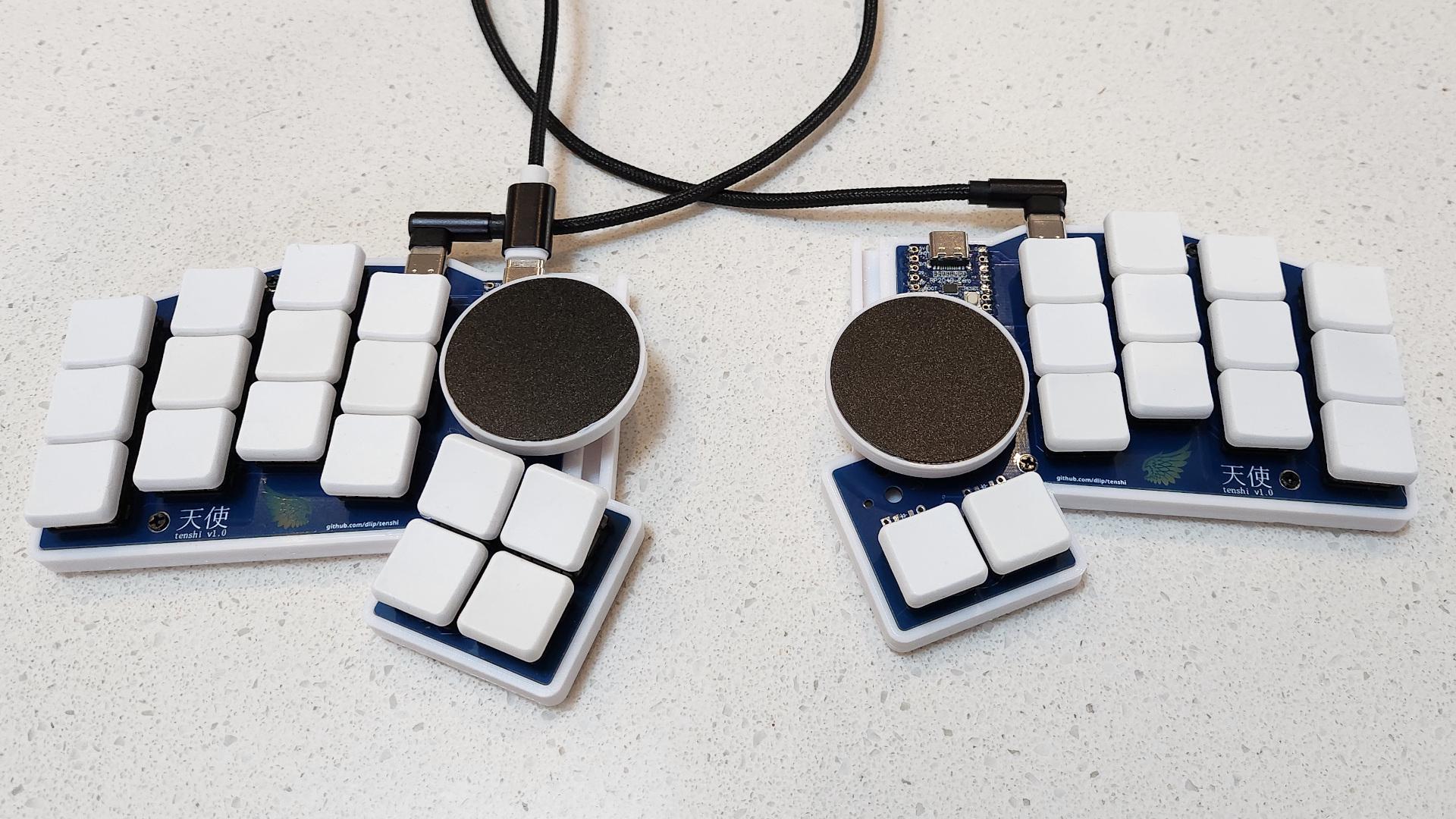
A low-profile split keyboard with a sliding, round track pad on each half.Image by [fata1err0r81] via redditThe most striking feature of the Tenshi keyboard has to be those dual track pads. But then you notice that [fata1err0r81] managed to sneak in two extra thumb keys on the left, and that those are tilted for comfort and ease of actuation.

The name Tenshi means ‘angel’ in Japanese, and creator [fata1err0r81] says that the track pads are the halos. Each one slides on a cool 3D-printed track that’s shaped like a half dovetail joint, which you can see it closer in this picture.

Tenshi uses a pair of RP2040 Zeros as controllers and runs QMK firmware. The track pads are 40 mm each and come from Cirque. While the Cirques have been integrated into QMK, the pull request for ZMK has yet to be merged in. And about those angled keys — [fata1err0r81] says they tried risers, but the tilting feels like less effort. Makes total sense to me, but then again I’m used to a whole keyboard full of tilted keys.

kbplacer Is Your New Best Friend


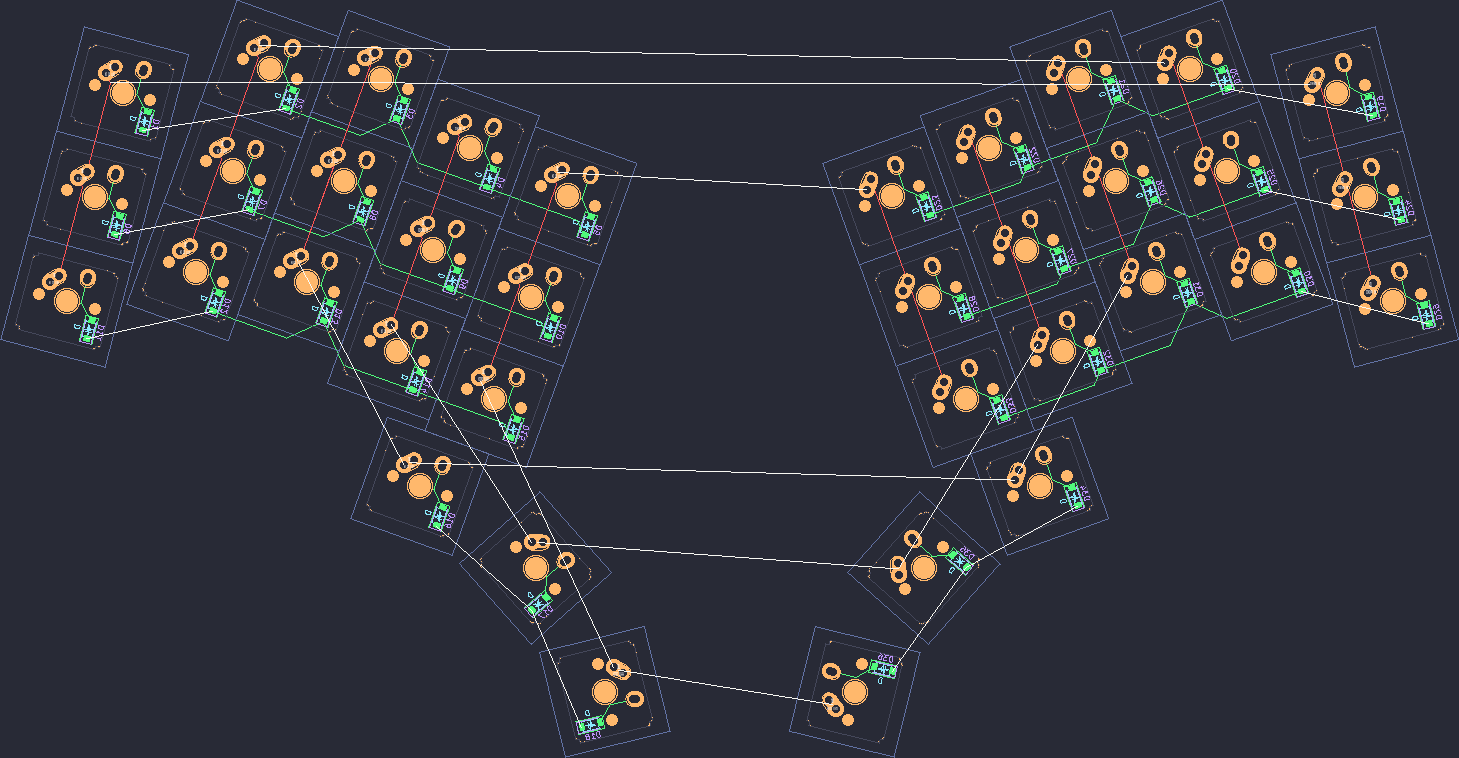
The finished result. Image by [Adam] via GitHubWhat’s the worst part about building custom mechanical keyboards? Well, it probably depends on the person, but for many, the answer would be placing the elements and routing them in order to create the actual PCB.

[Adam] wrote kbplacer, which is an open-source KiCad plugin for designing mechanical keyboards. kbplacer does automatic key placing and routing, and works with Keyboard Layout Editor, VIA, QMK, and, experimentally, Ergogen. It also places diodes, and lets the user select the diode position in relation to key position. In addition, kbplacer can also be installed with pip as a Python package for use with other tools.

If you do want to use it with Ergogen, [Adam] outlines a workflow example. Also, check out how kbplacer works with a whole bunch of popular layouts.

The Centerfold: Battleship Harleyquin


A Harlequin Alice-type keyboard, that is, the keycaps are in four different colors.Image by [hiphasreddit] via redditHarlequin all the things, I say, and bring back the four-color Volkswagen. That’s why I love this here Battleship Harleyquin. Don’t miss the gallery!

This may look like an Alice, but it’s really the AVA by Sneak Box with GMK Panels key caps. A matching Panels desk mat might have been too much; I think the GMK Slasher looks nice.

Do you rock a sweet set of peripherals on a screamin’ desk pad? Send me a picture along with your handle and all the gory details, and you could be featured here!

Historical Clackers: the Smith Premier 1

The Smith Premier 1 typewriter. It has separate keys for capital and lower case letters.Image via Antique Typewriters
While not quite a 200% keyboard, the Smith Premier 1 definitely has one in spirit. As you can probably tell, there are separate keys for upper and lower case letters. No key performs a second function, so there is no Shift in sight. I particularly like the double space bars and the fact that the numerals run down both sides.

This machine, produced by the L.C. Smith Gun Co. of Syracuse, New York beginning in the late 1880s was “the most advertised and successful double keyboard typewriter of its time”. It sold for $100, which was about average for a keyboard typewriter at that time, when one could buy a horse-drawn carriage for $60.

While modern typewriters make use of keys attached to type bars with levers, the Smith Premier uses an array of turning rods in order to transfer motion from the key press to the type bar.

Pressing a key turns a particular horizontal rod that runs the length of the machine. At the rear, a small lever connected to the rod pulls down on the type bar above it, striking the paper. Apparently this design was quite smooth and responsive for the typist. Be sure to check out the detailed images on this one.

ICYMI: the Portable Pi 84


A Raspberry Pi-powered portable computer.Image by [Michael Mayer] via PrintablesOver the years, the idea of ‘portable’ has changed significantly. While we once had luggable computers and chonky laptops, these have given way to sleek machines that look pretty much all alike from the outside.

Some of those laptops of yore had ultra-wide displays and were hinged in the center, leaving a sort of trunk the back. It is these classic computers that inspired [Michael Mayer] to build the Portable Pi 84.

Well, those, and in particular, [Michael]’s chosen mechanical keyboard, itself based on the Happy-Keyboard from [Luis Alegría]. The 9.3″ Waveshare display serendipitously just fits over the keyboard, and the rest is in that spacious trunk — the Raspberry Pi 4, a UPS hat, a couple of 21700 batteries, and a pair of speakers.

Be sure to check out the printed panels that let the user change up the ports and connection layout, because that’s an incredibly cool idea.


Got a hot tip that has like, anything to do with keyboards? Help me out by sending in a link or two. Don’t want all the Hackaday scribes to see it? Feel free to email me directly.


The Privacy Post reshared this.

The Privacy Post ha ricondiviso questo.

The media in this post is not displayed to visitors. To view it, please go to the original post.

Raspberry Has a New Pico, Built with the New RP2350
poliverso.org/display/0477a01e…
Raspberry Has a New Pico, Built with the New RP2350 Raspberry Pi’s first foray into the world of microcontrollers, the RP2040, was a very interesting chip. Its standout features were the programmable input/output units (PIOs) which enabled all sorts of custom real-time shenanigans. And that’s not to discount the impact of the Pi Pico, the $4 dev kit built around it.Today,


Raspberry Has a New Pico, Built with the New RP2350

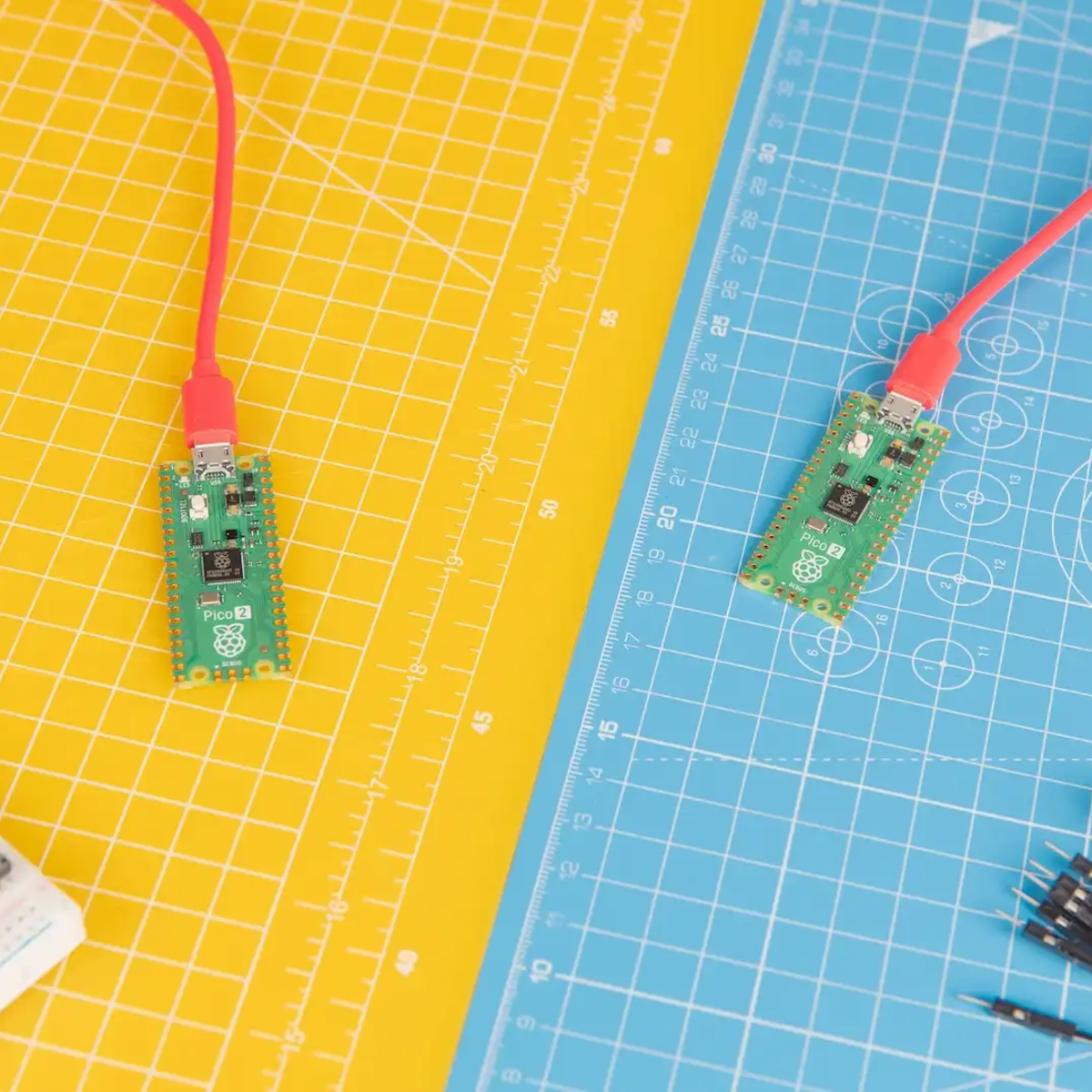
Raspberry Pi’s first foray into the world of microcontrollers, the RP2040, was a very interesting chip. Its standout features were the programmable input/output units (PIOs) which enabled all sorts of custom real-time shenanigans. And that’s not to discount the impact of the Pi Pico, the $4 dev kit built around it.

Today, they’re announcing a brand-new microcontroller: the RP2350. It will come conveniently packaged in the new Pi Pico 2, and there’s good news and bad news. The good news is that the new chip is better in every way, and that the Pico form factor will stay the same. The bad news? It’s going to cost 25% more, coming in at $5. But in exchange for the extra buck, you get a lot.

For starters, the RP2350 runs a bit faster at 150 MHz, has double the on-board RAM at 520 kB, and twice as much QSPI flash at 4 MB. And those sweet, sweet PIOs? Now it has 12 instead of just 8. (Although we have no word yet if there is more program space per PIO – even with the incredibly compact PIO instruction set, we always wanted more!)
Two flavors on the same chip: Arm and RISC
As before, it’s a dual-core chip, but now the cores are Arm Cortex M33s or RISC-V Hazard3s. Yes, you heard that right, there are two pairs of processors on board. Raspberry Pi says that you’ll be able to select which style of cores runs either by software or by burning one-time fuses. So it’s not a quad core chip, but rather your choice of two different dual cores. Wild!

Raspberry Pi is also making a big deal about the new Arm TrustZone functionality. It has signed boot, 8 kB of OTP key-storage memory, SHA-256 acceleration, a hardware RNG, and “fast glitch detectors”. While this is probably more aimed at industry that the beginning hacker, we’re absolutely confident that some of you out there will put this data-safe to good use.

There is, as of yet, no wireless built in. We can’t see into the future, but we can see into the past, and we remember that the original Pico was wireless for a few months before they got the WiFi and Bluetooth radio added into the Pico W. Will history repeat itself with the Pico 2?

We’re getting our hands on a Pico 2 in short order, and we’ve already gotten a sneak peek at the extensive software toolchain that’s been built out for it. All the usual suspects are there: Picotool, TinyUSB, and OpenOCD as we write this. We’ll be putting it through its paces and writing up all the details next week.


The Privacy Post reshared this.

The Privacy Post ha ricondiviso questo.

X suspends processing of some personal data for AI training
euractiv.com/section/data-priv…
@privacy
Social media giant X has suspended the processing of some personal data from EU users' public posts to train AI models, two days after the Irish Data Protection Commission (DPC) launched court proceedings over the practice.

The Privacy Post reshared this.

The Privacy Post ha ricondiviso questo.

CrowdStrike pubblica un report su “Channel File 291” spiegando l’incidente e i miglioramenti introdotti
poliverso.org/display/0477a01e…
CrowdStrike pubblica un report su “Channel File 291” spiegando l’incidente e i miglioramenti introdotti La società di sicurezza CrowdStrike ha crowdstrike.com/blog/channel-f…


CrowdStrike pubblica un report su “Channel File 291” spiegando l’incidente e i miglioramenti introdotti

La società di sicurezza CrowdStrike ha elaborato recentemente un report che riporta le ragioni del guasto del software Falcon Sensor, che ha interrotto il funzionamento di milioni di dispositivi basati su Windows in tutto il mondo oltre che ai miglioramenti introdotti.

L’incidente, denominato “Channel File 291″, è stato causato da un problema di convalida del contenuto a seguito dell’introduzione di un nuovo tipo di pattern per rilevare nuove tecniche di attacco

Il nuovo tipo di modello ha comportato una mancata corrispondenza dei parametri con 21 parametri di input passati allo strumento di convalida del contenuto invece dei 20 previsti forniti dall’interprete del contenuto. La discrepanza non è stata rilevata durante il test e ha causato l’errore. Di conseguenza, i sensori che hanno ricevuto il nuovo aggiornamento hanno riscontrato un problema con la lettura della memoria, che ha portato al crash del sistema.

In altre parole, la nuova versione del Channel File 291, rilasciata il 19 luglio, è stata la prima istanza del modello IPC a utilizzare il 21° parametro. La mancanza di un test specifico per la corrispondenza dei criteri senza caratteri jolly nel 21° campo ha fatto sì che il problema non fosse identificato prima di inviare un rapido aggiornamento del contenuto ai sensori.

CrowdStrike ha apportato modifiche per evitare problemi simili in futuro. Sono stati aggiunti controlli sui limiti dell’array di input ed è stato aumentato il numero di test per i nuovi modelli.

L’azienda ha anche coinvolto esperti di terze parti per rivedere il codice e migliorarne la qualità. Inoltre, la piattaforma Falcon è stata aggiornata per offrire ai clienti un maggiore controllo sulla fornitura degli aggiornamenti.

L'articolo CrowdStrike pubblica un report su “Channel File 291” spiegando l’incidente e i miglioramenti introdotti proviene da il blog della sicurezza informatica.


The Privacy Post reshared this.

The Privacy Post ha ricondiviso questo.

European Commission opposes amending GDPR, focusing on enforcement instead
poliverso.org/display/0477a01e…
European Commission opposes amending GDPR, focusing on enforcement insteadThe European Commission does not plan to reopen the General Data Protection Regulation, instead focusing on enforcement, as privacy in the age of artificial intelligence is becoming increasingly controversial.euractiv.com/section/data-priv…


European Commission opposes amending GDPR, focusing on enforcement instead


The European Commission does not plan to reopen the General Data Protection Regulation, instead focusing on enforcement, as privacy in the age of artificial intelligence is becoming increasingly controversial.


euractiv.com/section/data-priv…


The Privacy Post ha ricondiviso questo.

European Commission opposes amending GDPR, focusing on enforcement instead
euractiv.com/section/data-priv…
@privacy
The European Commission does not plan to reopen the General Data Protection Regulation, instead focusing on enforcement, as privacy in the age of artificial intelligence is becoming increasingly controversial.

The Privacy Post reshared this.

The Privacy Post ha ricondiviso questo.

Muri Digitali: La Turchia stringe la morsa su Instagram e i Servizi VPN
poliverso.org/display/0477a01e…
Muri Digitali: La Turchia stringe la morsa su Instagram e i Servizi VPN Il 2 agosto in Turchia è stato bloccato l’accesso a Instagram, costringendo i residenti e gli ospiti del paese a iniziare a utilizzare in modo massiccio i servizi VPN per aggirare il blocco. Tuttavia, le autorità hanno rapidamente iniziato x.com/engelliweb/status/182010…


Muri Digitali: La Turchia stringe la morsa su Instagram e i Servizi VPN

Il 2 agosto in Turchia è stato bloccato l’accesso a Instagram, costringendo i residenti e gli ospiti del paese a iniziare a utilizzare in modo massiccio i servizi VPN per aggirare il blocco. Tuttavia, le autorità hanno rapidamente iniziato a limitare l’accesso a questi servizi.

Türkiye'den erişime engelli VPN servislerinin listesi: t.co/ttaery0W4m pic.twitter.com/OQHpGoHa5t
— EngelliWeb (@engelliweb) August 4, 2024

Il giornalista turco e coordinatore del progetto Free Web Turkey Ali Safa Korkut spiega che l’attuale situazione di blocco delle VPN non è nuova.

Nel dicembre 2023 sono stati bloccati 16 principali servizi VPN, tra cui ProtonVPN, Surfshark, IPVanish e CyberGhost. Successivamente, in periodi diversi, l’accesso è stato limitato ad altri 11 servizi VPN.

Surfshark ha confermato che i suoi utenti in Turchia hanno riscontrato difficoltà di accesso dalla fine dello scorso anno. “Da quando Instagram è stato bloccato, non abbiamo notato un aumento dei tentativi di bloccare il nostro servizio, ma stiamo monitorando attentamente la situazione“, ha affermato il product manager di Surfshark.

Nonostante i blocchi, gli utenti in Turchia continuano a utilizzare con successo alcuni servizi VPN, inclusi, stranamente, quelli bloccati. I rappresentanti di NordVPN, ExpressVPN, ProtonVPN, Surfshark e Private Internet Access hanno segnalato un aumento significativo del traffico e delle registrazioni degli utenti dalla Turchia.

Per coloro che intendono visitare la Turchia, si consiglia di scaricare in anticipo l’applicazione VPN scelta per evitare problemi di accesso. La registrazione su più servizi contemporaneamente ti aiuterà a bypassare i blocchi se una delle VPN smette improvvisamente di funzionare.

L’uso di Tor Browser può anche aiutare a aggirare le restrizioni, sebbene la connessione tramite Tor possa essere lenta a causa di più livelli di crittografia del traffico. Se la tua app VPN non funziona, Korkut consiglia di modificare le impostazioni DNS per accedere a Instagram.

La situazione relativa al blocco dei social network e dei servizi VPN in Turchia illustra chiaramente la crescente tendenza a limitare il libero accesso alle informazioni in molti paesi del mondo. Tali azioni governative sono tipicamente motivate da preoccupazioni di sicurezza nazionale o di controllo sul flusso di informazioni, ma invariabilmente limitano i diritti dei cittadini alla libertà di parola e all’accesso a fonti indipendenti.

L'articolo Muri Digitali: La Turchia stringe la morsa su Instagram e i Servizi VPN proviene da il blog della sicurezza informatica.


The Privacy Post ha ricondiviso questo.

Singapore’s PDP Week 2024: FPF highlights include a hands-on workshop on practical Generative AI governance and a panel on India’s DPDPA
fpf.org/blog/singapores-pdp-we…
@privacy
From July 15 to 18, 2024, the Future of Privacy Forum (FPF) participated in Personal Data Protection Week 2024 (PDP Week), an event organized and hosted by the Personal Data Protection

The Privacy Post reshared this.

The Privacy Post ha ricondiviso questo.

The media in this post is not displayed to visitors. To view it, please go to the original post.

Magnesium and Copper Makes an Emergency Flashlight
poliverso.org/display/0477a01e…
Magnesium and Copper Makes an Emergency Flashlight Many of us store a flashlight around the house for use in emergency situations. Usually, regular alkaline batteries are fine for this task, as they’ll last a good few years, and you remember to swap them out from time to time. Alternatively, you can make one that lasts virtually indefinitely in storage, and uses some simple


Magnesium and Copper Makes an Emergency Flashlight

Many of us store a flashlight around the house for use in emergency situations. Usually, regular alkaline batteries are fine for this task, as they’ll last a good few years, and you remember to swap them out from time to time. Alternatively, you can make one that lasts virtually indefinitely in storage, and uses some simple chemistry, as [JGJMatt] demonstrates.

The flashlight uses 3D printing to create a custom battery using magnesium and copper as the anode and cathode respectively. Copper tape is wound around a rectangular part to create several cathode plates, while magnesium ribbon is affixed to create the anodes. Cotton wool is then stuffed into the 3D-printed battery housing to serve as a storage medium for the electrolyte—in this case, plain tap water.

The custom battery is paired with a simple LED flashlight circuit in its own 3D-printed housing. The idea is that when a blackout strikes, you can assemble the LED flashlight with your custom battery, and then soak it in water. This will activate the battery, producing around 4.5 V and 20 mA to light the LED.

It’s by no means going to be a bright flashlight, and realistically, it’s probably less reliable than just keeping a a regular battery-powered example around. Particularly given the possibility of your homebrew battery corroding over the years unless it’s kept meticulously dry. But that’s not to say that water-activated batteries don’t have their applications, and anyway it’s a fun project that shows how simple batteries really are at their basic level. Consider it as a useful teaching project if you have children interested in science and electricity!


The Privacy Post reshared this.

The Privacy Post ha ricondiviso questo.

The media in this post is not displayed to visitors. To view it, please go to the original post.

New note by cybersecurity
poliverso.org/display/0477a01e…
Attacchi ransomware, Italia il Paese più colpito in Ue, 4^ nel mondo. Quando una norma ad hoc? key4biz.it/attacchi-ransomware… (Italy e non Italy 😁)C’è una vera e propria emergenza ransomware in Italia. Secondo i dati dell’Agenzia per la Cybersicurezza Nazionale (ACN) il nostro Paese è stato il più


Attacchi ransomware, Italia il Paese più colpito in Ue, 4^ nel mondo. Quando una norma ad hoc?


@Informatica (Italy e non Italy 😁)
C’è una vera e propria emergenza ransomware in Italia. Secondo i dati dell’Agenzia per la Cybersicurezza Nazionale (ACN) il nostro Paese è stato il più colpito tra gli Stati dell’Unione europei da attacchi ransomware nel mese di


The Privacy Post reshared this.

The Privacy Post ha ricondiviso questo.

The media in this post is not displayed to visitors. To view it, please go to the original post.

Tulip is a Micropython Synth Workstation, in an ESP32
poliverso.org/display/0477a01e…
Tulip is a Micropython Synth Workstation, in an ESP32 We’re not sure exactly what github.com/shorepine/tulipcc is, because it’s so many things all at once. It’s a music-making environment that’s programmable in Python, runs on your big computer or on an ESP32-S3, and comes complete with some nice sounding synth engines, a sequencer, and a drum machine all built in.


Tulip is a Micropython Synth Workstation, in an ESP32

We’re not sure exactly what Tulip is, because it’s so many things all at once. It’s a music-making environment that’s programmable in Python, runs on your big computer or on an ESP32-S3, and comes complete with some nice sounding synth engines, a sequencer, and a drum machine all built in. It’s like your dream late-1980s synthesizer workstation, but running on a dev board that you can get for a song.

And because Tulip is made of open-source software and hardware, you can extend the heck out of it. For instance, as demonstrated in this video by [Floyd Steinberg], you can turn it into a fully contained portable device by adding a touchscreen. That incarnation is available from Makerfabs, and it’s a bargain, especially considering that the developer [Brian Whitman] gets some of the proceeds. Or, because it’s written in portable Python, you can run it on your desktop computer for free.

The most interesting part of Tulip for us, as programmer-musicians, is that it boots up into a Micrypython REPL. This is a synth workstation with a command-line prompt as its primary interface. It has an always-running main loop, and you make music by writing functions that register as callbacks with the main loop. If you were fast, you could probably live-code up something pretty interesting. Or maybe it wants to be extended into a physical musical instrument by taking in triggers from the ESP32’s GPIOs? Oh, and did we mention it sends MIDI out just as happily as it takes it in? What can’t Tulip do?

We’ve seen some pretty neat minimalist music-making devices lately, but in a sense Tulip takes the cake: it’s essentially almost entirely software. The various hardware incarnations are just possibilities, and because it’s all open and extremely portable, you can freely choose among them. We really like the design and sound of the AMY software synthesizer engine that powers the Tulip, and we’re sure that more synthesizer models will be written for it. This is a music project that you want to keep your eyes on in the future.


The Privacy Post reshared this.

The Privacy Post ha ricondiviso questo.

The media in this post is not displayed to visitors. To view it, please go to the original post.

New note by cybersecurity
poliverso.org/display/0477a01e…
NIS2, più difese cyber per i soggetti essenziali dell’Italia. Le 7 novità del decreto del Governo key4biz.it/nis2-piu-difese-cyb… (Italy e non Italy 😁)Il Governo ha recepito la direttiva europea NIS2 con la quale si introducono le misure per un livello comune elevato di cybersicurezza nell’Uni


NIS2, più difese cyber per i soggetti essenziali dell’Italia. Le 7 novità del decreto del Governo


@Informatica (Italy e non Italy 😁)
Il Governo ha recepito la direttiva europea NIS2 con la quale si introducono le misure per un livello comune elevato di cybersicurezza nell’Unione Europea. Dal 18 ottobre prossimo scatteranno gli obblighi presenti nel


The Privacy Post reshared this.

The Privacy Post ha ricondiviso questo.

Tech industry groups ask to extend deadline to contribute to general purpose AI Code of Practice
poliverso.org/display/0477a01e…
Tech industry groups ask to extend deadline to contribute to general purpose AI Code of PracticeBig Tech industry groups say six weeks in the middle of summer are not enough time for them to offer views on a Code of Practice for general-purpose AI.euractiv.com/section/digital/n…


Tech industry groups ask to extend deadline to contribute to general purpose AI Code of Practice


Big Tech industry groups say six weeks in the middle of summer are not enough time for them to offer views on a Code of Practice for general-purpose AI.


euractiv.com/section/digital/n…


The Privacy Post reshared this.

The Privacy Post ha ricondiviso questo.

Per i dipendenti Microsoft in Cina un nuovo e sfavillante iPhone! Divieto dell’utilizzo di Android
poliverso.org/display/0477a01e…
Per i dipendenti Microsoft in Cina un nuovo e sfavillante iPhone! Divieto dell’utilizzo di Android Microsoft ha richiesto ai suoi dipendenti in Cina di utilizzare gli iPhone per l’autenticazione quando accedono ai computer di lavoro a partire da settembre di bloomberg.com/news/articles/20…


Per i dipendenti Microsoft in Cina un nuovo e sfavillante iPhone! Divieto dell’utilizzo di Android

Microsoft ha richiesto ai suoi dipendenti in Cina di utilizzare gli iPhone per l’autenticazione quando accedono ai computer di lavoro a partire da settembre di quest’anno. Tuttavia, i dispositivi Android saranno vietati.

Secondo Bloomberg, Microsoft ha recentemente inviato una nota interna ai suoi dipendenti cinesi descrivendo in dettaglio un piano che entrerà in vigore a settembre 2024 e richiederà loro di utilizzare i prodotti Apple.

La misura fa parte della nuovaSecure Future Initiative di Microsoft, creata in risposta a numerosi hack e a un severo rapporto del governo statunitense che evidenziava le pratiche inadeguate di sicurezza informatica dell’azienda.

Secondo Bloomberg, il divieto dei dispositivi mobili Android interesserà centinaia di dipendenti nella Cina continentale e dovrebbe incoraggiare l’uso del gestore password Microsoft Authenticator e dell’app Identity Pass.

Va notato che, a differenza dell’App Store di Apple, in Cina il Google Play Store non è più disponibile da tempo, il che costringe i produttori locali di smartphone (ad esempio Huawei e Xiaomi) a utilizzare le proprie piattaforme. Secondo la nota, Microsoft ha deciso di limitare l’accesso di tali dispositivi alle proprie risorse aziendali a causa della sfiducia nei confronti delle piattaforme di terzi e della mancanza di servizi Google in Cina.

I dipendenti che attualmente utilizzano dispositivi Android, compresi quelli realizzati da Huawei o Xiaomi, riceveranno un iPhone 15, si legge nella nota. Microsoft intende distribuire l’iPhone in diverse filiali in tutta la Cina, inclusa Hong Kong, dove sono disponibili i servizi Google.

Ricordiamo che anche nell’ambito della citata iniziativa Secure Future, l’azienda si è impegnata a rilasciare patch cloud più rapidamente, a migliorare la gestione delle chiavi di firma dell’identità e a fornire software con un livello di sicurezza più elevato per impostazione predefinita.

L’iniziativa è stata successivamente ampliata sulla base delle raccomandazioni del rapporto del Cybersecurity Review Board (CSRB) del Dipartimento di Homeland Security degli Stati Uniti per includere l’aggiunta di controlli tecnici per ridurre il rischio di accesso non autorizzato e di blocco delle infrastrutture aziendali.

Pertanto, Microsoft prevede di introdurre standard moderni per la gestione di identità, inclusa la rotazione delle chiavi protetta dall’hardware e l’autenticazione a più fattori resistente al phishing per tutti gli account.

L'articolo Per i dipendenti Microsoft in Cina un nuovo e sfavillante iPhone! Divieto dell’utilizzo di Android proviene da il blog della sicurezza informatica.


The Privacy Post ha ricondiviso questo.

Cyber Italia: siglato protocollo di collaborazione tra ACN, PS e DNA
poliverso.org/display/0477a01e…
Cyber Italia: siglato protocollo di collaborazione tra ACN, PS e DNA Roma – La Polizia di Stato, l’Agenzia per la cybersicurezza nazionale e la Direzione Nazionale Antimafia e Antiterrorismo hanno siglato un protocollo per lo scambio di informazioni e di buone pratiche. L’accordo è finalizzato a:strutturare il flusso delle informazioni tra le parti in seguito


Cyber Italia: siglato protocollo di collaborazione tra ACN, PS e DNA

Roma – La Polizia di Stato, l’Agenzia per la cybersicurezza nazionale e la Direzione Nazionale Antimafia e Antiterrorismo hanno siglato un protocollo per lo scambio di informazioni e di buone pratiche. L’accordo è finalizzato a:

  • strutturare il flusso delle informazioni tra le parti in seguito alle recenti modifiche legislative di rafforzamento dell’ecosistema cibernetico;
  • contenere e contrastare le attività informatiche ostili, con lo scopo di contemperare le esigenze dell’accertamento giudiziario con quelle di resilienza operativa.

In occasione della firma il Direttore Generale dell’ACN, Bruno Frattasi, ha dichiarato: “È un accordo molto importante per l’Agenzia, che suggella e rafforza la cooperazione istituzionale, con la DNA e la specialità della Polizia di Stato, per finalità che coniugano, nell’equilibrio voluto dal legislatore, le esigenze di giustizia con quelle di resilienza cibernetica“.

A questo proposito si segnala che secondo il monitoraggio mensile effettuato dal Computer Security Incident Response Team, CSIRT -It, dell’ACN, nel mese di Giugno

  1. l’Italia è stata il 9◦ Paese in UE per numero di rivendicazioni DDoS e il 16◦ al mondo. I gruppi più attivi sono stati NoName057(16) e CyberArmyofRussia Reborn;
  2. i settori con il maggior numero di eventi registrati a giugno 2024 sono stati: Pubblica amministrazione centrale, Telecomunicazioni e Trasporti;
  3. l’Italia è risultata al 4◦ posto tra i Paesi più colpiti al mondo da ransomware a giugno 2024 (a maggio era al nono) e al 1◦ posto in UE;

Per svolgere i compiti di resilienza affidatigli dalla legge, l’ACN nel mese di luglio ha pubblicato:

Inoltre, sempre nel mese di luglio 2024, l’Agenzia ha istituito l’ISAC Italia, il Centro nazionale per l’analisi e la condivisione di informazioni in ambito cyber e indetto un concorso per potenziare il proprio organico con l’assunzione di giuristi esperti di materie cyber.

L'articolo Cyber Italia: siglato protocollo di collaborazione tra ACN, PS e DNA proviene da il blog della sicurezza informatica.


The Privacy Post reshared this.

The Privacy Post ha ricondiviso questo.

Una Backdoor nei browser è rimasta nascosta da 18 anni. Apple, Google e Mozilla Corrono ai Ripari
poliverso.org/display/0477a01e…
Una Backdoor nei browser è rimasta nascosta da 18 anni. Apple, Google e Mozilla Corrono ai Ripari Secondo uno studio pubblicato mercoledì, negli ultimi 18 anni, i browser più grandi del mondo hanno lasciato una backdoor affinché gli redhotcyber.com/post/i-padri-f… potessero penetrare nelle


Una Backdoor nei browser è rimasta nascosta da 18 anni. Apple, Google e Mozilla Corrono ai Ripari

Secondo uno studio pubblicato mercoledì, negli ultimi 18 anni, i browser più grandi del mondo hanno lasciato una backdoor affinché gli hacker potessero penetrare nelle reti private di case e aziende.

Apple, Google e Mozilla stanno lavorando per risolvere questa vulnerabilità, che riguarda il modo in cui i browser gestiscono le richieste all’indirizzo IP 0.0.0.0. I browser Chrome, Safari e Firefox accettano richieste a 0.0.0.0, reindirizzandole ad altri indirizzi IP, incluso “localhost” – un server su una rete o un computer che solitamente è privato e utilizzato per testare il codice. I ricercatori della startup israeliana di sicurezza informatica Oligo hanno scoperto che gli hacker hanno sfruttato questa vulnerabilità inviando richieste dannose all’indirizzo IP 0.0.0.0 dei loro obiettivi, consentendo loro di accedere a dati che avrebbero dovuto essere sensibili. Questo tipo di attacco è stato chiamato “0.0.0.0-day“.

In un attacco tipico, il malintenzionato induce con l’inganno la vittima a visitare il suo sito web, che appare innocuo, ma invia una richiesta dannosa per accedere ai file tramite 0.0.0.0. Esempi di tali informazioni includono dati degli sviluppatori e comunicazioni interne. Tuttavia, la cosa più importante è che l’utilizzo di un attacco “0.0.0.0-dayconsente all’hacker di accedere alla rete privata interna della vittima, aprendo un’ampia gamma di possibili vettori di attacco.

Tali attacchi possono colpire persone e aziende che ospitano server web, colpendo ancora un numero significativo di sistemi vulnerabili. I ricercatori hanno scoperto che potrebbero anche eseguire codice dannoso su un server che utilizza il framework Ray AI per addestrare modelli di intelligenza artificiale utilizzati da grandi aziende come Amazon e Intel. Il problema non riguarda solo Ray, ma anche qualsiasi applicazione che utilizza localhost ed è accessibile tramite 0.0.0.0.

Tali attacchi sono già stati registrati. Nel giugno di quest’anno, lo sviluppatore di sicurezza di Google David Adrian ha segnalato diversi casi di malware che sfruttavano questa vulnerabilità per attaccare determinati strumenti di sviluppo. Tuttavia, i sistemi Windows non sono interessati da questa vulnerabilità poiché Microsoft blocca 0.0.0.0 nel suo sistema operativo.

Apple ha annunciato l’intenzione di bloccare tutti i tentativi di accesso all’indirizzo IP 0.0.0.0 nella prossima beta di macOS 15 Sequoia. Questa misura ha lo scopo di aumentare la sicurezza del sistema operativo.

I team di sviluppo di Google Chromium e Chrome intendono implementare un blocco simile anche nei loro browser. Tuttavia, non ci sono ancora commenti ufficiali da parte dell’azienda.

Mozilla, il creatore di Firefox, finora si è astenuto dal prendere una simile decisione. Il motivo risiede in potenziali problemi di compatibilità: alcuni server utilizzano l’indirizzo 0.0.0.0 anziché localhost e bloccarlo potrebbe interromperne il funzionamento.

Questi cambiamenti riflettono la crescente attenzione dei giganti della tecnologia sulla sicurezza informatica e sulla protezione dei dati degli utenti.

I ricercatori ritengono che il rischio di lasciare aperto 0.0.0.0 rimanga significativo. A loro avviso, consentire l’accesso a questo indirizzo IP apre l’accesso a molti dati che sono stati a lungo bloccati.

I ricercatori intendono presentare i loro risultati alla conferenza DEF CON a Las Vegas questo fine settimana.

L'articolo Una Backdoor nei browser è rimasta nascosta da 18 anni. Apple, Google e Mozilla Corrono ai Ripari proviene da il blog della sicurezza informatica.


The Privacy Post reshared this.

The Privacy Post ha ricondiviso questo.

The media in this post is not displayed to visitors. To view it, please go to the original post.

Forget Ship in a Bottle, How About Joule Thief in a Fuse Tube?
poliverso.org/display/0477a01e…
Forget Ship in a Bottle, How About Joule Thief in a Fuse Tube? We love close-up pictures of intricate work, and [w] hits the spot with a tiny joule thief in a fuse case twitter.com/WFrwrd/status/1821… (social media post, embedded below) powered by an old coin hackaday.com/wp-content/upload…


Forget Ship in a Bottle, How About Joule Thief in a Fuse Tube?

We love close-up pictures of intricate work, and [w] hits the spot with a tiny joule thief in a fuse case (social media post, embedded below) powered by an old coin cell from a watch. It’s so tiny!
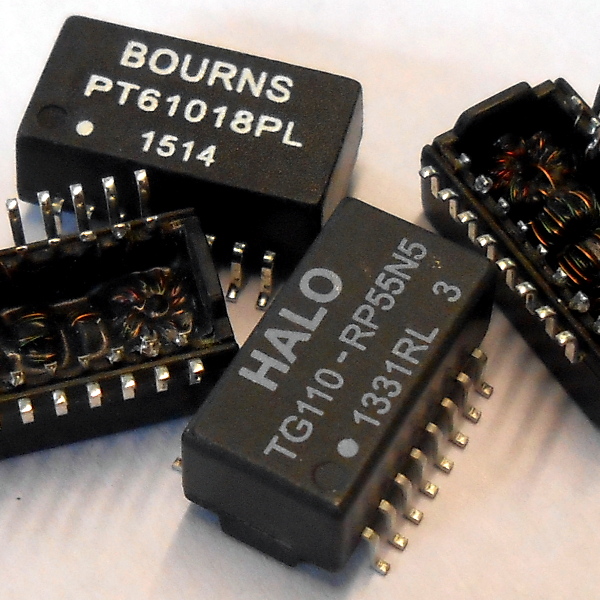
Ethernet transformers contain tiny coils.
A joule thief is a sort of minimum-component voltage booster that can suck nearly every last drop of energy from even seemingly-drained batteries, and is probably most famously used to light LEDs from cells that are considered “dead”.

Many joule thief designs feature hand-wound coils, which is great for junk box builds but certainly becomes more of a challenge for a tiny build like this one.

We really like that [w] salvaged a miniscule coil from an Ethernet transformer, most of which look like blocky SMD components from the outside but actually contain tiny coils.

The joule thief has been the basis of plenty of hacks over the years, and it’s always nice to see new twists on the concept.

Miniature 'Joule thief' in a fuse case powered by a 10 year old watch battery 😈 pic.twitter.com/flJHggDRc8

— w (@WFrwrd) August 7, 2024


The Privacy Post reshared this.

The Privacy Post ha ricondiviso questo.

The media in this post is not displayed to visitors. To view it, please go to the original post.

The First Real Sputnik
poliverso.org/display/0477a01e…
The First Real Sputnik Americans certainly remember Sputnik. At a time when the world was larger and scarier, the Soviets had a metal basketball flying over the United States and the rest of the world. It made people nervous, but it was also a tremendous scientific achievement. However, it wasn’t the plan to use it as the first orbiter youtube.com/watch?v=jMBjXUIwRU…, as [Scott Manley]


The First Real Sputnik

Americans certainly remember Sputnik. At a time when the world was larger and scarier, the Soviets had a metal basketball flying over the United States and the rest of the world. It made people nervous, but it was also a tremendous scientific achievement. However, it wasn’t the plan to use it as the first orbiter, as [Scott Manley] explains in a recent video that you can see below.

The original design would become Sputnik 3, which, as [Scott] puts it, was the first Soviet satellite that “didn’t suck.” The first one was essentially a stunt, and the second one had an animal payload and thermal problems that killed the canine occupant, [Laika].

Most people don’t remember the later Sputnik missions. However, they did some of the first science in Earth’s orbit. [Scott] has a lot of history related to the early days of space science.

The original Sputnik did little more than beep from orbit. We were surprised the CIA didn’t swipe one of them.

youtube.com/embed/jMBjXUIwRUI?…


The Privacy Post reshared this.

The Privacy Post ha ricondiviso questo.

The media in this post is not displayed to visitors. To view it, please go to the original post.

Vintage Crystal Radio Draws the Waves
poliverso.org/display/0477a01e…
Vintage Crystal Radio Draws the Waves The classic crystal radio was an oatmeal box with some wire and a few parts. [Michael Simpson] has something very different. He found an assembled Philmore “selective” radio kit youtube.com/watch?v=ReMkMTtC8L…. The simple kit had a coil, a germanium diode, and a crystal earphone.We were sad when [Michael] accidentally burned a part of the


Vintage Crystal Radio Draws the Waves

The classic crystal radio was an oatmeal box with some wire and a few parts. [Michael Simpson] has something very different. He found an assembled Philmore “selective” radio kit. The simple kit had a coil, a germanium diode, and a crystal earphone.

We were sad when [Michael] accidentally burned a part of the radio’s coil. But–well–in the end, it all worked out. We’ll just say that and let you watch for yourself. The radio is simplicity itself, built on a wooden substrate with a very basic coil and capacitor tuned circuit.

The model VC-1000 appears to be about 60 years old, and back then, it cost $5. That doesn’t sound like much, but that’s about $50 in today’s money. Of course, a nice one in mint condition today would probably be worth a good bit more than $50.

[Michael] uses an amplifier to let us listen in, but the original crystal earphone has to have a high impedance to prevent loading the detector. At first, there was an intermittent connection to the radio, perhaps not surprising after 60 years for a $5 radio.

The variable capacitor had metal plates with what looked like mylar spacers. The capacitor plates intermittently shorted, probably due to damage to the spacers. He did take the cap apart and found the root cause of the issue. Watching him reassemble it was oddly calming.

A “new” capacitor finally arrived. After a little surgery, the radio was back to its original condition. It always seems like magic that just some wire, metal plates, and a little glass-like cylinder is all you need to hear signals that fly through the air.

While crystal radios tend to be simple, that’s not always true. They can also be a lot smaller.

youtube.com/embed/ReMkMTtC8LY?…


The Privacy Post reshared this.

The Privacy Post ha ricondiviso questo.

The media in this post is not displayed to visitors. To view it, please go to the original post.

FLOSS Weekly Episode 795: Liferay, Now We’re Thinking With Portals
poliverso.org/display/0477a01e…
FLOSS Weekly Episode 795: Liferay, Now We’re Thinking With Portals This week Jonathan Bennett x.com/jp_bennett and Doc Searls x.com/dsearls chat with Olaf Kock norden.social/@olafk and Dave Nebinger about Liferay! That’s a Java project that started as an implementation of a web portal, and has turned into a very flexible platform for any


FLOSS Weekly Episode 795: Liferay, Now We’re Thinking With Portals

This week Jonathan Bennett and Doc Searls chat with Olaf Kock and Dave Nebinger about Liferay! That’s a Java project that started as an implementation of a web portal, and has turned into a very flexible platform for any sort of web application. How has this Open Source project turned into a very successful business? And how is it connected to most iconic children’s educational show of all time? Listen to find out!


youtube.com/embed/tu4muaGLf00?…

Did you know you can watch the live recording of the show Right on our YouTube Channel? Have someone you’d like us to interview? Let us know, or contact the guest and have them contact us! Take a look at the schedule here.

play.libsyn.com/embed/episode/…

Direct Download in DRM-free MP3.

If you’d rather read along, here’s the transcript for this week’s episode.

Places to follow the FLOSS Weekly Podcast:


The Privacy Post reshared this.

The Privacy Post ha ricondiviso questo.

The media in this post is not displayed to visitors. To view it, please go to the original post.

Compiling Four Billion If Statements
poliverso.org/display/0477a01e…
Compiling Four Billion If Statements With modern tools, you have to try very hard to do something stupid, because the tools (rightly) recognize you’re doing something stupid. [Andreas Karlsson] can speak to that first hand as he tried to get four billion if statements to compile andreasjhkarlsson.github.io/je… may ask what state


Compiling Four Billion If Statements

With modern tools, you have to try very hard to do something stupid, because the tools (rightly) recognize you’re doing something stupid. [Andreas Karlsson] can speak to that first hand as he tried to get four billion if statements to compile.

You may ask what state space requires four billion comparisons to evaluate? The answer is easy: the range of an unsigned 32-bit integer. The whole endeavor started with a simple idea: what if instead of evaluating whether an integer is even or odd with a modulo or bit mask, you just did an if statement for every case? Small ranges like 0-10 are trivial to write out by hand, but you reach for more automated solutions as you pass 8 bits and move towards 16. [Andreas] wrote some Python that outputs a valid C program with all the comparisons. For 16 bits, the source only clocks in at 130k lines with the executable less than 2 MB.

Of course, scaling to 32 bits is a very different problem. The source file balloons to 330 GB, and most compilers barf at that point. Undeterred, [Andreas] modified the Python to output x86_64 assembly instead of C. Of course, the executable format of Windows (PE) only allows executables up to 4 GB, so a helper program mapped the 40 GB generated executable and jumped into it.

What’s incredible about this whole journey is how performant the program is. Even large numbers complete in a few seconds. Considering that it has to thrash 40 GB of an executable through memory, we can’t help but shake our heads at how even terrible solutions can work. We love seeing someone turn a bad idea into an interesting one, like this desoldering setup.


The Privacy Post reshared this.

The Privacy Post ha ricondiviso questo.

The media in this post is not displayed to visitors. To view it, please go to the original post.

I2C For Hackers: The Basics
poliverso.org/display/0477a01e…
I2C For Hackers: The Basics You only really need two data wires to transfer a ton of data. Standards like UART, USB2, I2C, SPI, PS/2, CAN, RS232, SWD (an interface to program MCUs), RS485, DMX, and many others, all are a testament to that. In particular, I2C is such a powerful standard, it’s nigh omnipresent – if you were to somehow develop an allergy to I2C, you would die.Chances are, whatever de


I2C For Hackers: The Basics

You only really need two data wires to transfer a ton of data. Standards like UART, USB2, I2C, SPI, PS/2, CAN, RS232, SWD (an interface to program MCUs), RS485, DMX, and many others, all are a testament to that. In particular, I2C is such a powerful standard, it’s nigh omnipresent – if you were to somehow develop an allergy to I2C, you would die.

Chances are, whatever device you’re using right now, there’s multiple I2C buses actively involved in you reading this article. Your phone’s touchscreen is likely to use I2C, so is your laptop touchpad, most display standards use I2C, and power management chips are connected over I2C more often than not, so you’re covered even if you’re reading this on a Raspberry Pi! Basically everything “smart” has an I2C port, and if it doesn’t, you can likely imitate it with just two GPIOs.

If you’re building a cool board with a MCU, you should likely plan for having an I2C interface exposed. With it, you can add an LCD screen with a respectable resolution or a LED matrix, or a GPS module, a full-sized keyboard or a touchpad, a gesture sensor, or a 9 degree of freedom IMU – Inertial Measurement Unit, like a accelerometer+compass+gyroscope combination. A small I2C chip can help you get more GPIOs for your MCU or CPU, or a multi-channel motor driver, or a thermal camera, or a heap of flash memory; if you’re adding some sort of cool chip onto your board, it likely has an I2C interface to let you fine-tune its fancy bits.

As usual, you might have heard of I2C, and we sure keep talking about it on Hackaday! There’s a good few long-form articles about it too, both general summaries and cool tech highlights; this article is here to fill into some gaps and make implicit knowledge explicit, making sure you’re not missing out on everything that I2C offers and requires you to know!

Basics And Addressing


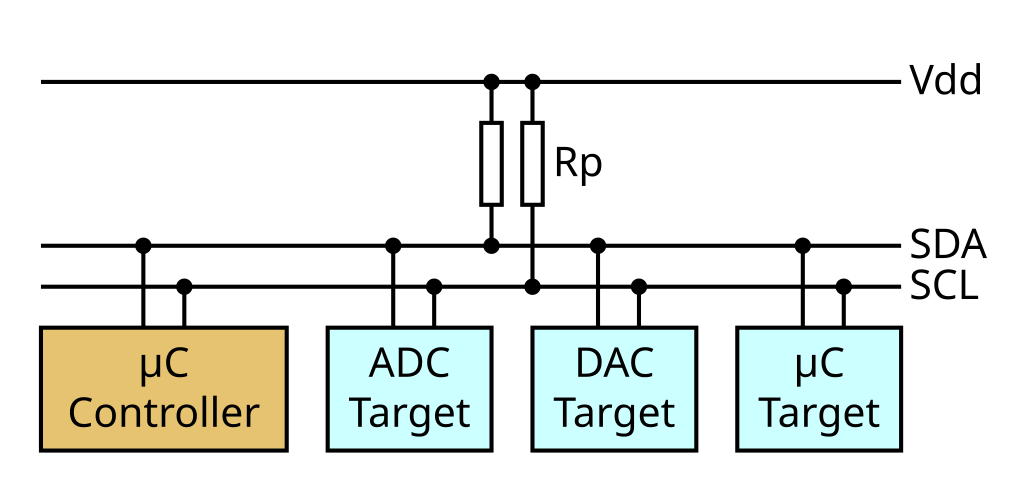
A common I2C EEPROM – you likely have a good few such chips within a dozen meter radius. By [Raimond Spekking], CC BY-SA 4.0I2C is a two-wire interface, and you can put multiple devices on these two wires – thanks to an addressing system and strictly defined hierarchy. One party on the bus is the one always initiating all conversations (old: master, new: controller), and this role is basically always static; usually, it’s your MCU. Your devices can’t send data to your MCU on your own – your MCU has to read data from your devices. As such, you usually can’t make bidirectional effortless communications UART style, unless you dig deep enough to make “multi-master” communications work – which is a cool feature but is often poorly supported.

Instead, if your device is the kind you expect to return important data at random points, there’s often an INT pin – the INT pin is not included in the standard and usually is not required to use any I2C device, but if your IC or breakout exposes the INT pin, you should consider using it, since it will save you a fair bit of CPU time spent polling your device for data.

I2C is wonderful in that you can put a large number of devices on your bus – as long as your communications can physically stay stable. How does it work? Addresses. Devices are pre-programmed with an address you can use to talk to them, and you can query a bus to get a list of addresses that the connected devices respond on. Some devices can only have a single address so you can only add one of them to a – unless you hack it in one of the ways I’ll describe below. Many devices that – for instance, SSD1306 displays have a single pin you can tie high or low, so you can put two of these devices on the same bus, and GPIO expanders tend to have three pins that result in eight possible addresses. Rarely, there are devices that let you reprogram their address with a command, too.

An I2C device’s address is specified in the datasheet. Beware – addresses are 7-bit, and during transfer, the address is shifted and the least significant bit signifies whether a write or read operation is happening; some datasheets will show the address in its proper 7-bit form and some show it already shifted. The way you can notice the latter if you see separate read and write addresses specified – that’s a non-shifted address. A surefire way is to connect your device to any I2C controller and scan for devices, of course. I2C addresses aren’t unique like MAC addresses, so, there’s way more kinds of I2C devices than there are addresses. Here’s a database you can check for fun, but it’s definitely incomplete. 10-bit addresses exist and they do widen the address space comfortably, but they’re still not that popular. Remember – an I2C bus can be scanned, and it’s a pretty wonderful feature – it gives you a sanity check showing that a device is connected, a check that you don’t really get with interfaces like SPI and UART!

An I2C device with a twist. ADDR here is set by connecting it to SCL/SDA/GND/VCC (4 bits with one pin), and, INT pin here is called ALERT. By [Pradeep717], CC BY-SA 4.0How do you avoid address conflicts, in case you’re planning to use multiple devices? Plan ahead, use address changing pins where possible, and use tricks. There are chips that help you put more devices on an I2C bus, for instance, acting like a “gateway” – it’s a saturated market, with Linear Technology taking up a lot of its space with their famously pricy but seriously worthwhile ICs, and they even have Linux drivers! There’s also a large number of tricks – some hackers suggest using SCL lines as chip selects, some suggest swapping SCL and SDA, and some talk about powering devices down selectively; if you’re experiencing address conflicts, you won’t be able to solve this purely in software, but it’s certain you won’t run out of hardware options.

Clocks And Pullups


There’s three standard I2C clock speeds – 100kHz, 400kHz and 1MHz, some hosts and devices can go even higher but it’s not especially prominent. Technically, you can go higher or lower, software I2C implementations often do, but some devices might not like it. Hosts often run at 100kHz, but it’s common that you can up the frequency and switch it into 400kHz; however, there’s hosts that are hardwired to 100kHz operation, like VGA/DVI/HDMI port and desktop/laptop-internal I2C controllers.

This affects, and sometimes, if you have choice between I2C and some other interface, speed might be a deciding factor. For example, take SSD1306 or SH1106 OLED screens – they can be connected through either I2C or SPI, so if you’re using a breakout, it just depends on the way it’s wired. You won’t be able to send data to an I2C screen as quickly over SPI, because of the inherent data cap – they supports SPI links at multiple MHz clock rate, whereas an I2C link will be limited to 400KHz. Want faster screen refresh? You’ll want to wire the screen into SPI mode. Fine with possibly lower FPS? I2C is a valid choice, then.

You need pullups – and you cannot use GPIO-internal pullups like you can do with buttons, they are too high of a value as a rule. A typical range for a pullup is from 1K to 10K – going too high will distort the signal on the bus, and going too low will make the bus impossible to drive. Raspberry Pi boards use 1.8K pullups on the dedicated I2C bus, 4.7K is another popular value, and I’ve had 10K pullups result in unstable communications at higher speeds, so I typically go lower a fair bit, using 1.8K, 4.7K or 5.1K pullups. Mind you, if both your device, so if an I2C sensor breakout is failing to respond when connected to a Raspberry Pi but it really should work, check whether you maybe should desolder or disconnect the pullups on the sensor board itself.

I2C is pretty cool indeed – all those devices I mentioned in the intro, they’re a breakout board and a cable away, often, you don’t even have to solder. Looking to use I2C on your board as an expansion interface, but don’t know what kind of connector to use? It’s pretty simple, I’ve talked about it in my article on I2C ecosystems. One five-pin header and one four-pin JST-SH is all you need, and you can even get vertical JST-SH connectors if space is a concern!

Next time, let’s talk more about I2C devices, the kinds of I2C interfaces you will encounter and all the places they are usually hidden in, types of I2C transfers you can do, and notable implementation nuances, – leaving no stone unturned as usual.


The Privacy Post reshared this.

The Privacy Post ha ricondiviso questo.

The media in this post is not displayed to visitors. To view it, please go to the original post.

On Carbon Fiber Types and Their Carcinogenic Risks
poliverso.org/display/0477a01e…
On Carbon Fiber Types and Their Carcinogenic Risks Initially only seeing brief popular use as the filament in incandescent lighting, carbon fibers (CF) experienced a resurgence during the 20th century as part of composite materials that are lighter and stronger than materials like steel and aluminium, for use in aircraft, boats and countless more applications. This rising


On Carbon Fiber Types and Their Carcinogenic Risks

Initially only seeing brief popular use as the filament in incandescent lighting, carbon fibers (CF) experienced a resurgence during the 20th century as part of composite materials that are lighter and stronger than materials like steel and aluminium, for use in aircraft, boats and countless more applications. This rising popularity has also meant that the wider population is now exposed to fragments of CF, both from using CF-based products as well as from mechanically processing CF materials during (hobby) projects.

It is this popularity that has also led to the addition of short CF sections to FDM 3D printing filaments, where they improve the mechanical properties of the printed parts. However, during subsequent mechanical actions such as sanding, grinding, and cutting, CF dust is created and some fraction of these particles are small enough to be respirable. Of these, another fraction will bypass the respiratory system’s dust clearing mechanisms, to end up deep inside the lungs. This raises the question of whether CF fragments can be carcinogenic, much like the once very popular and very infamous example of asbestos mineral fibers.

Making Carbon Fiber


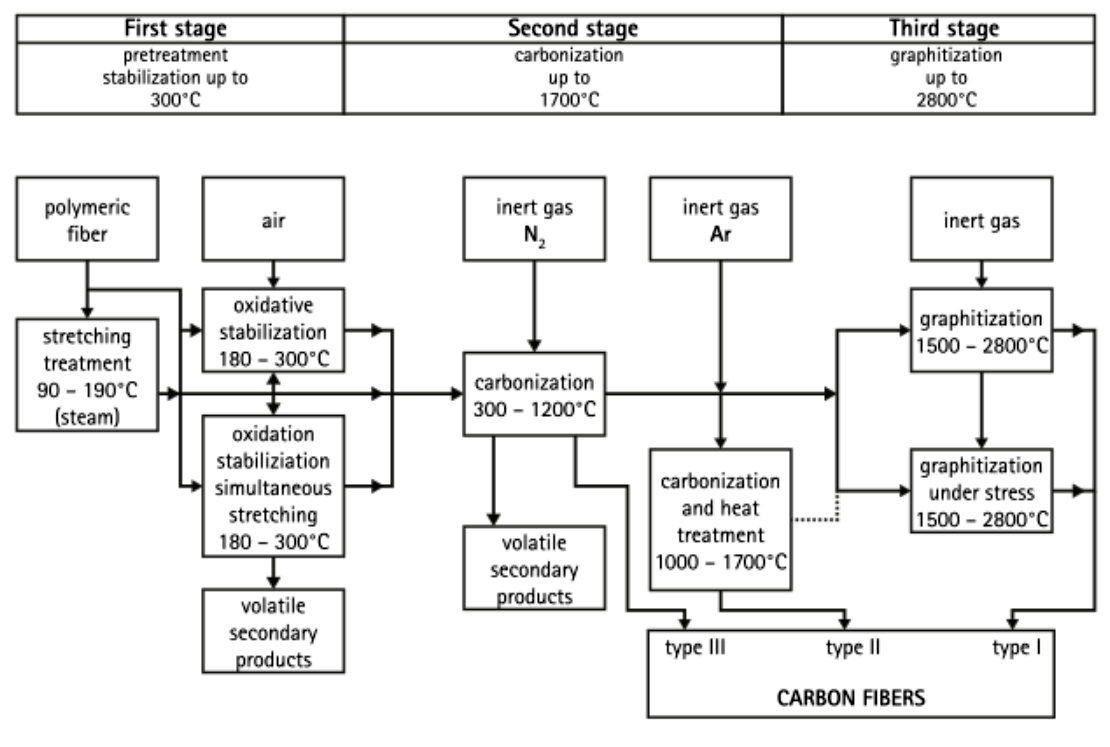
The process of producing carbon fiber is fairly straightforward, involving a carbon-rich monomer, the precursor, that’s coaxed into becoming a polymer prior to having the non-carbon elements removed from the polymer. This then leaves the pure carbon, which depending on the precursor material will have certain physical and mechanical properties. The two most common precursor materials are polyacrylonitrile (PAN, (C3H3N)n) and pitch, the latter being a viscoelastic polymer that is either produced from petroleum or derived from plants. Both materials are used in many other applications as well.

In the case of CF production, the polymer is stretched and stabilized as part of pre-treatment, followed by carbonization and finally graphitization. In the case of PAN CF the precursor fiber is stabilized through oxidation while heated, followed by carbonization at much higher temperatures under an inert nitrogen atmosphere before undergoing a final third step called graphitization. This induces a graphite crystalline molecular structure arranged in a turbostratic (shifted planes) fashion and completing the CF which can then be wound on to bobbins and readied for shipping.
Schematic representation of carbon fiber preparation from polyacrylonitrile.Schematic representation of carbon fiber preparation from polyacrylonitrile.
The turbostratic structure of PAN CF contrasts with the mesophase pitch CFs, which form strongly directional (sheet-like) graphitic structures. It is this difference in graphitic structure which ultimately determines the properties of PAN and pitch CF, such as a very high elastic modulus in the case of the latter and high tensile strength for the former. Currently the overwhelming majority of CF produced today is in the form of PAN CF, but pitch- and rayon-based CF are also used where their properties are superior to those of PAN CF.

CF is commonly used to create composites, in which case they are referred to as carbon fiber reinforced polymer (CFRP).

Creating Dust

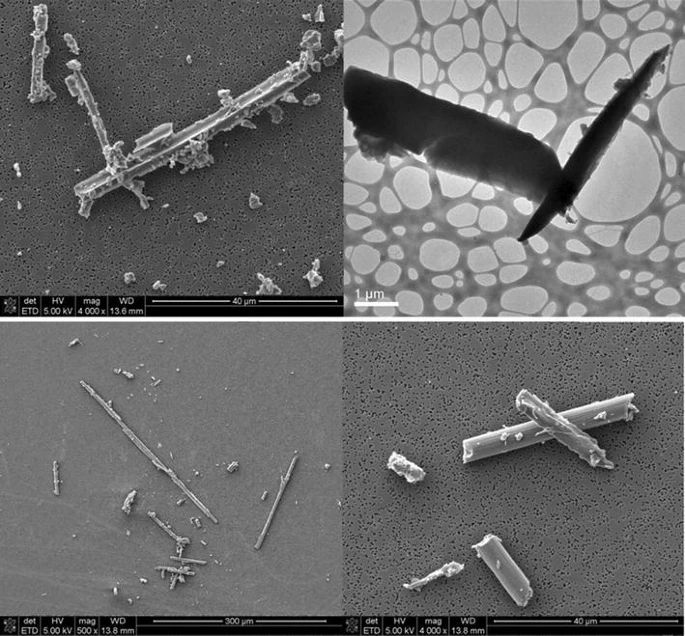
Example SEM and TEM images of the released particles following the rupture of CFRP cables in the tensile strength test. (Credit: Jing Wang et al, Journal of Nanobiotechnology, 2017)Example SEM and TEM images of the released particles following the rupture of CFRP cables in the tensile strength test. (Credit: Jing Wang et al, Journal of Nanobiotechnology, 2017)
That CF produces fragments when mechanically or thermally stressed should come as little surprise, with research on the health implications of CF fragments going back far into the 20th century. It is however only much more recently that we have been able to fully study the effects of CF fragments on lung tissue, not only based on empirical studies but also by looking at gene expression changes, DNA breakage, inflammation markers and so on.

Recently there was a bit of a furore surrounding the topic of CF fragments resulting from CF-infused FDM 3D printer filaments, with the question being raised of whether CF might be the new asbestos. In the linked article a 2017 paper by Jing Wang et al. as published in Journal of Nanobiotechnology was referenced. The researchers compared the way in which asbestos and carbon fiber fragments formed, as well as in the case of carbon nanotubes (CNTs).

The SEM and TEM shown here on the right comes from a 2015 study by Schlagenhauf et al., in which PAN-based (Teijin IMS60) CFRP cable was exposed to extreme tension until failure. During this CFRP cable failure, many fragments were produced, some of which were deemed respirable according to the WHO criteria (minimum length of 5 µm and maximum diameter of 3 µm). This thus shows that PAN CF can in fact produce respirable fragments, but the pertinent question is whether these fragments are as harmful as pitch CF fragments, or even asbestos fibers.

In an article response on Twitter by Josef Prusa, the founder of Prusa 3D – a 3D printer and filament company – made the assertion that PAN-based filaments are in fact quite safe and that studies back this up, citing a 2019 study by Dominic Kehren et al. as published in Aerosol and Air Quality Research.

PSA🚨 You might have seen the recent videos from @NathanBuilds or an article on @ about the potential dangers of carbon fibers in filaments, comparing it to asbestos 😳 Given that we offer several filaments containing carbon fibers, I thought many of you would be… pic.twitter.com/SjTTbqGe4N
— Josef Prusa (@josefprusa) August 4, 2024

This study by Kehren et al. looked at the amount of respirable fragments produced due to a limited number of mechanical actions. Their conclusion was that pitch CF fragments pose a significant health risk, including lung cancer and mesothelioma, while for PAN CF fragments more research was warranted. Of note here is also that no study was made of the actual effects of these biopersistent carbon fragments on lung tissue. Only assumptions of potential health implications were made based on WHO criteria and the observed fragments.

The advice by Josef Prusa to always wear a respirator while working with CF-based materials would thus seem to be rather prudent advice. Meanwhile we got much more recent studies which actually consider the physiological impact of exposure to PAN-based CF fragments.

In Vitro Lungs

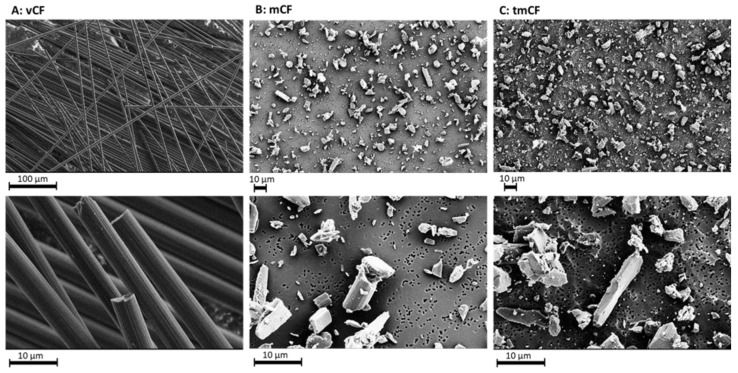
SEM images of the PAN-based CF. (Credit: Friesen, Int J Mol Sci, 2023)SEM images of the PAN-based CF. (Credit: Friesen, Int J Mol Sci, 2023)
Whereas previous studies would generally use in vivo study models with all of the (ethical) complications which doing so entails, more recently in vitro models have become a viable alternative. In a 2023 study on PAN CF fragment effects on lung tissue by Alexandra Friesen et al. as published in International Journal of Molecular Sciences, a series of in vitro lung tissue models were used to directly study the effects of these fragments, including inflammation, DNA breakage and changes to gene expression.
Schematic representation of the three cell culture models used for CF exposure experi-ments. (Credit: Friesen et al., Int J Mol Sci, 2023)Schematic representation of the three cell culture models used for CF exposure experi-
ments. (Credit: Friesen et al., Int J Mol Sci, 2023)
These three different human cell culture models were exposed to both mechanically pre-treated (mCF) and thermo-mechanically pretreated (tmCF), using Teijin UMS40 filament yarn as the source of PAN CF. For both types of CF fragments the filament yarn was cut into 1 cm sections, which for mCF were immediately milled in a planetary ball mill. The tmCF pieces were first exposed to thermal stress in two furnaces (400°C for 4 hours, 800°C for ~30 minutes) in a nitrogen atmosphere before also being milled. The resulting fragments were then aerosolized and the cell culture models exposed.
Schematic representation of the setup for ALI exposure studies. (Credit: Friesen et al., Int J Mol Sci, 2023)Schematic representation of the setup for ALI exposure studies. (Credit: Friesen et al., Int J Mol Sci, 2023)
After exposure, the cell cultures were post-incubated for 0, 3 or 23 hours to give an indication of how the exposure affects them over time. During exposure, the mCF showed a WHO fiber fraction of around 20%, whereas for tmCF this was around 9.4%. When analyzing the exposed cultures following post-incubation no significant cytotoxic effects were observed (based on LDH release).

Where things got more interesting was in the gene expression profiles, with the tmCF-exposed cultures showing the strongest pro-inflammation, cell-death (apoptosis) and DNA damage response. Interestingly, the triple-culture with fibroblasts present showed a less dramatic picture after 23 hours since mCF exposure, with inflammation transcription factors in particular significantly downregulated, though DNA damage response transcription was still upregulated.

Correspondingly, interleukin-8 (IL-8) release increased, though by an extraordinary level in the triple-culture. The exact reason for this and related observations remain to be investigated.

Genotoxicity was assessed after the increased DNA repair transcription, by analyzing DNA breaks. This provided the most interesting results, as it was found that while single-strand breaks were present in the mono- and co-culture samples, the triple-culture showed a significantly higher number of single-strand breaks. This indicates a genotoxic response upon exposure to PAN CF fragments, with the tmCF fragments showing the strongest response, possibly due to the production of more smaller fragments.

Although not as aggressively toxic as the multi-walled carbon nanotubes (MWCNTs) which the authors contrast with, the triple-culture results hint at secondary genotoxicity caused by the pro-inflammatory response.

Actions To Take


Although these in vitro cell culture models are not a perfect representation of human lungs, they do provide us with some of the first concrete evidence of how PAN CF can affect human lung tissue. With a clear inflammatory response that seems to get more significant and more harmful the more complete the cell culture becomes compared to a living lung’s insides, there is at the very least a solid basis to treat any CF dust as potentially carcinogenic.

Similar to asbestos fibers, it is not so much the material itself that causes toxicity and promotes carcinogenesis, but rather the body’s response to this foreign matter. Through sustained irritation, inflammation and subsequent DNA damage with possibly flawed repairs, outcomes such as silicosis, lung cancer and mesothelioma become possible.

The reasonable response here thus would be to treat CF no different from asbestos and similar sources of respirable, biopersistent fibers. This means not disturbing them if possible, being wary around damaged CFRP products and always wearing a respirator with asbestos-rated filters when sanding, cutting or otherwise processing CF in any form or shape, making sure to properly ventilate the room.

As with asbestos, it’s quite possible that being exposed will not cause permanent harm, but when the choice is between taking all possible safety precautions now, or finding out that you should have done so in one or two decades, it should hopefully be obvious what the reasonable choice is as we wait for more studies to be performed.


The Privacy Post reshared this.

The Privacy Post ha ricondiviso questo.

The media in this post is not displayed to visitors. To view it, please go to the original post.

An ESP Makes A Bicycle Odometer
poliverso.org/display/0477a01e…
An ESP Makes A Bicycle Odometer If you’d like to measure the speed of your cycling then it’s easy enough to buy a cycle computer, but as [Clovis Fritzen] has done it’s also an option to build one fritzenlab.net/bicycle-odomete…. The result of his work is a smart PCB on which the speed is indicated with a row of LEDs.The sensor is a straightforward affair, a reed switch with a


An ESP Makes A Bicycle Odometer

If you’d like to measure the speed of your cycling then it’s easy enough to buy a cycle computer, but as [Clovis Fritzen] has done it’s also an option to build one. The result of his work is a smart PCB on which the speed is indicated with a row of LEDs.

The sensor is a straightforward affair, a reed switch with a magnet on a wheel, which is sensed by an ESP8266. The six LEDs are charlieplexeed over three lines. To keep the supply voltage correct for the ESP from the uncertain state of a lithium battery, a small buck-boost module is used. Sadly the code doesn’t seem to make the speed available via the wireless part of the processor, but we’re guessing that a bit of extra software work could fix that.

The result when put in a box on the handlebars, is a smart but simple instrument that would aid any bike. It’s by no means the first one we’ve brought you and we doubt it will be the last.


The Privacy Post reshared this.

The Privacy Post ha ricondiviso questo.

August newsletter!

The @EUCommission is planning to cut its funding to @EC_NGI projects, while in Belgium a court has supported end-users’ #RouterFreedom rights.

We also submitted feedback on the NIS2 implementation; learnt about Linqa, a #FreeSoftware platform developed with public money; and gathered with volunteers at the Summer Meeting. Listen to our new SFP episode.

fsfe.org/news/nl/nl-202408html

reshared this

The Privacy Post ha ricondiviso questo.

Gli hacker contro Parigi! 40 musei, tra cui Versailles e il Grand Palais presi di mira dal cybercrime
poliverso.org/display/0477a01e…
Gli hacker contro Parigi! 40 musei, tra cui Versailles e il Grand Palais presi di mira dal cybercrime Domenica scorsa gli hacker hanno attaccato artnews.com/art-news/news/rans… il sistema dati centrale del centro espositivo Grand Palais di


Gli hacker contro Parigi! 40 musei, tra cui Versailles e il Grand Palais presi di mira dal cybercrime

Domenica scorsa gli hacker hanno attaccato il sistema dati centrale del centro espositivo Grand Palais di Parigi e di altri 40 musei della rete Réunion des Musées Nationaux in tutta la Francia.

L’incidente (a quanto pare di tipo ransomware) ha colpito la Réunion des Musées Nationaux et du Grand Palais (RMN-GP), un ente pubblico industriale e commerciale (EPIC) sotto la supervisione del Ministero della Cultura, e si ritiene che il tutto sia partiti da un account compromesso da un infostealer di un collaboratore.

RMN-GP gestisce 36 istituzioni: gestisce il Grand Palais e il Museo del Lussemburgo e collabora con i musei Cluny, National Archaeology e Maison Bonaparte, i musei nazionali di preistoria, Marc-Chagall, Fernand-Léger e diversi castelli e palazzi. Anche Versailles è stata colpita.

Il Grand Palais ospita gare di scherma e taekwondo, mentre Versailles, ex residenza reale costruita per ordine di Luigi XIV, ospita gare di pentathlon moderno e di equitazione.

“Nella notte tra il 3 e il 4 agosto 2024, il direttore dei sistemi informatici del sito del Grand Palais ha osservato un’attività insolita nei sistemi informatici e ha avvisato che era in corso un attacco ransomware”, ha riportsto La Parisien

L’Agenzia nazionale francese per la sicurezza dei sistemi informativi (ANSSI) ha affermato che gli attacchi non hanno interessato altri sistemi informatici correlati alle Olimpiadi e alle Paralimpiadi.

Come ha sottolineato il primo ministro francese Gabriel Attal, nei primi giorni delle Olimpiadi sono stati contrastati 68 attacchi informatici, due dei quali avevano come obiettivo le sedi olimpiche.

Nessun attore della minaccia ha rivendicato il cyberattacco e non si sa che tipo di dati siano stati esfiltrati. La procura di Parigi ha assegnato un’indagine per determinare la portata e i colpevoli alla sottodivisione Brigade for Combating Cybercrime.

L'articolo Gli hacker contro Parigi! 40 musei, tra cui Versailles e il Grand Palais presi di mira dal cybercrime proviene da il blog della sicurezza informatica.


The Privacy Post reshared this.

The Privacy Post ha ricondiviso questo.

Consumer Health Data Privacy Notices by the Numbers
fpf.org/blog/consumer-health-d…
@privacy
Today, FPF is releasing an infographic that provides insights into how organizations are responding to the transparency requirements of recently enacted U.S. state health privacy laws. The infographic reflects a survey of privacy notices on the websites of 180+ companies across a variety of industries and sectors, from pharmaceutical to apparel. Two

The Privacy Post reshared this.

The Privacy Post ha ricondiviso questo.

Irish privacy watchdog takes X to court over data processing for AI training
poliverso.org/display/0477a01e…
Irish privacy watchdog takes X to court over data processing for AI trainingThe Irish Data Protection Commission (DPC) initiated court proceedings against the social media platform X on Tuesday (6 August), according to Ireland's High Court website.euractiv.com/section/data-priv…


Irish privacy watchdog takes X to court over data processing for AI training


The Irish Data Protection Commission (DPC) initiated court proceedings against the social media platform X on Tuesday (6 August), according to Ireland's High Court website.


euractiv.com/section/data-priv…


The Privacy Post reshared this.