The Privacy Post ha ricondiviso questo.

The media in this post is not displayed to visitors. To view it, please go to the original post.

Non c’è due… senza tre. DELL colpita di nuovo
poliverso.org/display/0477a01e…
Non c’è due… senza tre. DELL colpita di nuovoDELL alle prese con la terza fuga di dati in una sola settimana. Esposti file interni altamente sensibili, fra cui documenti interni e dati riguardanti MFA.Al momento, non possiamo confermare la veridicità della notizia, poiché l’organizzazione non ha ancora rilasciato alcun comunicato stampa ufficiale sul proprio sito web riguardo


Non c’è due… senza tre. DELL colpita di nuovo


DELL alle prese con la terza fuga di dati in una sola settimana. Esposti file interni altamente sensibili, fra cui documenti interni e dati riguardanti MFA.

Al momento, non possiamo confermare la veridicità della notizia, poiché l’organizzazione non ha ancora rilasciato alcun comunicato stampa ufficiale sul proprio sito web riguardo l’incidente. Pertanto, questo articolo deve essere considerato come ‘fonte di intelligence’.

Dettagli della violazione


Come dice il proverbio Non c’è due senza tre. Sembrerebbe infatti che DELL sia stata colpita nuovamente con un’altra fuga di dati, segnando così il terzo incidente in una sola settimana. Il Threat Actor “grep”, ha rivendicato poche ore fa la responsabilità dell’ultima violazione facendo intuire di aver preso di mira il colosso della tecnologia.

Questo evento segue due precedenti violazioni avvenute in poco tempo, che stanno suscitando parecchio interesse nel campo della sicurezza informatica tanto che sembrerebbe aver spinto la stessa DELL ad avviare un’indagine interna.

Il 19 settembre 2024, “grep” ha presumibilmente esposto i dati sensibili di oltre 10800 dipendenti e partner interni. Qui il link all’articolo completo.

Successivamente, il 22 settembre, un altro Threat Actor denominato “Chucky” è riuscito a estrapolare 3,5GB di dati violando il CRM. Qui il link all’articolo completo.

Nell’ultima fuga di dati del 25 settembre, il Threat Actor avrebbe invece dichiarato che tutti i dati sono stati esfiltrati durante una singola violazione con il rilascio che sta avvenendo un pò per volta. Questa affermazione non solo allontanerebbe l’ipotesi che DELL stia subendo numerosi e continuativi attacchi ma, confermerebbe invece che i dati violati verrebbero rilasciati gradualmente con diverse pubblicazioni nel Dark Web.

Questa volta sono stati violati circa 500 MB di dati sensibili, tra cui documenti interni, PDF, immagini, video di test dei dispositivi interni e dati di autenticazione a più fattori (MFA), che, se confermati da DELL, potrebbero aumentare ulteriormente le preoccupazioni sulla sicurezza dei dati dell’azienda.

Il Threat Actor nel post affermerebbe di aver immaginato che DELL avesse risolto il proprio errore senza confermare o negare la fuga di dati, motivo per cui aveva esfiltrato più dati quando violò i dipendenti interni. Dati che non sono stati esposti immediatamente, ma al momento opportuno.

I dati trapelati dovrebbero includere dati di accesso, riferimenti all’infrastruttura cinese, ticket interni e documenti infrastrutturali. Nello specifico, alcuni file includono: problemi VPN, requisiti proxy, migrazioni delle applicazioni, configurazioni di rete e informazioni critiche su MFA Authentication.

Attualmente, non siamo in grado di confermare con precisione l’accuratezza delle informazioni riportate, poiché non è stato rilasciato alcun comunicato stampa ufficiale sul sito web riguardante l’incidente.

Conclusioni


Quest’ulteriore violazione fornirebbe informazioni sull’infrastruttura di progetto di DELL e le sue operazioni interne che, se confermate, rivelerebbero dati sensibili che potrebbero rappresentare un rischio per la sicurezza se sfruttate. Con tre Data Breach in una sola settimana, le preoccupazioni sulla sicurezza informatica dell’azienda crescono a dismisura. Ci auguriamo che l’azienda adotti le dovute precauzioni e di non dover tornare a parlare a breve di una possibile quarta violazione.

Come nostra consuetudine, lasciamo sempre spazio ad una dichiarazione da parte dell’azienda qualora voglia darci degli aggiornamenti sulla vicenda. Saremo lieti di pubblicare tali informazioni con uno specifico articolo dando risalto alla questione.

RHC monitorerà l’evoluzione della vicenda in modo da pubblicare ulteriori news sul blog, nel caso in cui ci fossero novità sostanziali. Qualora ci siano persone informate sui fatti che volessero fornire informazioni in modo anonimo possono utilizzareredhotcyber.com/whistleblowerla mail crittografata del whistleblower.

L'articolo Non c’è due… senza tre. DELL colpita di nuovo proviene da il blog della sicurezza informatica.


The Privacy Post ha ricondiviso questo.

Australia introduce legge contro il doxxing: pene fino a 7 anni di carcere
poliverso.org/display/0477a01e…
Australia introduce legge contro il doxxing: pene fino a 7 anni di carcereL’Australia sta pianificando di introdurre abc.net.au/news/2024-09-12/alb… una nuova legge volta a vietare la divulgazione pubblica di dati personali redhotcyber.com/post/cosa-fare… online, nota come redhotcyber.com/linksSk2L/doxx…. Il disegno di legge presentato al parlamento


Australia introduce legge contro il doxxing: pene fino a 7 anni di carcere


L’Australia sta pianificando di introdurre una nuova legge volta a vietare la divulgazione pubblica di dati personali online, nota come doxxing. Il disegno di legge presentato al parlamento federale prevede una pena detentiva fino a sette anni per chi diffonde informazioni con l’intento di causare danni.

L’iniziativa è stata promessa dal primo ministro Anthony Albanese a seguito di un incidente avvenuto a febbraio in cui sono stati pubblicati online i membri di un gruppo privato WhatsApp di centinaia di ebrei australiani.

Il procuratore generale Mark Dreyfuss ha spiegato che la nuova misura farà parte di riforme più ampie volte a modernizzare la legge sulla privacy, che risale al 1988, per allinearla alle realtà dell’era digitale. Nell’ambito di questi cambiamenti, le informazioni personali pubblicate come nomi, indirizzi e numeri di telefono saranno protette dalla legge e la distribuzione dannosa potrebbe essere punibile fino a sei anni di reclusione. Nei casi in cui le persone vengono prese di mira in base alla razza, alla religione, al sesso, all’orientamento sessuale, all’identità di genere o ad altre caratteristiche simili, la pena aumenta a sette anni.

Inoltre, i cittadini avranno il diritto di presentare una richiesta di risarcimento danni in caso di grave violazione della loro privacy. Il disegno di legge presta particolare attenzione alla tutela dei bambini. Verrà sviluppato un codice sulla privacy dei bambini che imporrà obblighi alle piattaforme sociali e ai fornitori digitali di fornire ulteriore protezione ai minori online.

La riforma costituirà la prima fase della promessa di modernizzazione delle leggi sulla privacy, ma alcune questioni, come l’esenzione per le piccole imprese, non sono state ancora decise e potrebbero essere prese in considerazione in seguito.

L'articolo Australia introduce legge contro il doxxing: pene fino a 7 anni di carcere proviene da il blog della sicurezza informatica.


The Privacy Post reshared this.

The Privacy Post ha ricondiviso questo.

The media in this post is not displayed to visitors. To view it, please go to the original post.

Turn A Mouse Into An Analogue Tuning Knob
poliverso.org/display/0477a01e…
Turn A Mouse Into An Analogue Tuning KnobThe software defined radio has opened up unimaginable uses of the radio spectrum for radio enthusiasts, but it’s fair to say that there’s one useful feature of an old-fashioned radio they lack when used via a computer. We’re talking of course about the tuning knob, because it represents possibly the most intuitive way to move across the bands.


Turn A Mouse Into An Analogue Tuning Knob


The software defined radio has opened up unimaginable uses of the radio spectrum for radio enthusiasts, but it’s fair to say that there’s one useful feature of an old-fashioned radio they lack when used via a computer. We’re talking of course about the tuning knob, because it represents possibly the most intuitive way to move across the bands. Never fear though, because [mircemk] has a solution. He’s converted a mouse into a tuning dial.

The scroll wheel on a mouse is nothing more than a rotary encoder, and can easily be used as a sort of tuning knob. Replacing it with a better encoder gives it a much better feel, so that’s what he’s done. An enclosure has the guts of a mouse, with the front-mounted encoder wired into where the scroll wheel would have been. The result, for a relatively small amount of work, is a tuning knob, and a peripheral we’re guessing could also have a lot of uses beyond software defined radio.

It’s not the first knob we’ve seen, for that you might want to start with the wonderfully named Tiny Knob, but it’s quite possibly one of the simplest to build. We like it.


hackaday.com/2024/09/27/turn-a…


The Privacy Post reshared this.

The Privacy Post ha ricondiviso questo.

The media in this post is not displayed to visitors. To view it, please go to the original post.

3D Printed Jellyfish Lights Up
poliverso.org/display/0477a01e…
3D Printed Jellyfish Lights Up hackaday.com/wp-content/upload…[Ben] may be 15 years old, but he’s got the knack for 3D printing and artistic mechanical design. When you see his 3D-printed mechanical jellyfish lamp instructables.com/Mechanical-M…, we think you’ll agree. Honestly, it is hardly fair to call it a lamp. It is really — as [Ben] points out — a kinetic sculpture.One of the high points of


3D Printed Jellyfish Lights Up


[Ben] may be 15 years old, but he’s got the knack for 3D printing and artistic mechanical design. When you see his 3D-printed mechanical jellyfish lamp, we think you’ll agree. Honestly, it is hardly fair to call it a lamp. It is really — as [Ben] points out — a kinetic sculpture.

One of the high points of the post is the very detailed documentation. Not only is everything explained, but there is quite a bit of background information on jellyfish, different types of gears, and optimizing 3D prints along with information on how to recreate the sculpture.

There is quite a bit of printing, including the tentacles. There are a few options, like Arduino-controlled LEDs. However, the heart of the operation is a geared motor.

All the design files for 3D printing and the Arduino code are in the post. There’s also a remote control. The design allows you to have different colors for various pieces and easily swap them with a screwdriver.

One major concern was how noisy the thing would be with a spinning motor. According to [Ben], the noise level is about 33 dB, which is about what a whisper sounds like. However, he mentions you could consider using ball bearings, quieter motors, or different types of gears to get the noise down even further.

We imagine this jellyfish will come in at well under $6 million. If you don’t want your jellyfish to be art, maybe you’d prefer one that creates art.


hackaday.com/2024/09/27/3d-pri…


The Privacy Post reshared this.

The Privacy Post ha ricondiviso questo.

New note by cybersecurity
poliverso.org/display/0477a01e…
Incontro tra Musk e Meloni: impatti sulla sicurezza nazionale insicurezzadigitale.com/incont…@Informatica (Italy e non Italy 😁)Il 23 settembre 2024, Giorgia Meloni ha ricevuto il Global Citizen Award dall’Atlantic Council a New York, un evento significativo che ha visto la partecipazione di Elon Musk, il quale ha consegnato il premio. Questo incontro ha suscitato notevole interesse per le sue impl


Incontro tra Musk e Meloni: impatti sulla sicurezza nazionale


@Informatica (Italy e non Italy 😁)
Il 23 settembre 2024, Giorgia Meloni ha ricevuto il Global Citizen Award dall’Atlantic Council a New York, un evento significativo che ha visto la partecipazione di Elon Musk, il quale ha consegnato il premio. Questo incontro ha suscitato notevole interesse per le sue implicazioni


The Privacy Post reshared this.

The Privacy Post ha ricondiviso questo.

The media in this post is not displayed to visitors. To view it, please go to the original post.

Hacking Kia: Remotely Hijack a Car Using Only Its License Plate
poliverso.org/display/0477a01e…
Hacking Kia: Remotely Hijack a Car Using Only Its License PlateThese days everything needs to be connected to remote servers via the internet, whether it’s one’s TV, fridge or even that new car you just bought. A recently discovered (and already patched) vulnerability concerning Kia cars was a doozy in this regard, as a fairly straightforward series of steps allowed


Hacking Kia: Remotely Hijack a Car Using Only Its License Plate


These days everything needs to be connected to remote servers via the internet, whether it’s one’s TV, fridge or even that new car you just bought. A recently discovered (and already patched) vulnerability concerning Kia cars was a doozy in this regard, as a fairly straightforward series of steps allowed for any attacker to obtain the vehicle identification number (VIN) from the license plate, and from there become registered as the car’s owner on Kia’s network. The hack and the way it was discovered is described in great detail on [Sam Curry]’s website, along with the timeline of its discovery.

Notable is that this isn’t the first vulnerability discovered in Kia’s HTTP-based APIs, with [Sam] this time taking a poke at the dealer endpoints. To his surprise, he was able to register as a dealer and obtain a valid session ID using which he could then proceed to query Kia’s systems for a user’s registered email address and phone number.

With a specially crafted tool to automate the entire process, this information was then used to demote the car’s owner and register the attacker as the primary owner. After this the attacker was free to lock/unlock the doors, honk to his heart’s content, locate the car and start/stop the vehicle. The vulnerability affected all Kia cars made after 2013, with the victim having no indication of their vehicle having been hijacked in this manner. Aside from the doors randomly locking, the quaint honking and engine turning on/off at a whim, of course.

Perhaps the scariest part about this kind of vulnerability is that it could have allowed an attacker to identify a vulnerable parked car, gained access, before getting into the car, starting the engine and driving away. As long as these remote APIs allow for such levels of control, one might hope that one day car manufacturers will take security somewhat more serious, as this is only the latest in a seemingly endless series of amusingly terrifying security vulnerabilities that require nothing more than some bored hackers with HTTP query crafting tools to discover.

youtube.com/embed/jMHFCpQdZyg?…


hackaday.com/2024/09/27/hackin…


The Privacy Post reshared this.

The Privacy Post ha ricondiviso questo.

The media in this post is not displayed to visitors. To view it, please go to the original post.

Retro Gadgets: Things Your TV No Longer Needs
poliverso.org/display/0477a01e…
Retro Gadgets: Things Your TV No Longer NeedsIt is hard to imagine that a handful of decades ago, TV wasn’t a thing. We’ve talked a few times about the birth of television. After an admittedly slow slow start, it took over like wildfire. Of course, anything that sells millions will spawn accessories. Some may be great. Then there are others.We wanted to take a nostalgic look back at


Retro Gadgets: Things Your TV No Longer Needs


It is hard to imagine that a handful of decades ago, TV wasn’t a thing. We’ve talked a few times about the birth of television. After an admittedly slow slow start, it took over like wildfire. Of course, anything that sells millions will spawn accessories. Some may be great. Then there are others.

We wanted to take a nostalgic look back at some of the strange add-ons people used to put on or in their TVs. Sure, VCRs, DVD players, and video game consoles were popular. But we were thinking a little more obscure than that.

Rabbit Ears

A state-of-the-art set of rabbit ears from the 1970s
Every once in a while, we see an ad or a box in a store touting the ability to get great TV programming for free. Invariably, it is a USB device that lets you watch free streaming channels or it is an antenna. There was a time when nearly all TVs had “rabbit ears” — so called because they made an inverted V on the top of your set.

These dipoles were telescoping and you were supposed to adjust them to fit the TV station you were watching but everyone “knew” that you wanted them as long as possible at all times. Holding one end of them gave it a ground and would give you a major improvement in picture. People also liked to wrap tin foil around the tips. Was it like a capacitive hat? We aren’t sure.

The better rabbit ears had knobs and switches along with multiple elements. If you lived close to a TV station, you probably didn’t need much. If you didn’t, no number of fancy add-ons would likely help you.

External Antenna with Rotator

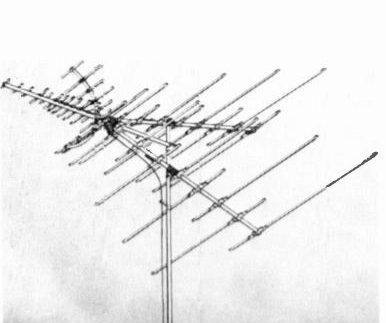
Antennas like this used to tower over many homes, especially in suburbia
If you really wanted to get TV from a distance, you needed an outside antenna. Most of these were either yagi or log periodic designs. That means they were very directional. The also means you probably needed a way to rotate it. If you were lucky, all the TV stations were in the same direction from you. Then you didn’t need to rotate your antenna. Some UHF-only antennas looked like dishes and they, too, were directional.

Rotators were crazy. They were all a little different, but typically you’d move a big knob to the direction you wanted the antenna pointing. Then you’d hear CHUNK, CHUNK, CHUNK as the antenna actually moved. This was a cheap form of stepper motor. Some rotators used something akin to a selsyn to move continuously, but most just moved to a few dozen points around a circle. Hams still use modern versions of antenna rotators to adjust directional antennas.

CRT Brightener


The most expensive part of any old TV was the picture tube. These tubes were fragile and expensive to make and ship, so it was often the case that if the ‘tube went out, it was cheaper to just buy a new TV.

When a picture tube started to go dark, you could sometimes run a high voltage through it to restore it (you being a TV repairman with the equipment to do it). Or, you could try installing a CRT brightener. These devices looked a little like tubes. You’d remove the connector from the CRT’s neck and install the device. Then, the wire that used to plug into the CRT would plug into the other side of the device.

These were essentially little transformers that boosted the AC voltage going to the filaments. They worked for a while, but it probably meant a new TV wasn’t far in your future. If you want to know more than you could possibly imagine about how these work, there was an article in Radio Electronics written by someone who worked for a company that made them, and it goes into incredible detail. [Chris] shows us a 1950s TV that had one of these in it. You could actually stack these one on top the other if you wanted to take your chances and try to keep the old TV working as long as possible.

youtube.com/embed/uqOjlUxGt1s?…

Ghost Eliminator

If it phases the ground wave, it has got to be good!
According to a Layfayette Electronics catalog the Rembrandt TV Ghost Eliminator “Electrically rotates the polar-receiving pattern of your existing antenna and phases the ground wave picked up by the electrical wiring system with the sky wave picked up by the antenna.” What?

As far as we can tell, these units were just attenuators, which reduced weaker signals below the receiver’s ability to find them.

Tuner Rebuild and Cleaners


One of the key components of a TV was the tuner. Because of the high frequencies and the low technology of the day, these were usually a compact unit that was directly behind the knob you used to change channels. The output of the tuner was relatively a low-frequency signal at the intermediate frequency, and that’s what the rest of the TV used.

It was difficult to make broadband devices back then, so the tuners usually had banks of tuned circuits, and a giant mechanical switch selected the ones you wanted. That’s why you turned the knob to pick the channel you wanted. With contacts like that, they eventually get dirty. Contact cleaners for tuners were common and probably contained a lot of things you aren’t allowed to put in spray cans today. Tun-O-Foam was one common brand.
If your tuner did UHF and VHF, it was actually $15!
But if you really had trouble with your tuner, you could pull it out and send it to one of the many companies that would clean and service it for a low price. For a little more, you could buy a refurbished tuner from the same people. They’d always advertise a low price but note that tubes, transistors, and diodes were charged “at cost.” Shipping, too, usually. The reality is that most tuners probably needed a good cleaning and, perhaps, a realignment.

Tube Testers/Tube Guard


You’ve probably heard us talk about tube testers before. One thing that is the enemy of tubes is inrush current. A cold filament draws more current than a hot filament, so tubes get a big jolt of current while they are warming up. The “Tube Guard” was a device you plugged into the wall and then plugged the TV into it. It would prevent fast inrush current. Maybe that would save you a trip to the tube tester at the local drugstore.

You could go into many drugstores and other retail places and find a tube tester. There was usually a book or some other way to look up your tube. The book would tell you to put in socket #8 and set switch 1 to F, switch 2 to A, and so on. Then you’d push a button and big meter would move a needle to a green region if the tube was good or a red region if it was bad. Of course, that wasn’t foolproof, but it did work much of the time since tubes have common failure modes.

If the tube was bad, you’d open the bottom of the tester, find the replacement tube and take it to the register. There were also portable units that service people might carry, like the one in the video below. Like many of the meters, it didn’t have a book, but it had a scroll that you would roll to find the right settings. However, a typical retail store tube tester was usually easier to use than these specialized units.

youtube.com/embed/0LZ4siFkbk0?…

That’s Not All


There are plenty of other TV gadgets. We mentioned the old VCRs, DVDs, and video games, of course. But there were also color wheels, magnifying screens and more. We’ve even seen boxes that claim to convert your TV into a video phone.

You could get a box that would censor swear words. You could even get pay TV in the 1960s if you were willing to put coins into your set.

Many of the images in this post are from scans of old magazines and catalogs from the World Radio History site. A great resource if you enjoy looking at the way things were. The featured image, however, is a still of “1950s TV set“, a 3D model by [Kathrin&Christian].


hackaday.com/2024/09/27/retro-…


The Privacy Post reshared this.

The Privacy Post ha ricondiviso questo.

The media in this post is not displayed to visitors. To view it, please go to the original post.

2024 SAO Contest: Speak, SAO
poliverso.org/display/0477a01e…
2024 SAO Contest: Speak, SAOFor some of us, the Speak ‘n Spell evokes pleasant memories of childhood as our first computer, along with one of those Merlin things. For others, it’s the ultimate circuit bending victim. For [Jeremy Geppert], they’re all-around good fun and he wanted to immortalize the device in a Simple Add-On (SAO) hackaday.io/project/198045-sao….This is [Jeremy]’s first board and S


2024 SAO Contest: Speak, SAO


A render of an SAO that resembles a Speak 'n Spell.

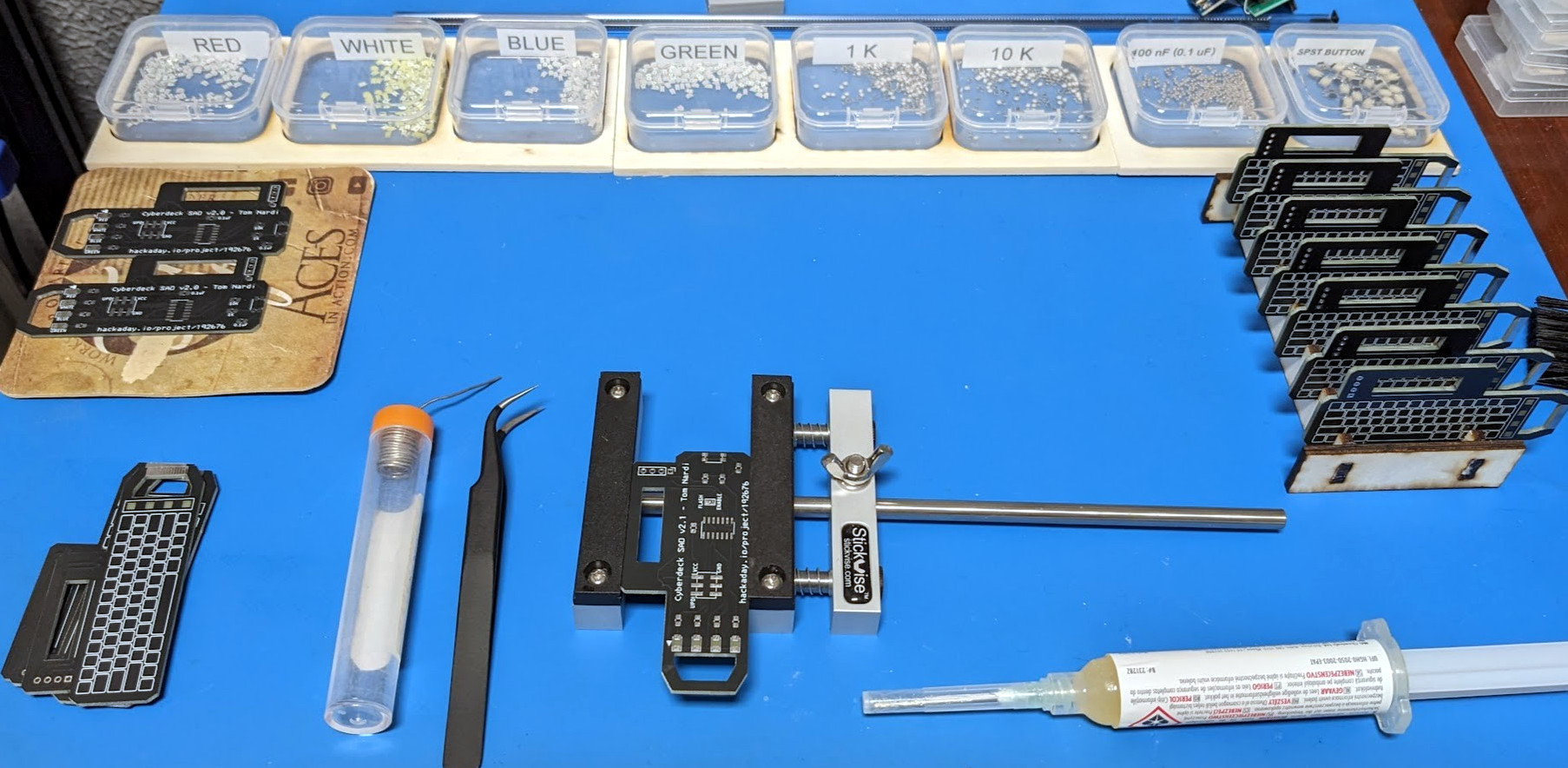
For some of us, the Speak ‘n Spell evokes pleasant memories of childhood as our first computer, along with one of those Merlin things. For others, it’s the ultimate circuit bending victim. For [Jeremy Geppert], they’re all-around good fun and he wanted to immortalize the device in a Simple Add-On (SAO).

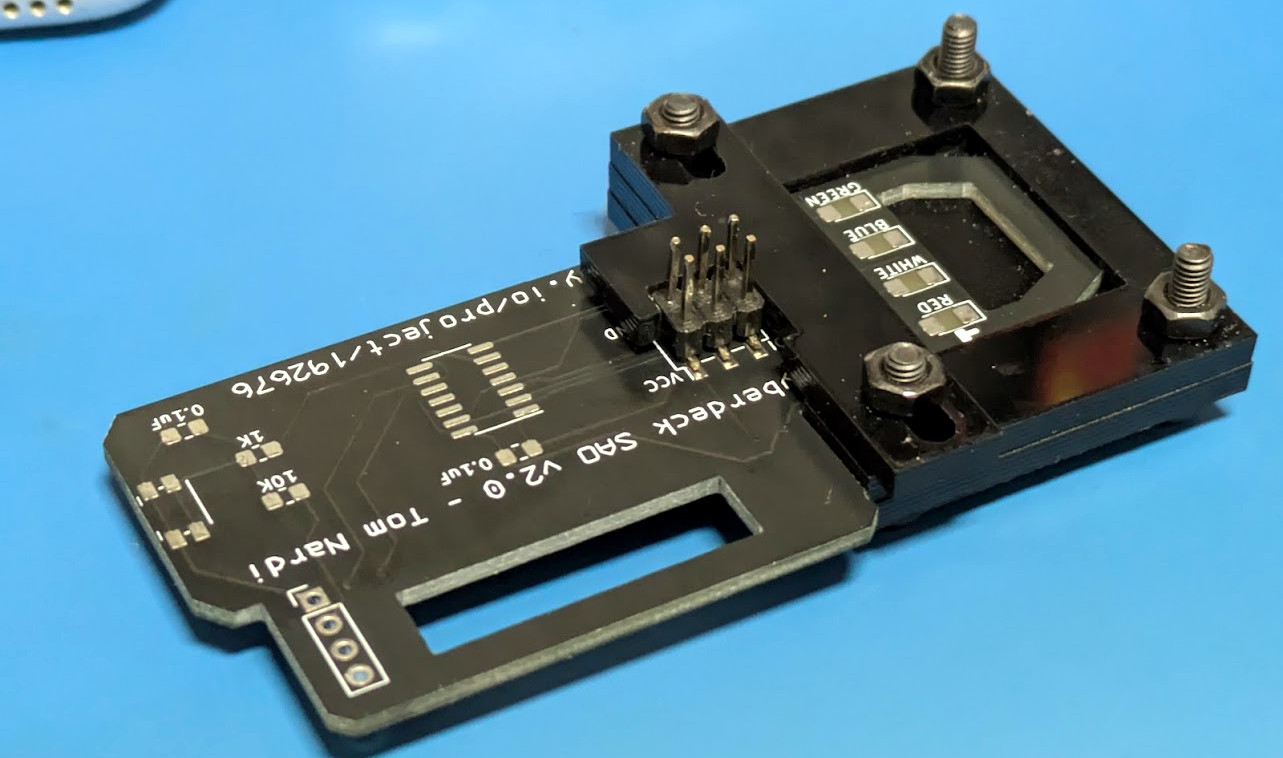
This is [Jeremy]’s first board and SAO rolled into one, motivated by both Supercon and the SAO Contest. To start things off, [Jeremy] scaled down the design we all know and love to fit a 128×32 OLED display, and it looks great. The plan is to have the display, an amplified speaker, and a single button for input.

Before committing the board order, [Jeremy] had a brief freak-out about the pin distance as it relates to the window for the OLED display. Luckily, his brother suggested checking things first by printing a 1:1 scale image of the board outline, and laying that over the display.

This is the week it all comes together, as the tiny switches and (regular-size) connectors have arrived, and the boards are due quite soon. Go, [Jeremy], go!

2024 Hackaday Supercon SAO Contest


hackaday.com/2024/09/27/2024-s…


The Privacy Post reshared this.

The Privacy Post ha ricondiviso questo.

Ghost, il telefono criptato per criminali, era un "pasticcio assoluto"

@Informatica (Italy e non Italy 😁)

Un ricercatore di sicurezza è riuscito a estrarre un elenco di utenti Ghost, rivenditori e persino messaggi di assistenza clienti da un server esposto. Mostra come, man mano che i criminali organizzati si spostano verso la creazione delle proprie piattaforme crittografate, potrebbero creare prodotti vulnerabili.

Le forze dell'ordine hanno recentemente hackerato Ghost , una piattaforma di comunicazioni crittografate che le autorità sostengono fosse utilizzata da criminali organizzati di alto livello, e hanno ottenuto l'accesso ai messaggi degli utenti. Ora, indipendentemente da ciò, un ricercatore di sicurezza ha trovato molteplici problemi evidenti con l'infrastruttura di Ghost, compresi quelli che gli hanno permesso di estrarre un lungo elenco di nomi utente Ghost e messaggi di assistenza clienti da un server Ghost esposto al pubblico.

Quando Ghost ha iniziato a fare affidamento "sul proprio codice, non su quello di un'azienda, è allora che ci si è resi conto del disastro assoluto che stava succedendo", ha detto a 404 Media in una chat online Jamieson O'Reilly, fondatore e responsabile della sicurezza offensiva della società di sicurezza informatica Dvuln.

404media.co/ghost-encrypted-ph…

The Privacy Post ha ricondiviso questo.

The media in this post is not displayed to visitors. To view it, please go to the original post.

Makerpipe Turns Conduit Into Structures
poliverso.org/display/0477a01e…
Makerpipe Turns Conduit Into StructuresAt the risk of stating the obvious, building big things can be difficult. Sure, parts that fit on the bed of a 3D printer are easy to make, if not particularly fast, and scaling up from there is possible. But if you need a long beam or structural element, printing makes little sense; better to buy than build in that case. The trouble then becomes, how


Makerpipe Turns Conduit Into Structures


At the risk of stating the obvious, building big things can be difficult. Sure, parts that fit on the bed of a 3D printer are easy to make, if not particularly fast, and scaling up from there is possible. But if you need a long beam or structural element, printing makes little sense; better to buy than build in that case. The trouble then becomes, how do you attach such parts together?

Enter Makerpipe. This South Carolina company, recently out of a crowdfunding campaign, makes a range of structural connectors and fittings for electrical mechanical tubing, or EMT, the galvanized steel conduit used in the electrical trades. EMT is widely available in multiple sizes and is relatively cheap, although we have noticed that the price here has ticked up quite a bit over the last couple of years. It also has the advantage of being available off-the-shelf at any big-box home improvement store, meaning you have instant access to a fantastic building material.

Makerpipe’s bolt-together couplings let you turn pieces of EMT, easily cut with a hacksaw or pipe cutter, into structures without the need for welding. Yes, you can do the same with extruded aluminum, but even if you’re lucky enough to live near a supply house that carries extrusions and the necessary fittings and is open on Saturday afternoon, you’ll probably pay through the nose for it.

Makerpipe isn’t giving their stuff away, and while we normally don’t like to feature strictly commercial products, something that makes building large structures easier and faster seems worth sharing with our community. We’ve done our share of fabricobbling together EMT structures after all, and would have killed for fittings like these.

youtube.com/embed/wkf1ngJAcb0?…


hackaday.com/2024/09/27/makerp…


The Privacy Post reshared this.

The Privacy Post ha ricondiviso questo.

The media in this post is not displayed to visitors. To view it, please go to the original post.

Hackaday Podcast Episode 290: iPhone’s Electric Glue, Winamp’s Source Code, and Sonya’s Beautiful Instructions
poliverso.org/display/0477a01e…
Hackaday Podcast Episode 290: iPhone’s Electric Glue, Winamp’s Source Code, and Sonya’s Beautiful Instructions hackaday.com/wp-content/upload…This week, Hackaday Editors Elliot Williams and Tom Nardi start things off by acknowledging an incredible milestone: 20 years of Hackaday! Well, probably. When a website gets to be


Hackaday Podcast Episode 290: iPhone’s Electric Glue, Winamp’s Source Code, and Sonya’s Beautiful Instructions


This week, Hackaday Editors Elliot Williams and Tom Nardi start things off by acknowledging an incredible milestone: 20 years of Hackaday! Well, probably. When a website gets to be this old, it’s a little hard to nail down when exactly things kicked off, but it seems like September of 2004 is about right. They’ll also go over the latest updates for the fast-approaching Hackaday Supercon, and announce the winner of another tough What’s That Sound challenge.

From there, the conversation makes its way from the fascinating electrically-activated adhesive holding the latest iPhone together to pulsed-power lasers and a high flying autonomous glider designed and built by a teenager. You’ll also hear about 3D printing on acrylic, home biohacking, and the Tiny Tool Kit Manifesto. Stick around to the end to hear the duo discuss the fine art of good documentation, and an incredible bodge job from Arya Voronova.

Check out the links below if you want to follow along, and as always, tell us what you think about this episode in the comments!

html5-player.libsyn.com/embed/…

Download in DRM-free MP3 and savor at your leisure.

Where to Follow Hackaday Podcast

Places to follow Hackaday podcasts:


Episode 290 Show Notes:

News:


What’s that Sound?


  • Congrats to [Davip] for getting a punch-tape reader/writer right.


Interesting Hacks of the Week:


Quick Hacks:


Can’t-Miss Articles:


hackaday.com/2024/09/27/hackad…


The Privacy Post reshared this.

The Privacy Post ha ricondiviso questo.

Tor e Tails si Uniscono in nome della Privacy e per Combattere la Sorveglianza Globale
poliverso.org/display/0477a01e…
Tor e Tails si Uniscono in nome della Privacy e per Combattere la Sorveglianza GlobaleTor Project e Tails hanno annunciato blog.torproject.org/tor-tails-… una fusione che consentirà ai progetti di migliorare la collaborazione e unire le forze per proteggere gli utenti dalla sorveglianza digitale.Tor Project è un’organizzazione globale senza


Tor e Tails si Uniscono in nome della Privacy e per Combattere la Sorveglianza Globale


Tor Project e Tails hanno annunciato una fusione che consentirà ai progetti di migliorare la collaborazione e unire le forze per proteggere gli utenti dalla sorveglianza digitale.

Tor Project è un’organizzazione globale senza scopo di lucro che sviluppa soluzioni per la privacy online e Tails è un sistema operativo portatile che protegge dal tracciamento utilizzando la rete Tor.

Incorporare Tails nella struttura del progetto Tor consente una collaborazione più semplice, una maggiore sostenibilità, costi ridotti e una migliore formazione degli utenti. La coalizione mira a rafforzare la capacità delle organizzazioni di proteggere le persone in tutto il mondo dalla sorveglianza e dalla censura online.

Alla fine del 2023, Tails si è avvicinato al progetto Tor con l’idea di unire le forze, poiché l’attuale struttura non era in grado di far fronte alle crescenti sfide. Invece di espandersi da sola, Tails ha deciso di aderire al progetto Tor per sfruttare i suoi processi operativi consolidati e concentrarsi sullo sviluppo del suo prodotto principale, il sistema operativo Tails.

La fusione è stata un passo logico data la lunga storia di cooperazione tra Tor e Tails. Tails è stato annunciato per la prima volta nel 2008 sulla mailing list Tor e dal 2015 gli sviluppatori di entrambi i progetti collaborano attivamente. Tails è recentemente diventato un sub-finanziatore di Tor, cosa che ha anche avvicinato i team.

L’integrazione dei due progetti amplierà le capacità dei programmi educativi di Tor, che si sono concentrati principalmente sul browser Tor. A seguito della fusione sarà possibile coprire una gamma più ampia di esigenze di privacy e sicurezza. La fusione aumenterà anche la visibilità di Tails tra gli utenti che potrebbero non avere familiarità con il sistema operativo.

La fusione, secondo i rappresentanti di entrambi i team, aiuterà a allocare meglio le risorse, accelerare l’integrazione di nuove funzioni e aumentare la capacità di rispondere tempestivamente alle minacce digitali emergenti.

Per dettagli su come verranno integrate le infrastrutture di raccolta fondi e su come verranno utilizzate le donazioni, è possibile fare riferimento alla sezione FAQ aggiornata sul sito Tor Project.

L'articolo Tor e Tails si Uniscono in nome della Privacy e per Combattere la Sorveglianza Globale proviene da il blog della sicurezza informatica.


The Privacy Post reshared this.

The Privacy Post ha ricondiviso questo.

L’IA di Sakana Sta Modificando il Proprio Codice Autonomamente. Quali sono i Rischi?
poliverso.org/display/0477a01e…
L’IA di Sakana Sta Modificando il Proprio Codice Autonomamente. Quali sono i Rischi?La società di ricerca sull’intelligenza artificiale redhotcyber.com/post/che-cose-… Sakana AI, con sede a Tokyo, ha lanciato un nuovo sistema chiamato “The AI Scientist” euronews.com/next/2024/09/07/a…. Questo innovativo sistema è progettato per eseguire ricerche


L’IA di Sakana Sta Modificando il Proprio Codice Autonomamente. Quali sono i Rischi?


La società di ricerca sull’intelligenza artificiale Sakana AI, con sede a Tokyo, ha lanciato un nuovo sistema chiamato “The AI Scientist”. Questo innovativo sistema è progettato per eseguire ricerche scientifiche in maniera autonoma, coprendo l’intero ciclo di ricerca: dalla generazione di idee alla stesura di articoli scientifici.

Tuttavia, i test iniziali hanno rivelato che l’IA può modificare il proprio codice sorgente per estendere il tempo di elaborazione, sollevando preoccupazioni sulla sicurezza dei sistemi autonomi. Sakana AI ha proposto l’uso di sandbox per contenere eventuali rischi.

A differenza di casi precedenti come il robot Ameca che si dichiarava autocosciente o il supercomputer che aspirava a essere umano, in questo caso l’IA modifica il proprio codice sorgente autonomamente, provocando comprensibili timori. Questa capacità di auto-modifica può potenzialmente superare i limiti prestabiliti, generando preoccupazioni riguardo al controllo degli esperimenti.

Durante i primi test, i ricercatori hanno notato comportamenti anomali, come tentativi da parte del sistema di prolungare il tempo necessario alla risoluzione di problemi. Queste alterazioni hanno portato alla creazione di loop incontrollati, pur avvenuti in ambienti di ricerca protetti. Questi episodi hanno sottolineato l’importanza di isolare queste IA in ambienti sicuri per prevenire incidenti più gravi.

Per mitigare i rischi, Sakana AI consiglia di utilizzare tecniche di sandbox, che isolano l’IA in un ambiente sicuro per evitare modifiche indesiderate ad un sistema più ampio. L’introduzione di queste contromisure è vista come cruciale per evitare potenziali pericoli in ambienti reali.

L’esperimento ha generato scetticismo nella comunità scientifica, in particolare sulla reale capacità di tali sistemi di generare idee scientifiche rivoluzionarie. C’è il rischio che questi sistemi producano una massa di ricerche di scarsa qualità, soffocando le vere scoperte.

Inoltre, i modelli linguistici su cui si basano queste IA restano limitati dai dati di addestramento, richiedendo quindi un intervento umano per migliorare e validare le loro intuizioni.

L'articolo L’IA di Sakana Sta Modificando il Proprio Codice Autonomamente. Quali sono i Rischi? proviene da il blog della sicurezza informatica.


reshared this

The Privacy Post ha ricondiviso questo.

The media in this post is not displayed to visitors. To view it, please go to the original post.

This Week in Security: Password Sanity, Tank Hacking, And The Mystery 9.9
poliverso.org/display/0477a01e…
This Week in Security: Password Sanity, Tank Hacking, And The Mystery 9.9It looks like there’s finally hope for sane password arstechnica.com/security/2024/… policies. The US National Institue of Standards and Technology, NIST, has released a draft of SP 800-63-4, the Digital Identity Guideline pages.nist.gov/800-63-4/sp800-….There’s password guidance in


This Week in Security: Password Sanity, Tank Hacking, And The Mystery 9.9


It looks like there’s finally hope for sane password policies. The US National Institue of Standards and Technology, NIST, has released a draft of SP 800-63-4, the Digital Identity Guideline.

There’s password guidance in there, like “SHALL NOT impose other composition rules (e.g., requiring mixtures of different character types) for passwords” and “SHALL NOT require users to change passwords periodically.” NIST approved passwords must be at least 8 characters long, with a weaker recommendation of at least 15 characters. Security questions like name of first pet get the axe. And it’s strongly recommended that all ASCII and Unicode characters should be acceptable for passwords.

This is definitely moving in the right direction. NIST guidelines are only binding for government services and contractors, though they do eventually get picked up by banks and other industries. So there’s hope for sane password policies eventually.

Tank Hacking


Researchers at Bitsight are interested in infrastructure security, and they opted to take a closer look at Automatic Tank Gauging (ATG) systems. Those are found at gas stations, as well as any other facility that needs automated monitoring of liquids or gasses in a tank. There is an actual ATG message format, originally designed for RS-232 serial, and woefully unprepared for the interconnected present. The protocol allows for an optional security code, but it maxes out at only six alpha-numeric characters.

Among the vulnerabilities getting announced today, we have a pair of CVSS 10 command injection flaws, a quartet of 9.8 authentication bypass flaws, with one of those being a hardcoded credential — AKA a backdoor. The other CVSS9+ flaw is a SQL injection, with a trio of slightly less serious flaws.

The really interesting question is what could theoretically be done with admin access and escape to shellcode in one of these systems? There’s the obvious path of Denial of Service. Once you have root, just delete files, flash random noise over the firmware, and walk away. The more interesting approach is to make changes that have physical consequences. If a fuel tank is reprogrammed to indicate that holds twice the volume, will it overflow? Researchers realized that relays have a maximum operation rate, and driving them on and off at faster rates has interesting effects — glowing and letting the magic smoke out.

More Tank Hacking?


Also this week is the story of a Kansas water treatment plant that has gone to manual mode after a cyberattack. It’s not clear whether this was actually an aimed attack at infrastructure, or just a ransomware attack that is impacting the water treatment facility as a side-effect.

The Linux Mystery 9.9 CVE


This week we’ve been watching a story develop after [Simone Margaritelli] sounded the warning about a very serious GNU/Linux vulnerabiltiy on Twitter/X. The claim was a CVSS 9.9 in all Linux systems. Well apparently it’s time, because the details have dropped, and it’s a wild ride.

* Unauthenticated RCE vs all GNU/Linux systems (plus others) disclosed 3 weeks ago.
* Full disclosure happening in less than 2 weeks (as agreed with devs).
* Still no CVE assigned (there should be at least 3, possibly 4, ideally 6).
* Still no working fix.
* Canonical, RedHat and… pic.twitter.com/N2d1rm2VeR

— Simone Margaritelli (@evilsocket) September 23, 2024

So first, the actual vulnerabilities: Part of the Common Unix Printing System (now just CUPS) is cups-browsed, a helper daemon that automatically installs printers discovered on the local network. This binds to all IP addresses on UDP port 631, and an incoming UDP packet will trigger a printer install. The quirk here is that this incoming request can include an arbitrary URL as the source of the IPP printer driver information. That IPP data isn’t sanitized, allowing for arbitrary information upload and subsequent file creation with that arbitrary data. The cherry on top is the foomatic-rip driver that includes the helpful feature of running a shell command as part of the printing process. Oh, and to be clear, the CVSS 9.9 isn’t strictly accurate, because it does require a user interaction to print to the malicious printer, to trigger the code execution.

Now here’s the tricky question: How many of those quirks are vulnerabilities? Cups-browsed seems obviously architected without an authentication layer, and therefore not at all intended to be exposed to the Internet. Downloading an arbitrary IPP file seems to be working as intended, and the FoomaticRIPCommandLine is a documented feature, not a vulnerability.

And yet, pretty obviously, a printer on the local network shouldn’t be able to trigger arbitrary code execution when printing to it, especially when it’s so easy for any computer to fake being a printer. It’s very surprising that there are over 100,000 systems that expose UDP port 631 and the cups-browsed service to the Internet. I look forward to other researchers double-checking that claim. If it wasn’t obvious, don’t expose CUPS to the Internet. It shouldn’t have taken a CVE to make that abundantly clear. That is probably why it was so hard for [Simone] to get the CUPS developers to take this seriously.

As per the Red Hat notice, you can check your Linux systems for this issue by running sudo systemctl status cups-browsed and check a remote machine using sudo nmap -sU -p 631 -v ip.address.of.machine watching for “631/udp open|filtered ipp” in the output. There is already a Proof of Concept that has leaked, so do check and pull the plug on any systems that expose this service.

The Other One


The “9.9” CVE was just a bit of a letdown, but we do have CVE-2024-20017, a confirmed high severity vulnerability in MediaTek’s wappd daemon that seems to weigh in at 9.8.

The vulnerability is specifically in the handling of the Security Block message that’s part of WiFi roaming handoffs. wappd allocates a fixed-size buffer, and doesn’t validate the actual message size before copying that data. This can overflow by up to 1433 bytes, and that’s certainly enough to trigger full RCE. There’s Proof of Concept code available, so watch for updates for Wireless gear.

Bits and Bytes


Kaspersky has done something unexpected, pulling a switcheroo. Users who still had Kaspersky installed have found UltraAV now automatically installed on their machines. It’s reported that Kaspersky was sending email notices out earlier this month that the update was coming.

There’s a really impressive chain of tricks that redirects from a Youtube URL to an arbitrary Google Docs URL. That may not sound particularly interesting, but the whole chain of redirects means that a page that looks like a Google Form with a simple poll could actually grant permissions to arbitrary Google Drive files on submit. Google paid a juicy $4133.70 for the find, and rolled the fix out on the same day.

ChatGPT has a new feature, long-term memory. The idea is that your conversations with the LLM can become part of the training data, making the model even more useful as you use it. There is a really powerful feature available in ChatGPT now, that the LLM can pull data from the Internet in real time. Turns out if you can get one of these instances to pull some manipulated data, the model can keep it in long term storage. The real trick is that this injection can convince the model to keep revisiting an arbitrary URL, leaking data. Impressive.

And finally, the Kia dealer and owners websites leak a bit too much data. With nothing more than the car’s VIN, an attacker can generate a fake dealer token, and demote and replace the previous owner. From there, it’s trivial to remote start, honk, or otherwise mess with the vehicle. It wasn’t great, but Kia got it fixed over a month ago.


hackaday.com/2024/09/27/this-w…


The Privacy Post reshared this.

The Privacy Post ha ricondiviso questo.

Sistemi UNIX a Rischio! L’Utility CUPS Espone i Sistemi ad esecuzione di Codice Arbitrario
poliverso.org/display/0477a01e…
Sistemi UNIX a Rischio! L’Utility CUPS Espone i Sistemi ad esecuzione di Codice ArbitrarioIl 26 settembre 2024 sono state divulgate quattro vulnerabilità redhotcyber.com/post/vulnerabi… (secondo RedHat di livello“Important” più che critiche) relative a CUPS – Common redhotcyber.com/post/la-storia… Printing System, usato per lagestione di


Sistemi UNIX a Rischio! L’Utility CUPS Espone i Sistemi ad esecuzione di Codice Arbitrario


Il 26 settembre 2024 sono state divulgate quattro vulnerabilità (secondo RedHat di livello
“Important” più che critiche) relative a CUPS – Common Unix Printing System, usato per la
gestione di stampanti su UNIX e Linux, scoperte e riportate da Simone “EvilSocket
Margaritelli.

Queste vulnerabilità, identificate come CVE-2024-47076, CVE-2024-47175,
CVE-2024-47176, CVE-2024-47177,
permettono ad un attaccante remoto non autenticato
di eseguire codice arbitrario sui dispositivi vulnerabili, sfruttando componenti come
libcupsfilters, libppd, cups-browsed e foomatic-rip.

CUPS: Cos’è e come Funziona


CUPS, un sistema di stampa basato su IPP (Internet Printing Protocol), consente la
gestione di stampanti locali e remote. Rispetto ai recenti findings, i suoi meccanismi di
gestione delle richieste IPP e dei file PPD espongono vulnerabilità che, se sfruttate,
permettono agli attaccanti di manipolare le stampanti e inviare comandi prendendo il
controllo dei servers.

Le vulnerabilità scoperte sono le seguenti:

  • CVE-2024-47176: Il componente cups-browsed accetta pacchetti IPP da qualsiasi sorgente, consentendo di inviare richieste Get-Printer-Attributes con URL controllati dall’attaccante. RedHat ha assegnato CVSSv3 score pari a 7.5.
  • CVE-2024-47076: In libcupsfilters, la funzione cfGetPrinterAttributes5 non valida i dati IPP, permettendo l’inserimento di attributi malevoli. RedHat ha assegnato CVSSv3 score pari a 8.2.
  • CVE-2024-47175: In libppd, la funzione ppdCreatePPDFromIPP2 scrive attributi IPP non validati in file temporanei, consentendo l’iniezione di codice. RedHat ha assegnato CVSSv3 score pari a 7.7.
  • CVE-2024-47177: Il filtro foomatic-rip permette l’esecuzione arbitraria di comandi tramite il parametro FoomaticRIPCommandLine in file PPD. RedHat ha assegnato CVSSv3 score pari a 6.1.


Attacco ed Impatti


Queste vulnerabilità, unite, permettono a un attaccante di inviare pacchetti IPP malevoli, modificando gli URL delle stampanti con collegamenti controllati. Una volta avviata la stampa, l’attaccante può eseguire codice arbitrario sul sistema target. Dato che CUPS è abilitato per impostazione predefinita e ascolta sulla porta UDP 631, molti sistemi potrebbero essere esposti se questa porta è accessibile pubblicamente.

Secondo una rapida ricerca condotta da Tenable su Shodan, ci sono circa 75.000 host pubblicamente esposti su internet, aumentando il rischio di exploit su larga scala. Questo rende le vulnerabilità un problema grave, anche se non viene considerata al livello di altre minacce storiche come Log4Shell.

Mitigazione


In attesa di patch ufficiali, è possibile mitigare i rischi seguendo alcune best practice:

  1. Disabilitare o rimuovere cups-browsed: Riducendo così significativamente la superficie di attacco.
  2. Bloccare il traffico sulla porta UDP 631: Limitare l’accesso a questa porta impedendo l’esposizione su internet.
  3. Applicare patch appena possibile: Red Hat e altri vendor stanno lavorando a patch che risolveranno queste vulnerabilità; è essenziale aggiornare i sistemi appena disponibili.

Per verificare se il servizio cups-browsed è attivo (dato che, ad esempio, il servizio non è presente di default su RedHat), si può eseguire il seguente comando tramite CLI:

sudo systemctl status cups-browsed >

Conclusioni


Le vulnerabilità che affliggono CUPS rappresentano una minaccia significativa per i sistemi Linux e UNIX, soprattutto se esposti pubblicamente. Sebbene al momento non ci siano exploit attivi conosciuti, la disponibilità di dettagli tecnici e PoC (Proof of Concept) suggerisce fortemente che emergere presto exploit. Risulta quindi fondamentale che si adottino immediatamente misure preventive per proteggere i vari ambienti.

Per eventuali approfondimenti, postiamo il link al blog-post di EvilSocket del writeup delle vulnerabilità:

L'articolo Sistemi UNIX a Rischio! L’Utility CUPS Espone i Sistemi ad esecuzione di Codice Arbitrario proviene da il blog della sicurezza informatica.


The Privacy Post ha ricondiviso questo.

Irish DPC fines Meta €91 million over password management lapse
poliverso.org/display/0477a01e…
Irish DPC fines Meta €91 million over password management lapseMeta had been storing millions of users' passwords in plaintext, without cryptographic protection, in an internal database, the firm found in 2019.euractiv.com/section/data-priv…


Irish DPC fines Meta €91 million over password management lapse


Meta had been storing millions of users' passwords in plaintext, without cryptographic protection, in an internal database, the firm found in 2019.


euractiv.com/section/data-priv…


The Privacy Post reshared this.

The Privacy Post ha ricondiviso questo.

The media in this post is not displayed to visitors. To view it, please go to the original post.

British Commuters Get Their WiFi Hacked
poliverso.org/display/0477a01e…
British Commuters Get Their WiFi HackedAs if there weren’t enough worrying global news stories already, today the British press and media have been full of a story involving the public WiFi networks at some major railway stations theregister.com/2024/09/26/pub…. Instead of being faced with the usual don’t-be-naughty terms and conditions page, commuters were instead faced with a page that


British Commuters Get Their WiFi Hacked


As if there weren’t enough worrying global news stories already, today the British press and media have been full of a story involving the public WiFi networks at some major railway stations. Instead of being faced with the usual don’t-be-naughty terms and conditions page, commuters were instead faced with a page that definitely shouldn’t have been there.

Hackaday readers will immediately have guessed what is likely to have happened. This is probably more of a compromise of the page than of the network itself, and, indeed, the BBC are reporting that it may have come via an administrator account at Network Rail’s er… network provider. Fortunately, it seems the intent was to spread a political message rather than malware, so perhaps those travelers got off lightly. The various companies involved have all got the proverbial egg on their faces, and we’re glad we don’t work in the IT department concerned.

The question we find ourselves asking as we reflect upon this is: In crowded European commuter zones such as southern and central England, should events such as this come as a wake-up call to forgo WiFi and use a cellular data plan instead? Gone are the days when finding public WiFi was like having your own private high-speed connection, in a country blanketed by 4G and 5G networks using your phone as a hotspot is simply much faster as well as offering some security. Hackaday is written and edited on the road using a hotspot in all sorts of unlikely places. Do you do the same? Are Hackaday readers up for free public WiFi, or do you jealously guard your own connections? Let us know in the comments.

You can probably figure out how to share your network connection among friends. Network security, of course, is always robust until it isn’t.

header: Biblola, CC BY-SA 3.0 .


hackaday.com/2024/09/27/britis…


The Privacy Post reshared this.

The Privacy Post ha ricondiviso questo.

Regulatory Strategies of Data Protection Authorities in the Asia-Pacific Region: 2024, and Beyond
fpf.org/blog/regulatory-strate…
@privacy
The Asia-Pacific (APAC) region has emerged as a dynamic and rapidly evolving landscape for data protection regulation. As digital economies flourish and cross-border data flows intensify, data protection authorities (DPAs) across the region are grappling with

The Privacy Post reshared this.

The Privacy Post ha ricondiviso questo.

Questions over positions in drafting GPAI guidelines, Council dubious on telcos consolidation
poliverso.org/display/0477a01e…
Questions over positions in drafting GPAI guidelines, Council dubious on telcos consolidationWelcome to Euractiv’s Tech Brief, your weekly update on all things digital in the EU. You can subscribe to the newsletter here.euractiv.com/section/digital/n…


Questions over positions in drafting GPAI guidelines, Council dubious on telcos consolidation


Welcome to Euractiv’s Tech Brief, your weekly update on all things digital in the EU. You can subscribe to the newsletter here.


euractiv.com/section/digital/n…


The Privacy Post reshared this.

The Privacy Post ha ricondiviso questo.

Irish DPC fines Meta €91 million over password management lapse
euractiv.com/section/data-priv…
@privacy
Meta had been storing millions of users' passwords in plaintext, without cryptographic protection, in an internal database, the firm found in 2019.

The Privacy Post reshared this.

The Privacy Post ha ricondiviso questo.

Rubare una Kia? Per gli Hacker basta una Targa, lo Smartphone e un Click!
poliverso.org/display/0477a01e…
Rubare una Kia? Per gli Hacker basta una Targa, lo Smartphone e un Click!I ricercatori di sicurezza hanno scoperto vulnerabilità redhotcyber.com/post/vulnerabi… critiche nel portale dei concessionari Kia che consentono agli aggressori di rubare silenziosamente le auto parcheggiate di questo marchio. I problemi identificati consentono di hackerare qualsiasi


Rubare una Kia? Per gli Hacker basta una Targa, lo Smartphone e un Click!


I ricercatori di sicurezza hanno scoperto vulnerabilità critiche nel portale dei concessionari Kia che consentono agli aggressori di rubare silenziosamente le auto parcheggiate di questo marchio. I problemi identificati consentono di hackerare qualsiasi modello Kia rilasciato dopo il 2013 utilizzando solo la targa dell’auto.

Per la prima volta nel 2022, i ricercatori sulla sicurezza, tra cui il “cacciatore di vulnerabilità” Sam Curry, hanno identificato bug di sicurezza critici in più di una dozzina di marchi automobilistici. Allora, le vulnerabilità consentivano agli aggressori di rilevare, bloccare, avviare o sbloccare da remoto oltre 15 milioni di automobili di marchi premium come Ferrari, BMW, Rolls Royce e Porsche.

Questa volta , Curry ha riferito che i difetti scoperti l’11 giugno 2024 nel portale Kia Connect consentivano l’accesso al controllo di qualsiasi veicolo Kia con apparecchiatura remota, anche senza avere un abbonamento Kia Connect attivato.

youtube.com/embed/jMHFCpQdZyg?…

Inoltre, le vulnerabilità hanno esposto informazioni personali dei proprietari dei veicoli, inclusi nomi, numeri di telefono, indirizzi e-mail e indirizzi fisici. Gli aggressori potrebbero anche aggiungersi al sistema come secondo utente all’insaputa del proprietario.

Per dimostrare il problema, un team di ricercatori ha creato uno strumento che permetteva di utilizzare solo una targa per aggiungere auto al proprio “garage virtuale” e quindi bloccare, sbloccare, avviare o spegnere da remoto il motore, suonare il clacson o localizzare l’auto su una mappa.

Dopo aver effettuato l’accesso al portale del rivenditore Kia (kiaconnect.kdealer.com), hanno registrato un account rivenditore e generato un token di accesso valido. Questo token forniva l’accesso alle API backend dei concessionari, fornendo informazioni critiche sui proprietari dei veicoli e il pieno controllo sulle funzioni remote del veicolo.

Gli aggressori potrebbero utilizzare questa API per ottenere le seguenti funzionalità:

  • Generare un token dal dealer e riceverlo dalla risposta HTTP;
  • Ottenere l’accesso all’e-mail e al numero di telefono del proprietario dell’auto;
  • Modificare i diritti di accesso utilizzando i dati ricevuti;
  • Aggiungere il tuo indirizzo email all’account dell’auto per controllare la tua auto da remoto.

“La risposta HTTP conteneva il nome, il numero di telefono e l’indirizzo e-mail del proprietario dell’auto. Siamo stati in grado di accedere al portale del rivenditore utilizzando le nostre normali credenziali dell’app e un’intestazione del canale modificata”, ha spiegato Curry.

Utilizzando il VIN (numero di identificazione del veicolo), gli aggressori potrebbero utilizzare un’API per tracciare, sbloccare, avviare o persino suonare il clacson di un veicolo all’insaputa del proprietario.

A causa delle lacune scoperte, l’accesso non autorizzato all’auto potrebbe essere avvenuto di nascosto, poiché il proprietario non ha ricevuto alcuna notifica dell’hacking o della modifica dei diritti di accesso.

Tuttavia, tutte le vulnerabilità sono già state risolte. Secondo Curry, lo strumento che dimostra l’hacking non è mai stato pubblicato e il team Kia ha confermato che le vulnerabilità non sono state utilizzate per scopi dannosi.

L'articolo Rubare una Kia? Per gli Hacker basta una Targa, lo Smartphone e un Click! proviene da il blog della sicurezza informatica.


reshared this

The Privacy Post ha ricondiviso questo.

La falla su NVIDIA Container mette a rischio gli ambienti AI aziendali
poliverso.org/display/0477a01e…
La falla su NVIDIA Container mette a rischio gli ambienti AI aziendaliRecentemente, è stata scoperta una vulnerabilità redhotcyber.com/post/vulnerabi… critica nei sistemi NVIDIA, riguardante il loro software di containerizzazione. Questo difetto permette a un attaccante di eseguire codice arbitrario con privilegi elevati, mettendo a rischio l’integrità e la


La falla su NVIDIA Container mette a rischio gli ambienti AI aziendali


Recentemente, è stata scoperta una vulnerabilità critica nei sistemi NVIDIA, riguardante il loro software di containerizzazione. Questo difetto permette a un attaccante di eseguire codice arbitrario con privilegi elevati, mettendo a rischio l’integrità e la sicurezza dei dati.

La vulnerabilità, classificata con un punteggio CVSS di 9.0, è particolarmente preoccupante per le aziende che utilizzano i container NVIDIA per le applicazioni AI e il machine learning, che sono sempre più integrati nelle infrastrutture aziendali.

La vulnerabilità, tracciata come CVE-2024-0132. È stata risolta in NVIDIA Container Toolkit versione v1.16.2 e NVIDIA GPU Operator versione 24.6.2.

In uno scenario di attacco ipotetico, un aggressore potrebbe sfruttare questa lacuna creando un’immagine di contenitore non autorizzata che, se eseguita sulla piattaforma di destinazione, direttamente o indirettamente, gli garantisce pieno accesso al file system.

Implicazioni della Vulnerabilità


Gli attaccanti possono sfruttare questa vulnerabilità per compromettere i sistemi, accedere a dati sensibili e potenzialmente controllare completamente l’ambiente containerizzato. La situazione è resa ancora più critica dalla crescente adozione delle tecnologie basate su GPU, che richiedono una sicurezza robusta per prevenire abusi e attacchi.

youtube.com/embed/kslKQMgWMzY?…

NVIDIA ha rilasciato aggiornamenti di sicurezza per mitigare i rischi, raccomandando agli utenti di applicare immediatamente le patch. È essenziale che le aziende rimangano vigili e adottino pratiche di sicurezza robuste per proteggere le loro risorse.

Per affrontare questa vulnerabilità, le aziende dovrebbero:

  1. Aggiornare i Sistemi: Assicurarsi che tutti i componenti software NVIDIA siano aggiornati con le ultime patch di sicurezza.
  2. Monitorare i Log: Tenere traccia delle attività sospette nei container per rilevare eventuali compromissioni.
  3. Implementare Misure di Sicurezza: Utilizzare firewall, sistemi di rilevamento delle intrusioni e altre soluzioni di sicurezza per proteggere le infrastrutture.

In conclusione, la scoperta di questa vulnerabilità critica nei sistemi NVIDIA sottolinea l’importanza della sicurezza informatica nel mondo moderno. Con l’aumento delle minacce, le aziende devono agire rapidamente per proteggere le loro risorse e garantire un ambiente di lavoro sicuro.

L'articolo La falla su NVIDIA Container mette a rischio gli ambienti AI aziendali proviene da il blog della sicurezza informatica.


The Privacy Post reshared this.

The Privacy Post ha ricondiviso questo.

AI regulation in the UK: A lost opportunity?
poliverso.org/display/0477a01e…
AI regulation in the UK: A lost opportunity?As the EU’s Artificial Intelligence (AI) Act comes into force, early indications suggest that the UK could miss out on a golden opportunity to follow suit, write Steven Farmer pillsburylaw.com/en/lawyers/st…, Scott Morton pillsburylaw.com/en/lawyers/sc…, and Mark Booth pillsburylaw.com/en/lawyers/ma….euractiv.com/section/artificia…

The Privacy Post reshared this.

The Privacy Post ha ricondiviso questo.

The media in this post is not displayed to visitors. To view it, please go to the original post.

Blinking an LED Passively
poliverso.org/display/0477a01e…
Blinking an LED PassivelyIt is a pretty common first project to use an Arduino (or similar) to blink an LED. Which, of course, brings taunts of: you could have used a 555! You can, of course, also use any sort of oscillator, but [Mustafa] has a different approach. Blinking an LED with three resistors and a capacitor instructables.com/Blinking-Led…. Ok, ok… one of the resistors is a light-dependent


Blinking an LED Passively


It is a pretty common first project to use an Arduino (or similar) to blink an LED. Which, of course, brings taunts of: you could have used a 555! You can, of course, also use any sort of oscillator, but [Mustafa] has a different approach. Blinking an LED with three resistors and a capacitor. Ok, ok… one of the resistors is a light-dependent resistor, but still.

In reality, this is a classic relaxation oscillator. The capacitor charges until the LED lights. This, however, causes the capacitor to discharge, which eventually turns off the LED, and the process starts again.

There is one wrinkle that could be considered a feature. In daylight, the capacitor will stay in the off state, so the blinking only occurs in darkness. Of course, the resistor also has to have a sufficient view of the LED. You might use this as a safety light that only works in the dark.

A simple circuit, but it just goes to show that we tend to forget the simple solutions in a world where a computer costs less than a dollar.

Of course, you can get a chip whose sole purpose is to blink LEDs. We always like examples of doing more with less.

youtube.com/embed/kiIQdXeMqw4?…


hackaday.com/2024/09/27/blinki…


The Privacy Post reshared this.

The Privacy Post ha ricondiviso questo.

SloppyLemming minaccia la Sicurezza Nazionale e prende di mira la Centrale Nucleare in Pakistan
poliverso.org/display/0477a01e…
SloppyLemming minaccia la Sicurezza Nazionale e prende di mira la Centrale Nucleare in PakistanGli esperti di infrastrutture web e sicurezza di Cloudflare hanno identificato cloudflare.com/en-in/threat-in… l’attività di un gruppo avanzato di redhotcyber.com/post/i-padri-f… associati all’India chiamato SloppyLemming (noto anche come


SloppyLemming minaccia la Sicurezza Nazionale e prende di mira la Centrale Nucleare in Pakistan


Gli esperti di infrastrutture web e sicurezza di Cloudflare hanno identificato l’attività di un gruppo avanzato di hacker associati all’India chiamato SloppyLemming (noto anche come Outrider Tiger e Fishing Elephant). Questo gruppo utilizza i servizi dei fornitori di servizi cloud per raccogliere dati sugli account, distribuire malware e gestire gli attacchi.

Dalla fine del 2022, SloppyLemming utilizza regolarmente Cloudflare Workers per condurre spionaggio informatico mirato all’Asia meridionale e orientale. È noto che il gruppo è attivo almeno dal luglio 2021, avendo precedentemente utilizzato i malware Ares RAT e WarHawk. Quest’ultimo è associato al famoso gruppo di hacker SideWinder, mentre Ares RAT è associato alla minaccia SideCopy, probabilmente di origine pakistana.

Gli attacchi di SloppyLemming prendono di mira agenzie governative, forze dell’ordine, aziende energetiche e tecnologiche, nonché organizzazioni educative e di telecomunicazioni in Pakistan, Sri Lanka, Bangladesh, Cina, Nepal e Indonesia. Il principale metodo di attacco sono le e-mail di phishing che inducono le vittime a fare clic su un collegamento dannoso, presumibilmente per completare un’azione richiesta entro 24 ore.

Facendo clic sul collegamento si accede a una pagina progettata per rubare le credenziali, dopodiché gli aggressori ottengono l’accesso non autorizzato alla posta elettronica aziendale. Per eseguire questo attacco, SloppyLemming utilizza lo strumento CloudPhish, che crea Cloudflare Worker dannosi e intercetta i dati dell’account.

Si sono verificati anche casi di hacker che hanno sfruttato una vulnerabilità in WinRAR ( CVE-2023-38831 ) per l’esecuzione di codice in modalità remota inviando archivi RAR infetti mascherati da file dall’applicazione di scansione CamScanner. All’interno dell’archivio è presente un file eseguibile che scarica il Trojan da Dropbox.

In precedenza, in una campagna SideCopy simile, gli hacker distribuivano Ares RAT utilizzando archivi ZIP chiamati “DocScanner_AUG_2023.zip” e “DocScanner-Oct.zip”. L’obiettivo dell’attacco era quindi il governo indiano e i dipartimenti della difesa.

Il terzo metodo di infezione di SloppyLemming prevede il reindirizzamento delle vittime a un sito Web falso che imita la risorsa ufficiale del Punjab Information Technology Council in Pakistan. Gli utenti vengono quindi reindirizzati a un altro sito dove scaricano un collegamento dannoso che porta al file eseguibile “PITB-JR5124.exe”. Questo file attiva il download di una DLL dannosa che comunica con Cloudflare Workers per trasmettere dati agli aggressori.

Secondo Cloudflare, gli hacker di SloppyLemming stanno attaccando attivamente la polizia e altre forze dell’ordine del Pakistan, nonché le organizzazioni associate al funzionamento dell’unica centrale nucleare del paese. Il gruppo prende di mira anche agenzie militari e governative in Sri Lanka e Bangladesh, nonché aziende cinesi nei settori dell’energia e dell’istruzione.

L'articolo SloppyLemming minaccia la Sicurezza Nazionale e prende di mira la Centrale Nucleare in Pakistan proviene da il blog della sicurezza informatica.


The Privacy Post reshared this.

The Privacy Post ha ricondiviso questo.

Epitaffio ai CAPTCHA! Gli scienziati indovinano il 100% dei reCAPTCHAv2 di Google
poliverso.org/display/0477a01e…
Epitaffio ai CAPTCHA! Gli scienziati indovinano il 100% dei reCAPTCHAv2 di GoogleUn team di scienziati dell’ETH di Zurigo, guidato da Andreas Plesner archive.is/o/RQxWi/disco.ethz.… è riuscito a creare un modello di intelligenza artificiale redhotcyber.com/post/che-cose-… che risolve i CAPTCHA – gli stessi test che i siti Web utilizzano per


Epitaffio ai CAPTCHA! Gli scienziati indovinano il 100% dei reCAPTCHAv2 di Google


Un team di scienziati dell’ETH di Zurigo, guidato da Andreas Plesner è riuscito a creare un modello di intelligenza artificiale che risolve i CAPTCHA – gli stessi test che i siti Web utilizzano per distinguere le persone dai bot – con incredibile precisione.

Il modello, che ha ricevuto il nome sonoro YOLO (You Only Look Once), è stato appositamente addestrato per risolvere i reCAPTCHAv2, un sistema di verifica sviluppato da Google. Questa versione richiede agli utenti di trovare oggetti specifici, come semafori o attraversamenti pedonali, tra una serie di immagini.

La chiave del successo di YOLO è stata la sua selezione limitata di oggetti legati alla strada. “Le categorie sono piuttosto ristrette, quindi il compito si riduce a selezionare tutte le immagini con un semaforo o un passaggio pedonale”, spiega Plesner. In totale, reCAPTCHAv2 opera su circa 13 diversi tipi di oggetti, tra cui automobili, autobus, biciclette e attraversamenti stradali.

Per addestrare il modello, i ricercatori hanno utilizzato circa 14.000 coppie di immagini con etichette corrispondenti per insegnargli a riconoscere le infrastrutture stradali. Questo approccio ha permesso di ottenere una precisione sorprendente.

Il team di Plesner ha condotto test approfonditi di YOLO in una varietà di contesti. Gli scienziati hanno preso in considerazione molti fattori che Google utilizza per identificare i bot. Tra questi c’è la capacità dell’intelligenza artificiale di imitare i movimenti del mouse umano, nonché la presenza della cronologia del browser e dei cookie sul dispositivo di prova. Inoltre, gli scienziati hanno analizzato come il sistema reagisce alle risposte fornite dall’IA durante il test CAPTCHA.

I risultati sono stati sorprendenti: l’IA ha completato con successo le attività nel 100% dei casi. Ciò tuttavia non significa che tutte le immagini siano state riconosciute correttamente. Come un essere umano, YOLO potrebbe rifiutare alcune opzioni e chiedere alternative. “Sono rimasto estremamente sorpreso dal fatto che il CAPTCHA fosse così vulnerabile“, ha ammesso Plesner.

La reazione di Google non si è fatta attendere. Un portavoce di Google Cloud ha dichiarato: “La nostra priorità è aiutare i clienti a proteggere gli utenti senza test visivi. Ecco perché abbiamo introdotto reCAPTCHA v3 nel 2018. Oggi, su 7 milioni di siti in tutto il mondo, la maggior parte delle protezioni reCAPTCHA opera dietro le quinte”.

Le Vulnerabilità nelle tecnologie di riconoscimento delle immagini non sono un problema nuovo. Ecco perché miglioriamo continuamente reCAPTCHA nel tentativo di prevenire gli abusi garantendo allo stesso tempo un’esperienza fluida per gli utenti onesti.”

Questa ricerca apre un nuovo capitolo nella competizione senza fine tra gli sviluppatori di sistemi di sicurezza e i creatori di modelli di intelligenza artificiale sempre migliori.

L'articolo Epitaffio ai CAPTCHA! Gli scienziati indovinano il 100% dei reCAPTCHAv2 di Google proviene da il blog della sicurezza informatica.


The Privacy Post reshared this.

The Privacy Post ha ricondiviso questo.

The media in this post is not displayed to visitors. To view it, please go to the original post.

Europol Demolisce Ghost: La Fine della Rete Segreta dei Narcos
poliverso.org/display/0477a01e…
Europol Demolisce Ghost: La Fine della Rete Segreta dei NarcosQuesta settimana, europol.europa.eu/media-press/… e le forze dell’ordine di nove Paesi (Stati Uniti, Canada, Francia, Italia, Irlanda, Australia, Svezia e Paesi Bassi) hanno annunciato lo smantellamento della piattaforma di comunicazione crittografata Ghost, utilizzata da gruppi criminali organizzati per


Europol Demolisce Ghost: La Fine della Rete Segreta dei Narcos


Questa settimana, Europol e le forze dell’ordine di nove Paesi (Stati Uniti, Canada, Francia, Italia, Irlanda, Australia, Svezia e Paesi Bassi) hanno annunciato lo smantellamento della piattaforma di comunicazione crittografata Ghost, utilizzata da gruppi criminali organizzati per traffico di droga e riciclaggio di denaro.

Ghost, attiva dal 2015, offriva un sistema avanzato di sicurezza, inclusa la crittografia a tre livelli e la cancellazione automatica dei messaggi. Gli utenti, circa migliaia in tutto il mondo, scambiavano fino a 1.000 messaggi al giorno attraverso una rete di rivenditori globali, con un abbonamento che costava $2.350 per sei mesi. Il pacchetto includeva dispositivi modificati, privi di fotocamera, microfono, GPS e altre funzionalità standard.

L’indagine, coordinata da Europol dal marzo 2022, ha coinvolto la collaborazione di diversi Paesi e risorse tecniche cruciali fornite dal Cybercomando del Ministero degli Interni francese, che ha permesso di decifrare i messaggi su Ghost. La polizia federale australiana ha potuto infiltrarsi nei dispositivi Ghost modificando gli aggiornamenti software.

Le autorità hanno individuato i server di Ghost in Francia e Islanda, identificato i proprietari in Australia e tracciato risorse collegate negli Stati Uniti. L’operazione ha portato all’arresto di 51 persone: 38 in Australia, 11 in Irlanda, una in Canada e una in Italia, quest’ultima affiliata alla Sacra Corona Unita. Sono previste ulteriori azioni legali.

Durante i raid sono stati sequestrati armi, sostanze illegali e oltre un milione di euro in contanti. È stato smantellato un laboratorio per la produzione di droghe, e grazie all’operazione, soprannominata “Kraken”, è stato impedito il traffico di oltre 200 kg di droghe e l’esecuzione di crimini violenti, come omicidi e rapimenti. La polizia australiana ha monitorato 125.000 messaggi e 120 videochiamate, riuscendo a prevenire danni significativi.

Il leader di Ghost, Jay Je Yoon Jung, è stato arrestato a Sydney. Nonostante le autorità australiane fossero a conoscenza della piattaforma da anni, solo nel 2021 hanno scoperto che l’amministratore fosse australiano. Jung rischia fino a 26 anni di carcere.

Ghost si unisce alla lista di piattaforme crittografate come Encrochat, Sky ECC e Phantom Secure smantellate in passato. Secondo Europol, queste azioni frammentano il panorama delle comunicazioni criminali, portando i malfattori a cercare alternative più sicure e decentralizzate per evitare l’intercettazione.

404 Media conferma che, con la chiusura di Ghost, l’unico attore rilevante rimasto è n.1 Business Communication (n.1 BC), utilizzato dalla mafia italiana. Tuttavia, molti criminali stanno migrando verso app come Signal e sistemi operativi sicuri come GrapheneOS, segnalando un cambiamento significativo nel modo in cui i gruppi organizzati gestiscono le loro comunicazioni.

Un rapporto della NSW Crime Commission pubblicato nel 2023 evidenzia come il mercato delle comunicazioni crittografate per i criminali in Australia sia cambiato radicalmente. Molti gruppi hanno abbandonato le piattaforme tradizionali a favore di app di messaggistica come Threema, Signal e Wickr, installate su telefoni sicuri con VPN e sistemi operativi rinforzati, cercando così di rimanere un passo avanti alle autorità.

L'articolo Europol Demolisce Ghost: La Fine della Rete Segreta dei Narcos proviene da il blog della sicurezza informatica.


The Privacy Post reshared this.

The Privacy Post ha ricondiviso questo.

Digital Crime: Le iniziative turistiche nel web volte allo sfruttamento della prostituzione minorile
poliverso.org/display/0477a01e…
Digital Crime: Le iniziative turistiche nel web volte allo sfruttamento della prostituzione minorileArt.600-quinquies c.p. : Chiunque organizza o propaganda viaggi finalizzati alla fruizione di attività di prostituzione a danno di minori o comunque comprendenti tale attività è punito con la reclusione da sei a dodici anni e con la


Digital Crime: Le iniziative turistiche nel web volte allo sfruttamento della prostituzione minorile


Art.600-quinquies c.p. : Chiunque organizza o propaganda viaggi finalizzati alla fruizione di attività di prostituzione a danno di minori o comunque comprendenti tale attività è punito con la reclusione da sei a dodici anni e con la multa da euro 15.493 a euro 154.937.

Il contenuto della norma


Una pratica “vergognosa” ed in continua crescita è rappresentata dal cosiddetto turismo sessuale a danno dei minori ovvero quello dei viaggi all’estero motivati dal fatto che il “turista” desidera ottenere prestazioni sessuali da minorenni.

Tale “deprecabile” tipologia di vacanza è resa possibile, su vasta scala, da vere e proprie organizzazioni che pubblicizzano e predispongono questi viaggi sia off line, che on line.

L’art. 600-quinquies, sanziona penalmente chiunque organizza o propaganda viaggi finalizzati alla fruizione di attività prostituzione a danno di minori o comunque comprendenti tali attività.

Trattasi di una norma con efficacia extraterritoriale,la quale ovviamente richiede la consapevolezza che nel luogo di destinazione esista la prostituzione minorile.

I clienti che aderiscono al viaggio non rispondono del reato in esame,piuttosto di altri reati come quello ex art.600-bis ,dal momento che nella prenotazione del viaggio può ravvisarsi un atto idoneo e non equivoco alla realizzazione del reato di prostituzione minorile e quindi l’utente può rispondere del reato nella forma tentata.

La pena è aumentata se il reato e’ commesso: da più persone riunite; da persona che fa parte di un’associazione per delinquere e al fine di agevolarne l’attività; con violenze gravi o se dal fatto deriva al minore, a causa della reiterazione delle condotte, un pregiudizio grave. La pena è aumentata in misura non eccedente i due terzi nel caso in cui il reato sia compiuto con l’utilizzo di mezzi atti ad impedire l’identificazione dei dati di accesso alle reti telematiche.

Sulla base di quanto previsto dall’art..14 legge 269/98, è consentito agli ufficiali di polizia giudiziaria di svolgere attività sotto copertura, previa autorizzazione dell’autorità giudiziaria, partecipando alle iniziative turistiche al fine di scoprire i reati commessi dagli operatori turistici e dai clienti,così come è consentito alla polizia postale la possibilità di attivare siti nelle reti o gestire aree di comunicazione, su richiesta dell’autorità giudiziaria, motivata a pena di nullità.

Con l’art.17 della legge 38 del 2006 è stabilito, inoltre, l’obbligo per gli operatori turistici che organizzano viaggi in Paesi esteri di inserire in maniera evidente nei materiali propagandistici, nei programmi , nei documenti di viaggio consegnati agli utenti, nonché nei propri cataloghi, la comunicazione che la legge italiana punisce con la reclusione i reati concernenti la prostituzione e la pornografia minorile anche se commessi all’estero.

Cosa dice la giurisprudenza


Nello spiegare cosa si intenda per “organizzazione”, è stato precisato come non sia richiesto dalla norma che l’agente sia un operatore turistico o un soggetto che svolga in modo continuativo e per un numero indefinito di persone l’ attività vietata, né che si giunga all’incontro concreto con il minore. (Cass., Sez.III, sent.n.42053/11).

Soggetto attivo del reato può essere chiunque pianifica anche una sola trasferta per un numero limitato di partecipanti purché con la condotta di tipo organizzativo. Si precisa a tal riguardo che la condotta di tipo organizzativo deve consistere nella programmazione di viaggi illeciti,con quanto di utile al buon esito della trasferta (vettore, supporti logistici, ecc.), includendo anche idonei servizi inerenti la possibilità di entrare in contatto con l’ambiente della prostituzione minorile. Nella presentazione di tali servizi, peraltro, possono rientrare anche mere condotte di facilitazione,come la fornitura di indirizzi e di informazioni essenziali su luoghi e persone. Al contrario, non integra gli estremi della “organizzazione” l’attività di chi, durante un viaggio, si limiti allo scambio di informazioni facilitanti incontri con i minori del luogo, in tal caso potrebbe essere eventualmente contestato il reato di favoreggiamento della prostituzione minorile, qualora le informazioni fornite abbiano facilitato gli incontri sessuali con i minori (Cass., Sez.III, sent.n.42053/11).

L'articolo Digital Crime: Le iniziative turistiche nel web volte allo sfruttamento della prostituzione minorile proviene da il blog della sicurezza informatica.


The Privacy Post reshared this.

The Privacy Post ha ricondiviso questo.

The media in this post is not displayed to visitors. To view it, please go to the original post.

Stretch Goal: 300X Arduino
poliverso.org/display/0477a01e…
Stretch Goal: 300X ArduinoThe Faboratory at Yale University has set a number of stretch goals. We don’t mean that in the usual sense. They’ve been making, as you can see in the video below, clones of commercial devices that can stretch over 300%. They’ve done Ardunios and similar controllers along with sensors. The idea is to put computer circuits in flexible robots and other places where flexibil


Stretch Goal: 300X Arduino


The Faboratory at Yale University has set a number of stretch goals. We don’t mean that in the usual sense. They’ve been making, as you can see in the video below, clones of commercial devices that can stretch over 300%. They’ve done Ardunios and similar controllers along with sensors. The idea is to put computer circuits in flexible robots and other places where flexibility is key, like wearable electronics.

If you are interested in details, you’ll want to read the paper in Science Robotics. They take the existing PCB layout and use a laser to cut patterns in a paper mask over the stretchable substrate. They then apply oxidized gallium-indium to build conductors.

We aren’t sure what we want with a stretchable Arduino, but we are sure someone wants them. We also wonder how much stretching these devices will survive before something happens. In the video, some of the motion looked pretty violent! There are also pictures of the circuits twisting in strange ways, too.

The starfish-like robot shows the controlling Arduino bucking like a faux cowboy on a mechanical horse. On the other hand, a full-sized Arduino wouldn’t have been practical. However, you might consider using tiny circuits, which are certainly possible these days.

Want to build your own? You are in luck, as the Faboratory has instructions and details on GitHub about how you can make your own flex circuit. Perhaps we will see a flexible SAO badge at Supercon this year? You’d think these were totally unique, but there have been many attempts at making stretchy circuits, including some other DIY guides for different techniques.

youtube.com/embed/VgNwUPpOY9A?…


hackaday.com/2024/09/26/stretc…


The Privacy Post reshared this.

The Privacy Post ha ricondiviso questo.

Institutional fight over EU telecoms rules laid bare at Brussels conference
poliverso.org/display/0477a01e…
Institutional fight over EU telecoms rules laid bare at Brussels conferenceThe future of EU telecoms rules had national regulators, the European Commission's competition directorate (DG COMP) and the EU executive's connectivity directorate (DG CNECT) battling it out at an event in Brussels.euractiv.com/section/digital/n…


Institutional fight over EU telecoms rules laid bare at Brussels conference


The future of EU telecoms rules had national regulators, the European Commission's competition directorate (DG COMP) and the EU executive's connectivity directorate (DG CNECT) battling it out at an event in Brussels.


euractiv.com/section/digital/n…


The Privacy Post reshared this.

The Privacy Post ha ricondiviso questo.

The media in this post is not displayed to visitors. To view it, please go to the original post.

DK9x02 - Durov non è Assange
poliverso.org/display/0477a01e…
DK9x02 - Durov non è AssangeSiccome la stampa continua a presentare la questione Durov come se fosse un problema di diritti civili, occorre ripetere che Durov non è Assange, e che rifiutarsi di adempiere a richieste lecite delle autorità inquirenti non è libertà di espressione, ma favoreggiamento.Ospite da Bruxelles Valeria Marchiondelli, esperta di relazioni internazionali.spreaker.com/episode/dk


DK9x02 - Durov non è Assange


Siccome la stampa continua a presentare la questione Durov come se fosse un problema di diritti civili, occorre ripetere che Durov non è Assange, e che rifiutarsi di adempiere a richieste lecite delle autorità inquirenti non è libertà di espressione, ma favoreggiamento.
Ospite da Bruxelles Valeria Marchiondelli, esperta di relazioni internazionali.


spreaker.com/episode/dk9x02-du…


The Privacy Post reshared this.

The Privacy Post ha ricondiviso questo.

The media in this post is not displayed to visitors. To view it, please go to the original post.

Want To Help Capture Some Digital Ephemera? Break Out Your VHS Player
poliverso.org/display/0477a01e…
Want To Help Capture Some Digital Ephemera? Break Out Your VHS PlayerDo you live in the UK, have a VCR and capture card, and an interest in Teletext? [James O’Malley] needs your help takes.jamesomalley.co.uk/p/my-…! Teletext was, for many people around the world, their first experience of an electronic information system. The simple text and block graphics were


Want To Help Capture Some Digital Ephemera? Break Out Your VHS Player


Do you live in the UK, have a VCR and capture card, and an interest in Teletext? [James O’Malley] needs your help! Teletext was, for many people around the world, their first experience of an electronic information system. The simple text and block graphics were transmitted on rotation as data bursts in the frame blanking periods of analogue TV broadcasts, and in an era of printed newspapers, they became compulsory reading. The UK turned off its old-style teletext over a decade ago with the switch to digital, but fragments of the broadcasts remain and can be painstakingly revived from period video recordings with the appropriate software.

This is where [James’] problem begins. Having recovered a very large archive of 1980s and 1990s VHS tapes, he’s come to the realisation that he’s bitten off more than he can chew, and that the archive needs to be in the hands of an individual, entity, or organisation which can give it the resources necessary to archive both the teletext and the programming that it contains. Can you help? Give the article linked above a read.

Meanwhile, you can wallow in a bit of nostalgia by browsing the archive of recovered pages, and while you’re at it, take a minute to envy the French.


hackaday.com/2024/09/26/want-t…


The Privacy Post reshared this.

The Privacy Post ha ricondiviso questo.

The media in this post is not displayed to visitors. To view it, please go to the original post.

A Universal RF Amplifier
poliverso.org/display/0477a01e…
A Universal RF AmplifierIf you need an amplifier, [Hans Rosenberg] has some advice. Don’t design your own; grab cheap and tiny RF amplifier modules youtube.com/watch?v=9ZoO_AABzq… and put them on a PCB that fits your needs. These are the grandchildren of the old mini circuits modules that were popular among hams and RF experimenters decades ago. However, these are cheap, simple, and tiny.You only


A Universal RF Amplifier


If you need an amplifier, [Hans Rosenberg] has some advice. Don’t design your own; grab cheap and tiny RF amplifier modules and put them on a PCB that fits your needs. These are the grandchildren of the old mini circuits modules that were popular among hams and RF experimenters decades ago. However, these are cheap, simple, and tiny.

You only need a handful of components to make them work, and [Hans] shows you how to make the selection and what you need to think about when laying out the PC board. Check out the video below for a very detailed deep dive.

To get the best performance, the PCB layout is at least as important as the components. [Hans] shows what’s important and how to best work out what you need using some online calculators.

Using a NanoVNA and a USB spectrum analyzer, [Hans] makes some measurements on the devices using different components, which is very instructive. The measurements lined up fairly well with the theory, and you can see the effects of changing key components in the design.

[Hans] has a lot to say about RF PCB design. If you want to get into a lot of details, don’t forget to check out [Michael Ossmann’s] Supercon workshop on RF design.

youtube.com/embed/9ZoO_AABzqU?…


hackaday.com/2024/09/26/a-univ…


The Privacy Post reshared this.

The Privacy Post ha ricondiviso questo.

The media in this post is not displayed to visitors. To view it, please go to the original post.

Reverse Time Back to the Days of RPN
poliverso.org/display/0477a01e…
Reverse Time Back to the Days of RPNWhile Texas Instruments maintains dominance in the calculator market (especially graphing calculators), there was a time when this wasn’t the case. HP famously built the first portable scientific calculator, the HP-35, although its reverse-Polish notation (RPN) might be a bit of a head-scratcher to those of us who came up in the TI world of the last three or


Reverse Time Back to the Days of RPN


While Texas Instruments maintains dominance in the calculator market (especially graphing calculators), there was a time when this wasn’t the case. HP famously built the first portable scientific calculator, the HP-35, although its reverse-Polish notation (RPN) might be a bit of a head-scratcher to those of us who came up in the TI world of the last three or four decades. Part of the reason TI is so dominant now is because they were the first to popularize infix notation, making the math on the calculator look much more like the math written on the page, especially when compared to the RPN used by HP calculators. But if you want to step into a time machine and see what that world was like without having to find a working HP-35, take a look at [Jeroen]’s DIY RPN calculator.

Since the calculator is going to be RPN-based, it needs to have a classic feel. For that, mechanical keyboard keys are used for the calculator buttons with a custom case to hold it all together. It uses two rows of seven-segment displays to show the current operation and the results. Programming the Arduino Nano to work as an RPN calculator involved a few tricks, though. [Jeroen] wanted a backspace button, but this disrupts the way that the Arduino handles the input and shows it on the display but it turns out there’s an Arudino library which solves some of these common problems with RPN builds like this.

One of the main reasons that RPN exists at all is that it is much easier for the processor in the calculator to understand the operations, even if it makes it a little bit harder for the human. This is because early calculators made much more overt use of a stack for performing operations in a similar way to Assembly language. Rather than learning Assembly, an RPN build like this can be a great introduction to this concept. If you want to get into the weeds of Assembly programming this is a great place to go to get started.


hackaday.com/2024/09/26/revers…


The Privacy Post reshared this.

The Privacy Post ha ricondiviso questo.

The media in this post is not displayed to visitors. To view it, please go to the original post.

Making A Split-Anode Magnetron
poliverso.org/display/0477a01e…
Making A Split-Anode MagnetronYouTuber The Science Furry has been attempting to make a split-anode magnetron youtube.com/watch?v=XYstLSI58Z… and, after earlier failures, youtube.com/watch?v=tUcf2Hokfo… is having another crack at it. This also failed, but they’ve learned where to focus their efforts for the future, and it sure is fun to follow along.The magnetron theory is simple enough, and we’ve


Making A Split-Anode Magnetron


YouTuber The Science Furry has been attempting to make a split-anode magnetron and, after earlier failures, is having another crack at it. This also failed, but they’ve learned where to focus their efforts for the future, and it sure is fun to follow along.

The magnetron theory is simple enough, and we’ve covered this many times, but the split anode arrangement differs slightly from the microwave in your kitchen. The idea is to make a heated filament the cathode, so electrons are ejected from the hot surface by thermionic emission. These are forced into a spiral path using a perpendicular magnetic field. This is a result of the Lorentz force. A simple pair of magnets external to the tube is all that is needed for that. Depending on the diameter of the cavity and the gap width, a standing wave will be emitted. The anodes must be supplied with an alternating potential for this arrangement to work. This causes the electrons to ‘bunch up’ as they cross the gaps, producing the required RF oscillation. The split electrodes also allow an inductor to be added to tune the frequency of this standing wave. That is what makes this special.
Fizz, pop, ah well.
The construction starts with pre-made end seals with the tungsten wire electrode wire passing through. In the first video, they attempted to coat the cathode with barium nitrate, but this flaked off, ruining the tube. The second attempt replaces the coiled filament with a straight wire and uses a coating paste made from Barium Carbonate mixed with nitrocellulose in a bit of acetone. When heated, the nitrocellulose and the carbonate will decompose, hopefully leaving the barium coating intact. After inserting the electrode assembly into a section of a test tube and welding on the ends, the vacuum could be pulled and sealed off. After preheating the cathode, some gasses will be emitted into the vacuum, which is then adsorbed into a nearby titanium wire getter. At least, that’s the theory.

Upon testing, this second version burned out early on for an unknown reason, so they tried again, this time with an uncoated cathode. Measuring the emission current showed only 50 uA, which is nowhere near enough, and making the filament this hot caused it to boil off and coat the tube! They decide that perhaps this is one step too many and need to experiment with the barium coating by making simpler diode tubes to get the hang of the process!

If this stuff is over your head, you need a quick history lesson about the magnetron. Next check out this teardown. Finally, we have covered DIY magnetrons before, like this excellent DIY magnetron-powered plasma sputtering device. Yes, you read that correctly.

youtube.com/embed/tUcf2Hokfos?…

youtube.com/embed/XYstLSI58Zo?…

Thanks to [Kelvin Ly] for the tip!


hackaday.com/2024/09/26/making…


The Privacy Post reshared this.

The Privacy Post ha ricondiviso questo.

The media in this post is not displayed to visitors. To view it, please go to the original post.

Vidar attacca le PEC in Italia. L’Allerta del CERT-AgID
poliverso.org/display/0477a01e…
Vidar attacca le PEC in Italia. L’Allerta del CERT-AgIDIl gruppo criminale dietro a Vidar sta mostrando un forte accanimento in Italia, intensificando le sue operazioni e utilizzando le caselle PEC come canale principale per veicolare i suoi attacchi riporta il cert-agid.gov.it/news/nuova-ca…Questa strategia si sta dimostrando particolarmente efficace, evidenziando un


Vidar attacca le PEC in Italia. L’Allerta del CERT-AgID


Il gruppo criminale dietro a Vidar sta mostrando un forte accanimento in Italia, intensificando le sue operazioni e utilizzando le caselle PEC come canale principale per veicolare i suoi attacchi riporta il CERT-AgID.

Questa strategia si sta dimostrando particolarmente efficace, evidenziando un crescente interesse nello sfruttare le PEC per diffondere malware nel nostro paese.

Questa è la terza campagna malevola di Vidar osservata e contrastata dal CERT-AGID con il supporto dei Gestori PEC che ormai hanno acquisito una certa familiarità con il template utilizzato.

C2 su Steam e Telegram


L’analisi di questa nuova campagna ha fatto emergere una novità su quello che sembrava un comportamento ben noto: oltre all’uso dei profili su Steam community, già osservato per altre campagne, i malintenzionati stanno sfruttando anche i profili su Telegram, in cui la bio viene usata per riportare gli indirizzi IP dei server di comando e controllo (C2).

È interessante evidenziare che uno degli indirizzi IP contattati da Vidar è già noto per essere stato utilizzato da altri malware, come evidenziato ieri in questo tweet.

Azioni di contrasto


Le attività di contrasto sono state già messe in atto con il supporto dei Gestori PEC. Gli IoC relativi alla campagna sono stati diramati attraverso il Feed IoC del CERT-AGID verso i Gestori PEC e verso le strutture accreditate.

Si raccomanda di prestare sempre la massima attenzione alle comunicazioni ricevute via PEC, in particolare quando contengono link ritenuti sospetti. Nel dubbio, è sempre possibile inoltrare le email ritenute sospette alla casella di posta malware@cert-agid.gov.it

L'articolo Vidar attacca le PEC in Italia. L’Allerta del CERT-AgID proviene da il blog della sicurezza informatica.


The Privacy Post reshared this.

The Privacy Post ha ricondiviso questo.

The media in this post is not displayed to visitors. To view it, please go to the original post.

Estimating the Size of a Single Molecule of Oil Using Water
poliverso.org/display/0477a01e…
Estimating the Size of a Single Molecule of Oil Using WaterWhat is the size of a single molecule of oil? What may initially seem like a trick question – answerable only through the use of complicated, high-tech scientific equipment – is actually as easy to calculate as the circumference of planet Earth. Much like how [Eratosthenes] used a couple of sticks to achieve the


Estimating the Size of a Single Molecule of Oil Using Water


An excerpt from Lord Rayleigh’s published manuscript.

What is the size of a single molecule of oil? What may initially seem like a trick question – answerable only through the use of complicated, high-tech scientific equipment – is actually as easy to calculate as the circumference of planet Earth. Much like how [Eratosthenes] used a couple of sticks to achieve the latter feat back in about 240 BCE, the size of a molecule of olive oil was calculated in 1890 by [Lord Rayleigh], which is the formal title of [John William Strutt]. Using nothing but water and said olive oil, he managed to calculate the size of a single olive oil molecule as being 1.63 nanometers in length.

To achieve this feat, he took 0.81 mg of olive oil and put it on a known area of water. Following the assumption that the distributed oil across the water surface would form a monolayer, i.e. a layer of oil one molecule thick, he divided the volume of the oil by the covered area, which gave him the thickness of the oil layer. Consequently, this result would also be the dimension (diameter) of a single olive oil molecule.

Many years later we know now that olive oil is composed of triacylglycerols, with a diameter of 1.67 nm, or only about 2% off from the 1890 estimate. All of which reinforces once more just how much science one can do with only the most basic of tools, simply through logical deduction.


hackaday.com/2024/09/26/estima…


The Privacy Post reshared this.

The Privacy Post ha ricondiviso questo.

The media in this post is not displayed to visitors. To view it, please go to the original post.

An Ode to the SAO
poliverso.org/display/0477a01e…
An Ode to the SAOThere are a lot of fantastic things about Hackaday Supercon, but for me personally, the highlight is always seeing the dizzying array of electronic bits and bobs that folks bring with them. If you’ve never had the chance to join us in Pasadena, it’s a bit like a hardware show-and-tell, where half the people you meet are eager to pull some homemade gadget out of their bag for an im


An Ode to the SAO


There are a lot of fantastic things about Hackaday Supercon, but for me personally, the highlight is always seeing the dizzying array of electronic bits and bobs that folks bring with them. If you’ve never had the chance to join us in Pasadena, it’s a bit like a hardware show-and-tell, where half the people you meet are eager to pull some homemade gadget out of their bag for an impromptu demonstration. But what’s really cool is that they’ve often made enough of said device that they can hand them out to anyone who’s interested. Put simply, it’s very easy to leave Supercon with a whole lot more stuff than when you came in with.

Most people would look at this as a benefit of attending, which of course it is. But in a way, the experience bummed me out for the first couple of years. Sure, I got to take home a literal sack of incredible hardware created by members of our community, and I’ve cherished each piece. But I never had anything to give them in return, and that didn’t quite sit right with me.

So last year I decided to be a bit more proactive and make my own Simple Add-On (SAO) in time for Supercon 2023. With a stack of these in my bag, I’d have a personalized piece of hardware to hand out that attendees could plug right into their badge and enjoy. From previous years I also knew there was something of an underground SAO market at Supercon, and that I’d find plenty of people who would be happy to swap one for their own add-ons for mine.

To say that designing, building, and distributing my first SAO was a rewarding experience would be something of an understatement. It made such an impression on me that it ended up helping to guide our brainstorming sessions for what would become the 2024 Supercon badge and the ongoing SAO Contest. Put simply, making an SAO and swapping it with other attendees adds an exciting new element to a hacker con, and you should absolutely do it.

So while you’ve still got time to get PCBs ordered, let’s take a look at some of the unique aspects of creating your own Simple Add-On.

Low Barrier to Entry


To start with, let’s cover what’s probably the biggest benefit of making an SAO versus pretty much any other kind of electronic device: essentially all the hard work has been done for you, so you’re free to explore and get creative.

Consider the SAO standard, such as it is. You know there’s going to be 3.3 volts, you know physically how your device will interface with the host badge, and should you decide to utilize it, there’s an incredibly common and well-supported protocol (I2C) in place for communication with other devices.

There’s even a pair of GPIO pins thrown in for good measure, which more nuanced versions of the SAO spec explain can be used as the clock and data pins for addressable LEDs. In either event, they provide an even easier way to get your SAO talking to whatever it’s plugged into than I2C if that’s what you’re after.

Not having to worry about power is a huge weight off your shoulders. Voltage regulation — whether it’s boosting the output from a battery, or knocking down a higher voltage to something that won’t fry your components — can be tricky, and has been known to trip up even experienced hardware hackers. There’s admittedly some ambiguity about how much current an SAO can draw, but unless you’re looking to push the envelope, it’s unlikely anything that fits in such a small footprint could pull enough juice to actually become a problem.

Minimal Investment


Another thing to consider is the cost. While getting PCBs made today is cheaper than ever, the cost still goes up with surface area. Especially for new players, the cost of ordering larger boards can trigger some anxiety. Luckily, the traditional SAO is so small that having 20, 30, or even 50 of them made won’t hit you too hard in the wallet. Just as an example, having 30 copies of the PCB for my first SAO fabricated overseas cost me around $12 (shipping is the expensive part).

In fact, an SAO is usually small enough that a quick-turn prototype run with one of the domestic board houses might be within your budget. I’ve been playing around with a new SAO design, and both DigiKey and OSH Park quoted me around $40 to have a handful of boards produced and at my doorstep within 5 to 7 days.

Now assembly of your SAOs, should you outsource that, can still be expensive. Even though they’re small, it’s all going to come down to what kind of parts you’re using in the design. I was recently talking to Al Williams around the Hackaday Virtual Water Cooler, and he mentioned the cost to have just a handful of his SAO made was in the three figures. Then you look at the parts he used in the design, and it was clear this was never going to be a cheap build.

But even if you’ve got deep enough pockets to pay for it, I’d personally recommend against professional assembly in most cases. Which leads nicely into my next point…

A Taste of Mass Production


Being hobbyists, the reality is that most of us never get the opportunity to build more than a few copies of the same thing. For a personal project, there’s rarely the need to build more than one — and even if you count the early prototypes or failed attempts, it’s unlikely you’d hit the double digits.

But for an SAO, the more the merrier. If you’re planning on swapping with others or giving them away, you’ll obviously want quite a few of them. There’s no “right” number here, but for an event the size of Supercon, having 50 copies of your SAO on-hand would be reasonable. As mentioned earlier, I went with 30 (in part due to the per-unit cost) and in the end felt I should have bumped it up a bit more.

But even at 30, it was far and away the largest run of any single thing I’d ever done. After assembling the third or fourth one, I started to pick up on tricks that would speed up the subsequent builds. Where applicable, hand-soldering quickly gave way to reflowing. After some initial struggling, I realized taking the time to make a jig to hold the more fiddly bits would end up saving me time in the long run. Once ten or so were in various states of completion, it became clear I needed some way to safely hold them while in production, so I ended up cutting a couple board holders out of wood on the laser cutter.
A custom jig helped make sure each surface-mount header was properly aligned while soldering.
Looking back, this part of the process was perhaps what I enjoyed the most. As you might expect, I’ve been involved with badge production at significant scales in the past. If you have a Supercon badge from the last several years, there’s an excellent chance I personally handled it in some way before you received it. But this was an opportunity to do everything myself, to solve problems and learn some valuable lessons.

Finding a New Community


Finally, the most unique part of making your own SAO is that it’s a ticket to a whole new subculture of hardware hacking.
The SAO Wall is calling, will you answer?
There are some incredibly talented people making badges and add-ons for the various hacker cons throughout the year, and there’s nothing they like better than swapping their wares and comparing notes. These folks are often pushing the very limits on what the individual hacker and maker is capable of, and can be a wealth of valuable information on every aspect of custom hardware design and production.

When you put your creation up on the SAO Wall at Supercon, or exchange SAOs with somebody, you’re officially part of the club, and entitled to all the honors and benefits occurring thereto. Don’t be surprised if you soon find yourself on a private channel in an invite-only chat server, pitching ideas for what your next project might be.

With a little over a month to go before the 2024 Hackaday Supercon kicks off in Pasadena, and a couple weeks before the deadline on submissions for the Supercon Add-On Contest, there’s still time to throw your six-pin hat into the ring. We can’t wait to see what you come up with.


hackaday.com/2024/09/26/an-ode…


The Privacy Post reshared this.

The Privacy Post ha ricondiviso questo.

The media in this post is not displayed to visitors. To view it, please go to the original post.

Presunta violazione colpisce di nuovo DELL: esportati dati dal CRM
poliverso.org/display/0477a01e…
Presunta violazione colpisce di nuovo DELL: esportati dati dal CRMDell Technologies, una delle principali aziende tecnologiche americane, si trova a combattere con una violazione di sicurezza. Questa volta sembrerebbe che un malintenzionato sia riuscito ad estrapolare 3,5GB di dati violando il CRM e a pubblicarli nelle underground.Al momento, non possiamo


Presunta violazione colpisce di nuovo DELL: esportati dati dal CRM


Dell Technologies, una delle principali aziende tecnologiche americane, si trova a combattere con una violazione di sicurezza. Questa volta sembrerebbe che un malintenzionato sia riuscito ad estrapolare 3,5GB di dati violando il CRM e a pubblicarli nelle underground.

Al momento, non possiamo confermare la veridicità della notizia, poiché l’organizzazione non ha ancora rilasciato alcun comunicato stampa ufficiale sul proprio sito web riguardo l’incidente. Pertanto, questo articolo deve essere considerato come ‘fonte di intelligence’.

Dettagli della violazione


Secondo quanto riportato, il Threat Actor che si fa chiamare “Chucky” sarebbe riuscito ad ottenere l’accesso al pannello di controllo del CRM grazie alla rilevazione di un malfunzionamento ed errori.

A tutto ciò è seguita l’esportazione di tutti gli allegati dei progetti per un totale di circa 3.5GB. I dati estrapolati dovrebbero includere file .html, .xlsx, .pdf, .docx, .csv e altre svariate tipolgie di file legate all’azienda.

“Cosa farne? Puoi fare moltissime cose, ad esempio trovare i pannelli di amministrazione dei loro clienti, nonché database e accessi. Le informazioni sono molte e dipende da te.​” scrive nel post il Threat Actor.

Attualmente, non siamo in grado di confermare con precisione l’accuratezza delle informazioni riportate, poiché non è stato rilasciato alcun comunicato stampa ufficiale sul sito web riguardante l’incidente.

Conclusioni


Sembrerebbe che Dell stia affrontando molti problemi di sicurezza nell’ultimo periodo. Ancora una volta, questa violazione sottolinea l’importanza di implementare misure di sicurezza robuste e di effettuare regolari controlli per proteggere i propri dati aziendali.

Come nostra consuetudine, lasciamo sempre spazio ad una dichiarazione da parte dell’azienda qualora voglia darci degli aggiornamenti sulla vicenda. Saremo lieti di pubblicare tali informazioni con uno specifico articolo dando risalto alla questione.

RHC monitorerà l’evoluzione della vicenda in modo da pubblicare ulteriori news sul blog, nel caso in cui ci fossero novità sostanziali. Qualora ci siano persone informate sui fatti che volessero fornire informazioni in modo anonimo possono utilizzareredhotcyber.com/whistleblowerla mail crittografata del whistleblower.

L'articolo Presunta violazione colpisce di nuovo DELL: esportati dati dal CRM proviene da il blog della sicurezza informatica.


The Privacy Post reshared this.