The Privacy Post ha ricondiviso questo.

The media in this post is not displayed to visitors. To view it, please go to the original post.

DEC’s LAN Bridge 100: The Invention of the Network Bridge
poliverso.org/display/0477a01e…
DEC’s LAN Bridge 100: The Invention of the Network BridgeDEC’s LAN Bridge 100 was a major milestone in the history of Ethernet which made it a viable option for the ever-growing LANs of yesteryear and today. Its history is also the topic of a recent video youtube.com/watch?v=Hvqv9QcTcf… by [The Serial Port], in which [Mark] covers the development history of this device. We


DEC’s LAN Bridge 100: The Invention of the Network Bridge


DEC’s LAN Bridge 100 was a major milestone in the history of Ethernet which made it a viable option for the ever-growing LANs of yesteryear and today. Its history is also the topic of a recent video by [The Serial Port], in which [Mark] covers the development history of this device. We previously covered the LANBridge 100 Ethernet bridge and what it meant as Ethernet saw itself forced to scale from a shared medium (ether) to a star topology featuring network bridges and switches.

Featured in the video is also an interview with [John Reed], a field service network technician who worked at DEC from 1980 to 1998. He demonstrates what the world was like with early Ethernet, with thicknet coax (10BASE5) requiring a rather enjoyable way to crimp on connectors. Even with the relatively sluggish 10 Mbit of thicknet Ethernet, adding an Ethernet store and forward bridge in between two of these networks required significant amounts of processing power due to the sheer number of packets, but the beefy Motorola 68k CPU was up to the task.

To prevent issues with loops in the network, the spanning tree algorithm was developed and implemented, forming the foundations of the modern-day Ethernet LANs, as demonstrated by the basic LAN Bridge 100 unit that [Mark] fires up and which works fine in a modern-day LAN after its start-up procedure. Even if today’s Ethernet bridges and switches got smarter and more powerful, it all started with that first LAN Bridge.

youtube.com/embed/Hvqv9QcTcfA?…


hackaday.com/2024/08/27/decs-l…


The Privacy Post reshared this.

The Privacy Post ha ricondiviso questo.

The media in this post is not displayed to visitors. To view it, please go to the original post.

Hardware Reuse: The PMG001 Integrated Power Management Module
poliverso.org/display/0477a01e…
Hardware Reuse: The PMG001 Integrated Power Management ModuleBattery management is a tedious but necessary problem that becomes more of a hassle with lithium-ion technology. As we’re all very aware, such batteries need a bit of care to be utilized safely, and as such, a huge plethora of ICs are available to perform the relevant duties. Hackaday.IO user [Erik] clearly


Hardware Reuse: The PMG001 Integrated Power Management Module


Battery management is a tedious but necessary problem that becomes more of a hassle with lithium-ion technology. As we’re all very aware, such batteries need a bit of care to be utilized safely, and as such, a huge plethora of ICs are available to perform the relevant duties. Hackaday.IO user [Erik] clearly spent some time dropping down the same old set of ICs to manage a battery in their applications, so they created a drop-in castellated PCB to manage all this.

The little board, measuring just a smidge over 22 x 16mm, packs a fair amount of capability, with an ATTiny1616 to make it customisable. The Injoinic tech IP2312, which is intended to be supplied from USB sources, takes care of charging with a programmable current set by a resistor, as is typical. The battery output is switched by a beefy MOSFET, with the output first passing through a measurement resistor and being sensed by an INA219 bidirectional current monitor. This might be useful for monitoring charging via the microcontroller. An APX803 low-voltage lockout/supervisor IC enables an LD56100 LDO to ensure no load is supplied to the battery below the low-voltage threshold. This is important! This provides a 3.3V rail to all the other ICs on the board, which is always on when the battery voltage is high enough. Utilising interrupts in the ATTiny firmware means the controller remains mostly asleep, consuming as little power as possible and preserving battery standby time. Temperature measurement is courtesy of the TMP102 with a ADS1015 quad channel 12-bit delta-sigma ADC also wedged in for some auxiliary sensing. These additional analog channels are not actually used by the module but are presented on the IOs. These could be very handy for detecting external inputs relevant to battery management with some custom Arduino-compatible firmware.

Implementation-wise, [Erik] provides PCB footprint details for both Eagle and KiCAD and an example application circuit detailing hookup and programming. So long as you ensure the UDPI pin in connected to a UART as shown in the application circuit, developing and uploading custom application code should be simple. Check out the project GitHub for more details.

Topics of power management and batteries are plentiful. Here’s a nice, hackable power meter for starters. Here’s an interesting story about extracting perfectly useable LiPo cells from perfectly useless disposable vapes and, finally, a possible method for mitigating electrode damage due to constant current charging.


hackaday.com/2024/08/27/hardwa…


reshared this

The Privacy Post ha ricondiviso questo.

The media in this post is not displayed to visitors. To view it, please go to the original post.

Sole, mare e malware: l’estate della cybersecurity
poliverso.org/display/0477a01e…
Sole, mare e malware: l’estate della cybersecurityQual è stata l’incidenza di attacchi e incidenti informatici nel corso del mese di luglio? I cyber criminali sono andati in vacanza o hanno approfittato del momento particolare per incrementare le proprie azioni? A rispondere a queste domande ci pensa l’Agenzia per la Cybersicurezza Nazionale e, nello specifico, il CSIRT, la sua


Sole, mare e malware: l’estate della cybersecurity


Qual è stata l’incidenza di attacchi e incidenti informatici nel corso del mese di luglio? I cyber criminali sono andati in vacanza o hanno approfittato del momento particolare per incrementare le proprie azioni? A rispondere a queste domande ci pensa l’Agenzia per la Cybersicurezza Nazionale e, nello specifico, il CSIRT, la sua articolazione tecnico-operativa che, […]
Continua a leggere

The post Sole, mare e malware: l’estate della cybersecurity appeared first on InsideOver.


The Privacy Post reshared this.

The Privacy Post ha ricondiviso questo.

The media in this post is not displayed to visitors. To view it, please go to the original post.

Building A Small Gyro Stabilized Monorail
poliverso.org/display/0477a01e…
Building A Small Gyro Stabilized MonorailMonorails aren’t just the core reason why The Simpsons remains on air after thirty-six seasons, twenty-six of which are unredeemable garbage. They’re also an interesting example of oddball rail travel which has never really caught on beyond the odd gadgetbahn project here and there. [Hyperspace Pirate] recently decided to investigate the most


Building A Small Gyro Stabilized Monorail


Monorails aren’t just the core reason why The Simpsons remains on air after thirty-six seasons, twenty-six of which are unredeemable garbage. They’re also an interesting example of oddball rail travel which has never really caught on beyond the odd gadgetbahn project here and there. [Hyperspace Pirate] recently decided to investigate the most interesting kind of monorail of all—the gyro stabilized type—on a small scale for our viewing pleasure.

The idea of a gyro-stabilized monorail is to use active stability systems to allow a train to balance on a single very thin rail. The benefits of this are questionable; one ends up with an incredibly expensive and complex rail vehicle that must always run perfectly or else it will tip over. However, it is charming to watch in action.

[Hyperspace Pirate] explains how the monorail vehicle uses control moment gyroscopes to keep itself upright. The video also explains the more common concept of reaction wheels so the two systems can be contrasted and compared. It all culminates in a wonderful practical demonstration with a small 3D-printed version of a 20th-century gyro monorail running on a 24″ track.

If you’re studying mechanical engineering this is a great project to pore over to see theoretical principles put into obvious practice. Video after the break.

youtube.com/embed/OpyLmIjZaxY?…


hackaday.com/2024/08/27/buildi…


The Privacy Post reshared this.

The Privacy Post ha ricondiviso questo.

The media in this post is not displayed to visitors. To view it, please go to the original post.

Supercon 2024: May the Best Badge Add-Ons Win
poliverso.org/display/0477a01e…
Supercon 2024: May the Best Badge Add-Ons WinOne of our favorite parts of Hackaday Supercon is seeing all the incredible badge add-ons folks put together. These expansions are made all the more impressive by the fact that they had to design their hardware without any physical access to the badge, and with only a few weeks’ notice. Even under ideal conditions, that’s not a lot of time


Supercon 2024: May the Best Badge Add-Ons Win


One of our favorite parts of Hackaday Supercon is seeing all the incredible badge add-ons folks put together. These expansions are made all the more impressive by the fact that they had to design their hardware without any physical access to the badge, and with only a few weeks’ notice. Even under ideal conditions, that’s not a lot of time to get PCBs made, 3D print parts, or write code. If only there was some standard for badge expansions that could speed this process up…
The SAO Wall at Supercon 2023
But there is! The Simple Add-On (SAO) standard has been supported by the Supercon badges since 2019, and the 2×3 pin connector has also popped up on badges from various other hacker events such as HOPE and DEF CON. There’s only one problem — to date, the majority of SAOs have been simply decorative, consisting of little more than LEDs connected to the power pins.

This year, we’re looking to redefine what an SAO can be with the Supercon Add-On Contest. Don’t worry, we’re not changing anything about the existing standard — the pinout and connector remains the same. We simply want to challenge hackers and makers to think bigger and bolder.

Thanks to the I2C interface in the SAO header, add-ons can not only communicate with the badge, but with each other as well. We want you to put that capability to use by creating functional SAOs: sensors, displays, buttons, switches, rotary encoders, radios, we want to see it all! Just make sure you submit your six-pin masterpiece to us by the October 15th deadline.

Best of the Best


What’s in it for the winners? Why, nothing short of Hackaday immortality: we’ll put the top SAOs into production and distribute them to each attendee at Hackaday Europe in 2025. Because we actually have to get these things made, entries will have to meet all of the manufacturing requirements outlined on the Hackaday.io page Contest page to qualify.

In addition to a single Best Overall winner, we’ll be picking a top entry for each of the following categories:

  • Functional: This challenge is about pushing the envelope for SAOs, so for this category we’ll be looking for the most capable add-on.
  • Fine Art: We’ve seen some absolutely gorgeous SAOs over the years, so even though we’re largely pushing for function over form this year, we still want to acknowledge the incredible artistry that goes into them.
  • Fun: It’s not all about business. SAOs are often a bit tongue in cheek, with many referencing online memes or parts of hacker culture. If you want to win in this category, you’ll need to lighten up a bit.


Honorable Mention


We know this community too well to believe you’ll all stick to the predefined categories, so as usual in our contests, we’ll be keeping an eye out for entries that best exemplify the following Honorable Mention categories.

  • Coolest Toys: We’re suckers for interesting parts, so the SAO selected for this category will be the one with the most unique or impressive electronic components onboard.
  • Light Show: We want to challenge the idea that SAOs are just for blinking LEDs, so naturally, at least one of you is going to go against the grain and add as many LEDs as possible.
  • Most Ambitious: Sometimes, it’s the thought that counts. Whether or not the final product worked as expected, the SAO selected for this category will be the one that took the biggest swing.
  • Best Communication: Getting SAOs to talk to the badge and each other is what this contest is really all about, so we’re looking for the one example that really ran with the concept.
  • Least Manufacturable: SAOs often employ design or assembly hacks (like mounting LEDs upside-down) that don’t scale well. In this category we’re looking for hand-crafted masterpieces. To quote Hunter S. Thompson, “A high-powered mutant of some kind never even considered for mass production.”


A Little Inspiration


There’s no shortage of gorgeous SAOs out there already, just search Hackaday.io or Tindie, and you’ll come up with dozens of badge add-ons that you didn’t even know you needed until right now. But as for examples of functional SAOs that do more than just blink LEDs…that’s quite a bit harder. We weren’t joking when we said they’ve been quite rare so far.

But we can point you towards a couple resources that should help you get started. Our own [Arya Voronova] wrote up her tale of creating a Jolly Wrencher SAO back in 2022 that goes over the basics, and we’d also recommend taking a look at her ongoing “I2C for Hackers” series of articles if you need to brush up on the communication side of things. If you need some pointers on the artistic front, you can’t go wrong following in the footsteps of [TwinkleTwinkie]. His Supercon 2019 talk PCB Art is Pain is a fantastic look at pushing the envelope of PCB design and production, and his Hackaday.io post about backlighting board art is required reading around these parts.


The Privacy Post reshared this.

The Privacy Post ha ricondiviso questo.

Caos a Seattle: Un Attacco Informatico Paralizza l’Aeroporto SEA-TAC
poliverso.org/display/0477a01e…
Caos a Seattle: Un Attacco Informatico Paralizza l’Aeroporto SEA-TACL’aeroporto internazionale di Seattle-Tacoma (SEA-TAC) sta subendo gravi interruzioni del sistema IT causate da un possibile attacco informatico. L’incidente, iniziato il 24 agosto, ha causato ritardi nei voli e problemi con il check-in dei passeggeri, complicando seriamente le operazioni nel


Caos a Seattle: Un Attacco Informatico Paralizza l’Aeroporto SEA-TAC


L’aeroporto internazionale di Seattle-Tacoma (SEA-TAC) sta subendo gravi interruzioni del sistema IT causate da un possibile attacco informatico. L’incidente, iniziato il 24 agosto, ha causato ritardi nei voli e problemi con il check-in dei passeggeri, complicando seriamente le operazioni nel più grande aeroporto della regione.

Il 24 agosto, è stato riferito che le reti dell’agenzia, compresi i sistemi aeroportuali SEA, avevano subito un’interruzione. Gli esperti hanno suggerito che il fallimento sia stato causato da un attacco informatico. I sistemi critici sono stati isolati per prevenire ulteriori problemi. I rappresentanti dell’aeroporto hanno riportato che al momento non è possibile definire quando sarà ripristinato il normale funzionamento, anche se i lavori per riportare i sistemi al normale funzionamento continuano.

I passeggeri sono pregati di essere preparati ai ritardi e di controllare le informazioni del volo sui siti web delle compagnie aeree. Il sito web ufficiale dell’aeroporto non è disponibile e i terminali per il check-in sono temporaneamente fuori servizio.

Si consiglia ai passeggeri di effettuare il check-in per i voli tramite le applicazioni della compagnia aerea e di tenere conto anche del tempo aggiuntivo impiegato per arrivare in aeroporto e svolgere tutte le procedure.

Nonostante i problemi con i sistemi informatici, i voli non sono stati cancellati, ma molti passeggeri segnalano ritardi di diverse ore. Particolari difficoltà sono sorte con il sistema di smistamento dei bagagli, come ha comunicato Alaska Airlines. Si consiglia vivamente ai passeggeri di limitarsi al bagaglio a mano ove possibile ed evitare di registrare il bagaglio per ridurre al minimo possibili ritardi.

Ad oggi nessun gruppo di hacker noto ha rivendicato la responsabilità dell’attacco. L’FBI ha detto ai media che è a conoscenza della situazione e sta lavorando con i partner per chiarire tutte le circostanze dell’incidente, ma non sono state ancora fornite ulteriori informazioni.

Essendo il principale aeroporto internazionale di Seattle e il più trafficato del Pacifico nordoccidentale, SEA-TAC ha servito quasi 51 milioni di passeggeri nel 2023. L’aeroporto è un hub chiave per Alaska Airlines e Delta Air Lines, che serve 91 destinazioni nazionali e 28 internazionali.

L'articolo Caos a Seattle: Un Attacco Informatico Paralizza l’Aeroporto SEA-TAC proviene da il blog della sicurezza informatica.


The Privacy Post reshared this.

The Privacy Post ha ricondiviso questo.

The media in this post is not displayed to visitors. To view it, please go to the original post.

Hidden Gutter Antenna Keeps HOA Happy
poliverso.org/display/0477a01e…
Hidden Gutter Antenna Keeps HOA HappyThe United States and a few other countries have an astounding array of homeowners’ associations (HOAs), local organizations that exert an inordinate influence on what homeowners can and can’t do with their properties, with enforcement mechanisms up to foreclosure. In the worst cases they can get fussy about things like the shade of brown a homeowner can


Hidden Gutter Antenna Keeps HOA Happy


The United States and a few other countries have an astounding array of homeowners’ associations (HOAs), local organizations that exert an inordinate influence on what homeowners can and can’t do with their properties, with enforcement mechanisms up to foreclosure. In the worst cases they can get fussy about things like the shade of brown a homeowner can paint their mailbox post, so you can imagine the problems they’d have with things like ham radio antennas. [Bob] aka [KD4BMG] has been working on tuning up his rain gutters to use as “stealth” antennas to avoid any conflicts with his HOA.

With the right antenna tuner, essentially any piece of metal can be connected to a radio and used as an antenna. There are a few things that improve that antenna’s performance, though. [Bob] already has an inconspicuous coax connector mounted on the outside of his house with an antenna tuner that normally runs his end-fed sloper antenna, which also looks like it includes a fairly robust ground wire running around his home. All of this is coincidentally located right beside a metal downspout, so all this took to start making contacts was to run a short wire from the tuner to the gutter system.

With the tuner doing a bit of work, [Bob] was able to make plenty of contacts from 10 to 80 meters, with most of the contacts in the 20 – 30 meter bands. Although the FCC in the US technically forbids HOAs from restricting reasonable antennas, if you’d rather not get on the bad side of your least favorite neighbors there are a few other projects from [Bob] to hide your gear.

youtube.com/embed/IjWJ_byOD0A?…


hackaday.com/2024/08/27/hidden…


The Privacy Post reshared this.

The Privacy Post ha ricondiviso questo.

La giornata della cyber sicurezza, per rafforzare consapevolezza e protezione
poliverso.org/display/0477a01e…
La giornata della cyber sicurezza, per rafforzare consapevolezza e protezionePer trasformare la mentalità aziendale e creare una cultura di consapevolezza e responsabilità condivisa, può essere utile introdurre la "giornata della cyber sicurezza" finalizzata a sensibilizzare, educare e coinvolgere tutti i dipendenti su questo tema fondamentale. Ecco


La giornata della cyber sicurezza, per rafforzare consapevolezza e protezione


Per trasformare la mentalità aziendale e creare una cultura di consapevolezza e responsabilità condivisa, può essere utile introdurre la "giornata della cyber sicurezza" finalizzata a sensibilizzare, educare e coinvolgere tutti i dipendenti su questo tema fondamentale. Ecco come

L'articolo La giornata della cyber sicurezza, per rafforzare consapevolezza e protezione proviene da Cyber Security 360.


The Privacy Post reshared this.

The Privacy Post ha ricondiviso questo.

The media in this post is not displayed to visitors. To view it, please go to the original post.

Using The Pi Pico As ‘Programmable Hardware’ For The Apple II
poliverso.org/display/0477a01e…
Using The Pi Pico As ‘Programmable Hardware’ For The Apple IIWhen we think of programmable hardware, we think of FPGAs. But they’re not the only option. [Oliver Schmidt] has been exploring how the Raspberry Pi Pico can serve in such a role for the classic Apple II. The talk was presented at the KansasFest event this year, and it’s well worth diving into!


Using The Pi Pico As ‘Programmable Hardware’ For The Apple II


When we think of programmable hardware, we think of FPGAs. But they’re not the only option. [Oliver Schmidt] has been exploring how the Raspberry Pi Pico can serve in such a role for the classic Apple II. The talk was presented at the KansasFest event this year, and it’s well worth diving into!

[Oliver] has developed A2Pico. It’s a series of Apple II peripheral cards that are based around the Raspberry Pi Pico, as you might have guessed. [Oliver] has been working in the area since 2021 with one [Glenn Jones], with the duo experimenting with connecting the versatile microcontroller directly to the slot bus of the Apple II. [Ralle Palaveev] then chimed in, developing the A2Pico hardware with solely through-hole components for ease of assembly.

A number of cards have been developed based on A2Pico, including a storage device, a Z80 CP/M card, and a specialized card to play Bad Apple on the IIGS. It’s all thanks to the versatility of the programmable I/O (PIO) peripheral inside the Raspberry Pi Pico. This device enables the Pico to be reprogrammed to handle all sorts of complicated tasks at great speed. This is particularly useful when using it to bit-bang a protocol or talk with another machine, and it serves perfectly well in this role. Basically, by reprogramming the Pico and its PIO, the A2Pico design can become any one of a number of different add-on cards.

It’s well worth diving into this stuff if you’ve ever contemplated building your own peripheral cards for 8-bit and 16-bit machines. We’ve seen some other great add-on cards for vintage machines before, too.

youtube.com/embed/onLL5Mmh90s?…


hackaday.com/2024/08/27/using-…


The Privacy Post reshared this.

The Privacy Post ha ricondiviso questo.

Vuoi Vivere più di 60 Anni? Diminuisci l’uso di smartphone, TV e PC
poliverso.org/display/0477a01e…
Vuoi Vivere più di 60 Anni? Diminuisci l’uso di smartphone, TV e PCUn nuovo studio link.springer.com/article/10.1… ha scoperto che l’uso eccessivo di smartphone, computer e TV da giovani può ridurre le possibilità di vivere fino a 60 anni.Gli scienziati hanno seguito la salute di oltre 4.000 giovani per 30 anni e hanno scoperto che coloro che trascorrevano molto


Vuoi Vivere più di 60 Anni? Diminuisci l’uso di smartphone, TV e PC


Un nuovo studio ha scoperto che l’uso eccessivo di smartphone, computer e TV da giovani può ridurre le possibilità di vivere fino a 60 anni.

Gli scienziati hanno seguito la salute di oltre 4.000 giovani per 30 anni e hanno scoperto che coloro che trascorrevano molto tempo davanti agli schermi quando avevano vent’anni avevano un rischio significativamente più elevato di malattie cardiache, inclusi infarto e ictus.

Si rileva inoltre che un tempo prolungato davanti allo schermo può diminuire attività importanti come il sonno e l’esercizio fisico, che sono particolarmente importanti per prevenire le malattie cardiovascolari.

Lo studio si basa sui dati longitudinali del programma CARDIA (Coronary Artery Risk and Development in Young Adults), che monitora i rischi di malattie cardiovascolari in migliaia di adulti nel corso di decenni. In particolare, è stato riscontrato che un’ora in più trascorsa davanti alla televisione all’età di 23 anni aumenta la probabilità di sviluppare malattie cardiovascolari del 26%, e aumenta anche il rischio di infarti e ictus del 16%.

Inoltre, i pericoli legati al tempo trascorso davanti allo schermo non si limitano solo ai giovani. L’analisi ha rilevato che ogni ora in più trascorsa quotidianamente davanti alla televisione nella mezza età aumenta il rischio di malattia coronarica del 55%, di ictus del 58% e il rischio complessivo di malattie cardiovascolari del 32%.

Gli autori dello studio sottolineano che le abitudini davanti allo schermo sviluppate in gioventù possono determinare lo stile di vita futuro.

L'articolo Vuoi Vivere più di 60 Anni? Diminuisci l’uso di smartphone, TV e PC proviene da il blog della sicurezza informatica.


The Privacy Post reshared this.

The Privacy Post ha ricondiviso questo.

Ukrainian MP thanks France following arrest of Telegram CEO Durov, ‘benefits everyone, except criminals’
poliverso.org/display/0477a01e…
Ukrainian MP thanks France following arrest of Telegram CEO Durov, ‘benefits everyone, except criminals’Yaroslav Yurchyshyn, liberal Ukrainian MP welcomed Pavel Durov's detention as it disrupts the communication networks of the Russian leadership, and wishes that the Telegram CEO will "provide information about the terrorist


Ukrainian MP thanks France following arrest of Telegram CEO Durov, ‘benefits everyone, except criminals’


Yaroslav Yurchyshyn, liberal Ukrainian MP welcomed Pavel Durov's detention as it disrupts the communication networks of the Russian leadership, and wishes that the Telegram CEO will "provide information about the terrorist activities of the Russian authorities," in Ukraine.


euractiv.com/section/platforms…


The Privacy Post reshared this.

The Privacy Post ha ricondiviso questo.

The media in this post is not displayed to visitors. To view it, please go to the original post.

HZ Rat backdoor for macOS attacks users of China’s DingTalk and WeChat
poliverso.org/display/0477a01e…
HZ Rat backdoor for macOS attacks users of China’s DingTalk and WeChatIn June 2024, we discovered a macOS version of the HZ Rat backdoor targeting users of the enterprise messenger DingTalk and the social network and messaging platform WeChat. The samples we found almost exactly replicate the functionality of the Windows version of the backdoor and differ only


HZ Rat backdoor for macOS attacks users of China’s DingTalk and WeChat


In June 2024, we discovered a macOS version of the HZ Rat backdoor targeting users of the enterprise messenger DingTalk and the social network and messaging platform WeChat. The samples we found almost exactly replicate the functionality of the Windows version of the backdoor and differ only in the payload, which is received in the form of shell scripts from the attackers’ server. We noticed that some versions of the backdoor use local IP addresses to connect to C2, which led us to believe the threat may be targeted. This also points to an intention to exploit the backdoor for lateral movement through the victim’s network.

First detected by DCSO researchers in November 2022, HZ Rat initially targeted Windows systems and received commands in the form of PowerShell scripts.

Technical details


Despite not knowing the malware’s original distribution point, we managed to find an installation package for one of the backdoor samples. The file is named
OpenVPNConnect.pkg:
OpenVPNConnect.pkg on VirusTotal

It was uploaded to VirusTotal in July 2023 and, at the time of research, wasn’t detected by any vendor, like other backdoor samples. The installer takes the form of a wrapper for the legitimate “OpenVPN Connect” application, while the
MacOS package directory contains two files in addition to the original client: exe and init.
Structure of the malicious installation package

The system determines which file to run when the application is opened using the
Info.plist configuration file. The first one to be launched is the exe file – a shell script that runs the init file, then launches the OpenVPN application:

Contents of the “exe” file

The
init file is the actual backdoor. When launched, it establishes a connection to C2 based on the list of IP addresses specified in the backdoor itself. In most cases, the samples used port 8081 for connection. Additionally, we found backdoor samples using private IP addresses to connect to C2.
C2 IP addresses in the backdoor code

All communication with C2 is encrypted using XOR with the key 0x42. To initialize a session, the backdoor sends a random four-byte value, labeled
cookie in the code. Each message has the following structure:

  1. Message code (1 byte);
  2. Message length (4 bytes);
  3. Message text, where the first 4 bytes contain the data size.

The executable file is written in C++ and contains debugging information, making it easy to identify:

Trojan class with malicious payload

The backdoor supports only four basic commands:

CodeFunction nameDescription
3, 8, 9execute_cmdlineExecute shell command
4write_fileWrite file to disk
5download_fileSend file to server
11pingCheck victim’s availability

As part of our investigation, we obtained shell commands from the C2 server used to collect the following data about the victim:

  • System Integrity Protection (SIP) status;
  • System and device information, including:
    • Local IP address;
    • Information about Bluetooth devices;
    • Information about available Wi-Fi networks, available wireless network adapters and the network the device is connected to;
    • Hardware specifications;
    • Data storage information;


  • List of applications;
  • User information from WeChat;
  • User and organization information from DingTalk;
  • Username/website value pairs from Google Password Manager.

Getting data from WeChat

The malware attempts to obtain the victim’s WeChatID, email and phone number from WeChat. This data is stored in plain text in the
userinfo.data file.
As for DingTalk, attackers are interested in more detailed victim data:

  • Name of the organization and department where the user works;
  • Username;
  • Corporate email address;
  • Phone number.

The script tries to get this data from the
orgEmployeeModel file. If this file is missing, the malware searches for the user’s phone number and email in the sAlimailLoginEmail file. If it fails again, it attempts to find the user’s email in one of the DingTalk cache files named <date>.holmes.mapping. These files are also not encrypted and store data in plain text.
Getting data from DingTalk

Infrastructure


At the time of the study, four control servers were active and returning malicious commands. In some cases, as mentioned, among the specified IP addresses there were private ones as well. Such samples were likely used to control a victim’s device with a previously infected computer within their local network that was used as a proxy to redirect the connection to the C2 server. Typically, this helps to hide the presence of malware on the network, since only the device with the proxy will communicate with C2.

Some of the detected IP addresses have already been seen in malware attacks targeting Windows devices. Their appearance dates back to 2022, with one of the addresses showing up in HZ Rat attacks of that time.

Almost all of the C2 servers we found are sited in China. The exceptions are two addresses located in the US and the Netherlands.

We also found that the installation package mentioned above, according to VirusTotal, was previously downloaded from a domain belonging to MiHoYo, a Chinese video game developer:
hxxp://vpn.mihoyo[.]com/uploads/OpenVPNConnect.zip.
It is not yet known for sure how this file got to the legitimate domain and whether the company was hacked.

Conclusion


The macOS version of HZ Rat we found shows that the threat actors behind the previous attacks are still active. During the investigation, the malware was only collecting user data, but it could later be used to move laterally across the victim’s network, as suggested by the presence of private IP addresses in some samples. The collected data about victims’ companies and contact information could be used to spy on people of interest and lay the groundwork for future attacks. Also noteworthy is the fact that at the time of the study we had not encountered the use of two of the backdoor commands (write file to disk and send file to server), so the full scope of the attackers’ intentions remains unclear.

Indicators of compromise


MD5 file hashes
Backdoor
0c3201d0743c63075b18023bb8071e73 – Mach-O 64-bit x86_64 executable
6cc838049ece4fcb36386b7a3032171f – Mach-O 64-bit x86_64 executable
6d478c7f94d95981eb4b6508844050a6 – Mach-O 64-bit x86_64 executable
7a66cd84e2d007664a66679e86832202 – Mach-O 64-bit x86_64 executable
7ed3fc831922733d70fb08da7a244224 – Mach-O 64-bit x86_64 executable
9cdb61a758afd9a893add4cef5608914 – Mach-O 64-bit x86_64 executable
287ccbf005667b263e0e8a1ccfb8daec – Mach-O 64-bit x86_64 executable
7005c9c6e2502992017f1ffc8ef8a9b9 – Mach-O 64-bit x86_64 executable
7355e0790c111a59af377babedee9018 – Mach-O 64-bit x86_64 executable
a5af0471e31e5b11fd4d3671501dfc32 – Mach-O 64-bit x86_64 executable
da07b0608195a2d5481ad6de3cc6f195 – Mach-O 64-bit x86_64 executable
dd71b279a0bf618bbe9bb5d934ce9caa – Mach-O 64-bit x86_64 executable

Malicious installation package
8d33f667ca135a88f5bf77a0fab209d4 – Apple software package

C2 IP addresses
111.21.246[.]147
123.232.31[.]206
120.53.133[.]226
218.193.83[.]70
29.40.48[.]21
47.100.65[.]182
58.49.21[.]113
113.125.92[.]32
218.65.110[.]180
20.60.250[.]230


securelist.com/hz-rat-attacks-…


The Privacy Post reshared this.

The Privacy Post ha ricondiviso questo.

Raven Sentry, così gli USA hanno sfruttato l’AI per predire gli attacchi talebani
poliverso.org/display/0477a01e…
Raven Sentry, così gli USA hanno sfruttato l’AI per predire gli attacchi talebaniL’America ha realizzato uno strumento di intelligenza artificiale capace di prevedere gli attacchi da parte dei Talebani. L’esperimento “Raven Sentry” ha riscosso un grande successo nel campo dell’OSINT, open source intelligence. Ecco come funziona e le sue


Raven Sentry, così gli USA hanno sfruttato l’AI per predire gli attacchi talebani


L’America ha realizzato uno strumento di intelligenza artificiale capace di prevedere gli attacchi da parte dei Talebani. L’esperimento “Raven Sentry” ha riscosso un grande successo nel campo dell’OSINT, open source intelligence. Ecco come funziona e le sue peculiarità

L'articolo Raven Sentry, così gli USA hanno sfruttato l’AI per predire gli attacchi talebani proviene da Cyber Security 360.


The Privacy Post reshared this.

The Privacy Post ha ricondiviso questo.

Controversial California AI bill can inspire and enhance EU AI regulation, experts say
poliverso.org/display/0477a01e…
Controversial California AI bill can inspire and enhance EU AI regulation, experts sayExperts think a controversial California artificial intelligence (AI) bill regulating the most powerful AI models could strengthen and complement EU AI regulation if passed, but as it enters the final legislative phase the bill faces opposition from both

The Privacy Post reshared this.

The Privacy Post ha ricondiviso questo.

The media in this post is not displayed to visitors. To view it, please go to the original post.

What’s New in 3D Scanning? All-In-One Scanning is Nice
poliverso.org/display/0477a01e…
What’s New in 3D Scanning? All-In-One Scanning is Nice3D scanning is important because the ability to digitize awkward or troublesome shapes from the real world can really hit the spot. One can reconstruct objects by drawing them up in CAD, but when there isn’t a right angle or a flat plane in sight, calipers and an eyeball just doesn’t cut it.Scanning an object can create a


What’s New in 3D Scanning? All-In-One Scanning is Nice


3D scanning is important because the ability to digitize awkward or troublesome shapes from the real world can really hit the spot. One can reconstruct objects by drawing them up in CAD, but when there isn’t a right angle or a flat plane in sight, calipers and an eyeball just doesn’t cut it.

Scanning an object can create a digital copy, aid in reverse engineering, or help ensure a custom fit to something. The catch is making sure that scanning fits one’s needs, and isn’t more work than it’s worth.

I’ve previously written about what to expect from 3D scanning and how to work with it. Some things have changed and others have not, but 3D scanning’s possibilities remain only as good as the quality and ease of the scans themselves. Let’s see what’s new in this area.

All-in-One Handheld Scanning

MIRACO all-in-one 3D scanner by Revopoint uses a quad-camera IR structured light sensor to create 1:1 scale scans.
3D scanner manufacturer Revopoint offered to provide me with a test unit of a relatively new scanner, which I accepted since it offered a good way to see what has changed in this area.

The MIRACO is a self-contained handheld 3D scanner that, unlike most other hobby and prosumer options, has no need to be tethered to a computer. The computer is essentially embedded with the scanner as a single unit with a touchscreen. Scans can be previewed and processed right on the device.

Being completely un-tethered is useful in more ways than one. Most tethered scanners require bringing the object to the scanner, but a completely self-contained unit like the MIRACO makes it easier to bring the scanner to the subject. Scanning becomes more convenient and flexible, and because it processes scans on-board, one can review and adjust or re-scan right on the spot. This is more than just convenience. Taking good 3D scans is a skill, and rapid feedback makes practice and experimentation more accessible.

Features


The MIRACO resembles a chunky digital camera with an array of sensors at the front and a large touchscreen on the back. As a nice touch, the screen can be flipped out to let the scanner be used in “selfie” mode.
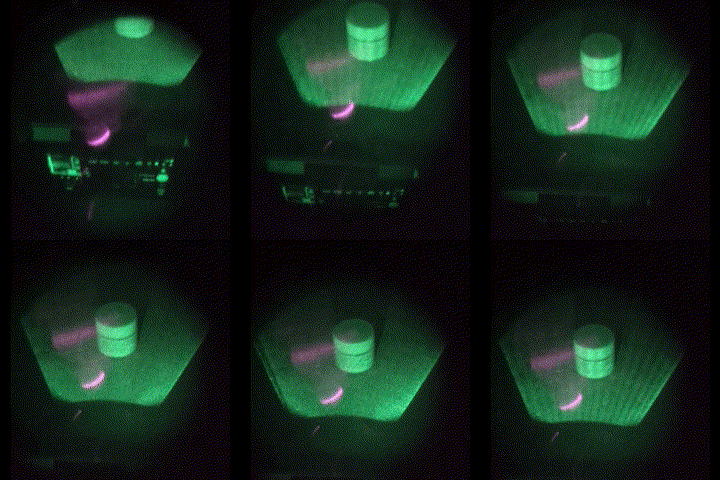
The structured light pattern as seen in IR, projected from the front of the device.
At its core, the MIRACO is a quad-camera IR structured light sensor. A pattern of infrared light is projected, and based on how this known pattern is observed by cameras to land on an object, the object’s topology can be inferred and eventually turned into a 3D model.

This method is sensitive to both exposure and focal distance, but the MIRACO tries to cover these bases by offering near and far focal modes (for small and large objects, respectively) as well as a live preview from which the user can judge scan conditions on the fly. Since the human eye cannot see IR, and most of us lack an intuitive sense of how IR interacts with different materials, this last feature is especially handy.

It’s worth mentioning that the models generated by the MIRACO’s scans are 1:1 with real-world dimensions. Having 3D models scaled to match the object they came from is stupendously useful when it comes to anything related to objects fitting into or around other objects.

Limitations


3D scanning is in general still not a foolproof, point-and-shoot process. As with photography, there is both a skill and an art to getting the best results. An operator has to do their part to give the sensor a good view of everything it needs.

Conditions Have to be Right


  • One needs to scan in an environment that is conducive to good results. Some materials and objects scan easier than others.
  • The scanner is particularly picky about focal length and exposure settings, and can be sensitive to IR interference and reflections. In terms of scanning with the MIRACO, this means the projected IR should be bright enough to illuminate the object fully while not being so bright that it washes out important features.
  • IR isn’t visible, so this isn’t easy to grasp intuitively. Happily, there’s a live display on the screen for both exposure and focus distance. This guides a user to stay within the sweet spots when scanning. Better results come easily with a bit of experience.


Scans Are Only as Good as the Weakest Link


  • The scanner only models what it can see. The holes in this 1-2-3 block for example are incomplete.
    There is a long chain of processes to go from raw sensor data to finished 3D model, and plenty of opportunity for scans to end up less than ideal along the way.
  • 3D scanners like to boast about scan quality with numbers like “0.02 mm accuracy”, but keep in mind that such numbers are best cases from the raw sensor itself.
  • When it comes right down to it, a generated model can only be as good as the underlying point cloud. The point cloud is only as good as the sensor data, and the quality of the sensor data is limited by the object and its environment.
  • Also, a scanner can only scan what it can see. If an internal void or channel isn’t visible from the scanner’s perspective, it won’t be captured in a scan.

It is not hard to get useful results with a little practice, but no one will be pointing a box and pressing a button to effortlessly receive perfect scans down to the last fraction of a millimeter anytime soon. Have realistic expectations about what is achievable.

Basic Workflow of a 3D Scan


Here is the basic process for scanning an object with the MIRACO that should give a good idea of what is involved.

Job Setup and Scan

A highly reflective object like a polished 1-2-3 block is best treated with a matte finish before scanning. Here I used AESUB Blue vanishing scanning spray, which evaporates in about an hour.
A scan begins by configuring the scanner via touchscreen with some basics like choosing Near or Far mode, object type, and whether to track features or markers. Because the scanner only sees a portion of the object at a time, the software stitches together many images from different angles to build the point cloud that is the foundation for everything else. Alignment of these partial scans is done on the fly either by tracking features (unique shapes on the object) or markers (reflective dots that can be applied as stickers, or printed on a mat.)

If an object is excessively glossy or reflective or otherwise difficult for the scanner to see properly, treat it with a surface coating for better results. One option is dusting it with talcum powder, another is a purpose-made 3D scanning spray like AESUB offers.

With object and scanner ready, The MIRACO is pointed like a camera and moved around the object (or the object spun on a turntable) while trying to stay an optimum distance away for best results. The screen gives feedback on this process, including a live display as the device stitches scans together.

Processing Results


Results can be viewed on the device, and generally speaking, if the scan quality is good then the automatic one-click model processing will easily generate a reasonable 3D model. If there’s a problem, one can continue scanning or try again.

Scans can be exported in a variety of formats via USB or over Wi-Fi. If Revopoint’s Revo Scan software is installed, additional editing and processing options are available such as merging multiple separate scans of an object or fine-tuning processing steps.

Using The Resulting Model


The resulting 3D model (a mesh output like .STL, .3MF, or .OBJ) may require additional processing or editing depending on what one wishes to do with it. A mesh editing program like Blender is full-featured, but Microsoft’s 3D Builder is pretty handy for many common tasks when it comes to editing and handling meshes. Most slicer software for 3D printers can handle basic things as well.

Example Scans and Projects


Here are a few scans and prints I did to illustrate the sort of results you should expect with a tool like this. Each of these highlights an important aspect of scanning from the context of part design and 3D printing. The MIRACO is also capable of scanning large objects, though I focus on smaller ones here.

Scanning a Part, Designing a Socket for that Part


This first example demonstrates scanning an object (in this case, a fan) in order to design a socket in another piece that will fit it perfectly.

To do this, I scanned the fan (including attached cable) then manually traced its vertical footprint in CAD. This created a sort of cutout object I could use to make a socket. Objects with more complex shapes can be cut into slices, and each slice traced individually.

I’d like to point out that because the scan is being used as a reference for a CAD sketch, imperfect or otherwise incomplete scans can still be perfectly serviceable as long as the right parts of the object are intact.

Scanning a Hole and Printing a Plug


This is a great way to show the different possibilities and features in action, such as the fact that scans are 1:1 with their real-world subject.

I roughly chopped a hole out of a chunk of packing foam, scanned the hole, then 3D printed a model of the hole to use as a plug. It fits perfectly, and its shape even accurately captured small details I hadn’t noticed.

Custom Ergonomic Grip


3D scanning is a great way to capture objects with complex shapes that cannot be modeled by calipers and squinted eyeballs alone. Wearables and handhelds are one example, and here I demonstrate creating a custom, ergonomic grip.

I use modeling clay to create a custom hand grip, then scan the result. The scan is easily edited in terms of separating into halves, making a central hole for mounting, and 3D printing the result.

Note that I scanned this object in color (which the MIRACO is capable of) but the color scan serves no real function here other than being more visual.

Remaining Challenges


So what’s not new in 3D scanning? The tools and software are certainly better and easier to use, but some things remain challenging.

Some Objects Scan Better Than Others


Scanning is still fussy about how a subject is framed and shot, as well as how reflective it is or isn’t. Taking these into account is part of getting good results.

3D Scanners Output Meshes, Not CAD Models


I’ve explained before how meshes are fundamentally different from what one is usually working with in a CAD program when designing physical parts. “Widen this hole by 0.5 mm” or “increase this angle by 5 degrees” simply aren’t the kind of edits one easily does with a mesh.

Converting a Mesh to a CAD Format Remains Imperfect


Turning an .stl into an .stp (for example) still doesn’t have great options. Tools exist, but the good ones are mostly the domain of non-free CAD suites; the kind with hefty price tags on annual licenses.

The good news is that meshes not only 3D print just fine, they also work easily with basic Boolean operations (merge, subtract, intersect) and can be used as references when modeling a part. Having a scan that is scaled 1:1 to real-world dimensions is a big help.

What’s Your Experience?


3D scanning is still a process that depends on and benefits greatly from a skilled operator, but it’s getting easier to use and easier to experiment with.

Photogrammetry is still an accessible way to do 3D scanning that requires no special hardware, but it lacks immediate feedback, and the resulting 3D model will not be a 1:1 match to real-world dimensions.

Have you found 3D scanning useful for something? What was the best part? The worst? We’d love to hear about it, so share your experience in the comments.


The Privacy Post reshared this.

The Privacy Post ha ricondiviso questo.

The media in this post is not displayed to visitors. To view it, please go to the original post.

Publicly financed software should be available to the public. We should be able to use, study, share, and improve the code that has been developed with public money. Show your support with a 'Public Money? Public Code!' sharepic. #PublicCode #FreeSoftware

sharepic.fsfe.org/#pmpc

The Privacy Post ha ricondiviso questo.

New note by cybersecurity
poliverso.org/display/0477a01e…
La giornata della cyber sicurezza, per rafforzare consapevolezza e protezione cybersecurity360.it/soluzioni-…@Informatica (Italy e non Italy 😁)Per trasformare la mentalità aziendale e creare una cultura di consapevolezza e responsabilità condivisa, può essere utile introdurre la "giornata della cyber sicurezza" finalizzata a sensibilizzare, educare e coinvolgere tutti i dipendenti


La giornata della cyber sicurezza, per rafforzare consapevolezza e protezione


@Informatica (Italy e non Italy 😁)
Per trasformare la mentalità aziendale e creare una cultura di consapevolezza e responsabilità condivisa, può essere utile introdurre la "giornata della cyber sicurezza" finalizzata a sensibilizzare, educare e coinvolgere tutti i dipendenti


The Privacy Post reshared this.

The Privacy Post ha ricondiviso questo.

New note by cybersecurity
poliverso.org/display/0477a01e…
Rappresentante dei lavoratori per la privacy: un ruolo di tutela dei dati dall’IA cybersecurity360.it/legal/priv…@Informatica (Italy e non Italy 😁)Il mondo del lavoro è percorso da dinamiche evolutive continue sotto la spinta dell’innovazione tecnologica e dell’intelligenza artificiale, che può avere influenze non solo sui processi di lavoro ma anche sugli stessi


Rappresentante dei lavoratori per la privacy: un ruolo di tutela dei dati dall’IA


@Informatica (Italy e non Italy 😁)
Il mondo del lavoro è percorso da dinamiche evolutive continue sotto la spinta dell’innovazione tecnologica e dell’intelligenza artificiale, che può avere influenze non solo sui processi di lavoro ma anche sugli stessi


The Privacy Post reshared this.

The Privacy Post ha ricondiviso questo.

New note by cybersecurity
poliverso.org/display/0477a01e…
Trattato globale Onu sulla criminalità informatica: perché è importante cybersecurity360.it/cybersecur…@Informatica (Italy e non Italy 😁)E' una buona notizia che le Nazioni Unite l’8 agosto 2024 hanno definitivamente approvato la bozza del Trattato globale sulla criminalità informatica. Vediamo perché e i contenutiL'articolo Trattato globale Onu sulla criminalità informatica:


Trattato globale Onu sulla criminalità informatica: perché è importante


@Informatica (Italy e non Italy 😁)
E' una buona notizia che le Nazioni Unite l’8 agosto 2024 hanno definitivamente approvato la bozza del Trattato globale sulla criminalità informatica. Vediamo perché e i contenuti
L'articolo Trattato globale Onu sulla criminalità informatica:


The Privacy Post reshared this.

The Privacy Post ha ricondiviso questo.

New note by cybersecurity
poliverso.org/display/0477a01e…
Crittografia post quantistica: i nuovi standard NIST e la Quantum-Key Distribution (QKD) cybersecurity360.it/cultura-cy…@Informatica (Italy e non Italy 😁)Sviluppare algoritmi crittografici in grado di resistere alla computazione quantistica è prioritario per garantire comunicazioni digitali sicure negli anni 2030. In questo scenario, il NIST ha formalizzato i primi tre standard


Crittografia post quantistica: i nuovi standard NIST e la Quantum-Key Distribution (QKD)


@Informatica (Italy e non Italy 😁)
Sviluppare algoritmi crittografici in grado di resistere alla computazione quantistica è prioritario per garantire comunicazioni digitali sicure negli anni 2030. In questo scenario, il NIST ha formalizzato i primi tre standard


The Privacy Post reshared this.

The Privacy Post ha ricondiviso questo.

The media in this post is not displayed to visitors. To view it, please go to the original post.

Nice Retro Displays Set This Watch on Edge
poliverso.org/display/0477a01e…
Nice Retro Displays Set This Watch on Edge A common design language for watches has evolved ever since they first started popping up in the 1500s. Whether worn on the wrist or in a pocket, watches are relatively slim front to back, with the display mounted on the face. That’s understandable given the imperatives of human anatomy. Still, it’s not the only way to arrange things, as this


Nice Retro Displays Set This Watch on Edge

A common design language for watches has evolved ever since they first started popping up in the 1500s. Whether worn on the wrist or in a pocket, watches are relatively slim front to back, with the display mounted on the face. That’s understandable given the imperatives of human anatomy. Still, it’s not the only way to arrange things, as this very cool LED matrix watch with an edge-mounted display demonstrates.

True, the unique form factor of this watch wasn’t really the point of the whole project. Rather, [Vitali]’s design was driven by a couple of things. First off were the extremely cool Hewlett Packard HDSP-2000 displays, with four 5×5 LED matrices shining through the clear cover of a DIP-12 package. Also visible through the cover are the shift registers that drive the matrices, complete with gold bonding wires.

The main attraction for [Vitali], though, was the challenge of working within the limits of the ATtiny85 he chose to run the watch. The MCU’s limited IO made hardware multiplexing necessary, no mean feat given the limited resources and real estate available. He still managed to pack everything in, with the unique edge-mount display coming from the LEDs bridging the space between the two main PCBs. Everything fits into a nice wood veneer case, although we think it looks just fine without it. [Vitali] puts it through its paces in the short video below.

Hats off to [Vitali] for a great-looking project that pushed his limits. We just love these displays, too; of course, it’s not the first time we’ve seen them put to similar use.

hackaday.com/wp-content/upload…


The Privacy Post reshared this.

The Privacy Post ha ricondiviso questo.

Attacchi DDoS Q2 2024: Calma Apparente, Ma Minacce Sempre Più Complesse
poliverso.org/display/0477a01e…
Attacchi DDoS Q2 2024: Calma Apparente, Ma Minacce Sempre Più Complesse Secondo blog.qrator.net/ru/ddos-boty-i… Qrator Labs, nel secondo trimestre del 2024, gli attacchi redhotcyber.com/post/cosa-sono… non hanno portato innovazioni significative nelle modalità o nei volumi di traffico, creando l’impressione di un periodo relativamente tranquillo. Nonostante


Attacchi DDoS Q2 2024: Calma Apparente, Ma Minacce Sempre Più Complesse

Secondo Qrator Labs, nel secondo trimestre del 2024, gli attacchi DDoS non hanno portato innovazioni significative nelle modalità o nei volumi di traffico, creando l’impressione di un periodo relativamente tranquillo. Nonostante questo periodo di calma, tuttavia, si sono registrati diversi incidenti significativi, soprattutto nei settori delle scommesse e della tecnologia finanziaria.

Gli attacchi TCP Flood continuano a occupare una posizione di primo piano nel panorama delle minacce DDoS, confermando il trend degli ultimi tre anni. Nel 2024, nel secondo trimestre, la quota di tali attacchi ammontava al 48,91% di tutti quelli registrati ai livelli L3-L4. Anche gli attacchi multi-vettore, che combinano diversi metodi di influenza, rimangono una minaccia significativa, rappresentando il 17,76% di tutti gli attacchi in questo periodo. Nonostante il leggero calo rispetto al primo trimestre, questa cifra è ancora significativamente superiore a quella del 2023. Tali attacchi sono più difficili da neutralizzare, soprattutto nel caso di infrastrutture non sufficientemente protette o parzialmente protette. Ciò consente agli aggressori di raggiungere i propri obiettivi.

Il secondo trimestre del 2024 ha visto una significativa riduzione della durata media degli attacchi. Dopo i numeri elevati del primo trimestre, la durata media degli attacchi è scesa a 40 minuti. Ciò indica una riduzione del tempo di esposizione ai bersagli, probabilmente a causa di cambiamenti nelle tattiche dell’attaccante o di migliori difese.

Uno degli eventi più brillanti del secondo trimestre è stato un potente attacco DDoS ai bookmaker. L’intensità di questo attacco ha raggiunto i 450,52 Gbit/s, il livello più alto del periodo. Questo attacco è coinciso con il Campionato Europeo di calcio, che molto probabilmente ha causato un aumento del numero di attacchi al settore delle scommesse. Probabilmente gli aggressori stavano cercando di approfittare del crescente interesse per le scommesse in questo momento per causare il massimo danno.

I settori della tecnologia finanziaria, dell’e-commerce e delle telecomunicazioni sono stati i più vulnerabili agli attacchi DDoS nel secondo trimestre del 2024. Il fintech ha rappresentato il 25,35% di tutti gli attacchi, diventando così il settore più attaccato. Al secondo posto si colloca l’e-commerce con una quota del 17,01%, al terzo posto si collocano l’informatica e le telecomunicazioni con il 13,89%. L’attenzione degli aggressori è stata particolarmente rivolta ai bookmaker, che a causa dei summenzionati Campionati europei di calcio sono stati gli attacchi più gravi.

Nel secondo trimestre del 2024 è stata scoperta anche la più grande botnet, composta da 60.500 dispositivi. Questo numero è superiore a quello del trimestre precedente e evidenzia la crescente minaccia rappresentata dalle botnet. Questa botnet è stata utilizzata durante un attacco al settore bancario, il che conferma la serietà e l’attenzione delle azioni degli aggressori. I dispositivi che facevano parte della botnet sono stati rilevati in otto paesi, tra cui Regno Unito, Stati Uniti, Romania, Polonia, Austria, Brasile, Canada e Francia.

L'articolo Attacchi DDoS Q2 2024: Calma Apparente, Ma Minacce Sempre Più Complesse proviene da il blog della sicurezza informatica.


The Privacy Post reshared this.

The Privacy Post ha ricondiviso questo.

New note by cybersecurity
poliverso.org/display/0477a01e…
I browser enterprise per proteggere il nostro lavoro: quali sono e vantaggi offerti cybersecurity360.it/soluzioni-…@Informatica (Italy e non Italy 😁)I cosiddetti browser enterprise sono strumenti di nuova generazione che vanno ben oltre la semplice navigazione web offrendo un livello di sicurezza, produttività e personalizzazione specifico per l’ambiente lavorativo. Ecco


I browser enterprise per proteggere il nostro lavoro: quali sono e vantaggi offerti


@Informatica (Italy e non Italy 😁)
I cosiddetti browser enterprise sono strumenti di nuova generazione che vanno ben oltre la semplice navigazione web offrendo un livello di sicurezza, produttività e personalizzazione specifico per l’ambiente lavorativo. Ecco


The Privacy Post reshared this.

The Privacy Post ha ricondiviso questo.

New note by cybersecurity
poliverso.org/display/0477a01e…
Raven Sentry, così gli USA hanno sfruttato l’AI per predire gli attacchi talebani cybersecurity360.it/cultura-cy…@Informatica (Italy e non Italy 😁)L’America ha realizzato uno strumento di intelligenza artificiale capace di prevedere gli attacchi da parte dei Talebani. L’esperimento “Raven Sentry” ha riscosso un grande successo nel campo dell’OSINT, open source intelligence. Ecco come


Raven Sentry, così gli USA hanno sfruttato l’AI per predire gli attacchi talebani


@Informatica (Italy e non Italy 😁)
L’America ha realizzato uno strumento di intelligenza artificiale capace di prevedere gli attacchi da parte dei Talebani. L’esperimento “Raven Sentry” ha riscosso un grande successo nel campo dell’OSINT, open source intelligence. Ecco come


The Privacy Post reshared this.

The Privacy Post ha ricondiviso questo.

L’Arresto di Pavel Durov e i Muri Digitali. Il bilanciamento tra Governi e Big Tech è cosa da fare
poliverso.org/display/0477a01e…
L’Arresto di Pavel Durov e i Muri Digitali. Il bilanciamento tra Governi e Big Tech è cosa da fare L’arresto di Pavel Durov, il fondatore del servizio di messaggistica Telegram , in Francia nell’agosto 2024 è diventato un catalizzatore per una discussione globale sul ruolo delle aziende tecnologiche nel mondo moderno.Questo evento


L’Arresto di Pavel Durov e i Muri Digitali. Il bilanciamento tra Governi e Big Tech è cosa da fare

L’arresto di Pavel Durov, il fondatore del servizio di messaggistica Telegram , in Francia nell’agosto 2024 è diventato un catalizzatore per una discussione globale sul ruolo delle aziende tecnologiche nel mondo moderno.

Questo evento ha messo in luce una serie di problemi fondamentali che riguardano non solo il settore IT, ma anche le basi dell’interazione tra Stati, imprese e cittadini nell’era digitale.

Stati vs Piattaforme Globali


La storia del confronto di Durov con vari stati è iniziata molto prima del suo arresto in Francia. Nel 2018, il suo rifiuto di fornire all’FSB russo le chiavi di crittografia di Telegram ha segnato l’inizio di un lungo conflitto tra piattaforme IT globali e governi nazionali. Questo conflitto va ben oltre una semplice disputa tecnologica, toccando questioni di sovranità nazionale nello spazio digitale.

Telegram, posizionandosi come difensore della privacy degli utenti, ha in realtà sfidato la tradizionale comprensione dei confini e delle giurisdizioni statali. In un mondo in cui l’informazione è diventata una risorsa chiave, il controllo sui canali della sua distribuzione è diventato uno strumento fondamentale della politica governativa. Tuttavia, le aziende IT globali che operano al di fuori dei confini geografici tradizionali hanno creato una nuova realtà in cui i governi nazionali spesso si trovano impotenti.

L’arresto di Durov può essere visto come un tentativo da parte degli stati di riprendere il controllo sullo spazio digitale. Tuttavia, la mossa dimostra anche i limiti dei metodi tradizionali di pressione sulle aziende tecnologiche in un mondo globalizzato.

Il Diritto Alla Privacy nell’era digitale


Al centro del conflitto tra Durov e le agenzie governative c’è la questione fondamentale del diritto alla privacy nell’era digitale. Telegram, con la sua enfasi sulla crittografia e sulla protezione dei dati degli utenti, è diventato un simbolo della lotta per le libertà digitali.

Questa lotta assume un significato particolare nel contesto del crescente autoritarismo e della maggiore sorveglianza da parte del governo in molti paesi del mondo. Per milioni di utenti, soprattutto in regioni con libertà di parola limitata, i messenger altamente sicuri sono diventati non solo un mezzo di comunicazione, ma anche uno strumento per preservare la libertà personale e politica.

Tuttavia, il desiderio di privacy assoluta deve far fronte a vere e proprie sfide in termini di sicurezza. Gli Stati sostengono la necessità di accedere alle comunicazioni crittografate nella lotta al terrorismo, alla criminalità organizzata e alla protezione dei minori. Ciò crea un difficile dilemma etico: come bilanciare il diritto alla privacy con la garanzia della sicurezza pubblica?

Quali sono le responsabilità delle Big Tech nell’era dei Messenger?


Il caso Durov solleva anche interrogativi sui limiti della responsabilità delle piattaforme tecnologiche per le azioni dei loro utenti. Tradizionalmente, le aziende IT si sono posizionate come intermediari neutrali che forniscono infrastrutture per lo scambio di informazioni. Tuttavia, con la crescente influenza dei social network e della messaggistica istantanea sui processi sociali, questa posizione sta diventando sempre meno stabile.

Le accuse contro Telegram di facilitare attività illegali pongono una domanda difficile per l’industria: in che misura le piattaforme dovrebbero monitorare i contenuti e le interazioni degli utenti? Un controllo eccessivo può portare alla censura e alla violazione dei diritti degli utenti, mentre la sua assenza crea rischi per la sicurezza pubblica.

Questa questione è particolarmente rilevante alla luce della crescente influenza dei social media sui processi politici, della diffusione della disinformazione e della radicalizzazione di alcuni gruppi della popolazione. Le aziende tecnologiche si trovano nella difficile posizione di dover bilanciare le richieste del governo, le aspettative degli utenti e i propri principi etici.

Il futuro delle Comunicazioni Digitali è in Pericolo


L’arresto di Durov e le continue pressioni su Telegram potrebbero avere conseguenze di vasta portata per il futuro delle comunicazioni digitali. Questo caso potrebbe costituire un precedente che determinerà l’interazione tra aziende tecnologiche e Stati negli anni a venire.

I possibili scenari per lo sviluppo della situazione includono:

  1. Rafforzare la regolamentazione governativa del settore IT, che potrebbe portare alla frammentazione di Internet e alla creazione di “Muri digitali” nazionali.
  2. Lo sviluppo di nuove soluzioni tecnologiche che complicano ulteriormente il controllo sulle comunicazioni digitali, ad esempio le reti decentralizzate basate su blockchain.
  3. Formazione di nuovi accordi e standard internazionali che regolano le attività delle piattaforme IT globali e la protezione dei diritti degli utenti.

Il caso di Pavel Durov va ben oltre il destino di una persona o addirittura di un’azienda. Simboleggia le sfide chiave che la società deve affrontare nell’era della globalizzazione digitale: come trovare un equilibrio tra sicurezza nazionale e libertà personale, tra progresso tecnologico e standard etici, tra integrazione globale e sovranità degli Stati.

Se non si riuscirà a trovare un accordo e un bilanciamento tra privacy e libertà, il rischio è di vedere emergere nuove frontiere invalicabili che potrebbero mettere a rischio l’intero pianeta. Oggi, i muri non si costruiscono più con mattoni e calcestruzzo, ma con miliardi e miliardi di bit, creando divisioni digitali che potrebbero isolare nazioni, comunità e individui in modi prima impensabili. L’esito di questo confronto potrebbe determinare non solo il futuro delle comunicazioni digitali, ma anche la natura delle relazioni tra cittadini, aziende e Stati nel 21° secolo.

L'articolo L’Arresto di Pavel Durov e i Muri Digitali. Il bilanciamento tra Governi e Big Tech è cosa da fare proviene da il blog della sicurezza informatica.


The Privacy Post reshared this.

The Privacy Post ha ricondiviso questo.

Digital Forensic: La Scienza che Svela i Segreti Nascosti nei Dati
poliverso.org/display/0477a01e…
Digital Forensic: La Scienza che Svela i Segreti Nascosti nei Dati La Digital Forensic, o informatica forense, è una disciplina che si occupa della raccolta, conservazione, analisi e presentazione di dati digitali in modo da essere utilizzati come prova in un contesto legale. Questo campo è diventato sempre più rilevante con la diffusione di tecnologie digitali in


Digital Forensic: La Scienza che Svela i Segreti Nascosti nei Dati

La Digital Forensic, o informatica forense, è una disciplina che si occupa della raccolta, conservazione, analisi e presentazione di dati digitali in modo da essere utilizzati come prova in un contesto legale. Questo campo è diventato sempre più rilevante con la diffusione di tecnologie digitali in quasi tutti gli aspetti della vita quotidiana e l’aumento di crimini informatici, come frodi, attacchi hacker, e violazioni della privacy.

Definizione e Obiettivi della Digital Forensic


La Digital Forensic può essere definita come un insieme di tecniche e strumenti utilizzati per identificare, conservare, analizzare e documentare informazioni digitali per scopi investigativi e legali. L’obiettivo principale è quello di ottenere prove digitali che siano ammissibili in tribunale. Le prove devono essere raccolte in modo rigoroso per evitare qualsiasi tipo di alterazione, contaminazione o perdita di dati.

Catena di Conservazione dei Dati


Un concetto fondamentale nella Digital Forensic è la Catena di Conservazione dei Dati (o Chain of Custody). Questa catena rappresenta la documentazione continua e ininterrotta che descrive la gestione, la custodia, il controllo e l’analisi dei dati digitali dalla loro acquisizione fino alla loro presentazione in tribunale. Ogni passaggio deve essere registrato dettagliatamente, assicurando che i dati non siano stati alterati durante il processo. Il mantenimento di una catena di conservazione intatta è essenziale per garantire l’integrità delle prove e la loro ammissibilità legale.

Tipi di Analisi Forensi


La Digital Forensic comprende diverse tipologie di analisi, ciascuna focalizzata su differenti fonti e forme di dati digitali. Le principali analisi forensi sono:

  1. Forensic su Computer: Questo tipo di analisi si concentra sull’estrazione e l’analisi di dati da computer e dispositivi di archiviazione, come hard disk, SSD, e chiavette USB. Le tecniche includono il recupero di file cancellati, la decrittazione di dati cifrati, e l’analisi di log di sistema.
  2. Forensic su Reti: In questo ambito, l’analisi si concentra sui dati trasmessi attraverso reti informatiche, come pacchetti di dati, log di rete, e traffico internet. Questo tipo di analisi è spesso utilizzato per indagare su attacchi informatici e accessi non autorizzati.
  3. Mobile Forensic: Si occupa dell’analisi di dispositivi mobili come smartphone e tablet. I dati estratti possono includere messaggi, contatti, registri delle chiamate, geolocalizzazioni e applicazioni installate. È particolarmente utile nelle indagini criminali e nelle controversie legali.
  4. Forensic su Cloud: Questa analisi riguarda la raccolta e l’analisi di dati conservati su servizi cloud, che rappresentano una sfida particolare a causa della natura distribuita e della gestione remota dei dati.
  5. Forensic su Social Media: Focalizzata sull’analisi dei contenuti e delle attività sui social media, questo tipo di indagine è utile per comprendere le comunicazioni e le interazioni digitali in ambito investigativo.


Importanza delle Analisi Forensi


Le analisi forensi digitali sono cruciali per diverse ragioni:

  • Raccolta di Prove: Forniscono prove fondamentali per la risoluzione di casi legali, come frodi finanziarie, cyberstalking, e violazioni di dati.
  • Prevenzione e Sicurezza: Contribuiscono a migliorare la sicurezza delle reti e dei sistemi informatici attraverso l’identificazione di vulnerabilità e la ricostruzione di attacchi.
  • Integrità dei Dati: Garantiscono che le prove digitali rimangano intatte e non alterate, elemento essenziale per il loro utilizzo in tribunale.


Implicazioni Giuridiche


L’uso della Digital Forensic ha profonde implicazioni legali. Per prima cosa, le prove digitali devono essere raccolte seguendo rigide procedure per garantirne l’ammissione in tribunale. Questo include il rispetto della catena di conservazione e l’uso di tecniche di acquisizione di dati che siano accettate dalla comunità legale. Le normative sulla protezione dei dati, come il GDPR in Europa, aggiungono ulteriori strati di complessità, richiedendo che le indagini forensi rispettino la privacy e i diritti degli individui.

Inoltre, gli esperti di Digital Forensic possono essere chiamati a testimoniare come periti in tribunale, fornendo spiegazioni tecniche e interpretazioni dei dati digitali raccolti. La loro capacità di presentare i risultati in modo chiaro e comprensibile è fondamentale per l’efficacia delle indagini.

Conclusione


La Digital Forensic rappresenta un pilastro fondamentale nella lotta contro il crimine informatico e nella risoluzione di controversie legali che coinvolgono dati digitali. Attraverso tecniche avanzate e una rigorosa gestione delle prove, questa disciplina garantisce che le informazioni digitali possano essere utilizzate in modo efficace e legale per proteggere i diritti e la sicurezza degli individui e delle organizzazioni.

L'articolo Digital Forensic: La Scienza che Svela i Segreti Nascosti nei Dati proviene da il blog della sicurezza informatica.


The Privacy Post reshared this.

The Privacy Post ha ricondiviso questo.

Cos’è la Retrieval Augmented Generation
poliverso.org/display/0477a01e…
Cos’è la Retrieval Augmented Generation Nell’articolo “Perché un Large Language Model (LLM) non è un Database?” redhotcyber.com/post/perche-un…, abbiamo esplorato la natura di questa tecnologia, chiarendo come dovrebbe essere utilizzata e, soprattutto, quali sono i suoi limiti. Tra questi, il più significativo è la limitazione della


Cos’è la Retrieval Augmented Generation

Nell’articolo “Perché un Large Language Model (LLM) non è un Database?”, abbiamo esplorato la natura di questa tecnologia, chiarendo come dovrebbe essere utilizzata e, soprattutto, quali sono i suoi limiti. Tra questi, il più significativo è la limitazione della conoscenza del modello a un determinato periodo di tempo, definito dai dati di addestramento (Cutoff Knowledge). Questo comporta il rischio di ricevere risposte obsolete o, in alcuni casi, apparentemente coerenti ma fattualmente errate (le cosiddette allucinazioni).

Una tecnica emergente che consente di superare questi limiti è la Retrieval-Augmented Generation (RAG). La RAG rappresenta un avanzamento significativo nel campo del Natural Language Processing (NLP), combinando le capacità di generazione di linguaggio naturale con quelle di recupero di informazioni. Questa tecnica è particolarmente rilevante in applicazioni che richiedono una comprensione profonda e contestuale del linguaggio e la distribuzione di informazioni affidabili. La RAG si distingue per la sua capacità di migliorare la generazione di testi, incorporando informazioni aggiornate e pertinenti direttamente da database o altre fonti di dati esterne.

A che cosa serve


Nei sistemi di generazione del testo basati su LLM, uno dei principali limiti è la dipendenza esclusiva dal modello generativo, che è vincolato alla conoscenza acquisita durante l’addestramento. Immaginiamo che una grande testata giornalistica voglia mettere a disposizione dei propri lettori un chatbot che fornisce informazioni sugli ultimi eventi relativi, per esempio, alla guerra in Ucraina. Per poter abilitare un LLM a rispondere su fatti di attualità è necessario permettergli di accedere a tali informazioni.

Solitamente le opzioni disponibili sono:

  1. nuovo training completo del modello su una massa consistente di dati aggiornati.
  2. un fine-tuning del modello utilizzando i dati di interesse.
  3. inserire i nuovi dati nel prompt che inviamo al modello.

Le opzioni 1 e 2 sono da scartare in quanto le informazioni che deve fornire il chatbot cambiano ogni giorno. Inoltre, sono operazioni altamente costose e complesse ed è bene sottolineare che training e fine-tuning sono tecniche di addestramento mirate a migliorare la performance del modello nella comprensione e generazione del testo. L’accrescimento della base di conoscenza del modello è solo un effetto collaterale.

Invece, l’opzione 3 potrebbe risolvere il nostro problema, ma dobbiamo considerare il limite superiore della lunghezza della finestra di contesto del modello (in poche parole la lunghezza massima del testo che possiamo fornire in input al modello). Infatti, dovremmo sottomettere al Large Language Model un prompt di lunghezza crescente nel tempo che potrebbe eccedere la lunghezza massima accettata dal modello che abbiamo scelto di utilizzare. Per non parlare poi dei costi di elaborazione di input testuali molto lunghi che, se proiettati su tutti i lettori, diverrebbero altamente significativi.

Come funziona


La metodologia RAG affronta questo problema in modo intelligente integrando un sistema di recupero delle informazioni che fornisce al modello generativo dati aggiornati e rilevanti, limitando così i costi e la lunghezza dell’input testuale inviato.

In pratica, quando un sistema RAG riceve una richiesta dall’utente (user query), il primo passo consiste nel recuperare documenti pertinenti da un database su cui sono stati indicizzati i testi d’interesse; successivamente, questi documenti recuperati (solitamente sono pochi chunk di testo) vengono utilizzati come input per generare una risposta. Questo approccio migliora significativamente l’accuratezza, la pertinenza e la varietà delle risposte, poiché il modello non è più limitato alla conoscenza statica acquisita durante l’addestramento, ma può attingere a informazioni aggiornate e contestualizzate.

Per poter utilizzare un sistema RAG il primo passo è quello di indicizzare i documenti d’interesse in un database vettoriale. Nello specifico, il processo è il seguente:

  1. Ogni documento viene suddiviso in piccole porzioni di testo (chunk) preservando il più possibile la semantica del contenuto.
  2. Per ogni chunk di testo si genera il relativo vettore di embedding tramite l’applicazione di un apposito modello (BERT, GPT, T5, ecc).
  3. Sono memorizzati nel database, per ogni chunk di testo, il contenuto testuale e la sua rappresentazione vettoriale.

La RAG, a questo punto, combina due componenti principali: un sistema di recupero (retriever) e un modello di generazione (generator).

  1. Retriever: Supponendo di aver indicizzato i dati d’interesse in un database vettoriale come descritto sopra, il primo step è il recupero delle informazioni. Data una user query, questa viene trasformata nella sua rappresentazione vettoriale tramite l’uso dello stesso modello di embedding utilizzato per indicizzare la nuova base di conoscenza del database. Il retriever cerca i dati più pertinenti alla user query mediante l’utilizzo della ricerca vettoriale, ovvero ricerca tutti quei chunk di testo che massimizzano la similarità del coseno rispetto alla user query.
  2. Generator: Una volta recuperati i documenti pertinenti, il modello di generazione entra in gioco. Questo componente prende la query originale e i documenti recuperati come input e genera una risposta che combina le informazioni provenienti sia dalla conoscenza pre-addestrata del modello che dai documenti recuperati. Un aspetto cruciale della RAG è che i documenti recuperati non vengono semplicemente “incollati” nella risposta; piuttosto, vengono utilizzati come contesto per guidare la generazione della risposta, arricchendola con dettagli specifici e accurati.

Un tipico esempio di prompt da inviare al modello generativo che comprende sia la user query che i documenti più pertinenti è:
Genera una risposta alla seguente richiesta utente
USER_QUERY
utilizzando i seguenti documenti come knowledge base
RETRIEVED_DOCUMENTS

Conclusioni


L’approccio RAG offre numerosi vantaggi rispetto ai modelli generativi tradizionali. Oltre a fornire risposte più accurate e aggiornate, la tecnologia RAG permette un adattamento a nuovi domini di conoscenza con maggiore rapidità, riducendo la necessità di un costante riaddestramento del modello generativo. Tuttavia, è importante notare che l’efficacia della RAG dipende dalla qualità e dalla pertinenza delle informazioni disponibili nel sistema di recupero. Inoltre, la complessità computazionale di questo approccio può essere maggiore rispetto ai modelli generativi puri, richiedendo risorse più significative in termini di calcolo e memoria.

L'articolo Cos’è la Retrieval Augmented Generation proviene da il blog della sicurezza informatica.


The Privacy Post reshared this.

The Privacy Post ha ricondiviso questo.

Uber fined in Netherlands for sending drivers’ data to the US
poliverso.org/display/0477a01e…
Uber fined in Netherlands for sending drivers’ data to the USRide-hailing platform Uber has been fined 290 million euros in the Netherlands for sending the personal data of European taxi drivers to the United States in violation of EU rules, Dutch data protection watchdog DPA said on Monday (26 August).euractiv.com/section/global-eu…


Uber fined in Netherlands for sending drivers’ data to the US


Ride-hailing platform Uber has been fined 290 million euros in the Netherlands for sending the personal data of European taxi drivers to the United States in violation of EU rules, Dutch data protection watchdog DPA said on Monday (26 August).


euractiv.com/section/global-eu…


The Privacy Post reshared this.

The Privacy Post ha ricondiviso questo.

The media in this post is not displayed to visitors. To view it, please go to the original post.

The Macintosh Plus Sounds Great If You Do Exactly This With It
poliverso.org/display/0477a01e…
The Macintosh Plus Sounds Great If You Do Exactly This With It The Macintosh Plus is not exactly known as particularly relevant in the worlds of chiptune or electronic music more broadly. That’s not to say it can’t do anything that sounds cool, however. As [Action Retro] demonstrates, it’s got some really impressive tricks up its sleeve if you know what you’re doing.


The Macintosh Plus Sounds Great If You Do Exactly This With It

The Macintosh Plus is not exactly known as particularly relevant in the worlds of chiptune or electronic music more broadly. That’s not to say it can’t do anything that sounds cool, however. As [Action Retro] demonstrates, it’s got some really impressive tricks up its sleeve if you know what you’re doing.

The video centers around “Music Mouse”, a piece of software created by Laurie Spiegel for the Macintosh Plus all the way back in 1986. Spiegel saw the Macintosh Plus as a potential instrument for musical expression, with the then-innovative mouse as the key human interface.

[Action Retro] shows off the software, which is able to create rather pleasing little melodies with little more than a swish and a swash across the mousepad. The software makes smart use of scales so you’re not forever dodging around dissonant notes, so it’s quite easy to play something beautiful. He then makes things more interesting by pairing the Macintosh Plus with his favorite guitar pedal—the Old Blood Noise Endeavors Sunlight. It’s a dynamic reverb that really opens up the sonic landscape when paired with the Mac Plus. If you’re looking for a weird avant-garde setup to take on stage at your next noise show, this has to be it.

We’re usually used to seeing Nintendo and Commodore products in the retro computer music space. The Mac makes a nice change. Video after the break.

youtube.com/embed/xxhRR17pqe4?…


The Privacy Post reshared this.

The Privacy Post ha ricondiviso questo.

The media in this post is not displayed to visitors. To view it, please go to the original post.

Robots Collaborate To Localize Themselves Precisely
poliverso.org/display/0477a01e…
Robots Collaborate To Localize Themselves Precisely Here’s the thing about robots. It’s hard for them to figure out where to go or what they should be doing if they don’t know where they are. Giving them some method of localization is key to their usefulness in almost any task you can imagine. To that end, [Guy Elmakis], [Matan Coronel] and [David Zarrouk] have been working on


Robots Collaborate To Localize Themselves Precisely

Here’s the thing about robots. It’s hard for them to figure out where to go or what they should be doing if they don’t know where they are. Giving them some method of localization is key to their usefulness in almost any task you can imagine. To that end, [Guy Elmakis], [Matan Coronel] and [David Zarrouk] have been working on methods for pairs of robots to help each other in this regard.

As per the research paper, the idea is to perform real-time 3D localization between two robots in a given location. The basic idea is that the robots take turns moving. While one robot moves, the other effectively acts as a landmark. The robots are equipped with inertial measurement units and cameras in a turret, which they use to track each other and their own movements. Each robot is equipped with a Raspberry Pi 4 for processing image data and computing positions, and the two robots communicate via Bluetooth to coordinate their efforts.

It’s an interesting technique that could have some real applications in swarm robotics, and in operations in areas where satellite navigation and other typical localization techniques are not practical. If you’re looking for more information, you can find the paper here. We’ve seen some other neat localization techniques for small robots before, too. Video after the break.

youtube.com/embed/GDQG5ltDAM0?…


The Privacy Post reshared this.

The Privacy Post ha ricondiviso questo.

The media in this post is not displayed to visitors. To view it, please go to the original post.

Fast 3D Printing With a Polar, Four Quadrant Custom Machine
poliverso.org/display/0477a01e…
Fast 3D Printing With a Polar, Four Quadrant Custom Machine 3D printing is all well and good for making low numbers of units, so long as they’re small enough to print in a reasonable time, but what if you want to go really big? Does a 35-hour print time sound like a fun time? Would it even make it that long? [Nathan] from Nathan Build Robots didn’t fancy the wait, so


Fast 3D Printing With a Polar, Four Quadrant Custom Machine

3D printing is all well and good for making low numbers of units, so long as they’re small enough to print in a reasonable time, but what if you want to go really big? Does a 35-hour print time sound like a fun time? Would it even make it that long? [Nathan] from Nathan Build Robots didn’t fancy the wait, so they embarked on a project to build a huge parallel 3D printer with four independent print heads. Well, kind of.
Checkout this cool multi-material print with this weird shimmering effect
The premise seems obvious at first glance: More print heads mean more plastic is laid down per unit of time. As long as you can maximise the nozzle diameter and machine speed, it should theoretically be possible to speed things up massively. But it doesn’t work like that. The custom machine they constructed utilises a polar coordinate system, with a rotating bed (the ‘theta’ axis) and four radial axis gantries arranged at 90 degrees to each other. Each gantry has its own independent extruder, so multilateral printing is also an upfront option. [Nathan] laments that the problem with constructing such a beast is not so much the mechanical aspects but the limitations in the current firmwares out in the wild. There are also more complex considerations at the slicing level, so getting the machine to operate as desired is quite a large programming task! Right now, this means that each radial axis must operate in lock-step, meaning objects to be printed must be rotationally symmetric of order four. Another option is to print four copies of a much smaller object in parallel, which has its use cases, but that’s not their end goal. [Nathan] says he was going for a record-breaking 20kg print. However, multiple issues with alignment over height and bed adhesion, not to mention keeping the extruders fed with fresh filament, scuppered this first attempt.

There are some large hurdles regarding alignment. The four corner verticals can be out of alignment with each other in all sorts of ways, causing the radial axis to shift as the Z axis moves. We suspect that’s just one glaring problem, and other more subtle issues are waiting in the wings to cause problems in the future, but we’ll keep an eye on this and see where it goes!

We covered a few projects turning up the 3D printing knobs lately. Here’s a big printer, for big prints. Our thoughts about speed printing and, lastly, a fascinating machine mod that optimises colour swapping by having automated hot end swapping.

youtube.com/embed/9OBDJbKhOGo?…


The Privacy Post reshared this.

The Privacy Post ha ricondiviso questo.

The media in this post is not displayed to visitors. To view it, please go to the original post.

It Turns Out, A PCB Makes A Nice Watch Dial
poliverso.org/display/0477a01e…
It Turns Out, A PCB Makes A Nice Watch Dial Printed circuit boards are typically only something you’d find in a digital watch. However, as [IndoorGeek] demonstrates, you can put them to wonderful use in a classical analog watch, too. They can make the perfect watch dial! https://www.instructables.com/Watch-Dial-Using-Printed-Circuit-Board-PCB-DIY-Mec/Here’s the thing. A printed circuit


It Turns Out, A PCB Makes A Nice Watch Dial

Printed circuit boards are typically only something you’d find in a digital watch. However, as [IndoorGeek] demonstrates, you can put them to wonderful use in a classical analog watch, too. They can make the perfect watch dial!

Here’s the thing. A printed circuit board is fundamentally some fiberglass coated in soldermask, some copper, maybe a layer of gold plating, and with some silk screen on top of that. As we’ve seen a million times, it’s possible to do all kinds of artistic things with PCBs; a watch dial seems almost obvious in retrospect!

[IndoorGeek] steps through using Altium Designer and AutoCAD to layout the watch face. The guide also covers the assembly of the watch face into an actual wrist watch, including the delicate placement of the movement and hands. They note that there are also opportunities to go further—such as introducing LEDs into the watch face given that it is a PCB, after all!

It’s a creative way to make a hardy and accurate watch face, and we’re surprised we haven’t seen more of this sort of thing before. That’s not to say we haven’t seen other kinds of watch hacks, though; for those, there have been many. Video after the break.

youtube.com/embed/PL8o77ZE43k?…


The Privacy Post reshared this.

The Privacy Post ha ricondiviso questo.

New note by cybersecurity
poliverso.org/display/0477a01e…
L’arresto di Pavel Durov edoardolimone.com/2024/08/26/l… (Italy e non Italy 😁)In queste ore stanno circolando molte informazioni sull’arresto del fondatore del servizio di messagistica Telegram: Pavel Durov. Non tutte queste informazioni sono corrette, proviamo a mettere insieme i fatti e […]L'articolo L’arresto di Pavel Durov proviene da Edoardo Limon


L’arresto di Pavel Durov


@Informatica (Italy e non Italy 😁)
In queste ore stanno circolando molte informazioni sull’arresto del fondatore del servizio di messagistica Telegram: Pavel Durov. Non tutte queste informazioni sono corrette, proviamo a mettere insieme i fatti e […]
L'articolo L’arresto di Pavel Durov proviene da Edoardo Limone.

L'articolo proviene dal blog dell'esperto di #Cybersecurity Edoardo


The Privacy Post reshared this.

The Privacy Post ha ricondiviso questo.

The media in this post is not displayed to visitors. To view it, please go to the original post.

Le 12 accuse mosse delle autorità Francesi contro Pavel Durov che aprono importanti riflessioni
poliverso.org/display/0477a01e…
Le 12 accuse mosse delle autorità Francesi contro Pavel Durov che aprono importanti riflessioni Le autorità francesi hanno mosso gravi accuse contro Pavel Durov, fondatore e capo di Telegram.Queste accuse tribunal-de-paris.justice.fr/s… sono il risultato di


Le 12 accuse mosse delle autorità Francesi contro Pavel Durov che aprono importanti riflessioni

Le autorità francesi hanno mosso gravi accuse contro Pavel Durov, fondatore e capo di Telegram.

Queste accuse sono il risultato di un’indagine avviata l’8 luglio 2024 dall’unità criminalità informatica della Procura di Parigi.

Tra le accuse avanzate:

  1. Gestione di una piattaforma online per transazioni illegali da parte di un gruppo criminale organizzato.
  2. Rifiuto di fornire, su richiesta delle autorità autorizzate, informazioni o documenti necessari per effettuare intercettazioni lecite.
  3. Complicità nel possesso di immagini pornografiche che coinvolgono minorenni.
  4. Complicità nella distribuzione, offerta o messa a disposizione di immagini pornografiche di minori.
  5. Assistenza nell’acquisizione, trasporto, stoccaggio, offerta o trasferimento di farmaci.
  6. Facilitare l’offerta, il trasferimento o la fornitura senza basi legali di strumenti, programmi o dati destinati a interferire con il funzionamento di un sistema di trattamento automatizzato dei dati.
  7. Complicità in una frode commessa da un gruppo organizzato.
  8. Associazione a delinquere finalizzata a commettere un delitto o un reato minore punibile con cinque anni di reclusione.
  9. Riciclaggio di denaro da parte della criminalità organizzata.
  10. Fornire servizi di crittografia per garantire la riservatezza senza una dichiarazione corrispondente.
  11. Fornitura di un cripto-equipaggiamento che non svolge esclusivamente funzioni di autenticazione o controllo di integrità, senza preventiva applicazione.
  12. Importazione di un dispositivo crittografico che non svolge esclusivamente funzioni di autenticazione o controllo di integrità senza preventiva dichiarazione.


Secondo la procura di Parigi, Telegram non garantisce il livello adeguato di moderazione e non adotta misure per reprimere il traffico di droga e la distribuzione di contenuti che coinvolgono bambini sulla piattaforma.

Durov è anche accusato di essersi rifiutato di fornire alle autorità i dati richiesti o i documenti necessari per condurre e utilizzare le intercettazioni autorizzate dalla legge.

Questa posizione è dovuta ai frequenti rifiuti di Telegram di collaborare con le autorità di vari paesi, incluso il rifiuto di trasferire informazioni sugli autori di reato.

È stato riferito che Durov potrebbe rimanere in custodia fino al 28 agosto, a causa delle peculiarità della procedura applicata ai reati legati alla criminalità organizzata.

L’incidente ha attirato l’attenzione delle autorità francesi ai massimi livelli. Il presidente francese Emmanuel Macron ha commentato la situazione, confutando qualsiasi suggerimento secondo cui l’arresto di Durov fosse legato a pressioni politiche o ad eventuali decisioni politiche.

La natura degli eventi che circondano Telegram mette in discussione l’universalità della sua politica sulla privacy. Rimangono aperte le domande su come il messenger risponderà alle richieste delle forze dell’ordine di diversi paesi con diversi sistemi giuridici. Queste accuse sollevano seri interrogativi sul futuro di Telegram, sulle sue politiche sulla privacy e sulla sua capacità di rispettare le leggi di vari paesi.

L'articolo Le 12 accuse mosse delle autorità Francesi contro Pavel Durov che aprono importanti riflessioni proviene da il blog della sicurezza informatica.


The Privacy Post ha ricondiviso questo.

The media in this post is not displayed to visitors. To view it, please go to the original post.

Experimenting with Interference on Thin Layers
poliverso.org/display/0477a01e…
Experimenting with Interference on Thin Layers [Stoppi] has taken on a fascinating project involving the interference of thin layers stoppi-homemade-physics.de/int…, a phenomenon often observed in everyday life but rarely explored in such depth. This project delves into the principles of interference, particularly focusing on how light waves interact


Experimenting with Interference on Thin Layers

Setup of a small lightbulb passing light through a thin film

[Stoppi] has taken on a fascinating project involving the interference of thin layers, a phenomenon often observed in everyday life but rarely explored in such depth. This project delves into the principles of interference, particularly focusing on how light waves interact with very thin films, like those seen in soap bubbles or oil slicks. The post is in German, but you can easily translate it using online tools.

Interference occurs when waves overlap, either reinforcing each other (constructive interference) or canceling each other out (destructive interference). In this project, [Stoppi] specifically examines how light behaves when passing through thin layers of air trapped between semi-transparent mirrors. When light waves reflect off these mirrors, the difference in path length leads to interference patterns that depend on the layer’s thickness and the wavelength of the light.

To visualize this, [Stoppi] used an interferometer made from semi-transparent mirrors and illuminated it with a bulb to ensure a continuous spectrum of light. By analyzing the transmitted light spectrum with a homemade spectrometer, he observed clear peaks corresponding to specific wavelengths that could pass through the interferometer. These experimental results align well with theoretical predictions, confirming the effectiveness of the setup.

If you like pretty patterns, soap bubbles are definitely good for several experiments. Don’t forget: pictures or it didn’t happen.

youtube.com/embed/30xnIkABF4o?…


The Privacy Post reshared this.

The Privacy Post ha ricondiviso questo.

Macron says Telegram CEO’s arrest has nothing to do with free speech
poliverso.org/display/0477a01e…
Macron says Telegram CEO’s arrest has nothing to do with free speechThe arrest of Telegram CEO Pavel Durov in Paris has nothing to do with restricting free speech, French President Emmanuel Macron said.euractiv.com/section/platforms…


Macron says Telegram CEO’s arrest has nothing to do with free speech


The arrest of Telegram CEO Pavel Durov in Paris has nothing to do with restricting free speech, French President Emmanuel Macron said.


euractiv.com/section/platforms…


The Privacy Post reshared this.

The Privacy Post ha ricondiviso questo.

The media in this post is not displayed to visitors. To view it, please go to the original post.

CrowdStrike smaschera USDoD! L’hacker Criminale che colpì la piattaforma InfraGard dell’FBI
poliverso.org/display/0477a01e…
CrowdStrike smaschera USDoD! L’hacker Criminale che colpì la piattaforma InfraGard dell’FBI L’hacker dell’USDoD ha rivelato la sua identità e ha affermato di essere Luan G., 33 anni, dello stato di Minas Gerais in Brasile. USDoD (EquationCorp) è noto per aver divulgato dati pubblici nazionali (NPD) e pubblicato online oltre 3,2 miliardi di


CrowdStrike smaschera USDoD! L’hacker Criminale che colpì la piattaforma InfraGard dell’FBI

L’hacker dell’USDoD ha rivelato la sua identità e ha affermato di essere Luan G., 33 anni, dello stato di Minas Gerais in Brasile. USDoD (EquationCorp) è noto per aver divulgato dati pubblici nazionali (NPD) e pubblicato online oltre 3,2 miliardi di numeri di previdenza sociale.

Durante un’intervista con Hackread, l’hacker ha confermato che la sua identità è stata rivelata da CrowdStrike. Ricordiamo che a luglio l’USDoD ha annunciato il furto di un elenco interno completo di minacce dal database CrowdStrike. Meno di un mese dopo, CrowdStrike è riuscito a rilevare l’identità dell’hacker.

USDoD dichiara che è arrivato il momento di porre fine al cybercrime


L’USDoD è stato coinvolto anche nell’hacking della piattaforma di sicurezza InfraGard dell’FBI, che ha esposto le informazioni personali di 87.000 utenti. Inoltre, l’hacker è stato coinvolto in altre importanti fughe di dati e incidenti.

Lo stesso USDoD ha dichiarato la sua intenzione di cambiare vita e porre fine alla criminalità informatica per “fare qualcosa di positivo per il Brasile”. L’hacker ha ammesso che era giunto il momento di assumersi la responsabilità delle sue azioni: “Congratulazioni a CrowdStrike per avermi smascherato, anche se Intel421 Plus e diverse altre società lo avevano già fatto prima dell’hacking di InfraGard. Voglio ringraziarti, è ora di ammettere che ho perso ed è ora di abbandonare il gioco. Sì, è Luan che parla. Non scapperò, sono in Brasile, nella stessa città dove sono nato. Sono una risorsa preziosa e forse presto ne parlerò con i responsabili, ma tutti sapranno che dietro lo pseudonimo USDoD si nasconde una persona comune. Non posso vivere una doppia vita, ed è ora di assumermi la responsabilità delle mie azioni, non importa quanto caro possa costarmi.”

Gli esperti del settore hanno espresso dubbi sulla sincerità delle intenzioni dell’hacker di porre fine alle attività criminali. Secondo gli esperti, se un hacker volesse davvero iniziare una nuova vita, potrebbe costituirsi presso l’ambasciata più vicina, stringere un accordo redditizio con il sistema giudiziario e pochi anni dopo diventare uno specialista rispettato della sicurezza informatica. Si suggerisce inoltre che l’intervista possa far parte di una strategia di disinformazione volta a distogliere l’attenzione dai recenti attacchi.

CrowdStrike ha descritto il proprio lavoro in un rapporto ottenuto da TecMundo da una fonte anonima. Gli specialisti avevano a loro disposizione documenti fiscali, indirizzi email, domini registrati, indirizzi IP, account di social media, numero di telefono e informazioni sulla città di residenza di Luan. Tuttavia, non vengono divulgati dati più precisi per evitare la completa fuga dell’identità del criminale.

Chi è Luan B.G.


Luan B.G. ha una lunga storia nel campo dell’hacktivismo, iniziata nel 2017, e successivamente le sue attività sono passate alla fase più seria del crimine informatico. Gli investigatori sono riusciti a identificare Luan grazie all’utilizzo dello stesso indirizzo email per registrarsi su diversi forum e social network, cosa che ha permesso di tracciare le sue attività dal 2017 al 2022.

Lo stesso indirizzo è stato utilizzato per creare account su GitHub e registrare domini associati a progetti di armi informatiche. Sulla base dei dati raccolti sono stati rinvenuti altri profili sui social network.

Il profilo sui social media di Luan

È interessante notare che Luan B.G. non ha nascosto la sua identità e ha persino rilasciato un’intervista nel 2023, in cui ha affermato di avere la doppia cittadinanza: brasiliana e portoghese, e ha anche menzionato che viveva in Spagna. Tuttavia, Luan in seguito affermò che tutte le informazioni disponibili al pubblico sulla sua identità erano informazioni errate.

Inoltre, una fuga di notizie su BreachForums nel luglio 2024, quando gli indirizzi IP degli utenti furono esposti, contribuì a rivelare che Luan stava utilizzando IPv4 dinamico e diversi IPv6 appartenenti a un provider Internet brasiliano a Minas Gerais.

Tutti i dati raccolti sono stati ora trasferiti alle autorità competenti. CrowdStrike continua a monitorare l’attività dell’USDoD mentre il gruppo continua a dedicarsi allo spionaggio informatico e al ricatto offrendo in vendita dati rubati.

Ma potrebbe essere una mossa astuta dell’hacker criminale


Secondo gli esperti, la pubblicazione di informazioni sull’identità di Luan difficilmente influenzerà le sue attività a breve termine, poiché probabilmente negherà il suo coinvolgimento o dirà di aver deliberatamente ingannato i ricercatori. I ricercatori sottolineano che il desiderio di Luan di essere riconosciuto nelle comunità degli hacktivisti e del crimine informatico probabilmente significa che non ha intenzione di interrompere presto le sue attività.

La divulgazione dell’identità dell’hacker dell’USDoD come cittadino brasiliano ha implicazioni significative dato il suo coinvolgimento in violazioni di dati di alto profilo. Secondo il trattato di estradizione tra Stati Uniti e Brasile, le autorità americane possono richiedere la sua estradizione per far fronte alle accuse di crimini informatici. Tuttavia, il Brasile spesso non estrada i suoi cittadini, il che potrebbe complicare gli sforzi per consegnare l’hacker alla giustizia negli Stati Uniti. Se l’estradizione venisse negata, l’hacker potrebbe comunque essere punito secondo le leggi brasiliane sulla criminalità informatica.

La determinazione di Luan G. nel voler cambiare la sua vita e dare un contributo positivo al Brasile potrebbe anche influenzare l’approccio delle autorità al suo caso, magari concentrandosi sulla riabilitazione piuttosto che sulla dura punizione.

L'articolo CrowdStrike smaschera USDoD! L’hacker Criminale che colpì la piattaforma InfraGard dell’FBI proviene da il blog della sicurezza informatica.


The Privacy Post reshared this.