The Privacy Post ha ricondiviso questo.

Trattato ONU sulla criminalità informatica: verso una sorveglianza di massa?
poliverso.org/display/0477a01e…
Trattato ONU sulla criminalità informatica: verso una sorveglianza di massa? Gli attivisti per i diritti umani hanno sollevato serie preoccupazioni sull’attuale versione della bozza del Trattato delle Nazioni Unite sulla criminalità informatica. Si prevede che i prossimi negoziati unodc.org/unodc/en/cybercrime/…


Trattato ONU sulla criminalità informatica: verso una sorveglianza di massa?

Gli attivisti per i diritti umani hanno sollevato serie preoccupazioni sull’attuale versione della bozza del Trattato delle Nazioni Unite sulla criminalità informatica. Si prevede che i prossimi negoziati approveranno il documento che, secondo gli attivisti, aumenterà la sorveglianza e la criminalizzazione di giornalisti, difensori dei diritti umani, bambini e rappresentanti della società civile in tutto il mondo. I rappresentanti delle organizzazioni per i diritti umani hanno espresso la loro opinione a The Record Media.

Human Rights Watch (HRW) ha dichiarato che negli ultimi anni molti Paesi del Medio Oriente e del Nord Africa hanno introdotto leggi sulla criminalità informatica che vanno oltre la protezione dei sistemi informatici e mirano a soffocare il dissenso, i difensori dei diritti umani e i giornalisti, minacciando la libertà di espressione.

La bozza del Trattato delle Nazioni Unite sulla criminalità informatica è allarmante per il suo ampio campo di applicazione e per la mancanza di garanzie sui diritti umani per coloro che sfidano i governi repressivi. Preoccupa anche la possibile maggiore emarginazione delle donne e delle minoranze sessuali.

Nella sua forma attuale, lo strumento potrebbe facilitare la riscrittura delle leggi penali in tutto il mondo, creando nuovi e più ampi poteri per la polizia, rendendolo di fatto uno strumento multilaterale senza precedenti per la sorveglianza transfrontaliera senza sufficienti garanzie per i diritti umani. Invece di affrontare gli attacchi alle reti e ai dati informatici, il trattato modifica la definizione di crimine informatico per includere i reati commessi utilizzando le tecnologie di comunicazione internazionali, il che, secondo HRW, faciliterà e intensificherà la repressione nazionale.

Durante una tavola rotonda virtuale organizzata dalla Electronic Frontier Foundation, un rappresentante di HRW e altri sostenitori dei diritti umani hanno sollevato preoccupazioni sul trattato. Access Now osserva che molti Paesi preferiscono “un cattivo trattato piuttosto che nessun trattato”, poiché cercano di ottenere una maggiore cooperazione internazionale sulle questioni relative alla criminalità informatica nell’ambito delle Nazioni Unite.

Ci sono disaccordi tra i Paesi coinvolti nella negoziazione di un nuovo trattato ONU. La Cina, ad esempio, ha cercato di ampliare la definizione di crimine informatico includendo la “diffusione di false informazioni” su Internet. Sebbene questa proposta sia stata eliminata dalla bozza, secondo gli attivisti per i diritti umani i problemi rimangono.

Il Centro per gli studi strategici e internazionali (CSIS) ha definito esagerate le preoccupazioni degli attivisti, osservando che il trattato non riguarda “la sorveglianza globale, ma la criminalità informatica, e riflette accordi in vigore da decenni”. Secondo il CSIS, gli oppositori del trattato sostengono in realtà la criminalità.

Gli attivisti contestano questo punto di vista. Gli attivisti per i diritti umani sottolineano che il trattato rappresenta una seria minaccia alla libertà di parola e alla privacy, oltre che un potente strumento per i governi repressivi. Un rappresentante della Electronic Frontier Foundation (EFF) ha sottolineato che il documento costringerebbe le aziende private a diventare agenti governativi, monitorando e intercettando dati in tempo reale all’insaputa degli utenti.

Il trattato richiede inoltre ai fornitori di servizi di rimanere in silenzio, privando i cittadini della possibilità di sapere quando i loro dati vengono tracciati e utilizzati. L’EFF ritiene che il documento riporti all’era “pre-Snowden”, quando il diritto alla privacy nello spazio digitale non era ancora riconosciuto come fondamentale.

Alla domanda sulla probabilità che il trattato venga adottato nella sua forma attuale, gli attivisti non hanno dato una risposta diretta, ma hanno sottolineato la necessità di fare pressione sugli Stati parte dei negoziati per affrontare i rischi associati alla bozza di trattato. Secondo HRW, i rischi sono ben documentati ed è necessaria un’azione urgente per impedire l’adozione del trattato nella sua forma attuale.

L'articolo Trattato ONU sulla criminalità informatica: verso una sorveglianza di massa? proviene da il blog della sicurezza informatica.


reshared this

The Privacy Post ha ricondiviso questo.

The media in this post is not displayed to visitors. To view it, please go to the original post.

Linux Fu: Failing Pipelines
poliverso.org/display/0477a01e…
Linux Fu: Failing Pipelines Bash is great for automating little tasks, but sometimes a little script you think will take a minute to write turns into a half hour or more. This is the story of one of those half-hour scripts.I have too many 3D printers. In particular, I have three that are almost — but not exactly — the same, so each one has a slightly different build process when I want to update t


Linux Fu: Failing Pipelines

Bash is great for automating little tasks, but sometimes a little script you think will take a minute to write turns into a half hour or more. This is the story of one of those half-hour scripts.

I have too many 3D printers. In particular, I have three that are almost — but not exactly — the same, so each one has a slightly different build process when I want to update their firmware. In all fairness, one of those printers is heading out the door soon, but I’ll probably still wind up building firmware images for it.

My initial process was painful. I have a special directory with the four files needed to configure Marlin for each machine. I copy all four files and ask PlatformIO to perform the build. Usually, it succeeds and gives me a file that looks like firmware-yyyyddmmhhmm.bin or something like that.

The problem is that the build process doesn’t know which of the three machines is the target: Sulu, Checkov, or Fraiser. (Long story.) So, I manually look at the file name, copy it, and rename it. Of course, this is an error-prone process, and I’m basically lazy, so I decided to write a script to do it. I figured it would take just a minute to bundle up all the steps. I was wrong.

First Attempt


Copying the files to the right place was a piece of cake. I did check to make sure they existed. The problem came from launching PlatformIO, seeing the result on the screen, and being able to parse the filename out of the stream.

I thought it would be easy:
FN=$(pio run | grep '^Renamed to' | cut -d ' ' -f 3 )
That should do the build and leave $FN with the name of the file I need to rename and process. It does, but there are two problems. You can’t see what’s happening, and you can’t tell when the build fails.

Easy Problem First


The pipeline consumes the build’s output. Of course, a tee command can manage that, right? Well, sort of. The problem is that the tee command sends things to a file and standard out, but the standard out, in this case, is the pipe. Sure, I could tee the output to a temporary file and then process that file later, but that’s messy.

So, I resorted to a Bash-specific feature:
FN=$(pio run | tee /dev/fd/2 | grep ...
This puts the output on my screen but still sends it down the pipe, too. Sure, there are cases when this isn’t a good idea, and it isn’t very portable, but for my own use, it works just fine, and I’m OK with that. There are other ways to do this, like using /dev/tty if you know you are only using the script from a terminal.

Harder Problem


The bigger problem is that if the build fails — and it might — there isn’t a good way to fail the whole pipeline. By default, the pipe’s return value is the last return value, and cut is happy to report success as long as it runs.

There are a number of possible answers. Again, I could have resorted to a temporary file. However, I decided to set a bash option to cause any failing item in a pipe to fail the whole pipe immediately:
set -o pipefail
So now, in part, my script looks like this:
set -o pipefail
FN=$(pio run | tee /dev/fd/2 | grep '^Renamed to' | cut -d ' ' -f 3 )
if [ $? -eq 0 ]
then
echo Success...
cp ".pio/build/STM32F103RC_creality/$FN" "configurations/$1"
echo Result: "configurations/$1/$FN"
else
echo Build failed
exit 3
fi

Final Analysis


Is it brain surgery? Nope. But it is one of those bumps in the road in what should have been a five-minute exercise. Maybe next time you run into it, you’ll save yourself at least 25 minutes. This gets the job done, but it isn’t a stellar example of bash programming. I would hate to run it through a lint-like checker.


The Privacy Post reshared this.

The Privacy Post ha ricondiviso questo.

The media in this post is not displayed to visitors. To view it, please go to the original post.

L’Attore Malevolo USDoD afferma di aver acquisito l’elenco dei Threat Actors da CrowdStrike
poliverso.org/display/0477a01e…
L’Attore Malevolo USDoD afferma di aver acquisito l’elenco dei Threat Actors da CrowdStrike Il 24 luglio 2024 (Riporta crowdstrike.com/blog/hacktivis… sul suo blog), il Threat Actors USDoD ha affermato sul forum underground BreachForums di aver fatto trapelare “l’intero elenco


L’Attore Malevolo USDoD afferma di aver acquisito l’elenco dei Threat Actors da CrowdStrike

Il 24 luglio 2024 (Riporta CrowdStrike sul suo blog), il Threat Actors USDoD ha affermato sul forum underground BreachForums di aver fatto trapelare “l’intero elenco degli attori della minaccia” di CrowdStrike.

L’attore ha anche affermato di aver ottenuto “l’intero elenco IOC” di CrowdStrike e di averlo rilasciato. Nell’annuncio, USDoD ha fornito un collegamento per scaricare il presunto elenco degli attori della minaccia e ha fornito un campione di campi dati, probabilmente nel tentativo di corroborare le proprie affermazioni.

I dati campione acquisiti dall’attore della minaccia includevano un file CSV che conteneva campi per alias dell’avversario, stato dell’avversario, ultime date attive per ogni avversario, regione/paese di origine dell’avversario, numero di settori presi di mira, numero di paesi presi di mira, tipo di attore e motivazione. In un esempio, il campo alias dell’avversario conteneva gli stessi alias della piattaforma Falcon ma elencati in un ordine diverso.

I dati campione contenevano dati con date “LastActive” fino a giugno 2024; tuttavia, le ultime date attive del portale Falcon per alcuni degli attori citati risalgono a luglio 2024, il che suggerisce quando l’attore ha potenzialmente ottenuto le informazioni.

USDoD ha anche affermato nel suo post di avere “due grandi database da una compagnia petrolifera e da un’industria farmaceutica (non dagli USA)”. Non era chiaro se il post collegasse le affermazioni di aver violato una compagnia petrolifera e un’azienda farmaceutica con la loro presunta acquisizione dei dati di CrowdStrike.

Almeno dal 2020, USDoD ha condotto sia hacktivism che violazioni motivate finanziariamente, utilizzando principalmente tattiche di ingegneria sociale per accedere a dati sensibili. Negli ultimi due anni, l’attore si è concentrato su campagne di intrusione mirate di alto profilo. Inoltre, da gennaio 2024, l’attore della minaccia ha cercato di diversificare ed espandere le proprie attività informatiche, passando dalla sola conduzione di operazioni informatiche all’amministrazione di forum eCrime.

Inoltre il criminale informatico riporta che è in possesso anche dei 250 milioni di IoC di CrowdStrike che rilascerà presto, anche se occorre verificare l’attendibilità di queste informazioni.

L'articolo L’Attore Malevolo USDoD afferma di aver acquisito l’elenco dei Threat Actors da CrowdStrike proviene da il blog della sicurezza informatica.


The Privacy Post reshared this.

The Privacy Post ha ricondiviso questo.

The media in this post is not displayed to visitors. To view it, please go to the original post.

A Simple Liquid Level Indicator With a Single IC
poliverso.org/display/0477a01e…
A Simple Liquid Level Indicator With a Single IC Often, the only liquid level indicator you need is your eyes, such as when looking at your cold beverage on a summer’s day. Other times, though, it’s useful to have some kind of indicator light that can tell you the same. [Hulk] shows us how to build one for a water tank using a single IC and some cheap hackaday.io/pro


A Simple Liquid Level Indicator With a Single IC

Often, the only liquid level indicator you need is your eyes, such as when looking at your cold beverage on a summer’s day. Other times, though, it’s useful to have some kind of indicator light that can tell you the same. [Hulk] shows us how to build one for a water tank using a single IC and some cheap supporting components.

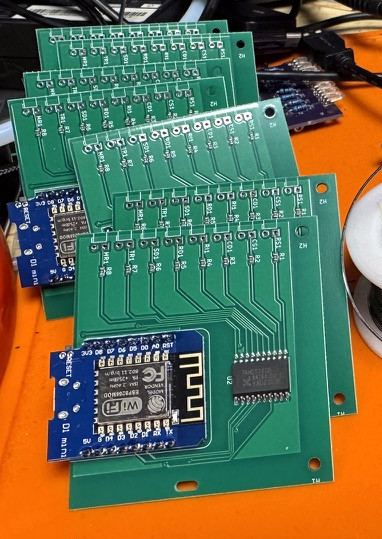
If you’re unfamiliar with the ULN2003, it’s a simple Darlington transistor array with seven transistors inside. It can thus be used to switch seven LEDs without a lot of trouble. In this case, green, yellow, and red LEDs were hooked up to the outputs of the transistors in the ULN2003. Meanwhile, the base of each transistor is connected to an electrode placed at a different height in the water tank. A further positive electrode is placed in the tank connected to 12 volts. As the water raises to the height of each electrode, current flow from the base to the positive electrode switches the corresponding transistor on, and the LED in turn. Thus, you have a useful liquid level indicator with seven distinct output levels.

It’s a neat build that might prove useful if you need to check levels in a big opaque tank at a glance. Just note that it might need some maintenance over time, as the electrodes are unlikely to remain completely corrosion free if left in water. We’ve seen some other great uses of the ULN2003 before, too. Video after the break.

youtube.com/embed/6r3ponugs64?…


The Privacy Post reshared this.

The Privacy Post ha ricondiviso questo.

The media in this post is not displayed to visitors. To view it, please go to the original post.

End of an Era: Sony Cuts Production Of Writable Optical Media
poliverso.org/display/0477a01e…
End of an Era: Sony Cuts Production Of Writable Optical Media The 1990s saw a revolution occur, launched by the CD burner. As prices of writeable media and drives dropped, consumers rushed to duplicate games, create their own mix CDs, and backup their data on optical disc. It was a halcyon time.Fast forward to today, and we’re very much on downward curve when it comes


End of an Era: Sony Cuts Production Of Writable Optical Media

The 1990s saw a revolution occur, launched by the CD burner. As prices of writeable media and drives dropped, consumers rushed to duplicate games, create their own mix CDs, and backup their data on optical disc. It was a halcyon time.

Fast forward to today, and we’re very much on downward curve when it comes to optical media use. Amidst ever-declining consumer interest, Sony has announced it will cut production of writeable optical media. Let’s examine what’s going on, and explore the near future for writable optical discs.

Sony’s End

These will soon be a rarity.
Sony’s plant in Tagaze, Japan was the home of its optical disc manufacturing operation. The Japanese company has announced there will be 250 jobs lost out of 670 at the plant due to the end of writeable media production. The decision is being made to curtail production across CD, DVD, and Blu-Ray lines.

Notably, though, it’s believed this will not affect the production of pre-recorded pressed media, at least in the short term. However, reports in the Japanese media suggest the industrial giant will “gradually cease production of optical disc storage media,” including Blu-Ray products.

Regardless, for now, you can expect music, games, and movies to continue to be released on physical media. Local stores are still full of DVDs and Blu-Rays, and you can even get Taylor Swift and Doja Cat albums on CD if your car still has a CD player.

Plus, the big stores still carry titles for those gamers still hanging on to the disc-drive versions of modern consoles. Still, ask the average PC gamer the last time they handled an optical disc and they’ll probably say “What’s an optical disc?” That market moved on a long time ago.

The Disc World


While Sony is leaving the industry, other manufacturers remain in the market. Consolidation means that many brands are all manufactured by the same handful of companies. Notably, Taiyo Yuden, a company that worked on the invention of the recordable CD, checked out of the market in 2015. Mitsubishi and Verbatim went the same way. All three ended up sold to Taiwanese firm CMC Magnetics, which produces discs commonly rebranded as Memorex, Imation, HP, TDK, and others. The other remaining major player is Ritek. Both companies produce various lines of CD-Rs, DVD-Rs and DVD+Rs, and BD-Rs and BD-REs.
HP’s BD-R XLs are really made by CMC Magnetics. Credit: CMC
You’ve probably got one question still itching away in your brain. Who is actually using optical media in this day and age? Most consumer use cases have dwindled to almost nothing. Few of us burn CDs for our cars anymore, now that aux ports, Bluetooth, and USB ports are all readily available. Similarly, moving data via sneakernet is more easily done by simple flash drives or larger portable hard drives, without the usual write-once limitation.

As it turns out, though, optical media remains a great solution for long-time archival use—if you get the right discs. Cheap CD-Rs and DVD-Rs are still a terrible choice, of course. However, so-called M-Discs are designed specifically for this task. Typically available in DVD and Blu-Ray formats, they’re so-called for their ability to store data for “up to 1000 years” according to some manufacturers. They achieve greater longevity through the use of a highly-stable inorganic glassy carbon layer which stores the disc’s data. This is far more stable than the organic write layers used in most writeable optical media. It’s believed this material could last for up to 10,000 years if stored in highly stable conditions. Sadly, the polycarbonate layer on top is only expected to survive for 1000 years at best.

When it comes to high-capacity cold digital storage, it’s hard to go past optical media. Tapes can compete on cost and data density, but falter in longevity. Where an M-Disc might last 100 or 1000 years, a tape might last 30 years at best. Recent users include members of Reddit’s r/DataHoarder community and state government authorities. Basically, if you’ve got a lot of data you need to keep for a long time, optical might appeal to you.
M-Discs are still desirable for long-term storage, in DVD and Blu-Ray formats. Credit: Ritek
There are also some hopes that optical media could storm back on to the scene in a big way in future. Researchers in Shanghai have recently determined a way to construct an optical disk with that could store on the order of 200 TB, as per The Register. This would be achieved through the use of a nanoscale three-dimensional structure to reach never-before-seen storage densities. At such high capacity, the discs could be competitive with hard disks for certain applications. However, it’s early days yet, and limitations remain, including write speed. It’s not much good having a 200 TB disc if it takes forever to read and write the thing.

While optical media is no longer the mainstream darling it once was, it’s not dead yet. And hey, if vinyl and cassettes can come back in a big way, who is to say where the CD market will be in ten years? Human culture is a strange and wonderful thing.


The Privacy Post ha ricondiviso questo.

The media in this post is not displayed to visitors. To view it, please go to the original post.

Retro Inspired Cyberdeck Scrolls Around Cyberspace
poliverso.org/display/0477a01e…
Retro Inspired Cyberdeck Scrolls Around Cyberspace It’s difficult to nail down exactly what counts as a “real” cyberdeck in this brave new era of bespoke computing. But at the minimum, most in the community would agree that a proper deck should have a non-traditional form factor, and be designed to meet the unique needs of the builder. If you’re looking for a fantastic example of


Retro Inspired Cyberdeck Scrolls Around Cyberspace

It’s difficult to nail down exactly what counts as a “real” cyberdeck in this brave new era of bespoke computing. But at the minimum, most in the community would agree that a proper deck should have a non-traditional form factor, and be designed to meet the unique needs of the builder. If you’re looking for a fantastic example of both concepts, check out the Cyberdore 2064 from [Tommi L].

At first glance the 3D printed enclosure of the Cyberdore looks a bit like a Speak & Spell, but it’s really more of an amalgamation of everything that made 1980s computers so unique. You’ve got the vents, the chunky switches, the undersized display, and of course, the handle. The case might have been extruded in 2024, but it’s doing a fantastic impression of a piece of tech from 40 years ago.

One of the key external features of the Cyberdore 2064 is the side-mounted rotary encoder that allows for smoothly scrolling through online feeds (such as your favorite hardware hacking site) or long documents. The cheap and easy to work with KY-040 encoder has been converted to a USB input device by way of a Pi Pico, and has been paired with an over-sized 3D printed knob that really makes this build stand out — not only visually, but in terms of usability. These cyberdeck builds often rely on touch screens for input, but we always appreciate a physical interface.

Under the hood you’ve got a Raspberry Pi Zero and an 18650 cell to keep the whole thing running while on the go. Though the Zero is certainly showing its age compared to the more modern variants of the Pi, for a device like this, raw computing power isn’t really the driving concern. A mechanical keyboard usually rounds out these cyberdeck builds, but in this case, [Tommi] went with a fairly common Rii 518BT portable board that’s been skillfully integrated into the front of the Cyberdore.

All of the STL files necessary to print out your own Cyberdore 2064 are available on Printables, and while [Tommi] didn’t exactly provide build instructions, the write-up provides plenty of information to get you started.

So is it just us, or does looking at Cyberdore 2064 make you think it’s time for another Hackaday Cyberdeck Challenge?


The Privacy Post reshared this.

The Privacy Post ha ricondiviso questo.

The media in this post is not displayed to visitors. To view it, please go to the original post.

Un Threat Actors pubblica aggiornamenti sulle violazione dei dati di Luxottica del 2021
poliverso.org/display/0477a01e…
Un Threat Actors pubblica aggiornamenti sulle violazione dei dati di Luxottica del 2021 Recentemente, un attore della minaccia in un forum clandestino ha pubblicato un aggiornamento sulla violazione dei dati del 2021 riguardantehttps://www.redhotcyber.com/post/attacco-informatico-a-luxottica-confermata-esfiltrazione-di-70-milioni-di-clienti/,


Un Threat Actors pubblica aggiornamenti sulle violazione dei dati di Luxottica del 2021

Recentemente, un attore della minaccia in un forum clandestino ha pubblicato un aggiornamento sulla violazione dei dati del 2021 riguardante il colosso Luxottica, una delle più grandi aziende di occhiali al mondo. Secondo il post, la violazione avrebbe esposto ampie informazioni personali di milioni di individui.

Questo articolo esplora i dettagli della presunta violazione basandosi sulle informazioni fornite dall’attore della minaccia. Al momento, non possiamo confermare la veridicità della notizia, poiché l’organizzazione non ha ancora rilasciato alcun comunicato stampa ufficiale sul proprio sito web riguardo l’incidente. Pertanto, questo articolo deve essere considerato come ‘fonte di intelligence’.

Dettagli della Presunta Violazione


Secondo il post realizzato dall’attore della minaccia, che usa lo pseudonimo “Voided“, la violazione riguarda un consistente set di dati che presumibilmente appartengono a Luxottica. L’attore della minaccia afferma che una versione precedente dei dati trapelati era incompleta, mancando di dettagli significativi come numeri di appartamento/edificio, generi, date di nascita, numeri di lavoro e numeri di telefono per alcuni record.

Il record completo dei dati è il seguente:

  • first_name
  • middle_name
  • last_name
  • birth_date
  • gender_ind
  • home_email_address
  • home_uncleansed_email_address
  • work_email_address
  • home_address_1
  • home_address_2
  • home_city
  • home_state_province_code
  • other_address_1
  • home_phone_number
  • work_phone_number
  • bill_phone_number
  • ship_phone_number
  • cell_phone_number
  • fax_phone_number
  • phone_preference
  • email_preference

Nel loro post, l’attore ha rivelato che la perdita originale del 2023 conteneva un database non leggibile di 120GB insieme a una versione più piccola di 17GB, più user-friendly.

L’attore della minaccia ha dichiarato di aver cancellato la “nice version” ma di aver mantenuto il database grezzo.

Informazioni sull’Obiettivo degli Attori della Minaccia


Luxottica Group S.p.A. è una multinazionale con sede in Italia, principalmente coinvolta nella progettazione, produzione e distribuzione di occhiali di moda, lusso e sport. Con operazioni in oltre 150 paesi e circa 80.000 dipendenti, Luxottica possiede diversi marchi noti tra cui Ray-Ban, Oakley e Persol, e produce anche occhiali per numerose case di moda come Chanel e Prada.

Il motivo dietro questa violazione, come per molti attacchi informatici, potrebbe variare dal guadagno finanziario tramite la vendita di dati personali al danneggiamento della reputazione di Luxottica. Data la posizione prominente dell’azienda e la vasta base di clienti, i dati potrebbero essere altamente preziosi per attori malintenzionati.

Implicazioni della Violazione


La presunta violazione dei dati di Luxottica potrebbe avere implicazioni sia per l’azienda che per i suoi clienti. L’esposizione di informazioni personali sensibili come date di nascita, numeri di telefono e indirizzi aumenta il rischio di furto d’identità e frode. Inoltre, informazioni dettagliate sui luoghi di lavoro e sui numeri di telefono degli individui potrebbero essere sfruttate per attacchi di phishing mirati e schemi di ingegneria sociale.

Come nostra consuetudine, lasciamo sempre spazio ad una dichiarazione da parte dell’azienda qualora voglia darci degli aggiornamenti sulla vicenda. Saremo lieti di pubblicare tali informazioni con uno specifico articolo dando risalto alla questione.

RHC monitorerà l’evoluzione della vicenda in modo da pubblicare ulteriori news sul blog, qualora ci fossero novità sostanziali. Qualora ci siano persone informate sui fatti che volessero fornire informazioni in modo anonimo possono utilizzare la mail crittografata del whistleblower.

L'articolo Un Threat Actors pubblica aggiornamenti sulle violazione dei dati di Luxottica del 2021 proviene da il blog della sicurezza informatica.


The Privacy Post reshared this.

The Privacy Post ha ricondiviso questo.

The media in this post is not displayed to visitors. To view it, please go to the original post.

Il primo database completo di BreachForums è stato pubblicato online!
poliverso.org/display/0477a01e…
Il primo database completo di BreachForums è stato pubblicato online! È stato pubblicato online il database completo della prima versione del forum redhotcyber.com/post/i-padri-f… BreachForums. Il dump contiene informazioni sugli utenti, i loro messaggi personali, indirizzi di criptovaluta e tutti i messaggi lasciati


Il primo database completo di BreachForums è stato pubblicato online!

È stato pubblicato online il database completo della prima versione del forum hacker BreachForums. Il dump contiene informazioni sugli utenti, i loro messaggi personali, indirizzi di criptovaluta e tutti i messaggi lasciati sul forum.

Si presume che questi dati siano stati ottenuti da un backup del database creato e venduto nel 2023 dall’ex amministratore della risorsa, Conor Brian FitzPatrick, noto anche con il soprannome di Pompompurin.

Ricordiamo che nella primavera del 2023, le forze dell’ordine hanno chiuso per la prima volta BreachForums e presto l’amministratore ventenne e creatore della risorsa, Pompompurin, è stato arrestato. Alla fine si è dichiarato colpevole di molteplici accuse ed è stato condannato nel gennaio 2024 a 20 anni di libertà vigilata.

Diversi siti operavano già sotto il nome di BreachForums, ma erano tutti dedicati all’acquisto, alla vendita e alla divulgazione di dati rubati alle aziende hackerate. Il primo forum noto per le fughe di dati è stato RaidForums. Ma dopo che l’FBI lo ha chiuso nel 2022, Pompompurin ha lanciato la sua risorsa chiamata BreachForums (o semplicemente Breached).

Questo forum ha rapidamente guadagnato popolarità nella comunità degli hacker e i criminali hanno fatto trapelare enormi quantità di dati rubati attraverso il sito, comprese informazioni dal fornitore di servizi sanitari del Congresso statunitense DC Health Link, dati di milioni di utenti Twitter e così via.

Poco dopo la pubblicazione dei dati del DC Health Link, nel marzo 2023, l’FBI ha arrestato il proprietario del forum Conor Brian Fitzpatrick (Pompompurin) e BreachForums ha chiuso.

Tuttavia, sono apparse rapidamente diverse nuove versioni del forum, che alla fine sono state catturate anche dalle forze dell’ordine. L’ultima incarnazione di BreachForums è stata lanciata da ShinyHunters (ma ora è stata rilevata da nuovi amministratori) ed è ancora in esecuzione oggi .

Si ritiene che Fitzpatrick abbia creato e venduto il database, ora disponibile al pubblico, nel luglio dello scorso anno, quando fu rilasciato su cauzione. Da allora i dati circolano tra gli hacker e uno di loro ha addirittura tentato di vendere il backup per 150.000 dollari. Già allora la banca dati era caduta nelle mani degli specialisti dell’aggregatore di fughe di notizie Have I Been Pwned (HIBP) ed era stata aggiunta alla sua banca dati, ma la fuoriuscita dei dati è stata resa pubblica solo questa settimana.

Secondo Bleeping Computer tutto è iniziato quando un hacker con il nickname emo ha pubblicato online una serie di dati su 212.414 utenti di BreachForums, inclusi nomi, indirizzi e-mail e indirizzi IP, dopo che lui stesso era stato bandito dall’attuale versione del sito.

Secondo emo, questi dati sono stati ottenuti direttamente da Fitzpatrick, che avrebbe tentato di venderlo nel giugno 2023 per 4.000 dollari mentre era fuori cauzione. L’hacker sostiene che alla fine la fuoriuscita dei dati è stata acquisita da tre aggressori.

Poiché questa pubblicazione non ha aiutato a fermare il conflitto tra i membri della community di BreachForums, la sera del 23 luglio 2024, emo ha fatto trapelare l’intero database su Telegram, rivelando un’enorme quantità di informazioni aggiuntive.

“Database completo di BreachForum v1 contenente tutte le voci fino al 29 novembre 2022”, ha scritto emo su Telegram. — Questo database include tutto: messaggi personali, argomenti, registri dei pagamenti, registri dettagliati degli indirizzi IP per ciascun utente e così via. Inizialmente avevo pubblicato la tabella utente solo per evitare che venisse venduta dietro le quinte dallo staff di BreachForum, ma ora è diventato evidente che così tante persone hanno questo database che è inevitabile che venga divulgato. Ciò offre a tutti la possibilità di rivedere i propri dati e colmare le lacune nell’OPSEC”.

I giornalisti hanno già esaminato il dump e, in base ai timestamp, riferiscono che si tratta di un backup completo del forum MyBB, creato il 28 novembre 2022. Il database contiene tutti i dati del forum, inclusi ID utente, password con hash, messaggi personali, indirizzi di criptovaluta utilizzati per acquistare crediti del forum e tutti i messaggi sul sito.

Di particolare interesse, ovviamente, sono i messaggi personali in cui gli hacker si raccontano reciprocamente le proprie imprese, esprimono il desiderio di acquistare l’accesso alle reti organizzative o cercano di accedere a dati appena rubati.

Sebbene le forze dell’ordine dispongano già di questo database, ottenuto dopo il sequestro della prima versione del sito e l’arresto di Fitzpatrick nel 2023, altri criminali, giornalisti e ricercatori di sicurezza non avevano precedentemente accesso a questa la fuoriuscita dei dati.

L'articolo Il primo database completo di BreachForums è stato pubblicato online! proviene da il blog della sicurezza informatica.


The Privacy Post reshared this.

The Privacy Post ha ricondiviso questo.

La Russia pronta a riattivare l’accesso ad Instagram? Roskomnadzor dice di no!
poliverso.org/display/0477a01e…
La Russia pronta a riattivare l’accesso ad Instagram? Roskomnadzor dice di no! In Russia, vale la pena restituire l’accesso a Instagram “il più presto possibile”, ha affermato il portavoce della presidenza russa Dmitry Peskov (è un diplomatico russo e addetto stampa del presidente russo Vladimir Putin) durante un discorso al New Media Festival a


La Russia pronta a riattivare l’accesso ad Instagram? Roskomnadzor dice di no!

In Russia, vale la pena restituire l’accesso a Instagram “il più presto possibile”, ha affermato il portavoce della presidenza russa Dmitry Peskov (è un diplomatico russo e addetto stampa del presidente russo Vladimir Putin) durante un discorso al New Media Festival a Senezh, nella regione di Mosca. Tuttavia, il relatore ha osservato che nelle condizioni attuali sono ancora necessarie le attuali restrizioni.

“Penso che sì, sia meglio riprendere l’accesso a Instagram il prima possibile. Questo è il mio punto di vista Ma viviamo in condizioni di guerra. E in condizioni di guerra ci devono essere delle restrizioni”, riporta la RBC.

Peskov ha osservato che lo sblocco del social network sarà possibile solo quando la necessità di restrizioni sarà minima. Secondo il relatore, idealmente i russi dovrebbero utilizzare tutte le piattaforme “per portare la nostra voce al mondo, per portare la nostra verità al mondo”.

Nel frattempo Roskomnadzor (Il Servizio federale per la supervisione delle comunicazioni, della tecnologia dell’informazione e dei mass media) ha dichiarato che la possibilità di revocare il blocco su Instagram non è attualmente presa in considerazione. Ciò significa che nel prossimo futuro i russi non dovrebbero aspettarsi l’emergere di un modo semplice e facile per utilizzare il social network popolare in tutto il mondo. Ricordiamolo: le restrizioni sono in vigore da marzo 2022 perché la società proprietaria della piattaforma ha rimosso nei suoi servizi le restrizioni alla violenza contro i russi.

L'articolo La Russia pronta a riattivare l’accesso ad Instagram? Roskomnadzor dice di no! proviene da il blog della sicurezza informatica.


The Privacy Post reshared this.

The Privacy Post ha ricondiviso questo.

Come gli Attacchi Ransomware agli Ospedali Portano alla Morte dei Pazienti: Lo Studio
poliverso.org/display/0477a01e…
Come gli Attacchi Ransomware agli Ospedali Portano alla Morte dei Pazienti: Lo Studio Ne abbiamo parlato molto noi di Red Hot Cyber sul fatto che gli Ospedali devono essere protetti dalle minacce informatiche e che rivestono a pieno titolo il ruolo di infrastruttura critica nazionale. Ne abbiamo parlato con articoli come “Ospedali: le “galline


Come gli Attacchi Ransomware agli Ospedali Portano alla Morte dei Pazienti: Lo Studio

Ne abbiamo parlato molto noi di Red Hot Cyber sul fatto che gli Ospedali devono essere protetti dalle minacce informatiche e che rivestono a pieno titolo il ruolo di infrastruttura critica nazionale. Ne abbiamo parlato con articoli come “Ospedali: le “galline dalle uova doro” per il Ransomware” del lontano 2021 e “I decessi avvenuti per il ransomware. I casi noti, le tendenze e il punto sull’Italia”

Come previsto, negli ultimi anni, i criminali informatici hanno preso di mira sempre più le organizzazioni sanitarie con attacchi ransomware. Questi attacchi bloccano l’accesso ai sistemi elettronici e richiedono un riscatto per ripristinare l’accesso. Un nuovo studio condotto da scienziati dell’Università del Minnesota ha rilevato l’impatto significativo di tali attacchi sulle operazioni ospedaliere e sulla salute dei pazienti.

Lo studio ha creato un database di attacchi ransomware agli ospedali e lo ha confrontato con i dati del programma Medicare. I risultati hanno mostrato che durante un attacco, il carico di lavoro ospedaliero si riduce del 17-25%, e le entrate di Medicare si riducono in modo ancora più significativo. I reparti di emergenza e i servizi ospedalieri stanno registrando cali particolarmente marcati, con conseguenti cali delle entrate dal 19% al 41%.

L’analisi ha rilevato che gli attacchi ransomware aumentano la mortalità intraospedaliera. Per i pazienti che si trovavano in ospedale al momento dell’attacco, la probabilità di mortalità aumenta di 0,77 punti percentuali, che corrisponde a un aumento del 20,7% rispetto ai tassi normali.

I ricercatori hanno anche scoperto che gli attentati più gravi, quelli che bloccano le ambulanze e portano l’ospedale alla cancellazione delle procedure programmate, portano ad un aumento ancora maggiore della mortalità – fino a 1,87 punti percentuali.

Tali attacchi hanno un impatto particolarmente forte sui pazienti neri, la cui probabilità di morte aumenta di 2,27 punti percentuali. Questo perché le popolazioni vulnerabili spesso ricevono un’assistenza sanitaria di qualità inferiore, che viene esacerbata durante le crisi.

Poiché gli ospedali diventano sempre più dipendenti da sistemi digitali come le cartelle cliniche elettroniche e la telemedicina, è aumentata anche la loro vulnerabilità agli attacchi informatici. Una situazione simile è stata osservata durante la pandemia di COVID-19, che ha contribuito ad aumentare il numero di tali attacchi. Gli ospedali erano sovraccarichi e utilizzavano attivamente nuove tecnologie, spesso poco sicure.

I criminali informatici utilizzano diversi metodi per penetrare nei sistemi ospedalieri, inclusi attacchi di phishing e sfruttamento di bug software privi di patch. Ciò rende gli ospedali particolarmente vulnerabili, poiché spesso utilizzano attrezzature obsolete e hanno un basso livello generale di sicurezza.

Inoltre, i ricercatori hanno scoperto che gli attacchi agli ospedali hanno un impatto sulle strutture mediche vicine, che sono costrette ad accogliere pazienti delle organizzazioni colpite. Tuttavia, nonostante l’aumento del carico di lavoro, questi ospedali non hanno registrato un aumento della mortalità. Ciò suggerisce che gli ospedali sono in grado di adattarsi al sovraccarico temporaneo, ma non riduce la gravità del problema per le strutture attaccate.

Pertanto, gli attacchi ransomware hanno un impatto significativo sulle operazioni ospedaliere e sulla salute dei pazienti. I ricercatori sottolineano la necessità di sviluppare solide misure di sicurezza per migliorare la protezione delle strutture sanitarie e ridurre al minimo l’impatto di tali attacchi. È importante non solo prevenire gli attacchi, ma anche disporre di piani per ripristinare rapidamente le operazioni nel caso in cui si verifichino.

L'articolo Come gli Attacchi Ransomware agli Ospedali Portano alla Morte dei Pazienti: Lo Studio proviene da il blog della sicurezza informatica.


The Privacy Post reshared this.

The Privacy Post ha ricondiviso questo.

EU Commission’s GDPR review finds enforcement issues
euractiv.com/section/data-priv…
@privacy
The European Commission found serious enforcement issues with the General Data Protection Regulation (GDPR) and called for clearer guidelines to strengthen data protection across member states in a report published on Thursday (25 July).

The Privacy Post reshared this.

The Privacy Post ha ricondiviso questo.

The media in this post is not displayed to visitors. To view it, please go to the original post.

1/3 This week, newly elected European Parliament MEPs had their first plenary meeting. We need YOUR help to put our vision for positive digital futures on their agenda 📜

✊🏾 Sign our petition to help us build digital futures that will allow us all to thrive ➡️ crm.edri.org/vision-for-digita…

reshared this

The Privacy Post ha ricondiviso questo.

The media in this post is not displayed to visitors. To view it, please go to the original post.

Hacking an IoT Camera Reveals Hard-Coded Root Password
poliverso.org/display/0477a01e…
Hacking an IoT Camera Reveals Hard-Coded Root Password Hacking — at least the kind where you’re breaking into stuff — is very much a learn-by-doing skill. There’s simply no substitute for getting your hands dirty and just trying something. But that doesn’t mean you can’t learn something by watching, with this root password exploit on a youtube.com/watch?v=lbSalKp_


Hacking an IoT Camera Reveals Hard-Coded Root Password

Hacking — at least the kind where you’re breaking into stuff — is very much a learn-by-doing skill. There’s simply no substitute for getting your hands dirty and just trying something. But that doesn’t mean you can’t learn something by watching, with this root password exploit on a cheap IP video camera being a good look at the basics.

By way of background on this project, [Matt Brown] had previously torn into a VStarcam CB73 security camera, a more or less generic IP camera that he picked up on the cheap, and identified a flash memory chip from which he extracted the firmware. His initial goal was to see if the camera was contacting sketchy servers, and while searching the strings for the expected unsavory items, he found hard-coded IP addresses plus confirmation that the camera was running some Linux variant.

With evidence of sloppy coding practices, [Matt] set off on a search for a hard-coded root password. The second video covers this effort, which started with finding UART pins and getting a console session. Luckily, the bootloader wasn’t locked, which allowed [Matt] to force the camera to boot into a shell session and find the root password hash. With no luck brute-forcing the hash, he turned to Ghidra to understand the structure of a suspicious program in the firmware called encoder. After a little bit of poking and some endian twiddling, he was able to identify the hard-coded root password for every camera made by this outfit, and likely others as well.

Granted, the camera manufacturer made this a lot easier than it should have been, but with a lot of IoT stuff similarly afflicted by security as an afterthought, the skills on display here are probably broadly applicable. Kudos to [Matt] for the effort and the clear, concise presentation that makes us want to dig into the junk bin and get hacking.

youtube.com/embed/uGfVn-cyz3o?…

youtube.com/embed/lbSalKp_ldA?…


The Privacy Post reshared this.

The Privacy Post ha ricondiviso questo.

The media in this post is not displayed to visitors. To view it, please go to the original post.

Manually Computing Logarithms to Grok Calculators
poliverso.org/display/0477a01e…
Manually Computing Logarithms to Grok Calculators Logarithms are everywhere in mathematics and derived fields, but we rarely think about how trigonometric functions, exponentials, square roots and others are calculated after we punch the numbers into a calculator of some description and hit ‘calculate’. How do we even know that the answer which it returns is remotely correct? This


Manually Computing Logarithms to Grok Calculators

Logarithms are everywhere in mathematics and derived fields, but we rarely think about how trigonometric functions, exponentials, square roots and others are calculated after we punch the numbers into a calculator of some description and hit ‘calculate’. How do we even know that the answer which it returns is remotely correct? This was the basic question that [Zachary Chartrand] set out to answer for [3Blue1Brown]’s Summer of Math Exposition 3 (SoME-3). Inspired by learning to script Python, he dug into how such calculations are implemented by the scripting language, which naturally led to the standard C library. Here he found an interesting implementation for the natural algorithm and the way geometric series convergence is sped up.

The short answer is that fundamental properties of these series are used to decrease the number of terms and thus calculations required to get a result. One example provided in the article reduces the naïve approach from 36 terms down to 12 with some optimization, while the versions used in the standard C library are even more optimized. This not only reduces the time needed, but also the memory required, both of which makes many types of calculations more feasible on less powerful systems.

Even if most of us are probably more than happy to just keep mashing that ‘calculate’ button and (rightfully) assume that the answer is correct, such a glimpse at the internals of the calculations involved definitely provides a measure of confidence and understanding, if not the utmost appreciation for those who did the hard work to make all of this possible.


The Privacy Post reshared this.

The Privacy Post ha ricondiviso questo.

The media in this post is not displayed to visitors. To view it, please go to the original post.

A Lenticular Clock Spells Out The Hours
poliverso.org/display/0477a01e…
A Lenticular Clock Spells Out The Hours So many are the clock projects which cross the Hackaday threshold, that it’s very rare indeed to see something that hasn’t already been done. We think we’ve not seen a lenticular clock before though, and we’re thus impressed by this one produced by [Moritz Sivers] instructables.com/Lenticular-C… may well be familiar with lenticular


A Lenticular Clock Spells Out The Hours

So many are the clock projects which cross the Hackaday threshold, that it’s very rare indeed to see something that hasn’t already been done. We think we’ve not seen a lenticular clock before though, and we’re thus impressed by this one produced by [Moritz Sivers].

You may well be familiar with lenticular images from toys and novelties, an animation is sliced into lines and placed behind an array of multi-faceted linear lenses. It gives the effect of movement as from different viewing angles a different frame of the animation is perceived. In this clock the animation is replaced by the clock digits, and by rotating the whole with a servo driven by an ESP8266 microcontroller it can display different digits to the viewer. The write-up and the video below are of value both for the clock itself and the description of how these animations are produced. The clock itself doesn’t sacrifice usability for all its novelty, and we can see this technique might find a place in other projects requiring custom displays.

The lenticular lenses used here are off the shelf, but if you are of an adventurous mind, you could try printing some of your own.

youtube.com/embed/S9qQ0Eq1drs?…


The Privacy Post reshared this.

The Privacy Post ha ricondiviso questo.

The media in this post is not displayed to visitors. To view it, please go to the original post.

A Puzzle for the Visually Impaired, or Blindfolded
poliverso.org/display/0477a01e…
A Puzzle for the Visually Impaired, or Blindfolded There’s no reason why a visually impaired person can’t enjoy putting together a jigsaw puzzle. It just needs to look a little different. Or, in this case, feel different instructables.com/3D-Jigsaw-Pu… [feazellecw] has come up with just the solution — a puzzle with pieces that have


A Puzzle for the Visually Impaired, or Blindfolded

A 3D-printed puzzle for the visually impaired. The pieces have both a texture and a slant.

There’s no reason why a visually impaired person can’t enjoy putting together a jigsaw puzzle. It just needs to look a little different. Or, in this case, feel different.

16-year-old [feazellecw] has come up with just the solution — a puzzle with pieces that have both a defining texture and a slant in the z-height to them. While there is no picture on the puzzle face to speak of, instead there is a satisfying end result. You could change it up and add a relief image if you wanted, as long as you still observed the diagonal lines, the z-slant, and the little hole in the bottom that helps differentiate it from the top.

As [feazellecw] says, it’s important to find a box to help keep the pieces together during assembly; a 3D-printed box would be a nice touch. Files for this 15-piece puzzle are available if you’d like to make one for yourself or someone else, but just the idea might inspire you to make your own variant.

Don’t like putting puzzles together? Build a robot to do it for you.


The Privacy Post reshared this.

The Privacy Post ha ricondiviso questo.

The media in this post is not displayed to visitors. To view it, please go to the original post.

Slientection sfrutta CrowdStrike per estrarre 2 Milioni di Dati Microsoft 365
poliverso.org/display/0477a01e…
Slientection sfrutta CrowdStrike per estrarre 2 Milioni di Dati Microsoft 365 Il 20 luglio 2024, il threat actors noto come Slientection ha annunciato di aver compromesso i dati di Microsoft 365, sfruttando una vulnerabilità redhotcyber.com/post/vulnerabi… nel software di


Slientection sfrutta CrowdStrike per estrarre 2 Milioni di Dati Microsoft 365

Il 20 luglio 2024, il threat actors noto come Slientection ha annunciato di aver compromesso i dati di Microsoft 365, sfruttando una vulnerabilità nel software di sicurezza CrowdStrike.

Premesso che questa affermazione rimane tutta da confermare, il criminale informatico all’interno del post ha riportato Ciao a tutti, ieri mattina abbiamo sfruttato il bug di crowdstrike in Microsoft e abbiamo estratto tutti i dati di Microsoft 365 dei computer che hanno effettuato l’aggiornamento. Tra i dati che abbiamo preso ci sono informazioni sensibili, password dell’account Microsoft, numero di telefono, informazioni di Gmail, informazioni su nome e cognome, ecc.

Al momento, non possiamo confermare la veridicità della notizia, poiché l’organizzazione non ha ancora rilasciato alcun comunicato stampa ufficiale sul proprio sito web riguardo l’incidente. Pertanto, questo articolo deve essere considerato come ‘fonte di intelligence’.

Dettagli della Vendita


Slientection dichiara di possedere dati di circa 2 milioni di utenti di Microsoft 365 e ha messo in vendita il database completo per 10,000 dollari. Nel post, il threat actors ha fornito esempi di record contenente dati dettagliati come: Nome, Prodotto, Versione Prodotto, Data rilascio, Data scadenza, LicenseKey, Password, Cellulare, Email.

Il Threat Actors ha pubblicato all’interno del forum underground solo un post pertanto la sua reputazione risulta bassa. Inoltre il moderatore del forum IntelBroker gli ha chiesto di spostare il suo post nella sezione di rivendita dei dati, sinonimo che l’attore della minaccia non è avvezzo all’utilizzo di Breach Forums. Non ha specificato l’utilizzo di un escrow per la vendita, il che significa che ipotetici acquirenti dovrebbero fidarsi del venditore riguardo alla veridicità e alla completezza dei dati offerti.

Conclusione


Questo incidente di sicurezza mette in evidenza la necessità per le aziende di monitorare costantemente le vulnerabilità nei loro sistemi e di reagire rapidamente a eventuali minacce. Gli utenti di Microsoft 365 sono invitati a cambiare le loro password e a controllare attentamente qualsiasi attività sospetta nei loro account.

Le organizzazioni devono inoltre valutare l’implementazione di misure di sicurezza più robuste, come l’autenticazione a due fattori e la crittografia avanzata, per proteggere i dati degli utenti da future violazioni. Nel frattempo, gli utenti devono essere consapevoli delle minacce potenziali e adottare pratiche di sicurezza informatica proattive per proteggere le loro informazioni personali.

Come nostra consuetudine, lasciamo sempre spazio ad una dichiarazione da parte dell’azienda qualora voglia darci degli aggiornamenti sulla vicenda. Saremo lieti di pubblicare tali informazioni con uno specifico articolo dando risalto alla questione.

RHC monitorerà l’evoluzione della vicenda in modo da pubblicare ulteriori news sul blog, qualora ci fossero novità sostanziali. Qualora ci siano persone informate sui fatti che volessero fornire informazioni in modo anonimo possono utilizzare la mail crittografata del whistleblower.

L'articolo Slientection sfrutta CrowdStrike per estrarre 2 Milioni di Dati Microsoft 365 proviene da il blog della sicurezza informatica.


The Privacy Post reshared this.

The Privacy Post ha ricondiviso questo.

The media in this post is not displayed to visitors. To view it, please go to the original post.

The Rise of The Disappearing Polymorphs
poliverso.org/display/0477a01e…
The Rise of The Disappearing Polymorphs Science and engineering usually create consistent results. Generally, when you figure out how to make something, you can repeat that at will to make more of something. But what if, one day, you ran the same process, and got different results? You double-checked, and triple-checked, and you kept ending up with a different end product instead?Perhaps it


The Rise of The Disappearing Polymorphs

Science and engineering usually create consistent results. Generally, when you figure out how to make something, you can repeat that at will to make more of something. But what if, one day, you ran the same process, and got different results? You double-checked, and triple-checked, and you kept ending up with a different end product instead?

Perhaps it wasn’t the process that changed, but the environment? Or physics itself? Enter the scary world of disappearing polymorphs.

Point of No Return


Imagine you’re working at a laboratory that creates pharmaceuticals. You figure out the reactants and the chemistry involved to make a new drug. You design a production line, and your new factory starts churning out the drug in mass quantities. This goes well for years, until suddenly, the drugs stop working.

You run an analysis, and the drugs coming out of the factory aren’t what you designed at all. They’re a weird new form of the same chemical with a different crystal structure, and they’re no longer working the same way. What happened?

You’ve probably come across the case of a disappearing polymorph. This is where the original version of a chemical’s crystal structure becomes impractical or impossible to produce. Instead, you tend to end up with a new version instead, typically a more stable, lower-energy version. The mere presence of this newer, more stable version tends to convert the original version into the new form quite easily. Since the new form is more stable, it tends to become difficult to convert the product back to the original form, or functionally, to produce it at all.

Paroxetine Problems

Paroxetine hydrochloride is one of the most well known drugs to have suffered a disappearing polymorph. Credit: research paper
A great case study exists in paroxetine hydrochloride, an SSRI medication. The initial form of the drug was developed in the 1970s, and was known as paroxetine anhydrate. It was produced as a hygroscopic, chalky powder. However, in 1984, a new version spontaneously popped up at sites in the UK that were scaling up production. The new ‘hemihydrate’ crystal form was more stable. Drug in the anhydrate form would spontaneously convert into hemihydrate whenever the two came into contact in the presence of water or mere humidity.

The issue caused legal problems down the line. Years later, other drug manufacturers wished to produce paroxetine, too. The patent on paroxetine anhydrate had ran out, so generic manufacturer Apotex moved to begin production. The issue was that the company found it could not produce the original form. Instead, its product inevitably came out as paroxetine hemihydrate. It’s believed that the Earth’s atmosphere had functionally become populated by trace amounts of paroxetine hemihydrate, to the point where any paroxetine anhydrate would immediately be transformed into the new structure.

By this time, GSK was the company that held a still-active patent on paroxetine hemihydrate. It sued Apotex, arguing that its generic pills contained paroxetine hemihydrate that had been created through the atmospheric seeding process. The courts accepted GSK’s submission on this point, but ruled in favor of Apotex’s right to continue producing its generic pills. It was noted Apotex could not be held responsible for the issue of uncontrolled crystal seeding.

Later research saw two separate companies independently create another polymorph. Both Synthon and SmithKline Beecham sought patents for the production of polymorphs known as paroxetine mesylate. However, a similar problem cropped up shortly after. Any attempt to create the Synthon polymorph would end up creating the Beecham structure instead. This lead to much confusion over whether Synthon’s version was a new case of a disappearing polymorph, or whether the company had made errors in its patent work. Ultimately, no satisfying consensus was reached as to the truth of the matter.

Treatment Failure

Ritonavir started spontaneously assembling in the Form II crystal structure in 1998. This form was not medically useful and its spread ruined the effectiveness of the drug for some time. Credit: research paper
Sadly, disappearing polymorphs can create more than legal woes. Ritonavir was released for public use in 1996, a crucial antiretroviral drug used in the fight against HIV. In its original crystal form, known as ‘Form I”, it was quite soluble and medically useful for treating the condition. However, in 1998, “Form II” was discovered. This was a more stable polymorph that existed at a lower energy level. The problem was that this crystal form was much less soluble. This made the drug less bioavailable, ruining its effectiveness at treating the disease.

The existence of Form II threatened the production of the useful form of the drug. Any laboratory that saw the introduction of Form II was unable to produce Form I afterwards. It was speculated by researchers that individuals that had worked in such labs could carry traces of the new form, and potentially poison facilities that were still producing Form I. In the space of a few weeks, everywhere that could once produce Form I was rapidly turning out only Form II instead.

Due to problems with production and the lack of efficacy of Form II ritonavir, the drug was pulled from the market. This lead to thousands of patients going without medication for their condition, and losses of over $250 million for the manufacturer, Abbott. The company held press conferences that highlighted the gravity of the issue.

This is why all of us at Abbott have been working extremely hard throughout the summer [of 1998], often around the clock, and sometimes never going home at night. We have been here seven days a week and we will continue to do so. We have cancelled vacations and asked our families for their understanding and support. This is not an issue that we take lightly.


Eventually, the problem was overcome. Researchers found a way to produce Form I under highly controlled conditions. The product had to be sold in a special refrigerated gel cap, compared to its original delivery form of a non-refrigerated capsule. Later developments included a combination of lopinavir and ritonavir that did not require lower temperatures to remain stable, and a new form of melt-extruded Form I ritonavir tablet that hit the market in 2010.

What Can Be Done


Scientists are some what at the mercy of nature when it comes to disappearing polymorphs. New polymorphs can pop up without warning, while tiny seed crystals can quickly contaminate entire labs, factories, and indeed, the world. There’s little defence. The only solution is doing hard chemistry—either to find ways to make original polymorphs survive the new world, or to find other new polymorphs that are still useful and still producible.

Ultimately, though, new polymorphs can be a pharmaceutical engineer’s nightmare. They can ruin a drug and ruin a factory overnight. Stories of ritonavir and other drugs will remain cautionary tales for this very reason.


The Privacy Post reshared this.

The Privacy Post ha ricondiviso questo.

The media in this post is not displayed to visitors. To view it, please go to the original post.

200 Milioni di Utenti X/Twitter scaricabili Online per 8 crediti
poliverso.org/display/0477a01e…
200 Milioni di Utenti X/Twitter scaricabili Online per 8 crediti Recentemente, un attore di minacce in un forum clandestino ha pubblicato una raccolta di dati. Il post afferma di aver esposto informazioni relative a 200 milioni di utenti di Twitter.Questa informazione è stata condivisa sul noto forum underground Breach Forum da un utente che si fa chiamare


200 Milioni di Utenti X/Twitter scaricabili Online per 8 crediti

Recentemente, un attore di minacce in un forum clandestino ha pubblicato una raccolta di dati. Il post afferma di aver esposto informazioni relative a 200 milioni di utenti di Twitter.

Questa informazione è stata condivisa sul noto forum underground Breach Forum da un utente che si fa chiamare “Addka72424“. A quanto pare si tratta di un repost di una precedente attività di Web Scraping. IntelBroker è stato il primo a commentare il post riportando che Addka72424 “is king”.

Dettagli della presunta violazione


Secondo quanto riportato nel forum, i dati violati includono indirizzi email, nomi, nomi utente, follower e date di creazione degli account. Il post include un esempio di questi dati, mostrando una lista con varie informazioni personali e professionali. Tuttavia, non riporteremo dati sensibili nel testo dell’articolo per proteggere la privacy delle persone coinvolte.

Gli attori di minacce sembrano aver preso di mira un database contenente informazioni sugli utenti di Twitter. Il post menziona che la fuga di dati risale a dicembre 2021 e che è stata caricata da un utente chiamato “StayMad” e convertita e organizzata da un utente sconosciuto. Il file completo può essere scaricato da un link fornito nel forum.

Implicazioni della violazione


La pubblicazione dei dati di 200 milioni di utenti di Twitter può comportare numerosi pericoli. Gli indirizzi email, ad esempio, possono essere utilizzati per condurre attacchi di phishing su larga scala, sfruttando la fiducia degli utenti per ottenere ulteriori dati sensibili o per diffondere malware. Inoltre, le informazioni personali come nomi e nomi utente possono essere utilizzate per creare profili falsi e credibili, con l’obiettivo di condurre ulteriori attività illecite.

Questi attacchi non solo mettono a rischio la sicurezza personale degli utenti, ma possono anche compromettere la fiducia nella piattaforma stessa. Gli utenti potrebbero essere più riluttanti a condividere informazioni personali e a utilizzare il servizio, portando a una diminuzione dell’attività e potenzialmente a una perdita di entrate per l’azienda.

Conclusione


Come di consueto, lasciamo sempre spazio a una dichiarazione dell’azienda qualora desideri fornirci aggiornamenti sulla questione. Saremmo lieti di pubblicare tali informazioni con un articolo specifico che evidenzi il problema.

RHC Dark Lab monitorerà l’evoluzione della situazione al fine di pubblicare ulteriori notizie sul blog, qualora vi siano aggiornamenti sostanziali. Se ci sono individui con conoscenza dei fatti che desiderano fornire informazioni in modo anonimo, possono utilizzare l’email crittografata del whistleblower.

Questo articolo è stato compilato sulla base di informazioni pubbliche che non sono state ancora verificate dalle rispettive organizzazioni. Aggiorneremo i nostri lettori non appena saranno disponibili ulteriori dettagli.

L'articolo 200 Milioni di Utenti X/Twitter scaricabili Online per 8 crediti proviene da il blog della sicurezza informatica.


The Privacy Post reshared this.

The Privacy Post ha ricondiviso questo.

Meta releases most powerful open AI model yet, possibly last to be released in Europe
poliverso.org/display/0477a01e…
Meta releases most powerful open AI model yet, possibly last to be released in EuropeMeta released their flagship text-only model Llama 3.1, the best performing open-source artificial intelligence (AI) model so far, on Tuesday, which may very well be the company’s last one available to EU users.euractiv.com/section/economy-j…

The Privacy Post reshared this.

The Privacy Post ha ricondiviso questo.

The media in this post is not displayed to visitors. To view it, please go to the original post.

Exploring Soap Films
poliverso.org/display/0477a01e…
Exploring Soap Films While fluid dynamics sounds like a dull topic, SoapFilmScope instructables.com/Explore-the-… promises to make it fun by using your cell phone to observe the interactions between sound waves and liquid membranes. You can make your own with some PVC pipe, some 3D-printed attachments, a speaker, and a few other odds and ends.If yo


Exploring Soap Films

While fluid dynamics sounds like a dull topic, SoapFilmScope promises to make it fun by using your cell phone to observe the interactions between sound waves and liquid membranes. You can make your own with some PVC pipe, some 3D-printed attachments, a speaker, and a few other odds and ends.

If your PVC pipe doesn’t match [DaniloR29’s] exactly, no problem. The files are in OpenSCAD so you can easily change them to suit your needs. One end of the PVC tee dips into soap solution to form a film — think like a soap bubble before you blow it out of the bubble wand. The other ends have the speaker and the cell phone camera.

While the effect is entertaining, there’s real science behind it. You can learn about acoustic propagation, interference, and diphasic patterns, among other things. This would be a fun classroom project or just something to pass the time on a rainy afternoon. Be careful, though. Taking these kinds of pictures can be addictive. If you’d rather make bubbles, why not make giant ones?

If you enjoy this sort of thing, [Danilo] also built the KaleidoPhoneScope, which you can see in action in the video below.

youtube.com/embed/Y33K-1SfdQ0?…


The Privacy Post reshared this.

The Privacy Post ha ricondiviso questo.

The media in this post is not displayed to visitors. To view it, please go to the original post.

Supercon 2023: Jesse T. Gonzalez Makes Circuit Boards That Breathe and Bend
poliverso.org/display/0477a01e…
Supercon 2023: Jesse T. Gonzalez Makes Circuit Boards That Breathe and Bend Most robots are built out of solid materials like metal and plastic, giving them rigid structures that are easy to work with and understand. But you can open up much wider possibilities if you explore alternative materials and construction methods. As it turns out, that’s


Supercon 2023: Jesse T. Gonzalez Makes Circuit Boards That Breathe and Bend

Most robots are built out of solid materials like metal and plastic, giving them rigid structures that are easy to work with and understand. But you can open up much wider possibilities if you explore alternative materials and construction methods. As it turns out, that’s precisely what [Jesse T. Gonzalez] specializes in.

Jesse is a PhD candidate at Carnegie Mellon’s Human-Computer Interaction Institute, and an innovator to boot. His talk at the 2023 Hackaday Supercon covers his recent work on making circuit boards that can breathe and bend. You might not even call them robots, but his creations are absolutely robotic.

Be Flexible


Jesse has a section of “wall” in his apartment that can shift and change into different useful shapes.
Jesse begins by teaching us about robotic surfaces. He shows us a demonstration video, in which a metal ball is juggled around on a silicone bubble surface. Typically, we might model robot actuation in our heads as involving simple grippers on the ends of industrial robot arms, but that’s a limiting view. As the demo shows, even a surface itself can be robotic, and can be used to generate textures or manipulate objects, for example.

In his own apartment, Jesse has taken this idea a step further—creating the idea of a robotic environment. At his home, he walks in the door and is greeted by his robotic wall, which extends out to create a shelf for his shopping. Another part of the wall steps up to act as a coat hook. His very home itself has become roboticized to help ease his tasks of daily living.

He draws comparison to the Disney movie Encanto, which depicted a very house itself that was alive. And so many other films have shown us similar over the years. Walls that transform to reveal hidden doors, transforming desks and chairs and the like. Typically, these concepts are the preserve of mere cartoons, but there’s value in exploring whether we could make these things a reality.

He notes that building large interactive surfaces can be quite difficult, and that he didn’t produce this complex structure overnight. He returns to the example of the roboticized silicone bubble surface. Building a large bubble surface requires using a solenoid for each bubble section you want to actuate, he explains. This doesn’t scale well. However, if you could instead make a printed circuit board that featured the valves as an integral component, that would greatly simplify the assembly. Producing a larger PCB with more integral valves would be much simpler then endlessly wiring up more discrete valves.
Jesse developed an electrostatic air valve that could be readily produced in grand numbers on a PCB.
In Jesse’s pneuamtic bubble demo build, the valves work by electrostatic action, with a structure consisting of a PCB with electrodes and a conductive diaphragm. With no voltage applied, the valve is shut. Applying voltage across the PCB electrode and the diaphragm pulls the valve open, letting air through. Voltage can also be applied to an alternate electrode to attract the diaphragm the other way, sealing the valve shut. The valves operate with an actuation voltage of a few hundred volts, and can switch in 40 milliseconds or so.
The scalable PCB air valves have potential use in the creation of things like interactive surfaces and robotic structures.
The system was originally developed with the electrostatic diaphragm to act as a “lid” on a pressure port. However, the electrostatic force wasn’t strong enough to keep the simple valve design shut. Jesse realized flipping the design on its head was the way to go. Instead, the valves are naturally sucked closed by vacuum on the system. They can then be pulled open via electrostatic actuation.

The PCB-based assembly method allowed creating complex arrays of valves that could actuate all kinds of things. Examples demonstrated by Jesse include the aforementioned bubble surface, as well as a “wheel” that walks with pneumatically-actuated syringes.

Leaving The Plane


Jesse’s initial work in this space was all very planar. No surprise, given the PCBs he was using were rigid. However, he wanted to “leave the plane” to explore more complex geometries. With his collaborators Dr. Scott E. Hudson and Dr. Alexandra Ion, he figured that combining rigid plates with hinge joints was an easy way to create more three-dimensional structures through folding. Again, PCBs were at the heart of this work.


Moving the end points and changing the folds between each cell allows each column to take on different shapes.
The group wanted to explore this concept on architectural scales, imagining ideas like walls that could transform their entire form into new useful shapes. In time, they developed a wall surface with multiple columns, each composed of individual rigid cells that join to their neighbor with hinges. By the cells changing their orientation relative to each other, the whole column can change its shape. The cells are made of rigid plates of FR4. Each cell is joined to its neighbor with a semi-circular clamp actuated by a servo, flexible mylar hinges, and flat flex cables for electronic connections. By altering the orientation of the clamp, the cells can lock together in a rigid orientation, or allow the hinges to flex in a mountain or valley orientation.

For now, actuating the wall columns is mostly handled with pre-scripted actions. However, Jesse believes capacitive sensing or other technologies could make the wall more effortlessly interactive. In any case, even at its current level of sophistication, the living wall structure is serving as an excellent talking point in Jesse’s apartment.

Fundamentally, Jesse’s techniques are all about using PCBs in ways that make it easy to assemble adaptive structures at scale. It’s like taking a look at the nascent technology that seems to show up in so many science-fiction movies, where rooms and furniture seem to bend and change to their owner’s will. Perhaps one day, that could be more of a reality with techniques like these.

youtube.com/embed/PL8uOS42ZcY?…


The Privacy Post reshared this.

The Privacy Post ha ricondiviso questo.

The media in this post is not displayed to visitors. To view it, please go to the original post.

Il Cybercriminale IntelBroker vende accessi compromessi di colossi aziendali: dati sensibili a rischio
poliverso.org/display/0477a01e…
Il Cybercriminale IntelBroker vende accessi compromessi di colossi aziendali: dati sensibili a rischio redhotcyber.com/post/chi-e-int… colpisce ancora, ha annunciato la vendita di accesso non autorizzato di due importanti aziende americane, ciascuna


Il Cybercriminale IntelBroker vende accessi compromessi di colossi aziendali: dati sensibili a rischio

IntelBroker colpisce ancora, ha annunciato la vendita di accesso non autorizzato di due importanti aziende americane, ciascuna con entrate arrivano a centinaia di miliardi. Questo annuncio è stato reso pubblico attraverso un post su un forum del dark web, BreachForums, noto per la vendita di dati illeciti e servizi di hacking.

Il threat actor è in grado di ottenere e offrire accessi a sistemi di alto profilo, rendendolo una minaccia per le aziende, utilizza inoltre tattiche di doppia estorsione, minacciando di divulgare pubblicamente i dati rubati.

Dettagli Vendita


Secondo IntelBroker, l’accesso offerto include una vasta gamma di sistemi e risorse sensibili, tra cui:

  • Bitbucket
  • AWS S3 (Amazon Simple Storage Service)
  • AWS Cognito
  • SSH (Secure Shell)
  • Chiavi di Firma Software
  • Certificati
  • API AWS


Immagine del post rinvenuta nel Dark Web

Inoltre, il venditore afferma di aver già estratto una quantità significativa di informazioni preziose da queste aziende e nel caso dovesse perdere l’accesso ai sistemi compromessi o non riuscire a vendere le credenziali, ha minacciato di rendere pubbliche informazioni riservate delle due aziende coinvolte.
Questa strategia di “doppia estorsione” comporta la divulgazione di dati sensibili e dettagli sui sistemi aziendali compromessi su forum pubblici o del dark web. Una tale azione potrebbe causare gravi danni reputazionali e finanziari alle aziende coinvolte, mettendo a rischio la fiducia dei clienti e degli investitori. Inoltre, la pubblicazione dei dati potrebbe facilitare ulteriori attacchi da parte di altri threat actor, aumentando così il rischio e i danni potenziali per le aziende stesse. Questa minaccia è utilizzata come leva per esercitare pressione sulle aziende compromesse e sui potenziali acquirenti, al fine di massimizzare il profitto per il cybercriminale.

IntelBroker ha specificato che le transazioni saranno effettuate esclusivamente tramite Monero (XMR), una criptovaluta nota per le sue caratteristiche di privacy. Inoltre, solo gli utenti con reputazioni e ranghi consolidati all’interno della comunità BreachForums saranno considerati per l’acquisto dell’accesso.

Portata Finanziaria


Le aziende coinvolte sono leader nei rispettivi settori, con entrate significative che ne fanno obiettivi di alto profilo:

  • Azienda 1: Con un’entrata di 120 miliardi di dollari.
  • Azienda 2: Ancora più grande, con entrate che raggiungono i 140 miliardi di dollari.

Queste cifre sottolineano la gravità della violazione, poiché le aziende di tali dimensioni possiedono dati e risorse critiche che sono essenziali per le loro operazioni quotidiane. Una compromissione di questa portata non solo minaccia la loro sicurezza interna, ma ha anche il potenziale di destabilizzare le relazioni con clienti, fornitori e investitori.

Le implicazioni economiche della violazione sono significative. La divulgazione di dati sensibili potrebbe compromettere la fiducia degli investitori e dei partner commerciali, con effetti negativi sul valore azionario e sulla reputazione dell’azienda. Inoltre, le aziende coinvolte potrebbero affrontare elevati costi per il recupero dei dati, la protezione dei sistemi e la gestione delle crisi. Le sanzioni legali e regolamentari rappresentano un ulteriore rischio, con multe potenzialmente onerose per la mancata protezione delle informazioni. Infine, una violazione di tale portata potrebbe influenzare l’intero settore, spingendo concorrenti e partner a rivedere le loro politiche di sicurezza e le relazioni contrattuali.

L’ampiezza dell’accesso offerto solleva preoccupazioni critiche, tra cui:

  1. Integrità dei Dati: L’accesso a Bitbucket e a AWS S3 potrebbe compromettere i dati e i codici sorgente, influenzando i processi di sviluppo software e l’infrastruttura cloud.
  2. Autenticazione e Sicurezza: L’accesso a software e certificati potrebbe compromettere la validità delle applicazioni e delle comunicazioni aziendali.
  3. Interruzione Operativa: L’accesso a AWS Cognito e API AWS potrebbe consentire significative interruzioni delle attività operative e della continuità dei servizi.


Conclusione


Questo annuncio ha evidenziato l’urgenza di rafforzare le misure di cybersicurezza all’interno delle grandi aziende e ha sottolineato la necessità di monitorare proattivamente i forum del dark web per prevenire “sfruttamenti”. È fondamentale che le aziende coinvolte valutino l’impatto potenziale e adottino azioni immediate per mitigare i rischi associati all’accesso compromesso.

La vendita degli accessi da parte di IntelBroker rappresenta una minaccia significativa, le organizzazioni devono rimanere vigili e proattive nel rispondere rapidamente per proteggere i loro beni critici e mantenere l’integrità operativa.

L'articolo Il Cybercriminale IntelBroker vende accessi compromessi di colossi aziendali: dati sensibili a rischio proviene da il blog della sicurezza informatica.


The Privacy Post reshared this.

The Privacy Post ha ricondiviso questo.

2 giorni senza riscaldamento per colpa del malware FrostyGoop. E’ successo a Leopoli in Ucraina a Gennaio
poliverso.org/display/0477a01e…
2 giorni senza riscaldamento per colpa del malware FrostyGoop. E’ successo a Leopoli in Ucraina a Gennaio Tutto questo per chi conosce la storia della cybersecurity fa venire in mente redhotcyber.com/post/industroy…, già ampiamente trattato, che lasciò la capitale


2 giorni senza riscaldamento per colpa del malware FrostyGoop. E’ successo a Leopoli in Ucraina a Gennaio

Tutto questo per chi conosce la storia della cybersecurity fa venire in mente Industroyer, già ampiamente trattato, che lasciò la capitale dell’Ucraina KIEV per due ore senza elettricità, ma sembra che in questo caso sia andato molto peggio.

A gennaio, l’Ucraina ha dovuto affrontare un attacco informatico che ha lasciato i residenti di Leopoli senza riscaldamento per 2 giorni. Gli aggressori hanno utilizzato il malware FrostyGoop, precedentemente sconosciuto, mirato ai sistemi ICS. In un nuovo rapporto gli esperti di Dragos hanno descritto il funzionamento del malware.

FrostyGoop è stato il primo virus a utilizzare direttamente il protocollo Modbus TCP per sabotare le reti OT (Operational Technology). Il virus è stato identificato per la prima volta dall’azienda nell’aprile 2024. FrostyGoop è scritto in Golang e può interagire direttamente con i sistemi ICS tramite Modbus TCP sulla porta 502. Il virus prende di mira principalmente i sistemi Windows e utilizza controller ENCO con accesso aperto alla porta 502 su Internet.

Il software dannoso è in grado di leggere e scrivere dati su dispositivi ICS, gestire registri contenenti dati di input e output, nonché informazioni di configurazione. FrostyGoop utilizza file di configurazione JSON per impostare indirizzi IP di destinazione e comandi Modbus e scrive i risultati sulla console e/o su un file JSON.

L’attacco informatico era mirato a un’azienda municipale che fornisce il riscaldamento centralizzato in più di 600 condomini a Leopoli. Il malware FrostyGoop ha modificato i valori sui termoregolatori, provocando l’erogazione di acqua fredda anziché calda. I residenti della città sono rimasti senza riscaldamento e acqua calda per quasi 48 ore.

Gli aggressori hanno inviato comandi Modbus ai controllori ENCO, che hanno causato misurazioni errate e guasti al sistema. Ci sono voluti quasi 2 giorni per eliminare le conseguenze dell’attacco. L’accesso iniziale ai sistemi è stato probabilmente ottenuto attraverso una vulnerabilità nei router Mikrotik nell’aprile 2023.

Nonostante l’uso diffuso del protocollo Modbus per le comunicazioni client-server, FrostyGoop non è l’unico esempio di tale software. Nel 2022, Dragos e Mandiant hanno introdotto un altro malware ICS chiamato PIPEDREAM (INCONTROLLER), che utilizzava vari protocolli di rete industriale per interagire con i sistemi.

I ricercatori hanno evidenziato che l’uso mirato di Modbus TCP sulla porta 502 e la capacità di comunicare direttamente con vari dispositivi ICS rappresentano una seria minaccia per le infrastrutture critiche in vari settori. Le organizzazioni dovrebbero dare priorità all’implementazione di sistemi completi di sicurezza informatica per proteggere le infrastrutture critiche da minacce simili in futuro.

L'articolo 2 giorni senza riscaldamento per colpa del malware FrostyGoop. E’ successo a Leopoli in Ucraina a Gennaio proviene da il blog della sicurezza informatica.


The Privacy Post reshared this.

The Privacy Post ha ricondiviso questo.

The media in this post is not displayed to visitors. To view it, please go to the original post.

FLOSS Weekly Episode 793: Keeping an Eye on Things with Hilight.io
poliverso.org/display/0477a01e…
FLOSS Weekly Episode 793: Keeping an Eye on Things with Hilight.io This week Jonathan Bennett and Aaron Newcomb x.com/retrohackshack chat with Jay Khatri x.com/theJayKhatri, the co-founder of highlight.io/. That’s a web application monitoring tool that can help you troubleshoot performance problems, find bugs, and improve experiences


FLOSS Weekly Episode 793: Keeping an Eye on Things with Hilight.io

This week Jonathan Bennett and Aaron Newcomb chat with Jay Khatri, the co-founder of Highlight.io. That’s a web application monitoring tool that can help you troubleshoot performance problems, find bugs, and improve experiences for anything that runs in a browser or browser-like environment. Why did they opt to make this tool Open Source? What’s the funding model? And what’s the surprising challenge we tried to help Jay solve, live on the show? Listen to find out!

youtube.com/embed/Grw4rKe3jkA?…

Did you know you can watch the live recording of the show Right on our YouTube Channel? Have someone you’d like us to interview? Let us know, or contact the guest and have them contact us! Take a look at the schedule here.

play.libsyn.com/embed/episode/…

Direct Download in DRM-free MP3.

If you’d rather read along, here’s the transcript for this week’s episode.

Places to follow the FLOSS Weekly Podcast:


The Privacy Post reshared this.

The Privacy Post ha ricondiviso questo.

The media in this post is not displayed to visitors. To view it, please go to the original post.

Questo è il tizio che chiama antisemita l'ONU e le sue agenzie umanitarie. Se proprio non lo volete mandare in galera come meriterebbero tutti i criminali di guerra, almeno mettetelo in condizione di non nuocere e toglietegli l'esercito dalle mani.

reshared this

The Privacy Post ha ricondiviso questo.

New note by cybersecurity
poliverso.org/display/0477a01e…
Croazia, attacco cyber all’aeroporto di Spalato: passeggeri a terra key4biz.it/croazia-attacco-cyb… cyber all’aeroporto di Spalato: il sistema informatico dell’aeroscalo della seconda città croata è andato in tilt, come ha ammesso il vicedirettore della struttura, Pero Bilas. Aggiungendo: “I servizi specializzati stanno lavoran


Croazia, attacco cyber all’aeroporto di Spalato: passeggeri a terra

Attacco cyber all’aeroporto di Spalato: il sistema informatico dell’aeroscalo della seconda città croata è andato in tilt, come ha ammesso il vicedirettore della struttura, Pero Bilas. Aggiungendo: “I servizi specializzati stanno lavorando con intensità per risolvere le conseguenze di quanto è avvenuto”.


The Privacy Post reshared this.

The Privacy Post ha ricondiviso questo.

#FreeSoftware refers to freedom, not price.

It guarantees its users the essential four freedoms: use, understand, share and improve

media.fsfe.org/w/p/9gYSyoEYggs…

reshared this

The Privacy Post ha ricondiviso questo.

The media in this post is not displayed to visitors. To view it, please go to the original post.

Is It Time for Synthetic Diamonds to Shine?
poliverso.org/display/0477a01e…
Is It Time for Synthetic Diamonds to Shine? The process of creating a diamond naturally takes between 1 and 3.3 billion years. Conversely, a lab-grown diamond can now be created in 150 minutes. But despite being an ethical and environmentally-friendly alternative to the real thing, the value of lab-grown diamonds has plummeted in recent years. Manufacturers are doing various things to


Is It Time for Synthetic Diamonds to Shine?

Lab-grown diamonds in 'cake' form -- before they are processed and polished.

The process of creating a diamond naturally takes between 1 and 3.3 billion years. Conversely, a lab-grown diamond can now be created in 150 minutes. But despite being an ethical and environmentally-friendly alternative to the real thing, the value of lab-grown diamonds has plummeted in recent years. Manufacturers are doing various things to battle the stigma and increase their value by being carbon neutral and using recycled metals.

About halfway through is where this article gets really interesting. Swiss jeweler LOEV has partnered with lab growers Ammil to produce a line of Swiss-made jewelry by relying on renewable energy sources. 90% comes from hydroelectric power, and the rest comes from solar and biomass generation. Now, on to the process itself.
A lab-grown diamond 'cake' before the excess carbon is lasered away.You can have your cake and heat it, too.
Growing a diamond starts with a seed — a thin wafer of diamond laser-shaved off of an existing stone, and this is placed in a vacuum chamber and subjected to hydrocarbon gas, high heat (900 to 1200 °C), and pressure.

Then, a microwave beam induces carbon to condense and form a plasma cloud, which crystallizes and forms diamonds. The result is called a ‘cake’ — a couple of diamond blocks. The excess carbon is lasered away, then the cake is processed and polished. This is known as the chemical vapor deposition method (CVD).

There is another method of growing diamonds in a lab, and that’s known as the high-pressure, high-temperature (HPHT) method. Here, a small bit of natural diamond is used to seed a chamber filled with carbon, which is then subjected to high pressure and temperatures. The carbon crystallizes around the seed and grows around a millimeter each day.

As the industry evolves, lab-grown diamonds present a sustainable alternative to natural diamonds. But the consumer is always in charge.

Once you’ve got a stone, what then? Just use 3D printing to help create the ring and setting.


The Privacy Post reshared this.

The Privacy Post ha ricondiviso questo.

The media in this post is not displayed to visitors. To view it, please go to the original post.

Esposti i Dati di 3.379 Medici Spagnoli! Quando la frode mira sull’Obiettivo
poliverso.org/display/0477a01e…
Esposti i Dati di 3.379 Medici Spagnoli! Quando la frode mira sull’Obiettivo Recentemente, un attore di minacce in un forum clandestino Breach Forums ha pubblicato una presunta violazione dei dati. Il post afferma di aver esposto i nomi, i dipartimenti e le email di 3.379 medici spagnoli.Questa informazione è stata condivisa da un utente che si fa


Esposti i Dati di 3.379 Medici Spagnoli! Quando la frode mira sull’Obiettivo

Recentemente, un attore di minacce in un forum clandestino Breach Forums ha pubblicato una presunta violazione dei dati. Il post afferma di aver esposto i nomi, i dipartimenti e le email di 3.379 medici spagnoli.

Questa informazione è stata condivisa da un utente che si fa chiamare “jewwu”. Al momento, non possiamo confermare la veridicità della notizia, poiché non abbiamo avuto accesso all’interno set di dati. Pertanto, questo articolo deve essere considerato come ‘fonte di intelligence’.

Dettagli della presunta violazione


Secondo quanto riportato nel forum, i dati violati includono nomi, reparti, e-mail e altri dettagli personali dei medici. Il post include un esempio di questi dati, mostrando una lista con varie informazioni personali e professionali. Tuttavia, non riporteremo dati sensibili nel testo dell’articolo per proteggere la privacy delle persone coinvolte.

Gli attori di minacce sembrano aver preso di mira un database contenente informazioni sui medici in Spagna. Il post non specifica quale organizzazione sia stata violata, ma le informazioni potrebbero appartenere a un’istituzione sanitaria o a un’organizzazione medica spagnola. Queste organizzazioni operano su scala nazionale e contano migliaia di dipendenti, tra medici, infermieri e personale amministrativo.

Quando la frode diventa On-Target


La recente pubblicazione dei dati di 3.379 medici spagnoli in un forum clandestino evidenzia come la frode informatica stia diventando sempre più mirata e sofisticata. Gli attori di minacce non si limitano più a raccogliere informazioni generiche, ma puntano direttamente a obiettivi specifici con l’intento di massimizzare i loro guadagni illeciti e provocare il massimo danno possibile.

Il furto di dati sensibili di professionisti medici non è casuale. Gli hacker sanno che queste informazioni possono essere estremamente preziose nel mercato nero, sia per finalità di furto d’identità che per la rivendita a terze parti interessate. Le email professionali dei medici, ad esempio, possono essere utilizzate per condurre attacchi di phishing altamente mirati, sfruttando la fiducia dei pazienti e dei colleghi per ottenere ulteriori dati sensibili o per diffondere malware.

Inoltre, i dettagli personali e professionali dei medici possono essere sfruttati per creare profili falsi e credibili, con l’obiettivo di ottenere accesso a risorse finanziarie o a informazioni sanitarie riservate. Questi attacchi non solo mettono a rischio la sicurezza personale dei medici, ma possono anche compromettere la sicurezza dell’intera infrastruttura sanitaria.

L'articolo Esposti i Dati di 3.379 Medici Spagnoli! Quando la frode mira sull’Obiettivo proviene da il blog della sicurezza informatica.


The Privacy Post reshared this.

The Privacy Post ha ricondiviso questo.

The Parliament is looking to increase its role in implementing digital policy, MEPs say
poliverso.org/display/0477a01e…
The Parliament is looking to increase its role in implementing digital policy, MEPs sayThe European Parliament has had a traditionally limited role in implementing the regulations it ratifies, but in the next mandate, some lawmakers are keen to change that when it comes to digital policy.euractiv.com/section/digital/n…


The Parliament is looking to increase its role in implementing digital policy, MEPs say


The European Parliament has had a traditionally limited role in implementing the regulations it ratifies, but in the next mandate, some lawmakers are keen to change that when it comes to digital policy.


euractiv.com/section/digital/n…


The Privacy Post reshared this.

The Privacy Post ha ricondiviso questo.

The media in this post is not displayed to visitors. To view it, please go to the original post.

AAA Cercasi Penetration Test! Anche il crimine informatico è in cerca personale
poliverso.org/display/0477a01e…
AAA Cercasi Penetration Test! Anche il crimine informatico è in cerca personale Anche nel crimine informatico si è sempre alla ricerca di talenti!L’abilità tecnica è una merce preziosa, e gli annunci di lavoro non sono esclusiva delle aziende legittime. Recentemente, sul forum underground XSS, uno dei più noti ritrovi underground per cyber-criminali


AAA Cercasi Penetration Test! Anche il crimine informatico è in cerca personale

Anche nel crimine informatico si è sempre alla ricerca di talenti!

L’abilità tecnica è una merce preziosa, e gli annunci di lavoro non sono esclusiva delle aziende legittime. Recentemente, sul forum underground XSS, uno dei più noti ritrovi underground per cyber-criminali in lingua russa, è apparso un annuncio che ha attirato l’attenzione degli esperti di sicurezza: “Cerchiamo esperti e team di penetrazione dei siti web.”

L’annuncio, dal tono quasi professionale, cerca hacker esperti in penetration testing, invitandoli a crackare database di siti web specificati. Gli obiettivi sono chiari e diretti: ottenere informazioni sensibili dai database compromessi. Le ricompense sono altrettanto chiare, con una forbice di pagamento che varia dai 5.000 ai 100.000 dollari, a seconda della difficoltà e del valore dell’informazione ottenuta.

Una Proposta di Lavoro Molto Particolare


Il testo dell’annuncio è esplicito: “Cerchiamo esperti e team di penetrazione dei siti web. Crackare il database del sito web specificato. Ottenere informazioni dal database. Prezzo: 5k-100k. Il forum garantisce le transazioni e auspica di stabilire rapporti di cooperazione a lungo termine. Abbiamo molti siti web target. Fornisci un nuovo elenco di siti di destinazione per i nuovi membri del team. Registrerò le informazioni dell’account sul sito Web di destinazione e dovrai fornire le mie informazioni per confermare se hai violato il database. Se la verifica non è possibile, non contattarmi. Più le parole chiave sono complete, meglio è. Requisiti di base: nome, sesso, età, numero di telefono.”

Una delle peculiarità di questo annuncio è la garanzia delle transazioni fornita dal forum stesso. In un mondo dove la fiducia è rara, il forum XSS cerca di offrire una sorta di “sicurezza” agli hacker coinvolti, promettendo rapporti di cooperazione a lungo termine e la gestione delle transazioni.

Un Mercato in Crescita


Questa chiamata alle armi evidenzia una realtà sempre più diffusa nelle underground come nelle aziende legittime: la carenza di talenti. Il crimine informatico è ormai un settore organizzato e in espansione, con una domanda crescente di specialisti in grado di violare sistemi di sicurezza. Gli attacchi informatici non sono più soltanto l’opera di singoli individui isolati, ma di team ben coordinati che operano come vere e proprie aziende.

Per le aziende e le organizzazioni di tutto il mondo, questo significa una minaccia in costante evoluzione. La professionalizzazione del crimine informatico richiede difese altrettanto sofisticate. Le strategie di cybersecurity devono adattarsi rapidamente, adottando tecniche avanzate di difesa e continuando a formare personale qualificato.

L'articolo AAA Cercasi Penetration Test! Anche il crimine informatico è in cerca personale proviene da il blog della sicurezza informatica.


The Privacy Post reshared this.

The Privacy Post ha ricondiviso questo.

The media in this post is not displayed to visitors. To view it, please go to the original post.

Tiny Games Challenge: A Retro Racing Game on a 16×2 LCD
poliverso.org/display/0477a01e…
Tiny Games Challenge: A Retro Racing Game on a 16×2 LCD Sometimes, all it takes is a change in perspective to take something boring and make it fun. That’s true about 16×2 LCD; in its usual landscape format, it’s a quick and easy way to provide a character-based display for a project. But flip it 90 degrees and use a little imagination, and it can become a cool retro racing


Tiny Games Challenge: A Retro Racing Game on a 16×2 LCD

Sometimes, all it takes is a change in perspective to take something boring and make it fun. That’s true about 16×2 LCD; in its usual landscape format, it’s a quick and easy way to provide a character-based display for a project. But flip it 90 degrees and use a little imagination, and it can become a cool retro racing game that fits in the palm of your hand.

[arduinocelantano] has made it a habit to press the humble 16×2 character LCD into service in ways it clearly wasn’t intended to support, such as playing Space Invaders and streaming video on it. Both of these projects seem to inform the current work, which was one of the first entries in our current Tiny Games Challenge contest. The racing game requires multiple sprites to animate the roadway and the cars, using six “layers” of eight custom characters and rapidly switching between them to create the appearance of movement. The video below has a brief sample of gameplay.

Flipping the display on its side makes for a somewhat limited game — it’s all straightaway, all the time — but that could probably be fixed. [arduinocelentano] suggests scaling it up to a 16×4 to include curves, but we’d bet you could still simulate curves on the upper part of the game field while leaving the player’s car fixed on a straight section. Higher difficulties could be achieved by moving the curved section closer to the player’s position.

Sure, it’s limited, but that’s half the charm of games like these. If you’ve got an idea for our Tiny Games Challenge, head over to our contest page and let us know about it. We’re keen to see what you come up with.

player.vimeo.com/video/9827378…

2024 Tiny Games Challenge


The Privacy Post reshared this.

The Privacy Post ha ricondiviso questo.

Scopri le Novità di WSL – Interfaccia Grafica, Comandi e Miglioramenti
poliverso.org/display/0477a01e…
Scopri le Novità di WSL – Interfaccia Grafica, Comandi e Miglioramenti Il sottosistema Windows per Linux (WSL) è stato aggiornato github.com/microsoft/WSL2-Linu… alla versione 2.3.11. La novità principale è il passaggio alla versione kernel 6.6.36.3, che completa l’aggiornamento alla versione LTS 6.6. Gli


Scopri le Novità di WSL – Interfaccia Grafica, Comandi e Miglioramenti

Il sottosistema Windows per Linux (WSL) è stato aggiornato alla versione 2.3.11. La novità principale è il passaggio alla versione kernel 6.6.36.3, che completa l’aggiornamento alla versione LTS 6.6. Gli sviluppatori hanno inoltre aggiunto centinaia di nuovi moduli che espandono significativamente la funzionalità del sistema.

Abbiamo prestato attenzione anche all’interfaccia grafica WSL (WSLg), che ora funziona con la versione 1.0.63. Nell’arsenale degli utenti è apparso un nuovo comando wsl –manage –move, nonché una funzione di impostazione WSL.

Tuttavia, vale la pena considerare che la modalità di rete a ponte non è ancora disponibile tramite l’interfaccia grafica e richiede la configurazione tramite riga di comando.

Altre modifiche importanti includono:

  • Microsoft.DXCore.Linux è stato aggiornato alla versione 10.0.26100.1-240331-1435.ge-release.
  • La gamma di port Linux temporanei è stata ampliata.
  • Modalità di routing mirror migliorata per una comunicazione più efficiente tra host Windows e contenitori Linux Docker/Podman.
  • Il sistema di output degli errori quando si utilizza il comando wsl.exe –exec è stato migliorato.
  • Caricamento ottimizzato dei moduli (spostato alle fasi precedenti dell’avvio del sistema).
  • Risolti i problemi con la localizzazione dei file msrdc.exe.
  • Virtio9p è stato temporaneamente disabilitato per risolvere i problemi.
  • Protocollo socket migliorato per il rilevamento tempestivo degli errori.
  • Aggiunto sistema di tracciamento degli errori all’apertura di wslconfig.
  • L’algoritmo di installazione della distribuzione è stato modificato: ora il sistema tenta prima di installarla nella RAM, e solo in caso di insuccesso ricorre al caricamento diretto.

È importante notare che la versione 2.3.11 è attualmente in fase di pre-rilascio.

Si consiglia agli utenti che preferiscono la stabilità di continuare a utilizzare la versione comprovata 2.2.4.

L'articolo Scopri le Novità di WSL – Interfaccia Grafica, Comandi e Miglioramenti proviene da il blog della sicurezza informatica.


The Privacy Post reshared this.

The Privacy Post ha ricondiviso questo.

The media in this post is not displayed to visitors. To view it, please go to the original post.

DK8x35 - Castelli di sabbia
poliverso.org/display/0477a01e…
DK8x35 - Castelli di sabbiaCrowdstrike è solo l'avvisaglia.spreaker.com/episode/dk8x35-ca…api.spreaker.com/download/epis…


DK8x35 - Castelli di sabbia


Crowdstrike è solo l'avvisaglia.


spreaker.com/episode/dk8x35-ca…


The Privacy Post reshared this.

The Privacy Post ha ricondiviso questo.

The media in this post is not displayed to visitors. To view it, please go to the original post.

Hacktivisti a Sostegno delle Rivolte in Bangladesh: Escalation di Violenza e Cyber Attacchi
poliverso.org/display/0477a01e…
Hacktivisti a Sostegno delle Rivolte in Bangladesh: Escalation di Violenza e Cyber Attacchi Autori: Roland Kapidani linkedin.com/in/roland-kapidan… ed Edoardo Faccioli linkedin.com/in/edoardo-faccio… gli eventi di rivolta che hanno caratterizzato i giorni precedenti, molti gruppi


Hacktivisti a Sostegno delle Rivolte in Bangladesh: Escalation di Violenza e Cyber Attacchi

Autori: Roland Kapidani ed Edoardo Faccioli

Dopo gli eventi di rivolta che hanno caratterizzato i giorni precedenti, molti gruppi hacktivisti hanno iniziato a lavorare per difendere e supportare tutte le attività che possano aiutare a ottenere ciò per cui gli studenti lavorano e lottano da tempo.

Le rivolte, come spiegato in precedenza in un articolo già pubblicato sul nostro blog, Bangladesh e Rivolte , hanno preso una direzione sempre più violenta , portando a un’escalation crescente e causando la morte di diverse persone durante gli scontri (ad oggi si parla di più di 147 morti).

Come si stanno muovendo gli Hacktivisti


L’hacktivismo ha spesso (ma non sempre) come bersaglio diretto obiettivi governativi o aziendali considerati oppressivi. I metodi degli hacktivisti possono includere il furto di dati, attacchi DDoS (Distributed Denial of Service), defacement di siti web o l’uso dei social media per diffondere consapevolezza su una causa a loro cara.

I principali gruppi di hacktivisti hanno iniziato fin da subito a collaborare tra loro e a portare a termine numerosi attacchi. Ormai, molti gruppi utilizzano vari canali Telegram per comunicare tra di loro, con i membri del gruppo e con i semplici sostenitori.

La presenza di diversi messaggi come questo, che annunciano alleanze o rivendicazioni di attacchi eseguiti in collaborazione tra più forze criminali, sta diventando sempre più frequente.

Oggi, gli hacktivisti stanno evolvendo sempre più, arrivando a compiere attacchi di vario tipo, come attacchi DDoS per mettere in ginocchio la disponibilità e raggiungibilità dei servizi più critici, e attacchi di tipo intrusivo per estorcere e rubare il maggior numero possibile di dati sensibili dai governi e dai paesi presi di mira.

In aggiunta, hacktivisti come “Alixsec” svolgono attività di intelligence e ricerca anche sulle persone chiave coinvolte in conflitti statali e non statali. Questa attività, sempre più pressante, porta alla condivisione di tutte le informazioni personali e sensibili del bersaglio scelto dai criminali, arrivando perfino a fare allusioni alla sua cattura.

Le persone chiave prese come bersaglio da parte degli hacktivisti


Sui principali canali Telegram, l’attività di hacktivismo a favore degli studenti del Bangladesh sta proseguendo con la ricerca delle persone chiave responsabili dell’oppressione e delle escalation contro le proteste.

Come vediamo dalle immagini elencate sopra, notiamo che il gruppo di hacker pubblica informazioni sempre più dettagliate delle persone da loro scelte e identificate come importanti nel conflitto tra stato e studenti. Inoltre, nei messaggi vengono fatti riferimenti alla possibile cattura ed eliminazione di tali individui e, talvolta, anche dei loro familiari. Come si può notare dalle foto, gli hacktivisti pubblicano tutte le informazioni private in loro possesso, come immagini, indirizzi di abitazione e di lavoro, email, numeri di telefono, nomi e cognomi dei familiari e, talvolta, anche le credenziali di accesso agli account personali delle vittime.

Le ricerche di queste informazioni sono effettuate con molteplici tecniche, dalle ricerche OSINT (Open Source Intelligence) a veri e propri attacchi per infiltrarsi nelle reti governative o delle organizzazioni prese di mira ed estorcere quante più informazioni possibili. Un esempio è il furto di database appartenenti alla polizia del Bangladesh e all’associazione Chhatra League (BSL).

Questo tipo di attività genera molto interesse e numerose interazioni tra i vari seguaci dei gruppi di hacktivisti, come si può vedere dai numerosi commenti. Queste interazioni potrebbero portare a comportamenti e ripercussioni di vario tipo, anche al di fuori della rete e dei social network.

Composizione e comportamento dei gruppi


I gruppi sono composti da persone miste e non solo da hacker, questo lo si può notare dalla preparazione tecnica e dai messaggi riportati. Quello che gli accomuna invece è proprio la volontà di opporsi e farsi giustizia da soli.

Dall’analisi dei commenti possiamo vedere come i toni crescano ancora di più. Il loro obiettivo principale è quello di formare gruppi, riempire le piazze (anche straniere ed europee) ed agire in maniera forte e decisa contro coloro che chiamano i “fascisti”.

Come riportato delle immagini di cui sopra i commenti richiamano alla mobilitazione su tutti i livelli con l’obiettivo principale di fare cadere il governo attuale.

Per dare forza alla loro posizione ed ottenere ancora più consenso spesso pubblicano articoli come questi di “The Mirror Asia” dove

Come potete vedere si tende a riportare articoli forti e molto sensibili (anche se non verificati e con assenza di dettagli) come quello del bambino di 10/11 anni di cui sopra.

Conclusioni


Come RHC ci teniamo a rimarcare come oggi più che mai, non possiamo pensare all’Hacker come una persona singola chiusa in una stanza buia con il suo PC, tanto meno che i danni che possono effettuare riguardano solo ai dispositivi informatici. Dobbiamo realizzare il fatto che gli Hacker e soprattutto gli Hacktivisti lavorano principalmente in gruppi e i loro obiettivi finali non sono i dispositivi IT, bensì le persone nel mondo fisiche in carne ed ossa.

Quanto riportato per il Bangladesh non è un caso isolato, ma anzi segue il trend degli ultimi 2 anni, dove abbiamo osservato un aumento significativo dell’attività di Hacktivismo a causa delle guerre in corso e dei conflitti geopolitici in varie regioni. Dall’inizio della guerra contro l’Ucraina, abbiamo assistito a una notevole mobilitazione di attori non statali e sostenuti dallo stato, che hanno formato nuovi gruppi o si sono uniti a collettivi di hacker esistenti.

Infatti come si può notare dal report di Orange Cyberdefense, nel periodo 2023/2024 noi europei rappresentiamo la regione più colpita dagli Hacktivisti con l’Ucraina come principale target di queste attività:
twitter.com/orangecyberdef/sta…
A tal proposito per conoscere un pò più da vicino questi gruppi, vi invitiamo per chi non lo avesse fatto di leggere il nostro articolo/ intervista “Parla AzzaSec! RHC intervista gli Hacktivisti Italiani pro Palestina e Russia, affiliati a NoName057(16)

L'articolo Hacktivisti a Sostegno delle Rivolte in Bangladesh: Escalation di Violenza e Cyber Attacchi proviene da il blog della sicurezza informatica.


The Privacy Post reshared this.

The Privacy Post ha ricondiviso questo.

The media in this post is not displayed to visitors. To view it, please go to the original post.

Need a Tube? Reach for Plywood!
poliverso.org/display/0477a01e…
Need a Tube? Reach for Plywood! To be clear, when we are talking about tubes, we mean ordinary cylinders, not vacuum-amplifying elements. With that out of the way, when we need a tube like that, we usually think of PVC or some other kind of pipe product. Or maybe we’ll 3D print what we need. But not [GregO29]. He made his tubes from plywood instructables.com/Build-Your-O…


Need a Tube? Reach for Plywood!

To be clear, when we are talking about tubes, we mean ordinary cylinders, not vacuum-amplifying elements. With that out of the way, when we need a tube like that, we usually think of PVC or some other kind of pipe product. Or maybe we’ll 3D print what we need. But not [GregO29]. He made his tubes from plywood.

You can make tubes as small as 12 inches in diameter, and [GregO29] made some that were 16 inches. The first step was to make a mold or form. In this case, he elected to make a form that the tube-to-be wraps around. The plywood is thin 2-ply white birch. This makes it easy to shape.

The basic idea is to wrap the wood around the form and glue it. You hold it together with a strap until it dries. Then, you can add more layers until it is the thickness you need.

The real problem turned out to be removing the form once it was done. Why make a tube like this? In [Greg]’s case, he’s building a telescope, which is as good a reason as any to have a tube, we suppose.

We build a lot of things, but we always forget about plywood. It even mixes well with electricity.


The Privacy Post reshared this.

The Privacy Post ha ricondiviso questo.

The media in this post is not displayed to visitors. To view it, please go to the original post.

Colour Film Processing For The 2020s Hacker
poliverso.org/display/0477a01e…
Colour Film Processing For The 2020s Hacker We’re now somewhere over two decades since the mass adoption of digital photography made chemical film obsolete in a very short time, but the older technology remains in use by artists and enthusiasts. There’s no longer a speedy developing service at you local mall though, so unless you don’t mind waiting for one of the few remaining


Colour Film Processing For The 2020s Hacker

We’re now somewhere over two decades since the mass adoption of digital photography made chemical film obsolete in a very short time, but the older technology remains in use by artists and enthusiasts. There’s no longer a speedy developing service at you local mall though, so unless you don’t mind waiting for one of the few remaining professional labs you’ll be doing it yourself. Black-and-white is relatively straightforward, but colour is another matter. [Jason Koebler] has set up his own colour processing lab, and takes us through the difficult and sometimes frustrating process.

From an exhaustive list of everything required, to a description of the ups and downs of loading a Patterson tank and the vagiuaries of developer chemicals, we certainly recognise quite a bit of his efforts from the Hackaday black-and-white lab. But this is 2024 so there’s a step from days past that’s missing. We no longer print our photos, instead we scan the negatives and process then digitally, and it’s here that some of the good advice lies.

What this piece shows us is that colour developing is certainly achievable even if the results in a home lab can be variable. If you’re up for trying it, you can always automate some of the process.


The Privacy Post reshared this.

The Privacy Post ha ricondiviso questo.

The media in this post is not displayed to visitors. To view it, please go to the original post.

Workholding Options for the Beginner CNC Operator
poliverso.org/display/0477a01e…
Workholding Options for the Beginner CNC Operator Designing a file to cut on a CNC is only part of the process. You also have to keep it in place while the machine does its work. [Garrett Fromme] walks us through five different work holding techniques youtube.com/watch?v=rRkjuLSV6B… every project is different and stock material can vary from thin veneer to much


Workholding Options for the Beginner CNC Operator

A person putting a screw into a CNC spoil board on the left of the image. Their drill is chartreuse and black. Clamps hold a rectangular board down at all four corners. The spindle of the CNC is just visible on the right hand side of the image.

Designing a file to cut on a CNC is only part of the process. You also have to keep it in place while the machine does its work. [Garrett Fromme] walks us through five different work holding techniques.

Since every project is different and stock material can vary from thin veneer to much larger pieces, there’s no one right work holding method for every project, and not all methods are applicable to all materials. A vise is great for small projects that need to be held very securely and won’t be damaged, vacuum tables can make switching pieces quick in a production environment, fasteners will hold a piece securely at the expense of your spoil board, clamps are fairly versatile but fiddly to setup, and tape and CA glue are quick but require more consumables.

[Fromme] does a quick demonstration of setups with these different methods and their limitations, which is a great place to start for the beginner CNC operator. Just like 3D printers, CNCs are a far cry from the replicators in Star Trek that can automagically create what you ask it to, but proper workholding lets you waste less material and operate the machine more safely.

Our own [Elliot Williams] had a look at how CNCs aren’t as automated as you think. If you do need some CNC clamps, you might try these printable parametric clamps, or if you want something more beautiful, give these metal toe clamps a go.

youtube.com/embed/rRkjuLSV6Bc?…


The Privacy Post reshared this.

The Privacy Post ha ricondiviso questo.

The media in this post is not displayed to visitors. To view it, please go to the original post.

Automatic Garbage Can Keeps Cooking Cleaner
poliverso.org/display/0477a01e…
Automatic Garbage Can Keeps Cooking Cleaner Over the last decade or so, we’ve been inundated with appliances with wireless or “smart” technology that is often of dubious utility. No one really needs a tablet in their refrigerator or Wi-Fi on their coffee maker. A less glamorous kitchen appliance that actually might benefit from some automation and connectivity is the garbage can, or


Automatic Garbage Can Keeps Cooking Cleaner

Over the last decade or so, we’ve been inundated with appliances with wireless or “smart” technology that is often of dubious utility. No one really needs a tablet in their refrigerator or Wi-Fi on their coffee maker. A less glamorous kitchen appliance that actually might benefit from some automation and connectivity is the garbage can, or “bin” for those speaking the Queen’s English, and [Mellow_Labs] is here to show off just how to get that done with this automatic garbage can lid.

As he explains, the real impetus behind this build is to not have to touch a dirty lid while cooking to avoid having to take time to wash one’s hands again afterwards. There are a few other design criteria as well; it has to be roommate-approved so nothing permanently attached to the lid, overly complicated, or with an unnecessary amount of wires or other fixtures. A servo with an extension sits on the lid itself, and when activated forces the lid open. A distance sensor provides basic gesture recognition and a microcontroller with wireless connectivity controls both and provides home automation integration as well. With a 3D printed case that includes a quick disconnect function for easy cleaning of the lid, the build was ready to be put into service.

The first iteration used an infrared distance sensor, but placing it by an open window caused it to continuously open and close since sunlight has the same wavelengths of light the sensor is tuned for. A quick swap with an ultrasonic sensor solved the problem, and the garbage can is working flawlessly in the kitchen now. Another appliance that is generally not targeted by off-the-shelf automation solutions is the range fume hood, but another build tackled that problem a while back.

youtube.com/embed/mCNBK_UZYTE?…


The Privacy Post reshared this.