The Privacy Post ha ricondiviso questo.

The media in this post is not displayed to visitors. To view it, please go to the original post.

Can Cats Solve Puzzles?
poliverso.org/display/0477a01e…
Can Cats Solve Puzzles? Cats, to those of us who appreciate their company, are fascinating creatures, with their infinite curiosity and playfulness. [Makers Muse] has a pair of half-grown-up kittens, and set out to provide them with a plaything far better than those the market could offer. The result is the Snak Attak youtube.com/watch?v=CwVVBz6MNC…, a gravity puzzle maze that delivers


Can Cats Solve Puzzles?

Cats, to those of us who appreciate their company, are fascinating creatures, with their infinite curiosity and playfulness. [Makers Muse] has a pair of half-grown-up kittens, and set out to provide them with a plaything far better than those the market could offer. The result is the Snak Attak, a gravity puzzle maze that delivers kibble for the cat prepared to puzzle it out.

The point of this exercise isn’t to give kibble but to provide the optimum play experience for a pair of younger cats. The premise is that kibble is held back by a set of wooden pegs each with a temptingly dangly string, and they should after some investigation be able to pull the pegs out and release it. What’s interesting is how the two different cats approach the problem, while one pulls the out as expected, the other pushes them from the back of the device.

The conclusion is that the two cats can indeed solve puzzles, and gain hours of play from the device. An updated version was produced with a few more challenges, and as you can see in the video below the break, it’s captivated their attention. It’s not the first cat toy we’ve brought you by any means, this robotic mouse springs to mind, but it’s certainly upped the ante on feline entertainment.

youtube.com/embed/CwVVBz6MNCk?…


The Privacy Post reshared this.

The Privacy Post ha ricondiviso questo.

The media in this post is not displayed to visitors. To view it, please go to the original post.

Building a Keychain Wii Looks Possible
poliverso.org/display/0477a01e…
Building a Keychain Wii Looks Possible The original Nintendo Wii was not a big console, per se, but you could never hope to fit one in your pocket. Or…could you? As it turns out, console modders [Wesk] and [Yveltal] reckon they have found a way to make a functional Wii at the keychain scale! bitbuilt.net/forums/index.php?… concept is called the Kawaii, and as


Building a Keychain Wii Looks Possible

The original Nintendo Wii was not a big console, per se, but you could never hope to fit one in your pocket. Or…could you? As it turns out, console modders [Wesk] and [Yveltal] reckon they have found a way to make a functional Wii at the keychain scale!

The concept is called the Kawaii, and as you might expect, some sacrifices are necessary to get it down to pocketable size of 60 x 60 x 16 mm. It’s all based around the “Omega Trim,” an established technique in the modding community to cut a standard Wii motherboard down to size. Controllers are hooked up via a dock connection that also provides video out. There’s no Bluetooth, so Wiimote use is out of the question. You can still play some Wii games with GameCube Controllers by using GC2Wiimote, though. The Wii hardware is under-volted to allow for passive cooling, too, with an aluminum enclosure used to shed heat. Custom PCBs are used to handle power and breakouts, which will be open sourced in due time.

The forum post featured an expression of interest for those eager to order aluminium enclosures to pursue their own Kawaii build. Slots quickly filled up and the EOI was soon closed.

As of now, the Kawaii is still mostly conceptual, with images being very compelling renders. However, it relies on established Wii modding techniques, so there shouldn’t be any shocking surprises in the next stage of development. Expect to see finished Kawaii builds in gorgeous machined aluminum housings before long.

We’ve seen some other great Wii portables over the years. The console remains cheap on the used market and was built in great numbers. Thus, it remains the perfect platform for those eager to get their feet wet in the console modding community!

Here's an idea on scale: pic.twitter.com/IqA9dDOsaM

— Wesk Mods (@WeskMods) July 21, 2024


The Privacy Post reshared this.

The Privacy Post ha ricondiviso questo.

EU Commission urges six member states to appoint authorities for DSA enforcement
poliverso.org/display/0477a01e…
EU Commission urges six member states to appoint authorities for DSA enforcementThe European Commission has initiated infringement procedures for Belgium, Spain, Croatia, Luxembourg, the Netherlands, and Sweden, asking them to comply with the EU's Digital Services Act (DSA), according to a Friday (26 July) press


EU Commission urges six member states to appoint authorities for DSA enforcement


The European Commission has initiated infringement procedures for Belgium, Spain, Croatia, Luxembourg, the Netherlands, and Sweden, asking them to comply with the EU's Digital Services Act (DSA), according to a Friday (26 July) press release.


euractiv.com/section/data-priv…


The Privacy Post reshared this.

The Privacy Post ha ricondiviso questo.

E’ solo Falcon di CrowdStrike? No, molti altri EDR e AV hanno il proprio BSOD nell’armadio!
poliverso.org/display/0477a01e…
E’ solo Falcon di CrowdStrike? No, molti altri EDR e AV hanno il proprio BSOD nell’armadio! Il caso CrowdStrike non è isolato. Numerosi altri episodi hanno visto driver di EDR/AV provocare instabilità nei sistemi operativi. Probabilmente molti se ne sono dimenticati o forse non sono andati a scavare in problematiche analoghe nel tempo, ma


E’ solo Falcon di CrowdStrike? No, molti altri EDR e AV hanno il proprio BSOD nell’armadio!

Il caso CrowdStrike non è isolato. Numerosi altri episodi hanno visto driver di EDR/AV provocare instabilità nei sistemi operativi. Probabilmente molti se ne sono dimenticati o forse non sono andati a scavare in problematiche analoghe nel tempo, ma è importante sottolineare che tale incidente non è stato il solo.

Gli altri BSOD degli EDR/AV nella storia


Cronologicamente iniziamo da PaloAlto Network che ha affrontato la schermata blu della morte (BSOD) a causa del driver “pangpd.sys” non compatibile con Microsoft Verifier e Device Guard (Windows 10). Questo accade nel 2019.

Nel 2020, Windows Defender ha causato un crash a causa di un errore nel trattamento dei file con nomi contenenti due punti. Nel 2022 invece un aggiornamento di Sophos ha portato al BSOD su Windows 11 a causa del driver “hmpalert.sys”, mentre McAfee Livesafe ha causato problemi simili sempre nel 2020 a causa del driver “mfewpk.sys.

Succede anche a TrendMicro un anno dopo, nel 2021 affrontare un BSOD a causa di uno stack overflow del kernel nei vecchi componenti del programma. Ancora nel 2021 accade all’EDR di SentinelOne che ha riscontrato un problema con l’agent e con gli aggiornamenti sul sistema operativo Windows 10.

Anche ProtonVPN ha visto i suoi clienti affrontare schermate blu a causa di conflitti con alcuni software antivirus nel 2021.

Stessa cosa accade a WatchGuard che ha dovuto affrontare una schermata blu (BSOD) con riferimento al driver “nnsdns.sys” dell’infrastruttura firewall dei prodotti WatchGuard Endpoint Security.

E’ sempre una questione di Driver!


In Windows, i driver vengono caricati durante il processo di avvio del sistema operativo. Il caricamento dei driver segue una sequenza ben definita, che dipende dalle esigenze del sistema per garantire che tutte le componenti necessarie siano operative prima che l’utente interagisca con il sistema.

Come abbiamo avuto modo di vedere, analogamente al problema relativo a CrowdStrike, si tratta molto spesso di problemi relativi a driver che girano a basso livello proprio perché una soluzione di sicurezza deve avere un controllo specifico sul sistema operativo. Purtroppo tutti questi incidenti sottolineano l’importanza critica di test su larga scala e di una rigorosa verifica degli aggiornamenti prima del loro rilascio.

Come abbiamo riportato in precedenza nell’articolo “Microsoft Windows vittima inconsapevole della Supply-Chain. Cosa l’incidente di CrowdStrike ci deve insegnare”, questi scenari mettono in luce quanto le tecnologie moderne siano interdipendenti e vulnerabili una dall’altra. Un singolo componente malfunzionante può avere ripercussioni a catena, evidenziando la necessità di una vigilanza costante e una gestione accurata delle catene di fornitura.

È fondamentale creare un catalogo dettagliato di queste soluzioni, effettuando un censimento delle tecnologie altamente diffuse e critiche. Questo catalogo dovrebbe identificare le soluzioni che, a livello di integrazione, hanno il potenziale di compromettere la funzionalità di un sistema per poi definire dei processi su tali soluzioni che ne intensificano le attività di controllo.

Per garantire la massima affidabilità e sicurezza, sarebbe ipotizzabile che tali controlli vengano svolti da entrambe le aziende coinvolte: sia quella che sviluppa il sistema operativo sia quella che fornisce il software di sicurezza.

Questo approccio integrato e collaborativo dovrebbe assicurare dei controlli al di sopra delle parti e su vasta scala, riducendo ulteriormente i rischi e garantendo che le soluzioni di basso livello siano adeguatamente testate e validate prima di essere rilasciate in produzione.

Conclusione: tutti commettono questi errori, l’importante è migliorarsi!


Lo abbiamo visto che, nel corso del tempo, tutti hanno commesso errori di questo tipo, magari essendo più fortunati per la “scala” del problema.

Diventa quindi cruciale focalizzarsi nell’analizzare la storia di questi errori piuttosto che demonizzare le aziende che producono software di sicurezza, in quanto tutte hanno il proprio BSOD nell’armadio.

Tenendo sempre in considerazione che il rischio zero” none esiste – e questo deve essere ben chiaro – Per prevenire futuri incidenti simili, le aziende dovrebbero adottare misure preventive e più rigorose, garantire una vigilanza costante e promuovere una comunicazione tempestiva con i loro fornitori.

Come sempre la collaborazione premia soprattutto in situazioni di crisi. Inoltre dobbiamo privilegiare un approccio più critico a questi incidenti, attraverso una riflessione più profonda oltre il giudizio immediato.

L'articolo E’ solo Falcon di CrowdStrike? No, molti altri EDR e AV hanno il proprio BSOD nell’armadio! proviene da il blog della sicurezza informatica.


The Privacy Post reshared this.

The Privacy Post ha ricondiviso questo.

Pornhub challenges natural names disclosure under digital rules at Europe’s highest court
poliverso.org/display/0477a01e…
Pornhub challenges natural names disclosure under digital rules at Europe’s highest courtAylo, Pornhub's parent company, is appealing to the Court of Justice of the European Union (CJEU) to avoid having to disclose the natural names of users in its ad repository, as required by its Digital Services Act (DSA)


Pornhub challenges natural names disclosure under digital rules at Europe’s highest court


Aylo, Pornhub's parent company, is appealing to the Court of Justice of the European Union (CJEU) to avoid having to disclose the natural names of users in its ad repository, as required by its Digital Services Act (DSA) designation.


euractiv.com/section/platforms…


The Privacy Post reshared this.

The Privacy Post ha ricondiviso questo.

The media in this post is not displayed to visitors. To view it, please go to the original post.

DPO a meno di 24 euro l’ora? Se domandare è lecito, rifiutare è doveroso.
poliverso.org/display/0477a01e…
DPO a meno di 24 euro l’ora? Se domandare è lecito, rifiutare è doveroso. Sono trascorsi almeno 6 “anni della privacy” a partire dal 2018 in cui si è parlato della figura del DPO. Probabilmente non in modo corretto, nonostante eventi più o meno altisonanti e per lo più autocelebrativi.Lo dimostrano alcune gare d’appalto, fra cui una recentemente caricata


DPO a meno di 24 euro l’ora? Se domandare è lecito, rifiutare è doveroso.

Sono trascorsi almeno 6 “anni della privacy” a partire dal 2018 in cui si è parlato della figura del DPO. Probabilmente non in modo corretto, nonostante eventi più o meno altisonanti e per lo più autocelebrativi.

Lo dimostrano alcune gare d’appalto, fra cui una recentemente caricata sul MEPA per un servizio di DPO per un Comune, che fa venire in mente epoche romane dei celeberrimi Magazzini MAS per l’approccio a favore del low cost.

La richiesta si apre presentando la misura del compenso proposto per l’incarico triennale:

il quale ovviamente può essere soggetto a ribassi, per un importo di 15 mila euro che include tutti i costi per l’esecuzione del servizio.

Ovviamente il servizio deve prevedere lo svolgimento dei compiti propri del Data Protection Officer indicati dal GDPR, dettagliati in modo puntuale come di seguito:

  • informare e consigliare il titolare o il responsabile del trattamento, nonché i dipendenti, in merito agli obblighi derivanti dal Regolamento europeo e da altre disposizioni dell’Unione relative alla protezione dei dati;
  • sorvegliare l’osservanza del Regolamento europeo, delle altre disposizioni dell’Unione relative alla protezione dei dati nonché delle politiche del titolare in materia di protezione dei dati personali, compresi l’attribuzione delle responsabilità, la sensibilizzazione e la formazione del personale che partecipa ai trattamenti e alle connesse attività di controllo;
  • fornire, se richiesto, pareri in merito alla valutazione d’impatto sulla protezione dei dati e sorvegliarne lo svolgimento ai sensi dell’art. 35 del Regolamento;
  • cooperare con il Garante per la protezione dei dati personali;
  • fungere da punto di contatto per l’Autorità di controllo per questioni connesse al trattamento, tra cui la consultazione preventiva di cui all’art. 36 ed effettuare, se del caso, consultazioni relativamente a qualunque altra questione;
  • guidare e orientare il titolare del trattamento dati nel caso di violazione dei dati, analizzando il rischio e assistendolo nella gestione dell’evento (data breach);eseguire i propri compiti considerando debitamente i rischi inerenti al trattamento, tenuto conto della natura, dell’ambito di applicazione, del contesto e delle finalità del trattamento stesso;
  • riferire al vertice gerarchico del titolare del trattamento o del responsabile del trattamento.


Cosa richiede l’incarico.


Nell’appalto, però, viene richiesta qualcosa di più. O per meglio dire, viene precisato il livello di servizio richiesto nelle modalità di esecuzione:

andando così a definire un impegno minimo di presenze per il professionista, che prescinde dalle attività svolte in backoffice. Inoltre, nel prevedere la redazione di pareri senza alcun limite massimo, possiamo dire che ci si trova nel campo dell’ineffabile. Ma si torna presto alla dimensione più materica facendo i conti della serva: si richiede un’attività in presenza di almeno 4 ore x 52 settimane l’anno x 3 anni = 624 ore. E dunque il compenso orario è di ben 24 euro dovendo considerare solo le presenze. Peccato che poi si debbano considerare anche le ulteriori ore da impiegare per la redazione di pareri e per lo svolgimento dei compiti propri del DPO.

E quindi?


Si potrebbe dire che il Comune non abbia fatto bene ma benissimo ad aver formulato una proposta di incarico se qualcuno la accetta e può garantire un livello e una qualità di servizio tali da garantire quanto richiesto all’interno dell’appalto, ovverosia:

  • conoscenza approfondita del regolamento europeo n. 679/2016 e della prassi in materia di privacy;
  • conoscenza dello specifico settore di attività e dell’organizzazione del titolare;
  • capacità di promuovere una cultura della protezione dei dati all’interno dell’organizzazione del titolare.

Si può però dubitare che un professionista con qualità professionali e competenze possa accettare di svolgere un incarico con una tariffa oraria così bassa.

Eppure, siamo certi che non mancheranno offerte.

Nel migliore dei mondi, potremmo declinare una nota canzone di De André immaginando che c’è chi il DPO lo fa per noia, chi se lo sceglie per professione e che qualche affidatario lo fa per passione.

Ma questo non è affatto il migliore dei mondi. E dal punto di vista della data protection e della cultura della privacy, si attesta decisamente ad un livello che possiamo eufemisticamente indicare come sub ottimale. Dopotutto, sono i fatti a parlare. E sono sempre meno confortanti.

L’appello è sempre quello: mandare deserte gare con compensi inadeguati.


L'articolo DPO a meno di 24 euro l’ora? Se domandare è lecito, rifiutare è doveroso. proviene da il blog della sicurezza informatica.


The Privacy Post reshared this.

The Privacy Post ha ricondiviso questo.

Linqa is a bilingual collaboration platform whose code is #FreeSoftware and developed with public money.

It helps the daily work of the Franco-German Forum for the Future, a public institution that fosters collaboration among actors in France and Germany.

We dive into the roots of Linqa with the people behind it: fsfe.org/news/2024/news-202407…

#softwarefreedom #pmpc

Questa voce è stata modificata (1 anno fa)

reshared this

The Privacy Post ha ricondiviso questo.

EU Commission urges six member states to appoint authorities for DSA enforcement
euractiv.com/section/data-priv…
@privacy
The European Commission has initiated infringement procedures for Belgium, Spain, Croatia, Luxembourg, the Netherlands, and Sweden, asking them to comply with the EU's Digital Services Act (DSA), according to a Friday (26 July) press release.

The Privacy Post reshared this.

The Privacy Post ha ricondiviso questo.

1/4 🚨 This week, media reported about another European Parliament MEP being targeted by #spyware - just two weeks before the #EuropeanElections took place.

The attack shows:
❌ no one is immune to intrusive #surveillance
❌we need an EU-wide ban on spyware

edri.org/our-work/will-the-bru…

reshared this

The Privacy Post ha ricondiviso questo.

Kurtz, CEO di CrowdStrike: Ripristinato il 97% dei Sensori Windows dopo l’Interruzione
poliverso.org/display/0477a01e…
Kurtz, CEO di CrowdStrike: Ripristinato il 97% dei Sensori Windows dopo l’Interruzione George Kurtz, CEO di CrowdStrike, ha dichiarato che oltre il 97% dei sensori di Windows sono stati ripristinati dopo l’interruzione informatica senza precedenti causata da un aggiornamento redhotcyber.com/post/windows-i…


Kurtz, CEO di CrowdStrike: Ripristinato il 97% dei Sensori Windows dopo l’Interruzione

George Kurtz, CEO di CrowdStrike, ha dichiarato che oltre il 97% dei sensori di Windows sono stati ripristinati dopo l’interruzione informatica senza precedenti causata da un aggiornamento errato dell’azienda.

L’interruzione, avvenuta il 19 luglio, ha portato alla “schermata blu della morte” (BSOD). Il problema è avvenuto sui sistemi operativi Microsoft Windows in tutto il mondo. L’errore ha causando disagi nei viaggi aerei, negli affari e nell’assistenza sanitaria, con 8,5 milioni di dispositivi interessati.

“Questo progresso è dovuto agli instancabili sforzi dei nostri clienti, dei nostri partner e alla dedizione del nostro team di CrowdStrike”. Ha affermato Kurtz in un post su LinkedIn giovedì. “Tuttavia, sappiamo che il nostro lavoro non è ancora terminato e rimaniamo impegnati a ripristinare ogni sistema interessato”

Delta, la compagnia aerea più colpita, ha dichiarato che “l’affidabilità operativa è tornata alla normalità giovedì mattina” con zero voli cancellati giovedì mattina. Nel complesso, la ripresa è quasi completa, secondo Kurtz.

CrowdStrike ha rivelato che un bug nel processo di convalida per gli aggiornamenti della configurazione di sicurezza che ha causato l’interruzione. L’interruzione è stata definita come la più grande interruzione IT di tutti i tempi con perdite finanziarie dirette stimate a 5,4 miliardi di dollari per le aziende Fortune 500.

Kurz sottolinea una “risposta mirata ed efficace per risolvere il problema”


Kurtz ha sottolineato l’impegno continuo dell’azienda nel ripristinare i sistemi e ha chiesto scusa per l’interruzione causata.

Ha anche delineato le misure future per prevenire simili incidenti. Queste includono miglioramenti nei test delle distribuzioni di contenuti di risposta rapida e un maggiore controllo per i clienti sulla distribuzione degli aggiornamenti.

“Non ci fermeremo finché non raggiungeremo la piena ripresa”, ha concluso Kurtz, promettendo una risposta mirata ed efficace per risolvere il problema. Ha aggiunto “Sono profondamente dispiaciuto per l’interruzione e mi scuso personalmente con tutti coloro che sono stati colpiti. Sebbene non possa promettere la perfezione, posso promettere una risposta mirata, efficace e con un senso di urgenza”.

Gli sforzi di risposta di CrowdStrike, ha aggiunto, sono stati “migliorati grazie allo sviluppo di tecniche di recupero automatico e alla mobilitazione di tutte le nostre risorse per supportare i nostri clienti”.

Kurtz ha anche fatto riferimento alla “Preliminary Post Incident Review” dell’azienda, che descrive in dettaglio le “misure che stiamo adottando per prevenire simili incidenti in futuro”. In futuro, CrowdStrike ha affermato che intende migliorare i test per le distribuzioni di “contenuti a risposta rapida”.

Ciò includerà la scaglionatura delle distribuzioni per i contenuti di risposta rapida, il miglioramento del monitoraggio delle prestazioni dei sensori e dei sistemi e, soprattutto, la fornitura ai clienti di “un maggiore controllo sulla distribuzione dei contenuti di risposta rapida“, ha affermato l’azienda.

L'articolo Kurtz, CEO di CrowdStrike: Ripristinato il 97% dei Sensori Windows dopo l’Interruzione proviene da il blog della sicurezza informatica.


The Privacy Post reshared this.

The Privacy Post ha ricondiviso questo.

North Korean hackers stealing military secrets, say US and allies
poliverso.org/display/0477a01e…
North Korean hackers stealing military secrets, say US and alliesNorth Korean hackers have conducted a global cyber espionage campaign in efforts to steal classified military secrets to support Pyongyang's banned nuclear weapons programme, the US, Britain and South Korea said in a joint advisory.euractiv.com/section/cybersecu…


North Korean hackers stealing military secrets, say US and allies


North Korean hackers have conducted a global cyber espionage campaign in efforts to steal classified military secrets to support Pyongyang's banned nuclear weapons programme, the US, Britain and South Korea said in a joint advisory.


euractiv.com/section/cybersecu…


The Privacy Post reshared this.

The Privacy Post ha ricondiviso questo.

The media in this post is not displayed to visitors. To view it, please go to the original post.

Car Becomes a Massive Bubble Machine
poliverso.org/display/0477a01e…
Car Becomes a Massive Bubble Machine You’ve probably seen street performers or family members making giant bubbles at some point in your life. But what if you could go ever bigger…even approaching a bubble of infinite length? That’s precisely what [Engineezy] tried to do. youtube.com/watch?v=c7OBgI9wRp… common technique behind blowing big bubbles involves attaching a thick rope


Car Becomes a Massive Bubble Machine

You’ve probably seen street performers or family members making giant bubbles at some point in your life. But what if you could go ever bigger…even approaching a bubble of infinite length? That’s precisely what [Engineezy] tried to do.

The common technique behind blowing big bubbles involves attaching a thick rope to two sticks, then dipping the sticks in bubble fluid. The two sticks can then be spread apart to act as a big triangular bubble wand to create massive bubbles.

So the idea here to create a giant bubble-blowing frame using the same technique, continually feed it with bubble fluid, and stick it on top of a car. Spread the wings of the bubble wand, and watch the bubble grow. Oh, and this setup uses special bubble fluid—made by mixing soap, water, and veterinary J-Lube in specific ratios. Feeding the car-mounted wand with fluid was achieved by tubing delivering a continuous flow. Early small-scale attempts created wild 25 foot bubbles, while the car version made one over 50 feet long. Not infinite, but very cool.

As it turns out, the science of bubbles is deep and interesting.

youtube.com/embed/c7OBgI9wRpc?…


The Privacy Post reshared this.

The Privacy Post ha ricondiviso questo.

The media in this post is not displayed to visitors. To view it, please go to the original post.

A Robot Face with Human Skin
poliverso.org/display/0477a01e…
A Robot Face with Human Skin Many scifi robots have taken the form of their creators. In the increasingly blurry space between the biological and the mechanical, researchers have found a way to affix human skin to robot faces cell.com/cell-reports-physical…. [via newscientist.com/article/24368…


A Robot Face with Human Skin

On the left, a transluscent yellowy-tan android head with eyes set behind holes in the face. On the right, a bright pink circle with small green eyes. It is manipulated into the image of a smiling face via its topography.

Many scifi robots have taken the form of their creators. In the increasingly blurry space between the biological and the mechanical, researchers have found a way to affix human skin to robot faces. [via NewScientist]

Previous attempts at affixing skin equivalent, “a living skin model composed of cells and extracellular matrix,” to robots worked, even on moving parts like fingers, but typically relied on protrusions that impinged on range of motion and aesthetic concerns, which are pretty high on the list for robots designed to predominantly interact with humans. Inspired by skin ligaments, the researchers have developed “perforation-type anchors” that use v-shaped holes in the underlying 3D printed surface to keep the skin equivalent taut and pliable like the real thing.

The researchers then designed a face that took advantage of the attachment method to allow their robot to have a convincing smile. Combined with other research, robots might soon have skin with touch, sweat, and self-repair capabilities like Data’s partial transformation in Star Trek: First Contact.

We wonder what this extremely realistic humanoid hand might look like with this skin on the outside. Of course that raises the question of if we even need humanoid robots? If you want something less uncanny, maybe try animating your stuffed animals with this robotic skin instead?


The Privacy Post reshared this.

The Privacy Post ha ricondiviso questo.

The media in this post is not displayed to visitors. To view it, please go to the original post.

Cutting An IoT Fan Free Of The Cloud
poliverso.org/display/0477a01e…
Cutting An IoT Fan Free Of The Cloud The cloud is supposed to make everything better. You can control things remotely, with the aid of a benevolent corporation and their totally friendly servers. However, you might not like those servers, and you might prefer to take personal control of your hardware. If that’s the case, you might like to follow the story of [ouaibe] and their quest to free a


Cutting An IoT Fan Free Of The Cloud

The cloud is supposed to make everything better. You can control things remotely, with the aid of a benevolent corporation and their totally friendly servers. However, you might not like those servers, and you might prefer to take personal control of your hardware. If that’s the case, you might like to follow the story of [ouaibe] and their quest to free a fan from the cloud.

The unit in question was a tower fan from Dreo. [ouaibe] noted that there was already a project to control the fans using Home Assistant, but pure lower-level local control was the real goal here. Work began on pulling apart the Dreo Android app to determine how it talked to the fan, eventually turning up a webserver on board, but little progress. The next step was to disassemble the unit entirely. That turned up multiple PCBs inside, with one obviously for wireless communication and another hosting a Sino Wealth microcontroller. Dumping firmwares followed, along with reverse engineering the webserver, and finally establishing a custom ESPHome integration to fully control the fan.

[ouaibe] has shared instructions on how to cut your own fan from the cloud, though notes that the work won’t be extended to other Dreo products any time soon. In any case, it’s a great example of just how much work it can take to fully understand and control an IoT device that’s tethered to a commercial cloud server. It’s not always easy, but it can be done!


The Privacy Post reshared this.

The Privacy Post ha ricondiviso questo.

New note by cybersecurity
poliverso.org/display/0477a01e…
Daggerfly: evoluzione dell’arsenale cibernetico e nuove minacce per la sicurezza globale insicurezzadigitale.com/dagger… gruppo di spionaggio Daggerfly, noto anche come Evasive Panda e Bronze Highland, ha aggiornato il suo arsenale cibernetico in risposta alla divulgazione pubblica delle sue varianti di m


Daggerfly: evoluzione dell’arsenale cibernetico e nuove minacce per la sicurezza globale

Il gruppo di spionaggio Daggerfly, noto anche come Evasive Panda e Bronze Highland, ha aggiornato il suo arsenale cibernetico in risposta alla divulgazione pubblica delle sue varianti di malware più vecchie. Secondo il rapporto del Symantec Threat Hunter


The Privacy Post reshared this.

The Privacy Post ha ricondiviso questo.

The media in this post is not displayed to visitors. To view it, please go to the original post.

USB-C Powered Hotplate Is Not For Food
poliverso.org/display/0477a01e…
USB-C Powered Hotplate Is Not For Food Once upon a time, it was deemed mostly silly to try and schlep power from a computer’s ports. Then it was kind of amusing to do so with USB, and before you knew it, we were running whole laptops off what started out as a data connector. These days, it’s not unusual to run a soldering iron off USB-C, or, as [MarkTheQuasiEngineer] has done—a https://g


USB-C Powered Hotplate Is Not For Food

Once upon a time, it was deemed mostly silly to try and schlep power from a computer’s ports. Then it was kind of amusing to do so with USB, and before you knew it, we were running whole laptops off what started out as a data connector. These days, it’s not unusual to run a soldering iron off USB-C, or, as [MarkTheQuasiEngineer] has done—a hotplate!

This hotplate is not for quesadillas, nor samosas. Instead, it’s a tiny hotplate for tiny reflow tasks. Given many PCBs are quite small, there’s no need for a huge hot plate to get your circuits assembled.

The device relies on metal ceramic heating elements to provide the warmth. An NTC thermistor is used for monitoring the temperature for accurate control, which is handled by the STM32 microcontroller that’s running the show. It also drives a small display indicating the mode of operation and current temperature. The STM32 controls the power going to the heating element from the USB-C feed with a stout power MOSFET.

Sadly, the project hasn’t been a complete success. With a PCB on the plate, [MarkTheQuasiEngineer] was only able to achieve peak temperatures of around 200 C. That’s not great for doing proper reflow, but it’s a start. He believes upgrading to a more powerful supply to feed the hotplate will help.

We’ve featured some other great reflow hotplates before too.

youtube.com/embed/0ewrXzEZL8w?…


The Privacy Post reshared this.

The Privacy Post ha ricondiviso questo.

The media in this post is not displayed to visitors. To view it, please go to the original post.

3D-Printed RC Drift Car Comes With Smoke Effects
poliverso.org/display/0477a01e…
3D-Printed RC Drift Car Comes With Smoke Effects Drift cars are cool, but they’re also expensive. If you don’t have money for endless tires, fuel, and engine rebuilds, you might like to get involved at the RC scale instead. [Max Imagination] has just the build to get you started. instructables.com/Build-a-3D-P… design uses 3D


3D-Printed RC Drift Car Comes With Smoke Effects

Drift cars are cool, but they’re also expensive. If you don’t have money for endless tires, fuel, and engine rebuilds, you might like to get involved at the RC scale instead. [Max Imagination] has just the build to get you started.

The design uses 3D printing for the majority of the chassis. Rigidity is front of mind, as is creating the right steering and suspension geometry for smooth, controllable drifts. The drivetrain is 3D-printed too, using plastic gears and universal-joint axles combined with off-the-shelf bearings. Steering is controlled via an off-the-shelf servo, with a brushless motor putting power down to all four wheels. While drifting at full scale is best achieved with rear-wheel-drive, it’s easier to control at the small scale with four driven wheels.

True to the DIY ethos, an Arduino-based RC system is used to drive the steering servo and motor speed controller, with a home-built pistol-grip controller. It also activates a small power supply which runs little humidifier modules, which turn water into a visible vapor for a fun smoke effect. It doesn’t really imitate tire smoke, since it disappears nearly the instant the car moves, but it’s still a neat effect.

It’s a neat build that makes a great starting point for your dive into RC. Meanwhile, if you’re more about speed than getting sideways, we’ve seen a homebrew RC car designed to that end as well. Video after the break.

youtube.com/embed/MFRiyTgVyqI?…


The Privacy Post reshared this.

The Privacy Post ha ricondiviso questo.

The media in this post is not displayed to visitors. To view it, please go to the original post.

Pnut: A Self-Compiling C Transpiler Targeting Human-Readable POSIX Shell
poliverso.org/display/0477a01e…
Pnut: A Self-Compiling C Transpiler Targeting Human-Readable POSIX Shell Shell scripting is one of those skills that are absolutely invaluable on especially UNIX and BSD-based systems like the BSDs, the two zillion Linux distributions as well as MacOS. Yet not every shell is the same, and not everybody can be bothered to learn the differences between the sh,


Pnut: A Self-Compiling C Transpiler Targeting Human-Readable POSIX Shell

225267

Shell scripting is one of those skills that are absolutely invaluable on especially UNIX and BSD-based systems like the BSDs, the two zillion Linux distributions as well as MacOS. Yet not every shell is the same, and not everybody can be bothered to learn the differences between the sh, bash, ksh, zsh, dash, fish and other shells, which can make a project like Pnut seem rather tempting. Rather than dealing with shell scripting directly, the user writes their code in the Lingua Franca of computing, AKA C, which is then transpiled into a shell script that should run in any POSIX-compliant shell.

The transpiler can be used both online via the main Pnut website, as well as locally using the (BSD 2-clause) open source code on GitHub. Here the main limitations are also listed, which mostly concern the C constructs that do not map nicely to a POSIX shell. These are: no support for floating point numbers and unsigned integers, no goto and switch nor taking the address of a variable with &. These and preprocessor-related limitations and issues are largely to be expected, as especially POSIX shells are hardly direct replacements for full-blown C code.

As a self-professed research project, Pnut seems like an interesting project, although if you are writing shell scripts for anything important, you probably just want to buckle down and learn the ins and outs of POSIX shell scripting and beyond. Although it’s a bit of a learning curve, we’d be remiss if we said that it’s not totally worth it, if only because it makes overall shell usage even beyond scripting so much better.


The Privacy Post reshared this.

The Privacy Post ha ricondiviso questo.

Trattato ONU sulla criminalità informatica: verso una sorveglianza di massa?
poliverso.org/display/0477a01e…
Trattato ONU sulla criminalità informatica: verso una sorveglianza di massa? Gli attivisti per i diritti umani hanno sollevato serie preoccupazioni sull’attuale versione della bozza del Trattato delle Nazioni Unite sulla criminalità informatica. Si prevede che i prossimi negoziati unodc.org/unodc/en/cybercrime/…


Trattato ONU sulla criminalità informatica: verso una sorveglianza di massa?

Gli attivisti per i diritti umani hanno sollevato serie preoccupazioni sull’attuale versione della bozza del Trattato delle Nazioni Unite sulla criminalità informatica. Si prevede che i prossimi negoziati approveranno il documento che, secondo gli attivisti, aumenterà la sorveglianza e la criminalizzazione di giornalisti, difensori dei diritti umani, bambini e rappresentanti della società civile in tutto il mondo. I rappresentanti delle organizzazioni per i diritti umani hanno espresso la loro opinione a The Record Media.

Human Rights Watch (HRW) ha dichiarato che negli ultimi anni molti Paesi del Medio Oriente e del Nord Africa hanno introdotto leggi sulla criminalità informatica che vanno oltre la protezione dei sistemi informatici e mirano a soffocare il dissenso, i difensori dei diritti umani e i giornalisti, minacciando la libertà di espressione.

La bozza del Trattato delle Nazioni Unite sulla criminalità informatica è allarmante per il suo ampio campo di applicazione e per la mancanza di garanzie sui diritti umani per coloro che sfidano i governi repressivi. Preoccupa anche la possibile maggiore emarginazione delle donne e delle minoranze sessuali.

Nella sua forma attuale, lo strumento potrebbe facilitare la riscrittura delle leggi penali in tutto il mondo, creando nuovi e più ampi poteri per la polizia, rendendolo di fatto uno strumento multilaterale senza precedenti per la sorveglianza transfrontaliera senza sufficienti garanzie per i diritti umani. Invece di affrontare gli attacchi alle reti e ai dati informatici, il trattato modifica la definizione di crimine informatico per includere i reati commessi utilizzando le tecnologie di comunicazione internazionali, il che, secondo HRW, faciliterà e intensificherà la repressione nazionale.

Durante una tavola rotonda virtuale organizzata dalla Electronic Frontier Foundation, un rappresentante di HRW e altri sostenitori dei diritti umani hanno sollevato preoccupazioni sul trattato. Access Now osserva che molti Paesi preferiscono “un cattivo trattato piuttosto che nessun trattato”, poiché cercano di ottenere una maggiore cooperazione internazionale sulle questioni relative alla criminalità informatica nell’ambito delle Nazioni Unite.

Ci sono disaccordi tra i Paesi coinvolti nella negoziazione di un nuovo trattato ONU. La Cina, ad esempio, ha cercato di ampliare la definizione di crimine informatico includendo la “diffusione di false informazioni” su Internet. Sebbene questa proposta sia stata eliminata dalla bozza, secondo gli attivisti per i diritti umani i problemi rimangono.

Il Centro per gli studi strategici e internazionali (CSIS) ha definito esagerate le preoccupazioni degli attivisti, osservando che il trattato non riguarda “la sorveglianza globale, ma la criminalità informatica, e riflette accordi in vigore da decenni”. Secondo il CSIS, gli oppositori del trattato sostengono in realtà la criminalità.

Gli attivisti contestano questo punto di vista. Gli attivisti per i diritti umani sottolineano che il trattato rappresenta una seria minaccia alla libertà di parola e alla privacy, oltre che un potente strumento per i governi repressivi. Un rappresentante della Electronic Frontier Foundation (EFF) ha sottolineato che il documento costringerebbe le aziende private a diventare agenti governativi, monitorando e intercettando dati in tempo reale all’insaputa degli utenti.

Il trattato richiede inoltre ai fornitori di servizi di rimanere in silenzio, privando i cittadini della possibilità di sapere quando i loro dati vengono tracciati e utilizzati. L’EFF ritiene che il documento riporti all’era “pre-Snowden”, quando il diritto alla privacy nello spazio digitale non era ancora riconosciuto come fondamentale.

Alla domanda sulla probabilità che il trattato venga adottato nella sua forma attuale, gli attivisti non hanno dato una risposta diretta, ma hanno sottolineato la necessità di fare pressione sugli Stati parte dei negoziati per affrontare i rischi associati alla bozza di trattato. Secondo HRW, i rischi sono ben documentati ed è necessaria un’azione urgente per impedire l’adozione del trattato nella sua forma attuale.

L'articolo Trattato ONU sulla criminalità informatica: verso una sorveglianza di massa? proviene da il blog della sicurezza informatica.


reshared this

The Privacy Post ha ricondiviso questo.

The media in this post is not displayed to visitors. To view it, please go to the original post.

Linux Fu: Failing Pipelines
poliverso.org/display/0477a01e…
Linux Fu: Failing Pipelines Bash is great for automating little tasks, but sometimes a little script you think will take a minute to write turns into a half hour or more. This is the story of one of those half-hour scripts.I have too many 3D printers. In particular, I have three that are almost — but not exactly — the same, so each one has a slightly different build process when I want to update t


Linux Fu: Failing Pipelines

Bash is great for automating little tasks, but sometimes a little script you think will take a minute to write turns into a half hour or more. This is the story of one of those half-hour scripts.

I have too many 3D printers. In particular, I have three that are almost — but not exactly — the same, so each one has a slightly different build process when I want to update their firmware. In all fairness, one of those printers is heading out the door soon, but I’ll probably still wind up building firmware images for it.

My initial process was painful. I have a special directory with the four files needed to configure Marlin for each machine. I copy all four files and ask PlatformIO to perform the build. Usually, it succeeds and gives me a file that looks like firmware-yyyyddmmhhmm.bin or something like that.

The problem is that the build process doesn’t know which of the three machines is the target: Sulu, Checkov, or Fraiser. (Long story.) So, I manually look at the file name, copy it, and rename it. Of course, this is an error-prone process, and I’m basically lazy, so I decided to write a script to do it. I figured it would take just a minute to bundle up all the steps. I was wrong.

First Attempt


Copying the files to the right place was a piece of cake. I did check to make sure they existed. The problem came from launching PlatformIO, seeing the result on the screen, and being able to parse the filename out of the stream.

I thought it would be easy:
FN=$(pio run | grep '^Renamed to' | cut -d ' ' -f 3 )
That should do the build and leave $FN with the name of the file I need to rename and process. It does, but there are two problems. You can’t see what’s happening, and you can’t tell when the build fails.

Easy Problem First


The pipeline consumes the build’s output. Of course, a tee command can manage that, right? Well, sort of. The problem is that the tee command sends things to a file and standard out, but the standard out, in this case, is the pipe. Sure, I could tee the output to a temporary file and then process that file later, but that’s messy.

So, I resorted to a Bash-specific feature:
FN=$(pio run | tee /dev/fd/2 | grep ...
This puts the output on my screen but still sends it down the pipe, too. Sure, there are cases when this isn’t a good idea, and it isn’t very portable, but for my own use, it works just fine, and I’m OK with that. There are other ways to do this, like using /dev/tty if you know you are only using the script from a terminal.

Harder Problem


The bigger problem is that if the build fails — and it might — there isn’t a good way to fail the whole pipeline. By default, the pipe’s return value is the last return value, and cut is happy to report success as long as it runs.

There are a number of possible answers. Again, I could have resorted to a temporary file. However, I decided to set a bash option to cause any failing item in a pipe to fail the whole pipe immediately:
set -o pipefail
So now, in part, my script looks like this:
set -o pipefail
FN=$(pio run | tee /dev/fd/2 | grep '^Renamed to' | cut -d ' ' -f 3 )
if [ $? -eq 0 ]
then
echo Success...
cp ".pio/build/STM32F103RC_creality/$FN" "configurations/$1"
echo Result: "configurations/$1/$FN"
else
echo Build failed
exit 3
fi

Final Analysis


Is it brain surgery? Nope. But it is one of those bumps in the road in what should have been a five-minute exercise. Maybe next time you run into it, you’ll save yourself at least 25 minutes. This gets the job done, but it isn’t a stellar example of bash programming. I would hate to run it through a lint-like checker.


The Privacy Post reshared this.

The Privacy Post ha ricondiviso questo.

The media in this post is not displayed to visitors. To view it, please go to the original post.

L’Attore Malevolo USDoD afferma di aver acquisito l’elenco dei Threat Actors da CrowdStrike
poliverso.org/display/0477a01e…
L’Attore Malevolo USDoD afferma di aver acquisito l’elenco dei Threat Actors da CrowdStrike Il 24 luglio 2024 (Riporta crowdstrike.com/blog/hacktivis… sul suo blog), il Threat Actors USDoD ha affermato sul forum underground BreachForums di aver fatto trapelare “l’intero elenco


L’Attore Malevolo USDoD afferma di aver acquisito l’elenco dei Threat Actors da CrowdStrike

Il 24 luglio 2024 (Riporta CrowdStrike sul suo blog), il Threat Actors USDoD ha affermato sul forum underground BreachForums di aver fatto trapelare “l’intero elenco degli attori della minaccia” di CrowdStrike.

L’attore ha anche affermato di aver ottenuto “l’intero elenco IOC” di CrowdStrike e di averlo rilasciato. Nell’annuncio, USDoD ha fornito un collegamento per scaricare il presunto elenco degli attori della minaccia e ha fornito un campione di campi dati, probabilmente nel tentativo di corroborare le proprie affermazioni.

I dati campione acquisiti dall’attore della minaccia includevano un file CSV che conteneva campi per alias dell’avversario, stato dell’avversario, ultime date attive per ogni avversario, regione/paese di origine dell’avversario, numero di settori presi di mira, numero di paesi presi di mira, tipo di attore e motivazione. In un esempio, il campo alias dell’avversario conteneva gli stessi alias della piattaforma Falcon ma elencati in un ordine diverso.

I dati campione contenevano dati con date “LastActive” fino a giugno 2024; tuttavia, le ultime date attive del portale Falcon per alcuni degli attori citati risalgono a luglio 2024, il che suggerisce quando l’attore ha potenzialmente ottenuto le informazioni.

USDoD ha anche affermato nel suo post di avere “due grandi database da una compagnia petrolifera e da un’industria farmaceutica (non dagli USA)”. Non era chiaro se il post collegasse le affermazioni di aver violato una compagnia petrolifera e un’azienda farmaceutica con la loro presunta acquisizione dei dati di CrowdStrike.

Almeno dal 2020, USDoD ha condotto sia hacktivism che violazioni motivate finanziariamente, utilizzando principalmente tattiche di ingegneria sociale per accedere a dati sensibili. Negli ultimi due anni, l’attore si è concentrato su campagne di intrusione mirate di alto profilo. Inoltre, da gennaio 2024, l’attore della minaccia ha cercato di diversificare ed espandere le proprie attività informatiche, passando dalla sola conduzione di operazioni informatiche all’amministrazione di forum eCrime.

Inoltre il criminale informatico riporta che è in possesso anche dei 250 milioni di IoC di CrowdStrike che rilascerà presto, anche se occorre verificare l’attendibilità di queste informazioni.

L'articolo L’Attore Malevolo USDoD afferma di aver acquisito l’elenco dei Threat Actors da CrowdStrike proviene da il blog della sicurezza informatica.


The Privacy Post reshared this.

The Privacy Post ha ricondiviso questo.

The media in this post is not displayed to visitors. To view it, please go to the original post.

A Simple Liquid Level Indicator With a Single IC
poliverso.org/display/0477a01e…
A Simple Liquid Level Indicator With a Single IC Often, the only liquid level indicator you need is your eyes, such as when looking at your cold beverage on a summer’s day. Other times, though, it’s useful to have some kind of indicator light that can tell you the same. [Hulk] shows us how to build one for a water tank using a single IC and some cheap hackaday.io/pro


A Simple Liquid Level Indicator With a Single IC

Often, the only liquid level indicator you need is your eyes, such as when looking at your cold beverage on a summer’s day. Other times, though, it’s useful to have some kind of indicator light that can tell you the same. [Hulk] shows us how to build one for a water tank using a single IC and some cheap supporting components.

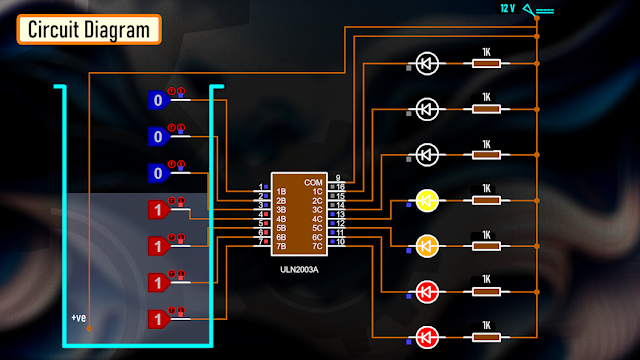
If you’re unfamiliar with the ULN2003, it’s a simple Darlington transistor array with seven transistors inside. It can thus be used to switch seven LEDs without a lot of trouble. In this case, green, yellow, and red LEDs were hooked up to the outputs of the transistors in the ULN2003. Meanwhile, the base of each transistor is connected to an electrode placed at a different height in the water tank. A further positive electrode is placed in the tank connected to 12 volts. As the water raises to the height of each electrode, current flow from the base to the positive electrode switches the corresponding transistor on, and the LED in turn. Thus, you have a useful liquid level indicator with seven distinct output levels.

It’s a neat build that might prove useful if you need to check levels in a big opaque tank at a glance. Just note that it might need some maintenance over time, as the electrodes are unlikely to remain completely corrosion free if left in water. We’ve seen some other great uses of the ULN2003 before, too. Video after the break.

youtube.com/embed/6r3ponugs64?…


The Privacy Post reshared this.

The Privacy Post ha ricondiviso questo.

The media in this post is not displayed to visitors. To view it, please go to the original post.

End of an Era: Sony Cuts Production Of Writable Optical Media
poliverso.org/display/0477a01e…
End of an Era: Sony Cuts Production Of Writable Optical Media The 1990s saw a revolution occur, launched by the CD burner. As prices of writeable media and drives dropped, consumers rushed to duplicate games, create their own mix CDs, and backup their data on optical disc. It was a halcyon time.Fast forward to today, and we’re very much on downward curve when it comes


End of an Era: Sony Cuts Production Of Writable Optical Media

The 1990s saw a revolution occur, launched by the CD burner. As prices of writeable media and drives dropped, consumers rushed to duplicate games, create their own mix CDs, and backup their data on optical disc. It was a halcyon time.

Fast forward to today, and we’re very much on downward curve when it comes to optical media use. Amidst ever-declining consumer interest, Sony has announced it will cut production of writeable optical media. Let’s examine what’s going on, and explore the near future for writable optical discs.

Sony’s End

These will soon be a rarity.
Sony’s plant in Tagaze, Japan was the home of its optical disc manufacturing operation. The Japanese company has announced there will be 250 jobs lost out of 670 at the plant due to the end of writeable media production. The decision is being made to curtail production across CD, DVD, and Blu-Ray lines.

Notably, though, it’s believed this will not affect the production of pre-recorded pressed media, at least in the short term. However, reports in the Japanese media suggest the industrial giant will “gradually cease production of optical disc storage media,” including Blu-Ray products.

Regardless, for now, you can expect music, games, and movies to continue to be released on physical media. Local stores are still full of DVDs and Blu-Rays, and you can even get Taylor Swift and Doja Cat albums on CD if your car still has a CD player.

Plus, the big stores still carry titles for those gamers still hanging on to the disc-drive versions of modern consoles. Still, ask the average PC gamer the last time they handled an optical disc and they’ll probably say “What’s an optical disc?” That market moved on a long time ago.

The Disc World


While Sony is leaving the industry, other manufacturers remain in the market. Consolidation means that many brands are all manufactured by the same handful of companies. Notably, Taiyo Yuden, a company that worked on the invention of the recordable CD, checked out of the market in 2015. Mitsubishi and Verbatim went the same way. All three ended up sold to Taiwanese firm CMC Magnetics, which produces discs commonly rebranded as Memorex, Imation, HP, TDK, and others. The other remaining major player is Ritek. Both companies produce various lines of CD-Rs, DVD-Rs and DVD+Rs, and BD-Rs and BD-REs.
HP’s BD-R XLs are really made by CMC Magnetics. Credit: CMC
You’ve probably got one question still itching away in your brain. Who is actually using optical media in this day and age? Most consumer use cases have dwindled to almost nothing. Few of us burn CDs for our cars anymore, now that aux ports, Bluetooth, and USB ports are all readily available. Similarly, moving data via sneakernet is more easily done by simple flash drives or larger portable hard drives, without the usual write-once limitation.

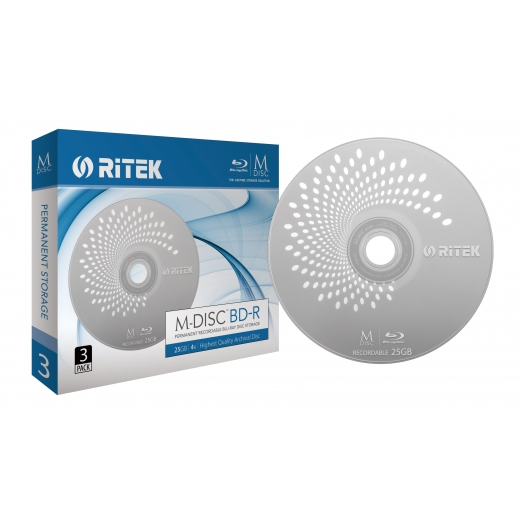
As it turns out, though, optical media remains a great solution for long-time archival use—if you get the right discs. Cheap CD-Rs and DVD-Rs are still a terrible choice, of course. However, so-called M-Discs are designed specifically for this task. Typically available in DVD and Blu-Ray formats, they’re so-called for their ability to store data for “up to 1000 years” according to some manufacturers. They achieve greater longevity through the use of a highly-stable inorganic glassy carbon layer which stores the disc’s data. This is far more stable than the organic write layers used in most writeable optical media. It’s believed this material could last for up to 10,000 years if stored in highly stable conditions. Sadly, the polycarbonate layer on top is only expected to survive for 1000 years at best.

When it comes to high-capacity cold digital storage, it’s hard to go past optical media. Tapes can compete on cost and data density, but falter in longevity. Where an M-Disc might last 100 or 1000 years, a tape might last 30 years at best. Recent users include members of Reddit’s r/DataHoarder community and state government authorities. Basically, if you’ve got a lot of data you need to keep for a long time, optical might appeal to you.
M-Discs are still desirable for long-term storage, in DVD and Blu-Ray formats. Credit: Ritek
There are also some hopes that optical media could storm back on to the scene in a big way in future. Researchers in Shanghai have recently determined a way to construct an optical disk with that could store on the order of 200 TB, as per The Register. This would be achieved through the use of a nanoscale three-dimensional structure to reach never-before-seen storage densities. At such high capacity, the discs could be competitive with hard disks for certain applications. However, it’s early days yet, and limitations remain, including write speed. It’s not much good having a 200 TB disc if it takes forever to read and write the thing.

While optical media is no longer the mainstream darling it once was, it’s not dead yet. And hey, if vinyl and cassettes can come back in a big way, who is to say where the CD market will be in ten years? Human culture is a strange and wonderful thing.


The Privacy Post ha ricondiviso questo.

The media in this post is not displayed to visitors. To view it, please go to the original post.

Retro Inspired Cyberdeck Scrolls Around Cyberspace
poliverso.org/display/0477a01e…
Retro Inspired Cyberdeck Scrolls Around Cyberspace It’s difficult to nail down exactly what counts as a “real” cyberdeck in this brave new era of bespoke computing. But at the minimum, most in the community would agree that a proper deck should have a non-traditional form factor, and be designed to meet the unique needs of the builder. If you’re looking for a fantastic example of


Retro Inspired Cyberdeck Scrolls Around Cyberspace

It’s difficult to nail down exactly what counts as a “real” cyberdeck in this brave new era of bespoke computing. But at the minimum, most in the community would agree that a proper deck should have a non-traditional form factor, and be designed to meet the unique needs of the builder. If you’re looking for a fantastic example of both concepts, check out the Cyberdore 2064 from [Tommi L].

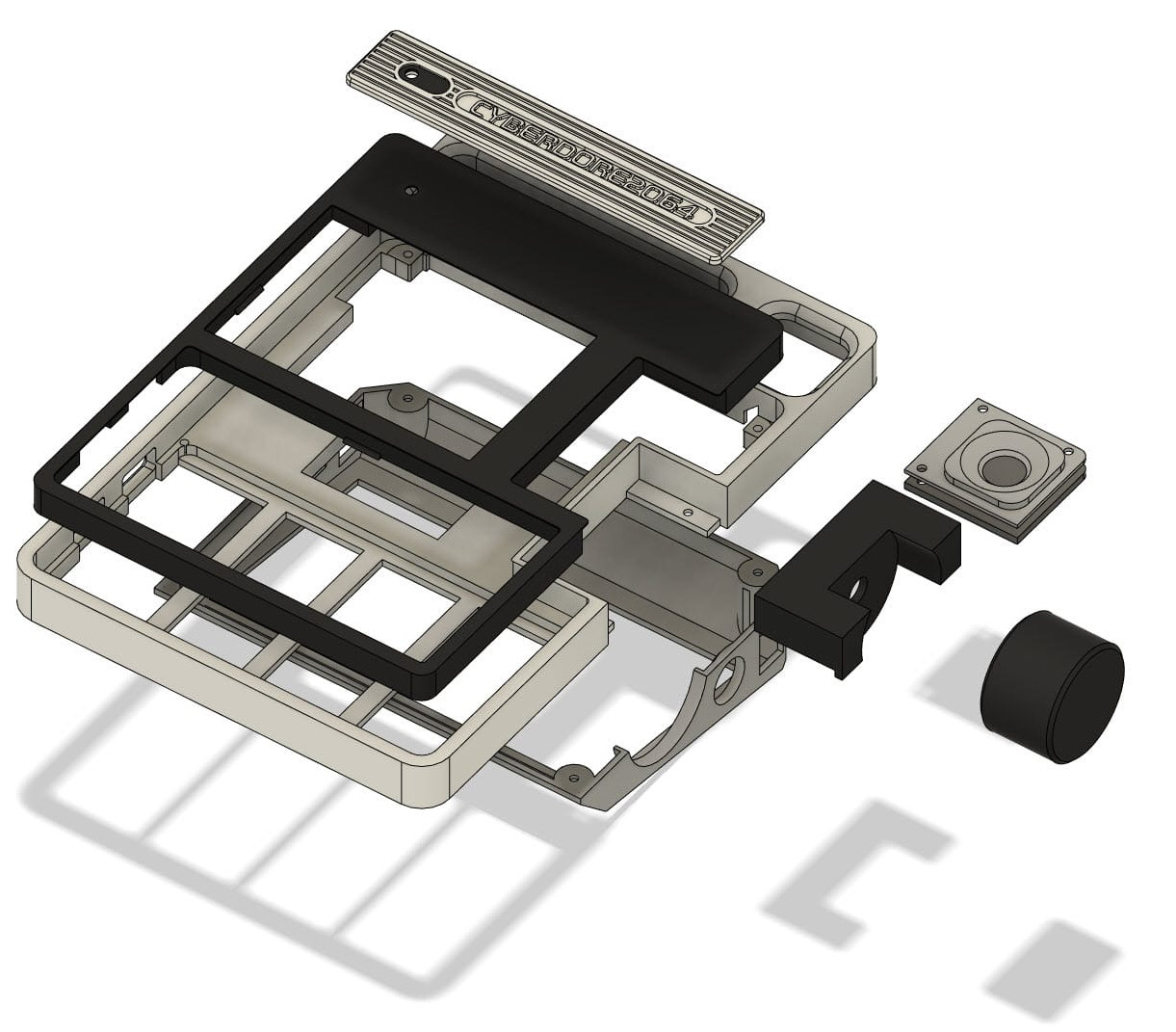
At first glance the 3D printed enclosure of the Cyberdore looks a bit like a Speak & Spell, but it’s really more of an amalgamation of everything that made 1980s computers so unique. You’ve got the vents, the chunky switches, the undersized display, and of course, the handle. The case might have been extruded in 2024, but it’s doing a fantastic impression of a piece of tech from 40 years ago.

One of the key external features of the Cyberdore 2064 is the side-mounted rotary encoder that allows for smoothly scrolling through online feeds (such as your favorite hardware hacking site) or long documents. The cheap and easy to work with KY-040 encoder has been converted to a USB input device by way of a Pi Pico, and has been paired with an over-sized 3D printed knob that really makes this build stand out — not only visually, but in terms of usability. These cyberdeck builds often rely on touch screens for input, but we always appreciate a physical interface.

Under the hood you’ve got a Raspberry Pi Zero and an 18650 cell to keep the whole thing running while on the go. Though the Zero is certainly showing its age compared to the more modern variants of the Pi, for a device like this, raw computing power isn’t really the driving concern. A mechanical keyboard usually rounds out these cyberdeck builds, but in this case, [Tommi] went with a fairly common Rii 518BT portable board that’s been skillfully integrated into the front of the Cyberdore.

All of the STL files necessary to print out your own Cyberdore 2064 are available on Printables, and while [Tommi] didn’t exactly provide build instructions, the write-up provides plenty of information to get you started.

So is it just us, or does looking at Cyberdore 2064 make you think it’s time for another Hackaday Cyberdeck Challenge?


The Privacy Post reshared this.

The Privacy Post ha ricondiviso questo.

The media in this post is not displayed to visitors. To view it, please go to the original post.

Un Threat Actors pubblica aggiornamenti sulle violazione dei dati di Luxottica del 2021
poliverso.org/display/0477a01e…
Un Threat Actors pubblica aggiornamenti sulle violazione dei dati di Luxottica del 2021 Recentemente, un attore della minaccia in un forum clandestino ha pubblicato un aggiornamento sulla violazione dei dati del 2021 riguardantehttps://www.redhotcyber.com/post/attacco-informatico-a-luxottica-confermata-esfiltrazione-di-70-milioni-di-clienti/,


Un Threat Actors pubblica aggiornamenti sulle violazione dei dati di Luxottica del 2021

Recentemente, un attore della minaccia in un forum clandestino ha pubblicato un aggiornamento sulla violazione dei dati del 2021 riguardante il colosso Luxottica, una delle più grandi aziende di occhiali al mondo. Secondo il post, la violazione avrebbe esposto ampie informazioni personali di milioni di individui.

Questo articolo esplora i dettagli della presunta violazione basandosi sulle informazioni fornite dall’attore della minaccia. Al momento, non possiamo confermare la veridicità della notizia, poiché l’organizzazione non ha ancora rilasciato alcun comunicato stampa ufficiale sul proprio sito web riguardo l’incidente. Pertanto, questo articolo deve essere considerato come ‘fonte di intelligence’.

Dettagli della Presunta Violazione


Secondo il post realizzato dall’attore della minaccia, che usa lo pseudonimo “Voided“, la violazione riguarda un consistente set di dati che presumibilmente appartengono a Luxottica. L’attore della minaccia afferma che una versione precedente dei dati trapelati era incompleta, mancando di dettagli significativi come numeri di appartamento/edificio, generi, date di nascita, numeri di lavoro e numeri di telefono per alcuni record.

Il record completo dei dati è il seguente:

  • first_name
  • middle_name
  • last_name
  • birth_date
  • gender_ind
  • home_email_address
  • home_uncleansed_email_address
  • work_email_address
  • home_address_1
  • home_address_2
  • home_city
  • home_state_province_code
  • other_address_1
  • home_phone_number
  • work_phone_number
  • bill_phone_number
  • ship_phone_number
  • cell_phone_number
  • fax_phone_number
  • phone_preference
  • email_preference

Nel loro post, l’attore ha rivelato che la perdita originale del 2023 conteneva un database non leggibile di 120GB insieme a una versione più piccola di 17GB, più user-friendly.

L’attore della minaccia ha dichiarato di aver cancellato la “nice version” ma di aver mantenuto il database grezzo.

Informazioni sull’Obiettivo degli Attori della Minaccia


Luxottica Group S.p.A. è una multinazionale con sede in Italia, principalmente coinvolta nella progettazione, produzione e distribuzione di occhiali di moda, lusso e sport. Con operazioni in oltre 150 paesi e circa 80.000 dipendenti, Luxottica possiede diversi marchi noti tra cui Ray-Ban, Oakley e Persol, e produce anche occhiali per numerose case di moda come Chanel e Prada.

Il motivo dietro questa violazione, come per molti attacchi informatici, potrebbe variare dal guadagno finanziario tramite la vendita di dati personali al danneggiamento della reputazione di Luxottica. Data la posizione prominente dell’azienda e la vasta base di clienti, i dati potrebbero essere altamente preziosi per attori malintenzionati.

Implicazioni della Violazione


La presunta violazione dei dati di Luxottica potrebbe avere implicazioni sia per l’azienda che per i suoi clienti. L’esposizione di informazioni personali sensibili come date di nascita, numeri di telefono e indirizzi aumenta il rischio di furto d’identità e frode. Inoltre, informazioni dettagliate sui luoghi di lavoro e sui numeri di telefono degli individui potrebbero essere sfruttate per attacchi di phishing mirati e schemi di ingegneria sociale.

Come nostra consuetudine, lasciamo sempre spazio ad una dichiarazione da parte dell’azienda qualora voglia darci degli aggiornamenti sulla vicenda. Saremo lieti di pubblicare tali informazioni con uno specifico articolo dando risalto alla questione.

RHC monitorerà l’evoluzione della vicenda in modo da pubblicare ulteriori news sul blog, qualora ci fossero novità sostanziali. Qualora ci siano persone informate sui fatti che volessero fornire informazioni in modo anonimo possono utilizzare la mail crittografata del whistleblower.

L'articolo Un Threat Actors pubblica aggiornamenti sulle violazione dei dati di Luxottica del 2021 proviene da il blog della sicurezza informatica.


The Privacy Post reshared this.

The Privacy Post ha ricondiviso questo.

The media in this post is not displayed to visitors. To view it, please go to the original post.

Il primo database completo di BreachForums è stato pubblicato online!
poliverso.org/display/0477a01e…
Il primo database completo di BreachForums è stato pubblicato online! È stato pubblicato online il database completo della prima versione del forum redhotcyber.com/post/i-padri-f… BreachForums. Il dump contiene informazioni sugli utenti, i loro messaggi personali, indirizzi di criptovaluta e tutti i messaggi lasciati


Il primo database completo di BreachForums è stato pubblicato online!

È stato pubblicato online il database completo della prima versione del forum hacker BreachForums. Il dump contiene informazioni sugli utenti, i loro messaggi personali, indirizzi di criptovaluta e tutti i messaggi lasciati sul forum.

Si presume che questi dati siano stati ottenuti da un backup del database creato e venduto nel 2023 dall’ex amministratore della risorsa, Conor Brian FitzPatrick, noto anche con il soprannome di Pompompurin.

Ricordiamo che nella primavera del 2023, le forze dell’ordine hanno chiuso per la prima volta BreachForums e presto l’amministratore ventenne e creatore della risorsa, Pompompurin, è stato arrestato. Alla fine si è dichiarato colpevole di molteplici accuse ed è stato condannato nel gennaio 2024 a 20 anni di libertà vigilata.

Diversi siti operavano già sotto il nome di BreachForums, ma erano tutti dedicati all’acquisto, alla vendita e alla divulgazione di dati rubati alle aziende hackerate. Il primo forum noto per le fughe di dati è stato RaidForums. Ma dopo che l’FBI lo ha chiuso nel 2022, Pompompurin ha lanciato la sua risorsa chiamata BreachForums (o semplicemente Breached).

Questo forum ha rapidamente guadagnato popolarità nella comunità degli hacker e i criminali hanno fatto trapelare enormi quantità di dati rubati attraverso il sito, comprese informazioni dal fornitore di servizi sanitari del Congresso statunitense DC Health Link, dati di milioni di utenti Twitter e così via.

Poco dopo la pubblicazione dei dati del DC Health Link, nel marzo 2023, l’FBI ha arrestato il proprietario del forum Conor Brian Fitzpatrick (Pompompurin) e BreachForums ha chiuso.

Tuttavia, sono apparse rapidamente diverse nuove versioni del forum, che alla fine sono state catturate anche dalle forze dell’ordine. L’ultima incarnazione di BreachForums è stata lanciata da ShinyHunters (ma ora è stata rilevata da nuovi amministratori) ed è ancora in esecuzione oggi .

Si ritiene che Fitzpatrick abbia creato e venduto il database, ora disponibile al pubblico, nel luglio dello scorso anno, quando fu rilasciato su cauzione. Da allora i dati circolano tra gli hacker e uno di loro ha addirittura tentato di vendere il backup per 150.000 dollari. Già allora la banca dati era caduta nelle mani degli specialisti dell’aggregatore di fughe di notizie Have I Been Pwned (HIBP) ed era stata aggiunta alla sua banca dati, ma la fuoriuscita dei dati è stata resa pubblica solo questa settimana.

Secondo Bleeping Computer tutto è iniziato quando un hacker con il nickname emo ha pubblicato online una serie di dati su 212.414 utenti di BreachForums, inclusi nomi, indirizzi e-mail e indirizzi IP, dopo che lui stesso era stato bandito dall’attuale versione del sito.

Secondo emo, questi dati sono stati ottenuti direttamente da Fitzpatrick, che avrebbe tentato di venderlo nel giugno 2023 per 4.000 dollari mentre era fuori cauzione. L’hacker sostiene che alla fine la fuoriuscita dei dati è stata acquisita da tre aggressori.

Poiché questa pubblicazione non ha aiutato a fermare il conflitto tra i membri della community di BreachForums, la sera del 23 luglio 2024, emo ha fatto trapelare l’intero database su Telegram, rivelando un’enorme quantità di informazioni aggiuntive.

“Database completo di BreachForum v1 contenente tutte le voci fino al 29 novembre 2022”, ha scritto emo su Telegram. — Questo database include tutto: messaggi personali, argomenti, registri dei pagamenti, registri dettagliati degli indirizzi IP per ciascun utente e così via. Inizialmente avevo pubblicato la tabella utente solo per evitare che venisse venduta dietro le quinte dallo staff di BreachForum, ma ora è diventato evidente che così tante persone hanno questo database che è inevitabile che venga divulgato. Ciò offre a tutti la possibilità di rivedere i propri dati e colmare le lacune nell’OPSEC”.

I giornalisti hanno già esaminato il dump e, in base ai timestamp, riferiscono che si tratta di un backup completo del forum MyBB, creato il 28 novembre 2022. Il database contiene tutti i dati del forum, inclusi ID utente, password con hash, messaggi personali, indirizzi di criptovaluta utilizzati per acquistare crediti del forum e tutti i messaggi sul sito.

Di particolare interesse, ovviamente, sono i messaggi personali in cui gli hacker si raccontano reciprocamente le proprie imprese, esprimono il desiderio di acquistare l’accesso alle reti organizzative o cercano di accedere a dati appena rubati.

Sebbene le forze dell’ordine dispongano già di questo database, ottenuto dopo il sequestro della prima versione del sito e l’arresto di Fitzpatrick nel 2023, altri criminali, giornalisti e ricercatori di sicurezza non avevano precedentemente accesso a questa la fuoriuscita dei dati.

L'articolo Il primo database completo di BreachForums è stato pubblicato online! proviene da il blog della sicurezza informatica.


The Privacy Post reshared this.

The Privacy Post ha ricondiviso questo.

La Russia pronta a riattivare l’accesso ad Instagram? Roskomnadzor dice di no!
poliverso.org/display/0477a01e…
La Russia pronta a riattivare l’accesso ad Instagram? Roskomnadzor dice di no! In Russia, vale la pena restituire l’accesso a Instagram “il più presto possibile”, ha affermato il portavoce della presidenza russa Dmitry Peskov (è un diplomatico russo e addetto stampa del presidente russo Vladimir Putin) durante un discorso al New Media Festival a


La Russia pronta a riattivare l’accesso ad Instagram? Roskomnadzor dice di no!

In Russia, vale la pena restituire l’accesso a Instagram “il più presto possibile”, ha affermato il portavoce della presidenza russa Dmitry Peskov (è un diplomatico russo e addetto stampa del presidente russo Vladimir Putin) durante un discorso al New Media Festival a Senezh, nella regione di Mosca. Tuttavia, il relatore ha osservato che nelle condizioni attuali sono ancora necessarie le attuali restrizioni.

“Penso che sì, sia meglio riprendere l’accesso a Instagram il prima possibile. Questo è il mio punto di vista Ma viviamo in condizioni di guerra. E in condizioni di guerra ci devono essere delle restrizioni”, riporta la RBC.

Peskov ha osservato che lo sblocco del social network sarà possibile solo quando la necessità di restrizioni sarà minima. Secondo il relatore, idealmente i russi dovrebbero utilizzare tutte le piattaforme “per portare la nostra voce al mondo, per portare la nostra verità al mondo”.

Nel frattempo Roskomnadzor (Il Servizio federale per la supervisione delle comunicazioni, della tecnologia dell’informazione e dei mass media) ha dichiarato che la possibilità di revocare il blocco su Instagram non è attualmente presa in considerazione. Ciò significa che nel prossimo futuro i russi non dovrebbero aspettarsi l’emergere di un modo semplice e facile per utilizzare il social network popolare in tutto il mondo. Ricordiamolo: le restrizioni sono in vigore da marzo 2022 perché la società proprietaria della piattaforma ha rimosso nei suoi servizi le restrizioni alla violenza contro i russi.

L'articolo La Russia pronta a riattivare l’accesso ad Instagram? Roskomnadzor dice di no! proviene da il blog della sicurezza informatica.


The Privacy Post reshared this.

The Privacy Post ha ricondiviso questo.

Come gli Attacchi Ransomware agli Ospedali Portano alla Morte dei Pazienti: Lo Studio
poliverso.org/display/0477a01e…
Come gli Attacchi Ransomware agli Ospedali Portano alla Morte dei Pazienti: Lo Studio Ne abbiamo parlato molto noi di Red Hot Cyber sul fatto che gli Ospedali devono essere protetti dalle minacce informatiche e che rivestono a pieno titolo il ruolo di infrastruttura critica nazionale. Ne abbiamo parlato con articoli come “Ospedali: le “galline


Come gli Attacchi Ransomware agli Ospedali Portano alla Morte dei Pazienti: Lo Studio

Ne abbiamo parlato molto noi di Red Hot Cyber sul fatto che gli Ospedali devono essere protetti dalle minacce informatiche e che rivestono a pieno titolo il ruolo di infrastruttura critica nazionale. Ne abbiamo parlato con articoli come “Ospedali: le “galline dalle uova doro” per il Ransomware” del lontano 2021 e “I decessi avvenuti per il ransomware. I casi noti, le tendenze e il punto sull’Italia”

Come previsto, negli ultimi anni, i criminali informatici hanno preso di mira sempre più le organizzazioni sanitarie con attacchi ransomware. Questi attacchi bloccano l’accesso ai sistemi elettronici e richiedono un riscatto per ripristinare l’accesso. Un nuovo studio condotto da scienziati dell’Università del Minnesota ha rilevato l’impatto significativo di tali attacchi sulle operazioni ospedaliere e sulla salute dei pazienti.

Lo studio ha creato un database di attacchi ransomware agli ospedali e lo ha confrontato con i dati del programma Medicare. I risultati hanno mostrato che durante un attacco, il carico di lavoro ospedaliero si riduce del 17-25%, e le entrate di Medicare si riducono in modo ancora più significativo. I reparti di emergenza e i servizi ospedalieri stanno registrando cali particolarmente marcati, con conseguenti cali delle entrate dal 19% al 41%.

L’analisi ha rilevato che gli attacchi ransomware aumentano la mortalità intraospedaliera. Per i pazienti che si trovavano in ospedale al momento dell’attacco, la probabilità di mortalità aumenta di 0,77 punti percentuali, che corrisponde a un aumento del 20,7% rispetto ai tassi normali.

I ricercatori hanno anche scoperto che gli attentati più gravi, quelli che bloccano le ambulanze e portano l’ospedale alla cancellazione delle procedure programmate, portano ad un aumento ancora maggiore della mortalità – fino a 1,87 punti percentuali.

Tali attacchi hanno un impatto particolarmente forte sui pazienti neri, la cui probabilità di morte aumenta di 2,27 punti percentuali. Questo perché le popolazioni vulnerabili spesso ricevono un’assistenza sanitaria di qualità inferiore, che viene esacerbata durante le crisi.

Poiché gli ospedali diventano sempre più dipendenti da sistemi digitali come le cartelle cliniche elettroniche e la telemedicina, è aumentata anche la loro vulnerabilità agli attacchi informatici. Una situazione simile è stata osservata durante la pandemia di COVID-19, che ha contribuito ad aumentare il numero di tali attacchi. Gli ospedali erano sovraccarichi e utilizzavano attivamente nuove tecnologie, spesso poco sicure.

I criminali informatici utilizzano diversi metodi per penetrare nei sistemi ospedalieri, inclusi attacchi di phishing e sfruttamento di bug software privi di patch. Ciò rende gli ospedali particolarmente vulnerabili, poiché spesso utilizzano attrezzature obsolete e hanno un basso livello generale di sicurezza.

Inoltre, i ricercatori hanno scoperto che gli attacchi agli ospedali hanno un impatto sulle strutture mediche vicine, che sono costrette ad accogliere pazienti delle organizzazioni colpite. Tuttavia, nonostante l’aumento del carico di lavoro, questi ospedali non hanno registrato un aumento della mortalità. Ciò suggerisce che gli ospedali sono in grado di adattarsi al sovraccarico temporaneo, ma non riduce la gravità del problema per le strutture attaccate.

Pertanto, gli attacchi ransomware hanno un impatto significativo sulle operazioni ospedaliere e sulla salute dei pazienti. I ricercatori sottolineano la necessità di sviluppare solide misure di sicurezza per migliorare la protezione delle strutture sanitarie e ridurre al minimo l’impatto di tali attacchi. È importante non solo prevenire gli attacchi, ma anche disporre di piani per ripristinare rapidamente le operazioni nel caso in cui si verifichino.

L'articolo Come gli Attacchi Ransomware agli Ospedali Portano alla Morte dei Pazienti: Lo Studio proviene da il blog della sicurezza informatica.


The Privacy Post reshared this.

The Privacy Post ha ricondiviso questo.

EU Commission’s GDPR review finds enforcement issues
euractiv.com/section/data-priv…
@privacy
The European Commission found serious enforcement issues with the General Data Protection Regulation (GDPR) and called for clearer guidelines to strengthen data protection across member states in a report published on Thursday (25 July).

The Privacy Post reshared this.

The Privacy Post ha ricondiviso questo.

The media in this post is not displayed to visitors. To view it, please go to the original post.

1/3 This week, newly elected European Parliament MEPs had their first plenary meeting. We need YOUR help to put our vision for positive digital futures on their agenda 📜

✊🏾 Sign our petition to help us build digital futures that will allow us all to thrive ➡️ crm.edri.org/vision-for-digita…

reshared this

The Privacy Post ha ricondiviso questo.

The media in this post is not displayed to visitors. To view it, please go to the original post.

Hacking an IoT Camera Reveals Hard-Coded Root Password
poliverso.org/display/0477a01e…
Hacking an IoT Camera Reveals Hard-Coded Root Password Hacking — at least the kind where you’re breaking into stuff — is very much a learn-by-doing skill. There’s simply no substitute for getting your hands dirty and just trying something. But that doesn’t mean you can’t learn something by watching, with this root password exploit on a youtube.com/watch?v=lbSalKp_


Hacking an IoT Camera Reveals Hard-Coded Root Password

Hacking — at least the kind where you’re breaking into stuff — is very much a learn-by-doing skill. There’s simply no substitute for getting your hands dirty and just trying something. But that doesn’t mean you can’t learn something by watching, with this root password exploit on a cheap IP video camera being a good look at the basics.

By way of background on this project, [Matt Brown] had previously torn into a VStarcam CB73 security camera, a more or less generic IP camera that he picked up on the cheap, and identified a flash memory chip from which he extracted the firmware. His initial goal was to see if the camera was contacting sketchy servers, and while searching the strings for the expected unsavory items, he found hard-coded IP addresses plus confirmation that the camera was running some Linux variant.

With evidence of sloppy coding practices, [Matt] set off on a search for a hard-coded root password. The second video covers this effort, which started with finding UART pins and getting a console session. Luckily, the bootloader wasn’t locked, which allowed [Matt] to force the camera to boot into a shell session and find the root password hash. With no luck brute-forcing the hash, he turned to Ghidra to understand the structure of a suspicious program in the firmware called encoder. After a little bit of poking and some endian twiddling, he was able to identify the hard-coded root password for every camera made by this outfit, and likely others as well.

Granted, the camera manufacturer made this a lot easier than it should have been, but with a lot of IoT stuff similarly afflicted by security as an afterthought, the skills on display here are probably broadly applicable. Kudos to [Matt] for the effort and the clear, concise presentation that makes us want to dig into the junk bin and get hacking.

youtube.com/embed/uGfVn-cyz3o?…

youtube.com/embed/lbSalKp_ldA?…


The Privacy Post reshared this.

The Privacy Post ha ricondiviso questo.

The media in this post is not displayed to visitors. To view it, please go to the original post.

Manually Computing Logarithms to Grok Calculators
poliverso.org/display/0477a01e…
Manually Computing Logarithms to Grok Calculators Logarithms are everywhere in mathematics and derived fields, but we rarely think about how trigonometric functions, exponentials, square roots and others are calculated after we punch the numbers into a calculator of some description and hit ‘calculate’. How do we even know that the answer which it returns is remotely correct? This


Manually Computing Logarithms to Grok Calculators

Logarithms are everywhere in mathematics and derived fields, but we rarely think about how trigonometric functions, exponentials, square roots and others are calculated after we punch the numbers into a calculator of some description and hit ‘calculate’. How do we even know that the answer which it returns is remotely correct? This was the basic question that [Zachary Chartrand] set out to answer for [3Blue1Brown]’s Summer of Math Exposition 3 (SoME-3). Inspired by learning to script Python, he dug into how such calculations are implemented by the scripting language, which naturally led to the standard C library. Here he found an interesting implementation for the natural algorithm and the way geometric series convergence is sped up.

The short answer is that fundamental properties of these series are used to decrease the number of terms and thus calculations required to get a result. One example provided in the article reduces the naïve approach from 36 terms down to 12 with some optimization, while the versions used in the standard C library are even more optimized. This not only reduces the time needed, but also the memory required, both of which makes many types of calculations more feasible on less powerful systems.

Even if most of us are probably more than happy to just keep mashing that ‘calculate’ button and (rightfully) assume that the answer is correct, such a glimpse at the internals of the calculations involved definitely provides a measure of confidence and understanding, if not the utmost appreciation for those who did the hard work to make all of this possible.


The Privacy Post reshared this.

The Privacy Post ha ricondiviso questo.

The media in this post is not displayed to visitors. To view it, please go to the original post.

A Lenticular Clock Spells Out The Hours
poliverso.org/display/0477a01e…
A Lenticular Clock Spells Out The Hours So many are the clock projects which cross the Hackaday threshold, that it’s very rare indeed to see something that hasn’t already been done. We think we’ve not seen a lenticular clock before though, and we’re thus impressed by this one produced by [Moritz Sivers] instructables.com/Lenticular-C… may well be familiar with lenticular


A Lenticular Clock Spells Out The Hours

So many are the clock projects which cross the Hackaday threshold, that it’s very rare indeed to see something that hasn’t already been done. We think we’ve not seen a lenticular clock before though, and we’re thus impressed by this one produced by [Moritz Sivers].

You may well be familiar with lenticular images from toys and novelties, an animation is sliced into lines and placed behind an array of multi-faceted linear lenses. It gives the effect of movement as from different viewing angles a different frame of the animation is perceived. In this clock the animation is replaced by the clock digits, and by rotating the whole with a servo driven by an ESP8266 microcontroller it can display different digits to the viewer. The write-up and the video below are of value both for the clock itself and the description of how these animations are produced. The clock itself doesn’t sacrifice usability for all its novelty, and we can see this technique might find a place in other projects requiring custom displays.

The lenticular lenses used here are off the shelf, but if you are of an adventurous mind, you could try printing some of your own.

youtube.com/embed/S9qQ0Eq1drs?…


The Privacy Post reshared this.

The Privacy Post ha ricondiviso questo.

The media in this post is not displayed to visitors. To view it, please go to the original post.

A Puzzle for the Visually Impaired, or Blindfolded
poliverso.org/display/0477a01e…
A Puzzle for the Visually Impaired, or Blindfolded There’s no reason why a visually impaired person can’t enjoy putting together a jigsaw puzzle. It just needs to look a little different. Or, in this case, feel different instructables.com/3D-Jigsaw-Pu… [feazellecw] has come up with just the solution — a puzzle with pieces that have


A Puzzle for the Visually Impaired, or Blindfolded

A 3D-printed puzzle for the visually impaired. The pieces have both a texture and a slant.

There’s no reason why a visually impaired person can’t enjoy putting together a jigsaw puzzle. It just needs to look a little different. Or, in this case, feel different.

16-year-old [feazellecw] has come up with just the solution — a puzzle with pieces that have both a defining texture and a slant in the z-height to them. While there is no picture on the puzzle face to speak of, instead there is a satisfying end result. You could change it up and add a relief image if you wanted, as long as you still observed the diagonal lines, the z-slant, and the little hole in the bottom that helps differentiate it from the top.

As [feazellecw] says, it’s important to find a box to help keep the pieces together during assembly; a 3D-printed box would be a nice touch. Files for this 15-piece puzzle are available if you’d like to make one for yourself or someone else, but just the idea might inspire you to make your own variant.

Don’t like putting puzzles together? Build a robot to do it for you.


The Privacy Post reshared this.

The Privacy Post ha ricondiviso questo.

The media in this post is not displayed to visitors. To view it, please go to the original post.

Slientection sfrutta CrowdStrike per estrarre 2 Milioni di Dati Microsoft 365
poliverso.org/display/0477a01e…
Slientection sfrutta CrowdStrike per estrarre 2 Milioni di Dati Microsoft 365 Il 20 luglio 2024, il threat actors noto come Slientection ha annunciato di aver compromesso i dati di Microsoft 365, sfruttando una vulnerabilità redhotcyber.com/post/vulnerabi… nel software di


Slientection sfrutta CrowdStrike per estrarre 2 Milioni di Dati Microsoft 365

Il 20 luglio 2024, il threat actors noto come Slientection ha annunciato di aver compromesso i dati di Microsoft 365, sfruttando una vulnerabilità nel software di sicurezza CrowdStrike.

Premesso che questa affermazione rimane tutta da confermare, il criminale informatico all’interno del post ha riportato Ciao a tutti, ieri mattina abbiamo sfruttato il bug di crowdstrike in Microsoft e abbiamo estratto tutti i dati di Microsoft 365 dei computer che hanno effettuato l’aggiornamento. Tra i dati che abbiamo preso ci sono informazioni sensibili, password dell’account Microsoft, numero di telefono, informazioni di Gmail, informazioni su nome e cognome, ecc.

Al momento, non possiamo confermare la veridicità della notizia, poiché l’organizzazione non ha ancora rilasciato alcun comunicato stampa ufficiale sul proprio sito web riguardo l’incidente. Pertanto, questo articolo deve essere considerato come ‘fonte di intelligence’.

Dettagli della Vendita


Slientection dichiara di possedere dati di circa 2 milioni di utenti di Microsoft 365 e ha messo in vendita il database completo per 10,000 dollari. Nel post, il threat actors ha fornito esempi di record contenente dati dettagliati come: Nome, Prodotto, Versione Prodotto, Data rilascio, Data scadenza, LicenseKey, Password, Cellulare, Email.

Il Threat Actors ha pubblicato all’interno del forum underground solo un post pertanto la sua reputazione risulta bassa. Inoltre il moderatore del forum IntelBroker gli ha chiesto di spostare il suo post nella sezione di rivendita dei dati, sinonimo che l’attore della minaccia non è avvezzo all’utilizzo di Breach Forums. Non ha specificato l’utilizzo di un escrow per la vendita, il che significa che ipotetici acquirenti dovrebbero fidarsi del venditore riguardo alla veridicità e alla completezza dei dati offerti.

Conclusione


Questo incidente di sicurezza mette in evidenza la necessità per le aziende di monitorare costantemente le vulnerabilità nei loro sistemi e di reagire rapidamente a eventuali minacce. Gli utenti di Microsoft 365 sono invitati a cambiare le loro password e a controllare attentamente qualsiasi attività sospetta nei loro account.

Le organizzazioni devono inoltre valutare l’implementazione di misure di sicurezza più robuste, come l’autenticazione a due fattori e la crittografia avanzata, per proteggere i dati degli utenti da future violazioni. Nel frattempo, gli utenti devono essere consapevoli delle minacce potenziali e adottare pratiche di sicurezza informatica proattive per proteggere le loro informazioni personali.

Come nostra consuetudine, lasciamo sempre spazio ad una dichiarazione da parte dell’azienda qualora voglia darci degli aggiornamenti sulla vicenda. Saremo lieti di pubblicare tali informazioni con uno specifico articolo dando risalto alla questione.

RHC monitorerà l’evoluzione della vicenda in modo da pubblicare ulteriori news sul blog, qualora ci fossero novità sostanziali. Qualora ci siano persone informate sui fatti che volessero fornire informazioni in modo anonimo possono utilizzare la mail crittografata del whistleblower.

L'articolo Slientection sfrutta CrowdStrike per estrarre 2 Milioni di Dati Microsoft 365 proviene da il blog della sicurezza informatica.


The Privacy Post reshared this.

The Privacy Post ha ricondiviso questo.

The media in this post is not displayed to visitors. To view it, please go to the original post.

The Rise of The Disappearing Polymorphs
poliverso.org/display/0477a01e…
The Rise of The Disappearing Polymorphs Science and engineering usually create consistent results. Generally, when you figure out how to make something, you can repeat that at will to make more of something. But what if, one day, you ran the same process, and got different results? You double-checked, and triple-checked, and you kept ending up with a different end product instead?Perhaps it


The Rise of The Disappearing Polymorphs

Science and engineering usually create consistent results. Generally, when you figure out how to make something, you can repeat that at will to make more of something. But what if, one day, you ran the same process, and got different results? You double-checked, and triple-checked, and you kept ending up with a different end product instead?

Perhaps it wasn’t the process that changed, but the environment? Or physics itself? Enter the scary world of disappearing polymorphs.

Point of No Return


Imagine you’re working at a laboratory that creates pharmaceuticals. You figure out the reactants and the chemistry involved to make a new drug. You design a production line, and your new factory starts churning out the drug in mass quantities. This goes well for years, until suddenly, the drugs stop working.

You run an analysis, and the drugs coming out of the factory aren’t what you designed at all. They’re a weird new form of the same chemical with a different crystal structure, and they’re no longer working the same way. What happened?

You’ve probably come across the case of a disappearing polymorph. This is where the original version of a chemical’s crystal structure becomes impractical or impossible to produce. Instead, you tend to end up with a new version instead, typically a more stable, lower-energy version. The mere presence of this newer, more stable version tends to convert the original version into the new form quite easily. Since the new form is more stable, it tends to become difficult to convert the product back to the original form, or functionally, to produce it at all.

Paroxetine Problems

Paroxetine hydrochloride is one of the most well known drugs to have suffered a disappearing polymorph. Credit: research paper
A great case study exists in paroxetine hydrochloride, an SSRI medication. The initial form of the drug was developed in the 1970s, and was known as paroxetine anhydrate. It was produced as a hygroscopic, chalky powder. However, in 1984, a new version spontaneously popped up at sites in the UK that were scaling up production. The new ‘hemihydrate’ crystal form was more stable. Drug in the anhydrate form would spontaneously convert into hemihydrate whenever the two came into contact in the presence of water or mere humidity.

The issue caused legal problems down the line. Years later, other drug manufacturers wished to produce paroxetine, too. The patent on paroxetine anhydrate had ran out, so generic manufacturer Apotex moved to begin production. The issue was that the company found it could not produce the original form. Instead, its product inevitably came out as paroxetine hemihydrate. It’s believed that the Earth’s atmosphere had functionally become populated by trace amounts of paroxetine hemihydrate, to the point where any paroxetine anhydrate would immediately be transformed into the new structure.

By this time, GSK was the company that held a still-active patent on paroxetine hemihydrate. It sued Apotex, arguing that its generic pills contained paroxetine hemihydrate that had been created through the atmospheric seeding process. The courts accepted GSK’s submission on this point, but ruled in favor of Apotex’s right to continue producing its generic pills. It was noted Apotex could not be held responsible for the issue of uncontrolled crystal seeding.

Later research saw two separate companies independently create another polymorph. Both Synthon and SmithKline Beecham sought patents for the production of polymorphs known as paroxetine mesylate. However, a similar problem cropped up shortly after. Any attempt to create the Synthon polymorph would end up creating the Beecham structure instead. This lead to much confusion over whether Synthon’s version was a new case of a disappearing polymorph, or whether the company had made errors in its patent work. Ultimately, no satisfying consensus was reached as to the truth of the matter.

Treatment Failure

Ritonavir started spontaneously assembling in the Form II crystal structure in 1998. This form was not medically useful and its spread ruined the effectiveness of the drug for some time. Credit: research paper
Sadly, disappearing polymorphs can create more than legal woes. Ritonavir was released for public use in 1996, a crucial antiretroviral drug used in the fight against HIV. In its original crystal form, known as ‘Form I”, it was quite soluble and medically useful for treating the condition. However, in 1998, “Form II” was discovered. This was a more stable polymorph that existed at a lower energy level. The problem was that this crystal form was much less soluble. This made the drug less bioavailable, ruining its effectiveness at treating the disease.

The existence of Form II threatened the production of the useful form of the drug. Any laboratory that saw the introduction of Form II was unable to produce Form I afterwards. It was speculated by researchers that individuals that had worked in such labs could carry traces of the new form, and potentially poison facilities that were still producing Form I. In the space of a few weeks, everywhere that could once produce Form I was rapidly turning out only Form II instead.

Due to problems with production and the lack of efficacy of Form II ritonavir, the drug was pulled from the market. This lead to thousands of patients going without medication for their condition, and losses of over $250 million for the manufacturer, Abbott. The company held press conferences that highlighted the gravity of the issue.

This is why all of us at Abbott have been working extremely hard throughout the summer [of 1998], often around the clock, and sometimes never going home at night. We have been here seven days a week and we will continue to do so. We have cancelled vacations and asked our families for their understanding and support. This is not an issue that we take lightly.


Eventually, the problem was overcome. Researchers found a way to produce Form I under highly controlled conditions. The product had to be sold in a special refrigerated gel cap, compared to its original delivery form of a non-refrigerated capsule. Later developments included a combination of lopinavir and ritonavir that did not require lower temperatures to remain stable, and a new form of melt-extruded Form I ritonavir tablet that hit the market in 2010.

What Can Be Done


Scientists are some what at the mercy of nature when it comes to disappearing polymorphs. New polymorphs can pop up without warning, while tiny seed crystals can quickly contaminate entire labs, factories, and indeed, the world. There’s little defence. The only solution is doing hard chemistry—either to find ways to make original polymorphs survive the new world, or to find other new polymorphs that are still useful and still producible.

Ultimately, though, new polymorphs can be a pharmaceutical engineer’s nightmare. They can ruin a drug and ruin a factory overnight. Stories of ritonavir and other drugs will remain cautionary tales for this very reason.


The Privacy Post reshared this.

The Privacy Post ha ricondiviso questo.

The media in this post is not displayed to visitors. To view it, please go to the original post.

200 Milioni di Utenti X/Twitter scaricabili Online per 8 crediti
poliverso.org/display/0477a01e…
200 Milioni di Utenti X/Twitter scaricabili Online per 8 crediti Recentemente, un attore di minacce in un forum clandestino ha pubblicato una raccolta di dati. Il post afferma di aver esposto informazioni relative a 200 milioni di utenti di Twitter.Questa informazione è stata condivisa sul noto forum underground Breach Forum da un utente che si fa chiamare


200 Milioni di Utenti X/Twitter scaricabili Online per 8 crediti

Recentemente, un attore di minacce in un forum clandestino ha pubblicato una raccolta di dati. Il post afferma di aver esposto informazioni relative a 200 milioni di utenti di Twitter.

Questa informazione è stata condivisa sul noto forum underground Breach Forum da un utente che si fa chiamare “Addka72424“. A quanto pare si tratta di un repost di una precedente attività di Web Scraping. IntelBroker è stato il primo a commentare il post riportando che Addka72424 “is king”.

Dettagli della presunta violazione


Secondo quanto riportato nel forum, i dati violati includono indirizzi email, nomi, nomi utente, follower e date di creazione degli account. Il post include un esempio di questi dati, mostrando una lista con varie informazioni personali e professionali. Tuttavia, non riporteremo dati sensibili nel testo dell’articolo per proteggere la privacy delle persone coinvolte.

Gli attori di minacce sembrano aver preso di mira un database contenente informazioni sugli utenti di Twitter. Il post menziona che la fuga di dati risale a dicembre 2021 e che è stata caricata da un utente chiamato “StayMad” e convertita e organizzata da un utente sconosciuto. Il file completo può essere scaricato da un link fornito nel forum.

Implicazioni della violazione


La pubblicazione dei dati di 200 milioni di utenti di Twitter può comportare numerosi pericoli. Gli indirizzi email, ad esempio, possono essere utilizzati per condurre attacchi di phishing su larga scala, sfruttando la fiducia degli utenti per ottenere ulteriori dati sensibili o per diffondere malware. Inoltre, le informazioni personali come nomi e nomi utente possono essere utilizzate per creare profili falsi e credibili, con l’obiettivo di condurre ulteriori attività illecite.

Questi attacchi non solo mettono a rischio la sicurezza personale degli utenti, ma possono anche compromettere la fiducia nella piattaforma stessa. Gli utenti potrebbero essere più riluttanti a condividere informazioni personali e a utilizzare il servizio, portando a una diminuzione dell’attività e potenzialmente a una perdita di entrate per l’azienda.

Conclusione


Come di consueto, lasciamo sempre spazio a una dichiarazione dell’azienda qualora desideri fornirci aggiornamenti sulla questione. Saremmo lieti di pubblicare tali informazioni con un articolo specifico che evidenzi il problema.

RHC Dark Lab monitorerà l’evoluzione della situazione al fine di pubblicare ulteriori notizie sul blog, qualora vi siano aggiornamenti sostanziali. Se ci sono individui con conoscenza dei fatti che desiderano fornire informazioni in modo anonimo, possono utilizzare l’email crittografata del whistleblower.

Questo articolo è stato compilato sulla base di informazioni pubbliche che non sono state ancora verificate dalle rispettive organizzazioni. Aggiorneremo i nostri lettori non appena saranno disponibili ulteriori dettagli.

L'articolo 200 Milioni di Utenti X/Twitter scaricabili Online per 8 crediti proviene da il blog della sicurezza informatica.


The Privacy Post reshared this.

The Privacy Post ha ricondiviso questo.

Meta releases most powerful open AI model yet, possibly last to be released in Europe
poliverso.org/display/0477a01e…
Meta releases most powerful open AI model yet, possibly last to be released in EuropeMeta released their flagship text-only model Llama 3.1, the best performing open-source artificial intelligence (AI) model so far, on Tuesday, which may very well be the company’s last one available to EU users.euractiv.com/section/economy-j…

The Privacy Post reshared this.

The Privacy Post ha ricondiviso questo.

The media in this post is not displayed to visitors. To view it, please go to the original post.

Exploring Soap Films
poliverso.org/display/0477a01e…
Exploring Soap Films While fluid dynamics sounds like a dull topic, SoapFilmScope instructables.com/Explore-the-… promises to make it fun by using your cell phone to observe the interactions between sound waves and liquid membranes. You can make your own with some PVC pipe, some 3D-printed attachments, a speaker, and a few other odds and ends.If yo


Exploring Soap Films

While fluid dynamics sounds like a dull topic, SoapFilmScope promises to make it fun by using your cell phone to observe the interactions between sound waves and liquid membranes. You can make your own with some PVC pipe, some 3D-printed attachments, a speaker, and a few other odds and ends.

If your PVC pipe doesn’t match [DaniloR29’s] exactly, no problem. The files are in OpenSCAD so you can easily change them to suit your needs. One end of the PVC tee dips into soap solution to form a film — think like a soap bubble before you blow it out of the bubble wand. The other ends have the speaker and the cell phone camera.

While the effect is entertaining, there’s real science behind it. You can learn about acoustic propagation, interference, and diphasic patterns, among other things. This would be a fun classroom project or just something to pass the time on a rainy afternoon. Be careful, though. Taking these kinds of pictures can be addictive. If you’d rather make bubbles, why not make giant ones?

If you enjoy this sort of thing, [Danilo] also built the KaleidoPhoneScope, which you can see in action in the video below.

youtube.com/embed/Y33K-1SfdQ0?…


The Privacy Post reshared this.

The Privacy Post ha ricondiviso questo.

The media in this post is not displayed to visitors. To view it, please go to the original post.

Supercon 2023: Jesse T. Gonzalez Makes Circuit Boards That Breathe and Bend
poliverso.org/display/0477a01e…
Supercon 2023: Jesse T. Gonzalez Makes Circuit Boards That Breathe and Bend Most robots are built out of solid materials like metal and plastic, giving them rigid structures that are easy to work with and understand. But you can open up much wider possibilities if you explore alternative materials and construction methods. As it turns out, that’s


Supercon 2023: Jesse T. Gonzalez Makes Circuit Boards That Breathe and Bend

Most robots are built out of solid materials like metal and plastic, giving them rigid structures that are easy to work with and understand. But you can open up much wider possibilities if you explore alternative materials and construction methods. As it turns out, that’s precisely what [Jesse T. Gonzalez] specializes in.

Jesse is a PhD candidate at Carnegie Mellon’s Human-Computer Interaction Institute, and an innovator to boot. His talk at the 2023 Hackaday Supercon covers his recent work on making circuit boards that can breathe and bend. You might not even call them robots, but his creations are absolutely robotic.

Be Flexible


Jesse has a section of “wall” in his apartment that can shift and change into different useful shapes.
Jesse begins by teaching us about robotic surfaces. He shows us a demonstration video, in which a metal ball is juggled around on a silicone bubble surface. Typically, we might model robot actuation in our heads as involving simple grippers on the ends of industrial robot arms, but that’s a limiting view. As the demo shows, even a surface itself can be robotic, and can be used to generate textures or manipulate objects, for example.

In his own apartment, Jesse has taken this idea a step further—creating the idea of a robotic environment. At his home, he walks in the door and is greeted by his robotic wall, which extends out to create a shelf for his shopping. Another part of the wall steps up to act as a coat hook. His very home itself has become roboticized to help ease his tasks of daily living.

He draws comparison to the Disney movie Encanto, which depicted a very house itself that was alive. And so many other films have shown us similar over the years. Walls that transform to reveal hidden doors, transforming desks and chairs and the like. Typically, these concepts are the preserve of mere cartoons, but there’s value in exploring whether we could make these things a reality.

He notes that building large interactive surfaces can be quite difficult, and that he didn’t produce this complex structure overnight. He returns to the example of the roboticized silicone bubble surface. Building a large bubble surface requires using a solenoid for each bubble section you want to actuate, he explains. This doesn’t scale well. However, if you could instead make a printed circuit board that featured the valves as an integral component, that would greatly simplify the assembly. Producing a larger PCB with more integral valves would be much simpler then endlessly wiring up more discrete valves.
Jesse developed an electrostatic air valve that could be readily produced in grand numbers on a PCB.
In Jesse’s pneuamtic bubble demo build, the valves work by electrostatic action, with a structure consisting of a PCB with electrodes and a conductive diaphragm. With no voltage applied, the valve is shut. Applying voltage across the PCB electrode and the diaphragm pulls the valve open, letting air through. Voltage can also be applied to an alternate electrode to attract the diaphragm the other way, sealing the valve shut. The valves operate with an actuation voltage of a few hundred volts, and can switch in 40 milliseconds or so.
The scalable PCB air valves have potential use in the creation of things like interactive surfaces and robotic structures.
The system was originally developed with the electrostatic diaphragm to act as a “lid” on a pressure port. However, the electrostatic force wasn’t strong enough to keep the simple valve design shut. Jesse realized flipping the design on its head was the way to go. Instead, the valves are naturally sucked closed by vacuum on the system. They can then be pulled open via electrostatic actuation.

The PCB-based assembly method allowed creating complex arrays of valves that could actuate all kinds of things. Examples demonstrated by Jesse include the aforementioned bubble surface, as well as a “wheel” that walks with pneumatically-actuated syringes.

Leaving The Plane


Jesse’s initial work in this space was all very planar. No surprise, given the PCBs he was using were rigid. However, he wanted to “leave the plane” to explore more complex geometries. With his collaborators Dr. Scott E. Hudson and Dr. Alexandra Ion, he figured that combining rigid plates with hinge joints was an easy way to create more three-dimensional structures through folding. Again, PCBs were at the heart of this work.


Moving the end points and changing the folds between each cell allows each column to take on different shapes.
The group wanted to explore this concept on architectural scales, imagining ideas like walls that could transform their entire form into new useful shapes. In time, they developed a wall surface with multiple columns, each composed of individual rigid cells that join to their neighbor with hinges. By the cells changing their orientation relative to each other, the whole column can change its shape. The cells are made of rigid plates of FR4. Each cell is joined to its neighbor with a semi-circular clamp actuated by a servo, flexible mylar hinges, and flat flex cables for electronic connections. By altering the orientation of the clamp, the cells can lock together in a rigid orientation, or allow the hinges to flex in a mountain or valley orientation.

For now, actuating the wall columns is mostly handled with pre-scripted actions. However, Jesse believes capacitive sensing or other technologies could make the wall more effortlessly interactive. In any case, even at its current level of sophistication, the living wall structure is serving as an excellent talking point in Jesse’s apartment.

Fundamentally, Jesse’s techniques are all about using PCBs in ways that make it easy to assemble adaptive structures at scale. It’s like taking a look at the nascent technology that seems to show up in so many science-fiction movies, where rooms and furniture seem to bend and change to their owner’s will. Perhaps one day, that could be more of a reality with techniques like these.

youtube.com/embed/PL8uOS42ZcY?…


The Privacy Post reshared this.