
Standalone USB-PD Stack For All Your Sink Needs

USB PD is a fun protocol to explore, but it can be a bit complex to fully implement. It makes sense we’re seeing new stacks pop up all the time, and today’s stack is a cool one as far as code reusability goes. [Vitaly] over on Hackaday.io brings us pdsink – a C++ based PD stack with no platform dependencies, and fully-featured sink capabilities.
This stack can do SPR (5/9/15/20V) just like you’d expect, but it also does PPS without breaking a sweat – perfect for your Lithium Ion battery charging or any other current-limited shenanigans. What’s more, it can do EPR (28V and up) – for all your high-power needs. For reference, the SPR/PPS/EPR combination is all you could need from a PD stack intended for fully taking advantage of any USB-PD charger’s capabilities. The stack is currently tailored to the classic FUSB302, but [Vitaly] says it wouldn’t be hard to add support for a PD PHY chip of your choice.
It’s nice to have a choice in how you want your PD interactions to go – we’ve covered a few stacks before, and each of them has strong and weak sides. Now, if you have the CPU bandwidth, you could go seriously low-tech and talk PD with just a few resistors, transistors, and GPIOs! Need to debug a particular USB-C edge case? Don’t forget a logger.
Lessons Learned After Trying MeshCore for Off-grid Text Messaging

[Michael Lynch] recently decided to delve into the world of off-grid, decentralized communications with MeshCore, because being able to communicate wirelessly with others in a way that does not depend on traditional communication infrastructure is pretty compelling. After getting his hands on a variety of hardware and trying things out, he wrote up his thoughts from the perspective of a hardware-curious software developer.
He ends up testing a variety of things: MeshCore firmware installed on a Heltec V3 board (used via an app over Bluetooth), a similar standalone device with antenna and battery built in (SenseCAP T-1000e, left in the header image), and a Lilygo T-Deck+ (right in the header image above). These all use MeshCore, which is built on and reportedly compatible with Meshtastic, a framework we have featured in the past.
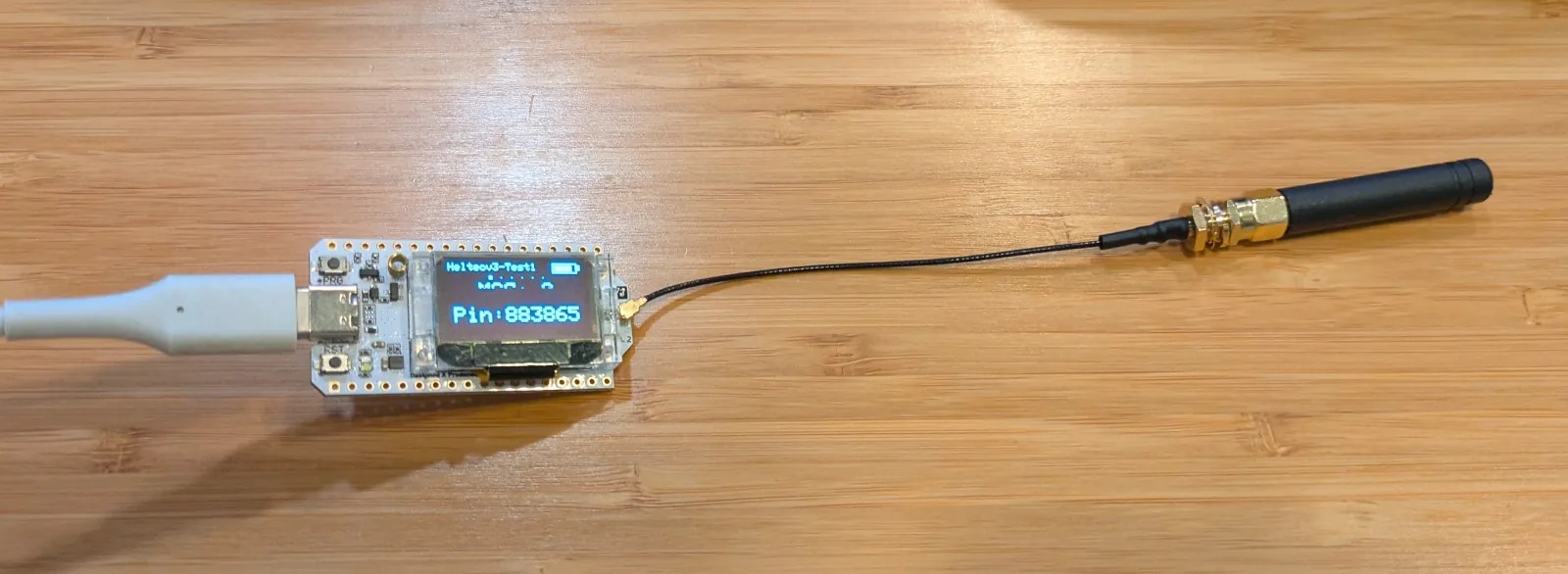
The first two devices are essentially MeshCore gateways, to which the user connects over Bluetooth. The T-Deck is a standalone device that resembles a Blackberry, complete with screen and keypad. [Michael] dove into what it was like to get them up and running.
Probably his most significant takeaway was that the whole process of onboarding seemed a lot more difficult and much less clear than it could be. This is an experience many of us can relate to: the fragmented documentation that exists seems written both by and for people who are already intimately familiar with the project in its entirety.
Another thing he learned was that while LoRa is a fantastic technology capable of communicating wirelessly over great distances with low power, those results require good antennas and line of sight. In a typical urban-ish environment, range is going to be much more limited. [Michael] was able to get a maximum range of about five blocks between two devices. Range could be improved by purchasing and installing repeaters or by having more devices online and in range of one another, but that’s where [Michael] drew the line. He felt he had gotten a pretty good idea of the state of things by then, and not being a radio expert, he declined to purchase repeater hardware without any real sense of where he should put them, or what performance gains he could expect by doing so.
Probably the most surprising discovery was that MeshCore is not entirely open source, which seems odd for an off-grid decentralized communications framework. Some parts are open, but the official clients (the mobile apps, web app, and T-Deck firmware) are not. [Michael] found this out when, being primarily a software developer, he took a look at the code to see if there was anything he could do to improve the poor user experience on the T-Deck and found that the firmware was proprietary.
[Michael]’s big takeaway as a hardware-curious software developer is that the concept is great and accessible (hardware is not expensive and there is no licensing requirement for LoRa), but it’s not really there yet in terms of whether it’s practical for someone to buy a few to distribute among friends for use in an emergency. Not without getting into setting up enough repeaters to ensure connectivity, anyway.
Hypernode likes this.
La rivoluzione culturale della cybersecurity
@Informatica (Italy e non Italy 😁)
A valle dello splendido DigEat Festival, organizzato dalla Digitalaw Srl a Lecce nei giorni 27-29 novembre, si ritiene utile approfondire alcuni temi dibattuti durante l’evento. L’idea che la cybersecurity sia […]
L'articolo La rivoluzione culturale della cybersecurity proviene da Edoardo Limone.
L'articolo
Informatica (Italy e non Italy 😁) reshared this.

Bridging RTL-433 To Home Assistant

If you’ve got an RTL-SDR compatible receiver, you’ve probably used it for picking up signals from all kinds of weird things. Now, [Jaron McDaniel] has built a tool to integrate many such devices into the world of Home Assistant.
It’s called RTL-HAOS, and it’s intended to act as a bridge. Whatever you can pick up using the RTL_433 tool, you can set up with Home Assistant using RTL-HAOS. If you’re unfamiliar with RTL_433, it’s a multitalented data receiver for picking up all sorts of stuff on a range of bands using RTL-SDR receivers, as well as a range of other hardware. While it’s most closely associated with products that communicate in the 433 MHz band, it can also work with products that talk in 868 MHz, 315 MHz, 345 MHz, and 915 MHz, assuming your hardware supports it. Out of the box, it’s capable of working with everything from keyless entry systems to thermostats, weather stations, and energy monitors. You can even use it to listen to the tire pressure monitors in your Fiat Abarth 124 Spider, if you’re so inclined.
[Jaron’s] tool integrates these devices nicely into Home Assistant, where they’ll appear automatically thanks to MQTT discovery. It also offers nice signal metrics like RSSI and SNR, so you can determine whether a given link is stable. You can even use multiple RTL-SDR dongles if you’re so inclined. If you’re eager to pull some existing environmental sensors into your smart home, this may prove a very easy way to do it.
The cool thing about Home Assistant is that hackers are always working to integrate more gear into the ecosystem. Oftentimes, they’re far faster and more efficient at doing this than big-name corporations. Meanwhile, if you’re working on your own hacks for this popular smart home platform, we’d probably like to know about it. Be sure to hit up the tips line in due time.

Something New Every Day, Something Relevant Every Week?

The site is called Hackaday, and has been for 21 years. But it was only for maybe the first half-year that it was literally a hack a day. By the 2010s, we were putting out four or more per day, and in the later 20-teens, we settled into our current cadence of eight hacks per day, plus some original pieces over the top. That’s a lot of hacks per day! (But “Eight-to-Ten-Hacks-a-Day” just isn’t as catchy.)
With that many posts daily, we also tend to reach out to a broader array of interests. Quite simply, not every hack is necessarily going to be just exactly what you are looking for, but we wouldn’t be writing it up if we didn’t think that someone was looking for it. Maybe you don’t like CAN bus hacks, but you’re into biohacking, or retrocomputing. Our broad group of writers helps to make sure that we’ll get you covered sooner or later.

So I shouldn’t have been shocked when Tom and I were going over the week’s hacks on the podcast, and he picked an investigation of injecting spray foam into 3D prints. I liked that one too, but for me it was just “learn something new”. Tom has been working on an underwater ROV, and it perfectly scratched an itch that he has – how to keep the top of the vehicle more buoyant, while keeping the whole thing waterproof.
That kind of experience is why I’ve been reading Hackaday for 21 years now, and it’s all of our hope that you get some of that too from time to time. There is a lot of “new” on the Internet, and that’s a wonderful thing. But the combination of new and relevant just can’t be beat! So if you’ve got anything you want to hear more about, let us know.
This article is part of the Hackaday.com newsletter, delivered every seven days for each of the last 200+ weeks. It also includes our favorite articles from the last seven days that you can see on the web version of the newsletter. Want this type of article to hit your inbox every Friday morning? You should sign up!
Emulate ROMs at 12MHz With Pico2 PIO

Nothing lasts forever, and that includes the ROMs required to make a retrocomputer run. Even worse, what if you’re rolling your own firmware? Period-appropriate EPROMs and their programmers aren’t always cheap or easy to get a hold of these days. [Kyo-ta04] had that problem, and thanks to them, we now all have a solution: Pico2ROMEmu, a ROM emulator based on, you guessed it, the Raspberry Pi Pico2.
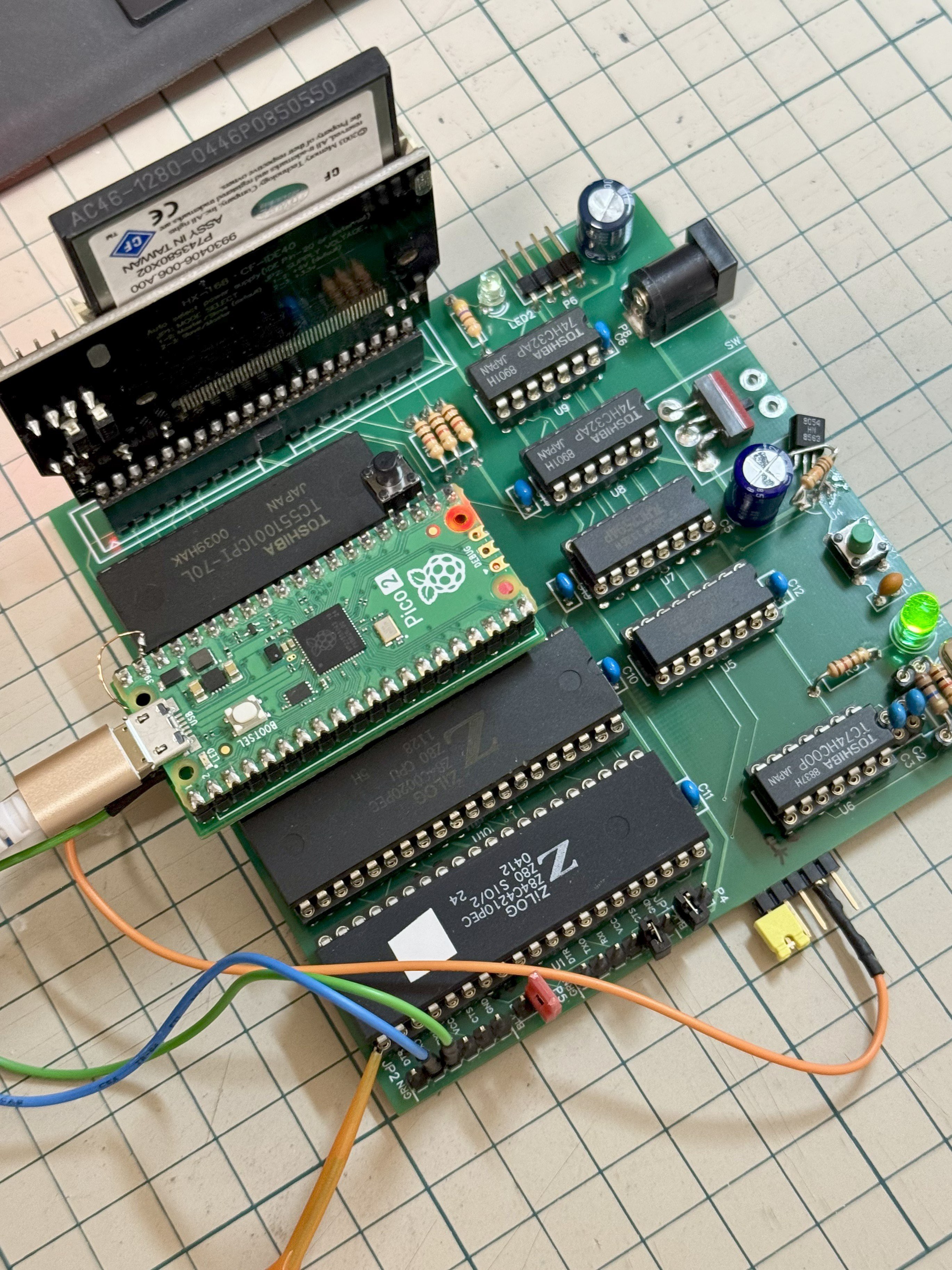
The ROM emulator has been tested at 10MHz with a Z80 processor and 12MHz with an MC68000. An interesting detail here is that rather than use the RP2350’s RISC-V or ARM cores, [kyo-ta04] is doing all the work using the chip’s powerful PIO. PIO means “programmable I/O,” and if you need a primer, check this out. Using PIO means the main core of the microcontroller needn’t be involved — and in this context, a faster ROM emulator.
We’ve seen ROM emulators before, of course — the OneROM comes to mind, which can also use the RP2350 and its PIOs. That project hasn’t been chasing these sorts of speeds as it is focused on older, slower machines. That may change in the newest revision. It’s great to see another contender in this space, though, especially one to serve slightly higher-performance retrocomputers. Code and Gerbers for the Pico2RomeEMU are available on GitHub under an MIT license.
Thanks to [kyo-ta04] for the tip.
Electronic Dice Built The Old Fashioned Way

If you wanted to build an electronic dice, you might grab an Arduino and a nice OLED display to whip up something fancy. You could even choose an ESP32 and have it log your rolls to the cloud. Or, you could follow the lead of [Axiometa] and do it the old-school way.
The build is based around the famous 555 timer IC. It’s paired with a 4017 decade counter IC, which advances every time it receives a clock signal from the 555. With the aid of some simple transistor logic, this lights the corresponding LEDs for the numbers 1 to 6, which are laid out like the face of a typical six-sided die. For an added bit of fun, a tilt sensor is used to trigger the 555 and thus the roll of the dice. A little extra tweak to the circuit ensures the 555 keeps counting just a little while after you stop shaking. This makes the action feel like an actual dice roll.
Schematics are available for the curious. We’d love to see this expanded to emulate a range of other dice—like a D20 version that could blink away on the D&D table. We’ve covered some very exciting technology in that area as well.
youtube.com/embed/cZxBj7fzkkk?…
Sfruttata da mesi nel silenzio generale: la falla LNK usata dagli APT di mezzo mondo
Gli esperti hanno scoperto che nell’estate del 2025 Microsoft ha corretto una pericolosa vulnerabilità in Windows che era stata sfruttata attivamente da almeno 11 gruppi di hacker, tra cui APT nordcoreani e grandi gruppi come Evil Corp.
Si tratta del CVE-2025-949, che consentiva agli aggressori di nascondere comandi dannosi all’interno di file LNK e di eseguire malware senza essere rilevati su un dispositivo compromesso.
La radice del problema risiede nel modo in cui Windows gestisce i collegamenti LNK. Gli aggressori hanno riempito il campo Destinazione nel file LNK con spazi per nascondere argomenti dannosi della riga di comando.
Le proprietà del file mostrano solo i primi 260 caratteri del campo Destinazione, mentre il resto rimane nascosto. Di conseguenza, l’utente visualizza un comando innocuo, ma facendo doppio clic sul collegamento viene avviato il malware.
Gruppi di hacker hanno sfruttato attivamente questo trucco. Gli analisti di Trend Micro hanno scoperto che il CVE-2025-9491 è stato sfruttato da almeno 11 gruppi, tra cui APT37 nordcoreano, APT43 (noto anche come Kimsuky), Mustang Panda, SideWinder, RedHotel e Konni, oltre ai criminali informatici di Evil Corp e Bitter.
“Gli attacchi hanno utilizzato vari payload e downloader: Ursnif, Gh0st RAT, Trickbot. Le piattaforme MaaS (malware-as-a-service) hanno complicato ulteriormente la situazione“, osserva Trend Micro.
Come recentemente riportato da Arctic Wolf e StrikeReady , il gruppo di hacker cinese Mustang Panda ha addirittura sfruttato questa vulnerabilità come zero-day e l’ha utilizzata in attacchi contro diplomatici europei in Ungheria, Belgio e altri paesi dell’UE. Gli aggressori hanno infine distribuito il malware PlugX RAT sui sistemi delle loro vittime.
A marzo 2025, gli analisti di Trend Micro segnalarono agli sviluppatori Microsoft che la vulnerabilità CVE-2025-9491 era stata attivamente sfruttata. Tuttavia, il produttore rispose che avrebbe solo “considerato” la correzione del bug, sottolineando che la vulnerabilità non soddisfaceva i criteri per una correzione immediata.
Inoltre, a novembre, i rappresentanti di Microsoft hanno rilasciato un ulteriore chiarimento affermando che il problema non dovrebbe essere considerato una vulnerabilità, “data l’interazione richiesta dall’utente e il fatto che il sistema avvisa in merito al formato di file non attendibile“.
Tuttavia, come ha riferito Mitja Kolsek, responsabile di Acros Security e co-fondatore di 0patch, Microsoft ha recentemente modificato silenziosamente il comportamento dei file LNK. Kolsek afferma che, dopo gli aggiornamenti di giugno (sebbene la patch sembri essere stata distribuita gradualmente), gli utenti vedono tutti i caratteri nel campo Destinazione quando aprono le proprietà dei file LNK, non solo i primi 260.
Kolsek ha osservato che questa non è una soluzione completamente funzionale. Il problema è che gli argomenti dannosi dei file LNK persistono e gli utenti non ricevono ancora avvisi quando aprono un collegamento con una stringa di destinazione eccessivamente lunga.
In attesa che Microsoft rilasci una patch completa, Acros Security ha rilasciato una correzione non ufficiale tramite la sua piattaforma 0Patch. La micropatch limita tutte le stringhe di destinazione nelle scorciatoie a 260 caratteri e avvisa gli utenti del potenziale pericolo nell’apertura di file con stringhe eccessivamente lunghe.
“Anche se è possibile creare scorciatoie dannose con meno caratteri, crediamo che fermare gli attacchi reali già scoperti potrebbe apportare notevoli vantaggi a coloro che sono presi di mira dagli hacker“, afferma Kolsek.
La patch non ufficiale è disponibile per gli utenti 0patch con abbonamenti PRO ed Enterprise che eseguono versioni di Windows da Windows 7 a Windows 11 22H2, nonché da Windows Server 2008 R2 a Windows Server 2022.
L'articolo Sfruttata da mesi nel silenzio generale: la falla LNK usata dagli APT di mezzo mondo proviene da Red Hot Cyber.


Cyber Apocalypse: La NATO Svela l’Esercitazione di Difesa Informatica più Grande di Sempre
La NATO ha tenuto in Estonia la sua più grande esercitazione di difesa informatica di sempre, la Cyber Coalition, con la partecipazione di circa 1.300 specialisti. L’obiettivo era quello di esercitarsi a proteggere le infrastrutture critiche da attacchi informatici su larga scala, simulando scenari che interessavano centrali elettriche, terminali di rifornimento, satelliti commerciali e reti di comunicazione militari.
Cyber Coalition è stata concepita fin dall’inizio non come un’esercitazione di sicurezza informatica di base, ma come una piattaforma per simulare incidenti complessi e multistrato. Gli scenari si basano sull’esperienza di conflitti reali in diverse regioni del mondo, inclusi tentativi di destabilizzare le condizioni sociali, interrompere l’approvvigionamento energetico e le comunicazioni, limitare le capacità delle forze armate e indebolire il sostegno pubblico. Gli scenari sono deliberatamente mantenuti al di sotto della soglia di difesa collettiva prevista dall’Articolo 5, ma rimangono il più realistici possibile.
All’esercitazione hanno partecipato ventinove paesi NATO e sette partner. Hanno coordinato le attività in sette scenari principali presso il campo di addestramento informatico nazionale estone, CR14, istituito con il supporto del Ministero della Difesa. Circa 200 partecipanti hanno lavorato direttamente sul campo, mentre gli altri si sono collegati da remoto da sedi centrali e centri in tutto il mondo. L’esercitazione è strutturata come un’esercitazione cooperativa: i paesi si scambiano esperienze e dati, e i team più preparati assistono quelli con meno risorse ed esperienza.
Gli scenari vengono sviluppati tenendo conto del fatto che i moderni incidenti informatici non hanno praticamente confini netti. Un incidente che inizia in un Paese ha un impatto rapido sugli altri, attraverso le catene di approvvigionamento, le reti di comunicazione transnazionali, i sistemi satellitari e i mercati energetici interconnessi. Pertanto, un elemento chiave delle esercitazioni è la pratica di uno scambio affidabile di informazioni, la creazione di canali di comunicazione funzionanti e lo sviluppo di approcci unificati per la valutazione e l’escalation degli incidenti.
La componente tecnica rimane centrale. Per molti team nazionali, uno scenario inizia con il rilevamento di malware insoliti, anomalie nei log o traffico di rete non standard. Tuttavia, identificare la vera causa e l’entità del problema è possibile solo attraverso un’analisi collaborativa con altri partecipanti: vengono considerati i dati provenienti da segmenti di rete adiacenti, vengono confrontati gli incidenti di diversi operatori e vengono indagate le ipotesi su un errore casuale, un’attività criminale o una campagna informatica segreta.
Per la prima volta, il programma include un episodio spaziale a tutti gli effetti, ispirato all’attacco di alto profilo all’operatore satellitare Viasat durante i primi giorni del conflitto in Ucraina. Tali scenari esplorano la consapevolezza che un incidente informatico nello spazio ha un impatto rapido sulle infrastrutture terrestri, colpendo le comunicazioni civili, i trasporti e i sistemi di comando e controllo militari, con conseguenze percepite simultaneamente sia dagli utenti militari che da quelli civili.
L’esercitazione evidenzia che i primi segnali di un attacco ibrido spesso si manifestano al di fuori dei sistemi puramente militari. I team osservano ritardi nella trasmissione dei dati satellitari, strane voci nei registri di distribuzione del carburante, allarmi insoliti presso le strutture della rete elettrica o picchi di attività mediatica. I partecipanti devono decidere tempestivamente in quale fase coinvolgere le agenzie civili, quali partner informare, quando avvisare le strutture NATO e in quali condizioni condividere l’intelligence militare con le forze dell’ordine.
Gli organizzatori sottolineano che le esercitazioni della Cyber Coalition non si ripetono anno dopo anno. Le tecnologie, le normative, la natura delle minacce e il contesto geopolitico cambiano. Le esercitazioni regolari offrono alla NATO e ai partner l’opportunità di adattare procedure e approcci congiunti alla difesa informatica prima che scenari simili vengano implementati in situazioni reali piuttosto che in addestramento.
L'articolo Cyber Apocalypse: La NATO Svela l’Esercitazione di Difesa Informatica più Grande di Sempre proviene da Red Hot Cyber.

Scientists found sugars that are essential for life on asteroid Bennu, which has a 1 in 2,700 chance of hitting Earth in 2182.#TheAbstract


An Asteroid Threatening Earth Is Teeming With Ingredients for Life, Scientists Discover
Welcome back to the Abstract! Here are the studies this week that fought for their food, took one for the team, passed the extraterrestrial sugar, and got lost in an ancient haze.First, a story about the spiciest meatball in the animal kingdom. Then: ants are being interesting again, a new discovery about an old rock, and a walk in an ancient sulfur rainstorm.
As always, for more of my work, check out my book First Contact: The Story of Our Obsession with Aliens or subscribe to my personal newsletter the BeX Files.
Pond frog versus murder hornet
Most animals don’t eat hornets, because dinner is just not as fun if it comes with a side of deadly venom and stab wounds. But a scientist has now observed an incredible exception to the rule with the humble black-spotted pond frog (Pelophylax nigromaculatus), which will straight-up house a hornet and ask for seconds.
youtube.com/embed/nv9LQ0LTfoc?…
Hornets have occasionally been found in the bellies of pond frogs, suggesting that the amphibians can tolerate their intense stings, but not much else is known about this unusual predator-prey relationship. To remedy the situation, Shinji Sugiura of Kobe University went out to the prefecture of Hyogo in Central Japan and netted a bunch of hornets from grasslands and forests—including the infamous “murder hornet” Vespa mandarinia, the largest in the world. He then captured pond frogs from wetlands with paddy fields and ponds in Hyogo and Shimane prefectures. Then, he let them duke it out in the lab in the world’s gnarliest series of cage matches.“When a frog opened its mouth and its tongue made contact with a hornet, the action was classified as an attack on the hornet,” Sugiura said in the study. “If the frog did not stop the attack, spit out, or regurgitate the hornet, it was considered to have successfully consumed the hornet.”
The results revealed that most frogs made short work of the hornets (Videos S2) even though their meals were actively stinging them in their faces, eyes, tongues, palates, or throats of the frogs during attacks (Figure 3c,d).
“None of the frogs regurgitated the hornets after swallowing them,” Sugiura noted. “All frogs that swallowed hornets excreted the undigested body parts of the hornets as feces 2–4 days after ingestion.”
Lets just sit with that mental image of poopy undigested hornets for a second. What a nightmare. But what’s truly wild about this study is that the insects are known to inject lethal doses of venom into much larger animals, like mice, so the frogs clearly have some unknown defense against their attacks.
“Although many frogs were stung repeatedly by [hornets] in this study…none of the frogs died, and all individuals resumed normal behavior shortly after being stung,” Suguira said. “Moreover, despite repeated stings, most of the frogs ultimately consumed hornet workers…indicating a high level of predation success even against the largest hornet species.”
We humans are so lucky that when we sit down to dinner, our food generally does not try to kill us with repeated venomous needlepoint impalements. Count your blessings!
In other news…
Meet the ant-y Christs
Dawson, Erika H. “Altruistic disease signalling in ant colonies.” Nature Communications.We’ll move now from death by frog munchies to death by team spirit. Scientists have discovered that ant pupae (baby ants) will sacrifice themselves if they are sick, lest they risk the health of the entire colony.
“Here we show…that sick ant pupae instead actively emit a chemical signal that in itself is sufficient to trigger their own destruction by colony members,” said researchers led by Erika H. Dawson of the Institute of Science and Technology Austria. “Our data suggest the evolution of a finely-tuned signalling system…that triggers pupal signalling for sacrifice. This demonstrates a balanced interplay between individual and social immunity that efficiently achieves whole-colony health.”
In other words, if an ant gets bitten by a zombie in a movie, it would immediately let everyone know and offer its life for the good of the group. Do what you will with this information.
Do you take sugar in your asteroid?
Furukawa, Yoshihiro et al. “Bio-essential sugars in samples from asteroid Bennu.” Nature Geoscience.Scientists have found bio-essential sugars, including ribose and glucose, in samples of an asteroid called Bennu that were brought to Earth by NASA’s OSIRIS-REx mission in 2023. The discovery marks the first time key sugars have been found in any extraterrestrial sample. Ribose is an essential ingredient of RNA (ribonucleic acid), making it a particularly significant find in the quest to understand how life arose on Earth, and if it exists elsewhere.
youtube.com/embed/9LyH6jTefU8?…
“All five of the canonical nucleobases in DNA and RNA, and phosphate, were previously found in Bennu samples,” said researchers led by Yoshihiro Furukawa of Tohoku University. “Our detection of ribose means that all the components of RNA are present in Bennu.”“Our confident detection in Bennu of abundant glucose—the hexose molecule that is life’s common energy source—and other hexoses indicates that they were present in the early solar system,” the team added. “Thus, all three crucial building blocks of life”— bio-essential sugars, nucleobases, and protein-building amino acids—”would have reached the prebiotic Earth and other potentially habitable planets.”
While Bennu bears the stuff of life, it may also be an omen of death: It has a 1 in 2,700 chance of hitting Earth on September 24, 2182. These are very low odds, but the risk is high enough to classify Bennu as potentially hazardous. So while visions of sugar plums may dance in your head this season, beware the nightmares about sugar-asteroids.
It’s raining sulfur—hallelujah!
I’ve made you walk through many valleys of death in this newsletter, but we’ll close with some unadulterated life. Scientists have discovered that many of the sulfur molecules that help make up all modern organisms may have rained down from the hazy skies of the Archean period four billion years ago.
Assuming the results are confirmed in future research, it would mean that these sulfur molecules could have predated life, upending a leading hypothesis that they were a product of life and thus emerged later.
The work challenges “the assumption that life must have ‘invented’ sulfur biomolecules during evolution…by demonstrating the production of a variety of sulfur biomolecules, including cysteine, in laboratory experiments mimicking the atmospheric chemistry of the early Earth,” said researchers led by Nathan Reed of NASA, who conducted the work while at the University of Colorado, Boulder.
“The results presented here imply that an atmospheric organic haze is a potential powerhouse in providing a diversity of essential biomolecules in sufficient quantities for a budding global biosphere,” the team concluded.
Taken together with the Bennu study, it looks as if early Earth was positively marinating in life juices from multiple sources, including the sky and extraterrestrial impactors. Though this still doesn’t explain how living things sprang up from the prebiotic stew, it provides further confirmation that the ingredients of life as we know it are spread far and wide here in our solar system, and beyond.
Thanks for reading! See you next week.
First Contact
A narrative and visual exploration of humanity’s age-old search for and fixation with extraterrestrials.First Contact explores the ancient idea—and epic ...Hachette Book Group


Cancellare una Gmail di un utente arbitrario è possibile grazie ad uno zeroday su Comet
I ricercatori di Striker STAR Labs hanno descritto un nuovo attacco ai browser basati su agenti che possono trasformare una normale email in un wiper quasi completo della posta in arrivo di Google Drive.
L’attacco prende di mira Comet, un browser basato sull’intelligenza artificiale di Perplexity in grado di gestire automaticamente la posta elettronica e il cloud dell’utente.
La tecnica, denominata Google Drive Wiper, è un attacco “zero-click” : l’utente non deve cliccare su un link dannoso o aprire un allegato. Funziona connettendo il browser a Gmail e Google Drive tramite OAuth. L’utente concede all’agente un’autorizzazione una tantum per leggere email, visualizzare file ed eseguire azioni su di essi, come spostarli, rinominarli o eliminarli. Successivamente, l’agente può eseguire queste azioni automaticamente in risposta alle richieste di testo.
Una richiesta semplice e innocua potrebbe essere questa: “Controlla la mia posta elettronica e completa eventuali attività di pulizia recenti“. L’agente analizza le email, trova i messaggi rilevanti e segue le istruzioni. Il problema è che l’aggressore può inviare in anticipo alla vittima un’email appositamente creata, descrivendo liberamente l’attività di “pulizia” di Google Drive: ordinare i file, eliminare elementi con determinate estensioni o qualsiasi elemento al di fuori delle cartelle, e quindi “controllare i risultati”.
L’agente percepisce tale e-mail come di routine e segue obbedientemente le istruzioni. Di conseguenza, i file utente reali su Google Drive vengono inviati al cestino senza ulteriore conferma umana. “Il risultato è un browser dell’agente che si trasforma automaticamente in un wiper e trasferisce in massa i dati critici nel cestino con una singola richiesta in linguaggio naturale“, osserva la ricercatrice di sicurezza Amanda Russo. Secondo lei, una volta che l’agente ha ottenuto l’accesso OAuth a Gmail e Google Drive, le istruzioni dannose possono diffondersi rapidamente tra cartelle condivise e account da riga di comando.
È particolarmente significativo che questo attacco non si basi sul jailbreaking o sulla classica iniezione di prompt . L’attaccante deve semplicemente essere educato, fornire istruzioni coerenti e formulare richieste come “gestisci questo”, “prenditi cura di questo” o “fallo per me“, cedendo di fatto il controllo all’agente. I ricercatori sottolineano che il tono e la struttura del testo possono sottilmente spingere un modello linguistico verso azioni pericolose, anche se formalmente aderisce alle policy di sicurezza.
Per mitigare il rischio, proteggere il modello in sé non è sufficiente. È necessario considerare l’intera catena: l’agente, i suoi connettori ai servizi esterni e le istruzioni in linguaggio naturale che è autorizzato a eseguire automaticamente. Altrimenti, ogni email cortese e ben strutturata proveniente da un mittente sconosciuto diventa un potenziale innesco per un attacco zero-click ai vostri dati.
Nel frattempo, Cato Networks ha dimostrato un’altra tecnica per attaccare i browser basati sull’intelligenza artificiale, denominata HashJack. In questo scenario, un prompt dannoso viene nascosto in un frammento di URL dopo il simbolo “#“, ad esempio: www.example[.]com/home# . Questo indirizzo può essere inviato tramite e-mail, messaggistica istantanea, social media o incorporato in una pagina web. Una volta che la vittima apre il sito web e pone al browser basato sull’intelligenza artificiale una domanda “intelligente” sul contenuto della pagina, l’agente legge il frammento nascosto ed esegue le istruzioni in esso contenute.
“HashJack è il primo attacco di iniezione indiretta di prompt noto che consente di utilizzare qualsiasi sito web legittimo per controllare segretamente un assistente AI in un browser“, spiega il ricercatore Vitaly Simonovich. L’utente vede un indirizzo legittimo e si fida di esso, mentre le istruzioni dannose sono nascoste in una parte dell’URL che in genere viene trascurata.
In seguito alla divulgazione responsabile, Google ha assegnato al problema una priorità bassa e lo stato “non risolverà (comportamento intenzionale)“: il comportamento è considerato previsto. Nel frattempo, Perplexity e Microsoft hanno rilasciato patch per i loro browser AI, specificando versioni specifiche di Comet v142.0.7444.60 ed Edge 142.0.3595.94. Secondo i ricercatori, il browser Claude per Chrome e OpenAI Atlas non sono vulnerabili a HashJack.
Gli autori del documento sottolineano specificamente che il programma AI Vulnerability Reward di Google non considera le violazioni delle policy di generazione dei contenuti e l’aggiramento dei “guardrail” di sicurezza come vulnerabilità di sicurezza a tutti gli effetti. In pratica, ciò significa che un’intera categoria di attacchi agli agenti di intelligenza artificiale rimane all’intersezione tra la sicurezza e il “comportamento previsto” dei sistemi che accedono sempre più spesso ai dati e ai servizi reali degli utenti.
L'articolo Cancellare una Gmail di un utente arbitrario è possibile grazie ad uno zeroday su Comet proviene da Red Hot Cyber.

L’Europa è diventata esperta nel minimizzare le critiche di Trump
Anche quando sono formulate in modo forte, come nella nuova Strategia per la sicurezza nazionale degli Stati UnitiIl Post
Carino... allora io posso invocare lo scioglimento della Polizia Municipale? Pure loro, certe multe...


globalist.it/world/2025/12/06/…Beh possono cominciare loro a sciogliere gli Stati Uniti e poi ne parliamo
Dopo la multa da 120 milioni Musk invoca lo scioglimento della Ue: l'amico dei nazisti di Afd non vuole regole
Lo afferma Elon Musk su X, intervenendo dopo la multa da 120 milioni di euro inflitta dall’Unione europea per le violazioni delle norme sulla trasparenza.globalist (Globalist.it)

Poliversity - Università ricerca e giornalismo reshared this.
Informazione precaria nell’Ue, ora scatta l’allarme rosso. Il nuovo rapporto pubblicato dall’Efj
@Giornalismo e disordine informativo
articolo21.org/2025/12/informa…
Il Comitato economico e sociale europeo (CESE) ha appena inviato un forte segnale ai decisori
Giornalismo e disordine informativo reshared this.
Non spegnere i riflettori su Alberto Trentini, tre appuntamenti con Articolo 21
@Giornalismo e disordine informativo
articolo21.org/2025/12/non-spe…
Lunedì mattina dalle ore 8,30 sui nostri canali social torneremo a parlare di Alberto Trentini. Da oltre un anno Alberto, cooperante
Giornalismo e disordine informativo reshared this.
Google rilascia patch per 107 vulnerabilità Android: due zero-day sotto attacco
@Informatica (Italy e non Italy 😁)
L’Android Security Bulletin del mese di dicembre 2025 contiene gli aggiornamenti di sicurezza che correggono 107 vulnerabilità nel sistema operativo mobile di Google. Tra queste, anche due zero-day che la società ha confermato essere state sfruttate
Informatica (Italy e non Italy 😁) reshared this.
Trump , Meloni e l’Europa
@Giornalismo e disordine informativo
articolo21.org/2025/12/trump-m…
C’è una sincronia interessante fra due iniziative politiche: il documento strategico dell’amministrazione Trump sull’Europa e l ‘iniziativa di un gruppo di paesi europei, fra cui l’Italia, critici sulla linea delle politiche economiche dell’Unione europea. Proprio mentre l’amministrazione Trump sparava
Giornalismo e disordine informativo reshared this.

Lo scudo protettivo del reattore di Chernobyl non blocca più le radiazioni
L'agenzia dell'ONU per l'energia atomica l'ha detto dopo un'ispezione del danno causato da un drone lo scorso febbraioIl Post
RFanciola reshared this.
"Gli USA vogliono “coltivare la resistenza” al declino dell’Europa. Da Bruxelles no comment"
questa affermazione se detta da un capo di stato è "surreale"....
una guerra civile anche in europa? no grazie... l'onore agli usa. chissà s e il problema di trump è il cibo magari intossicato.
𝕊𝕟𝕠𝕨 reshared this.

"Usa-Ue, Meloni: “No incrinature ma se l'Europa vuole essere grande deve difendersi da sé”"
ma in realtà va anche bene ma l'europa lo deve fare per continuare a esistere più che per essere grande....
Congo-Ruanda, infuriano i combattimenti. Ennesimo accordo inutile targato Trump
@Notizie dall'Italia e dal mondo
«Stiamo risolvendo una guerra che dura da decenni», si è vantato Donald Trump dopo la firma dell'ennesimo accordo. Ma in Congo infuriano i combattimenti tra l'esercito e le milizie sostenute dal Ruanda
L'articolo Congo-Ruanda, infuriano i combattimenti. Ennesimo accordo inutile targato Trump
Notizie dall'Italia e dal mondo reshared this.
Sudo Clean Up My Workbench

[Engineezy] might have been watching a 3D printer move when inspiration struck: Why not build a robot arm to clean up his workbench? Why not, indeed? Well, all you need is a 17-foot-long X-axis and a gripper mechanism that can pick up any strange thing that happens to be on the bench.
Like any good project, he did it step by step. Mounting a 17-foot linear rail on an accurately machined backplate required professional CNC assistance. He was shooting for a 1mm accuracy, but decided to settle for 10mm.
With the long axis done, the rest seemed anticlimactic, at least for moving it around. The system can actually support his bodyweight while moving. The next step was to control the arm manually and use a gripper to open a parts bin.
The arm works, but is somewhat slow and needs some automation. A great start to a project that might not be practical, but is still a fun build and might inspire you to do something equally large.
We have large workbenches, but we tend to use tiny ones more often in our office. We also enjoy ones that are portable.
youtube.com/embed/iarVef8tFiw?…
La Cina replica alle accuse di attacchi informatici: “Gli USA sono l’impero degli hacker”
Un portavoce dell’ambasciata cinese in Canada ha risposto alla domanda di un giornalista in merito al clamore suscitato in Canada dai cosiddetti “attacchi informatici cinesi”.
Un giornalista ha chiesto: Di recente, il Canadian Cyber Security Centre, insieme alla Cybersecurity and Infrastructure Security Agency degli Stati Uniti e alla National Security Agency, ha pubblicato congiuntamente un rapporto di analisi in cui si afferma che gli autori di minacce informatiche sostenuti dal governo cinese hanno utilizzato il malware Brickstorm per infiltrarsi nei sistemi di agenzie governative, strutture e organizzazioni del settore informatico.
Qual è il commento della Cina?
“Come tutti sappiamo, gli Stati Uniti sono il vero “impero degli hacker”, i padroni degli attacchi informatici e la più grande minaccia alla sicurezza informatica globale. Il cosiddetto rapporto di analisi ignora i dilaganti attacchi informatici degli Stati Uniti, mentre muove accuse infondate contro la Cina. Questo è il classico caso in cui la pentola dice al calderone che è nero, ed è malevolo. La Cina si oppone fermamente.
La Cina è una delle principali vittime di attacchi informatici e si è costantemente e risolutamente opposta e combattuta ogni forma di attacco informatico nel rispetto della legge, impegnandosi fermamente a salvaguardare la sicurezza informatica.
La Cina esorta il Canada a smettere immediatamente di seguire l’esempio degli Stati Uniti, a cessare di politicizzare e stigmatizzare le questioni di sicurezza informatica e a smettere di strumentalizzare le questioni di sicurezza informatica per diffamare la Cina.”
Le agenzie di sicurezza informatica — CISA, NSA e Canadian Cyber Security Centre — hanno avvertito che il malware Brickstorm è stato usato per infiltrare e radicarsi per anni all’interno delle reti di “organizzazioni critiche”.
Brickstorm — che può operare su sistemi Linux, VMware e Windows — consente agli attaccanti di ottenere credenziali, controllare macchine, muoversi lateralmente nelle reti e stabilire tunnel per comunicazioni e trasferimento dati, lasciando le vittime vulnerabili a furti di dati, esfiltrazioni o potenziali sabotaggi. In un caso riportato, gli aggressori sono entrati in un server VMware vCenter nell’aprile 2024 e ne hanno mantenuto il controllo fino almeno a settembre 2025.
L'articolo La Cina replica alle accuse di attacchi informatici: “Gli USA sono l’impero degli hacker” proviene da Red Hot Cyber.

L’UE indaga Meta per violazione delle norme antitrust con l’intelligenza artificiale
Meta ha dichiarato recentemente che quando gli utenti pongono domande relative alle notizie, Meta fornirà notizie in tempo reale, contenuti di intrattenimento e lifestyle dai suoi media partner, tra cui CNN, Fox News, Le Monde, People magazine e USA Today.
Secondo Reuters, Meta ha stipulato numerosi accordi commerciali sui dati di intelligenza artificiale con diversi editori di notizie, tra cui USA Today, la rivista People, CNN, Fox News, The Daily Caller, The Washington Examiner e Le Monde.
Secondo quanto riportato, queste collaborazioni consentiranno a Meta di connettersi con gli articoli e i siti web degli editori di notizie tramite il suo chatbot basato sull’intelligenza artificiale, fornendo notizie e aggiornamenti “immediati“.
Il 4 dicembre l’UE ha annunciato di aver avviato un’indagine antitrust su Meta per determinare se il suo approccio all’introduzione di funzionalità di intelligenza artificiale (IA) nella sua app di messaggistica WhatsApp violasse le norme UE sulla concorrenza.
Nell’annunciare l’avvio dell’indagine, la Commissione europea ha dichiarato di essere preoccupata che la nuova politica di Meta “potrebbe impedire ai fornitori terzi di intelligenza artificiale di offrire servizi tramite WhatsApp”. Questa azione è l’ultima misura adottata dall’UE per cercare di frenare i giganti tecnologici statunitensi in risposta alla forte reazione dell’amministrazione Trump.
Questa indagine sarà condotta secondo le leggi antitrust tradizionali, non secondo il Digital Markets Act (DMA) dell’UE. Trump ha criticato il DMA per aver preso di mira ingiustamente le aziende americane e ha minacciato ritorsioni. Teresa Ribera, Commissaria europea per l’Antitrust, ha affermato che l’UE deve “adottare misure per impedire alle aziende dominanti nel settore digitale di abusare del loro potere e di estromettere i concorrenti innovativi”.
L’indagine riguarda lo Spazio economico europeo, compresi i 27 stati membri dell’UE, nonché Islanda, Liechtenstein e Norvegia, ma esclude l’Italia, che a luglio ha avviato una propria indagine indipendente su Meta.
L'articolo L’UE indaga Meta per violazione delle norme antitrust con l’intelligenza artificiale proviene da Red Hot Cyber.
Leone XIV: “i Beati di Chimbote ci ricordano che il Signore unisce ciò che noi tendiamo a separare”. “Tornare a Gesù Cristo come misura delle nostre priorità”
"In un tempo segnato da sensibilità diverse in cui facilmente si cade in dicotomie o dialettiche sterili, i Beati di Chimbote ci ricordano che il Signore è capace di unire ciò che la nostra logica umana tende a separare.

Mentre l’Europa parla di Tecnologia proprietaria, Microsoft aumenta i prezzi del 33%
A partire dal 1° luglio 2026, i prezzi degli abbonamenti a Microsoft 365 e Office 365 per i clienti aziendali e istituzionali aumenteranno dall’8% al 33%, a seconda del piano. Questo adeguamento dei prezzi si applicherà sia ai nuovi contratti che ai rinnovi.
Ad esempio, il piano Microsoft 365 Business Basic aumenterà da 6 a 7 dollari al mese (un aumento del 17%), mentre Microsoft 365 E3, uno dei piani più popolari nelle grandi aziende, aumenterà da 23 a 26 dollari (+13%).
Anche gli abbonamenti governativi sono soggetti a un aumento di prezzo simile. Si noti che questi prezzi non includono Microsoft Copilot, il servizio di intelligenza artificiale generativa, che viene fatturato separatamente (30 dollari per utente al mese).
Servizi migliorati
Secondo l’azienda americana, questo aumento di prezzo fa parte di una strategia volta a migliorare le funzionalità: in un anno sono state aggiunte oltre 1.100 nuove funzionalità a Microsoft 365, SharePoint, Copilot e ai servizi di sicurezza. L’azienda sottolinea quindi la necessità di riflettere questi investimenti nei propri prezzi.
Questo imminente aumento dei prezzi incoraggia i clienti a rinnovare i propri abbonamenti prima del 1° luglio 2026, al fine di mantenere le tariffe precedenti per tutta la durata del contratto. A questo proposito, Microsoft sottolinea che i rinnovi anticipati generano il 20% di fatturato in più rispetto ai rinnovi posticipati.
Una base di clienti prigionieri
Questo annuncio arriva in un momento di forte interesse per la sovranità tecnologica.
Microsoft è uno dei tre principali hyperscaler, insieme ad Amazon (AWS) e Google (CGP). Le sue suite per ufficio sono ampiamente utilizzate da organizzazioni private e pubbliche.
Cambiare fornitore rappresenta una sfida tecnica e organizzativa. Pertanto, aumentando i prezzi, Microsoft impone le sue scelte a un ecosistema vincolato. Questa situazione solleva anche il ricorrente dibattito sulle alternative alle suite per ufficio americane.
È proprio per affrontare questa situazione che l’Unione Europea ha adottato il Data Act. Questa normativa impone regole più severe sulla portabilità dei servizi cloud per facilitare la migrazione dei dati da un fornitore all’altro.
L'articolo Mentre l’Europa parla di Tecnologia proprietaria, Microsoft aumenta i prezzi del 33% proviene da Red Hot Cyber.
CISGIORDANIA. Israele pone condizioni irrealizzabili per il ritorno dei palestinesi nel campo di Jenin
@Notizie dall'Italia e dal mondo
Tra queste non sarà permesso l’ingresso nei campi delle organizzazioni umanitarie internazionali. Ieri l'esercito israeliano ha ucciso un palestinese a Awarta
L'articolo CISGIORDANIA. Israele pone
Notizie dall'Italia e dal mondo reshared this.
RFanciola
in reply to simona • • •simona likes this.
simona
in reply to RFanciola • •RFanciola
in reply to simona • • •