Digital Omnibus – A Single Rulebook or a License to Trespass Fundamental Rights?
What is Digital Omnibus?
Digital policy lobbies across the European Union are buzzing with one word: Digital Omnibus, a proposal aimed at consolidating and simplifying the existing EU digital framework. The idea, according to the proposal’s advocates, is to reduce overlap in obligations and the compliance burden on businesses.
Clarifying GDPR concepts such as pseudonymised vs non-personal data
Allowing limited use of sensitive data for detecting AI bias
Adjusting some obligations under the AI Act and delaying certain requirements
Creating a European Business Wallet for corporate digital identities
Merging various data laws into a more unified Data Act
Introducing a single entry point for cybersecurity incident reporting
These are framed as efficiency measures, cost-reduction initiatives, and efforts to make Europe more attractive to digital innovation.
Critics Warn: What Does Streamlining Actually Mean for OurRights?
For policymakers looking at the issue from strictly a business perspective, the digital Omnibus is a proposal long overdue. But as with any sweeping reform, the details matter, and this is where the debate becomes intense.
This is where concerns sharpen, especially among civil society groups, privacy advocates, and parties committed to defending digital freedoms such as the European Pirates.
European Digital Rights (EDRI) and other Digital rights advocates warn that simplifying the rulebook will come with a quiet erosion of our rights that were hard-won over the past decade.
Key Concerns Raised Against the Digital Omnibus
1. Roll-Back of Digital Protection Laws
The Omnibus is seen as reopening and weakening major protections, including the GDPR, ePrivacy, and the AI Act. This is viewed as a blow to the decades of work on digital rights.
2. Weakening of ePrivacy Rules
According to EDRi, the proposal would shift some “device access” rules from ePrivacy into GDPR, reducing mandatory consent in some cases. It is feared that this could permit tracking on devices without users’ explicit approval.
3. Narrowing the Definition of “Personal Data”
A redefinition of personal data could give companies more leeway to process information. Critics argue that this redefinition could reduce transparency and control for individuals.
4. Undermining AI Accountability
According to TechPolicy.Press article, amendments that give AI providers too much discretion, including a loophole that allows them to opt out of certain “high-risk” obligations without publicly declaring it. Rights groups argue this removes a key transparency check, weakening the AI Act’s purpose of managing risk.
5. Privileging Business Over People
Supporters of digital rights strongly believe that these reforms will shift power toward companies, thereby reducing individuals’ leverage under data protection laws. Precisely, these reforms have corporate interests as their focal point rather than citizens’ rights.
6. Weak Democratic Process
The way Omnibus is being fast-tracked with limited consultation and impact assessment, EDRi and others argue that such sweeping changes deserve more thorough democratic scrutiny.
7. Risk to Minoritised and Vulnerable Groups
EDRi highlights that under the proposed changes, marginalised communities could face a higher risk of profiling or automated discrimination. Reduced oversight and transparency could make it harder to challenge unfair or biased automated decisions.
So, Where Does This Leave Us?
For the European Pirates, the question is not whether Europe should innovate, but how. Efficiency cannot come at the cost of loosening the protections that set the EU apart in the global digital landscape.
The Digital Omnibus, on the surface, may appear to be an effort to overcome the hurdles that impede the EU’s innovation and growth. However, the implications of this proposal have far-reaching consequences from a social perspective.
The debate around the Digital Omnibus is only beginning. What is at stake is the balance between modernising Europe’s digital framework and guarding the rights of the people who live within it.
If you don’t know much about the RP2040 or RP2350 here’s the basic run down: the original Raspberry Pi Pico was released in 2021 with the RP2040 at its heart, with the RP2350 making its debut in 2024 with the Pico 2. Both microcontrollers include a feature known as Programmed I/O (PIO), which lets you configure tiny state machines and other facilities (shift registers, scratch registers, FIFO buffers, etc) to process simple I/O logic, freeing up the CPU to do other tasks.
The bottom line is that you can write very simple programs to do very fast and efficient I/O and these programs can run separately to the other code running on your micro. In the video below, [piers] explains how it works and how he’s used it in his One ROM project.
Across Europe, a new concept known as chat scanning has entered the public debate. Supporters claim it will protect children from online harm. Chat control is formally part of the Child Sexual Abuse Regulation (CSAR), aimed at combating CSAM (child sexual abuse material). However, many experts, privacy groups, and digital rights advocates warn that it poses a greater risk for everyone who uses a phone, especially young people who message daily.
What is chat scanning?
In simple terms, it is a system that checks your private messages before or as soon as you send them. The app you use would need to scan your texts, photos, or videos and determine whether they seem suspicious. If the scanner thinks something is “unsafe,” it can report the sender, even if the message was completely innocent.
This means the scanning occurs within your phone, not on a server elsewhere. Every typed or uploaded message is checked before it reaches a friend or family member. It is like having a digital security guard watching over your shoulder every time you write something personal.
For digital rights advocates, including the Pirate Party, this raises a serious concern: privacy is not something that can be switched on and off. Once a system is built to monitor everyone’s conversations, it becomes a permanent gateway to surveillance. It does not take much for such tools to be expanded, misused, or accessed by actors who do not have the public’s interest at heart.
Why Chat Control Is a Real Threat
Chat control systems are not theoretical risks. Automated scanners genuinely make mistakes. They often cannot understand teenage slang, humour, or personal images. A tool meant to protect vulnerable users can easily turn into one that falsely accuses innocent people. Meanwhile, determined bad actors can simply switch to apps that do not follow these rules, while ordinary citizens remain under constant monitoring.
This approach also weakens secure communication. End-to-end encryption is designed to protect everyone from hackers, identity theft, and even misuse of state power. Scanning messages before they are encrypted breaks that protection. Instead of keeping society safe, it exposes activists, families, journalists, and children to new dangers.
The Ripple Effect on Democracy
If chat controls become law with a full majority, the long-term consequences could spread slowly but deeply. The ripple effect would impact multiple pillars of democracy.
Privacy Erosion
What begins as limited scanning to target harmful content can gradually expand to include most users. When every message is subject to scrutiny, personal privacy is the first casualty.
Overwhelmed Law Enforcement
A flood of false positives would strain police resources. German experts who reviewed the proposal warned that law enforcement would be unable to handle the volume of inaccurate reports. This waste of time and energy increases the risk of people being wrongly investigated or prosecuted, ultimately making the public less safe.
Chilling of Free Expression
Journalists, activists, and vulnerable groups may start to self-censor because they no longer trust their communication channels. When private conversations feel monitored, open dialogue becomes rare.
Decline in Civic Participation
As trust in institutions weakens, people may disengage from democratic processes. Press freedom declines, and political debate becomes less open.
Shift in Social Norms
Over time, society may begin to accept the idea that monitoring private digital spaces is normal. Such a shift can alter the social contract itself, making surveillance an everyday expectation rather than an exception.
This is how a policy introduced in the name of protection can gradually erode the foundations of democracy.
Are there safer alternatives?
There are better ways to keep communities safe. Targeted investigations, stronger reporting channels, improved child protection services, and investment in digital literacy can genuinely support vulnerable groups without breaking the fundamental right to private communication.
Europe should not accept a future where every phone becomes a checkpoint. Safety should be built on rights, not surveillance. Protecting children and protecting privacy are not opposing goals. With smart policy and responsible technology, the EU can and must do both.
The drive to protect minors online has been gaining momentum in recent years and is now making its mark in global policy circles. This shift, strongly supported by public sentiment, has also reached the European Union.
In a recent development, Members of the European Parliament, as part of the Internal Market and Consumer Protection Committee, approved a report raising serious concerns about the shortcomings of major online platforms in safeguarding minors. With 32 votes in favour, the Committee highlighted growing worries over issues such as online addiction, mental health impacts, and children’s exposure to illegal or harmful digital content.
What Is In The Report
The report discusses the creation of frameworks and systems to support age verification and protect children’s rights and privacy online. This calls for a significant push to incorporate safety measures as an integral part of the system’s design, within a social responsibility framework, to make the internet a safe environment for minors.
MEPs have proposed sixteen years as the minimum age for children to access social media, video-sharing platforms, and AI-based chat companions. Children below sixteen can access the above-mentioned platforms with parental permission. However, a proposal has been put forth demanding that an absolute minimum age of thirteen be set. This indicates that children under 13 cannot access or use social media platforms, even with parental permission.
In Short:
Under 13 years of age: Not allowed on social media
13-15 years of age: Allowed with parents’ approval
16 years and above: Can use freely, no consent required
MEPs recommended stricter actions against non-compliance with the Digital Services Act (DSA). Stricter actions range from holding the senior executives of the platforms responsible for breaches of security affecting minors to imposing huge fines.
The recommendations include banning addictive design features and engagement-driven algorithms, removing gambling-style elements in games, and ending the monetisation of minors as influencers. They also call for tighter control over AI tools that create fake or explicit content and stronger rules against manipulative chatbots.
What Do Reports And Research Say?
The operative smoothness and convenience introduced by the digital and technological advancements over the last two decades have changed how the world works and communicates. The internet provides a level field for everyone to connect, learn, and make an impact. However, the privacy of internet users and the access to and control over data are points of contention and a constant topic of debate. With an increasing percentage of minor users globally, the magnitude of risks has been multiplied. Lack or limited awareness of understanding of digital boundaries and the deceptive nature of the online environment make minors more susceptible to the dangers. Exposure to inappropriate content, cyberbullying, financial scams, identity theft, and manipulation through social media or gaming platforms are a few risks to begin with. Their curiosity to explore beyond boundaries often makes minors easy targets for online predators.
Recent studies have made the following observations (the studies are EU-relevant):
According to the Internet Watch Foundation Annual Data & Insights / 2024 (reported 2025 releases), Record levels of child sexual abuse imagery were discovered in 2024; IWF actioned 291,273 reports and found 62% of identified child sexual abuse webpages were hosted in EU countries.
WeProtect Global Alliance Global Threat Assessment 2023 (relevant to the EU) reported an 87% increase in child sexual abuse material since 2019. Rapid grooming on social gaming platforms and emerging threats from AI-generated sexual abuse material are the new patterns of online exploitation.
According to WHO/Europe HBSC Volume on Bullying & Peer Violence (2024), one in six school-aged children (around 15-16%) experienced cyberbullying in 2022, a rise from previous survey rounds.
These reports indicate the alarming situation regarding minors’ safety and reflect the urgency with which the Committee is advancing its recommendations. Voting is due on the 23rd-24th of November, 2025.
While these reports underline the scale of the threat, they also raise an important question: are current solutions, like age verification, truly effective?
How Foolproof Is Age Verification As A Measure?
The primary concern in promoting age verification as a defence mechanism against cybercrime is the authenticity of those verification processes and whether they are robust enough to eliminate unethical practices targeting users. For instance, if the respondent (user) provides inaccurate information during the age verification process, are there any mechanisms in place to verify its accuracy?
Additionally, implementing age verification for children is next to impossible without violating the rights to privacy and free speech of adults, raising the question of who shall have access to and control over users’ data – Government bodies or big tech companies. Has “maintenance of anonymity” while providing data been given enough thought in drafting these policies? This is a matter of concern.
According to EDRI, a leading European Digital Rights NGO, deploying age verification as a measure to tackle multiple forms of cybercrime against minors is not a new policy. Reportedly, social media platforms were made to adopt similar measures in 2009. However, the problem still exists. Age verification as a countermeasure to cybercrime against minors is a superficial fix. Do the Commission’s safety guidelines address the root cause of the problem – a toxic online environment – is an important question to answer.
EDRI’s Key arguments:
Age verification is not a solution to problems of toxic platform design, such as addictive features and manipulative algorithms.
It restricts children’s rights to access information and express themselves, rather than empowering them.
It can exclude or discriminate against users without digital IDs or access to verification tools.
Lawmakers are focusing on exclusion instead of systemic reform — creating safer, fairer online spaces for everyone.
True protection lies in platform accountability and ethical design, not mass surveillance or one-size-fits-all age gates.
Before floating any policy into the periphery of execution, weighing the positive and negative user experiences is pivotal, because a blanket policy based on age brackets might make it ineffective at mitigating the risks of an unsafe online space. Here, educating and empowering both parents and children with digital literacy can have a more profound and meaningful impact rather than simply regulating age brackets. Change always comes with informed choices.
You do research on a product, maybe a pair of shoes, a gadget, or a flight ticket. And all of a sudden, every other ad on your screen is a copy of the same. It is easy and convenient to get over it – until you stop to think: how come the internet knows me so well?
This is not how the periphery of an algorithm works, but a systematically curated process designed to influence user behaviour, shaping not just what we buy, but how we think and choose.
As Europe now discusses “digital sovereignty,” it’s worth asking: who truly holds the reins of your digital life—you, your government, or the tech giants?
A recent article by Politico explains how France and Germany, in alliance with the United States, are championing a “sovereign digital transition,” the idea that Europe must reduce its dependence on foreign Big Tech giants and establish its own technological foundations. On paper, it appears to be a bold step toward autonomy. In practice, however, citizens across Europe are asking: What does this mean for me, my data, my digital life? (archive.ph/k7Nyz)
The Promise of a European Stack – What’s at Stake?
The ambition is high: from sovereign cloud infrastructure to home-grown AI and chip design, the goal is a Europe where tech is owned, governed, and secured by Europeans. But this raises significant questions. Who controls these platforms? Are they built for citizen empowerment or just national-industrial competition? Is “sovereignty” being framed as freedom, or as new walls around users’ data and digital behaviours?
Ground-Level Reality: Data, Dependence, and Digital Discomfort
Commuters from the EU are receiving fines from London’s ULEZ zone even though they never drove there. The cross-border data sharing behind that fine is not some distant regulation—it’s a personal intrusion. (Source: Guardian – theguardian.com/uk-news/2024/j…? | archive.ph/s9EBF)
DataReportal’s “Digital 2025: Online Privacy Concerns” section highlights that in Europe, the number of connected adults worried about how companies use their personal data is a meaningful trend (although slightly down from previous years). (Source: Dataportal – datareportal.com/reports/digit… | archive.ph/vOwZp )
A case where the European Commission was ordered to compensate a citizen for improperly transferring his personal data outside the EU, illustrating how even high-level institutions can breach data-protection rights. (Source: Brussels Signal – brusselssignal.eu/2025/01/eu-c… | archive.ph/bN5lF)
These stories illustrate that what starts as “digital sovereignty” in high-level Brussels dialogue ends up in your bank records, your home, and your social feed.
Where Sovereignty Risks Turning Into Surveillance
According to the Politico piece, Europe’s push to take control of its tech stack is partly a response to U.S. dominance. But replacing one system with another raises the same concerns:
Will European infrastructure keep privacy at the centre, or will it become just another corporate/state-controlled ecosystem?
When national or bloc-level systems enforce age checks, data localization, and surveillance capabilities, will citizens gain freedom or lose it?
The Pirate Perspective: Tech for People, Not Power
For the European Pirates Party, the question isn’t whether Europe should build tech. It’s how and for whom. True sovereignty starts with the user’s choice, not just the state’s contracts and cloud servers.
Digital freedom means:
Transparent platforms where citizens can inspect how their data is used.
User-controlled infrastructure, where opting out isn’t a penalty.
Open standards and interoperability, rather than locked-in systems that create new dependencies.
Governance by citizens, not just by ministers or industrial lobbyists.
What It Means For You
Ask: Who owns the cloud where your photos are stored? If Europe builds its own stack, will you still have the right to move your data freely?
Watch for: Platforms that claim “European control” but push the same manipulative algorithms and business models as before.
Insist on: User education and choice because no matter how sovereign the tech gets, if you don’t understand it, you are still powerless.
Final Word
Europe’s digital sovereignty drive is exciting and potentially transformative. Europe’s digital sovereignty drive is exciting and potentially transformative. However, if it continues without electing citizens to govern, we risk establishing a “sovereign tech” environment that denies users authority.
The Pirates’ message is unmistakable: sovereignty devoid of popular authority is merely another form of reliance. Let’s ensure that users, not tech companies or anyone else, own the data revolution.
The Netherlands once again finds itself at a political crossroads. Less than two years after a coalition government collapsed under the weight of internal tensions, Dutch voters are preparing to decide what kind of leadership they want for their future.
On the 29th of October, Dutch people will be going to the polls to elect a new Tweede Kamer (Dutch lower house). Initially, the next elections were scheduled for 2028, but due to the fall of the 2024 cabinet, snap elections were called for.
On the 3rd of June, Geert Wilders, leader of the far-right conservative party PVV (Party for Freedom), walked away from the coalition due to different views on asylum policies. The cabinet led by Dick Schoof as prime minister ended with his resignation. The upcoming elections thus pose an opportunity for voters to shape the composition of their parliament anew.
The elections held in November 2023 led to talks that concluded in 2024, with the coalition appointing the independent Schoof as prime minister. The coalition was formed by the Party for Freedom (PVV), the largest party in the House of Representatives, with the People’s Party for Freedom and Democracy (VVD), New Social Contract (NSC), and the Farmer–Citizen Movement (BBB). The coalition was marked by its delicate nature and Wilders’ inability to converse with his fellow coalition members, often alienating them due to his narrow, inflexible views on migration, asylum, and social policies.
As the elections approach, a first debate was held on the 12th of October. It was expected that the populist nature of Wilders would take centre stage; however, he withdrew from the campaign and did not participate in the debate. [Earlier in the week, he had been mentioned in the list of targets of a terrorist group, and so, for security reasons, he decided not to participate in the debate, even after the group had been arrested, security had confirmed it to be safe, and possibilities for venue changes and online allocations were suggested.] In his absence, the leader of D66 (Democracy 66), Rob Jetten, joined in his place.
The debate featured Dilan Yeşilgöz, the leader of VVD (People’s Party for Freedom and Democracy, a conservative-liberal party), Henri Bontenb from CDA (Christian Democratic Appeal), Frans Timmermans from the recently combined GroenLinks-PvdA party (social democracy, green politics), and Rob Jetten. Key debate topics included asylum policies, how to address the current housing crisis, health care practices, and issues in Gaza. Despite party leaders fixating on the language of the debate rather than the policy proposals and personal attacks, the key topics of the election agenda were raised.
Given Wilders’ absence from this weekend’s debate, other party leaders had the opportunity to present their positions more prominently. This offers a hopeful outlook, as his strongly right-aligned views were not the focal point, allowing voters to engage with other perspectives. Considering Wilders’ rigid stance on migration during the previous government, he may have alienated not only other parties but also segments of his own voter base.
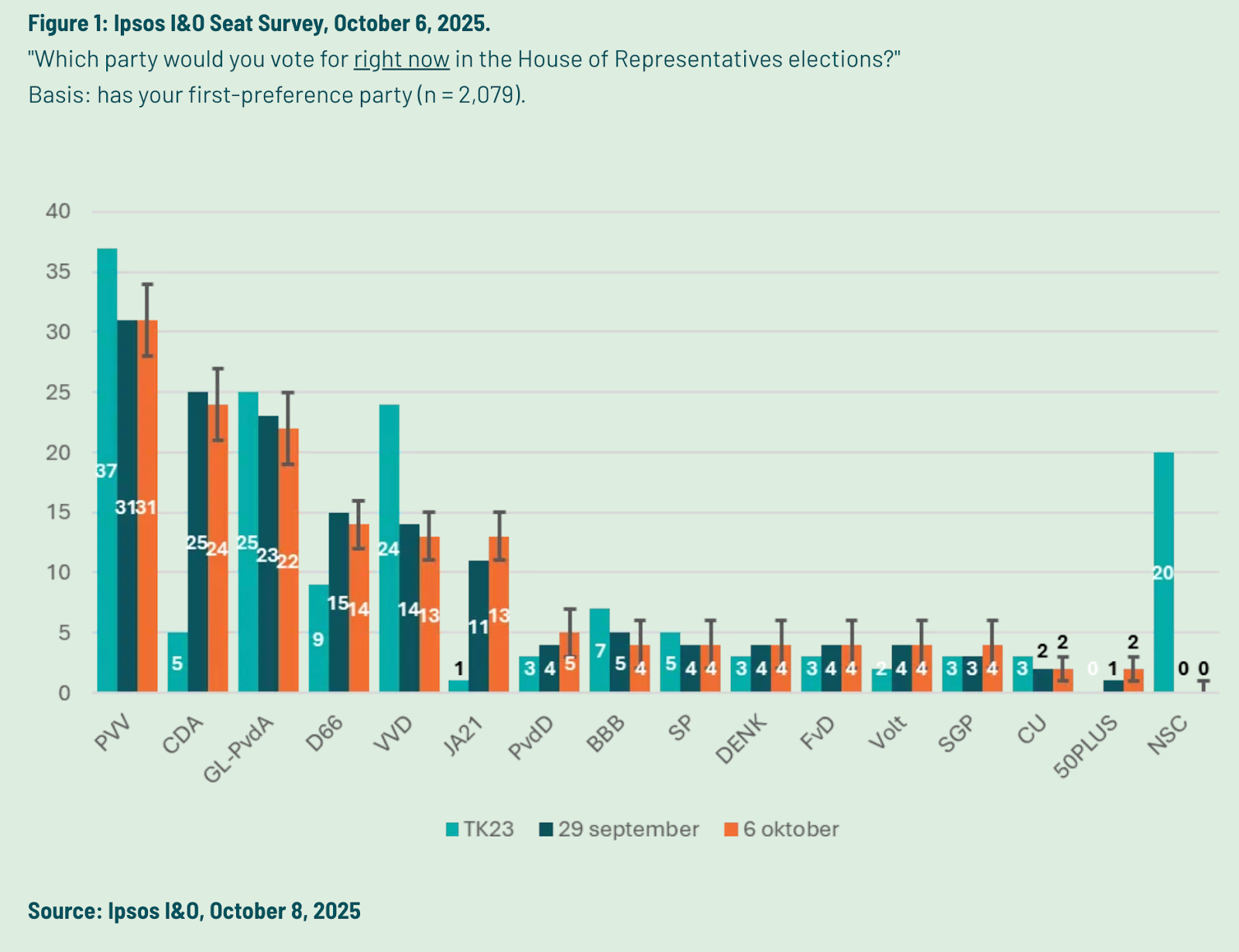
According to polling conducted at the beginning of October (ipsos-publiek.nl/actueel/ipsos…), support for the PVV has declined compared to 2023, yet it remains the most popular party. The most notable change is the decline in support for the VVD and NSC, two former coalition parties. It is also key to highlight the rise in support for CDA, a party that has previously stated its preference to work with the VVD rather than the PVV. The shifting popularity of some parties from the previous coalition may signal a potential change in the composition of the next one. This could be encouraging news: the Netherlands might see a government more centrally aligned in its social and immigration policies and more open to dialogue. While the left and more progressive parties have yet to gain significant momentum (including the Dutch Pirate Party), there remains a possibility for a more moderate, centre-right coalition to emerge (rather than the previous extreme-right one).
With Dutch voters heading to the polls at the end of the month, there is still room for public opinion to evolve and for parties to rethink their alliances. For the moment, there is a cautious hope that the next Dutch government may take a more moderate path.
So how are our Dutch Pirate Party colleagues faring?
"Ik ben fractievoorzitter in het Waterschap Amstel, Gooi en Vecht en heb een achtergrond op het gebied van Kunstmatige Intelligentie.
De Piratenpartij staat voor een vrije democratie waarin iedereen direct toegang heeft tot alle kennis, kunst en cultuur. We investeren in publieke voorzieningen zoals betaalbare woningen, zorg en onderwijs. We vertrouwen elkaar en hebben een gezond wantrouwen tegenover de macht van overheden en bedrijven."
"Het ondersteunen van burgerrechten, directe democratie, databeveiliging, bescherming van persoonsgegevens, transparantie, vrijheid van kennis en informatie, goed toegankelijke onderwijs, universele gezondheidszorg en een stabiel basisinkomen. Dit zijn exact de steken die het huidige kabinet heeft laten vallen!
Daar waar anderen weg lopen, ga ik de strijd aan. Bij de Piratenpartij voel ik daadkracht en integriteit."
Ik ben geboren en wonende in Eindhoven en programmeur van beroep.
Binnen de campagne ben ik iemand die zorgt dat drempels voor activiteiten worden weggenomen in plaats van opgeworpen. Met mijn ervaringen binnen de Piratenpartij help ik ideeën van nieuwe actieve leden tot daadwerkelijke acties te brengen, en ben ik een bron van kennis op het gebied van acties die we in het verleden gedaan hebben.
"Om mezelf recht in de spiegel aan te kunnen kijken, in de hoop op een leven waarvan de balans tussen geven en nemen doorslaat naar meer coöperatie – en daarmee het onderling vertrouwen, verkies ik in ieder opzicht partnerschap. Daarom kies ik voor de partij met de programmapunten die het beste in ons naar boven halen, zoals de invoering van een universeel basisinkomen en de bevrijding van informatie.
"Wat ik vooral belangrijk vind is ervoor zorgen dat er in onze maatschappij internationale solidariteit is en dat er respectvol omgekeken wordt naar mensen in zwakkere posities, zoals bijv jongeren met een vluchtverleden.
Duurzaamheid, corporate sociaal responsibility, mensenrechten, armoedebestrijding en een weerbare digitale samenleving is waar ik me voor wil inzetten. En minder polarisatie graag, ook in de media."
"Ik ben 42 jaar en werkzaam in verschillende sectoren: zorg, kinderopvang en sociaal werk.
Er zijn heel veel dingen die veel beter kunnen in Nederland. Zorg, onderwijs, onderdak en voedselzekerheid zijn cruciaal en ik zal hier dan ook voor strijden. Ik zou namelijk graag in een land willen wonen waar niemand achterblijft en we Nederland eindelijk echt een welvarend land kunnen noemen."
"Vanuit mijn werk als maatschappelijk werker en psychosociaal therapeut zie ik dat de zorg, zowel medisch als het geestelijk welzijn in de knel is geraakt door het huidige beleid. Door de systemen en de macht van de grotere organisaties mis ik de menselijke maat, die men juist nodig heeft als men om hulp vraagt en zich kwetsbaar voelt.
Als ervaringsdeskundige loopt Angeline zelf ook tegen allerlei hindernissen aan, zoals bij de WMO
"Ik ben een functionaris gegevensbescherming bij de overheid met een missie: zorgen dat organisaties niet als rovers omgaan met persoonsgegevens. Privacy en ethiek horen bovenaan de mast.
Ik vaar ook een koers als ondernemer: met mijn handel Hook Solutions verkoop ik haken voor huis, tuin en keuken, en Kapitein Haak-artikelen. Met mijn achternaam kan ik onmogelijk níet met de Piratenpartij meevaren."
"Ik ben sinds 2022 stadsdeelcommissielid in Amsterdam-Noord. Mijn speerpunten zijn behoud van het groen, directe democratie, privacy en sociale verbinding.
Daarnaast ben ik onderzoeker en schrijver.
Ik ben enthousiast, heb een duidelijke mening, kan tegelijkertijd goed samenwerken en de kar trekken. Ik ben kandidaat voor de Piratenpartij, omdat ik denk dat ik goed in staat ben om de partij een gezicht te geven.
"Als software-ontwikkelaar wil ik vrij kennis kunnen delen op het internet. Die vrijheid wordt bedreigd door BigTech. Om monopoliemacht te krijgen misbruiken ze softwarepatenten en auteursrechten.
Monopolievorming speelt niet alleen online, maar in de hele samenleving. We willen vrijheid om mee te doen met de economie en lokale zeggenschap."
Als moeder van kinderen met bijzondere behoeften zet ik me in voor de rechten van personen met een handicap. Ons land voldoet niet aan internationale verdragen zoals de VN-verdragen Handicap en Inzake de Rechten van het Kind.
Mijn prioriteit is om de meest ernstige misstanden in de zorg te bestrijden. Ik pleit voor het aanstellen van een functionerende autoriteit boven de instellingen en organisaties, om menswaardige zorg te waarborgen.
"Veel mensen kennen mij van de markt, uit de zorg, als tegelzetter of goochelaar. Ik heb in elke uithoek van de maatschappij gewerkt.
Sinds 2020 ben ik actief voor de Piratenpartij. Twee jaar lang was ik met veel plezier partijvoorzitter. Er is moed nodig om de huidige problemen op te lossen. Denk aan doorgeslagen bureaucratie, corruptie, inbreuk op privacy van burgers, non-transparantie, milieuvervuiling, ongelijke machtsverhoudingen."
Langetijdpiraat, idealist, en een groot voorstander van gelijkwaardigheid en vrijheid.
"Kennis moet gedeeld kunnen worden anders kan ze niet groeien. Daarbij willen wij kennis kunnen nemen van wat de overheid doet en welke verbindingen er bestaan tussen de overheid en het bedrijfsleven. Wij willen meer privacy voor burgers en transparantie van die overheid en bedrijven.
"Ik kom uit Rotterdam en werk bij Lely waar ik 600+ ontwikkelaars ondersteun bij het bouwen van software.
Ik concentreer me op wat ik het recht op bezit noem. Met name software wordt zodanig geleverd dat het bedrijf achter het product bepaalt hoe, waar en hoelang je hun product mag gebruiken. Het liefst met grove inbreuk op je privacy."
"Ik ben natuurkundige en heb lange tijd als onderzoeker in het ziekenhuis gewerkt. Daar zag ik grote problemen met veilige data-opslag en uitwisseling van gegevens.
Tegenwoordig ben ik docent op een middelbare school in Amsterdam. Ik geef natuurkunde, natuur leven & technologie, en informatica aan vooral de bovenbouw leerlingen Mavo, Havo en VWO."
We stellen de komende dagen alle kandidaten voor, startend bij nr. 33, onze lijstduwer Metje Blaak:
Wat haar aantrekt in de Piratenpartij is “je leven leiden zo als jij dat wilt”.
"Eigenlijk doe ik dat mijn hele leven al. Vandaar dat ik me graag aansluit bij de Piratenpartij, ook zodat ieder vrij is om zich te ontwikkelen en toegang heeft tot techniek en cultuur; of je nou zo arm als een kerkrat bent of rijk."
Mensen zijn de grote drijfveer in mijn leven; eerst als buschauffeur, nu als conciërge op de Hogeschool Arnhem Nijmegen.
Als Piraat verzet ik mij tegen de inperkingen van onze vrijheden. In een ideale samenleving is informatie zo vrij en veel mogelijk beschikbaar voor ons allemaal, kan iedereen anoniem en privé communiceren, is er weinig surveillance en bespaart legalisering en regulering van drugs inzet van politiecapaciteit.
Goof is 36 en zet zich al jaren in als gemeenteraadslid in Doetinchem.
"Als ambulant begeleider in de zorg en werkzaam bij een opvang voor dakloze jongeren heb ik dagelijks te maken met de uitdagingen waarmee mensen in moeilijke situaties worden geconfronteerd. Mijn hart ligt bij degenen die het meest kwetsbaar zijn in onze samenleving, en ik geloof dat we als partij een verschil kunnen maken door voor hen op te komen."
Eskild, ICT’er en vader. Zijn centrale strijdpunten zijn de bescherming van digitale burgerrechten en online privacy voor alle burgers. Hij pleit ervoor dat betrouwbaar breedbandinternet een betaalbare nutsvoorziening wordt. Wikkeling wil dat overheden digitale mogelijkheden beter benutten om het leven van burgers te vereenvoudigen, bijvoorbeeld door het schrappen van overbodige formulieren.
"Ik ben commissielid in Waterschap Amstel- Gooi en Vecht. Na zovele jaren uitkleden van zorg, sociale voorzieningen, drama’s als met de Toeslagenaffaire, vluchtelingen, covid, Groningen, etc. is er, nu gelukkig een nieuwe kans en kunnen we alles op alles zetten om onze thema’s eindelijk naar Den Haag te brengen."
Ook actief bij ATD Vierde Wereld, Stoere Vrouwen, Milieudefensie, Transnational Institute en SOMO,
Dylan is een maker in de brede zin van het woord: dus van realtime calculated 3D-graphics tot lasershows en van lichteffecten tot hardcore tekno.
"In dit proces loop je onherroepelijk tegen juridische grenzen aan van wat wel en niet toegestaan is. Dit is een mijnenveld. De huidige copyrightwetgeving belemmert creativiteit, terwijl deze juist was opgezet om creativiteit te bevorderen."
Peter is al ruim 10 jaar lid van de Piratenpartij en woont in de mooie in Kerkrade.
Hij is ruim 20 jaar geluidtechnicus geweest en daarna journalist en fotograaf voor de jongerensite van Landgraaf en heeft onder andere ook in de Wsw-raad gezeten.
Tegenwoordig maakt hij nog steeds in zijn vrije tijd foto’s onder het creative common licentie model, schrijft wordpress plugins, maakt wordpress templates en werkt als operator in Gronsveld. piratenpartij.nl/kandidaten-tk…
"Geloven in vrijheid en autonomie vooronderstelt dat je het individu vertrouwt en daarom beschermt tegen bemoeienis van de autoriteiten.
Voor een Piraat is de vrije uitwisseling van informatie en ideeën nog steeds essentieel om onzin en onbegrip de wereld uit te helpen – die uitwisseling wordt niet opeens een gevaarlijke bron van desinformatie en extremisme omdat ze zich online afspeelt. Daarom pleiten we zo hard tegen censuur en voor privacy online".
Ron Smit (1964) heeft de opleiding Informatica Technologie aan de universiteit in Amsterdam gevolgd. Hij is mede-oprichter van de Basisinkomen Partij in 2013. Ron onderzoekt nieuwe technologische ontwikkelingen in de wetenschap en is ook radiozendamateur (piraat).
"Tussen 1990 en 1994 was ik raadslid in stadsdeel de Pijp. Ik woon nu in de Rivierenbuurt en zet me nog steeds in voor een leefbare buurt. Directe communicatie, dialogen en samenwerking met geestverwanten."
"Ik vind dat de regering bewoners meer kansen moet aanreiken om macht in eigen handen te kunnen nemen wanneer het niet goed gaat in buurten of wijken."
"Als advocaat en ex-wethouder vecht ik voor jouw digitale rechten. Voor transparantie en de digitale underdog.
Als Piraat wil ik opkomen voor de digitale burgerrechten van iedereen en met mijn juridische kennis wil ik helpen aan het ontwikkelen en realiseren van die digitale burgerrechten. Mét de Piratenpartij zal ik bijdragen aan die digitale empowerment."
The modern office environment has shifted in recent years. Employees are routinely asked to collaborate with co-workers half way around the globe and be camera ready, or whatever passes for webcam ready, in order to telecommute when they are out of office. Every office laptop, tablet, or cell phone these days comes equipped with some sort of camera sensor capable of recording at HD resolution. Twenty years ago, that was not the case. Though tech conglomerates like HP had a different idea of teleconferencing to sell back in 2005 dubbed the Halo Collaboration Studio.
The Halo Studio was a collaboration between HP and Dreamworks that was used during the production of Bee Movie. Studio heads at Dreamworks thought it necessary to install the HP teleconferencing solution inside the New York office of Jerry Seinfeld, the writer of the film, as to allow him to avoid long trips to Dreamworks production offices in Los Angeles. According to the HP Halo Collaboration Studio brochure, “Halo actually pays for itself, not only by reducing travel costs, but also by encouraging higher productivity and stronger employee loyalty.” Certainly Dreamworks believed in that sales pitch for Bee Movie, because the upfront asking price left a bit of a sting.
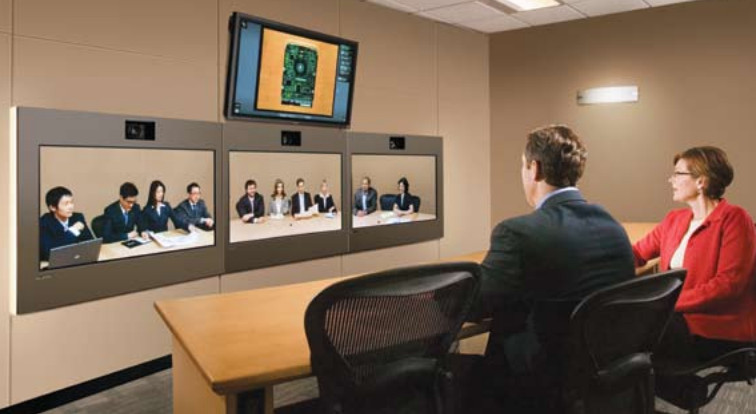
Less of a singular machine, more of an entire dedicated room, the Halo Studio had a $550,000 asking price. It utilized three 1280×960 resolution plasma screens each fitted with a 720p broadcast camera and even included an “executive” table for six. The room lighting solution was also part of the package as the intent was to have all participants appear true to life size on the monitors. The system ran on a dedicated T3 fiber optic connection rated at 45 Mbps that connected to the proprietary Halo Video Exchange Network that gave customers access to 24×7 tech support for the small sum of $30,000 a month.
Few of us keep big old cathode ray tubes in the house anymore, but we can still appreciate the form factor of the classic TV. Indeed, the Tinytron from [t0mg] is a neat little tchotchke in this vein — a miniature TV that you could just about fit on a keyring.
[t0mg] wanted this project to be quick and easy to put together. It starts with an ESP32-S3-LCD-1.69 from Waveshare. It’s an all-in-one dev module which combines the microcontroller with a small screen right out of the box. You just have to solder a single six pin header to hook it up with an SD card reader and battery, and you’re done with the electronics. Even the case is a cinch to build, with four 3D printed components that can be spat out of a Prusa MK4S in just half an hour. Programming it can be done via a web browser. Just about the only thing it’s missing is a speaker — this TV is video only.
To watch things on the Tinytron, you just have to prepare them properly and drop them on the SD card. [t0mg] provides a web page for transcoding the video files, although you can do it yourself locally with ffmpeg if you prefer.
If you’re looking for a silly gift for a TV-obsessed friend, you could probably whip up a Tinytron in a couple hours or less. It reminds us of another great project, the tiny Simpsons replica TV that endlessly plays the greatest cartoon on Earth.
“Beati gli operatori di pace!”. E’ il saluto di Leone XIV al Libano, seconda tappa del suo viaggio apostolico che lo ha visto oggi lasciare la Turchia per approdare nel Paese di cedri, ferito da una guerra ai propri confini.
ma esattamente quando la meloni sostiene che la violenza va sempre condannata, quando a proprio danno, intende anche violenze del genere esposto nell'articolo accluso?
Biking can be an incredibly rewarding hobby, but what do you do with all of your expensive pieces of metal and composite when you aren’t hitting the trails? They take up space that you could use for more bikes! [Chaz] figured there had to be a better way and discovered the unlikely solution of the humble garage opener.
Garage doors are made to lift high with moderate weight, exactly what one would expect from a bike lift. If you have high ceilings in your garage or wherever else you store your bikes there can’t be much easier than pushing a button to get your bike out of the way.
To assemble the unusual bike rack, [Chaz] mounted the motor to the wall with a few scraps of wood, and built a wooden platform that rides along the rail. This additional board allows you to use a traditional bike wheel rack to gently raise the bike. While initially [Chaz] had some questionable results, this was quickly resolved with removing the rotational elements of the mount and allowing a slight slant in the bike.
While not everyone may need to raise their bikes to the heavens, this type of simple hacking is always rewarding to see come together. If you want to see how some more bike specific tech works, check out the insides of this expensive bike seat!
Spinto da questo toot dei @Devol ⁂ (che ringrazio), ho deciso di andare un po' più in là nella mia degooglizzazione. Non posso rimuovere del tutto google ddalla mia vita, ma mi sono detto almeno voglio avvicinarmi il più possibile, un passo alla volta.
La premessa da fare è che non conoscevo molte delle soluzioni indicate nel toot, quindi è un'ulteriore riprova (se mai ce ne fosse bisogno), che la conoscenza è potere --> diffondiamo il più possibile!
Ho messo #lineageos nel mio vecchio Redmi Note 10 Pro, che stavo letteralmente per buttare in pattumiera: si bloccava continuamente, andava a scatti, la batteria non durava più molto. Del resto è questo a cui ci hanno abituati; a buttare l'hardware ogni 3 anni al massimo per comprarlo nuovo. In questo caso, quel dispositivo era stato particolarmente sfortunato perché la stessa Xiaomi l'aveva ucciso dopo sole 2 versioni di android e 3 anni scarsi di vita, chiudendo il rubinetto degli aggiornamenti.
Con Lineage OS, a 2 anni di distanza dall'ultimo aggiornamento rilasciato, ho riportato a nuova vita il dispositivo. Senza più il peso di tutta la spazzatura di Google e Xiaomi, quell'hardware è tornato a far girare android 16 (uscito quest'anno) e per di più in maniera estremamente fluida, comparabile a un google pixel nuovo. La batteria dura di più, e posso anche dire che sono più tranquillo dal punto di vista della sicurezza (è sempre meglio avere software aggiornato).
Ho installato anche il play store, ma sinceramente non conto di usarlo: sto usando F-Droid per le app open source (ne userò il più possibile) e per tutto il resto c'è Aurora store, che si interfaccia con il play store di google ma con un dispositivo "virtuale", quindi in maniera anonima. Potrò anche beneficiare degli aggiornamenti molto più frequenti rispetto al nulla a cui mi aveva condannato Xiaomi/Redmi.
Insomma, al posto di un hardware ancora valido ma inutilizzabile, mi rtrovo un secondo cellulare che è tornato come nuovo, e che potrò usare come riserva o come compagno per i miei viaggi (è sempre utile avere con sé un secondo dispositivo da usare nel caso in cui si perda il primo).
L'installazione non è stata difficilissima per me che sono un utente avanzato, ma di per sé non è complicatissima: se si conosce un minimo di inglese, il sito di Lineage Os spiega passo passo cosa fare.
La parte più complicata, tutto sommato, è stata quella di sbloccare il dispositivo Xiaomi: l'azienda non mette a disposizione il software aggiornato per farlo, quello sul sito lineage è un po' vecchiotto, e anche una volta che si è reperito in rete la versione aggiornata, Xiaomi ti fa aspettare una settimana di calendario!
Superato questo ostacolo, è stato facile.
Insomma, ancora una volta grazie all'opensource e a chi ne ha diffuso la conoscenza.
Liberi dal monopolio di Google: devol.it e la rivoluzione della deGooglizzazione
Il movimento DeGoogle (in italiano “degooglizzazione”) invita utenti e cittadinə a uscire dalla gabbia digitale di Google.
Con OpenAi che fa incetta di memorie volatili le altre aziende che non hanno scorte adeguate rischiano ora una forte esposizione agli shock del mercato che ha visto le Dram aumentare del 170 per cento in 12 mesi. Microsoft sarebbe
Nel corso della storia moderna della Chiesa, quattro Pontefici hanno compiuto viaggi apostolici in Libano, ciascuno lasciando un segno particolare in momenti differenti, con significati spirituali, ecclesiali e simbolici profondi.
“Che cosa fare perché soprattutto i giovani non si sentano costretti ad abbandonare la propria terra e ad emigrare? Come motivarli a non cercare la pace altrove, ma a trovarne garanzie e a diventarne protagonisti nella propria terra nativa?”.
Gli operatori di pace “osano rimanere, anche quando costa sacrificio”. E’ la terza caratteristica evidenziata dal Papa, nel suo primo discorso in Libano, pronunciato in inglese e rivolto alle autorità, alla società civile e al Corpo diplomatico.
“Attorno a noi, quasi in tutto il mondo, sembra avere vinto una sorta di pessimismo e sentimento di impotenza: le persone sembrano non riuscire più nemmeno a chiedersi che cosa possono fare per modificare il corso della storia”.
“Beati gli operatori di pace!”. E’ il saluto del Papa al Libano, seconda tappa del suo viaggio apostolico che lo ha visto oggi lasciare la Turchia per approdare nel Paese di cedri.
"Dopo la riunione importane ecumenica sia a Nicea e poi ieri mattina abbiamo parlato di futuri incontri possibili". Lo ha rivelato il Papa, durante la conferenza stampa sul volo d Istanbul a Beirut.
Papa in Libano: conferenza stampa sull’aereo da Instanbul a Beirut, “per Israele soluzione dei due Stati, speriamo che il presidente Erdogan aiuti a risolvere il conflitto in Ucraina”
“Un grande successo, un’esperienza meravigliosa”. Così il Papa, nella conferenza stampa sul volo da Istanbul a Beirut, ha definito la sua prima tappa del viaggio apostolico, in Turchia, ringraziando tutti coloro che hanno collaborato alla riuscita e …
Il Papa è arrivato in papamobile al palazzo presidenziale, luogo del suo primo discorso in Libano, rivolto alle autorità, alla società civile e al Corpo diplomatico e preceduto dall'incontro privato con il presidente del Libano e la sua famiglia, seg…
It’s easy to build big wooden furniture if you have a massive industrial CNC router, but few of us are so lucky. However, you can still build sizable stuff with a smaller router if you know what you’re doing. [Aribabox] shares some useful tricks and techniques for building large workshop cabinets on smaller machines.
The key to doing this well is modularity. [Aribabox] shows off how to build excellent workshop drawers in pieces using a stackable design. Rather than having to cut out one huge side panel to cover the whole stack of drawers, each drawer can have its own side panel that easily fits on a smaller router. They can then be stacked into a stout assembly that still does its job perfectly well. Assuming your CNC router is trued up properly, you can whip up a lot of furniture quickly, just assembling everything with screws. You’ll still be able to work faster and make bigger things easier on a big machine, but a small machine can do a lot more than you think.
L’azienda italiana di difesa Leonardo ha presentato il suo nuovo sistema Michelangelo Dome. Secondo l’azienda, è progettato per contrastare missili ipersonici e attacchi di massa con droni. Durante la presentazione tecnica al Ministro della Difesa e ai Capi di Stato Maggiore italiani, l’Amministratore Delegato Roberto Cingolani ha annunciato l’intenzione di iniziare l’implementazione già nel 2026 e di raggiungere la piena capacità operativa entro il 2028.
Il nome dice tutto, e la somiglianza con il famoso Iron Dome israeliano è chiaramente intenzionale. Il sistema israeliano, operativo dal 2011, è servito da modello. Ma il Michelangelo Dome va ben oltre: non è concepito come un singolo sistema d’arma, ma come un’architettura completa supportata dall’intelligenza artificiale.
“Queste minacce possono verificarsi in pochi secondi “, ha affermato Cingolani. “Non abbiamo abbastanza tempo per inviare e-mail o scambiare messaggi. Dobbiamo reagire in tempo reale”.
l’intelligenza artificiale come questione di sopravvivenza
Al centro del progetto c’è la convinzione che i sistemi di comando e controllo accelerati dall’IA non siano più opzionali, ma essenziali per la sopravvivenza. Cingolani ha spiegato il passaggio dottrinale dalla rigida e lineare kill chain alla kill web distribuita e supportata dall’IA, in cui numerosi punti dati dei sensori vengono analizzati, fusi e valutati dall’IA per selezionare automaticamente il miglior meccanismo di intercettazione. Tuttavia, l’ordine finale di aprire il fuoco rimane nelle mani dell’uomo, ha sottolineato Cingolani.
L’obiettivo è trasformare le forze armate italiane e, in seguito, quelle della NATO in un unico sistema di difesa sincronizzato. Navi, sistemi terrestri, aerei da combattimento, droni e costellazioni satellitari convoglierebbero i dati in una piattaforma unificata, basata sull’intelligenza artificiale, in grado di tracciare, prevedere e neutralizzare le minacce in tempo reale.
L’alternativa, secondo Cingolani, è la cecità strategica. “Se un oggetto vola a due o tre chilometri al secondo e non so in anticipo dove colpirà tra qualche minuto, potrei essere già stato colpito. Non posso neutralizzare lo”, ha riportato Aerospace Global News.
Europa: cinque minuti all’impatto
Cingolani ha ripetutamente sottolineato la posizione geografica: l’Europa non è protetta dagli oceani. Le future armi ipersoniche potrebbero raggiungere le principali capitali in cinque-sette minuti.
Ma non si tratta solo di armi ipersoniche. Cingolani ha anche sottolineato che la guerra in Ucraina ha dimostrato come droni a basso costo possano distruggere carri armati del valore di decine di milioni. “Giovani soldati hanno montato mezzo chilo di esplosivo su droni collegati a reti satellitari commerciali e hanno neutralizzato carri armati per un valore di 20 milioni di euro “, ha affermato. Anche in questo caso, i sistemi in rete potrebbero aiutare a rilevare ed eliminare le minacce, prosegue il rapporto di Aerospace Global News.
Intelligenza artificiale, satelliti e supercomputer come spina dorsale tecnologica
Leonardo si posiziona come l’unica azienda europea dotata dell’intero stack tecnologico necessario per fornire il sistema: sensori, sistemi di intercettazione, tecnologia spaziale, capacità informatiche, sviluppo dell’intelligenza artificiale e calcolo ad alte prestazioni.
I satelliti sono al centro del piano. A Roma verranno realizzati 100 satelliti all’anno, progettati per l’allerta missilistica, il rilevamento di colonne di fumo infrarosse e la previsione della traiettoria.
“Questi satelliti devono essere in grado di rilevare un oggetto che viaggia a cinque chilometri al secondo “, ha affermato Cingolani. “Chi possiede questi satelliti possiede una capacità di rilevamento e previsione che nessun altro possiede.”
L’Italia inizierà nel 2026, poi la NATO.
Leonardo consegnerà i primi sistemi all’Italia entro il 2026 e integrerà i sistemi nazionali esistenti nella nuova architettura basata sull’intelligenza artificiale. Tuttavia, questo rappresenta solo un singolo livello di difesa. L’azienda non ha specificato di quale livello si tratterà.
L’Italia non è l’unico Paese ad ispirarsi all’Iron Dome israeliano. Anche la Turchia sta investendo molto nel suo sistema di difesa aerea integrato e multistrato, lo Steel Dome. E Taiwan, con il suo T-Dome, ha annunciato piani per un proprio sistema di difesa aerea multistrato per difendersi dalle minacce ostili.
@6AL ho fatto diverse ricerche sui motori di ricerca per provare a capire se esisteva qualche comunicato stampa in inglese che fosse stato tradotto a cazzo di cane da Red Hot Cyber
Ma non sono riuscito a trovare nulla che giustificasse un'espressione assurda come questa
@6AL sì, i sensori a infrarosso sono utilizzati per integrare altre tecnologie di rilevamento, ma queste colonne di fumo, davvero, non sono riuscite a trovarle da nessuna parte. Non ho idea come siano state generate, ma una bella IA sembrerebbe la spiegazione migliore
@6al saranno le «infrared plume», ovvero le scie calde che seguono un razzo, o un aereo, che si vedono all’infrarosso - e a occhio nudo si vede pure il fumo della combustione, ma l’infrarosso non vede il fumo… vede solo il calore.
cuando andavo a sqola io cerano le ore di composizione di itagliano, e la ggente imparavono a scrivere come cazzo si doveva.
cuando andavo a sqola io cerano le ore di composizione di itagliano, e la ggente imparavono a scrivere come cazzo si doveva.
@Anon AHAHAH! Comunque io condivido ogni articolo di RHC, perché è un bollettino molto interessante, ma ogni tanto non capisco perché escono degli articoli scritti con il culo e a volte ci sono pure tracce del prompt usato per far scrivere l'articolo da un LLM... @6AL
per quale motivo dovrebbe essere un problema sostenere che l'ingiustizia genera violenza? è un dato di fatto. non si può avere pace senza giustizia, come non si più combattere la violenza senza combattere anche l'ingiustizia.

![[Piers] explains his code](https://poliverso.org/photo/link/372607 "[Piers] explains his code")




6AL
in reply to Cybersecurity & cyberwarfare • • •Cybersecurity & cyberwarfare likes this.
Cybersecurity & cyberwarfare reshared this.
Cybersecurity & cyberwarfare
in reply to 6AL • •@6AL ho fatto diverse ricerche sui motori di ricerca per provare a capire se esisteva qualche comunicato stampa in inglese che fosse stato tradotto a cazzo di cane da Red Hot Cyber
Ma non sono riuscito a trovare nulla che giustificasse un'espressione assurda come questa
6AL
in reply to Cybersecurity & cyberwarfare • • •Cybersecurity & cyberwarfare likes this.
Cybersecurity & cyberwarfare
in reply to 6AL • •Non ho idea come siano state generate, ma una bella IA sembrerebbe la spiegazione migliore
Anon
in reply to 6AL • • •@6al saranno le «infrared plume», ovvero le scie calde che seguono un razzo, o un aereo, che si vedono all’infrarosso - e a occhio nudo si vede pure il fumo della combustione, ma l’infrarosso non vede il fumo… vede solo il calore.
cuando andavo a sqola io cerano le ore di composizione di itagliano, e la ggente imparavono a scrivere come cazzo si doveva.
Cybersecurity & cyberwarfare likes this.
Cybersecurity & cyberwarfare reshared this.
Anon
in reply to Anon • • •@6al
ah no! magari sono i sensori delle telecamere che hanno usato in questi video qui:
tiktok.com/@thefartland/video/…
TikTok - Make Your Day
www.tiktok.comCybersecurity & cyberwarfare
in reply to Anon • •@Anon AHAHAH! Comunque io condivido ogni articolo di RHC, perché è un bollettino molto interessante, ma ogni tanto non capisco perché escono degli articoli scritti con il culo e a volte ci sono pure tracce del prompt usato per far scrivere l'articolo da un LLM...
@6AL
Anon likes this.
Anon reshared this.
6AL
in reply to Anon • • •@cybersecurity@poliverso.org