Looking at a Real Fake Raspberry Pi RP2040 Board


The media in this post is not displayed to visitors. To view it, please log in.

Since the RP2040 microcontroller is available as a stand-alone component, it’s easy enough for third parties to churn out their own variations — or outright clones of — the Raspberry Pi Pico. Thus we end up with for example AliExpress sellers offering their own versions that can be significantly cheaper than the genuine article. The ones that [electronupdate] obtained for a test and decapping session cost just $2.25 a pop.

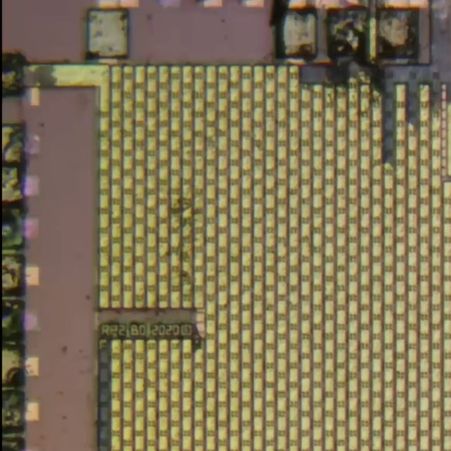
RP2 B0 stepping imprinted on the die shot.

As can be seen in the top image, the board from AliExpress misses the Raspberry Pi logo on the silkscreen for obvious reasons, but otherwise appears to feature an identical component layout. The QSPI Flash IC is marked on the die as BY250156FS, identifying it as a Boya part.

Niggles about flash ROM quality aside, what’s perhaps most interesting about this teardown is what eagle-eyed commentators spotted on the die shot of the RP2040. Although on the MCU the laser markings identify the RP2040 as a B2 stepping, the die clearly identifies it as an ‘RP2 B0’ part, meaning B0 stepping. This can be problematic when you try to use the USB functionality due to hardware USB bugs in the B0 and B1 steppings.

As they say, caveat emptor.

youtube.com/embed/uQ3kNFOhTIw?…


hackaday.com/2026/01/15/lookin…

Windows? Linux? Browser? Same Executable


The media in this post is not displayed to visitors. To view it, please log in.

We’ve been aware of projects like Cosmopolitan that allow you to crank out a single executable that will run on different operating systems. [Kamila] noticed that the idea was sound, but that the executables were large and there were some limitations. So she produced a 13K file that will run under Windows, Linux, or even in a Web browser. The program itself is a simple snake game.

There seems to be little sharing between the three versions. Instead, each version is compressed and stitched together so that each platform sees what it wants to see. To accommodate Windows, the file has to start with a PE header. However, there is enough flexibility in the header that part of the stub forms a valid shell script that skips over the Windows code when running under Linux.

So, essentially, Windows skips the “garbage” in the header, which is the part that makes Linux skip the “garbage” in the front of the file.

That leaves the browser. Browsers will throw away everything before an <HTML> tag, so that’s the easy part.

Should you do this? Probably not. But if you needed to make this happen, this is a clear template for how to do it. If you want to go back to [Kamila’s] inspiration, we’ve covered Cosmopolitan and its APE format before.


hackaday.com/2026/01/15/window…

Cybersecurity & cyberwarfare ha ricondiviso questo.

The media in this post is not displayed to visitors. To view it, please go to the original post.

Cloudflare, Piracy Shield e il punto cieco europeo: quando la governance diventa un rischio cyber

📌 Link all'articolo : redhotcyber.com/post/cloudflar…

#redhotcyber #news #cybersecurity #dataprotection #governancedigitale #cloudflare #italiadigitale #piracyshield

Cybersecurity & cyberwarfare ha ricondiviso questo.

⚠️Quorum raggiunto? NO, NON ADESSO! Non smettete di firmare per il #ReferendumGiustizia

Il raggiungimento del 100% è SALVO BUON FINE: in quel 100% potrebbero esserci ⚠️molte firme duplicate!⚠️

Non smettete di firmare: prendete SPID o la CIE e datevi da fare!

firmereferendum.giustizia.it/r…

@politica

in reply to Max - Poliverso 🇪🇺🇮🇹

@max il referendum è stato richiesto dai parlamentari (con ben 4 richieste valide) ma è importante la raccolta di firme, sia per massimizzare il coinvolgimento dei cittadini, sia per aumentare l'eco mediatica su un referendum di cui la stampa parla poco e sempre a favore del governo
in reply to Max - Poliverso 🇪🇺🇮🇹

@Max - Poliverso 🇪🇺🇮🇹 @informapirata ⁂ 𝐏𝐞𝐫𝐜𝐡𝐞‌ 𝐪𝐮𝐞𝐬𝐭𝐞 𝐟𝐢𝐫𝐦𝐞 𝐜𝐨𝐧𝐭𝐚𝐧𝐨 𝐚𝐧𝐜𝐨𝐫𝐚, 𝐚𝐧𝐜𝐡𝐞 𝐬𝐞 𝐢𝐥 𝐫𝐞𝐟𝐞𝐫𝐞𝐧𝐝𝐮𝐦 𝐞‌ 𝐠𝐢𝐚‌ 𝐢𝐧𝐝𝐞𝐭𝐭𝐨.

Abbiamo superato 𝐥𝐞 𝟓𝟏𝟐.𝟎𝟗𝟖 𝐟𝐢𝐫𝐦𝐞 (alle ore 17:23), e si continua a firmare 𝐟𝐢𝐧𝐨 𝐚𝐥 𝟑𝟎 𝐠𝐞𝐧𝐧𝐚𝐢𝐨, ma la cosa importante da capire è questa: con il quorum raggiunto, i promotori possono depositare le firme in Cassazione e diventare a tutti gli effetti 𝐂𝐨𝐦𝐢𝐭𝐚𝐭𝐨 𝐩𝐫𝐨𝐦𝐨𝐭𝐨𝐫𝐞, cioè un soggetto riconosciuto dall’ordinamento che rappresenta direttamente la 𝐬𝐨𝐯𝐫𝐚𝐧𝐢𝐭𝐚‌ 𝐩𝐨𝐩𝐨𝐥𝐚𝐫𝐞 e che ha quindi titolo per pretendere 𝐬𝐩𝐚𝐳𝐢 𝐝𝐢 𝐢𝐧𝐟𝐨𝐫𝐦𝐚𝐳𝐢𝐨𝐧𝐞, regole di parità e strumenti di campagna, come avviene in tutte le consultazioni referendarie.
Se poi il Governo, fissando il voto al 22 e 23 marzo e comprimendo i tempi del confronto, limita di fatto la possibilità di far conoscere ai cittadini cosa c’è davvero nella riforma, il Comitato può anche aprire un fronte istituzionale ulteriore, il cosiddetto 𝐜𝐨𝐧𝐟𝐥𝐢𝐭𝐭𝐨 𝐝𝐢 𝐚𝐭𝐭𝐫𝐢𝐛𝐮𝐳𝐢𝐨𝐧𝐞 davanti alla Corte costituzionale, che in parole semplici significa chiedere: chi decide cosa e con quali limiti, quando è in gioco un potere riconosciuto direttamente ai cittadini.
C’è poi un altro punto molto concreto. 𝐈𝐥 𝐪𝐮𝐞𝐬𝐢𝐭𝐨 𝐬𝐮𝐥𝐥𝐚 𝐬𝐜𝐡𝐞𝐝𝐚 non è un dettaglio: oggi quello ammesso richiama soprattutto il titolo della legge, mentre i promotori sostengono che debba essere più chiaro e indicare esattamente 𝐪𝐮𝐚𝐥𝐢 𝐚𝐫𝐭𝐢𝐜𝐨𝐥𝐢 𝐝𝐞𝐥𝐥𝐚 𝐂𝐨𝐬𝐭𝐢𝐭𝐮𝐳𝐢𝐨𝐧𝐞 vengono modificati, così che tutti possano capire davvero cosa stanno approvando o respingendo.
Insomma, 𝐥𝐞 𝐟𝐢𝐫𝐦𝐞 𝐧𝐨𝐧 𝐬𝐨𝐧𝐨 𝐮𝐧 𝐫𝐢𝐭𝐨, sono 𝐥𝐚 𝐜𝐡𝐢𝐚𝐯𝐞 𝐜𝐡𝐞 𝐦𝐞𝐭𝐭𝐞 𝐢 𝐜𝐢𝐭𝐭𝐚𝐝𝐢𝐧𝐢 𝐧𝐞𝐥𝐥𝐚 𝐩𝐚𝐫𝐭𝐢𝐭𝐚, con strumenti veri.
E adesso il passaggio decisivo è trasformare questa energia in 𝐩𝐚𝐫𝐭𝐞𝐜𝐢𝐩𝐚𝐳𝐢𝐨𝐧𝐞 𝐚𝐥𝐥𝐞 𝐮𝐫𝐧𝐞, perché alla fine 𝐧𝐨𝐧 𝐛𝐚𝐬𝐭𝐚 𝐟𝐢𝐫𝐦𝐚𝐫𝐞: bisogna andare a votare e 𝐯𝐨𝐭𝐚𝐫𝐞 𝐍𝐎

Questo il link per firmare: firmereferendum.giustizia.it/r…

Cybersecurity & cyberwarfare ha ricondiviso questo.

#Palo #Alto #Networks addressed a #GlobalProtect flaw, PoC exists
securityaffairs.com/186948/hac…
#securityaffairs #hacking
Cybersecurity & cyberwarfare ha ricondiviso questo.

The media in this post is not displayed to visitors. To view it, please go to the original post.

Il Brussels Effect e la sfida della sovranità tecnologica nel contrasto al CSAM

📌 Link all'articolo : redhotcyber.com/post/il-brusse…

#redhotcyber #news #digitale #europa #regolamentazione #cybersecurity #brusselseffect #legislazione #autoritari

Cybersecurity & cyberwarfare ha ricondiviso questo.

The media in this post is not displayed to visitors. To view it, please go to the original post.

Perquisizioni al Garante della Privacy dopo Report: indagati Stanzione e gli altri del collegio

Al centro delle inchieste le spese di rappresentanza del collegio. I reati ipotizzati sono peculato e corruzione. I servizi di Report dopo la sanzione e l'ipotesi dimissioni

open.online/2026/01/15/garante…

@news

Cybersecurity & cyberwarfare ha ricondiviso questo.

The media in this post is not displayed to visitors. To view it, please go to the original post.

Pechino ordina alle aziende cinesi di abbandonare i software di cybersecurity made in USA e Israele
#CyberSecurity
insicurezzadigitale.com/pechin…
Cybersecurity & cyberwarfare ha ricondiviso questo.

The media in this post is not displayed to visitors. To view it, please go to the original post.

Microsoft Patch Tuesday, gennaio 2026
#CyberSecurity
insicurezzadigitale.com/micros…
Cybersecurity & cyberwarfare ha ricondiviso questo.

The media in this post is not displayed to visitors. To view it, please go to the original post.

🔥 SONO UFFICIALMENTE APERTE LE ISCRIZIONI! 🔥

Sta partendo la Settima Live Class del corso "𝗗𝗔𝗥𝗞 𝗪𝗘𝗕 𝗘 𝗖𝗬𝗕𝗘𝗥 𝗧𝗛𝗥𝗘𝗔𝗧 𝗜𝗡𝗧𝗘𝗟𝗟𝗜𝗚𝗘𝗡𝗖𝗘" – livello intermedio 🚀

📌 Inizio: Domenica 8 Marzo 2026
📌 Posti super limitati (max 14 partecipanti)
📌 Sarà un’esperienza live e interattiva, guidata dal prof. Pietro Melillo (PhD – Università del Sannio, docente IUSI University), che ti porterà dentro il cuore del Dark Web e delle minacce cyber reali

✅ Pagina del corso: redhotcyber.com/linksSk2L/acad…
✅ Presentazione del corso: youtube.com/watch?v=9VaQUnTz4J…
✅ Webinar introduttivo: youtube.com/watch?v=ExZhKqjuwf…

Per info e iscrizioni: 📱 💬 379 163 8765 ✉️ formazione@redhotcyber.com

#redhotcyber #formazione #cybersecurity #darkweb #cyberthreatintelligence #ethicalhacking #infosec #intelligence #liveclass #corsi #cybercrime

Cybersecurity & cyberwarfare ha ricondiviso questo.

The media in this post is not displayed to visitors. To view it, please go to the original post.

"La sinistra riparta da Jens Frederik Nielsen" è stato già detto? 🤣

#sischerza #greenland #JensFrederikNielsen #Danimarca #Groenlandia

@azzate

Microsoft Patch Tuesday, gennaio 2026


@Informatica (Italy e non Italy 😁)
Microsoft ha inaugurato il 2026 con il suo primo Patch Tuesday, un appuntamento che ha portato alla luce e alla correzione di 114 vulnerabilità nei prodotti Windows e correlati, tra cui otto classificazioni critiche e una zero-day già sfruttata attivamente in attacchi reali. Questo round di aggiornamenti, distribuito martedì 13 gennaio,

Pechino ordina alle aziende cinesi di abbandonare i software di cybersecurity made in USA e Israele


@Informatica (Italy e non Italy 😁)
Reuters rivela una mossa drastica delle autorità cinesi, che hanno notificato a numerose imprese domestiche di interrompere l’uso di soluzioni di sicurezza informatica prodotte da oltre una dozzina di vendor

reshared this

Cybersecurity & cyberwarfare ha ricondiviso questo.

#Lumen disrupts #AISURU and #Kimwolf #botnet by blocking over 550 C2 servers
securityaffairs.com/186918/cyb…
#securityaffairs #hacking #malware
Cybersecurity & cyberwarfare ha ricondiviso questo.

The media in this post is not displayed to visitors. To view it, please go to the original post.

Intelligenza artificiale: Ora la vera sfida si sposta su alimentare i data center

📌 Link all'articolo : redhotcyber.com/post/intellige…

#redhotcyber #news #intelligenzaartificiale #energiarinnovabile #datacenter #autosufficienzaenergetica

Cybersecurity & cyberwarfare ha ricondiviso questo.

#China bans U.S. and Israeli cybersecurity software over security concerns
securityaffairs.com/186920/int…
#securityaffairs #hacking
Cybersecurity & cyberwarfare ha ricondiviso questo.

The media in this post is not displayed to visitors. To view it, please go to the original post.

Arriva Reprompt! Un nuovo Attacco a Copilot per esfiltrare i dati sensibili degli utenti

📌 Link all'articolo : redhotcyber.com/post/arriva-re…

#redhotcyber #hacking #cti #ai #online #it #cybercrime #cybersecurity #technology #news #cyberthreatintelligence

Cybersecurity & cyberwarfare ha ricondiviso questo.

The media in this post is not displayed to visitors. To view it, please go to the original post.

198 – AI e digitale. Attenzione ai venditori di soluzioni facili camisanicalzolari.it/198-ai-e-…
Cybersecurity & cyberwarfare ha ricondiviso questo.

The media in this post is not displayed to visitors. To view it, please go to the original post.

MOVEit nel mirino: patch urgenti per falle ad alta gravità in LoadMaster e WAF

📌 Link all'articolo : redhotcyber.com/post/moveit-ne…

#redhotcyber #news #cybersecurity #vulnerabilita #patch #aggiornamentidisicurezza #sicurezzainformatica

Philips Kid’s Kit Revisited


The media in this post is not displayed to visitors. To view it, please log in.

[Anthony Francis-Jones], like us, has a soft spot for the educational electronic kits from days gone by. In a recent video you can see below, he shows the insides of a Philips EE08 two-transistor radio kit. This is the same kit he built a few months ago (see the second video, below).

Electronics sure look different these days. No surface mount here or even printed circuit boards. The kit had paper cards to guide the construction since the kit could be made into different circuits.

The first few minutes of the video recap how AM modulation works. If you skip to about the ten-minute mark, you can see the classic instruction books for the EE08 and EE20 kits (download a copy in your favorite language), which were very educational.

There were several radios in the manual, but the one [Anthony] covers is the two-transistor version with a PNP transistor as a reflex receiver with a diode detector with a second transistor as an audio power amplifier.

We covered [Anthony’s] original build a few months ago, but we liked the deep dive into how it works. We miss kits like these. And P-Boxes, too.

youtube.com/embed/eC2wwNq92mw?…

youtube.com/embed/PWPHGEWwKbU?…


hackaday.com/2026/01/14/philip…

Cybersecurity & cyberwarfare ha ricondiviso questo.

The media in this post is not displayed to visitors. To view it, please go to the original post.

🚨 💥OFFERTA LAMPO IMPERDIBILE 🚨💥

FINO A LUNEDI' 19 GENNAIO -15% PER LA SETTIMA LIVE CLASS "𝗗𝗔𝗥𝗞 𝗪𝗘𝗕 𝗘 𝗖𝗬𝗕𝗘𝗥 𝗧𝗛𝗥𝗘𝗔𝗧 𝗜𝗡𝗧𝗘𝗟𝗟𝗜𝗚𝗘𝗡𝗖𝗘" IN PARTENZA A MARZO

Per info e iscrizioni: 📱 💬 379 163 8765 ✉️ formazione@redhotcyber.com

✅ Pagina del corso: redhotcyber.com/linksSk2L/acad…
✅ Presentazione del corso del prof. Pietro Melillo : youtube.com/watch?v=9VaQUnTz4J…
✅ Webinar introduttivo di presentazione al corso : youtube.com/watch?v=ExZhKqjuwf…

#redhotcyber #formazione #formazioneonline #ethicalhacking #cti #cyberthreatintelligence #cybersecurity #cybercrime #cybersecuritytraining #cybersecuritynews #privacy #cti #cyberthreat #intelligence #infosec #corsi #corsiprartici #liveclass

Cybersecurity & cyberwarfare ha ricondiviso questo.

The media in this post is not displayed to visitors. To view it, please go to the original post.

Fortinet risolve falla critica in FortiSIEM: aggiornamenti urgenti per evitare attacchi

📌 Link all'articolo : redhotcyber.com/post/fortinet-…

#redhotcyber #news #cybersecurity #hacking #malware #vulnerabilita #fortinet #fortisiem #cve202564155

Cybersecurity & cyberwarfare ha ricondiviso questo.

The media in this post is not displayed to visitors. To view it, please go to the original post.

ARM: il Futuro dell’Informatica è chi riuscirà a calcolare più velocemente spendendo il minor numero di Watt

📌 Link all'articolo : redhotcyber.com/post/arm-il-fu…

#redhotcyber #news #arm #qualcomm #apple #processori #tecnologia #gadget #smartphone #auto #mercato

Cybersecurity & cyberwarfare ha ricondiviso questo.

The media in this post is not displayed to visitors. To view it, please go to the original post.

La Nascita di Wikipedia: Un’Esperienza di Libertà e Conoscenza

📌 Link all'articolo : redhotcyber.com/post/la-nascit…

#redhotcyber #news #wikipedia #encyclopediaonline #storiaDiWikipedia #jimmyWales #larrySanger

The People vs Digital Omnibus


The media in this post is not displayed to visitors. To view it, please log in.

The People vs Digital Omnibus
THIS IS DIGITAL POLITICS. But it's not Monday. I'm Mark Scott, and I apologize for the one-day delay in this week's newsletter. I've come down with what I really hope isn't Covid-19, so please forgive any typos in the dispatch below. Normal Monday transmission resumes next week.

— New polling suggests European citizens may not be as keen about the bloc's digital revamp as policymakers and industry.

— The United States' departure from more than 60 international organizations is another death knell in the open, interoperable internet.

– Despite global efforts, the US still dominates the market for data centers.

Let's get started:


digitalpolitics.co/newsletter0…

Making Code a Hundred Times Slower With False Sharing


The media in this post is not displayed to visitors. To view it, please log in.


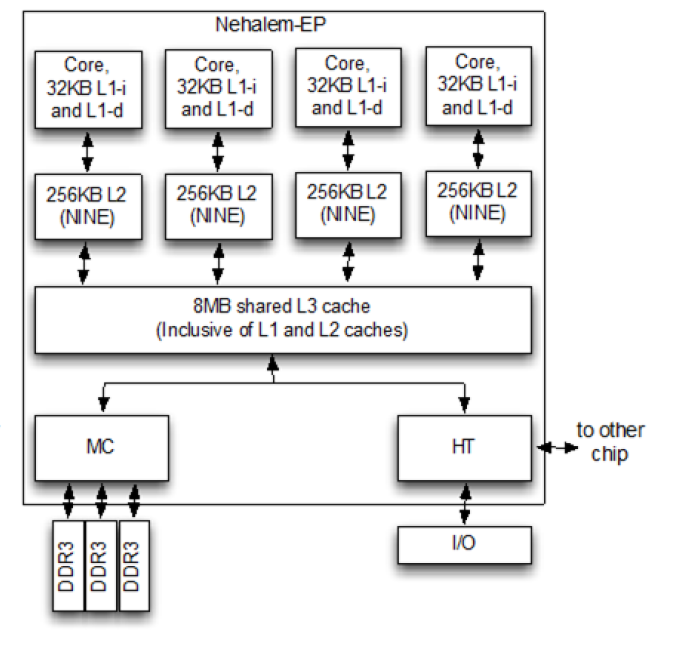
The cache hierarchy of the 2008 Intel Nehalem x86 architecture. (Source: Intel)The cache hierarchy of the 2008 Intel Nehalem x86 architecture. (Source: Intel)
Writing good, performant code depends strongly on an understanding of the underlying hardware. This is especially the case in scenarios like those involving embarrassingly parallel processing, which at first glance ought to be a cakewalk. With multiple threads doing their own thing without having to nag the other threads about anything it seems highly doubtful that even a novice could screw this up. Yet as [Keifer] details in a recent video on so-called false sharing, this is actually very easy, for a variety of reasons.

With a multi-core and/or multi-processor system each core has its own local cache that contains a reflection of the current values in system RAM. If any core modifies its cached data, this automatically invalidates the other cache lines, resulting a cache miss for those cores and forcing a refresh from system RAM. This is the case even if the accessed data isn’t one that another core was going to use, with an obvious impact on performance.

The worst case scenario as detailed and demonstrated using the Google Benchmark sample projects, involves a shared global data structure, with a recorded hundred times reduction in performance. Also noticeable is the impact on scaling performance, with the cache misses becoming more severe with more threads running.

A less obvious cause of performance loss here is due to memory alignment and how data fits in the cache lines. Making sure that your data is aligned in e.g. data structures can prevent more unwanted cache invalidation events. With most applications being multi-threaded these days, it’s a good thing to not only know how to diagnose false sharing issues, but also how to prevent them.

youtube.com/embed/WIZf-Doc8Bk?…


hackaday.com/2026/01/14/making…

Dad Makes Kid’s Balance Bike Into Electric Snow Trike Like a Boss


The media in this post is not displayed to visitors. To view it, please log in.

The balance bikes toddlers are rocking these days look like great fun, but not so great in the snow. Rather than see his kid’s favourite toy relegated to shed until spring, [John Boss] added electric power, and an extra wheel to make one fun-looking snow trike. Like a boss, you might say.

Physically, the trike is a delta configuration: two rear wheels and one front, though as you can see the front wheel has been turned into a ski. That’s not the most stable configuration, but by shifting the foot pegs to the front wheel and keeping the electronics down low, [John] is able to maintain a safe center of gravity. He’s also limiting the throttle so kiddo can’t go dangerously fast– indeed, the throttle control is in the rear electronics component. The kid just has a big green “go” button.

Bit-banging the throttle, combined with the weight of the kiddo up front, creates a strong tendency towards wheel-spin, but [John] fixes that with a some cleverly printed TPU paddles zip-tied to the harbor-freight wheels and tires he’s hacked into use. Those wheels are fixed to a solid axle that’s mounted to flat plate [John] had made up to attach to the bike frame. It’s all surprisingly solid, given that [John] is able to demonstrate the safety factor by going for a spin of his own. We would have done the same.

We particularly like the use of a tool battery for hot-swappable power. This isn’t the first time we’ve seen a kid’s toy get the tool battery treatment, but you aren’t limited to mobile uses. We’ve seen the ubiquitous 18V power packs in everything from fume extractors to a portable powerpack that can even charge a Tesla.

youtube.com/embed/L_3cA8oZP8w?…


hackaday.com/2026/01/14/dad-ma…

A New Life For An Old Amplifier


The media in this post is not displayed to visitors. To view it, please log in.

An audio amplifier was once a fairly simple analogue device, but in recent decades a typical home entertainment amplifier will have expanded to include many digital functions. When these break they are often proprietary and not easy to repair, as was the case with a broken Pioneer surround-sound device given to [Boz]. It sat on the shelf for a few years until he had the idea of a jukebox for his ripped CDs, and his returning it to life with a new main board is something to behold.

Internally it’s a surprisingly modular design, meaning that the front panel with its VFD display and driver were intact and working, as were the class AB amplifier and its power supply. He had the service manual so reverse engineering was straightforward, thus out came the main board in favor of a replacement. He took the original connectors and a few other components, then designed a PCB to take them and a Raspberry Pi Pico and DAC. With appropriate MMBASIC firmware it looks as though it was originally made this way, a sense heightened by a look at the motherboard inside (ignoring a couple of bodges).

We like seeing projects like this one which revive broken devices, and this one is particularly special quality wise. We’re more used to seeing it with gaming hardware though.


hackaday.com/2026/01/14/a-new-…

FLOSS Weekly Episode 860: Elixir Origin Story


The media in this post is not displayed to visitors. To view it, please log in.

This week Jonathan and Randal chat with Jose Valim about Elixir! What led Jose to create this unique programming language? What do we mean that it’s a functional language with immutability?


youtube.com/embed/H4lC4JNUxOs?…

Did you know you can watch the live recording of the show right on our YouTube Channel? Have someone you’d like us to interview? Let us know, or have the guest contact us! Take a look at the schedule here.

play.libsyn.com/embed/episode/…

Direct Download in DRM-free MP3.

If you’d rather read along, here’s the transcript for this week’s episode.

Places to follow the FLOSS Weekly Podcast:


Theme music: “Newer Wave” Kevin MacLeod (incompetech.com)

Licensed under Creative Commons: By Attribution 4.0 License


hackaday.com/2026/01/14/floss-…

Genetic Therapy Aims To Bring Hearing To Those Born Deaf


The media in this post is not displayed to visitors. To view it, please log in.

For those born with certain types of congenital deafness, the cochlear implant has been a positive and enabling technology. It uses electronics to step in as a replacement for the biological ear that doesn’t quite function properly, and provides a useful, if imperfect, sense of hearing to its users.

New research has promised another potential solution for some sufferers of congenital deafness. Instead of a supportive device, a gene therapy is used to enable the biological ear to function more as it should. The result is that patients get their sense of hearing, not from a prosthetic, but from their own ears themselves.

New Therapy

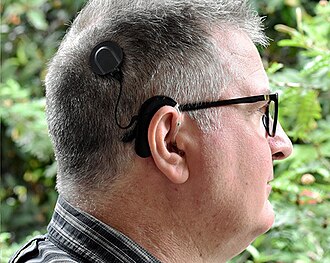
Cochlear implants are a popular treatment for many types of congenital deafness. Credit: Hear hear, CC BY SA 4.0
There are a number of causes of congenital deafness, each of which presents in its own way. In the case of OTOF-related hearing loss, it comes down to a genetic change in a single critical protein. The otoferlin gene is responsible for making the protein of the same name, and this protein is critical for normal, functional hearing in humans. It’s responsible for enabling the communication of signals between the inner hair cells in the ear, and the auditory nerve which conducts these signals to the brain. However, in patients with a condition called autosomal recessive deafness 9, a non-functional variant of the otoferlin gene prevents the normal production of this protein. Without the proper protein available, the auditory nerve fails to receive the proper signals from the hair cells in the ear, and the result is profound deafness.

The typical treatment for this type of congenital hearing loss is the use of a cochlear implant. This is an electronic device that uses a microphone to pick up sound, and then translates it into electrical signals which are sent to electrodes embedded in the cochlear. These simulate the signals that would normally come from the ear itself, and provide a very useful sense of hearing to the user. However, quality and fidelity is strictly limited compared to a fully-functional human ear, and they do come with other drawbacks as is common with many prosthetic devices.

The better understanding that we now have of OTOF-related hearing loss presented an opportunity. If it were possible to get the right protein where it needed to be, it might be possible to enable hearing in what are otherwise properly-formed ears.
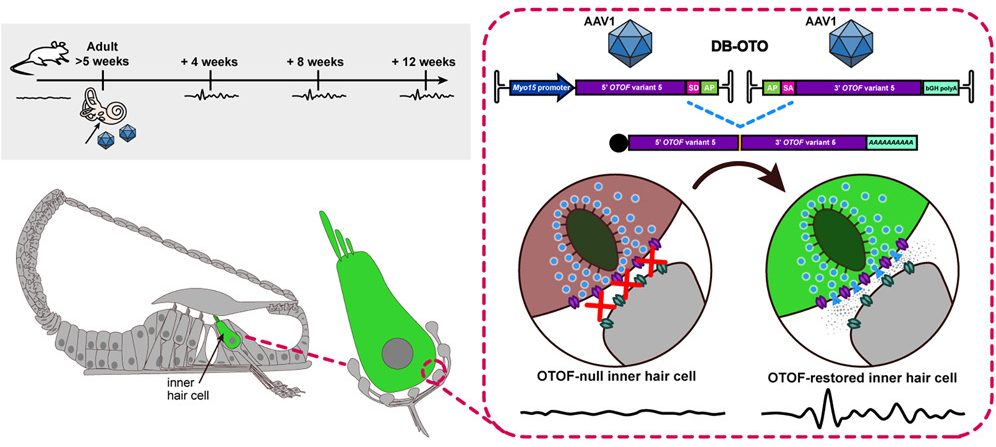
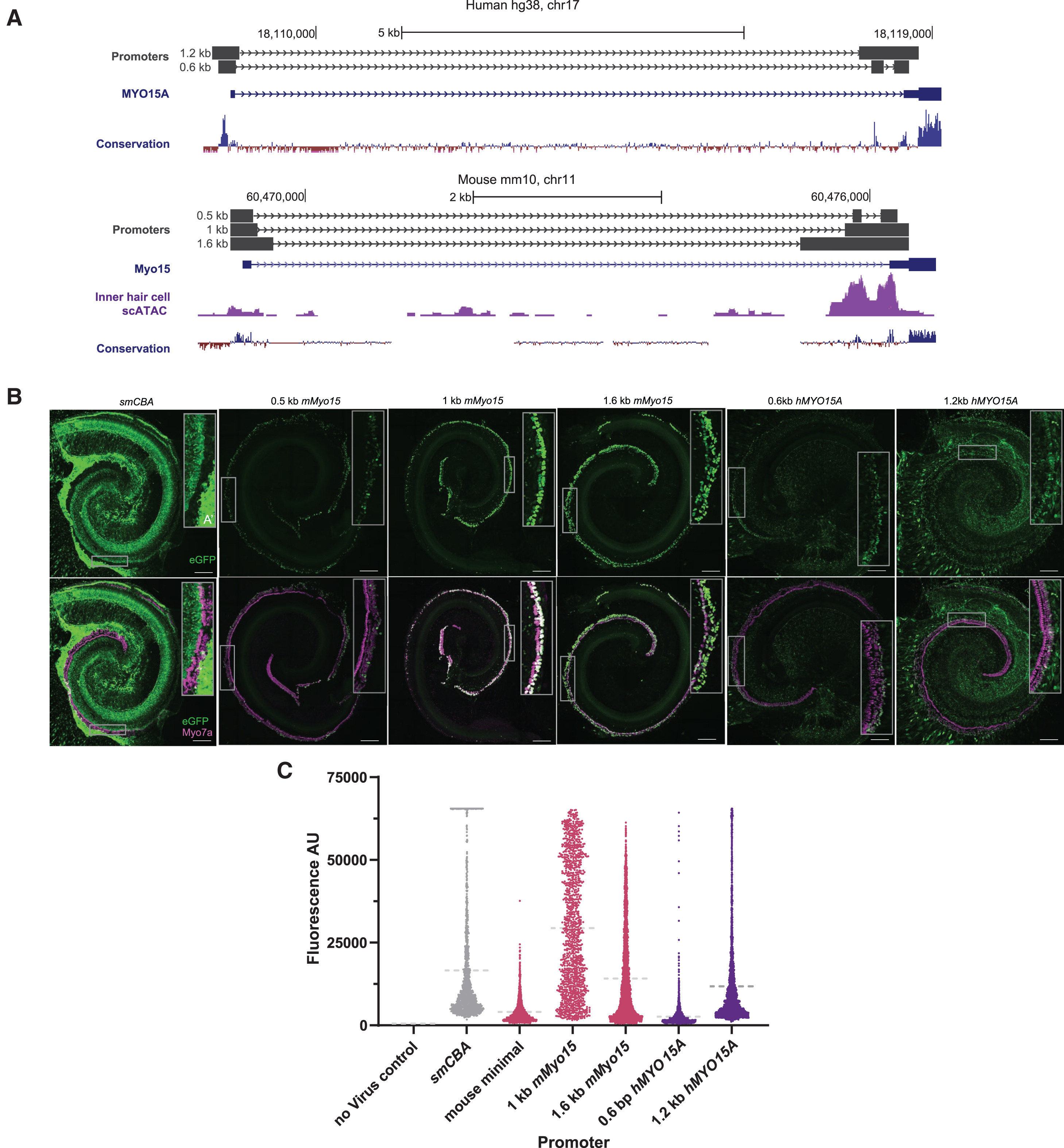
DB-OTO was initially trialled in mice, where it was able to improve hearing response by creating the protein necessary for nerve conduction between inner ear hair cells and the auditory nerve. Credit: research paper
The treatment to do that job is called DB-OTO. It’s a virus-based gene therapy which is able to deliver a working version of the OTOF gene. It uses a non-pathogenic virus to carry the proper genetic code that produces the otoferlin protein. However, it’s no good if this gene is expressed in just any context. Thus, it’s paired with a special DNA sequence called a Myo15 promoter which ensures the gene is only expressed in cochlear hair cells that would normally express the otoferlin protein. Treatment involves delivering the viral gene therapy to one or both ears through a surgical procedure using a similar approach to implanting cochlear devices.
Researchers pursued a number of promoter sequences to ensure the gene was only expressed with the correct cells. Credit: research paper
An early trial provided DB-OTO treatment to twelve patients, ranging in age from ten months to sixteen years. eleven out of twelve patients developed improved hearing within weeks of treatment with DB-OTO. Nine patients were able to achieve improvements to the point of no longer requiring cochlear implants and having viable natural hearing.

Six trial participants could perceive soft speech, and three could hear whispers, indicating a normal level of hearing sensitivity. Notably, hearing improvements were persistent and there were some signs of speech development in three patients in the study. The company behind the work, Regeneron, is also eager to take the learnings from its development and potentially apply it to other kinds of hearing loss from genetic causes.

DB-OTO remains an experimental treatment for now, but regulatory approvals are being pursued for its further use. It could yet prove to be a viable and effective treatment for a wide range of patients affected by this genetic issue. It’s just one of a number of emerging treatments that use viruses to deliver helpful genetic material when a patient’s own genes don’t quite function as desired.


hackaday.com/2026/01/14/geneti…

ESP32-P4 Powers Retro Handheld after a Transplant


The media in this post is not displayed to visitors. To view it, please log in.

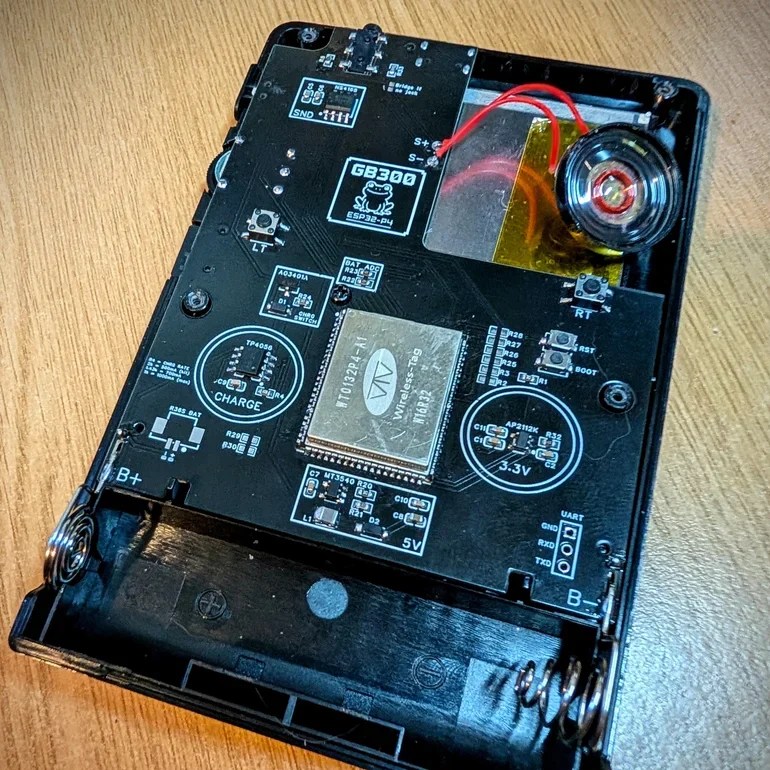
The ESP32-P4 is the new hotness on the microcontroller market. With RISC-V architecture and two cores running 400 MHz, to ears of a certain vintage it sounds more like the heart of a Unix workstation than a traditional MCU. Time’s a funny thing like that. [DynaMight] was looking for an excuse to play with this powerful new system on a chip, so put together what he calls the GB300-P4: a commercial handheld game console with an Expressif brain transplant.

Older ESP32 chips weren’t quite up to 16-bit emulation, but that hadn’t stopped people trying; the RetroGo project by [ducalex] already has an SNES and Genesis/Mega Drive emulation mode, along with all the 8-bit you could ask for. But the higher-tech consoles can run a bit slow in emulation on other ESP32 chips. [DynaMight] wanted to see if the P4 performed better, and to no ones surprise, it did.

If the build quality on this handheld looks suspiciously professional, that’s because it is: [DynaMight] started with a GB300, a commercial emulator platform. Since the ESP32-P4 is replacing a MIPS chip clocked at 914 MHz in the original — which sounds even more like the heart of a Unix workstation, come to think of it — the machine probably doesn’t have better performance than it did from factory unless its code was terribly un-optimized. In this case, performance was not the point. The point was to have a handheld running RetroGo on this specific chip, which the project has evidently accomplished with flying colours. If you’ve got a GB300 you’d rather put an “Expressif Inside” sticker on, the project is on github. Otherwise you can check out the demo video below. (DOOM starts at 1:29, because of course it runs DOOM.)

The last P4 project we featured was a Quadra emulator; we expect to see a lot of projects with this chip in the new year, and they’re not all going to be retrocomputer-related, we’re sure. If you’re cooking up something using the new ESP32, or know someone who is, you know what to do.

youtube.com/embed/FW7MTuJyUNA?…


hackaday.com/2026/01/14/esp32-…

Clone Wars: IBM Edition


The media in this post is not displayed to visitors. To view it, please log in.

If you search the Internet for “Clone Wars,” you’ll get a lot of Star Wars-related pages. But the original Clone Wars took place a long time ago in a galaxy much nearer to ours, and it has a lot to do with the computer you are probably using right now to read this. (Well, unless it is a Mac, something ARM-based, or an old retro-rig. I did say probably!)

IBM is a name that, for many years, was synonymous with computers, especially big mainframe computers. However, it didn’t start out that way. IBM originally made mechanical calculators and tabulating machines. That changed in 1952 with the IBM 701, IBM’s first computer that you’d recognize as a computer.

If you weren’t there, it is hard to understand how IBM dominated the computer market in the 1960s and 1970s. Sure, there were others like Univac, Honeywell, and Burroughs. But especially in the United States, IBM was the biggest fish in the pond. At one point, the computer market’s estimated worth was a bit more than $11 billion, and IBM’s five biggest competitors accounted for about $2 billion, with almost all of the rest going to IBM.

So it was somewhat surprising that IBM didn’t roll out the personal computer first, or at least very early. Even companies that made “small” computers for the day, like Digital Equipment Corporation or Data General, weren’t really expecting the truly personal computer. That push came from companies no one had heard of at the time, like MITS, SWTP, IMSAI, and Commodore.

The IBM PC


The story — and this is another story — goes that IBM spun up a team to make the IBM PC, expecting it to sell very little and use up some old keyboards previously earmarked for a failed word processor project. Instead, when the IBM PC showed up in 1981, it was a surprise hit. By 1983, there was the “XT” which was a PC with some extras, including a hard drive. In 1984, the “AT” showed up with a (gasp!) 16-bit 80286.

The personal computer market had been healthy but small. Now the PC was selling huge volumes, perhaps thanks to commercials like the one below, and decimating other companies in the market. Naturally, others wanted a piece of the pie.

youtube.com/embed/VslekgnIXDo?…

Send in the Clones


Anyone could make a PC-like computer, because IBM had used off-the-shelf parts for nearly everything. There were two things that really set the PC/XT/AT family apart. First, there was a bus for plugging in cards with video outputs, serial ports, memory, and other peripherals. You could start a fine business just making add-on cards, and IBM gave you all the details. This wasn’t unlike the S-100 bus created by the Altair, but the volume of PC-class machines far outstripped the S-100 market very quickly.

In reality, there were really two buses. The PC/XT had an 8-bit bus, later named the ISA bus. The AT added an extra connector for the extra bits. You could plug an 8-bit card into part of a 16-bit slot. You probably couldn’t plug a 16-bit card into an 8-bit slot, though, unless it was made to work that way.

The other thing you needed to create a working PC was the BIOS — a ROM chip that handled starting the system with all the I/O devices set up and loading an operating system: MS-DOS, CP/M-86, or, later, OS/2.

Protection

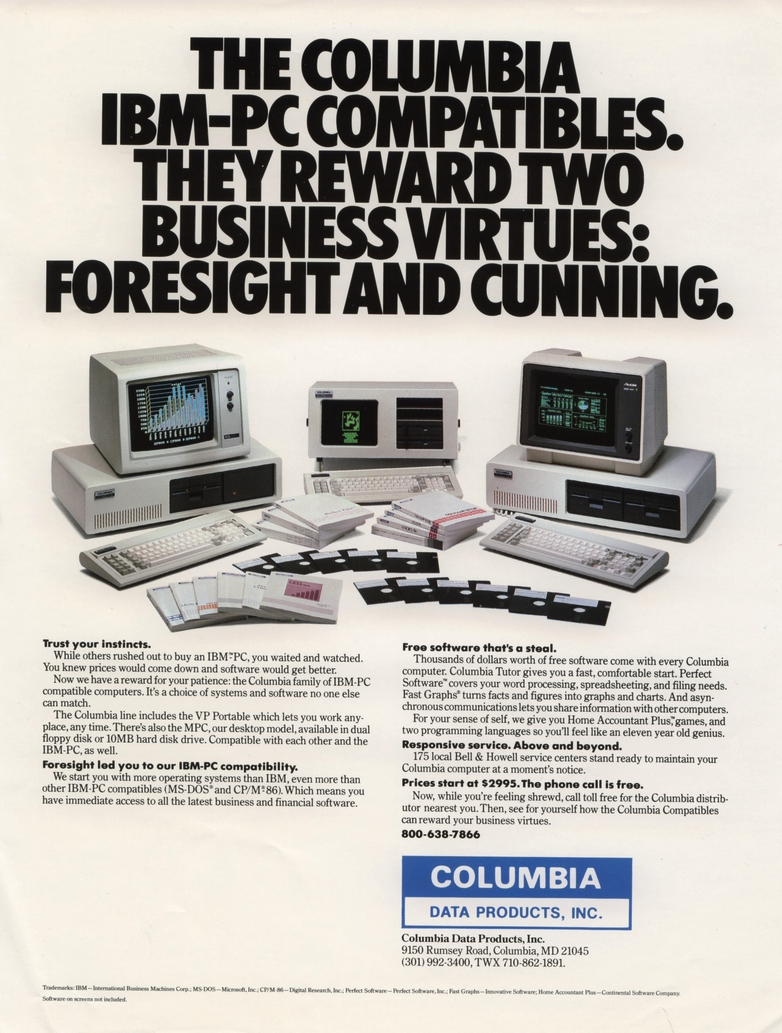
An ad for a Columbia PC clone.
IBM didn’t think the PC would amount to much so they didn’t do anything to hide or protect the bus, in contrast to Apple, which had patents on key parts of its computer. They did, however, have a copyright on the BIOS. In theory, creating a clone IBM PC would require the design of an Intel-CPU motherboard with memory and I/O devices at the right addresses, a compatible bus, and a compatible BIOS chip.

But IBM gave the world enough documentation to write software for the machine and to make plug-in cards. So, figuring out the other side of it wasn’t particularly difficult. Probably the first clone maker was Columbia Data Products in 1982, although they were perceived to have compatibility and quality issues. (They are still around as a software company.)

Eagle Computer was another early player that originally made CP/M computers. Their computers were not exact clones, but they were the first to use a true 16-bit CPU and the first to have hard drives. There were some compatibility issues with Eagle versus a “true” PC. You can hear their unusual story in the video below.

youtube.com/embed/0wdunM5XZwo?…
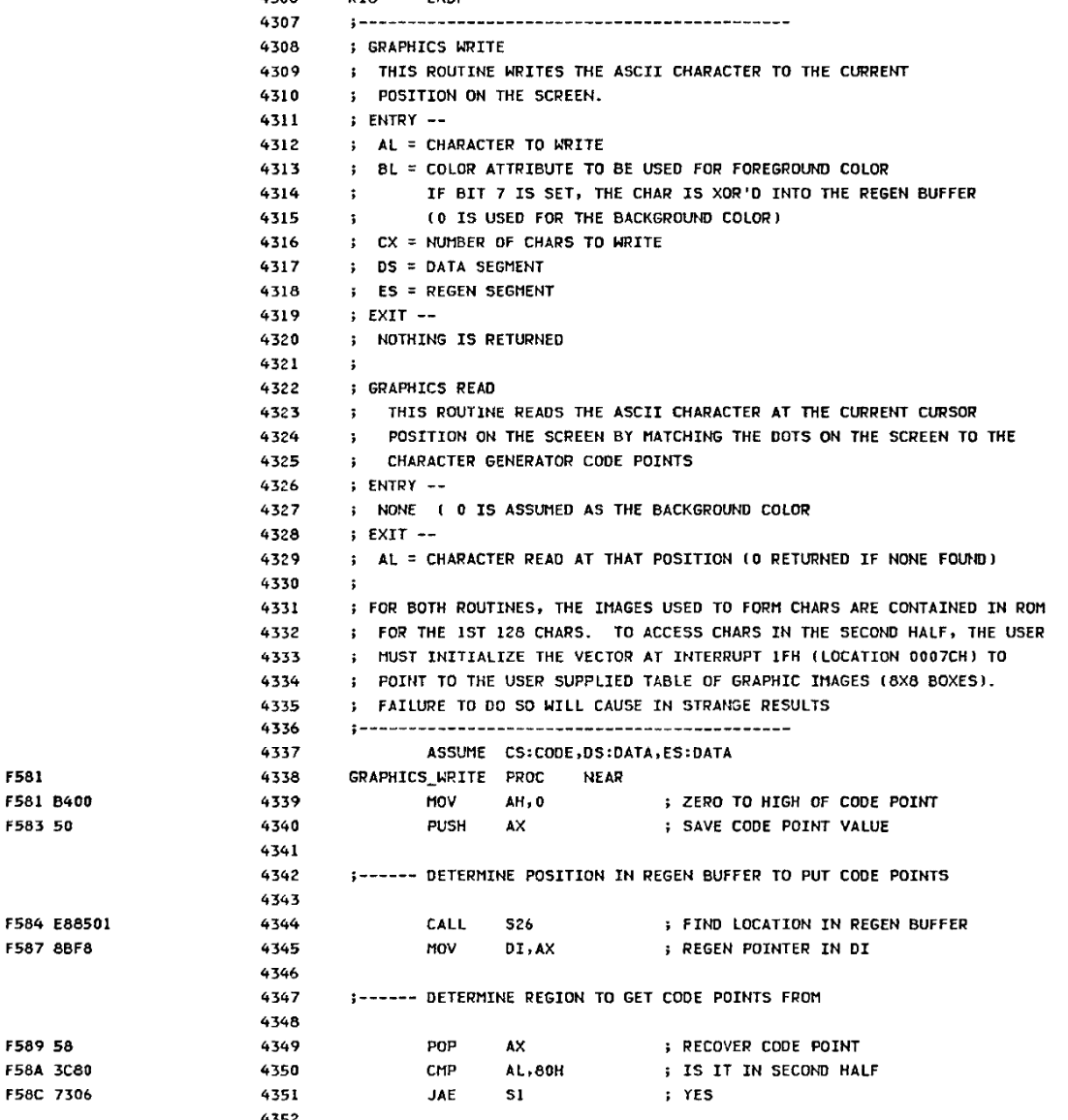
The PC Reference manual had schematics and helpfully commented BIOS source code
One of the first companies to find real success cloning the PC was Compaq Computers, formed by some former Texas Instruments employees who were, at first, going to open Mexican restaurants, but decided computers would be better. Unlike some future clone makers, Compaq was dedicated to building better computers, not cheaper.

Compaq’s first entry into the market was a “luggable” (think of a laptop with a real CRT in a suitcase that only ran when plugged into the wall; see the video below). They reportedly spent $1,000,000 to duplicate the IBM BIOS without peeking inside (which would have caused legal problems). However, it is possible that some clone makers simply copied the IBM BIOS directly or indirectly. This was particularly easy because IBM included the BIOS source code in an appendix of the PC’s technical reference manual.

Between 1982 and 1983, Compaq, Columbia Data Products, Eagle Computers, Leading Edge, and Kaypro all threw their hats into the ring. Part of what made this sustainable over the long term was Phoenix Technologies.

youtube.com/embed/fwvLu9aSkmQ?…

Rise of the Phoenix


Phoenix was a software producer that realized the value of having a non-IBM BIOS. They put together a team to study the BIOS using only public documentation. They produced a specification and handed it to another programmer. That programmer then produced a “clean room” piece of code that did the same things as the BIOS.
An Eagle ad from 1983
This was important because, inevitably, IBM sued Phoenix but lost, as they were able to provide credible documentation that they didn’t copy IBM’s code. They were ready to license their BIOS in 1984, and companies like Hewlett-Packard, Tandy, and AT&T were happy to pay the $290,000 license fee. That fee also included insurance from The Hartford to indemnify against any copyright-infringement lawsuits.

Clones were attractive because they were often far cheaper than a “real” PC. They would also often feature innovations. For example, almost all clones had a “turbo” mode to increase the clock speed a little. Many had ports or other features as standard that a PC had to pay extra for (and consume card slots). Compaq, Columbia, and Kaypro made luggable PCs. In addition, supply didn’t always match demand. Dealers often could sell more PCs than they could get in stock, and the clones offered them a way to close more business.

Issues


Not all clone makers got everything right. It wasn’t odd for a strange machine to have different interrupt handling than an IBM machine or different timers. Another favorite place to err involved AT/PC compatibility.

In a base-model IBM PC, the address bus only went from A0 to A19. So if you hit address (hex) FFFFF+1, it would wrap around to 00000. Memory being at a premium, apparently, some programs depended on that behavior.

With the AT, there were more address lines. Rather than breaking backward compatibility, those machines have an “A20 gate.” By default, the A20 line is disabled; you must enable it to use it. However, there were several variations in how that worked.

Intel, for example, had the InBoard/386 that let you plug a 386 into a PC or AT to upgrade it. However, the InBoard A20 gating differed from that of a real AT. Most people never noticed. Software that used the BIOS still worked because the InBoard’s BIOS knew the correct procedure. Most software didn’t care either way. But there was always that one program that would need a fix.

The original PC used some extra logic in the keyboard controller to handle the gate. When CPUs started using cache, the A20 gating was moved into the CPU for many generations. However, around 2013, most CPUs finally gave up on gating A20.

The point is that there were many subtle features on a real IBM computer, and the clone makers didn’t always get it right. If you read ads from those days, they often tout how compatible they are.

Total War!


IBM started a series of legal battles against… well… everybody. Compaq, Corona Data Systems, Handwell, Phoenix, AMD, and anyone who managed to put anything on the market that competed with “big blue” (one of IBM’s nicknames).

IBM didn’t win anything significant, although most companies settled out of court. Then they just used the Phoenix BIOS, which was provably “clean.” So IBM decided to take a different approach.

In 1987, IBM decided they should have paid more attention to the PC design, so they redid it as the PS/2. IBM spent a lot of money telling people how much better the PS/2 was. They had really thought about it this time. So scrap those awful PCs and buy a PS/2 instead.

Of course, the PS/2 wasn’t compatible with anything. It was made to run OS/2. It used the MCA bus, which was incompatible with the ISA bus, and didn’t have many cards available. All of it, of course, was expensive. This time, clone makers had to pay a license fee to IBM to use the new bus, so no more cheap cards, either.

You probably don’t need a business degree to predict how that turned out. The market yawned and continued buying PC “clones” which were now the only game in town if you wanted a PC/XT/AT-style machine, especially since Compaq beat IBM to market with an 80386 PC by about a year.

Not all software was compatible with all clones. But most software would run on anything and, as clones got more prevalent, software got smarter about what to expect. At about the same time, people were thinking more about buying applications and less about the computer they ran on, a trend that had started even earlier, but was continuing to grow. Ordinary people didn’t care what was in the computer as long as it ran their spreadsheet, or accounting program, or whatever it was they were using.

Dozens of companies made something that resembled a PC, including big names like Olivetti, Zenith, Hewlett-Packard, Texas Instruments, Digital Equipment Corporation, and Tandy. Then there were the companies you might remember for other reasons, like Sanyo or TeleVideo. There were also many that simply came and went with little name recognition. Michael Dell started PC Limited in 1984 in his college dorm room, and by 1985, he was selling an $800 turbo PC. A few years later, the name changed to Dell, and now it is a giant in the industry.

Looking Back


It is interesting to play “what if” with this time in history. If IBM had not opened their architecture, they might have made more money. Or, they might have sold 1,000 PCs and lost interest. Then we’d all be using something different. Microsoft retaining the right to sell MS-DOS to other people was also a key enabler.

IBM stayed in the laptop business (ThinkPad) until they sold to Lenovo in 2005. They would also sell them their server business in 2014.

Things have changed, of course. There hasn’t been an ISA card slot on a motherboard in ages. Boot processes are more complex, and there are many BIOS options. Don’t even get us started on EMS and XMS. But at the core, your PC-compatible computer still wakes up and follows the same steps as an old school PC to get started. Like the Ship of Theseus, is it still an “IBM-compatible PC?” If it matters, we think the answer is yes.

If you want to relive those days, we recently saw some new machines sporting 8088s and 80386s. Or, there’s always emulation.


hackaday.com/2026/01/14/clone-…

Porto di Ancona: data breach


@Informatica (Italy e non Italy 😁)
Il 14 gennaio 2026 il collettivo Anubis ha pubblicato alcuni documenti che dimostrerebbero un data breach ai danni del Porto di Ancona. Il porto di Ancona fa parte dell’Autorità del […]
L'articolo Porto di Ancona: data breach proviene da Edoardo Limone.

L'articolo proviene edoardolimone.com/2026/01/15/p…

Cybersecurity & cyberwarfare ha ricondiviso questo.

Digital omnibus: articolo per articolo, come le Big Tech hanno plasmato il ridimensionamento dei diritti digitali da parte dell'UE

Corporate Europe Observatory e LobbyControl tracciano le impronte digitali delle Big Tech sulle proposte del #DigitalOmnibus, un'importante deregolamentazione delle leggi digitali dell'UE, tra cui il GDPR e l'AI Act. In questo tentativo, le Big Tech sono supportate dall'amministrazione Trump e dall'estrema destra europea.

corporateeurope.org/en/2026/01…

@pirati

Cybersecurity & cyberwarfare ha ricondiviso questo.

L'FBI perquisisce la casa di un giornalista del Washington Post in un'indagine su una fuga di notizie

È estremamente raro che gli agenti federali perquisiscano l'abitazione di un giornalista, anche nelle indagini sulla divulgazione non autorizzata di informazioni riservate.

nytimes.com/2026/01/14/us/poli…

@giornalismo

Cybersecurity & cyberwarfare ha ricondiviso questo.

The media in this post is not displayed to visitors. To view it, please go to the original post.

Un hacker di 24 anni si è intrufolato 25 volte nella Corte Suprema degli Stati Uniti

📌 Link all'articolo : redhotcyber.com/post/un-hacker…

#redhotcyber #news #cybersecurity #hacking #sicurezzainformatica #violazioneidatipersonali #datipersonali

Cybersecurity & cyberwarfare ha ricondiviso questo.

CERT-UA reports PLUGGYAPE cyberattacks on defense forces
securityaffairs.com/186910/int…
#securityaffairs #hacking #Ukraine #Russia

“La tua tessera sanitaria è in scadenza”, ma è phishing: come difendersi


@Informatica (Italy e non Italy 😁)
Il CERT-AgID ha identificato una nuova campagna di phishing che sfrutta indebitamente il nome e l’immagine del Ministero della Salute per indurre i cittadini a rinnovare la tessera sanitaria. Ecco come funziona la truffa e i consigli per tenere al sicuro i

Cybersecurity & cyberwarfare ha ricondiviso questo.

L'Iran ha paralizzato Starlink: il servizio, diventato sinonimo di connettività a prova di censura, ha appena scoperto che questa assunzione è sbagliata

L’obiettivo non è colpire tutto, ma colpire nel punto giusto: frequenze, tempi, sequenze di aggancio. Non si spara nel buio. Si ascolta, si analizza, si interviene. È il metodo che trasforma un blackout in un’operazione tecnica.

notiziegeopolitiche.net/iran-l…

@informatica