The Privacy Post ha ricondiviso questo.

The media in this post is not displayed to visitors. To view it, please go to the original post.

Modern In-Circuit Emulator for the 6809
poliverso.org/display/0477a01e…
Modern In-Circuit Emulator for the 6809 The Motorola 6809, released in 1978, was the follow-up to their 6800 from four years earlier. It’s a powerful little chip with many 16-bit features, although it’s an 8-bit micro at heart. Despite its great improvements over the 6800, and even technical superiority over the Z80 and 6502 (hardware multiply, for example!), it never reached the same


Modern In-Circuit Emulator for the 6809

The Motorola 6809, released in 1978, was the follow-up to their 6800 from four years earlier. It’s a powerful little chip with many 16-bit features, although it’s an 8-bit micro at heart. Despite its great improvements over the 6800, and even technical superiority over the Z80 and 6502 (hardware multiply, for example!), it never reached the same levels of success that those chips did. However, there are still some famous systems, such as the TRS-80 Colour Computer, which utilized the chip and are still being hacked on today. [Ted] is clearly a fan of the 6809, as he used a Teensy 4.1 to create a cycle-exact, drop-in 6809 emulator!

A small interposer board rearranges the Teensy pinout to match the 6809, as well as translating voltage levels from 3.3V to 5V. With careful design, the Teensy matches the cycle diagrams in the Motorola datasheet precisely, and so should be able to run any applications written for the chip! A great test was booting Extended Colour BASIC for the TRS-80 CoCo 2 and running some test BASIC programs. Any issues with opcode decoding or timing would certainly be exposed while running an interpreted language like BASIC. After this successful test, it was time to let the Teensy’s ARM Cortex-M7 rip and see what it could do.

Simply removing the dummy cycles between opcode fetches (necessary in the original chip) led to an immediate speedup of almost 100%. For many computers that used the 6809, this effectively doubles the clock speed from a typical ~1MHz to 2MHz, which is a noticeable and welcome speedup. Mirroring the ROM and RAM inside the Teensy (apparently overclocked to 800MHz!) led to a ridiculous 800% improvement, making many applications and games essentially unusable – though probably breaking the record for the world’s fastest CoCo in the process.
The Teensy emulator plugged into a CoCo 2
The real power of in-circuit emulators is for debugging both software and hardware. In-circuit emulators were essential tools back in the day of 8- and even 16-/32-bit microprocessors. Being able to control the processor from an external machine allows you to view the internal state of the chip while stepping a single cycle at a time if needed. This can help expose issues with hardware surrounding the MCU, although many engineers would also use a large, multi-channel logic analyzer at the same time. Common emulators back then would consist of a large box full of many boards packed with circuitry, all connected to a card inserted into an IBM PC or similar. This could also remove the slow process of burning EPROMs and then having to wait for them to be UV erased during prototyping, as many emulators would include SRAM to act as ROM.

All in all, we think [Ted] did a terrific job and we are hoping to see the project expand, possibly with PC software to control the emulator and show the internal state, just like back in the 80s!

youtube.com/embed/v15GEWrfFuQ?…


The Privacy Post reshared this.

The Privacy Post ha ricondiviso questo.

CrowdStrike chaos could prompt rethink among investors, customers
poliverso.org/display/0477a01e…
CrowdStrike chaos could prompt rethink among investors, customersAmerican cybersecurity company CrowdStrike became a household name for all the wrong reasons on Friday (19 July), after a botched software update caused havoc around the world.euractiv.com/section/cybersecu…


CrowdStrike chaos could prompt rethink among investors, customers


American cybersecurity company CrowdStrike became a household name for all the wrong reasons on Friday (19 July), after a botched software update caused havoc around the world.


euractiv.com/section/cybersecu…


The Privacy Post reshared this.

The Privacy Post ha ricondiviso questo.

The media in this post is not displayed to visitors. To view it, please go to the original post.

The Continuing Venusian Mystery of Phosphine and Ammonia
poliverso.org/display/0477a01e…
The Continuing Venusian Mystery of Phosphine and Ammonia The planet Venus is in so many ways an enigma. It’s a sister planet to Earth and also within relatively easy reach of our instruments and probes, yet we nevertheless know precious little about what is going on its surface or even inside its dense atmosphere. Much of this is of course due to planets like Mars getting


The Continuing Venusian Mystery of Phosphine and Ammonia

The planet Venus is in so many ways an enigma. It’s a sister planet to Earth and also within relatively easy reach of our instruments and probes, yet we nevertheless know precious little about what is going on its surface or even inside its dense atmosphere. Much of this is of course due to planets like Mars getting all the orbiting probes and rovers scurrying around on its barren, radiation-blasted surface, but we had atmospheric probes descend through Venus’ atmosphere, so far to little avail. Back in 2020 speculation arose of phosphine being detected in Venus’ atmosphere, which caused both excitement and a lot of skepticism. Regardless, at the recent National Astronomy Meeting (NAM 2024) the current state of Venusian knowledge was discussed, which even got The Guardian to report on it.

In addition to phosphine, there’s speculation of ammonia also being detectable from Earth, both of which might be indicative of organic processes and thus potentially life. Related research has indicated that common amino acids essential to life on Earth would be stable even in sulfuric droplets like in Venus’ atmosphere. After criticism to the original 2020 phosphine article, [Jane S. Greaves] et al. repeated their observations based on feedback, although it’s clear that the observation of phosphine gas on Venus is not a simple binary question.

The same is true of ammonia, which if present in Venusian clouds would be a massive discovery, which according to research by [William Bains] and colleagues in PNAS could explain many curious observations in Venus’ atmosphere. With so much uncertainty with remote observations, it’s clear that the only way that we are going to answer these questions is with future Venus missions, which sadly remain rather sparse.

If there’s indeed life on Venus, it’ll have a while longer to evolve before we can go and check it out.


The Privacy Post reshared this.

The Privacy Post ha ricondiviso questo.

The media in this post is not displayed to visitors. To view it, please go to the original post.

Desiccants, Tested Side By Side
poliverso.org/display/0477a01e…
Desiccants, Tested Side By Side We’re so used to seeing a little sachet of desiccant drop out of a package when we open it, that we seldom consider these essential substances. But anyone who spends a while around 3D printing soon finds the need for drying their filament, and knowing a bit about the subject becomes of interest. It’s refreshing then to see [Big Clive] do a side-by-side test of a ran


Desiccants, Tested Side By Side

We’re so used to seeing a little sachet of desiccant drop out of a package when we open it, that we seldom consider these essential substances. But anyone who spends a while around 3D printing soon finds the need for drying their filament, and knowing a bit about the subject becomes of interest. It’s refreshing then to see [Big Clive] do a side-by-side test of a range of commonly available desiccants. Of silica gel, bentonite, easy-cook rice, zeolite, or felight, which is the best? He subjects them to exactly the same conditions over a couple of months, and weighs them to measure their efficiency in absorbing water.

The results are hardly surprising, in that silica gel wins by a country mile. Perhaps the interesting part comes in exploding the rice myth; while the rice does have some desiccant properties, it’s in fact not the best of the bunch despite being the folk remedy for an immersed mobile phone.

Meanwhile, this isn’t the first time we’ve looked at desiccants, in the past we’ve featured activated alumina.

youtube.com/embed/rufg-Wa4Zr4?…


The Privacy Post reshared this.

The Privacy Post ha ricondiviso questo.

The media in this post is not displayed to visitors. To view it, please go to the original post.

Watch This RC Jet Thrust System Dance
poliverso.org/display/0477a01e…
Watch This RC Jet Thrust System Dance An EDF (electric duct fan) is a motor that basically functions as a jet engine for RC aircraft. They’re built for speed, but to improve maneuverability (and because it’s super cool) [johnbecker31] designed a 3D-printable method of adjusting the EDF’s thrust forum.flitetest.com/index.php?…


Watch This RC Jet Thrust System Dance

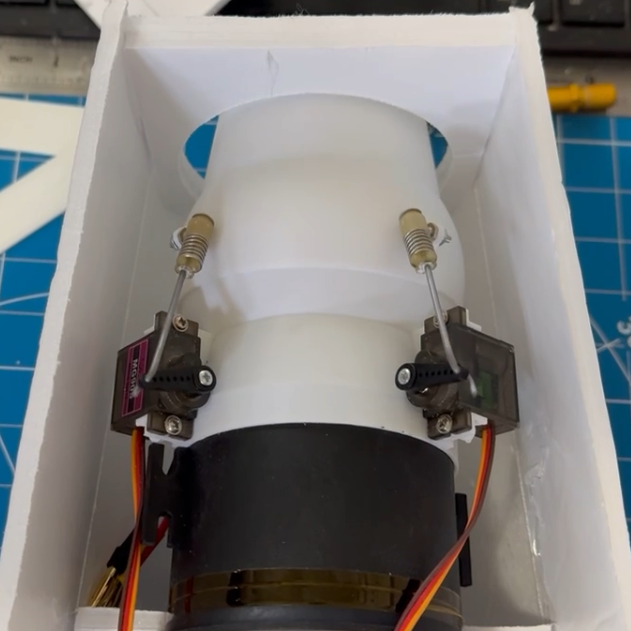
An EDF (electric duct fan) is a motor that basically functions as a jet engine for RC aircraft. They’re built for speed, but to improve maneuverability (and because it’s super cool) [johnbecker31] designed a 3D-printable method of adjusting the EDF’s thrust on demand.
Before 3D printers were common, making something like this would have been much more work.
The folks at Flite Test released a video in which they built [john]’s design into a squat tester jet that adjusts thrust in sync with the aircraft’s control surfaces, as you can see in the header image above. Speaking of control surfaces, you may notice that test aircraft lacks a rudder. That function is taken over by changing the EDF’s thrust, although it still has ailerons that move in sync with the thrust system.

EDF-powered aircraft weren’t really feasible in the RC scene until modern brushless electric motors combined with the power density of lithium-ion cells changed all that. And with electronics driving so much, and technology like 3D printers making one-off hardware accessible to all, the RC scene continues to be fertile ground for all sorts of fascinating experimentation. Whether it’s slapping an afterburner on an EDF or putting an actual micro jet engine on an RC car.

youtube.com/embed/LIRXDUgKlkM?…

youtube.com/embed/5or-egAm_4g?…


The Privacy Post reshared this.

The Privacy Post ha ricondiviso questo.

The media in this post is not displayed to visitors. To view it, please go to the original post.

How Ten Turn Pots Are Made
poliverso.org/display/0477a01e…
How Ten Turn Pots Are Made It is easy to think of a potentiometer as a simple device, but there are many nuances. For example, some pots are linear — a change of a few degrees at the low end will change the resistance the same amount as the same few degrees at the high end. Others are logarithmic. Changes at one end of the scale are more dramatic than at the other end of the scale. But for very pr


How Ten Turn Pots Are Made

It is easy to think of a potentiometer as a simple device, but there are many nuances. For example, some pots are linear — a change of a few degrees at the low end will change the resistance the same amount as the same few degrees at the high end. Others are logarithmic. Changes at one end of the scale are more dramatic than at the other end of the scale. But for very precise use, you often turn to the infamous ten-turn pot. Here, one rotation of the knob is only a tenth of the entire range. [Thomas] shows us what’s inside a typical one in the video below.

When you need a precise measurement, such as in a bridge instrument, these pots are indispensable. [Thomas] had a broken one and took that opportunity to peer inside. The resistor part is a coil of wire wound around the inside of the round body. Unsurprisingly, there are ten turns of wire that make up the coil.

The business end, of course, is in the rotating part attached to the knob. A small shuttle moves up and down the shaft, making contact with the resistance wire and a contact for the wiper. The solution is completely mechanical and dead simple.

As [Thomas] notes, these are usually expensive, but you can — of course — build your own. These are nice for doing fine adjustments with precision power supplies, too.

youtube.com/embed/bZ7jDXMOQdU?…


The Privacy Post reshared this.

The Privacy Post ha ricondiviso questo.

CrowdStrike emette un comunicato stampa ufficiale: “Siamo profondamente dispiaciuti”
poliverso.org/display/0477a01e…
CrowdStrike emette un comunicato stampa ufficiale: “Siamo profondamente dispiaciuti” Avevamo riportato questo pomeriggio un commento arrivato in redazione da parte di CrowdStrike sull’accaduto. Intorno alle 13:25 ET, l’azienda emette un comunicato sul loro sito web che prosegue redhotcyber.com/post/crowdstri…


CrowdStrike emette un comunicato stampa ufficiale: “Siamo profondamente dispiaciuti”

Avevamo riportato questo pomeriggio un commento arrivato in redazione da parte di CrowdStrike sull’accaduto. Intorno alle 13:25 ET, l’azienda emette un comunicato sul loro sito web che prosegue quanto anticipato nel commento di questo pomeriggio.

Rispetto al commento di questo pomeriggio, CrowdStrike riconosce la gravità della situazione e si scusa profondamente per l’inconveniente e l’interruzione causati. L’azienda sta lavorando in stretta collaborazione con tutti i clienti interessati per garantire che i loro sistemi siano rapidamente riportati alla piena operatività, permettendo loro di continuare a fornire i servizi critici su cui i loro clienti fanno affidamento.
CrowdStrike sta lavorando attivamente con i clienti interessati da un difetto trovato in un singolo aggiornamento di contenuto per gli host Windows. Gli host Mac e Linux non sono interessati. Non si è trattato di un attacco informatico.

Il problema è stato identificato, isolato e una correzione è stata distribuita. Rimandiamo i clienti al portale di supporto per gli ultimi aggiornamenti e continueremo a fornire aggiornamenti completi e continui sul nostro sito web.

Raccomandiamo inoltre alle organizzazioni di assicurarsi di comunicare con i rappresentanti di CrowdStrike attraverso i canali ufficiali.

Il nostro team è completamente mobilitato per garantire la sicurezza e la stabilità dei clienti di CrowdStrike.

Comprendiamo la gravità della situazione e siamo profondamente dispiaciuti per l'inconveniente e l'interruzione. Stiamo lavorando con tutti i clienti interessati per garantire che i sistemi siano di nuovo operativi e possano fornire i servizi su cui i loro clienti contano.

Assicuriamo ai nostri clienti che CrowdStrike sta funzionando normalmente e che questo problema non influisce sui nostri sistemi della piattaforma Falcon. Se i tuoi sistemi stanno funzionando normalmente, non vi è alcun impatto sulla loro protezione se il sensore Falcon è installato.

Di seguito è riportato l'ultimo CrowdStrike Tech Alert con maggiori informazioni sul problema e sulle misure alternative che le organizzazioni possono adottare. Continueremo a fornire aggiornamenti alla nostra community e al settore non appena saranno disponibili.
Per maggiori dettagli, CrowdStrike ha pubblicato un Tech Alert contenente informazioni dettagliate sul problema riscontrato e sulle misure alternative che le organizzazioni possono adottare. L’azienda continuerà a fornire aggiornamenti alla propria community e all’intero settore non appena nuove informazioni saranno disponibili.

CrowdStrike rimane fermamente impegnata a garantire la sicurezza dei propri clienti e a fornire soluzioni rapide ed efficaci a qualsiasi problema che possa emergere. La fiducia e la sicurezza dei clienti rimangono la priorità assoluta dell’azienda.

Di seguito alcune indicazioni riportati nel comunicato stampa di CS:

  • I sintomi includono l’errore bugcheck\blue screen relativo al sensore Falcon.
  • Gli host Windows che non sono stati interessati non necessitano di alcuna azione poiché il file del canale problematico è stato ripristinato.
  • Anche gli host Windows che vengono attivati ​​dopo le 05:27 UTC non saranno interessati
  • Gli host che eseguono Windows 7/2008 R2 non sono interessati
  • Questo problema non ha alcun impatto sugli host basati su Mac o Linux
  • Il file del canale “C-00000291*.sys” con timestamp 0527 UTC o successivo è la versione ripristinata (corretta).
  • Il file del canale “C-00000291*.sys” con timestamp 0409 UTC è la versione problematica.
    • Nota: è normale che nella directory CrowdStrike siano presenti più file “C-00000291*.sys”. Finché uno dei file nella cartella ha una marca temporale pari o successiva alle 05:27 UTC, quello sarà il contenuto attivo.


È doveroso riportare che, nonostante la gravità estrema degli impatti di questo incidente, l’azienda ha incluso delle scuse nel proprio comunicato stampa, un gesto non sempre scontato tra le aziende tecnologiche statunitensi. Ci auguriamo che questo episodio induca a riflessioni profonde sulla natura interdipendente delle infrastrutture moderne. Anche un piccolo difetto può innescare un effetto a cascata devastante, sottolineando la necessità di una vigilanza costante e di un’attenzione meticolosa nella gestione di tali sistemi complessi.

L'articolo CrowdStrike emette un comunicato stampa ufficiale: “Siamo profondamente dispiaciuti” proviene da il blog della sicurezza informatica.


The Privacy Post reshared this.

The Privacy Post ha ricondiviso questo.

The media in this post is not displayed to visitors. To view it, please go to the original post.

Hackaday Podcast Episode 280: TV Tubes as Amplifiers, Smart Tech in Sportsballs, and Adrian Gives Us the Fingie
poliverso.org/display/0477a01e…
Hackaday Podcast Episode 280: TV Tubes as Amplifiers, Smart Tech in Sportsballs, and Adrian Gives Us the Fingie Despite the summer doldrums, it was another big week in the hacking world, and Elliot sat down with Dan for a rundown. Come along for the ride as Dan betrays his total ignorance of soccer/football, much to


Hackaday Podcast Episode 280: TV Tubes as Amplifiers, Smart Tech in Sportsballs, and Adrian Gives Us the Fingie

Despite the summer doldrums, it was another big week in the hacking world, and Elliot sat down with Dan for a rundown. Come along for the ride as Dan betrays his total ignorance of soccer/football, much to Elliot’s amusement. But it’s all about keeping the human factor in sports, so we suppose it was worth it. Less controversially, we ogled over a display of PCB repair heroics, analyzed a reverse engineering effort that got really lucky, and took a look at an adorable one-transistor ham transceiver. We also talked about ants doing surgery, picking locks with nitric acid, a damn cute dam, and how to build one of the world’s largest machines from scratch in under a century. Plus, we answered the burning question: can a CRT be used as an audio amplifier? Yes, kind of, but please don’t let the audiophiles know or we’ll never hear the end of it.

html5-player.libsyn.com/embed/…
Where to Follow Hackaday Podcast

Places to follow Hackaday podcasts:


Worried about attracting the Black Helicopters? Download the DRM-free MP3 and listen offline, just in case.

Episode 280 Show Notes:

News:


What’s that Sound?


Interesting Hacks of the Week:


Quick Hacks:


Can’t-Miss Articles:


The Privacy Post reshared this.

The Privacy Post ha ricondiviso questo.

The media in this post is not displayed to visitors. To view it, please go to the original post.

Supercon 2023: [Pierce Nichols] is Teaching Robots To Sail
poliverso.org/display/0477a01e…
Supercon 2023: [Pierce Nichols] is Teaching Robots To Sail Sailing the high seas with the wind conjures a romantic notion of grizzled sailors fending off pirates and sea monsters, but until the 1920s, wind-powered vessels were the primary way goods traveled the sea. The meager weather-prediction capabilities of the early 20th Century spelled the end of the sailing ship


Supercon 2023: [Pierce Nichols] is Teaching Robots To Sail

An image of a man in glasses in a circle placed on a black background. The title "Pierce Nichols: Teaching Robots to Sail" is on white lettering in the bottom left corner.

Sailing the high seas with the wind conjures a romantic notion of grizzled sailors fending off pirates and sea monsters, but until the 1920s, wind-powered vessels were the primary way goods traveled the sea. The meager weather-prediction capabilities of the early 20th Century spelled the end of the sailing ship for most cargo, but cargo ships currently spend half of their operating budget on fuel. Between the costs and growing environmental concerns, [Pierce Nichols] thinks the time may be right for a return to sails.

[Nichols] grew up on a sailing vessel with his parents, and later worked in the aerospace industry designing rockets and aircraft control surfaces. Since sailing is predominantly an exercise in balancing the aerodynamic forces of the sails with the hydrodynamic forces acting on the keel, rudder, and hull of the boat, he’s the perfect man for the job.

WhileAn image of a sailing polar diagram on the left next to the words "A) Dead upwind (“in irons”) B) Close-hauled C) Beam reach (90˚ to the wind - fastest for sailing vessels D) Broad reach E) Run" The letters correspond to another diagram of a sailboat from the top showing it going directly into the wind (A), slightly into (B), perpendicular to (C), slightly away (D), and directly away from the wind / downwind (E). the first sails developed by humans were simple drag devices, sailors eventually developed airfoil sails that allow sailing in directions other than downwind. A polar diagram for a vessel gives you a useful chart of how fast it can go at a given angle to the wind. Sailing directly into the wind is also known as being “in irons” as it doesn’t get you anywhere, but most other angles are viable.

After a late night hackerspace conversation of how it would be cool to circumnavigate the globe with a robotic sailboat, [Nichols] assembled a team to move the project from “wouldn’t it be cool” to reality with the Pathfinder Prototype. Present at the talk, this small catamaran uses two wing sails to provide its primary propulsion. Wing sails, being a solid piece, are easier for computers to control since soft sails often exhibit strange boundary conditions where they stop responding to inputs as expected.

In its first iteration, An orange catamaran with two orange sails sticking up out of the starboard hull. A number of antennae and instruments jut out from the deck.Pathfinder was controlled with Ardupilot and servos directly attached to the wing sails. For this application, [Nichols] and his team found that the program was unable to successfully navigate multiple points and was difficult to edit due to its monolithic nature. A rebuild of the boat with a new cellular modem instead of Wi-Fi, bigger batteries, and a power switch changed to PX4 for control. They found that using cross-tack error, or the deviation from a straight line between waypoints works well for confined waters with well-documented hazards, but in open water “best velocity made good” can be more efficient.

With some experience under their belt, the crew was able to secure funding to build a larger test vessel. With a cheap catamaran and 400 square feet of rental space, this vessel was equipped with two wing sails on one of the hulls and commenced testing in the Puget Sound. Keeping the wing sails on a single hull keeps the deck clear for cargo without significantly affecting performance.

Despite some setbacks, like breaking apart and sinking, the new vessel is yielding lots of interesting data which will lead to the first operating full-scale vessels. These will be designed to carry one or two ISO standard shipping containers to rural locations. Current regulations require a small crew aboard the boat, but [Nichols] hopes that the research they’ve been doing on autonomous vessel control will lead to fully autonomous trips in the future to help make deliveries to Alaska or other remote places more economical.

Further down the line, larger vessels will be able to handle hundreds or thousands of containers. Toward the end of the talk, [Nichols] gave us a list of resources for anyone interested in pursuing nautical hacks including many works by C.A. Marchaj or looking into the Amateur Yacht Research Society to “do weird things with sailboats.”

youtube.com/embed/e2eV3SHpBEE?…


The Privacy Post reshared this.

The Privacy Post ha ricondiviso questo.

The media in this post is not displayed to visitors. To view it, please go to the original post.

Play Ransomware Rivendica l’Attacco al Colosso MIPS
poliverso.org/display/0477a01e…
Play Ransomware Rivendica l’Attacco al Colosso MIPS Nelle ultime ore, il sito di Data Leak della redhotcyber.com/post/il-ransom… gang Play Ransomware ha pubblicato una nuova rivendicazione: il colosso MIPS Technologies (mips.com/feed) è stato vittima di un attacco. Sebbene la pubblicazione ufficiale sia prevista per


Play Ransomware Rivendica l’Attacco al Colosso MIPS

Nelle ultime ore, il sito di Data Leak della ransomware gang Play Ransomware ha pubblicato una nuova rivendicazione: il colosso MIPS Technologies (www.mips.com) è stato vittima di un attacco.

Sebbene la pubblicazione ufficiale sia prevista per il 19 luglio 2024, il sito ha già reso pubblici alcuni dettagli, accrescendo la preoccupazione tra i partner e i clienti dell’azienda.

Play Ransomware

Play Ransomware è una delle numerose gang di ransomware emerse negli ultimi anni. Questi gruppi criminali operano criptando i dati delle vittime e richiedendo un riscatto per il ripristino. Play Ransomware si distingue per la sua strategia di pubblicazione dei dati rubati su siti di Data Leak, aumentando la pressione sulle vittime per pagare il riscatto.

La gang ha recentemente negato di offrire il servizio di Ransomware-as-a-Service (RaaS), una modalità in cui gli affiliati possono utilizzare il ransomware in cambio di una quota dei proventi. Questo è stato chiarito nel loro sito di Data Leak con un avviso prominente, probabilmente per evitare confusione e preservare la loro reputazione operativa.

Play Ransomware è noto per sfruttare vulnerabilità in applicazioni pubbliche e per utilizzare credenziali di account rubate per ottenere accesso iniziale ai sistemi delle vittime. Un esempio significativo è lo sfruttamento della vulnerabilità “Citrix Bleed” (CVE-2023-4966), che ha permesso al gruppo di accedere a informazioni sensibili e di condurre attacchi mirati​​.

Una volta ottenuto l’accesso, il gruppo utilizza una varietà di strumenti legittimi ma compromessi per eseguire le sue operazioni. Tra questi ci sono PowerShell, Cobalt Strike, Mimikatz, e WinSCP, utilizzati per il movimento laterale, l’esfiltrazione di dati e la persistenza all’interno delle reti compromesse.

Play Ransomware ha colpito oltre 300 organizzazioni in tutto il mondo, incluse infrastrutture critiche e città importanti come Oakland e Lowell, causando significative interruzioni delle operazioni e il furto di dati sensibili​​. Il gruppo tende a focalizzarsi su piccole e medie imprese, fornitori di servizi gestiti e enti governativi, con una particolare attenzione per Nord America e Europa​​.

Il gruppo non inserisce le richieste di riscatto direttamente nelle note di riscatto, ma invita le vittime a contattarli via email, solitamente con domini terminanti in @gmx.de. I pagamenti sono richiesti in criptovalute, aggiungendo un ulteriore livello di anonimato e difficoltà per le forze dell’ordine nel tracciamento dei fondi​​.

Play ransomware scala la vetta. 300 attacchi informatici riusciti in poco più di un anno


redhotcyber.com/post/play-rans…

MIPS Technologies: Una Breve Storia

MIPS Technologies è un nome di rilievo nel campo della tecnologia dei microprocessori. Fondata negli anni ’80, l’azienda è stata pioniera nello sviluppo di architetture di microprocessori RISC (Reduced Instruction Set Computing). Questi processori hanno trovato applicazioni in vari settori, dai dispositivi embedded ai server e ai sistemi di telecomunicazione.

I Successi e le Innovazioni

Nel corso degli anni, MIPS ha introdotto numerose innovazioni che hanno rivoluzionato il mondo della tecnologia dei microprocessori. Le loro architetture RISC sono state adottate in un’ampia gamma di applicazioni, dimostrando l’efficacia e la flessibilità dei loro design. L’azienda ha continuato a evolversi, espandendo il suo portafoglio di prodotti e mantenendo una posizione di rilievo nel settore tecnologico globale.

L’Attacco e le Conseguenze Potenziali

Secondo le informazioni presenti sul sito di Play Ransomware, l’attacco ha compromesso una quantità non specificata di dati riservati, inclusi documenti confidenziali privati e personali, documenti dei clienti, budget, buste paga, contabilità, contratti, informazioni fiscali, ID e altre informazioni finanziarie. L’attacco è stato aggiunto al sito il 17 luglio 2024 e la pubblicazione completa è prevista per il 19 luglio 2024.

Al momento, non possiamo confermare con precisione la veridicità della violazione, poiché l’organizzazione non ha ancora rilasciato alcun comunicato stampa ufficiale sul proprio sito web riguardo l’incidente. Tuttavia, se confermata, la fuga di dati potrebbe includere informazioni sensibili sui clienti, dettagli interni sui progetti in corso e altri dati critici.

Considerazioni Finali

Questo articolo dovrebbe essere considerato come una ‘fonte di intelligence’ piuttosto che una conferma definitiva della fuga di dati. L’attesa di una dichiarazione ufficiale da parte di MIPS Technologies è cruciale per verificare l’entità dell’attacco e comprendere le misure che l’azienda intende adottare per mitigare i danni.

Come nostra consuetudine, lasciamo sempre spazio ad una dichiarazione da parte dell’azienda qualora voglia darci degli aggiornamenti sulla vicenda. Saremo lieti di pubblicare tali informazioni con uno specifico articolo dando risalto alla questione.

RHC monitorerà l’evoluzione della vicenda in modo da pubblicare ulteriori news sul blog, qualora ci fossero novità sostanziali. Qualora ci siano persone informate sui fatti che volessero fornire informazioni in modo anonimo possono utilizzare la mail crittografata del whistleblower.

L'articolo Play Ransomware Rivendica l’Attacco al Colosso MIPS proviene da il blog della sicurezza informatica.


The Privacy Post reshared this.

The Privacy Post ha ricondiviso questo.

The media in this post is not displayed to visitors. To view it, please go to the original post.

Crisi Digitale nel Regno Unito: L’interruzione Globale crea problemi ai malati di cancro
poliverso.org/display/0477a01e…
Crisi Digitale nel Regno Unito: L’interruzione Globale crea problemi ai malati di cancro Il Regno Unito sta affrontando una grave crisi sanitaria a causa di un’interruzione globale dei sistemi IT basati su Windows causata da un aggiornamento del sensorehttps://www.redhotcyber.com/post/windows-in-crisi-globale-servizi-di-emergenza-e-banche-blo


Crisi Digitale nel Regno Unito: L’interruzione Globale crea problemi ai malati di cancro

Il Regno Unito sta affrontando una grave crisi sanitaria a causa di un’interruzione globale dei sistemi IT basati su Windows causata da un aggiornamento del sensore Falcon di CrowdStrike .

In precedenza abbiamo segnalato che una massiccia interruzione ha colpito molte organizzazioni in decine di paesi in cui venivano utilizzate le soluzioni di sicurezza delle informazioni CrowdStrike. A causa delle cicliche “schermate blu della morte” (BSOD), molti canali TV sono stati costretti a interrompere le loro trasmissioni e alcuni scambi sono stati costretti a interrompere le negoziazioni. Decine di aeroporti hanno cancellato o riprogrammato i voli in massa a causa dell’impossibilità di effettuare il check-in dei passeggeri.

Il fallimento globale probabilmente ha scosso i nervi di centinaia di migliaia di persone, ma la conseguenza più grave di questo incidente, senza dubbio, possono essere definiti problemi nei sistemi medici, e in particolare nel sistema britannico Varian, utilizzato per la radioterapia dei malati di cancro .

Il Royal Surrey Trust, uno dei clienti di Varian Medical Systems, ha annunciato oggi che le sessioni di trattamento mattutino per i malati di cancro sono state annullate a causa di un’interruzione globale.

Successivamente i servizi di radioterapia sono stati ripristinati, ma la situazione in sé era fuori dall’ordinario: le persone malate di cancro non potevano ricevere le cure programmate. Questo è abbastanza serio. E mentre i sistemi Varian sono tornati online, si prevede che alcune interruzioni delle apparecchiature mediche continueranno nella prossima settimana.

Varian è il secondo sistema più grande del Regno Unito ad essere interessato dall’interruzione causata dall’aggiornamento CrowdStrike. Il primo sistema, EMIS, è utilizzato dalla maggior parte dei medici di famiglia nel Regno Unito.

Numerosi enti NHS nel Regno Unito, tra cui gli ospedali universitari Barking, Havering e Redbridge, l’East and North Hertfordshire NHS Trust e il Beatson West of Scotland Cancer Centre, hanno confermato pubblicamente l’uso delle apparecchiature Varian. Gli esperti di queste agenzie hanno confermato che i sistemi Varian sono ancora operativi, ma la direzione sta ora determinando l’intera portata dell’impatto dell’incidente.

Nonostante le conseguenze estremamente gravi, l’incidente non può essere classificato come attacco informatico in quanto non era di natura dannosa. Gli esperti di CrowdStrike hanno rapidamente sospeso l’implementazione degli aggiornamenti quando hanno appreso del problema tecnico e hanno quindi rilasciato rapidamente una soluzione.

Tuttavia, i computer già colpiti dal guasto dovranno molto probabilmente essere ripristinati manualmente per un lungo periodo e in modo noioso, poiché la “schermata blu della morte” appare immediatamente dopo l’avvio di Windows. Non puoi farlo senza accedere alla modalità provvisoria ed eliminare manualmente i file problematici.

Questa misura non rappresenta un grosso problema per le piccole organizzazioni, ma per le aziende con flotte di migliaia di computer, la portata dei lavori risulta complicata. Per questo motivo, il ripristino completo di tutti i sistemi interessati potrebbe richiedere del tempo.

L'articolo Crisi Digitale nel Regno Unito: L’interruzione Globale crea problemi ai malati di cancro proviene da il blog della sicurezza informatica.


The Privacy Post reshared this.

The Privacy Post ha ricondiviso questo.

CrowdStrike invia un commento a RHC: Aggiornamento Windows In Progress
poliverso.org/display/0477a01e…
CrowdStrike invia un commento a RHC: Aggiornamento Windows In Progress Come abbiamo visto nella giornata di oggi, un disservizio a livello globale redhotcyber.com/post/windows-i… ha colpito i sistemi operativi windows, che non sono riusciti ad avviarsi a


CrowdStrike invia un commento a RHC: Aggiornamento Windows In Progress

Come abbiamo visto nella giornata di oggi, un disservizio a livello globale ha colpito i sistemi operativi windows, che non sono riusciti ad avviarsi a causa di un aggiornamento difettoso della soluzione CrowdStrike.

Le soluzioni tecnologiche di oggi sono sempre più dipendenti l’una dalle altre, e quanto avvenuto ci ricordano l’importanza di una riflessione profonda oltre il giudizio immediato nelle questioni di sicurezza informatica che riguardano le infrastrutture critiche.

Poco fa è arrivato un commento da CrowdStrike alla redazione di Red Hot Cyber che ci ha fornito chiaramente indicazioni che non si tratta di un attacco informatico, come alcuni hanno ipotizzato. Si è trattato di un problema tecnico relativo ad “un singolo aggiornamento” che ha comportato il disservizio e che ora sono pronti gli aggiornamenti per il ripristino completo.

“CrowdStrike sta lavorando attivamente con i clienti colpiti da un difetto riscontrato in un singolo aggiornamento dei contenuti per gli host Windows. Gli host Mac e Linux non sono interessati.

Questo non è un incidente di sicurezza o un attacco informatico. Il problema è stato identificato, isolato ed è stata implementata una soluzione.

Rimandiamo i clienti al portale di supporto per gli ultimi aggiornamenti e continueremo a fornire aggiornamenti completi e continui sul nostro sito web.

Raccomandiamo inoltre alle organizzazioni di assicurarsi di comunicare con i rappresentanti di CrowdStrike attraverso canali ufficiali. Il nostro team è completamente mobilitato per garantire la sicurezza e la stabilità dei clienti CrowdStrike”.

Mentre CrowdStrike lavora da sempre e incessantemente per mettere in sicurezza le nostre infrastrutture critiche – e ora per risolvere il problema contingente – questo incidente sottolinea l’importanza di una gestione rigorosa e preventiva della sicurezza informatica.

È essenziale che le organizzazioni siano preparate e attente a rispondere rapidamente a tali crisi e che collaborino strettamente con i fornitori di sicurezza per mitigare i rischi.

Rimaniamo in attesa di ulteriori aggiornamenti da CrowdStrike, sperando che la situazione sia in risoluzione e che le lezioni apprese in questa convulsa giornata possano contribuire a prevenire future interruzioni di questa portata e a fare come di consueto “lesson learned” per tutti!

L'articolo CrowdStrike invia un commento a RHC: Aggiornamento Windows In Progress proviene da il blog della sicurezza informatica.


The Privacy Post reshared this.

The Privacy Post ha ricondiviso questo.

The media in this post is not displayed to visitors. To view it, please go to the original post.

So You Can Tuna Fish
poliverso.org/display/0477a01e…
So You Can Tuna Fish You know what they say. But it’s 2024, after all. Shouldn’t you be able to tune a fish by now? As [ChromaLock] shows us in the video below youtube.com/watch?v=F2y92obnsc…, it’s absolutely possible, and has been all along.Of course, you can’t possibly put a rainbow trout (or any other fish) under tension until it produces audible tones. So, how does it work? [Chroma


So You Can Tuna Fish

A tuna fish with several probes sticking out of it.

You know what they say. But it’s 2024, after all. Shouldn’t you be able to tune a fish by now? As [ChromaLock] shows us in the video below, it’s absolutely possible, and has been all along.

Of course, you can’t possibly put a rainbow trout (or any other fish) under tension until it produces audible tones. So, how does it work? [ChromaLock] turned to the skin, which functions electrically much like ours does with different resistance values in different areas.

A cucumber with a dozen or so probes sticking out of it, lined up in a 3D-printed jig.From there, it was a matter of hunting around for spots that produced different notes that sounded good, and marking them for later so it can be played like a potentiometer. But there were problems with this setup, mostly screeching between notes from stray voltages in the environment.

After a brief detour using a PS/2 keyboard with spray-painted keycaps, [ChromaLock] said to hell with it and unearthed a regular MIDI keyboard. Armed with a 3D printed jig to hold the probes, [ChromaLock] tested everything with a cucumber, and then out came the trout for its musical debut. Be sure to check it out after the break.

What else can you do with canned tuna and other fish? Cook up some pyrolized bread, and you’ve got yourself a foundry and crucible.

youtube.com/embed/F2y92obnsc0?…

Thanks to [Zixxorb] for the tip!


The Privacy Post reshared this.

The Privacy Post ha ricondiviso questo.

The media in this post is not displayed to visitors. To view it, please go to the original post.

This Week in Security: Snowflake, The CVD Tension, and Kaspersky’s Exit — And Breaking BSOD
poliverso.org/display/0477a01e…
This Week in Security: Snowflake, The CVD Tension, and Kaspersky’s Exit — And Breaking BSOD In the past week, AT&T has announced an absolutely massive data breach arstechnica.com/tech-policy/20…. This is sort of a multi-layered story, but it gives me an


This Week in Security: Snowflake, The CVD Tension, and Kaspersky’s Exit — And Breaking BSOD

In the past week, AT&T has announced an absolutely massive data breach. This is sort of a multi-layered story, but it gives me an opportunity to use my favorite piece of snarky IT commentary: The cloud is a fancy way to talk about someone else’s servers. And when that provider has a security problem, chances are, so do you.

The provider in question is Snowflake, who first made the news in the Ticketmaster breach. As far as anyone can tell, Snowflake has not actually been directly breached, though it seems that researchers at Hudson Rock briefly reported otherwise. That post has not only been taken down, but also scrubbed from the wayback machine, apparently in response to a legal threat from Snowflake. Ironically, Snowflake has confirmed that one of their former employees was compromised, but Snowflake is certain that nothing sensitive was available from the compromised account.

At this point, it seems that the twin problems are that big organizations aren’t properly enforcing security policy like Two Factor Authentication, and Snowflake just doesn’t provide the tools to set effective security policy. The Mandiant report indicates that all the breaches were the result of credential stealers and other credential-based techniques like credential stuffing.

Cisco’s Easy Password Reset


Cisco has patched a vulnerability in the Smart Software Manager On-Prem utility, a tool that allows a business to manage their own Cisco licenses. The flaw was a pretty nasty one, where any user could change the password of any other user.

While there are no workarounds, an update with the fix has been released for free. As [Dan Goodin] at Ars speculates, full administrative access to this management console could provide unintended access to all the rest of the Cisco gear in a given organization. This seems like one to get patched right away.

Bye Bye Kaspersky


Kaspersky Labs has officially started started winding down their US operations, as a direct result of the US Commerce Department ban. As a parting gift, anyone who wants it gets a free six-month subscription.

Just a reminder, any Kaspersky installs will stop getting updates at that six-month mark, so don’t forget to go on a Kaspersky uninstall spree at that time. We’ve got the twin dangers, that the out-of-date antivirus could prevent another solution like Windows Defender from running, and that security products without updates are a tempting target for escalation of privilege attacks.

Uncoordinated Vulnerability Disclosure


Let’s chat a bit about coordinated vulnerability disclosure. That’s the process when a researcher finds a vulnerability, privately reports it to the vendor, and together they pick a date to make the details public, usually somewhere around 90 or 120 days from disclosure. The researcher gets credit for the find, sometimes a bug bounty payout, and the vendor fixes their bug.

Things were not always this way. Certain vendors were once well known for ignoring these reports for multiple months at a time, only to rush out a fix if the bug was exploited in the wild. This slapdash habit led directly to our current 90-day industry standard. And in turn, a strict 90-day policy is usually enough to provoke responsible behaviors from vendors.

Usually, but not always. ZDI discovered the Internet Explorer technique that we discussed last week being used in the wild. Apparently [Haifei Li] at Check Point Research independently discovered the vulnerability, and it’s unclear which group actually reported it first. What is clear is that Microsoft dropped the ball on the patch, surprising both research teams and failing to credit the ZDI researcher at all. And as the ZDI post states, this isn’t an isolated incident:

microsoft: Exploit Code Unporoven

me: i literally gave you a compiled PoC and also exploit code

m$: No exploit code is available, or an exploit is theoretical.

me: pic.twitter.com/tIXJAbkRu4

— chompie (@chompie1337) June 12, 2024

While these are Microsoft examples, there are multiple occasions from various vendors where “coordination” simply means “You tell us everything you know about this bug, and maybe something will happen.”


Bits and Bytes


Claroty’s Team82 has documented their rather impressive entry in the 2023 Pwn2Own IoT contest. The two part series starts with a WAN side attack, targeting a router’s dynamic DNS. We briefly discussed that last week. This week is the juicy details of an unauthenticated buffer overflow, leading to RCE on the device. This demonstrates the clever and terrifying trick of attacking a network from the Internet and establishing presence on an internal device.

There are times when you really need to see into an SSL stream, like security research or auditing. Often times that’s as easy as adding a custom SSL certificate to the machine’s root store, so the application sees your forced HTTPS proxy as legitimate. In the case of Go, applications verify certificates independently of the OS, making this inspection much more difficult. The solution? Just patch the program to turn on the InsecureSkipVerify feature. The folks at Cyberark have dialed in this procedure, and even have a handy Python script for ease of use. Neat!

Speaking of tools, we were just made aware of EMBA, the EMBedded Analyzer. That’s an Open Source tool to take a look into firmware images, automatically extract useful data.

Breaking BSOD


Just as we were wrapping this week’s column, a rash of Windows Blue Screens of Death, BSODs, starting hitting various businesses around the world. The initial report suggests that it’s a Crowdstrike update gone wrong, and Crowdstrike seems to be investigating. It’s reported that renaming the C:\windows\system32\drivers\crowdstrike folder from within safe mode will get machines booting again, but note that this is not official guidance at this point.

Something super weird happening right now: just been called by several totally different media outlets in the last few minutes, all with Windows machines suddenly BSoD’ing (Blue Screen of Death). Anyone else seen this? Seems to be entering recovery mode: pic.twitter.com/DxdLyA9BLA

— Troy Hunt (@troyhunt) July 19, 2024


The Privacy Post reshared this.

The Privacy Post ha ricondiviso questo.

New note by cybersecurity
poliverso.org/display/0477a01e…
CrowdStrike e Microsoft Azure, ecco gli effetti del tilt informatico startmag.it/cybersecurity/crow… dei sistemi informatici in tutto il mondo: Microsoft ha dichiarato di non essere coinvolta, mentre CrowdStrike si è assunta la responsabilità del disservizio e sta lavorando per risolvere il problema. Ma in realtà ieri


CrowdStrike e Microsoft Azure, ecco gli effetti del tilt informatico

Caos dei sistemi informatici in tutto il mondo: Microsoft ha dichiarato di non essere coinvolta, mentre CrowdStrike si è assunta la responsabilità del disservizio e sta lavorando per risolvere il problema. Ma in realtà ieri un'interruzione anche del sistema di servizi cloud Microsoft Azure.


The Privacy Post reshared this.

The Privacy Post ha ricondiviso questo.

I fatti di oggi ci ricordano l’importanza di una riflessione profonda oltre il giudizio immediato
poliverso.org/display/0477a01e…
I fatti di oggi ci ricordano l’importanza di una riflessione profonda oltre il giudizio immediato L’attuale questione riguardante una nota azienda di sicurezza informatica redhotcyber.com/rubriche/alla-… evidenzia un fenomeno comune nella nostra era digitale: la velocità con cui le


I fatti di oggi ci ricordano l’importanza di una riflessione profonda oltre il giudizio immediato

L’attuale questione riguardante una nota azienda di sicurezza informatica evidenzia un fenomeno comune nella nostra era digitale: la velocità con cui le opinioni e gli schieramenti si formano e si diffondono, spesso senza una piena comprensione della complessità sottostante.

Mentre molti di noi sono rapidi nel giudicare, è essenziale riconoscere che le questioni di sicurezza informatica, in particolare quando coinvolgono servizi critici, richiedono una riflessione più profonda e ponderata. La sicurezza informatica non è un problema monolitico; è una rete intricata di interazioni tecniche, umane e organizzative.

Ogni vulnerabilità scoperta, ogni attacco subito, ogni disservizio globale, riguarda non solo la tecnologia ma anche la fiducia riposta nei sistemi e nelle istituzioni che li gestiscono. È necessario considerare non solo gli aspetti tecnici ma anche le implicazioni economiche, sociali e politiche.

La reazione istintiva e immediata, sebbene comprensibile, rischia di semplificare eccessivamente situazioni che invece richiedono un’analisi approfondita. La vera sfida è andare oltre i giudizi rapidi e superficiali per abbracciare un approccio che riconosca la complessità, accetti l’incertezza e si impegni in un dialogo costruttivo su come migliorare e proteggere i nostri sistemi critici.

In questo contesto, la situazione attuale dovrebbe essere un invito per una riflessione collettiva.

Ogni stakeholder, dagli esperti di sicurezza ai decisori politici, dai fornitori di servizi ai singoli cittadini, deve essere coinvolto in una conversazione continua e approfondita.

Solo in questo modo possiamo costruire una resilienza autentica e duratura contro le minacce sempre più sofisticate che affrontiamo ed affronteremo.

L'articolo I fatti di oggi ci ricordano l’importanza di una riflessione profonda oltre il giudizio immediato proviene da il blog della sicurezza informatica.


The Privacy Post reshared this.

The Privacy Post ha ricondiviso questo.

New note by cybersecurity
poliverso.org/display/0477a01e…
“Pc con schermi blu perché il bug ha messo KO i server delle società”. L’esperto spiega la causa del cyber-caos key4biz.it/pc-con-schermi-blu-… cyber-caos sarà ricordato come la giornata dei PC con gli schermi blu – Blue Screen of Death (BSOD) – con impatti negativi soprattutto nei sett


“Pc con schermi blu perché il bug ha messo KO i server delle società”. L’esperto spiega la causa del cyber-caos

Questo cyber-caos sarà ricordato come la giornata dei PC con gli schermi blu – Blue Screen of Death (BSOD) – con impatti negativi soprattutto nei settori Trasporti e Finance (anche se dobbiamo considerare una ricaduta


The Privacy Post reshared this.

The Privacy Post ha ricondiviso questo.

Viele #FreeSoftware Organisationen wie die FSFE fordern, dass die Förderung für das @NGI4eu Programm fortgesetzt wird. Ein von der @EU_Commission beauftragter Bericht bewertete das Programm vergangenen Monat positiv. Besser wäre eine langfristige Lösung.
netzpolitik.org/2024/open-sour…
The Privacy Post ha ricondiviso questo.

Recent #cybersecurity incident around #CrowdStrike and #Windows #Azure shows the problem around monocultures and control over its one technology.

It is important for Europe to evaluate own dependencies and support administrations, business and citizens alike to run secure IT. For this #softwarefreedom plays an important role.

The Privacy Post ha ricondiviso questo.

Verdict on TikTok, Von der Leyen’s promises
poliverso.org/display/0477a01e…
Verdict on TikTok, Von der Leyen’s promises The CJEU dismissed all of Bytedance's arguments as to why it shouldn't be a gatekeeper under the EU's digital rules, while re-elected Commission President von der Leyen laid out a series of promises for tech policy.euractiv.com/section/platforms…


Verdict on TikTok, Von der Leyen’s promises 


The CJEU dismissed all of Bytedance's arguments as to why it shouldn't be a gatekeeper under the EU's digital rules, while re-elected Commission President von der Leyen laid out a series of promises for tech policy.


euractiv.com/section/platforms…


The Privacy Post reshared this.

The Privacy Post ha ricondiviso questo.

New note by cybersecurity
poliverso.org/display/0477a01e…
Tutto su Crowdstrike, nella bufera per il down informatico startmag.it/cybersecurity/crow… informatico: Microsoft scarica le colpe su Crowdstrike, un'azienda di sicurezza informatica che fornisce servizi cyber. Un suo aggiornamento software ha mandato in tilt le piattaforme Windows di Microsoft. Fatti e approfondimentiL'articolo viene ricondiviso s


Tutto su Crowdstrike, nella bufera per il down informatico

Down informatico: Microsoft scarica le colpe su Crowdstrike, un'azienda di sicurezza informatica che fornisce servizi cyber. Un suo aggiornamento software ha mandato in tilt le piattaforme Windows di Microsoft. Fatti e approfondimenti

L'articolo viene ricondiviso sulla comunità Lemmy @Informatica (Italy e non Italy 😁) e proviene dalla


The Privacy Post reshared this.

The Privacy Post ha ricondiviso questo.

Parliament mulls monitoring group for AI Act implemention
poliverso.org/display/0477a01e…
Parliament mulls monitoring group for AI Act implementionThe European Parliament is discussing the establishment of a monitoring group for the implementation of the Artificial Intelligence (AI) Act, which comes into force in August, a leading EU lawmaker for the file told Euractiv.euractiv.com/section/artificia…


Parliament mulls monitoring group for AI Act implemention


The European Parliament is discussing the establishment of a monitoring group for the implementation of the Artificial Intelligence (AI) Act, which comes into force in August, a leading EU lawmaker for the file told Euractiv.


euractiv.com/section/artificia…


The Privacy Post reshared this.

The Privacy Post ha ricondiviso questo.

The media in this post is not displayed to visitors. To view it, please go to the original post.

Il Threat Actors IntelBroker espone dei dati di Rapid4Cloud su Breach Forums
poliverso.org/display/0477a01e…
Il Threat Actors IntelBroker espone dei dati di Rapid4Cloud su Breach Forums Nel mondo della sicurezza informatica redhotcyber.com/rubriche/alla-…, le notizie sui data breach sono all’ordine del giorno. Recentemente, una nuova presunta violazione ha fatto redhotcyber.com/post/chi-e-int…


Il Threat Actors IntelBroker espone dei dati di Rapid4Cloud su Breach Forums

Nel mondo della sicurezza informatica, le notizie sui data breach sono all’ordine del giorno. Recentemente, una nuova presunta violazione ha fatto scalpore: il moderatore di BreachForums, noto come IntelBroker, ha affermato di aver divulgato i codici sorgente (SRC) di vari prodotti di Rapid4Cloud.

I Dettagli della Presunta Violazione


Secondo quanto riportato da IntelBroker sul forum, i dati rubati includerebbero i codici sorgente di diverse suite di Rapid4Cloud, nello specifico:

  • RapidSuite
  • RapidFusion
  • RapidInject
  • RapidConfig

La dichiarazione di IntelBroker è avvenuta il 17 luglio 2024, specificando che la fuga di dati sarebbe avvenuta nel corso dello stesso mese. IntelBroker ha fornito link per il download dei dati, suggerendo che una quantità significativa di informazioni sensibili è ora disponibile pubblicamente.

IntelBroker


Intelbroker è un individuo (o un gruppo di hacker criminali) operante nel dark web, tra le risorse underground quali xss, Breachforums, Exposed. Si tratta di un attore di minacce operante nel gruppo di hackerCyberniggers“, ed è attivo sia nelle categorie di hacktivismo che nella criminalità informatica, soprattutto come Inital Access Broker (IaB).

Implicazioni e Rischi


Se la fuga di dati dovesse essere confermata, le implicazioni per Rapid4Cloud potrebbero essere significative. La divulgazione dei codici sorgente potrebbe mettere a rischio la sicurezza dei loro prodotti e compromettere la fiducia dei clienti. Inoltre, i criminali informatici potrebbero sfruttare le vulnerabilità presenti nel codice per attacchi futuri.

Conclusioni


L’affermazione di IntelBroker riguardo la fuga di dati di Rapid4Cloud ha sollevato preoccupazioni significative nel campo della sicurezza informatica. Tuttavia, fino a quando Rapid4Cloud non rilascerà una dichiarazione ufficiale, questa notizia deve essere considerata come una fonte di intelligence piuttosto che una conferma definitiva della violazione. Nel frattempo, è essenziale che le aziende continuino a migliorare le loro misure di sicurezza per proteggere i propri dati sensibili.

Come nostra consuetudine, lasciamo sempre spazio ad una dichiarazione da parte dell’azienda qualora voglia darci degli aggiornamenti sulla vicenda. Saremo lieti di pubblicare tali informazioni con uno specifico articolo dando risalto alla questione.

RHC monitorerà l’evoluzione della vicenda in modo da pubblicare ulteriori news sul blog, qualora ci fossero novità sostanziali. Qualora ci siano persone informate sui fatti che volessero fornire informazioni in modo anonimo possono utilizzare la mail crittografata del whistleblower.

Nota: Questo articolo è basato su informazioni non confermate e dovrebbe essere considerato come una potenziale fonte di intelligence piuttosto che una verifica definitiva dell’accaduto.

L'articolo Il Threat Actors IntelBroker espone dei dati di Rapid4Cloud su Breach Forums proviene da il blog della sicurezza informatica.


The Privacy Post reshared this.

The Privacy Post ha ricondiviso questo.

The media in this post is not displayed to visitors. To view it, please go to the original post.

Carbon–Cement Supercapacitors Proposed as an Energy Storage Solution
poliverso.org/display/0477a01e…
Carbon–Cement Supercapacitors Proposed as an Energy Storage Solution Although most energy storage solutions on a grid-level focus on batteries, a group of researchers at MIT and Harvard University have proposed using supercapacitors instead, with their 2023 research article pnas.org/doi/full/10.1073/pnas… by [Nicolas Chanut] and colleagues


Carbon–Cement Supercapacitors Proposed as an Energy Storage Solution

Although most energy storage solutions on a grid-level focus on batteries, a group of researchers at MIT and Harvard University have proposed using supercapacitors instead, with their 2023 research article by [Nicolas Chanut] and colleagues published in Proceedings of the National Academy of Sciences (PNAS). The twist here is that rather than any existing supercapacitors, their proposal involves conductive concrete (courtesy of carbon black) on both sides of the electrolyte-infused insulating membrane. They foresee this technology being used alongside green concrete to become part of a renewable energy transition, as per a presentation given at the American Concrete Institute (ACI).
Functional carbon-cement supercapacitors (connected in series) (Credit: Damian Stefaniuk et al.)
Putting aside the hairy issue of a massive expansion of grid-level storage, could a carbon-cement supercapacitor perhaps provide a way to turn the concrete foundation of a house into a whole-house energy storage cell for use with roof-based PV solar? While their current prototype isn’t quite building-sized yet, in the research article they provide some educated guesstimates to arrive at a very rough 20 – 220 Wh/m3, which would make this solution either not very great or somewhat interesting.

The primary benefit of this technology would be that it could be very cheap, with cement and concrete being already extremely prevalent in construction due to its affordability. As the researchers note, however, adding carbon black does compromise the concrete somewhat, and there are many questions regarding longevity. For example, a short within the carbon-cement capacitor due to moisture intrusion and rust jacking around rebar would surely make short work of these capacitors.

Swapping out the concrete foundation of a building to fix a short is no small feat, but maybe some lessons could be learned from self-healing Roman concrete.


The Privacy Post reshared this.

The Privacy Post ha ricondiviso questo.

New note by cybersecurity
poliverso.org/display/0477a01e…
Cyber Caos nel mondo, cosa sta succedendo con i sistemi Windows key4biz.it/cyber-caos-nel-mond… aggiornamento non andato a buon fine e il sistema Windows di Microsoft va in tilt in tutto il mondo. Numerose aziende di diversi settori, che basano i loro servizi sui sistemi operativi e cloud dell’azienda statunitense di Redmond, segnalano


Cyber Caos nel mondo, cosa sta succedendo con i sistemi Windows

Un aggiornamento non andato a buon fine e il sistema Windows di Microsoft va in tilt in tutto il mondo. Numerose aziende di diversi settori, che basano i loro servizi sui sistemi operativi e cloud dell’azienda statunitense di Redmond, segnalano guasti e malfunzionamenti. All’estero per precauzione sono stati


The Privacy Post reshared this.

The Privacy Post ha ricondiviso questo.

⚠️ EC cuts funding support for Free Software projects

The @EC_NGI initiative has supported #FreeSoftware projects with funding and technical assistance since 2018.

Despite its proven success, the @EUCommission made the decision to cut this funding in the current draft for the #HorizonEU 2025 Work Programme.

❗ This decision highlights the larger problem of the lack of motivated and sustainable public funding for #FreeSoftware projects.

fsfe.org/news/2024/news-202407…

The Privacy Post ha ricondiviso questo.

So close, yet so far: Crypto comes to Brussels
poliverso.org/display/0477a01e…
So close, yet so far: Crypto comes to BrusselsWhile European Union officials remain largely oblivious to blockchain technology, despite its potential to plug gaps in the bloc's digital ambitions, a large-scale crypto conference took place in Brussels last week but was largely overlooked by officials.euractiv.com/section/digital/n…


So close, yet so far: Crypto comes to Brussels


While European Union officials remain largely oblivious to blockchain technology, despite its potential to plug gaps in the bloc's digital ambitions, a large-scale crypto conference took place in Brussels last week but was largely overlooked by officials.


euractiv.com/section/digital/n…


The Privacy Post reshared this.

The Privacy Post ha ricondiviso questo.

Global cyber outage grounds flights and disrupts businesses
poliverso.org/display/0477a01e…
Global cyber outage grounds flights and disrupts businessesA global tech outage was disrupting operations in multiple industries on Friday, with airlines halting flights, some broadcasters off-air and everything from banking to healthcare hit by system problems.euractiv.com/section/cybersecu…


Global cyber outage grounds flights and disrupts businesses


A global tech outage was disrupting operations in multiple industries on Friday, with airlines halting flights, some broadcasters off-air and everything from banking to healthcare hit by system problems.


euractiv.com/section/cybersecu…


The Privacy Post reshared this.

The Privacy Post ha ricondiviso questo.

The media in this post is not displayed to visitors. To view it, please go to the original post.

Il Ministero della Cultura colpito da Mad Liberator! Pubblicati i dati online
poliverso.org/display/0477a01e…
Il Ministero della Cultura colpito da Mad Liberator! Pubblicati i dati online Un nuovo attacco redhotcyber.com/post/il-ransom… ha colpito il Ministero della Cultura italiano. Il gruppo di redhotcyber.com/post/i-padri-f… responsabile, Mad Liberator, ha


Il Ministero della Cultura colpito da Mad Liberator! Pubblicati i dati online

Un nuovo attacco ransomware ha colpito il Ministero della Cultura italiano. Il gruppo di hacker responsabile, Mad Liberator, ha rivendicato l’attacco sul proprio Data Leak Site, sollevando preoccupazioni riguardo alla sicurezza dei dati e all’integrità delle informazioni sensibili.

Chi è Mad Liberator?


Mad Liberator è un gruppo di hacker noto per attacchi ransomware mirati. Sul loro sito di fuga di dati, affermano di essere un gruppo globale di hacker con l’obiettivo di aiutare le aziende a risolvere i problemi di sicurezza e recuperare i propri file. Mad Liberator avverte le aziende prima di pubblicare i loro nomi e concede un preavviso di cinque giorni per pagare il riscatto. Se il riscatto non viene pagato entro il termine stabilito, pubblicano le informazioni dell’azienda coinvolta.

Secondo quanto dichiarato sul loro sito, i file con estensioni casuali non sono danneggiati ma criptati usando l’algoritmo AES/RSA. Mad Liberator sostiene di non affiliarsi a nessun gruppo e di prendere grandi precauzioni per criptare i file senza danneggiarli.

Il “Mad Liberator”, attraverso il suo DLS (Data Leak Site), avverte che le vittime dei suoi attacchi potrebbero essere soggette a severe sanzioni governative, come quelle previste dal GDPR, CCPA, POPIA, e altre normative simili. Inoltre, avverte che le informazioni personali trafugate potrebbero essere utilizzate per scopi illeciti e fraudolenti. La gang di ransomware continua a intimidire sostenendo che i dati rubati, ora nelle mani di hacker globali, potrebbero essere sfruttati impropriamente, inclusi possibili attacchi di ingegneria sociale e un potenziale uso da parte di aziende concorrenti per discriminare le vittime.

L’attacco al Ministero della Cultura


L’attacco al Ministero della Cultura è stato annunciato da Mad Liberator sul loro Data Leak Site, dove hanno pubblicato alcuni dettagli relativi alla violazione. Nelle immagini fornite dal DLS, si può vedere una lista di directory e file presumibilmente presi dal sistema del Ministero.

Le cartelle elencate includono nomi come “ACCORDI”, “DOCUMENTAZIONE”, e “FOTOGRAFIE”, tra gli altri, suggerendo una vasta gamma di dati potenzialmente compromessi. Tuttavia, al momento, non possiamo confermare con certezza la veridicità della violazione, poiché il Ministero della Cultura non ha ancora rilasciato alcun comunicato stampa ufficiale sul proprio sito web riguardo l’incidente.

I file sono stati resi pubblici il 17 luglio 2024 e, esaminando le date associate a questi documenti, è possibile stimare che i relativi timestamp variano dal 2017 al 2024.

È cruciale notare che il 30 agosto 2023, LOCKBIT, una dei gruppi ransomware più rinomati degli ultimi tempi, ha rivendicato un attacco informatico contro il Ministero dei Beni Culturali Italiani, mostrando campioni di dati esfiltrati evidenziati nella figura seguente.

È possibile consultare l’articolo redatto da RHC tramite questo link.

Le vittime di Mad Liberator


Al momento della stesura di questo articolo, Mad Liberator ha esposto solo sei rivendicazioni sulla propria pagina, ovvero:

  1. Vitaldent (Spagna);
  2. Il Ministero per i Beni Culturali e Ambientali (Italia);
  3. Montero e Segura (Spagna);
  4. CROSSWEAR TRADING LTD (Regno Unito);
  5. Cities Network (Africa del Sud);
  6. ZB Financial Holdings (Zimbabwe).


La Situazione Attuale


Finora, il Ministero della Cultura non ha rilasciato dichiarazioni ufficiali sull’attacco. Questa mancanza di risposta ufficiale lascia molte domande senza risposta riguardo all’entità della violazione e alle misure adottate per mitigare il danno. Senza un comunicato stampa o una conferma ufficiale, l’informazione deve essere considerata come una ‘fonte di intelligence’ piuttosto che una conferma definitiva della fuga di dati.

Conclusioni


L’attacco rivendicato da Mad Liberator contro il Ministero della Cultura evidenzia la crescente minaccia del ransomware e la vulnerabilità delle istituzioni pubbliche. È essenziale che il Ministero della Cultura e altre organizzazioni similari prendano misure immediate per rafforzare la sicurezza informatica e prevenire future violazioni.

Rimanete aggiornati per ulteriori sviluppi su questa situazione, mentre attendiamo una risposta ufficiale dal Ministero della Cultura riguardo all’entità dell’attacco e le misure di risposta adottate.

Come nostra consuetudine, lasciamo sempre spazio ad una dichiarazione da parte dell’azienda qualora voglia darci degli aggiornamenti sulla vicenda. Saremo lieti di pubblicare tali informazioni con uno specifico articolo dando risalto alla questione.

RHC monitorerà l’evoluzione della vicenda in modo da pubblicare ulteriori news sul blog, qualora ci fossero novità sostanziali. Qualora ci siano persone informate sui fatti che volessero fornire informazioni in modo anonimo possono utilizzare la mail crittografata del whistleblower.

Come proteggersi dal ransomware


Le infezioni da ransomware possono essere devastanti per un’organizzazione e il ripristino dei dati può essere un processo difficile e laborioso che richiede operatori altamente specializzati per un recupero affidabile, e anche se in assenza di un backup dei dati, sono molte le volte che il ripristino non ha avuto successo.

Infatti, si consiglia agli utenti e agli amministratori di adottare delle misure di sicurezza preventive per proteggere le proprie reti dalle infezioni da ransomware e sono in ordine di complessità:

  • Formare il personale attraverso corsi di Awareness;
  • Utilizzare un piano di backup e ripristino dei dati per tutte le informazioni critiche. Eseguire e testare backup regolari per limitare l’impatto della perdita di dati o del sistema e per accelerare il processo di ripristino. Da tenere presente che anche i backup connessi alla rete possono essere influenzati dal ransomware. I backup critici devono essere isolati dalla rete per una protezione ottimale;
  • Mantenere il sistema operativo e tutto il software sempre aggiornato con le patch più recenti. Le applicazioni ei sistemi operativi vulnerabili sono l’obiettivo della maggior parte degli attacchi. Garantire che questi siano corretti con gli ultimi aggiornamenti riduce notevolmente il numero di punti di ingresso sfruttabili a disposizione di un utente malintenzionato;
  • Mantenere aggiornato il software antivirus ed eseguire la scansione di tutto il software scaricato da Internet prima dell’esecuzione;
  • Limitare la capacità degli utenti (autorizzazioni) di installare ed eseguire applicazioni software indesiderate e applicare il principio del “privilegio minimo” a tutti i sistemi e servizi. La limitazione di questi privilegi può impedire l’esecuzione del malware o limitarne la capacità di diffondersi attraverso la rete;
  • Evitare di abilitare le macro dagli allegati di posta elettronica. Se un utente apre l’allegato e abilita le macro, il codice incorporato eseguirà il malware sul computer;
  • Non seguire i collegamenti Web non richiesti nelle e-mail;
  • Esporre le connessione Remote Desktop Protocol (RDP) mai direttamente su internet. Qualora si ha necessità di un accesso da internet, il tutto deve essere mediato da una VPN;
  • Implementare sistemi di Intrusion Prevention System (IPS) e Web Application Firewall (WAF) come protezione perimetrale a ridosso dei servizi esposti su internet.
  • Implementare una piattaforma di sicurezza XDR, nativamente automatizzata, possibilmente supportata da un servizio MDR 24 ore su 24, 7 giorni su 7, consentendo di raggiungere una protezione e una visibilità completa ed efficace su endpoint, utenti, reti e applicazioni, indipendentemente dalle risorse, dalle dimensioni del team o dalle competenze, fornendo altresì rilevamento, correlazione, analisi e risposta automatizzate.

Sia gli individui che le organizzazioni sono scoraggiati dal pagare il riscatto, in quanto anche dopo il pagamento le cyber gang possono non rilasciare la chiave di decrittazione oppure le operazioni di ripristino possono subire degli errori e delle inconsistenze.

La sicurezza informatica è una cosa seria e oggi può minare profondamente il business di una azienda.

Oggi occorre cambiare immediatamente mentalità e pensare alla cybersecurity come una parte integrante del business e non pensarci solo dopo che è avvenuto un incidente di sicurezza informatica.

L'articolo Il Ministero della Cultura colpito da Mad Liberator! Pubblicati i dati online proviene da il blog della sicurezza informatica.


The Privacy Post ha ricondiviso questo.

The media in this post is not displayed to visitors. To view it, please go to the original post.

PoC Rilasciata per la SQL Injection Senza Autenticazione sul plugin WordPress WZone
poliverso.org/display/0477a01e…
PoC Rilasciata per la SQL Injection Senza Autenticazione sul plugin WordPress WZone Recentemente è stata rilasciata(redhotcyber.com/post/cosa-sono…)


PoC Rilasciata per la SQL Injection Senza Autenticazione sul plugin WordPress WZone

Recentemente è stata rilasciata una proof of concept (PoC) per una vulnerabilità critica identificata come CVE-2024-33544 che affligge il plugin WZone di WordPress.

Questa vulnerabilità riguarda un’iniezione SQL senza autenticazione, che rappresenta una seria minaccia per la sicurezza di molte applicazioni web. Il National Vulnerability Database (NVD) ha pubblicato i dettagli di questa vulnerabilità, evidenziando l’importanza di affrontare tempestivamente il problema.

Dettagli della Vulnerabilità


CVE-2024-33544 è una vulnerabilità di tipo SQL Injection che consente agli attaccanti di eseguire comandi SQL arbitrari su un database senza necessità di autenticazione. Questo tipo di attacco sfrutta le lacune nella convalida degli input forniti dall’utente, permettendo di manipolare le query SQL inviate al database. Quando sfruttata, questa vulnerabilità può portare a gravi conseguenze, come l’accesso non autorizzato ai dati sensibili, la modifica o la cancellazione dei dati e, in alcuni casi, il completo controllo del sistema interessato.

Impatto Potenziale


L’impatto di CVE-2024-33544 è estremamente elevato a causa della sua natura non autenticata. Gli attaccanti non necessitano di credenziali di accesso per sfruttare questa vulnerabilità, rendendola facilmente sfruttabile da remoto. I sistemi vulnerabili possono includere applicazioni web, piattaforme di e-commerce, sistemi di gestione dei contenuti e qualsiasi altra applicazione che interagisca con un database tramite comandi SQL.

Proof of concept (PoC)


Una proof of concept (PoC) per CVE-2024-33544 è stata resa disponibile pubblicamente in rete. Questa PoC dimostra come la vulnerabilità può essere sfruttata, fornendo un esempio pratico di attacco. Gli amministratori di sistema e gli sviluppatori possono utilizzare questa PoC per comprendere meglio la vulnerabilità e testare l’efficacia delle loro misure di mitigazione.

Conclusioni


La vulnerabilità CVE-2024-33544 rappresenta una minaccia significativa per la sicurezza delle applicazioni web e dei dati che esse gestiscono. La disponibilità di una PoC rende ancora più urgente l’adozione di misure di sicurezza adeguate. È fondamentale che gli amministratori di sistema e gli sviluppatori prendano provvedimenti immediati per mitigare i rischi associati a questa vulnerabilità, proteggendo così i dati sensibili e garantendo la continuità operativa delle loro applicazioni.

Per ulteriori dettagli su CVE-2024-33544 e le misure di mitigazione, è possibile consultare il National Vulnerability Database.

L'articolo PoC Rilasciata per la SQL Injection Senza Autenticazione sul plugin WordPress WZone proviene da il blog della sicurezza informatica.


The Privacy Post reshared this.

The Privacy Post ha ricondiviso questo.

The media in this post is not displayed to visitors. To view it, please go to the original post.

Retro Calculator Panders to Trekkies… or Trekkers
poliverso.org/display/0477a01e…
Retro Calculator Panders to Trekkies… or Trekkers Back in 1976, when calculators were not common or cheap, a company named MEGO made the Star Trekulator: a calculator sporting a Star Trek theme. However, it was a bit odd since the calculator didn’t correspond to anything you ever saw on the TV show. It was essentially a very simple calculator with a Star Trek picture and some


Retro Calculator Panders to Trekkies… or Trekkers

Back in 1976, when calculators were not common or cheap, a company named MEGO made the Star Trekulator: a calculator sporting a Star Trek theme. However, it was a bit odd since the calculator didn’t correspond to anything you ever saw on the TV show. It was essentially a very simple calculator with a Star Trek picture and some blinking LEDs. [Computer History Archives Project] has two examples of the rare calculator and shows them off, including the insides, in the video below. We’ve also included a vintage commercial for the device a little farther down.

Inside the 5-inch by 9.5-inch cabinet was an unremarkable printed circuit board. The main component was a TI calculator chip, but there were a surprising amount of other components, including three that [Computer History Archives Project] could not identify.

MEGO was known for making Star Trek toys, including a cassette player that (sorta) looked like a tricorder and communicator walkie-talkies. We wish they’d made the calculator look like some sort of prop from the show, although the beeping noises, we suppose, were supposed to sound like the Star Trek computers.

Honestly, we want to 3D print a case to replicate this with modern insides that can drive a display to put different Trek clips and sound effects out. Now, that would be something. Maybe [Michael Gardi] can take a look at it when he’s got a spare minute. If anything, the calculator looks too advanced to be on the original series. They should have gone VFD. Although Mr. Spock has been seen with a flight slide rule (an E6-B, if we recall). We prefer our props to look like the real ones, thank you.

youtube.com/embed/6O96mBQF3e4?…

youtube.com/embed/0qmetIzb2Ao?…


The Privacy Post reshared this.

The Privacy Post ha ricondiviso questo.

The media in this post is not displayed to visitors. To view it, please go to the original post.

Windows in Crisi Globale: Servizi di Emergenza e Banche Bloccati! La Schermata Blu Della Morte (BSOD) dilaga
poliverso.org/display/0477a01e…
Windows in Crisi Globale: Servizi di Emergenza e Banche Bloccati! La Schermata Blu Della Morte (BSOD) dilaga Nelle ultime ore, si stanno moltiplicando le segnalazioni di un grave malfunzionamento di Windows che ha messo fuori uso numerosi sistemi critici, inclusi i servizi di emergenza, le banche, gli aeroporti e molto


Windows in Crisi Globale: Servizi di Emergenza e Banche Bloccati! La Schermata Blu Della Morte (BSOD) dilaga

Nelle ultime ore, si stanno moltiplicando le segnalazioni di un grave malfunzionamento di Windows che ha messo fuori uso numerosi sistemi critici, inclusi i servizi di emergenza, le banche, gli aeroporti e molto altro.

Secondo le prime indiscrezioni, i computer Windows colpiti non riescono ad avviarsi, presentando la famigerata schermata blu della morte (BSoD).

Crescente Numero di Segnalazioni


Il sito web Down Detector ha registrato un aumento significativo delle segnalazioni di interruzioni di servizio che coinvolgono aziende come Microsoft, Visa, Ryanair e molte altre. Questa ondata di problemi sta creando disagi notevoli in diversi settori chiave:

  • Servizi di Emergenza: Negli Stati Uniti, i computer dei servizi di emergenza sono stati colpiti, con gravi ripercussioni sulle operazioni. Un commentatore su Hacker News ha descritto una situazione critica: “Tutto il mio pronto soccorso è stato messo offline. È davvero spaventoso quando arrivano le ambulanze e si cerca di stabilizzare un infarto. Anche il 911 è in panne in Oregon.”
  • Settore Bancario: Diverse banche nel Regno Unito hanno riportato difficoltà di accesso ai loro sistemi, causando problemi nei servizi ai clienti.
  • Aeroporti: I voli in vari aeroporti nel mondo sono stati bloccati, causando ritardi e disagi per migliaia di passeggeri.
  • Servizi Ferroviari: Nel Regno Unito, Southern Railway ha segnalato problemi IT diffusi che stanno influenzando la rete ferroviaria, con potenziali cancellazioni dei treni sulle reti Thameslink e Great Northern.

Nel Regno Unito, i servizi ferroviari sono stati colpiti dal guasto. “Stiamo attualmente riscontrando diffusi problemi IT in tutta la nostra rete”, ha scritto il team Southern Railway su X, che è responsabile di molti dei servizi ferroviari nel sud dell’Inghilterra. “Non siamo in grado di accedere ai diagrammi dei conducenti in determinate località, il che comporta potenziali cancellazioni con breve preavviso, in particolare sulle reti Thameslink e Great Northern.”

Sky News è attualmente sospesa nel Regno Unito, in quanto anche lei sarebbe stata colpita dal problema.

Reazioni e Dichiarazioni


Troy Hunt, creatore del sito web HaveIBeenPwned, ha riportato su X di aver ricevuto numerose segnalazioni di PC Windows che presentano la schermata blu della morte. Hunt ha scritto: “Sta succedendo qualcosa di davvero strano in questo momento: sono appena stato chiamato da diversi media negli ultimi minuti, tutti con computer Windows che improvvisamente hanno mostrato una schermata blu della morte (BSoD).”

Potenziali Cause


Non è ancora chiaro se questo malfunzionamento sia dovuto a un cyberattacco o a un altro tipo di problema tecnico. Sembrerebbe che l’origine del guasto sia scaturito da un aggiornamento dei sensori da parte di CrowdStrike come riportato da windowslatest che riporta anche una soluzione per il ripristino.

Anche se rimaniamo in attesa di una conferma ufficiale di CrowdStrike, ricordiamo che l’azienda offre protezione degli endpoint e altri servizi, che sono utilizzati da moltissime aziende nel mondo, in quanto leader del mercato di soluzioni EDR come ad esempio Falcon.

RHC monitorerà l’evoluzione della vicenda in modo da pubblicare ulteriori news sul blog, qualora ci fossero novità sostanziali. Qualora ci siano persone informate sui fatti che volessero fornire informazioni in modo anonimo possono utilizzare la mail crittografata del whistleblower.

L'articolo Windows in Crisi Globale: Servizi di Emergenza e Banche Bloccati! La Schermata Blu Della Morte (BSOD) dilaga proviene da il blog della sicurezza informatica.


The Privacy Post reshared this.

The Privacy Post ha ricondiviso questo.

New note by cybersecurity
poliverso.org/display/0477a01e…
Chi ha rubato a Topolino? Gli hacker colpiscono prima Disney e poi Trello startmag.it/cybersecurity/chi-… software aziendali sempre più spesso nel mirino degli hacker: il furto a Disney sarebbe infatti avvenuto attraverso Slack, mentre da Trello sono state trafugate milioni di e-mail. E in Rete circola pure una falsa


Chi ha rubato a Topolino? Gli hacker colpiscono prima Disney e poi Trello

I software aziendali sempre più spesso nel mirino degli hacker: il furto a Disney sarebbe infatti avvenuto attraverso Slack, mentre da Trello sono state trafugate milioni di e-mail. E in Rete circola pure una falsa edizione di Windows indirizzata alle cancellerie mondiali


The Privacy Post reshared this.

The Privacy Post ha ricondiviso questo.

Ukraine rushes to create AI-enabled war drones
poliverso.org/display/0477a01e…
Ukraine rushes to create AI-enabled war dronesIn Ukraine, a handful of startups are developing Artificial Intelligence (AI) systems to help fly a vast fleet of drones, taking warfare into uncharted territory as combatants race to gain a technological edge in battle.euractiv.com/section/global-eu…

The Privacy Post reshared this.

The Privacy Post ha ricondiviso questo.

The media in this post is not displayed to visitors. To view it, please go to the original post.

Mechanical Keyboard + Laptop = Clacktop
poliverso.org/display/0477a01e…
Mechanical Keyboard + Laptop = Clacktop What do you do when your laptop keyboard breaks for the second time? Well, most people might use an external keyboard until they couldn’t take it anymore and bought a new machine. But [Marcin Plaza] isn’t most people. youtube.com/watch?v=b6rUk3YLsN… took more than twelve hours of CAD, but [Marcin] redesigned the case to be at least twice


Mechanical Keyboard + Laptop = Clacktop

A Lenovo Yoga with a mechanical keyboard, held up by its creator.

What do you do when your laptop keyboard breaks for the second time? Well, most people might use an external keyboard until they couldn’t take it anymore and bought a new machine. But [Marcin Plaza] isn’t most people.

It took more than twelve hours of CAD, but [Marcin] redesigned the case to be at least twice as thick as the Lenovo Yoga that inspired this project in order to accommodate a slimmed-down mechanical keyboard. Further weight-loss surgery was required in order to make the keyboard fit, but the end result is kind of a marvel of engineering. It’s marriage of sleek modernity and early laptop chonky-ness, and we love it.

Lacking a complete metal fab shop of one’s own, [Marcin] elected to have a board house fab it out of titanium and was quite surprised by the result. We really like the clear acrylic bottom, into which [Marcin] drilled many holes for airflow. Be sure to check out the build and demo video after the break.

Did you initially wonder whether the new case was printed? That’s totally a thing, too.

youtube.com/embed/b6rUk3YLsN0?…

Thanks to [Katie] for the tip!


The Privacy Post reshared this.

The Privacy Post ha ricondiviso questo.

The media in this post is not displayed to visitors. To view it, please go to the original post.

Retrotechtacular: Ford Model T Wheels, Start to Finish
poliverso.org/display/0477a01e…
Retrotechtacular: Ford Model T Wheels, Start to Finish There’s no doubt that you’ll instantly recognize clips from the video below youtube.com/watch?v=yqGA92D7B6…, as they’ve been used over and over for more than 100 years to illustrate the development of the assembly line. But those brief clips never told the whole story about just how much effort Ford was forced


Retrotechtacular: Ford Model T Wheels, Start to Finish

There’s no doubt that you’ll instantly recognize clips from the video below, as they’ve been used over and over for more than 100 years to illustrate the development of the assembly line. But those brief clips never told the whole story about just how much effort Ford was forced to put into manufacturing just one component of their iconic Model T: the wheels.

An in-house production of Ford Motors, this film isn’t dated, at least not obviously. And with the production of Model T cars using wooden spoked artillery-style wheels stretching from 1908 to 1925, it’s not easy to guess when the film was made. But judging by the clothing styles of the many hundreds of men and boys working in the River Rouge wheel shop, we’d venture a guess at 1920 or so.

Production of the wooden wheels began with turning club-shaped spokes from wooden blanks — ash, at a guess — and drying them in a kiln for more than three weeks. While they’re cooking, a different line steam-bends hickory into two semicircular felloes that will form the wheel’s rim. The number of different steps needed to shape the fourteen pieces of wood needed for each wheel is astonishing. Aside from the initial shaping, the spokes need to be mitered on the hub end to fit snugly together and have a tenon machined on the rim end. The felloes undergo multiple steps of drilling, trimming, and chamfering before they’re ready to receive the spokes.

The first steel component is a tire, which rolls down out of a furnace that heats and expands it before the wooden wheel is pressed into it. More holes are drilled and more steel is added; plates to reinforce the hub, nuts and bolts to hold everything together, and brake drums for the rear wheels. The hubs also had bearing races built right into them, which were filled with steel balls right on the line. How these unsealed bearings were protected during later sanding and grinding operations, not to mention the final painting step, which required a bath in asphalt paint and spinning the wheel to fling off the excess, is a mystery.

Welded steel spoked wheels replaced their wooden counterparts in the last two model years for the T, even though other car manufacturers had already started using more easily mass-produced stamped steel disc wheels in the mid-1920s. Given the massive infrastructure that the world’s largest car manufacturer at the time devoted to spoked wheel production, it’s easy to see why. But Ford eventually saw the light and moved away from spoked wheels for most cars. We can’t help but wonder what became of the army of workers, but it probably wasn’t good. So turn the wheels of progress.

youtube.com/embed/yqGA92D7B6g?…


The Privacy Post reshared this.

The Privacy Post ha ricondiviso questo.

The media in this post is not displayed to visitors. To view it, please go to the original post.

Using OpenCV To Catch a Hungry Thief
poliverso.org/display/0477a01e…
Using OpenCV To Catch a Hungry Thief [Scott] has a neat little closet in his carport that acts as a shelter and rest area for their outdoor cat, Rory. She has a bed and food and water, so when she’s outside on an adventure she has a place to eat and drink and nap in case her humans aren’t available to let her back in. However, [Scott] recently noticed that they seemed to be going through a lot


Using OpenCV To Catch a Hungry Thief

[Scott] has a neat little closet in his carport that acts as a shelter and rest area for their outdoor cat, Rory. She has a bed and food and water, so when she’s outside on an adventure she has a place to eat and drink and nap in case her humans aren’t available to let her back in. However, [Scott] recently noticed that they seemed to be going through a lot of food, and they couldn’t figure out where it was going. Kitty wasn’t growing a potbelly, so something else was eating the food.

So [Scott] rolled up his sleeves and hacked together an OpenCV project with a FLIR Boson to try and catch the thief. To reduce the amount of footage to go through, the system would only capture video when it detected movement or a large change in the scene. It would then take snapshots, timestamp them, and optionally record a feed of the video. [Scott] originally started writing the system in Python, but it couldn’t keep up and was causing frames to be dropped when motion was detected. Eventually, he re-wrote the prototype in C++ which of course resulted in much better performance!

Rory, the star of the show
It didn’t take long to nab the thief — actually, thieves! It seemed quite a few different local animals had discovered Rory’s shelter and were helping themselves to her food. How rude! The first night detected a few different visitors. First, Rory’s local “boyfriend” stopped by to have a snack. Then within half an hour, an opossum (or possibly a small raccoon?) scarfed down what food was left. And within fifteen minutes of that visitor, a raccoon stopped by and was disappointed all the food was gone. Then, early in the morning. Rory arrives and is aghast that all her food is missing — again!
Rory’s “boyfriend” is the first thief to drop by
After analyzing all the footage, the solution, for now, is to feed Rory wet food twice a day and put just a little bit of kibble in her closet bowl in the morning for her to snack on throughout the day. In the future, [Scott] might use an RFID door to keep others out (though raccoons can be very smart and might be able to rip the door open), or possibly even something as simple as a magnetic collar and a Hall effect sensor to open the door or dispense food. Either way, the important thing is Rory is a happy cat and OpenCV rocks!

streamable.com/o/kzelmb#?secre…


The Privacy Post reshared this.

The Privacy Post ha ricondiviso questo.

Oxford Ionics Rivoluziona l’Informatica: Chip Quantistico Due Volte Più Veloce
poliverso.org/display/0477a01e…
Oxford Ionics Rivoluziona l’Informatica: Chip Quantistico Due Volte Più Veloce Oxford Ionics oxionics.com/news/oxford-ionic… , con sede a Kidlington, in Inghilterra, ha creato un chip quantistico che potrebbe rivoluzionare l’informatica di prossima generazione. Il nuovo chip funziona due volte più


Oxford Ionics Rivoluziona l’Informatica: Chip Quantistico Due Volte Più Veloce

Oxford Ionics , con sede a Kidlington, in Inghilterra, ha creato un chip quantistico che potrebbe rivoluzionare l’informatica di prossima generazione. Il nuovo chip funziona due volte più velocemente dei precedenti detentori del record mondiale. Inoltre, può essere prodotto facilmente e in massa nelle fabbriche di semiconduttori esistenti.

Il risultato principale di Oxford Ionics è un metodo unico che elimina la necessità di utilizzare i laser per controllare gli ioni intrappolati. Fino ad ora si credeva che solo la tecnologia laser potesse fornire la potenza necessaria per creare un computer quantistico.

Secondo gli sviluppatori, i loro risultati avvicinano l’era dell’applicazione pratica di questa tecnologia a quanto previsto in precedenza. L’azienda prevede di creare un chip scalabile da 256 qubit nel prossimo futuro.

È importante capire che il numero di qubit (bit quantistici) non sempre determina direttamente le prestazioni, sebbene venga spesso utilizzato per confrontare i progressi in questo campo. Gli autori del progetto affermano che il loro chip funziona due volte più velocemente e allo stesso tempo utilizza 10 volte meno qubit. Non necessita di correzione degli errori.

Chris Ballance, co-fondatore e CEO di Oxford Ionics, ha affermato che il suo team è sulla buona strada per “costruire una tecnologia solida affrontando frontalmente le sfide più difficili”. Ha paragonato l’approccio dell’azienda al “volo missilistico”, contrapponendolo alle strategie di giganti come IBM e Microsoft.

Michael Cuthbert, direttore del National Centre for Quantum Computing del Regno Unito, ha definito i nuovi risultati un “punto di svolta” nello sviluppo della tecnologia delle trappole ioniche. Secondo lui, i risultati di Oxford Ionics hanno effettivamente superato quelli di altri operatori del settore. La tecnologia consente di correggere gli errori a un costo minimo.

Oxford Ionics è nato da una piccola iniziativa del Dipartimento di Fisica dell’Università di Oxford. Fa parte di una nuova ondata di startup che cercano di dare vita alla tecnologia. Altri attori importanti nel settore includono Quantinuum con sede a San Francisco, sostenuta da JP Morgan, e Pasqal francese, che ha recentemente annunciato una partnership con il gigante delle spedizioni CMA CGM Group.

Anche aziende di altri settori sono interessate a questa tecnologia. Ad esempio, il colosso farmaceutico danese Novo Nordisk, noto per i suoi farmaci per la perdita di peso e la cura del diabete, intende creare un computer quantistico funzionante entro il 2034. Per raggiungere questo obiettivo, Novo Nordisk sta investendo più di 214 milioni di dollari in sovvenzioni a vari programmi di ricerca.

I computer quantistici utilizzano i principi della meccanica quantistica e promettono di risolvere problemi complessi che le macchine convenzionali non sono in grado di gestire. Si prevede che lo sviluppo di questa tecnologia inaugurerà una nuova era di progresso tecnologico. Diventa ovvio il motivo per cui sia le aziende tecnologiche che i rappresentanti di altri settori mostrano un interesse crescente in questo settore.

L'articolo Oxford Ionics Rivoluziona l’Informatica: Chip Quantistico Due Volte Più Veloce proviene da il blog della sicurezza informatica.


The Privacy Post reshared this.

The Privacy Post ha ricondiviso questo.

The media in this post is not displayed to visitors. To view it, please go to the original post.

Single-Stepping the 6502 Processor
poliverso.org/display/0477a01e…
Single-Stepping the 6502 Processor Although marketing folk and laypeople may credit [Steve Jobs] as the man behind the success of Apple, those in the tech world know the real truth that without [Steve Wozniak] nothing would have ever gotten off the ground during the early days of the computer company. As an exhibit of his deep knowledge of the machines he was building, take a look at this


Single-Stepping the 6502 Processor

Although marketing folk and laypeople may credit [Steve Jobs] as the man behind the success of Apple, those in the tech world know the real truth that without [Steve Wozniak] nothing would have ever gotten off the ground during the early days of the computer company. As an exhibit of his deep knowledge of the machines he was building, take a look at this recreation of a circuit by [Anders] which allows the 6502 processor to step through instructions one at a time, originally designed by [Woz] himself, even though there are still myths floating around the Internet that this type of circuit can’t work.

Like a lot of Internet myths, though, there’s a kernel of truth at the middle. The original 6502 from the mid-70s had dynamic registers, meaning they would lose their values if the chip was run below a critical clock speed. Since single-stepping the processor is much lower than this speed, it seems logical that this might corrupt the data in the registers. But if the clock is maintained to the registers the processor can be halted after each instruction, allowing even the original 6502 to go through its instructions one at a time.

[Anders]’s project sets up this circuit originally laid out by [Steve Wozniak] but updates it a bit for the modern times. Since the technology of the era would have been TTL, modern CMOS logic requires pull-up resistors to keep any inputs from floating. The key design of the original circuit is a set of flip-flops which latch the information on the data bus, and a switch that can be pressed to let the processor grab its next instruction, as well as a set of LEDs that allow the user to see the value on the data bus directly.

Of course, a computer processor of this era would be at a major handicap without a way to debug code that it was running, so there are even dedicated pins that allow this functionality to occur. Perhaps the Internet myth is a bit overblown for that reason alone, but [Anders] is no stranger to the 6502 and has developed many other projects that demonstrate his mastery of the platform.

youtube.com/embed/w-1nl2ym9PM?…


The Privacy Post reshared this.