
Boosting Antihydrogen Production using Beryllium Ions

Antihydrogen forms an ideal study subject for deciphering the secrets of fundamental physics due to it being the most simple anti-matter atom. However, keeping it from casually annihilating itself along with some matter hasn’t gotten much easier since it was first produced in 1995. Recently ALPHA researchers at CERN’s Antimatter Factory announced that they managed to produce and trap no fewer than 15,000 antihydrogen atoms in less than seven hours using a new beryllium-enhanced trap. This is an eight-fold increase compared to previous methods.
To produce an antihydrogen atom from a positron and an antiproton, the components and resulting atoms can not simply be trapped in an electromagnetic field, but requires that they are cooled to the point where they’re effectively stationary. This also makes adding more than one of such atom to a trap into a tedious process since the first successful capture in 2017.
In the open access paper in Nature Communications by [R. Akbari] et al. the process is described, starting with the merging of anti-protons from the CERN Antiproton Decelerator with positrons sourced from the radioactive decay of sodium-22 (β+ decay). The typical Penning-Malmberg trap is used, but laser-cooled beryllium ions (Be+) are added to provide sympathetic cooling during the synthesis step.
Together with an increased availability of positrons, the eight-fold increase in antihydrogen production was thus achieved. The researchers speculate that the sympathetic cooling is more efficient at keeping a constant temperature than alternative cooling methods, which allows for the increased rate of production.
‘I’ll find you again, the only thing that doesn’t cross paths are mountains.’ In a game about loot, robots, and betrayal, all a raider has is their personal reputation. This site catalogues it.#News #Games


Arc Raiders ‘Watchlist’ Names and Shames Backstabbing Players
A new website is holding Arc Raiders players accountable when they betray their fellow players. Speranza Watchlist—named for the game’s social hub—bills itself as “your friendly Raider shaming board,” a place where people can report other people for what they see as anti-social behavior in the game.In Arc Raiders, players land on a map full of NPC robots and around 20 other humans. The goal is to fill your inventory with loot and escape the map unharmed. The robots are deadly, but they’re easy to deal with once you know what you’re doing. The real challenge is navigating other players and that challenge is the reason Arc Raiders is a mega-hit. People are far more dangerous and unpredictable than any NPC.
playlist.megaphone.fm?p=TBIEA2…
Arc Raiders comes with a proximity chat system so it’s easy to communicate with anyone you might run into in the field. Some people are nice and will help their fellow raider take down large robots and split loot. But just as often, fellow players will shoot you in the head and take all your stuff.In the days after the game launched, many people opened any encounter with another human by coming on the mic, saying they were friendly, and asking not to shoot. Things are more chaotic now. Everyone has been shot at and hurt people hurt people. But some hurts feel worse than others.
Speranza Watchlist is a place to collect reports of anti-social behavior in Arc Raiders. It’s creation of a web developer who goes by DougJudy online. 404 Media reached out to him and he agreed to talk provided we grant him anonymity. He said he intended the site as a joke and some people haven’t taken it well and have accused him of doxxing.
I asked DougJudy who hurt him so badly in Arc Raiders that he felt the need to catalog the sins of the community. “There wasn’t a specific incident, but I keep seeing a lot (A LOT) of clips of people complaining when other players play dirty’ (like camping extracts, betraying teammates, etc.)”
He thought this was stupid. For him, betrayal is the juice of Arc Raiders. “Sure, people can be ‘bad’ in the game, but the game intentionally includes that social layer,” he said. “It’s like complaining that your friend lied to you in a game of Werewolf. It just doesn’t make sense.”
Image via DougJudy.
That doesn’t mean the betrayals didn’t hurt. “I have to admit that sometimes I also felt the urge to vent somewhere when someone betrayed me, when I got killed by someone I thought was an ally,” DougJudy said. “At first, I would just say something like, ‘I’ll find you again, the only thing that doesn’t cross paths are mountains,’ and I’d note their username. But then I got the idea to make a sort of leaderboard of the least trustworthy players…and that eventually turned into this website.As the weeks go on and more players join the Arc Raiders, its community is developing its own mores around acceptable behavior. PVP combat is a given but there are actions some Raiders engage in that, while technically allowed, feel like bad sportsmanship. Speranza Watchlist wants to list the bad sports.
Take extract camping. In order to end the map and “score” the loot a player has collected during the match, they have to leave the map via a number of static exits. Some players will place explosive traps on these exits and wait for another player to leave. When the traps go off, the camper pops up from their hiding spot and takes shots at their vulnerable fellow raider. When it works, it’s an easy kill and fresh loot from a person who was just trying to leave.
Betrayal is another sore spot in the community. Sometimes you meet a nice Raider out in the wasteland and team up to take down robots and loot an area only to have them shoot you in the back. There are a lot of videos of this online and many players complaining about it on Reddit.
www.speranza-watchlist.com screenshot.
Enter Speranza Watchlist. “You’ve been wronged,” an explanation on the site says. “When someone plays dirty topside—betraying trust, camping your path, or pulling a Rust-Belt rate move—you don’t have to let it slide.”When someone starts up Arc Raiders for the first time, they have to create a unique “Embark ID” that’s tied to their account. When you interact with another player in the game, no matter how small the moment, you can see their Embark ID and easily copy it to your clipboard if you’re playing on PC.
Players can plug Embark IDs into Speranza Watchlist and see if the person has been reported for extract camping or betrayal before. They can also submit their own reports. DougJudy said that, as of this writing, around 200 players had submitted reports.
Right now, the site is down for maintenance. “I’m trying to rework the website to make the fun/ satire part more obvious,” DougJudy said. He also plans to add rate limits so one person can’t mass submit reports.
He doesn’t see the Speranza Watchlist as doxxing. No one's real identity is being listed. It’s just a collection of observed behaviors. It’s a social credit score for Arc Raiders. “I get why some people don’t like the idea, ‘reporting’ a player who didn’t ask for it isn’t really cool,” DougJudy said. “And yeah, some people could maybe use it to harass others. I’ll try my best to make sure the site doesn’t become like that, and that people understand it’s not serious at all. But if most people still don’t like it, then I’ll just drop the idea.”
Speranza Watchlist — Check Raider Reputation in Arc Raiders
Report betrayals, rat tactics, and toxic behavior in Arc Raiders. Search any Embark ID to see a raider’s record before trusting them topside.Speranza Watchlist
DIY Test Gear from 1981

We can’t get enough of [Bettina Neumryn’s] videos. If you haven’t seen her, she takes old electronics magazines, finds interesting projects, and builds them. If you remember these old projects, it is nostalgic, and if you don’t remember them, you can learn a lot about basic electronics and construction techniques. This installment (see below) is an Elektor digital voltmeter and frequency counter from late 1981.
As was common in those days, you could find the PCB layouts in the magazine. In this case, there were two boards. The schematic shows that a counter and display driver chip — a 74C928 — does most of the heavy lifting for the display and the counter.
It is easy to understand how the frequency counter works. You clip the input with a pair of diodes, amplify it a bit, square it with a Schmitt trigger, and then, possibly, prescale it using a divider. The voltmeter is a little trickier: it uses a voltage divider, an op amp, and a 555 to convert the voltage to a frequency.
Of course, finding the parts for an old project can be a challenge. A well-stocked junk drawer doesn’t hurt. A PCB etching setup helps, too.
We’ve looked at her magazine rebuilds before. If you ever get the urge to tackle a project like this, you can find all the grand old magazines online.
youtube.com/embed/glEPG5nC8J0?…
SIRIA. Proteste sulla costa: gli alawiti chiedono il federalismo
@Notizie dall'Italia e dal mondo
Resta l'incertezza in Siria, divisa tra promesse di riforme e timori di un rinnovato autoritarismo. Intanto cresce il sostegno occidentale al presidente autoproclamato Sharaa
L'articolo SIRIA. Proteste sulla costa: gli alawiti chiedono il federalismo proviene da Pagine Esteri.
Notizie dall'Italia e dal mondo reshared this.
Fine vita: solo “costi” morali
@Giornalismo e disordine informativo
articolo21.org/2025/11/fine-vi…
Nello splendido “Per grazia ricevuta”, di e con Nino Manfredi, il mentore del protagonista, uomo colto, laico e libertario, in fin di vita chiede il prete e bacia il crocifisso. L’insostenibilità dell’esito porta Nino a lanciarsi da uno strapiombo; sopravvive e si grida al miracolo.
Giornalismo e disordine informativo reshared this.
Paola Caridi, Sudari. Elegia per Gaza. Feltrinelli 2025
@Giornalismo e disordine informativo
articolo21.org/2025/11/paola-c…
“E’ in un sussurro l’incontro”, si legge così in esergo a “ Sudari” di Paola Caridi e con un filo di voce sembra iniziare l’elegia per Gaza, un canto funebre che si snoda sommesso, ma implacabile nel denunciare
Giornalismo e disordine informativo reshared this.
reshared this
Un'idea per rialzare le teste chine dai telefoni
estelinux.serviziliberi.it/uni…
Segnalato dall'Internet User Group di #Este e pubblicato sulla comunità Lemmy @GNU/Linux Italia
#Este
Circa un mese fa mi sono trovato nell'ennesima libreria mentre passeggiavo annoiato in
GNU/Linux Italia reshared this.

165: Tanya
Tanya Janca is a globally recognized AppSec (application security) expert and founder of We Hack Purple. In this episode, she shares wild stories from the front lines of cybersecurity.

Build A High Voltage Supply For Vacuum Tube Work

If you work on simple digital projects, just about any bench supply will offer the voltage and current you’re looking for. However, if you’re working with valves, you’ll often find yourself needing much higher voltages that can be tricky to source. [Chappy Happy] has shared a design for a simple HV power supply that should prove useful to vacuum tube enthusiasts.
The build is fairly basic in nature, lacing together some commonly available parts to generate the necessary voltages for working with common vacuum tubes from a 12 volt DC input. Inside the supply is a UC3843A DC boost converter, set up to output high voltage up to around 300 volts DC, with a ripple filter added for good measure. The output can be adjusted with a knob, with a voltmeter on the front panel. There’s also a 12-volt output, and a LM2596 step down converter to produce 6.3 volts for the filament supply. The whole project is built in an old Heathkit project box, and he demonstrates the supply with a simple single-tube amplifier.
If you find yourself regularly whipping up tube circuits, you might like to have something like this on your workbench. Or, you might even consider cooking up your own tubes from scratch if you’re more adventurous like that. Video after the break.
youtube.com/embed/WDhYEJN2J-A?…
[Thanks to Stephen Walters for the tip!]


The Zen Must Flow From Arrakis Sand Table

In Dune, the Fremen people of Arrakis practice an odd future hybrid religion called “zensunni.” This adds an extra layer of meaning to the title of [Mark Rehorst]’s Arrakis 3.0 sand table, given that the inspiration for the robotic sand table seems to be Zen gardens from Japan.
The dunes on the tabletop version of Arrakis owe nothing to sand worms, but are instead created a rolling metal ball. With all workings happening below, it looks quite magical to the uninitiated, but of course it’s not magic: it’s magnets. Just beneath the tabletop and its sands, the steel ball is being dragged along by the magnetic field of a powerful neodynium magnet.
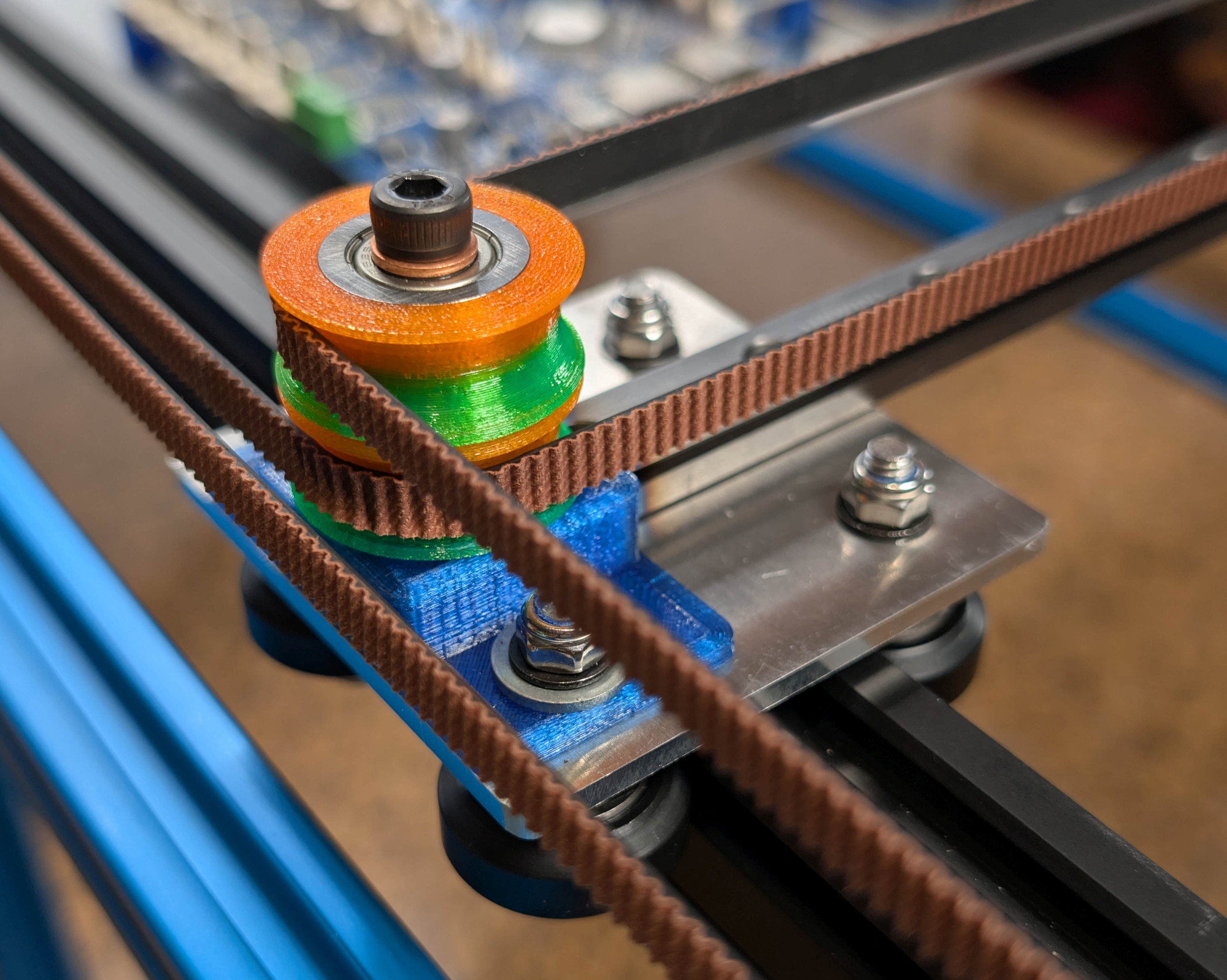
This build was designed for ease of construction and movement: sized at 2’x4′ (about 61 cm x 122 cm), it fits through doors and fits an off-the-shelf slab of coffee table glass, something that [Mark] wishes he’d considered when building version two. That’s the nice thing about jumping in on a project someone’s been iterating for a while: you’ve got the benefit of learning from their mistakes. You can see the roots of this design, and what has changed, from the one he showed us in 2020.
Naturally you’re not limited to CoreXY for a sand table, though it is increasingly popular — we’ve seen examples with polar mechanisms and even a SCARA arm.
youtube.com/embed/reeg5gIOmBw?…
Il nuovo video di Pasta Grannies: youtube.com/shorts/2EF9k_cTQzQ
@Cucina e ricette
(HASHTAG)
Cucina e ricette reshared this.
La compravendita degli accessi ai firewall FortiGate italiani nel Dark Web
Negli ultimi giorni, su un forum underground noto per ospitare attività illegali, è apparso un annuncio che merita molta attenzione.
Un utente appena registrato, con il nickname “Sarcoma”, ha pubblicato un messaggio in cui si dice disposto ad acquistare accessi ai pannelli di amministrazione dei firewall FortiGate.
L’annuncio è piuttosto esplicito: offre un compenso a partire da 20 dollari ad accesso e specifica che gli interessano accessi provenienti da Stati Uniti, Canada, Italia e Germania. Per rendere il tutto più credibile ha allegato anche uno screenshot che richiama l’interfaccia di gestione dei sistemi Fortinet.

La Compravendita sul DarkWeb
Il valore di un pannello amministrativo FortiGate nelle mani sbagliate è enorme. Chi riesce ad entrarci può alterare completamente il comportamento del firewall: aprire porte, creare backdoor, disattivare i log e preparare il terreno per intrusioni più profonde. Non è un caso che questi accessi siano molto ricercati nel cybercrime.
Questi forum non sono semplici bacheche: sono veri e propri mercati neri in cui si incontrano due figure chiave. Da una parte ci sono gli Initial Access Broker (IaB), professionisti del crimine informatico che si specializzano nell’individuare vulnerabilità, configurazioni sbagliate o credenziali esposte. Il loro compito è ottenere un primo punto di ingresso nelle reti aziendali. Dall’altra parte ci sono gruppi criminali più strutturati, spesso legati ad attività di ransomware o furto di dati, che acquistano questi accessi pronti all’uso per muoversi più velocemente e ridurre i costi delle intrusioni. È un ecosistema perfettamente organizzato, in cui ognuno trae profitto da una parte specifica della “filiera”.

Cosa occorre fare
La presenza di un annuncio rivolto anche alla geografia italiana è un segnale chiaro: le aziende del nostro Paese restano un bersaglio appetibile, soprattutto quando i loro firewall non vengono aggiornati o vengono lasciati esposti su Internet senza le dovute precauzioni. Per difendersi è fondamentale applicare con regolarità tutte le patch di sicurezza rilasciate da Fortinet, molte delle quali riguardano vulnerabilità critiche che in passato sono state sfruttate proprio per ottenere accesso non autorizzato ai sistemi.
Un altro aspetto troppo spesso sottovalutato riguarda la visibilità dei servizi di amministrazione. I pannelli di gestione e gli strumenti utilizzati per configurare i firewall non dovrebbero essere mai raggiungibili direttamente dalla rete pubblica.

È necessario isolarli, limitarne drasticamente l’accesso e renderli disponibili solo attraverso reti interne, VPN sicure e metodi di autenticazione più robusti. Lasciarli esposti equivale a offrire un bersaglio perfetto, pronto per essere scambiato nei forum underground proprio come l’annuncio che ha dato il via a questa riflessione.
In un contesto in cui gli accessi si comprano e vendono come una qualsiasi merce digitale, la sicurezza delle reti aziendali non può più permettersi leggerezze. Ogni sistema esposto è una potenziale porta d’ingresso, e qualcuno là fuori è pronto a pagarla – anche pochi dollari – pur di aprirla.
Questo articolo si basa su informazioni, integralmente o parzialmente tratte dalla piattaforma di intelligence di Recorded Future, partner strategico di Red Hot Cyber e punto di riferimento globale nell’intelligence sulle minacce informatiche. La piattaforma fornisce analisi avanzate utili a individuare e contrastare attività malevole nel cyberspazio.
L'articolo La compravendita degli accessi ai firewall FortiGate italiani nel Dark Web proviene da Red Hot Cyber.
Nel mondo una donna ogni dieci minuti viene uccisa. In Italia 85 nel 2025
@Giornalismo e disordine informativo
articolo21.org/2025/11/nel-mon…
Sopravvivere non è vivere. Il disegno di legge sulla violenza sessuale si blocca in Senato e qualcuno gioisce per chi è ancora vivo Sta volgendo al termine
reshared this
Un anno nel Fediverso: la calma che ti cambia la testa. Il post di @Michela
E no, il Fediverso non è povero di contenuti.È che, quando smetti di essere schiava degli algoritmi, ti accorgi che l’80% della roba mainstream è solo rumore dopaminico.
Rapido, inutile, martellante.Su PixelFed, invece, quasi tutto merita almeno un rallentamento, uno sguardo vero.
È una sensazione precisa:
uscire da una distopia sociale senza neppure accorgersi di esserci vissuti dentro per anni.
michiyospace.altervista.org/un…
Per avere altri aggiornamenti sul Fediverso, segui il gruppo @Che succede nel Fediverso?

Un anno nel Fediverso: la calma che ti cambia la testa - LandEscape
Avevo già accennato a questa cosa mesi fa, ma ora – dopo quasi un anno dentro il Fediverso – posso parlarne con molta più chiarezza.Quando sono arrivata su PixelFed, la mia prima reazione è stata l’ansia.Michela (Blog di michiyospace)
reshared this
Here is the archived video of our FOIA Forum about how to do reporting on Flock.#FOIAForum
Here's the Video for Our Seventh FOIA Forum: Flock
The FOIA Forum is a livestreamed event for paying subscribers where we talk about how to file public records requests and answer questions. If you're not already signed up, please consider doing so here.Recently we had a FOIA Forum where we focused on our reporting about Flock. This includes how to file public records requests for audit logs, footage, and other ideas for FOIAing surveillance companies.
We showed subscribers how we got the records behind that story, the specific request language was used, tips for turning records into articles, and much more.
Check out all of our FOIA Forum archives here.
This post is for subscribers only
Become a member to get access to all content
Subscribe now

It'll take just a minute and help 404 Media figure out how to grow sustainably.
Itx27;ll take just a minute and help 404 Media figure out how to grow sustainably.#Announcements
Please, please do our reader survey
Because we run 404 Media on Ghost, an open source and privacy-forward stack, we actually know very little about who reads 404 Media (by design). But we’re hoping to learn a bit more so we can figure out how people are discovering our work, what our readers do, and what other projects people might want us to launch in the future. If you want to cut to the chase: here is a link to our very short survey we would really, really appreciate you filling out. You can do it anonymously and it should take around a minute. If you want to know more on the why, please read below!As we said, Ghost doesn’t collect much data about our readers. The little info we do have shows broadly that most of our readers are in the U.S., followed by Europe, etc. But we don’t have a great idea of how people first learn about 404 Media. Or whether people would prefer a different format to our daily newsletter. Or what industries or academic circles our readers are in.
This information is useful for two main reasons: the first is we can figure out how people prefer to read us and come across our work. Is it via email? Is it articles posted to the website? Or the podcast? Do more people on Mastodon read us, or on Bluesky? This information can help us understand how to get our journalism in front of more people. In turn, that helps inform more people about what we cover, and hopefully can lead to more people supporting our journalism.
The second is for improving the static advertisements in our email newsletters and podcasts that we show to free members. If it turns out we have a lot of people who read us in the world of cybersecurity, maybe it would be better if we ran ads that were actually related to that, for example. Because we don’t track our readers, we really have no idea what products or advertisements would actually be of interest to them. So, you voluntarily and anonymously telling us a bit about yourself in the survey would be a great help.
Here is the survey link. There is also a section for any more general feedback you have. Please help us out with a minute of your time, if you can, so we can keep growing 404 Media sustainably and figure out what other projects readers may be interested in (such as a physical magazine perhaps?).
Thank you so much!
Who is reading 404 Media?
Take this survey powered by surveymonkey.com. Create your own surveys for free.www.surveymonkey.com


Il #25novembre si celebra in tutto il mondo la Giornata internazionale per l'eliminazione della...
Il #25novembre si celebra in tutto il mondo la Giornata internazionale per l'eliminazione della violenza contro le #donne. Numerose sono state le iniziative del #MIM con le scuole e alle quali ha partecipato il Ministro Giuseppe Valditara.

Ministero dell'Istruzione
Il #25novembre si celebra in tutto il mondo la Giornata internazionale per l'eliminazione della violenza contro le #donne. Numerose sono state le iniziative del #MIM con le scuole e alle quali ha partecipato il Ministro Giuseppe Valditara.Telegram
Citizen Science by the Skin of Your Teeth

If you are a schoolkid of the right age, you can’t wait to lose a baby tooth. In many cultures, there is a ritual surrounding it, like the tooth fairy, a mouse who trades your tooth for a gift, or burying the tooth somewhere significant. But in 1958, a husband and wife team of physicians wanted children’s teeth for a far different purpose: quantifying the effects of nuclear weapons testing on the human body.
Louise and Eric Reiss, along with some other scientists, worked with Saint Louis University and the Washington School of Dental Medicine to collect and study children’s discarded teeth. They were looking for strontium-90, a nasty byproduct of above-ground nuclear testing. Strontium is similar enough to calcium that consuming it in water and dairy products will leave the material in your bones, including your teeth.
The study took place in the St. Louis area, and the results helped convince John F. Kennedy to sign the Partial Nuclear Test Ban Treaty.
They hoped to gather 50,000 teeth in a year. By 1970, 12 years later, they had picked up over 320,000 donated teeth. While a few kids might have been driven by scientific altruism, it didn’t hurt that the program used colorful posters and promised each child a button to mark their participation.
Children’s teeth were particularly advantageous to use because they are growing and are known to readily absorb radioactive material, which can cause bone tumors.
Scale

You might wonder just how much nuclear material is floating around due to bombs. Obviously, there were two bombs set off during the war, as well as the test bombs required to get to that point. Between 1945 and 1980, there were five countries conducting atmospheric tests at thirteen sites. The US, accounting for about 65% of the tests, the USSR, the UK, France, and China detonated 504 nuclear devices equivalent to about 440 megatons of TNT.
Well over 500 bombs with incredible force have put a lot of radioactive material into the atmosphere. That doesn’t count, too, the underground tests that were not always completely contained. For example, there were two detonations in Mississippi where the radiation was contained until they drilled holes for instruments, leaving contaminated soil on the surface. Today, sites like this have “monuments” explaining that you shouldn’t dig in the area.
Of course, above-ground tests are worse, with fallout affecting “downwinders” or people who live downwind of the test site. There have been more than one case of people, unaware of the test, thinking the fallout particles were “hot snow” and playing in it. Test explosions have sent radioactive material into the stratosphere. This isn’t just a problem for people living near the test sites.
Results
By 1961, the team published results showing that strontium-90 levels in the teeth increased depending on when the child was born. Children born in 1963 had levels of strontium-90 fifty times higher than those born in 1950, when there was very little nuclear testing.
The results were part of the reason that President Kennedy agreed to an international partial test ban, as you can see in the Lincoln Presidential Foundation video below. You may find it amazing that people would plan trips to watch tests, and they were even televised.
youtube.com/embed/1qptcKCzUU0?…
In 2001, Washington University found 85,000 of the teeth stored away. This allowed the Radiation and Public Health Project to track 3,000 children who were, by now, adults, of course.
Sadly, 12 children who had died from cancer before age 50 had baby teeth with twice the levels of the teeth of people who were still alive at age 50. To be fair, the Nuclear Regulatory Commission has questioned these findings, saying the study is flawed and fails to account for other risk factors.
And teeth don’t just store strontium. In the 1970s, other researchers used baby teeth to track lead ingestion levels. Baby teeth have also played a role in the Flint Water scandal. In South Africa, the Tooth Fairy Project monitored heavy metal pollution in children’s teeth, too.
Teeth aren’t the only indicator of nuclear contamination. Steel is also at risk.
Featured image: “Castle Bravo Blast” by United States Department of Energy.
Psyche reshared this.
Heater is Either a Miracle or a Scam

[Big Clive] picked up a tiny heater for less than £8 from the usual sources. Would you be shocked to learn that its heating capacity wasn’t as advertised? No, we weren’t either. But [Clive] treats us to his usual fun teardown and analysis in the video below.
A simple test shows that the heater drew about 800 W for a moment and drops as it heats until it stabilizes at about 300 W. Despite that, these units are often touted as 800 W heaters with claims of heating up an entire house in minutes. Inside are a fan, a ceramic heater, and two PCBs.
The ceramic heaters are dwarfed by metal fins used as a heat exchanger. The display uses a clever series of touch sensors to save money on switches. The other board is what actually does the work.
[Clive] was, overall, impressed with the PCB. A triac runs the heaters and the fan. It also includes a thermistor for reading the temperature.
You can learn more about the power supply and how the heater measures up in the video. Suffice it to say, that a cheap heater acts like a cheap heater, although as cheap heaters go, this one is built well enough.
youtube.com/embed/QiDUKYc0B2Y?…
So Long Firefox, Hello Vivaldi

It’s been twenty-three years since the day Phoenix was released, the web browser that eventually became Firefox. I downloaded it on the first day and installed it on my trusty HP Omnibook 800 laptop, and until this year I’ve used it ever since. Yet after all this time, I’m ready to abandon it for another browser. In the previous article in this series I went into my concerns over the direction being taken by Mozilla with respect to their inclusion of AI features and my worries about privacy in Firefox, and I explained why a plurality of browser engines is important for the Web. Now it’s time to follow me on my search for a replacement, and you may be surprised by one aspect of my eventual choice.
Where Do I Go From Here?

Happily for my own purposes, there are a range of Firefox alternatives which fulfill my browser needs without AI cruft and while allowing me to be a little more at peace with my data security and privacy. There’s Chromium of course even if it’s still way too close to Google for my liking, and there are a host of open-source WebKit and Blink based browsers too numerous to name here.
In the Gecko world that should be an easier jump for a Firefox escapee there are also several choices, for example LibreWolf, and Waterfox. In terms of other browser engines there’s the extremely promising but still early in development Ladybird, and the more mature Servo, which though it is available as a no-frills browser, bills itself as an embedded browser engine. I have not considered some other projects that are either lightweight browser engines, or ones not under significant active development.
Over this summer and autumn then I have tried a huge number of different browsers. Every month or so I build the latest Ladybird and Servo; while I am hugely pleased to see progress they’re both still too buggy for my purposes. Servo is lightning-fast but sometimes likes to get stuck in mobile view, while Ladybird is really showing what it’s going to be but remains for now slow-as-treacle. These are ones to watch, and support.
I gave LibreWolf and Waterfox the most attention over the summer, both of which after the experience I’d describe as like Firefox but with mildly annoying bugs. The inability to video conference reliably is a show-stopper in my line of work, and since my eyesight is no longer what it once was I like my browsers to remember when I have zoomed in on a tab. Meanwhile Waterfox on Android is a great mobile browser, right up until it needs to open a link in another app, and fails. I’m used to the quirks of open-source software after 30+ years experimenting with Linux, but when it comes to productivity I can’t let my software disrupt the flow of Hackaday articles.
The Unexpected Choice
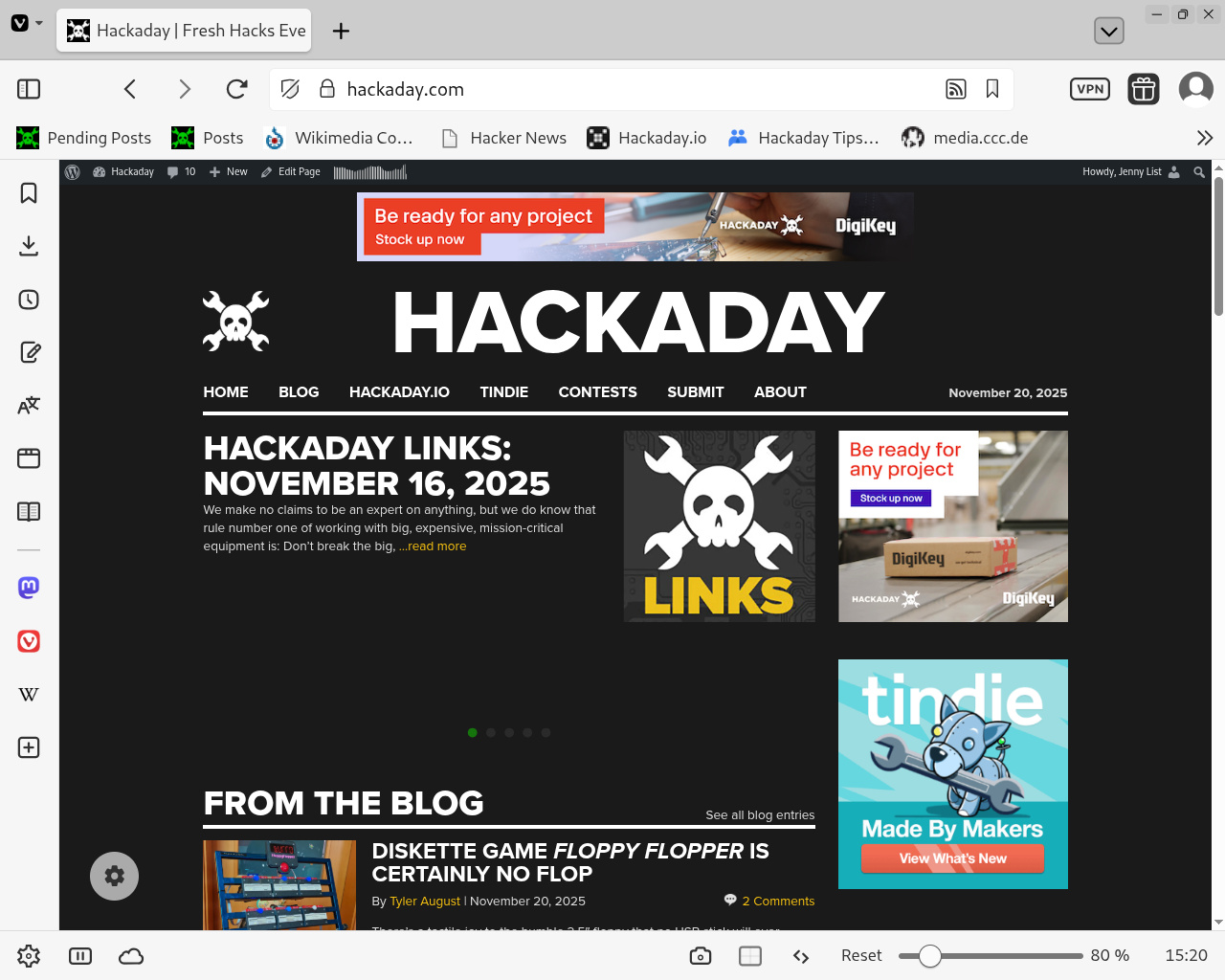
It might surprise you after all this open-source enthusiasm then, to see the browser I’ve ended up comfortable with. Vivaldi may be driven by the open-source Blink engine from Chromium and Chrome, but its proprietary front end doesn’t have an open-source licence.
It’s freeware, or free-as-in-beer, and I think the only such software I use. Why, I hear you ask? It’s an effort to produce a browser like Opera used to be in the old days, it’s European which is a significant consideration when it comes to data protection law, and it has (so far) maintained a commitment to privacy while not being evil in the Google motto sense.
It’s quick, I like its interface once the garish coloured default theme has been turned off, and above all, it Just Works. I have my browser back, and I can get on with writing. Should they turn evil I can dump them without a second thought, and hope by then Ladybird has matured enough to suit my needs.
It may not be a trend many of us particularly like, but here in 2025 there’s a sense that the browser has reduced our computers almost to the status of a terminal. It’s thus perhaps the most important piece of software on the device, and in that light I hope you can understand some of the concerns levelled in this series. If you’re reading this from Firefox HQ I’d implore you to follow my advice and go back to what made Firefox so great back in the day, but for the rest of you I’d like to canvass your views on my choice of a worthy replacement. As always, the comments are waiting.
Simple Tricks To Make Your Python Code Faster

Python has become one of the most popular programming languages out there, particularly for beginners and those new to the hacker/maker world. Unfortunately, while it’s easy to get something up and running in Python, it’s performance compared to other languages is generally lacking. Often, when starting out, we’re just happy to have our code run successfully. Eventually, though, performance always becomes a priority. When that happens for you, you might like to check out the nifty tips from [Evgenia Verbina] on how to make your Python code faster.
Many of the tricks are simple common sense. For example, it’s useful to avoid creating duplicates of large objects in memory, so altering an object instead of copying it can save a lot of processing time. Another easy win is using the Python math module instead of using the exponent (**) operator since math calls some C code that runs super fast. Others may be unfamiliar to new coders—like the benefits of using sets instead of lists for faster lookups, particularly when it comes to working with larger datasets. These sorts of efficiency gains might be merely useful, or they might be a critical part of making sure your project is actually practical and fit for purpose.
It’s worth looking over the whole list, even if you’re an intermediate coder. You might find some easy wins that drastically improve your code for minimal effort. We’ve explored similar tricks for speeding up code on embedded platforms like Arduino, too. If you’ve got your own nifty Python speed hacks, don’t hesitate to notify the tipsline!
reshared this
Windows 10 è morto? Ecco l’alternativa Linux che sta esplodendo online!
Il periodo di transizione successivo alla fine del supporto per Windows 10 è diventato particolarmente evidente, alla luce del crescente interesse per sistemi operativi alternativi.
Mentre gli utenti continuano a cercare alternative ai loro ambienti familiari, una delle distribuzioni Linux più incentrate su Windows ha inaspettatamente ricevuto notevole attenzione. Gli sviluppatori di Zorin OS hanno riferito che la nuova versione del loro sistema ha registrato una domanda straordinaria in poche settimane.
Il team di Zorin OS ha annunciato che Zorin OS 18 ha superato il milione di download in circa un mese. Secondo la telemetria, oltre tre quarti degli installer sono stati scaricati da dispositivi Windows.

Questa cifra non garantisce un’adozione realmente diffusa, ma riflette il crescente interesse per le alternative in un momento in cui l’aggiornamento a Windows 11 sta suscitando preoccupazione in molti. Secondo i creatori del sistema, la nuova versione è progettata per essere il più intuitiva possibile per coloro che non sono pronti a cambiare completamente il proprio modo di lavorare.
Zorin OS 18 presenta un’interfaccia riprogettata, che combina elementi di Windows 11 con accenti visivi di macOS, oltre ad animazioni e gestione delle finestre aggiornate. Il sistema ora offre un layout delle finestre avanzato che funziona senza moduli aggiuntivi e consente una gestione flessibile dell’area di lavoro. Gli sviluppatori sottolineano la loro attenzione nel rendere l’ambiente più veloce e reattivo, pur mantenendo un’esperienza utente familiare.
Oltre alle modifiche esterne, la distribuzione ha ampliato il supporto per le applicazioni web. Gli utenti possono installare servizi come Office 365, Teams, Google Docs o la versione web di Photoshop come programmi autonomi con le proprie icone. Le funzionalità cloud più diffuse, tra cui OneDrive, sono integrate direttamente nel file system, semplificando la transizione da Windows.
Anche la compatibilità con le applicazioni Windows classiche è stata migliorata: Wine rimane la base, ma le impostazioni sono state ottimizzate per consentire l’esecuzione di più programmi senza necessità di configurazione manuale. Con l’ascesa del gaming su Linux, grazie all’impegno di Valve, questo approccio è diventato più attuale che mai.

L’aggiornamento aggiunge anche funzionalità essenziali per il lavoro quotidiano. Il file manager ora offre una ricerca rapida in tutte le directory, risparmiando tempo durante la navigazione. Il supporto per le connessioni remote tramite RDP è integrato nel sistema ed è rivolto agli utenti che necessitano di connettersi a computer Windows. Il sottosistema audio è ora basato su PipeWire, migliorando la qualità e riducendo la latenza durante l’utilizzo dell’audio Bluetooth. Poiché questa build è stata designata come versione a lungo termine, riceverà aggiornamenti fino al 2029.
L’aumento di interesse per Zorin OS è evidente nel contesto della fine del supporto di Windows 10. I severi requisiti hardware di Windows 11, i servizi in background, i continui dibattiti sulla privacy e le controverse funzionalità basate sull’intelligenza artificiale hanno portato a un notevole affaticamento degli utenti. In questo contesto, il download di centinaia di migliaia di copie di Zorin OS dimostra un desiderio significativamente più forte di esplorare alternative.
Linux non è ancora leader nei sistemi operativi desktop, ma la tendenza generale sta cambiando. Lo sviluppo della piattaforma SteamO , il rafforzamento del segmento gaming e le distribuzioni rivolte ai principianti stanno incoraggiando sempre più utenti a sperimentare.
Mentre Microsoft conta su una transizione graduale per tutti i rimanenti utenti di Windows 10 a Windows 11, le statistiche di Zorin OS suggeriscono uno scenario diverso: un graduale passaggio di alcuni utenti ad altri.
L'articolo Windows 10 è morto? Ecco l’alternativa Linux che sta esplodendo online! proviene da Red Hot Cyber.
Google sfida Nvidia con Gemini 3.0, azioni Nvidia in ribasso, futuro dell’IA in evoluzione
Il predominio di Nvidia nel settore dell’intelligenza artificiale (IA) è stato scosso dall’acclamazione di “Gemini 3.0” di Google. Il prezzo delle azioni Nvidia è sceso di oltre il 2% nelle contrattazioni after-hours. SK Hynix, una azienda chiave nella catena del valore di Nvidia, ha chiuso in ribasso nonostante i “venti del taglio dei tassi di interesse di dicembre”.
Secondo la Borsa di New York del 25, Nvidia ha perso oltre il 2% nelle contrattazioni after-hours. Nel frattempo, Google, che il giorno precedente aveva guadagnato oltre il 6%, è ancora in rialzo di circa il 2% nelle contrattazioni after-hours.
Questo avviene mentre continuano le recensioni positive di Gemini 3.0. Il CEO di OpenAI, Sam Altman, dopo aver testato Gemini 3.0, ha dichiarato: “Ora dobbiamo recuperare terreno”, lamentando il clima sfavorevole che si respira al momento.
Anche il CEO di Tesla, Elon Musk, ha riconosciuto i risultati di Gemini con un messaggio insolitamente positivo sul suo account X, scrivendo: “Congratulazioni“. Seo Sang-young, amministratore delegato della divisione WM Innovation di Mirae Asset Securities, ha spiegato:
“La ragione principale risiede nel fatto che che Gemini 3.0, si avvale della Tensor Processing Unit (TPU) di Google, il semiconduttore progettato da Google per l’intelligenza artificiale. Questo potrebbe incentivare le altre società a optare per l’acquisto dei chip di Google piuttosto che dei più costosi chip Nvidia“. Ha aggiunto: “Meta sta valutando la possibilità di noleggiare le TPU di Google a partire dal prossimo anno e di utilizzarle nei suoi data center a partire dal 2027”.
In seguito a questa notizia, i prezzi delle azioni delle aziende della catena del valore delle TPU di Google sono saliti vertiginosamente sul mercato azionario nazionale, mentre quelli della catena del valore di Nvidia sono scesi.
Isu Petasys, che fornisce i circuiti stampati multistrato (MLB) utilizzati nelle TPU di Google, è balzata del 12,47%. Yang Seung-soo, ricercatore presso Meritz Securities, ha dichiarato: “Si stima che la quota di mercato di Isu Petasys nelle TPU di Google sia superiore al 40%” e ha previsto che “le spedizioni di TPU raddoppieranno almeno il prossimo anno”. Ha poi aggiunto: “Sebbene la valutazione (prezzo delle azioni in relazione alle performance) sia recentemente aumentata, la sua valutazione aumenterà ulteriormente man mano che emergerà rapidamente come una catena del valore fondamentale per le TPU”.
Il giorno precedente, titoli come Broadcom (11,10%) e Marvell Technologies (8,19%), che forniscono prodotti a Google, hanno registrato un’impennata anche nei mercati esteri. Tuttavia, alcuni analisti sostengono che non sia necessario considerare l’era dell’intelligenza artificiale come un monopolio tra NVIDIA e Google, poiché la domanda di intelligenza artificiale è in rapida espansione.
Il ricercatore Yang ha affermato: “Anche dopo aver firmato un contratto per le TPU con Google, la società statunitense di ricerca e sviluppo nel settore dell’intelligenza artificiale Antropic ha firmato un nuovo ordine per le GPU con NVIDIA”, e “Meta e altri hanno spostato la loro attenzione dalla riduzione degli ordini di GPU NVIDIA all’introduzione di alcune TPU”.
Ha aggiunto: “Anche Gemini 3.0 non è riuscito ancora a risolvere il fenomeno delle allucinazioni, quindi anche le variazioni di prestazioni dei due grandi modelli tecnologici sono variabili da tenere d’occhio”.
Alcuni prevedono inoltre che, con la crescita del mercato dei circuiti integrati per applicazioni specifiche (ASIC), le opportunità per le aziende nazionali di semiconduttori di diversificare i propri fornitori potrebbero aumentare.
L'articolo Google sfida Nvidia con Gemini 3.0, azioni Nvidia in ribasso, futuro dell’IA in evoluzione proviene da Red Hot Cyber.
Telegram, WhatsApp e Signal sotto tiro dagli Spyware. Il CISA Avverte
Un avviso importante è stato pubblicato lunedì dalla Cybersecurity and Infrastructure Security Agency (CISA) degli Stati Uniti, il quale avverte che malintenzionati stanno attivamente utilizzando strumenti di spyware commerciali e trojan di accesso remoto (RAT) per colpire gli utenti di app di messaggistica mobile.
“Questi criminali informatici utilizzano tecniche sofisticate di targeting e di ingegneria sociale per diffondere spyware e ottenere accesso non autorizzato all’app di messaggistica della vittima, facilitando l’implementazione di ulteriori payload dannosi che possono compromettere ulteriormente il dispositivo mobile della vittima”, ha affermato l’agenzia statunitense.
La CISA ha citato come esempi diverse campagne emerse dall’inizio dell’anno. Tra queste, ricordiamo:
- L’app di messaggistica Signal è stata presa di mira da più attori di minacce allineati con la Russia, sfruttando la funzionalità “dispositivi collegati” del servizio per dirottare gli account utente presi di mira.
- Campagne di spyware Android con nome in codice ProSpy e ToSpy che impersonano app come Signal e ToTok per prendere di mira gli utenti negli Emirati Arabi Uniti per distribuire malware che stabilisce un accesso persistente ai dispositivi Android compromessi ed esfiltra i dati
- Una campagna spyware per Android chiamata ClayRat ha preso di mira gli utenti in Russia che utilizzano canali Telegram e pagine di phishing simili, impersonando app popolari come WhatsApp, Google Foto, TikTok e YouTube per indurre gli utenti a installarle e rubare dati sensibili.
- Una campagna di attacchi mirati che probabilmente ha concatenato due falle di sicurezza in iOS e WhatsApp ( CVE-2025-43300 e CVE-2025-55177 ) per colpire meno di 200 utenti WhatsApp
- Una campagna di attacco mirata che ha coinvolto lo sfruttamento di una falla di sicurezza Samsung (CVE-2025-21042) per distribuire uno spyware Android denominato LANDFALL ai dispositivi Galaxy in Medio Oriente
Gli autori della minaccia, secondo quanto affermato dall’agenzia, fanno uso di varie strategie per ottenere la compromissione, tra cui l’utilizzo di codici QR che collegano a dispositivi, sfruttando vulnerabilità zero-click e diffondendo versioni contraffatte di applicazioni di messaggistica.
Per contrastare la minaccia, l’agenzia sta esortando gli individui altamente presi di mira a rivedere e aderire alle seguenti buone pratiche:
- Utilizzare solo comunicazioni crittografate end-to-end (E2EE)
- Abilita l’autenticazione Fast Identity Online (FIDO) resistente al phishing
- Abbandonare l’autenticazione a più fattori (MFA) basata sul servizio di messaggistica breve (SMS)
- Utilizzare un gestore di password per memorizzare tutte le password
- Imposta un PIN del fornitore di telecomunicazioni per proteggere gli account di telefonia mobile
- Aggiornare periodicamente il software
- Scegli l’ultima versione hardware del produttore del telefono cellulare per massimizzare i vantaggi in termini di sicurezza
- Non utilizzare una rete privata virtuale personale (VPN)
- Sugli iPhone, abilita la modalità di blocco, registrati a iCloud Private Relay e rivedi e limita le autorizzazioni delle app sensibili
- Sui telefoni Android, scegli telefoni di produttori con una solida esperienza in materia di sicurezza, usa solo Rich Communication Services (RCS) se E2EE è abilitato, attiva la protezione avanzata per la navigazione sicura in Chrome, assicurati che Google Play Protect sia attivo e controlla e limita le autorizzazioni delle app
Il CISA riporta che sono presi di mira, in particolare, individui di elevato profilo, comprendenti funzionari governativi, militari e politici in carica e non più in carica, nonché organizzazioni del settore civile e privati cittadini localizzati negli Stati Uniti, nel Medio Oriente e in Europa, come sottolineato dalla CISA.
L'articolo Telegram, WhatsApp e Signal sotto tiro dagli Spyware. Il CISA Avverte proviene da Red Hot Cyber.
Basta un Win+R e sei Hackerato! La Nuova campagna ClickFix con falsi aggiornamenti Windows
I falsi aggiornamenti di Windows sono entrati in un nuovo ciclo di campagne ClickFix ,come riportato da Huntress. Gli aggressori stanno sostituendo sempre più spesso i controlli bot con finestre blu a schermo intero che simulano un aggiornamento di sistema.
Microsoft sottolinea che ClickFix è diventato il metodo di penetrazione iniziale più comune e che molti gruppi con diversi livelli di competenza sono passati a questo metodo.
Gli attacchi iniziano con la visita a un sito web dannoso che imposta il browser in modalità a schermo intero e visualizza una pagina che assomiglia superficialmente all’interfaccia di Windows Update.
Alla vittima viene chiesto di eseguire manualmente l’aggiornamento critico, seguendo un tipico scenario di ClickFix: aprire la finestra di dialogo Esegui con Win+R, incollare il comando preparato ed eseguirlo. A questo punto, l’utente avvia di fatto la catena dannosa autonomamente.
La riga di comando richiama mshta.exe con un URL, in cui il secondo ottetto dell’indirizzo IP è sempre codificato in formato esadecimale. PowerShell scarica quindi un frammento di codice .NET che, dopo la decrittazione, viene caricato direttamente in memoria e passa il controllo al componente successivo. Si tratta di un modulo .NET responsabile della distribuzione occulta di malware tramite steganografia . Estrae la shell Donut crittografata dai dati pixel dei file PNG, utilizzando singoli canali di colore per ricostruire il payload. Questo approccio aiuta a eludere i meccanismi di protezione basati sulle firme.
Secondo Huntress, dal 29 settembre al 30 ottobre 2025, il team ha analizzato 76 incidenti che hanno interessato organizzazioni nelle regioni USA, EMEA e APJ. Uno degli episodi ha coinvolto il traffico verso 141.98.80[.]175. In tutti i casi, la catena utilizzava un URL con un secondo ottetto esadecimale che conduceva a un downloader steganografico. I ricercatori hanno trovato commenti in lingua russa nel codice sorgente delle pagine che falsificavano l’aggiornamento, ma non sono stati in grado di stabilire la paternità della campagna.
Nonostante le operazioni di Operation Endgame abbiano preso di mira l’infrastruttura di Rhadamanthys il 13 novembre, i siti web che ospitavano falsi aggiornamenti hanno continuato a funzionare almeno fino al 19 novembre.
Tutte le esche rilevate facevano riferimento alla stessa struttura URL con codifica esadecimale precedentemente associata alla distribuzione di Rhadamanthys, sebbene il malware stesso non fosse più ospitato su questi siti. Tuttavia, i ricercatori avvertono che l’infrastruttura potrebbe cambiare rapidamente.
Entrambi i tipi di esche, camuffati da aggiornamenti di Windows, hanno infine scaricato Rhadamanthys, che ruba le credenziali utente, sui dispositivi.
Per ridurre il rischio di tali attacchi, si consiglia di bloccare la finestra di dialogo Esegui, informare i dipendenti sulla natura degli script ClickFix e ricordare loro che nessun aggiornamento legittimo richiede l’inserimento manuale di comandi. Le soluzioni di sicurezza di livello EDR possono aiutare a monitorare i casi in cui explorer.exe avvia mshta.exe, powershell.exe o altri file eseguibili con argomenti insoliti.
Gli IoC successivi sono tratti dalla piattaforma di intelligence di Recorded Future, partner strategico di Red Hot Cyber e punto di riferimento globale nell’intelligence sulle minacce informatiche. La piattaforma fornisce analisi avanzate utili a individuare e contrastare attività malevole nel cyberspazio.
08c7fb6067acc8ac207d28ab616c9ea5bc0d394956455d6a3eecb73f8010f7a2,
9950788284df125c7359aeb91435ed24d59359fac6a74ed73774ca31561cc7ae,
34d025ef57eb3f484301744e2b2488ae0ac76f2e226585e65bb45edbbb6b7f69,
471c981c11df004b941dad0175bc435f9c901bcb968ba9582f1a2181443d9ef4,
03c72cfabace07b6787d2d1fd66d6d6d9a2fbcb74a827ca4ab7e59aba40cb306,
81b179b050a13d5664e0d88143154bd3fc127f9ac3e7a6c16444caac1d3ab13c,
aba1e62ee9a460f5b7b67198dc22612b275a1e871d56c60324190ad69323ddf0
L'articolo Basta un Win+R e sei Hackerato! La Nuova campagna ClickFix con falsi aggiornamenti Windows proviene da Red Hot Cyber.

Inviare un’email a un destinatario sbagliato, è da considerarsi data breach?
Piaccia o meno, l’invio di un’email a un destinatario errato costituisce una violazione di dati personali secondo il GDPR. Ovviamente, questo vale se l’email contiene dati personali o se altrimenti è possibile dedurre delle informazioni personali dal messaggio. Come ogni evento di data breach, è necessario svolgere delle valutazioni.
In ogni caso si deve registrare l’evento e documentarlo, anche nel caso in cui non sia obbligatorio notificarlo all’autorità di controllo e sia stato valutata un’improbabilità per la violazione di presentare un rischio per i diritti e le libertà delle persone fisiche. Questo sia per espressa previsione dell’art. 33 par. 5 GDPR, sia perché nella gestione della sicurezza è necessario documentare anche i near miss ovverosia gli eventi senza esito per valutare eventuali misure per impedire che si vadano a ripetere nel tempo.
Anche l’invio in Cc anziché in Ccn è un data breach.
Nel momento in cui una comunicazione è inviata in Cc (copia conoscenza o, per i nostalgici, copia carbone) anziché in Ccn (copia conoscenza nascosta), ecco che gli indirizzi email sono rivelati a tutti i destinatari. Ovviamente il presupposto è che gli indirizzi si siano voluti mantenere nascosti.
Quindi, a meno che non siano coinvolti esclusivamente degli indirizzi di funzione (del tipo: privacy@, amministrazione@ e così via), il data breach è servito perché c’è stata una perdita di confidenzialità dell’indirizzo email e questo è un dato personale dal momento che riguarda una persona fisica identificata o identificabile.
Attenzione: non è detto che l’unica informazione esposta e da considerare per valutare i rischi sia solo l’indirizzo email. Anche in caso di comunicazioni standardizzate, tutto dipende dal contesto e da ciò che è ulteriormente deducibile. Vediamo come.
Se ad esempio l’oggetto riporta “Riscontro richiesta agevolazioni/contributo“, pur in caso di un testo del tipo “Con la presente, si comunica il buon esito della richiesta di contributo di cui alla legge n…” (o consideriamo anche l’ipotesi di diniego, perché alla fine essere negativi nella vita ispira i migliori pezzi di black metal) ecco che a seconda della norma invocata si potrà capire quale tipo di agevolazione è stata richiesta, e se è collegata a una condizione di salute ecco che si ha un’informazione piuttosto significativa e impattante. Che in termini privacy significa rischio certamente non improbabile e probabilmente anche significativo per l’interessato, e quindi con obbligo di notificare all’autorità di controllo e di comunicare agli interessati coinvolti.
Ulteriore esempio. Nel caso di una comunicazione di marketing, esporre tutti gli indirizzi dei partecipanti può far scattare un obbligo di notifica a seconda del numero di destinatari, ma anche dalla possibilità di ottenere ulteriori informazioni deducibili (es. se è uno sconto riservato ai clienti di un club BDSM, o a chi ha manifestato un interesse per approfondire determinati temi filosofici). Insomma: il rischio dev’essere valutato in concreto.
Ovviamente, si deve tenere conto anche dei destinatari della comunicazione erronea. Se sono soggetti più o meno noti e affidabili.
Valutare l’affidabilità del destinatario.
L’affidabilità del destinatario conta, sia nel caso in cui si tratta di un soggetto interno che esterno. Questo è stato confermato, ad esempio, dal provv. n. 117 del 27 febbraio 2025 del Garante Privacy, che riconosce la validità delle argomentazioni difensive nel richiamare le linee guida EDPB 9/2022 a riguardo secondo cui:
Il fatto che il titolare del trattamento sappia o meno che i dati personali sono nelle mani di persone le cui intenzioni sono sconosciute o potenzialmente dannose può incidere sul livello di rischio potenziale. Prendiamo una violazione della riservatezza nel cui ambito i dati personali vengono comunicati a un terzo di cui all’articolo 4, punto 10, o ad altri destinatari per errore. Una tale situazione può verificarsi, ad esempio, nel caso in cui i dati personali vengano inviati accidentalmente all’ufficio sbagliato di un’organizzazione o a un’organizzazione fornitrice utilizzata frequentemente. Il titolare del trattamento può chiedere al destinatario di restituire o distruggere in maniera sicura i dati ricevuti. In entrambi i casi, dato che il titolare del trattamento ha una relazione continuativa con tali soggetti e potrebbe essere a conoscenza delle loro procedure, della loro storia e di altri dettagli pertinenti, il destinatario può essere considerato “affidabile”. In altre parole, il titolare del trattamento può ritenere che il destinatario goda di una certa affidabilità e può ragionevolmente aspettarsi che non leggerà o accederà ai dati inviati per errore e che rispetterà le istruzioni di restituirli. Anche se i dati fossero stati consultati, il titolare del trattamento potrebbe comunque confidare nel fatto che il destinatario non intraprenderà ulteriori azioni in merito agli stessi e restituirà tempestivamente i dati al titolare del trattamento e coopererà per garantirne il recupero. In tali casi, questo aspetto può essere preso in considerazione nella valutazione del rischio effettuata dal titolare del trattamento in seguito alla violazione; il fatto che il destinatario sia affidabile può neutralizzare la gravità delle conseguenze della violazione, anche se questo non significa che non si sia verificata una violazione.
Quindi, nel caso in cui la comunicazione sia stata erroneamente rivolta a soggetti affidabili, interni o esterni che siano, questo comporta comporta che il data breach c’è, deve essere registrato ma non sussiste alcun obbligo di notifica all’autorità di controllo o di comunicazione agli autorizzati.
Ma anche qui, bisogna svolgere una valutazione in concreto.
E non cercare né tantomeno crearsi facili scusanti.
L'articolo Inviare un’email a un destinatario sbagliato, è da considerarsi data breach? proviene da Red Hot Cyber.
IISFA FORUM- Cybercrime, Artificial Intelligence & Digital Forensics


