Giovedì 8 gennaio 2026, ore 16:30 presso la Biblioteca Centrale della Regione Siciliana “A. Bombace”, Sala Missioni, Via Vittorio Emanuele, 429 – Palermo Saluti Dott.ssa Laura Cappuggi Prof. On. Roberto La Galla Dialogheranno con l’autore Avv. Giuseppe Benedetto Prof. Antonio
One can understand that it would be nice to have something to focus on while trying to remain calm ahead of a medical procedure. Credit: PediSedate Once upon a time, surgery was done on patents who were fully conscious and awake. As you might imagine, this was a nasty experience for all involved, and particularly the patients. Eventually, medical science developed the techniques of anaesthesia, which allowed patients to undergo surgery without feeling pain, or even being conscious of it at all.
Adults are typically comfortable in the medical environment and tolerate anaesthesia well. For children, though, the experience can be altogether more daunting. Thus was invented the PediSedate—a device which was marketed almost like a Game Boy accessory intended to deliver anaesthetic treatment in order to safely and effectively prepare children for surgery.
A Happy Distraction
A child wearing the PediSedate mask. Credit: PediSedate The patent filing for the PediSedate doesn’t give away much in the title—”Inhalation And Monitoring Mask With Headset.” Still, US patent 5,697,363 (PDF) recorded an innovative device, intended to solve several issues around the delivery of anaesthesia to pediatric patients. Most specifically, those developing the device had noted a great deal of anxiety and stress when using traditional anaesthesia masks with young patients. The device was created by Geoffrey A. Hart, an anaestheologist based in Boston. His hope was to create an anaesthesia delivery device that could be used with a child in a “non-threatening, non-intrusive manner.”
The resulting device looked rather a lot like a big, colorful audio headset. Indeed, it had headphones to that could play audio to the wearer, while an arm that extended out over the face could deliver nitrous oxide or other gases via the nasal route. Sensors were included for pulse oximetry in order to track the patient’s heart rate and blood oxygenation, while an integrated capnometer measured vital respiratory factors including carbon dioxide levels in the breath. Provision in the patent was also made for including a microphone, either for interactivity purposes with entertainment content for distraction’s sake, or to allow communication with medical personnel at a distance. This would be particularly useful in the case of certain imaging studies or treatments, where doctors and nurses must remain a certain distance away. Press materials that showed the device in use with a handheld created the idea that this was a Game Boy accessory. It was certainly never an official one; in reality, it was a pair of headphones that also delivered anaesthesia while monitoring the patient. Credit: PediSedate Press materials and a website were launched in 2009, as the device went through Phase II clinical trials. Most materials showed the PediSedate being used in tandem with a Nintendo Game Boy. The device featured an aesthetic that followed the late 90s trend of bright colors and translucent plastics. It was often paired in photos hooked up to a Game Boy to help distract a child during sedation, with the device often talked about as an “accessory” for the handheld console. This wasn’t really the case—it was essentially a child-friendly anaesthetic mask with headphones that could be hooked up to any relevant sound source. However, at the time, a Game Boy was a readily available way to distract and calm a sick child, and it could be had in colors that matched the PediSedate device.
Those behind the PediSedate noted the device was “very well recieved by parents, kids and health-care workers.” The benefits seem to pass the common-sense check—it’s believable that the PediSedate succeeded at being a less-scary way to present children with anaesthetic treatment while also giving them something pleasant to focus on as they drifted out of consciousness. However, success was seemingly not on the cards. The PediSedate website disappeared from the internet in 2011, and precious little was heard of the device since. The creator, Geoffrey A. Hart, continued to practice medicine in the intervening years, until he resigned his license in 2024 according to the Massachusetts Board of Medicine.
An explainer video demonstrated the use of the device, which was going through Phase II trials in 2009.
By and large, the medical field has gotten by without devices like the PediSedate. Children undergoing sedation with inhalational anaesthetics will typically be treated with relatively conventional masks, albeit in small sizes. They lack colorful designs or hookups for game consoles, but by and large seem to do the job. It might have been nice to play a little Donkey Kong before a daunting procedure, but alas, the PediSedate never quite caught on.
Il #MIM, in collaborazione con Luiss Guido Carli, Ministero della Giustizia, Ministero dell'Università e della Ricerca, Consiglio Superiore della Magistratura, Direzione Nazionale Antimafia e Antiterrorismo, Anac, Carabinieri, Fondazione Severino, pr…
Il #MIM, in collaborazione con Luiss Guido Carli, Ministero della Giustizia, Ministero dell'Università e della Ricerca, Consiglio Superiore della Magistratura, Direzione Nazionale Antimafia e Antiterrorismo, Anac, Carabinieri, Fondazione Severino, pr…
Per il diritto all'aborto sicuro in Europa, approvata dal Parlamento europeo l’ iniziativa di 1,3 mln di cittadini europei MyVoiceMyChoice. E' un segnale contro chi vorrebbe smantellare la UE, a favore di un'Europa dei diritti. Ora la palla passa alla Commissione europea.
@Politica interna, europea e internazionale Dopo l’attacco della ministra Bernini agli studenti di medicina che la contestavano, sono tornate virali sul web alcune frasi che l’allora presidente della Repubblica Sandro Pertini rivolse ad alcuni universitari. L’episodio risale al 1980
Most of us choose our own outfits on a daily basis. [NeuroForge] decided that he’d instead offload this duty to artificial intelligence — perhaps more for the sake of a class project than outright fashion.
The concept involved first using an AI model to predict the weather. Those predictions would then be fed to a large language model (LLM), which would recommend an appropriate outfit for the conditions. The output from the LLM would be passed to a simple alarm clock which would wake [NeuroForge] and indicate what he should wear for the day. Amazon’s Chronos forecasting model was used for weather prediction based on past weather data, while Meta’s Llama3.1 LLM was used to make the clothing recommendations. [NeuroForge] notes that it was possible to set all this up to work without having to query external services once the historical weather data had been sourced.
While the AI choices often involved strange clashes and were not weather appropriate, [NeuroForge] nonetheless followed through and wore what he was told. This got tough when the outfit on a particularly cold day was a T-shirt and shorts, though the LLM did at least suggest a winter hat and gloves be part of the ensemble. Small wins, right?
We’ve seen machine learning systems applied to wardrobe-related tasks before. One wonders if a more advanced model could be trained to pick not just seasonally-appropriate clothes, but to also assemble actually fashionable outfits to boot. If you manage to whip that up, let us know on the tipsline. Bonus points if your ML system gets a gig on the reboot of America’s Next Top Model.
Nel pomeriggio di oggi, il Papa ha ricevuto una telefonata da parte del presidente dello Stato di Israele, Isaac Herzog, in occasione delle imminenti festività natalizie e della festa ebraica di Hanukkah.
Una nuova scritta "Spara a Giorgia" con la stella delle Br compare a Busto Arsizio
La frase, scritta con vernice nera, questa volta è comparsa sul muro che divide la sede locale del Partito Democratico e gli uffici del Sindacato Pensionati Italiani ------- PD e pensionati hanno deciso di alzare il livello dello scontro?
Che poi... i pensionati potrei pure crederci, un po' di verve, un po' di voglia di cambiare le cose, una visione del futuro, le hanno... MA IL PD!!!
#Sicurnauti, da oggi sono disponibili i contenuti rivolti ai #genitori, dedicati al tema “Attenzione a cosa condividi online”.
Qui il video ➡️ https://www.youtube.com/watch?v=3vkvwSh8Iao
Qui l’infografica ➡️ https://unica.istruzione.gov.
We are electing our Pirate Council in February. Positions include Captain, First Officer, Quartermaster, PR/Media Director, Activism Director, Swarmwise Director, Web/Info Director, three Arbitrators and two representatives to the US Pirate Party.
Ballots will be sent out by February 13th and are due back by February 27th. We will use the same voting mechanism we used in our previous election. Voters will be emailed a randomly generated id that only the voter will know. Once the election is done, we will delete the ids. In this way, we can ensure that only supporters can vote, while also maintaining the secrecy of votes.
Gli Stati generali del Quantum hanno riunito a Roma rappresentanti delle istituzioni, del mondo della ricerca e dell’industria per fare il punto sulla Strategia nazionale per le tecnologie quantistiche e sulle sue implicazioni per sicurezza, innovazione e
The PC has had its fair share of bus slots. What started with the ISA bus has culminated, so far, in PCI Express slots, M.2 slots, and a few other mechanisms to connect devices to your computer internally. But if the 8-bit ISA card is the first bus you can remember, you are missing out. There were practically as many bus slots in computers as there were computers. Perhaps the most famous bus in early home computers was the Altair 8800’s bus, retroactively termed the S-100 bus, but that wasn’t the oldest standard.
There are more buses than we can cover in a single post, but to narrow it down, we’ll assume a bus is a standard that allows uniform cards to plug into the system in some meaningful way. A typical bus will provide power and access to the computer’s data bus, or at least to its I/O system. Some bus connectors also allow access to the computer’s memory. In a way, the term is overloaded. Not all buses are created equal. Since we are talking about old bus connectors, we’ll exclude new-fangled high speed serial buses, for the most part.
Tradeoffs
There are several trade-offs to consider when designing a bus. For example, it is tempting to provide regulated power via the bus connector. However, that also may limit the amount of power-hungry electronics you can put on a card and — even worse — on all the cards at one time. That’s why the S-100 bus, for example, provided unregulated power and expected each card to regulate it.
On the other hand, later buses, such as VME, will typically have regulated power supplies available. Switching power supplies were a big driver of this. Providing, for example, 100 W of 5 V power using a linear power supply was a headache and wasteful. With a switching power supply, you can easily and efficiently deliver regulated power on demand.
Some bus standards provide access to just the CPU’s I/O space. Others allow adding memory, and, of course, some processors only allow memory-mapped I/O. Depending on the CPU and the complexity of the bus, cards may be able to interrupt the processor or engage in direct memory access independent of the CPU.
In addition to power, there are several things that tend to differentiate traditional parallel buses. Of course, power is one of them, as well as the number of bits available for data or addresses. Many bus structures are synchronous. They operate at a fixed speed, and in general, devices need to keep up. This is simple, but it can impose tight requirements on devices.
Tight timing requirements constrain the length of bus wires. Slow devices may need to insert wait states to slow the bus, which, of course, slows it for everyone.
An asynchronous bus, on the other hand, works transactionally. A transaction sends data and waits until it is acknowledged. This is good for long wires and devices with mixed speed capability, but it may also require additional complexity.
Some buses are relatively dumb — little more than wires hanging off the processor through some drivers. Then how can many devices share these wires? Open-collector logic is simple and clever, but not very good at higher speeds. Tri-state drivers are a common solution, although the fanout limitations of the drivers can limit how many devices you can connect to the bus.
If you look at any modern bus, you’ll see these limitations have driven things to serial solutions, usually with differential signaling and sophisticated arbitration built into the bus. But that’s not our topic today.
Unibus
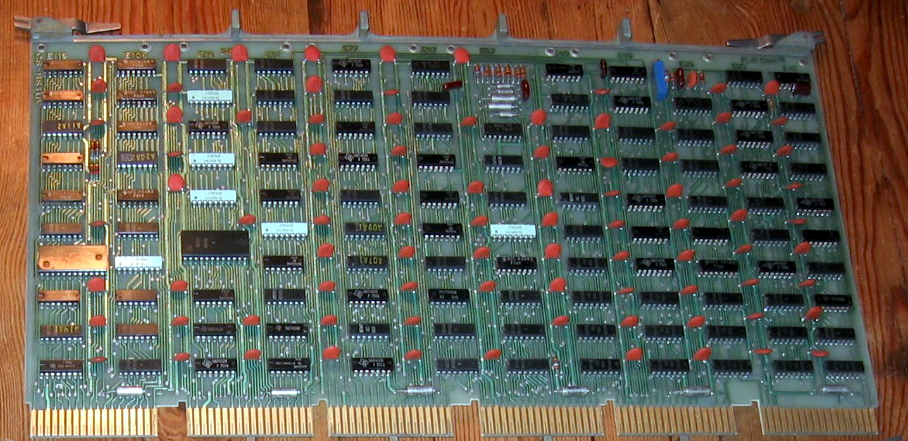
A Unibus card (public domain) A common early bus was the Digital Equipment Corporation Unibus. In 1969, you needed a lot of board space to implement nearly anything, so Unibus cards were big. PDP-11 computers and some early VAX machines used Unibus as both the system bus for memory and I/O operations.
Unibus was asynchronous, so devices could go as fast as they could or as slow as they needed. There were two 36-pin edge connectors with 56 pins of signals and 16 pins for power and ground.
Unibus was advanced for its time. Many of the pins had pull-up resistors on the bus so that multiple cards could assert them by pulling them to ground. For example, INTR, the interrupt request line, would normally be high, with no cards asserting an interrupt. If any board pulls the line low, the processor will service the interrupt, subject to priority resolution that Unibus supported via bus requests and grants.
The grants daisy-chained from card to card. This means that empty slots required a “grant continuity card” that connected the grant lines to prevent breaking the daisy chain.
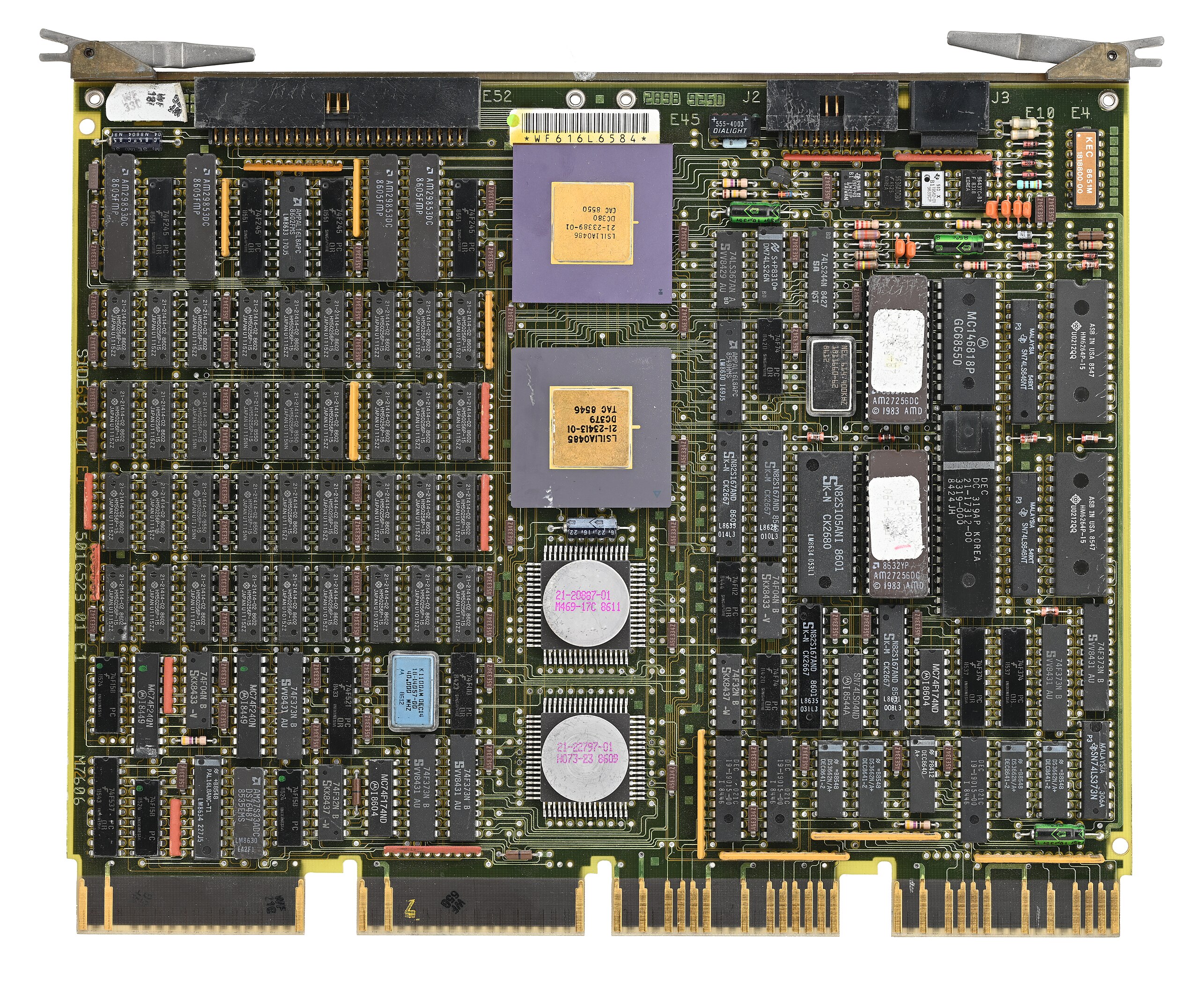
Q-Bus CPU card (CC BY-SA 4.0 by [Phiarc])The bus also had power quality lines that could inform devices when AC or DC power was low. High-performance computers might have “Fastbus,” which was two Unibuses connected but optimized to increase bandwidth. Because the boards were large, Digital would eventually adopt Q-Bus, or the LSI-11 bus. This was very similar to Unibus, but it multiplexed data and address lines, allowing boards to be smaller and cheaper to produce. Fewer wires also meant simplified backplanes and wiring, reducing costs.
Eventually, the Digital machines acquired Massbus for connecting to specific disk and tape drives. It was also an asynchronous bus, but only for data. It carried 18 bits plus a parity bit. Boards like the RH11 would connect Massbus devices to the Unibus. There would be other Digital Equipment buses like TURBOChannel.
Other computer makers, of course, had their own ideas. Sun had MBus and HP 3000 and 9000 computers, which used the HP Precision Bus and HP GSC. But the real action for people like us was with the small computers.
S-100 and Other Micros
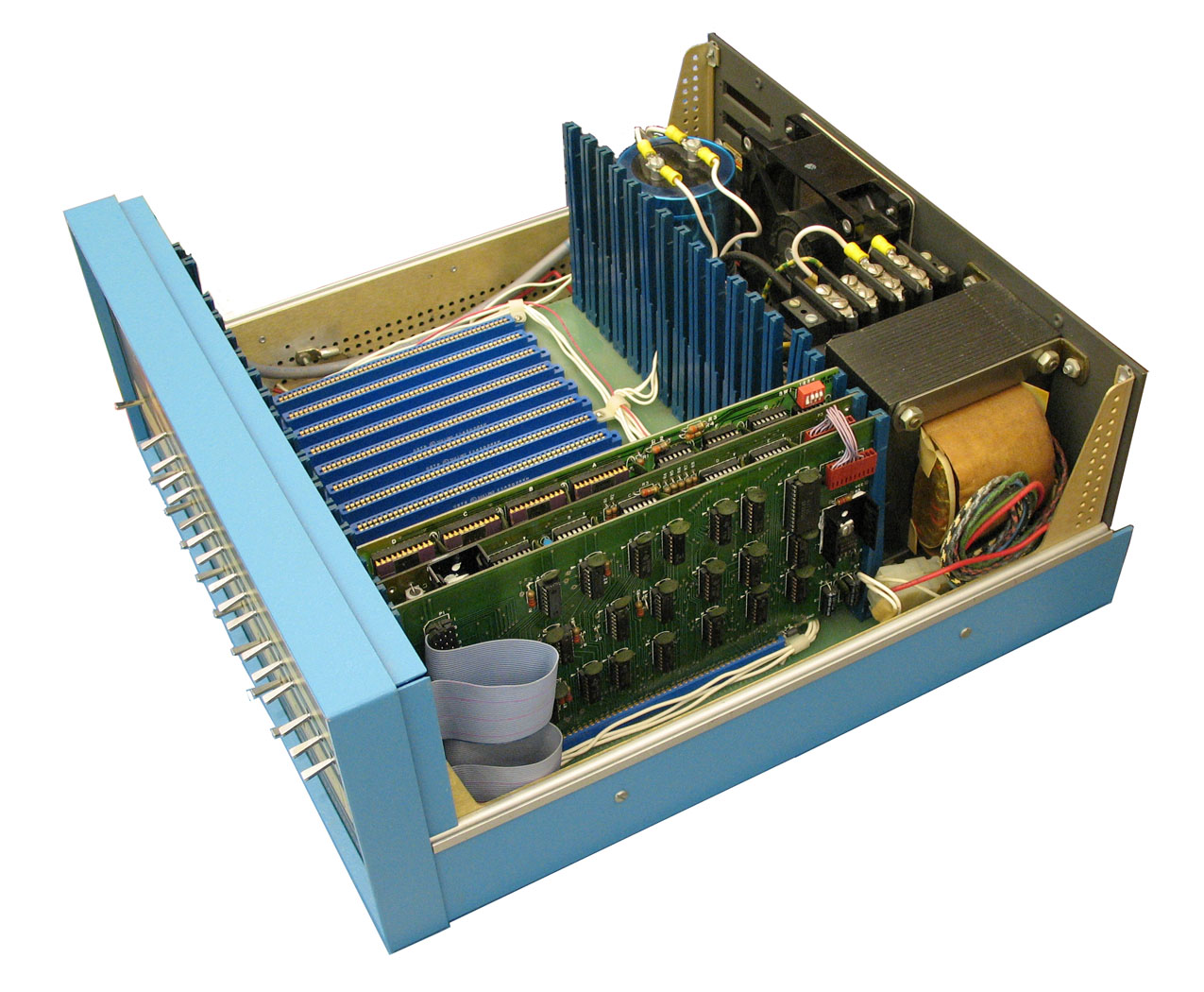
It is easy to see that when the designers defined the Altair 8800 bus, they didn’t expect it to be a standard. There was simply a 100-pin connector that accepted cards 10 inches long by 5 inches tall. The bus was just barely more than the Intel 8080 pins brought out, along with some power. At first, the bus split the databus into an input and output bus. However, later cards used a bidirectional bus to allow for more grounds on the now unused bus bits to help reduce noise.
Through the late 1970s and early 1980s, the S-100 market was robust. Most CP/M machines using an 8080 or Z-80 had S-100 bus slots. In fact, it was popular enough that it gave birth to a real standard: IEEE 696. However, by 1994, the IBM PC had made the S-100 bus a relic, and the IEEE retired the standard.
Of course, the PC bus would go on to be dominant on x86 machines for a while; other systems had other buses. The SS-50 was sort of the S-100 for 6800 computers. The 68000 computers often used VMEbus, which was closely tied to the asynchronous bus of that CPU.
Embedded Systems
While things like S-100 were great for desktop systems, they were generally big and expensive. That led to competitors for small system use. Eurocard was a popular mechanical standard that could handle up to 96 signals. The DIN 41612 connectors had 32 pins per row, with two or three rows.
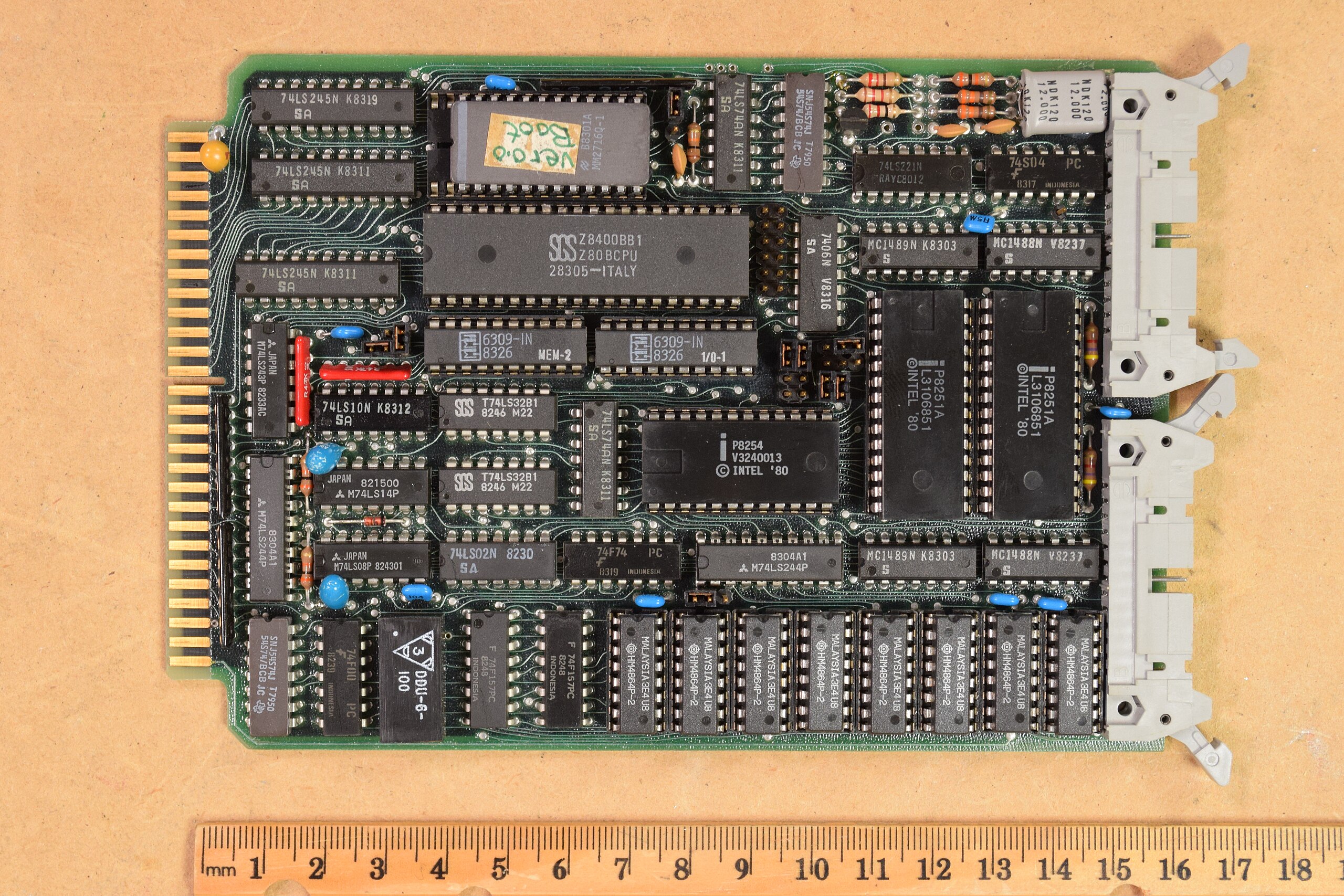
Eurocard CPU (CC BY-SA 4.0 by [SpareHeadOne])A proper Eurocard could handle batteries and had strict rules about signal fanout and input levels. Unfortunately, it wasn’t really a bus because it didn’t define all the pin assignments, so cards made by one vendor didn’t always work with cards from another vendor. The N8VEM homebrew computer (see the video below) used Eurocards. VME used a 3-row Eurocard connector, as well.
STD Bus card (CC-BY 4.0 by [AkBkukU])Another popular small system bus was the STD Bus popularized by companies like Mostek. These were small 6.5″ x 4.5″ cards with a 56-pin connector. At one time, more than 100 companies produced these cards. You can still find a few of them around, and the boards show up regularly on the surplus market. You can see more about the history of these common cards and their bus in the video below.
We don’t deal much with these kinds of buses in modern equipment. Modern busses tend to be high-speed serial and sophisticated. Besides, a hobby-level embedded system now probably uses a system-on-a-chip or, at least, a single board computer, with little need for an actual bus other than, perhaps, SPI, I2C, or USB for I/O expansion.
E’ arrivato! E’ dicembre che arriva sempre con quel carico di bilanci che pesano sulla schiena.
Ma ormai il bilancio non si fa più solo tra sé e sé. C’è questo strano fenomeno del sovraccarico, una specie di rumore di fondo che diventa insopportabile proprio quando dovremmo rallentare.
I social ad esempio, si riempiono di gente che urla i propri successi dell’anno e le chat di lavoro esplodono perché bisogna chiudere tutto, subito, prima che scatti il primo gennaio, come se poi il mondo finisse davvero.
In mezzo a questo caos, gli algoritmi dei negozi non ti lasciano respirare.
Ti inseguono con sconti che sembrano occasioni imperdibili, che rasentano lo scam di massa, e intanto senti la pressione di dover scattare la foto perfetta per Instagram. E poi intorno al 24, si finisce a passare le ore a fare copia e incolla di un unico messaggio di auguri (con tanto di immagine) da inviare a tutti gli “amici” su WhatsApp, perdendo di vista quello che sta succedendo davvero nella nostra stanza.
Il bisogno di staccare la spina
“Stacca, Stacca, Staccami la spina” cantava Jovanotti (Lorenzo Cherubini) moltissimi anni fa.
Ma molti (e non nascondetelo) se ne accorgono così, quasi per caso, di quanto sono diventati schiavi di quel rettangolo luminoso. Uno tira fuori il telefono per guardare che tempo fa o se sono già le otto, e trenta minuti dopo è ancora lì che scorre notizie o reals a caso, senza un motivo preciso.
Capita pure durante le cene: il cibo arriva in tavola e invece di mangiarlo lo si fotografa da ogni angolazione, interrompendo tutto il ritmo della serata.
Le famiglie si ritrovano sedute allo stesso tavolo ma vivono vite parallele.
Ognuno fissa il suo schermo, immerso in una bolla digitale che rende la presenza fisica una specie di accessorio opzionale. È un modo di stare insieme che non è stare insieme, ed è in questo momento di massima frizione che la voglia di una disintossicazione digitale inizia a farsi strada nella testa della gente.
La fatica di elaborare troppi dati
I ricercatori hanno pure dato un nome a questa sensazione di pesantezza:burnout digitale.
È una stanchezza cronica che viene dal mangiare troppe informazioni, un’indigestione di dati che il cervello umano non è proprio fatto per gestire. Siamo bombardati.
Ogni notifica che arriva attiva il sistema dello stress e ci tiene in uno stato di allerta perenne, manco fossimo nella giungla a scappare dai predatori, e invece stiamo solo leggendo una mail.
Il problema grosso è che la nostra capacità di concentrarci profondamente sta andando a farsi benedire.
Passiamo da un’app all’altra, da una scheda del browser a un’altra, e il cervello poveretto non riesce a starti dietro. Esiste questa cosa chiamata attenzione residua: un pezzo di te resta incastrato nel compito di prima, così quello che stai facendo adesso lo fai peggio. È un’efficienza che cola a picco, un po’ come cercare di correre nel fango.
Chimica del sonno e giornate corte
A dicembre questa stanchezza accumulata per dodici mesi arriva a un punto di rottura.
La gente diventa irritabile (e ci credo), fa fatica a prendere sonno e non combina più niente di buono al lavoro.
C’è anche una questione tecnica, legata alla luce blu degli schermi che blocca la melatonina. In inverno, con le giornate che durano un attimo e la luce naturale che scarseggia, questa interferenza con l’ormone del sonno è una mazzata per l’organismo.
Il fatto è che dicembre non è un mese come gli altri, ha questo peso simbolico di chiusura del cerchio. È il momento in cui ci si guarda indietro e si pensa che forse si potrebbe vivere diversamente, anche se questa “consapevolezza”, capita molte poche volte all’anno. Se per tutto l’anno hai rimandato il pensiero di cambiare abitudini, l’arrivo dell’anno nuovo ti dà quella spinta di “ultima occasione” per rimetterti in sesto.
Preparare il terreno per il nuovo anno
Fare un detox digitale prima di Capodanno viene visto un po’ come un rito di purificazione.
Come quando si fanno le pulizie di primavera in casa, solo che qui si pulisce lo spazio mentale.
È l’opportunità per smettere di agire come robot, di rendersi conto di quanto tempo si butta via a guardare il nulla e provare a riprendersi le redini della propria attenzione.
Non è che bisogna buttare il telefono nel cassonetto, eh. Si tratta di ritrovare un equilibrio che abbia un senso.
Qualcuno stabilisce dei coprifuoco digitali, tipo che un’ora prima di dormire o durante i pasti i telefoni spariscono dalla vista. Altri cancellano le app che creano più dipendenza o decidono che un giorno a settimana i social non esistono proprio.
Piccole strategie di sopravvivenza
C’è chi prova a tornare all’analogico, che sembra quasi un concetto vintage.
Un libro di carta invece dell’e-book, o un gioco da tavolo invece di rincitrullirsi davanti ai videogiochi. Una cosa che aiuta molto, dicono, è farsi una domanda banale prima di sbloccare lo schermo: “Perché sto prendendo in mano il telefono?”. Spesso la risposta è “per noia”, e già rendersene conto è un passo avanti.
Alla fine, il punto non è odiare la tecnologia, ma smettere di farsi usare da lei. Il vero vantaggio di tutto questo staccare è che si torna a essere presenti, a stare nel momento mentre le cose succedono.
Dicembre è pieno di momenti che meriterebbero di essere vissuti davvero, tra cene e parenti, e riscoprire la gioia di parlarsi dal vivo senza notifiche che vibrano in tasca non è poi così male.
Io questo anno stacco veramente la spina per riaccenderla ad inizio gennaio. E voi?
Hack Reveals the a16z-Backed Phone Farm Flooding TikTok With AI Influencers
Doublespeed, a startup backed by Andreessen Horowitz (a16z) that uses a phone farm to manage at least hundreds of AI-generated social media accounts and promote products has been hacked. The hack reveals what products the AI-generated accounts are promoting, often without the required disclosure that these are advertisements, and allowed the hacker to take control of more than 1,000 smartphones that power the company.
The hacker, who asked for anonymity because he feared retaliation from the company, said he reported the vulnerability to Doublespeed on October 31. At the time of writing, the hacker said he still has access to the company’s backend, including the phone farm itself. Doublespeed did not respond to a request for comment.
“I could see the phones in use, which manager (the PCs controlling the phones) they had, which TikTok accounts they were assigned, proxies in use (and their passwords), and pending tasks. As well as the link to control devices for each manager,” the hacker told me. “I could have used their phones for compute resources, or maybe spam. Even if they're just phones, there are around 1100 of them, with proxy access, for free. I think I could have used the linked accounts by puppeting the phones or adding tasks, but haven't tried.”
As I reported in October, Doublespeed raised $1 million from a16z as part of its “Speedrun” accelerator program, “a fast‐paced, 12-week startup program that guides founders through every critical stage of their growth.” Doublespeed uses generative AI to flood social media with accounts and posts to promote certain products on behalf of its clients. Social media companies attempt to detect and remove this type of astroturfing for violating their inauthentic behavior policies, which is why Doublespeed uses a bank of phones to emulate the behavior of real users. So-called “click farms” or “phone farms” often use hundreds of mobile phones to fake online engagement of reviews for the same reason.
The hacker told me he had access to around 1,100 smartphones Doublespeed operates. One way the hacker proved he had access to devices was by taking control of one phone’s camera, which seemingly showed it in a rack with other phones.
Images the hacker captured from some of the phones in Doublespeed's phone farm.
The hacker also shared a list with me of more than 400 TikTok accounts Doublespeed operates. Around 200 of those were actively promoting products on TikTok, mostly without disclosing the posts were ads, according to 404 Media’s review of them. It’s not clear if the other 200 accounts ever promoted products or were being “warmed up,” as Doublespeed describes the process of making the accounts appear authentic before it starts promoting in order to avoid a ban.
I’ve seen TikTok accounts operated by Doublespeed promote language learning apps, dating apps, a Bible app, supplements, and a massager.
One health-themed Doublespeed Tiktok account named Chloe Davis posted almost 200 slideshows featuring a middle-aged AI-generated woman. In the posts, the woman usually discusses various physical ailments and how she deals with them. The last image in the slide always includes a picture of someone using a massage roller from a company called Vibit. Vibit did not respond to a request for comment.
A Doublespeed TikTok account promoting a Vibit massager.
Another Doublespeed-operated TikTok account named pattyluvslife posted dozens of slideshows of a young woman who, according to her bio, is a student at UCLA. All the posts from this account talk about how “big pharma” and the supplements industry is a scam. But the posts also always promoted a moringa supplement from a company called Rosabella. The AI-generated woman in these TikTok posts often holds up the bottle of supplements, but it’s obviously AI-generated as the text on the bottle is jumbled gibberish. An AI-generated image promoting a Rosabella supplement. Rosabella’s site also claims the product is “viral on TikTok.” Rosabella did not respond to a request for comment. An image from Rosabella's site claiming its brand is viral on TikTok. While most of the content I’ve seen on Doublespeed-operated TikTok accounts included AI-generated slideshows and still images, Doublespeed is also able to AI-generate videos as well. One Doublespeed-operated account posted several AI-generated videos of a young woman voguing at the camera. The account was promoting a company called Playkit, a “TikTok content agency” that pays users to promote products on behalf of its clients. Notably, this is the exact kind of business Doublespeed would in theory be able to replace with AI-generated accounts. Playkit did not respond to a request for comment.
0:00 /0:04 1×
An AI-generated video promoting Playkit, a TikTok content agency.
TikTok told me that its Community Guidelines make clear that it requires creators to label AI-generated or significantly edited content that shows realistic-looking scenes or people. After I reached out for comment, TikTok added a label to the Doublespeed-operated accounts I flagged indicating they're AI-generated.
A16z did not respond to a request for comment.
Doublespeed has said it has the ability to and soon plans to launch its services on Instagram, Reddit, and X, but so far seems to only be operating on TikTok. In October, a Reddit spokesperson told me that Doublespeed’s service would violate its terms of service. Meta did not respond to a request for comment. As we noted in October, Marc Andreessen, after whom half of Andreessen Horowitz is named, sits on Meta’s board of directors. Doublespeed’s business would clearly violate Meta’s policy on “authentic identity representation.”
A man was charged for allegedly wiping a phone before CBP could search it; an Anthropic exec forced AI onto a Discord community that didn't want it; and we talk the Disney-OpenAI deal.
A man was charged for allegedly wiping a phone before CBP could search it; an Anthropic exec forced AI onto a Discord community that didnx27;t want it; and we talk the Disney-OpenAI deal.#Podcast
Joseph had to use a different mic this week, that will be fixed next time! We start this week talking about a very unusual case: someone is being charged for allegedly wiping a phone before CBP could search it. There are a lot of questions remaining, but a super interesting case. After the break, we talk about Matthew’s article on an Anthropic exec forcing AI onto a queer gamer Discord. In the subscribers-only section, we all chat about the Disney and OpenAI deal. playlist.megaphone.fm?e=TBIEA8… Listen to the weekly podcast on Apple Podcasts,Spotify, or YouTube. Become a paid subscriber for access to this episode's bonus content and to power our journalism. If you become a paid subscriber, check your inbox for an email from our podcast host Transistor for a link to the subscribers-only version! You can also add that subscribers feed to your podcast app of choice and never miss an episode that way. The email should also contain the subscribers-only unlisted YouTube link for the extended video version too. It will also be in the show notes in your podcast player. youtube.com/embed/tOpIpReZPoM?… Timestamps: 00:48 - Man Charged for Wiping Phone Before CBP Could Search It 17:44 - Anthropic Exec Forces AI Chatbot on Gay Discord Community, Members Flee 41:17 - Disney Invests $1 Billion in the AI Slopification of Its Brand
Tech News Podcast · Updated Weekly · Welcome to the podcast from 404 Media where Joseph, Sam, Emanuel, and Jason catch you up on the stories we published this week. 404 Media is a journalist-owned digital media company exploring the way …
@Politica interna, europea e internazionale La Russia è “impantanata” in Ucraina ma non ha ancora mostrato l’intenzione di contribuire “in maniera equa, credibile e costruttiva” alle trattative di pace, per questo “non
@Informatica (Italy e non Italy 😁) L’intelligence interna francese (DGSI) ha rinnovato il suo contratto pluriennale con Palantir, mostrando la dipendenza della sicurezza nazionale della République dalle capacità tecnologiche statunitensi. Altro che macronate anti Usa... L'analisi di Alessandro Aresu
Basta avvisi inutili. Basta monitoraggi passivi. Meno di due anni dopo il suo lancio, Google ha deciso di chiudere uno degli strumenti più chiacchierati per la sicurezza digitale: il Dark Web Report. La funzione, pensata per aiutare gli utenti a scoprire se i propri dati personali fossero finiti sul dark web, cesserà di esistere il 16 febbraio 2026, mentre le scansioni per nuove violazioni si fermeranno già il 15 gennaio 2026. Secondo il gigante tecnologico, il report “offriva informazioni generali, ma il feedback degli utenti ha mostrato che non forniva indicazioni concrete su cosa fare”. Google promette ora di concentrarsi su strumenti che offrano passi chiari e immediatamente azionabili per proteggere le proprie informazioni online.
Per chi lo desidera, è possibile eliminare anticipatamente il proprio profilo di monitoraggio: basta accedere al Dark Web Report, cliccare su “Edit monitoring profile” e infine selezionare “Delete monitoring profile”. Tutti i dati verranno cancellati automaticamente con la disattivazione della funzione.
Lanciato a marzo 2023, il Dark Web Report era stato concepito come una difesa contro le frodi d’identità online, controllando il darknet per dati personali come nome, indirizzo, email, numero di telefono e Social Security Number. Nel luglio 2024, Google aveva esteso il servizio da Google One a tutti gli account, ampliando così la portata del monitoraggio.
Ora Google invita gli utenti a prendere in mano la propria sicurezza digitale. La prima mossa consigliata è attivare le passkey, strumenti di autenticazione multifattore resistenti al phishing, che rendono più difficile per i criminali rubare le credenziali. Non basta più avere una password complessa: serve una protezione che non si limiti a segnalare i rischi, ma li neutralizzi davvero.
In parallelo, Google suggerisce di utilizzare la funzione “Results about you” per rimuovere i propri dati personali dai risultati di ricerca. Questo non è solo un passo di privacy, ma un vero scudo contro l’esposizione non voluta dei propri dati online. Ogni informazione lasciata pubblica può essere raccolta, combinata e rivenduta sul dark web: proteggerla significa ridurre drasticamente il rischio di furti d’identità.
La decisione segna un cambio di rotta netto: da un approccio di monitoraggio passivo a una strategia basata su azioni concrete e protezione attiva, lasciando dietro di sé uno strumento che, seppur utile per scovare i dati nel dark web, non forniva la guida necessaria per difendersi davvero.
@Giornalismo e disordine informativo articolo21.org/2025/12/tappa-a… Sala piena a Bergamo per la presentazione del libro di Paolo Berizzi “I segreti di Casapound”. Ancora una volta Berizzi, come nei libri precedenti ha indicato i fili che legano la destra di casa pound alla destra di governo e ha invitato a
La protezione dello spazio sottomarino sta emergendo con forza come uno dei nodi strategici centrali della sicurezza contemporanea, non solo sul piano militare ma soprattutto su quello economico e infrastrutturale. In un momento storico in cui attori globali come gli Stati Uniti
@Politica interna, europea e internazionale L’Unione europea deve prepararsi a “combattere una moderna guerra ibrida” in un “mondo di guerre e predatori”. Nel suo intervento alla plenaria del Parlamento europeo a Strasburgo, dove oggi è in corso il dibattito sulla preparazione del Consiglio
@Informatica (Italy e non Italy 😁) Uno degli aspetti più discussi legato ai data breach e alla conformità normativa è certamente quello della continuità operativa; cerchiamo di saperne di più e di inquadrare bene il problema. […] L'articolo Continuità Operativa e Resilienza proviene da Edoardo Limone.
L'articolo proviene dal blog dell'esperto di #Cybersecurity
“Mentre parto per Seul, in Corea del Sud, accompagnato da Mariana Frazão (Gmg di Lisbona 2023) e Luis Ponce Gil (Gmg di Panama 2019 e Gmg di Lisbona 2023), dove incontrerò gli organizzatori della Giornata mondiale della gioventù di Seul 2027, porto c…
Il Papa ha dedicato l'udienza di oggi alla Pasqua come approdo del cuore inquieto. Prima di arrivare in piazza, ha salutato un centinaio di malati e disabili in Aula Paolo VI.
With the availability of increasingly cheaper equipment, welding has become far more accessible these days. While this is definitely a plus, it also comes with the elephant-sized asterisk that as with any tool you absolutely must take into account basic safety precautions for yourself and others. This extends to the way you prepare metal for welding, with [Dr. Bernard], AKA [ChubbyEmu] recently joining forces with [styropyro] to highlight the risks of cleaning metal with brake cleaner prior to welding.
Much like with common household chemicals used for cleaning, such as bleach and ammonia, improper use of these can produce e.g. chlorine gas, which while harmful is generally not lethal. Things get much more serious with brake cleaner, containing tetrachloroethylene. As explained in the video, getting brake cleaner on a rusty part to clean it and then exposing it to the intensive energies of the welding process suffices to create phosgene.
Phosgene strongly interacts with fats, proteins and DNA in the body. (Credit: Chubbyemu, YouTube) Used as a devastating chemical weapon during World War I, phosgene does not dissolve or otherwise noticeably reduce in potency after it enters the lungs. Instead it clings to surfaces where it attacks and destroys proteins and DNA until the affected person typically dies from disruption of the lung’s blood-air barrier and subsequent pulmonary edema. Effectively your lungs fill with liquid, your blood oxygen saturation drops and at some point your body calls it quits.
The video is based on a real case study, where in 1982 a previously healthy 23-year old man accidentally inhaled phosgene, was admitted to the ER before being rushed to the ICU. Over the course of six days he deteriorated, developed a fever and passed away after his heart stopped pumping properly due to ventricular fibrillation.
Basically, if you are off minding your own business and suddenly smell something like musty hay or freshly cut grass when nobody is mowing the lawn, there’s a chance you just inhaled phosgene. Unlike in the video, where the victim keeps welding and waits a long time before going to the ER, immediate treatment can at least give you a shot at recovery if the exposure was mild enough.
As with laser safety, prevention is the best way to stay healthy. In the case of welding it’s essential to fully cover up your skin as there is intense UV radiation from the work area, protect your eyes with a quality welding mask and ideally wear a respirator especially when welding indoors. Show your eyes, lungs and skin how much you love them by taking good care of them — and please don’t use brake cleaner to prep parts for welding.
Si sono svolti tra maggio e dicembre 2025 i 15 incontri online dell’Area Famiglia e Vita del Dicastero per i laici, la famiglia e la vita, con i 60 responsabili degli Uffici per la Pastorale della vita delle Conferenze episcopali di ogni parte del mo…
“Noi non siamo macchine, abbiamo un cuore, anzi, possiamo dire, siamo un cuore”. Ne è convinto Leone XIV, che ha dedicato l’udienza di oggi, pronunciata in piazza San Pietro, alla Pasqua come approdo del cuore inquieto, in puro stile agostiniano.
Il presepe "continui a far parte del Natale". A lanciare l'appello è stato il Papa, durante i saluti ai fedeli di lingua italiana, al termine dell'udienza di oggi in piazza San Pietro.
In March 2025, we discovered Operation ForumTroll, a series of sophisticated cyberattacks exploiting the CVE-2025-2783 vulnerability in Google Chrome. We previously detailed the malicious implants used in the operation: the LeetAgent backdoor and the complex spyware Dante, developed by Memento Labs (formerly Hacking Team). However, the attackers behind this operation didn’t stop at their spring campaign and have continued to infect targets within the Russian Federation.
Emails posing as a scientific library
In October 2025, just days before we presented our report detailing the ForumTroll APT group’s attack at the Security Analyst Summit, we detected a new targeted phishing campaign by the same group. However, while the spring cyberattacks focused on organizations, the fall campaign honed in on specific individuals: scholars in the field of political science, international relations, and global economics, working at major Russian universities and research institutions.
The emails received by the victims were sent from the address support@e-library[.]wiki. The campaign purported to be from the scientific electronic library, eLibrary, whose legitimate website is elibrary.ru. The phishing emails contained a malicious link in the format: https://e-library[.]wiki/elib/wiki.php?id=<8 pseudorandom letters and digits>. Recipients were prompted to click the link to download a plagiarism report. Clicking that link triggered the download of an archive file. The filename was personalized, using the victim’s own name in the format: <LastName>_<FirstName>_<Patronymic>.zip.
A well-prepared attack
The attackers did their homework before sending out the phishing emails. The malicious domain, e-library[.]wiki, was registered back in March 2025, over six months before the email campaign started. This was likely done to build the domain’s reputation, as sending emails from a suspicious, newly registered domain is a major red flag for spam filters.
Furthermore, the attackers placed a copy of the legitimate eLibrary homepage on https://e-library[.]wiki. According to the information on the page, they accessed the legitimate website from the IP address 193.65.18[.]14 back in December 2024.
A screenshot of the malicious site elements showing the IP address and initial session date
The attackers also carefully personalized the phishing emails for their targets, specific professionals in the field. As mentioned above, the downloaded archive was named with the victim’s last name, first name, and patronymic.
Another noteworthy technique was the attacker’s effort to hinder security analysis by restricting repeat downloads. When we attempted to download the archive from the malicious site, we received a message in Russian, indicating the download link was likely for one-time use only:
The message that was displayed when we attempted to download the archive
Our investigation found that the malicious site displayed a different message if the download was attempted from a non-Windows device. In that case, it prompted the user to try again from a Windows computer.
The message that was displayed when we attempted to download the archive from a non-Windows OS
The malicious archive
The malicious archives downloaded via the email links contained the following:
A malicious shortcut file named after the victim: <LastName>_<FirstName>_<Patronymic>.lnk;
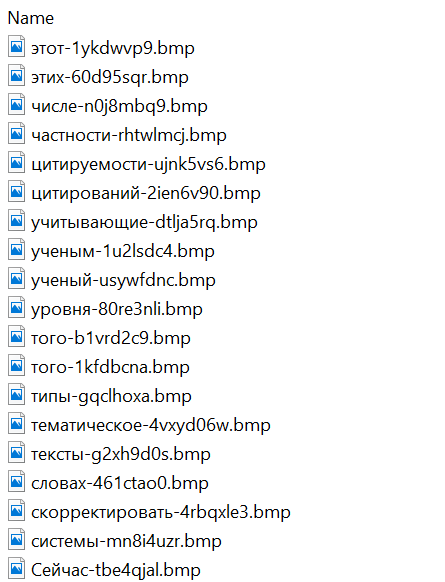
A .Thumbs directory containing approximately 100 image files with names in Russian. These images were not used during the infection process and were likely added to make the archives appear less suspicious to security solutions.
A portion of the .Thumbs directory contents
When the user clicked the shortcut, it ran a PowerShell script. The script’s primary purpose was to download and execute a PowerShell-based payload from a malicious server.
The script that was launched by opening the shortcut
The downloaded payload then performed the following actions:
Contacted a URL in the format: https://e-library[.]wiki/elib/query.php?id=<8 pseudorandom letters and digits>&key=<32 hexadecimal characters> to retrieve the final payload, a DLL file.
Saved the downloaded file to %localappdata%\Microsoft\Windows\Explorer\iconcache_<4 pseudorandom digits>.dll.
Established persistence for the payload using COM Hijacking. This involved writing the path to the DLL file into the registry key HKCR\CLSID\{1f486a52-3cb1-48fd-8f50-b8dc300d9f9d}\InProcServer32. Notably, the attackers had used that same technique in their spring attacks.
Downloaded a decoy PDF from a URL in the format: https://e-library[.]wiki/pdf/<8 pseudorandom letters and digits>.pdf. This PDF was saved to the user’s Downloads folder with a filename in the format: <LastName>_<FirstName>_<Patronymic>.pdf and then opened automatically.
The decoy PDF contained no valuable information. It was merely a blurred report generated by a Russian plagiarism-checking system.
A screenshot of a page from the downloaded report
At the time of our investigation, the links for downloading the final payloads didn’t work. Attempting to access them returned error messages in English: “You are already blocked…” or “You have been bad ended” (sic). This likely indicates the use of a protective mechanism to prevent payloads from being downloaded more than once. Despite this, we managed to obtain and analyze the final payload.
The final payload: the Tuoni framework
The DLL file deployed to infected devices proved to be an OLLVM-obfuscated loader, which we described in our previous report on Operation ForumTroll. However, while this loader previously delivered rare implants like LeetAgent and Dante, this time the attackers opted for a better-known commercial red teaming framework: Tuoni. Portions of the Tuoni code are publicly available on GitHub. By deploying this tool, the attackers gained remote access to the victim’s device along with other capabilities for further system compromise.
As in the previous campaign, the attackers used fastly.net as C2 servers.
Conclusion
The cyberattacks carried out by the ForumTroll APT group in the spring and fall of 2025 share significant similarities. In both campaigns, infection began with targeted phishing emails, and persistence for the malicious implants was achieved with the COM Hijacking technique. The same loader was used to deploy the implants both in the spring and the fall.
Despite these similarities, the fall series of attacks cannot be considered as technically sophisticated as the spring campaign. In the spring, the ForumTroll APT group exploited zero-day vulnerabilities to infect systems. By contrast, the autumn attacks relied entirely on social engineering, counting on victims not only clicking the malicious link but also downloading the archive and launching the shortcut file. Furthermore, the malware used in the fall campaign, the Tuoni framework, is less rare.
ForumTroll has been targeting organizations and individuals in Russia and Belarus since at least 2022. Given this lengthy timeline, it is likely this APT group will continue to target entities and individuals of interest within these two countries. We believe that investigating ForumTroll’s potential future campaigns will allow us to shed light on shadowy malicious implants created by commercial developers – much as we did with the discovery of the Dante spyware.
Non è l’a prima colta che i criminal hacker commettono degli errori e non sdarà l’ultima.
Il gruppo di hacktivisti filorusso CyberVolk ha lanciato il servizio RaaS VolkLocker (noto anche come CyberVolk 2.x). Tuttavia, i ricercatori di sicurezza hanno scoperto che gli sviluppatori del malware hanno commesso diversi errori che consentono alle vittime di recuperare gratuitamente i propri file.
I ricercatori di SentinelOne riferiscono che gli aggressori hanno incorporato la chiave di crittografia master direttamente nel binario del malware e l’hanno salvata come file di testo normale nella cartella %TEMP%.
Il file si chiama system_backup.key e tutto il necessario per decrittografare i dati può essere facilmente estratto da esso. I ricercatori ipotizzano che si tratti di una sorta di artefatto di debug che non è stato “pulito” prima del rilascio.
Gli operatori RaaS apparentemente non sono a conoscenza del fatto che i loro clienti distribuiscono build con la funzione backupMasterKey(). Si ritiene che CyberVolk sia un gruppo filo-russo con sede in India che opera in modo indipendente. Mentre altri hacktivisti si limitano in genere ad attacchi DDoS, CyberVolk ha deciso di accettare la sfida di creare un proprio ransomware.
Gli aggressori lo hanno annunciato per la prima volta l’anno scorso e, sebbene siano stati successivamente banditi da Telegram diverse volte, nell’agosto di quest’anno il gruppo ha presentato il malware VolkLocker (CyberVolk 2.x) e la sua piattaforma RaaS (Ransomware-as-a-Service).
VolkLocker è scritto in Go e funziona sia su Linux (incluso VMware ESXi) che su Windows. L’accesso a RaaS per un singolo sistema operativo costa tra gli 800 e i 1.100 dollari, le versioni Linux e Windows costano tra i 1.600 e i 2.200 dollari, mentre un RAT o un keylogger autonomo costa 500 dollari. Gli acquirenti del malware ottengono l’accesso a un generatore di bot per Telegram, dove possono configurare il ransomware e ricevere il payload generato.
Per creare il tuo ransomware, devi specificare un indirizzo Bitcoin, un token bot di Telegram, un ID chat, una scadenza per il pagamento del riscatto, un’estensione per i file crittografati e impostare le opzioni di autodistruzione.
Una volta avviato sul sistema della vittima, VolkLocker aumenta i privilegi aggirando il Controllo dell’account utente di Windows, seleziona i file da crittografare da un elenco di esclusioni preconfigurato e crittografa i dati utilizzando AES-256 in modalità GCM.
I ricercatori hanno inoltre notato che il codice contiene un timer che attiva un wiper che distrugge le cartelle dell’utente (Documenti, Download, Immagini, Desktop) dopo la scadenza del ransomware o quando viene inserita una chiave errata nella finestra HTML del riscatto.
Secondo gli esperti, la principale debolezza del malware risiede nella crittografia. VolkLocker non genera chiavi dinamicamente, ma utilizza la stessa chiave master hardcoded per tutti i file presenti sul sistema infetto. Come accennato in precedenza, questa chiave viene scritta nel file eseguibile come stringa esadecimale e duplicata in un file di testo in formato %TEMP%.
Gli esperti ritengono che tali errori indichino problemi di controllo qualità: il gruppo sta cercando di espandersi in modo aggressivo attraendo nuovi “partner” inesperti, ma non riesce a portare a termine nemmeno i compiti più basilari.
In genere, si ritiene opportuno non divulgare dettagli sulle vulnerabilità dei ransomware mentre gli aggressori sono ancora attivi. Gli esperti, invece, in genere avvisano le forze dell’ordine e le aziende specializzate in trattative per il ransomware, che possono quindi assistere le vittime in privato. Poiché CyberVolk rimane attivo, SentinelOne spiega che è improbabile che la divulgazione di informazioni sulle vulnerabilità di VolkLocker ostacoli gli sforzi dei colleghi e delle forze dell’ordine per combattere il gruppo.
"Con l'avvicinarsi del Natale, facciamo attenzione a non lasciarci prendere da un frenetico attivismo nei preparativi della festa, che finiremmo per vivere in modo superficiale e che lascerebbe spazio alla delusione.
“L’inquietudine è il segno che il nostro cuore non si muove a caso, in modo disordinato, senza un fine o una meta, ma è orientato alla sua destinazione ultima, quella del ritorno a casa”.
L’Open Source Intelligence (OSINT) è emersa, negli ultimi anni, come una delle discipline più affascinanti, ma anche più insidiose, nel panorama dell’informazione e della sicurezza. La sua essenza è straordinariamente semplice: estrarre e analizzare dati da fonti pubbliche che si tratti di un post su X, di un bilancio depositato in Camera di Commercio, o di un articolo scientifico per trasformarli in intelligence concreta e utilizzabile.
Quella che un tempo era una tecnica appannaggio esclusivo di agenzie governative, oggi è uno strumento quotidiano per investigatori, giornalisti, analisti di threat intelligence e, inevitabilmente, anche per malintenzionati. Ed è proprio questa democratizzazione che ci costringe a porci una domanda fondamentale: dove finisce la ricerca legittima e dove inizia l’illecito?
Un’arma a doppio taglio
L’Open Source Intelligence (OSINT) si configura come un’arma a doppio taglio nell’era digitale: un lato è l’illuminazione, l’altro è l’ombra. Se da una parte ha permesso a organizzazioni non governative e a giornalisti d’inchiesta di portare alla luce crimini di guerra o corruzioni sistemiche, dall’altra ha fornito una metodologia incredibilmente potente a chiunque voglia nuocere. L’accessibilità e l’efficacia degli strumenti attuali, spesso automatizzati e basati su algoritmi di intelligenza artificiale, amplificano esponenzialmente il dilemma originario. L’analista OSINT non è più solo un investigatore paziente che spulcia archivi cartacei o vecchi siti web, ma è un operatore che, con pochi script o tool commerciali, è in grado di mappare intere reti sociali o infrastrutture aziendali in tempi brevissimi.
Il terreno su cui si muove l’OSINT è per sua natura scivoloso. La definizione stessa, “dati da fonti aperte“, suggerisce che tutto sia lecito, purché sia pubblico. Ma la realtà è molto più sfumata. In Italia, e in Europa in generale, il primo ostacolo è il GDPR. Non basta che un dato sia visibile a tutti per poterlo raccogliere, archiviare e analizzare sistematicamente. Questa rapidità e onnipotenza percepita è il cuore del problema legale, specialmente in Europa. La normativa sulla protezione dei dati, il GDPR, è stata concepita per bilanciare l’innovazione tecnologica con la tutela dei diritti fondamentali degli individui.
E qui si annida la trappola per l’analista OSINT non professionale. Molti sono convinti che, se un dato è “pubblicato”, l’individuo ne abbia implicitamente acconsentito alla rielaborazione. Ma il diritto europeo non funziona così. Quando si aggregano informazioni sparse – magari unendo un nome utente di Telegram, la foto di un profilo LinkedIn e l’indirizzo di casa trovato su un vecchio registro catastale – si sta effettuando un vero e proprio trattamento di dati personali.
La pubblicazione volontaria di un selfie su Instagram non è un via libera alla sua indicizzazione, archiviazione a lungo termine, e successiva associazione a informazioni sensibili tratte da altre fonti per la creazione di un “profilo di rischio”.
Aggregazione dei dati: OSINF e OSINT
L’aggregazione di dati è l’azione che trasforma l’OSINF in OSINT, e contemporaneamente, l’azione che più facilmente viola il GDPR. Pensiamo all’utilizzo delle e-mail e dei username recuperati. Un conto è notare che l’utente A ha lo stesso username su Twitter e su un forum di discussione tecnica. Un altro, ben diverso, è raccogliere sistematicamente migliaia di queste correlazioni, associarle a indirizzi IP, metadati e schemi di comportamento, e costruire un database ricercabile. In questo caso, l’attività sfocia in un vero e proprio trattamento su larga scala che non solo richiede una base giuridica solida (quasi sempre assente per il curioso o il freelance senza mandato), ma spesso imporrebbe anche l’obbligo di una Valutazione di Impatto sulla Protezione dei Dati (DPIA).
Questo trattamento richiede una base giuridica (consenso, legittimo interesse, obbligo legale) che spesso, nel contesto di una ricerca OSINT non autorizzata, semplicemente non esiste. L’analista potrebbe agire in perfetta buona fede, convinto di non star facendo nulla di male, ma la semplice creazione di un dossier dettagliato su una persona, attingendo solo a fonti aperte, può già configurare una violazione normativa. L’analista improvvisato è quasi sempre inconsapevole di queste procedure, trasformando la sua “ricerca” in un potenziale illecito amministrativo con multe salatissime.
Il confine si fa ancora più netto quando la curiosità spinge il ricercatore a “dare una sbirciatina oltre il cancello”. L’OSINT dovrebbe limitarsi alla superficie del web, senza sfondare porte. Il confine si fa ancora più spinoso sul piano penale, come accennato con l’accesso abusivo. È fondamentale sottolineare che il diritto penale, in questo contesto, non valuta l’intenzione benevola, ma il fatto oggettivo dell’intrusione. Ma in un mondo dove le protezioni a volte sono banali, la tentazione è forte. Se un analista sfrutta un bug di configurazione di un sito, o indovina una password debole per accedere a un’area riservata – anche se non protetta da sistemi di sicurezza complessi – sta commettendo un accesso abusivo a sistema informatico o telematico.
Non tutto ciò che è pubblico è lecito: l’etica operativa dell’OSINT
Non è importante quanto sia stata facile l’intrusione, ma il fatto che non fosse autorizzata. L’utilizzo di sub-domain enumeration tools che tentano di accedere a cartelle nascoste non è OSINT; l’utilizzo di strumenti per la ricerca di credenziali esposte o database non protetti non è ricerca legittima, ma un’attività pre-offensiva che può facilmente degenerare in reato. Anche un semplice port scanning o la verifica di versioni di software esposte, se eseguiti con l’intento di trovare vulnerabilità da sfruttare, possono essere interpretati come azioni preparatorie all’accesso abusivo.
Allo stesso modo, l’utilizzo aggressivo di scraper automatizzati per rastrellare milioni di record violando i Termini di Servizio di una piattaforma, o aggirando deliberate limitazioni tecniche, ci porta in una zona grigia che è a un passo dal trasformarsi in illegalità, specialmente se l’obiettivo è la successiva monetizzazione o il data mining massivo di informazioni sensibili. L’OSINT agisce sulla superficie esposta e sui dati volontariamente o inconsapevolmente lasciati pubblici, ma si ferma dove inizia la necessità di forzare o aggirare qualsiasi tipo di barriera tecnica, anche la più banale come un file robots.txt ignorato intenzionalmente.
Ma i limiti della ricerca non sono soltanto giuridici. C’è un codice, spesso non scritto, che definisce l’etica dell’OSINT. Oltre la legge, persiste l’ineludibile questione etica, che funge da “norma interna” del professionista. La distinzione cruciale è tra “ciò che puoi fare” e “ciò che dovresti fare”. Pensiamo al social engineering: se un analista crea un profilo fittizio (sock puppet) per stringere amicizia virtuale con l’obiettivo e spingerlo a rivelare dettagli che altrimenti terrebbe privati, l’azione è tecnicamente legale finché non sfocia in truffa o minaccia.
L’uso di profili fittizi (sock puppets), ad esempio, è spesso dibattuto. Sebbene possa non essere illegale creare un alter ego virtuale, l’atto di ingannare un individuo per stabilire un rapporto di fiducia al fine di estorcergli informazioni private viola il principio di trasparenza e minaccia la fiducia digitale generale. Tuttavia, è universalmente considerata una prassi non etica e manipolativa. Sfruttare la debolezza emotiva o la scarsa consapevolezza digitale di un individuo per estorcergli informazioni tradisce lo spirito di trasparenza su cui l’OSINT dovrebbe basarsi. Un analista etico dovrebbe sempre cercare il dato con la sua vera identità professionale o, se necessario, tramite fonti neutrali, evitando la manipolazione psicologica. Il fine ultimo dell’OSINT professionale non è raccogliere il gossip o l’informazione compromettente, ma ottenere un quadro informativo che sia accurato, verificabile e contestualizzato.
Dal rumore al segnale: metodo, verifica ed etica nell’OSINT
Il professionista responsabile non cerca solo il dato, ma anche la sua validazione e il suo contesto. C’è un abisso tra l’OSINT (Intelligence) e l’OSINF (Information). Questa distinzione tra OSINT e OSINF è cruciale. Un analista etico sa che un’informazione decontestualizzata o non verificata può distruggere la reputazione di una persona o, in contesti geopolitici, mettere in pericolo vite. L’analista etico non si limita a trovare un tweet incendiario; verifica l’autenticità dell’account, analizza i metadati della foto, incrocia la dichiarazione con i dati geopolitici noti e valuta la sua rilevanza nel contesto investigativo. Il “martello pneumatico” dell’informazione decontestualizzata distrugge reputazioni, alimenta fake news e può persino mettere in pericolo l’incolumità fisica delle persone, in particolare in contesti di doxing o vendetta online. L’OSINT, quando ben eseguita, è un processo metodologico rigoroso che mira alla validazione e alla contestualizzazione del dato, trasformando il rumore in segnale.
In sintesi, l’OSINT è uno strumento chirurgico, non un martello pneumatico. La linea rossa non è un confine fisico tracciato sulla sabbia, ma una bussola interna che guida l’analista. In definitiva, l’analista responsabile deve adottare una mentalità di minimizzazione del dato e di proporzionalità dell’azione. Deve operare con la consapevolezza che ogni ricerca, anche la più innocua, può avere ripercussioni sulla privacy e sui diritti altrui. Prima di avviare una ricerca intrusiva o di aggregare informazioni personali, deve porsi la domanda: è strettamente necessario questo livello di dettaglio per raggiungere il mio obiettivo legittimo? Se l’obiettivo è la threat intelligence difensiva (es. identificare un attacco phishing in corso), l’azione è proporzionata.
Se l’obiettivo è la semplice curiosità o l’indagine su un ex-partner senza un mandato legale o una giustificazione etica cogente, l’azione è sproporzionata e abusiva. Ignorare i principi di proporzionalità, minimizzazione del dato e rispetto della legge non è solo un rischio legale: significa minare la credibilità e l’integrità dell’intera disciplina, trasformando uno strumento di conoscenza in un mezzo di sorveglianza e violazione. La legittimità dell’OSINT, quindi, non risiede solo nella legalità delle sue fonti, ma nella legittimità del suo scopo e nella riserva etica con cui lo si persegue. L’etica, in questo campo, non è un optional, ma la precondizione per la legittimità stessa del lavoro svolto. Ignorare questa bussola etica interna significa condannare l’OSINT a diventare, agli occhi della legge e della società, una forma sofisticata di sorveglianza non autorizzata.
“È nel cuore che si conserva il vero tesoro, non nelle casseforti della terra, non nei grandi investimenti finanziari, mai come oggi impazziti e ingiustamente concentrati, idolatrati al sanguinoso prezzo di milioni di vite umane e della devastazione …










An AI-generated image promoting a Rosabella supplement.
An image from Rosabella's site claiming its brand is viral on TikTok.