Microsoft accelera sulla produzione interna di semiconduttori destinati ai propri data center, con l’obiettivo di ridurre la dipendenza da fornitori esterni come Nvidia e AMD. Lo ha dichiarato mercoledì Kevin Scott, Chief Technology Officer del colosso tecnologico, sottolineando che la strategia a lungo termine prevede l’adozione prevalente di chip sviluppati direttamente dall’azienda.
I data center, cuore dell’elaborazione necessaria allo sviluppo di applicazioni e modelli di intelligenza artificiale, si basano oggi in larga parte sulle GPU Nvidia, leader indiscusso del settore, e in misura minore su quelle di AMD. Tuttavia, Microsoft, così come altri player del cloud computing, tra cui Google e Amazon,sta investendo nello sviluppo di chip proprietari per rendere i sistemi più efficienti e calibrati sulle proprie esigenze.
Nel 2023, Microsoft ha presentato l’acceleratore AI Azure Maia, progettato specificamente per i carichi di lavoro legati all’intelligenza artificiale, e la CPU Cobalt. L’azienda sta inoltre lavorando a semiconduttori di nuova generazione e ha recentemente introdotto una tecnologia di raffreddamento basata sulla microfluidica, sviluppata per mitigare il problema del surriscaldamento dei chip.
Alla domanda se l’obiettivo fosse quello di sostituire progressivamente i processori Nvidia e AMD nei propri data center, Scott ha risposto affermativamente, spiegando che molti chip Microsoft sono già in uso. Secondo il CTO, l’approccio non si limita alla produzione dei semiconduttori, ma comprende l’intero sistema, includendo aspetti cruciali come il networking e il raffreddamento, con la finalità di ottimizzare al massimo i carichi di lavoro.
Questa strategia si inserisce in un contesto di forte competizione tra i giganti della tecnologia. Nel 2024, società come Microsoft, Amazon, Alphabet e Meta hanno annunciato oltre 300 miliardi di dollari di investimenti in conto capitale, gran parte dei quali destinati all’intelligenza artificiale. Nonostante gli sforzi, Scott ha evidenziato come la potenza di calcolo rimanga insufficiente: “Parlare di crisi nel settore informatico è forse riduttivo”, ha dichiarato, osservando che dall’avvento di ChatGPT la capacità richiesta cresce più velocemente di quanto sia possibile implementarla.
Microsoft ha già ampliato in modo significativo l’infrastruttura dei propri data center, ma le previsioni interne, anche quelle più ottimistiche, risultano spesso inadeguate a coprire la domanda. “Nell’ultimo anno abbiamo aggiunto capacità straordinarie e continueremo a farlo negli anni a venire”, ha aggiunto Scott.
Dal 1° settembre 2025, tutti i contenuti generati dall’intelligenza artificiale (IA) in Cina devono essere contrassegnati con una “filigrana elettronica”, in base alle nuove disposizioni legislative. L’obiettivo dichiarato è migliorare la trasparenza dei contenuti digitali e ridurre la diffusione di informazioni false.
A marzo di quest’anno, la Cyberspace Administration of China (CAC), insieme ad altri quattro dipartimenti, ha pubblicato le “Misure per l’identificazione di contenuti sintetici generati dall’intelligenza artificiale” (note come “Misure di identificazione”).
Secondo queste regole, testi, immagini, audio, video e scene virtuali realizzati tramite IA devono riportare identificatori sia espliciti, visibili agli utenti, sia impliciti, incorporati nei dati che producono il contenuto.
Ruolo degli editori e responsabilità delle piattaforme
Le piattaforme di social media, tra cui Bilibili, Douyin, Weibo e Xiaohongshu, richiedono agli editori di contrassegnare proattivamente i contenuti generati dall’IA. Gli utenti o editori che non rispettano queste norme rischiano sanzioni che variano dalla limitazione del traffico alla rimozione dei contenuti e al blocco degli account. In particolare, Douyin ha previsto anche la sospensione dei guadagni e la riduzione dei follower per chi non etichetta correttamente i contenuti AI.
Molte piattaforme hanno introdotto sistemi di “etichettatura automatica” per gestire contenuti non contrassegnati, ma la loro efficacia è limitata. I giornalisti che hanno cercato termini come “immagini AI” hanno comunque rilevato una significativa quantità di contenuti generati dall’IA privi di identificazione. Alcune piattaforme hanno avviato queste regole già prima dell’emanazione delle nuove misure, dimostrando che l’etichettatura dei contenuti AI è un processo lungo e complesso.
Secondo Yao Zhiwei, professore di Giurisprudenza presso l’Università di Finanza ed Economia del Guangdong, le nuove normative richiedono competenze tecniche elevate e resta incerto se le piattaforme di piccole e medie dimensioni riusciranno a rispettarle pienamente.
Motivazioni e dinamiche degli editori
La mancata segnalazione dei contenuti AI da parte degli editori è spesso legata a motivazioni economiche, come l’incremento del traffico, la creazione di nuovi account e la monetizzazione dei contenuti. Studi sull’impatto della segnalazione dei deepfake suggeriscono che, sebbene i promemoria agli utenti possano migliorare la consapevolezza, allo stesso tempo riducono la propensione a condividere i contenuti.
Le piattaforme mostrano un rapporto ambivalente con l’IA: da un lato favoriscono la creazione di contenuti generati dall’IA, incrementando traffico e promozione; dall’altro devono affrontare abusi, tra cui diffusione di informazioni false, contenuti pornografici e manipolazioni di immagini e volti.
Interventi per contrastare l’abuso dell’IA
Ad aprile 2025, la CAC ha lanciato la campagna speciale di tre mesi “Clear and Clear: Rettificare l’abuso della tecnologia AI”. L’Amministrazione del Cyberspace di Shanghai ha coordinato l’azione di 15 piattaforme chiave, tra cui Xiaohongshu, Bilibili e Pinduoduo, intercettando oltre 820.000 contenuti illegali, eliminando 1.400 account e rimuovendo più di 2.700 entità AI non conformi. Questi interventi hanno ridotto significativamente la presenza online di contenuti AI illeciti.
I rapporti settimanali delle piattaforme, come il “Clear and Bright: Rectifying the Abuse of AI Technology”, evidenziano i tipi di abuso più frequenti: pubblicità ingannevole, contenuti volgari, marketing illegale di prodotti AI e scambi illeciti di volti e voci. Bilibili segnala anche violazioni legate a video falsi su questioni militari internazionali, contenuti educativi con esperti virtuali, storie di viaggi nel tempo e modelli AI per preparazione agli esami universitari.
Secondo l’Ufficio Informazioni Internet di Shanghai, le piattaforme come Xiyu Technology, Jieyuexingchen, Tongyi, Xiaohongshu, Bilibili e Soul hanno quasi completato l’implementazione delle specifiche per l’identificazione esplicita, accelerando lo sviluppo di sistemi di identificazione implicita e di verifica della catena di comunicazione. Xiaohongshu ha guidato anche la creazione di una guida pratica per il riconoscimento dei metadati delle immagini. Questi sforzi hanno prodotto risultati graduali ma concreti nella gestione dei contenuti generati dall’IA.
Our hacker [Moritz Klein] shows us how to make a minimalist analog drum machine. If you want the gory details check out the video embedded blow and there is a first class write-up available as a 78 page PDF manual too. Indeed it has been a while since we have seen a project which was this well documented.
A typical drum machine will have many buttons and LEDs and is usually implemented with a microcontroller. In this project [Moritz] eschews that complexity and comes up with an analog solution using a few integrated circuits, LEDs, and buttons.
The heart of the build are the integrated circuits which include two TL074 quad op amps, a TL072 dual op amp, a CD4520 binary counter, and eight CD4015 shift registers. Fifteen switches and buttons are used along with seven LEDs. And speaking of LEDs, our hacker [Moritz] seems to have an LED schematic symbol tattooed to his hand, and we don’t know about you, but this screams credibility to us! 😀
This capable drum machine includes a bunch of features, including: 4 independent channels with one-button step input/removal; up to 16 steps per channel; optional half-time mode per channel; two synchronizable analog low-frequency oscillators (LFOs) for dynamic accents; resistor-DAC output for pitch or decay modulation; and an internal clock with 16th, 8th, and quarter note outputs, which can be synchronized with external gear.
Recently [Faith Ekstrand] announced on Mastodon that Mesa was updating its contributor guide. This follows a recent AI slop incident where someone submitted a massive patch to the Mesa project with the claim that this would improve performance ‘by a few percent’. The catch? The entire patch was generated by ChatGPT, with the submitter becoming somewhat irate when the very patient Mesa developers tried to explain that they’d happily look at the issue after the submitter had condensed the purported ‘improvement’ into a bite-sized patch.
The entire saga is summarized in a recent video by [Brodie Robertson] which highlights both how incredibly friendly the Mesa developers are, and how the use of ChatGPT and kin has made some people with zero programming skills apparently believe that they can now contribute code to OSS projects. Unsurprisingly, the Mesa developers were unable to disabuse this particular individual from that notion, but the diff to the Mesa contributor guide by [Timur Kristóf] should make abundantly clear that someone playing Telephone between a chatbot and OSS project developers is neither desirable nor helpful.
That said, [Brodie] also highlights a recent post by [Daniel Stenberg] of Curl fame, who thanked [Joshua Rogers] for contributing a massive list of potential issues that were found using ‘AI-assisted tools’, as detailed in this blog post by [Joshua]. An important point here is that these ‘AI tools’ are not LLM-based chatbots, but rather tweaked existing tools like static code analyzers with more smarts bolted on. They’re purpose-made tools that still require you to know what you’re doing, but they can be a real asset to a developer, and a heck of a lot more useful to a project like Curl than getting sent fake bug reports by a confabulating chatbot as has happened previously.
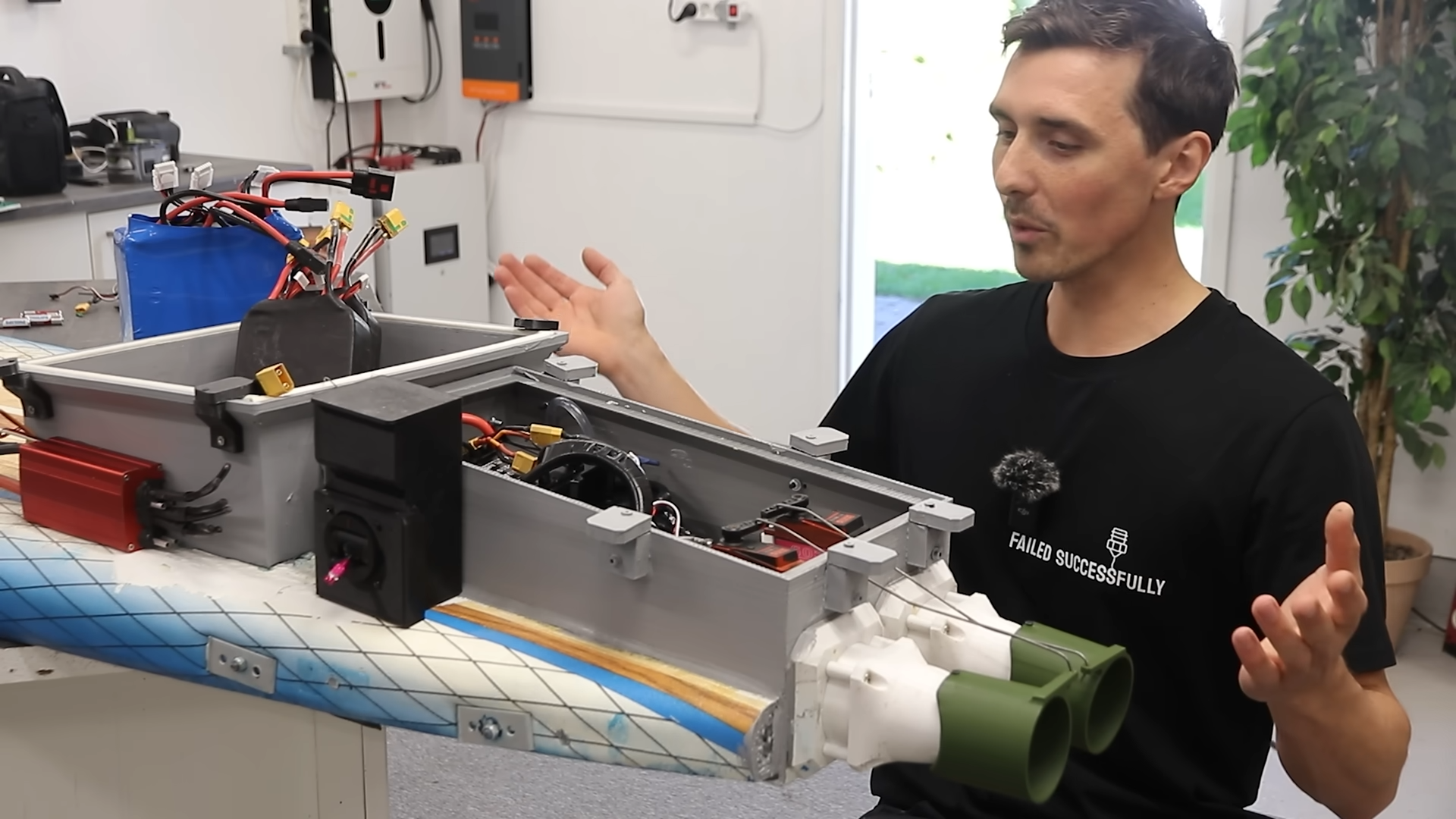
The internet has already taught us that an electric surfboard is a great way to get around on the water while looking like an absolute badass. [RCLifeOn] is continuing to push the boat forward in this regard, however, adding thrust vectoring technology to his already-impressive build.
If you’re unfamiliar with the world of electric surfboards, the concept is relatively simple. Stick one or more electric ducted fan thrusters on the back, add some speed controllers, and power everything from a chunky bank of lithium-ion batteries. Throw in a wireless hand controller, and you’ve got one heck of a personal watercraft.
Traditionally, these craft are steered simply by leaning and twisting as a surfer would with a traditional board. However, more dynamic control is possible if you add a way to aim the thrust coming from the propulsion system. [RCLifeOn] achieved this by adding steerable nozzles behind the ducted fan thrusters, controlled with big hobby servos to handle the forces involved. The result is a more controllable electric surfboard that can seriously carve through the turns. Plus, it’s now effectively an RC boat all on its own, as it no longer needs a rider on board to steer.
@Giornalismo e disordine informativo articolo21.org/2025/10/e-il-3-… Dopo l’abbordaggio da parte delle navi israeliane, le principali sigle sindacali hanno indetto la manifestazione generale per il 3 ottobre. L’Italia scende in piazza. “L’aggressione contro navi civili che trasportano cittadine e cittadini italiani, rappresenta un fatto di
@Giornalismo e disordine informativo articolo21.org/2025/10/a-gubbi… Più di 250 giornalisti uccisi in due anni, in media 11 al mese. Mai così tanti, in nessun altro conflitto. A cui si aggiunge il divieto d’ingresso per la stampa internazionale. Quello che sta succedendo a Gaza viene raccontato, tra mille rischi
@Giornalismo e disordine informativo articolo21.org/2025/10/israele… Le immagini delle telecamere, che in contemporanea trasmettono un video delle dirette della navigazione, cominciano a spegnersi con le prime manovre di abbordaggio dei soldati: in meno di un’ora le connessioni cadono man mano, formando sul display una
@Informatica (Italy e non Italy 😁) Phantom Taurus. Questo gruppo APT, legato alla Repubblica Popolare Cinese, è emerso dopo oltre due anni di monitoraggio da parte dei ricercatori di Unit 42 di Palo Alto Networks. Le sue operazioni di spionaggio, concentrate su enti governativi e di telecomunicazioni in Africa, Medio Oriente e Asia, rivelano un livello di
comunque, poiché l'italia non conta una cippa sullo scenario internazionale, le attività di protesta che danneggiano l'italia e non direttamente israele non hanno alcun senso. masochismo puro. ma davvero gli sciperi in italia dovrebbero spaventare israele? sembra la frase di daitarn 3: "se se non temi questa potenza combatti" con israele che se la ride...
secondo alcuni sono un messaggio alla meloni... ma poiché appunto meloni e l'italia non contano niente, pure quello che farebbe la meloni alla fine è irrilevante, anche se a noi può ferire. bisognerebbe essere concreti e mirare ai risultati o ciò che incide sui problemi. alla fine non ci interessa dei problemi ma solo del nostro orgoglio. servirebbe magari, quello si non vendere armi a israele... ma pure con questo rimaniamo il niente.
puoi anche non contar nulla nel mondo ma ciò non toglie che puoi comportati bene. Certo non cambierà il destino del mondo ma almeno non sarai complice del fatto che va male.
@IlarioQ comportarsi bene significherebbe essere buoni cittadini. e gli italiani non lo sono anche se fanno manifestazioni pro palestina. basta vedere come si comporta la gente per la strada. oppure quello che trovi nei contenitori della "differenziata". o beh puoi valutare in molti altri modi. almeno io non definirei gli italiani brave persone in generale con o senza manifestazioni per la palestina. tanto per cominciare per aver eletto la meloni o aver definito trump un buon presidente. e 1 anno fa ce ne erano di sostenitori di trump... adesso spariti. o conte e i vari pro putin... idea personale naturalmente. oppure la cultura complessivamente maschilista... il se l'è cercata quando una donna viene violentata... ecc ecc ecc se vuoi essere anti palestina gli scioperi li fai in israele... in italia hanno poco senso. e comunque la meloni se ne fotte. io ho una pessima idea degli italiani e poco cambia con queste manifestazioni, che oltretutto non sono state fatte per l'ucraina (nonostante il sostegno scarso e puramente simbolico della meloni all'ucraina). ognuno ha la sua idea. mi spiace.
@francina1909 le attività di protesta invece sono fondamentali per far capire a un governo che sostiene di "essere sovrano" e "rappresentare la gente", che la presa per i fondelli è finita. Si tratta di un governo servo di Israele che si comporta in modo criminale e complice di genocidio e la gente non vuole essere accomunata a questo governo. Quindi pagherà le conseguenze della propria condotta in termini di produttività
@versodiverso anch'io ho esattamente la stessa brutta sensazione. Quella che abbiamo ora è, sia all'opposizione sia al governo, una classe politica da stoccare nell'area di sicurezza dedicata ai rifiuti speciali...
@versodiverso @francina1909 @informapirata s dobbiamo fantasticare, forse la situazione più "divertente" sarebbe con un M. Renzi di nuovo in carica, a gestire il proprio conflitto di interessi...
il fatto è che.. non è vero. L'Italia è un membro UE, meno importante della Germania e in parte della Francia ma ha il suo peso specifico non piccolo e col potere di votare a favore di sanzioni verso Israele. E il fatto che abbia mandato due fregate in acque internazionali -impedendo così l'arrivo di misteriosi droni che attaccano nottetempo-e poi si sia espressa a favore di alcune sanzioni (limitate, per carità) non è una gentile concessione della Meloni ma il risultato di una mobilitazione che -pur fra mille difficoltà ed errori- ha portato la Flotilla e quello succede a Gaza al centro del dibattito politico. Non ci fossero state le mobilitazioni sta sicura che avrebbero continuato a fare finta di nulla
Troppo poco? Sicuro, soprattutto davanti a ciò che stiamo vedendo.
@simona L'Italia conta poco o niente perchè a Palazzo Chigi abbiamo la zerbina Meloni, che se non si accoda ad un miliardario è persa, prima Berlusconi, poi Musk e adesso Trump. Senza omo col conto in banca non ci sa stare, alla faccia del femminismo, più patriarcale di lei in Italia ce ne sono poche. Restiamo comunque uno dei maggiori paesi UE e uno dei più strategici della NATO a causa della sua posizione e anche perchè gli USA ci hanno piazzato qui le loro bombette atomiche. Potremmo contare di più se avessimo una premier in stile Merkel, invece ce ne troviamo una più in stile Ruby. Dobbiamo aspettare che passi sperando che passi in fretta e le manifestazioni possono servire anche a questo, ad indebolire il governo.
@Ulisse guarda... non sia quanto penso tu abbia ragione. un'italia governata da qualcuno rispettato a livello internazionale e credibile avrebbe un peso, seppur non militare... quello ce lo dobbiamo inevitabilmente scordare. e quindi si... per come la vedo io hai pienamente ragione.
@simona non sottovalutarci, secondo gli esperti militari abbiamo un esercito che è fra i dieci migliori al mondo. I problemi in Italia sono due, la catena di comando, di solito clientelare e non di merito e la difesa contraerea e missilistica per la quale siamo molto indietro.
@Ulisse la guerra in ucraina chi ha insegnato che essere aggiornati è tutto. ad esempio non essere preparati ad abbattere migliaia di droni in arrivo dalla russia è un problema. specie adesso che la russia usa sopratutto droni. abbiamo pochi costosissimi caccia, ma servirebbero milioni di economici e più stupidi droni. la difesa comporta anche l'uso delle armi giuste nel contesto operativo specifico. senza questo avere un buon esercito è si utile, ma comunque problematico. e lo dico perché non voglio denigrare l'italia e la sua forza armata. ma serve importante potenziamento in specifici settori. altrimenti l'esercito avrà ben poco da difendere dopo un primo massiccio attacco. e la pericolosità sta nel fatto che la russia sa che siamo vulnerabili. non dimentichiamo che in ucraina, la russia, per quanto perdente, ha acquisito anche nuove strategie. possibile che tutti questi droni a giro per gli aereoporti non sia stato possibile abbatterli all'ìistante? chiediamo aiuto all'ucraina se serve... loro sanno come fare. un drone che si trova dove non può stare si abbatte. punto. e spendendo poco.
una cosa è certa... è ovvio che pur senza speranza io spero che funzioni. ma sono pessimista. e gli italiani in generale sanno applicare strategie che mai funzionano davvero. fare pressione sul governo mettendo in ginocchio l'italia poi a me continua a pare un controsenso. a occhio credo occorra trovare un altro sistema.
@versodiverso @francina1909 @informapirata sei stato perfetto, se domani mattina ogni parlamentare scegliesse il partito tirando un dado, non ce ne accorgemmo, poiche' non cambierebbe nulla, e' il gioco delle parti che non ha una fine. Evidentemente nelle Marche lo hanno capito in tanti.
The main use of Sora appears to generate brainrot of major beloved copyrighted characters, to say nothing of the millions of articles, images, and videos OpenAI has scraped.#OpenAI #Sora2 #Sora
È stato scoperto un nuovo toolkit di phishing, MatrixPDF, che consente agli aggressori di trasformare normali file PDF in esche interattive che aggirano la sicurezza della posta elettronica e reindirizzano le vittime a siti Web che rubano credenziali o scaricano malware. I ricercatori di Varonis, che hanno scoperto lo strumento, sottolineano che MatrixPDF viene pubblicizzato come un simulatore di phishing e una soluzione per specialisti di black team. Tuttavia, sottolineano che è stato individuato per la prima volta su forum di hacker.
“MatrixPDF: è uno strumento avanzato per la creazione di PDF di phishing realistici, progettato per i team di black team e per la formazione sulla sicurezza informatica”, si legge nell’annuncio. “Con l’importazione di PDF tramite trascinamento della selezione, l’anteprima in tempo reale e le sovrapposizioni personalizzabili, MatrixPDF consente di creare scenari di phishing di livello professionale. Funzionalità di sicurezza integrate come la sfocatura dei contenuti, i reindirizzamenti sicuri, la crittografia dei metadati e il bypass di Gmail garantiscono affidabilità e distribuzione in ambienti di test.” Il toolkit è disponibile con diversi piani tariffari, che vanno da $ 400 al mese a $ 1.500 all’anno.
I ricercatori spiegano che il builder MatrixPDF consente agli aggressori di caricare un file PDF legittimo e poi di aggiungervi funzionalità dannose, come l’offuscamento del contenuto, falsi prompt “Documento protetto” e sovrapposizioni cliccabili che puntano a un URL esterno con il payload.
Inoltre, MatrixPDF consente azioni JavaScript, che vengono attivate quando un utente apre un documento o clicca su un pulsante. In questo caso, il codice JavaScript tenta di aprire un sito web o di eseguire altre azioni dannose.
La funzione di sfocatura crea file PDF il cui contenuto appare protetto, sfocato e contiene un pulsante “Apri documento protetto“. Cliccando su questo pulsante si apre un sito web che può essere utilizzato per rubare credenziali o distribuire malware.
Un test condotto da specialisti ha dimostrato che i PDF dannosi creati utilizzando MatrixPDF possono essere inviati a una casella di posta Gmail e che l’email riesce a bypassare i filtri anti-phishing. Questo perché questi file non contengono file binari dannosi, ma solo link esterni.
Un altro test condotto dai ricercatori dimostra come la semplice apertura di un PDF dannoso provochi l’apertura di un sito web esterno. Questa funzionalità è più limitata, poiché i moderni visualizzatori di PDF avvisano l’utente che il file sta tentando di connettersi a un sito remoto.
Gli esperti di Varonis ci ricordano che i file PDF restano uno strumento popolare per gli attacchi di phishing perché sono ampiamente distribuiti e le piattaforme di posta elettronica possono visualizzarli senza preavviso.
Theoretically USB-C is a pretty nifty connector, but the reality is that it mostly provides many exciting new ways to make your device not work as expected. With the gory details covered by [Alvaro], the latest to join the party is Segger, with its J-Link BASE Compact MCU debugger displaying the same behavior which we saw back when the Raspberry Pi 4 was released in 2019. Back then so-called e-marked USB-C cables failed to power the SBC, much like how this particular J-Link unit refuses to power up when connected using one of those special USB-C cables.
We covered the issue in great detail back then, discussing how the CC1 and CC1 connections need to be wired up correctly with appropriate resistors in order for the USB-C supply – like a host PC – to provide power to the device. As [Alvaro] discovered through some investigation, this unit made basically the same mistake as the RPi 4B SBC before the corrected design. This involves wiring CC1 and CC2 together and as a result seeing the same <1 kOhm resistance on the active CC line, meaning that to the host device you just hooked up a USB-C audio dongle, which obviously shouldn’t be supplied with power.
Although it’s not easy to tell when this particular J-Link device was produced, the PCB notes its revision as v12.1, so presumably it’s not the first rodeo for this general design, and the product page already shows a different label than for the device that [Alvaro] has. It’s possible that it originally was sloppily converted from a previous micro-USB-powered design where CC lines do not exist and things Just Work, but it’s still a pretty major oversight from what should be a reputable brand selling a device that costs €400 + VAT, rather than a reputable brand selling a <$100 SBC.
For any in the audience who have one of these USB-C-powered debuggers, does yours work with e-marked cables, and what is the revision and/or purchase date?
La chiusura parziale di uffici e servizi pubblici a causa della mancata approvazione del bilancio federale non è un evento inedito negli Stati Uniti e lo “shutdown”, o la minaccia di esso, viene spesso utilizzato come uno strumento di pressione polit…
“LA PENSIONE NON È DOVUTA” La Fornero torna a fare terrorismo pontificando sulla Finanziaria: «Punirà i giovani». Parola di chi ha fabbricato migliaia di esodati. Da 14 anni insiste, cioè da quando tentò di distruggere quel che restava di un Paese massacrato dallo spread e in pieno tsunami da crisi dei debiti sovrani. Non ci riuscì. Ma da allora è un continuo rimodellare la realtà, vantare operazioni pseudo-strategiche, ergersi a salvatrice della patria.
Anche stavolta Fornero vede grigio e lancia un siluro dal titolo: «Legge di bilancio, il solito mercato che alla fine punisce i giovani». L’ex ministro del Lavoro, impegnata vita natural durante a giustificare la sua sanguinosa riforma, sostiene che sarebbe sbagliato proporre «provvedimenti che ripropongono per l’ennesima volta la falsa illusione dell’anticipo del pensionamento per fare posto ai giovani o il falso mito del diritto acquisito».
E per chiudere dichiara: «Mostrateci, governo e opposizione, quello sguardo lungo e inclusivo che per molto tempo è mancato alla politica italiana». Sorvolando sullo sguardo inclusivo (poiché il suo includeva i sottopassi delle stazioni come abitazioni per i 170.000 esodati fabbricati a mano),fa specie che la ex docente universitaria torinese continui a definire un diritto acquisito, praticamente una grazia del sovrano che getta dobloni dalla finestra ai villani, quello che secondo la Costituzione è uno dei patti sociali più inscalfibili in una democrazia; un contratto fra Stato e cittadini, i quali ne rivendicano il rispetto e l’applicazione nel momento in cui maturano requisiti anagrafici e contributivi di legge.
Fornero riesce a concretizzare due paradossi: definisce regalìa una prerogativa di legge, ancor più dopo l’applicazione in toto del sistema contributivo. E trasforma un dovere costituzionale (quello dell’erogazione della pensione ai lavoratori) in un principio contabile, scambiando allegramente lo Stato per una Spa.
È lo stesso errore che si commette sulla Sanità quando si evoca il pareggio di bilancio, ritenendo erroneamente che debba essere un investimento a scopo di lucro e non un servizio indispensabile da eseguire anche in perdita.
Una delle navi della Global Sumud Flotilla, la Alma, è stata abbordata dalle navi dell’IDF.
Al momento le navi si trovano nella zona definita ad alto rischio, a 10 miglia nautiche dalla costa di Gaza. Nelle scorse ore una ventina di navi non identificate erano state captate dai radar della Flottilla, dando il via allo stato di allarme.
People Are Farming and Selling Sora 2 Invite Codes on eBay
People are farming and selling invite codes for Sora 2 on eBay, which is currently the fastest and most reliable way to get onto OpenAI’s new video generation and TikTok-clone-but-make-it-AI-slop app. Because of the way Sora is set up, it is possible to buy one code, register an account, then get more codes with the new account and repeat the process.
On eBay, there are about 20 active listings for Sora 2 invite codes and 30 completed listings in which invite codes have sold. I bought a code from a seller for $12, and received a working code a few minutes later. The moment I activated my account, I was given four new codes for Sora 2. When I went into the histories of some of the sellers, many of them had sold a handful of codes previously, suggesting they were able to get their hands on more than four invites. It’s possible to do this just by cycling through accounts; each invite code is good for four invites, so it is possible to use one invite code for a new account for yourself, sell three of them, and repeat the process.
There are also dozens of people claiming to be selling or giving away codes on Reddit and X; some are asking for money via Cash App or Venmo, while others are asking for crypto. One guy has even created a website in which he has generated all 2.1 billion six-digit hexadecimal combinations to allow people to randomly guess / brute force the app (the site is a joke).
The fact that the invite codes are being sold across the internet is an indication that OpenAI has been able to capture some initial hype with the release of the app (which we’ll have much more to say about soon), but does not necessarily mean that it’s going to be some huge success or have sustained attention. Code and app invite sales are very common on eBay, even for apps and concert tickets (or game consoles, or other items) that eventually aren’t very popular or are mostly just a flash in the pan. But much of my timeline today is talking about Sora 2, which suggests that we may be crossing some sort of AI slop creation rubicon.
This week Jonathan talks with Brandon and TC about Veilid, the peer-to-peer networking framework that takes inspiration from Tor, and VeilidChat, the encrypted messenger built on top of it. What was the inspiration? How does it work, and what can you do with it? Listen to find out!
Did you know you can watch the live recording of the show right on our YouTube Channel? Have someone you’d like us to interview? Let us know, or contact the guest and have them contact us! Take a look at the schedule here.
Kodak announced two new types of film that it will sell directly to photography stores, sidestepping a bizarre distribution agreement that has been in place since its bankruptcy.#Photography #FilmCameras #film
These days, we take it for granted that you can connect a cheap piece of hardware to a microcontroller and have an amazing debugging experience. Stop the program. Examine memory and registers. You can see and usually change anything. There are only a handful of ways this is done on modern CPUs, and they all vary only by detail. But this wasn’t always the case. Getting that kind of view to an actual running system was an expensive proposition.
Today, you typically have some serial interface, often JTAG, and enough hardware in the IC to communicate with a host computer to reveal and change internal state, set breakpoints, and the rest. But that wasn’t always easy. In the bad old days, transistors were large and die were small. You couldn’t afford to add little debugging pins to each processor you produced.
This led to some very interesting workarounds. Of course, you could always run simulators on a larger computer. But that might not work in real time, and almost certainly didn’t have all the external things you wanted to connect to, unless you also simulated them.
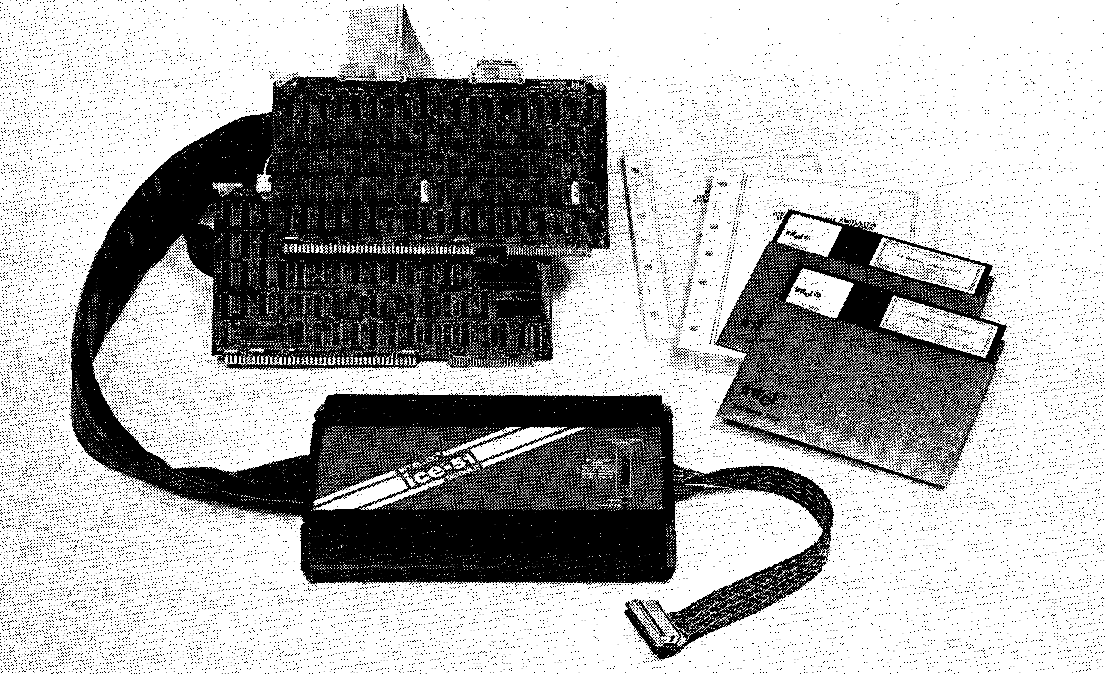
The alternative? Create a special chip, often called a bond-out chip. These were usually expensive and had some way to communicate with the outside world. This might be a couple of pins, or there might be a bundle of wires coming out of the top of the chip. You replaced your microprocessor with the expensive bond-out chip and connected it to your very expensive in-circuit emulator. If you have a better scan of the ICE-51 datasheet, we’d love to see it. For example, the venerable 8051 had an 8051E chip that brought out the address and data bus lines for debugging. In fact, the history of the 8051 notes that they developed the bond-out chip first. The chip was bigger and sold in lower volumes, so it was more expensive. It needed not just connections but breakpoint hardware to stop the CPU at exactly the right time for debugging.
In some cases, the emulator probe was a board that sat between a stock CPU and the CPU socket. Of course, that meant you had to have room to accommodate the large board. Of course, it also assumes that at least your development board had a socket, although in those days it was rare to have an expensive CPU soldered right down to the board. Another poor scan, this time of the Lauterbach emulator probe for the 68000. For example, the Lauterbach ICE-68300 here could take a bond-out chip or a regular chip, although it would be missing features if you didn’t have the special chip.
Of course, you can still find them in circuit emulators, but the difference is that they almost certainly have supporting hardware on the standard chip and simply use a serial communication protocol to talk to the on-chip hardware.
Of course, if you want an emulator for an old CPU, you have enough horsepower now that you can probably emulate it like with a modern processor, like the IZE80 does in the video below. Then you can incorporate all kinds of magical debugging features. But be careful what you take on. To properly mimic the hardware means tight timing for things like DRAM refresh and a complete understanding of all the bus timings involved.
But it can be done. In any event, on chip debugging or real in-circuit emulation, it sure makes life easier.
Both organizations are seeking a copy of a data sharing agreement that is giving the personal data of nearly 80 million Medicaid patients to ICE.#Announcements
404 Media and Freedom of the Press Foundation Sue DHS
Last week Freedom of the Press Foundation and 404 Media filed a lawsuit against the multiple parts of the U.S. government demanding they hand over a copy of an agreement that shares the personal data of nearly 80 million Medicaid patients with ICE. The data sharing marked a watershed moment for ICE and its access to highly sensitive data that is ordinarily siloed off from the agency. We believe it’s important for the public to see this unprecedented data sharing agreement for themselves.
As the Associated Press wrote when it first reported on the data sharing agreement between the Department of Homeland Security (DHS) and the Centers for Medicare and Medicaid Services (CMS), the agreement will give ICE the ability to find “the location of aliens.” The data shared includes home addresses and ethnicities, according to the Associated Press.
💡 Do you know anything else about this data sharing agreement? I would love to hear from you. Using a non-work device, you can message me securely on Signal at joseph.404 or send me an email at joseph@404media.co.
Both Freedom of the Press Foundation and 404 Media filed similar Freedom of Information Act (FOIA) requests with DHS and CMS seeking a copy of the agreement. Neither agency provided the requested records in time, so we have now filed the lawsuit. In 404 Media’s case, CMS acknowledged the request but has not provided the records, and DHS did not even acknowledge the request at all.
404 Media’s request asked for a copy of the specific agreement, and if the agencies were unable to locate it, to alternatively provide copies of all agreements between DHS and CMS from this year.
“Despite having received the FOIA requests, and despite their obligations under the law, Defendants have failed to notify Plaintiffs of the scope of documents that they will produce or the scope of documents that they plan to withhold in response to the FOIA requests,” the lawsuit reads. playlist.megaphone.fm?p=TBIEA2… Freedom of the Press Foundation is a non-profit organization that monitors press freedom issues in the U.S. and trains journalists on how to keep themselves and their sources safe. It regularly sues the U.S. government for access to records.
The data sharing agreement is just one of a growing list of ways that ICE is sourcing highly sensitive, and sometimes legally protected, information as part of the Trump administration’s mass deportation effort. ProPublica reported on the vast system the IRS is building to share millions of taxpayers’ data with ICE. 404 Media previously reported ICE has gained access to ISO Claimsearch, a massive insurance and medical bill database to find deportation targets. The database is nearly all encompassing and contains details on more than 1.8 billion insurance claims and 58 million medical bills.
Separately, 404 Media filed a lawsuit against ICE in September for access to the agency’s $2 million spyware contract.
[Mukesh Sankhla] has been tinkering in the world of Point of Sale systems of late. His latest creation is a simple, straightforward kiosk system, and he’s open sourced the design.
The Latte Panda MU single-board computer is at the heart of the build, handling primary duties and communicating with the outside world. It’s hooked up to a touchscreen display which shows the various items available for purchase. As an x86 system, the Latte Panda runs Windows 11, along with a simple kiosk software package written in Python. The software uses Google Firebase as a database backend. There’s also an Xiao ESP32 S3 microcontroller in the mix, serving as an interface between the Latte Panda and the thermal printer which is charged with printing receipts.
It’s worth noting that this is just a point-of-sale system; it executes orders, but doesn’t directly deliver or vend anything. With that said, since it’s all open-source, there’s nothing stopping you from upgrading this project further.
#NextGenAI, a Napoli da mercoledì 8 a lunedì 13 ottobre! Per il primo summit internazionale sull’Intelligenza Artificiale nella #scuola, promosso dal #MIM nell’ambito del Campus itinerante #ScuolaFutura, sono previste le delegazioni di istituzioni sc…
#NextGenAI, a Napoli da mercoledì 8 a lunedì 13 ottobre!
Per il primo summit internazionale sull’Intelligenza Artificiale nella #scuola, promosso dal #MIM nell’ambito del Campus itinerante #ScuolaFutura, sono previste le delegazioni di istituzioni sc…






simona
in reply to simona • •IlarioQ
in reply to simona • • •Rapita dagli alieni reshared this.
simona
in reply to IlarioQ • •IlarioQ
in reply to simona • • •simona likes this.
informapirata ⁂
Unknown parent • • •ricci reshared this.
informapirata ⁂
Unknown parent • • •informapirata ⁂
Unknown parent • • •@RFancio già 🤣
@francina1909 @simona
informapirata ⁂
Unknown parent • • •@versodiverso anch'io ho esattamente la stessa brutta sensazione. Quella che abbiamo ora è, sia all'opposizione sia al governo, una classe politica da stoccare nell'area di sicurezza dedicata ai rifiuti speciali...
@francina1909 @simona
Generale Specifico
Unknown parent • • •Unknow
in reply to simona • • •il fatto è che.. non è vero. L'Italia è un membro UE, meno importante della Germania e in parte della Francia ma ha il suo peso specifico non piccolo e col potere di votare a favore di sanzioni verso Israele. E il fatto che abbia mandato due fregate in acque internazionali -impedendo così l'arrivo di misteriosi droni che attaccano nottetempo-e poi si sia espressa a favore di alcune sanzioni (limitate, per carità) non è una gentile concessione della Meloni ma il risultato di una mobilitazione che -pur fra mille difficoltà ed errori- ha portato la Flotilla e quello succede a Gaza al centro del dibattito politico. Non ci fossero state le mobilitazioni sta sicura che avrebbero continuato a fare finta di nulla
Troppo poco? Sicuro, soprattutto davanti a ciò che stiamo vedendo.
È servito? Certo che sì.
Rapita dagli alieni reshared this.
simona
in reply to Unknow • •Ulisse
in reply to simona • •simona likes this.
simona
in reply to Ulisse • — (Livorno) •Ulisse
in reply to simona • •simona
in reply to Ulisse • — (Livorno) •Ulisse likes this.
simona
in reply to simona • •Deepthroat
Unknown parent • • •