The media in this post is not displayed to visitors. To view it, please log in.

ShinyHunters colpisce Rockstar Games attraverso Anodot: la campagna Salesforce-Snowflake mette a rischio 400 aziende


@Informatica (Italy e non Italy)
ShinyHunters ha violato l'infrastruttura Snowflake di Rockstar Games sfruttando Anodot, un fornitore SaaS terzo di monitoraggio cloud, per sottrarre token di autenticazione. La


ShinyHunters colpisce Rockstar Games attraverso Anodot: la campagna Salesforce-Snowflake mette a rischio 400 aziende


Non è stato bucato Rockstar Games. Non è stato bucato Snowflake. È stato compromesso il fornitore SaaS che monitorava i costi cloud di Rockstar, e attraverso di lui gli attaccanti sono entrati nell’ambiente Snowflake del produttore di GTA come se fossero un servizio interno legittimo. L’11 aprile 2026, ShinyHunters ha pubblicato sul proprio dark web leak site la rivendicazione dell’attacco, fissando al 14 aprile la scadenza per il pagamento o la pubblicazione dei dati. Ma la storia di Rockstar è solo la punta dell’iceberg: il gruppo rivendica l’accesso ai dati di oltre 400 organizzazioni collegate a integrazioni Salesforce, in quella che si configura come una delle campagne di esfiltrazione dati più sistematiche del 2026.

Il vettore: Anodot come cavallo di Troia


Il punto di ingresso non è stato né Rockstar Games né Snowflake direttamente, ma Anodot, una piattaforma SaaS specializzata nel monitoraggio dei costi cloud e nell’anomaly detection per infrastrutture enterprise. Rockstar utilizza Anodot per la governance dei costi sulla propria infrastruttura cloud, e questo ha creato una superficie di attacco inaspettata: ShinyHunters ha compromesso l’infrastruttura di Anodot, estratto i token di autenticazione Snowflake presenti nei dati di configurazione del cliente, e li ha utilizzati per accedere all’ambiente Snowflake di Rockstar con credenziali del tutto legittime agli occhi dei sistemi di controllo.

Il meccanismo è elegante nella sua semplicità: un tool di monitoraggio dei costi cloud deve per definizione avere accesso in lettura alle metriche e ai dati dell’infrastruttura monitorata. Quei token di accesso — validi, non scaduti e provenienti da un IP “conosciuto” — sono diventati le chiavi del regno. I team di sicurezza di Rockstar, abituati a vedere traffico normalizzato da Anodot, non hanno rilevato anomalie per un periodo significativo. Quando l’esfiltrazione è stata individuata, ShinyHunters aveva già portato a termine l’operazione.

I dati in gioco: da GTA Online ai contratti riservati


La portata potenziale dell’esfiltrazione da Rockstar è notevole. I database Snowflake di una società come Rockstar Games contengono strati di dati estremamente sensibili: record finanziari di GTA Online e Red Dead Online, incluse le microtransazioni di decine di milioni di giocatori globali; dati di profilazione geografica e di spesa degli utenti; timeline di marketing interno con dettagli su lanci di prodotto futuri — GTA 6 su tutti — e, potenzialmente, contratti con Sony, Microsoft, doppiatori e label musicali. Se questi ultimi materiali fossero pubblicati, le implicazioni andrebbero ben oltre una multa GDPR: negoziazioni attive su IP, compensi e accordi esclusivi potrebbero essere compromesse.

Rockstar Games ha confermato l’incidente in una dichiarazione breve e misurata, affermando che l’attacco “non ha alcun impatto sulla nostra organizzazione o sui nostri giocatori”. Una posizione che i ricercatori di sicurezza hanno accolto con cauto scetticismo: le conseguenze di una breach su dati di questa natura raramente sono immediate o visibili, e tendono a manifestarsi nei mesi successivi sotto forma di leak mirati, manipolazioni di mercato o negoziazioni pilotate da materiale riservato.

La campagna allargata: 400+ organizzazioni nell’ecosistema Salesforce


Il caso Rockstar non è isolato ma fa parte di una campagna sistematica. ShinyHunters rivendica l’accesso ai dati di oltre 400 organizzazioni legate a integrazioni Salesforce, in quella che appare come un’operazione metodica contro l’ecosistema di fornitori SaaS interconnessi che gestiscono dati enterprise critici. Tra i nomi emersi figurano Cisco, la telco canadese Telus, l’operatore olandese Odido, e — in modo ancora non verificato indipendentemente — riferimenti a dati della Commissione Europea.

Due casi documentati nei giorni precedenti all’annuncio su Rockstar illustrano la dimensione operativa: Marcus & Millichap, società immobiliare statunitense quotata in borsa, ha visto rivendicata l’esfiltrazione di oltre 30 milioni di record Salesforce contenenti dati personali (PII); Abrigo, fornitore di software per il settore bancario, conta 1,7 milioni di record Salesforce potenzialmente compromessi. Entrambe le rivendicazioni portano la stessa firma e la stessa scadenza del 14 aprile 2026. La serialità dell’operazione suggerisce un accesso strutturale all’ecosistema Salesforce, probabilmente attraverso uno o più fornitori di integrazione condivisi.

ShinyHunters: anatomia di un’operazione di estorsione seriale


ShinyHunters non è un gruppo improvvisato. Attivo almeno dal 2020, il collettivo ha costruito un curriculum di breach di alto profilo che include la violazione di Ticketmaster (560 milioni di record nel 2024), Santander Bank, AT&T e decine di altre organizzazioni. Il modello operativo è consolidato e ripetibile: compromissione silenziosa dell’infrastruttura target o di un suo fornitore, esfiltrazione dei dati, pubblicazione della rivendicazione su dark web leak site con scadenza ravvicinata pensata per massimizzare la pressione psicologica sul management della vittima.

La scelta di attaccare la filiera dei fornitori SaaS — piuttosto che i target diretti — è una evoluzione tattica significativa e preoccupante. Strumenti come Anodot, che gestiscono token e credenziali di accesso ai dati cloud delle proprie aziende clienti, sono nodi ad altissimo valore nella catena di fornitura digitale. Un singolo breach di un fornitore SaaS condiviso può moltiplicare esponenzialmente il numero di vittime downstream, esattamente come accade negli attacchi alla supply chain software.

Raccomandazioni: gestire il rischio della fiducia transitiva


Il caso Rockstar-Anodot-Snowflake è un caso di studio esemplare sul concetto di fiducia transitiva non controllata. Quando si delega l’accesso ai propri dati a un fornitore terzo, si estende implicitamente la propria superficie di attacco all’intera catena di sicurezza di quel fornitore. Le misure difensive prioritarie includono: adozione di token di accesso a scope minimo e breve durata con rotazione automatica; IP allowlisting per le credenziali di accesso ai data warehouse; abilitazione obbligatoria di MFA anche per gli account di servizio Snowflake; monitoraggio del volume e dei pattern di query per identificare esfiltrazione massiva; e una procedura sistematica di vendor security assessment che includa evidenze SOC2 Type II e penetration test annuali prima di concedere accesso a dati sensibili.

La domanda che ogni CISO con integrazioni SaaS attive dovrebbe porsi oggi è semplice: sapete esattamente quali fornitori terzi hanno accesso — diretto o indiretto — ai vostri dati cloud? Avete verificato la loro postura di sicurezza di recente? E soprattutto: se uno di loro venisse compromesso domani, sareste in grado di revocare immediatamente l’accesso? La risposta a queste tre domande definisce la differenza tra una gestione proattiva del rischio di terze parti e la prossima vittima di ShinyHunters.


Green Powered Challenge: Solar Powered Pi Hosts Websites in RAM


The media in this post is not displayed to visitors. To view it, please log in.

If you started with computers early enough, you’ll remember the importance of the RAMdisk concept: without a hard drive and with floppies slow and swapping constantly, everything had to live in RAM. That’s not done much these days, but [Quackieduckie]’s solar powered Pi Zero W web server has gone back to it to save its SD card.

Sustainability and low power is the name of the game. Starting with a Pi Zero W means low power is the default; a an SLS-printed aluminum case that doubles as the heat sink– while looking quite snazzy–saves power that would otherwise be used for cooling. The STLs are available through the project page if you like the look and have a hankering for passively cooled Pi. Even under load [Quackieduckie] reports temperatures of just 29.9°C, less than a degree over idle.

The software stack is of course key to a server, and here he’s using Alpine Linux running in “diskless mode”– that’s the equivalent of what us oldsters would think of as the RAMdisk. That’s not that unusual for servers, but we don’t see it much on these pages. It’s a minimal setup to save processing, and thus electrical power, with only a handful of services kept running: lighttpd, a lightweight webserver, and duckiebox, a python-based file server, along with SSHD and dchron; together they consume 27 MB of RAM, leaving the rest of the 512 MB DDR2 the Pi comes with to quickly serve up websites without the overhead of SD card access.

As a webserver, [Quackieduckie] tested it with 50 simultaneous connections, which would be rather a lot for most small, personal web sites, and while it did slow down to an average 1.3s per response that’s perfectly usable and faster than we’d have expected from this hardware. While the actual power consumption figures aren’t given, we know from experience it’s not going to be drawing more than a watt or so. With a reasonably sized battery and solar cell– [Quackieduckie] suggests 20W–it should run until the cows come home.

This isn’t the first solar-powered web server we’ve seen, but this one was submitted for the 2026 Green Powered Challenge, which runs until April 24th.


hackaday.com/2026/04/12/green-…

Cybersecurity & cyberwarfare ha ricondiviso questo.

Hackers claim control over Venice San Marco anti-flood pumps
securityaffairs.com/190679/hac…
#securityaffairs #hacking #malware
Cybersecurity & cyberwarfare ha ricondiviso questo.

Hackers claim control over Venice San Marco anti-flood pumps
securityaffairs.com/190679/hac…
#securityaffairs #hacking #malware
Cybersecurity & cyberwarfare ha ricondiviso questo.

SECURITY AFFAIRS MALWARE #NEWSLETTER ROUND 92
securityaffairs.com/190672/mal…
#securityaffairs #hacking #malware
Cybersecurity & cyberwarfare ha ricondiviso questo.

The media in this post is not displayed to visitors. To view it, please go to the original post.

Non ci sono più le app di una volta, quelle che fanno esattamente quello che ti serve e non ti profilano*; per fare una cosa te ne servono tre. Tutte a pagamento, ovviamente.

Mi serviva un'app semplice che potesse essere un meal reminder per un certo periodo di tempo, qualcosa di semplice e pure di carino.
Ne ho provate cento e centomila: tra quelle che non ti fanno vedere come si comportano perché devi fare l'account, quelle che se non attivi il trial di 3 giorni ti tolgono il saluto, quelle che hanno la lista della spesa integrata (ottimo, ma non mi serve), quelle che ti suggeriscono le ricette (bene, ma se permetti faccio da sola), quelle che ti danno l'esatto ammontare dei nutrienti (sì, ho già LifeSum con i miei prodotti), quelle che ti dicono quanti carboidrati mangiari a seconda del ciclo lunare (ma che, davvero?) e tutta una pletora di altre applicazioni carine e coccolose.. delle quali non ho bisogno.

I meal reminder classici sono per bambini, con gli snackini fruttosi pre-impostati.
Eh, osteria... sono diabetica, anche no.
Usare le note? Ma poi mi perdo che ne ho centomila.
Le app per diabetici?
Ahahahhahaha, nemmeno lontanamente!

E quindi me la sono fatta.
Swift, Xcode e ho la mia app "JustBetter" sul telefono.
Semplice, fa e-sat-ta-men-te quello che voglio, non profila, non chiede soldi, non mi inonda di pubblicità, non traccia.
Non sarà da Apple Award (a me piace) ma fa il suo. Privata, niente store, reset ogni 14 giorni e nessuna integrazione - ancora non sono a quei livelli.

Appunto personale su confronto tra LifeSum (tracciamento a mano dei cibi, barcode, info nutrizionali) e CalAI (stima del pasto da analisi fotografica): CalAI va benissimo per piatti semplici o portata singola. Spaghetti al pomodoro, una cotoletta, un dolce, un frutto. Peggio con i piatti complessi, dove individua gli ingredienti secondo la più vicina probabilità.
Le fette biscottate vengono scambiate per fette di pane da toast, soprattutto se il piatto è piccolo (da dessert). La stima totale delle calorie è per eccesso, l'approssimazione è variabile. Vince a mani basse LifeSum, perché puoi tracciare esattamente, a mano, ogni cosa che mangi, sia scansionando i barcode (ahhhh questo lo dovete vedere: barkod.studio/) che aggiungendo le quantità dopo la ricerca.

*domani uscirà su GarantePiracy, un articolo a quattro mani a proposito di #WeWard - un deep dive tecnico sotto vari punti di vista, arricchito immensamente dalla visione total privacy oriented di Christian (al quale ho rovinato il weekend con questa storia, scusa!)

Making the Forgotten 1982 Game Adventure Canoe run on MAME


The media in this post is not displayed to visitors. To view it, please log in.


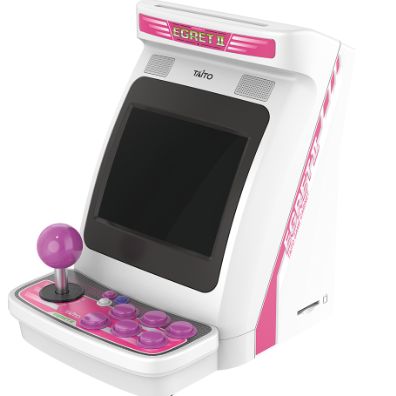
A Taito Egret II mini arcade cabinet.A Taito Egret II mini arcade cabinet.
A while back [Jack] came across a Taito arcade game that neither he nor any of his mates recognized. The game was Adventure Canoe and part of the collection of forty preinstalled games on a Taito Egret II mini arcade cabinet. Yet despite [Jack] and his buddies being avid 1980s arcade enthusiasts, this 1982 title for the Z80-based Taito SJ system was completely unfamiliar to them.

When even a web search turned up extremely few details, [Jack] did the only reasonable thing and borrowed the rather expensive mini arcade for hopefully some extracting of the game ROM.

As expensive as this mini arcade is, it features the typical ARM-based SoC and Linux-based firmware. Although you can totally dump the Flash, [Jack] found that the firmware update ZIP file was a much easier target to poke at and hopefully extract the ROMs from.

Of course, Taito used password-protected ZIP files within the firmware, leading to some reverse-engineering to find the passwords. The first was ‘hidden’ as plain text in the egret2 binary. For the remainder of the ZIP files the password wasn’t as readily found, but required some sleuthing. This took the form of dynamic runtime analysis with gdb, using information previously gleaned from a Ghidra analysis. Eventually this yielded the final passwords.

Extracting the game’s ROM files this way allowed for them to be adapted to the format that MAME expects, after which the game just had to be added to the emulator’s source files. With this done the game fired right up, and [Jack] was able to play the game without any trouble.


hackaday.com/2026/04/12/making…

The media in this post is not displayed to visitors. To view it, please log in.

UNC1069 trasforma Axios in un vettore di spionaggio: WAVESHAPER.V2 colpisce la supply chain npm


@Informatica (Italy e non Italy)
Il 31 marzo 2026, UNC1069 — il gruppo APT nordcoreano noto anche come Sapphire Sleet — ha compromesso l'account di un maintainer di Axios per distribuire il backdoor cross-platform WAVESHAPER.V2 tramite una falsa dipendenza


UNC1069 trasforma Axios in un vettore di spionaggio: WAVESHAPER.V2 colpisce la supply chain npm


Per tre ore e diciannove minuti, tra la mezzanotte e le 03:20 UTC del 31 marzo 2026, chi ha eseguito npm install axios ha involontariamente invitato un RAT nordcoreano nei propri sistemi. L’attacco alla supply chain del pacchetto Axios — 70 milioni di download settimanali, il client HTTP più usato dell’ecosistema JavaScript — porta la firma di UNC1069, un cluster APT legato alla Corea del Nord e motivato finanziariamente che da anni prende di mira sviluppatori e infrastrutture crypto. L’operazione dimostra ancora una volta che il vettore più efficace per infiltrarsi in ambienti protetti non è un exploit zero-day: è la fiducia umana.

L’ingegneria sociale che ha aperto la porta


Tutto comincia mesi prima della compromissione vera e propria. Gli operatori di UNC1069 si sono avvicinati a Jason Saayman, maintainer principale di Axios su npm, fingendosi il fondatore di una società legittima e ben nota nel settore tech. Non si sono limitati a creare un profilo falso: hanno clonato digitalmente l’identità della persona reale, creando una replica convincente sia del soggetto sia dell’azienda. “Hanno calibrato ogni dettaglio specificamente su di me”, ha scritto Saayman nel post-mortem dell’incidente.

Il contatto si è trasformato in una chiamata video su Microsoft Teams. Durante il meeting, gli attaccanti hanno simulato un problema audio e hanno convinto Saayman a installare un componente “mancante” per risolvere l’incompatibilità. Il file che il maintainer ha eseguito non era una patch per Teams: era WAVESHAPER.V2, il RAT cross-platform del gruppo. Da quel momento UNC1069 disponeva delle credenziali npm di Saayman e del controllo sul suo ambiente di sviluppo.

La catena di attacco: da npm al C2 in tre passi


Una volta ottenuto l’accesso all’account npm, gli attaccanti hanno pubblicato due release backdoorate: axios@1.14.1 e axios@0.30.4. Entrambe iniettavano una dipendenza malevola — plain-crypto-js@4.2.1 — che non esiste nel registro legittimo npm. Il pacchetto conteneva SILKBELL, un dropper offuscato che si attivava automaticamente tramite un hook postinstall nello script setup.js, senza alcuna interazione da parte dell’utente o dello sviluppatore.

SILKBELL stabiliva una connessione con l’infrastruttura C2 di UNC1069 e scaricava WAVESHAPER.V2, adattando il payload al sistema operativo rilevato. Il comportamento variava per piattaforma:

  • Windows: copia di powershell.exe in %PROGRAMDATA%\wt.exe, persistenza via chiave di registro HKCU\Software\Microsoft\Windows\CurrentVersion\Run con nome “MicrosoftUpdate” e batch nascosto system.bat.
  • macOS: binario Mach-O installato in /Library/Caches/com.apple.act.mond, eseguito tramite zsh.
  • Linux: backdoor Python scaricato in /tmp/ld.py ed eseguito con nohup.


WAVESHAPER.V2: capacità operative e firma anomala


La versione V2 del backdoor introduce comunicazione via JSON, raccolta estesa di informazioni di sistema e un set ampliato di comandi rispetto alla versione precedente documentata da Mandiant. Le principali funzionalità includono: peinject per l’iniezione in memoria di shellcode e PE, rundir per la ricognizione del filesystem con raccolta di metadati, esecuzione di script arbitrari e terminazione di processi. Il beaconing avviene via HTTP ogni 60 secondi verso la porta 8000 del server C2.

L’anomalia più curiosa — e paradossalmente più utile per i difensori — è la stringa User-Agent hardcodata in tutte e tre le varianti di piattaforma: mozilla/4.0 (compatible; msie 8.0; windows nt 5.1; trident/4.0). Un fingerprint da Internet Explorer 8 su Windows XP è immediatamente anomalo su qualsiasi macchina moderna, e ancor più su host macOS o Linux. Sebbene garantisca un routing coerente lato server C2, è un indicatore di compromissione banalmente rilevabile su qualunque proxy o SIEM moderno.

Attribuzione: UNC1069 e la rete finanziaria di Pyongyang


L’attribuzione a UNC1069 è stata effettuata in modo indipendente da Google Threat Intelligence Group (GTIG), Microsoft Threat Intelligence e Mandiant. Il cluster è tracciato sotto diversi alias: Sapphire Sleet, STARDUST CHOLLIMA, Alluring Pisces, BlueNoroff, CageyChameleon e CryptoCore. Attivo almeno dal 2018, UNC1069 è motivato finanziariamente e ha storicamente preso di mira istituzioni finanziarie, exchange di criptovalute e maintainer di pacchetti open source ad alta diffusione, nella logica di massimizzare il potenziale di accesso a valle.

Il collegamento tecnico più solido emerso dall’analisi è l’infrastruttura C2: il dominio sfrclak[.]com risolve sull’IP 142.11.206[.]73, e le connessioni da questo server sono state tracciate verso un nodo AstrillVPN precedentemente attribuito a UNC1069 in campagne separate. Il binario macOS presenta poi sovrapposizioni significative con WAVESHAPER nella versione originale documentata da Mandiant, rendendo la catena di attribuzione robusta e multi-vendor.

Impatto e analisi del blast radius


La finestra di esposizione — circa tre ore — ha limitato il numero diretto di compromissioni. eSentire ha identificato 19 organizzazioni clienti colpite, principalmente nel settore dello sviluppo software in Nord America ed EMEA. Tuttavia la nuova analisi pubblicata il 12 aprile 2026 sottolinea come il “blast radius” reale vada ben oltre queste cifre dirette: pipeline CI/CD, container Docker, ambienti serverless e toolchain di build che eseguono automaticamente npm ci potrebbero aver scaricato le versioni malevole senza che gli sviluppatori ne fossero consapevoli, specialmente in organizzazioni prive di monitoraggio sui log di installazione npm.

Indicatori di Compromissione (IoC)

# Pacchetti npm malevoli
axios@1.14.1
axios@0.30.4
plain-crypto-js@4.2.1

# Hash file
SILKBELL (setup.js): e10b1fa84f1d6481625f741b69892780140d4e0e7769e7491e5f4d894c2e0e09
Windows RAT:         617b67a8e1210e4fc87c92d1d1da45a2f311c08d26e89b12307cf583c900d101

# Infrastruttura C2
IP:       142.11.206[.]73
Domini:   sfrclak[.]com
          callnrwise[.]com
Endpoint: hxxp://sfrclak[.]com:8000/6202033
Porta:    8000 (beaconing HTTP, intervallo 60s)

# User-Agent anomalo (presente su Windows, macOS e Linux)
"mozilla/4.0 (compatible; msie 8.0; windows nt 5.1; trident/4.0)"

# Persistenza Windows
Chiave registro: HKCU\Software\Microsoft\Windows\CurrentVersion\Run -> "MicrosoftUpdate"
File: %PROGRAMDATA%\wt.exe (copia mascherata di powershell.exe)
File: system.bat (nascosto)

# Persistenza macOS
/Library/Caches/com.apple.act.mond

# Persistenza Linux
/tmp/ld.py (eseguito con nohup)

Raccomandazioni per i difensori


Chi ha eseguito npm install o npm ci il 31 marzo 2026 tra le 00:21 e le 03:20 UTC deve considerare i propri ambienti compromessi fino a prova contraria. Le azioni prioritarie: verificare i log di installazione npm per la presenza di axios@1.14.1, axios@0.30.4 o plain-crypto-js; controllare il traffico di rete in uscita verso 142.11.206.73 su porta 8000 con il caratteristico User-Agent IE8; cercare la chiave di registro “MicrosoftUpdate” nel percorso Run e il file wt.exe in %PROGRAMDATA% su sistemi Windows.

Sul piano preventivo, le pratiche raccomandate includono: pinning esplicito delle versioni nei file lock, disabilitazione degli aggiornamenti automatici delle dipendenze, implementazione di policy di “release cooldown” supportate dai principali package manager, monitoraggio continuo dell’esecuzione degli hook postinstall, e adozione di soluzioni di Software Composition Analysis (SCA) che alertino su nuove dipendenze transitive non attese. L’incidente Axios dimostra che anche i pacchetti più fidati e consolidati possono diventare vettori di attacco: la fiducia cieca nell’ecosistema open source è un lusso che le organizzazioni non possono più permettersi.


Cybersecurity & cyberwarfare ha ricondiviso questo.

The media in this post is not displayed to visitors. To view it, please go to the original post.

The media in this post is not displayed to visitors. To view it, please go to the original post.

UNC1069 trasforma Axios in un vettore di spionaggio: WAVESHAPER.V2 colpisce la supply chain npm
#CyberSecurity
insicurezzadigitale.com/unc106…


UNC1069 trasforma Axios in un vettore di spionaggio: WAVESHAPER.V2 colpisce la supply chain npm


Per tre ore e diciannove minuti, tra la mezzanotte e le 03:20 UTC del 31 marzo 2026, chi ha eseguito npm install axios ha involontariamente invitato un RAT nordcoreano nei propri sistemi. L’attacco alla supply chain del pacchetto Axios — 70 milioni di download settimanali, il client HTTP più usato dell’ecosistema JavaScript — porta la firma di UNC1069, un cluster APT legato alla Corea del Nord e motivato finanziariamente che da anni prende di mira sviluppatori e infrastrutture crypto. L’operazione dimostra ancora una volta che il vettore più efficace per infiltrarsi in ambienti protetti non è un exploit zero-day: è la fiducia umana.

L’ingegneria sociale che ha aperto la porta


Tutto comincia mesi prima della compromissione vera e propria. Gli operatori di UNC1069 si sono avvicinati a Jason Saayman, maintainer principale di Axios su npm, fingendosi il fondatore di una società legittima e ben nota nel settore tech. Non si sono limitati a creare un profilo falso: hanno clonato digitalmente l’identità della persona reale, creando una replica convincente sia del soggetto sia dell’azienda. “Hanno calibrato ogni dettaglio specificamente su di me”, ha scritto Saayman nel post-mortem dell’incidente.

Il contatto si è trasformato in una chiamata video su Microsoft Teams. Durante il meeting, gli attaccanti hanno simulato un problema audio e hanno convinto Saayman a installare un componente “mancante” per risolvere l’incompatibilità. Il file che il maintainer ha eseguito non era una patch per Teams: era WAVESHAPER.V2, il RAT cross-platform del gruppo. Da quel momento UNC1069 disponeva delle credenziali npm di Saayman e del controllo sul suo ambiente di sviluppo.

La catena di attacco: da npm al C2 in tre passi


Una volta ottenuto l’accesso all’account npm, gli attaccanti hanno pubblicato due release backdoorate: axios@1.14.1 e axios@0.30.4. Entrambe iniettavano una dipendenza malevola — plain-crypto-js@4.2.1 — che non esiste nel registro legittimo npm. Il pacchetto conteneva SILKBELL, un dropper offuscato che si attivava automaticamente tramite un hook postinstall nello script setup.js, senza alcuna interazione da parte dell’utente o dello sviluppatore.

SILKBELL stabiliva una connessione con l’infrastruttura C2 di UNC1069 e scaricava WAVESHAPER.V2, adattando il payload al sistema operativo rilevato. Il comportamento variava per piattaforma:

  • Windows: copia di powershell.exe in %PROGRAMDATA%\wt.exe, persistenza via chiave di registro HKCU\Software\Microsoft\Windows\CurrentVersion\Run con nome “MicrosoftUpdate” e batch nascosto system.bat.
  • macOS: binario Mach-O installato in /Library/Caches/com.apple.act.mond, eseguito tramite zsh.
  • Linux: backdoor Python scaricato in /tmp/ld.py ed eseguito con nohup.


WAVESHAPER.V2: capacità operative e firma anomala


La versione V2 del backdoor introduce comunicazione via JSON, raccolta estesa di informazioni di sistema e un set ampliato di comandi rispetto alla versione precedente documentata da Mandiant. Le principali funzionalità includono: peinject per l’iniezione in memoria di shellcode e PE, rundir per la ricognizione del filesystem con raccolta di metadati, esecuzione di script arbitrari e terminazione di processi. Il beaconing avviene via HTTP ogni 60 secondi verso la porta 8000 del server C2.

L’anomalia più curiosa — e paradossalmente più utile per i difensori — è la stringa User-Agent hardcodata in tutte e tre le varianti di piattaforma: mozilla/4.0 (compatible; msie 8.0; windows nt 5.1; trident/4.0). Un fingerprint da Internet Explorer 8 su Windows XP è immediatamente anomalo su qualsiasi macchina moderna, e ancor più su host macOS o Linux. Sebbene garantisca un routing coerente lato server C2, è un indicatore di compromissione banalmente rilevabile su qualunque proxy o SIEM moderno.

Attribuzione: UNC1069 e la rete finanziaria di Pyongyang


L’attribuzione a UNC1069 è stata effettuata in modo indipendente da Google Threat Intelligence Group (GTIG), Microsoft Threat Intelligence e Mandiant. Il cluster è tracciato sotto diversi alias: Sapphire Sleet, STARDUST CHOLLIMA, Alluring Pisces, BlueNoroff, CageyChameleon e CryptoCore. Attivo almeno dal 2018, UNC1069 è motivato finanziariamente e ha storicamente preso di mira istituzioni finanziarie, exchange di criptovalute e maintainer di pacchetti open source ad alta diffusione, nella logica di massimizzare il potenziale di accesso a valle.

Il collegamento tecnico più solido emerso dall’analisi è l’infrastruttura C2: il dominio sfrclak[.]com risolve sull’IP 142.11.206[.]73, e le connessioni da questo server sono state tracciate verso un nodo AstrillVPN precedentemente attribuito a UNC1069 in campagne separate. Il binario macOS presenta poi sovrapposizioni significative con WAVESHAPER nella versione originale documentata da Mandiant, rendendo la catena di attribuzione robusta e multi-vendor.

Impatto e analisi del blast radius


La finestra di esposizione — circa tre ore — ha limitato il numero diretto di compromissioni. eSentire ha identificato 19 organizzazioni clienti colpite, principalmente nel settore dello sviluppo software in Nord America ed EMEA. Tuttavia la nuova analisi pubblicata il 12 aprile 2026 sottolinea come il “blast radius” reale vada ben oltre queste cifre dirette: pipeline CI/CD, container Docker, ambienti serverless e toolchain di build che eseguono automaticamente npm ci potrebbero aver scaricato le versioni malevole senza che gli sviluppatori ne fossero consapevoli, specialmente in organizzazioni prive di monitoraggio sui log di installazione npm.

Indicatori di Compromissione (IoC)

# Pacchetti npm malevoli
axios@1.14.1
axios@0.30.4
plain-crypto-js@4.2.1

# Hash file
SILKBELL (setup.js): e10b1fa84f1d6481625f741b69892780140d4e0e7769e7491e5f4d894c2e0e09
Windows RAT:         617b67a8e1210e4fc87c92d1d1da45a2f311c08d26e89b12307cf583c900d101

# Infrastruttura C2
IP:       142.11.206[.]73
Domini:   sfrclak[.]com
          callnrwise[.]com
Endpoint: hxxp://sfrclak[.]com:8000/6202033
Porta:    8000 (beaconing HTTP, intervallo 60s)

# User-Agent anomalo (presente su Windows, macOS e Linux)
"mozilla/4.0 (compatible; msie 8.0; windows nt 5.1; trident/4.0)"

# Persistenza Windows
Chiave registro: HKCU\Software\Microsoft\Windows\CurrentVersion\Run -> "MicrosoftUpdate"
File: %PROGRAMDATA%\wt.exe (copia mascherata di powershell.exe)
File: system.bat (nascosto)

# Persistenza macOS
/Library/Caches/com.apple.act.mond

# Persistenza Linux
/tmp/ld.py (eseguito con nohup)

Raccomandazioni per i difensori


Chi ha eseguito npm install o npm ci il 31 marzo 2026 tra le 00:21 e le 03:20 UTC deve considerare i propri ambienti compromessi fino a prova contraria. Le azioni prioritarie: verificare i log di installazione npm per la presenza di axios@1.14.1, axios@0.30.4 o plain-crypto-js; controllare il traffico di rete in uscita verso 142.11.206.73 su porta 8000 con il caratteristico User-Agent IE8; cercare la chiave di registro “MicrosoftUpdate” nel percorso Run e il file wt.exe in %PROGRAMDATA% su sistemi Windows.

Sul piano preventivo, le pratiche raccomandate includono: pinning esplicito delle versioni nei file lock, disabilitazione degli aggiornamenti automatici delle dipendenze, implementazione di policy di “release cooldown” supportate dai principali package manager, monitoraggio continuo dell’esecuzione degli hook postinstall, e adozione di soluzioni di Software Composition Analysis (SCA) che alertino su nuove dipendenze transitive non attese. L’incidente Axios dimostra che anche i pacchetti più fidati e consolidati possono diventare vettori di attacco: la fiducia cieca nell’ecosistema open source è un lusso che le organizzazioni non possono più permettersi.


Cybersecurity & cyberwarfare ha ricondiviso questo.

The media in this post is not displayed to visitors. To view it, please go to the original post.

CISA Warning: Iranian-Affiliated Hackers Targeting US Critical Infrastructure PLCs to Cause Disruption
#CyberSecurity
securebulletin.com/cisa-warnin…
Cybersecurity & cyberwarfare ha ricondiviso questo.

The media in this post is not displayed to visitors. To view it, please go to the original post.

APT Iran Claims 375TB Breach of Lockheed Martin — F-35 Blueprints and Source Code Allegedly Stolen
#CyberSecurity
securebulletin.com/apt-iran-cl…
Cybersecurity & cyberwarfare ha ricondiviso questo.

The media in this post is not displayed to visitors. To view it, please go to the original post.

Google Patches Actively Exploited Chrome Zero-Day CVE-2026-5281 — Update Now
#CyberSecurity
securebulletin.com/google-patc…
Cybersecurity & cyberwarfare ha ricondiviso questo.

The media in this post is not displayed to visitors. To view it, please go to the original post.

Russia’s APT28 Deploys New PRISMEX Malware in Espionage Campaign Targeting Ukraine and NATO Allies
#CyberSecurity
securebulletin.com/russias-apt…
Cybersecurity & cyberwarfare ha ricondiviso questo.

Auto usate, attento alla trappola: i marchi con più incidenti in Italia
@motori
🚗 🚗 🚗
Analisi 2025: il 12,8% delle auto usate in Italia ha sinistri. Porsche e BMW tra i marchi più colpiti; riparazioni costose: cosa verificare prima dell'acquisto.
motori.it/auto-usate-incidenta…
#motori #auto
in reply to informapirata ⁂

@informapirata il proprietario dell'officina (Mercedes) in cui lavoravo, approposito dei prezzi esorbitanti dei pezzi di ricambio, diceva che le BMW sono come le mogli dei calciatori: belle da cavalcare, ma quando non puoi più permettertele ti lasciano 🤦🏾‍♂️

(e considera che i pezzi di ricambio Mercedes non erano proprio economici)

@motori

reshared this

Cybersecurity & cyberwarfare ha ricondiviso questo.

Security Affairs #newsletter Round 572 by Pierluigi Paganini – INTERNATIONAL EDITION
securityaffairs.com/190662/sec…
#securityaffairs #hacking
Cybersecurity & cyberwarfare ha ricondiviso questo.

Security Affairs #newsletter Round 572 by Pierluigi Paganini – INTERNATIONAL EDITION
securityaffairs.com/190662/sec…
#securityaffairs #hacking

Passive Radar Explained


The media in this post is not displayed to visitors. To view it, please log in.

It is an old trope in submarine movies. A sonar operator strains to hear things in the ocean but dares not “ping” for fear of giving away the boat’s location. Radar has a similar problem. If you want to find an airplane, for example, you typically send a signal out and wait for it to bounce off the airplane. The downside is that the airplane now knows exactly where your antenna is and, these days, may be carrying missiles to home in on it. In a recent post, [Jehan] explains how radar, like sonar, can be passive.

Even if you aren’t worried about a radar-homing missile taking out your antenna, passive radar has other advantages. You don’t need an expensive transmitter or antenna, a simple SDR can pull it off. You don’t need a license for the frequencies you want to use, either. You are just listening.

The key is that radar uses two different effects. One is how long it takes for the echo to return. The other is how much the Doppler effect shifts the frequency. Suppose you are using an FM radio station as a passive radar “exciter.” You can pick up the signal directly and also detect the same signal bouncing off the target. You can compare these two and determine the delay added by the reflection and the Doppler shift.

This does have one limitation. In a regular radar installation, you know that a certain signal delay means the target is somewhere on a circle a fixed distance from your antenna. With passive radar, you wind up with an ellipse instead of a circle. You can’t “scan” a passive signal like you do an active one, either.

But all is not lost. Similar to stellar navigation, you just need to get multiple ellipses by using different broadcast stations. With two stations, you’ll probably narrow the position down to two points where the ellipses intersect. Three different fixes are often enough to get a particular point.

Build your own? Of course. Don’t forget that the best transmitter to use might not be on the ground.

Title image from the post sourced from github.com/30hours/3lips.


hackaday.com/2026/04/12/passiv…

Cybersecurity & cyberwarfare ha ricondiviso questo.

The media in this post is not displayed to visitors. To view it, please go to the original post.

281 – Montréal è una delle capitali digitali e lo sanno in pochi camisanicalzolari.it/281-montr…
Cybersecurity & cyberwarfare ha ricondiviso questo.

The media in this post is not displayed to visitors. To view it, please go to the original post.

Chip War: La Cina sfida l’Occidente. Arriva il primo chip 100% nazionale

📌 Link all'articolo : redhotcyber.com/post/chip-war-…

A cura di Carolina Vivianti

#redhotcyber #news #chinatecnologia #loongson3c6000 #dragonarchitecture #processori #intelligenzaartificiale

reshared this

Cybersecurity & cyberwarfare ha ricondiviso questo.

The media in this post is not displayed to visitors. To view it, please go to the original post.

FBI recupera messaggi Signal cancellati: il “bug” nascosto negli iPhone

📌 Link all'articolo : redhotcyber.com/post/fbi-recup…

A cura di Silvia Felici

#redhotcyber #news #sicurezzainformatica #messaggistica #iphone #signal #fbi #apple #gestionenotifiche

Cybersecurity & cyberwarfare ha ricondiviso questo.

The media in this post is not displayed to visitors. To view it, please go to the original post.

2,3 milioni di persone hanno scaricato un gioco… e hanno installato un hacker

📌 Link all'articolo : redhotcyber.com/post/23-milion…

A cura di Carolina Vivianti

#redhotcyber #news #malware #cybersecurity #hacking #android #googplay #vulnerabilita

Testing Refrigerants and Capillary Tubes to Find Peak Performance


The media in this post is not displayed to visitors. To view it, please log in.


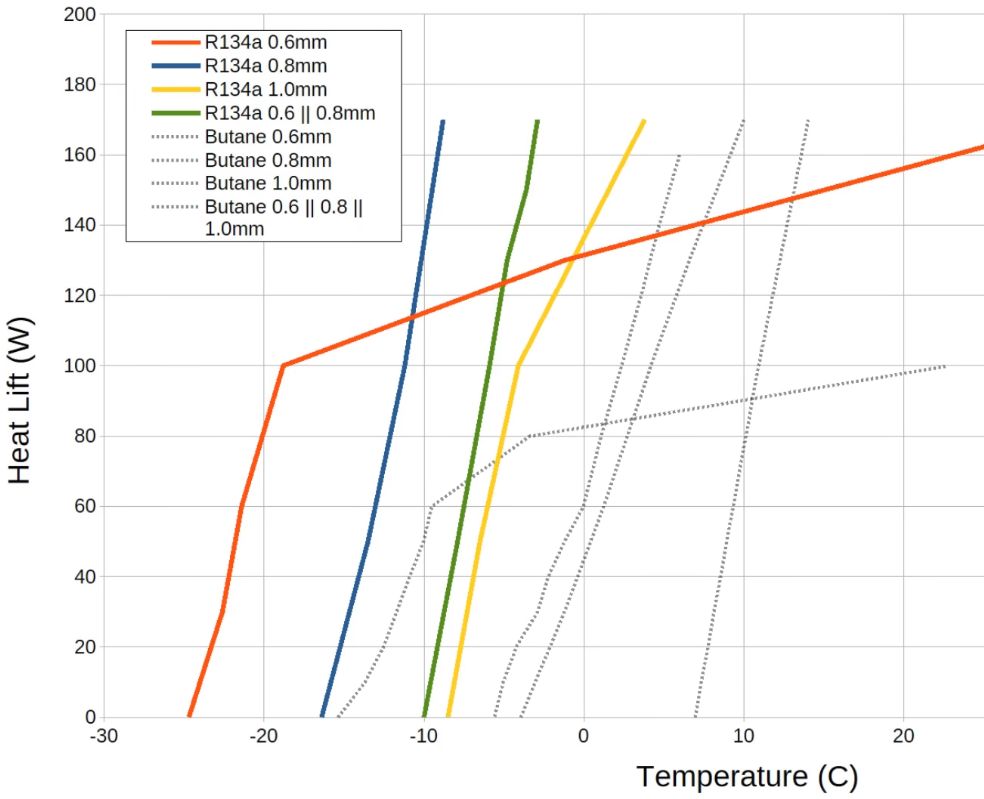
Heat lift graphs. (Credit: Hyperspace Pirate, YouTube)Heat lift graphs. (Credit: Hyperspace Pirate, YouTube)
Although vapor-compression refrigeration is a simple concept, there are still a lot of details in the implementation of such a system that determines exactly how efficient it is. After making a few of such systems, [Hyperspace Pirate] decided to sit down and create a testing system that allows for testing of many of these parameters.

Some of the major components that determine the coefficient of performance (COP) of a heat pump or similar system include the used refrigerant, as well as the capillary tube diameter or expansion valve design. For the testing in the video three refrigerants are used: R600 (N-Butane), R134a (tetrafluoroethene, AKA Freon) and R290 (propane), with R134a being decidedly illegal in places like the EU. The use of R600 instead of R600A is due to the former allowing for a lower pressure system, which is nice for low-power portable systems.

The test rig has the typical fresh-from-the-scrap-heap look that we’re used to and love from [Hyperspace Pirate], but does exactly what it says on the tin, and is easy for any DIY enthusiast to replicate. Which compressor to pick for a specific refrigerant is also covered in the video, along with oil type and more.

For basic systems you’d use a simple capillary tube, whereas an airconditioner or similarly more complex system would use an adjustable valve design. With the rig you can test the efficiency of different tube diameters, with three sizes available in this version. Unfortunately the electronic expansion valve (EEV) that was going to be used didn’t get a chance to shine due to unforeseen events.

With the R134a and butane a COP of 2.0 – 2.5 was achieved when taking power factor into account, which was reasonable considering a compressor was used that targets R134a. Regardless, if you have ever felt like repurposing that old compressor from a fridge or AC unit, this might be a fun afternoon project.

youtube.com/embed/tXeFSk1ndWA?…


hackaday.com/2026/04/11/testin…

Kiki is the Unknown Array Language


The media in this post is not displayed to visitors. To view it, please log in.

Kiki bills itself as the “array programming system of unknown origin.” We thought it reminded us of APL which, all by itself, isn’t a bad thing.

The announcement post is decidedly imaginative. However, it is a bit sparse on details. So once you’ve read through it, you’ll want to check out the playground, which is also very artistically styled.

If you explore the top bar, you’ll find the learn button is especially helpful, although the ref and idiom buttons are also useful. Then you’ll find some examples along with a few other interesting tidbits.

One odd thing is that Kiki reads right to left. So “2 :* 3 :+ 1” is (1+3)2 not (23)+1. Of course, you can use parentheses to be specific.

If you are jumping around in the tutorial, note that some cells depend on earlier cells, so randomly pressing a “run” button is likely to produce an error.

Would you use kiki? There are plenty of array languages out there, although perhaps none that have such poetic documentation. Let us know if you have a favorite language for this sort of thing and if you are going to give Kiki a try.

If you want to try old school APL, that’s easier than ever.


hackaday.com/2026/04/11/kiki-i…

A Suction-Driven Seven-Segment Display


The media in this post is not displayed to visitors. To view it, please log in.

An orange silicone sheet is shown in front, with depressions in the shape of a 7-segment character "4". A man's hand is holding a pipe leading to a series of needles, which enter the block behind the silicone sheet.

There’s a long history of devices originally used for communication being made into computers, with relay switching circuits, vacuum tubes, and transistors being some well-known examples. In a smaller way, pneumatic tubes likewise deserve a place on the list; [soiboi soft], for example, has used pneumatic systems to build actuators, logic systems, and displays, including this latching seven-segment display.

Each segment in the display is made of a cavity behind a silicone sheet; when a vacuum is applied, the front sheet is pulled into the cavity. A vacuum-controlled switch (much like a transistor, as we’ve covered before) connects to the cavity, so that each segment can be latched open or closed. Each segment has two control lines: one to pressurize or depressurize the cavity, and one to control the switch. The overall display has four seven-segment digits, with seven common data lines and four control lines, one for each digit.

The display is built in five layers: the front display membrane, a frame to clamp this in place, the chamber bodies, the membrane which forms the switches, and the control channels. The membranes were cast in silicone using 3D-printed molds, and the other parts were 3D-printed on a glass build plate to get a sufficiently smooth, leak-free surface. As it was, the display used a truly intimidating number of fasteners to ensure airtight connections between the different layers. [soiboi soft] used the display for a clock, so it sits at the front of a 3D-printed enclosure containing an Arduino, a small vacuum pump, and solenoid valves.

This capacity for latching and switching, combined with pneumatic actuators, raises the interesting possibility of purely air-powered robots. It’s even possible to 3D-print pneumatic channels by using a custom nozzle.

youtube.com/embed/E1BLGpE5zH0?…

Thanks to [Norbert Mezei] for the tip!


hackaday.com/2026/04/11/a-suct…

Cybersecurity & cyberwarfare ha ricondiviso questo.

L'accordo segreto di DOGE sui dati degli elettori era "allarmante", secondo il tribunale.

Venerdì una corte d'appello federale ha sollevato serie preoccupazioni in merito a un accordo segreto sui dati degli elettori che coinvolge l'amministrazione Trump e ha ordinato a un tribunale di grado inferiore di riesaminare un caso che contesta l'accesso dell'amministrazione ai dati della previdenza sociale.

democracydocket.com/news-alert…

@politica

reshared this

Cybersecurity & cyberwarfare ha ricondiviso questo.

Censys finds 5,219 devices exposed to attacks by Iranian APTs, majority in U.S.,
securityaffairs.com/190646/ics…
#securityaffairs #hacking #malware #Iran #scada #ICS

Implementing PCIe over Fiber Using SFP Modules


The media in this post is not displayed to visitors. To view it, please log in.

Although we can already buy commercial transceiver solutions that allow us to use PCIe devices like GPUs outside of a PC, these use an encapsulating protocol like Thunderbolt rather than straight PCIe. The appeal of [Sylvain Munaut]’s project is thus that it dodges all that and tries to use plain PCIe with off-the-shelf QSFP transceivers.

As explained in the intro, this doesn’t come without a host of compatibility issues, least of all PCIe device detection, side-channel clocking and for PCIe Gen 3 its equalization training feature that falls flat if you try to send it over an SFP link. Fortunately [Eli Billauer] had done much of the leg work already back in 2016, making Gen 2 PCIe work over SFP+.

The test setup involves a Raspberry Pi 5 on a PCIe breakout board and a PCIe card connected to the whole QSFP intermediate link with custom SFP module PCBs for muxing between PCIe edge connector or USB 3.0 connectors to use those cheap crypto miner adapter boards. The fiber is just simple single-mode fiber. Using this a Gen 2 x1 link can be created without too much fuss, demonstrating the basic principle.

Moving this up to Gen 3 will be challenging and will be featured in future videos, involving more custom PCBs. With Gen 5 now becoming standard on mainboards, it would be great to see this project work for Gen 3 – 5 at link sizes of x4 and even x16 so that it might be able to run external GPUs at full bandwidth unlike Thunderbolt.

Thanks to [zoobab] for the tip.

youtube.com/embed/XaDa9bBucEI?…


hackaday.com/2026/04/11/implem…

td reshared this.

Cybersecurity & cyberwarfare ha ricondiviso questo.

The reason why the Artemis mission has everyone so fascinated is because it is a showcase for the efforts of people who are very, very good at their jobs, at a time when the news cycle is dominated by people who are not merely terrible at their jobs, but awful human beings as well.

Authenticate SSH with Your TPM


The media in this post is not displayed to visitors. To view it, please log in.

You probably don’t think about it much, but your PC probably has a TPM or Trusted Platform Module. Windows 11 requires one, and most often, it stores keys to validate your boot process. Most people use it for that, and nothing else. However, it is, in reality, a perfectly good hardware token. It can store secret data in a way that is very difficult to hack. Even you can’t export your own secrets from the TPM. [Remy] shows us how to store your SSH keys right on your TPM device.

We’ll quote [Remy] about the advantages:

The private key never leaves the device, you yourself can’t even extract it, neither can malware. It does not live on your filesystem or in an ssh-agent (in memory)…


Unlike a hardware token, the TPM is locked to your machine. In fact, in many cases, it is soldered onto the motherboard, although sometimes it is plugged in. The post notes that because of this, the TPM is not quite as secure as a hardware token that you can pull out of a USB port and lock up. But it is still more secure than just having your keys sitting on a hard drive.

One caveat: some computers wipe your TPM when you update the BIOS. The post mentions how to get around this. You’ll need some tools, of course, and it won’t work with Windows Subsystem for Linux, unsurprisingly. Once you have the tools installed, the process is pretty straightforward.

We’ll add this to our set of ssh tricks from now on.


hackaday.com/2026/04/11/authen…

Cybersecurity & cyberwarfare ha ricondiviso questo.

La mano invisibile delle Big Tech: un'indagine transnazionale

L'esperta di media Natalia Viana ha svelato le tattiche di lobbying delle Big Tech in 13 Paesi. Invita i giornalisti a combattere l'eccessiva dipendenza dalle piattaforme e ad assumere un ruolo più incisivo nei dibattiti normativi

akademie.dw.com/en/big-techs-i…

@giornalismo

Cybersecurity & cyberwarfare ha ricondiviso questo.

#GlassWorm evolves with Zig dropper to infect multiple developer tools
securityaffairs.com/190638/mal…
#securityaffairs #hacking #malware
Cybersecurity & cyberwarfare ha ricondiviso questo.

Pubblicare e taggare gruppi è facile con Poliversity

Puoi taggare @gnulinuxitalia per post riguardanti la comunità linux

Puoi taggare @lealternative per post relativi a software open source e alternativi che puoi usare anche sul tuo windows, ma se puoi usa @ufficiozero

Puoi taggare @informatica per tutto il resto se i tuoi post rigurdano l'informatica in generale

e da poco tempo puoi anche taggare @devconf@citiverse.it la categoria creata per l'evento italiano #DevConferenceItalia e seguire l'account @devconf

La libertà di usare Poliversity la reputo superiore ad altre istanze Mastodon

Un grazie a @macfranc e @skariko per il continuo sostegno sul funzionamento dei vari gruppi e anche per altro

Cybersecurity & cyberwarfare ha ricondiviso questo.

#GlassWorm evolves with Zig dropper to infect multiple developer tools
securityaffairs.com/190638/mal…
#securityaffairs #hacking #malware

What’s Your Favorite Kind of Hack?


The media in this post is not displayed to visitors. To view it, please log in.

Talking with [Tom Nardi] on the podcast this week, he mentioned his favorite kind of hack: the community-developed open-source firmware that can be flashed into a commercial product that has crappy firmware, thus saving it. The example, just for the record, is the CrossPoint open e-book reader firmware that turns a mediocre cheap e-book into something that you can do anything you want with. Very nice!

And that got me thinking about “kinds of hacks” in general. Do we have a classification scheme for the hacks that we see here on Hackaday? For instance, the obvious precursor to many of Tom’s favorite hacks is the breaking-into-the-locked-firmware hack, where a device that didn’t want you loading your own firmware on it is convinced to let you do so. Junk-hacking is probably also a category of its own, where instead of finding your prey on AliExpress, you find it on eBay, or in the alleyway. And the save-it-from-the-landfill repair and renovation hacks are close relatives.

The doing-too-much-with-too-little hacks are maybe my personal favorite. I just love to see when someone manages to get DOOM running in Linux on a computer made with only 8-pin microcontrollers. Because of the nature of the game, these often also include a handful of abusing-a-component-to-do-something-it’s-not-meant-to-do hacks. Heck, we even had a challenge for just exactly those kind of hacks.

Then there are fine-art-hacks, where the aesthetic outcome is as important as the technical, or games-hacks where fun is the end result.

What other broad categories of hacks are we missing? And which are your favorite?

This article is part of the Hackaday.com newsletter, delivered every seven days for each of the last 200+ weeks. It also includes our favorite articles from the last seven days that you can see on the web version of the newsletter. Want this type of article to hit your inbox every Friday morning? You should sign up!


hackaday.com/2026/04/11/whats-…

Cybersecurity & cyberwarfare ha ricondiviso questo.

Trujillo, un borgo dell'Estremadura dove la Storia diventa reale. Continua il viaggio più bagnato di sempre.


The media in this post is not displayed to visitors. To view it, please go to the original post.

Nel viaggio più bagnato e (quasi) più sfortunato di sempre, stavo per perdermi #Trujillo, un borgo bellissimo dell' #Estremadura dove la Storia che studiavi a scuola prende vita.

Assolutamente da vedere, possibilmente con un meteo più fortunato del mio.

Buona visione!

@viaggi@feddit.it

Questa voce è stata modificata (1 mese fa)
in reply to Micolcosta

grazie a te per aver visto il video e per il tuo commento 😀

Sì, anch'io l'ho trovata bella, di una bellezza affatto scontata e tanto più intensa perché poco conosciuta.

E' stata proprio la prima città che ho visitato in Estremadura, in un momento in cui ero ancora fiducioso sulle condizioni meteo (e nel video si sente...)

video.simoneviaggiatore.com/w/…

Rust-y Firmware for Waveshare Smartwatch


The media in this post is not displayed to visitors. To view it, please log in.

Waveshare makes a nifty little ESP32-S3 based smartwatch product, but its firmware is apparently not to everyone’s liking. Specifically, it’s not to [infiniton] a.k.a [Bright_Warning_8406]’s liking, as they rewrote the entire code base in Rust. No_std Rust, to be specific, but perhaps that doesn’t need to be specified when dealing with ESP32.

On the Reddit thread about the project, he lists some of the advantages. For one thing, the size of the binary has dropped from 1.2 MB to 579 kB while maintaining the same functionality. More interesting is that he’s been able to eliminate polling entirely: the firmware is purely event-driven. The CPU is not just idle but parked until a timer or GPIO event wakes it up. For this form factor, that’s a big deal — you can’t fit a very large battery in a watch, after all.

Getting drivers for the AMOLED display, touch sensor, audio, and RTC modules written from scratch is an impressive accomplishment. Apparently the screen driver in particular was “a nightmare” and we believe it. There’s a reason most people go for existing libraries for this stuff. [Bright_Warning] did not post screenshots or video, but claims his version of the watch watch can make HTTP calls to Smart Home, play MP3s, play the old phone games– Snake, 2048, Tetris, Flappy Bird, Maze– and even comes with a T9 keyboard for text input.

If you’re looking to get closer to bare metal, and don’t mind it being Rust-y, take a look at the code on GitHub in the first link above. This author isn’t enough of a rustacean to say if the code is as good as it sounds at a glance, but nothing egregious jumps out. The documentation describing exactly what’s going on under the hood isn’t half-bad, either. If you aren’t into Waveshare products, you could easily adapt this code into a more DIY ESP32 watch, too.

If you’re not into Rust, uh… washing soda and electric current can get it off of steel, and probably microcontrollers too. We can’t say that the chip will work after that, but hey — no rust.


hackaday.com/2026/04/11/rust-y…

Paolo Redaelli reshared this.