Certo perchè no? Il prossimo passo, chiedere se vuole o può essere arrestato. Magari il delinquente ha degli impegni che deve prima svolgere ,poi magari con calma... ilfattoquotidiano.it/in-edicol…
The build is based around a Raspberry Pi Compute Module 4. If you’re unfamiliar with the Compute Module, it’s basically a Raspberry Pi that has been designed specifically for easy integration into a larger carrier PCB. In this case, the carrier PCB interfaces all the other necessary gear to make this a fully functional computer. The PCB is installed inside a vaguely-rectangular 3D-printed enclosure, with a 5-inch TFT LCD on a sliding mount. Push the screen up, and it reveals a small-format keyboard for text entry. There’s also a hall-effect joystick and a couple of buttons for mouse control to boot. [Rahmanshaber] has designed the computer to run off a couple of different battery packs—you can use a pair of 18650 cells if you like, or switch to lager 21700 cells if you want greater capacity for longer running time.
This week Jonathan talks to Robert Wolff about DevEco! How did this developer group come to be, and what is its purpose? What are the lessons learned about building communities and working with others? Watch to find out!
Did you know you can watch the live recording of the show right on our YouTube Channel? Have someone you’d like us to interview? Let us know, or contact the guest and have them contact us! Take a look at the schedule here.
Il senso ultimo della strategia americana nella gestione della crisi politica, economica e militare che continua ad affliggere il Libano consiste in un ricatto secondo il quale Beirut deve sottomettersi totalmente a Washington e Tel Aviv o andare inc…
@Informatica (Italy e non Italy 😁) I sistemi di AI possono essere un potenziamento effettivo ed efficace delle capacità di difesa nella sicurezza digitale a patto che siano protette esse stesse in modo specifico e siano regolamentate negli usi interni aziendali. Ecco
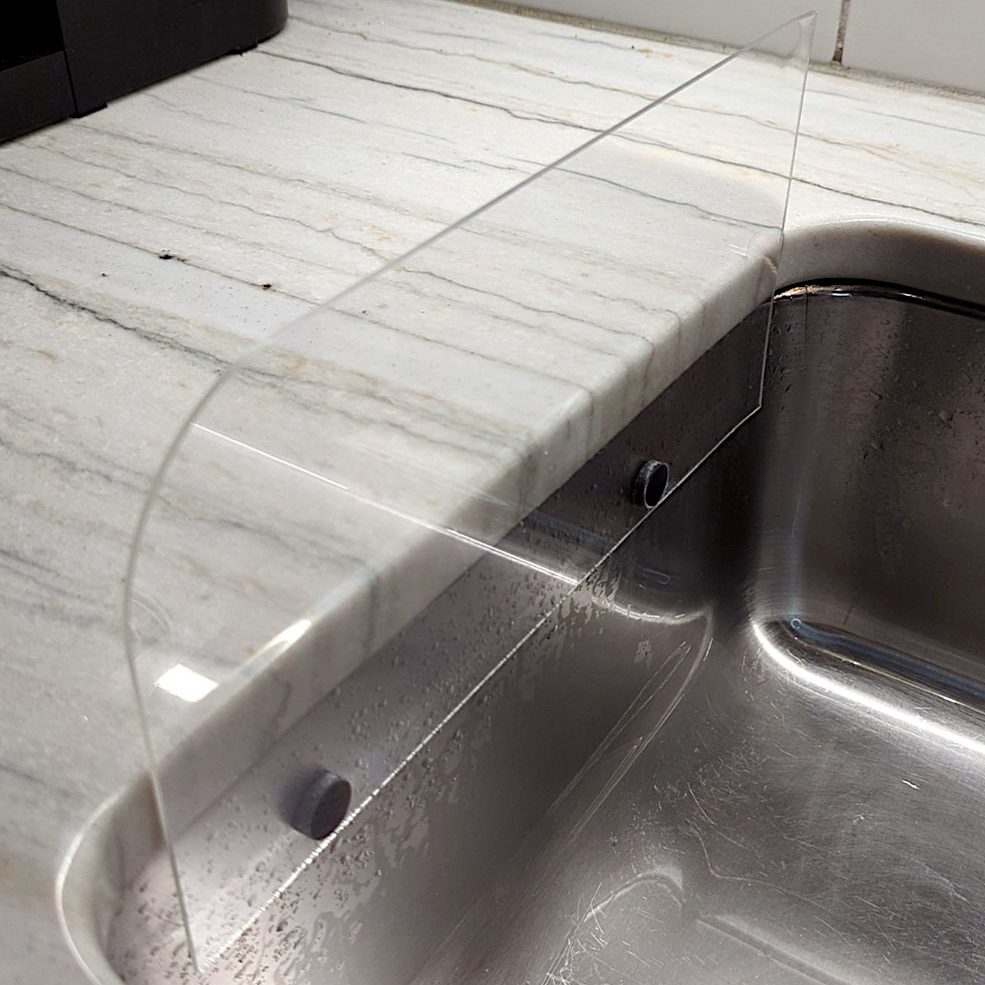
If you’re blessed with high water pressure at home, you probably love how it helps blast grime from your dishes and provides a pleasant washing experience. However, it can also cause a wonderful mess when that water splashes all over your countertops. [vgmllr] has whipped up a simple solution to this problem by installing an automatic splash guard. So tidy! The concept is simple enough—install a pair of flat guards that raise up when the sink is running, in order to stop water getting everywhere. To achieve this, [vgmllr] grabbed an Arduino, and hooked it up to a piezo element, which acts as a water sensor.
The piezo is attached to the bottom of the sink, and effectively acts as a microphone, hooked up to one of the Arduino’s analog-to-digital pins. When water flow is detected, the Arduino commands two servos to raise a pair of 3D printed arms that run up and down the outside of the sink. Each arm is fitted with magnets, which mate with another pair of magnets on the splash shields inside the sink. When the arms go up, the splash shields go up, and when the arms go down, the splash shields go down.
It’s an ingenious design, mostly because the installation is so clean and seamless. By using magnets to move the splash shields, [vgmllr] eliminated any need to drill through the sink, or deal with any pesky seals or potential water leaks. Plus, if the splash shields are getting in the way of something, they can easily be popped off without having to disassemble the entire mechanism.
When the microcomputer first landed in homes some forty years ago, it came with a simple freedom—you could run whatever software you could get your hands on. Floppy disk from a friend? Pop it in. Shareware demo downloaded from a BBS? Go ahead! Dodgy code you wrote yourself at 2 AM? Absolutely. The computer you bought was yours. It would run whatever you told it to run, and ask no questions.
Today, that freedom is dying. What’s worse, is it’s happening so gradually that most people haven’t noticed we’re already halfway into the coffin.
News? Pegged.
There are always security risks when running code from untrusted sources. The stakes are higher these days when our computers are the gateways to our personal and financial lives. Credit: Screenshot The latest broadside fired in the war against platform freedom has been fired. Google recently announced new upcoming restrictions on APK installations. Starting in 2026, Google will tightening the screws on sideloading, making it increasingly difficult to install applications that haven’t been blessed by the Play Store’s approval process. It’s being sold as a security measure, but it will make it far more difficult for users to run apps outside the official ecosystem. There is a security argument to be made, of course, because suspect code can cause all kinds of havoc on a device loaded with a user’s personal data. At the same time, security concerns have a funny way of aligning perfectly with ulterior corporate motives.
It’s a change in tack for Google, which has always had the more permissive approach to its smartphone platform. Contrast it to Apple, which has sold the iPhone as a fully locked-down device since day one. The former company said that if you own your phone, you could do what you want with it. Now, it seems Google is changing its mind ever so slightly about that. There will still be workarounds, like signing up as an Android developer and giving all your personal ID to Google, but it’s a loss to freedom whichever way you look at it.
Beginnings
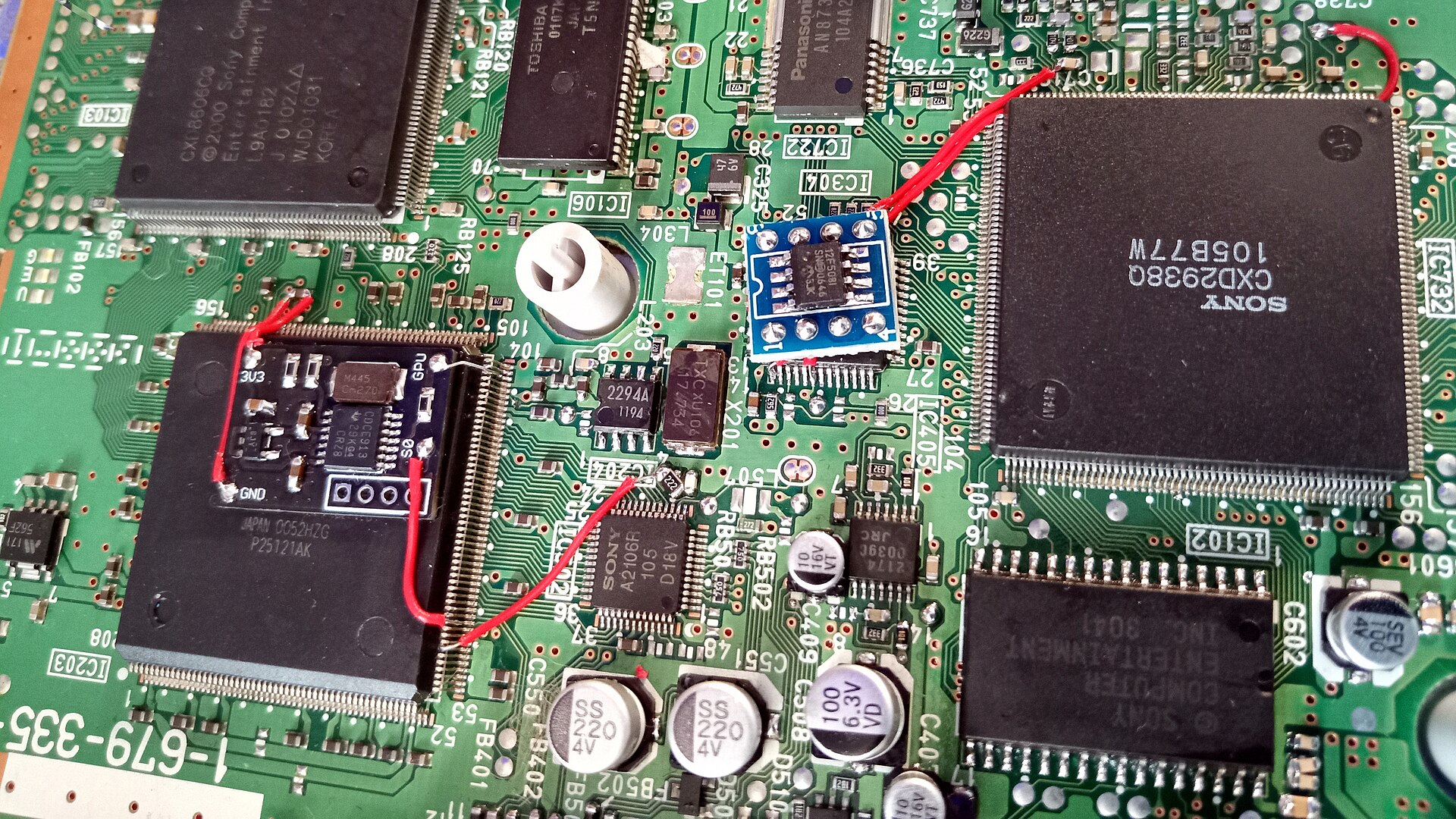
Sony put a great deal of engineering into the PlayStation to ensure it would only read Sony-approved discs. Modchips sprung up as a way to get around that problem, albeit primarily so owners could play cheaper pirated games. Credit: Libreleah, CC BY-SA 4.0, The walled garden concept didn’t start with smartphones. Indeed, video game consoles were a bit of a trailblazer in this space, with manufacturers taking this approach decades ago. The moment gaming became genuinely profitable, console manufacturers realized they could control their entire ecosystem. Proprietary formats, region systems, and lockout chips were all valid ways to ensure companies could levy hefty licensing fees from developers. They locked down their hardware tighter than a bank vault, and they did it for one simple reason—money. As long as the manufacturer could ensure the console wouldn’t run unapproved games, developers would have to give them a kickback for every unit sold.
By and large, the market accepted this. Consoles were single-purpose entertainment machines. Nobody expected to run their own software on a Nintendo, after all. The deal was simple—you bought a console from whichever company, and it would only play whatever they said was okay. The vast majority of consumers didn’t care about the specifics. As long as the console in question had a decent library, few would complain. Nintendo created the 10NES copy protection system to ensure its systems would only play games approved by the company itself, in an attempt to exert quality control after the 1983 North American video game crash. Credit: Evan-Amos, public domain There was always an underground—adapters to work around region locks, and bootleg games that relied on various hacks—with varying popularity over the years. Often, it was high prices that drove this innovation—think of the many PlayStation mod chips sold to play games off burnt CDs to avoid paying retail.
At the time, this approach largely stayed within the console gaming world. It didn’t spread to actual computers because computers were tools. You didn’t buy a PC to consume content someone else curated for you. You bought it to do whatever you wanted—write a novel, make a spreadsheet, play games, create music, or waste time on weird hobby projects. The openness wasn’t a bug, or even something anybody really thought about. It was just how computers were. It wasn’t just a PC thing, either—every computer on the market let you run what you wanted! It wasn’t just desktops and laptops, either; the nascent tablets and PDAs of the 1990s operated in just the same way.
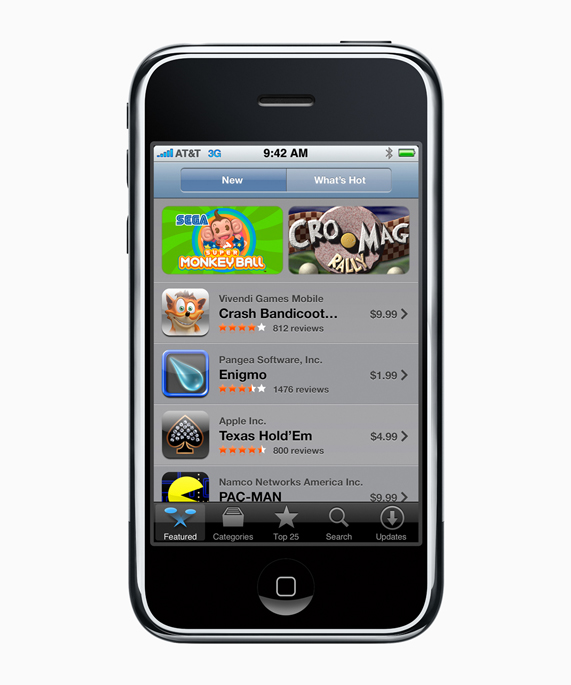
Then came the iPhone, and with it, the App Store. Apple took the locked-down model and applied it to a computer you carry in your pocket. The promise was that you’d only get apps that were approved by Apple, with the implicit guarantee of a certain level of quality and functionality. Apple is credited with pioneering the modern smartphone, and in turn, the walled garden that is the App Store. Credit: Apple It was a bold move, and one that raised eyebrows among developers and technology commentators. But it worked. Consumers loved having access to a library of clean and functional apps, built right into the device. Meanwhile, they didn’t really care that they couldn’t run whatever kooky app some random on the Internet had dreamed up.
Apple sold the walled garden as a feature. It wasn’t ashamed or hiding the fact—it was proud of it. It promised apps with no viruses and no risks; a place where everything was curated and safe. The iPhone’s locked-down nature wasn’t a restriction; it was a selling point.
But it also meant Apple controlled everything. Every app paid Apple’s tax, and every update needed Apple’s permission. You couldn’t run software Apple didn’t approve, full stop. You might have paid for the device in your pocket, but you had no right to run what you wanted on it. Someone in Cupertino had the final say over that, not you.
When Android arrived on the scene, it offered the complete opposite concept to Apple’s control. It was open source, and based on Linux. You could load your own apps, install your own ROMs and even get root access to your device if you wanted. For a certain kind of user, that was appealing. Android would still offer an application catalogue of its own, curated by Google, but there was nothing stopping you just downloading other apps off the web, or running your own code.
Sadly, over the years, Android has been steadily walking back that openness. The justifications are always reasonable on their face. Security updates need to be mandatory because users are terrible at remembering to update. Sideloading apps need to come with warnings because users will absolutely install malware if you let them just click a button. Root access is too dangerous because it puts the security of the whole system and other apps at risk. But inch by inch, it gets harder to run what you want on the device you paid for.
Windows Watches and Waits
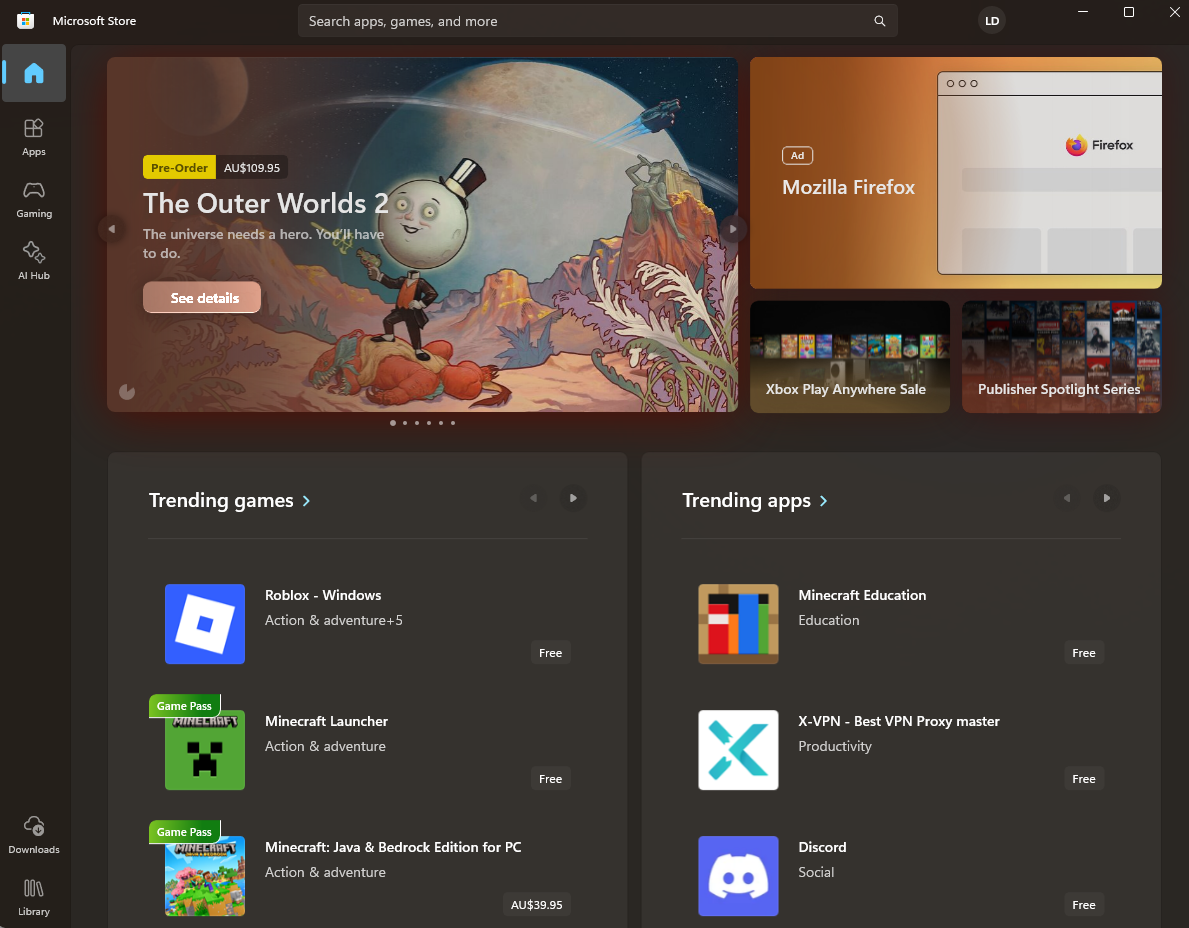
The walled garden has since become a contagion, with platforms outside the smartphone space considering the tantalizing possibilities of locking down. Microsoft has been testing the waters with the Microsoft Store for years now, with mixed results. Windows 10 tried to push it, and Windows 11 is trying harder. The store apps are supposedly more secure, sandboxed, easier to manage, and straightforward to install with the click of a button. Microsoft has tried multiple times to sell versions of Windows that are locked to exclusively run apps from the Microsoft Store. Thus far, these attempts have been commercial failures. Credit: screenshot Microsoft hasn’t pulled the trigger on fully locking down Windows. It’s flirted with the idea, but has seen little success. Windows RT and Windows 10 S were both locked to only run software signed by Microsoft—each found few takers. Desktop Windows remains stubbornly open, capable of running whatever executable you throw at it, even if it throws up a few more dialog boxes and question marks with every installer you run these days.
How long can this last? One hopes a great while yet. A great deal of users still expect a computer—a proper one, like a laptop or desktop—to run whatever mad thing they tell it to. However, there is an increasing userbase whose first experience of computing was in these locked-down tablet and smartphone environments. They aren’t so demanding about little things like proper filesystem access or the ability to run unsigned code. They might not blink if that goes away.
For now, desktop computing has the benefit of decades of tradition built in to it. Professional software, development tools, and specialized applications all depend on the ability to install whatever you need. Locking that down would break too many workflows for too many important customers. Masses of scientific users would flee to Linux the moment their obscure datalogger software couldn’t afford an official license to run on Windows;. Industrial users would baulk at having to rely on a clumsy Microsoft application store when bringing up new production lines.
Apple had the benefit that it was launching a new platform with the iPhone; one for which there were minimal expectations. In comparison, Microsoft would be climbing an almighty mountain to make the same move on the PC, where the culture is already so established. Apple could theoretically make moves in that direction with OS X and people would be perhaps less surprised, but it would still be company making a major shift when it comes to customer expectations of the product.
Here’s what bothers me most: we’re losing the idea that you can just try things with computers. That you can experiment. That you can learn by doing. That you can take a risk on some weird little program someone made in their spare time. All that goes away with the walled garden. Your neighbour can’t just whip up some fun gadget and share it with you without signing up for an SDK and paying developer fees. Your obscure game community can’t just write mods and share content because everything’s locked down. So much creativity gets squashed before it even hits the drawing board because it’s just not feasible to do it.
It’s hard to know how to fight this battle. So much ground has been lost already, and big companies are reluctant to listen to the esoteric wishers of the hackers and makers that actually care about the freedom to squirt whatever through their own CPUs. Ultimately, though, you can still vote with your wallet. Don’t let Personal Computing become Consumer Computing, where you’re only allowed to run code that paid the corporate toll. Make sure the computers you’re paying for are doing what you want, not just what the executives approved of for their own gain. It’s your computer, it should run what you want it to!
Una collega ha un PC portatile del 2017 che "grazie" a Windows 10 deve buttare via (non solo per il discorso della fine supporto, ma è anche lentissimo).
Le ho detto che prima di comprarne un altro possiamo provare con #linux , e che molto probabilmente le tornerà prestante quasi come da nuovo.
Nota: lei lo usa veramente solo per navigare con Chrome, è un utente davvero semplice da accontentare. Al più ogni tanto scrive una lettera e la stampa. Stop.
Io ho pensato a Mint, se non altro perché offre un supporto lungo e perché è la distribuzione che uso anch'io (versione Debian).
Pensate a quanti utenti così esistono. Moltiplicate e avrete un'idea dello spreco.
@marcoboccaccio l'idea che mi sono fatto io da professionista sta un po' nel mezzo: in parte è obsolescenza programmata, in parte vera. A Windows si chiedono un sacco di cose. Magari deve fare girare un antivirus, magari è molto più preso di mira rispetto ad altri sistemi, quindi è logico che debba anche difendersi, diciamo così... Ed è tutto codice che appesantisce. Poi deve anche raccogliere i nostri dati 🙂.
È anche vero che alcune distribuzioni tuttofare sono anch'esse pesanti; anche Ubuntu non corre su macchine vecchie.
Considerando tutto questo, dico che la verità sta un po' nel mezzo. Ma se fossimo tutti liberi di scegliere, penso che Linux avrebbe più mercato.
Ottimo il recupero che hai fatto!
Quindi anche tu hai "sposato" Mint. Mi fa piacere.
Io ho MX Linux (edizione fluxbox) su un Toshiba del 2004. È il nonno dei PC della famiglia, lo lascio da mia mamma in montagna e oggettivamente ormai è un po' lentino, ma è ancora accettabile per operazioni come l'accesso ai siti della banca, scrivere documenti, navigare su pagine leggere come i social del Fediverso.
Lo trovo straordinario, farci girare software aggiornato.
Per fare un paragone, su quell'hardware non girerebbe neanche una delle versioni Core di Windows, quelle senza interfaccia grafica.
Ecco, l'unica cosa che fa davvero fatica a fare sono gli aggiornamenti.
@Politica interna, europea e internazionale L’Italia è pronta a riconoscere lo stato di Palestina a patto che Hamas venga disarmata: lo ha dichiarato la presidente del Consiglio Giorgia Meloni al Senato per le comunicazioni in vista del Consiglio Europeo del 23 ottobre. Secondo la premier, per un futuro di
Che bello vedere che almeno una persona invitata nel fediverso ci si trova bene 😊
@Augusto Zucchi ti scrivo da un server che non è nemmeno basato sullo stesso software di quello dal quale tu ricevi questo messaggio, ma mi consente comunque di interagire con te.
@Notizie dall'Italia e dal mondo Decine di migliaia di manifestanti bloccano scuole, mercati e negozi per denunciare la contaminazione da fosfogesso e le malattie provocate dall’impianto statale L'articolo Tunisia in rivolta: proteste e scioperi contro l’inquinamento
@Notizie dall'Italia e dal mondo Gaza city appare oggi come una città minacciata non solo dalla distruzione materiale, ma dalla perdita della propria memoria storica ed architettonica L'articolo Guerra alla memoria: Gaza perde i suoi monumenti pagineesteri.it/2025/10/22/med…
@Notizie dall'Italia e dal mondo Dal primo gennaio al 31 luglio 2025, in Italia, il Garante nazionale dei diritti delle persone private della libertà personale (Gnpl), organo statale con il compito di monitorare i luoghi di reclusione, ha contato 46 persone recluse che si sono tolte la vita. Il conteggio L'articolo Carcere e suicidi:
The Women I Love – Ottobre 2025 freezonemagazine.com/rubriche/… The Women I Love – Ottobre 2025 Al ribollire dei tini anche la musica al femminile è tutta un fermento e ci consegna alcuni lavori che entreranno nella short list di fine anno. La voce femminile resta lo strumento più duttile in natura: sa piegarsi al sussurro, farsi urlo liberatorio, abbracciare territori musicali lontanissimi eppure […] L'articolo The Women I Love – Ottobre 2025 proviene
Nell'area dove dovrebbe sorgere l'inceneritore abbiamo registrato una massiccia movimentazione di terra che non sembra rientrare nell'ambito autorizzativo accordato dalla Soprintentendenza speciale. Dalle foto si evince una attività di livellamento del terreno che comprometterebbe il lavoro di verifica Archeologica che la stessa sovrintendenza ha contrassegnato come area ad alto interesse. Pertanto chiediamo alla soprintendenza di intervenire prontamente per verificare la legittimità delle attività di movimentazione terra i cui impatti su area vincolata appaiono evidenti e una sospensione immediata ove tali lavori siano abusivi. L'accertata contaminazione del terreno costituisce ulteriore motivo di allarme anche per la salute dei lavoratori coinvolti.
I vertici della società di calcio israeliana Maccabi Tel Aviv hanno raffreddato almeno in parte le polemiche esplose negli ultimi giorni in Gran Bretagna attorno alla trasferta a Birmingham dei loro tifosi, annunciando ufficialmente lunedì la rinunci…
Oggi a Skukuza, in occasione del #G20 Istruzione, il Ministro Giuseppe Valditara ha incontrato il Ministro dell’Istruzione generale del Sudafrica Siviwe Gwarube e il Ministro dell’Istruzione Superiore e della Formazione del Sudafrica, Buti Manamela.
Oggi a Skukuza, in occasione del #G20 Istruzione, il Ministro Giuseppe Valditara ha incontrato il Ministro dell’Istruzione generale del Sudafrica Siviwe Gwarube e il Ministro dell’Istruzione Superiore e della Formazione del Sudafrica, Buti Manamela.
Via libera dalla Commissione Esteri-Difesa del Senato all’approvazione della risoluzione sul Gcap (Global Combat Air Program) e all’avvio dell’esame dei programmi di acquisto di veicoli blindati anfibi e di munizioni guidate per obici dell’Esercito e di prosecuzione del programma navale per la
A parte il fatto che ormai vedono russi da tutte le parti, mi piacerebbe che il Messaggero ci dicesse anche a quali oligarchi di Montecitorio vadano i soldi dei contribuenti italiani.
Il recente annuncio del ministro della Difesa Crosetto di una struttura civile-militare dedicata alle operazioni cyber ha un valore molto più ampio di quello che appare a prima vista. È un’iniziativa che, pur rivolta alla
Il Global Times, media che si occupa costantemente di spalmare in inglese la narrazione del Partito/Stato cinese, analizza il ranking del World Directory of Modern Military Aircraft (WDMMA) uscito nei giorni scorsi — in cui si








Simon Perry
Unknown parent • •@marcoboccaccio l'idea che mi sono fatto io da professionista sta un po' nel mezzo: in parte è obsolescenza programmata, in parte vera. A Windows si chiedono un sacco di cose. Magari deve fare girare un antivirus, magari è molto più preso di mira rispetto ad altri sistemi, quindi è logico che debba anche difendersi, diciamo così... Ed è tutto codice che appesantisce. Poi deve anche raccogliere i nostri dati 🙂.
È anche vero che alcune distribuzioni tuttofare sono anch'esse pesanti; anche Ubuntu non corre su macchine vecchie.
Considerando tutto questo, dico che la verità sta un po' nel mezzo. Ma se fossimo tutti liberi di scegliere, penso che Linux avrebbe più mercato.
Ottimo il recupero che hai fatto!
Quindi anche tu hai "sposato" Mint. Mi fa piacere.
Simon Perry
Unknown parent • •@Dún Piteog
Ci sta!
Io ho MX Linux (edizione fluxbox) su un Toshiba del 2004. È il nonno dei PC della famiglia, lo lascio da mia mamma in montagna e oggettivamente ormai è un po' lentino, ma è ancora accettabile per operazioni come l'accesso ai siti della banca, scrivere documenti, navigare su pagine leggere come i social del Fediverso.
Lo trovo straordinario, farci girare software aggiornato.
Per fare un paragone, su quell'hardware non girerebbe neanche una delle versioni Core di Windows, quelle senza interfaccia grafica.
Ecco, l'unica cosa che fa davvero fatica a fare sono gli aggiornamenti.
@marcoboccaccio
Simon Perry
Unknown parent • •@Floreana
Per un uso standard non manca davvero nulla. Cioè per la maggior parte degli utenti.
Sentiamo tanto parlare di ambiente e poi le cose basilari come questa...nulla.
Mah.