
A Washington judge said images taken by Flock cameras are "not exempt from disclosure" in public record requests.#Flock


Judge Rules Flock Surveillance Images Are Public Records That Can Be Requested By Anyone
A judge in Washington has ruled that police images taken by Flock’s AI license plate-scanning cameras are public records that can be requested as part of normal public records requests. The decision highlights the sheer volume of the technology-fueled surveillance state in the United States, and shows that at least in some cases, police cannot withhold the data collected by its surveillance systems.In a ruling last week, Judge Elizabeth Neidzwski ruled that “the Flock images generated by the Flock cameras located in Stanwood and Sedro-Wooley [Washington] are public records under the Washington State Public Records Act,” that they are “not exempt from disclosure,” and that “an agency does not have to possess a record for that record to be subject to the Public Records Act.”
She further found that “Flock camera images are created and used to further a governmental purpose” and that the images on them are public records because they were paid for by taxpayers. Despite this, the records that were requested as part of the case will not be released because the city automatically deleted them after 30 days. Local media in Washington first reported on the case; 404 Media bought Washington State court records to report the specifics of the case in more detail.
A screenshot from the judge's decision
Flock’s automated license plate reader (ALPR) cameras are used in thousands of communities around the United States. They passively take between six and 12 timestamped images of each car that passes by, allowing the company to make a detailed database of where certain cars (and by extension, people) are driving in those communities. 404 Media has reported extensively on Flock, and has highlighted that its cameras have been accessed by the Department of Homeland Security and by local police working with DHS on immigration cases. Last month, cops in Colorado used data from Flock cameras to incorrectly accuse an innocent woman of theft based on her car’s movements.The case came in response to a public records request made by Jose Rodriguez, who in April sought all of the images taken by the city’s Flock cameras between the hours of 5 and 6 p.m. on March 30 (he later narrowed this request to only ask for images taken by a single camera in a half-hour period). The city argued that Rodriguez would have to request them directly from Flock, a private company not subject to public records laws. But Flock’s contracts with cities say that the city owns the images taken on their cameras. The city eventually took Rodriguez to court. In the court proceedings, the city made a series of arguments claiming that Flock images couldn’t be released; the judge’s decision rebuked all of these many arguments.
“I wanted the records to see if they would release them to me, in hopes that if they were public records it would raise awareness to all the communities that have the Flock cameras that they may be public record and could be used by stalkers, or burglars scoping out a house, or other ways someone with bad intentions may use them. My goal was to try getting these cameras taken down by the cities that put them up,” Rodriguez told 404 Media. “In order to show that the records were public records and that they don’t qualify as exempt under the Washington public records act we cited the contract, and I made requests to both cities requesting their exterior normal surveillance camera footage from their City Hall and police station that recorded the streets and parking lots with vehicles driving by and license plates viewable, which is what the Flock images also capture. Both cities provided me with the surveillance videos I requested without issue but denied the Flock images, so my attorney used that to show how they contradict themselves.”
"it is pretty abhorrent that the city tried to make all of these arguments in the first place"
The case highlights the lengths that police departments and cities are willing to go to in order to prevent the release of what they incorrectly perceive to be private information owned by their surveillance vendors (in this case, Flock). Stanwood’s attorneys first argued that the records were Flock’s, not the city’s, which is clearly contradicted in the contract, which states “customer [Stanwood] shall retain whatever legally cognizable right, title, and interest in Customer Generated Data … Flock does not own and shall not sell Customer Generated Data.” The attorneys then argued that images taken by Flock cameras do not become requestable data until it is directly accessed and downloaded by the police on Flock’s customer portal: “the data existing in the cloud system … does not exist anywhere in the City’s files as a record.” The city’s lawyers also argued that Flock footage is police “intelligence information” that should be exempt from public records requests, and that “there are privacy concerns with making ALPR data accessible to the public.”“Honestly, it is pretty abhorrent that the city tried to make all of these arguments in the first place, but it’s great that the court reaffirmed that these are public records,” Beryl Lipton, senior investigative researcher at the Electronic Frontier Foundation, told 404 Media in a phone interview. “So much of the surveillance law enforcement does is facilitated by third party vendors and that information is stored on their external servers. So for the court to start restricting access to the public because law enforcement has started using these types of systems would have been horribly detrimental to the public’s right to know.”
In affidavits filed with the court, police argued that “if the public could access the Flock Safety System by making Public Records Act requests, it would allow nefarious actors the ability to track private persons and undermine the effectiveness of the system.” The judge rejected every single one of these arguments.
Both Lipton and Timothy Hall, Rodriguez’s attorney, said that, to the contrary, Rodriguez’s request actually shows how pervasive mass surveillance systems are in society, and that sharing this information will help communities make better informed decisions about whether they want to use technology like Flock at all.
“We do think there should be redactions for certain privacy reasons, but we absolutely think that as a whole, these should be considered public records,” Lipton said. “This is part of the whole problem: These police departments and these companies are operating under the impression that everything that happens on the street is fair game, and that their systems are not a privacy violation. But then when it comes to the public wanting to know, they say ‘this is a privacy violation,’ and I think that’s them trying to have it both ways.”
Hall said that Rodriguez’s case, reporting by 404 Media, and a recent study by the University of Washington about Flock data being available to immigration enforcement officers, has started a conversation in the state about Flock in general.
“Now because of the Washington State Public Records Act, people can be aware of all the information these cameras are collecting. Now there’s a discussion going on: Do we even want these cameras? Well, they’re collecting way more information than we realized,” Hall told 404 Media in a phone call. “A lot of people are now realizing there’s a ton of information being collected here. This has now opened up a massive discussion which was ultimately the goal.”
A Flock spokesperson told 404 Media that the company believes that the court simply reaffirmed what the law already was. The city of Stanwood did not respond to a request for comment.
Rodriguez said that even after fighting this case, he is not going to get the images that he originally took, because the city automatically deleted it after 30 days, even though he filed his request. He can now file a new one for more recent images, however.
“I won’t be getting the records, even though I win the case (they could also appeal it and continue the case) no matter what I won’t get those records I requested because they no longer exist,” Rodriguez said. “The cities both allowed the records to be automatically deleted after I submitted my records requests and while they decided to have their legal council review my request. So they no longer have the records and can not provide them to me even though they were declared to be public records.”
Leaving the Door Wide Open: Flock Surveillance Systems Expose Washington Data to Immigration Enforcement - Center for Human Rights
Summary Flock Safety automated license plate reader (ALPR) networks have become increasingly common in Washington state.Andrea Marcos (Center for Human Rights)
A fight against a massive AI data center; how people are 3D-printing whistles to fight ICE; and AI's war on knowledge.
A fight against a massive AI data center; how people are 3D-printing whistles to fight ICE; and AIx27;s war on knowledge.#Podcast
Podcast: Inside a Small Town's Fight Against a $1.2 Billion AI Datacenter
We start with Matthew Gault’s dive into a battle between a small town and the construction of a massive datacenter for America’s nuclear weapon scientists. After the break, Joseph explains why people are 3D-printing whistles in Chicago. In the subscribers-only section, Jason zooms out and tells us what librarians are seeing with AI and tech, and how that is impacting their work and knowledge more broadly.
playlist.megaphone.fm?e=TBIEA3…
Listen to the weekly podcast on Apple Podcasts,Spotify, or YouTube. Become a paid subscriber for access to this episode's bonus content and to power our journalism. If you become a paid subscriber, check your inbox for an email from our podcast host Transistor for a link to the subscribers-only version! You can also add that subscribers feed to your podcast app of choice and never miss an episode that way. The email should also contain the subscribers-only unlisted YouTube link for the extended video version too. It will also be in the show notes in your podcast player.
youtube.com/embed/rHk580uKwHw?…
6:03 - Our New FOIA Forum! 11/19, 1PM ET7:50 - A Small Town Is Fighting a $1.2 Billion AI Datacenter for America's Nuclear Weapon Scientists
12:27 - 'A Black Hole of Energy Use': Meta's Massive AI Data Center Is Stressing Out a Louisiana Community
21:09 - 'House of Dynamite' Is About the Zoom Call that Ends the World
30:35 - The Latest Defense Against ICE: 3D-Printed Whistles
SUBSCRIBER'S STORY: AI Is Supercharging the War on Libraries, Education, and Human Knowledge
The 404 Media Podcast
Tech News Podcast · Updated Weekly · Welcome to the podcast from 404 Media where Joseph, Sam, Emanuel, and Jason catch you up on the stories we published this week. 404 Media is a journalist-owned digital media company exploring the way …Apple Podcasts


Fingerabdrücke und Gesichtsbilder: EU-Staaten uneins über US-Zugriff auf Polizeidaten
netzpolitik.org/2025/fingerabd…

Confcooperative, la fuga di cervelli dal Sud costa 4,1 miliardi al Mezzogiorno
[quote]ROMA – La fuga dei cervelli non si rivolge solo all’estero. In Italia ogni anno 134.000 studenti abbandonano il sud per scegliere università del centro-nord, creando una perdita di circa…
L'articolo Confcooperative, la fuga di cervelli dal Sud costa 4,1 miliardi al Mezzogiorno su
Gli 80 anni di Neil Young. Da padrino del grunge alle lotte politiche
ROMA – Spigoloso e graffiante, come le incredibili sfaccettature di stili che ha sperimentato nel corso della sua carriera. Neil Young si è sempre mantenuto lontano dalle convenzioni e dalle…
L'articolo Gli 80 anni di Neil Young. Da padrino del grunge alle lotte politiche su Lumsanews.
Ex Ilva, scontro governo-sindacati. Dal 15 novembre 5700 lavoratori in cassa integrazione
[quote]TARANTO – Il governo ha presentato ai sindacati un piano per l’ex Ilva in otto slide. Il progetto, che ha anche l’obiettivo di accelerare i tempi dei lavori agli impianti…
L'articolo Ex Ilva, scontro governo-sindacati. Dal 15 novembre 5700 lavoratori in cassa
Il piano del governo per l’ex Ilva: è scontro con i sindacati (Il Fatto del giorno)
A cura di Leonardo Macciocca
L'articolo Il piano del governo per l’ex Ilva: è scontro con i sindacati (Il Fatto del giorno) su Lumsanews.
Atp Finals, l’Italia sorride anche con Musetti. Sinner affronta Zverev
TORINO – Jannik Sinner affronta Alexander Zverev nella sfida di stasera, 12 novembre, valida per la fase a gironi delle Nitto Atp Finals. L’altoatesino vuole la seconda vittoria del torneo,…
L'articolo Atp Finals, l’Italia sorride anche con Musetti. Sinner affronta Zverev su Lumsanews.
“Una Asl hackerata pagò 130mila euro a un ufficio legale vicino a Scorza”
[quote]ROMA – Ancora nell’occhio del ciclone il Garante della Privacy. Ma questa volta per un presunto conflitto di interessi di uno dei componenti dell’Autorità. Il Garante della Privacy ha aperto…
L'articolo “Una Asl hackerata pagò 130mila euro a un ufficio legale vicino a Scorza” su
“Sogni di bronzo” – di Camilla Läckberg
@Giornalismo e disordine informativo
articolo21.org/2025/11/sogni-d…
Un thriller psicologico, adrenalinico, in cui la vendetta è l’unica opzione percorribile che possa, forse, scongiurare la morte certa della protagonista e dei suoi affetti più cari. In libreria dall’11 novembre l’ultimo lavoro di Camilla Läckberg, “Sogni di
Giornalismo e disordine informativo reshared this.
Sicurezza e immigrazione, la Lega sfida FdI e presenta un nuovo disegno di legge
[quote]ROMA – Un nuovo pacchetto di misure su sicurezza e immigrazione. È quanto prevede il disegno di legge che la Lega presenterà oggi, 12 novembre, in conferenza stampa. Come riporta…
L'articolo Sicurezza e immigrazione, la Lega sfida FdI e presenta un nuovo disegno di legge su
Roma, sgomberati 11 appartamenti occupati abusivamente a Cinecittà
[quote]ROMA – Continuano gli sgomberi nella Capitale, in zona Cinecittà. A una settimana dal precedente intervento, le forze dell’ordine sono tornate in via Eudo Giulioli e hanno posto sotto sequestro…
L'articolo Roma, sgomberati 11 appartamenti occupati abusivamente a Cinecittà su
Mattarella: “L’Italia continuerà a contribuire alle missioni internazionali”
[quote]ROMA – “Italia, fedele alla propria tradizione di dialogo e di cooperazione, continuerà a contribuire con determinazione alle missioni internazionali mettendo a disposizione, nelle aree di crisi, il proprio personale…
L'articolo Mattarella: “L’Italia continuerà a contribuire
Maison Godot, Ragusa. “Compagnia Godot” di Bisegna e Bonaccorso
@Giornalismo e disordine informativo
articolo21.org/2025/11/maison-…
Maison Godot, Ragusa. “Compagnia Godot” di Bisegna e Bonaccorso. “Sports et Divertissement”, di Erik Satie. Da un’idea del Maestro Pietro Cavalieri. Al pianoforte il Maestro Pietro
Giornalismo e disordine informativo reshared this.
Istat, boom dei prezzi alimentari. Negli ultimi cinque anni aumenti del 25%
ROMA – In cinque anni i prezzi degli alimentari in Italia hanno subito un’impennata di quasi il 25%, un dato ben superiore al tasso di inflazione. Alla forte crescita negli…
L'articolo Istat, boom dei prezzi alimentari. Negli ultimi cinque anni aumenti del 25% su Lumsanews.
Israele, Trump a Herzog: “Grazia Netanyahu”. A Gaza riapre valico di Zikim
[quote]GERUSALEMME – Israele ha riaperto il valico di Zikim, nel nord di Gaza, per consentire l’ingresso degli aiuti nella Striscia. A darne l’annuncio è stato il Cogat, l’organismo del ministero…
L'articolo Israele, Trump a Herzog: “Grazia Netanyahu”. A
Egitto, al via la più grande fiera d’armi d’Africa: l’Italia tra i principali espositori e sponsor
@Notizie dall'Italia e dal mondo
Dal 1° al 4 dicembre il Cairo ospiterà EDEX 2025, la più grande esposizione di sistemi bellici in Africa e Medio Oriente. Tra i 400 espositori figurano Fincantieri, Leonardo, MBDA ed ELT Group. Roma ed Al Sisi
Nicola Pizzamiglio likes this.
Notizie dall'Italia e dal mondo reshared this.
Il perché degli scioperi del venerdì
@Giornalismo e disordine informativo
articolo21.org/2025/11/il-perc…
Nella nazione leader del capitalismo, gli Usa, le festività annuali sono accorpate al sabato e alla domenica. Ad esempio, il “labour day” si festeggia sempre il primo lunedì del mese di settembre. Ciò anche perché negli states non si festeggia il primo maggio,
Giornalismo e disordine informativo reshared this.
La fabbrica della deterrenza. Dentro il piano Usa per un milione di droni
@Notizie dall'Italia e dal mondo
L’Esercito degli Stati Uniti ha annunciato l’intenzione di produrre e acquisire un milione di droni entro i prossimi tre anni, un obiettivo che riflette il cambio di paradigma militare maturato dopo l’esperienza ucraina. Non si tratta solo di quantità, ma di una diversa
Notizie dall'Italia e dal mondo reshared this.
Ucraina, l’esercito russo avanza nel Donetsk. Mosca: “Preso un altro villaggio a sud di Pokrovsk”
[quote]KIEV – Il quadro nell’oblast di Donetsk diventa sempre più critico per l’esercito ucraino, messo con le spalle al muro dalle forze di Mosca. Secondo il ministero della Difesa russo,…
L'articolo Ucraina, l’esercito russo avanza nel Donetsk. Mosca:
Semplificare o smantellare il GDPR? Il Digital Omnibus e il futuro del cittadino digitale
@Informatica (Italy e non Italy 😁)
Il pacchetto “Digital Omnibus” mira ufficialmente ad aggiornare e armonizzare il quadro giuridico digitale UE, intervenendo su GDPR, ePrivacy e eIDAS2, coerentemente con AI Act e NIS2. Ma il timore è che si arrivi ad accettare che
reshared this


Trump ha scritto una lettera al presidente israeliano per chiedergli di graziare Netanyahu dalle accuse di corruzione - Il Post
https://www.ilpost.it/2025/11/12/lettera-trump-grazia-netanyahu/?utm_source=flipboard&utm_medium=activitypubPubblicato su News @news-ilPost

Poliversity - Università ricerca e giornalismo reshared this.

Il «cesarismo» di Trump e le incognite sulla politica Usa. Una riflessione di “Civiltà Cattolica”
Preoccupato allarme del mensile dei gesuiti, La Civiltà Cattolica, sulla direzione imboccata dalla politica Usa al tempo di Donald Trump. Non tanto – o non solo per le misure messe in campo dal presidente americano, quanto per la natura stessa della politica in generale, sempre più indirizzata verso un «cesarismo» capace di allentare i celebri checks and balances (pesi e contrappesi) della Costituzione degli Stati Uniti “figlia dell’Illuminismo”, considerata sempre più un impedimento e un «ostacolo».
Leggi su Adista (per abbonati)
The post Il «cesarismo» di Trump e le incognite sulla politica Usa. Una riflessione di “Civiltà Cattolica” first appeared on La Civiltà Cattolica.
#Sicurnauti, da oggi sono disponibili i contenuti sul tema “I principali rischi online” rivolto ai #genitori per comprendere le minacce che si nascondono nel web e favorire un utilizzo consapevole e sicuro del digitale.
Qui il video ▶️ https://www.

Ministero dell'Istruzione
#Sicurnauti, da oggi sono disponibili i contenuti sul tema “I principali rischi online” rivolto ai #genitori per comprendere le minacce che si nascondono nel web e favorire un utilizzo consapevole e sicuro del digitale. Qui il video ▶️ https://www.Telegram
calcata.altervista.org/calcata…

FREE ASSANGE Italia
Riceviamo e pubblichiamo: Calcata 4.0: il giornalismo e gli attivisti che denunciano il genocidio a Gaza - CALCATA 4.0 https://calcata.altervista.org/calcata-4-0-il-giornalismo-digitale-che-denuncia-il-genocidio-a-gaza/Telegram
Pi Compute Modules Make for Compact Cluster

Raspberry Pi clusters have been a favorite project of homelabbers and distributed computing enthusiasts since the platform first launched over a decade ago, and for good reason. For an extremely low price this hardware makes it possible to experiment with parallel computing — something that otherwise isn’t easily accessible without lots of time, money, and hardware. This is even more true with the compute modules, as their size and cost makes some staggering builds possible like this cluster sporting 112 GB of RAM.
The project is based on the NanoCluster, a board that can hold seven compute modules in a form factor which, as [Christian] describes it, is about the size of a coffee mug. That means not only does it have a fairly staggering amount of RAM but also 28 processor cores to work with. Putting the hardware together is the easy part, though; [Christian] wanted to find the absolute easiest way of managing a system like this and decided on gitops, which is a method of maintaining a server where the desired system state is stored in Git, and automation continuously ensures the running environment on the hardware matches what’s in the repository.
For this cluster, it means that the nodes themselves can be swapped in and out, with new nodes automatically receiving instructions and then configuring themselves automatically. Updates and changes made on Git are pushed to the nodes automatically as well and there’s not much that needs to be done manually at all. In much the same way that immutable Linux distributions move all of the hassle of administering a system to something like a config file, tools like gitops do the same for servers and clusters like this, and it’s worth checking out [Christian]’s project to get an idea of just how straightforward it can be now.
La Rerum novarum e il ruolo di padre Liberatore
Nel numero in uscita de La Civiltà Cattolica (n. 4199, novembre, pp. 302-308), il gesuita padre Federico Lombardi firma un articolo intitolato “La Rerum novarum e La Civiltà Cattolica. Il ruolo di p. Matteo Liberatore”. Si tratta di una interessante ricostruzione del ruolo non solo importante ma centrale avuto da padre Liberatore nella stesura della Rerum novarum di Leone XIII.
Continua a leggere su La Nuova Bussola Quotidiana
The post La Rerum novarum e il ruolo di padre Liberatore first appeared on La Civiltà Cattolica.
Anhörung zum MAD-Gesetz: „Eine Erweiterung im Verborgenen ist untunlich“
netzpolitik.org/2025/anhoerung…

Join the The Newest Social Network and Party Like its 1987

Algorithms? Datamining? Brainrot? You don’t need those things to have a social network. As we knew back in the BBS days, long before anyone coined the phrase “social network”, all you need is a place for people to make text posts. [euklides] is providing just such a place, at cyberspace.online.
It’s a great mix of old and new — the IRC inspired chatrooms, e-mail inspired DMs (“cybermail”) make it feel like the good old days, while a sprinkling of more modern concepts such as friends lists, a real-time feed, and even the late-lamented “poke” feature (from before Facebook took over the world) provide some welcome conveniences.
The pursuit of retro goes further through the themed web interface, as well. Sure, there’s light mode and dark mode, but that’s de rigueur. Threads might not offer a blue-and-white Commodore 64 theme, and you’d have little luck getting Bluesky to mimic the soothing amber glow of a VT-230, but Cyberspace offers that and more.
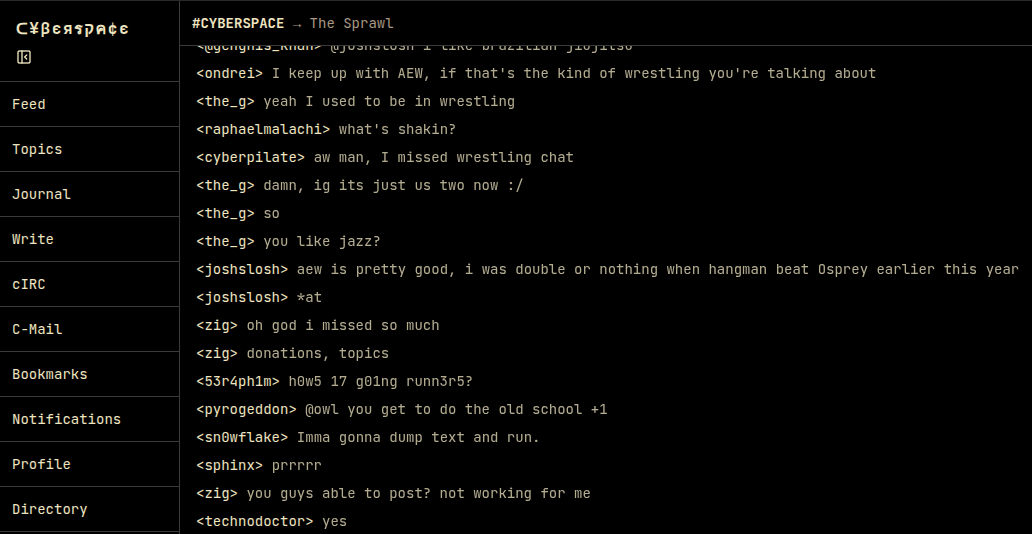
It’s also niche enough that there’s nobody here but us chickens. That is, it looks like a site for geeks, nerds, tech enthusiasts — whatever you want to call us — it might just be via “security by obscurity”, but Cyberspace doesn’t seem likely to attract quite the same Eternal September the rest of the internet is drowning under.
In the Reddit thread where the project was announced, there’s talk of a CLI tool under development. In Rust, because that’s just what all the cool kids are using these days it seems. A text-based interface, be it under DOS or something POSIX-compliant, seems like it would be the perfect fit for this delightful throwback site.
If nobody will join your homebuilt BBS, this might be the next best thing. For those of you who wonder where the hack is: this is a one-man show. If making your own social network in a cave with a box of scraps doesn’t count as a hack, what does?
Thanks to [spiritplumber] for the tip.
Ransomware Midnight: un decryptor gratuito è stato rilasciato grazie ad un errore nel codice
I ricercatori hanno individuato una vulnerabilità nel nuovo ransomware Midnight, basato sul vecchio codice sorgente di Babuk. Il malware viene commercializzato come una versione “avanzata” del malware, ma i tentativi di accelerare e potenziare il processo di crittografia si sono rivelati infruttuosi: i ricercatori Norton sono riusciti a creare un decryptor gratuito per i dati interessati.
Gli esperti affermano che Midnight si basa sul codice sorgente di Babuk, che è trapelato nel pubblico dominio nel 2021 e successivamente utilizzato come base per decine di progetti malware.
Midnight replica quasi interamente la struttura del suo predecessore, ma gli sviluppatori hanno deciso di modificarne lo schema di crittografia: il malware utilizza ChaCha20 per crittografare il contenuto dei file e RSA per crittografare la chiave ChaCha20.
Tuttavia, i ricercatori hanno scoperto un bug nell’utilizzo della chiave RSA, che ha permesso loro di recuperare parzialmente i dati e poi di creare un decryptor completo. Lo strumento è gratuito ed è già stato rilasciato pubblicamente.

Come Babuk, Midnight crittografa solo porzioni di file per agire più velocemente e paralizzare il sistema. La dimensione dei blocchi crittografati dipende dalle dimensioni del file: documenti o database di grandi dimensioni diventano illeggibili quasi istantaneamente. Nelle ultime build, il malware ha ampliato il suo elenco di obiettivi per coprire quasi tutti i formati di file, ad eccezione dei file eseguibili (.exe, .dll e .msi).
I dispositivi infetti finiscono per ricevere file con estensione .midnight o .endpoint, e a volte questo tag è incorporato direttamente nel contenuto del file. Alla vittima viene lasciata una richiesta di riscatto standard (How To Restore Your Files.txt) e talvolta persino un file di registro come report.midnight o debug.endpoint, che mostra il funzionamento dello script.
L'articolo Ransomware Midnight: un decryptor gratuito è stato rilasciato grazie ad un errore nel codice proviene da Red Hot Cyber.