Multimaterial SLA Printer Will Make Your Head Spin


The media in this post is not displayed to visitors. To view it, please log in.

For the last few years, the must-have feature that companies are competing to show off on their filament deposition 3D printers is multi-material printing. Be it tool swapping or a material-changing system, everyone wants to show they can give you the capability to make multicoloured plastic tchotchkes. So far, that hasn’t really been the case in the world of at-home resin printing — until now. A company called Polysynth, headed by a fellow named [Eric], hopes you’ll pay a premium for the ability to make multimaterial resin prints, and they show some interesting use cases in the video below.

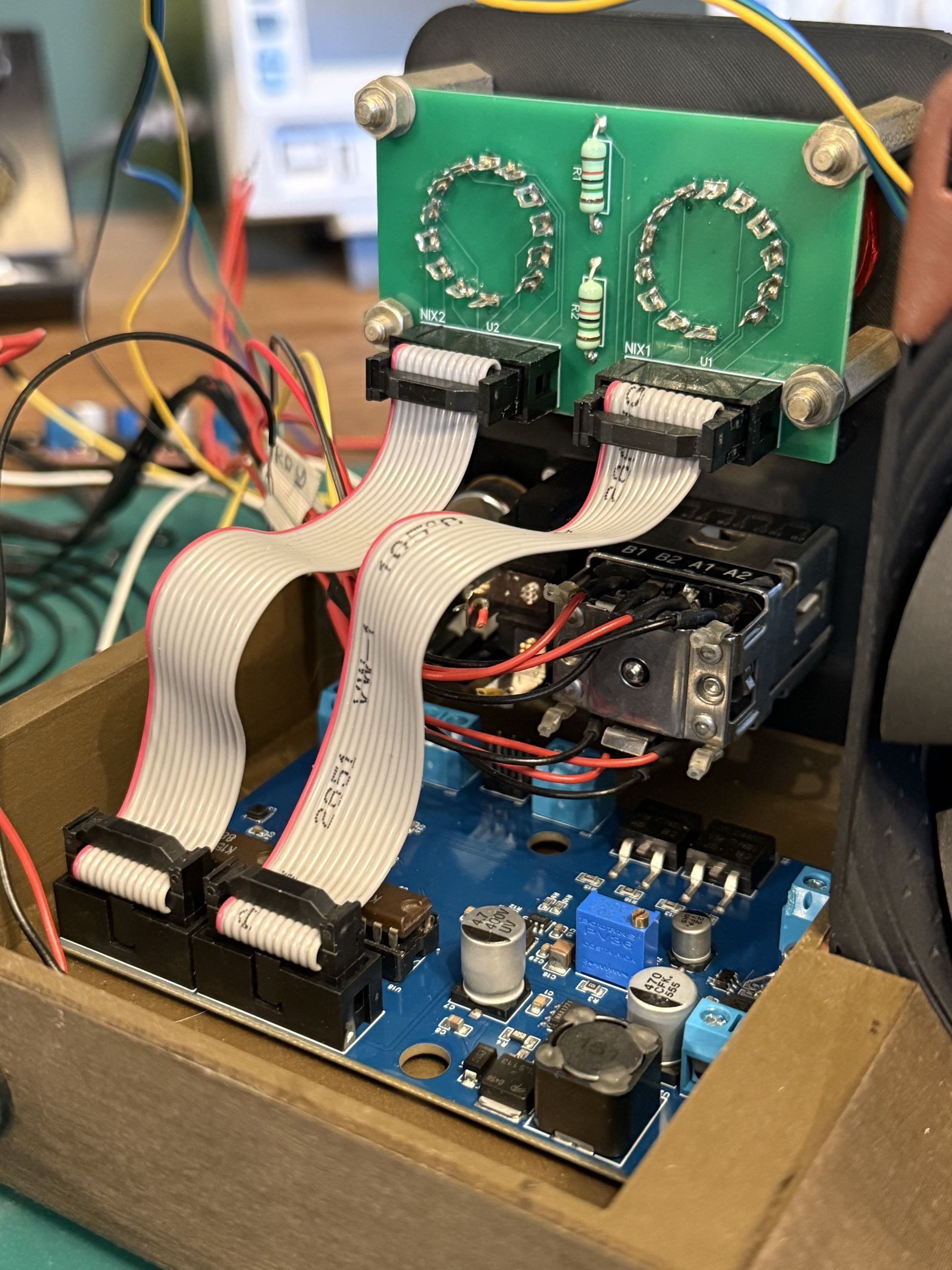
The technique is simple: instead of one resin tank underneath the dipping build plate, [Eric]’s Polysynth printer has a carousel of up to eight small circular tanks. To avoid cross-contamination from uncured resin, the print needs to be cleansed between alternating dips in the different resin vats. Rather than add a wash vat and slow the process down that way, [Eric] and his team decided to use centrifugal force: they just spin the print really, really fast to fling all the uncured resin to the sides of the vat. Yes, really.

The hard part isn’t the resin-removing spin cycle — the hard part is stopping the spin at the precise orientation the part started at, to within a few microns. For that, he’s using a sort of kinematic linkage to lock the spinning portion back into place using a servo. It seems to work, based on the demonstration in the video embedded below. Even better, [Eric] shows off a resin conductive enough to use for fully printed, multilayer PCBs. We doubt SLS will ever compete with traditional fabs on volume, but for fast turnaround without waiting on parts from China, the conductive resins could open up some killer apps for this kind of printer. That and dental: printing gums and teeth of dentures in one solid go is likely to appeal to users in that space.

What do you think? Tipster [Aaron Tagliaboschi] was interested enough to send in the video, and we’re grateful that he did. It’s early days yet, and you cannot buy one of these machines just yet. Since it’s a commercial product, you’ll be starting from scratch if you want to build your own.

It wasn’t that long ago that the only way to get a home resin printer was to build it yourself, and it’s still an option that might save some coin. If you go that route, why not try spinning? We hear that’s a good trick, so let us know if you try it.

youtube.com/embed/g7RS8YON2_s?…


hackaday.com/2026/05/10/multim…

Cybersecurity & cyberwarfare ha ricondiviso questo.

Il nuovo Far West dei giocattoli per bambini basati sull'intelligenza artificiale

Questi compagni connessi potrebbero sconvolgere ogni cosa, dai giochi di fantasia alle favole della buonanotte. Non c'è da stupirsi che alcuni legislatori ne vogliano vietare il possesso.

arstechnica.com/ai/2026/05/the…

@aitech

Why You Probably Shouldn’t DIY a Car Airbag


The media in this post is not displayed to visitors. To view it, please log in.

Car airbags are both a very simple concept and a marvel of engineering, replacing the bone-shattering impact of unforgiving plastic and steel with a relatively soft landing in a funky-smelling air cushion. This deceptively simple concept requires that the gas generator activates only when there is a crash and finishes filling the airbag in the milliseconds before the squishy human’s cranium with its soft filling attempts to occupy the same space as said airbag. This makes mad Aussie bloke [Turnah81]’s attempt at DIY-ing a car airbag a most daring proposition.

Rather than messing about with an IMU and microprocessors, he went low-tech with an inertial fuel cut-off switch. These are mechanical switches that hold a steel ball in place with a magnet until a sufficiently large force — like a crash — dislodges the ball and triggers an event. Usually, a switch like this cuts off the fuel pump.

After a bit of fun with a crash-test rig and the airbag of a salvaged steering wheel, a DIY airbag was assembled using a compressed-gas cylinder instead of the fancy gas generator, along with an electrically triggered valve. Here, you can already see why modern airbags use a gas generator, as it is simply far more compact.

For the bag itself, a pillow case was adapted, with the subsequent crash test — as pictured above — going about as well as you can imagine. After this, he tried a few improvements, like using a bin liner and detonating some fuel, but it seems that the gas generator is very hard to beat for producing a large amount of gas in very little time.

Meanwhile, the inertial cut-off switch turned out to be more than sufficient for this purpose, and it was also used to trigger the original airbag. Of course, with how cheap those off-the-shelf airbag units are and are tested to be fit for purpose, you’d never DIY them for actual use in a car unless you were stark raving mad.

Airbags have a checkered history. There are some places you shouldn’t try to save costs.

youtube.com/embed/5-9EYh9XyiE?…


hackaday.com/2026/05/10/why-yo…

Speech Jammer Gets Jammed Up


The media in this post is not displayed to visitors. To view it, please log in.

This project is perhaps the single most passive-aggressive thing we’ve ever seen on this site: rather than tell someone directly to ‘shut up’, [Blytical]’s speech jammer lets you hack their brain from across the room to stop them from speaking. It’s also a bit of an object lesson in why you shouldn’t just copy reference implementations without careful study — by his own implementation, [Blytical] was forced to learn a lot more than he intended going into this project.

The brain hack behind it is called ‘delayed auditory feedback’: by feeding their speech back to the target with a short delay — only 50 to 200 ms — it creates a confounding effect that is apparently very difficult to speak through. The array of ultrasound transducers is used to accurately aim the audio by serving as an inaudible, low-spread carrier wave, as we saw in another project this year. A shotgun mike picks up the audio from the speaker you wish to harass, and an array of audio processing circuitry takes care of the rest.

That’s where problems happen, as [Blytical] admits he just tossed some reference implementations onto a PCB without bothering to think too hard about what he was doing. It’s the datasheet version of vibe coding, and it usually goes about as well — sometimes perfectly, but rarely without a lot of troubleshooting. That troubleshooting is really, really hard when you don’t quite understand why things were laid out the way they were on the datasheet. We don’t blame [Blytical], you can learn a lot when you bite off more than you can chew. The fact that he risked this failure mode rather than do the whole thing in software with a Pi says good things about how he’s conducting his education.

It’s a shame, though, because we’ve been waiting to see another one of these speech jammers in action for quite some time. Perhaps someone will try again; the ultrasonic array portion seems solved, so if the delay circuit was the problem, perhaps a tiny tape loop would suffice.

youtube.com/embed/LDiRPxgHHEQ?…


hackaday.com/2026/05/10/speech…

Tracing Olfactory Receptor Mapping Between the Nose and Brain


The media in this post is not displayed to visitors. To view it, please log in.

The way that the sense of smell works is that olfactory sensory neurons (OSNs) are wired up to olfactory receptors (ORs) in the nasal epithelium, from which they send signals to the brain. Once arrived there, a hierarchy of processing results in us experiencing the sensation of ‘smelling’. Exactly how the olfactory receptor-to-brain mapping works during development, and whether its physical pattern in the nasal epithelium is replicated in the brain, remained major questions until now. In a study published in Cell by [David H. Brann] and others, many of these questions have now been answered, at least for mice.

As it turns out, the mapping between OSNs and ORs isn’t performed by a random selection process, but instead creates a receptor map that’s closely matched between the nasal epithelium and the brain. What has complicated answering this question up till now is that the nasal epithelium isn’t a flat surface, but a convoluted labyrinth that maximizes surface area to smell better.

The second issue was linking the physical location of OSNs and gene expression in the nasal epithelium. Using a new approach, the researchers showed an intricate patterning in this epithelium, with the basal stem cells from which it regenerates maintaining this patterning. This makes for a system very similar to, for example, the auditory system, where the detection of frequencies in the inner ear, as a linear system, is found to be replicated in the brain.

Although it does not provide us with all the answers yet about how this genetic patterning works, it offers a glimpse at a fascinating system that would seem to be used repeatedly across sensory systems. It may also provide potential treatments for medical conditions affecting the olfactory system, whereby the sense of smell is missing, reduced, or oddly miswired, for example, after a SARS-CoV-2 infection of the olfactory nerve that leads to symptoms such as a constant sensation of a burning smell.

You have to wonder if a better understanding of the nose will revive interest in digitally creating and sending smells?


hackaday.com/2026/05/10/tracin…

Cybersecurity & cyberwarfare ha ricondiviso questo.

The media in this post is not displayed to visitors. To view it, please go to the original post.

Latin Defense: un gioco open source per imparare il latino mentre si costruisce un impero


Latin Defense è un gioco open source per Android che unisce strategia e apprendimento del latino: espandete il vostro Impero Romano e imparate vocaboli conquistando nuove province.
blog.lealternative.net/2026/05…

Cybersecurity & cyberwarfare ha ricondiviso questo.

Gli hacker sfruttano strumenti trapelati dei servizi di intelligence per prendere di mira gli utenti iOS: iPhone e la fine dell’invincibilità: uno sguardo a DarkSword e Coruna


L’emergere di DarkSword e Coruna, due nuovi malware per iOS, mostra come gli strumenti di intelligence di un governo possono diventare armi nelle mani dei criminali informatici. Analizziamo come funzionano questi attacchi, perché sono pericolosi e come non farsi infettare.

kaspersky.it/blog/ios-exploits…

reshared this

Cybersecurity & cyberwarfare ha ricondiviso questo.

Dovremmo spiegargli che il problema è il capitalismo non l'AI in sè.


Cresce il risentimento della Generazione Z verso l'intelligenza artificiale, mentre l'adozione è in stallo e aumentano i timori sul posto di lavoro

Un sondaggio Walton-GSV-Gallup rileva che i giovani si sentono più arrabbiati nei confronti dell'intelligenza artificiale e cauti nell'integrarla in classe

waltonfamilyfoundation.org/abo…

@aitech


Questa voce è stata modificata (1 mese fa)
Cybersecurity & cyberwarfare ha ricondiviso questo.

AISLE scopre CVE-2026-42511: una vulnerabilità di esecuzione di comandi remoti in FreeBSD vecchia di 21 anni.

La vulnerabilità è entrata per la prima volta in FreeBSD nella versione 2005 di FreeBSD-6.0, quando dhclientè stato importato il file di OpenBSD, ed è rimasta latente fino alla scoperta da parte di AISLE. Nel 2012, quando tale sistema operativo è stato dhclient-scriptcompletamente deprecato, è stata di fatto risolta la vulnerabilità.

aisle.com/blog/aisle-discovers…

@informatica

Cybersecurity & cyberwarfare ha ricondiviso questo.

The media in this post is not displayed to visitors. To view it, please go to the original post.

UFO: gli Stati Uniti diffondono la più grande raccolta ufficiale di documenti segreti

📌 Link all'articolo : redhotcyber.com/post/ufo-gli-s…

A cura di Carolina Vivianti

#redhotcyber #news #uap #ufologia #pentagono #documentisegreti

Cybersecurity & cyberwarfare ha ricondiviso questo.

New #cPanel vulnerabilities could allow file access and remote code execution
securityaffairs.com/191931/sec…
#securityaffairs #hacking #malware
Cybersecurity & cyberwarfare ha ricondiviso questo.

Cresce il risentimento della Generazione Z verso l'intelligenza artificiale, mentre l'adozione è in stallo e aumentano i timori sul posto di lavoro

Un sondaggio Walton-GSV-Gallup rileva che i giovani si sentono più arrabbiati nei confronti dell'intelligenza artificiale e cauti nell'integrarla in classe

waltonfamilyfoundation.org/abo…

@aitech

Cybersecurity & cyberwarfare ha ricondiviso questo.

LLMorfismo: quando gli esseri umani arrivano a vedersi come modelli linguistici. L'articolo di Valerio Capraro su Computer e società


LLMorfismo è la convinzione distorta che la cognizione umana funzioni come un grande modello linguistico. Sostengo che l’aumento degli LLM conversazionali potrebbe rendere questo pregiudizio sempre più disponibile psicologicamente. Quando i sistemi artificiali producono un linguaggio simile a quello umano, le persone possono trarre un’inferenza inversa: se gli LLM possono parlare come gli esseri umani, forse gli esseri umani pensano come gli LLM. Questa inferenza è distorta perché la somiglianza a livello di output linguistico non implica somiglianza nell’architettura cognitiva. Tuttavia, l'LLMorfismo può diffondersi attraverso due meccanismi: il trasferimento analogico, mediante il quale le caratteristiche degli LLM vengono proiettate sugli esseri umani, e la disponibilità metaforica, mediante la quale il vocabolario degli LLM diventa un vocabolario culturalmente saliente per descrivere il pensiero. Distinguo LLMorfismo da meccanomorfismo, antropomorfismo, computazionalismo, disumanizzazione, oggettivazione,e teorie dell'elaborazione predittiva della mente. Ne delineo le implicazioni per il lavoro, l’istruzione, la responsabilità, l’assistenza sanitaria, la comunicazione, la creatività e la dignità umana, discutendo anche le condizioni al contorno e le forme di resistenza. Concludo che al dibattito pubblico potrebbe mancare metà del problema: la questione non è solo se attribuiamo troppa mente alle macchine, ma anche se stiamo cominciando ad attribuire troppo poca mente agli esseri umani. ma anche se stiamo cominciando ad attribuire troppo poca mente agli esseri umani. ma anche se stiamo cominciando ad attribuire troppo poca mente agli esseri umani.


arxiv.org/abs/2605.05419

@aitech

Cybersecurity & cyberwarfare ha ricondiviso questo.

La Francia si muove per rompere la messaggistica crittografata: il parlamento francese ha appena approvato l'idea che ogni crittografo al mondo ha già sfatato e la definisce un compromesso.

La delegazione francese dell'intelligence in parlamento ha formalmente sostenuto la violazione della crittografia che protegge le conversazioni di WhatsApp, Signal e Telegram, raccomandando che a magistrati e agenti dell'intelligence venga concesso quello che i legislatori descrivono come un accesso mirato a messaggi che le piattaforme attualmente non possono leggere nemmeno da sole.

reclaimthenet.org/france-moves…

@privacypride

Cybersecurity & cyberwarfare ha ricondiviso questo.

Official #JDownloader site served malware to #Windows and #Linux users between May 6 and May 7
securityaffairs.com/191920/mal…
#securityaffairs #hacking #malware

reshared this

Cybersecurity & cyberwarfare ha ricondiviso questo.

SECURITY AFFAIRS MALWARE NEWSLETTER ROUND 96
securityaffairs.com/191911/mal…
#securityaffairs #hacking #malware
Cybersecurity & cyberwarfare ha ricondiviso questo.

"openai.com" was once the personal homepage of a guy named glenn
L: bsky.app/profile/annierau.bsky…
C: news.ycombinator.com/item?id=4…
posted on 2026.05.10 at 06:21:40 (c=0, p=4)

reshared this

Cybersecurity & cyberwarfare ha ricondiviso questo.

The media in this post is not displayed to visitors. To view it, please go to the original post.

InstallFix: Hackers Use Fake Claude AI Installer Pages and Google Ads to Deploy RedLine Stealer Malware
#CyberSecurity
securebulletin.com/installfix-…
Cybersecurity & cyberwarfare ha ricondiviso questo.

The media in this post is not displayed to visitors. To view it, please go to the original post.

CallPhantom: 28 Fake Android Apps with 7.3 Million Downloads Sold Fabricated Call History Data on Google Play
#CyberSecurity
securebulletin.com/callphantom…
Cybersecurity & cyberwarfare ha ricondiviso questo.

The media in this post is not displayed to visitors. To view it, please go to the original post.

📢 Siete pronti per il DevConf Italia?

🚩 A Pavia, il 7 e 8 Luglio del 2026, presso il Learning Space Cravino in Via Agostino Bassi 2 si terrà il primo convegno nazionale, a cadenza biennale, denominato Dev. Conference Italia.
Verranno affrontati numerosi temi quali: sicurezza, sviluppo applicazioni, didattica, fediverso, libertà e sovranità digitali che potete trovare sul programma.

@devconf@citiverse.it

Venite a scoprire di cosa parleremo, vi aspettiamo numerosi!

devconf.it

Cybersecurity & cyberwarfare ha ricondiviso questo.

The media in this post is not displayed to visitors. To view it, please go to the original post.

Five Critical Redis Vulnerabilities Enable Remote Code Execution Across All Editions — Patch Now
#CyberSecurity
securebulletin.com/five-critic…
Cybersecurity & cyberwarfare ha ricondiviso questo.

The media in this post is not displayed to visitors. To view it, please go to the original post.

Mercoledì alle 19.15 ci vediamo con @macfranc e @skariko sul canale YouTube di @BoostMediaAPS per una chiacchierata davvero interessante a tema #Fediverso , #Servizi , #News , #Divulgazione , #Alternative , #OpenSource e #Linux

Non potete mancare!

Canale BoostMedia APS 😉

Cybersecurity & cyberwarfare ha ricondiviso questo.

The media in this post is not displayed to visitors. To view it, please go to the original post.

WatchGuard Agent Vulnerabilities Allow Attackers to Escalate to Full SYSTEM Privileges on Windows
#CyberSecurity
securebulletin.com/watchguard-…
Cybersecurity & cyberwarfare ha ricondiviso questo.

The media in this post is not displayed to visitors. To view it, please go to the original post.

The media in this post is not displayed to visitors. To view it, please go to the original post.

Silver Fox lancia ABCDoor: spear phishing con loader Rust personalizzato contro India e Russia, nuova backdoor Python in campo
#CyberSecurity
insicurezzadigitale.com/silver…


Silver Fox lancia ABCDoor: spear phishing con loader Rust personalizzato contro India e Russia, nuova backdoor Python in campo


Tra dicembre 2025 e febbraio 2026, il gruppo APT di matrice cinese noto come Silver Fox ha lanciato due ondate coordinate di spear phishing contro organizzazioni in India e Russia, sfruttando esche a tema fiscale costruite ad hoc per ciascun paese. Il vettore tecnico è un loader Rust modificato — una versione bespoke del framework open source RustSL — che distribuisce ValleyRAT (aka Winos 4.0) insieme a una backdoor Python finora inedito, denominato ABCDoor. La ricerca è stata pubblicata da Kaspersky Securelist e ripresa da The Hacker News il 4 maggio 2026. Più di 1.600 email di phishing sono state registrate tra inizio gennaio e inizio febbraio, con organizzazioni impattate nei settori industriale, consulenza, retail e trasporti.

Il profilo di Silver Fox: doppio binario tra cybercrime e spionaggio


Silver Fox è un gruppo APT cinese attivo almeno dal 2024, documentato inizialmente per campagne contro obiettivi in Cina, poi espanso verso Taiwan, Giappone, India e Russia. Secondo l’analisi di S2W, il gruppo ha sviluppato un «dual-track operational model» che conduce simultaneamente attività opportunistiche su larga scala — tipiche del cybercrime finanziario — e operazioni di spionaggio più mirate. L’adozione di lure personalizzate per ciascun paese bersaglio, con riferimenti puntuali ai sistemi fiscali locali, indica un livello di intelligence preliminare coerente con un’operazione state-sponsored o comunque sostenuta da risorse significative.

La catena d’attacco: phishing, RustSL, ValleyRAT, ABCDoor

Fase 1 — Delivery via phishing fiscale


Le email di phishing impersonano comunicazioni ufficiali dell’Income Tax Department of India (dicembre 2025) e successivamente dell’equivalente russo (gennaio 2026). Il messaggio contiene un PDF allegato con due link cliccabili che reindirizzano al download di un archivio ZIP o RAR ospitato su abc.haijing88[.]com. All’interno dell’archivio si trova un eseguibile che si maschera da PDF. In alcune varianti della campagna di dicembre, il codice malevolo è stato incorporato direttamente nell’allegato email, saltando il redirect esterno.

Fase 2 — RustSL loader: geofencing e anti-analysis


L’eseguibile è una versione modificata di RustSL, un framework open source per shellcode loader e bypass degli antivirus scritto in Rust. Silver Fox ha personalizzato il codice sorgente pubblicamente disponibile su GitHub, aggiungendo funzionalità non presenti nell’originale:

  • Geofencing per paese: la versione originale di RustSL supporta solo la Cina come paese bersaglio; la variante Silver Fox estende la lista a India, Indonesia, Sud Africa, Russia e Cambogia (con versioni successive che aggiungono il Giappone). Il loader verifica la geolocalizzazione prima di procedere, abortendo l’esecuzione in caso di mismatch.
  • Rilevamento di VM e sandbox: controlli ambientali standard per ostacolare l’analisi dinamica in ambienti di ricerca.
  • Phantom Persistence: una variante del loader utilizza una tecnica di persistenza documentata per la prima volta nel giugno 2025 come «Phantom Persistence». Il meccanismo intercetta il segnale di shutdown del sistema, blocca la normale sequenza di spegnimento e forza un riavvio simulando un aggiornamento applicativo. Al successivo avvio dell’OS, il loader viene eseguito automaticamente.


# Infrastruttura C2 identificata
abc.haijing88[.]com          — hosting archivi payload
login-module.dll_bin         — componente core C2 di ValleyRAT
# Country list RustSL personalizzato (pre-19 gennaio 2026)
IN, ID, ZA, RU, KH
# Versioni successive aggiungono:
JP

Fase 3 — ValleyRAT (Winos 4.0)


Il payload crittografato scompattato da RustSL è ValleyRAT, noto anche come Winos 4.0, un framework malware modulare già utilizzato da Silver Fox in campagne precedenti. Il componente core, denominato login-module.dll_bin, gestisce le comunicazioni C2, l’esecuzione di comandi remoti e il recupero ed esecuzione di moduli aggiuntivi. È su questo layer modulare che viene distribuito ABCDoor.

Fase 4 — ABCDoor: la nuova backdoor Python


ABCDoor è una backdoor Python finora inedita, presente nell’arsenale di Silver Fox dal 19 dicembre 2024 e utilizzato in attacchi a partire da febbraio-marzo 2025. Viene distribuita come modulo personalizzato di ValleyRAT, dopo un secondo controllo di geofencing che filtra ulteriormente il target. Le capacità operative documentate da Kaspersky includono:

  • Persistenza e aggiornamento/rimozione autonomo del backdoor
  • Cattura di screenshot
  • Controllo remoto di mouse e tastiera
  • Operazioni sul file system (lettura, scrittura, esecuzione)
  • Gestione dei processi di sistema
  • Esfiltrazione del contenuto degli appunti (clipboard)
  • Comunicazione C2 via HTTPS con server esterno

In varianti più recenti, osservate a partire da novembre 2025, ABCDoor viene distribuito anche tramite un loader JavaScript distribuito all’interno di archivi SFX (self-extracting) contenuti in ZIP allegati a email di phishing — un vettore alternativo che non richiede RustSL come intermediario.

Distribuzione geografica e settori impattati


Il maggior numero di attacchi è stato rilevato in India, Russia e Indonesia, seguiti da Sud Africa e Giappone. I settori più colpiti nelle ondate di gennaio-febbraio 2026 sono stati industriale, consulenza, retail e trasporti. La scelta di bersagliare contemporaneamente India e Russia — paesi con rapporti complessi con la Cina sia a livello diplomatico che commerciale — suggerisce un obiettivo di intelligence economica e politica piuttosto che un’operazione puramente finanziaria.

Connessione con campagne precedenti


Silver Fox aveva già utilizzato ValleyRAT in campagne precedenti, tipicamente contro obiettivi in Asia orientale. L’introduzione di RustSL come loader — con personalizzazioni sofisticate del codice sorgente open source — e la comparsa di ABCDoor come modulo aggiuntivo indicano un’evoluzione significativa delle capacità tecniche del gruppo. La tecnica di Phantom Persistence, che sfrutta il meccanismo di Windows per gli aggiornamenti che richiedono riavvio, è particolarmente interessante per la sua capacità di sopravvivere ai controlli di startup standard.

IoC e indicatori di compromissione

# Dominio C2 principale
abc.haijing88[.]com
# File chiave da monitorare
login-module.dll_bin        — componente core ValleyRAT C2
RustSL variants             — loader con geofencing integrato
# Pattern comportamentali (Phantom Persistence)
- Intercettazione segnale WM_QUERYENDSESSION/WM_ENDSESSION
- Registrazione come "pending file rename operation" al riavvio
- Esecuzione al boot mascherata da aggiornamento applicativo
# Vettore email
- Mittente che impersona Income Tax Department (India) o equivalente russo
- Allegato PDF con link a haijing88[.]com
- Archivio ZIP/RAR con eseguibile che simula PDF

Due righe per i difensori


  • Bloccare il dominio abc.haijing88[.]com nei proxy web e nei firewall di uscita.
  • Monitorare il comportamento di shutdown: processi che intercettano WM_QUERYENDSESSION o modificano PendingFileRenameOperations nel registry durante lo shutdown sono indicatori forti di Phantom Persistence.
  • Email gateway: filtrare allegati PDF con link a domini registrati di recente e archivi SFX annidati in ZIP. Le esche fiscali sono stagionali ma prevedibili.
  • EDR con visibilità sulle tecniche LotL: ABCDoor usa funzioni di sistema standard per operazioni di file system e controllo remoto; rilevarlo richiede behavioral analytics e non solo firma.
  • Sandboxing con geolocalizzazione autentica: il geofencing di RustSL aborta in ambienti non corrispondenti ai paesi target. Sandbox configurate con IP di geolocalizzazione neutri potrebbero non triggerare il payload. Usare VPN con IP indiano, russo o indonesiano per l’analisi dinamica.

La campagna Silver Fox conferma una tendenza in atto: i gruppi APT cinesi stanno diversificando geograficamente i propri bersagli ben oltre i tradizionali obiettivi in Asia orientale, e stanno investendo nello sviluppo di tooling personalizzato — loader Rust bespoke, backdoor Python inediti, tecniche di persistenza innovative — che rende inefficaci le soluzioni di detection basate esclusivamente su signature statiche.


Cybersecurity & cyberwarfare ha ricondiviso questo.

The media in this post is not displayed to visitors. To view it, please go to the original post.

🚀 RHC Conference 2026: non è una conferenza, è un’esperienza!

👉 Iscriviti ai workshop: rhc-conference-2026-workshop.e…
👉 Iscriviti alla conferenza: rhc-conference-2026.eventbrite…
👉 Programma: redhotcyber.com/linksSk2L/prog…

#redhotcyber #rhcconference #conferenza #informationsecurity #ethicalhacking #dataprotection

Cybersecurity & cyberwarfare ha ricondiviso questo.

The media in this post is not displayed to visitors. To view it, please go to the original post.

Instagram disabilita crittografia end-to-end: cosa significa per la tua privacy

📌 Link all'articolo : redhotcyber.com/post/instagram…

A cura di Bajram Zeqiri

#redhotcyber #news #instagram #crittografia #messaggiprivati #sicurezzainformatica #whatsapp

reshared this

Cybersecurity & cyberwarfare ha ricondiviso questo.

The media in this post is not displayed to visitors. To view it, please log in.

Silver Fox lancia ABCDoor: spear phishing con loader Rust personalizzato contro India e Russia, nuova backdoor Python in campo


@Informatica (Italy e non Italy)
Il gruppo APT cinese Silver Fox ha condotto campagne di spear phishing a tema fiscale contro organizzazioni in India e Russia, distribuendo il backdoor ValleyRAT


Silver Fox lancia ABCDoor: spear phishing con loader Rust personalizzato contro India e Russia, nuova backdoor Python in campo


Tra dicembre 2025 e febbraio 2026, il gruppo APT di matrice cinese noto come Silver Fox ha lanciato due ondate coordinate di spear phishing contro organizzazioni in India e Russia, sfruttando esche a tema fiscale costruite ad hoc per ciascun paese. Il vettore tecnico è un loader Rust modificato — una versione bespoke del framework open source RustSL — che distribuisce ValleyRAT (aka Winos 4.0) insieme a una backdoor Python finora inedito, denominato ABCDoor. La ricerca è stata pubblicata da Kaspersky Securelist e ripresa da The Hacker News il 4 maggio 2026. Più di 1.600 email di phishing sono state registrate tra inizio gennaio e inizio febbraio, con organizzazioni impattate nei settori industriale, consulenza, retail e trasporti.

Il profilo di Silver Fox: doppio binario tra cybercrime e spionaggio


Silver Fox è un gruppo APT cinese attivo almeno dal 2024, documentato inizialmente per campagne contro obiettivi in Cina, poi espanso verso Taiwan, Giappone, India e Russia. Secondo l’analisi di S2W, il gruppo ha sviluppato un «dual-track operational model» che conduce simultaneamente attività opportunistiche su larga scala — tipiche del cybercrime finanziario — e operazioni di spionaggio più mirate. L’adozione di lure personalizzate per ciascun paese bersaglio, con riferimenti puntuali ai sistemi fiscali locali, indica un livello di intelligence preliminare coerente con un’operazione state-sponsored o comunque sostenuta da risorse significative.

La catena d’attacco: phishing, RustSL, ValleyRAT, ABCDoor

Fase 1 — Delivery via phishing fiscale


Le email di phishing impersonano comunicazioni ufficiali dell’Income Tax Department of India (dicembre 2025) e successivamente dell’equivalente russo (gennaio 2026). Il messaggio contiene un PDF allegato con due link cliccabili che reindirizzano al download di un archivio ZIP o RAR ospitato su abc.haijing88[.]com. All’interno dell’archivio si trova un eseguibile che si maschera da PDF. In alcune varianti della campagna di dicembre, il codice malevolo è stato incorporato direttamente nell’allegato email, saltando il redirect esterno.

Fase 2 — RustSL loader: geofencing e anti-analysis


L’eseguibile è una versione modificata di RustSL, un framework open source per shellcode loader e bypass degli antivirus scritto in Rust. Silver Fox ha personalizzato il codice sorgente pubblicamente disponibile su GitHub, aggiungendo funzionalità non presenti nell’originale:

  • Geofencing per paese: la versione originale di RustSL supporta solo la Cina come paese bersaglio; la variante Silver Fox estende la lista a India, Indonesia, Sud Africa, Russia e Cambogia (con versioni successive che aggiungono il Giappone). Il loader verifica la geolocalizzazione prima di procedere, abortendo l’esecuzione in caso di mismatch.
  • Rilevamento di VM e sandbox: controlli ambientali standard per ostacolare l’analisi dinamica in ambienti di ricerca.
  • Phantom Persistence: una variante del loader utilizza una tecnica di persistenza documentata per la prima volta nel giugno 2025 come «Phantom Persistence». Il meccanismo intercetta il segnale di shutdown del sistema, blocca la normale sequenza di spegnimento e forza un riavvio simulando un aggiornamento applicativo. Al successivo avvio dell’OS, il loader viene eseguito automaticamente.


# Infrastruttura C2 identificata
abc.haijing88[.]com          — hosting archivi payload
login-module.dll_bin         — componente core C2 di ValleyRAT
# Country list RustSL personalizzato (pre-19 gennaio 2026)
IN, ID, ZA, RU, KH
# Versioni successive aggiungono:
JP
Fase 3 — ValleyRAT (Winos 4.0)


Il payload crittografato scompattato da RustSL è ValleyRAT, noto anche come Winos 4.0, un framework malware modulare già utilizzato da Silver Fox in campagne precedenti. Il componente core, denominato login-module.dll_bin, gestisce le comunicazioni C2, l’esecuzione di comandi remoti e il recupero ed esecuzione di moduli aggiuntivi. È su questo layer modulare che viene distribuito ABCDoor.

Fase 4 — ABCDoor: la nuova backdoor Python


ABCDoor è una backdoor Python finora inedita, presente nell’arsenale di Silver Fox dal 19 dicembre 2024 e utilizzato in attacchi a partire da febbraio-marzo 2025. Viene distribuita come modulo personalizzato di ValleyRAT, dopo un secondo controllo di geofencing che filtra ulteriormente il target. Le capacità operative documentate da Kaspersky includono:

  • Persistenza e aggiornamento/rimozione autonomo del backdoor
  • Cattura di screenshot
  • Controllo remoto di mouse e tastiera
  • Operazioni sul file system (lettura, scrittura, esecuzione)
  • Gestione dei processi di sistema
  • Esfiltrazione del contenuto degli appunti (clipboard)
  • Comunicazione C2 via HTTPS con server esterno

In varianti più recenti, osservate a partire da novembre 2025, ABCDoor viene distribuito anche tramite un loader JavaScript distribuito all’interno di archivi SFX (self-extracting) contenuti in ZIP allegati a email di phishing — un vettore alternativo che non richiede RustSL come intermediario.

Distribuzione geografica e settori impattati


Il maggior numero di attacchi è stato rilevato in India, Russia e Indonesia, seguiti da Sud Africa e Giappone. I settori più colpiti nelle ondate di gennaio-febbraio 2026 sono stati industriale, consulenza, retail e trasporti. La scelta di bersagliare contemporaneamente India e Russia — paesi con rapporti complessi con la Cina sia a livello diplomatico che commerciale — suggerisce un obiettivo di intelligence economica e politica piuttosto che un’operazione puramente finanziaria.

Connessione con campagne precedenti


Silver Fox aveva già utilizzato ValleyRAT in campagne precedenti, tipicamente contro obiettivi in Asia orientale. L’introduzione di RustSL come loader — con personalizzazioni sofisticate del codice sorgente open source — e la comparsa di ABCDoor come modulo aggiuntivo indicano un’evoluzione significativa delle capacità tecniche del gruppo. La tecnica di Phantom Persistence, che sfrutta il meccanismo di Windows per gli aggiornamenti che richiedono riavvio, è particolarmente interessante per la sua capacità di sopravvivere ai controlli di startup standard.

IoC e indicatori di compromissione

# Dominio C2 principale
abc.haijing88[.]com
# File chiave da monitorare
login-module.dll_bin        — componente core ValleyRAT C2
RustSL variants             — loader con geofencing integrato
# Pattern comportamentali (Phantom Persistence)
- Intercettazione segnale WM_QUERYENDSESSION/WM_ENDSESSION
- Registrazione come "pending file rename operation" al riavvio
- Esecuzione al boot mascherata da aggiornamento applicativo
# Vettore email
- Mittente che impersona Income Tax Department (India) o equivalente russo
- Allegato PDF con link a haijing88[.]com
- Archivio ZIP/RAR con eseguibile che simula PDF

Due righe per i difensori


  • Bloccare il dominio abc.haijing88[.]com nei proxy web e nei firewall di uscita.
  • Monitorare il comportamento di shutdown: processi che intercettano WM_QUERYENDSESSION o modificano PendingFileRenameOperations nel registry durante lo shutdown sono indicatori forti di Phantom Persistence.
  • Email gateway: filtrare allegati PDF con link a domini registrati di recente e archivi SFX annidati in ZIP. Le esche fiscali sono stagionali ma prevedibili.
  • EDR con visibilità sulle tecniche LotL: ABCDoor usa funzioni di sistema standard per operazioni di file system e controllo remoto; rilevarlo richiede behavioral analytics e non solo firma.
  • Sandboxing con geolocalizzazione autentica: il geofencing di RustSL aborta in ambienti non corrispondenti ai paesi target. Sandbox configurate con IP di geolocalizzazione neutri potrebbero non triggerare il payload. Usare VPN con IP indiano, russo o indonesiano per l’analisi dinamica.

La campagna Silver Fox conferma una tendenza in atto: i gruppi APT cinesi stanno diversificando geograficamente i propri bersagli ben oltre i tradizionali obiettivi in Asia orientale, e stanno investendo nello sviluppo di tooling personalizzato — loader Rust bespoke, backdoor Python inediti, tecniche di persistenza innovative — che rende inefficaci le soluzioni di detection basate esclusivamente su signature statiche.


Cybersecurity & cyberwarfare ha ricondiviso questo.

Security Affairs #newsletter Round 576 by Pierluigi Paganini – INTERNATIONAL EDITION
securityaffairs.com/191908/bre…
#securityaffairs #hacking #malware
Cybersecurity & cyberwarfare ha ricondiviso questo.

The media in this post is not displayed to visitors. To view it, please go to the original post.

E se i tuoi prompt AI finissero sui server degli hacker? I Proxy AI stanno arrivando

📌 Link all'articolo : redhotcyber.com/post/e-se-i-tu…

A cura di Silvia Felici

#redhotcyber #news #intelligenzaartificiale #mercatorosogrigio #cina #cybersecurity #hacking

reshared this

Cybersecurity & cyberwarfare ha ricondiviso questo.

The media in this post is not displayed to visitors. To view it, please go to the original post.

Come uso io l’Intelligenza Artificiale camisanicalzolari.it/come-uso-…
Cybersecurity & cyberwarfare ha ricondiviso questo.

The media in this post is not displayed to visitors. To view it, please go to the original post.

I bot controllano Internet! E tra qul 53%, Agenti creati per estorcere denaro

📌 Link all'articolo : redhotcyber.com/post/i-bot-con…

A cura di Carolina Vivianti

#redhotcyber #news #internet #sicurezzainformatica #bot #truffeonline #estorsioni #attacchidi rete

Challenging The Way We Pedal


The media in this post is not displayed to visitors. To view it, please log in.

The bicycle is an invention that has not changed in its fundamentals since the first recognisably modern machines appeared in the closing years of the 19th century. Its frame uses a structure of two triangles, its wheels are equal in size, and it’s propelled by a pedal crank and (in most cases) a chain. Bicycles have improved vastly in materials and performance, but if you were to wheel a 2026 tourer into an 1886 bike shop, the Victorian proprietor would recognise it. Only a very brave engineer would try to fundamentally change such a formula, but here’s [Not programming] with a crankless bicycle.

The idea is to replace the crank’s circular motion with a linear one, thus providing a more constant propulsion. The build was inspired by another that used a sinusoidal track in a rotating cylinder to achieve the necessary conversion. This design takes a different tack, using an arrangement of gears and freewheels he describes as a mechanical rectifier to convert the back-and-forth motion of pedaling into rotation. The pedals themselves are stirrups mounted at each end of a V-belt.

This build is an exercise in pushing the limits of 3D print strength, as prototype after prototype shears under load. He does finally get the thing to work, though, and we admire his persistence. Oddly, this isn’t the first 3D-printed bicycle geartrain we’ve seen.

youtube.com/embed/4HLOsi2gWXQ?…


hackaday.com/2026/05/09/challe…

Running Your Own 3G Network


The media in this post is not displayed to visitors. To view it, please log in.

A web interface is shown providing information about a cellular network base station.

CDMA2000 was one of the protocols defined for 3G networks and is now years out of date and being phased out worldwide. Nevertheless, there are still vast numbers of phones that will happily connect to it, creating an opportunity for hackers seeking to run their own cellular networks. [Chrismoos] recently made this endeavour significantly easier by releasing 1xBTS, a Rust implementation of the lower three layers of a CDMA2000 network.

The lowest layer of the stack is an SDR for the actual radio communications. It’s been tested with the USRP B200 and B210, the LimeSDR Mini 2, and the BladeRF Micro 2.0. The code might work with certain other SDRs using the SoapySDR abstraction layer. The SDR is controlled by the base station (BTS) software, which, in turn, is controlled by the base station controller (BSC) over an Abis link. The BSC manages channels and mobile device associations, and exchanges frames with the mobile switching center (MSC), which handles message switching.

The stack includes standard 3G verification; before a handset can authenticate to the network, its details must be added to the home location register (HLR). Once authenticated, the handset can access all standard services: inbound and outbound voice calls via a SIP gateway, inbound and outbound SMS, and data packet transfers. A web dashboard provides a convenient management platform that includes packet tracing.

It should be noted that using this carelessly is legally hazardous; radio transmissions are strictly regulated in most countries, particularly in the cellular bands. If you’d still like to run your own cell network, we’ve also seen a few other efforts, such as this 4G implementation, this 1G recreation, and a GSM network made for a hacker camp.


hackaday.com/2026/05/09/runnin…

Cybersecurity & cyberwarfare ha ricondiviso questo.

The media in this post is not displayed to visitors. To view it, please go to the original post.

Questa voce è stata modificata (1 mese fa)

The Noctua Fan Files and the Limits of 3D Printing PC Fans


The media in this post is not displayed to visitors. To view it, please log in.

After Noctua recently released CAD files for a range of their computer fans, one of the first thoughts that popped up for most people was: Can you just to 3D print their fans? Even though Noctua begs you not to 3D print the files and even says they changed the design slightly so it wouldn’t be the same anyway, the question persists. Fortunately, [Steve] of Gamers Nexus is here to help us answer the question of whether it makes sense to 3D print a computer fan.

Unsurprisingly, the answer is mostly a resounding ‘no’. After reworking the original CAD models to be both printable on a Bambu Lab FDM printer and printing the parts in PLA, the arguably most important part, the motor, still had to be sourced from an original Noctua fan. Although you could source a cheaper motor, that could change the fan’s characteristics.

The other issue is materials. The special polymer that Noctua uses for its fans is designed not to change shape significantly when the fan blades are spinning, whereas PLA and basically every other thermoplastic will likely deform enough to hit the inside of the fan with the blades. For this reason, a 3 mm gap was used in the PLA print compared with the approximately 0.5 mm gap of the original Noctua fan.

Using the professional fan tester and semi-anechoic chamber over at Gamers Nexus, the original and replica fans were compared, showing that the 3D-printed fan had a similar noise profile but produced only about half the airflow. This is likely due to the blade shape and angle, the increased gap, and probably a dozen other details that presumably justify putting a cool $40 down for the original fan.

In short, you’re probably best off using these Noctua fan CAD models for fit testing in a larger CAD model, or 3D printing it for a similar purpose, rather than for a functional fan design. At least now we know. Thanks, [Steve].

youtube.com/embed/_t3tEQmCl-M?…


hackaday.com/2026/05/09/the-no…

Remembering the BBC Computer Literacy Project


The media in this post is not displayed to visitors. To view it, please log in.

There comes a point in everybody’s life when things that they were a part of are presented as history, and for the 8-bit generation, that time is now. It’s interesting to see the early history of 8-bit home computers presented as history, not from a 2026 perspective but from the early 1990s. The BBC archive has recently posted a retrospective from 1992 looking at ten years of the Computer Literacy Project, a British government programme intended to equip the young people of the 1980s with the skills they would need to approach the information age. It’s a much more immediate history of something which was largely still in place at the time, making it a time capsule in which this past isn’t quite the other country we see it as today.

The Computer Literacy Project was run by the nation’s broadcaster and included a raft of TV programming about computers, as well as the commissioning of a machine specifically for the project. You know this machine as the Acorn BBC Micro, and aside from eventually providing the genesis of what would become ARM, it remains one of the most high-spec 8-bit machines in terms of built-in hardware. We hear from the luminaries of Acorn about the development of this machine, and then the film moves into some of the wider cultural effects.

If you were there, you’ll doubtless remember some of the TV programmes featured, and you might have used a BBC Micro at school. If you weren’t there, it’s an encapsulation of the promise on offer in that era, an optimism that seems sad when you reflect that educational computing descended into learning Microsoft Word during the following decade. It would be another two decades before the Raspberry Pi and BBC micro:bit picked up that fallen torch.

The Beeb, it seems, has long had an interest in home computers. Schools, too.

youtube.com/embed/JZjNHnYFqOA?…


hackaday.com/2026/05/09/rememb…

Cybersecurity & cyberwarfare ha ricondiviso questo.

The media in this post is not displayed to visitors. To view it, please go to the original post.

AI Supply Chain Attack: 575+ Malicious Skills on Hugging Face and ClawHub Deliver Trojans, Cryptominers, and AMOS Stealer
#CyberSecurity
securebulletin.com/ai-supply-c…
Cybersecurity & cyberwarfare ha ricondiviso questo.

The media in this post is not displayed to visitors. To view it, please go to the original post.

ZiChatBot: OceanLotus APT Uses Zulip Chat APIs as Covert Command and Control in PyPI Supply Chain Attack
#CyberSecurity
securebulletin.com/zichatbot-o…
Cybersecurity & cyberwarfare ha ricondiviso questo.

The media in this post is not displayed to visitors. To view it, please go to the original post.

NVIDIA GeForce NOW Data Breach at GFN.AM: Personal Data of Users Exposed in 54-Day Unauthorized Access Incident
#CyberSecurity
securebulletin.com/nvidia-gefo…