The media in this post is not displayed to visitors. To view it, please log in.

Kong RAT: la nuova campagna di SEO poisoning con dropper NativeAOT .NET 10 che prende di mira gli sviluppatori cinesi


@Informatica (Italy e non Italy)
eSentire TRU ha documentato Kong RAT, un impianto modulare distribuito via installer contraffatti di FinalShell, Xshell, QuickQ e Clash. La catena a sei stadi sfrutta un dropper


Kong RAT: la nuova campagna di SEO poisoning con dropper NativeAOT .NET 10 che prende di mira gli sviluppatori cinesi


Si parla di:
Toggle


Una nuova campagna di SEO poisoning documentata da eSentire TRU sta prendendo di mira sviluppatori e professionisti IT di lingua cinese con Kong RAT, un impianto modulare distribuito attraverso installer contraffatti di strumenti molto diffusi nell’ecosistema sinofono: FinalShell, Xshell, QuickQ e Clash. La catena di infezione, articolata in sei stadi, abusa di Alibaba Cloud OSS per ospitare i payload di prima fase e combina tecniche di evasione avanzate — da PEB masquerading al bypass UAC tramite CMSTPLUA COM — che la pongono in una fascia qualitativa superiore rispetto alle classiche campagne Gh0st/kkRAT viste nel 2025.

Il panorama: SEO poisoning come vettore strategico verso la Cina


Il SEO poisoning è diventato negli ultimi diciotto mesi uno dei vettori preferiti dagli attori di lingua cinese per colpire il mercato domestico, quasi sempre perché il Great Firewall rende difficile l’accesso ai canali di distribuzione occidentali e spinge utenti e sviluppatori a cercare software tecnici tramite motori di ricerca locali, dove il ranking manipolato porta a domini typosquatted praticamente indistinguibili dagli originali. La telemetria pubblica degli ultimi mesi ha mostrato HiddenGh0st, Winos/ValleyRAT, FatalRAT e kkRAT diffusi con lo stesso schema, con landing page clone di DeepL, Chrome, Signal, Telegram e WPS Office. Kong RAT rappresenta il naturale salto di qualità: un impianto custom scritto ex-novo, non derivato da Gh0st, con un proprio protocollo C2 e un’architettura modulare a plug-in.

La scelta dei “software-esca” è particolarmente chirurgica. FinalShell e Xshell sono client SSH/terminale ampiamente utilizzati da sysadmin e DevOps cinesi; QuickQ e Clash sono utility di rete comunemente associate ad ambienti tecnici. Compromettere questi utenti significa posizionare la backdoor esattamente dove serve: su macchine che hanno credenziali verso server di produzione, bastion host, reti aziendali.

La kill chain in sei stadi


La catena di esecuzione è quella che distingue Kong RAT dalle precedenti campagne di SEO poisoning sinofone. eSentire ha ricostruito sei stadi distinti, ognuno progettato per ridurre la superficie di rilevamento al passaggio successivo:

  1. SEO poisoning e landing page contraffatte (finalshell-ssh.com, xshell-cn.com, quickq-cn.com, clash-cn.com) posizionate in cima ai risultati di ricerca tramite tecniche di manipolazione del ranking.
  2. Dropper NativeAOT in .NET 10.0. Il Setup.exe iniziale è compilato con NativeAOT, la modalità di compilazione ahead-of-time introdotta con .NET 10: il risultato è un binario privo delle tipiche strutture metadata IL del CLR, quindi non analizzabile con gli strumenti classici per .NET (dnSpy, ILSpy, de4dot). È una scelta che spezza la pipeline di reverse engineering di molti analisti.
  3. Orchestratore DLL in-memory che risolve e carica i componenti successivi senza mai toccare il disco.
  4. DLL sideloading su rc.exe, il Microsoft Resource Compiler firmato, che carica una rcdll.dll malevola.
  5. Shellcode loader tramite callback di EnumWindows: lo shellcode viene eseguito come callback dell’API di enumerazione finestre, aggirando i monitor che agganciano CreateThread/NtCreateThreadEx.
  6. Kong RAT eseguibile: l’impianto finale, con C2 TCP proprietario su MPK1, compressione LZ4 e meccanismo di plug-in.


Tecniche di evasione: il dettaglio che conta


Gli operatori di Kong RAT dimostrano familiarità con la moderna superficie di detection EDR. Quattro punti meritano particolare attenzione.

PEB masquerading come explorer.exe. Prima di eseguire le routine malevole, il loader riscrive le strutture del Process Environment Block per far apparire il processo come explorer.exe. Molti prodotti di rilevamento ragionano su liste di processi “attesi” o su reputation: mascherarsi da explorer.exe riduce il segnale verso il SOC.

UAC bypass silente via CMSTPLUA COM. L’abuso dell’interfaccia COM CMSTPLUA è noto dal 2019 ma resta efficace: la shell malevola ottiene privilegi elevati senza prompt grazie all’auto-elevation dell’oggetto COM, senza dover ricorrere a UAC bypass più rumorosi come fodhelper.exe.

Shellcode tramite EnumWindows. Utilizzare una callback API come dispatcher di shellcode è una tecnica di living-off-the-land meno comune delle più note indirizzazioni (QueueUserAPC, SetWindowsHookEx) e aggira l’instrumentation di molti EDR che vigilano sulle primitive di creazione thread.

Persistenza via RPC diretto. Invece di invocare schtasks.exe — che molti SOC monitorano come marker comportamentale — Kong RAT registra task pianificati chiamando direttamente le RPC del Task Scheduler, con nomi del pattern SimpleActivityScheduleTimer_{GUID}. La configurazione finisce in HKCU\Software\KongClient.

Post-exploitation e telemetria raccolta


Una volta insediato, Kong RAT attiva un keylogger basato su GetAsyncKeyState che scrive in chiaro su C:\ProgramData\KongKeylogger.txt, esegue enumerazioni WMI per mappare i prodotti di sicurezza installati e preleva dati di geolocalizzazione via CDN LeTV. Il payload è modulare: plug-in aggiuntivi possono essere caricati dinamicamente dal C2 tramite il protocollo MPK1 su porta TCP 5947, e la configurazione dei plug-in è persistita in registro sotto HKCU\Software\KongClient\Plugins. Il framework supporta anche C2 migration, una caratteristica che aumenta la resilienza dell’infrastruttura contro takedown parziali.

Attribuzione e contesto


Il percorso PDB di alcuni sample contiene il riferimento all’utente 52pojie, nickname riconducibile alla nota community cinese di reverse engineering 52pojie.cn. È un indizio debole — potrebbe essere una false flag — ma coerente con la targeting cinese e con la lingua delle landing page. L’infrastruttura C2 (x.x-x[.]icu:5947, risolta su 45.192.208.126, ASN Antbox Networks Hong Kong) e l’uso di Alibaba Cloud OSS di Hong Kong come stage server rafforzano l’ipotesi di un attore radicato nell’ecosistema APAC, presumibilmente non direttamente state-sponsored ma al servizio di finalità di raccolta credenziali e accesso iniziale rivendibile.

Indicatori di compromissione

# Domini di distribuzione
finalshell-ssh.com
xshell-cn.com
quickq-cn.com
clash-cn.com

# Infrastruttura C2
x.x-x[.]icu:5947
45.192.208.126 (Antbox Networks, Hong Kong)

# URL di stage
kkwinapp.oss-cn-hongkong.aliyuncs.com/dow/zj.mp4

# SHA-256
Setup.exe  D6620D753E746E63B59E1E47943BE5093F24FD3F82E994115CADEEA3720F1AEA
rcdll.dll  2B7D31A83FF817BE7BDD6E9CF92DEA438CA97DC93EA84CBF048F8656F7DD57DD

# Persistenza
%LOCALAPPDATA%\Programs\Bvasted
HKCU\Software\KongClient\LoginPermanent
HKCU\Software\KongClient\Plugins
C:\ProgramData\KongKeylogger.txt
Scheduled Task: SimpleActivityScheduleTimer_{GUID}

Raccomandazioni per i difensori


La campagna Kong RAT ha tre implicazioni concrete per i team di sicurezza, anche al di fuori del perimetro sinofono. Primo: il DLL sideloading su rc.exe è un pattern che qualunque regola EDR dovrebbe coprire, insieme al monitoraggio delle registrazioni task scheduler via RPC anziché via processo schtasks. Secondo: i binari compilati con NativeAOT in .NET 10 renderanno obsoleti i playbook di reverse basati sul CLR classico — gli analisti devono attrezzarsi con strumenti di disassembly nativo (Ghidra, IDA Pro, Binary Ninja) e familiarizzare con le convenzioni di chiamata di NativeAOT. Terzo: il monitoraggio di GetAsyncKeyState in combinazione con scritture in C:\ProgramData continua a essere un indicatore comportamentale molto efficace, ma solo se integrato nei playbook di hunting e non delegato alla sola signature.

Sul fronte preventivo, le organizzazioni con dipendenti o fornitori cinesi dovrebbero considerare block-list dei quattro domini sopra citati e verificare che nessuno abbia scaricato installer di FinalShell/Xshell/QuickQ/Clash al di fuori dei mirror ufficiali. Per i CERT italiani con controparti manifatturiere in Asia, la campagna rappresenta un vettore realistico di compromissione della supply chain attraverso il laptop di un consulente o di un partner locale.


La sottile differenza tra hacking e scraping: quando la forma non cambia la sostanza


@Informatica (Italy e non Italy)
Per l’utente finale l’hacking e lo scraping hanno effetti simili. Tuttavia, lo scraping ha molto a che fare con le logiche di business e limitarlo dovrebbe essere uno standard. Qualche considerazione e qualche suggerimento
L'articolo La sottile differenza tra hacking e scraping: quando la forma

Cybersecurity & cyberwarfare ha ricondiviso questo.

The media in this post is not displayed to visitors. To view it, please go to the original post.

Chrome ti protegge la tua Privacy? Quello che succede dietro le quinte e non ti dicono

📌 Link all'articolo : redhotcyber.com/post/chrome-ti…

A cura di Silvia Felici

#redhotcyber #news #protezionedatipersonali #sicurezzainformatica #fingerprinting #browser

Cybersecurity & cyberwarfare ha ricondiviso questo.

Inside #ZionSiphon: politically driven #malware aims at #Israeli water systems
securityaffairs.com/190922/hac…
#securityaffairs #hacking #malware
Cybersecurity & cyberwarfare ha ricondiviso questo.

The media in this post is not displayed to visitors. To view it, please go to the original post.

BLACKWATER Ransomware Debuts with Devastating Strike on Major Turkish Hospital Network, Claims 3.3 TB Stolen
#CyberSecurity
securebulletin.com/blackwater-…
Cybersecurity & cyberwarfare ha ricondiviso questo.

The media in this post is not displayed to visitors. To view it, please go to the original post.

CVE-2026-39987: Marimo RCE Zero-Day Exploited Within 10 Hours of Disclosure — 662 Attacks Recorded
#CyberSecurity
securebulletin.com/cve-2026-39…
Cybersecurity & cyberwarfare ha ricondiviso questo.

The media in this post is not displayed to visitors. To view it, please go to the original post.

CERT-UA Exposes APT Malware Campaign Targeting Eastern European Governments and Municipal Hospitals
#CyberSecurity
securebulletin.com/cert-ua-exp…
Cybersecurity & cyberwarfare ha ricondiviso questo.

The media in this post is not displayed to visitors. To view it, please go to the original post.

Visual Studio Debugger Agent: l’IA che caccia i bug per te
#tech
spcnet.it/visual-studio-debugg…
@informatica


Visual Studio Debugger Agent: l’IA che caccia i bug per te


Introduzione: fine della ricerca manuale dei bug


Uno dei compiti più frustranti per uno sviluppatore è ricevere una segnalazione di bug vaga come “L’app si blocca a volte” senza passi per riprodurlo. La maggior parte del mattino finisce per essere dedicata a un’indagine forense: posizionare breakpoint a caso, leggere call stack, e cercare di capire cosa stava pensando l’utente originale.

Microsoft sta rivoluzionando questo processo con il nuovo Debugger Agent in Visual Studio 2022, che trasforma il debug da attività manuale e incerta in un processo guidato e interattivo.

Come funziona il debugger agent


A differenza degli strumenti di debugging tradizionali che si limitano a visualizzare il codice, il nuovo Debugger Agent integrato con Copilot Chat diventa un vero partner interattivo, connesso direttamente al runtime della tua applicazione.

Il flusso di lavoro è semplice:

  1. Apri Visual Studio con la tua soluzione
  2. Attiva la modalità Debugger in Copilot Chat
  3. Descrivi il problema con una URL di GitHub/ADO oppure semplicemente: “L’app si blocca quando salvo un file”


Il processo di debug guidato: quattro fasi intelligenti


Una volta che avvii il debugger, l’agente segue un processo strutturato e in tempo reale:

1. Ipotesi e preparazione


L’agente analizza il problema e propone una causa radice. Se il ragionamento è solido, posiziona automaticamente breakpoint intelligenti e prepara il lancio del progetto.

// Se il progetto non si avvia automaticamente,
// avvia manualmente il codice, collega il debugger,
// e comunica all'agente che sei pronto

2. Riproduzione attiva


L’agente rimane “in linea” mentre tu esegui i passi per riprodurre il bug. Monitora lo stato runtime mentre avanzi attraverso i passaggi.

3. Validazione in tempo reale


Quando gli breakpoint vengono raggiunti, l’agente valuta le variabili, i valori locali e il contesto della stack. Non è solo un osservatore passivo, ma un partecipante attivo che costruisce una mappa mentale del fallimento.

4. Identificazione della causa radice


Sulla base dei dati raccolti durante l’esecuzione, l’agente identifica la causa radice e propone correzioni specifiche con spiegazioni dettagliate.

Vantaggi pratici per sviluppatori


Risparmio di tempo: Da 2-3 ore di debug manuale a pochi minuti con il Debugger Agent.

Meno incertezza: L’agente ha accesso ai dati runtime reali, non deduce da codice statico.

Apprendimento: Mentre risolve il problema, l’agente spiega il ragionamento, e impari come affrontare bug simili in futuro.

Supporto per team: Quando ricevi una segnalazione vaga, puoi delegare il debug iniziale all’agente e concentrarti su nuove features.

Conclusione


Il Debugger Agent in Visual Studio 2022 rappresenta un cambio di paradigma nel modo in cui sviluppiamo e risolviamo i problemi. Non è solo un chatbot nel tuo IDE: è un partner intelligente che legge il tuo codice, monitora l’esecuzione, e ti guida attraverso una struttura logica verso la soluzione. Per sviluppatori .NET e C# che spendono ore in debugging manuale, questa è una feature che ripagherà il tempo investito nel primo giorno di utilizzo.

Fonte: Microsoft Visual Studio Blog – Stop Hunting Bugs: Meet the New Visual Studio Debugger Agent


Cybersecurity & cyberwarfare ha ricondiviso questo.

« Standard di privacy più alti al mondo»: ma a poche ore dall’annuncio, due segnalazioni di sicurezza sull’app UE per l’età


Il consulente di sicurezza Paul Moore segnala due problemi nell'app europea per la verifica dell'età, appena annunciata come «tecnicamente pronta» dalla Commissione.
The media in this post is not displayed to visitors. To view it, please go to the original post.

Il 15 aprile Ursula von der Leyen ha annunciato che l’app europea per la verifica dell’età è «tecnicamente pronta» e che rispetta «gli standard di privacy più alti al mondo». Nelle ore successive, Paul Moore, consulente di sicurezza informatica britannico e fondatore della società Privacy Protocol, ha pubblicato su X due analisi del codice sorgente dell’applicazione, segnalando quelli che a suo avviso sono problemi significativi nella gestione del PIN e delle immagini raccolte durante la verifica.

Una premessa necessaria: quanto segue sono osservazioni di Moore diffuse tramite il suo profilo X, non un advisory formale, e la Commissione al momento non ha risposto pubblicamente. Moore non è però un nome qualunque in questo ambito. Nel 2022 aveva documentato come alcune telecamere Eufy caricassero dati biometrici e immagini facciali sui server AWS del produttore senza cifratura e senza consenso, vicenda per cui aveva avviato anche un’azione legale per violazione del GDPR. In precedenza era arrivato a dimostrare un bypass del PIN sull’app Android del gestore di password RoboForm, con un meccanismo molto simile a quello che descrive ora per l’app europea.

Il bypass del PIN descritto da Moore


Secondo il ricercatore, durante il setup l’app chiede di creare un PIN, lo cifra e lo salva nella directory shared_prefs. Moore sostiene che il PIN non dovrebbe essere cifrato affatto e che soprattutto non risulta crittograficamente legato al vault che contiene i dati di identità. Di conseguenza, spiega, un attaccante potrebbe rimuovere i valori PinEnc e PinIV dal file, riavviare l’app, impostare un nuovo PIN e ritrovarsi l’accesso ai dati di verifica del profilo precedente, pronti per essere presentati come validi.

Il ricercatore aggiunge che il rate limiting sarebbe implementato come un semplice contatore numerico nello stesso file di configurazione, azzerabile manualmente, e che l’opzione per l’autenticazione biometrica sarebbe un booleano modificabile allo stesso modo. Moore ha chiuso il messaggio con un riferimento diretto a von der Leyen, affermando che il prodotto sarà, secondo lui, il catalizzatore di una grossa violazione di dati, prima o poi.

Immagini biometriche e selfie scritti su disco


La seconda segnalazione, pubblicata il giorno precedente, riguarda la gestione delle immagini raccolte dall’app. Moore scrive che i dati ricavati dalla verifica, come il valore is_over_18: true, sarebbero protetti correttamente con AES-GCM. Il problema, sempre a suo dire, starebbe nelle immagini originali da cui quei dati vengono estratti, cioè la foto del documento e il selfie dell’utente.

Nel caso della lettura NFC del documento, l’app estrarrebbe il file DG2 (che contiene la foto biometrica del passaporto) e scriverebbe un PNG lossless sul filesystem, cancellandolo solo in caso di lettura riuscita. Se qualcosa va storto, un crash, un tap sul pulsante indietro, un errore di scansione, l’immagine resterebbe nella cache. Per i selfie lo scenario che descrive è peggiore: i PNG verrebbero scritti in storage esterno e mai cancellati, quindi non come cache ma come conservazione a lungo termine. Vale la pena chiarire che su Android, dicendo «storage esterno», non si intende necessariamente una scheda SD, ma più in generale un’area di memoria condivisa e soggetta a protezioni diverse rispetto allo storage privato dell’app. In entrambi i casi, sostiene Moore, i file sono protetti dalle chiavi di Android, ma l’app non aggiunge alcuna cifratura propria.

Il ricercatore ha paragonato la cosa al fotografare un documento con l’app della fotocamera tenendolo in galleria «giusto per sicurezza», aggiungendo che, trattandosi di dati biometrici (categoria particolare ai sensi del GDPR), una conservazione non giustificata potrebbe configurare una violazione sostanziale del regolamento.

Il contesto dell’annuncio UE


L’app, sviluppata da Scytáles e T-Systems, è attualmente in fase pilota in Italia, Francia, Spagna, Danimarca e Grecia, ed è costruita sulle stesse specifiche tecniche del futuro portafoglio di identità digitale europeo. Il fatto che il codice sia aperto è stato presentato dalla Commissione come garanzia di trasparenza, nella convinzione che chiunque possa verificarlo, ed è esattamente quello che Moore sostiene di aver fatto.

Quella segnalata da Moore non è la prima criticità emersa sull’applicazione. A marzo un’analisi indipendente aveva individuato una debolezza architetturale nel componente issuer, incapace di verificare che la validazione del passaporto fosse effettivamente avvenuta sul dispositivo dell’utente. Per ora restano in piedi le dichiarazioni della Commissione e le osservazioni del ricercatore, in attesa che qualcuno, da Bruxelles, risponda nel merito.

Per vostra informazione: i link di X possono essere visti anche usando xcancel.com oppure nitter.net al posto di x.com nell’URL.

SOURCE:// x.com
SOURCE:// x.com
SOURCE:// commission.europa.eu
SOURCE:// reclaimthenet.org

Game Cube Hot Tub Animation Brought Into Real World


The media in this post is not displayed to visitors. To view it, please log in.

Unlike the current era where most consumer electronics are black rectangles, or the early 90s where most consumer electronics were black rectangles, we got a brief glimmer of color, light, and hope in the 2000s. Cell phones had all kinds of shapes and sizes, laptops came in bright colors, and even video game consoles got in on the fun. The Nintendo GameCube not only featured its namesake shape but came in several vibrant colors, most famously a bright purple. In fact, its design was such a hit that it continues to inspire artists and console modders alike. An animator named [kidd.gorgeous] recently envisioned a GameCube as a hot tub, and [BigRig Creates] set out to make this animation a reality.

Of course, this won’t be a life-sized hot tub capable of holding a human, but [BigRig Creates] did want it to be a usable, playable Game Cube with all of the features from the animation present in the final version. Since the lid won’t be operational with a hot tub model on the top lest all of the water spill out every time a game is changed, he’s modified it with some modern tools to hold his games inside the console itself. With the case open he’s also added the LED accent lighting featured in the animation as well as added the 3D-printed hot tub to the top. The hot tub is filled with mineral oil for electronics safety, and has a small pump built in to give the appearance of a working hot tub.

The buttons around the outside are functional as well, toggling the various lighting features and hot tub operation. And of course, the console diorama is fully playable, with the staircase railing able to easily detach in order to access the leftmost controller ports. It’s a faithful adaptation of the original animation, and [BigRig Creates] has a few games on queue that are properly themed for the new hot tub addition like Wave Race 64, Super Mario Sunshine, and Pool Paradise.

youtube.com/embed/o41ASRbf7Ns?…


hackaday.com/2026/04/17/game-c…

Cybersecurity & cyberwarfare ha ricondiviso questo.

US tech firms lobbied EU to keep datacentre emissions secret
L: theguardian.com/technology/202…
C: news.ycombinator.com/item?id=4…
posted on 2026.04.17 at 02:17:41 (c=1, p=9)

reshared this

Cybersecurity & cyberwarfare ha ricondiviso questo.

U.S. CISA adds a flaw in #Apache #ActiveMQ to its Known Exploited Vulnerabilities catalog
securityaffairs.com/190917/sec…
#securityaffairs #hacking
Cybersecurity & cyberwarfare ha ricondiviso questo.

The media in this post is not displayed to visitors. To view it, please go to the original post.

285 – Le grandi aziende AI stanno costruendo un impero. Noi paghiamo il conto camisanicalzolari.it/285-le-gr…

reshared this

Cybersecurity & cyberwarfare ha ricondiviso questo.

The media in this post is not displayed to visitors. To view it, please go to the original post.

La Nuova Cortina di Ferro è Digitale: L’Europa è in Fuga dal Cloud USA

📌 Link all'articolo : redhotcyber.com/post/la-nuova-…

A cura di Marcello Filacchioni

#redhotcyber #news #cyberconflitti #controllodatidigitali #vulnerabilitaeuropa

reshared this

Cybersecurity & cyberwarfare ha ricondiviso questo.

The media in this post is not displayed to visitors. To view it, please go to the original post.

🚀 Gli speaker della RHC Conference 2026

📍𝗤𝘂𝗮𝗻𝗱𝗼: Martedì 19 Maggio con ingresso dalle ore 8:45
📍𝗗𝗼𝘃𝗲: Teatro Italia, Via Bari 18, Roma (Metro Piazza Bologna)
📍𝗣𝗿𝗼𝗴𝗿𝗮𝗺𝗺𝗮: redhotcyber.com/linksSk2L/prog…
📍𝗜𝘀𝗰𝗿𝗶𝘇𝗶𝗼𝗻𝗲 conferenza di Martedì 19 Maggio: rhc-conference-2026.eventbrite…

#redhotcyber #rhcconference #conferenza #informationsecurity #ethicalhacking #dataprotection #hacking #cybersecurity #cybercrime #cybersecurityawareness #cybersecuritytraining #cybersecuritynews #privacy #infosecurity

Cybersecurity & cyberwarfare ha ricondiviso questo.

The media in this post is not displayed to visitors. To view it, please go to the original post.

Guerra tra gang nel dark web! 0APT chiede il riscatto a Krybit che gli hackera il DLS

📌 Link all'articolo : redhotcyber.com/post/guerra-tr…

A cura di Chiara Nardini

#redhotcyber #news #cybersecurity #hacking #malware #ransomware #darkweb #gruppicriminali

reshared this

Building a Big RC Mini Truck


The media in this post is not displayed to visitors. To view it, please log in.

Kei trucks are some of the smallest commercial vehicles out on the roads today. You can also get lots of cute kei RC cars if you’re into the toy side of things. [Victor] wanted to split the difference with Truck-Kun, and built a 1:3 scale kei truck to show off at a recent anime convention.
The truck is modelled on the Suzuki Carry.
The build started with a classic hacker favorite—a bunch of old hoverboard motors. These brushless hub motors are pretty easy to drive and have plenty of torque right out of the box. A simple ladder frame was whipped up with a hoverboard wheel at each corner, with a body whipped up out of cardboard, paint, and a few 3D printed parts to hold everything together.

Steering was courtesy of a leadscrew and stepper motor from an old 3D printer. RP2040s were thrown in to talk to the motor controllers, while an ESP32-S3 was charged with communicating with an Xbox One controller to receive directional commands.

It was a neat build that stood tall over most any other kei RC car at Anime Los Angeles. Only, it ended in tears when the 100-pound machine accidentally drove at full throttle into a wall and smashed itself to pieces. Still, that’s just an excuse for [Victor] to build a better one for next year.

We love a good RC build around these parts, and we love kei trucks too.


hackaday.com/2026/04/16/buildi…

Cybersecurity & cyberwarfare ha ricondiviso questo.

The media in this post is not displayed to visitors. To view it, please go to the original post.

Tails 7.6.1 rilasciato d’urgenza: la falla in Firefox che ha spinto l’update immediato

📌 Link all'articolo : redhotcyber.com/post/tails-7-6…

A cura di Carolina Vivianti

#redhotcyber #news #cybersecurity #hacking #torbrowser #vulnerabilita #sicurezzainformatica

Comparing 12 VDC Air Fryers with Regular 240 VAC Ones


The media in this post is not displayed to visitors. To view it, please log in.

That boiling water is a contentious topic of discussion is clear, but what about hot air? When you take a 12 VDC, 280 Watt-rated air fryer and pit it against a bog-standard 240 VAC, 1400 Watt unit, which one would you want to use when you’re doing some camping or other exciting off-the-grid opportunities? Unlike with boiling water the physics aren’t as clear-cut here, so [Cahn] did some testing to figure out exactly what the efficiency numbers look like

Since air fryers rely on the transfer of thermal energy from the resistive heating element into the food, any thermal energy that’s not immediately transferred is effectively wasted. This, combined with the relatively low power rating and thus much higher time demand of the low-voltage air fryer is enough to set one’s expectations pretty low.

As scientific test samples chicken nuggets were used with the test, following a preheating period for the 12 VDC unit. Both units managed to hit a safe temperature inside the nuggets after 20 minutes, thus successfully staving off food poisoning, but the browning with the 240 VAC air fryer was much better.

As for the efficiency, the 12 VDC unit required 150 Wh for 20 minutes plus the 10 minutes of preheating, with 45 minutes total at 225 Watt to get proper browning. Meanwhile the 240 VAC unit burned through 250 Wh in 20 minutes, with no pre-heating, though only 230 Wh with no inverter losses included. As a final test, the 12 VDC unit was run at 400 Watt using 14.6 VDC input, which did indeed get it up to temperature much faster.

Thus both are equivalent, just with the caveat that the low-voltage unit will take considerably more time to get the same result. This mirrors the results with boiling water, where most options mostly vary in how much time they require to get water up to a boiling temperature.

youtube.com/embed/AOX84t2XeBg?…


hackaday.com/2026/04/16/compar…

Cybersecurity & cyberwarfare ha ricondiviso questo.

⚠️⚠️⚠️Condé Nast annuncia la chiusura di @WiredItalia nel giorno dello sciopero dei giornalisti⚠️⚠️⚠️

La notizia è stata ufficializzata dal CEO Roger Lynch attraverso un comunicato pubblicato online 16 aprile 2026, nel quale viene annunciato un piano di riorganizzazione globale che colpisce anche i brand Glamour e Self.

condenast.com/news/a-memo-from…

@giornalismo

Do We Really Need Another Development Board?


The media in this post is not displayed to visitors. To view it, please log in.

It’s fair to say that there are a lot of development board form factors for MCUs, with [Tech Dregs] over on yonder YouTube on the verge of adding another one to the pile, but not before he was having some serious thoughts on the implications of such a decision. Does this world really need another devboard with the ubiquitous 2.54 mm (0.1″) pitch pin headers, all so that it can perhaps be used in the same traditional 2.54 mm pitch breadboards?

The thought that [Tech Dregs] is playing with is to go for something more akin to the system-on-module (SoM) approach that’s reminiscent of the Raspberry Pi compute module form factor. This means using a 1 mm pitch for the headers and castellated edges in case you want use it as an SMT part, while breaking out many more pins of the onboard ESP32 module in far less space.

Obviously, the main advantage of this approach is that much like with compute modules you can leave most of the tedious cheap stuff on a carrier board, while the expensive to manufacture components are on a self-contained module. Meanwhile with the much finer pitch on the SoM contacts it’d straddle the divide between a 2.54 mm breadboard-capable devboard and a fully custom PCB, while making any mistakes on the carrier board much cheaper to redo.

The counterpoint here is of course that something like an ESP32 module is already a module with a finer pitch, but if you need more than just what it offers, or you want to use an STM32 or RP MCU across boards it could make a lot of sense.

Having 1 mm pitch breadboards would honestly also be rather nifty, natch. That said, what are your thoughts on this matter?

youtube.com/embed/M5CRB4CLbZU?…


hackaday.com/2026/04/16/do-we-…

FPGA Powers DIY USB Scope and Signal Generator


The media in this post is not displayed to visitors. To view it, please log in.

Oscilloscopes and to lesser extent signals generators are useful tools for analyzing, testing and diagnosing circuits but we often take for granted how they work. Luckily, [FromConceptToCircuit] is here to show us how they’re made.

[FromConceptToCircuit] starts by selecting the hardware to use: an Artix-7-based FPGA and an FT2232 USB-serial converter. RS245 in synchronous FIFO mode is selected for its high bandwidth of about 400 Mbps. Then, they show how to wire it all up to your FPGA of choice. Now it’s time for the implementation; they go over how the FT2232 interfaces with the FPGA, going through the Verilog code step-by-step to show how the FPGA makes use of the link, building up from the basic transmission logic all the way up to a simple framed protocol with CRC8-based error detection. With all that, the FPGA can now send captured samples to the PC over USB.

Now it’s PC-side time! [FromConceptToCircuit] first explains the physical pipeline through which the samples reach the PC: FPGA captures, transmits over RS245, FT2232 interfaces that with USB and finally, the software talks with the FT2232 over USB to get the data back out. The software starts by configuring the FT2232 into RS245 mode, sets buffer sizes, the whole deal. With everything set up, [FromConceptToCircuit] explains how to use the FT2232 driver’s API for non-blocking communication.

As a bonus, [FromConceptToCircuit] adds a signal generator feature to the oscilloscope using an I2C DAC chip. They start by explaining what exactly the DAC does and follow up with how it’ll be integrated into the existing system. Then it’s time to explain how to implement the I2C protocol bit-for-bit. Finally combine everything together for one final demo that shows a sine wave on the DAC’s output.


hackaday.com/2026/04/16/fpga-p…

Cybersecurity & cyberwarfare ha ricondiviso questo.

NEW: Cops send emails and letters to hackers: please stop hackin'.

techcrunch.com/2026/04/16/euro…

Desktop Digitizer Makes Note Capture a Breeze


The media in this post is not displayed to visitors. To view it, please log in.

While it might seem quaint these days, we’ve met many makers and hackers who reach for a pen and a pad when learning something new or working their way through some technical problem. But even if you’re the type of person who thinks best when writing something out on paper, there’s still a good chance that you’ll eventually want to bring those notes and sketches into the digital realm. That’s where things can get a little tricky.

[Spencer Adams-Rand] recently wrote in with his clever solution for capturing written notes and pushing them into Notion, but the hardware design and digitization workflow is flexible enough that it could be adapted to your specific needs — especially since he was good enough to release all the files required to build your own version.

Whether they are hand-written notes, old photographs, or legal documents, digitization boils down to taking a high resolution digital photo of the object and running it through the appropriate software. But getting good and consistent photos is the key, especially when you’re working your way through a lot of pages. [Spencer] started out just snapping pictures with his phone, but quickly found the process was less than ideal.

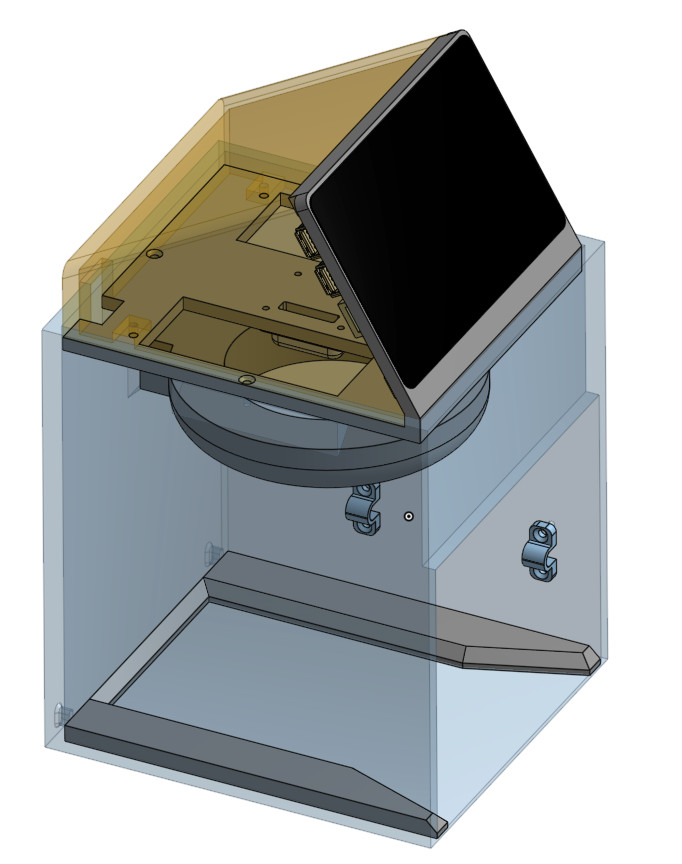
His custom scanning station addresses that first part of the problem: getting consistent shots. The images are captured using a Raspberry Pi 5 with attached Camera Module 3, while the 3D printed structure of the device makes sure that the camera and integrated lighting system are always in the same position. All he needs to do is place his notepad inside the cavity, hit the button, and it produces a perfect shot of the page.

Using a dedicated digitizing station like this would already provide better results than trying to freehand it with your phone or camera, but [Spencer] took things quite a bit farther. The software side of the project puts a handy user interface on the 5 inch touch screen built into the top of the scanner, while also providing niceties like a REST API and integration with the OpenAI Vision API for optical character recognition (OCR).

Those with an aversion to AI could certainly swap this out for something open source like Tesseract, but [Spencer] notes that not only is OpenAI’s OCR better at reading his handwriting, it spits out structured markdown-like data that’s easier to parse. From there it goes into the Notion API, but again, this could be replaced with whatever you use to collect your digital thoughts.

A device like this would go a long way towards answering a question we posed to the community back in January about the best way to digitize your documents.


hackaday.com/2026/04/16/deskto…

Cybersecurity & cyberwarfare ha ricondiviso questo.

#Cookeville #Regional #Medical #Center #hospital data breach impacts 337,917 people
securityaffairs.com/190898/cyb…
#securityaffairs #hacking
Cybersecurity & cyberwarfare ha ricondiviso questo.

Ma come fa un social decentralizzato ad andare tutto offline?

Ah no 😆

pubblicato nel gruppo social e internet: @internet


Alcuni utenti di Bluesky segnalano che il sito di social media non è disponibile.

Gli utenti di #Bluesky segnalano un bug che mostra una schermata vuota o un messaggio di errore al momento dell'accesso.

lbc.co.uk/article/bluesky-user…

@bluesky


Questa voce è stata modificata (2 mesi fa)
Cybersecurity & cyberwarfare ha ricondiviso questo.

"Sono anonimo in rete! Io non do il documento per farmi trovare! Maledetto Nick Carter, non mi avrai! Le scie kimike sono realiihhh"

Beh... brutte notizie, allora, dudo.

linkedin.com/posts/cgmongini_j…

The Kentucky Cave Wars, and Going Viral in 1925


The media in this post is not displayed to visitors. To view it, please log in.

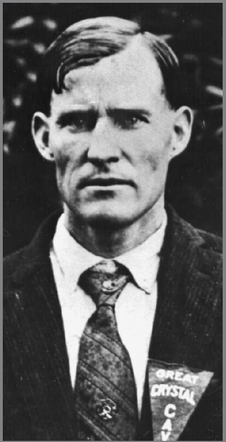
Floyd Collins, the unfortunate star of this post. (Public Domain)
Information, it seems, flows at the speed of media. In the old days, information traveled with people on ships or horses, so if, say, a battle was won or lost, it could be months or even years before anyone back home knew what happened. While books and movable type let people store information, they still moved at the speed people moved. Before the telegraph, there were attempts to use things like semaphores to speed the flow of information, but those were generally limited to line-of-sight operations. Carrier pigeons were handy, but don’t really move much faster than people.

The telegraph helped, but people didn’t have telegraph stations in their homes. At least not ordinary people. But radio was different. It didn’t take long for every home to have a radio, and while the means of broadcasting remained in the hands of a few, the message could go everywhere virtually instantly. This meant news could go from one side of the globe to the other in seconds. It also meant rumors, fads, and what we might think of today as memes could, too.

You might think that things “going viral” is a modern problem, but, in reality, media sensations have always been with us. All that changes is the number of them and their speed.

One of the earliest viral media sensations dealt with William Floyd Collins, an unfortunate man who was exploring caves during the Kentucky Cave Wars.

Background


Mammoth Cave in Kentucky had become a major tourist attraction. The accessible entrance to the cave was located on land owned by the Croghan family. The massive cave system had been made famous in the 19th century, and with the construction of a lock and dam nearby in 1906, Mammoth Cave became accessible to ordinary tourists.
Rescuers weighing options at the entrance to Sand Cave. (Public Domain)
However, the cave wasn’t completely under the Croghan land. There were also other caves that may or may not have been connected with Mammoth Cave. This led to fierce competition. The Croghan family suppressed information about exactly what land was over the cave. Meanwhile, other cave “owners” would intercept people heading for the cave, tell them that Mammoth Cave was closed, and “helpfully” direct them to another location.

By the 1920s, George Morrison blasted new entrances to the cave on non-Croghan land. There was fierce interest in finding new entrances to the cave or nearby caves to capture tourist money.

Back to Floyd


Floyd Collins found an entrance into what would become known as the “Great Crystal Cave” in 1917 and opened it to tourists in 1918. Unfortunately, the cave was hard to access, so it didn’t make much money.

Floyd had started entering caves in 1893 at the age of six. He discovered his first cave in 1910. But Great Crystal Cave was too far off the main road. He entered into a deal with three farmers who owned land closer to the main highway. If Floyd could find a suitable cave or, even better, an entrance to Mammoth Cave, he’d partner with them and create a mutually profitable tourist attraction.

Floyd found a hole in what would become known as Sand Cave. Some of the passages he had to move through were as tight as 9 inches, which, of course, would not be suitable for tourists, but they opened, apparently, into a large grotto. He was determined to expand the entrance to make the cave commercially viable.

In January of 1925, he was working in the cave when his gas lamp started to dim. He tried to leave, but while trying to move through a small passage, he knocked over his light, leaving him in total darkness.

In the dark, he put his foot against a seemingly stable wall and caused a shift that pinned his leg with a rock weighing nearly 30 pounds. He was also buried in gravel. At this point, he was 150 feet from the hole to the surface.

The Media


The next day, people noticed Floyd was missing, but no one would dare to follow him through the narrow passages. His younger brother finally got close enough to determine what happened. He was able to give Floyd food and water as plans for a rescue developed.

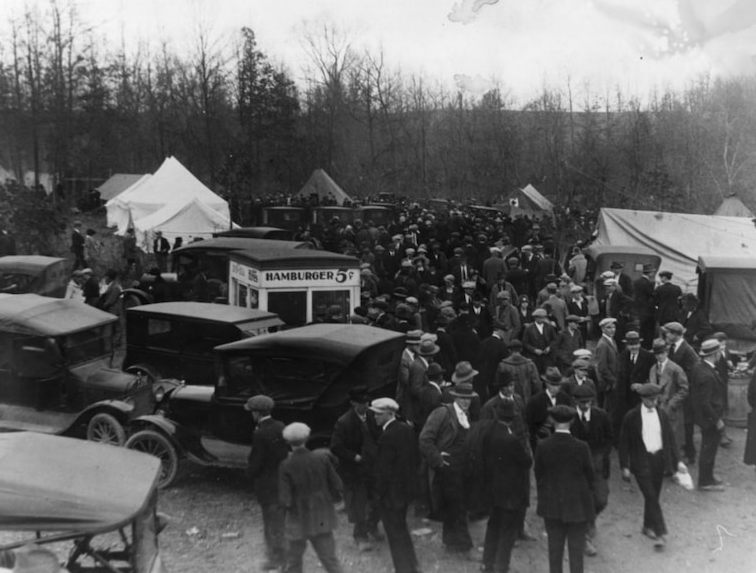
After four days in the cave, several people tried to pull Floyd out using a rope and a harness, but they only wound up injuring him. Meanwhile, the media had taken interest in the case, and the publicity drew hundreds of tourists and amateur spelunkers. Campfires and, possibly, the electric light that had been placed to give Floyd some light and warmth, melted ice inside the cave, creating puddles of water around the trapped man.

Two days after the failed rescue attempt, rain and the melting ice caused the cave passage to collapse, and the rescue team determined it was too dangerous to dig it back out after making an attempt to do so. They decided to dig straight down to reach Floyd.

Digging


Unfortunately, the cave drew air in so they decided they could not use mechanical diggers without risking suffocating Floyd. That meant humans would have to dig the 55-foot shaft to reach the victim. The initial estimate that 75 volunteers could dig the shaft in 30 hours proved optimistic, as conditions worsened and the hole grew deeper.

Someone disconnected the wires from the light bulb and connected them to an audio amplifier to detect signs of life from the victim. They believed the repetitive crackling noise meant he was breathing.

The light bulb went open on February 11th, twelve days after the incident started. Five days later, they reached his body. He had died and had been dead for several days.

You can find a well-done documentary from Remix Films in the video below. For a movie inspired by the event, check out the Billy Wilder film Ace in the Hole (1951) starring Kirk Douglas.

youtube.com/embed/EBjAcHu0kSA?…

Viral


A newspaper reporter, William Miller, was on the scene and, being a small man, was able to actually help remove gravel from Floyd before the cave-in. His interview with the man from inside the cave won a Pulitzer Prize.
Not a circus. A cave rescue.
There was a time when this would have been only a sensational local story, but by the modern year of 1925, reports “went out on the wire” by telegraph and were picked up by newspapers worldwide. The nearest telegraph station was miles away, so two ham radio operators (9BRK and 9CHG) provided a link between the site, the newspaper, and the authorities.

The first broadcast radio station, KDKA, was only five years old, but stations provided news bulletins detailing the progress. Thanks to the media, crowds were reported to number in the tens of thousands. Eventually, the National Guard arrived to help control the crowds.

Vendors popped up to sell hamburgers and memorabilia like a macabre circus. As you can see in the video below, memorabilia about the event and Floyd Collins can be worth a pretty penny to collectors.

youtube.com/embed/1zCnUlDchOU?…

The whole thing became one of the three largest media events between World War I and World War II. The other two were Lindbergh’s transatlantic flight (1927) and the kidnapping of Lindbergh’s baby (1932). Oddly, Lindbergh was an acquaintance of Floyd’s and also flew news photos from the scene (although, reportedly, to the wrong newspaper).

While it wasn’t quite as big an event, Canada’s 1936 Moose River Gold Mine collapse was a similar situation and also received worldwide media attention. It has the distinction of being the first 24-hour radio coverage of a breaking news story in Canada.

Today


These days, sensational news stories pop up everywhere. It seems as if they hardly get started when they are displaced by another one. But we submit that “going viral” isn’t a modern phenomenon. Only the speed at which it happens. Even an 1835 newspaper was able to spur a viral hoax.

Featured image: “Mammoth Cave Saltpeter Mine” by [Bpluke01]


hackaday.com/2026/04/16/the-ke…

The media in this post is not displayed to visitors. To view it, please log in.

Qilin e Warlock BYOVD: come il ransomware disabilita 300+ soluzioni EDR utilizzando driver vulnerabili


@Informatica (Italy e non Italy)
Qilin e Warlock utilizzano la tecnica BYOVD per disabilitare oltre 300 soluzioni EDR con driver vulnerabili del kernel, rappresentando una escalation significativa nella sofisticazione del ransomware RaaS.


Qilin e Warlock BYOVD: come il ransomware disabilita 300+ soluzioni EDR utilizzando driver vulnerabili


Qilin e Warlock, due dei ransomware RaaS (Ransomware-as-a-Service) più sofisticati del panorama criminale, hanno potenziato significativamente le loro capacità di evasione implementando la tecnica BYOVD (Bring Your Own Vulnerable Driver). La nuova strategia consente ai malware di disabilitare oltre 300 soluzioni EDR/XDR utilizzando driver vulnerabili del kernel, rendendo inefficaci quasi tutti i sistemi di rilevamento degli endpoint contemporanei.

Dalla lateralizzazione alla disattivazione: la nuova tattica Qilin


Qilin rappresenta una delle principali operazioni di ransomware RaaS attualmente operative. Il gruppo ha consolidato il controllo su decine di reti aziendali utilizzando metodologie di accesso ben collaudate e movimentazione laterale. Tuttavia, la fase finale dell’attacco era frequentemente rilevata dagli EDR in grado di identificare comportamenti malware tipici durante la crittografia di file.

Con l’introduzione della catena di infezione EDR-Killer, Qilin ha chiuso questa lacuna critica. Gli attacchi moderni seguono un pattern ben definito: accesso iniziale, lateralizzazione (6 giorni medi), disattivazione degli EDR, dispiegamento ransomware.

La catena multi-stadio: msimg32.dll e il carico del Kernel


La catena di infezione EDR-Killer di Qilin utilizza la tecnica classica del DLL Side-Loading per eseguire una DLL malevola denominata “msimg32.dll”. Per mantenere la funzionalità attesa, la DLL malevola invia gli API call legittimi alla libreria legittima in C:\Windows\System32, mascherando completamente la sua attività malevola.

Lo stadio 1 implementa una tabella slot-policy per l’evasione delle syscall e la tecnica “Halo’s Gate”, consentendo al codice malware di invocare direttamente funzioni di kernel bypassando i filtri tradizionali. Gli stadi 2-3 presentano offuscamento del flusso di controllo VEH-based complesso.

Il doppio carico di driver: rwdrv.sys e hlpdrv.sys


rwdrv.sys è una versione rinominata di “ThrottleStop.sys”, uno strumento legittimo di tuning dei processori Intel. Sfruttando una vulnerabilità nel driver originale, Qilin lo utilizza per ottenere accesso diretto alla memoria fisica del sistema. Una volta caricato nel kernel, rwdrv.sys funziona come un livello di accesso hardware di modo kernel.

hlpdrv.sys è il vero “EDR killer”. Lavora in stretto coordinamento con rwdrv.sys per terminare i processi associati a oltre 300 diversi driver EDR appartenenti a praticamente ogni maggiore fornitore di sicurezza. Prima di caricare hlpdrv.sys, il componente EDR-killer annulla la registrazione dei callback di monitoraggio stabiliti dall’EDR, accecando efficacemente lo strumento di rilevamento a livello di kernel.

Meccanismo di disattivazione tecnica: callback unregistration


I sistemi di rilevamento moderni utilizzano callback di kernel registrati per monitorare eventi critici: creazione di processi, creazione di thread, caricamento di moduli/DLL, operazioni di file system. Iterando attraverso una lista hardcoded di oltre 300 driver EDR, Qilin annulla sistematicamente la registrazione dei loro callback di monitoraggio.

Senza questi callback, l’EDR diventa essenzialmente cieco: non può rilevare nuovi processi, non può intercettare thread sospetti, non può monitorare il caricamento di moduli malware. Una volta che i callback sono stati annullati, hlpdrv.sys procede a terminare i processi del servizio EDR stesso, disattivando completamente la protezione in tempo reale.

Timeline e implicazioni per la difesa


L’analisi forense rivela un pattern tattico coerente: accesso iniziale via credenziali compromesse, lateralizzazione (6 giorni medi), EDR disattivazione, dispiegamento ransomware. Questa evoluzione tattica rappresenta una significativa escalation nella sofisticazione dei ransomware RaaS.

Per la difesa: implementare il Kernel Patch Protection (KPP/HVCI), implementare Device Guard per il whitelisting dei driver firmati, implementare segmentazione di rete aggressiva, monitorare il movimento laterale, implementare il privileged access management (PAM). Se il caricamento di un driver sospetto viene rilevato, avviare immediatamente un killchain completo dell’incidente con isolamento di rete e acquisizione forense.


Cybersecurity & cyberwarfare ha ricondiviso questo.

CSOA Ipo', domenica 19 aprile alle ore 11:00 CEST Giornata dedicata alle [strong]Resistenze Digitali[/strong] al centro sociale occupato autogestito [strong]IPO'[/strong] di Marino: > ore 11 : laboratorio "[url=https://circex.org/it/attivita/laboratori/gamificazioni//]Giocare o essere giocati[/url]" a cura di [url=https://circex.org]CIRCE[/url]. > ore 13 : pranzo sociale > ore 14:30 : laboratorio "[url=https://avana.forteprenestino.net/2025-un-dos-tres/]Un, dos, tre, passo passo oltre le Bi
Apr 19
Resistenze Digitali
Dom 11:00 - 21:00 Europe/Rome
Gancio de Roma

Giornata dedicata alle Resistenze Digitali al centro sociale occupato autogestito IPO' di Marino:

> ore 11 : laboratorio "Giocare o essere giocati" a cura di CIRCE.

> ore 13 : pranzo sociale

> ore 14:30 : laboratorio "Un, dos, tre, passo passo oltre le Big Tech" a cura di AvANa.

> ore 16 : presentazione di libri "Assalto alle piattaforme" (AgenziaX, 2025) di Kenobit e "Internet, Mon Amour" (Altraeconomia, 2026) di Agnese Trocchi

> ore 17:30 : gameboy live set a cura di Kenobit

Qui lo spot radio!

reshared this

Cybersecurity & cyberwarfare ha ricondiviso questo.

Alcuni utenti di Bluesky segnalano che il sito di social media non è disponibile.

Gli utenti di #Bluesky segnalano un bug che mostra una schermata vuota o un messaggio di errore al momento dell'accesso.

lbc.co.uk/article/bluesky-user…

@bluesky

Questa voce è stata modificata (2 mesi fa)
Cybersecurity & cyberwarfare ha ricondiviso questo.

NEW: Two Americans were sentenced to seven and a half and nine years in prison for helping North Korean fake remote IT workers get jobs at more than 100 companies.

The two were running laptop farms in the U.S. in a scheme that helped the fake IT workers funnel around $5 million to the regime.

techcrunch.com/2026/04/16/two-…

Cybersecurity & cyberwarfare ha ricondiviso questo.

The media in this post is not displayed to visitors. To view it, please go to the original post.

Purtroppo dobbiamo riconoscerlo: il Festival del Giornalismo di Perugia ha deciso di snobbare il Fediverso e di sposare Bluesky


Seguiamo sempre con molto interesse il #internationaljournalismfestival ma, come fondatori di poliversity.it, ll'unica istanza Mastodon italiana dedicata ai giornalisti, non possiamo fingere di non vedere come il Festival di Perugia abbia sposato #Bluesky.

L'account mastodon @journalismfest è infatti morto, così come quello di @arianna (il cui account Bluesky non è nanche bridgiato con il Fediverso) e il nostro account è praticamente l'unico a rilanciare sul Fediverso le notizie della loro newsletter.

Come se non bastasse, oggi mi sono accorto che il profilo di @mellifluousbox (il direttore esecutivo di @Mastodon ) ha dovuto hackerare la casellina del contatto social, indicando l'indirizzo fedibridge di Bluesky... 🤣

journalismfestival.com/speaker…

Spiace dirlo, ma il Festival del Giornalismo sta dicendo ai giornalisti abbandonarsi con fiducia cieca a Bluesky, esattamente come nll'era pre-Musk, ha fatto con Twitter

@giornalismo

#IJF
#ijf26
#ijf2026
#ijf26speaker
#journalism

Trying to Build Your Own Consumer-Grade Router in 2026


The media in this post is not displayed to visitors. To view it, please log in.

Although we have many types of networking equipment with many unique names, at their core they can usually be reduced to just a computer with some specific peripherals. This is especially the case for something like a router, a device found in just about any home these days. Certain consumer-grade routers may contain something special like a VDSL modem, but most of them just have a WAN Ethernet jack on one end and one or more LAN-facing Ethernet ports.

All further functionality is implemented in software, including any firewall, routing and DHCP features. What this means is that any old PC with at least two Ethernet ports or equivalent can be a router as long as you install the appropriate software.

In this article we’ll be taking a look at what consumer-level options there exist here today, ideally something so simple that the average home user could set it up with a bit of coaching.

When Routers Were Terrible

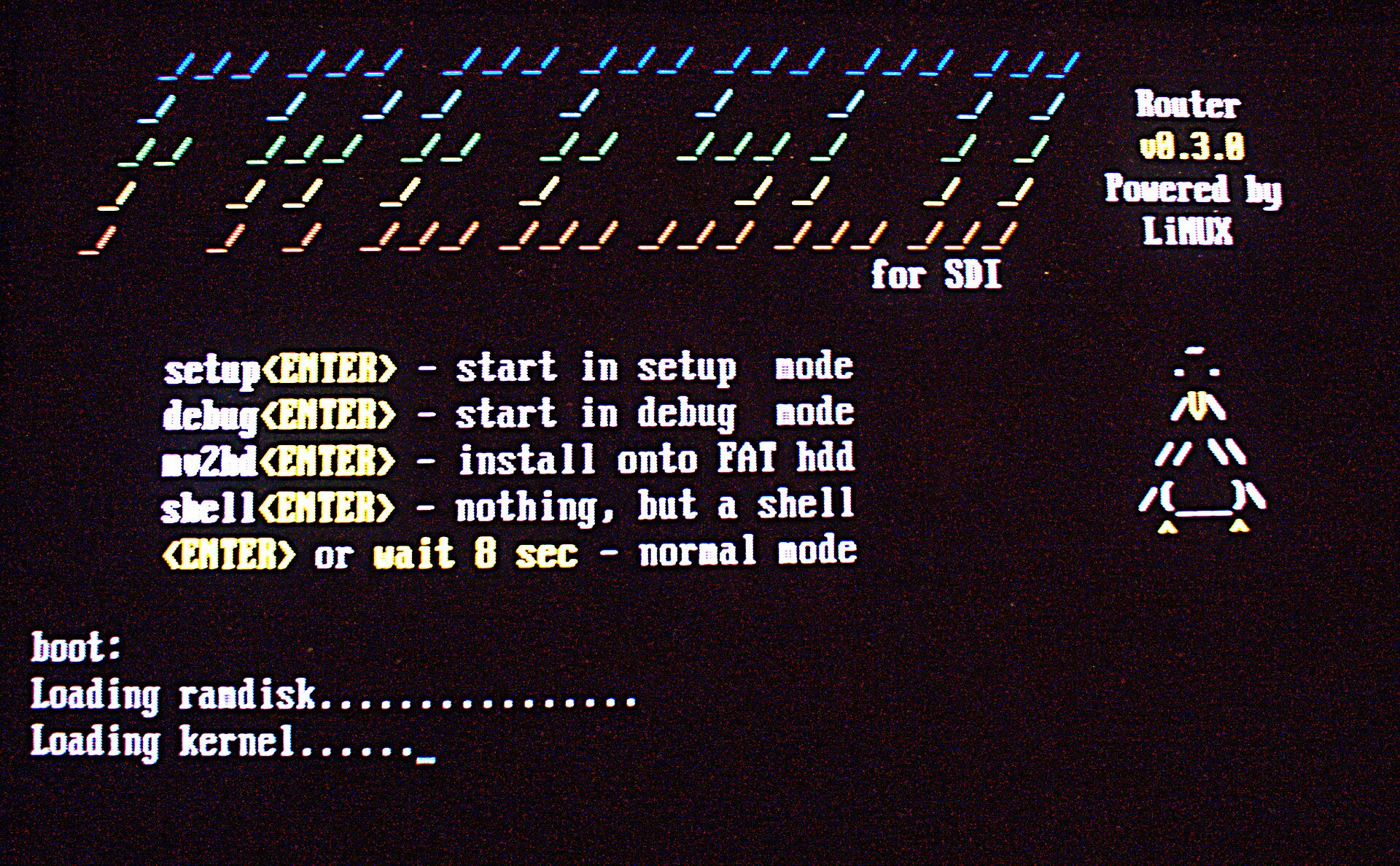
Start-up screen of FreeSCO. (Credit: Lewis “Lightning” Baughman, Wikimedia)Start-up screen of FreeSCO. (Credit: Lewis “Lightning” Baughman, Wikimedia)
Although these days most people are probably happy to use whatever consumer router gets tossed their way by their ISP or purchased from any of the many electronics retailers, the era of home routers starting in the 90s was a rough one. Not only did many ISPs for a long time have strict rules against even thinking of installing any kind of connection-sharing router on the precious internet connection they so gracefully provided access to, the routers that were available even during the 2000s also weren’t particularly good.

Perhaps the most egregious issue that you’d run into as a somewhat internet-savvy user was that these units came with the tiniest amount of RAM and a routing table that would fill up within seconds if you so much as thought of doing anything naughty like downloading Linux ISOs with Bittorrent. Even more than the lightest internet use risked issues such as the router freezing up and requiring a reboot.

Being the nerdy type who’d hang out on various tech forums during that time, I instead opted to toss some ISA NICs into an old 486DX2-66 PC, put FreeSCO on a 1.44 MB floppy and used that instead. Even the 16 MB or so of EDO or FP RAM in that old system easily kept up with whatever internet traffic-related abuse I threw at it along with the rest of the family.

Later I’d also use Smoothwall on a trashed Pentium 166 system that I had salvaged from e-waste as a healthy upgrade. Yet over time as consumer routers stopped being terrible, I’d end up using those instead. That said, despite recent improvements there are still reasons today to put your own router together.

These reasons can vary from a simple increase in control, as well as peace of mind in an era where commercial consumer router firmware do not appear to get quite the quality assurance they should get. There is also the specter of repressive government policies, and of course less dramatic reasons such as just being into tinkering with networking gear.

Modern Options


Although we have moved on quite a few years from the 2000s, it’d be nice if we could still theoretically dig an ancient 486 PC out of a closet and use it, just to push back the minimum requirements as far as possible. Looking at the list of router and firewall distributions over at Wikipedia we can get a bit of an idea of what’s out there today. Naturally we’d like something that’s open source, recently updated and well-supported as we’ll be exposing it to the worst that the modern Internet has to offer.

Sadly, FreeSCO isn’t even the list, and based on the project’s website it doesn’t appear to have been updated since 2014. Similarly, Smoothwall’s free version (Express) doesn’t appear to be quite supported any more, with the commercial offering being promoted instead. A promising project is something like OPNsense, which is a FreeBSD-based distribution that does basically everything networking-related and then some. It’s also rather resource-heavy, demanding 4+ GB of RAM and so on, for features that the average home user is unlikely to use.

Ultimately only two projects really jump out: the first is the Linux Embedded Appliance Framework (LEAF), which feels like a spiritual successor to FreeSCO in targeting 486 or better hardware while running read-only off floppy discs or better.

The second project is the well-known OpenWrt, which doesn’t just provide alternative firmware images for commercial routers, but also for generic x86 and ARM hardware. This should tick all the aforementioned boxes, including the ability to run off an x86-compatible potato, while theoretically also providing driver support for just about any NIC and maybe even WNICs.

Amusingly, my current internet router is a Xiaomi device that runs OpenWrt with a custom web UI, so I’m already familiar with it in that sense. I also have no complaints about its stability, so this should be smooth sailing as a first try.

A quick sidenote here: although I did say that consumer-grade routers aren’t terrible any more today, this Xiaomi router replaced a horrid TP-Link Archer C80 with its tiny 4 MB Flash, incompatibility with OpenWrt and broken IPv6 support. Caveat emptor, as they say, for consumer-grade routers can absolutely still be terrible.

It’s Not Hoarding, I Swear


Like any self-respecting tech-enthusiast I happen to have a few drawers and boxes with relevant computer hardware, including a stash of industrial Intel Atom mini-ITX boards and some PCI Gbit NICs. Although I could have tossed this into a scruffy old case with a questionably-but-probably-fine PSU, I decided to get a new budget case and PSU, just to feel more confident about flipping on the power switch:
With the powers of e-waste and non-sketchy PSUs combined... a DIY router. (Credit: Maya Posch)With the powers of e-waste and non-sketchy PSUs combined… a DIY router. (Credit: Maya Posch)
The mainboard is a 2009-era Intel Desktop Board D410PT, with two sticks of 1 GB DDR2 RAM. There’s just an onboard 10/100 Mbit Ethernet adapter in addition to the PCI 1 Gbit adapter, but this is good enough to test basic principles. Plus older Ethernet chips definitely ought to be supported.

With this whole kit built together, the OpenWrt Wiki entry on x86 installations was followed, with an Ext4-based non-EFI image written to a 512 MB microSD card. This card was inserted into the system with a USB adapter, though as the Wiki page makes clear there are many more ways to install OpenWrt, including on an internal (SATA/IDE/etc.) storage device.

Here the OpenWrt image selection process is definitely a bit more complicated than that for e.g. FreeSCO, as you have to know whether the system boots using a UEFI or traditional BIOS, as well as decide between the SquashFS and Ext4 root partition option. Even after looking at the pros and cons of both I’m still torn on which one is best.

There is also the issue of supported network cards, with the typical image supporting Intel and Realtek Ethernet chipsets. Having compatible NICs installed is even more important than back in the generic NE2000 days.

Sad Trombone


After firing up the newly built rig and briefly powering it down to replace the very much drained CMOS battery, I had hoped to see something promising on the connected screen. Yet other than the PXE boot attempts from both Ethernet cards before a sad ‘no bootable devices found’ error message nothing happened.

I did go through the BIOS to make sure that all ‘boot from USB’ options were enabled and tried multiple SD-card-to-USB adapters in multiple USB ports, but it would seem that either the provided OpenWrt image isn’t bootable or the Curse of Bootable USB Devices has struck again.

While I haven’t given up yet on DIY-ing an x86 router on older hardware in 2026 and still have to give LEAF a shot, I must say that compared to the FreeSCO method of just slapping that floppy into the FDD, running through the config and being done, things are a lot more complicated today. I’d definitely not trust the average person to run through these steps to set up their own consumer-grade router.

Perhaps for the LEAF version I’ll dig up a rig with FDD header on the mainboard and run it off a 1.44 MB floppy like in the good old days. Until then feel free to sound off in the comments about what obvious mistakes I have made with OpenWrt, how I should just use OPNsense on an old 19″ rackmounted Xeon server rig, or maybe your own experiences with FreeSCO, SmoothWall, OpenWrt, and/or LEAF on lovingly restored e-waste.

Featured image: “Ethernet Router” by [gratuit].


hackaday.com/2026/04/16/trying…

Cybersecurity & cyberwarfare ha ricondiviso questo.

The media in this post is not displayed to visitors. To view it, please go to the original post.

Il NIST alza bandiera bianca! Troppe CVE mentre gli exploit corrono senza controllo

📌 Link all'articolo : redhotcyber.com/post/il-nist-a…

A cura di Bajram Zeqiri

#redhotcyber #news #sicurenzainformatica #intelligenzaartificiale #vulnerabilita #cve #nist #cisa

reshared this

in reply to Redhotcyber

@Redhotcyber ma non pensate che sia ora di cambiare sistema con cui si costruisce il software. Continuando ad usare il sistema di aggiuntare pezzi e toglierne altri si va incontro ad una crisi di funzionamento irreversibile. Se si tornasse ad utilizzare sistemi informatici aperti per cui non solo i programmatori, ma i singoli utenti fossero in grado di sapere cosa succede dentro la macchina durante una sessione di utilizzo forse sarebbe più complicato fare danni anche con i software scadenti e non controllabili come quelli che si trovano in giro.
Cybersecurity & cyberwarfare ha ricondiviso questo.

The media in this post is not displayed to visitors. To view it, please go to the original post.

Confronto tra stringhe in C#: Equals, OrdinalIgnoreCase, StringComparer e le insidie culturali
#tech
spcnet.it/confronto-tra-string…
@informatica


Confronto tra stringhe in C#: Equals, OrdinalIgnoreCase, StringComparer e le insidie culturali


Il confronto tra stringhe è una delle operazioni più comuni in qualsiasi applicazione .NET, eppure è anche una delle fonti più insidiose di bug difficili da riprodurre — specialmente quando l’applicazione viene eseguita in ambienti con culture diverse o in pipeline CI/CD con impostazioni locali variabili. In questo articolo vediamo come funzionano correttamente string.Equals(), OrdinalIgnoreCase, StringComparer e come evitare le trappole più comuni legate alla cultura.

L’operatore == e il confronto ordinale


L’operatore == su stringhe esegue un confronto ordinale case-sensitive, basato sui valori Unicode dei caratteri, senza alcuna considerazione culturale:

var a = "Hello";
var b = "hello";
Console.WriteLine(a == b);       // False
Console.WriteLine(a == "Hello"); // True

Questo è corretto e prevedibile per confronti interni al codice (chiavi di dizionari, nomi di variabili, costanti). Il problema nasce quando si vuole un confronto case-insensitive, o quando si confrontano stringhe con caratteri soggetti a regole culturali.

string.Equals() con StringComparison


La regola d’oro è: passare sempre esplicitamente un parametro StringComparison. Senza di esso, alcuni overload usano CurrentCulture, creando comportamenti potenzialmente incoerenti tra ambienti diversi.

// Confronto case-insensitive, senza dipendenze culturali
bool uguale = string.Equals("admin", input, StringComparison.OrdinalIgnoreCase);

// Equivalente con metodo d'istanza
bool ancheUguale = "admin".Equals(input, StringComparison.OrdinalIgnoreCase);

Panoramica dei valori di StringComparison

ValoreCaseCulturaUso consigliato
OrdinalSensibileNessunaFile, chiavi, dati binari
OrdinalIgnoreCaseInsensibileNessunaComandi, URL, identificatori
InvariantCultureSensibileInvarianteTesto serializzato/persistito
InvariantCultureIgnoreCaseInsensibileInvarianteTesto serializzato, case-indipendente
CurrentCultureSensibileLocale utenteTesto mostrato all’utente
CurrentCultureIgnoreCaseInsensibileLocale utenteRicerca/filtro lato UI

La trappola di ToLower() e ToUpper()


Uno degli antipattern più diffusi è usare ToLower() per normalizzare le stringhe prima del confronto:

// Antipattern: alloca una nuova stringa inutilmente
if (input.ToLower() == "admin") { }
if (input.ToLowerInvariant() == "admin") { }

// Corretto: nessuna allocazione, semantica esplicita
if (string.Equals(input, "admin", StringComparison.OrdinalIgnoreCase)) { }

Il problema non è solo di prestazioni (allocazione di una stringa temporanea), ma di correttezza semantica. La versione con ToLower() dipende dalla cultura corrente del thread, mentre OrdinalIgnoreCase è culturalmente neutro e deterministico.

Il problema della “i” Turca


Questo è forse il bug più famoso legato alla cultura nelle stringhe. In turco esistono quattro varianti della lettera i: la “i” minuscola con punto diventa “İ” maiuscola con punto (non “I” come in italiano), e la “ı” minuscola senza punto diventa “I” maiuscola. Il risultato:

var culture = new System.Globalization.CultureInfo("tr-TR");

// Bug su locale turco!
bool sbagliato = "file".ToUpper(culture) == "FILE"; // False! "file" diventa "FİLE" in turco

// OrdinalIgnoreCase usa regole invarianti
bool corretto = string.Equals("file", "FILE", StringComparison.OrdinalIgnoreCase); // True

Questo bug si manifesta tipicamente in applicazioni multi-tenant o globali dove il server ha una cultura diversa dall’ambiente di sviluppo. La soluzione è sempre usare OrdinalIgnoreCase per confronti tecnici (nomi di file, comandi, URL, header HTTP) e riservare CurrentCulture solo al testo destinato all’utente finale.

StringComparer per collezioni


StringComparer implementa sia IComparer<string> che IEqualityComparer<string>, rendendolo ideale per strutture dati come Dictionary, HashSet e SortedSet:

Dizionario case-insensitive per gli header HTTP

// "Content-Type" e "content-type" devono essere equivalenti
var headers = new Dictionary<string, string>(StringComparer.OrdinalIgnoreCase);
headers["Content-Type"] = "application/json";

Console.WriteLine(headers["content-type"]); // application/json
Console.WriteLine(headers["CONTENT-TYPE"]); // application/json

SortedSet case-insensitive

var comandi = new SortedSet<string>(StringComparer.OrdinalIgnoreCase);
comandi.Add("Start");
comandi.Add("stop");

bool haStart = comandi.Contains("START"); // True
// I duplicati vengono rilevati correttamente
comandi.Add("START"); // Non aggiunge, esiste già come "Start"
Console.WriteLine(comandi.Count); // 2

Confronto ad alte prestazioni con Span<char>


Per scenari con requisiti di performance elevati (parsing di protocolli, hot paths), .NET offre confronti allocation-free tramite ReadOnlySpan<char>:

var riga = "Content-Type: application/json";

// Confronto senza allocare nuove stringhe
bool isContentType = riga.AsSpan(0, 12).Equals(
    "Content-Type".AsSpan(),
    StringComparison.OrdinalIgnoreCase);

// StartsWith su Span
bool isHttps = url.AsSpan().StartsWith(
    "https://".AsSpan(),
    StringComparison.OrdinalIgnoreCase);

Questo approccio è particolarmente utile in middleware HTTP, parser di configurazione e codice che elabora grandi volumi di testo.

Pattern Matching con Switch


Il pattern matching di C# non supporta nativamente il confronto case-insensitive negli switch, ma esistono due approcci corretti:

// Approccio 1: Guard clause con Equals
var risultato = comando switch
{
    _ when string.Equals(comando, "start", StringComparison.OrdinalIgnoreCase) => "Avvio...",
    _ when string.Equals(comando, "stop", StringComparison.OrdinalIgnoreCase) => "Arresto...",
    _ => "Comando non riconosciuto"
};

// Approccio 2: Normalizzazione con ToUpperInvariant (accettabile per switch)
var risultato2 = comando.ToUpperInvariant() switch
{
    "START" => "Avvio...",
    "STOP" => "Arresto...",
    _ => "Comando non riconosciuto"
};

Esempio completo: parser di configurazione

public sealed class ConfigParser
{
    private readonly FrozenDictionary<string, string> _impostazioni;

    public ConfigParser(IEnumerable<KeyValuePair<string, string>> rawSettings)
    {
        // FrozenDictionary è ottimizzato per letture frequenti (immutabile dopo la creazione)
        _impostazioni = rawSettings.ToFrozenDictionary(
            kvp => kvp.Key,
            kvp => kvp.Value,
            StringComparer.OrdinalIgnoreCase);
    }

    public string? Get(string chiave) =>
        _impostazioni.TryGetValue(chiave, out var valore) ? valore : null;
}

// Utilizzo
var config = new ConfigParser(new[]
{
    new KeyValuePair<string, string>("DatabaseUrl", "Server=..."),
    new KeyValuePair<string, string>("MaxConnections", "100"),
});

Console.WriteLine(config.Get("databaseurl"));    // "Server=..."
Console.WriteLine(config.Get("MAXCONNECTIONS")); // "100"

Riepilogo: regole pratiche


  1. Usa OrdinalIgnoreCase per chiavi, identificatori, URL, nomi di file, comandi, header HTTP.
  2. Usa CurrentCulture solo per testo mostrato all’utente, quando le regole locali sono rilevanti.
  3. Non usare ToLower() per confronti: alloca inutilmente e dipende dalla cultura.
  4. Specifica sempre StringComparison esplicitamente nelle chiamate a Equals e Compare.
  5. Usa StringComparer quando passi logica di confronto a strutture dati.
  6. Usa MemoryExtensions su Span<char> per hot path ad alta frequenza e senza allocazioni.

Seguendo queste linee guida, si eliminano intere classi di bug difficili da riprodurre e si ottiene codice più robusto, portabile e performante.

Fonte: DevLeader — C# String Comparison: Equals, OrdinalIgnoreCase, StringComparer, and Culture Pitfalls


Cybersecurity & cyberwarfare ha ricondiviso questo.

The media in this post is not displayed to visitors. To view it, please go to the original post.

The media in this post is not displayed to visitors. To view it, please go to the original post.

Qilin e Warlock BYOVD: come il ransomware disabilita 300+ soluzioni EDR utilizzando driver vulnerabili
#CyberSecurity
insicurezzadigitale.com/qilin-…


Qilin e Warlock BYOVD: come il ransomware disabilita 300+ soluzioni EDR utilizzando driver vulnerabili


Qilin e Warlock, due dei ransomware RaaS (Ransomware-as-a-Service) più sofisticati del panorama criminale, hanno potenziato significativamente le loro capacità di evasione implementando la tecnica BYOVD (Bring Your Own Vulnerable Driver). La nuova strategia consente ai malware di disabilitare oltre 300 soluzioni EDR/XDR utilizzando driver vulnerabili del kernel, rendendo inefficaci quasi tutti i sistemi di rilevamento degli endpoint contemporanei.

Dalla lateralizzazione alla disattivazione: la nuova tattica Qilin


Qilin rappresenta una delle principali operazioni di ransomware RaaS attualmente operative. Il gruppo ha consolidato il controllo su decine di reti aziendali utilizzando metodologie di accesso ben collaudate e movimentazione laterale. Tuttavia, la fase finale dell’attacco era frequentemente rilevata dagli EDR in grado di identificare comportamenti malware tipici durante la crittografia di file.

Con l’introduzione della catena di infezione EDR-Killer, Qilin ha chiuso questa lacuna critica. Gli attacchi moderni seguono un pattern ben definito: accesso iniziale, lateralizzazione (6 giorni medi), disattivazione degli EDR, dispiegamento ransomware.

La catena multi-stadio: msimg32.dll e il carico del Kernel


La catena di infezione EDR-Killer di Qilin utilizza la tecnica classica del DLL Side-Loading per eseguire una DLL malevola denominata “msimg32.dll”. Per mantenere la funzionalità attesa, la DLL malevola invia gli API call legittimi alla libreria legittima in C:\Windows\System32, mascherando completamente la sua attività malevola.

Lo stadio 1 implementa una tabella slot-policy per l’evasione delle syscall e la tecnica “Halo’s Gate”, consentendo al codice malware di invocare direttamente funzioni di kernel bypassando i filtri tradizionali. Gli stadi 2-3 presentano offuscamento del flusso di controllo VEH-based complesso.

Il doppio carico di driver: rwdrv.sys e hlpdrv.sys


rwdrv.sys è una versione rinominata di “ThrottleStop.sys”, uno strumento legittimo di tuning dei processori Intel. Sfruttando una vulnerabilità nel driver originale, Qilin lo utilizza per ottenere accesso diretto alla memoria fisica del sistema. Una volta caricato nel kernel, rwdrv.sys funziona come un livello di accesso hardware di modo kernel.

hlpdrv.sys è il vero “EDR killer”. Lavora in stretto coordinamento con rwdrv.sys per terminare i processi associati a oltre 300 diversi driver EDR appartenenti a praticamente ogni maggiore fornitore di sicurezza. Prima di caricare hlpdrv.sys, il componente EDR-killer annulla la registrazione dei callback di monitoraggio stabiliti dall’EDR, accecando efficacemente lo strumento di rilevamento a livello di kernel.

Meccanismo di disattivazione tecnica: callback unregistration


I sistemi di rilevamento moderni utilizzano callback di kernel registrati per monitorare eventi critici: creazione di processi, creazione di thread, caricamento di moduli/DLL, operazioni di file system. Iterando attraverso una lista hardcoded di oltre 300 driver EDR, Qilin annulla sistematicamente la registrazione dei loro callback di monitoraggio.

Senza questi callback, l’EDR diventa essenzialmente cieco: non può rilevare nuovi processi, non può intercettare thread sospetti, non può monitorare il caricamento di moduli malware. Una volta che i callback sono stati annullati, hlpdrv.sys procede a terminare i processi del servizio EDR stesso, disattivando completamente la protezione in tempo reale.

Timeline e implicazioni per la difesa


L’analisi forense rivela un pattern tattico coerente: accesso iniziale via credenziali compromesse, lateralizzazione (6 giorni medi), EDR disattivazione, dispiegamento ransomware. Questa evoluzione tattica rappresenta una significativa escalation nella sofisticazione dei ransomware RaaS.

Per la difesa: implementare il Kernel Patch Protection (KPP/HVCI), implementare Device Guard per il whitelisting dei driver firmati, implementare segmentazione di rete aggressiva, monitorare il movimento laterale, implementare il privileged access management (PAM). Se il caricamento di un driver sospetto viene rilevato, avviare immediatamente un killchain completo dell’incidente con isolamento di rete e acquisizione forense.


Emergency Bolt-Action Launcher for EpiPens


The media in this post is not displayed to visitors. To view it, please log in.

Imagine you and your friend are enjoying a nice sunny day, and BAM — they start to have a severe allergic reaction to who knows what. You have an EpiPen, but your friend is on the other side of a field! The solution? Obviously [Emily The Engineer] has only one option: build an entire EpiPen launcher!

Starting off the life-saving project, [Emily] prototyped with a 3D printed blank and a simple solenoid-controlled glorified potato cannon. This proved effective, as one would expect of such a project after successful tests on a human subject. However, there was one simple problem: what if you missed your initial shot?

To ensure no possible failed missions, a bolt-action magazine was retrofitted onto the device. Additionally, an air compressor placed in a mobile backpack carrier allows for repeated mobile use. Official testing was done on ballistic gel before a “war game” scenario played out involving an anaphylactic friend. As one would assume, this went perfectly, ignoring the time delay of having to wait for the compressor to build up enough pressure…

Anyways, even if you won’t be using this EpiPen launcher anytime soon, there are some actual DIY medical miracles you can look into! Something that’s a tad less insane to hack together than an EpiPen gun would be a splint. That is exactly what you can learn about here!

youtube.com/embed/veZvQduDRtg?…


hackaday.com/2026/04/16/emerge…

Cybersecurity, rischio cibernetico e autodifesa digitale


The media in this post is not displayed to visitors. To view it, please log in.

Tra i numerosi rischi sistemici del nostro tempo vanno annoverati anche i rischi informatici. Cioè i rischi collegati a un uso scorretto, improprio e criminale di servizi informatici e sistemi informativi. Il rischio informatico oggi è anche quello dello spionaggio o del sabotaggio del lavoro dei giornalisti che devono imparare a difendersi da interferenze esterne al loro lavoro. La protezione dei giornalisti comincia da una corretta igiene cibernetica fino all’uso di metodi adeguati a mettere in sicurezza il proprio lavoro, le prove raccolte e le stesse fonti.

Capire il rischio informatico è importante per raccontarlo, soprattutto in un’epoca in cui l’educazione alla consapevolezza è la prima linea di difesa per operatori e utenti di piattaforme e dispositivi informatici.

Alberto Marinelli, Sapienza, Prorettore alle tecnologie innovative per la comunicazine

Nunzia Ciardi, Vice Direttore Generale ACN
«La dimensione del rischio cibernetico»

Giovanni Ciofalo, professore di Digitale e Media Studies, CoRiS Sapienza
«Il rischio cibernetico dell’IA tra narrazioni e rappresentazioni mediali»

Alessandro Curioni, presidente Di.Gi Academy, giornalista
«Social engineering, limiti biologici e cognitivi»

Arturo Di Corinto, giornalista, consigliere ACN
«Conoscere la tecnologia per salvaguardare la professione giornalistica»

Pietro di Maria, General Manager Meridian Group
«Dalla protezione del fattore umano alla protezione delle infrastrutture critiche»

Guido d’Ubaldo, giornalista, presidente Odg Lazio
«L’importanza di comunicare correttamente il rischio cyber»

Daniele Federico Rosa, consulente editoriale
«Il rischio cyber nei libri. Come viene raccontato


dicorinto.it/formazione/cybers…

Cybersecurity & cyberwarfare ha ricondiviso questo.

The media in this post is not displayed to visitors. To view it, please go to the original post.

Mancano solo 3 anni! Kurzweil rilancia la sua previsione shock sul futuro del mondo

📌 Link all'articolo : redhotcyber.com/post/mancano-s…

A cura di Silvia Felici

#redhotcyber #news #intelligenzaartificiale #singolaritàtecnologica #tecnologia #futuro #raykurzweil