
Obesità, il presidente di Aifa Robert Nisticò a TPI: “La prevenzione è un dovere dello Stato”
@Politica interna, europea e internazionale
Presidente Nisticò, con l’approvazione della Legge Pella, l’Italia è il primo e unico Paese al mondo ad avere una norma per la prevenzione e la cura dell’obesità. Cosa comporta? «L’obesità è una vera e propria malattia, molto
Politica interna, europea e internazionale reshared this.
Collins Aerospace: la voce di Everest su una tempesta perfetta. Ricostruiamo i fatti
@Informatica (Italy e non Italy 😁)
Si dice spesso che la verità sia la prima vittima in una guerra, e nel confuso panorama della cybersecurity questa massima risuona con sinistra frequenza. Quella che ha colpito Collins Aerospace a settembre del 2025 non è stato un semplice
Informatica (Italy e non Italy 😁) reshared this.
Chi teme le indagini su Mattarella? Incendiata la sede di “42 Parallelo” a Roma
@Giornalismo e disordine informativo
articolo21.org/2025/10/chi-tem…
Esiste un nesso tra la bomba fatta scoppiare davanti alla casa di Sigfrido Ranucci e il devastante incendio che ieri ha distrutto a Roma la
Giornalismo e disordine informativo reshared this.
Il deputato di Forza Italia Roberto Pella a TPI: “La mia legge contro l’obesità? Pensa al domani”
@Politica interna, europea e internazionale
On. Pella, l’Italia è il primo Paese al mondo a riconoscere l’obesità come malattia, grazie alla legge recentemente approvata di cui Lei è il primo firmatario. «È un motivo di grande soddisfazione. Indubbiamente a ognuno di noi fa piacere
Politica interna, europea e internazionale reshared this.
This Week in Security: Court Orders, GlassWorm, TARmageddon, and It was DNS

This week, a US federal court has ruled that NSO Group is no longer allowed to use Pegasus spyware against users of WhatsApp. And for their trouble, NSO was also fined $4 million. It’s unclear how much this ruling will actually change NSO’s behavior, as it intentionally stopped short of applying to foreign governments.
There may be an unexpected source of leverage the US courts can exert over NSO, with the news that American investors are acquiring the company. Among the requirements of the ruling is that NSO cannot reverse engineer WhatsApp code, cannot create new WhatsApp accounts, and must delete any existing WhatsApp code in their possession. Whether this actually happens remains to be seen.
Points On the Curve
Cryptography is hard. Your implementation can do everything right, and still have a weakness. This was demonstrated yet again in the Cloudflare CIRCL cryptography library. The issue here is a Diffie-Hellman scheme using the Curve4Q elliptic curve.
Quick review: Diffie-Hellman is a technique where Bob and Alice can exchange public keys, and each combine the received public key with their own private key, and arrive at a shared secret. This can be accomplished on an elliptic curve by choosing a scalar value as a private key, and multiplying a standard generator point by that scalar to derive a new point on the curve, which serves as the public key. After the public key points are exchanged, Alice and Bob each multiply the received public point by their own secret scalar. Just like simple multiplication, this function is commutative, and results in the same answer for both.
There is a catch that can cause problems. Not every value is a valid point on the curve, and doing calculations on these invalid points can lead to unusual results. The danger here isn’t remote code execution (RCE), but leaking information about the private key when doing an invalid calculation using these invalid points.
The CIRCL library had a couple instances where invalid points could be used. There’s a quirk of deserializing FourQ points, that the x value can be interpreted two ways, essentially a positive or negative x. The CIRCL logic attempts to deserialize an incoming point in one way, and if that point is not actually on the curve, the value is inverted (technically “conjugated”), and the new point is accepted without testing. There were a few other similar cases where points weren’t being validated. These flaws were reported to Cloudflare and fixed earlier this year.
GlassWorm
We recently covered Shai Hulud, an npm worm that actively uploaded itself into other npm libraries when it found valid credentials on compromised computers. It was something of a sea change in the world of library security. Now a month later, we have GlassWorm, a vscode extension worm.
GlassWorm combines several very sneaky techniques. When it injects code into an extension, that code is hidden with Unicode shenanigans, rendering in VSCode as blank lines. Once this malicious VSCode extension is loaded, it reaches out to some interesting Command and Control (C2) infrastructure: The Solana blockchain is used as a sort of bulletproof DNS, hosting a a C2 IP address. There’s a second, almost equally weird C2 mechanism: Hosting those IP addresses in entries on a public Google Calendar.
Once this malware is running, it harvests credentials, and if it gets a chance, injects itself in the code for other extensions and tries to publish. And it also turns the compromised machine into a “Zombi”, part of a botnet, but also working as a RAT (Remote Access Trojan). All told, it’s really nasty malware, and seems to indicate a shift towards these meta-worms that are intended to infiltrate Open Source software repositories.
Speaking of npm, GitHub has begun making security enhancements in response to the Shai Hulud worm. It looks like good changes, like the deprecation of classic access tokens, in favor of shorter lived, granular tokens. TOTP (Time based One Time Password) is going away as a second factor of authentication, in favor of passkeys and similar. And finally, npm is encouraging the use of doing away with long-lived access tokens altogether, and publishing strictly from CI/CD systems.
TARmageddon
We’ve cheered on the progress of the Rust language and its security wins, particularly in the realm of memory safety. But memory management is not the only cause of security issues. The async-tar rust package had a parsing bug that allowed a .tar file to smuggle additional contents that were not seen by the initial validation step.
That has all sorts of potential security ramifications, like smuggling malicious files, bypassing filters, and more. But what’s really interesting about this particular bug is that it’s been around since the first release of the package, and async-tar has been forked into many other published packeges, some of which are in use but no longer maintained. This has turned what should have been a simple fix into a mess, and the popular tokio-tar is still unfixed.
It Was DNS
You probably noticed that the Internet was sort of a dumpster fire on Monday — more than normal. Most of the world, it seems, runs on Amazon’s AWS, and when AWS goes down, it’s surprising what else fails. There were the normal sites and services down, like Reddit, Signal, Fortnight, and Prime Video. It was a bit of a surprise that some banks were down and flights delayed. And then there were IoT devices, like smart beds, litter boxes, and smart bulbs.
And the problem, naturally, was DNS. It’s always DNS. Specifically, Amazon has pinned the outage on “…a latent race condition in the DynamoDB DNS management system that resulted in an incorrect empty DNS record…”. This bad record brought down other services that relied on it, and it didn’t take long for the problem to spin out of control.
Bits and Bytes
There’s even more DNS, with [Dan Kaminsky]’s infamous cache poisoning making an unwelcome comeback. DNS has historically run over UDP, and the Kaminsky attack was based on the lack of authorization in DNS responses. The solution was to randomize the port a request was sent from, requiring the matching response be delivered to the same port number. What’s new here is that the Pseudo Random Number Generator (PRNG) in BIND has a weakness, that could have allowed predicting those values.
TP-Link’s Omada gateways had a pair of vulnerabilities that allowed for RCE. The more serious of the two didn’t require any authentication. Noword on whether this flaw was accessible from the WAN interface by default. Patched firmware is now available.
The better-auth library patched an issue early this month, that allowed the createApiKey endpoint to run without authRequired set true, simply by providing a valid user ID. This bug has been in the library ever since API keys were added to the project. The fix landed in 1.3.26.
And for bonus points, go check out the ZDI post on Pwn2Own Ireland, that just wrapped. There were lots of IoT hacks, including at least one instance of Doom running on a printer. Summoning Team took the Master of Pwn award, nearly doubling the points earned by second place. Congrats!
DSA: EU-Kommission bemängelt Verstöße bei Instagram, Facebook und TikTok
netzpolitik.org/2025/dsa-eu-ko…

Niente carne, niente ossa, solo codice! Il primo presentatore AI arriva da Channel 4
Lunedì 20 ottobre, Channel 4 ha trasmesso un documentario completo condotto da un presentatore televisivo creativo integralmente dall’intelligenza artificiale.
“Non sono reale. Per la prima volta in una trasmissione televisiva britannica, sono in realtà un presentatore AI. Alcuni di voi avranno già capito”, rivela il presentatore alla fine dello show.
Il conduttore AI di Channel 4 è stato prodotto da un’agenzia di marketing AI che ha utilizzato degli spunti per creare un essere umano digitale.
Il documentario Will AI Take My Job? ha analizzato proprio se l’intelligenza artificiale potrebbe superare i professionisti in settori quali la medicina, il diritto e la fotografia di moda.
L’intelligenza artificiale è ovunque, dai feed dei social media ai programmi televisivi e sempre più spesso anche nell’intrattenimento video in streaming.
Ad esempio, nella sua lettera trimestrale agli azionisti, Netflix ha sottolineato la “significativa opportunità” che vede nell’utilizzo dell’intelligenza artificiale generativa.
Il colosso dello streaming ha fornito alcuni esempi di cui è orgoglioso, come il ringiovanimento dei personaggi nella scena iniziale del flashback di Happy Gilmore 2 e il lavoro di pre-produzione per esplorare idee per il guardaroba e la scenografia di Billionaire’s Bunker. L’azienda vuole anche utilizzare l’intelligenza artificiale per testare nuovi formati pubblicitari.
“Stiamo fornendo ai creatori un’ampia gamma di strumenti GenAI per aiutarli a realizzare le loro visioni e offrire titoli ancora più incisivi per i propri abbonati“, ha affermato Netflix nella lettera.
Netflix ha anche annunciato che sta testando una versione beta di un ‘”esperienza di ricerca conversazionale” che ti consentirà di usare il linguaggio naturale per esplorare il suo catalogo di film e programmi TV che potrebbero interessarti.
L’azienda ha continuato a fare il tifo durante la conference call sui risultati finanziari con gli analisti. “Siamo fiduciosi che l’intelligenza artificiale aiuterà noi e i nostri partner creativi a raccontare storie meglio, più velocemente e in modi nuovi: ci siamo tutti”, ha dichiarato il CEO di Netflix, Ted Sarandos, a CNBC.
youtube.com/embed/BF74l1jIfXY?…
Sarandos ha aggiunto che l’intelligenza artificiale può migliorare la produzione di contenuti, ma “non può automaticamente trasformarti in un bravo narratore se non lo sei”.
E intanto, tra cause legali e contenuti di bassa qualità prodotti, l’intelligenza artificiale inizia a presentare i programmi. Come al solito ne vedremo delle belle.youtu.be/BF74l1jIfXY?feature=s…
L'articolo Niente carne, niente ossa, solo codice! Il primo presentatore AI arriva da Channel 4 proviene da Red Hot Cyber.
Robot Phone Home…Or Else

We would have enjoyed [Harishankar’s] tear down of a robot vacuum cleaner, even if it didn’t have a savage twist at the end. Turns out, the company deliberately bricked his smart vacuum.
Like many of us, [Harishankar] is suspicious of devices beaming data back to their makers. He noted a new vacuum cleaner was pinging a few IP address, including one that was spitting out logging or telemetry data frequently. Of course, he had the ability to block the IP address which he did. End of story, right?
No. After a few days of working perfectly, the robot wouldn’t turn on. He returned it under warranty, but the company declared it worked fine. They returned it and, indeed, it was working. A few days later, it quit again. This started a cycle of returning the device where it would work, it would come home and work for a few days, then quit again.
You can probably guess where this is going, but to be fair, we gave you a big hint. The fact that it would work for days after blocking the IP address wouldn’t seem like a smoking gun in real time.
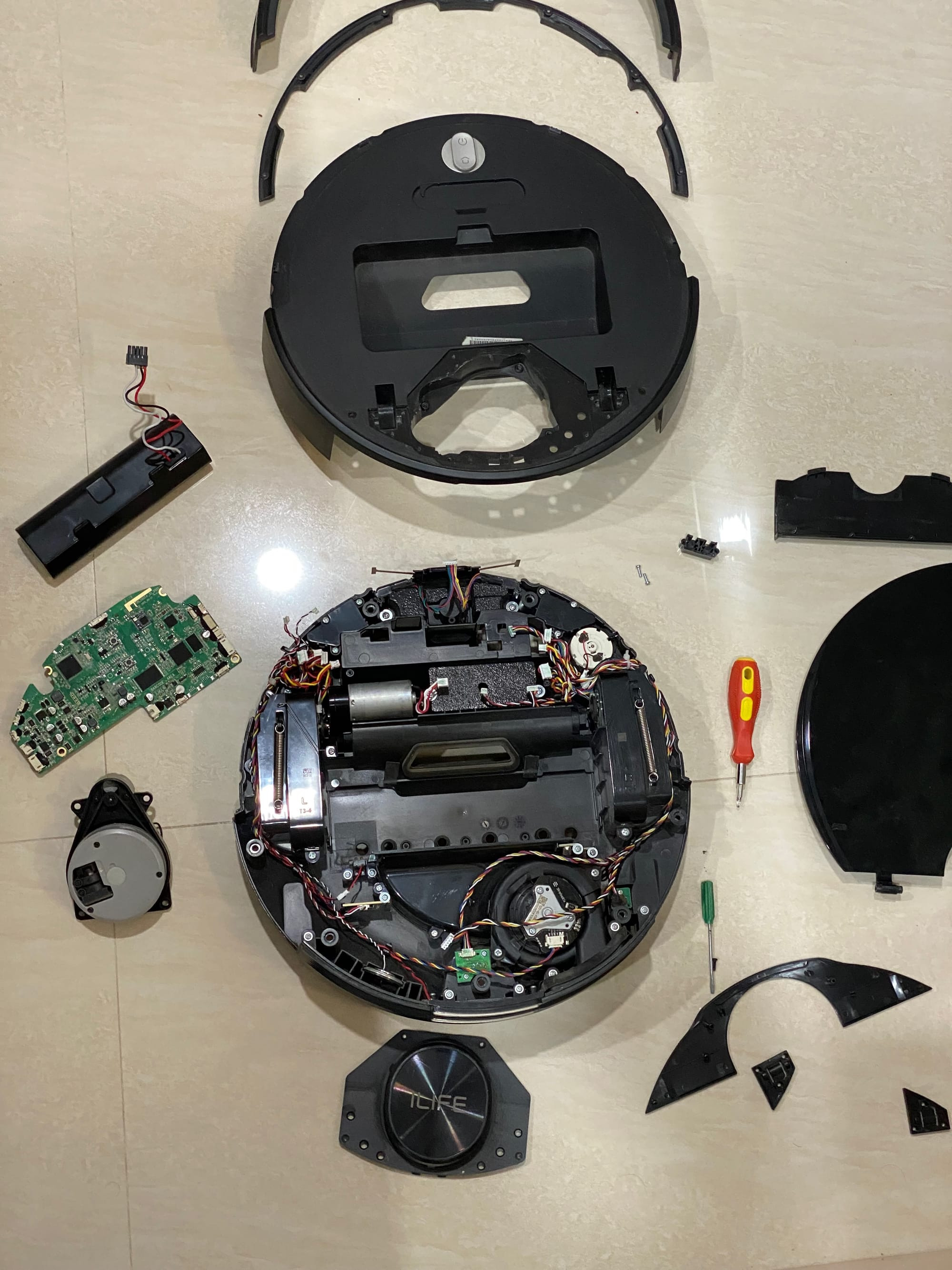
Essentially, he wrote his own software to read all the sensors and drive all the motors using his own computers, bypassing the onboard CPU. But he found one thing interesting. The Android Debug Bridge was wide open on the Linux computer. Sort of.
The problem was, you could only get in a few seconds after booting up. After that, it would disconnect. A little more poking fixed that. The software stack was impressive, using Google Cartographer to map the house, for example.
But what wasn’t impressive was the reason for the repeated failures. A deliberate command was sent to kill the robot when it quit phoning home with telemetry. Of course, at the service center, it was able to report and so it worked fine.
The hardware and the software are impressive. The enforcement of unnecessary data collection is not. It does, however, make us want to buy one of these just for the development platform. [Harishankar] has already done the work to make it useful.
It isn’t just vacuums. Android phones spew a notorious amount of data. Even your smart matress — yes, there are smart matresses — can get into the act.
La DC Comics prende posizione: “nessuna intelligenza artificiale generativa”
DC Comics ha definitivamente affermato la sua posizione sull’intelligenza artificiale generativa: nessun coinvolgimento delle macchine nella narrazione o nelle illustrazioni.
Questo annuncio è stato fatto dal presidente dell’azienda Jim Lee durante un discorso al New York Comic Con. Ha affermato che, finché la leadership rimarrà la stessa, l’attenzione sarà rivolta esclusivamente alla creatività umana. Ha sottolineato che gli appassionati di fumetti apprezzano in particolar modo la sincerità e riconoscono intuitivamente la falsità.
L’azienda richiede da tempo che tutte le immagini siano disegnate a mano da artisti, ma in passato sono state segnalate accuse di utilizzo della modellazione generativa su alcune copertine alternative.
Questi casi hanno scatenato una furiosa reazione da parte della comunità, preoccupata che l’automazione potesse sostituire il lavoro di scrittori e illustratori. In risposta, DC ha rimosso le copertine controverse e, secondo gli osservatori, ha inasprito le restrizioni per prevenire incidenti simili in futuro.
I rappresentanti dell’editoria hanno anche sottolineato che la creazione dei personaggi è più di un semplice processo tecnico. Lee ha osservato che la fan fiction e la fan fiction rimangono parte della cultura, ma la vera forza di eroi come Superman risiede nel loro posto nell’universo DC consolidato, con la sua mitologia e la sua continuity.
Questo, secondo il CEO dell’azienda, è ciò che rende i personaggi riconoscibili nel corso dei decenni e consente loro di rimanere rilevanti anche in futuro.
In un mondo in cui gli algoritmi stanno sempre più prendendo il sopravvento sul ruolo dei creatori, la posizione della DC Comics è un promemoria: l’arte è viva finché c’è respiro umano in essa.
L'articolo La DC Comics prende posizione: “nessuna intelligenza artificiale generativa” proviene da Red Hot Cyber.
La space economy, le filiere strategiche e il ruolo delle Pmi. Intervista a Jacopo Recchia (Aviorec)
@Notizie dall'Italia e dal mondo
Il settore aerospaziale e della difesa sta vivendo una trasformazione rapida e complessa. Nuove tecnologie, supply chain sempre più integrate e il ruolo centrale delle Pmi nella filiera nazionale delineano un panorama in continua evoluzione.
Notizie dall'Italia e dal mondo reshared this.
Caso Regeni, processo sospeso e quel fastidioso odore di affari. L’impegno del popolo giallo non si ferma
@Giornalismo e disordine informativo
articolo21.org/2025/10/caso-re…
Ora più che mai occorre illuminare a giorno quanto sta
Giornalismo e disordine informativo reshared this.
freezonemagazine.com/articoli/…
Big Daddy Wilson ci presenta il suo nuovo disco con una considerazione che così riassumiamo. “Si può immaginare la vita senza musica? Nessuna ninna nanna rilassante, nessuna serenata romantica, nessuna canzone pop vivace, nessuna sinfonia emozionante e nessuna melodia ispiratrice. La maggior parte delle persone considererebbe questa prospettiva noiosa e poco attraente. La
lindipendente.online/2025/10/2…

Le parole per raccontare le guerre. Il 30 ottobre corso di formazione dell’Odg Lazio
@Giornalismo e disordine informativo
articolo21.org/2025/10/le-paro…
Le parole per raccontare le guerre tenendo presenti i valori deontologici e una terminologia che non ferisce e non colpisce
Giornalismo e disordine informativo reshared this.
“Sanzioni ostili ma inutili” ci sono molte affermazioni di putin di questo genere.
è vero che negli ultimi 5 anni c'è stato un sovvertimento di qualsiasi più basilare regola di logica, con la scheggia impazzita di israele che pensa di poter ridisegnare i confini mondiali per legge ordinaria del proprio parlamento. nello stesso raggruppamento rientra sia le leggi russe sui propri confini nazionali che si espandono continuamente, che pure eventuali referendum russi fake... ma sentire un capo di stato che sostiene che si sente "ferito" da "sanzioni" che però comunque non hanno alcun effetto è una ulteriore escalation di questa che può essere solo definita una ridicola farsa.
veramente... è un'affermazione che va a deperimento della dignità di chi la fa. della serie rendersi ridicoli. perché alla fine puoi dire solo una delle 2 cose. 1) o è una minaccia ed è dannosa 2) o non ha effetto e non ha neppure sentito parlarne o sentirsene offesi
l'ordine nuovo portato avanti da putin, alternativo a quello usa, non pare migliore del modello precedente, in sostanza. e quando si deve cambiare per rimanere come prima per quanto mi riguarda io voto per nessun cambiamento. cambiare per in cambiamento fine a se stesso senza progresso non ha senso. o c'è progresso o non c'è progresso. solo questo conta. a livello globale chiaramente. non locale.
Caso Regeni, processo sospeso e quel fastidioso odore di affari. L’impegno del popolo giallo non si ferma
@Giornalismo e disordine informativo
articolo21.org/2025/10/caso-re…
Ora più che mai occorre illuminare a giorno quanto sta
Giornalismo e disordine informativo reshared this.
La “lotta antidroga” di Trump punta con forza alla guerra con Caracas
@Notizie dall'Italia e dal mondo
Allo scopo di mettere sotto pressione Maduro, la Casa Bianca ha trasferito sul piano militare un problema che fino a ieri veniva gestito dalle forze di polizia e dalla Guardia Costiera
L'articolo La “lotta antidroga” di Trump punta con forza alla guerra con Caracas proviene
Notizie dall'Italia e dal mondo reshared this.
Non lasciamo sole le donne iraniane!
@Giornalismo e disordine informativo
articolo21.org/2025/10/non-las…
Le donne e le ragazze iraniane non dimentichiamole e non lasciamole sole: per sempre “Donna-Vita-Libertà” Grido di allarme lanciato da SOHYLA ARJMAND attivista e testimone iraniana dell’Associazione “Donne per Nasrin” che “Articolo21 liberi di” raccoglie. In
Giornalismo e disordine informativo reshared this.
REPORTAGE. Messico: lo Stato che fa sparire i propri figli
@Notizie dall'Italia e dal mondo
Da oltre un decennio, i genitori dei 43 studenti di Ayotzinapa cercano la verità su una sparizione che coinvolge polizia, esercito e narcotraffico, mentre in Messico le persone scomparse superano le 124 mila.
L'articolo REPORTAGE. Messico: lo Stato che fa sparire i propri figli proviene da Pagine
Notizie dall'Italia e dal mondo reshared this.
freezonemagazine.com/news/thom…
In libreria dal 31 Ottobre 2025 Un thriller avvincente e morale, a tinte noir, che scava nel cuore oscuro del Sud degli Stati Uniti. Un romanzo sulla colpa, sulla giustizia negata, sul privilegio e sull’eredità mai estinta del razzismo. Venerdì 31 ottobre readerforblind pubblica The White League, romanzo di Thomas Zigal tradotto da […]
L'articolo Thomas Zigal – The White League proviene da FRE
CONGO. La pace di Trump è un inferno
@Notizie dall'Italia e dal mondo
Trump si vanta di aver riportato la pace in Congo, ma combattimenti e abusi continuano e l'emergenza umanitaria è disastrosa. La Casa Bianca punta a sfruttare le terre rare di cui è ricco il sottosuolo del paese africano
L'articolo CONGO. La pace di Trump è un pagineesteri.it/2025/10/24/afr…
Notizie dall'Italia e dal mondo reshared this.
motore per valvola di zona riscaldamento - Questo è un post automatico da FediMercatino.it

Prezzo: 60 €
motore 230V per valvola di zona tipo rbm per impianti di riscaldamento
consegna brevi manu in Ferrara e provincia altrimenti spedisco
Il Mercatino del Fediverso 💵♻️ reshared this.
Inaugurazione della sede di Trieste
@Politica interna, europea e internazionale
Rassegna Stampa Ansa Il Piccolo TeleQuattro
L'articolo Inaugurazione della sede di Trieste proviene da Fondazione Luigi Einaudi.
Politica interna, europea e internazionale reshared this.
PCOfficina al Linux Day 2025: vieni a trovarci!
pcofficina.org/pcofficina-al-l…
Segnalato da PCOfficina in via Pimentel 5 a #Milano e pubblicato sulla comunità Lemmy
macfranc reshared this.
Finalmente cestini della munnezza abbinati alle insegne de Roma!


cedolare secca
Affitto villetta sul Trasimeno, chi a vuole come affitto lungo?

The first application of enteral ventilation—aka breathing through the bum—to humans proved the technique is safe.#TheAbstract


Breathing Through Our Butts Declared Safe After First Human Trial
🌘
Subscribe to 404 Media to get The Abstract, our newsletter about the most exciting and mind-boggling science news and studies of the week.Hold onto your butts, because one day you might be breathing through them.
Scientists have tested out enteral ventilation—a possible method of administering oxygen with a liquid delivered through the rectum that is then absorbed into the intestines—in humans for the first time. The trial demonstrated that this method of ventilation is safe and “paves the way for future studies to see if this technique can help patients with respiratory failure,” according to a study published on Monday in the journal Med.
“Enteral ventilation is not meant to replace mechanical ventilators or ECMO, but rather to serve as a complementary oxygenation route,” said Takanori Takebe, an expert in organoid medicine with appointments at both Cincinnati Children’s Hospital Medical Center and the University of Osaka, in an email to 404 Media. The technique proves a backdoor “to provide partial oxygen support while allowing the lungs to rest,” he added.
But while this method is safe for humans, it hasn’t been experimentally shown to work on patients experiencing respiratory distress yet. If future trials show that enteral ventilation is also effective, it could potentially help newborns and premature infants who are struggling to establish lung function after birth, aid patients with severe respiratory failure or Acute Respiratory Distress Syndrome (ARDS), or be applied in other situations in which temporary oxygen supplementation is needed.
“In such cases, intestinal oxygen delivery could serve as a ‘bridge’ therapy until normal respiration or full ventilatory support can be established,” Takebe said.
A figure outlining the first enteral ventilation trial in humans. Image: Fujii, Tasuku et al.
The team previously published a study in 2021 that showed enteral ventilation was effective in ameliorating respiratory failure in rats, mice, and pigs. This initial trial in humans involved 27 healthy male volunteers, who received a liquid called perfluorodecalin through their rectums in an enema-like process.Since the trial was only intended to determine the safety of the procedure, rather than probe its efficacy in humans, the perfluorodecalin was not oxygenated and none of the volunteers were experiencing any respiratory distress during the course of the study.
“The results aligned closely with what we had anticipated from our preclinical data,” Takebe said. “We found that intrarectal administration of perfluorodecalin up to 1,000 mL was safe and well tolerated, with only mild and transient gastrointestinal symptoms such as bloating.”
“The next phase will involve testing ‘oxygenated’ perfluorodecalin (O₂-PFD) in patients with hypoxemia to evaluate actual oxygen transfer efficacy,” he added. “We are currently planning a Phase II trial in collaboration with clinical partners in Japan and the U.S.”
Takebe and his colleagues were inspired to develop this roundabout route by aquatic species, such as loaches, which absorb oxygen through their intestines to survive in low-oxygen environments. While the idea of rectally administering perfluorodecalin is relatively new, the use of oxygenated liquid for ventilation dates back decades. It even shows up in James Cameron’s 1989 thriller The Abyss, which includes a real scene of a rat breathing in a tank of liquid perfluorocarbon.
The technique may prove to be an effective means to alleviate respiratory distress in humans, but it’s also inspired its fair share of jokes because, well, it is about butt breath, after all.
In 2024, for instance, Takebe’s team received the Ig Nobel Prize, a satirical award that honors “achievements so surprising that they make people laugh, then think,” according to its website. Fellow Ig Nobel awardees include a team that levitated a frog in midair and another that investigated why pregnant women aren’t constantly tipping over.
“Receiving the Ig Nobel Prize was both humorous and humbling,” Takebe said. “It was a reminder that truly unconventional ideas often begin at the boundary between curiosity and skepticism.”
“While the prize is lighthearted in tone, I do believe it serves a serious purpose, encouraging the public to stay curious and to appreciate how even seemingly odd scientific questions can lead to meaningful innovations,” he concluded. “What began as a playful concept is now moving closer to a viable medical technology.”
🌘
Subscribe to 404 Media to get The Abstract, our newsletter about the most exciting and mind-boggling science news and studies of the week.The Ig Nobel Prize: Levitating frogs, constipated scorpions, and other science that makes you laugh then think - American Chemical Society
The Ig Nobel Prize celebrates discoveries that are unusual and imaginative that might not make it into a more traditional research journal.American Chemical Society
È uscito il nuovo numero di The Post Internazionale. Da oggi potete acquistare la copia digitale
@Politica interna, europea e internazionale
È uscito il nuovo numero di The Post Internazionale. Il magazine, disponibile già da ora nella versione digitale sulla nostra App, e da domani, venerdì 24 ottobre, in tutte le edicole, propone ogni due settimane inchieste e approfondimenti sugli affari e il potere
Politica interna, europea e internazionale reshared this.
Tutelare i settori critici e promuovere la cultura degli investimenti in sicurezza. Cosa farà la Fondazione Praexidia
@Notizie dall'Italia e dal mondo
La sicurezza economica e industriale italiana passa oggi per la tutela dei settori strategici e da una gestione più consapevole delle tecnologie critiche. La pandemia e la guerra in
Notizie dall'Italia e dal mondo reshared this.
trump è riuscito a fare un danno serio... apparire come debole e incostante, e quindi in definitiva inefficace. la usa politica ondivaga questo produce: un danno di immagine. ma non è utile alla nostra causa. non c'è da rallegrarsene. bene o male al momento dipendiamo ancora noi europei dalla deterrenza usa. e certo pacifismo è utile solo a putin.
An analysis of how tools to make non-consensual sexually explicit deepfakes spread online, from the Institute for Strategic Dialogue, shows X and search engines surface these sites easily.#Deepfakes #Socialmedia
New Research Shows Deepfake Harassment Tools Spread on Social Media and Search Engines
A new analysis of synthetic intimate image abuse (SIIA) found that the tools for making non-consensual, sexually explicit deepfakes are easily discoverable all over social media and through simple searches on Google and Bing.Research published by the counter-extremism organization Institute for Strategic Dialogue shows how tools for creating non-consensual deepfakes spread across the internet. They analyzed 31 websites for SIIA tools, and found that they received a combined 21 million visits a month, with up to four million visits in one month.
Chiara Puglielli and Anne Craanen, the authors of the research paper, used SimilarWeb to identify a common group of sites that shared content, audiences, keywords and referrals. They then used the social media monitoring tool Brandwatch to find mentions of those sites and tools on X, Reddit, Bluesky, YouTube, Tumblr, public pages on Instagram and Facebook, forums, blogs and review sites, according to the paper. “We found 410,592 total mentions of the keywords between 9 June 2020 and 3 July 2025, and used Brandwatch’s ability to separate mentions by source in order to find which sources hosted the highest volumes of mentions,” they wrote.
The easiest place to find SIIA tools was through simple web searches. “Searches on Google, Yahoo, and Bing all yielded at least one result leading the user to SIIA technology within the first 20 results when searching for ‘deepnude,’ ‘nudify,’ and ‘undress app,’” the authors wrote. Last year, 404 Media saw that Google was also advertising these apps in search results. But Bing surfaces the tools most readily: “In the case of Bing, the first results for all three searchers were SIIA tools.” These weren’t counting advertisements on the search engines that the websites would have paid for, but were organic search results surfaced by the engines’ crawlers and indexing.
X was another massively popular way these tools spread, they found: “Of 410,592 total mentions between June 2020 and July 2025, 289,660 were on X, accounting for more than 70 percent of all activity.” A lot of these were bots. “A large volume of traffic appeared to be inorganic, based on the repetitive style of the usernames, the uniformity of posts, and the uniformity of profile pictures,” Craanen told 404 Media. “Nevertheless, this activity remains concerning, as its volume is likely to attract new users to these tools, which can be employed for activities that are illegal in several contexts.”
One major spike in mentions of the tools on social media happened in early 2023 on Tumblr, when a woman posted about her experience being a target of sexual harassment from those very same tools. As targets of malicious deepfakes have said over and over again, the price of speaking up about one’s own harassment, or even objecting to the harassment of others, is the risk of drawing more attention and harassment to themselves.
‘I Want to Make You Immortal:’ How One Woman Confronted Her Deepfakes Harasser
“After discovering this content, I’m not going to lie… there are times it made me not want to be around any more either,” she said. “I literally felt buried.”404 MediaSamantha Cole
Another spike on X in 2023 was likely the result of bot advertisements for a single SIIA tool, Craanen said, and the spike was a result of those bots launching. X has rules against “unwanted sexual conduct and graphic objectification” and “inauthentic media,” but the platform remains one of the most significant places where tools for making that content are disseminated and advertised.Apps and sites for making malicious deepfakes have never been more common or easier to find. There have been several incidents where schoolchildren have used “undress” apps on their classmates, including last year when a Washington state high school was rocked by students using AI to take photos from other children’s Instagram accounts and “undress” around seven of their underage classmates, which police characterized as a possible sex crime against children. In 2023, police arrested two middle schoolers for allegedly creating and sharing AI-generated nude images of their 12 and 13 year old classmates, and police reports showed the preteens used an application to make the images.
A recent report from the Center for Democracy and Technology found that 40 percent of students and 29 percent of teachers said they know of an explicit deepfake depicting people associated with their school being shared in the past school year.
Laws About Deepfakes Can’t Leave Sex Workers Behind
As lawmakers propose federal laws about preventing or regulating nonconsensual AI generated images, they can’t forget that there are at least two people in every deepfake.404 MediaSamantha Cole
The “Tools to Address Known Exploitation by Immobilizing Technological Deepfakes on Websites and Networks” (TAKE IT DOWN) Act, passed earlier this year, requires platforms to report and remove synthetic sexual abuse material, and after years of state-by-state legislation around deepfake harassment is the first federal-level law to attempt to confront the problem. But critics of that law have said it carries a serious risk of chilling legitimate speech online.“The persistence and accessibility of SIIA tools highlight the limits of current platform moderation and legal frameworks in addressing this form of abuse. Relevant laws relating to takedowns are not yet in full effect across the jurisdictions analysed, so the impact of this legislation cannot yet be fully known,” the ISD authors wrote. “However, the years of public awareness and regulatory discussion around these tools, combined with the ease with which users can still discover, share and deploy these technologies suggests that takedowns cannot be the only tool used to counter their proliferation. Instead, effective mitigation requires interventions at multiple points in the SIIA life cycle—disrupting not only distribution but also discovery and demand. Stronger search engine safeguards, proactive content-blocking on major platforms, and coordinated international policies are essential to reducing the scale of harm.”
Laws About Deepfakes Can’t Leave Sex Workers Behind
As lawmakers propose federal laws about preventing or regulating nonconsensual AI generated images, they can't forget that there are at least two people in every deepfake.Samantha Cole (404 Media)


Meta’s Ray-Ban glasses usually include an LED that lights up when the user is recording other people. One hobbyist is charging a small fee to disable that light, and has a growing list of customers around the country.#Privacy #Meta
A $60 Mod to Meta’s Ray-Bans Disables Its Privacy-Protecting Recording Light
The sound of power tools screech in what looks like a workshop with aluminum bubble wrap insulation plastered on the walls and ceiling. A shirtless man picks up a can of compressed air from the workbench and sprays it. He’s tinkering with a pair of Meta Ray-Ban smart glasses. At one point he squints at a piece of paper, as if he is reading a set of instructions.Meta’s Ray-Ban glasses are the tech giant’s main attempt at bringing augmented reality to the masses. The glasses can take photos, record videos, and may soon use facial recognition to identify people. Meta’s glasses come with a bright LED light that illuminates whenever someone hits record. The idea is to discourage stalkers, weirdos, or just anyone from filming people without their consent. Or at least warn people nearby that they are. Meta has designed the glasses to not work if someone covers up the LED with tape.
That protection is what the man in the workshop is circumventing. This is Bong Kim, a hobbyist who modifies Meta Ray-Ban glasses for a small price. Eventually, after more screeching, he is successful: he has entirely disabled the white LED that usually shines on the side of Meta’s specs. The glasses’ functions remain entirely intact; the glasses look as-new. People just won’t know the wearer is recording.
This post is for subscribers only
Become a member to get access to all content
Subscribe now

Ikkle Gemz Universe+ reshared this.
The app, which went viral before facing multiple data breaches, is currently unavailable on the Apple App Store.#tea #News
Apple Removes Women Dating Safety App from the App Store
Apple has removed Tea, the women’s safety app which went viral earlier this year before facing multiple data breaches, from the App Store.“This app is currently not available in your country or region,” a message on the Apple App Store currently says when trying to visit a link to the app.
Apple told 404 Media in an email it removed the app, as well as a copycat called TeaOnHer, for failing to meet the company’s terms of use around content moderation and user privacy. Apple also said it received an excessive number of complaints, including ones about the personal data of minors being posted in the apps.
💡
Do you know anything else about this removal? Do you work at Tea or did you used to? I would love to hear from you. Using a non-work device, you can message me securely on Signal at joseph.404 or send me an email at joseph@404media.co.The company pointed to parts of its guidelines including that apps are not allowed to share someone’s personal data without their permission, and that apps need a mechanism for reporting objectionable content.
Randy Nelson, head of insights and media resources at app intelligence company Appfigures, first alerted 404 Media to the app’s removal.
This post is for subscribers only
Become a member to get access to all content
Subscribe now

When Amazon Web Services went offline, people lost control of their cloud-connected smart beds, getting stuck in reclined positions or roasting with the heat turned all the way up.#News
The AWS Outage Bricked People’s $2,700 Smartbeds
Sleepers snoozing in Eight Sleep smartbeds had a bad night on Monday when a major outage of Amazon Web Services (AWS) caused their beds to malfunction. Some were left with the bed’s heat blasting, others were left in a sitting position and unable to recline. One woman said her bed went haywire and she had to unplug it from the wall.At around 3 a.m. ET on Monday morning the US-EAST-1 AWS cluster went down and screwed up internet connected services across the planet. Customers for the banks Lloyds and Halifax couldn’t access their accounts. United Airlines check-ins stopped functioning. And people who rest in Eight Sleep beds awoke to find their mattresses had turned against them.
An Eight Sleep bed is a smart bed that starts at $2,700. Users provide their own mattress and Eight Sleep sells them a mattress cover and a “Pod” that acts as the brain of the system. If customers want to spend a few thousand more, they can get a base that adjusts the position of the mattress, provides biometric sleeping data, and heats and cools the sleeper. Customers must also subscribe to a service for Eight Sleep, which ranges from $17 to $33 a month.
Eight Sleep runs on the cloud and when the servers go down or the customer’s internet goes out it bricks the bed. There’s no offline mode. Customers have complained about the lack of an offline mode for a while, but the AWS outage focused their rage.
playlist.megaphone.fm?p=TBIEA2…
“So apparently, when my internet goes down, my bed decides to go on strike too. A quick outage, and boom—no change in sleep position available, not even with manual taps,” one customer on r/eightsleep said. “Maybe consider giving people a grace period before their $5,000 bed locks them into the world’s most ergonomic sitting position. AWS attack or Internet down for a few hours should not brick my bed.”“Cloud only is unacceptable,” said another. “It’s 2025 there is no reason an internet or AWS server outage should impact your entire customer base's sleep—especially given the price tag of your product. Need EightSleep’s product team to opine here, your customer base demands it!”
“My pod is at +5 and I am sweating cuz I can’t turn it down or off,” said one comment.
Eight Sleep CEO Matteo Franceschetti apologized for the restless night in a statement posted to X. “The AWS outage has impacted some of our users since last night, disrupting their sleep. That is not the experience we want to provide and I want to apologize for it,” he said. He added that the company was restoring the bed’s features as AWS came back online and promised to outage-proof the Pods.
“Mine is still not working—it went super haywire and still seems to be turning on and off randomly with the inability to stop or control it. I had to unplug it,” ESPN host Victoria Arlen said on X, replying to Franceschetti. “I tried to get it going again and it’s still uncontrollable with the system turning on and off.”
Would be great if my bed wasn’t stuck in an inclined position due to an AWS outage. Cmon now
— Brandon (@Brandon25774008) October 21, 2025
“Would be great if my bed wasn’t stuck in an inclined position due to an AWS outage. Cmon now,” @Brandon25774008 said on X.The truth is that so long as Eight Sleep beds have to communicate with a server to function, they’re always in danger of dying. That point of failure means the beds could go out at any time leaving the people who paid $5,000 for a fancy bed with little recourse. And, of course, no company lasts forever.
“When ES eventually goes bust, our pods will be bricked,” one Redditor said. “The fact that the pods cannot be controlled when you don’t have the internet is diabolical. I wish I knew this before purchasing. This basically means in the possibly near future, all of our pods will be bricked […] ES need to get their heads out of their ass and for once do a pro customer change and introduce an ‘offline’ mode where we can connect to the pod directly and at the very least change the temperature. It has wifi, it can make its own SSID, just make it work ES.”
Pro-active ES users have already found one solution: jailbreak the Pod. The ES sub is—at a minimum—$200 a year, the Pod uploads multiple GBs of telemetry data to ES servers every month, and when the internet goes down the bed dies. If you must own a $5,000 bed that heats and cools you dynamically, shouldn’t you take full control of it?
There’s an active Discord and a Github for a group of Eight Sleep snoozers who’ve decided to do just that. According to the GitHub, the jailbreak “allows complete control of device WITHOUT requiring internet access. If you lose internet, your pod WILL NOT turn off, it will continue working!”
Data centers are vulnerable. Server clusters go down. As long as there is a single point of failure and your device is commuting back to a network out of your control, it’s a risk. We have allowed tech companies to mediate the most basic functions of our lives, from cooking to travel to sleep. The AWS and ES outage is a stark reminder that we should do what we can to limit the control these tech companies have over our lives.
“I’m continuously horrified that I inextricably linked my sleep and therefore health to a cloud provider’s reliability,” one person said in the comments on Reddit.
Food Delivery Robots Are Feeding Camera Footage to the LAPD, Internal Emails Show
Serve Robotics, which delivers food for Uber Eats, provided footage filmed by at least one of its robots to the LAPD as evidence in a criminal case. The emails show the robots, which are a constant sight in the city, can be used for surveillance.Jason Koebler (404 Media)

▶ Che senso ha continuare a suonare quando tutto intorno a te crolla?...
Welcome back to Instagram. Sign in to check out what your friends, family & interests have been capturing & sharing around the world.
Login • Instagram
Welcome back to Instagram. Sign in to check out what your friends, family & interests have been capturing & sharing around the world.www.instagram.com
▶ Il grande esperimento ipnocratico della letteratura italiana. Dietro Jianwei Xun c’è qualcun altro.
Welcome back to Instagram. Sign in to check out what your friends, family & interests have been capturing & sharing around the world.
Login • Instagram
Welcome back to Instagram. Sign in to check out what your friends, family & interests have been capturing & sharing around the world.www.instagram.com