
Legally Distinct Space Invaders Display WiFi Info

In the early 00s there was a tiny moment before the widespread adoption of mobile broadband, after the adoption of home WiFi, and yet before the widespread use of encryption. For this brief time a unique practice arose called wardriving — where people would drive around, document, and use these open wireless networks.
Although the pursuit has diminished with the rise of mobile broadband and WPA encryption, there are still a few use cases for the types of hardware a wardriver would have used. [arduinocelentano] recently built a Wi-Fi strength monitor in this style but with a unique theme.
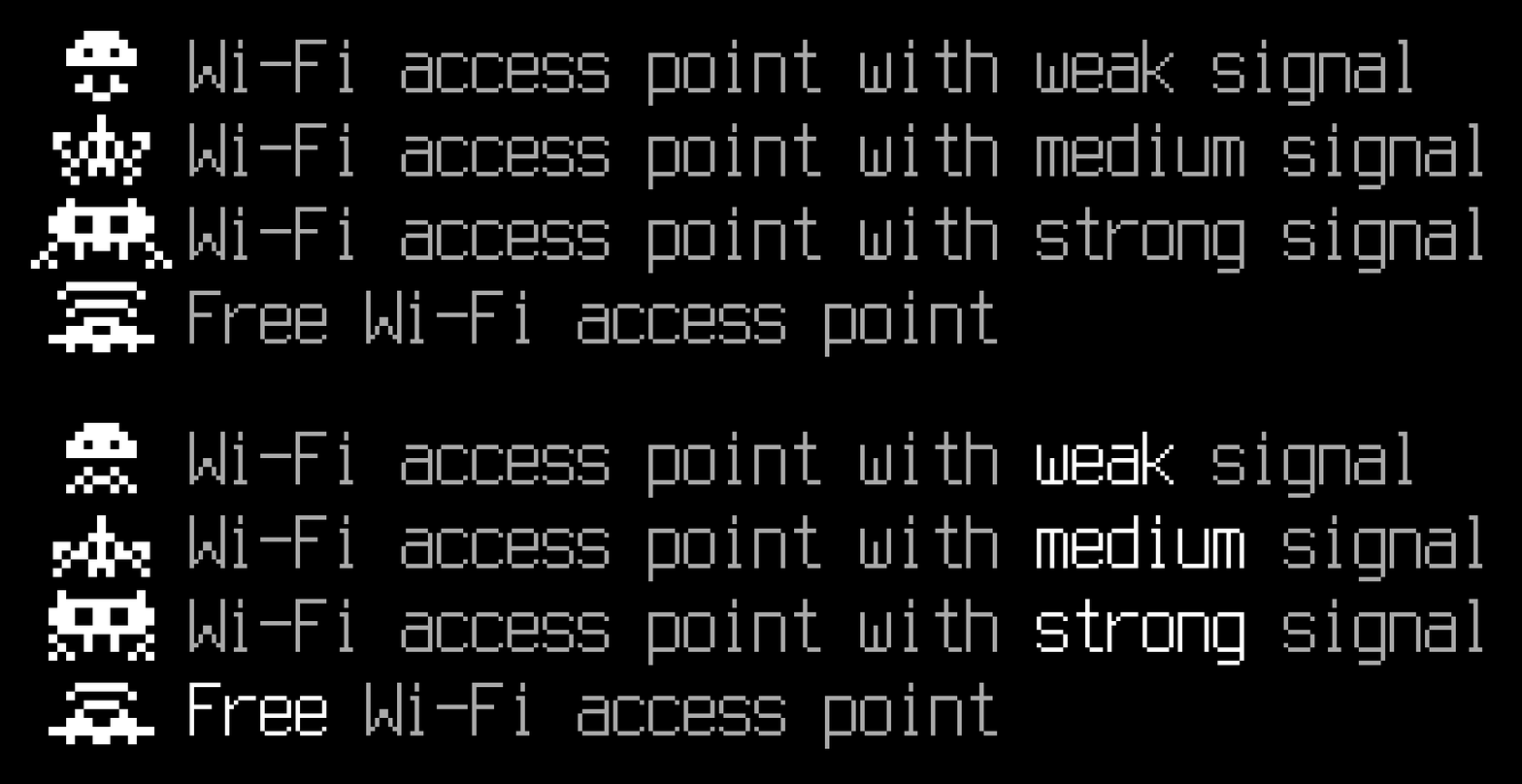
During the heyday of wardriving we could only have wished for hardware as powerful, capable, small, and power efficient as what’s in this project. Most of us that partook in the hobby at its peak generally had bulky laptops, possibly some lead-acid batteries, and perhaps one or more wonky antennas to boot. In a way it’s almost a shame that this hobby has largely diminished, although there are still a few out there poking around unsecured networks.
player.vimeo.com/video/1024054…
SweetMonkeyJesus reshared this.
The LumenPnP Pasting Utility: Never Buy Solder Stencils Again?

Over on his YouTube channel the vivacious [Stephen Hawes] tells us that we never need to buy solder stencils again!
A big claim! And he is quick to admit that his printed solder paste isn’t presently quite as precise as solder stencils, but he is reporting good success with his technique so far.
[Stephen] found that he could print PCBs with his fiber laser, populate his boards with his LumenPnP, and reflow with his oven, but… what about paste? [Stephen] tried making stencils, and in his words: “it sucked!” So he asked himself: what if he didn’t need a stencil? He built a Gerber processing, G-code generating, machine-vision implemented… website. The LumenPnP Pasting Utility: https://paste.opulo.io/
The WebAssembly running in the Chrome tab itself connects to the LumenPnP and performs the entire pasting job automatically, with machine-vision fiducial calibration. Automatic alignment with fiducials was critical to the project’s feasibility, and he achieved it using machine-vision from the OpenCV library.
In the video heshows us how to jog the camera to the home fiducial, load the Gerber files, and initialize the job. He’s implemented camera jogging by clicking on the image from the camera to indicate the desired target location, which looks like a very handy feature to have!
Some initial setup just needs to be done once at the beginning to setup your board, additional board prints can then self-calibrate from the fiducials. The Z-index for the dispenser needs to be calibrated, and other job settings include nozzle offset calibration, dispense degrees, retraction degrees, and dwell milliseconds.
If you’re interested in other options for solder stencils be sure to read Solder Stencil Done Three Ways.
youtube.com/embed/_qklxlJc-04?…

Come nasce la gravità? Forse abbiamo la risposta
Una teoria emergente suggerisce che la gravità non sarebbe una forza fondamentale, ma un fenomeno termodinamico indotto dall’aumento cosmico dell’entropia.Patrizio Coccia (Tom's Hardware)
Soldered RAM Upgrades Finally Available for Mac-PPC

In the retrocomputing world, [DosDude1] is a name spoken with more than a little respect. He’s back again with a long-awaited hack for PowerPC Macintosh: soldered RAM upgrades!
[DosDude1] is no stranger to soldering his way to more storage– upgrading the SSD on an M4 Mac Mini, or doubling the VRAM on an old GPU. For a PPC Mac, though, it is not enough just to solder more RAM onto the board; if that’s all it was, we’d have been doing it 20 years ago. Once the RAM is in place, you have to have some way to make sure the computer knows the RAM is in place. For a WinTel machine, getting that information to the BIOS can be as easy as plugging in the right resistors.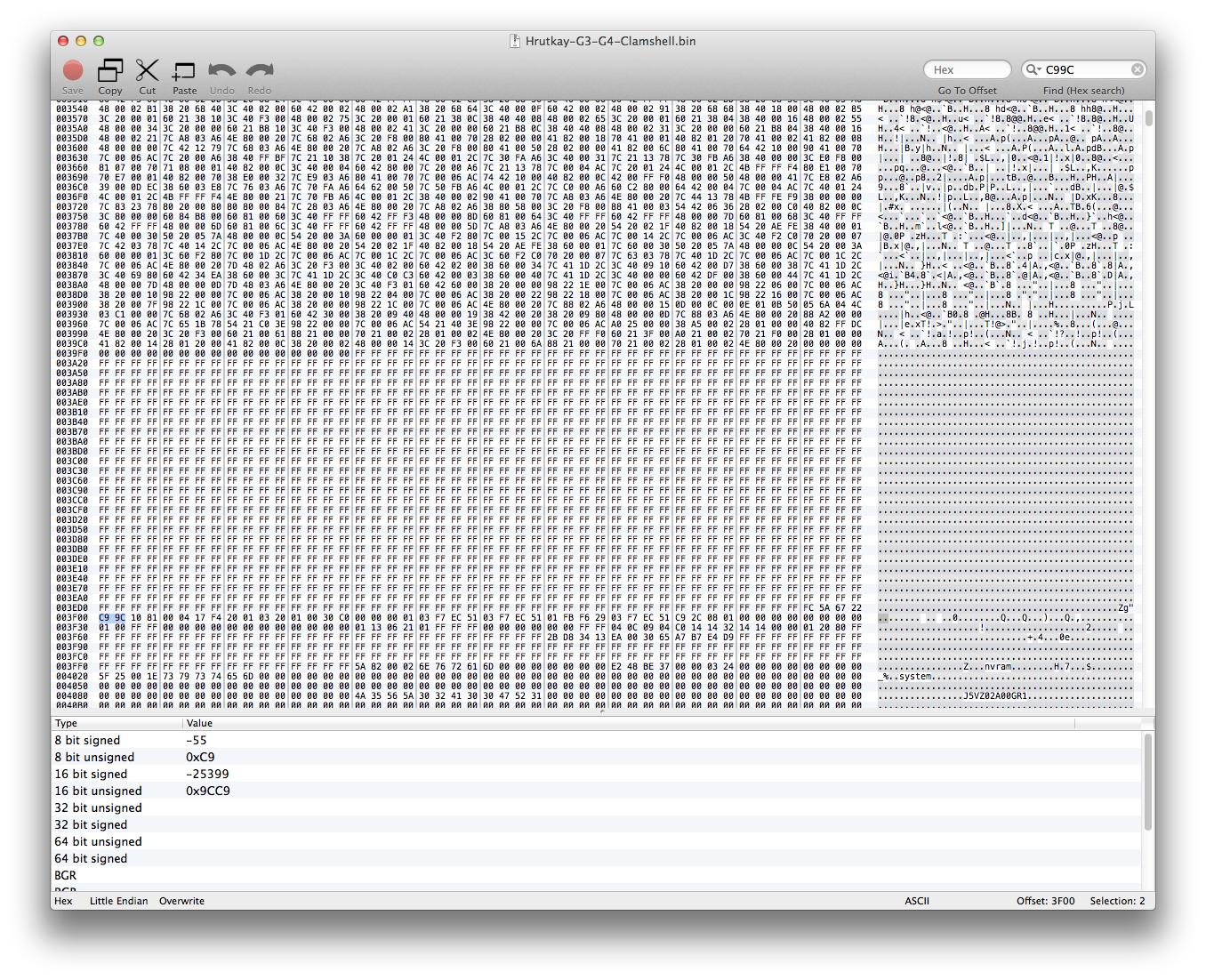
PowerPC Macintoshes don’t have BIOS, though. Instead, what’s required is a hack to modify the machine’s BootROM, and write an edited version back into the motherboard’s EEPROM. No one knew how to make that work, until now. [DosDude1] credits a document discovered by [LightBulbFun] on “Boot Flash System Configuration Block” for the secret sauce to hacking the HEX configuration. For example, adding four more 128 MB DIMMS to max out an iBook G3 was a matter of finding the Hex value for number of soldered chips–apparently it was at offset 0x5C. Change this from 0x01 to 0x02 tells the board to look for all 6 chips. Then it’s a matter of flashing the edited hex dump EEPROM, which can be done with a programmer or the flashrom command under Linux.
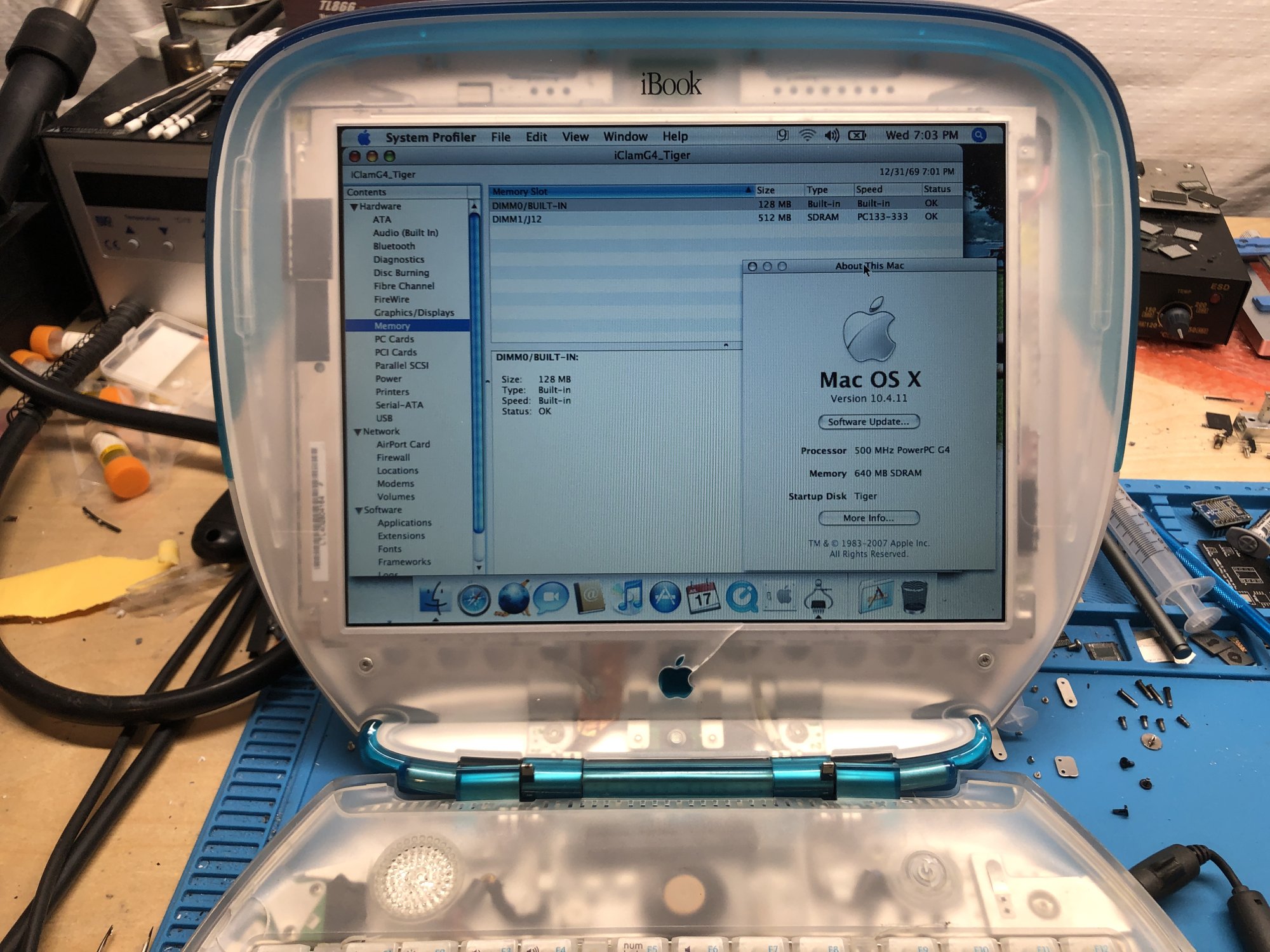
While a few extra hundred MB of RAM isn’t exactly bringing this machine into the 21st century, it is a great quality-of-life upgrade to make old budget hardware match the best of the era. This isn’t magic: if you’re increasing the density, rather than filling up footprints as [DosDude1] demonstrates, you’ve got to make sure the board has got address lines to spare or there’s a way to bodge them in. (128 MB was the max for this one.) The footprints obviously have to match, too, and so do the specs. You’re not going to be putting extra gigabytes of DDR5 into a machine designed with OS9 in mind, but then, you probably don’t need to. It’s already got more than 640 KB, after all, and that’s enough for anybody.
Found via r/VintageApple on Reddit.
L’Agenzia spaziale italiana svilupperà la prima casa per gli astronauti sulla Luna e su Marte
la Meloni insisterà anche per mandare una donna italiana a rassettare?
Non so se basterà, ma vale la pena provarci 💪🤞
(Se non compare l'anteprima: petizione per fermare l'abbattimento degli alberi sani a Roma)
reshared this

Idv resterà italiana. Finalizzato l’acquisto da parte di Leonardo per 1,7 miliardi
@Notizie dall'Italia e dal mondo
Alla fine, Idv resterà italiana. Con un’operazione da 1,7 miliardi di euro, Leonardo ha finalizzato l’accordo di acquisizione del segmento veicoli militari di Iveco. L’operazione sarà finalizzata nel corso del primo trimestre del 2026, previa autorizzazione
reshared this

Submit to biometric face scanning or risk your account being deleted, Spotify says, following the enactment of the UK's Online Safety Act.
Submit to biometric face scanning or risk your account being deleted, Spotify says, following the enactment of the UKx27;s Online Safety Act.#spotify #ageverification

Spotify Is Forcing Users to Undergo Face Scanning to Access Explicit Content
Submit to biometric face scanning or risk your account being deleted, Spotify says, following the enactment of the UK's Online Safety Act.Samantha Cole (404 Media)
2025 One-Hertz Challenge: A Software-Only AM Radio Transmitter

We’ve been loving the variety of entries to the 2025 One-Hertz Challenge. Many a clock has been entered, to be sure, but also some projects that step well outside simple timekeeping. Case in point, this AM transmitter from [oldradiofixer.]
The software-only transmitter uses an ATTiny85 processor to output an AM radio signal in the broadcast band. It transmits a simple melody that you can tune in on any old radio you might have lying around the house. Achieving this was simple. [oldradiofixer] set up the cheap microcontroller to toggle pin PB0 at 1 MHz to create an RF carrier. Further code then turns the 1MHz carrier on and off at varying rates to play the four notes—G#, A, G#, and E—of the Twilight Zone theme. This is set up to repeat every second—hence, it’s a perfectly valid entry to the 2025 One-Hertz Challenge!
It’s a simple project, but one that demonstrates the basics of AM radio transmission quite well. The microcontroller may not put out a powerful transmission, but it’s funny to think just how easy it is to generate a broadcast AM signal with a bit of software and a length of wire hanging off one pin. Video after the break.
youtube.com/embed/yi7hemwG_6A?…

One Man’s Trash… Bicycle Edition

[Remy van Elst] found an obsolete bike navigation system, the Navman Bike 1000, in a thrift store for €10. The device was a rebadged Mio Cyclo 200 from 2015. Can a decade-old GPS be useful? Well, the answer depends on a little reverse engineering.
There were some newer maps available, but they wouldn’t download using the official software. Out comes WireShark and mitmproxy. That allowed [Remy] to eavesdrop on what was going on between the box and its home server. From there he could intercept the downloaded software image, which in turn yielded to scrutiny. There was one executable, but since the device mounted as a drive, he was able to rename that executable and put his own in using the same name.
The device turns out to run Windows CE. It could even run DOOM! Once he was into the box with a file manager, it was fairly straightforward to add newer software and even update the maps using OpenStreetMaps.
This is a great example of how a little ingenuity and open source tools can extend the life of consumer electronics. It isn’t always as easy to find an entry point into some device like this. Then again, sometimes it’s a little easier than maybe it should be.
We’d all but forgotten Windows CE. We see many people using WireShark, but fewer running mitmproxy. It sure is useful.
Dopo NPM, ora è il turno di PyPI: Fate attenzione utenti Python a questa nuova campagna di phishing
I responsabili del Python Package Index (PyPI) hanno emesso un avviso su una campagna di phishing rivolta agli utenti. Gli aggressori mirano a reindirizzare le vittime verso siti falsi camuffati da PyPI e a rubare le loro credenziali. Gli aggressori avrebbero inviato email con oggetto “[PyPI] Verifica email” provenienti da noreply@pypj[.]org. In altre parole, il dominio imita pypi.org e la lettera “j” sostituisce la “i”.
“Non si tratta di una violazione della sicurezza di PyPI in sé, ma piuttosto di un tentativo di phishing e di abuso della fiducia che gli utenti ripongono in PyPI”, scrive Mike Fiedler, amministratore di PyPI. Le email contengono un link e invitano gli utenti a cliccarci sopra per verificare il proprio indirizzo email. Il link porta a un sito di phishing mascherato da PyPI e progettato per raccogliere credenziali.
Si noti che, dopo aver inserito i dati sul sito falso, la richiesta viene inviata al sito PyPI legittimo. Questo consente di ingannare le vittime e convincerle che tutto sia in regola, sebbene in realtà le loro credenziali cadano nelle mani degli aggressori.
PyPI ha affermato di stare già valutando possibili metodi per contrastare l’attacco. Nel frattempo, i responsabili hanno invitato gli utenti a controllare attentamente gli URL nei loro browser prima di effettuare l’accesso e ad astenersi dal cliccare sui link se hanno ricevuto email simili in passato.
“Se hai già seguito il link e inserito le tue credenziali, ti consigliamo di cambiare immediatamente la password PyPI”, scrive Fidler. “Controlla la cronologia di sicurezza del tuo account per verificare se ci sono anomalie.”
Al momento non è chiaro chi sia dietro questa campagna, ma è molto simile agli attacchi di phishing che hanno colpito gli utenti di npm nelle ultime settimane. Ricordiamo che, nel caso di npm, gli aggressori utilizzano anche il typosquatting con il dominio npnjs[.]com (invece del vero npmjs.com). Gli aggressori inviano anche email agli sviluppatori in merito alla presunta necessità di verificare il loro indirizzo email per rubarne le credenziali.
Questi attacchi hanno compromesso numerosi pacchetti popolari, alcuni dei quali vengono scaricati 30 milioni di volte a settimana.
L'articolo Dopo NPM, ora è il turno di PyPI: Fate attenzione utenti Python a questa nuova campagna di phishing proviene da il blog della sicurezza informatica.
We talked to people living in the building whose views are being blocked by Tesla's massive four-story screen.
We talked to people living in the building whose views are being blocked by Teslax27;s massive four-story screen.#News #Tesla

Living Next To Tesla Diner Is 'Absolute Hell,' Neighbors Say
We talked to people living in the building whose views are being blocked by Tesla's massive four-story screen.Rosie Thomas (404 Media)

Ministero dell'Istruzione
Il Consiglio dei Ministri ha approvato oggi in via definitiva i regolamenti che riformano il #voto di #condotta e la disciplina della valutazione degli #studenti della #scuola secondaria, dopo i pareri favorevoli espressi dal Consiglio di Stato.Telegram
CAF, phishing e telefonate: il nuovo “modello unico” del Crimine Informatico. Fate Attenzione!
Negli ultimi giorni, diversi Centri di Assistenza Fiscale (CAF) italiani — tra cui CAF CIA, CAF UIL e CAF CISL — stanno segnalando un’ondata di messaggi SMS sospetti inviati direttamente ai loro clienti. A riportarlo a Red Hot Cyber è stata una segnalazione da parte di Massimo Tenaglia del CED Nazionale, Caf Cia srl.
La truffa del CAF via SMS
Il testo del messaggio, come mostrato anche nell’immagine di copertina, invita l’utente a contattare urgentemente un presunto “CAF Centro Assistenza Formativa” a un numero a pagamento che inizia con 893, prefisso noto per i servizi a sovrapprezzo.
«Si prega di contattare con urgenza i nostri uffici CAF Centro Assistenza Formativa al numero 8938939903 per comunicazioni che la riguardano»
La modalità del tentativo di frode è chiara: sfruttare la fiducia che i contribuenti ripongono nei CAF per indurre la vittima a chiamare un numero a pagamento, generando così guadagni illeciti per i truffatori.

Il dubbio che preoccupa gli operatori
Ciò che rende questa vicenda particolarmente preoccupante è che i numeri destinatari degli SMS risultano essere effettivamente clienti reali dei CAF coinvolti, persone che hanno usufruito di servizi fiscali come 730, ISEE o dichiarazioni dei redditi. Questo dettaglio fa sorgere il sospetto che non si tratti di un’azione casuale, ma che dietro ci possa essere una vera e propria esfiltrazione di dati: qualcuno potrebbe aver avuto accesso ai database dei CAF o, più probabilmente, a quelli delle software house che forniscono le piattaforme informatiche utilizzate dai centri di assistenza fiscale per la gestione delle pratiche.
Un operatore del settore ci ha scritto in modo informale per condividere queste preoccupazioni:
“La cosa strana che abbiamo riscontrato è che i numeri di telefono destinatari di questi SMS sono proprio dei clienti dei relativi CAF a cui sono stati svolti questi servizi. Siccome ci siamo informati presso i nostri fornitori di servizi a livello informatico e sembra non ci sia nessuna violazione di dati, voi che siete sempre attenti a scovare questi attacchi con tentativi di esfiltrazione di dati, siete al corrente di attività criminale magari nei confronti di software house che lavorano per i CAF?”
Ipotesi e scenari
Se davvero ci fosse stata una compromissione, non è detto che i CAF siano stati direttamente violati: molto più probabile che i dati siano stati sottratti da fornitori terzi che possono gestire:
- software per l’elaborazione dei modelli fiscali,
- portali per la gestione degli appuntamenti,
- piattaforme cloud usate per la conservazione dei documenti.
Questa modalità rispecchia quanto già accaduto in altri settori, dove i cybercriminali hanno colpito i fornitori tecnologici per ottenere dati sensibili su larga scala.
Inoltre, va ricordato che nel mondo cybercriminale combo di dati (cioè elenchi aggregati di numeri di telefono, email e altre informazioni) sono costantemente in vendita su forum e marketplace underground a prezzi bassissimi.
Un attacco mirato ai clienti di CAF potrebbe quindi essere alimentato anche da dati aggregati provenienti da precedenti data breach o sottratti tramite malware come gli infostealer, che raccolgono informazioni direttamente dai dispositivi compromessi degli utenti.
Non è quindi semplice risalire all’origine dell’esfiltrazione: i dati potrebbero aver fatto diversi “giri” nel tempo, passando attraverso rivendite, scambi o correlazioni con altre compromissioni passate.
Questo rende ancora più difficile individuare con certezza il momento e il luogo in cui le informazioni siano state sottratte, aumentando il rischio per gli utenti finali.
Cosa possiamo fare
- Non chiamare numeri sospetti, specialmente se iniziano con prefissi a sovrapprezzo come 893 o 899.
- Segnalare immediatamente questi SMS ai CAF di riferimento e alle autorità competenti.
- I CAF, dal canto loro, dovrebbero avvisare i propri clienti con messaggi ufficiali e valutare insieme ai fornitori tecnologici eventuali anomalie nei sistemi informatici.
Conclusione
Questa campagna di phishing via SMS sarebbe l’ennesima dimostrazione di come i dati personali possano diventare un’arma nelle mani dei cybercriminali. È importante che i CAF, i fornitori di software e le autorità collaborino per accertare l’origine del problema e proteggere la privacy dei cittadini.
La sicurezza informatica, però, non è fatta solo di tecnologie e controlli: sta diventando giorno dopo giorno una vera e propria cultura, e così deve essere trattata.
Perché anche disponendo dei migliori strumenti di difesa, il social engineering e l’interazione umana resteranno sempre un passo avanti: il bersaglio finale siamo sempre noi, persone che ogni giorno usano il digitale per lavoro o nella vita privata.
Per questo motivo, la consapevolezza del rischio rimane l’arma più potente, e il prodotto migliore su cui investire davvero.
Formazione, sensibilizzazione e attenzione quotidiana possono fare la differenza tra cadere vittima di un attacco e saperlo riconoscere in tempo.
L'articolo CAF, phishing e telefonate: il nuovo “modello unico” del Crimine Informatico. Fate Attenzione! proviene da il blog della sicurezza informatica.

Dazi, accordo Usa-Ue da rifare? Il caso
Il nodo principale da sciogliere riguarda la natura dell'intesa raggiunta: l'assenza di un testo congiunto è un fatto con pochi precedenti nella storia, almeno per 'deal' di questa portataRedazione Adnkronos (Adnkronos)
Mi sono arrivati gli occhiali.
È tutto più nitido, tutto più colorato... c'è tanta bellezza in giro.
Mi sono accorto che una commessa della COOP ha un piercing al naso.
Fino a ieri non mi ero accorto neanche che avesse un naso. 😁
like this
Poliversity - Università ricerca e giornalismo reshared this.
Guerra Ucraina Russia, Cremlino: "Sanzioni Usa? Economia russa ormai è immune"
beh si... nel senso che oramai produce solo armi e quindi probabilmente è vero. ma prima o poi servirà ai russi anche la carta igienica, pezzi di ricambio per aerei civili, ed automobilli, ecc.
#Gaza e l'alibi del genocidio

Gaza e l’alibi del genocidio
I recenti annunci dei governi di Francia e Regno Unito sul riconoscimento nelle prossime settimane dello stato palestinese non hanno nulla a che vedere con un reale scrupolo per questo popolo né con un impegno autentico per fermare il genocidio in co…www.altrenotizie.org
"Clima anti-ebrei in tutta Europa, ora voglio giustizia"
ovviamente mi dispiace. la violenza non è mai la soluzione. e di certo non lo è colpire una persona a caso, così, senza pensare. ma ti sei per caso chiesto quale porrebbe essere il problema? israele nel mondo sta riuscendo a passare per democrazia compiuta pienamente realizzata, tesa sia alla propria difesa che a non discriminare nessuna persona, mettendo ogni persona sullo stesso piano?
Innovazione e razionalizzazione guidano la strategia di Leonardo. I risultati del primo semestre 2025
@Notizie dall'Italia e dal mondo
I risultati del primo semestre 2025 confermano la traiettoria di crescita sostenibile tracciata dal Piano Industriale di Leonardo. In un contesto internazionale complesso ma ricco di opportunità, il gruppo ha
Notizie dall'Italia e dal mondo reshared this.

7 segnali che rivelano un'intelligenza superiore alla media
Scopri quali sono i 7 comportamenti che svelano un'intelligenza superiore alla media secondo la psicologia, lontani da cliché e risposte brillantiredazione.studenti (Studenti)
reshared this
Avviso per tripofobici: il web sta per diventare un percorso ad ostacoli tra buchi e link rotti.
@Privacy Pride
Il post completo di Christian Bernieri è sul suo blog: garantepiracy.it/blog/buco/
"Ipertesto": una parola in disuso, forse un po' da boomer. All'inzio del web "ipertesto" descriveva in modo sintetico il fatto che ogni pagina web poteva contenere dei link, dei richiami alle fonti, ad altre pagine, ad
Privacy Pride reshared this.
Un drone marittimo con capacità anti-missile. Ecco l’ultimo bando della US Navy
@Notizie dall'Italia e dal mondo
Dal Pentagono arrivano novità per quel che riguarda gli Unmanned Surface Vessels (Usv). La Us Navy ha pubblicato un nuovo bando per sviluppare nuovo tipo di drone marino all’interno del programma denominato Modular Attack Surface Craft (Masc), che mira a
Notizie dall'Italia e dal mondo reshared this.
Lungo le infrastrutture scorre la resilienza (militare) europea
@Notizie dall'Italia e dal mondo
Di fronte alla possibilità di un attacco su larga scala, l’Europa si scopre impreparata, dunque vulnerabile. A lanciare l’allarme è Apostolos Tzitzikostas, commissario europeo ai Trasporti, che punta a investire 17 miliardi di euro per adeguare la rete infrastrutturale del continente alle
Notizie dall'Italia e dal mondo reshared this.
Mosca inserisce Mattarella, Crosetto e Tajani in lista "russofobi"
vista la situazione direi che non c'è molto da dire. putin è un ricercato dalla legge internazione (ben altra lista) e sicuramente sa di essere nella mia lista dei cattivi.
il problema è il non esserci in quella lista... chi non è in quella lista non ha fatto abbastanza
evolveBushido
in reply to simona • • •evolveBushido
in reply to simona • • •simona
in reply to simona • •