
Wayland’s Never-Ending Opposition to Multi-Window Positioning

There are many applications out there that use more than one window, with every modern-day platform and GUI toolkit offering the means for said application to position each of its windows exactly where it wants, and to restore these exactly in the configuration and location where the user saved it for that particular session. All toolkits but one, that is, for the Wayland project keeps shooting down proposals. Most recently merge request #264 for the ext-zones protocol by [Matthias Klumpp] as it descended into a 600+ comments spree.
This follows on an attempt two years prior with MR#247, which was rejected despite laying out sound reasons why the session protocol of Wayland does not cover many situations. In the breakdown video of the new ext-zones protocol discussion by [Brodie Robertson] the sheer absurdity of this whole situation becomes apparent, especially since KDE and others are already working around the Wayland project with their own extensions such as via KWin, which is being used commercially in e.g. the automotive world.
In a January 2024 blog post [Matthias] lays out many of his reasonings and views regarding the topic, with a focus on Linux desktop application usage from a scientific application perspective. When porting a Windows-, X11- or MacOS application to Wayland runs into compatibility issues that may necessitate a complete rewrite or dropping of features, the developer is more likely to stick to X11, to not port to Linux at all, or to use what eventually will amount to Wayland forks that patch around these missing API features.
Meanwhile X11 is definitely getting very long in the tooth, yet without it being a clean drop-in replacement it leaves many developers and end-users less than impressed. Perhaps the Wayland project should focus more on the needs of developers and end-users, and less about what it deems to be the One True Way?
youtube.com/embed/_MS8pSj-DLo?…
Emulating a 74LS48 BCD-to-7-Segment Decoder/Driver with an Altera MAX 7000 “S” Series Complex Programmable Logic Device
![[Gerry] holding up a DIP IC](https://poliverso.org/photo/link/365647 "[Gerry] holding up a DIP IC")
Over on the [Behind The Code with Gerry] YouTube channel our hacker [Gerry] shows us how to emulate a 74LS48 BCD-to-7-segment decoder/driver using an Altera CPLD Logic Chip From 1998.
This is very much a das blinkenlights kind of project. The goal is to get a 7-segment display to count from 0 to 9, and that’s it. [Gerry] has a 74LS193 Up/Down Binary Counter, a 74LS42 BCD to Decimal Decoder, and some 74LS00 NAND gates, but he “doesn’t have” an 74LS48 to drive the 7-segment display so he emulates one with an old Altera CPLD model EPM7064SLC44 which dates back to the late nineties. A CPLD is a Complex Programmable Logic Device which is a kind of precursor to FPGA technology.
This fun video runs for nearly one hour and there are all sorts of twists and turns. The clock is made from a 555 timer. The Altera USB Blaster is used to program the CPLD via JTAG. But before he can do that he has to re-enable JTAG on his CPLD because JTAG LOCKOUT has been used on his secondhand chip. JTAG LOCKOUT is something you can do so that you can use the various JTAG pins for other purposes in your design, at the cost of no longer being about to access via JTAG! Fortunately [Gerry] has the right equipment to do a full reset of his chip and thus reinstate JTAG support.
Just as he’s nearly finished his project he manages to short out and destroy his CPLD by dropping a wire into the wall power socket! Talk about unlucky! He has to go back to the drawing board with a similar model. And in the end he realizes he used the the 7447 (common anode) but actually needed the 7448 (common cathode), so he has to fix that up too. All in all it’s fun to see what was state-of-the-art back in 1998. If you’re interested in such things you might like to read Not Ready For FPGAs? Try A CPLD.
youtube.com/embed/0WAaH37rmEk?…
Il senso dell’umano, riflessioni a Città della Pieve
@Giornalismo e disordine informativo
articolo21.org/2025/11/il-sens…
Il 9 novembre a Città della Pieve grazie a Domenico Iannacone abbiamo dialogato sul “Senso dell’umano”. Un incontro di due ore e mezza presso il Teatro degli Avvaloranti, che ha scavato nella profondità del reale, dove
Giornalismo e disordine informativo reshared this.
“Fuori la politica dei teatri”, lo slogan che ha animato il corteo degli orchestrali a Venezia
@Giornalismo e disordine informativo
articolo21.org/2025/11/fuori-l…
Un messaggio, netto come accaduto pochissime altre volte, quello arrivato dal corteo di Venezia
Nessuno likes this.
Giornalismo e disordine informativo reshared this.
Presentazione molto partecipata, a Roma, del saggio di Bertoni e Vita sulla RAI
@Giornalismo e disordine informativo
articolo21.org/2025/11/present…
Presentazione di ottimo livello del saggio di Roberto Bertoni e Vincenzo Vita sulla RAI e le sue prospettive. “L’occupazione. Dell’editto
Giornalismo e disordine informativo reshared this.
Quel che ci toglie la riforma della giustizia. Intervista a Rocco Maruotti
@Giornalismo e disordine informativo
articolo21.org/2025/11/quel-ch…
Come Articolo 21, siamo e saremo al fianco dell’Associazione Nazionale Magistrati (ANM) nella battaglia referendaria contro la “riforma” imposta dalla
reshared this
Alberto Trentini, conferenza stampa a Milano ad un anno dall’arresto in Venezuela
@Giornalismo e disordine informativo
articolo21.org/2025/11/alberto…
Sabato 15 novembre, alle 12, nella sala stampa del Comune di Milano si terrà la conferenza stampa sul tema “Alberto Trentini da un
Giornalismo e disordine informativo reshared this.
Via alle Giornate del Premio Luchetta
@Giornalismo e disordine informativo
articolo21.org/2025/11/via-all…
Dal 21 al 23 novembre prossimi Trieste ospita professioniste e professionisti del giornalismo nazionale e internazionale, testimoni di drammi e di storie provenienti da tutto il mondo. Il giornalismo d’inchiesta torna protagonista sul palco del Teatro Miela in
Giornalismo e disordine informativo reshared this.
Have a Slice of Bumble Berry Pi

[Samcervantes] wanted a cyberdeck. Specifically, he wanted a Clockwork Pi uConsole, but didn’t want to wait three months for it. There are plenty of DIY options, but many of them are difficult to build. So [Sam] did the logical thing: he designed his own. The Bumble Berry Pi is the result.
The design criteria? A tactile keyboard was a big item. Small enough to fit in a pants pocket, but big enough to be useful. What’s more is he wanted to recycle some old Pi 3Bs instead of buying new hardware.
The result looks good. There’s a 4.3″ touch screen, a nice keyboard, and enough battery to run all day. If you already have the Pi, you are looking at about $60 and two 3D-printed parts. There is some soldering, but nothing that should put off the average Hackaday reader.
Does it run Doom? From the photo on the GitHub repo, yes, yes, it does. This would be a fun build, although we have to admit, the beauty of doing a build like this is making it your own. Maybe your pants have differently shaped pockets, we don’t know.
Either way, though, you can get some ideas from [Sam] or just clone his already good-looking deck. If we’re being honest, we are addicted to multiple screens. Plus, we want a built-in radio.
2025 Component Abuse Challenge: The Slip Ring In Your Parts Bin

If you’re familiar with electrical slip rings as found in motors and the like you’ll know them as robust assemblies using carefully chosen alloys and sintered brushes, able to take the load at high RPM for a long time. But not all slip ring applications need this performance. For something requiring a lot less rotational ability, [Luke J. Barker] has something from his parts bin, and probably yours too. It’s an audio jack.
On the face of it, a 1/4″ jack might seem unsuitable for this task, being largely a small-signal audio connector. But when you consider its origins in the world of telephones it becomes apparent that perhaps it could do so much more. It works for him, but we’d suggest if you’d like to follow his example, to use decent quality plugs and sockets.
This is an entry in our 2025 Component Abuse Challenge, and we like it for thinking in terms of the physical rather than the electrical. The entry period for this contest will have just closed by the time you read this, so keep an eye out for the official results soon.

Adesso basta! Chatcontrol 2.0 rientra dalla porta di servizio – Breyer avverte: “L’UE ci sta prendendo in giro”
Riportiamo la traduzione del post pubblicato da Patrick Breyer sul suo blog Poco prima di un incontro decisivo a Bruxelles, l’esperto di diritti digitali ed ex membro del Parlamento europeo, il Dott. Patrick Breyer, lancia l’allarme. Con un “ingannevole gioco di prestigio”, un controllo obbligatorio e ampliato della messaggistica privata viene imposto dalla porta sul retro…
Nessuno likes this.
VPN e verifica dell'età online: essere consapevoli per non fare cazzate.
@Privacy Pride
Il post completo di Christian Bernieri è sul suo blog: garantepiracy.it/blog/vpn/
Per accedere ai siti porno e di gioco d’azzardo è ora necessaria la verifica online dell’età… P A N I C O ! L’allarme è stato lanciato da tempo, ma solo ora le persone si stanno rendendo conto delle implicazioni in termini di privacy. La…
reshared this
Il nuovo video di Pasta Grannies: youtube.com/shorts/P0d1ob0x-Vc
@Cucina e ricette
(HASHTAG)
Cucina e ricette reshared this.
"Origine di 3I/Atlas, ora abbiamo la conferma che l'enigmatico oggetto interstellare non è un'astronave aliena"
ahahahaha ma no... ma davvero? mannaggia. e io che avevo già formato il comitato di benvenuto...
Le parole vanno scelte
ildivulgatoreculturale.blog/20
Obsolescenza tecnologica e cyber security: un rischio che pesa sui bilanci aziendali
@Informatica (Italy e non Italy 😁)
L’84% delle imprese italiane utilizza sistemi obsoleti, aumentando rischi e costi delle violazioni. Dati e strategie mostrano perché l’obsolescenza tecnologica va considerata priorità nei budget 2025 tra sicurezza, ROI e continuità operativa
reshared this
È rimasto qualcosa che non sia tutelato dall'UNESCO, a parte il petrolio, l'herpes e Mario Giordano?


Per la cucina italiana patrimonio dell'Unesco arriva il primo semaforo verde
https://www.wired.it/article/cucina-italiana-patrimonio-unesco-documento-iscrizione/?utm_source=flipboard&utm_medium=activitypubPubblicato su Cultura @cultura-WiredItalia
Per la cucina italiana patrimonio dell'Unesco arriva il primo semaforo verde
Un documento tecnico dell'organizzazione culturale dell'Onu riconosce il valore del dossier e spiana la strada verso il voto finale a dicembre in IndiaPietro Deragni (Wired Italia)
Poliversity - Università ricerca e giornalismo reshared this.
#Shutdown, il salvagente di #Trump

Shutdown, il salvagente di Trump
La fine dello “shutdown” più lungo della storia americana sembra essere a portata di mano dopo l’approvazione al Senato di Washington, con l’appoggio decisivo del Partito Democratico, di una misura semi-temporanea per sbloccare il bilancio federale.www.altrenotizie.org
Gene Therapy Aims To Slow Huntington’s Disease To A Crawl

Despite the best efforts of modern medicine, Huntington’s disease is a condition that still comes with a tragic prognosis. Primarily an inherited disease, its main symptoms concern degeneration of the brain, leading to issues with motor control, mood disturbance, with continued degradation eventually proving fatal.
Researchers have recently made progress in finding a potential treatment for the disease. A new study has indicated that an innovative genetic therapy could hold promise for slowing the progression of the disease, greatly improving patient outcomes.
Treatment
Huntington’s disease stems from a mutation in the huntingtin gene, which is responsible for coding for the huntingtin protein. This gene contains a repeated sequence referred to as a trinucleotide repeat, where the same three DNA bases repeat multiple times. The repeat count varies between individuals, and can change from generation to generation due to genetic mutation. If the number of repeats becomes too long, the gene no longer codes for huntingtin protein, and produces mutant huntingtin protein instead. The mutated protein eventually leads to neural degeneration. This genetic basis is key to the heritability of Huntington’s disease. If one parent carries a faulty gene, their children have a fifty percent chance of inheriting it and eventually developing the disease themselves. Over generations, the number of repeats can increase and lead to symptoms appearing at an earlier age.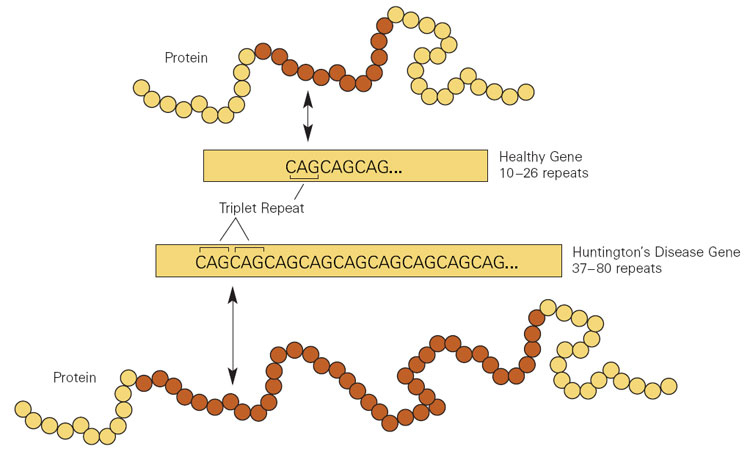
The new treatment relies on advanced genetic techniques to slow the disease in its tracks. It involves the use of a custom designed virus, which is inserted into the brain itself in specific key areas. It’s a delicate surgical process that takes anywhere from 12 to 18 hours, using real-time scanning to ensure the viral payload is placed exactly where it needs to go. The virus carries a DNA sequence and delivers it to brain cells, which begin processing the DNA to produce small fragments of genetic material called microRNA. These fragments intercept the messenger RNA that is produced from the body’s own DNA instructions, which is responsible for producing the mutant huntingtin protein which causes the degenerative disease. In this way, mutant huntingtin levels are reduced, drastically slowing the progression of the disease.
The effects of the treatment are potentially game changing, with progression of the disease slowed by 75% in study patients. Results indicate that with effective treatment, the decline expected over one year would instead take a full four years. In more qualitative areas, some patients in the trial have managed to maintain the ability to walk at a point when they would typically be expected to require wheel chairs. In typical Huntington’s cases, the onset occurs between 30 to 50 years old, with a life expectancy of just 15 to 20 years after diagnosis. The hope is that by delaying the progression of the disease, affected patients could have a greater quality of life for much longer, without suffering the worst impacts of the condition.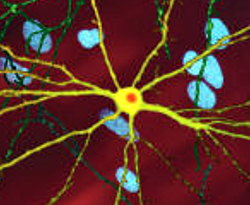
The initial trial involved just twenty-nine patients, but results were promising. Data indicated consistent benefit to patients three years after the initial surgery. Crucially, the treatment isn’t just slowing symptoms, but there is also evidence it helped to preserve brain tissue. Markers of neuronal death in spinal fluid, which would typically increase as Huntington’s disease progresses, were actually lower than before treatment in study patients.
The therapy isn’t without complications. Beyond the complicated and highly invasive brain surgery required to get the virus where it needs to go, some patients developed inflammation from the virus causing some side effects like headaches and confusion. There’s also the expense — advanced gene therapies don’t come cheap. However, on the positive side, it’s believed the treatment could potentially be a one-off matter, as the brain cells that produce the critical microRNA fragments are not replaced regularly like other more disposable cells in the body. While it’s a new and radical treatment, pharmaceutical company UniQure has plans to bring it to market as soon as late 2026 in the US, with the European market to follow.
It’s not every day that scientists discover a new viable cure for a disease that has long proven fatal. However, through genetic techniques and a strong understanding of the causative factors of the disease, it appears scientists have made progress in tackling the spectre that is Huntington’s disease. For the many thousands of patients grappling with the disease, and the many descendents who struggle with potentially having inherited the condition, news of a potential treatment is a very good thing indeed.
Featured image: “Huntington” by Frank Gaillard.
Endof10 @ SFSCON auf Peer.tv
lugbz.org/endof10-sfscon-auf-p…
Segnalato dal LUG di #Bolzano e pubblicato sulla comunità Lemmy @GNU/Linux Italia
In der Abendausgabe von der Nachrichtensendung „Das Journal“ auf Peer.tv am 08.11.2025 ging ein Beitrag über die SFSCON und Endof10 @ SFSCON 2025 online! Interviewt wurden unter anderen unsere Mitglieder Paolo
GNU/Linux Italia reshared this.
Waves within Earth’s mantle can carry traces of past continents across hundreds of miles, explaining why their chemical fingerprints appear in unlikely places.#TheAbstract


Remnants of Lost Continents Are Everywhere. Now, We Finally Know Why.
🌘
Subscribe to 404 Media to get The Abstract, our newsletter about the most exciting and mind-boggling science news and studies of the week.Tiny remnants of long-lost continents that vanished many millions of years ago are sprinkled around the world, including on remote island chains and seamounts, a mystery that has puzzled scientists for years.
Now, a team has discovered a mechanism that can explain how this continental detritus ends up resurfacing in unexpected places, according to a study published on Tuesday in Nature Geoscience.
When continents are subducted into Earth’s mantle, the layer beneath the planet’s crust, waves can form that scrape off rocky material and sweep it across hundreds of miles to new locations. This “mantle wave” mechanism fills in a gap in our understanding of how lost continents are metabolized through our ever-shifting planet.
“There are these seamount chains where volcanic activity has erupted in the middle of the ocean,” said Sascha Brune, a professor at the GFZ Helmholtz Centre for Geosciences and University of Potsdam, in a call with 404 Media. “Geochemists go there, they drill, they take samples, and they do their isotope analysis, which is a very fancy geochemical analysis that gives you small elements and isotopes which come up with something like a ‘taste.’”
“Many of these ocean islands have a taste that is surprisingly similar to the continents, where the isotope ratio is similar to what you would expect from continents and sediments,” he continued. “And there has always been the question: why is this the case? Where does it come from?”
These continental sprinkles are sometimes linked to mantle plumes, which are hot columns of gooey rock that erupt from the deep mantle. Plumes bring material from ancient landmasses, which have been stuck in the mantle for eons, back to the light of day again. Mantle plumes are the source of key hot spots like Hawai’i and Iceland, but there are plenty of locations with enriched continental material that are not associated with plumes—or any other known continental recycling mechanisms.
The idea of a mantle wave has emerged from a series of revelations made by lead author Tom Gernon, a professor at the University of Southampton, along with his colleagues at GFZ, including Brune. Gernon previously led a 2023 study that identified evidence of similar dynamics occurring within continents. By studying patterns in the distribution of diamonds across South Africa, the researchers showed that slow cyclical motions in the mantle dislodge chunks off the keel of landmasses as they plunge into the mantle. Their new study confirms that these waves can also explain how the elemental residue of the supercontinent Gondwana, which broke up over 100 million years ago, resurfaced in seamounts across the Indian Ocean and other locations.
In other words, the ashes of dead continents are scattered across extant landmasses following long journeys through the mantle. Though it’s not possible to link these small traces back to specific past continents or time periods, Brune hopes that researchers will be able to extract new insights about Earth’s roiling past from the clues embedded in the ground under our feet.
“What we are saying now is that there is another element, with this kind of pollution of continental material in the upper mantle,” Brune said. “It is not replacing what was said before; it is just complementing it in a way where we don't need plumes everywhere. There are some regions that we know are not plume-related, because the temperatures are not high enough and the isotopes don't look like plume-affected. And for those regions, this new mechanism can explain things that we haven't explained before.”
“We have seen that there's quite a lot of evidence that supports our hypothesis, so it would be interesting to go to other places and investigate this a bit more in detail,” he concluded.
Update: This story has been update to note Tom Gernon was a lead author on the paper.
🌘
Subscribe to 404 Media to get The Abstract, our newsletter about the most exciting and mind-boggling science news and studies of the week.Enriched mantle generated through persistent convective erosion of continental roots - Nature Geoscience
Convective erosion and lateral transport of metasomatized continental keels may generate enriched mantle geochemical domains sampled by oceanic volcanism, according to a geodynamic modelling study.Nature

IRAQ. Elezioni, poche attese di cambiamento in un Paese stanco e disilluso
@Notizie dall'Italia e dal mondo
Gli elettori sono andati alle urne sapendo che è difficile scardinare apparati consolidati di potere. L'affluenza perciò è stata bassa. I risultati definitivi si conosceranno nei prossimi giorni
L'articolo IRAQ. Elezioni, poche attese di cambiamento in un Paese
Notizie dall'Italia e dal mondo reshared this.


Software engineer Hector Dearman built a zoomable map of every issue of BYTE magazine.#archives #magazines #publishing #byte
Visualize All 23 Years of BYTE Magazine in All Its Glory, All at Once
Fifty years ago—almost two decades before WIRED, seven years ahead of PCMag, just a few years after the first email ever passed through the internet and with the World Wide Web still 14 years away—there was BYTE. Now, you can see the tech magazine's entire run at once. Software engineer Hector Dearman recently released a visualizer to take in all of BYTE’s 287 issues as one giant zoomable map.The physical BYTE magazine published monthly from September 1975 until July 1998, for $10 a month. Personal computer kits were a nascent market, with the first microcomputers having just launched a few years prior. BYTE was founded on the idea that the budding microcomputing community would be well-served by a publication that could help them through it.
This post is for subscribers only
Become a member to get access to all content
Subscribe now

Real-Time BART in a Box Smaller Than Your Coffee Mug

Ever get to the train station on time, find your platform, and then stare at the board showing your train is 20 minutes late? Bay Area Rapid Transit (BART) may run like clockwork most days, but a heads-up before you leave the house is always nice. That’s exactly what [filbot] built: a real-time arrival display that looks like it was stolen from the platform itself.
The mini replica nails the official vibe — distinctive red text glowing inside a sheet-metal-style enclosure. The case is 3D printed, painted, and dressed up with tiny stickers to match the real deal. For that signature red glow, [filbot] chose a 20×4 character OLED. Since the display wants 5 V logic, a tiny level-shifter sits alongside an ESP32-C6 that runs the show. A lightweight middleware API [filbot] wrote simplifies grabbing just the data he needs from the official BART API and pushes it to the little screen.
We love how much effort went into shrinking a full-size transit sign into a desk-friendly package that only shows the info you actually care about. If you’re looking for more of an overview, we’re quite fond of PCB metro maps as well.


di fatto, continuando nella pratica dell'installance, e della dissipazione delle opere, i luoghi che a queste sono dedicati possono essere solo la perdita o - paradossalmente - al contrario, le collezioni (vari pezzi miei in giro per istituzioni oppure privati).
pensare a una mostra è estremamente difficile in effetti.
mi hanno invitato in Francia per questa primavera, 2026. avrò uno spazio mio a disposizione. credo non sarà facile gestirlo, proprio per la natura anarchica del mio lavoro. vedremo.
reshared this
L’altro Venezuela. Quella base militare in Nicaragua finanziata con i soldi del Cremlino
@Notizie dall'Italia e dal mondo
Nelle ultime settimane il tema della presenza russa in America Latina è tornato ad essere oggetto di attenzione, come diretta conseguenza dell’accrescersi delle tensioni nel teatro caraibico: qui gli Stati Uniti stanno portando avanti una serie
Notizie dall'Italia e dal mondo reshared this.

Caso Sarajevo, l’ex 007 bosniaco: “Il Sismi scoprì i viaggi dei cecchini e li bloccò”
[quote]MILANO – La fonte principale nell’indagine sui “cecchini del weekend” sostiene che l’allora servizio segreto italiano per le informazioni e la sicurezza militare avrebbe “scoperto” quanto stava accadendo e sarebbe…
L'articolo Caso Sarajevo, l’ex 007 bosniaco: “Il Sismi
Al via la Cop 30 in Brasile. Lula: “Dobbiamo sconfiggere i negazionisti”
Con un attacco ai negazionisti e un invito ad accellerare la transizione energetica, si è aperta oggi – 10 novembre – a Belem, in Brasile, la 30esima conferenza sul clima…
L'articolo Al via la Cop 30 in Brasile. Lula: “Dobbiamo sconfiggere i negazionisti” su Lumsanews.
La nuova intesa di Avio che rafforza il legame tra Roma e Washington
@Notizie dall'Italia e dal mondo
Nel momento in cui le catene di fornitura della difesa occidentale cercano nuovi equilibri, Avio decide di investire ulteriormente oltreoceano per rafforzare la propria posizione. L’azienda italiana, specializzata nella propulsione spaziale e missilistica, ha siglato due intese con
Notizie dall'Italia e dal mondo reshared this.
Public records show DHS is deploying the "Homeland Security Information Network" at college protests and football games.#FOIA
DHS Is Deploying a Powerful Surveillance Tool at College Football Games
A version of this article was previously published on FOIAball, a newsletter reporting on college football and public records. You can learn more about FOIAball and subscribe here.Last weekend, Charleston’s tiny private military academy, the Citadel, traveled to Ole Miss.
This game didn’t have quite the same cachet as the Rebels' Week 11 opponent this time last year, when a one-loss Georgia went to Oxford.
A showdown of ranked SEC opponents in early November 2024 had all eyes trained on Vaught-Hemingway Stadium.
Including those of the surveillance state.
According to documents obtained by FOIAball, the Ole Miss-Georgia matchup was one of at least two games last year where the school used a little-known Department of Homeland Security information-sharing platform to keep a watchful eye on attendees.
The platform, called the Homeland Security Information Network (HSIN), is a centralized hub for the myriad law enforcement agencies involved with security at big events.
CREDIT: Ole Miss/Georgia EAP, obtained by FOIAball
According to an Event Action Plan obtained by FOIAball, at least 11 different departments were on the ground at the Ole Miss-Georgia game, from Ole Miss campus police to a military rapid-response team.HSINs are generally depicted as a secure channel to facilitate communication between various entities.
In a video celebrating its 20th anniversary, a former HSIN employee hammered home that stance.“When our communities are connected, our country is indeed safer," they said.
In reality HSIN is an integral part of the vast surveillance arm of the U.S. government.
Left unchecked since 9/11, supercharged by technological innovation, HSIN can subject any crowd to almost constant monitoring, looping in live footage from CCTV cameras, from drones flying overhead, and from police body cams and cell phones.
HSIN has worked with private businesses to ensure access to cameras across cities; they collect, store, and mine vast amounts of personal data; and they have been used tofacilitate facial recognition searches from companies like Clearview AI.
It’s one of the least-reported surveillance networks in the country.
And it's been building this platform on the back of college football.
Since 9/11, HSINs have become a widely used tool.
A recentInspector General report found over 55,000 active accounts using HSIN, ranging from federal employees to local police agencies to nebulous international stakeholders.
The platforms host what’s called SBU, sensitive but unclassified information, including threat assessments culled from media monitoring.According to aprivacy impact study from 2006, HSIN was already maintaining a database of suspicious activities and mining those for patterns.
"The HSIN Database can be mined in a manner that identifies potential threats to the homeland or trends requiring further analysis,” it noted.
In anupdated memo from 2012 discussing whose personal information HSIN can collect and disseminate, the list includes the blanket, “individuals who may pose a threat to the United States.”
A 2023 DHS “Year in Review” found that HSIN averaged over 150,000 logins per month.Its Connect platform, which coordinates security and responses at major events, was utilized over 500 times a day.
HSIN operated at the Boston Marathon, Lollapalooza, the World Series, and the presidential primary debates. It has also been used at every Super Bowl for the last dozen years.
DHS is quick to tout the capabilities of HSINs in internal communications reviewed by FOIAball.
In doing so, it reveals the growth of its surveillance scope. In documents from 2018, DHS makes no mention of live video surveillance.
But a 2019annual review said that HSINs used private firms to help wrangle cameras at commercial businesses around Minneapolis, which hosted the Final Four that year.
“Public safety partners use HSIN Connect to share live video streams from stationary cameras as well as from mobile phones,” it said. “[HSIN communities such as] the Minneapolis Downtown Security Executive Group works with private sector firms to share live video from commercial businesses’ security cameras, providing a more comprehensive operating picture and greater situational awareness in the downtown area.”
And the platform has made its way to college campuses.
Records obtained by FOIAball show how pervasive this technology has become on college campuses, for everything from football games to pro-Palestinian protests.
In November 2023, students at Ohio State University held several protests against Israel’s war in Gaza. At one, over 100 protesters blocked the entrance to the school president’s office.
Areport that year from DHS revealed the protesters were being watched in real-time from a central command center.
Under the heading "Supporting Operation Excellence," DHS said the school used HSIN to surveil protesters, integrating the school’s closed-circuit cameras to live stream footage to HSIN Connect.
“Ohio State University has elevated campus security by integrating its closed-circuit camera system with HSIN Connect,” it said. “This collaboration creates a real-time Common Operating Picture for swift information sharing, enhancing OSU’s ability to monitor campus events and prioritize community safety.”
“HSIN Connect proved especially effective during on-campus protests, expanding OSU’s security capabilities,” the school’s director of emergency management told DHS. “HSIN Connect has opened new avenues for us in on-campus security.”
While it opened new avenues, the platform already had a well-established relationship with the school.
According to aninternal DHS newsletter from January 2016, HSIN was utilized at every single Buckeyes home game in 2015.
“HSIN was a go-to resource for game days throughout the 2015 season,” it said.
It highlighted that data was being passed along and analyzed by DHS officials.
The newsletter also revealed HSINs were at College Football Playoff games that year and have been in years since. There was no mention of video surveillance at Ohio State back in 2015. But in 2019, that capability was tested at Georgia Tech.
There, police used “HSIN Connect to share live video streams with public safety partners.”
A2019 internal newsletter quoted a Georgia Tech police officer about the use of real-time video surveillance on game days, both from stationary cameras and cell phones.
“The mobile app for HSIN Connect also allows officials to provide multiple, simultaneous live video streams back to our Operations Center across a secure platform,” the department said.
Ohio State told FOIAball that it no longer uses HSIN for events or incidents. However, it declined to answer questions about surveilling protesters or football games.
Ohio State’s records department said that it did not have any documents relating to the use of HSIN or sharing video feeds with DHS.
Georgia Tech’s records office told FOIAball that HSINs had not been used in years and claimed it was “only used as a tool to share screens internally." Its communications team did not respond to a request to clarify that comment.
Years later, DHS had eyes both on the ground and in the sky at college football.
According to the 2023 annual review, HSIN Connect operated during University of Central Florida home games that season. There, both security camera and drone detection system feeds were looped into the platform in real-time.
DHSsaid that the "success at UCF's football games hints at a broader application in emergency management.”HSIN has in recent years been hooked into facial recognition systems.
A 2024report from the U.S. Commission on Civil Rights found that the U.S. Marshals were granted access to HSIN, where they requested "indirect facial recognition searches through state and local entities" using Clearview AI.
Which brings us to the Egg Bowl—the annual rivalry game between Ole Miss and Mississippi State.
FOIAball learned about the presence of HSIN at Ole Miss through a records request to the city’s police department. It shared Event Action Plans for the Rebels’ games on Nov. 9, 2024 against Georgia and Nov. 30, 2024 against Mississippi State.
It’s unclear how these partnerships are forged.
In videos discussing HSIN, DHS officials have highlighted their outreach to law enforcement, talking about how they want agencies onboarded and trained on the platform. No schools mentioned in this article answered questions about how their relationship with DHS started.
The Event Action Plan provides a fascinating level of detail that shows what goes into security planning for a college football game, from operations meetings that start on Tuesday to safety debriefs the following Monday.
Its timeline of events discusses when Ole Miss’s Vaught-Hemingway Stadium is locked down and when security sweeps are conducted. Maps detail where students congregate beforehand and where security guards are posted during games.
The document includes contingency plans for extreme heat, lightning, active threats, and protesters. It also includes specific scripts for public service announcers to read in the event of any of those incidents.
It shows at least 11 different law enforcement agencies are on the ground on game days, from school cops to state police.
They even have the U.S. military on call. The 47th Civil Support Team, based out of Jackson Air National Guard Base, is ready to respond to a chemical, biological, or nuclear attack.All those agencies are steered via the document to the HSIN platform.
Under a section on communications, it lists the HSIN Sitroom, which is “Available to all partners and stakeholders via computer & cell phone.”
The document includes a link to an HSIN Connect page.
It uses Eli Manning as an example of how to log in.
“Ole Miss Emergency Management - Log in as a Guest and use a conventional naming convention such as: ‘Eli Manning - Athletics.’”
On the document, it notes that the HSIN hosts sensitive Personally Identifiable Information (PII) and Threat Analysis Documents.“Access is granted on a need-to-know basis, users will need to be approved prior to entry into the SitRoom.”
“The general public and general University Community is not permitted to enter the online SitRoom,” it adds. “All SitRooms contain operationally sensitive information and PII, therefore access must be granted by the ‘Host’.”
It details what can be accessed in the HSIN, such as a chat window for relaying information.
It includes a section on Threat Analysis, which DHS says is conducted through large-scale media monitoring.
The document does not detail whether the HSIN used at Ole Miss has access to surveillance cameras across campus.
But that may not be something explicitly stated in documents such as these.
Like Ohio State, UCF told FOIAball that it had no memoranda of understanding or documentation about providing access to video feeds to HSINs, despite DHS acknowledging those streams were shared. Ole Miss’ records department also did not provide any documents on what campus cameras may have been shared with DHS.
While one might assume the feeds go dark after the game is over, there exists the very real possibility that by being tapped in once, DHS can easily access them again.
“I’m worried about mission creep,” Matthew Guariglia, a senior policy analyst at the Electronic Frontier Foundation, told FOIAball. “These arrangements are made for very specific purposes. But they could become the apparatus of much greater state surveillance.”
For Ole Miss, its game against Georgia went off without any major incidents.
Well, save for one.
During the second quarter, asquirrel jumped onto the field, and play had to be stopped.In the EAP, there was no announcer script for handling a live animal interruption.
Scoop: Inside DHS's vast college football surveillance effort
Documents obtained by FOIAball reveal how the feds surveil SEC, Big Ten games.David Covucci (FOIAball)


Moving From Windows to FreeBSD as the Linux Chaos Alternative

Back in the innocent days of Windows 98 SE, I nearly switched to Linux on account of how satisfied I was with my Windows experience. This started with the Year of the Linux Desktop in 1999 that started with me purchasing a boxed copy of SuSE Linux and ended with me switching to Windows 2000. After this I continued tinkering with non-Windows OSes including QNX, BeOS, various BSDs, as well as Linux distributions that promised a ‘Windows-like’ desktop experience, such as Lindows.
Now that Windows 2000’s proud legacy has seen itself reduced to a rusting wreck resting on cinderblocks on Microsoft’s dying front lawn, the quiet discomfort that many Windows users have felt since Windows 7 was forcefully End-Of-Life-d has only increased. With it comes the uncomfortable notion that Windows as a viable desktop OS may be nearing its demise. Yet where to from here?
Although the recommendations from the peanut gallery seem to coalesce around Linux or Apple’s MacOS (formerly OS X), there are a few dissenting voices extolling the virtues of FreeBSD over both. There are definitely compelling reasons to pick FreeBSD over Linux, in addition to it being effectively MacOS’s cousin. Best of all is not having to deal with the Chaos Vortex that spawns whenever you dare to utter the question of ‘which Linux distro?’. Within the world of FreeBSD there is just FreeBSD, which makes for a remarkably coherent experience.
Ghosting The Subject

Although FreeBSD doesn’t have distributions the way that Linux does due to it being a singular codebase rather than a duct-taped patchwork, you do get a choice as far as difficulty settings go. You can always pick plain FreeBSD with its functional but barebones installer, which dumps you into a command line shell and expects you to jump through some hoops to set up things like a desktop environment. This is generally fine if you’re an advanced user, or just want to set up a headless server system.
In case you’re more into the ‘just add water’ level of a desktop OS installation process, the GhostBSD project provides the ready to go option for a zero fuss installation like you would see with Linux Mint, Manjaro Linux and kin. Although I have done the hard mode path previously with FreeBSD virtual machines, to save myself the time and bother I opted for the GhostBSD experience here.
For this experiment I have two older-but-quite-usable systems at my disposal: one is a 2013-era Ivy Bridge Intel-based gaming laptop that’s a rebranded Clevo W370ET, the other a late-2015 Skylake PC with a Core i7 6700K, GTX 980 Ti and 32 GB of DDR4. To give both the best chance possible I also installed a brand new SATA SSD in both systems to run the OS from.
Down To Bare Metal
GhostBSD offers two images: the official Mate desktop version and the community XFCE version. Since I have always had a soft spot for XFCE, that’s the version I went with. After fetching the image, I used Rufus to create a bootable USB stick and made sure that the target system was set to boot from USB media. First I wanted to focus on the laptop, but this is where I ran into the first issue when the installer froze on me.
After a few hours of trying various things, including trying a known good Manjaro Linux installer which flunked out with a complaint about the USB medium, I figured I might as well give a Windows 10 installer a shot for fun. This actually got me a useful error code: 0x8007025D. While it broadly indicates ‘something’ being wrong along the USB-RAM-HDD/SSD path, it led me to a post about USB 3.0 being a potential issue as it changed some things compared to USB 2.0. The solution? Use a USB 2.0 port instead, obviously.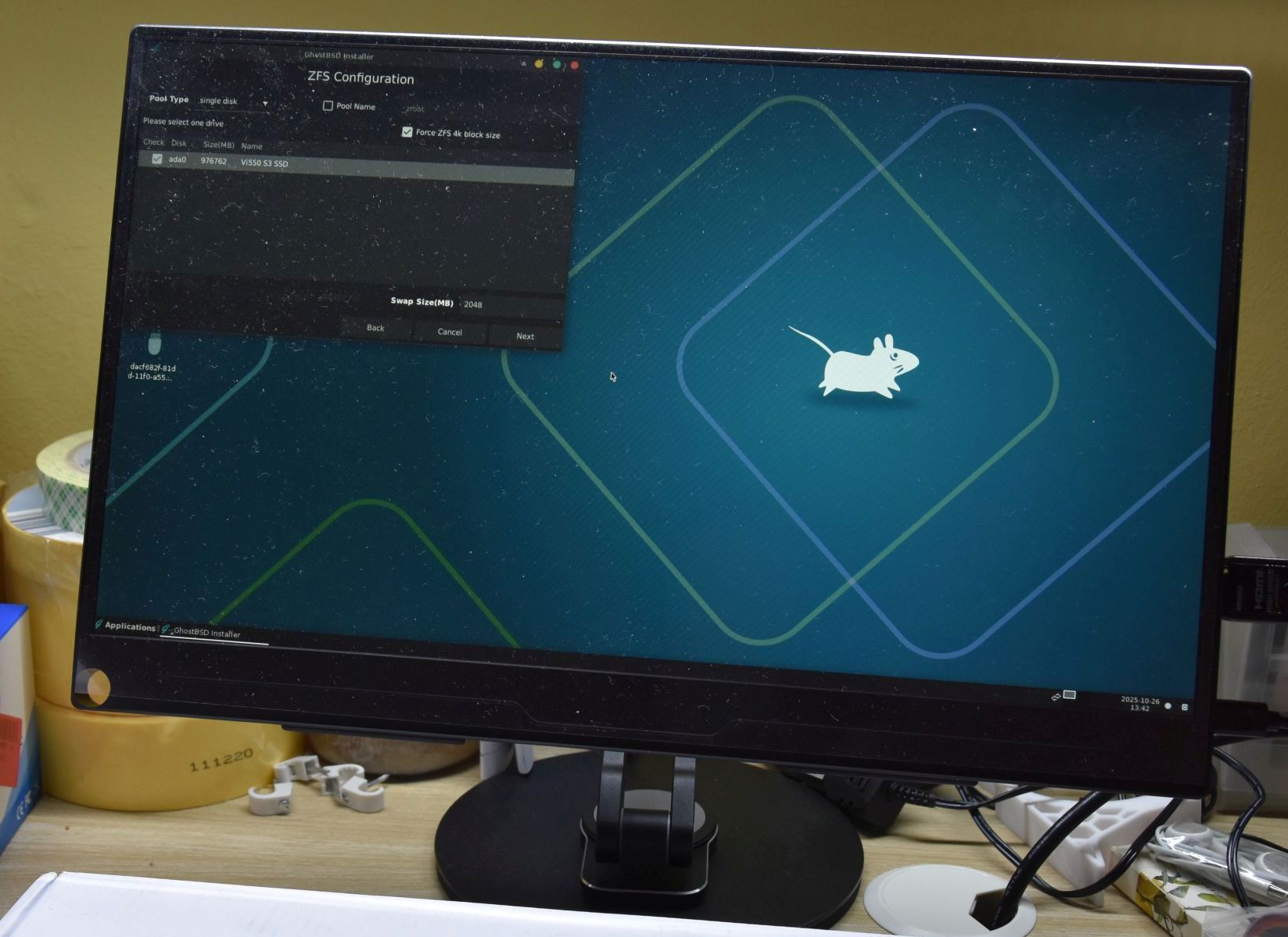
Long story short, this sort of worked: the GhostBSD installer still froze up once it entered the graphical section, but the Manjaro installer was happy as a clam, so now that laptop runs Manjaro, I guess.
A subsequent attempt to boot the GhostBSD installer on the 6700K system went much better, even while daringly using a USB 3.0 port on the case. Before I knew it GhostBSD was purring along with the XFCE desktop sparkling along at 1080p.
I’m not sure what GhostBSD’s issue was with the laptop. It’s possible that it found the NVidia Optimus configuration disagreeable, but now I have two rather capable gaming systems to directly compare Linux and FreeBSD with. There are no mistakes, just happy little accidents.
Gaming The System
Since any open source software of note that runs on Linux tends to have a native FreeBSD build, the experience here is rather same-ish. Where things can get interesting is with things related to the GPU, especially gaming. These days that of course means getting Steam and ideally the GoG Galaxy client running, which cracks open a pretty big can of proprietary worms.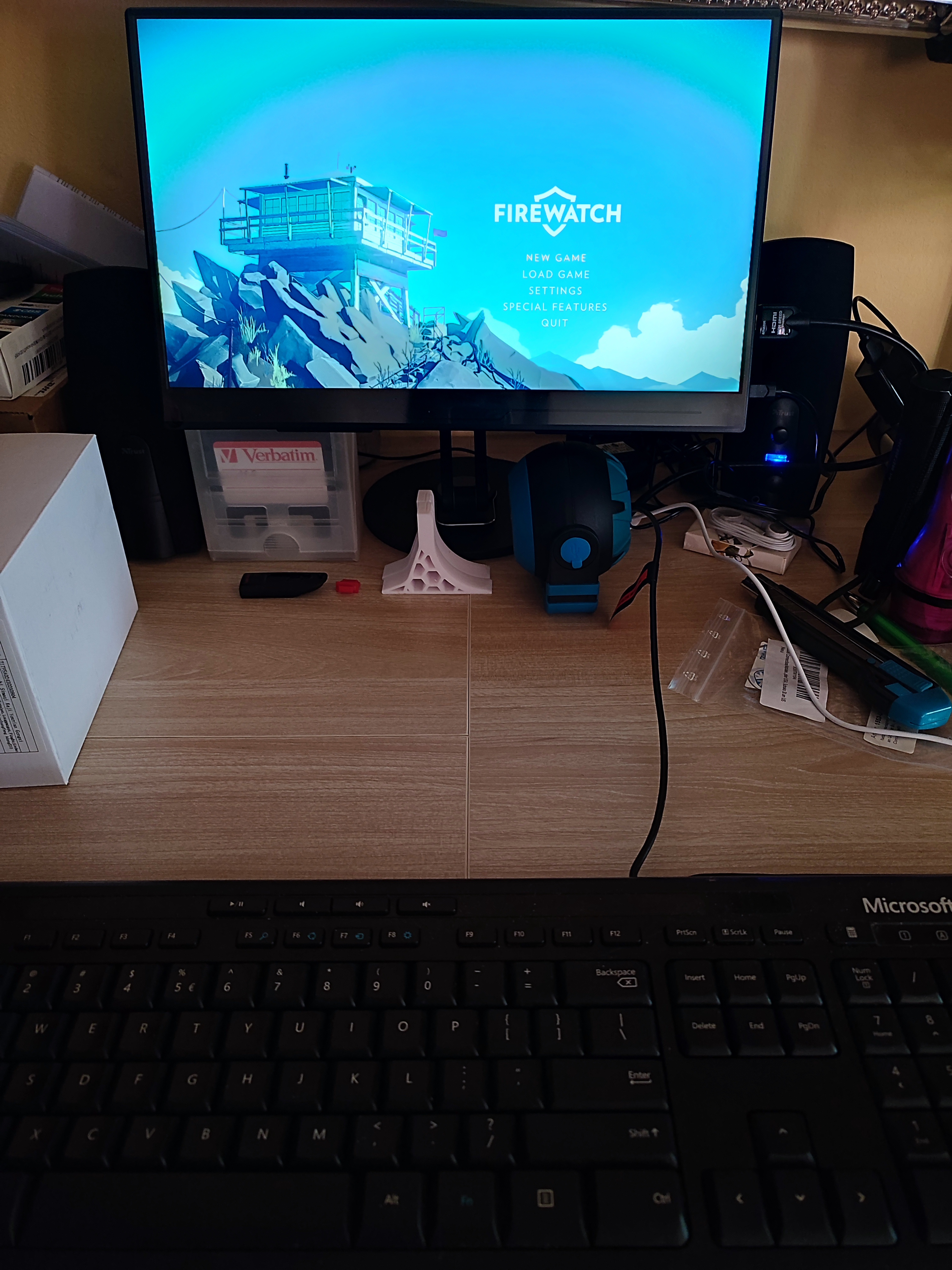
Annoyingly, Valve has only released a Steam client for Windows, MacOS and Linux, with the latter even only officially supporting some versions of Ubuntu Linux. This is no real concern for Manjaro Linux, just with the disclaimer that if anything breaks, you’re SOL and better start praying that it’ll magically start working again.
Unfortunately, for FreeBSD the userland Linux ABI compatibility isn’t quite enough as the Steam DRM means that it goes far beyond basic binary compatibility.
The two available options here are to either try one’s chances with the linuxulator-steam-utils workarounds that tries to stuff the Linux client into a chroot, or to go Wine all the way with the Windows Steam client and add more Windows to your OSS.
Neither approach is ideal, but the main question is whether or not it allows you to play your games. After initially getting the Linux tools setup and ready to bootstrap Steam, I got thrown a curveball by the 32-bit Wine and dependencies not being available, leading to a corresponding issue thread on the GhostBSD forums. After Eric over at the GhostBSD project resolved the build issue for these dependencies, I thought that now I would be able to play some games, but I was initially sorely disappointed.
For some reason I was now getting a ‘permission denied’ error for the chdir command in the lsu-bootstrap script, so after some fruitless debugging I had to give up on this approach and went full Wine. I probably could have figured out what the problem here was, but considering the limitations of the LSU Steam approach and me just wanting to play games instead of debug-the-FOSS-project, it felt like time to move on.
Watery Wine
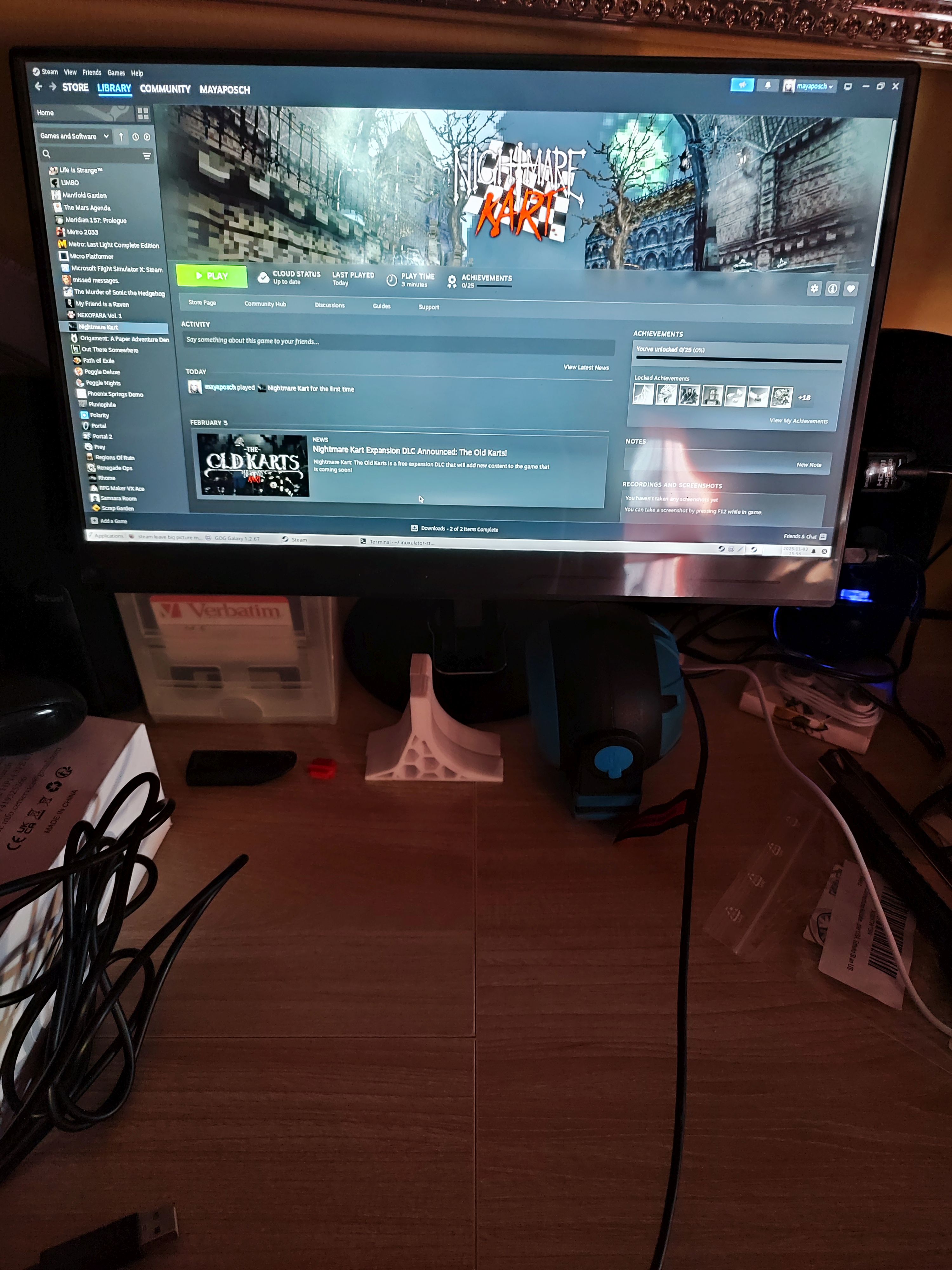
As it turns out, the low-fuss method to get Steam and GoG Galaxy working is via the the Mizutamari Wine GUI frontend. Simply install it with pkg install mizuma or via the package center, open it from the Games folder in the start menu, then select the desired application’s name and then the Install button. Within minutes I had both Steam and the ‘classic’ GoG Galaxy clients installed and running. The only glitch was that the current GoG Galaxy client didn’t want to work, but that might have been a temporary issue. Since I only ever use the GoG Galaxy 1.x client on Windows, this was fine for me.
After logging into both clients and escaping from Steam’s ‘Big Picture Mode’, I was able to install a few games and play them, which went completely smoothly, except for the elevator scene in Firewatch where I couldn’t look around using the mouse despite it working fine in the menu, but that game is notoriously buggy, so that’s a question mark on the exact cause. Between buggy games, Wine, and the OS, there definitely are sufficient parties to assign blame to.
Similarly, while the Steam client was a bit graphically glitchy with flickering on the Store page, and trying to access the Settings menu resulted in it restarting, I was able to install and play Windows games like Nightmare Kart, so that’s a win in my book. That said, I can’t say that I’m not jealous of just punching in sudo pacman -S steam on the Manjaro rig to get the Steam client up in a minute or so. Someone please convince Gabe to compile the Steam client for FreeBSD, and the CD Projekt folk to compile the Galaxy client for FreeBSD and Linux.
It should be noted here that although it is possible to use alternative frontends for GoG instead of its Galaxy client, you need it for things like cloud saves. Hence me choosing this path to get everything as close to on par with the Windows experience and feature set.
Next Steps
Aside from gaming, there are many possible qualifications for what might make a ‘Windows desktop replacement’. As far as FreeBSD goes, the primary annoyance is having to constantly lean on the Linux or Windows versions of software. This is also true for things like DaVinci Resolve for video editing, where since there’s no official FreeBSD version, you have to stuff the Linux version into a chroot once again to run it via the Linux compatibility layer.
Although following the requisite steps isn’t rocket science for advanced users, it would simply be nice if a native version existed and you could just install the package. Based on my own experiences porting a non-trivial application like the FFmpeg- and SDL-based NymphCast to FreeBSD – among other OSes – such porting isn’t complicated at all, assuming your code doesn’t insist on going around POSIX and doing pretty wild Linux-specific things.
Ranting on software development aside, for my next steps on my FreeBSD/GhostBSD journey I’ll likely be giving approaches like this running of Linux software on FreeBSD another shot, barring finding that native video editors work well enough for my purposes.
Feel free to sound off in the comments on how to improve my experiences so far, as well as warn me and others who are embarking on a similar BSD journey of certain pitfalls.
Through the Spyglass: Thanks for Nothing
Do you know your neighbors?
How familiar are you with the person who lives next door to or above you? Down the street or down the hall? Across the street and kitty-corner from where you live?
Did they grew up in the town or city you both live in? Did you? Did they serve? Did you? Are they a U.S. citizen? Are you?
Are you sure?
Is the qualification “I was born here”? What if your parents weren’t? Did you come here legally? Are you white enough? Are you the right kind of Christian?
What if you’re not Christian? What if you’re something non-Abrahamic at all? Let’s pretend you’re a Sikh.
In fact, let’s pretend you are Bhagat Singh Thind.
So who are you? You’re Bhagat Singh Thind, born October 3rd, 1892 near Amritsar, Punjab in what is today modern day India. You come to the United States around just 20 years old and, just five years later, you’re recruited by the U.S. Army to fight in the Great War, the War to End All Wars, or as it has sadly become known, World War I.
Recruited in July, honorably discharged by December. Thank you for serving your country.
A week before your discharge, you receive your certificate of U.S. citizenship while wearing your U.S. Army uniform. Except, three days before your discharge, the federal government catches wind of the news and revokes it. After all, you’re a “Hindoo” (you’re not; you’re a Sikh) and not a “white man”, so no citizenship for you.
Thanks for nothing.
So you try again. You move from Washington to Oregon and you apply for citizenship around five months later. The federal official that revoked your citizenship the first time goes to the Oregon judge and tries to sabotage your chances.
The judge, taking into account your arguments for citizenship and your military record, grants you citizenship for the second time. Thank you for serving your country.
Not satisfied, the Bureau of Naturalization, who this whole time has been seemingly out to get you and refusing to let this be a precedent, appealed to the higher courts until landing before the Supreme Court.
Their task was to answer these two questions:
“Is a high caste Hindu of full Indian blood, born at Amritsar, Punjab, India, a white person within the meaning of Section 2169, Revised Statutes?”
(Again, you are Sikh.)
&
“Does the act of February 5, 1917 (39 Stat. L. 875, Section 3) disqualify from naturalization as citizens those Hindus, now barred by that act, who had lawfully entered the United States prior to the passage of said act?”
They find the answer to the first question is “No”, making the second question moot. You’re not white, so you cannot be naturalized. The Bureau of Nationalization strips you for a second time in 1926.
Thanks for nothing.
It wouldn’t be until the mid 1930s when Congress passed into law that all WWI veterans would be granted citizenship, regardless of race. For a third time, you seek citizenship.
This time, you finally get it. It’s the real thing, the Bureau of Nationalization isn’t breathing down your neck, and you are finally a U.S. citizen. Thank you for serving your country.
This all happened roughly 100 years ago, but the question of “what is a citizen” remains at large and, as was before, at the whim of the State. Bhagat Singh Thind was finally granted citizenship not because of a reversal of the Supreme Court’s decision, but because of a law by Congress that honored WWI veterans. Not goodwill, but a just reward for military service.
So what is a citizen? Is it someone who shows they are willing to die and kill for their country? Is it someone who won the “born under the right circumstances” lottery that did nothing otherwise to “earn” their citizenship? Is a citizen someone who pays taxes and nothing else? Is it who the State decides is worthy? Are you always going to just agree with what the State says?
If you take a step back, you might realize “Does any of that really matter?”. Someone like Bhagat Singh Thind, who served in the U.S. Army, had to jump through countless hoops to received that illustrious seal of approval from Uncle Sam. But if he was living next door to you, and he served your country, and he was shopping in the same stores and sent his kids to the same school. Would you care about his legal status? Or would you see him as your neighbor?
Bhagat Singh Thind was finally granted that citizenship as a thank you for serving in the Army during WWI. Not every immigrant in this country can or will put their life on the line for the whims of the U.S. government. Hell, there are people born in this country that won’t do that. Your commitment to the state apparatus nationwide shouldn’t matter in a local setting.
How committed are you to your neighbors? To me, that is the truest sense of community and belonging. The local stuff, the stuff that impacts you, matters far more than national narratives.
The United States Pirate Party preaches to anyone seeking office to “run locally” because “it is where the impact will be felt the most”. Service to your neighbors and community, where you rest your head at night, is a cause we champion. Our ideals are applied nationwide, but felt most locally.
The USPP also believes in the free movement of all Americans, from Greenland to Patagonia. We don’t believe the imaginary lines drawn on a map should be inhibiting of the people who share this great American continent.
So when people speak of “illegal immigrants” living in communities across the United States, it strikes me as ridiculous. Uncle Sam said my neighbor is illegal? Why? Didn’t come here the right way? Didn’t get your permission to cross an imaginary line and enter society as essentially a lower caste laborer?
If you are upset by the state narratives of “illegal immigration”, I ask you: what about them coming here bothers you? It doesn’t flatter you that they left everything behind to start a new life where you call home? Is it the taxes? You feel like your hard earned money is being taken and they somehow have it easy?
First of all, these migrants are all almost certainly renting. So the landlord would be paying taxes… with their money.
Second, if they aren’t paying income tax, is that because they aren’t receiving a check, since tax is automatically deducted? If they’re being paid income cash, who is to blame? Are they to blame for taking it, or do you point the figure at the business owner who gave a job to them and decided to pay them under the table.
That job wasn’t stolen, and certainly not by the immigrant. Can the so-called “job creator” really ever allow the jobs they create and give out to be “stolen”? Or did they willingly pay someone cheaper instead of someone in a position to demand more.
Do not let the State turn you against your neighbors when they are trying to live like you. Do not allow Uncle Sam to cause you to fail to see the humanity of your neighbors.
Don’t be terrorized and made fearful. They are human; they bleed like you.
As of writing, the United States of America has decided to unleash masked terrorists onto the streets of cities across the U.S. in order to corral and correct what it calls an “illegal immigrant problem”. This organization is named “ICE”.
Before continuing, I must affirm something to you, dear reader. Merriam-Webster defines “terrorism” as “the systematic use of terror, especially as a means of coercion”. Further, they define “terror” as “violence or the threat of violence used as a weapon of intimidation or coercion”.
Now, dear reader, consider what ICE is doing. Simply ask: is ICE using violence or the threat of violence as a weapon of intimidation or coercion?
It was recently Halloween, and kids were unable to peacefully Trick-or-Treat in certain Chicagoland locations due to ICE harassment, including tear-gassing.
ICE, in their raids and targeting, has arrested “legal” citizens. They have arrested parents in front of their children. They have made arrests in South Shore, Chicago, in the middle of the night via a warrant-less raid and informed the residents they’d “only be released if they had no outstanding warrants”.
The State decides whether or not you’re upstanding and “worthy”. It doesn’t matter if you go through all the proper rigmarole or serve the country. It doesn’t matter if you think you’re white enough. The State is the final authority in the matter.
But you know better. You know your neighbors are good people just trying to make an honest living. You know the crime of “falsifying” is a common one. You’ve seen kids use fake addresses to get into better school districts. You’ve had friends of friends not change their ID, despite not living in a specific state full time and instead continuing to pay to that state. You know the system isn’t followed to a T by everybody.
You know, deep down, this entire thing is bullshit.
Uncle Sam is a fickle dude with some skeletons in his closet. These skeletons are, unfortunately, in the front yard. He can decide you’re unworthy of citizenship if he so chooses.
When Washington D.C. tells you from thousands of miles away to turn on your back on your neighbor because they’re “not a citizen”, I want you to remember that they are still your neighbor.
And to the volunteer officers of ICE: thanks for nothing.
reshared this
Chicagoans are making, sharing, and printing designs for whistles that can warn people when ICE is in the area. The goal is to “prevent as many people from being kidnapped as possible.”#ICE #News
The Latest Defense Against ICE: 3D-Printed Whistles
Chicagoans have turned to a novel piece of tech that marries the old-school with the new to warn their communities about the presence of ICE officials: 3D-printed whistles.The goal is to “prevent as many people from being kidnapped as possible,” Aaron Tsui, an activist with Chicago-based organization Cycling Solidarity, and who has been printing whistles, told 404 Media. “Whistles are an easy way to bring awareness for when ICE is in the area, printing out the whistles is something simple that I can do in order to help bring awareness.”
Over the last couple months ICE has especially focused on Chicago as part of Operation Midway Blitz. During that time, Department of Homeland Security (DHS) personnel have shot a religious leader in the head, repeatedly violated court orders limiting the use of force, and even entered a daycare facility to detain someone.
💡
Do you know anything else about this? I would love to hear from you. Using a non-work device, you can message me securely on Signal at joseph.404 or send me an email at joseph@404media.co.3D printers have been around for years, with hobbyists using them for everything from car parts to kids’ toys. In media articles they are probably most commonly associated with 3D-printed firearms.
One of the main attractions of 3D printers is that they squarely put the means of production into the hands of essentially anyone who is able to buy or access a printer. There’s no need to set up a complex supply chain of material providers or manufacturers. No worry about a store refusing to sell you an item for whatever reason. Instead, users just print at home, and can do so very quickly, sometimes in a matter of minutes. The price of printers has decreased dramatically over the last 10 years, with some costing a few hundred dollars.
0:00
/0:04
1×A video of the process from Aaron Tsui.
People who are printing whistles in Chicago either create their own design or are given or download a design someone else made. Resident Justin Schuh made his own. That design includes instructions on how to best use the whistle—three short blasts to signal ICE is nearby, and three long ones for a “code red.” The whistle also includes the phone number for the Illinois Coalition for Immigrant & Refugee Rights (ICIRR) hotline, which people can call to connect with an immigration attorney or receive other assistance. Schuh said he didn’t know if anyone else had printed his design specifically, but he said he has “designed and printed some different variations, when someone local has asked for something specific to their group.” The Printables page for Schuh’s design says it has been downloaded nearly two dozen times.
This post is for subscribers only
Become a member to get access to all content
Subscribe now3D Printing Patterns Might Make Ghost Guns More Traceable Than We Thought
Early studies show that 3D printers may leave behind similar toolmarks on repeated prints.Matthew Gault (404 Media)
simona
in reply to simona • •