
"Defendants have indicated that some video between October 19, 2025 and October 31, 2025 has been irretrievably destroyed and therefore cannot be produced on an expedited basis or at all."#ICE


Two Weeks of Surveillance Footage From ICE Detention Center ‘Irretrievably Destroyed’
The Department of Homeland Security claimed in court proceedings that nearly two weeks worth of surveillance footage from ICE’s Broadview Detention Center in suburban Chicago has been “irretrievably destroyed” and may not be able to be recovered, according to court records reviewed by 404 Media.The filing was made as part of a class action lawsuit against the Department of Homeland Security by people being held at Broadview, which has become the site of widespread protests against ICE. The lawsuit says that people detained at the facility are being held in abhorrent, “inhumane” conditions. The complaint describes a facility where detainees are “confined at Broadview inside overcrowded holding cells containing dozens of people at a time. People are forced to attempt to sleep for days or sometimes weeks on plastic chairs or on the filthy concrete floor. They are denied sufficient food and water […] the temperatures are extreme and uncomfortable […] the physical conditions are filthy, with poor sanitation, clogged toilets, and blood, human fluids, and insects in the sinks and the floor […] federal officers who patrol Broadview under Defendants’ authority are abusive and cruel. Putative class members are routinely degraded, mistreated, and humiliated by these officers.”
As part of discovery in the case, the plaintiffs’ lawyers requested surveillance footage from the facility starting from mid September, which is when ICE stepped up its mass deportation campaign in Chicago. In a status report submitted by lawyers from both the plaintiffs and the Department of Homeland Security, lawyers said that nearly two weeks of footage has been “irretrievably destroyed.”
“Defendants have agreed to produce. Video from September 28, 2025 to October 19, 2025, and also from October 31, 2025 to November, 7 2025,” the filing states. “Defendants have indicated that some video between October 19, 2025 and October 31, 2025 has been irretrievably destroyed and therefore cannot be produced on an expedited basis or at all.” Law & Crime first reported on the filing.
A screenshot from the court filing
The filing adds that the plaintiffs, who are being represented by lawyers from the American Civil Liberties Union of Illinois, the MacArthur Justice Center, and the Eimer Stahl law firm, hired an IT contractor to work with the government “to attempt to work through issues concerning the missing video, including whether any content is able to be retrieved.”Surveillance footage from inside the detention center would presumably be critical in a case about the alleged abusive treatment of detainees and inhumane living conditions. The filing states that the plaintiffs' attorneys have “communicated to Defendants that they are most concerned with obtaining the available surveillance videos as quickly as possible.”
ICE did not respond to a request for comment from 404 Media. A spokesperson for the ACLU of Illinois told 404 Media “we don’t have any insight on this. Hoping DHS can explain.”
Trump admin says video footage inside ICE facility at center of lawsuit 'cannot be produced'
"Plaintiffs intend to explore the issue of missing footage," a recent filing reads.Law & Crime

Casting Metal Tools With Kitchen Appliances

Perhaps the biggest hurdle to starting a home blacksmithing operating is the forge. There’s really no way around having a forge; somehow the metal has to get hot enough to work. Although we might be imagining huge charcoal- or gas-fired monstrosities, [Shake the Future] has figured out how to use an unmodified, standard microwave oven to get iron hot enough to melt and is using it in his latest video to cast real, working tools with it.
In the past, [Shake the Future] has made a few other things with this setup like an aluminum pencil with a graphite core. This time, though, he’s stepping up the complexity a bit with a working tool. He’s decided to build a miniature bench vice, which uses a screw to move the jaws. He didn’t cast the screw, instead using a standard size screw and nut, but did cast the two other parts of the vice. He first 3D prints the parts in order to make a mold that will withstand the high temperatures of the molten metal. With the mold made he can heat up the iron in the microwave and then pour it, and then with some finish work he has a working tool on his hands.
A microwave isn’t the only kitchen appliance [Shake the Future] has repurposed for his small metalworking shop. He also uses a standard air fryer in order to dry parts quickly. He works almost entirely from the balcony of his apartment so he needs to keep his neighbors in mind while working, and occasionally goes to a nearby parking garage when he has to do something noisy. It’s impressive to see what can be built in such a small space, though. For some of his other work be sure to check out how he makes the crucibles meant for his microwave.
youtube.com/embed/56JHC8Jw8IE?…

Gipfel zur Europäischen Digitalen Souveränität: Kehrtwende für die „Innovationsführerschaft“
netzpolitik.org/2025/gipfel-zu…


Cheap VHF Antenna? Can Do!

The magnetic loop antenna is a familiar sight in radio amateur circles as a means to pack a high performance HF antenna into a small space. It takes the form of a large single-turn coil made into a tuned circuit with a variable capacitor, and it provides the benefits of good directionality and narrow bandwidth at the cost of some scary RF voltages and the need for constant retuning. As [VK3YE] shows us though, magnetic loops are not limited to HF — he’s made a compact VHF magnetic loop using a tin can.
It’s a pretty simple design; a section from the can it cut out and made into a C shape, with a small variable capacitor at the gap. The feed comes in at the bottom, with the feed point about 20 % of the way round the loop for matching. The bandwidth is about 100 MHz starting from the bottom of the FM broadcast band, and he shows us it receiving broadcast, Airband, and 2 meter signals. It can be used for transmitting too and we see it on 2 meter WSPR, but we would have to wonder whether the voltages induced by higher power levels might be a little much for that small capacitor.
He’s at pains to point out that there are many better VHF antennas as this one has no gain to speak of, but we can see a place for it. It’s tiny, if you’re prepared to fiddle with the tuning its high Q gets rid of interference, and its strong side null means it can also reduce unwanted signals on the same frequency. We rather like it, and we hope you will too after watching the video below.
youtube.com/embed/JYIU0Nxn8fg?…

Congratulations to the 2025 Component Abuse Challenge Winners

For the Component Abuse Challenge, we asked you to do the wrong thing with electrical parts, but nonetheless come out with the right result. It’s probably the most Hackaday challenge we have run in a long time, and you all delivered! The judging was tight, but in the end three projects rose up to the top, and will each be taking home a $150 DigiKey gift certificate, but that doesn’t mean you shouldn’t give all of the projects a look.
So without further ado, let’s check out the winners and all the others that tickled the hacky regions of our judges’ brains.
Prize Winners
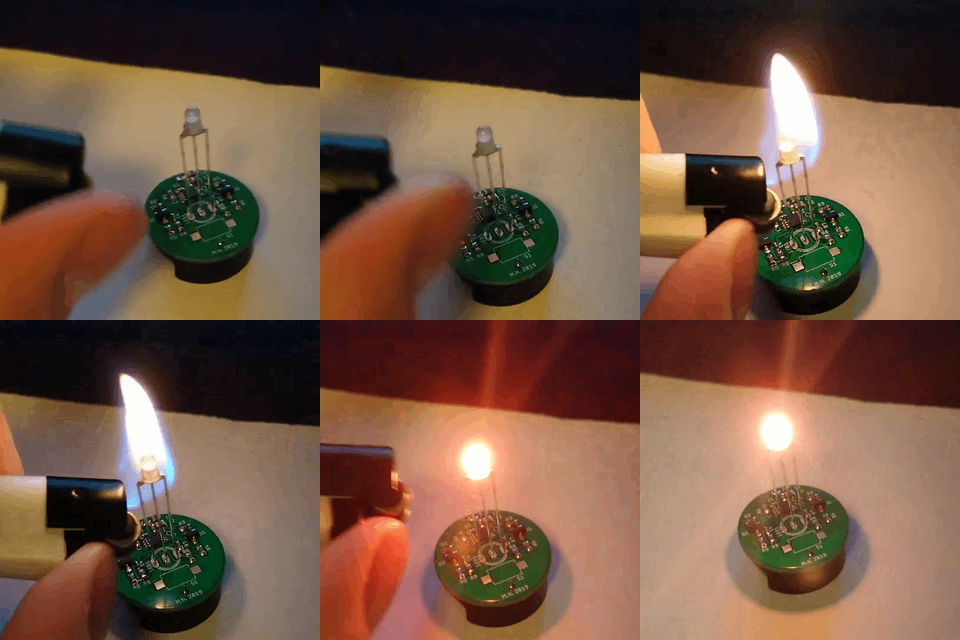
The component misuse is an old favorite: the diode’s forward voltage drop depends on the temperature, and if you measure the voltage across the current-limiting resistor, you can read this voltage and determine when someone is setting fire to your LED. A bonus of the single-LED configuration is that if you touch the LED’s leads, your finger shunts some of the current, and you can “snuff” the LEDs out. And while we’ve seen similar LED hacks before, the addition of actual fire to this one seems to have warmed our judges’ hearts.
[Luke J. Barker]’s Need an Electrical Slip Ring? is simplicity itself, and appears to have been born of the mother of invention. [Luke] was making a VertiBird helicopter toy, which spins around on the desk and rises and falls with joystick control. And for that, he needed a slip ring. Enter the humble audio jack, which fills the job nicely, transmitting power to the rotating helicopter without twisting up wires in the process. There’s not much magic here, but it’s a fantastic idea when you need something to spin.
On the other end of the spectrum, [Craig D]’s Boosting voltage with a cable looks like it shouldn’t work at first, but it does. In most step-up-voltage setups, you’re storing the energy in either a capacitor or inductor, and switching it in and out of the circuit to hop the voltage up. Here, the energy isn’t ever really “stored” as much as it’s “in flight”.


A circuit sends a pulse down a long length of coaxial cable that is left open at the other end. The pulse reflects off the open end and heads back toward the voltage driver, which then fires off another pulse at just the right time to make the travelling wave a little bit bigger, and this continues. It’s like pushing a swing – adding a little extra oomph at just the right time can build up. There’s a lot of cool physics here, a nice simulation that actually ends up corresponding very well with reality, and in the end the pulse timing isn’t rocket science, but rather figuring out the resonant frequency along the coax. And it works well enough to light up two neon bulbs in series (~140 V) off of a 15 V power supply.
Honorable Mentions
We got way more cool entries than we have prizes, so we try to round them up into categories and give them a little time in the sun.
Out of Spec
Normally, a 555 timer oscillator circuit relies on filling up a capacitor with a current that’s throttled through a resistor. How can you make it go faster? Make the capacitor smaller and the resistor less resistive. What happens when you get rid of them both entirely, relying on stray capacitance and the resistance of whatever wire you’re using? That’s what [MagicWolfi] aimed to find out with his Ludicrous 555 project.
The IC-Abusing Diode Tester is an absolutely horrible circuit. Nothing in it works like it should. The only reason the IC doesn’t burn up is that it’s more robust than the datasheet promises, and the battery used has such a high internal resistance that it can’t source that much current anyway. Parts are powered by leakage current, and below their minimum voltage. [Joseph Eoff] counts seven values that are out of spec in this single historical circuit, so that’s gotta count for something.
Junk Box Substitutions

Or maybe you’re working on self-assembling robots and you need some magic glue to hold different modules together. [Miana]’s Low-melt-solder connected robots is half research project, and half hack. Resistors are used to melt solder, magnets align the parts together, and when it all cools down, it’s as if two modules are brazed together. This one’s a lot more than a hack, but we’re honored to have it entered in the contest anyway!
Bizarro World
We honestly thought we’d get more entries that made use of the duality of most sensors / emitters. Instead, we got two. [Nick]’s Better Than Bluetooth does the LED-as-photosensor trick, and concludes that it’s better than Bluetooth if expense, limited range, and frustration are what you’re looking for in a data link. Meanwhile, [Kauz] proves that electromagnets are also pickups by building a guitar pickup out of six relays.
Side Effects

Most old op-amps oscillate out of control when given feedback, unless you damp it down a bit with a capacitor. [Adrian Freed] found an op-amp lousy enough that would do this at audio frequencies, and used it to reimagine a classic noisemaker.
Finally, while you should probably avoid the metastable middle-zones between digital one and zero, [SHAOS] combines unbuffered NAND and NOR gates to tease out a third logic state. [Bob Widlar] would be proud.
Thanks All!
As always, we had more great entries that we could feature here, so head on over to Hackaday.io and check them out. And thanks again to DigiKey for providing our top three with $150 gift certificates. If you’re looking for your chance to show off a project that you’re working on, hang on for a while because we’ll be starting up a new contest in early 2026.


Ministero dell'Istruzione
La XXIV edizione del #concorso nazionale “I giovani ricordano la #Shoah” per l’anno scolastico 2025/2026 è promossa dal #MIM, in collaborazione con l’Unione delle Comunità Ebraiche Italiane.Telegram
A Quick Primer On TinkerCAD’s New Features

TinkerCAD had its first release all the way back in 2011 and it has come a long way since then. The latest release has introduced a raft of new, interesting features, and [HL ModTech] has been nice enough to sum them up in a recent video.
He starts out by explaining some of the basics before quickly jumping into the new gear. There are two headline features: intersect groups and smooth curves. Where the old union group tool simply merged two pieces of geometry, intersect group allows you to create a shape only featuring the geometry where two individual blocks intersect. It’s a neat addition that allows the creation of complex geometry more quickly. [HL ModTech] demonstrates it with a sphere and a pyramid and his enthusiasm is contagious.
As for smooth curves, it’s an addition to the existing straight line and Bézier curve sketch tools. If you’ve ever struggled making decent curves with Bézier techniques, you might appreciate the ease of working with the smooth curve tool, which avoids any nasty jagged points as a matter of course.
While it’s been gaining new features at an impressive rate, ultimately TinkerCAD is still a pretty basic tool — it’s not the sort of thing you’d expect to see in the aerospace world or anything. ut it’s a great way to start whipping up custom stuff on your 3D printer.
youtube.com/embed/nMDNAysi5EE?…


In Praise of Plasma TVs

I’m sitting in front of an old Sayno Plasma TV as I write this on my media PC. It’s not a productivity machine, by any means, but the screen has the resolution to do it so I started this document to prove a point. That point? Plasma TVs are awesome.
Always the Bridesmaid, Never the Bride

It’s funny, because I firmly believe that without plasma displays, CRTs would have never gone away. Perhaps for that I should hate them, but it’s for the very reasons that Plasma won out over HD-CRTs in the market place that I love them.
What You Get When You Get a Plasma TV
I didn’t used to love Plasma TVs. Until a few years ago, I thought of them like you probably do: clunky, heavy, power-hungry, first-gen flatscreens that were properly consigned to the dustbin of history. Then I bought a house.
The house came with a free TV– a big plasma display in the basement. It was left there for two reasons: it was worthless on the open market and it weighed a tonne. I could take it off the wall by myself, but I could feel the ghost of OSHA past frowning at me when I did. Hauling it up the stairs? Yeah, I’d need a buddy for that… and it was 2020. By the time I was organizing the basement, we’d just gone into lockdown, and buddies were hard to come by. So I put it back on the wall, plugged in my laptop, and turned it on.
I was gobsmacked. It looked exactly like a CRT– a giant, totally flat CRT in glorious 1080p. When I stepped to the side, it struck me again: like a CRT, the viewing angle is “yes”.
How it Works
None of this should have come as a surprise, because I know how a Plasma TV works. I’d just forgotten how good they are. See, a Plasma TV really was an attempt to get all that CRT goodness in a flat screen, and the engineers at Fujitsu, and later elsewhere, really pulled it off.
Like CRTs, you’ve got phosphors excited to produce points of light to create an image– and only when excited, so the blacks are as black as they get. The phosphors are chemically different from those in CRTs but they come in similar colours, so colours on old games and cartoons look right in a way they don’t even on my MacBook’s retina display.
Unlike a CRT, there’s no electron beam scanning the screen, and no shadow mask. Instead, the screen is subdivided into individual pixels inside the flat vacuum panel. The pixels are individually addressed and zapped on and off by an electric current. Unlike a CRT or SED, the voltage here isn’t high enough to generate an electron beam to excite the phosphors; instead the gas discharge inside the display emits enough UV light to do the same job.

Image based on “Plasma-Display-Composition.svg” by [Jari Laamanen].Still, if it feels like a CRT, and that’s because the subpixels are individual blobs of phosphors, excited from behind, and generating their own glorious light.
It’s Not the Same, Though
It’s not a CRT, of course. The biggest difference is that it’s a fixed-pixel display, with all that comes with that. This particular TV has all the ports on the back to make it great for retrogaming, but the NES, or what have you, signal still has to be digitally upscaled to match the resolution. Pixel art goes unblurred by scanlines unless I add it in via emulation, so despite the colour and contrast, it’s not quite the authentic experience.
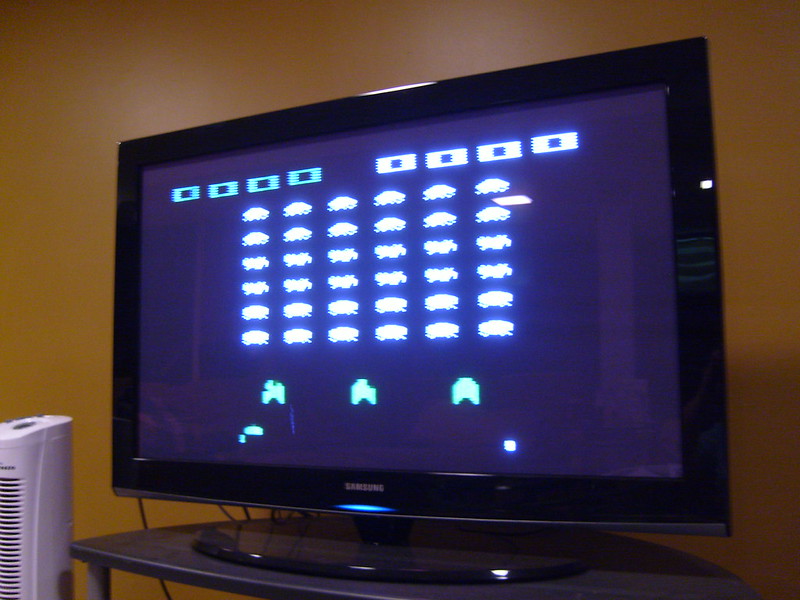
Those big CRTs don’t have to worry about burn in, either, something I have been very careful in the five years I’ve owned this second-hand plasma display to avoid. I can’t remember thinking much about burn-in with CRTs since we retired the amber-phosphor monitor plugged into the Hercules Graphics card on our family’s 286 PC.
The dreaded specter of burn-in is plasma’s Achilles heel – more than the weight and thickness, which were getting much better before LG pulled the plug as the last company to exit this space, or the Energy Star ratings, which weren’t going to catch up to LED-backlit LCDs, but had improved as well. The fear of burn-in made you skip the plasma, especially for console gaming.
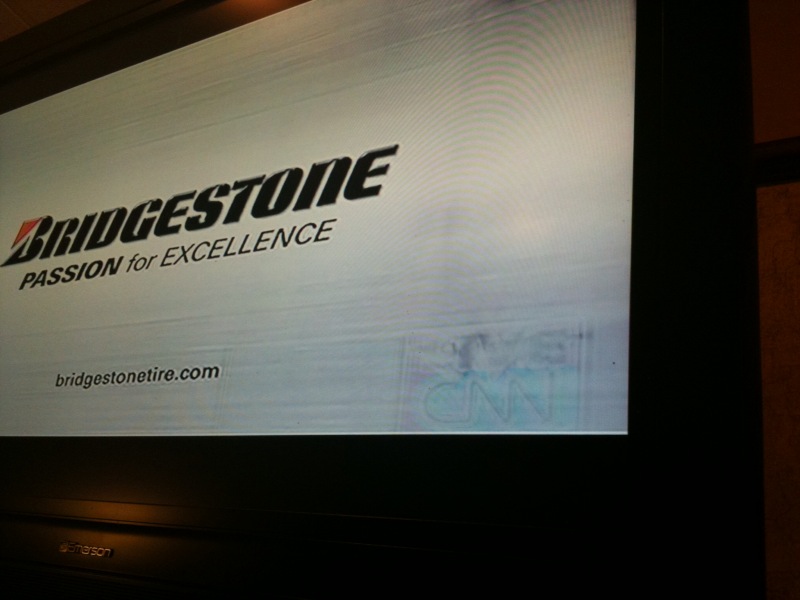
By the end, the phosphors improved and various tricks like jiggling the image pixel-by-pixel were found to avoid burn-in, and it seems to have worked: there’s absolutely no ghosting on my model, and you can sometimes find late-model Plasma TVs for the low, low cost of “get this thing off my wall and up the stairs” that are equally un-haunted. I may grab another, even if I have to pay for it. It’s a lot easier to hide a spare flatscreen than an extra CRT, another advantage to the plasma TVs, and in no case do phosphors last forever.
But Where’s the Hack?
Is “grab an old flat screen instead of hunting around for an impossible CRT” a hack? Maybe it’s not, but it’s worth considering, though, because Plasma TVs don’t get the love they deserve. (And seriously, you’re not going to find the mythical 43-inch CRT, even if it technically existed. And you’ll never find a tube that could match the 152” monster Panasonic put out to claim the record back in the day.)
In the mean time, I’m going to enjoy the contrast ratio, refresh rate, and the bonus space heater. I’m in Canada, and winter is coming, so it’s hard to get too overworked about waste heat when there’s frost on your windowpanes.
Featured image: “IFA 2010 Internationale Funkausstellung Berlin 124” by [Bin im Garten].

Interne Dokumente: EU-Staaten einigen sich auf freiwillige Chatkontrolle
netzpolitik.org/2025/interne-d…

Journalists’ cameras become targets at Oregon protests
You’ve probably seen the inflatable frogs, the dance parties, the naked bike ride. Maybe you’ve also seen the darker images: a federal officer aiming a weapon at protesters, or federal agents hurling tear gas and flash bangs into peaceful demonstrations at a Portland, Oregon, immigration facility.
Local journalists have been attacked for bringing images like these to the world. They’re being tear-gassed and shot with crowd-control munitions by federal agents simply for doing their jobs.
Photojournalist John Rudoff is among them. He’s been covering these protests since June, photographing both peaceful marches and violent responses from federal officers that often follow.
On Oct. 11, while documenting a protest, Rudoff was struck by a stinger grenade, even though he was clearly identifiable as press. He was bruised, but not deterred.
“If you cover protests, you’re going to have discomfort and hazard. Period. That’s just the way it is,” Rudoff told us. “They shoot 20-year-old girls, and they shoot 70-year-old men, and they shoot people in wheelchairs, and they shoot blind people,” he added, referring to federal agents using crowd-control munitions. “The word impunity seems to be coined for them.”
Despite the danger, Rudoff refuses to stop documenting. “The entire media ecosystem has been covered with the administration’s rantings about the war-ravaged hellscape of Portland, and the city is burning down, and ICE officers are being attacked, and on and on and on,” he said. “I feel some obligation to try and counter this frankly preposterous narrative that the city’s burning down. It isn’t.”
Independent journalist Kevin Foster, who has also been covering the Portland protests, shares that sense of duty and outrage. “It’s clear the Trump administration wants to paint Portland as a war zone to seize more control, but it’s a lot harder to do that when I’m showing you all the dancing inflatable frogs,” he told us. “At the end of the day, someone needs to be there to document abuses of power.”
Foster has felt the danger up close while reporting from protests. “I’ve seen other press members shot with pepper balls, I’ve had flash bangs go off at my feet, and tear gas canisters explode above my head,” he said. But he continues to work to keep the public informed, reporting on federal agents’ heavy use of force and escalatory tactics at the protests.
For Foster, the concerns go beyond federal agents at protests. “Right-wing influencers and agitators have reportedly doxxed people,” Foster said. “With the state of the presidency and the history of authoritarianism, I do sometimes worry about persecution as well, especially given that a lot of my coverage subverts the narrative produced by right-wing media.”
The incident in Portland that got the most attention involved Katie Daviscourt, a reporter for the conservative news site The Post Millennial. She reported being hit in the face by someone swinging a flagpole at a protest, blackening her eye. Police let the suspect go, prompting feigned outrage from the White House.
Holding federal agents accountable
Violence against the press, from any direction, is an attack on the First Amendment itself, especially when enabled by law enforcement. Unfortunately, those purportedly appalled by the Daviscourt incident have not shown similar concern over federal law enforcement attacks on journalists who don’t further their preferred political narratives.
Since the Portland protests began in June, for instance, photojournalist Mason Lake has been struck by crowd-control munitions twice, pepper-sprayed, and had a rifle aimed at him. Yet federal officials haven’t condemned these attacks, or the attack on Rudoff.
“It’s very disconcerting to see how free press has been trampled,” Lake told the U.S. Press Freedom Tracker, a project of Freedom of the Press Foundation (FPF). “The best we can do is push back and make sure the truth isn’t run over.”
In other cities, like Chicago, Illinois, and Los Angeles, California, federal court orders protect journalists from such assaults. But Portland currently has no such order. Legal precedent from 2020 protests in Portland recognized reporters’ First Amendment right to cover protests and shielded them from dispersal orders. But it has done little to rein in federal agents today.
“They have to be sued, and they have to be enjoined, and they have to be criminally prosecuted until they stop doing it,” suggested Rudoff.
Until that happens, however, journalists must keep speaking up, not just about what they see, but also for being attacked for witnessing it. “Most attacks on journalists aren’t reported,” explained Rudoff. But, he added, “I don’t know a single journalist out there who hasn’t been shot or hit or knocked over or tear-gassed or pepper-sprayed. It’s everybody.”
Foster put it even more bluntly: “Many Americans seem to have this impression that brutalizing protesters and targeting the press only happens in other countries. If that notion hasn’t shattered for you yet, wait until your ears are ringing from flash bangs and you’re enveloped in a cloud of tear gas so thick you can’t see 15 feet.”
This isn’t some distant dictatorship. It’s the city of Portland. And the First Amendment is under siege.
- YouTube
Profitez des vidéos et de la musique que vous aimez, mettez en ligne des contenus originaux, et partagez-les avec vos amis, vos proches et le monde entier.www.youtube.com

#Ucraina: l'utopia e la realtà

Ucraina: l’utopia e la realtà
La realtà dei fatti, da una parte, e il comportamento del regime ucraino e dei suoi sponsor europei, dall’altra, continuano a muoversi su strade totalmente divergenti, con decisioni, prese da parte di questi ultimi, che non hanno nessuna giustificazi…www.altrenotizie.org
Paolo Berizzi: “Vi racconto misteri e legami di CasaPound”
@Giornalismo e disordine informativo
articolo21.org/2025/11/paolo-b…
Da poco in libreria con un testo che sta facendo particolarmente discutere (“Il libro segreto di CasaPound”, Fuoriscena editore), Paolo Berizzi ha deciso di devolvere alla nostra associazione una parte
Giornalismo e disordine informativo reshared this.
"I.A. BASTA!”: l’appello dei docenti contro l’intelligenza artificiale a scuola - L'INDIPENDENTE
lindipendente.online/2025/11/1…
Un appello, una mozione e un questionario per dire “basta” all’intelligenza artificiale nella scuola. È questo il cuore della mobilitazione lanciata dal gruppo auto-organizzato di lavoratrici e lavoratori della scuola, che vede la partecipazione di docenti, personale ATA, rappresentanti del sindacal

La militarizzazione dell’AI è già iniziata. Ma dove arriverà?
@Notizie dall'Italia e dal mondo
Molti analisti parlano ormai dell’uso bellico dell’Intelligenza Artificiale in guerra come del vero “momento Oppenheimer” della nostra epoca. Un termine che indica l’idea che, come accadde con il nucleare a metà Novecento, stiamo varcando una soglia dalla quale sarà difficile tornare indietro. Un
Notizie dall'Italia e dal mondo reshared this.
Il direttore del Parlamento Ue in Italia a TPI: “Senza rafforzare l’Europa la nostra indipendenza è a rischio”
@Politica interna, europea e internazionale
Oggi l’Europa è sotto attacco? «Assolutamente sì, l’ha ricordato in plenaria al Parlamento europeo, nel momento istituzionale più delicato e importante, la presidente della Commissione Ue Ursula von der Leyen. Le sue prime parole
Politica interna, europea e internazionale reshared this.
Caselli torna in antimafia e spazza il campo dalla falsa valanga di “mafia appalti”
@Giornalismo e disordine informativo
articolo21.org/2025/11/caselli…
Lo “spazza-neve” Caselli torna in Antimafia e finisce il lavoro: sgombrato completamente il campo dalla falsa valanga di “mafia
Giornalismo e disordine informativo reshared this.
Dal dominio cognitivo a quello cibernetico. L’Italia sotto attacco ibrido nel dossier Crosetto
@Notizie dall'Italia e dal mondo
Presentato durante la riunione del Consiglio Supremo di Difesa, il “Non-paper sul contrasto alla guerra ibrida” del ministro della Difesa, Guido Crosetto, parla chiaro: l’Italia è già in un conflitto sottosoglia, quotidiano, mutevole
Notizie dall'Italia e dal mondo reshared this.
fanpage.it/wamily/quando-torni…
ma perché? le donne devono occuparsi dolo di fare figli e crescere la prole... sono sicura che c'è un sacco di gente (più uomini) che concorderebbe infatti con questa affermazione. questa è una donna santa....
Cyber security, evolve lo scenario di rischio: ecco le figure professionali più richieste
@Informatica (Italy e non Italy 😁)
Non raggiunge il 10% la quota di chi ha competenze in cyber security, ma gli annunci per cyber security engineer registrano un aumento a doppia cifra. Il problema è lo skill shortage. Ecco cosa emerge dall'Osservatorio sulle
Informatica (Italy e non Italy 😁) reshared this.
Ucci ucci, è in vendita la villa di Angelo Balducci
@Politica interna, europea e internazionale
Un annuncio, apparso in questi giorni su uno dei principali portali immobiliari, ha destato la curiosità dei frequentatori di salotti e circoli romani: in vendita esclusiva villa con parco e piscina nel cuore di Roma, in via delle Mura Latine 44. Così recita l’inserzione di Idealista, che ripropone quella originaria di
Politica interna, europea e internazionale reshared this.
Perché non posso scrivere di tutto (anche se mi sta a cuore.)
noblogo.org/transit/perche-non…


Perché non posso scrivere di tutto (anche se mi sta a cuore.)
(181)
Spesso sui social capita che, se parli sempre e solo di una certa causa (per esempio la #Palestina) qualcuno ti accusi di non interessarti ad altri drammi, come quelli che succedono in #Sudan o in altri luoghi del mondo.Questa è una questione che merita un po’ di chiarezza, perché il punto vero è un altro: nessuno di noi è un’agenzia di stampa, e non parlare di una cosa non significa affatto fregarsene. La verità è che tutti noi abbiamo dei limiti: di tempo, di energie, ma anche di capacità emotiva.
Non possiamo essere costantemente presenti su ogni emergenza, su ogni ingiustizia, su ogni tragedia che si presenta nel mondo. E, sinceramente, provarci significherebbe anche rischiare di annullare noi stessi, perdendo quella sensibilità che ci spinge a interessarci davvero di alcune questioni.
La partecipazione emotiva è inevitabilmente selettiva: ci sentiamo più vicini e coinvolti in certe storie perché le conosciamo meglio, le capiamo, o semplicemente perché in quel momento sentiamo di poter fare qualcosa di più concreto.
Non è una questione di indifferenza verso le altre cause, ma una scelta, consapevole o meno, di dove concentrare le nostre forze, anche per proteggere la nostra salute mentale. E poi, diciamolo: sui #socialmedia la pressione è fortissima. Se non ti vedi parlare di tutto, c’è chi pensa che non ti importi. Ma questa è una falsa aspettativa.
La responsabilità di dare voce a ogni singola emergenza non spetta a noi singoli individui, ma a un sistema di informazione ben più complesso.Noi partecipiamo con ciò che possiamo, con quello che sappiamo, con quello che ci muove davvero.
Quando vedi qualcuno che si concentra spesso su una sola causa, non darla per scontata: può significare un impegno profondo, non una mancanza di interesse per il resto. E chi ti conosce sa che dietro quel silenzio ci sono comunque solidarietà, preoccupazione e rispetto. Non serve parlare di tutto per esserci davvero.
In fondo, la vera indifferenza è un’altra cosa: è non provarci nemmeno, è non farsi toccare da niente, è voltare le spalle senza nemmeno chiedersi come si potrebbe fare la differenza. La partecipazione selettiva, invece, è umana, corretta e spesso necessaria. Insomma, non siamo agenzie di stampa, ma persone. E va bene così.
#Blog #SocialMedia #Opinioni #EmpatiaSelettiva #PartecipazioneEmotiva
Mastodon: @alda7069@mastodon.unoTelegram: t.me/transitblogFriendica: @danmatt@poliverso.orgBlue Sky: bsky.app/profile/mattiolidanie…Bio Site (tutto in un posto solo, diamine): bio.site/danielemattioli
Gli scritti sono tutelati da “Creative Commons” (qui)
Tutte le opinioni qui riportate sono da considerarsi personali. Per eventuali problemi riscontrati con i testi, si prega di scrivere a: corubomatt@gmail.com


Tutto sull’americana Cloudflare, che ha azzoppato mezzo Internet
@Informatica (Italy e non Italy 😁)
Tra le 12 e le 13 italiane metà Internet o quasi si è spento - da X a ChatGpt fino a League of Legends e Meteo.it- per un problema tecnico a uno dei principali nodi della Rete: Cloudflare. Cos'è, cosa fa, di chi è e chi ci ha investito
L'articolo proviene dalla sezione
Informatica (Italy e non Italy 😁) reshared this.
(N.B. Il titolo dell’iniziativa non ha nulla a che vedere con il libro.)
CONDIVIDI PARTECIPA DIFFONDI
📅 Martedì 18 novembre, ore 18:00
PEDAGOGIA HACKER — con Collettivo C.I.R.C.E.
Un’esplorazione su come costruire relazioni più consapevoli con il digitale.
Rivolto a chi educa, crea, si prende cura o semplicemente vuole abitare la tecnologia con un’attitudine critica e conviviale.
Per ridurre l’alienazione tecnica e sperimentare forme di immaginazione liberatoria.
📍 Via Fontanellato 69, al Che Guevara Roma
roma.convoca.la/event/spaghett…


MEMO: OGGI POMERIGGIO A ROMA (ZONA MONTAGNOLA)!
⬇⬇⬇⬇⬇
🍝Spaghetti Hacker👩💻 pensare e praticare un rapporto diverso con la tecnologia(N.B. Il titolo dell’iniziativa non ha nulla a che vedere con il libro.)
CONDIVIDI PARTECIPA DIFFONDI
📍 Via Fontanellato 69, al Che Guevara Roma
roma.convoca.la/event/spaghett…
Il buio di Cloudflare: Internet down il 18 novembre
@Informatica (Italy e non Italy 😁)
Stamattina, intorno alle 11:30 GMT, un brusio ha iniziato a propagarsi nelle stanze digitali di sysadmin, sviluppatori e semplici utenti. Un brusio che si è rapidamente trasformato in un coro di costernazione. Da Twitter a ChatGPT, passando per Bet365 e League of Legends, parti significative dell’ecosistema
Informatica (Italy e non Italy 😁) reshared this.
Zohran Mamdani, l’outsider che ha mangiato la Grande Mela
[quote]Il più giovane, il più inesperto, il più divisivo. Ma, forse, anche il più scaltro. Zohran Mamdani, eletto sindaco di New York il 5 novembre 2025, è questo e molto…
L'articolo Zohran Mamdani, l’outsider che ha mangiato la Grande Mela su lumsanews.it/zohran-mamdani-lo…
Processo al leader di Do.Ra. per la diffamazione di Berizzi, il pm aggiunge altre accuse
@Giornalismo e disordine informativo
articolo21.org/2025/11/process…
L'imputato si è presentato in udienza con una maglietta nera recante la scritta “Spiriti Armati”
L'articolo
Giornalismo e disordine informativo reshared this.
Brasile: leader guarani ucciso in un attacco alla sua comunità
@Notizie dall'Italia e dal mondo
Mentre alla COP30 si discute di tutela climatica e diritti dei popoli originari, l’assalto armato contro la comunità di Pyelito Kue rivela la realtà quotidiana dei Guarani Kaiowá: terre usurpate, demarcazioni bloccate e violenze sistematiche nell’impunità dello Stato brasiliano.
Notizie dall'Italia e dal mondo reshared this.
simona
in reply to simona • •simona
in reply to simona • — (Livorno) •