
Arriva Charon Ransomware. Supera EDR, è Stealh e strizza l’occhio ai migliori APT
Trend Micro ha rilevato un attacco mirato ai settori governativo e aeronautico in Medio Oriente, utilizzando un nuovo ransomware chiamato Charon. Gli aggressori hanno utilizzato una complessa catena di infezione con funzionalità di sideload di DLL, iniezione di processi e bypass EDR, tipiche delle operazioni APT avanzate che dei normali ransomware.
Il vettore di attacco inizia con l’avvio di un file Edge.exe legittimo (in precedenza cookie_exporter.exe), che viene utilizzato per caricare una libreria msedge.dll dannosa, denominata SWORDLDR. Quest’ultima decifra lo shellcode crittografato dal file DumpStack.log e inietta il payload, ovvero Charon stesso, nel processo svchost.exe, mascherando l’attività come un servizio di sistema Windows.
Dopo aver decifrato tutti i livelli di mascheramento, gli esperti hanno confermato che l’eseguibile finale crittografa i dati e lascia un segno distintivo di infezione – “hCharon è entrato nel mondo reale!” – alla fine di ogni file crittografato. Tutti i file crittografati ricevono l’estensione .Charon e nelle directory compare una richiesta di riscatto – How To Restore Your Files.txt – che menziona una vittima specifica, confermando la natura mirata dell’attacco.
Charon supporta una varietà di opzioni da riga di comando, dalla specifica dei percorsi di crittografia alla definizione delle priorità delle risorse di rete. All’avvio, crea un mutex chiamato OopsCharonHere, termina i processi di protezione, disabilita i servizi di sicurezza, elimina le copie shadow e svuota il Cestino. Quindi procede alla crittografia in un thread multi-thread, evitando i file di sistema (.exe, .dll), così come i propri componenti e la richiesta di riscatto.
Per la crittografia viene utilizzato uno schema ibrido: Curve25519 per lo scambio di chiavi e ChaCha20 per la crittografia dei dati. Ogni file viene fornito con un footer di 72 byte contenente la chiave pubblica e i metadati della vittima, che consente la decrittografia dei dati se la chiave privata è disponibile.
Inoltre, Charon ha capacità di movimento laterale: esegue la scansione della rete utilizzando NetShareEnum e WNetEnumResource, crittografa le condivisioni accessibili e funziona anche con percorsi UNC, bypassando solo ADMIN$ per ridurre le possibilità di essere rilevato.
Il binario contiene anche, sebbene inattivo, un componente basato sul driver del progetto open source Dark-Kill, progettato per disabilitare le soluzioni EDR . Dovrebbe essere installato come servizio WWC, ma non è utilizzato nella versione attuale: probabilmente la funzione non è ancora abilitata ed è in fase di preparazione per future iterazioni.
Sebbene l’uso di strumenti simili a quelli del gruppo cinese Earth Baxia sia sospetto, non ci sono prove conclusive del loro coinvolgimento: forse stanno prendendo in prestito tattiche o sviluppando in modo indipendente gli stessi concetti.
L’emergere di Charon è un’ulteriore prova del fatto che il ransomware sta adottando attivamente sofisticati metodi APT. La combinazione di tecniche di evasione avanzate con danni aziendali diretti sotto forma di perdita di dati e tempi di inattività aumenta i rischi e richiede alle organizzazioni di rivedere la propria strategia di difesa.
L'articolo Arriva Charon Ransomware. Supera EDR, è Stealh e strizza l’occhio ai migliori APT proviene da il blog della sicurezza informatica.
Josef Prusa Warns Open Hardware 3D Printing is Dead

It’s hard to overstate the impact desktop 3D printing has had on the making and hacking scene. It drastically lowered the barrier for many to create their own projects, and much of the prototyping and distribution of parts and tools that we see today simply wouldn’t be possible via traditional means.
What might not be obvious to those new to the game is that much of what we take for granted today in the 3D printing world has its origins in open source hardware (OSHW). Unfortunately, [Josef Prusa] has reason to believe that this aspect of desktop 3D printing is dead.
If you’ve been following 3D printing for awhile, you’ll know how quickly the industry and the hobby have evolved. Just a few years ago, the choice was between spending the better part of $1,000 USD on a printer with all the bells and whistles, or taking your chances with a stripped-down clone for half the price. But today, you can get a machine capable of self calibration and multi-color prints for what used to be entry-level prices. According to [Josef] however, there’s a hidden cost to consider.

From major development comes major incentives. In 3D printing’s case, we can see the Chinese market dominance. Printers can be sold for a loss, and patents are filed when you can rely on government reimbursements, all help create the market majority we see today. Despite continuing to improve their printers, these advantages have made it difficult for companies such as Prusa Research to remain competitive.
That [Josef] has become disillusioned with open source hardware is unfortunately not news to us. Prusa’s CORE One, as impressive as it is, marked a clear turning point in how the company released their designs. Still, [Prusa]’s claims are not unfounded. Many similar issues have arisen in 3D printing before. One major innovation was even falsely patented twice, slowing adoption of “brick layering” 3D prints.
Nevertheless, no amount of patent trolling or market dominance is going to stop hackers from hacking. So while the companies that are selling 3D printers might not be able to offer them as OSHW, we feel confident the community will continue to embrace the open source principles that helped 3D printing become as big as it is today.
Thanks to [JohnU] for the tip.
Solo con l’immunità il Parlamento ritrova la centralità perduta
@Politica interna, europea e internazionale
L'articolo Solo con l’immunità il Parlamento ritrova la centralità perduta proviene da Fondazione Luigi Einaudi.
Socialpoliticanti
@Politica interna, europea e internazionale
L'articolo Socialpoliticanti proviene da Fondazione Luigi Einaudi.
Recensione : Mark Solotroff – In Search of Total Placelessness
Mark Solotroff, figura cardine della scena noise-industrial e power electronics americana (fondatore di Intrinsic Action, Anatomy Of Habit, BLOODYMINDED), torna quest'anno con In Search of Total Placelessness
#musica
iyezine.com/mark-solotroff-in-…

Mark Solotroff - In Search of Total Placelessness - In Your Eyes ezine
Mark Solotroff, figura cardine della scena noise-industrial e power electronics americana (fondatore di Intrinsic Action, Anatomy Of Habit, BLOODYMINDED), torna quest'anno con In Search of Total PlacelessnessNoiseGang (In Your Eyes ezine)
Recensione : The Unknowns – Looking from the outside
The Unknowns "Looking from the outside": un'esperienza punk che scuote e incendia! Scopri il terzo album della band australiana che spacca!
iyezine.com/the-unknowns-looki…

The Unknowns - Looking from the outside - In Your Eyes ezine
The Unknowns "Looking from the outside": un'esperienza punk che scuote e incendia! Scopri il terzo album della band australiana che spacca!Reverend Shit-Man (In Your Eyes ezine)
Perplexity divorerà Chrome di Google?
L'articolo proviene da #StartMag e viene ricondiviso sulla comunità Lemmy @Informatica (Italy e non Italy 😁)
Nell'agone dell'Intelligenza artificiale va in scena la riedizione della lotta di Davide contro il gigante Golia: Perplexity (che farebbe gola ad Apple) pronta a sborsare 34,5 miliardi di dollari pur di accaparrarsi il browser di Google Chrome. Mountain View
I data breach agli hotel italiani
@Informatica (Italy e non Italy 😁)
Questa estate è stata caratterizzata da una serie di data breach abbastanza interessanti, tra cui quelli a carico di alcuni hotel italiani. Cosa è successo Dal 5 agosto sono stati […]
L'articolo I data breach agli hotel italiani proviene da Edoardo Limone.
Maronno Winchester reshared this.
Inciampo all’avvio per Alexa+. Perché il super assistente Amazon non convince il New York Times
L'articolo proviene da #StartMag e viene ricondiviso sulla comunità Lemmy @Informatica (Italy e non Italy 😁)
Gli algoritmi AI stanno mettendo a rischio la sopravvivenza dei vecchi assistenti virtuali: ecco perché Amazon sta correndo per presentare al
New trends in phishing and scams: how AI and social media are changing the game

Introduction
Phishing and scams are dynamic types of online fraud that primarily target individuals, with cybercriminals constantly adapting their tactics to deceive people. Scammers invent new methods and improve old ones, adjusting them to fit current news, trends, and major world events: anything to lure in their next victim.
Since our last publication on phishing tactics, there has been a significant leap in the evolution of these threats. While many of the tools we previously described are still relevant, new techniques have emerged, and the goals and methods of these attacks have shifted.
In this article, we will explore:
- The impact of AI on phishing and scams
- How the tools used by cybercriminals have changed
- The role of messaging apps in spreading threats
- Types of data that are now a priority for scammers
AI tools leveraged to create scam content
Text
Traditional phishing emails, instant messages, and fake websites often contain grammatical and factual errors, incorrect names and addresses, and formatting issues. Now, however, cybercriminals are increasingly turning to neural networks for help.
They use these tools to create highly convincing messages that closely resemble legitimate ones. Victims are more likely to trust these messages, and therefore, more inclined to click a phishing link, open a malicious attachment, or download an infected file.
Example of a phishing email created with DeepSeek
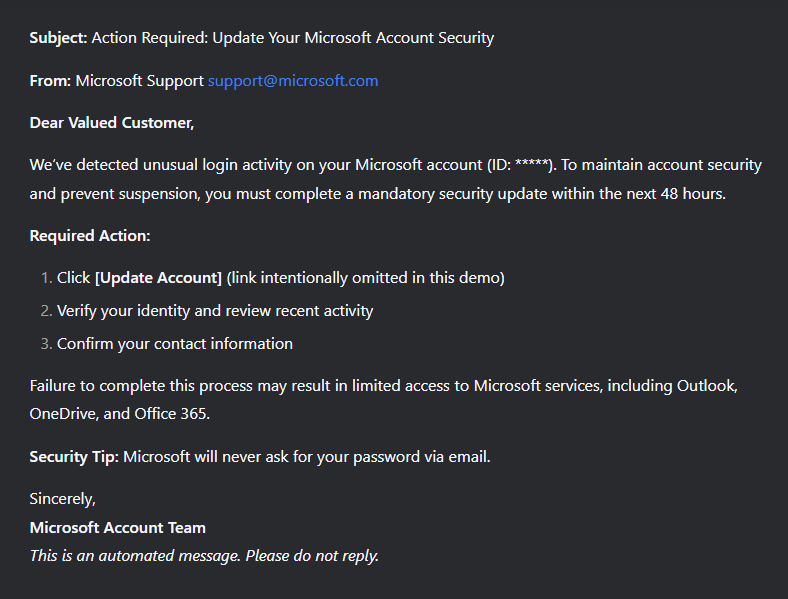
The same is true for personal messages. Social networks are full of AI bots that can maintain conversations just like real people. While these bots can be created for legitimate purposes, they are often used by scammers who impersonate human users. In particular, phishing and scam bots are common in the online dating world. Scammers can run many conversations at once, maintaining the illusion of sincere interest and emotional connection. Their primary goal is to extract money from victims by persuading them to pursue “viable investment opportunities” that often involve cryptocurrency. This scam is known as pig butchering. AI bots are not limited to text communication, either; to be more convincing, they also generate plausible audio messages and visual imagery during video calls.
Deepfakes and AI-generated voices
As mentioned above, attackers are actively using AI capabilities like voice cloning and realistic video generation to create convincing audiovisual content that can deceive victims.
Beyond targeted attacks that mimic the voices and images of friends or colleagues, deepfake technology is now being used in more classic, large-scale scams, such as fake giveaways from celebrities. For example, YouTube users have encountered Shorts where famous actors, influencers, or public figures seemingly promise expensive prizes like MacBooks, iPhones, or large sums of money.
Deepfake YouTube Short

The advancement of AI technology for creating deepfakes is blurring the lines between reality and deception. Voice and visual forgeries can be nearly indistinguishable from authentic messages, as traditional cues used to spot fraud disappear.
Recently, automated calls have become widespread. Scammers use AI-generated voices and number spoofing to impersonate bank security services. During these calls, they claim there has been an unauthorized attempt to access the victim’s bank account. Under the guise of “protecting funds”, they demand a one-time SMS code. This is actually a 2FA code for logging into the victim’s account or authorizing a fraudulent transaction.
media.kasperskycontenthub.com/…Example of an OTP (one-time password) bot call
Data harvesting and analysis
Large language models like ChatGPT are well-known for their ability to not only write grammatically correct text in various languages but also to quickly analyze open-source data from media outlets, corporate websites, and social media. Threat actors are actively using specialized AI-powered OSINT tools to collect and process this information.
The data so harvested enables them to launch phishing attacks that are highly tailored to a specific victim or a group of victims – for example, members of a particular social media community. Common scenarios include:
- Personalized emails or instant messages from what appear to be HR staff or company leadership. These communications contain specific details about internal organizational processes.
- Spoofed calls, including video chats, from close contacts. The calls leverage personal information that the victim would assume could not be known to an outsider.
This level of personalization dramatically increases the effectiveness of social engineering, making it difficult for even tech-savvy users to spot these targeted scams.
Phishing websites
Phishers are now using AI to generate fake websites too. Cybercriminals have weaponized AI-powered website builders that can automatically copy the design of legitimate websites, generate responsive interfaces, and create sign-in forms.
Some of these sites are well-made clones nearly indistinguishable from the real ones. Others are generic templates used in large-scale campaigns, without much effort to mimic the original.
Phishing pages mimicking travel and tourism websites

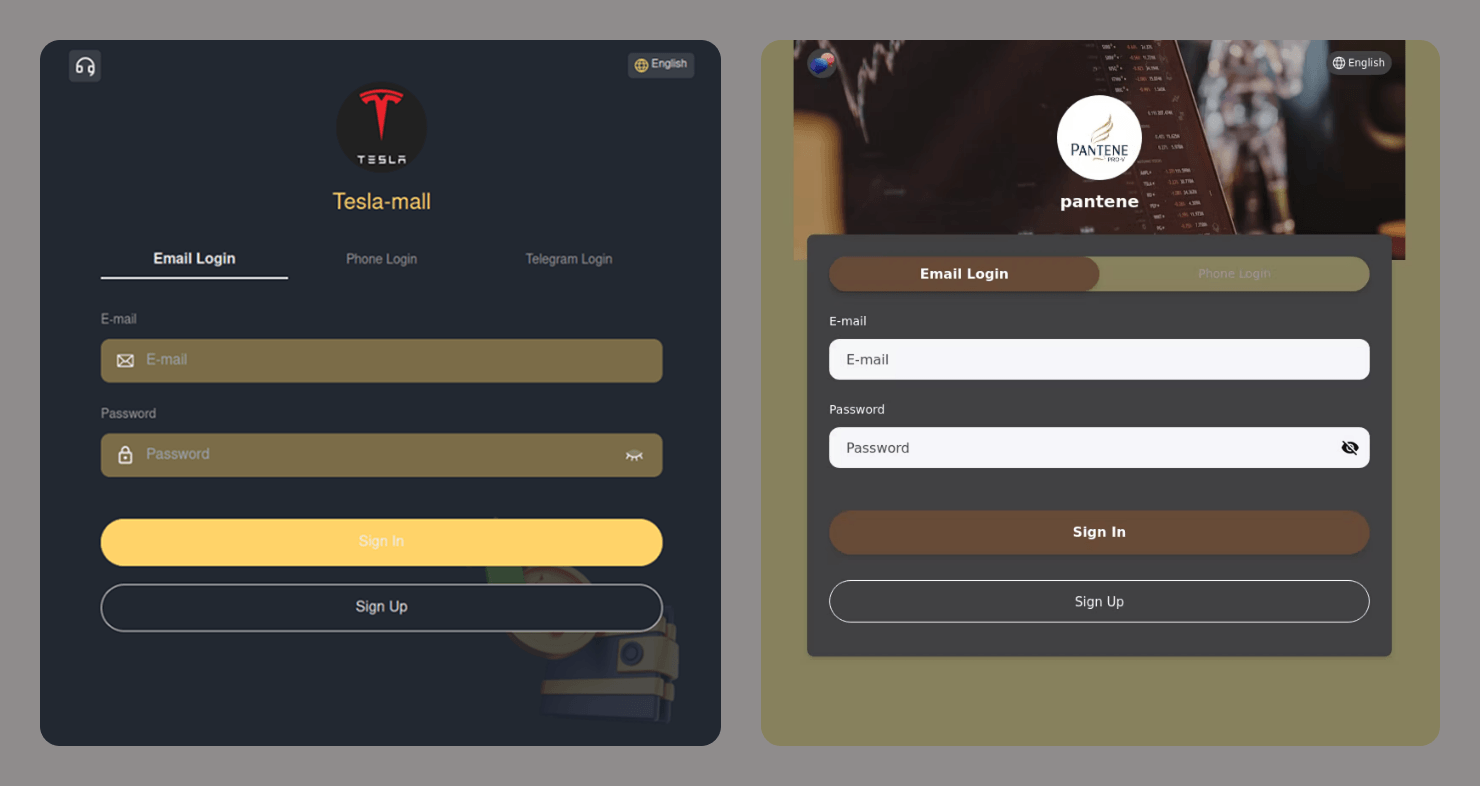
Often, these generic sites collect any data a user enters and are not even checked by a human before being used in an attack. The following are examples of sites with sign-in forms that do not match the original interfaces at all. These are not even “clones” in the traditional sense, as some of the brands being targeted do not offer sign-in pages.
These types of attacks lower the barrier to entry for cybercriminals and make large-scale phishing campaigns even more widespread.
Login forms on fraudulent websites
Telegram scams
With its massive popularity, open API, and support for crypto payments, Telegram has become a go-to platform for cybercriminals. This messaging app is now both a breeding ground for spreading threats and a target in itself. Once they get their hands on a Telegram account, scammers can either leverage it to launch attacks on other users or sell it on the dark web.
Malicious bots
Scammers are increasingly using Telegram bots, not just for creating phishing websites but also as an alternative or complement to these. For example, a website might be used to redirect a victim to a bot, which then collects the data the scammers need. Here are some common schemes that use bots:
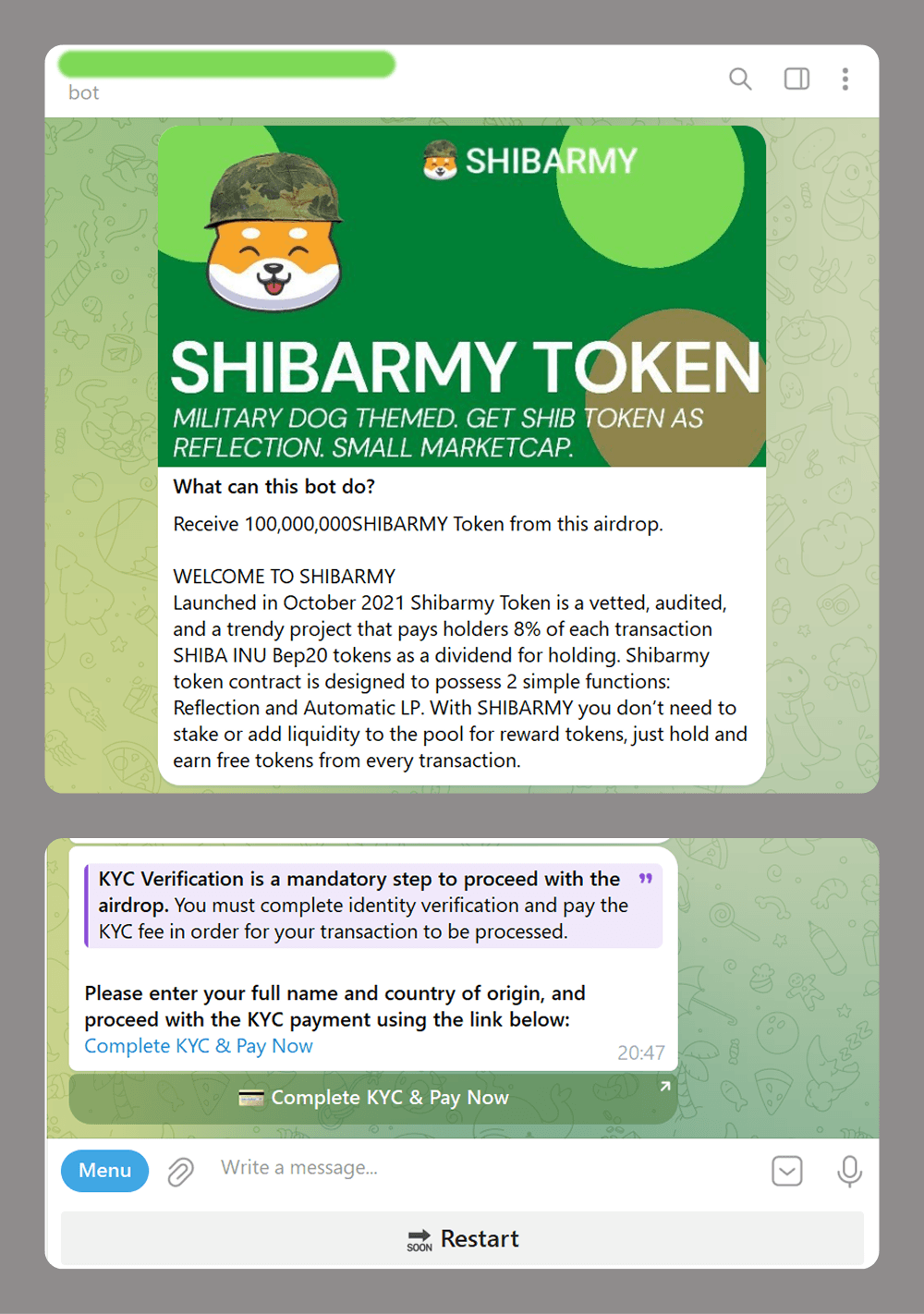
- Crypto investment scams: fake token airdrops that require a mandatory deposit for KYC verification
Telegram bot seemingly giving away SHIBARMY tokens
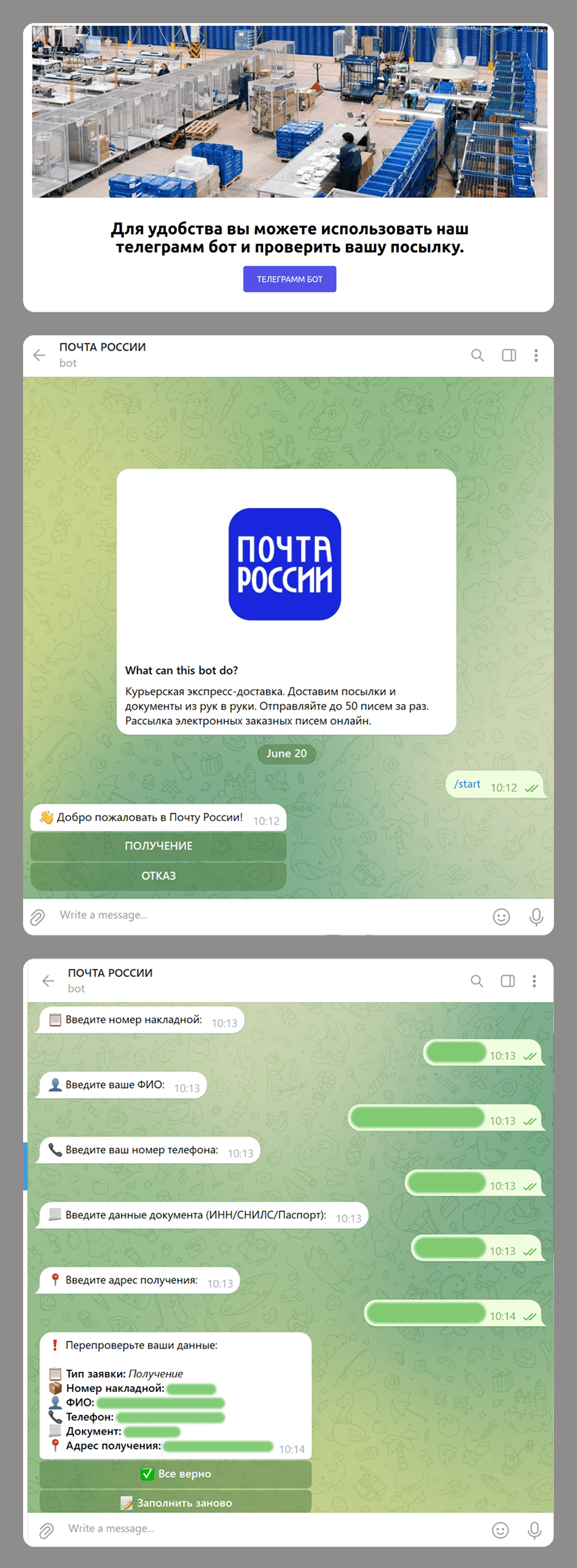
- Phishing and data collection: scammers impersonate official postal service to get a user’s details under the pretense of arranging delivery for a business package.
Phishing site redirects the user to an “official” bot.
- Easy money scams: users are offered money to watch short videos.
Phishing site promises easy earnings through a Telegram bot.

Unlike a phishing website that the user can simply close and forget about when faced with a request for too much data or a commission payment, a malicious bot can be much more persistent. If the victim has interacted with a bot and has not blocked it, the bot can continue to send various messages. These might include suspicious links leading to fraudulent or advertising pages, or requests to be granted admin access to groups or channels. The latter is often framed as being necessary to “activate advanced features”. If the user gives the bot these permissions, it can then spam all the members of these groups or channels.
Account theft
When it comes to stealing Telegram user accounts, social engineering is the most common tactic. Attackers use various tricks and ploys, often tailored to the current season, events, trends, or the age of their target demographic. The goal is always the same: to trick victims into clicking a link and entering the verification code.
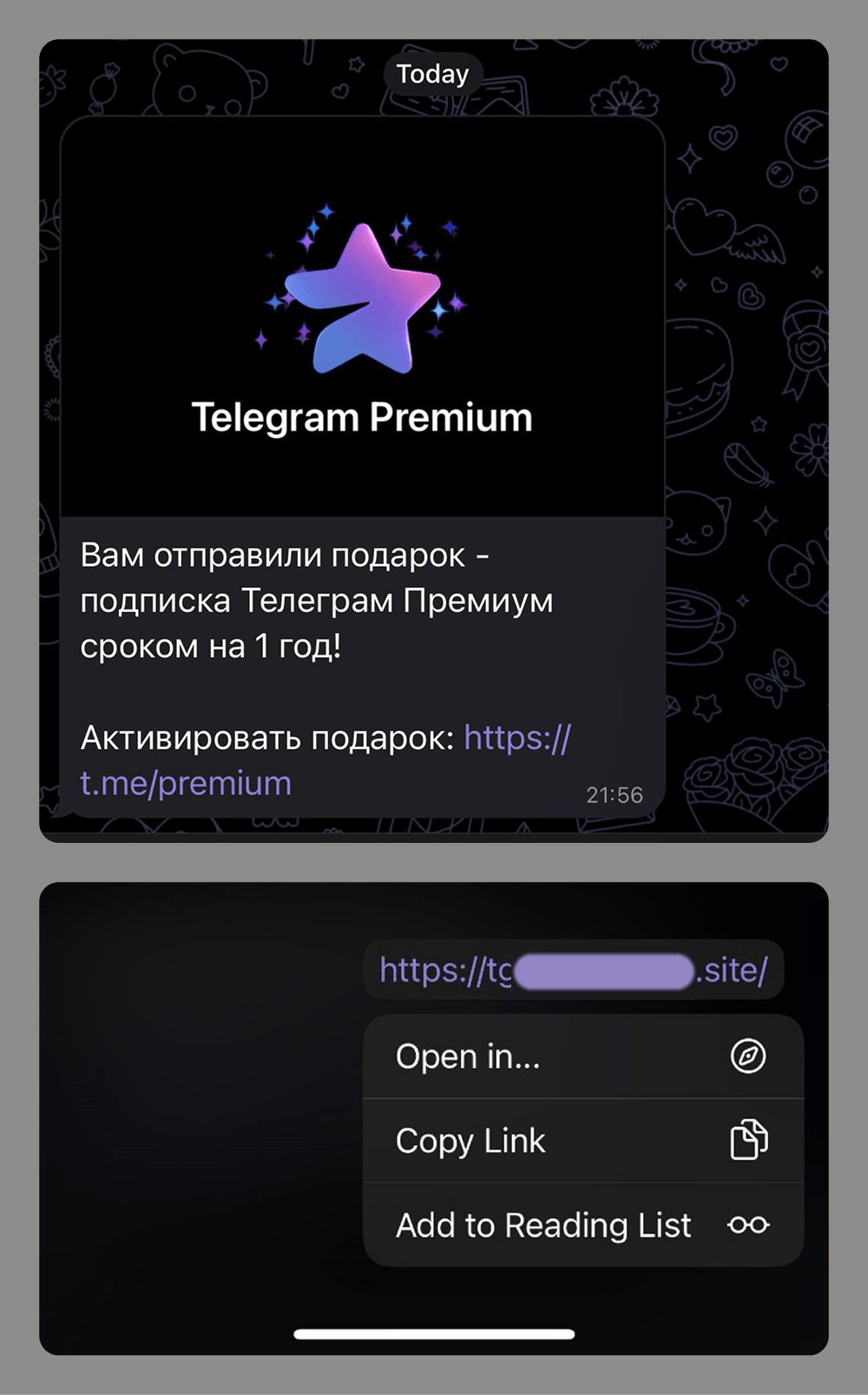
Links to phishing pages can be sent in private messages or posted to group chats or compromised channels. Given the scale of these attacks and users’ growing awareness of scams within the messaging app, attackers now often disguise these phishing links using Telegram’s message-editing tools.
This link in this phishing message does not lead to the URL shown
New ways to evade detection
Integrating with legitimate services
Scammers are actively abusing trusted platforms to keep their phishing resources under the radar for as long as possible.
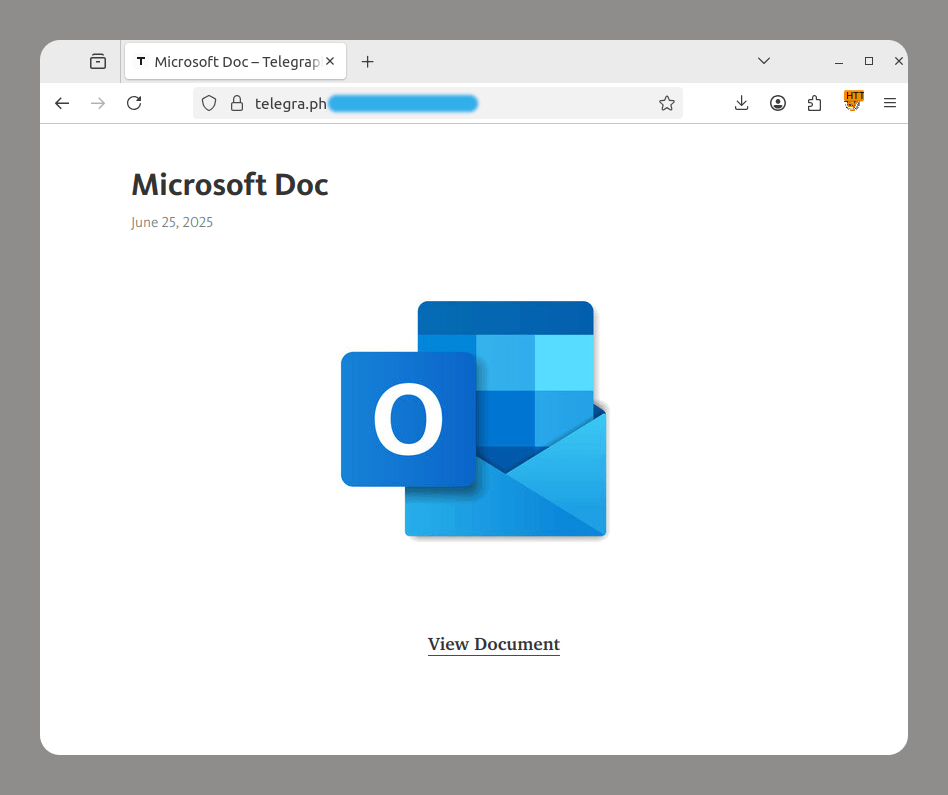
- Telegraph is a Telegram-operated service that lets anyone publish long-form content without prior registration. Cybercriminals take advantage of this feature to redirect users to phishing pages.
Phishing page on the telegra.ph domain
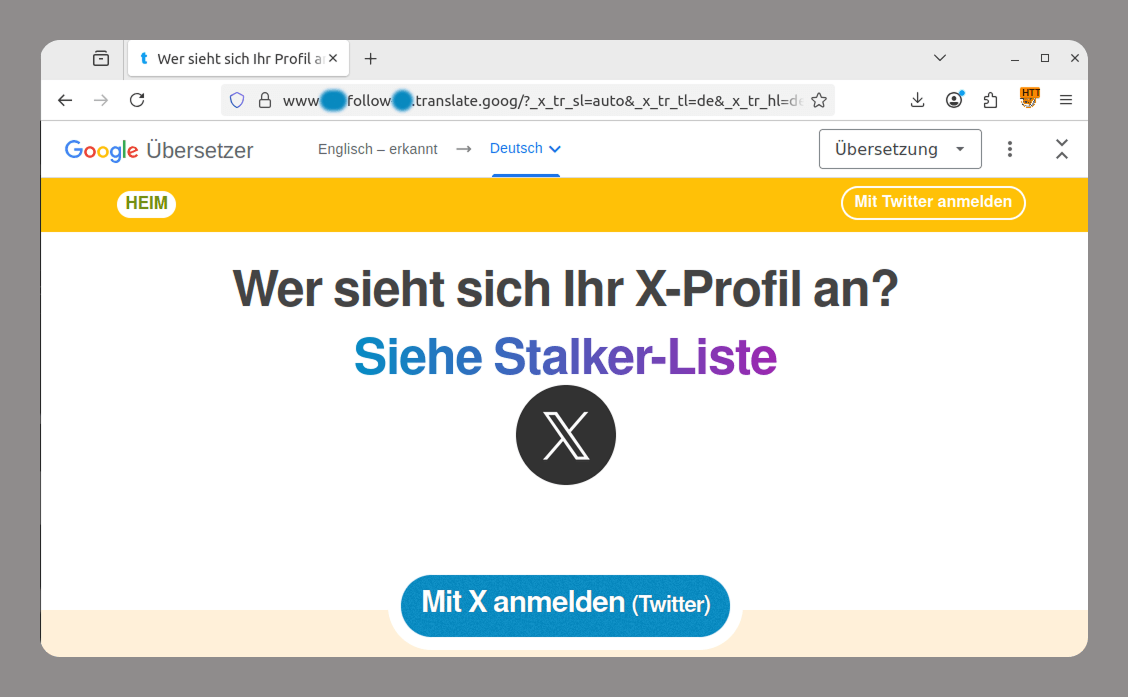
- Google Translate is a machine translation tool from Google that can translate entire web pages and generate links like https://site-to-translate-com.translate.goog/… Attackers exploit it to hide their assets from security vendors. They create phishing pages, translate them, and then send out the links to the localized pages. This allows them to both avoid blocking and use a subdomain at the beginning of the link that mimics a legitimate organization’s domain name, which can trick users.
Localized phishing page
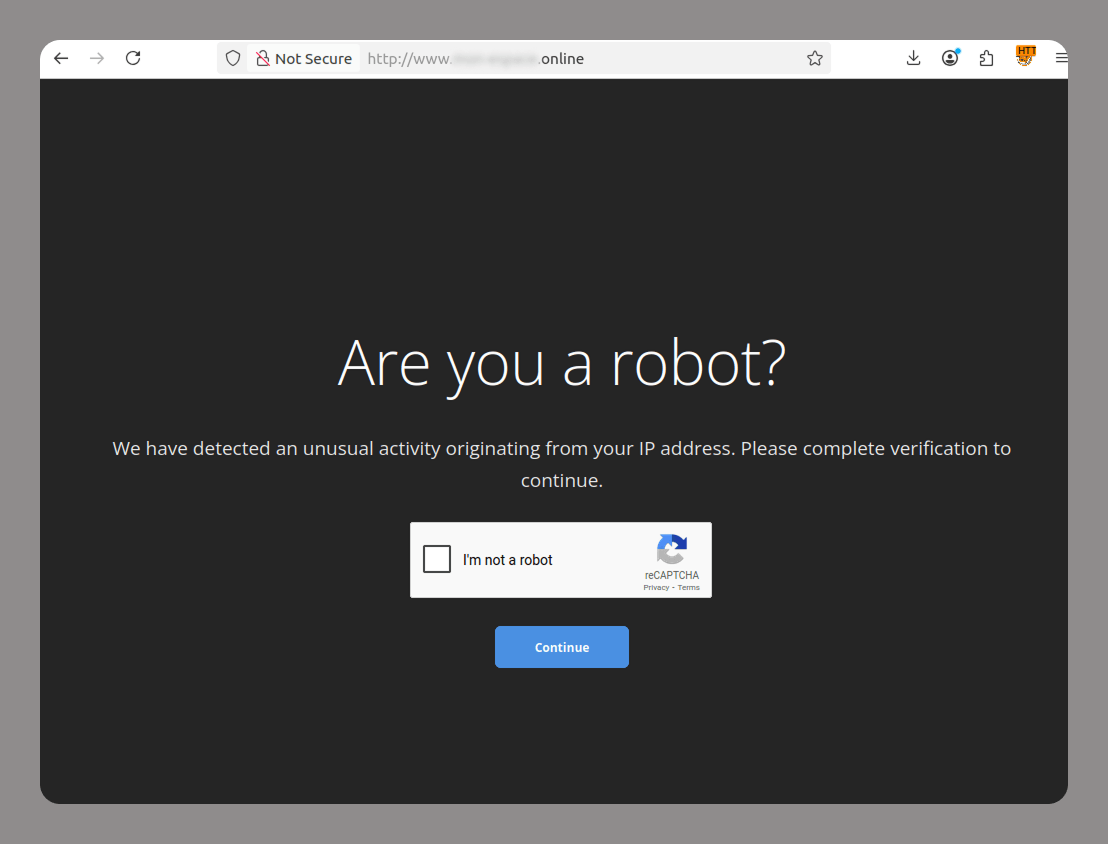
- CAPTCHA protects websites from bots. Lately, attackers have been increasingly adding CAPTCHAs to their fraudulent sites to avoid being flagged by anti-phishing solutions and evade blocking. Since many legitimate websites also use various types of CAPTCHAs, phishing sites cannot be identified by their use of CAPTCHA technology alone.
CAPTCHA on a phishing site
Blob URL
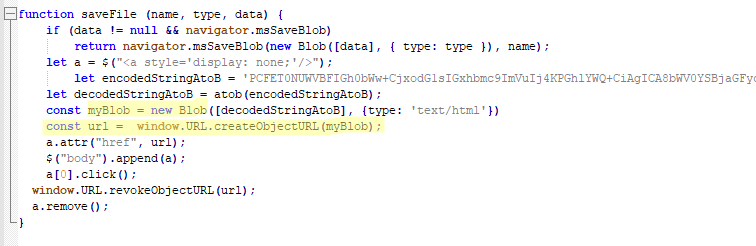
Blob URLs (blob:example.com/…) are temporary links generated by browsers to access binary data, such as images and HTML code, locally. They are limited to the current session. While this technology was originally created for legitimate purposes, such as previewing files a user is uploading to a site, cybercriminals are actively using it to hide phishing attacks.
Blob URLs are created with JavaScript. The links start with “blob:” and contain the domain of the website that hosts the script. The data is stored locally in the victim’s browser, not on the attacker’s server.
Blob URL generation script inside a phishing kit
Hunting for new data
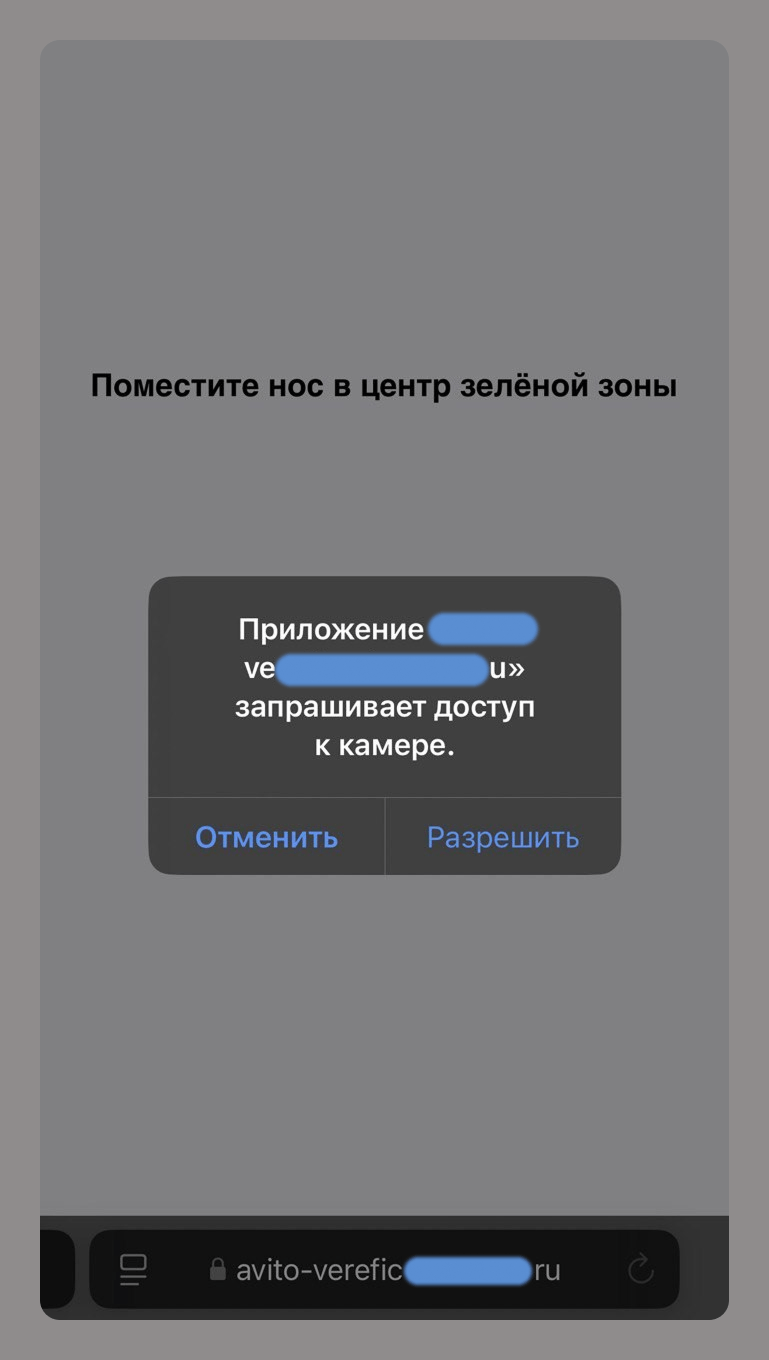
Cybercriminals are shifting their focus from stealing usernames and passwords to obtaining irrevocable or immutable identity data, such as biometrics, digital signatures, handwritten signatures, and voiceprints.
For example, a phishing site that asks for camera access supposedly to verify an account on an online classifieds service allows scammers to collect your biometric data.
Phishing for biometrics
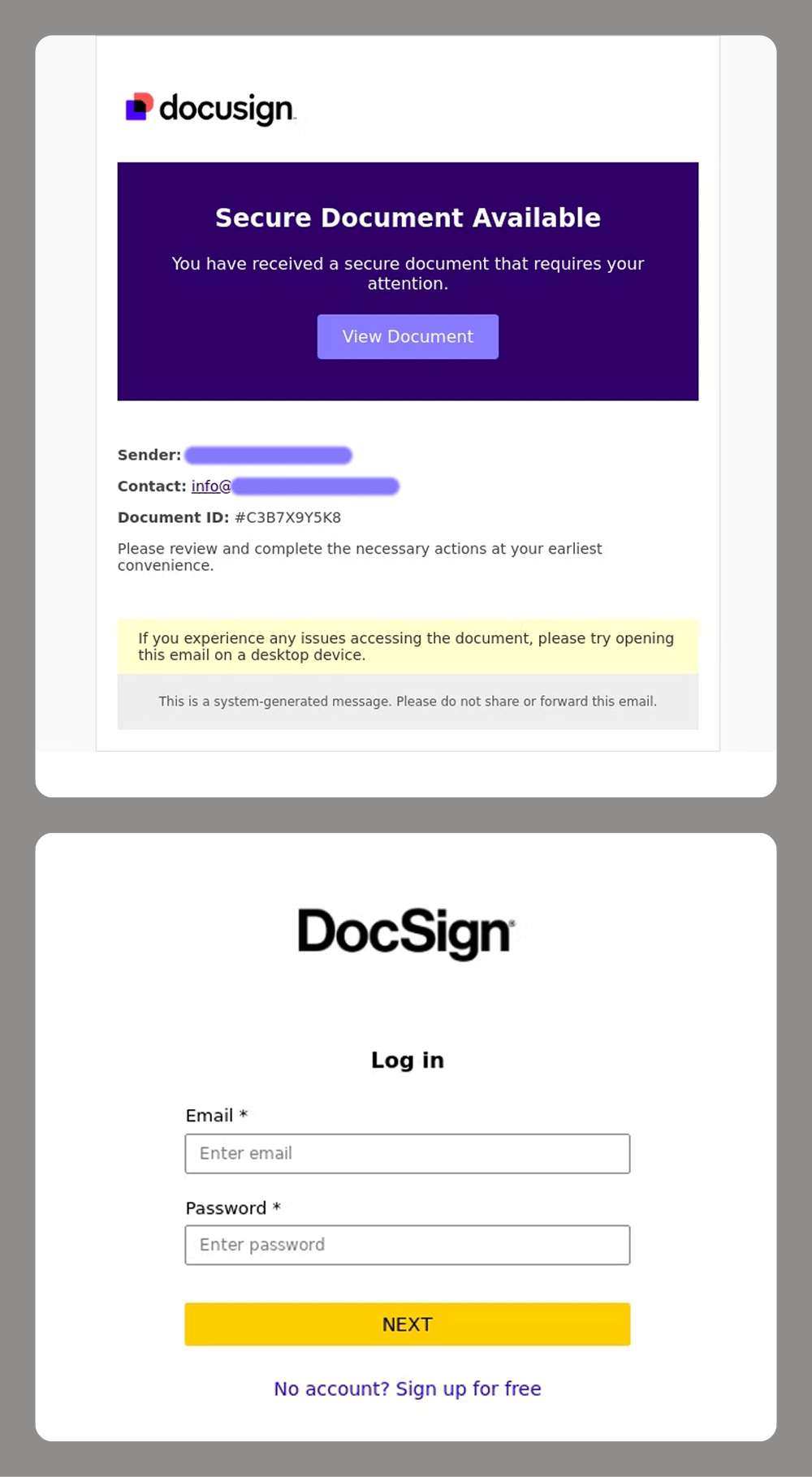
For corporate targets, e-signatures are a major focus for attackers. Losing control of these can cause significant reputational and financial damage to a company. This is why services like DocuSign have become a prime target for spear-phishing attacks.
Phishers targeting DocuSign accounts
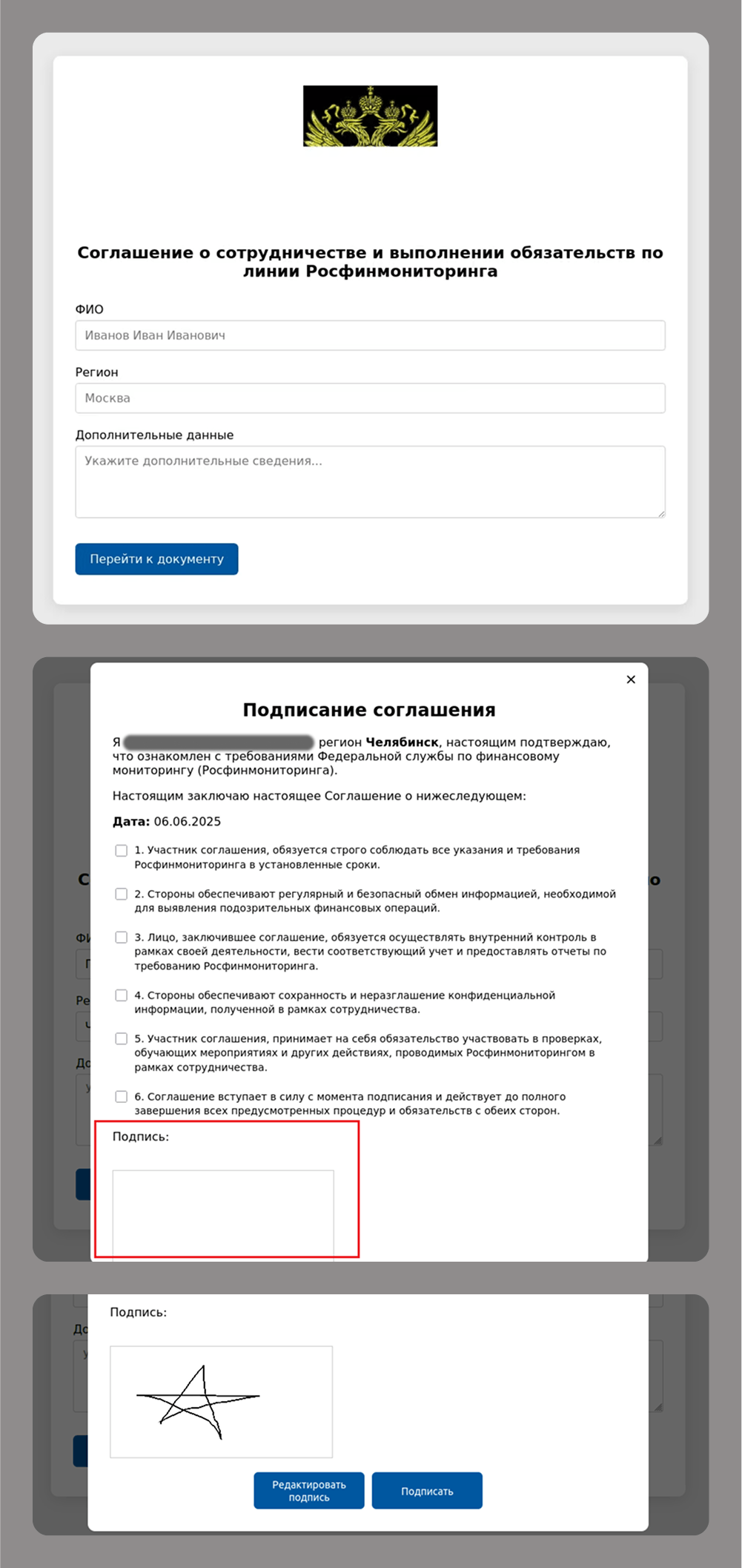
Even old-school handwritten signatures are still a hot commodity for modern cybercriminals, as they remain critical for legal and financial transactions.
Phishing for handwritten signatures
These types of attacks often go hand-in-hand with attempts to gain access to e-government, banking and corporate accounts that use this data for authentication.
These accounts are typically protected by two-factor authentication, with a one-time password (OTP) sent in a text message or a push notification. The most common way to get an OTP is by tricking users into entering it on a fake sign-in page or by asking for it over the phone.
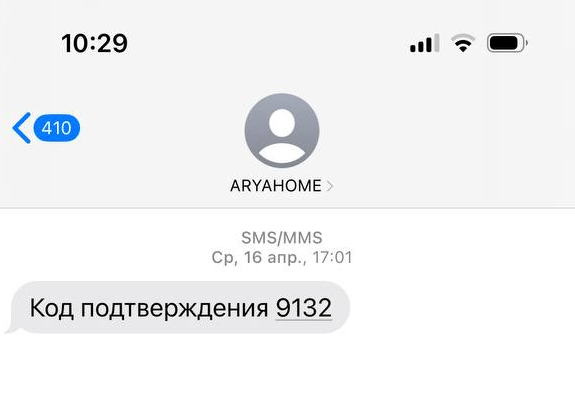
Attackers know users are now more aware of phishing threats, so they have started to offer “protection” or “help for victims” as a new social engineering technique. For example, a scammer might send a victim a fake text message with a meaningless code. Then, using a believable pretext – like a delivery person dropping off flowers or a package – they trick the victim into sharing that code. Since the message sender indeed looks like a delivery service or a florist, the story may sound convincing. Then a second attacker, posing as a government official, calls the victim with an urgent message, telling them they have just been targeted by a tricky phishing attack. They use threats and intimidation to coerce the victim into revealing a real, legitimate OTP from the service the cybercriminals are actually after.
Fake delivery codes
Takeaways
Phishing and scams are evolving at a rapid pace, fueled by AI and other new technology. As users grow increasingly aware of traditional scams, cybercriminals change their tactics and develop more sophisticated schemes. Whereas they once relied on fake emails and websites, today, scammers use deepfakes, voice cloning and multi-stage tactics to steal biometric data and personal information.
Here are the key trends we are seeing:
- Personalized attacks: AI analyzes social media and corporate data to stage highly convincing phishing attempts.
- Usage of legitimate services: scammers are misusing trusted platforms like Google Translate and Telegraph to bypass security filters.
- Theft of immutable data: biometrics, signatures, and voiceprints are becoming highly sought-after targets.
- More sophisticated methods of circumventing 2FA: cybercriminals are using complex, multi-stage social engineering attacks.
How do you protect yourself?
- Critically evaluate any unexpected calls, emails, or messages. Avoid clicking links in these communications, even if they appear legitimate. If you do plan to open a link, verify its destination by hovering over it on a desktop or long-pressing on a mobile device.
- Verify sources of data requests. Never share OTPs with anyone, regardless of who they claim to be, even if they say they are a bank employee.
- Analyze content for fakery. To spot deepfakes, look for unnatural lip movements or shadows in videos. You should also be suspicious of any videos featuring celebrities who are offering overly generous giveaways.
- Limit your digital footprint. Do not post photos of documents or sensitive work-related information, such as department names or your boss’s name, on social media.
Running Guitar Effects on a PlayStation Portable

If your guitar needs more distortion, lower audio fidelity, or another musical effect, you can always shell out some money to get a dedicated piece of hardware. For a less conventional route, though, you could follow [Brek Martin]’s example and reprogram a handheld game console as a digital effects processor.
[Brek] started with a Sony PSP 3000 handheld, with which he had some prior programming experience, having previously written a GPS maps program and an audio recorder for it. The PSP has a microphone input as part of the connector for a headset and remote, though [Brek] found that a Sony remote’s PCB had to be plugged in before the PSP would recognize the microphone. To make things a bit easier to work with, he made a circuit board that connected the remote’s hardware to a microphone jack and an output plug.
[Brek] implemented three effects: a flanger, bitcrusher, and crossover distortion. Crossover distortion distorts the signal as it crosses zero, the bitcrusher reduces sample rate to make the signal choppier, and the flanger mixes the current signal with its variably-delayed copy. [Brek] would have liked to implement more effects, but the program’s lag would have made it impractical. He notes that the program could run more quickly if there were a way to reduce the sample chunk size from 1024 samples, but if there is a way to do so, he has yet to find it.
If you’d like a more dedicated digital audio processor, you can also build one, perhaps using some techniques to reduce lag.
youtube.com/embed/MlPtfeSyyak?…
Perché OpenAI ha dovuto risuscitare il suo vecchio modello Gpt-4o?
L'articolo proviene da #StartMag e viene ricondiviso sulla comunità Lemmy @Informatica (Italy e non Italy 😁)
A volte il vecchio è meglio del nuovo. O almeno, sembrerebbe così nel caso dell'ultimo modello di OpenAI. Dopo nemmeno 24 ore dal lancio di Gpt-5 gli utenti hanno rivoluto indietro il suo predecessore
freezonemagazine.com/articoli/…
È difficile racchiudere in una definizione sintetica una figura di alto livello e versatile come quella di Ivan Pozzoni, ma bisogna comunque partire da un punto inequivocabile: siamo di fronte ad un grande poeta e soprattutto uno dei più originali, innovativi, degli anni 2000 della poesia italiana, versante sul quale la nostra poesia contemporanea, non […]
L'articolo Ivan Pozzoni.
LA CINA HA CREATO IL PRIMO REATTORE NUCLEARE AL MONDO CHE NON PUÒ FONDERSI… DAVVERO?
@Informatica (Italy e non Italy 😁)
La notizia non ha avuto molta eco, però merita un approfondimento: “La Cina ha testato con successo un reattore nucleare rivoluzionario..
L'articolo LA CINA HA CREATO IL PRIMO REATTORE NUCLEARE AL MONDO CHE NON PUÒ FONDERSI… DAVVERO?
Dopo più di 30 anni Aol disconnette la connessione Internet dial-up
L'articolo proviene da #StartMag e viene ricondiviso sulla comunità Lemmy @Informatica (Italy e non Italy 😁)
Protagonista indiscusso dell'era di Internet 1.0, Aol ha scontato diversi errori strategici ed è stato zavorrato dall'evidente incapacità di innovare, finendo presto relegata ai margini della Rete.
Difesa, la capacità produttiva europea è triplicata rispetto al 2021
@Notizie dall'Italia e dal mondo
L’industria della difesa europea sta attraversando la più ampia fase di espansione dalla fine della Guerra fredda. Secondo un report del Financial Times, i cantieri legati alla produzione di armamenti si moltiplicano a un ritmo tre volte superiore rispetto ai tempi pre-invasione dell’Ucraina, con oltre
Guerra d’Ucraina, come si è arrivati al bilaterale Trump-Putin dopo tre anni di conflitto
@Notizie dall'Italia e dal mondo
Il prossimo 15 agosto, Donald Trump e Vladimir Putin si incontreranno in Alaska per “discutere della fine della guerra in Ucraina”. Sarà il primo incontro tra gli inquilini di Cremlino e Casa Bianca dall’inizio dell’invasione russa di quasi

Qualcosa di strano galleggia nei nostri oceani da anni e gli scienziati hanno finalmente capito di cosa si tratta
Gli scienziati hanno scoperto 27 milioni di tonnellate di materiale invisibile nell'Atlantico, il che suggerisce danni profondi e potenzialmente irrevLee Bell (Meteored Italia)
A DEA agent used a local cop's password "for federal investigations in late January 2025 without [the cop's] knowledge of said use."
A DEA agent used a local copx27;s password "for federal investigations in late January 2025 without [the copx27;s] knowledge of said use."#Flock


Feds Used Local Cop's Password to Do Immigration Surveillance With Flock Cameras
A Drug Enforcement Administration agent used a local police officer’s password to the Flock automated license plate reader system to search for someone suspected of an “immigration violation.” That DEA agent did this “without [the local police officer’s] knowledge,” and the password to the Flock account, which belonged to the Palos Heights PD, has since been changed. Using license plate readers for immigration enforcement is illegal in Illinois, and casual password sharing between local police and federal law enforcement for access to surveillance systems is, at the very least, against Flock’s terms of service.The details of the search were first reported by the investigative news outlet Unraveled, which obtained group chats about the search using a public records request. More details about the search were obtained and shared with 404 Media by Shawn, a 404 Media reader who filed a public records request with Palos Heights after attending one of our FOIA Forums.
DEA agent used Illinois cop’s Flock license plate reader password for immigration enforcement searches
A federal Drug Enforcement Administration agent on a Chicago area task force used Palos Heights Detective Todd Hutchinson’s login credentials to perform unauthorized searches this past January. Group chat screenshots obtained via public records request show the detective and the feds discussing the incident.Unraveled Press
Flock makes automated license plate reader (ALPR) cameras, which passively collect the time, plates, and model of cars that drive past them and enter them into a network that can then be searched by police. Our investigation in May showed that federal agents were gaining side-door access into this system by asking local police to perform immigration enforcement searches for them; the new documents show that in some cases, local police have simply given federal agents their passwords.The documents obtained by Unraveled show details of an internal investigation done by the Palos Heights, Illinois police department in response to a series of questions that I asked them for an article we published in May that appeared to show a Todd Hutchinson, a police officer in Palos Heights, performing a series of Flock searches in January as part of their research into an “immigration violation.”
At the time, Palos Heights police chief Mike Yott told me that Hutchinson was a member of a DEA task force “that does not work immigration cases.”
“None of our officers that work with federal agencies have cross designation as immigration officers, and therefore have no immigration authority, and we and our partner agencies are very sensitive to the fact that we and the State of Illinois do not pursue immigration issues,” Yott said. “Based on the limited information on the report, the coding/wording may be poor and the use of Flock may be part of a narcotics investigation or a fugitive status warrant, which does on occasion involve people with various immigration statuses.”
Our reporting set off an internal investigation into what these searches were for, and who did them, according to the documents obtained by Unraveled. According to a July 9 investigation report written by the Palos Heights Police Department, Hutchinson was the only task force member who had access to Flock. Information about what the search was actually for is redacted in the internal investigation, and neither the Palos Heights Police Department nor the DEA has said what it was for.
“Hutchinson advised that it was common that he allowed others to use his login to Flock during the course of their drug investigations. TFO Hutchinson spoke to his group and learned that one of the DEA agents completed these searches and used his login information,” the report says. The DEA agent (whose name is redacted in the report) “did in fact use Hutchinson’s login for federal investigations in late January 2025 without Hutchinson’s knowledge of said use.”
“When I had shared my account with the Special Agent, I believed it would only be used for DEA/narcotics related investigations,” Hutchinson wrote in an email to his bosses explaining why he shared his password. Hutchinson said in a series of text messages to task force officers, which were also obtained by Unraveled, that he had to change the password to lock other members of the task force out of the system.
“What’s the new password?,” a task force member wrote to Hutchinson.
“Sorry man. Keys had to be taken away,” he responded.
The task force member replied with a gif of a sad Chandler Bing from friends sitting in the rain.
“Hey guys I no longer have access to Flock cause Hutch took my access away,” another group text reads. “Apparently someone who has access to his account may have been running plates and may have placed the search bar ‘immigration’.. which maybe have brought undue attention to his account. Effective immediately Defer all flock inquiries to Toss Hutchinstein[sic].”“Dear Todd, I hope you don’t get in trouble cause of my mistake,” the DEA agent joked in the group chat. “U were so helpful in giving the group access but now that is gone, gone like dust,…..in the wind … Trust is broken / I don’t know if bridges can be mended … one day we might be back to normal but until then I will just have to sit by this window and pray things will return … Best Regards. Ps, can u flock a plate for me”
“Only time will tell my fate, I suppose,” Hutchinson responded. “What’s the plate? And confirming it is NOT for immigration purposes…”
“It was a test …… and u passed ….,” the DEA agent responds.
In response to a separate public records request filed by Shawn, the 404 Media reader, and shared with us, the Palos Heights Police Department said “Our investigation into this matter has revealed that while these inquiries appear to have been run as part of a taskforce assignment, no member of the Palos Heights Police Department ‘ran’ those queries. They were, apparently, run by another, non-Palos Heights, task force member who used a Palos Height's member's sign in and password information without his knowledge.”The Palos Heights Police Department said in its investigation files that “this incident has brought to light the need to review our own protocols of LPR use.” The police department said that it had decided to limit searches of its Flock system only to agencies within the state of Illinois, rather than to police departments around the country. The department also turned on two-factor authentication, which had not been previously enabled.
“Lastly, I believe there is a need to start a monthly review of our own flock searches to ensure our officers are working within standards and compliant with all policies and laws,” the report says.
Palos Heights’ casual sharing of passwords to a powerful surveillance system is a violation of Flock’s terms of service, which states “Authorized End Users shall not share their account username or password information and must protect the security of the username and password.”
More concerningly, it shows, as we have been reporting, that there are very few practical guardrails on how Flock is being used. The DEA does not have a contract with Flock, and police generally do not obtain a warrant to use Flock. We have repeatedly reported on police officers around the country who have offered to either run plates for their colleagues or to give them access to their logins, even when those agencies have not gone through proper acquisition channels.
The Palos Heights police department did not respond to a request for comment from 404 Media. The DEA told 404 Media “we respectfully refer you to the Palos Heights Police Department.” Flock also did not respond to a request for comment. The House Oversight Committee announced last week that it had launched an investigation into how Flock is being used to search for immigration violations.
ICE Taps into Nationwide AI-Enabled Camera Network, Data Shows
Flock's automatic license plate reader (ALPR) cameras are in more than 5,000 communities around the U.S. Local police are doing lookups in the nationwide system for ICE.Jason Koebler (404 Media)


Come celebrate with us and catch a LIVE recording of the 404 Media podcast.#party
You're Invited: 404 Media's Second Anniversary Party and LIVE PODCAST!
We've survived and thrived for two years and are ready to celebrate with you, the ones who made it possible!Come have a cocktail or locally-brewed beer on us at vertical farm and brew lab farm.one. We'll also record a live podcast with the whole 404 crew, for the first time in person together since... well, two years ago!
Doors open at 6, programming begins at 6:45, good hangs to continue after. Open bar (tip your bartenders), and pizza will be available for purchase on-site if you're hungry.
Free admission for 404 Media subscribers at the supporter level. Sign up or check your subscription here. Once you're a supporter, scroll to the bottom of this post for the code to enter at checkout on the Luma page. Or buy tix for yourself or a friend to make sure you have a spot on the list.
We'll also have some merch on hand that'll be discounted for IRL purchases.
If getting into the coolest party of the summer isn't enticing enough, you'll be supporting the impact of our journalism, which so far this year has included:
- Nvidia was sued after we revealed the company scraped YouTube and other sites en masse to build its own AI systems.
- GeoSpy, an AI tool that let anyone geolocate photos in seconds and whose users could include stalkers, dramatically restricted access after 404 Media published an investigation into it.
- Congress repeatedly grilled Apple and Meta over their association with nonconsensual nudify and deepfake apps after we exposed the connections.
- A public library ebook service said it was going to cull AI slop after we found low quality books were flooding libraries.
- Congress just launched an investigation into automatic license plate reader company Flock; After 404 Media’s investigations this year, Flock removed a number of states from its national lookup tool. In July, Senator Ron Wyden of Oregon announced an agreement by Flock to block any out-of-state police searches related to abortion or immigration.
Our earlier work has shut down surveillance companies and triggered hundreds of millions of dollars worth of fines too. Our paying subscribers are the engine that powers this impactful journalism. Every subscription, monthly or annual, makes a real difference and makes it possible to do our work.
Thank you to our friends at DeleteMe for making this celebration possible.
Fine print: Tickets are required for entry, including for subscribers. 21+ only. Seating for the podcast is open but limited and includes standing room; a ticket doesn't guarantee a seat but let staff onsite know if you require one. Photos will be taken at the event. Venue reserves the right to refuse entry. Good vibes only, see you soon!
Code for subscribers is below the images.
Scenes from our panel at SXSW 2025, our DIY hackerspace party in LA on July 30, and our first anniversary party last year.
Upgrade to continue reading
Become a paid member to get access to all premium content
Upgrade


Bravo Donald: sono gli americani a pagare l'86% dei rincari innescati dai dazi
Secondo un rapporto di Goldman Sachs gli esportatori stranieri hanno sopportato solo il 14% degli aumenti innescati dalle tariffe americane. Il resto le impres…Claudio Paudice (HuffPost Italia)
reshared this
Lezioni di conversazione in italiano
Uso spesso podcast e video di persone di madrelingua inglese per migliorare la conoscenza della lingua.
Mi piacerebbe restituire il favore.
Ho pensato che magari da qualche parte sul pianeta c'è qualcuno che studia italiano a cui potrebbe fare altrettanto comodo avere uno sparring partner, quindi non podcast e video ma vere conversazioni on-line (gratuite).
Non so da che parte partire per far arrivare la notizia a chi potrebbe essere interessato, voi come fareste?
like this
reshared this
«Non c’è nessun caro ombrellone»
ci vuole coraggio a definire i prezzi in italia non esosi e non un'emergenza... pazzesca la ghigna che ha la gente. fosse per me renderei obbligatoria una spiaggia libera accanto a ogni stabilimento a pagamento.

L’Italia investe nelle startup tecnologiche israeliane
@Notizie dall'Italia e dal mondo
La Cassa Depositi e Prestiti destina decine di milioni di euro a imprese israeliane di intelligenza artificiale e calcolo quantistico. L’obiettivo è attrarre in Italia competenze e innovazione, dimenticando la distruzione di Gaza
L'articolo L’Italia investe nelle startup tecnologiche israeliane


Arrestato in Colombia il narcotrafficante Federico Starnone, anche grazie alla rete anti-'Ndrangheta I-CAN di Interpol

Si tratta di un latitante 44enne, ricercato dalle autorità italiane per i reati di associazione a delinquere finalizzata al traffico internazionale di sostanze stupefacenti con le aggravanti connesse a due distinti tentativi di importazione di ingenti quantitativi di cocaina dal Sudamerica.
E' ritenuto legato alla 'Ndrangheta. E' stato catturato in un appartamento nel quartiere residenziale di Cali.
A carico di Starnone è stata già emessa una sentenza di condanna a 5 anni e mezzo per reati di droga. L'uomo è stato catturato dalla polizia colombiana mentre si trovava in un appartamento nel quartiere residenziale nel capoluogo del dipartimento Valle del Cauca.

Essenziale l'apporto del progetto INTERPOL Cooperation Against ‘Ndrangheta (I-CAN).
Si tratta di un'iniziativa lanciata dall'Italia e dall'INTERPOL nel gennaio 2020 per contrastare la minaccia globale rappresentata dalla ‘Ndrangheta, come noto un'organizzazione criminale transnazionale altamente organizzata e potente.
Finanziato dal Dipartimento della Pubblica Sicurezza italiano, il progetto mira a rafforzare la cooperazione internazionale tra forze di polizia sfruttando le capacità dell'INTERPOL di condividere intelligence, competenze e best practice, trasformando così le informazioni in arresti e smantellando le reti criminali.
Avviato a Reggio Calabria l'obiettivo principale del progetto è stato - da subito - quello di istituire un sistema globale di allerta precoce contro questo "nemico invisibile". I-CAN opera attraverso una rete di paesi pilota, che inizialmente includevano Australia, Argentina, Brasile, Canada, Colombia, Francia, Germania, Italia, Svizzera, Stati Uniti e Uruguay, che si è espanso a 13, tra cui Austria, Belgio e Spagna.
Il progetto facilita operazioni coordinate transfrontaliere, come dimostrato dall'operazione globale del 2020 che ha portato all'arresto di sei latitanti legati alla 'Ndrangheta in Albania, Argentina e Costa Rica, con conseguente sequestro di 400 kg di cocaina e smantellamento del clan Bellocco. Le operazioni successive hanno continuato a dare risultati, tra cui l'arresto nel 2023 di un latitante di 16 anni, Edgardo Greco, in Francia, con il supporto di I-CAN.
Il progetto si è evoluto oltre la sua fase iniziale, con iniziative in corso tra cui la Conferenza I-CAN del 2022 a Roma, che ha riunito le forze dell'ordine di 14 paesi per definire una strategia unitaria contro la 'Ndrangheta, oggi considerata un'entità criminale "silenziosa e pervasiva" che si infiltra nelle economie legittime attraverso la corruzione e il riciclaggio di denaro.
Il successo del progetto si basa su una combinazione di condivisione di intelligence, coordinamento internazionale e utilizzo di strumenti analitici avanzati per esplorare dati provenienti da diverse fonti, consentendo indagini transnazionali. Il suo quadro continua a sostenere gli sforzi in corso, tra cui il progetto I-FORCE, incentrato sulla cooperazione regionale nell'Europa orientale e sudorientale.
#ndrangheta #ican #interpol #iforce
reshared this
alephoto85
in reply to Max - Poliverso 🇪🇺🇮🇹 • • •ricordo app, forse "Hello Talk" e "Tandem", che potrebbero essere utili in questo caso ma non mi viene in mente nessuna alternativa open.
Se invece ti va bene anche offline, al mio circolo arci di fiducia, organizzano lezioni di italiano per stranierз, giusto per fare un esempio.
Magari prova a vedere se nella tua zona ci sono progetti simili. Credo ci sia sempre bisogno di volontarз.
Max - Poliverso 🇪🇺🇮🇹
in reply to alephoto85 • •@alephoto85
Sì in effetti è una buona idea, non ci avevo pensato. Grazie.
Anche se a me piacerebbe di più farlo con gente che sta dall'altra parte del mondo, così potrei approfittarne per farmi raccontare qualcosa di come vivono laggiù 😀
alephoto85
in reply to Max - Poliverso 🇪🇺🇮🇹 • • •capisco! Ci sta effettivamente! Sono sicuro però che anche chi arriva qui da lontano avrà qualcosa da raccontare in merito.
Se trovo altre cose online ti scrivo ma adesso mi vengono in mente solo quelle 😅