
Microsoft’s New Agentic Web Protocol Stumbles With Path Traversal Exploit

If the term ‘NLWeb’ first brought to mind an image of a Dutch internet service provider, you’re probably not alone. What it actually is – or tries to become – is Microsoft’s vision of a parallel internet protocol using which website owners and application developers can integrate whatever LLM-based chatbot they desire. Unfortunately for Microsoft, the NLWeb protocol just suffered its first major security flaw.
The flaw is an absolute doozy, involving a basic path traversal vulnerability that allows an attacker to use appropriately formatted URLs to traverse the filesystem of the remote, LLM-hosting, system to extract keys and other sensitive information. Although Microsoft patched it already, no CVE was assigned, while raising the question of just how many more elementary bugs like this may be lurking in the protocol and associated software.
As for why a website or application owner might be interested in NLWeb, the marketing pitch appears to be as an alternative to integrating a local search function. This way any website or app can have their own ChatGPT-style search functionality that is theoretically restricted to just their website, instead of chatbot-loving customers going to the ChatGPT or equivalent site to ask their questions there.
Even aside from the the strong ‘solution in search of a problem’ vibe, it’s worrying that right from the outset it seems to introduce pretty serious security issues that suggest a lack of real testing, never mind a strong ignorance of the fact that a lack of user input sanitization is the primary cause for widely exploited CVEs. Unknown is whether GitHub Copilot was used to write the affected codebase.
The leading voice for visual journalists may be silenced. You can help.
For decades, one organization has dedicated itself to protecting the rights of news photographers and videographers. The National Press Photographers Association has led countless First Amendment battles to protect visual journalists’ right to document and the public’s right to see and hear the news.
The organization’s general counsel, Mickey Osterreicher, is often at the forefront of those fights. He and NPPA have protected the First Amendment right to record in public, limited senseless government regulations restricting photography and recording, and even won a groundbreaking settlement with the New York Police Department over its treatment of journalists at protests.
But recently, NPPA announced that it faces financial difficulties. Freedom of the Press Foundation (FPF) spoke to Osterreicher about NPPA’s work and the impact on the First Amendment if it shutters. You can read our full conversation below, and you can donate to NPPA’s programs here.
You’ve been NPPA’s general counsel since 2005, and you’ve also been a news photographer. How have the legal issues facing visual journalists changed over the years, and what are the most pressing issues they face today?
Both from a practical and legal standpoint, being a journalist was a lot simpler when I was a photojournalist. One of the biggest challenges I now face is trying to answer the question from police and lawmakers, “Who is a journalist?” and, during a protest, “Who gets to stay after an order to disperse?”
But once those press access rights have been attained, what good is it if visual journalists cannot make a decent living after risking their health and safety because their images are being misappropriated without permission, credit, or compensation? So it is a combination of dealing with First Amendment and copyright issues that keeps me up most nights.
That is to say nothing of the exponential use of generative artificial intelligence that has economically impacted the market for news photography as well as creating ethical challenges for visual journalists and public perception.
Tell us more about how the rise of AI-generated images and deepfakes is affecting the work and rights of visual journalists.
For visual journalism, generative artificial intelligence is the worst of both worlds, where millions of images (still and video) are ingested to train AI models without payment to the creators and the public can no longer believe what they see without wondering if what they are viewing is a true depiction of what really happened or an artificially created image. Even worse, this technology now provides an additional layer of ambiguity to those who claim that actual images of real events are “fake news.”
You’ve trained many law enforcement officers about journalists’ First Amendment rights, especially when they’re covering political conventions and protests. What are the most important things for police officers to know about press freedom, and how is NPPA uniquely positioned to provide that training?
I have three goals when training police and journalists about press freedoms. One: that police are not sued for abridging First Amendment rights of citizens and journalists, costing taxpayers dearly with money that could be better spent for police recruitment and retention or equipment. Two: that journalists are able to do their jobs without being harassed, injured, or arrested. Three: that the public is informed, which is the basis for the First Amendment — that being the desire by the founding fathers for the right of the public to receive information, and be an informed electorate.
As “the voice of visual journalists” since 1946, NPPA is uniquely positioned to foster improved police-press-public relations in an era when it is most needed by instilling greater respect for the roles each plays in our democracy. We’ve provided these trainings to law enforcement agencies nationwide for almost 20 years, with scores of departments and hundreds of officers being trained, including the entire Minnesota State Patrol as part of the settlement terms of a federal civil rights lawsuit, as well as the start of training with the NYPD regarding the new policies and procedures implemented as a result of the settlement of our lawsuit.
“Should our voice be muted, its silence will be deafening.“
Mickey Osterreicher
What I believe also adds to NPPA’s credibility is my background as a photojournalist with over forty years’ experience in print and broadcast, my experience as a First Amendment attorney, and my understanding of the challenges facing law enforcement from having been a uniformed reserve deputy sheriff with the Erie County Sheriff’s Office since 1976 and working closely with law enforcement through various associations and committees.
That experience working with police departments — which not many press freedom organizations have — has also allowed you to get involved in many other issues that are important to all journalists, not just visual ones. Tell us about your work on police radio encryption and other ways you’re able to leverage the work you’ve done training police departments.
The encryption of police radio transmissions is a growing problem nationwide, because for almost a century, newsrooms and journalists have relied on the monitoring of those broadcasts to cover breaking news and other matters of public concern.
One place where such coverage is critical is New York City, where so many newsworthy events occur and where, because of the congested vehicle traffic, time is of the essence in getting to the scene. A few years ago, the NYPD announced that it would begin encrypting its transmissions. NPPA joined a consortium of news organizations asking to work with NYPD to allow journalists to continue to have real-time access to those broadcasts. Despite meeting with police officials, testifying before the city council and submitting a white paper on the subject, the NYPD has refused to discuss this issue further, and many of the important police frequencies have already been encrypted.
The consortium then supported a state bill that would allow for press access. That bill passed both houses and is awaiting the governor’s signature. NPPA has also worked with press groups around the country to address this issue.
Another problem we helped to solve was an exemption for journalists to a New York law that banned anyone in the state (except for certain “eligible professions”) from the “purchase, taking possession of, sale, exchange, giving or disposing of body armor.”
Additionally, NPPA was instrumental in opposing an Arizona bill that barred anyone recording police from getting closer than 15 feet to an officer without their permission. I drafted several letters to the legislature joined by 30 press organizations cautioning against the unconstitutionality of the proposed law, which was ultimately passed after the measure was amended to an 8-foot distance. I then worked with the American Civil Liberties Union and Arizona Broadcasters Association to obtain a permanent injunction prohibiting enforcement of the law. NPPA has also filed amicus briefs in two other constitutional challenges to similar laws in Indiana and Louisiana.
When the White House restricted the Associated Press’s access over its use of the term ‘Gulf of Mexico’ (a move that NPPA and FPF condemned), it raised concerns about the chilling effects of such retaliation on journalists. If presidents can exclude outlets or photographers from the press pool for editorial decisions, what does that mean for press freedom and the role of visual journalists?
As NPPA stated, such actions by the administration are unacceptable as both an attempt at prior restraint and a blatant retaliation and chilling abridgment of the First Amendment rights of the AP and its journalists.
Unfortunately, we have seen both the federal district court as well as the circuit court hearing the appeal in this case give wide latitude and discretion to the White House as to who it admits to cover certain events. Additional fallout from this has been the White House Correspondents Association losing its long-standing control over the press pool rotation as well as other “disfavored” media outlets being barred from inclusion in the pool.
All these actions taken by the administration are having a chilling effect on press coverage of the government and are eviscerating press freedom. The NPPA continues to work with news and press freedom organizations to advocate and support the right of the public to be informed.
Over the years, NPPA has had to oppose a number of laws that prohibit or limit taking pictures in public places as well as using drones to capture aerial footage. What should journalists do if they’re stopped and told they can’t take pictures or record in public?
Our staunch advocacy has led to the right to photograph and record in traditional public forums being “clearly established” in three-quarters of the U.S. Circuit Courts of Appeal, which is key to successfully bringing civil rights claims against those who try to limit or interfere with those rights.
While NPPA was initially successful in challenging Texas drone regulations, that decision was reversed on appeal. But we have been effective in ensuring that language protecting the First Amendment rights of journalists to use drones for newsgathering be included in government regulations.
NPPA has provided extensive training as to what journalists can do if they’re stopped and told they can’t take pictures or record in public. The foremost advice is to meet with law enforcement on a regular basis to ensure that these rights are honored by police and to discuss how best to improve police-press interactions. While in the field, it is crucial to maintain situational awareness and pay attention to police and crowd movements to avoid being encircled (kettled). Always have an exit strategy, as it is always better to move to a different location than be arrested. If police stop or question you about your activities, make sure to identify yourself as a journalist.
What will journalism lose if NPPA is forced to close its doors?
It would be a significant loss to not only visual journalists but to journalism itself if NPPA were to cease as an organization. For almost 80 years, NPPA has strongly advocated for the rights of visual journalists and now more than ever that unique voice is needed as more journalists are required to report not only with words but images. It also comes at a time when the importance of truthful images could not be greater.
While there are many other organizations supporting the First Amendment and press freedoms, none is more exclusively dedicated to the advancement and protection of visual journalism in its role as a vital public service than the NPPA. Our code of ethics is often cited as exemplary of what visual journalism should strive to achieve. Should our voice be muted, its silence will be deafening.
Donate to NPPA’s programs here to help protect the rights of visual journalists and the public’s right to know.
Teardown of a Persil Smartwash Smart Laundry Detergent Ball
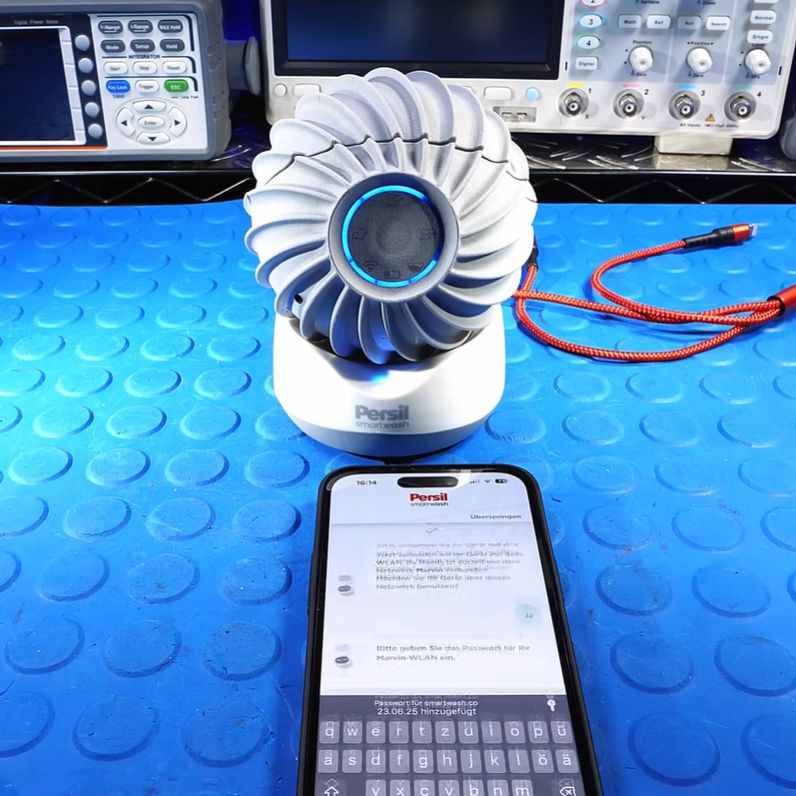
Ever since the invention of washing machines, the process of doing laundry has become rather straightforward. Simply toss the dirty laundry into the machine, fill up the detergent, and let the preset program handle the rest. This of course has not prevented companies from coming up with ways to add more complexity to doing laundry, with Henkel’s Smartwash technology the latest example, as demonstrated by German YouTube channel [ZeroBrain] with a complete teardown.

Henkel is the owner of detergent brands like Persil and Somat, with the Smartwash ball supposedly offering ‘smart’ dosing of detergent for washing machines, with naturally a smartphone app with intrusive localization to personalize the laundry experience. Sadly the video is only in German, but the language of teardowns is universal.
Before the teardown, the device got tested as intended, with the video showing how to put the detergent with its special pod inside the device. The device then got connected to WiFi, followed by it performing the typical IoT firmware update. After half an hour [Zerobrain] was finally ready to do the laundry. During the washing cycle the 441 gram heavy ball audibly bounced inside the machine, though the rubber outside covering should prevent damage.
The IP68-rated internals are clearly not designed to be easily opened, requiring a certain level of violence to correct for this oversight. Eventually the internals are revealed, showing the inductive charging coil, controls pad and main PCB, along with a pump for the double-chambered detergent pod and a bunch of sensors dangling at the end of flexible PCBs.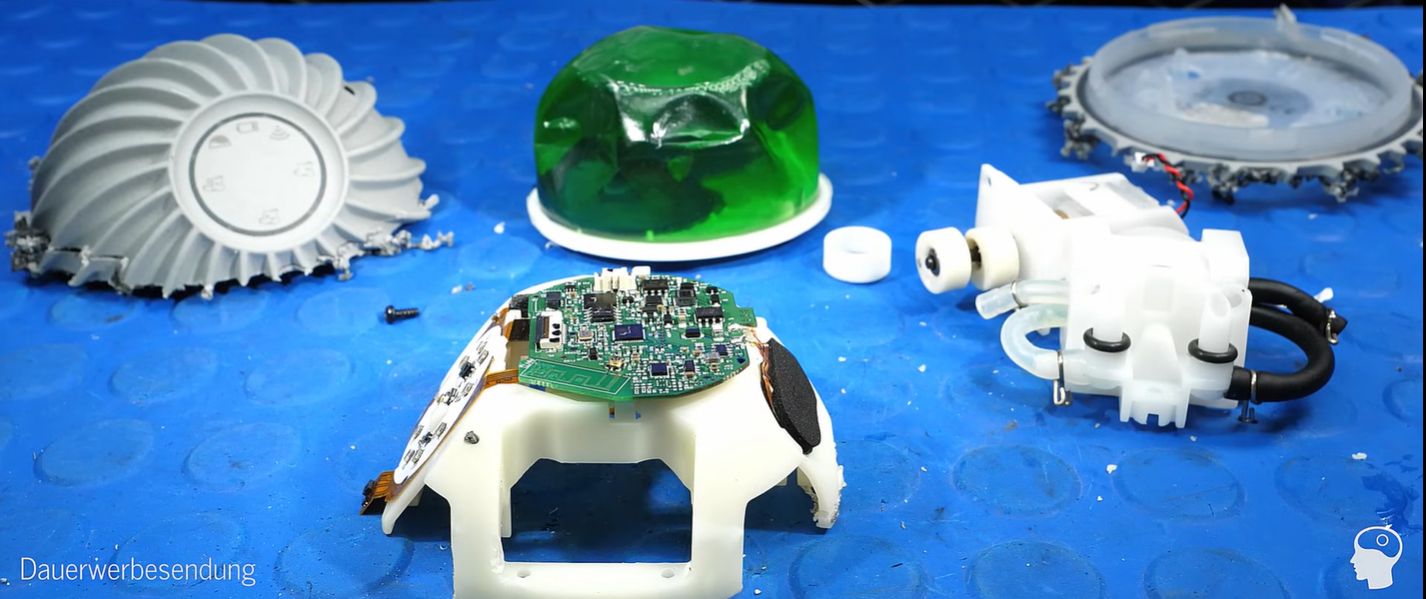
Interestingly, the heart of the main PCB is an ESP32-D0WD-V3, flanked by an ESP-PSRAMH 64 Mbit pseudo-static RAM. For charging the Li-ion cell a TP4056 is used, while a T3168 handles the wireless (Qi) power side of things. As for sensors, there are two Hall effect sensors that seem to be used to measure how much detergent and softener are being excreted by the pump.
What is fascinating is that it uses a single pump to pump both types of fluids independently from each other. There also appears to be a presence sensor to detect the presence of a pod, and some of the other ICs on the PCB may be an IMU to detect motion of the ball, but as hinted at in the accompanying app, you are still supposed to know the hardness of the local water supply and punch in the same details like laundry dirtiness that you’d normally read off the label on the detergent and softener packaging.
Thanks to [Jan Prägert] for the tip.
youtube.com/embed/Ko_5sd8PSFM?…
Oltre 70.000 documenti di identità violati da attacchi a 3 hotel italiani
@Informatica (Italy e non Italy 😁)
TL;DR oltre 70.000 documenti di identità provenienti da violazioni a tre strutture ricettive italiane sono stati messi in vendita sul web: un numero preoccupante che, soprattutto in periodo di vacanza, deve farci riflettere su trattamenti forse troppo
A Repeater for WWVB

For those living in the continental US who, for whatever reason, don’t have access to an NTP server or a GPS device, the next best way to make sure the correct time is known is with the WWVB radio signal. Transmitting out of Colorado, the 60-bit 1 Hz signal reaches all 48 states in the low-frequency band and is a great way to get a clock within a few hundred nanoseconds of the official time. But in high noise situations, particularly on the coasts or in populated areas these radio-based clocks might miss some of the updates. To keep that from happening [Mike] built a repeater for this radio signal.
The repeater works by offloading most of the radio components to an Arduino. The microcontroller listens to the WWVB signal and re-transmits it at a lower power to the immediate area, in this case no further than a few inches away or enough to synchronize a few wristwatches. But it has a much better antenna for listening to WWVB so this eliminates the (admittedly uncommon) problem of [Mike]’s watches not synchronizing at least once per day. WWVB broadcasts a PWM signal which is easy for an Arduino to duplicate, but this one needed help from a DRV8833 amplifier to generate a meaningfully strong radio signal.
Although there have been other similar projects oriented around the WWVB signal, [Mike]’s goal for this was to improve the range of these projects so it could sync more than a single timekeeping device at a time as well as using parts which are more readily available and which have a higher ease of use. We’d say he’s done a pretty good job here, and his build instructions cover almost everything even the most beginner breadboarders would need to know to duplicate it on their own.
Hai pagato per mesi una VPN che non ha fatto altro che spiarti
La complessa infrastruttura della rete pubblicitaria fraudolenta VexTrio Viper è tornata alla ribalta dopo che i ricercatori di Infoblox hanno rivelato i dettagli di un massiccio schema di app mobile false .
Sotto le mentite spoglie di servizi legittimi – dalle VPN alle utility di pulizia della RAM, dai filtri antispam alle app di incontri – i truffatori hanno inserito programmi dannosi negli store ufficiali di Apple e Google. Questi programmi sono stati distribuiti per conto di presunti sviluppatori diversi, tra cui HolaCode, LocoMind, Hugmi, Klover Group e AlphaScale Media. Il numero totale di download ammonta a milioni.
Una volta installate, queste applicazioni costringevano gli utenti ad accettare condizioni poco trasparenti, li inducevano a fornire dati personali, bombardavano il dispositivo con pubblicità aggressive e ne rendevano difficile la disinstallazione. Ad esempio, un’applicazione chiamata Spam Shield Block, mascherata da antispam, richiedeva immediatamente il pagamento e, se l’utente rifiutava, rendeva insopportabile l’utilizzo del dispositivo a causa di inserti pubblicitari . Gli utenti si lamentavano di prezzi di abbonamento inaffidabili, addebiti multipli e l’impossibilità di disinstallazione: azioni chiaramente mirate al prelievo occulto di fondi.
Tuttavia, le app mobili sono solo la punta dell’iceberg. VexTrio gestisce una rete di attività fraudolente, tra cui sistemi di distribuzione del traffico (TDS) che reindirizzano gli utenti da siti hackerati a pagine false. Questi TDS erano camuffati tramite i cosiddetti smartlink, link intelligenti che rivelano l’indirizzo finale solo all’ultimo momento e si adattano alla vittima: alla sua posizione geografica, al tipo di dispositivo e al browser. Questo consente loro di aggirare i filtri e complica l’analisi da parte degli specialisti.
Il traffico diretto a queste trappole viene inizialmente generato attraverso siti WordPress hackerati, contenenti codice dannoso. I truffatori utilizzano questi siti per distribuire annunci pubblicitari falsi, dalle lotterie alle truffe sulle criptovalute.
È interessante notare che l’organizzazione controlla non solo la parte pubblicitaria, ma anche l’intera catena di distribuzione: invio di e-mail, elaborazione dei dati di pagamento e convalida degli indirizzi postali. Ad esempio, il servizio DataSnap verifica la validità delle e-mail e Pay Salsa riscuote i pagamenti. Lo spam e-mail viene inviato tramite domini falsi che sembrano servizi legittimi come SendGrid e MailGun.
Per nascondere i domini finali e aggirare i controlli, viene utilizzato il servizio IMKLO, che filtra il traffico in entrata e determina se mostrare una pagina ingannevole o nasconderla agli occhi dei controllori. Questa messa a punto rende la campagna praticamente impercettibile.
Gli autori del rapporto sottolineano che il successo di tali schemi è garantito non solo dalla sofisticatezza tecnica, ma anche da una zona grigia legale: i truffatori cercano di evitare virus diretti e azioni dannose, rimanendo nell’ambito dell’inganno e dell’ingegneria sociale, dove la responsabilità si verifica meno spesso.
Il problema principale di questa minaccia è la percezione di tali schemi come “meno pericolosi” delle infezioni da malware. Mentre l’attenzione pubblica è focalizzata su trojan ed exploit, le frodi di massa con abbonamenti, carte di credito e dati personali rimangono nell’ombra. Sviluppare la formazione nel campo dell’igiene digitale e riconsiderare l’atteggiamento nei confronti delle truffe “soft” è uno dei compiti chiave nella lotta contro crimini di questo tipo.
L'articolo Hai pagato per mesi una VPN che non ha fatto altro che spiarti proviene da il blog della sicurezza informatica.
Federal law closes courthouse doors to incarcerated journalists
These days the president of the United States files frivolous lawsuits at an alarming clip, including against news outlets that displease him. He’s far from the only prominent public figure abusing the federal court system in this way, steering scarce judicial resources away from meritorious lawsuits by ordinary people who have suffered serious damages.
And yet, Congress has not seen fit to pass a federal “anti-SLAPP” law to stop billionaires and politicians from pursuing strategic lawsuits against public participation. But powerless prisoners? That’s another story. If they want access to the federal courts they need to navigate the Prison Litigation Reform Act — a maze of onerous procedural requirements. It’s supposedly intended to stop the courts from being burdened by inmates’ frivolous lawsuits.
We held a webinar to discuss the PLRA’s impact on incarcerated journalists and the journalists on the outside who cover the prison system, featuring Jeremy Busby, a journalist and Freedom of the Press Foundation (FPF) columnist who is incarcerated in Texas, and American Civil Liberties Union attorneys Nina Patel and Corene Kendrick. Patel is senior policy counsel at the ACLU Justice Division and Kendrick is the deputy director of the ACLU’s National Prison Project.
As Kendrick explained, the PLRA originated as one of the Clinton administration’s “tough on crime” initiatives as it pivoted right in preparation for the 1996 presidential election. The law was enacted despite a lack of evidence that incarcerated people file baseless lawsuits any more frequently than anyone else, presidents or otherwise. She said the law “singles out one disfavored group of people and categorically denies them equal access to the courts.”
youtube.com/embed/wiGxxwp8byI?…
She described how the harm extends beyond the impacted litigants, as the kinds of court filings foreclosed by the PLRA are “oftentimes the best way that information about conditions in our nation’s prisons and jails reach the public and members of the media.”
“The PLRA has, in practice, served as a real barrier for journalists to get any sort of information” about facilities that “get billions and billions of dollars a year to lock up human beings,” Kendrick said. “The ability to communicate with the outside world is so circumscribed and is monitored and recorded. And you know, once something gets to a federal court and it’s filed on the docket, it is out there.”
But when the court dismisses a case for procedural reasons without any consideration of whether the claims are true, all journalists are left with are untested allegations that they rarely have the resources to corroborate. “That happens all the time, and unfortunately, and it adversely affects journalists greatly,” Kendrick said.
Lawsuits are also the only recourse available to incarcerated journalists, who often report relentless retaliation when their work upsets prison officials. That’s what happened to Busby when he helped expose deplorable conditions inside the prison where he was housed when the COVID-19 pandemic hit in 2020. Busby said he was transferred to four prisons, each overcrowded with people sick with COVID, before landing in a cell without a mattress or sheets, where he was kept for six weeks. His property was damaged or seized, and he was written bogus disciplinary charges that were later overturned.
He brought a federal lawsuit, but because he was retaliated against in four different prisons, the judge said the PLRA required four separate lawsuits in four different courts. “I wasn’t able to successfully keep up with four active litigations in four different courts in four different counties, from the solitary confinement cell that I was being held in,” Busby explained, resulting in his lawsuits each being dismissed on procedural grounds before the merits of his claims could be adjudicated.
Busby is a college graduate and accomplished writer — if he can’t navigate the PLRA, it is all the more difficult for an average member of the prison population to do so. Even the experienced lawyers on the webinar acknowledged how challenging it can be to comply with the PLRA when representing their incarcerated clients. Incarcerated litigants, Busby noted, must also pay court fees — in his case, a $400 fee became $1,600 when his lawsuit was split into four.
“You don’t get paid for work here in Texas, and so most guys, they don’t even want the $400 thing against their account because their family members can maybe send $20 for toothpaste and deodorant every month or so, or every two or three months, and they don’t want to sacrifice their deodorant and toothpaste money to pursue this lawsuit,” he said.
So what’s the point of the PLRA? As Patel noted, “The courts are well equipped to throw out lawsuits that are frivolous,” and do so every day in cases involving non-incarcerated people. Patel believes the real problem the PLRA is meant to address isn’t that incarcerated people file so many invalid claims — it’s that they file so many valid ones.
With around two million people incarcerated in the United States, “a functional system where someone can go to the courts and have their constitutional violations in prison litigated and then compensated would break most prison systems in this country,” Patel explained. “That is the dirty truth of the PLRA.”
She added, “Everyone knows, and it’s not a secret, that it would bankrupt the system, and it would break it, and that we couldn’t do what we do in this country, which is lead the world in mass incarceration.”
Watch the full webinar here, and subscribe to our newsletters to get notice of future events.
Note: FPF Advocacy Director Seth Stern, who authored this article and moderated the webinar, is on the board of Busby’s nonprofit organization, JoinJeremy.

Chi sono i colossi della finanza che sostengono la Dsr Bank
@Notizie dall'Italia e dal mondo
Un gruppo di grandi istituzioni finanziarie internazionali, tra cui J.P. Morgan Chase, Ing e Commerzbank, ha deciso di accettare la sfida della banca multilaterale pensata per portare avanti i progetti di difesa dell’Europa e dei suoi alleati. La Defence, Security and Resilience Bank (Dsrb) infatti si pone l’obiettivo
Fregate high-tech dal Giappone. Canberra punta sulla classe “Mogami” per la sua Marina Militare
@Notizie dall'Italia e dal mondo
La Marina Australiana ha scelto la Mitsubishi per costruire la sua prossima generazione di fregate. Pochi giorni fa, il ministero della Difesa australiano ha infatti annunciato che la versione potenziata della classe “Mogami”
Il Mulino TikTok
@Politica interna, europea e internazionale
L'articolo Il Mulino TikTok proviene da Fondazione Luigi Einaudi.
More than 130,000 Claude, Grok, ChatGPT, and Other LLM Chats Readable on Archive.org#News


More than 130,000 Claude, Grok, ChatGPT, and Other LLM Chats Readable on Archive.org
A researcher has found that more than 130,000 conversations with AI chatbots including Claude, Grok, ChatGPT, and others are discoverable on the Internet Archive, highlighting how peoples’ interactions with LLMs may be publicly archived if users are not careful with the sharing settings they may enable.The news follows earlier findings that Google was indexing ChatGPT conversations that users had set to share, despite potentially not understanding that these chats were now viewable by anyone, and not just those they intended to share the chats with. OpenAI had also not taken steps to ensure these conversations could be indexed by Google.
“I obtained URLs for: Grok, Mistral, Qwen, Claude, and Copilot,” the researcher, who goes by the handle dead1nfluence, told 404 Media. They also found material related to ChatGPT, but said “OpenAI has had the ChatGPT[.]com/share links removed it seems.” Searching on the Internet Archive now for ChatGPT share links does not return any results, while Grok results, for example, are still available.
Dead1nfluence wrote a blog post about some of their findings on Sunday and shared the list of more than 130,000 archived LLM chat links with 404 Media. They also shared some of the contents of those chats that they had scraped. Dead1nfluence wrote that they found API keys and other exposed information that could be useful to a hacker.
playlist.megaphone.fm?p=TBIEA2…
“While these providers do tell their users that the shared links are public to anyone, I think that most who have used this feature would not have expected that these links could be findable by anyone, and certainly not indexed and readily available for others to view,” dead1nfluence wrote in their blog post. “This could prove to be a very valuable data source for attackers and red teamers alike. With this, I can now search the dataset at any time for target companies to see if employees may have disclosed sensitive information by accident.”404 Media verified some of dead1influence’s findings by discovering specific material they flagged in the dataset, then going to the still-public LLM link and checking the content.
💡
Do you know anything else about this? I would love to hear from you. Using a non-work device, you can message me securely on Signal at joseph.404 or send me an email at joseph@404media.co.Most of the companies whose AI tools are included in the dataset did not respond to a request for comment. Microsoft which owns Copilot acknowledged a request for comment but didn't provide a response in time for publication. A spokesperson for Anthrophic, which owns Claude, told 404 Media: “We give people control over sharing their Claude conversations publicly, and in keeping with our privacy principles, we do not share chat directories or sitemaps with search engines like Google. These shareable links are not guessable or discoverable unless people choose to publicize them themselves. When someone shares a conversation, they are making that content publicly accessible, and like other public web content, it may be archived by third-party services. In our review of the sample archived conversations shared with us, these were either manually requested to be indexed by a person with access to the link or submitted by independent archivist organizations who discovered the URLs after they were published elsewhere across the internet first.” 404 Media only shared a small sample of the Claude links with Anthrophic, not the entire list.
Fast Company first reported that Google was indexing some ChatGPT conversations on July 30. This was because of a sharing feature ChatGPT had that allowed users to send a link to a ChatGPT conversation to someone else. OpenAI disabled the sharing feature in response. OpenAI CISO Dane Stuckey said in a previous statement sent to 404 Media: “This was a short-lived experiment to help people discover useful conversations. This feature required users to opt-in, first by picking a chat to share, then by clicking a checkbox for it to be shared with search engines.”
A researcher who requested anonymity gave 404 Media access to a dataset of nearly 100,000 ChatGPT conversations indexed on Google. 404 Media found those included the alleged texts of non-disclosure agreements, discussions of confidential contracts, and people trying to use ChatGPT for relationship issues.
Others also found that the Internet Archive contained archived LLM chats.
The ChatGPT confession files
Digital Digging investigation: how your AI conversation could end your careerHenk van Ess (Digital Digging with Henk van Ess)

Next PPI Board Meeting, August 26th at 20:00 UTC
Ahoy Pirates,
Our next PPI board meeting will take place on 26.08.2025 at 14:00 UTC / 16:00 CEST.
All official PPI proceedings, Board meetings included, are open to the public. Feel free to stop by. We’ll be happy to have you.
Where:jitsi.pirati.cz/PPI-Board
Minutes of the meeting: wiki.pp-international.net/wiki…
Agenda: Pad: etherpad.pp-international.net/…
All of our meetings are posted to our calendar: pp-international.net/calendar/
We look forward to seeing visitors.
Thank you for your support,
The Board of PPI

Dopo il mio articolo sulla formazione sistemica, un intervento di Wolfgang Ulrich che dice la sua sull'argomento. C'è una affinità interessante fra clinici che perseguono il progetto di una connessione fra il sé professionale e quello, diciamo, privato, in un modo lontano e alternativo alle logiche della cosiddetta "integrazione".
Dal mio blog (che mi procura tante soddisfazioni).
massimogiuliani.it/blog/2025/0…

Chi è il terapeuta sistemico e come deve essere formato? (di Wolfgang Ullrich) - Corpi che parlano, il blog
Il teatro ha molto in comune con la psicoterapia: entrambi sfruttano il medium del “gioco” che chiamo la rappresentazione giocosa...Corpi che parlano (Corpi che parlano, il blog)
L’uomo che da 30 anni cerca il mostro di Loch Ness
Ora... ognuno può pensarla come vuole e in molti penseranno che quest'uomo è un pazzo.
Ma metti che domani 'sto mostro esce dall'acqua e si fa un giretto sulla terraferma a favore di fotografi.
Steve Feltham potrà sparare un "VE L'AVEVO DETTO, STRONZI!" da cento megatoni.
😁😁😁
L’uomo che da 30 anni cerca il mostro di Loch Ness: ilpost.it/2022/11/10/uomo-cerc…

L’uomo che da 30 anni cerca il mostro di Loch Ness
Steve Feltham è arrivato sul lago scozzese nel 1991 e da allora passa le sue giornate scrutando l'acqua, invanoIl Post
Nicola Pizzamiglio likes this.
Poliversity - Università ricerca e giornalismo reshared this.
SIRIA. Suwayda sotto assedio. Diario da una provincia in ginocchio
@Notizie dall'Italia e dal mondo
Dopo le aggressioni delle scorse settimane, mai cessate del tutto, più di 170.000 sfollati sono arrivati a Suwayda da aree rurali devastate. Oltre 32 villaggi sono stati bruciati, saccheggiati e resi inabitabili
L'articolo SIRIA. Suwayda sotto assedio. Diario da una


L'immagine è un poster promozionale per un tour musicale intitolato "Ingaggiateci Stronzì Tour" di Adriano Bono, con il sottotitolo "The Reggae Circus". Il poster presenta un uomo con barba e baffi, indossando un abito di gala rosso con decorazioni dorate, un papillon rosso e un cappello a cilindro nero. L'uomo tiene una chitarra e sorride, con uno sguardo diretto verso l'osservatore. Sullo sfondo, c'è un'illustrazione di un circo con acrobati e artisti, che contribuisce a creare un'atmosfera festosa e vivace.
Il testo principale "INGAGGIATECI STRONZI TOUR" è scritto in caratteri grandi e bianchi, posizionato in alto. Sotto, in caratteri più piccoli, si legge "THE REGGAE CIRCUS di Adriano Bono". In basso, sono elencate le date e i luoghi dei concerti: sabato 9 agosto a Yumara, Maratea PZ; domenica 10 agosto a Azzurro Beach Praia a Mare, CS; lunedì 11 agosto a Cerasi Serata Strapagata!; e martedì 12 agosto a Colliano (SA).
Il poster utilizza un design vintage con sfumature di rosso e giallo, che richiama l'atmosfera di un circo storico. L'immagine e il testo insieme creano un'atmosfera di divertimento e spettacolo, promuovendo l'evento musicale.
Fornito da @altbot, generato localmente e privatamente utilizzando Ovis2-8B
🌱 Energia utilizzata: 0.402 Wh
Hiroshima, Mattarella: 'liberare il mondo dalle armi nucleari'
(intanto, per dare il buon esempio, potremmo cominciare a liberare il territorio italiano dalle atomiche Usa)
imolaoggi.it/2025/08/06/hirosh…
Hiroshima, Mattarella: 'liberare il mondo dalle armi nucleari' • Imola Oggi
imolaoggi.it/2025/08/06/hirosh…


L'amministrazione Trump vorrebbe distruggere un satellite per la rilevazione delle emissioni di anidride carbonica e non solo
Secondo quanto riportato in alcune indiscrezioni, l'amministrazione Trump avrebbe richiesto di terminare le missioni degli Orbiting Carbon Observatories (OCO-2 e OCO-3) per la rilevazione delle emissioni di anidride carbonica.Hardware Upgrade
sondaggio noyb: solo il 7% degli utenti vuole che Meta utilizzi i propri dati personali per l'IA Mentre quasi il 75% degli utenti ha sentito parlare dei piani di Meta, solo il 7% vuole effettivamente che i propri dati vengano utilizzati per l'addestramento dell'intelligenza artificiale mickey07 August 2025
MORIS and I.R.I.S. was designed for Sheriff's Offices to identify known persons with their iris. Now ICE says it plans to buy the tech.
MORIS and I.R.I.S. was designed for Sheriffx27;s Offices to identify known persons with their iris. Now ICE says it plans to buy the tech.#News #ICE
ICE Is Buying Mobile Iris Scanning Tech for Its Deportation Arm
Immigration and Customs Enforcement (ICE) is looking to buy iris scanning technology that its manufacturer says can identify known persons “in seconds from virtually anywhere,” according to newly published procurement documents.Originally designed to be used by sheriff departments to identify inmates or other known persons, ICE is now likely buying the technology specifically for its Enforcement and Removal Operations (ERO) section, which focuses on deportations.
Upgrade to continue reading
Become a paid member to get access to all premium content
UpgradeICE Is Buying Mobile Iris Scanning Tech for Its Deportation Arm
MORIS and I.R.I.S. was designed for Sheriff's Offices to identify known persons with their iris. Now ICE says it plans to buy the tech.Joseph Cox (404 Media)

djpanini reshared this.

Lorenzo Millucci
in reply to Cybersecurity & cyberwarfare • • •Cybersecurity & cyberwarfare likes this.
Cybersecurity & cyberwarfare reshared this.
6AL
in reply to Lorenzo Millucci • • •Cybersecurity & cyberwarfare likes this.
reshared this
Cybersecurity & cyberwarfare, informapirata ⁂, macfranc, rag. Gustavino Bevilacqua e Fabio Tavano reshared this.
macfranc
in reply to 6AL • • •@6al forse è il caso che te ne accerti (o almeno che provi ad accertartene). Potresti ricevere delle "interessanti" sorprese
@cybersecurity @informatica @lmillucci
Deepthroat
in reply to 6AL • • •Lorenzo Millucci
in reply to 6AL • • •Fabio Tavano
in reply to Cybersecurity & cyberwarfare • • •Cybersecurity & cyberwarfare likes this.
Cybersecurity & cyberwarfare reshared this.