Il Ministero della Sicurezza di Stato cinese ha annunciato di aver scoperto “prove inconfutabili” di un attacco informatico al National Time Service Center, l’agenzia responsabile del mantenimento dell’ora solare di Pechino.
L’agenzia ha affermato che dietro l’operazione c’era la National Security Agency (NSA) degli Stati Uniti. Il centro è responsabile di garantire l’ora esatta per le comunicazioni, i servizi finanziari e altri sistemi critici del Paese.
Secondo il Ministero, l’operazione è iniziata nel 2022. Gli aggressori avrebbero sfruttato una vulnerabilità nel servizio di messaggistica di smartphone di un marchio straniero e ottenuto l’accesso ai telefoni dei dipendenti, compresi i loro dati. Nel 2023 e nel 2024, gli aggressori avrebbero utilizzato decine di armi informatiche, avrebbero avuto accesso alle reti interne del centro utilizzando credenziali rubate e avrebbero tentato di accedere al sistema di sincronizzazione oraria ad alta precisione basato a terra.
Le autorità hanno avvertito che l’interferenza con l’orario di riferimento potrebbe causare interruzioni delle comunicazioni, interruzioni dei sistemi finanziari e delle reti elettriche, problemi di trasporto e rischi per i lanci spaziali. L’ambasciata americana non ha risposto alle richieste di commento, secondo quanto riportato dai media.
Il Centro Nazionale di Servizio Orario fa parte dell’Accademia Cinese delle Scienze. Fonti cinesi hanno già sottolineato l’importanza di sviluppare un sistema di sincronizzazione oraria terrestre ad alta precisione e della sua integrazione con gli esperimenti satellitari e orbitali necessari per la scienza e l’industria. Questo spiega perché qualsiasi attacco all’infrastruttura temporale sia percepito come una minaccia per diversi settori industriali.
Le accuse di cyberspionaggio fanno parte di un continuo scambio di accuse tra Pechino e Washington.
Negli ultimi anni, la Cina ha pubblicato indagini su attacchi collegati alle agenzie di intelligence statunitensi. Al momento della pubblicazione, non era possibile confermare in modo indipendente queste nuove accuse.
The Netherlands once again finds itself at a political crossroads. Less than two years after a coalition government collapsed under the weight of internal tensions, Dutch voters are preparing to decide what kind of leadership they want for their future.
On the 29th of October, Dutch people will be going to the polls to elect a new Tweede Kamer (Dutch lower house). Initially, the next elections were scheduled for 2028, but due to the fall of the 2024 cabinet, snap elections were called for.
On the 3rd of June, Geert Wilders, leader of the far-right conservative party PVV (Party for Freedom), walked away from the coalition due to different views on asylum policies. The cabinet led by Dick Schoof as prime minister ended with his resignation. The upcoming elections thus pose an opportunity for voters to shape the composition of their parliament anew.
The elections held in November 2023 led to talks that concluded in 2024, with the coalition appointing the independent Schoof as prime minister. The coalition was formed by the Party for Freedom (PVV), the largest party in the House of Representatives, with the People’s Party for Freedom and Democracy (VVD), New Social Contract (NSC), and the Farmer–Citizen Movement (BBB). The coalition was marked by its delicate nature and Wilders’ inability to converse with his fellow coalition members, often alienating them due to his narrow, inflexible views on migration, asylum, and social policies.
As the elections approach, a first debate was held on the 12th of October. It was expected that the populist nature of Wilders would take centre stage; however, he withdrew from the campaign and did not participate in the debate. [Earlier in the week, he had been mentioned in the list of targets of a terrorist group, and so, for security reasons, he decided not to participate in the debate, even after the group had been arrested, security had confirmed it to be safe, and possibilities for venue changes and online allocations were suggested.] In his absence, the leader of D66 (Democracy 66), Rob Jetten, joined in his place.
The debate featured Dilan Yeşilgöz, the leader of VVD (People’s Party for Freedom and Democracy, a conservative-liberal party), Henri Bontenb from CDA (Christian Democratic Appeal), Frans Timmermans from the recently combined GroenLinks-PvdA party (social democracy, green politics), and Rob Jetten. Key debate topics included asylum policies, how to address the current housing crisis, health care practices, and issues in Gaza. Despite party leaders fixating on the language of the debate rather than the policy proposals and personal attacks, the key topics of the election agenda were raised.
Given Wilders’ absence from this weekend’s debate, other party leaders had the opportunity to present their positions more prominently. This offers a hopeful outlook, as his strongly right-aligned views were not the focal point, allowing voters to engage with other perspectives. Considering Wilders’ rigid stance on migration during the previous government, he may have alienated not only other parties but also segments of his own voter base.
According to polling conducted at the beginning of October (ipsos-publiek.nl/actueel/ipsos…), support for the PVV has declined compared to 2023, yet it remains the most popular party. The most notable change is the decline in support for the VVD and NSC, two former coalition parties. It is also key to highlight the rise in support for CDA, a party that has previously stated its preference to work with the VVD rather than the PVV. The shifting popularity of some parties from the previous coalition may signal a potential change in the composition of the next one. This could be encouraging news: the Netherlands might see a government more centrally aligned in its social and immigration policies and more open to dialogue. While the left and more progressive parties have yet to gain significant momentum (including the Dutch Pirate Party), there remains a possibility for a more moderate, centre-right coalition to emerge (rather than the previous extreme-right one).
So how are our Dutch Pirate Party colleagues faring?
The campaign has centered around the party leader Matthijs Pontier and focused on his appearances in public debates. The Piratenpartij Podcast has featured him and other candidates in discussions on the main Pirate points, and talking about Pirate Party history, and topics in the news.
With Dutch voters heading to the polls at the end of the month, there is still room for public opinion to evolve and for parties to rethink their alliances. For the moment, there is a cautious hope that the next Dutch government may take a more moderate path.
Usually, a story about hacking a coded message will have some computer element or, at least, a machine like an Enigma. But [Ruth Selman] recently posted a challenge asking if anyone could decrypt an English diplomatic message sent from France in 1670. Turns out, two teams managed it. Well, more accurately, one team of three people managed it, plus another lone cryptographer. If you want to try decoding it yourself, you might want to read [Ruth’s] first post and take a shot at it before reading on further here: there are spoilers below.
No computers or machines were likely used to create the message, although we imagine the codebreakers may have had some mechanized aids. Still, it takes human intuition to pull something like this off. One trick used by the text was the inclusion of letters meant to be thrown out. Because there were an odd number of Qs, and many of them were near the right margin, there was a suspicion that the Qs indicated a throw-away character and an end of line.
A further complication was that in 1670, there was no spell check. Or maybe the writer dropped some letters simply to thwart would-be decoders. The message was in columns that needed rearrangement, and some words like “THE” and “AND” are, apparently, abbreviated in the cipher. Some names and places had numeric codes and, despite novels and movies, are not decipherable without knowing the key or using some other knowledge that isn’t evident in the message.
Dopo le dichiarazioni del tizio del colle, fategli leggere le dichiarazioni di Von Der Layen, Kallas etc. Sono quelli "l'antidoto dei conflitti e delle guerre", di cui parlava col papa? Sempre vergognoso ogni volta che parla.
@Informatica (Italy e non Italy 😁) Era un’architettura del male ordinaria, quasi noiosa nella sua ripetitività tecnica, eppure di una sofisticatezza tale da sostenere un flusso costante di crimini in tutta Europa. Non un attacco spettacolare, non un
In the past week, a few forum and Reddit threads have popped up, with people stating that JLCPCB has emailed them with a notice, saying their accounts are set up for terminations after an assessment by JLCPCB’s “Risk Control Team”. Reasons given are vague, the terminations are non-appealable, and if you’re planning a JLCPCB order sometime soon, it can certainly come as a surprise. From the looks of it, the accounts restricted do not appear to be tied to any specific country – and not even from the same “kind” of countries.
As quite a few people have observed, the JLCPCB reasoning resembles a compliance action way more than it resembles any sort of internal policy. A few days ago, JLCPCB has released a statement on their blog, claiming that a “history of risky IP addresses and risky activities” would be grounds for a termination, and mentioning “compliance” in ways that would hint at external legal pressures.
By now, quickly checking around Reddit and some other places, we’ve counted at least ten people affected so far – most of them have received emails about account closures, but at least one person has reported a denial when attempting to place an order, instead of getting an email ahead of time. The latter hints that there’s a number of people not yet notified about their account getting terminated, and the amount of people actually affected might very well be a fair bit larger than we can see.
Denial message example as shown in the JLCPCB web UI. Credit: [idnihus] on EEVblog forums (reply #161).A few people say that they had success placing orders with other Chinese fabs after a JLCPCB account termination, which would somewhat complicate the “compliance” angle, but it’s entirely possible it’s just a matter of time before the less prominent Chinese PCB fabs catch up to whatever measure prompted the JLCPCB action.
Wading through the EEVbog forum thread, which is the most active place this issue has been discussed so far, people have a number of guesses, but none of them appear plausible. Some say that China’s recent rare earth material export restriction could conceivably be related to this issue, but it doesn’t quite make sense why that kind of restriction would cause account closures as opposed to the usual order denials, or why JLCPCB would mention “risky IP addresses”, given that the rare earth restriction applies worldwide.
Unless you’ve received an email, it appears there might be no surefire way to check for such a restriction until you attempt to place an order. JLCPCB says they will pay out the account balance, but aside from that, people report problems related to customer components purchased for PCBA reasons, with JLCPCB refusing to ship those components to a non-Chinese address in at least one case of a locked account, and asking for a 30% service fee while at it.
Until we get more clarity, this is yet another reason to try out a non-monopolistic PCB fab for one of your next orders – such as Aisler and OSHPark for EU and US areas respectively. Export restrictions are getting their tentacles into more and more facets of open-source tech development, so it pays to watch out. Of course, if you order from China a lot, you might already have rehearsed for such disruptions, due to the yearly event known as Chinese New Year.
Muxi Integrated Circuit (Nanjing) Co., Ltd. ha presentato ufficialmente Xiyun C600, la prima GPU general-purpose interamente prodotta in Cina, segnando una tappa cruciale nello sviluppo dell’industria nazionale delle GPU ad alte prestazioni.
Il chip, frutto di un progetto avviato nel febbraio 2024, è basato su una proprietà intellettuale completamente autonoma e su una catena di fornitura chiusa e nazionale, che comprende progettazione, produzione, confezionamento e collaudo. Xiyun C600 è attualmente nella fase di test funzionale e dovrebbe entrare in produzione di massa entro la fine dell’anno. La GPU integra una memoria video ad alta capacità e una potenza di calcolo ibrida multi-precisione, supportando la tecnologia di espansione del super-nodo MetaXLink.
Questa architettura consente di gestire in modo efficiente i carichi di lavoro legati all’addestramento e all’inferenza dei modelli di intelligenza artificiale generativa, offrendo al contempo compatibilità software avanzata e prestazioni hardware elevate.
Secondo Sun Guoliang, vicepresidente senior di Muxi, “la potenza di calcolo sta diventando la nuova ‘valuta forte’ dell’economia digitale, e i chip GPU multiuso rappresentano il terreno di competizione strategico tra le nazioni”.
Sun ha ricordato che, sin dalla fondazione dell’azienda cinque anni fa, Muxi si è concentrata sull’innovazione tecnologica nel campo delle GPU, puntando su hardware e software per costruire una piattaforma di calcolo autonoma, affidabile e sicura, interamente controllata a livello nazionale.
Muxi ha inoltre collaborato con l’Accademia Cinese delle Scienze per lo sviluppo del cluster di calcolo Qianka, utilizzato per completare l’addestramento di diversi modelli di grandi dimensioni, dimostrando la piena capacità di pre-addestramento dei sistemi di calcolo domestici.
Oltre al C600, Muxi ha confermato di essere già al lavoro sul modello di nuova generazione C700, progettato per offrire miglioramenti significativi in potenza di elaborazione, capacità di memoria, comunicazione ed efficienza energetica. Le prime stime indicano che le sue prestazioni si avvicineranno a quelle della NVIDIA H100, il riferimento mondiale nel settore.
Muxi Integrated Circuit è considerata una delle realtà high-tech più promettenti della Cina. L’azienda, che ha completato due round di risposte alle richieste di informazioni pre-IPO, si avvicina ora alla fase di sprint per la quotazione in borsa.
Il lancio di Xiyun C600 non solo consolida la posizione di Muxi come attore strategico nel mercato dei semiconduttori, ma rappresenta anche un passo deciso verso l’indipendenza tecnologica cinese nel campo dei processori grafici per l’intelligenza artificiale.
Mario Tobino – Per le antiche scale freezonemagazine.com/articoli/… La follia, potrei dirlo con quasi assoluta certezza, probabilmente si perdona solo alle menti geniali che hanno portato e portano un beneficio all’umanità, ancor di più se sono artisti e soprattutto se la loro arte arriva o è arrivata a più gente possibile, perché vuol dire che le loro opere hanno quel filo sottile intriso […] L'articolo Mario Tobino – Per le antiche scale proviene da
La decentralizzazione consente una maggiore personalizzazione nel modo in cui ogni server viene moderato e gestito, inclusa la gestione della privacy dei dati. Allo stesso tempo, la mancanza di una supervisione centrale implica che nessuno sia realmente "responsabile" dell'ecosistema dei server nel suo complesso.
Nel recente articolo di Sohyeon Hwang, Priyanka Nanayakkara e Yan Shvartzshnaider, Trust and Friction: Negotiating How Information Flows Through Decentralized Social Media (pre-print qui ), abbiamo intervistato amministratori e membri del server (n=23) per esaminare sia ciò che spinge le persone a considerare i server della community come custodi affidabili dei dati delle persone , sia le nuove sfide per la privacy che derivano da un'infrastruttura decentralizzata
Ecco un riassunto;
I protocolli decentralizzati dei social media consentono agli utenti di interagire tra loro su server indipendenti e ospitati dagli utenti (ovvero istanze) mentre si autogovernano. Questo modello di governance dei social media basato sulla comunità apre nuove opportunità per un processo decisionale personalizzato sui flussi di informazioni, ovvero quali dati degli utenti vengono condivisi, con chi e quando, e, di conseguenza, per la protezione della privacy degli utenti. Per comprendere meglio come la governance della comunità modella le aspettative sulla privacy sui social media decentralizzati, abbiamo condotto un'intervista semi-strutturata con 23 utenti di Fediverse, un social network decentralizzato. I nostri risultati illustrano fattori importanti che influenzano la comprensione dei flussi di informazioni da parte di una comunità, come le regole e gli sforzi proattivi degli amministratori percepiti come affidabili. Evidenziamo le "frizioni di governance" tra le comunità che sollevano nuovi rischi per la privacy dovuti a incompatibilità di valori, pratiche di sicurezza e software. I nostri risultati evidenziano le sfide uniche dei social media decentralizzati, suggeriscono opportunità di progettazione per affrontare le frizioni e delineano il ruolo del processo decisionale partecipativo per realizzare il pieno potenziale della decentralizzazione.
Se la segui puoi leggere tutte le discussioni italiane sul Fediverso che vengono pubblicate su di essa. Se invece vuoi pubblicare da Mastodon un thread su quella comunità, puoi menzionarla in un nuovo messaggio e la prima riga del tuo post diventerà il titolo della discussione.
Scientists Discover Rogue Star-Eating Black Hole Far From Home
Welcome back to the Abstract! Here are the studies this week that mounted a defense, felt out of place, found new life, and resurrected the gods of yore.
First, a tale of pregnant stinkbugs, parasitic wasps, and fungi weapons that is fit for a rebooted Aesop fable. Then, a fast food stop for an errant black hole; a new cast of worms, mollusks, and “tusk-shells” from the deep sea; and a friendly reminder to REPENT, SINNERS, or suffer divine wrath.
I also wanted to give another quick shoutout to my book First Contact: The Story of Our Obsession with Aliens, which is now out in the wild. And if you’d like to keep up with news about the book, alien lore, and my other goings-on, subscribe to my personal newsletter the BeX Files.
For years, scientists assumed that the weird lumps on the hindlegs of some female stinkbugs were used as auditory organs to perceive sound. A new study reveals that the function of these “tympanum” organs is, in fact, way weirder: They are miniature fungi farms that the “gravid” (pregnant) females use to culture “hyphae” (fungal filaments) to grow anti-wasp coatings for their eggs.
“To address the question of the function of the tympanum, we investigated the Japanese dinidorid stinkbug Megymenum gracilicorne and discovered that this stinkbug’s hindleg organ is not auditory but a previously unknown type of symbiotic organ,” said researchers led by Takanori Nishino of the University of Tsukuba.
“We observed that the gravid females laid eggs in a row, and when each egg was deposited, the females rhythmically scratched the fungus-covered hindleg organ with the tarsal claws of the opposite hindleg and rubbed the egg surface, smearing the fungi onto the eggs,” the team said. “Within a few days, the fungal hyphae grew to cover the entire egg mass. On hatching, the hyphae attached to the body surface of newborn nymphs, although the fungi were subsequently lost as the nymphs molted and grew.” Image: Nishino, Takanori et al. Don’t you just love the smell of fungus-covered eggs in the morning? Probably not, and that’s the point. Parasitic wasps like to go around ovipositing (laying their young) inside the eggs of other bugs, but the team discovered they were repeatedly thwarted by the stinkbug shield.
“In the experimental arena, the female wasps approached both the fungus-removed eggs and the fungus-covered eggs,” the researchers said. “Immediately after antennal drumming on the egg surface, the female wasps only oviposited on the cleaned eggs… It is notable that wasps still approached egg masses fully covered by fungal hyphae, despite showing intense self-grooming, which suggested that the hyphae were adherent.”
That’s what these wasps get for trying to mooch off stinkbug eggs: a faceful of sticky fungal goo that’s going to take some very intense self-grooming to remove. To that end, the team concluded that “the fungi selectively cultured on the female’s hindleg organ of M. gracilicorne are transferred to eggs to act as a physical defense against parasitic wasp attack.”
As the old adage goes, never judge a stinkbug by her conspicuous tympanal organs.
In other news…
Who left a supermassive black hole all the way over here?
When stars wander too close to black holes, they are torn apart by extreme tidal forces, producing radiant light shows called tidal disruption events (TDEs). Astronomers have witnessed these events countless times near the central nucleus of distant galaxies, which are occupied by supermassive black holes, but a team has now captured an unprecedented glimpse of an “off-nuclear” TDE far from the galactic core.
The event, called AT 2024tvd, involved a black hole with a possible mass of up to 10 million Suns. While it’s a pretty typical enormous black hole, what’s weird is that it was spotted eating a star about 2,600 light years from the nucleus of a distant galaxy, which produced the unusual TDE. Scientists have seen a few dim hints of these off-nuclear events, but this is the first to be clearly captured in bright radio waves.
“AT 2024tvd is the first radio-bright, bona fide off-nuclear TDE, and it is also the TDE with the fastest evolution observed to date,” said researchers led by Itai Sfaradi of the University of California, Berkeley.
The team speculate that the black hole might have been gravitationally kicked into the galaxy after a dust-up with other, bigger black holes elsewhere. While that sounds like a tumultuous backstory, at least this black hole was able to grab a stellar bite along the way.
Meet the newest invertebrates on the deep-ocean block in a study that identified 14 previously unknown species from remote marine regions around the world. These taxonomic newcomers include the carnivorous sombrero-shaped molluskMyonera aleutiana, the gummy-bear-esque wormSpinther bohnorum, and the aptly nicknamed “tusk shell” (it looks like a tusk) Laevidentalium wiesei.
“Despite centuries of exploration, marine invertebrate biodiversity remains notably under-described,” said researchers with theSenckenberg Ocean Species Alliance (SOSA), an international collaboration that was “founded to help meet this challenge.” Ferreiraella charazata. Image: Senckenberg Ocean Species Alliance While all of the newly identified species are fascinating, I have a selfish soft spot for Ferreiraella charazata (no relation to me, or any of the two million Ferreiras in the world). This deep-sea chiton species belongs to a broader genus established by researcher A.J. Ferreira several decades ago.
The new Ferreiraella chiton was found in some sunken wood two miles under the sea and is described as having a “very large girdle” and “epibiotic tubeworms on its tail valves,” bringing extra pizazz to the family name.
Here’s an out-of-the-box idea to save the environment: Bring back vengeful gods and spirits. In a truly delightful study, scientists explore the benefits of perceived supernatural punishment on the preservation of natural ecosystems with mathematical game theory outlined in the following illustration: A visual summary of the game theory approach. Image: Shibasaki, Shota et al. “Japanese folklore includes episodes where spirits of nature (e.g., mountains and trees) punish or avenge people who develop or overuse natural resources,” said researchers led by Shota Shibasaki of Doshisha University. “Similarly, the Batak people of Palawan Island in the Philippines believe in the forest spirits that punish people who overexploit or waste forest resources. Itzá Maya, Guatemala, also views forest spirits as punitively protecting local forests against exploitation.”
This is the most galaxy-brained math paper I’ve ever read. Ultimately, the results suggest that “supernatural beliefs could play an important role in achieving sustainability.” So let’s break out the talismans and start casting eco-friendly spells because I, for one, welcome our divine treehugging overlords.
Despite centuries of exploration, marine invertebrate biodiversity remains notably under-described. The majority of species in major marine groups are still unnamed, limiting our ability to understand and conserve ecosystems facing rapid environmenta…
@Notizie dall'Italia e dal mondo Gli Stati Uniti respingono le accuse di violazione dei termini del cessate il fuoco mosse da Tel Aviv ad Hamas. I corpi degli ostaggi sono stati consegnati secondo i termini, mentre Israele continua a uccidere palestinesi e tiene chiuso il valico di Rafah L'articolo GAZA. Israele continua
@Notizie dall'Italia e dal mondo La caduta di Boluarte non porta cambiamento: il nuovo presidente, vicino ai militari, risponde alle mobilitazioni con la forza. Un giovane artista è stato ucciso durante le protestehttps://pagineesteri.it/2025/10/18/america-latina/peru-boluarte-se-ne-va-ma-in-piazza-si-continua-a-morire/
@Giornalismo e disordine informativo articolo21.org/2025/10/la-risc… Un testo imprescindibile per comprendere, con profondità di analisi, una storia finalmente inclusiva dei “primi custodi del giardino” americano. In libreria, con Neri Pozza, per la collana I Colibrì, un saggio di grande impatto sul
chissà perché ci avrei scommesso.... alla fine trump è trump. delusa forse ma non stupita. ricordo solo quando trump criticava biden di non aver fatto abbastanza.... perché con uno più deciso come lui sarebbe già dovuta essere finita...
Alla terza visita del 2025 alla Casa Bianca, il presidente ucraino incassa una nuova delusione. Per il leader americano dare i missili a lungo raggio a Kiev 'sarebbe un'escalation' e rimanda ogni decisione a dopo l'incontro con Putin a Budapest Axios…
@Giornalismo e disordine informativo articolo21.org/2025/10/rff20-l… Un inno al tempo lento che salva la terra Il cinema italiano, quello che sa toccare corde civili e al tempo stesso far vibrare l’anima, ha trovato la sua voce in ‘La vita va così’ di Riccardo Milani. Scelto non a caso come film
This is Behind the Blog, where we share our behind-the-scenes thoughts about how a few of our top stories of the week came together. This week, we discuss crowdsourced resistance and a big government data dump.
SAM: I don’t want to say it’s rare that we publish positive stories. We post more of those than people probably even realize, because the gnarly stories are the ones that go viral, or are talked about by your friends or aggregated by other news outlets. A “scoop” is almost never a happy story because often they’re predicated on information someone in a position of power didn’t want the world to know. But it’s definitely less common for us to report on things that makes you feel good or hopeful than things that make you go “oh shit” or “Jesus fucking Christ,” I will admit.
This post is for subscribers only
Become a member to get access to all content Subscribe now
Creator of Infamous AI Painting Tells Court He's a Real Artist
In 2022, Jason Allen outraged artists around the world when he won the Colorado State Fair Fine Arts Competition with a piece of AI-generated art. A month later, he tried to copyright the pictures, got denied, and started a fight with the U.S. Copyright Office (USCO) that dragged on for three years. In August, he filed a new brief he hopes will finally give him a copyright over the image Midjourney made for him, called Théâtre D’opéra Spatial. He’s also set to start selling oil-print reproductions of the image.
A press release announcing both the filing and the sale claims these prints “[evoke] the unmistakable gravitas of a hand-painted masterwork one might find in a 19th-century oil painting.” The court filing is also defensive of Allen’s work. “It would be impossible to describe the Work as ‘garden variety’—the Work literally won a state art competition,” it said. playlist.megaphone.fm?p=TBIEA2… “So many have said I’m not an artist and this isn’t art,” Allen said in a press release announcing both the oil-print sales and the court filing. “Being called an artist or not doesn’t concern me, but the work and my expression of it do. I asked myself, what could make this undeniably art? What if I could create Théâtre D’opéra Spatial as if it were physically created by hand? Not actually, of course, but what if I could achieve that using technology? Surely that would be the answer.”
Allen’s 2022 win at the Colorado State Fair was an inflection point. The beta version for the image generation software Midjourney had launched a few months before the competition and AI-generated images were still a novelty. We were years away from the nightmarish tide of slop we all live with today, but the piece was highly controversial and represented one of the first major incursions of AI-generated work into human spaces.
Théâtre D’opéra Spatial was big news at the time. It shook artistic communities and people began to speak out against AI-generated art. Many learned that their works had been fed into the training data for these massive data hungry art generators like Midjourney. About a month after he won the competition and courted controversy, Allen applied for a copyright of the image. The USCO rejected it. He’s been filing appeals ever since and has thus far lost every one.
The oil-prints represent an attempt to will the AI-generated image into a physical form called an “elegraph.” These won’t be hand painted versions of the picture Midjourney made. Instead, they’ll employ a 3D printing technique that uses oil paints to create a reproduction of the image as if a human being made it, complete—Allen claimed—with brushstrokes.
“People said anyone could copy my work online, sell it, and I would have no recourse. They’re not technically wrong,” Allen said in the press release. “If we win my case, copyright will apply retroactively. Regardless, they’ll never reproduce the elegraph. This artifact is singular. It’s real. It’s the answer to the petulant idea that this isn’t art. Long live Art 2.0.”
The elegraph is the work of a company called Arius which is most famous for working with museums to conduct high quality scans of real paintings that capture the individual brushstrokes of masterworks. According to Allen’s press release, Arius’ elegraphs of Théâtre D’opéra Spatial will make the image appear as if it is a hand painted piece of art through “a proprietary technique that translates digital creation into a physical artifact indistinguishable in presence and depth from the great oil paintings of history…its textures, lighting, brushwork, and composition, all recalling the timeless mastery of the European salons.”
Allen and his lawyers filed a request for a summary judgement with the U.S. District Court of Colorado on August 8, 2025. The 44 page legal argument rehashes many of the appeals and arguments Allen and his lawyers have made about the AI-generated image over the past few years.
“He created his image, in part, by providing hundreds of iterative text prompts to an artificial intelligence (“AI”)-based system called Midjourney to help express his intellectual vision,” it said. “Allen produced this artwork using ‘hundreds of iterations’ of prompts, and after he ‘experimented with over 600 prompts,’ he cropped and completed the final Work, touching it up manually and upscaling using additional software.”
Allen’s argument is that prompt engineering is an artistic process and even though a machine made the final image, he says he should be considered the artist because he told the machine what to do. “In the Board’s view, Mr. Allen’s actions as described do not make him the author of the Midjourney Image because his sole contribution to the Midjourney Image was inputting the text prompt that produced it,” a 2023 review of previous rejections by the USCO said.
During its various investigations into the case, the USCO did a lot of research into how Midjourney and other AI-image generators work. “It is the Office’s understanding that, because Midjourney does not treat text prompts as direct instructions, users may need to attempt hundreds of iterations before landing upon an image they find satisfactory. This appears to be the case for Mr. Allen, who experimented with over 600 prompts,” its 2023 review said.
This new filing is an attempt by Allen and his lawyers to get around these previous judgements and appeal to higher courts by accusing the USCO of usurping congressional authority. “The filing argues that by attempting to redefine the term “author” (a power reserved to Congress) the Copyright Office has acted beyond its lawful authority, effectively placing itself above judicial and legislative oversight.”
We’ll see how well that plays in court. In the meantime, Allen is selling oil-prints of the image Midjourney made for him.
#NoiSiamoLeScuole questa settimana è dedicato all’ITS Academy Campania Moda. Grazie ai fondi del #PNRR destinati alla realizzazione di laboratori professionalizzanti e all’ampliamento delle attività didattiche degli ITS, l’Istituto ha potuto migliora…
#NoiSiamoLeScuole questa settimana è dedicato all’ITS Academy Campania Moda. Grazie ai fondi del #PNRR destinati alla realizzazione di laboratori professionalizzanti e all’ampliamento delle attività didattiche degli ITS, l’Istituto ha potuto migliora…

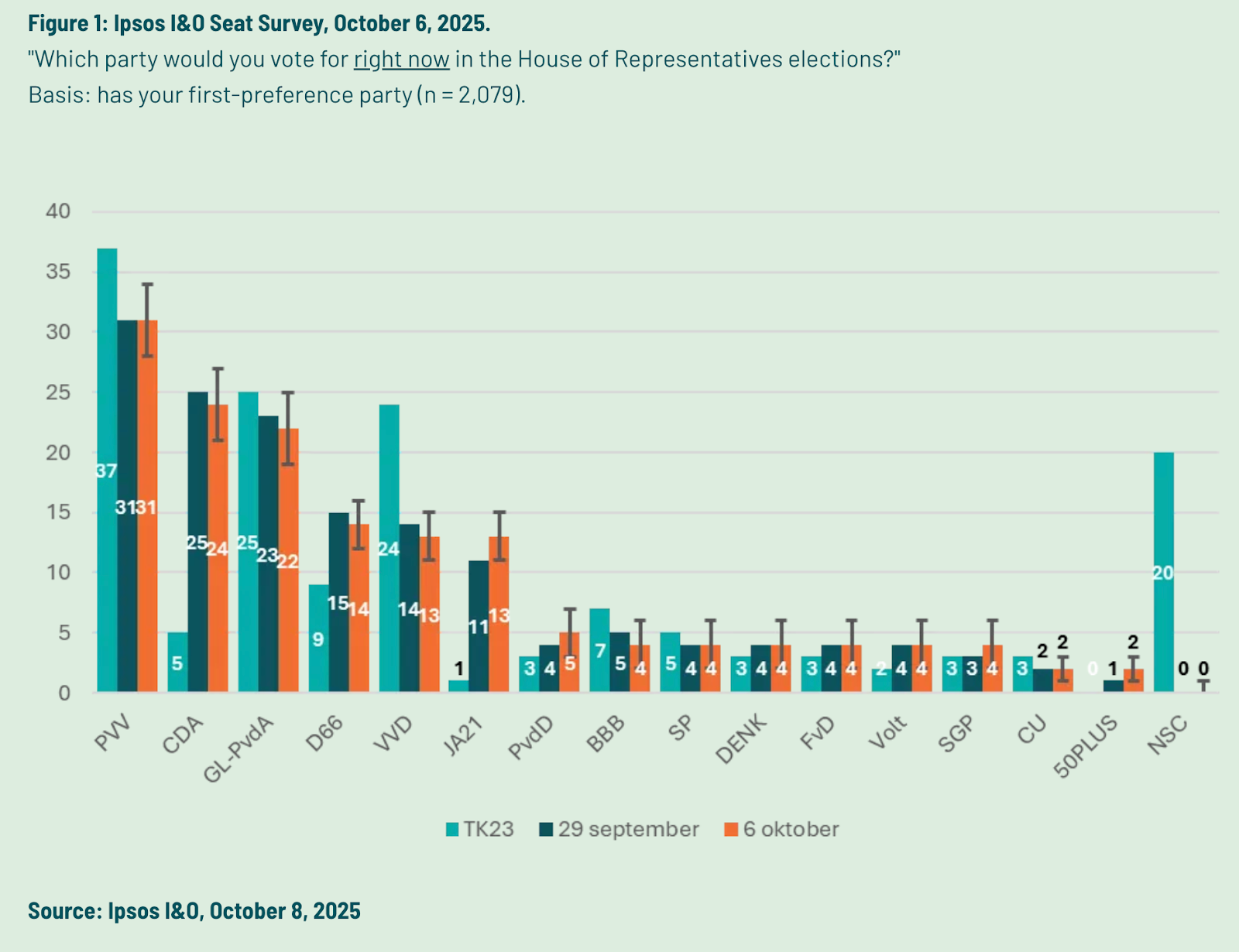


Image: Nishino, Takanori et al.
Ferreiraella charazata. Image: Senckenberg Ocean Species Alliance
A visual summary of the game theory approach. Image: Shibasaki, Shota et al.


Lorraine Lee
in reply to The Pirate Post • • •