
35 anni fa nasceva il World Wide Web: il primo sito web della storia
Ecco! Il 20 dicembre 1990, qualcosa di epocale successe al CERN di Ginevra.
Tim Berners-Lee, un genio dell’informatica britannico, diede vita al primo sito web della storia. Si tratta di info.cern.ch, creato con l’obiettivo di aiutare gli scienziati a condividere informazioni.
Era un progetto ambizioso, nato per facilitare la vita a ricercatori di tutto il mondo. Il suo obiettivo? Far dialogare scienziati e studiosi di paesi e istituzioni diverse. Inizialmente, solo gli addetti ai lavori del CERN potevano accedervi per poi aprire le porte al grande pubblico il successivo 6 agosto 1991.
Era un momento storico anche se molti all’interno del CERN non comprendevano fino a fondo tale innovazione!
Quel sito era essenzialmente una guida su come utilizzare il World Wide Web. In pratica, spiegava come consultare documenti remoti e configurare nuovi server. Una roba da nerd, ma che fece la storia! Oggi, quel sito e quella macchina sono pezzi da collezione, un vero e proprio tesoro del web. E pensare che tutto iniziò con una semplice idea: condividere informazioni. Che potenza non è vero?
L’aspetto grafico rifletteva la filosofia che guidava il progetto. Sfondo chiaro, testo scuro e collegamenti ipertestuali essenziali: nessun elemento decorativo, nessuna immagine. Nella proposta originaria del World Wide Web, Berners-Lee aveva chiarito che la priorità non era la grafica, ma la leggibilità universale del testo, ritenuta fondamentale per garantire l’accesso al maggior numero possibile di utenti.
Un contesto tecnologico frammentato e lo standard
Alla fine degli anni Ottanta, Internet esisteva già, ma era uno strumento riservato quasi esclusivamente a contesti accademici, militari e scientifici.
Le informazioni erano distribuite su sistemi eterogenei e spesso incompatibili tra loro: mainframe, computer personali e reti proprietarie. Tutto questo era complesso! Non essendo presente uno standard, questo non consentiva uno scambio dei dati fluido e flessibile.
Al CERN questo problema era particolarmente evidente.
Migliaia di ricercatori producevano e consultavano documentazione tecnica, ma i contenuti restavano spesso confinati su macchine specifiche o richiedevano software dedicati per essere letti. Esistevano soluzioni parziali, come ARPANET o Usenet, e sistemi di navigazione strutturata come Gopher, sviluppato dall’Università del Minnesota, ma mancava ancora un modello realmente universale per l’accesso ai documenti.

Le tre tecnologie alla base del Web
La proposta presentata da Berners-Lee nel 1989, intitolata “Information Management”, partiva da un’idea semplice: collegare documenti distribuiti su computer diversi attraverso una rete di rimandi ipertestuali. Tra il 1990 e la fine di quell’anno, questa visione prese forma concreta grazie allo sviluppo di tre elementi fondamentali.

Erano tre le soluzioni proposte da Berners Lee:
- La prima era l’HTML, un linguaggio di markup pensato per strutturare i contenuti testuali tramite elementi semplici come titoli, paragrafi e link.
- La seconda era l’URL, un sistema di indirizzamento univoco che permetteva di identificare in modo coerente ogni risorsa disponibile sul Web.
- La terza era il protocollo HTTP, incaricato di gestire lo scambio di informazioni tra il computer dell’utente e il server che ospitava i contenuti.

Queste tecnologie, ancora oggi risultano alla base della navigazione online, vennero sviluppate su un computer NeXT, una workstation prodotta dall’azienda fondata da Steve Jobs dopo l’uscita da Apple. Su quella macchina Berners-Lee realizzò anche il primo browser della storia, inizialmente chiamato WorldWideWeb e successivamente rinominato Nexus.

Il primo browser e il primo server
Il browser originario aveva una caratteristica oggi quasi scomparsa: non serviva solo a visualizzare le pagine, ma consentiva anche di modificarle e crearne di nuove.
Il concetto di Web che si delineava era quello di un ambiente interattivo, dove gli utenti avevano la possibilità di partecipare attivamente alla creazione dei contenuti. Tuttavia, con l’avvento degli interessi commerciali, questa visione iniziale del web venne gradualmente accantonata, man mano che il business prese il sopravvento.
Lo stesso computer NeXT svolgeva anche il ruolo di primo server web al mondo. Per evitare spegnimenti accidentali, sulla macchina era stato apposto un avviso scritto a mano che invitava esplicitamente a non interromperne l’alimentazione, poiché farlo avrebbe significato rendere irraggiungibile l’intero World Wide Web.

Dal CERN al pubblico globale
Per alcuni anni il Web rimase uno strumento utilizzato prevalentemente da fisici e ricercatori.
La svolta arrivò il 30 aprile 1993, quando il CERN decise di rendere il World Wide Web una tecnologia di pubblico dominio, rinunciando a qualsiasi diritto di sfruttamento commerciale. Questa scelta impedì la nascita di monopoli e favorì la diffusione libera degli standard.
Nello stesso periodo comparvero i primi browser grafici destinati a un pubblico più ampio. Tra questi, Mosaic, sviluppato nel 1993 dal National Center for Supercomputing Applications dell’Università dell’Illinois, introdusse la possibilità di visualizzare immagini integrate nel testo, trasformando il Web in un ambiente più accessibile e visivamente coinvolgente.

Dalle prime pagine al Web moderno
Oggi il Web conta miliardi di pagine e centinaia di milioni di domini, ma le sue origini restano legate a quell’insieme di documenti essenziali pubblicati al CERN, oltre che a delle intuizioni che veniva qualche anno prima dal prodigio della tecnologia di Douglas Engelbart (inventore appunto dell’ipertesto e del mouse).
Nel corso degli anni Novanta la tecnologia era pronta per tutto questo, e iniziarono ad apparire i primi servizi e siti di rilievo: nel 1993 nacque Aliweb, considerato il primo motore di ricerca, mentre nel 1994 organizzazioni come Amnesty International e aziende come Pizza Hut avviarono le loro prime presenze online.
Nel 2013 il CERN ha ripristinato l’indirizzo originale del primo sito web, rendendolo nuovamente accessibile in una versione semplificata. Un archivio che non rappresenta solo un documento storico, ma la testimonianza concreta dell’inizio di una trasformazione tecnologica che ha ridefinito il modo in cui l’umanità produce, condivide e accede alle informazioni.
Tutto nasce dalla “Mothers Of All Demos”
Le fondamenta concettuali del World Wide Web affondano le radici ben prima del lavoro di Tim Berners-Lee al CERN. Un passaggio chiave risale al 9 dicembre 1968, quando Douglas Engelbart presentò a San Francisco la celebre “Mother of All Demos”. In quella dimostrazione pubblica, Engelbart mostrò una visione dell’informatica radicalmente nuova, incentrata sull’interazione uomo-macchina e sulla possibilità di usare i computer come strumenti per amplificare l’intelligenza collettiva.

Durante quella dimostrazione, Engelbart introdusse il suo oN-Line System (NLS), un ambiente di lavoro che integrava funzioni allora rivoluzionarie: collegamenti ipertestuali tra documenti, editing collaborativo in tempo reale, navigazione non lineare delle informazioni, finestre su schermo e comunicazione a distanza. Concetti che oggi appaiono scontati vennero presentati quando i computer erano ancora strumenti chiusi, utilizzati principalmente per il calcolo e riservati a pochi specialisti.

Il genio di Engelbart non si limitò all’intuizione tecnica. La sua forza fu soprattutto la capacità di immaginare un sistema complesso, aperto e interconnesso, che richiedeva necessariamente il contributo di una comunità di ingegneri, ricercatori e sviluppatori per diventare realtà. Le idee mostrate nella Mother of All Demos non erano prodotti finiti, ma visioni operative che aprirono la strada a decenni di lavoro collettivo per essere tradotte in tecnologie concrete, scalabili e utilizzabili su larga scala.
In questa prospettiva si inserisce il contributo di Tim Berners-Lee, che tra la fine degli anni Ottanta e l’inizio dei Novanta riuscì a portare “a terra” molte di quelle intuizioni, adattandole a una rete globale come Internet. Il World Wide Web può essere letto come la sintesi pragmatica di quelle idee pionieristiche: l’ipertesto, la navigazione associativa e l’accesso distribuito all’informazione, trasformati in standard semplici, aperti e universali. Una continuità storica che collega direttamente la visione di Engelbart al Web che conosciamo oggi.

L'articolo 35 anni fa nasceva il World Wide Web: il primo sito web della storia proviene da Red Hot Cyber.
Matteo Brunati reshared this.
ATM sotto tiro! 54 arresti in una gang che svuotava i bancomat con i malware
Una giuria federale del Distretto del Nebraska ha incriminato complessivamente 54 persone accusate di aver preso parte a una vasta operazione criminale basata sull’uso di malware per sottrarre milioni di dollari dagli sportelli automatici statunitensi. L’indagine riguarda attività di cosiddetto “ATM jackpotting”, una tecnica che consente di forzare l’erogazione di contante dagli sportelli bancomat senza l’uso di carte o codici legittimi.
L’annuncio è stato diffuso giovedì 18 dicembre 2025 dall’Ufficio del Procuratore degli Stati Uniti per il Distretto del Nebraska. Secondo quanto riferito, le attività contestate sarebbero riconducibili al Tren de Aragua (TdA), organizzazione criminale transnazionale di origine venezuelana, designata come organizzazione terroristica straniera.
Un primo atto di accusa, emesso il 9 dicembre 2025, coinvolge 22 imputati e comprende capi d’imputazione per cospirazione finalizzata al sostegno materiale a un’organizzazione terroristica, frode bancaria, furto con scasso, reati informatici e riciclaggio di denaro. Le autorità ritengono che i proventi ottenuti attraverso il jackpotting siano stati redistribuiti tra membri e affiliati del gruppo per occultarne l’origine illecita.
Tra le persone citate figura Jimena Romina Araya Navarro, artista venezuelana indicata come esponente di vertice del Tren de Aragua e già sanzionata dall’Office of Foreign Assets Control (OFAC) del Dipartimento del Tesoro statunitense. Secondo le informazioni diffuse dall’OFAC, Araya Navarro avrebbe agevolato nel 2012 la fuga dal carcere di Tocorón di Hector Rusthenford Guerrero Flores, noto come “Niño Guerrero”, ritenuto il leader storico del gruppo. L’imputata è stata formalmente accusata di sostegno materiale al Tren de Aragua in relazione al sistema di jackpotting, che avrebbe colpito anche numerosi sportelli automatici situati nello Stato del Nebraska. In più occasioni, Araya Navarro sarebbe stata fotografata in contesti pubblici insieme a Guerrero Flores.
Un secondo atto di accusa, depositato il 21 ottobre 2025, riguarda ulteriori 32 persone e comprende 56 capi d’imputazione complessivi. Tra questi figurano accuse di frode bancaria, furto con scasso, danneggiamento di sistemi informatici e frode informatica, con numerosi episodi contestati su scala nazionale.
In caso di condanna, le pene detentive previste per gli imputati variano da un minimo di 20 anni fino a un massimo complessivo di 335 anni di reclusione, a seconda delle responsabilità individuali.
Secondo il Dipartimento di Giustizia, i gruppi coinvolti avrebbero operato con modalità strutturate e ripetute. Le squadre si spostavano in più veicoli, effettuavano sopralluoghi presso banche e cooperative di credito, analizzavano i sistemi di sicurezza e, dopo essersi assicurate di non aver attivato allarmi, procedevano alla manomissione fisica degli sportelli automatici. Il malware veniva installato rimuovendo o sostituendo il disco rigido del bancomat, oppure collegando dispositivi esterni come chiavette USB.
La variante utilizzata, identificata come Ploutus, consentiva l’invio di comandi non autorizzati al modulo di erogazione del contante, forzando l’uscita di denaro. Il software era inoltre progettato per cancellare le tracce della propria presenza, con l’obiettivo di ritardare l’individuazione dell’attacco da parte degli istituti finanziari. I profitti ottenuti venivano successivamente suddivisi secondo percentuali prestabilite.
Le indagini hanno documentato episodi di jackpotting in numerosi Stati americani. Le autorità hanno inoltre ricostruito una mappa geografica degli attacchi e stimato, aggiornando i dati ad agosto 2025, perdite complessive per diversi milioni di dollari.
Il Tren de Aragua, secondo i documenti giudiziari, nasce come banda carceraria in Venezuela a metà degli anni Duemila e si è progressivamente trasformato in un’organizzazione criminale transnazionale con ramificazioni in tutto l’emisfero occidentale. Le attività attribuite al gruppo spaziano dal traffico di droga e armi al sequestro di persona, dallo sfruttamento sessuale alle estorsioni, fino a omicidi e aggressioni. Negli ultimi anni, le autorità statunitensi ritengono che il gruppo abbia intensificato anche i reati finanziari, individuando nel jackpotting una fonte di entrate particolarmente redditizia.
Nel solo 2025, il Distretto del Nebraska ha incriminato complessivamente 67 membri e dirigenti del Tren de Aragua per una vasta gamma di reati federali, tra cui sostegno a organizzazione terroristica straniera, traffico sessuale di minori, frode bancaria, riciclaggio di denaro e accesso non autorizzato a sistemi informatici protetti.
L’operazione rientra nelle attività della Homeland Security Task Force (HSTF), istituita in base all’Ordine Esecutivo 14159, con l’obiettivo di contrastare cartelli criminali, bande straniere e reti di traffico di esseri umani attive negli Stati Uniti e all’estero. La task force opera attraverso una cooperazione interagenzia che coinvolge numerosi uffici federali, statali e locali.
Le indagini sono state coordinate dall’FBI e dalla Homeland Security Investigations di Omaha, con il supporto di numerosi uffici dell’FBI sul territorio nazionale, del Dipartimento di Giustizia e di un ampio numero di agenzie di polizia e autorità investigative statunitensi.
Come previsto dalla legge, tutte le persone incriminate sono da considerarsi presunte innocenti fino a eventuale condanna definitiva da parte di un tribunale.
L'articolo ATM sotto tiro! 54 arresti in una gang che svuotava i bancomat con i malware proviene da Red Hot Cyber.
Curtis Yarvin: quando il problema non è la democrazia, ma l’ipocrisia del potere digitale
Curtis Yarvin non è un hacker, non è un criminale informatico e non è nemmeno, in senso stretto, un esperto di cybersecurity. Eppure il suo pensiero dovrebbe interessare molto più di quanto faccia oggi chi si occupa di sicurezza, governance digitale e resilienza dei sistemi complessi. Perché Yarvin non parla di firewall o ransomware, ma di chi comanda davvero. E soprattutto di perché il sistema che difendiamo ogni giorno potrebbe essere già rotto alla radice.
Conosciuto online con lo pseudonimo di Mencius Moldbug, Yarvin è un ex programmatore, imprenditore tech e autore del blog Unqualified Reservations, una lettura che definire indigesta è un complimento.
Il suo assunto di partenza è semplice, brutale e per questo pericoloso: la democrazia liberale occidentale non governa più nulla. O meglio, governa solo in apparenza. Il potere reale, secondo Yarvin, non risiede nei parlamenti, ma in una struttura informale e autoreferenziale composta da media, accademia, burocrazia e apparati tecnici. Una rete che lui chiama “la Cattedrale”.
La Cattedrale non impone leggi, ma definisce il perimetro del pensabile. Decide quali idee sono legittime, quali sono “pericolose”, quali vanno silenziate. Non serve la censura esplicita quando il controllo è culturale. Un concetto che, a chi lavora nel mondo cyber, suona tremendamente familiare: controllo senza visibilità, governance senza accountability, potere senza responsabilità.
Da qui Yarvin fa un salto che molti considerano inaccettabile, ma che lui reputa semplicemente logico. Se la democrazia è una finzione e il potere è già concentrato, allora tanto vale smettere di fingere. Meglio un potere esplicito, centralizzato, responsabile, dichiarato. Meglio un sistema autoritario efficiente che una democrazia inefficiente e ipocrita. Nasce così la sua idea più controversa: il neo-cameralismo, ovvero Stati gestiti come aziende, con un CEO al comando e cittadini ridotti ad azionisti o utenti.
Qui il lettore medio si ferma, inorridito. Ma chi lavora nella sicurezza dovrebbe andare avanti. Perché, tolta la provocazione politica, Yarvin sta descrivendo esattamente il modello operativo delle big tech. Piattaforme private che governano spazi pubblici, prendono decisioni sovrane, applicano regole, sanzioni e algoritmi senza alcun processo democratico. Meta, Google, Amazon, Microsoft: non votiamo i loro board, ma subiamo le loro policy. Non eleggiamo i loro CEO, ma le loro scelte impattano diritti, economia, informazione e sicurezza nazionale.
La domanda scomoda non è se Yarvin abbia ragione nelle soluzioni. La domanda vera è se non abbia già ragione nella diagnosi.
Nel mondo cyber parliamo ossessivamente di attacchi, ma molto meno di chi controlla l’infrastruttura che difendiamo. Parliamo di sovranità digitale mentre deleghiamo tutto al cloud. Parliamo di resilienza mentre concentriamo il potere tecnologico in pochissime mani. Parliamo di democrazia digitale mentre accettiamo sistemi opachi, algoritmici, non auditabili. In questo contesto, Yarvin non è un profeta, è uno specchio che non vogliamo guardare.
Ovviamente le sue idee sono pericolose. Lo sono perché giustificano l’autoritarismo, riducono i diritti a variabili di sistema e trattano l’essere umano come una componente sacrificabile dell’efficienza. Ma sarebbe un errore liquidarlo come un pazzo o un reazionario nostalgico. Yarvin è figlio diretto della cultura tech, non il suo opposto. È il pensiero di Silicon Valley portato alle estreme conseguenze, senza marketing e senza storytelling etico.
Ed è qui che il mondo della cybersecurity dovrebbe fermarsi un attimo. Perché se la sicurezza serve a proteggere sistemi, dati e persone, allora dobbiamo chiederci quale sistema stiamo davvero proteggendo. Una democrazia formale svuotata? Un’infrastruttura governata da privati? Un modello in cui il controllo è già centralizzato, ma senza le responsabilità che Yarvin, paradossalmente, pretende?
Yarvin non offre soluzioni accettabili. Ma pone una domanda che nel nostro settore è diventata urgente: la sicurezza senza governance è solo manutenzione del potere altrui. E forse il vero rischio non è che le sue idee vengano applicate, ma che stiamo già vivendo in un mondo che funziona come lui descrive, fingendo che sia ancora una democrazia.
E questo, per chi fa cybersecurity, dovrebbe far molto più paura di qualsiasi ransomware.
L'articolo Curtis Yarvin: quando il problema non è la democrazia, ma l’ipocrisia del potere digitale proviene da Red Hot Cyber.
ASSURDO. IL GARANTE. L’ARTICOLO 11. BELGRADO.
Il Presidente della Repubblica ci spiega che le spese militari sono “poco popolari ma MAI COSÌ NECESSARIE”.
Ce lo dice dal Quirinale, con tono grave, parlando di “deterrenza”, “difesa collettiva”, “sicurezza europea indivisibile”.
Peccato che a dirlo sia il CUSTODE della Costituzione.
Quella che all’Art. 11 dice una cosa chiarissima: L’ITALIA RIPUDIA LA GUERRA.
Non la “gestisce meglio”. Non la “deterrentizza”. La RIPUDIA.
E qui il corto circuito è totale.
Perché se la democrazia è “sfidata da involuzioni autoritarie”, come dice Mattarella, allora qualcuno dovrebbe spiegare perché la risposta automatica è SEMPRE PIÙ ARMI, SEMPRE PIÙ SPESA MILITARE, SEMPRE MENO POLITICA.
Belgrado, 1999.
Bombardata per 78 giorni senza mandato ONU.
Anche allora si parlava di “difesa dei valori”, “diritti”, “sicurezza”.
Anche allora la democrazia veniva “salvata” a colpi di missili.
Il punto non è la dialettica politica.
Il punto è che qui si sta NORMALIZZANDO l’idea che la guerra sia uno STRUMENTO ORDINARIO di governo del mondo.
E che chi lo dice non è un generale, ma il GARANTE della Carta che dovrebbe impedirlo.
Quando la Costituzione diventa un orpello retorico da citare solo il 2 giugno,
e l’Articolo 11 un fastidio da reinterpretare,
non è la democrazia a essere “sfidata”.
È GIÀ STATA PIEGATA.
Ma tranquilli.
È per il nostro bene.
E se non capiamo, è perché siamo “poco popolari”.
Don Chisciotte 😉
(putinista, ovviamente)

Dipiazza, sindaco di Treviso di Forza Italia, ad una consigliera dell'opposizione:
«Non mi sono mai fatto comandare da una donna»
E per difendersi dalle accuse di sessismo:
Dipiazza ci ha anche tenuto a precisare che «le donne sono il più bel regalo che il buon Dio ci ha dato. Sono un estimatore e ho sempre avuto grande successo».
Questi giocano proprio in un altro campionato c'è poco da fare...
Poliversity - Università ricerca e giornalismo reshared this.


Reverse-Engineering the Intel 8087 Stack Circuitry

Although something that’s taken for granted these days, the ability to perform floating-point operations in hardware was, for the longest time, something reserved for people with big wallets. This began to change around the time that Intel released the 8087 FPU coprocessor in 1980, featuring hardware support for floating-point arithmetic at a blistering 50 KFLOPS. Notably, the 8087 uses a stack-based architecture, a major departure from existing FPUs. Recently [Ken Shirriff] took a literal closer look at this stack circuitry to see what it looks like and how it works.
Nearly half of the 8087’s die is taken up by the microcode frontend and bus controller, with a block containing constants like π alongside the FP calculation-processing datapath section taking up much of the rest. Nestled along the side are the eight registers and the stack controller. At 80 bits per FP number, the required registers and related were pretty sizeable for the era, especially when you consider that the roughly 60,000 transistors in the 8087 were paired alongside the 29,000 transistors in the 16-bit 8086.
Each of the 8087’s registers is selected by the decoded instructions via a lot of wiring that can still be fairly easily traced despite the FPU’s die being larger than the CPU it accompanied. As for the unique stack-based register approach, this turned out to be mostly a hindrance, and the reason why the x87 FP instructions in the x86 ISA are still quite maligned today. Yet with careful use, providing a big boost over traditional code, this made it a success by that benchmark, even if MMX, SSE, and others reverted to a stackless design.
Sachsen: Sogar dem Koalitionspartner ist dieses Polizeigesetz zu hart
netzpolitik.org/2025/sachsen-s…

Improving the Cloud Chamber

Want to visualize radioactive particles? You don’t need a boatload of lab equipment. Just a cloud chamber. And [Curious Scientist] is showing off an improved miniature cloud chamber that is easy to replicate using a 3D printer and common components.
The build uses a Peltier module, a CPU cooler, an aluminum plate, thermal paste, and headlight film. The high voltage comes from a sacrificed mosquito swatter. The power input for the whole system is any 12V supply.
The cloud chamber was high tech back in 1911 when physicist Charles T. R. Wilson made ionizing radiation visible by creating trails of tiny liquid droplets in a supersaturated vapor of alcohol or water. Charged particles pass through, leaving visible condensation trails.
According to the post, the cost of everything is under $100. He hasn’t made the 3D printed parts freely available, but there are enough pictures that you can probably work it out yourself. Besides, you’d almost certainly have to rework it for your particular jar, anyway.
After all, a cloud chamber’s construction isn’t a state secret. We’ve seen some fancy Peltier-based designs. If you manage your expectations, you can build one for even less using a plastic bottle and ingenuity.
915 MHz Forecast: Rolling Your Own Offline Weather Station

There are a lot of options for local weather stations; most of them, however, are sensors tied to a base station, often requiring an internet connection to access all features. [Vinnie] over at vinthewrench has published his exploration into an off-grid weather station revolving around a Raspberry Pi and an RTL-SDR for communications.
The weather station has several aspects to it. The main sensor package [Vinnie] settled on was the Ecowitt WS90, capable of measuring wind speed, wind direction, temperature, humidity, light, UVI, and rain amount. The WS90 communicates at 915 MHz, which can be read using the rtl_433 project. The WS90 is also available for purchase as a standalone sensor, allowing [Vinnie] to implement his own base station.
For the base station, [Vinnie] uses a weatherproof enclosure that houses a 12V battery with charger to act as a local UPS. This powers the brains of the operation: a Raspberry Pi. Hooked to the Pi is an RTL-SDR with a 915 MHz antenna. The Pi receives an update from the WS90 roughly every 5 seconds, which it can decode using the rtl_433 library. The Pi then turns that packet into structured JSON.
The JSON is fed into a weather model backend that handles keeping track of trends in the sensor data, as well as the health of the sensor station. The backend has an API that allows for a dashboard weather site for [Vinnie], no internet required.
Thanks, [Vinnie], for sending in your off-grid weather station project. Check out his site to read more about his process, and head over to the GitHub page to check out the technical details of his implementation. This is a great addition to some of the other DIY weather stations we’ve featured here.
Florida prosecutor agrees: Photography is not a crime
FOR IMMEDIATE RELEASE:
New York, Dec. 18, 2025 — Photojournalist Dave Decker was arrested in November while documenting a protest in Miami, Florida. A coalition of 23 press organizations spoke out against the charges — and this week the prosecutor agreed.
The following statement can be attributed to Adam Rose, deputy director of advocacy for Freedom of the Press Foundation (FPF):
“Journalists have a distinct role at protests. They are not participants, merely observers. A broad local and national coalition said this in unison, and we were glad to see all charges dropped against Dave Decker. Hats off to his attorneys, lawyers for the Florida State Attorney’s Office and the Miami-Dade Sheriff’s Office, and all the community groups who rallied to his side.“At the same time, that’s a lot of people who had to work on something entirely preventable. I hope law enforcement officers take this to heart: Swearing an oath to protect the community means protecting everyone — including press. This is an opportunity for agencies like the sheriff’s office and Florida Highway Patrol to take proactive steps and review training approaches. Freedom of the Press Foundation is happy to help.
“And of course, it would be nice to see an apology to Dave and an offer to fix any of his equipment they damaged.”
Read the coalition’s letter:
freedom.press/static/pdf.js/we…
Please contact us if you would like further comment.
Cheap 3D Printer Becomes CNC Wood Engraver

3D printers are built for additive manufacturing. However, at heart, they are really just simple CNC motion platforms, and can be readily repurposed to other tasks. As [Arseniy] demonstrates, it’s not that hard to take a cheap 3D printer and turn it into a viable wood engraver.
The first attempt involved a simple experiment—heating the 3D printer nozzle, and moving it into contact with a piece of wood to see if it could successfully leave a mark. This worked well, producing results very similar to a cheap laser engraving machine. From there, [Arseniy] set about fixing the wood with some simple 3D-printed clamps so it wouldn’t move during more complex burning/engraving tasks. He also figured out a neat trick to simply calibrate the right Z height for wood burning by using the built in calibration routines. Further experiments involved developing a tool for creating quality G-Code for these engraving tasks, and even using the same techniques on leather with great success.
If you need to mark some patterns on wood and you already have a 3D printer, this could be a great way to go. [Arseniy] used it to great effect in the production of a plywood dance pad. We’ve featured some other great engraver builds over the years, too, including this innovative laser-based project. Video after the break.
youtube.com/embed/WcHOnkO5-Sg?…
Decapsulating a PIC12F683 to Examine Its CMOS Implementation

In a recent video, [Andrew Zonenberg] takes us through the process of decapsulating a PIC12F683 to take a peak at its CMOS implementation.
This is a multipart series with five parts done and more to come. The PIC12F683 is an 8-pin flash-based, 8-bit microcontroller from Microchip. [Andrew] picked the PIC12F683 for decapsulation because back in 2011 it was the first microcontroller he broke read-protection on and he wanted to go back and revisit this chip, given particularly that his resources and skills had advanced in the intervening period.
The five videos are a tour de force. He begins by taking a package cross section, then decapsulating and delayering. He collects high-resolution photos as he goes along. In the process, he takes some time to explain the dangers of working with acid and the risk mitigations he has in place. Then he does what he calls a “floorplan analysis” which takes stock of the entire chip before taking a close look at the SRAM implementation.
If you’re interested in decapsulating integrated circuits you might want to take a look at Laser Fault Injection, Now With Optional Decapping, A Particularly Festive Chip Decapping, or even read through the transcript of the Decapping Components Hack Chat With John McMaster.
youtube.com/embed/videoseries?…
Thanks to [Peter Monta] for the tip.
Un bambino, una mutazione, un algoritmo: così l’AI ha sconfitto una malattia mortale
Solo un anno fa, i medici non potevano dire con certezza se KJ Muldoon sarebbe sopravvissuto al suo primo anno di vita. Oggi sta muovendo i primi passi a casa, con la sua famiglia al suo fianco.
Questa svolta è stata resa possibile da una soluzione medica che fino a poco tempo fa era solo teorica: la terapia genica personalizzata basata sulla tecnologia CRISPR, sviluppata specificamente per ogni paziente.
E tutto quanto si basa su modelli di intelligenza artificiale che consentono di effettuare quello che si chiama “Editing Genetico”.
Editing Genetico Personalizzato. L’AI che ci piace
Prima di parlare di questa storia, vogliamo spiegare cos’è il CRISPR, acronimo di Clustered Regularly Interspaced Short Palindromic Repeats: una tecnologia di editing genetico derivata da un meccanismo di difesa naturale dei batteri contro i virus. In pratica, CRISPR funziona come un sistema di taglio e correzione del DNA: una proteina (come Cas9) viene guidata verso un punto preciso del genoma, dove può tagliare una sequenza difettosa e permettere alla cellula di ripararla o sostituirla con una versione corretta. Questo approccio consente di intervenire direttamente sulla causa genetica di una malattia, rendendo possibile una medicina di precisione che non si limita a curare i sintomi, ma modifica l’origine stessa del problema.
L’intelligenza artificiale è uno degli elementi chiave che rende possibile l’editing genetico personalizzato. Prima ancora che CRISPR venga utilizzato, l’AI analizza enormi quantità di dati genomici per identificare con precisione la mutazione responsabile della malattia, distinguendo gli errori critici da variazioni genetiche innocue. In tempi estremamente ridotti, gli algoritmi confrontano il DNA del paziente con database globali, simulano gli effetti delle modifiche e aiutano a progettare le sequenze guida di CRISPR più efficaci, riducendo al minimo il rischio di interventi fuori bersaglio. Senza questo livello di analisi automatizzata, una terapia costruita su misura per un singolo bambino sarebbe semplicemente impraticabile.
Il contributo dell’AI non si ferma alla progettazione della terapia. I modelli predittivi vengono utilizzati per stimare la sicurezza dell’intervento, definire il dosaggio più appropriato e prevedere come l’organismo potrebbe reagire nel tempo. Dopo il trattamento, l’AI supporta il monitoraggio clinico continuo, aiutando i medici a interpretare i dati biologici e a individuare precocemente eventuali segnali di rischio. In questo contesto, l’intelligenza artificiale non sostituisce i medici, ma diventa uno strumento decisivo per trasformare una cura sperimentale in una reale possibilità di vita.
L’Editing genetico e la malattia di KJ
All’inizio dell’anno, i medici del Children’s Hospital di Philadelphia hanno somministrato un trattamento che all’epoca non aveva equivalenti clinici. Hanno creato un editing genomico personalizzato per KJ, mirato a una rara malattia metabolica congenita. Tali disturbi derivano da difetti nei geni responsabili di processi biochimici chiave. Nei neonati, spesso portano a gravi complicazioni e, in alcuni casi, sono fatali nei primi mesi di vita.
KJ è stata la prima persona a ricevere una terapia genica progettata non per un gruppo di pazienti, ma per una mutazione specifica in un singolo bambino. Prima del trattamento, la sua vita veniva trascorsa quasi interamente nei reparti ospedalieri, sotto costante osservazione e monitoraggio 24 ore su 24. Dopo l’intervento, le condizioni del bambino si sono stabilizzate al punto che i medici sono stati in grado di interrompere gradualmente il monitoraggio continuo e prepararlo alle dimissioni.
KJ ha trascorso i primi dieci mesi di vita in ospedale. Solo a giugno è tornato a casa per la prima volta. Da quel momento in poi, il suo sviluppo ha preso una direzione che in precedenza sembrava improbabile. Ha iniziato ad aumentare di peso, ad acquisire competenze appropriate all’età e a raggiungere gradualmente traguardi precoci dello sviluppo che in precedenza erano rimasti incerti.
I cambiamenti non si sono limitati alle condizioni mediche. Per la famiglia, questo ha significato un ritorno a una vita quotidiana che prima potevano solo sognare. Ad agosto, KJ ha festeggiato il suo primo compleanno fuori dall’ospedale, in netto contrasto con l’anno precedente, quando ogni giorno trascorreva sotto la supervisione di medici e attrezzature. Ora sta imparando a camminare, continuando ad acquisire nuove competenze e si avvicina il suo primo Natale a casa. Un anno fa, quella festa si è svolta in una stanza d’ospedale.
Una vita salvata e un futuro promettente per la medicina
I medici sottolineano che l’obiettivo della terapia andava ben oltre la sopravvivenza. Non si trattava solo di stabilizzare le condizioni del bambino, ma anche di dargli la possibilità di vivere un’infanzia senza la costante dipendenza da procedure e apparecchiature mediche.
Il lavoro su questo approccio non si è fermato a un solo caso. Il Programma di Terapia Genica per le Malattie Metaboliche Ereditarie presso il Children’s Hospital di Philadelphia è guidato da Rebecca Ahrens-Niklas. Continua a collaborare con Kiran Musunuru dell’Università della Pennsylvania. Insieme, stanno lavorando per adattare il metodo utilizzato nel caso di KJ ad altri bambini con diagnosi simili.
Il programma si concentra sui difetti congeniti del metabolismo, un gruppo di malattie in cui difetti genetici interrompono il funzionamento di vie chimiche vitali nell’organismo. Per molte di queste patologie non esiste un trattamento efficace e la cura è limitata alla gestione per tutta la vita. I ricercatori stanno studiando, in particolare, i disturbi del ciclo dell’urea, le acidemie organiche e i disturbi dell’ossidazione degli acidi grassi. Ognuna di queste condizioni ha le sue caratteristiche genetiche e biochimiche, quindi non esiste una soluzione unica per tutti.
L’esperienza di trattamento di KJ è servita da punto di partenza per i team di ricerca. La sua risposta alla terapia ha fornito dati importanti sul dosaggio, sulla sicurezza dell’intervento e sulla necessità di un monitoraggio a lungo termine. Queste informazioni sono già utilizzate per sviluppare futuri programmi di trattamento individualizzati.
Regolamentazione delle AI e dei trattamenti personalizzati
Il caso di KJ ha sollevato anche una questione più ampia: come regolamentare i trattamenti progettati per un singolo paziente. Tali interventi non rientrano nei tipici percorsi di approvazione dei farmaci, che si basano su studi clinici su larga scala. In questo caso, la terapia è stata sviluppata, testata e implementata in tempi brevi, sulla base di una situazione medica unica.
Per le famiglie affette da malattie metaboliche rare , la storia di KJ è diventata una cauta fonte di speranza. Dimostra che gli sforzi coordinati tra medici, scienziati e autorità di regolamentazione possono cambiare i risultati anche in casi in cui in precedenza non esistevano soluzioni.
L'articolo Un bambino, una mutazione, un algoritmo: così l’AI ha sconfitto una malattia mortale proviene da Red Hot Cyber.
reshared this
Covering protests is a dangerous job for journalists
Dear Friend of Press Freedom,
Rümeysa Öztürk has been facing deportation for 268 days for co-writing an op-ed the government didn’t like, and journalist Ya’akub Vijandre remains locked up by Immigration and Customs Enforcement over social media posts about issues he reported on.
Join us today and Dec. 21 in New York City for two special screenings of the Oscar-shortlisted film “Cover-Up” by Laura Poitras — an FPF founding board member — and Mark Obenhaus.
Read on for more on what we’re working on this week. We’ll be back in the new year.
Covering protests is a dangerous job for journalists
As of Dec. 15, the U.S. Press Freedom Tracker has documented 32 detainments or charges against journalists in the U.S. — 28 of those at immigration-related protests — according to a new report released by the Freedom of Press Foundation (FPF) project this week.
The report notes how, unlike most years, the majority of journalists were released without charges or had them soon dropped, with law enforcement instead focusing on deterring news gathering rather than pursuing charges.
Stop the deportation of Heng Guan
Use our action center to tell lawmakers to stop the Trump administration from deporting Heng Guan, who helped journalists expose the horrors of Uyghur prison camps in Xinjiang, China. He’s exactly the kind of person asylum laws are intended to protect.
The next hearing in Guan’s case is Jan. 12. He could be sent to Uganda, placing him at risk of being shipped back to China, where, according to his mother, he’d likely be killed.
Sign Up. Take Action.
Join our email list to stay up to date on the issues and learn how you can help protect journalists and sources everywhere.
Full Name Email Address Subscribe See all newsletters Go to mailing list subscription page
Thanks for signing up for our newsletter. You are not yet subscribed! Please check your email for a message asking you to confirm your subscription.
The FCC’s declaration of dependence
Federal Communications Commission Chair Brendan Carr admitted at a Senate hearing on Wednesday that there had been a political “sea change” and he no longer viewed the FCC as an independent agency.
FPF Director of Advocacy Seth Stern wrote for The Guardian that Carr’s admission proves the danger of letting a self-proclaimed partisan weaponize the FCC’s public interest standard to grant himself amorphous censorship powers. “Carr avoids ever articulating his vision of public-interest news, forcing anyone seeking to avoid his ire to play ‘Whac-A-Mole.’ … The only discernible rule of Carr’s FCC is ’don’t piss off Trump’.”
Trump’s BBC lawsuit is nonsense, like his others
President Donald Trump on Monday followed through on his threats to sue the BBC over its editing of his remarks on Jan. 6, 2021, for a documentary.
“If any ordinary person filed as many frivolous multibillion-dollar lawsuits as Donald Trump, they’d be sanctioned and placed on a restricted filers list,” FPF said in a statement, noting that Trump has demanded a total of $65 billion in damages from media outlets since taking office.
Under First Amendment, Diddy ‘can’t stop, won’t stop’ Netflix documentary
Sean “Diddy” Combs is threatening to sue Netflix for airing a docuseries that is, to say the least, unflattering to him. The disgraced music mogul’s cease-and-desist letter claims the series, “Sean Combs: The Reckoning,” uses “stolen footage.”
Stern wrote for Rolling Stone about why Diddy’s threatened lawsuit would be a non-starter: the right to publish content that sources obtain illegally is well established. But a series of recent cases nonetheless puts that right under unprecedented attack.
Body camera footage is for the public
The town of Hamburg, New York, claims its police body camera footage is copyrighted despite being a public record. It’s telling people who request footage under New York’s Freedom of Information Law that they can’t share the footage with others.
That’s ridiculous, and we wrote a letter to the police chief telling him to stop the nonsense and tell anyone who has received these frivolous warnings that they’re free to share body camera footage as they see fit.
Ask Lauren anything
FPF Daniel Ellsberg Chair on Government Secrecy Lauren Harper joined fellow Freedom of Information Act experts Jason Leopold, Liz Hempowicz, and Kevin Bell to take questions about FOIA and the numerous ways that it’s broken. They teamed up for a Reddit “ask me anything” discussion this week.
Free screening of “Cover-Up”
To our New York audiences and documentary film buffs: FPF is proud to host a special screening tonight of the Oscar-shortlisted film “Cover-Up” by award-winning directors Laura Poitras and Mark Obenhaus, followed by a Q&A moderated by our executive director, Trevor Timm. The film chronicles the career of legendary investigative journalist Seymour Hersh.
What we're reading
The Pentagon and the press
NPR
It’s shameful the Department of Defense is curtailing press access five decades after the Supreme Court’s Pentagon Papers ruling, Harper told NPR’s “1A.” Harper also joined “1A” to discuss how the Trump administration is enhancing its surveillance capabilities.
The US supreme court’s TikTok ruling is a scandal
The Guardian
That TikTok remains available “makes a mockery” of the government’s earlier national security claims that the platform was “an urgent national security risk – and of the court that deferred to those claims.”
How an AM radio station in California weathered the Trump administration’s assault on media
Associated Press
“‘Chilling effect’ does not begin to describe the neutering of our political coverage,” said one former KCBS journalist about the aftermath of Carr’s threats.
Defend the press: Brendan Carr has gone too far with attacks on media
Courier
Read the op-ed we co-wrote with partner organizations demanding the FCC recommit to the First Amendment.
Paramount’s Warner Bros Discovery bid faces conflict of interest concerns
Al Jazeera
Stern explained, “Throwing out the credibility of CNN and other Warner Bros Discovery holdings might benefit the Ellisons in their efforts to curry favour with Trump, but it’s not going to benefit anyone else, including shareholders.”
Europe’s Next Digital Frontier: Balancing Web 3.0 Innovation with Fundamental Rights
Evolution Of the Internet
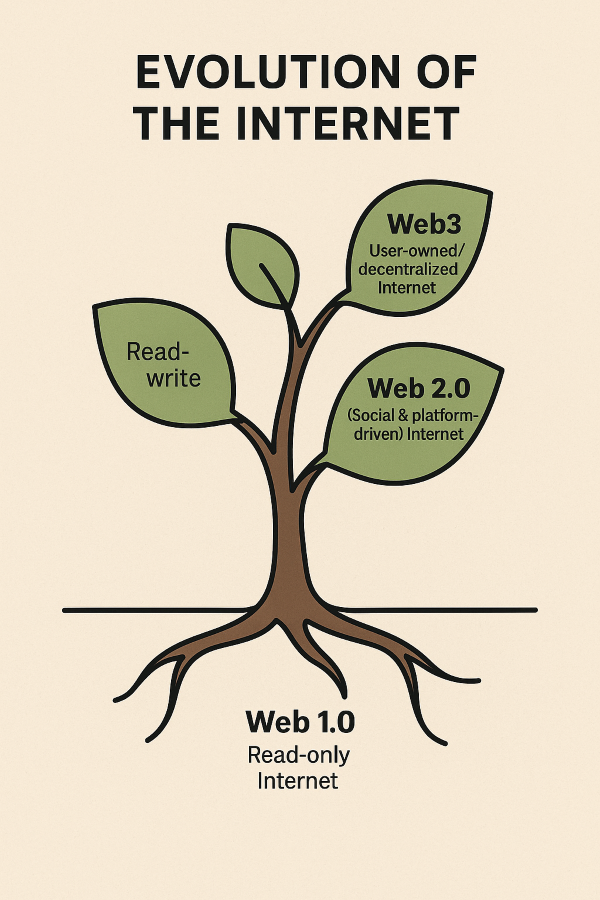
Comparing the internet’s growth to Darwin’s theory of evolution helps explain how it has changed over time, with each stage adapting to the needs, behaviours, and technologies of its time.
The initial phase, known as Web 1 (spanning the 1990s to the early 2000s), was characterised by the internet’s primary function as an information dissemination tool. During this period, only site owners managed content, resulting in a read-only experience for users and a unidirectional flow of information similar to a digital brochure.
Tim O’Reilly introduced the term “Web 2.0” in 2004, marking a new era as mobile services expanded, broadband connectivity improved, and technologies such as AJAX and HTML5 emerged. The internet became interactive, enabling users to create, share, and engage with content without needing special skills. This change opened new ways for people to communicate and connect worldwide.
But as Web 2.0 grew, a few big companies gained significant power and control over data. They decided how information was shared, which voices were heard, and how personal data was handled. Algorithms control every piece of information and opinion. At the same time, many of these platforms rely on business models that depend on extensive data collection, with user behaviour fueling targeted advertising. While these services often appear free, the trade-off is a gradual loss of privacy, autonomy, and control over one’s digital presence.
Concerns about this central control, privacy, and reliance on these platforms led to the idea of a new kind of internet, now called Web 3.0.
What is Web 3.0?
The internet is now moving toward a more user-focused phase, where data ownership is decentralised. Web 3.0 uses technologies such as blockchain and the Semantic Web to return control of data and digital assets to users rather than large technology companies. This change aims to enhance the transparency, security, and personalisation of online experiences.
Key Characteristics of Web 3.0
1. Decentralisation
Control is shared across networks rather than held by a single company or authority. This means that people need not rely on centralised platforms as much.
2. User control over data and identity
Users have more control over their digital identities and personal data, rather than giving that control to platforms by default.
3. Reduced intermediaries
Web 3.0 aims to cut out intermediaries by enabling people to interact, share, and make transactions directly, without needing a central platform to manage these actions.
4. Transparency by design
Many Web 3.0 systems are designed to make rules, transactions, and changes open and verifiable, rather than hidden within private systems.
5. Permissionless participation
Anyone can participate without approval from a central authority, provided they comply with the network’s rules.
6. Resilience and censorship resistance
The distribution of data and services increases the difficulty for any single entity to shut down platforms or completely silence users.
People often use the term Web 3.0 to refer to technologies such as cryptocurrencies, tokens, or blockchain-based finance. However, the main features listed above also make Web 3.0 useful in many areas, including supply chain management, gaming and the metaverse, healthcare, content creation and social media, intellectual property, and digital identity.
How Does Web 3.0 Work – A Brief Sneak Peek
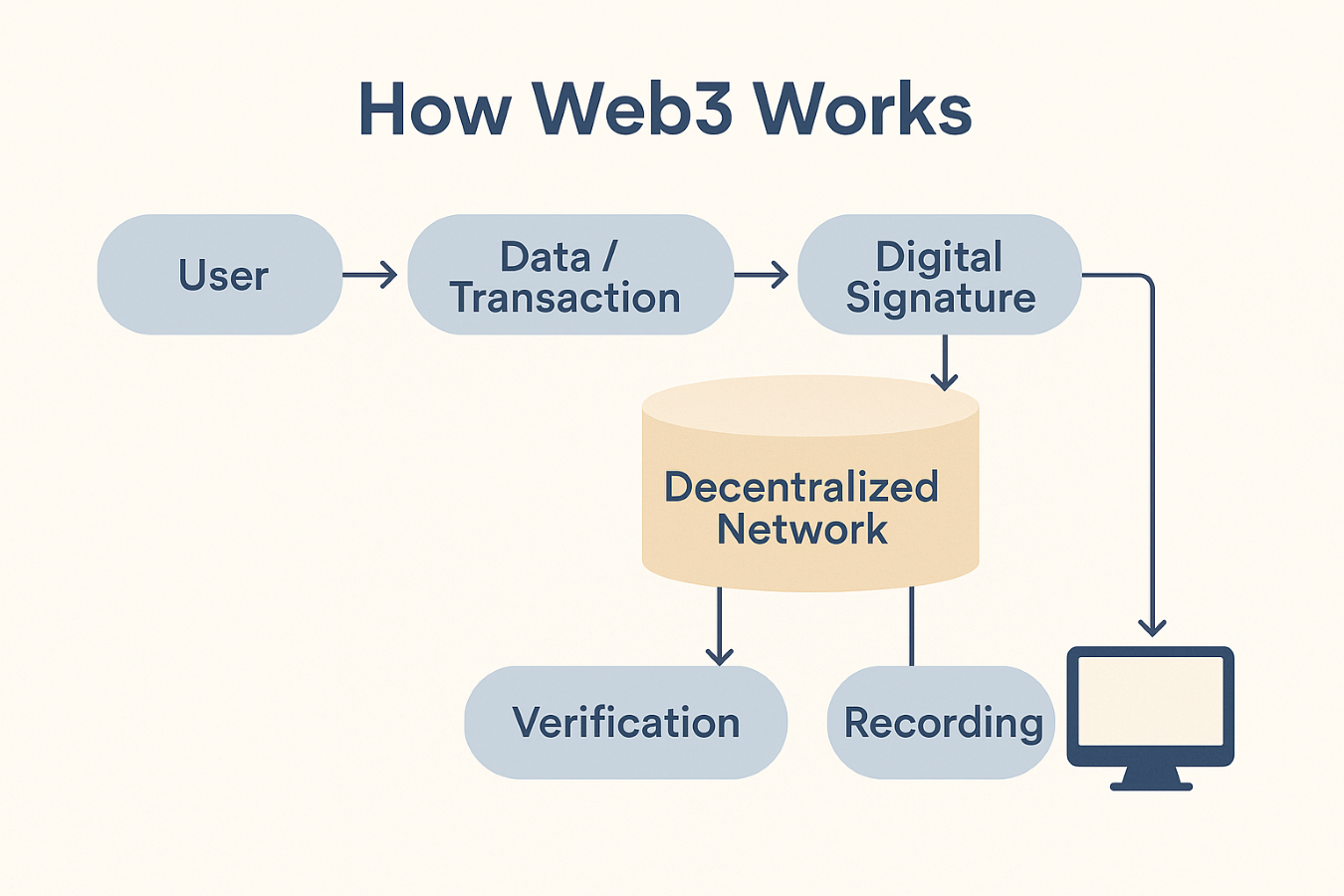
At its core, Web 3.0 changes how information is stored and managed. Instead of storing data on servers owned by a single company, information is distributed across networks. The action is cryptographically signed by the user, verified by multiple participants, and recorded in a shared ledger that is difficult to alter. This structure reduces reliance on central intermediaries and makes manipulation or data abuse more difficult, while shifting greater control and responsibility to users. Although the technology driving Web 3.0 is complex, the primary goal is simple: to give users greater control and responsibility.
Web 3.0: An Emerging, Yet Unsettled, Part of the EU’s Digital Vision
Freedom, Democracy, and Respect for human rights have been the core pillars of the European Union since its inception. These principles have been a centre of discussion whenever policies are framed, and the digital space is no exception. The European Union has signalled a clear willingness to invest in the development of Web 3.0-relevant technologies through official strategies, infrastructure development, and research funding. The European Union is actively shaping the digital world by protecting users, ensuring fair competition, and defending fundamental rights.
A Few Examples:
- The Commission’s blockchain and Web3 strategy outlines policy support, funding programmes, and legal frameworks to foster innovation in decentralised systems.
- Web 3.0-aligned technologies are being evaluated for identity and credential management and secure data exchange.
- EU funding programmes support projects on decentralised data, privacy-preserving technologies, and interoperability. (In recent times, 2016-2019, the EU invested 180 million Euros in a project called Horizon Europe, with grants expected to flow in the future as well)
Web 3.0 Is Still A probability, Not A Concrete Solution Yet.
However, the EU also values legal certainty, accountability, and consumer protection, which can be challenging to achieve in decentralised systems. As a result, the relationship between Web 3.0 and EU policy is still developing, reflecting both a willingness to innovate and a careful approach to potential risks. In this light, it is imperative to understand the complications and challenges associated with Web 3.0.
Challenges of Web 3.0:
- Still in its nascent stage, the technology underlying Web 3.0 is complex and not widely known. Concepts such as private keys, smart contracts, wallets, and decentralised storage are still largely unfamiliar and challenging for non-tech-savvy users.
- Centralised platforms outperform Web 3.0 due to easier user navigation. Influencing users to shift from a seamless platform to a complex option would require substantial investment in digital education and community building, as well as time.
- Beneath the layers of immutable privacy structures, due to a decentralised mechanism for data sharing and storage, technologies such as Web 3.0 lack accountability systems. In the absence of a centralised moderation mechanism, addressing harmful or illegal content, misinformation, and responding to abuse becomes challenging. Once the content is stored, its removal becomes nearly impossible.
- Protocols may be decentralised in theory, but small groups of developers or influential participants still influence many major decisions. This can recreate power imbalances similar to centralised platforms, undermining ideals of shared governance.
- Although Web 3.0 may be emerging as a technical solution to censorship, it is critical to understand that technology alone cannot address deeper social and political issues. Issues such as governance, community norms, power dynamics, and regulatory compliance require broader approaches beyond code.
- For less experienced users, the sole onus for online security, privacy, and data management, owing to greater control, could be overwhelming.
Looking ahead: between regulation and re-imagining
As Europe debates the future of its digital space, organisations such as European Digital Rights reiterate that technology alone does not secure freedom or fairness online. ERDi firmly believes that human rights, data protection, and democratic accountability should be the core of any discussion of new digital systems. From this perspective, Web 3.0 is neither a solution nor a threat in itself, but offers a new avenue of technological experimentation that must operate within existing legal frameworks and fundamental rights.
In the current political landscape, EU initiatives such as the Digital Services Act, the Digital Markets Act, and ongoing discussions around chat control and the Digital Omnibus reflect growing concern about platform dominance, surveillance, and the limits of the Web 2.0 model. These laws aim to correct structural harms through regulation, but also raise deeper questions about how digital infrastructures are designed and who ultimately holds power over them.
In this context, Web 3.0 can be seen as part of a broader conversation about decentralisation and user agency rather than a finished alternative. While its principles resonate with long-standing European Pirate values around privacy, autonomy, and resistance to excessive central control, decentralised technologies also risk creating new concentrations of power if left unchecked. EDRI’s cautious approach emphasises the need for civic interest control, civil society involvement, and robust safeguards.
The interaction between regulation and experimentation will likely shape Europe’s digital future. If approached critically and inclusively, discussions around Web 3.0 can help imagine an internet where innovation supports user rights, rather than undermining them.
europeanpirates.eu/europes-nex…

This week, we discuss history repeating itself, a phone wipe scandal, Meta's relationship with links and more.
This week, we discuss history repeating itself, a phone wipe scandal, Metax27;s relationship with links and more.#BehindTheBlog


Behind the Blog: Resisting Demoralization
This is Behind the Blog, where we share our behind-the-scenes thoughts about how a few of our top stories of the week came together. This week, we discuss history repeating itself and Meta's relationship with links.JOSEPH: I wanted to add a little bit from behind the scenes of this piece: Man Charged for Wiping Phone Before CBP Could Search It. As I said on the podcast this week, there are and continue to be many questions around the case. Especially why CBP stopped Samuel Tunick in the first place.
In the piece I did not focus on Tunick’s activism because frankly we don’t know yet how big a role it played in CBP stopping him. I mentioned it but didn’t focus on it. I think regardless, someone being charged for allegedly wiping a phone is interesting essentially no matter who they are.
Yes, it absolutely may turn out that he was stopped specifically because of his activism. Maybe lots of people think it’s very likely that’s the reason. But I can’t frame a story because it feels like that’s maybe the case. I have to go on what actual evidence I have at the moment.
This post is for subscribers only
Become a member to get access to all content
Subscribe nowBehind the Blog: Resisting Demoralization
This week, we discuss history repeating itself, a phone wipe scandal, Meta's relationship with links and more.Samantha Cole (404 Media)


Ministero dell'Istruzione
#Scuola, da oggi è disponibile il “Fascicolo digitale del personale scolastico”, la nuova piattaforma del #MIM che consente di consultare in modo semplice e sicuro le informazioni relative al proprio percorso professionale, attraverso i dati presenti…Telegram
Hackaday Podcast Episode 350: Damnation for Spreadsheets, Praise for Haiku, and Admiration for the Hacks In Between

This week’s Hackaday Podcast sees Elliot Williams joined by Jenny List for an all-European take on the week, and have we got some hacks for you!
In the news this week is NASA’s Maven Mars Orbiter, which may sadly have been lost. A sad day for study of the red planet, but at the same time a chance to look back at what has been a long and successful mission.
In the hacks of the week, we have a lo-fi camera, a very refined Commodore 64 laptop, and a MIDI slapophone to entertain you, as well as taking a detailed look at neutrino detectors. Then CYMK printing with laser cut stencils draws our attention, as well as the arrival of stable GPIB support for Linux. Finally both staffers let loose; Elliot with an epic rant about spreadsheets, and Jenny enthusiastically describing the Haiku operating system.
Check out the links below if you want to follow along, and as always, tell us what you think about this episode in the comments!
html5-player.libsyn.com/embed/…
It’s dangerous to go alone. Here, take this MP3.
Where to Follow Hackaday Podcast
Places to follow Hackaday podcasts:
Episode 349 Show Notes:
News:
What’s that Sound?
- Congratulations to [kenbob] for guessing the spinning down washing machine. Everyone else tune in next year for your shot at the first sound of 2026.
Interesting Hacks of the Week:
- Liberating AirPods With Bluetooth Spoofing
- GitHub – tyalie/AAP-Protocol-Defintion: Decoding the Apple Accessory Protocol
- Bypassing Airpods Hearing Aid Georestriction With A Faraday Cage
- Nostalgic Camera Is A Mashup Of Analog Video Gear
- Neutrino Transmutation Observed For The First Time
- Detecting Anti-Neutrinos From Distant Fission Reactors Using Pure Water At SNO+
- Engineering Lessons From The Super-Kamiokande Neutrino Observatory Failure
- Detecting Neutrinos, The Slippery Ghost Particles That Don’t Want To Interact
- Building A Commodore 64 Laptop
- Taking Electronics To A Different Level
- Taking It To Another Level: Making 3.3V Speak With 5V
- Philips application note 97055, Bi-directional level shifter for I²C-bus and other systems.
- Finally, A Pipe Slapophone With MIDI
Quick Hacks:
- Elliot’s Picks:
- WiFi Menorah For Eight Nights Of Bandwidth
- Laser Cutter Plus CYMK Spraypaint Equals Full-Color Prints
- Why Push A Button When A Machine Can Do It For You
- Jenny’s Picks:
- After Decades, Linux Finally Gains Stable GPIB Support
- 3D Printing And Metal Casting Are A Great Match
- The Lethal Danger Of Combining Welding And Brake Cleaner
Can’t Miss Articles:
hackaday.com/2025/12/19/hackad…
Attach a Full Size Lens to a Tiny Camera

The Kodak Charmera is a tiny keychain camera produced by licencing out the name of the famous film manufacturer, and it’s the current must-have cool trinket among photo nerds. Inside is a tiny sensor and a fixed-focus M7 lens, and unlike many toy cameras it has better quality than its tiny package might lead you to expect. There will always be those who wish to push the envelope though, and [微攝 Macrodeon] is here to fit a lens mount for full-size lenses (Chinese language, subtitle translation available).
The hack involves cracking the camera open and separating the lens mount from the sensor. This is something we’re familiar with from other cameras, and it’s a fiddly process which requires a lot of care. A C-mount is then glued to the front, from which all manner of other lenses can be attached using a range of adapters. The focus requires a bit of effort to set up and we’re guessing that every lens becomes extreme telephoto due to the tiny sensor, but we’re sure hours of fun could be had.
The Charmera is almost constantly sold out, but you should be able to place a preorder for about $30 USD if you want one. If waiting months for delivery isn’t your bag, there are other cameras you can upgrade to C-mount.
youtube.com/embed/FMZ74QCaLdw?…
Surplus Industrial Robot Becomes two-ton 3D Printer

As the saying goes — when life gives you lemons, you make lemonade. When life gives you a two-ton surplus industrial robot arm, if you’re [Brian Brocken], you apparently make a massive 3D printer.
The arm in question is an ABB IRB6400, a serious machine that can sling 100 to 200 kilograms depending on configuration. Compared to that, the beefiest 3D printhead is effectively weightless, and the Creality Sprite unit he’s using isn’t all that beefy. Getting the new hardware attached uses (ironically) a 3D printed mount, which is an easy enough hack. The hard work, as you might imagine, is in software.
As it turns out, there’s no profile in Klipper for this bad boy. It’s 26-year-old controller doesn’t even speak G-code, requiring [Brian] to feed the arm controller the “ABB RAPID” dialect it expects line-by-line, while simultaneously feeding G-code to the RAMPS board controlling the extruder. If you happen to have the same arm, he’s selling the software that does this. Getting that synchronized reliably was the biggest challenge [Brian] faced. Unfortunately that means things are slowed down compared to what the arm would otherwise be able to do, with a lot of stop-and-start on complex models, which compromises print quality. Check the build page above for more pictures, or the video embedded below.
[Brian] hopes to fix that by making better use of the ABB arm’s controller, since it does have enough memory for a small buffer, if not a full print. Still, even if it’s rough right now, it does print, which is not something the engineers at ABB probably ever planned for back before Y2K. [Brian]’s last use of the arm, carving a DeLorean out of styrofoam, might be closer to the original design brief.
Usually we see people using 3D printers to build robot arms, so this is a nice inversion, though not the first.
youtube.com/embed/peY_KK_nGc8?…
This Week in Security: PostHog, Project Zero Refresh, and Thanks For All the Fish

There’s something immensely satisfying about taking a series of low impact CVEs, and stringing them together into a full exploit. That’s the story we have from [Mehmet Ince] of Prodraft, who found a handful of issues in the default PostHog install instructions, and managed to turn it into a full RCE, though only accessible as a user with some configuration permissions.
As one might expect, it all starts with a Server Side Request Forgery (SSRF). That’s a flaw where sending traffic to a server can manipulate something on the server side to send a request somewhere else. The trick here is that a webhook worker can be primed to point at localhost by sending a request directly to a system API.
One of the systems that powers a PostHog install is the Clickhouse database server. This project had a problem in how it sanitized SQL requests, namely attempting to escape a single quote via a backslash symbol. In many SQL servers, a backslash would properly escape a single quote, but Clickhouse and other Postgresql servers don’t support that, and treat a backslash as a regular character. And with this, a read-only SQL API is vulnerable to SQL injection.
These vulnerabilities together just allow for injecting an SQL string to create and run a shell command from within the database, giving an RCE and remote shell. The vulnerabilities were reported through ZDI, and things were fixed earlier this year.
FreePBX
Speaking of SQL injections, FreePBX recently fixed a handful of SQL injections and an authentication bypass, and researchers at horizon3.ai have the scoop. None of these particular issues are vulnerable without either questionable configuration changes, or access to a valid PHP session ID token. The weakness here seems to be a very similar single quote injection.
Another fun SQL injection in FreePBX requires the authorization type swapped to webserver. But with that setting in place, an injected authentication header with only a valid user name is enough to pull off an SQL injection. The attack chosen for demonstration was to add a new user to the users table. This same authentication header spoof can be used to upload arbitrary files to the system, leading to an easy webshell.
Google Project Zero’s Refresh
We’ve often covered Google’s Project Zero on this column, as their work is usually quite impressive. As their blog now points out, the homepage design left something to be desired. That’s changed now, with a sleek and modern new look! And no, that’s not actually newsworthy here; stop typing those angry comments. The real news is the trio of new posts that came with the refresh.
The most recent is coverage of a VirtualBox VM excape via the NAT network driver. It’s covering a 2017 vulnerability, so not precisely still relevant, but still worth a look. The key here is a bit of code that changes the length of the data structure based on the length of the IP header. Memory manipulation from an untrusted value. The key to exploitation is to manipulate memory to control some of the memory where packets are stored. Then use IP fragmentation packets to interleave that malicious data together and trigger the memory management flaw.
The second post is on Windows exploitation through race conditions and path lookups. This one isn’t an exploit, but an examination of techniques that you could use to slow the Windows kernel down, when doing a path lookup, to exploit a race condition. The winner seems to be a combination of nested directories, with shadow directories and symbolic links. This combination can cost the kernel a whopping three minutes just to parse a path. Probably enough time.
The third entry is on an image-based malware campaign against Samsung Android phones. Malicious DNG files get processed by the Quram image processing library on Samsung devices. DNG images are a non-proprietary replacement for .raw image files, and the DNG format even includes features like embedding lens correction code right in the file format. This correction code is in the form of opcodes, that are handled very much like a script or small program on the host device. The Quram library didn’t handle those programs safely, allowing them to write outside of the allocated memory for the image.
Bits and Bytes
The E-note domain and servers have been seized by law enforcement. It’s believed that $70 million worth of ransomware and cryptocurrency theft has passed through this exchange service, as part of a money laundering operation. A Russian national has been named as the man behind the service, and an indictment has been made, but it seems that no actual arrests have been made.
Dropbear 2025.89 has been released, fixing a vulnerability where a user with SSH access could connect to any unix socket as root. This mishandling of socket permissions can lead to escalation of privilege in a multitude of ways.
React2shell was exploited in the wild almost as soon as it was announced. We covered the vulnerability as it was happening a couple weeks ago, and now it’s clear that ransomware campaigns were launched right away to take advantage of the exploit. It’s also reported that it was used in Advanced Persistent Threat (APT) campaigns right away as well. Real Proof of Concept code is also now available.
Thanks for All the Fish!
And lastly, on a personal note: Thank you to all the readers of this column over the last six years, and to the Hackaday editors for making it happen. I’ve found myself in the position of having four active careers at once, and with the birth of my son in November, I have four children as well. Something has to give, and it’s not going to be any of the kids, so it’s time for me to move on from a couple of those careers. This Week in Security has been a blast, ever since the first installment back in May of 2019. With any luck, another writer will pick up the mantle early next year. (Editor’s note: We’re working on it, but we’ll miss you!)
And if you’re a fan of FLOSS Weekly, the other thing I do around here, don’t worry, as it’s not going anywhere. Hope to see you all there!
Vulnerabilità critica in FreeBSD: eseguibile codice arbitrario via IPv6
Una nuova vulnerabilità nei componenti FreeBSD responsabili della configurazione IPv6 consente l’esecuzione remota di codice arbitrario su un dispositivo situato sulla stessa rete locale dell’aggressore. Il problema riguarda tutte le versioni supportate del sistema operativo e richiede un’azione immediata per proteggere i dispositivi.
È stata scoperta una vulnerabilità nelle utility “rtsold” e “rtsol“, utilizzate per elaborare i messaggi pubblicitari del router come parte del meccanismo di configurazione automatica degli indirizzi IPv6. È stato scoperto che questi programmi non convalidano il parametro del suffisso di dominio passato in tali messaggi, inviandolo direttamente all’utility “resolvconf“, responsabile dell’aggiornamento della configurazione DNS.
Tuttavia, “resolvconf” è scritto come uno script shell e non filtra i dati in arrivo. L’assenza di escape implica che qualsiasi codice dannoso passato tramite il parametro domain list può essere eseguito sul sistema. Pertanto, un aggressore sulla stessa subnet può eseguire comandi sul dispositivo di destinazione senza richiedere privilegi di amministratore o interazioni precedenti.
Secondo gli sviluppatori di FreeBSD , il problema è limitato alle reti locali, poiché gli annunci del router non vengono instradati e non possono attraversare i confini dei segmenti di rete. Tuttavia, riguarda tutti i sistemi che utilizzano l’autoconfigurazione IPv6, in particolare le interfacce con il flag “ACCEPT_RTADV” abilitato, verificabile tramite “ifconfig“.
Per gli utenti che non utilizzano IPv6, non vi è alcun rischio. In caso contrario, si consiglia di aggiornare urgentemente il sistema all’ultima versione.
Gli aggiornamenti sono ora disponibili per tutte le branch di FreeBSD supportate, incluse le versioni 15.0, 14.3 e 13.5. L’aggiornamento è possibile sia tramite il meccanismo di patching binario integrato sia applicando modifiche al codice sorgente.
L’identificatore della vulnerabilità registrata è CVE-2025-14558. Le correzioni sono state pubblicate il 16 dicembre 2025 e sono incluse nei rami stabile e di rilascio di FreeBSD.
L'articolo Vulnerabilità critica in FreeBSD: eseguibile codice arbitrario via IPv6 proviene da Red Hot Cyber.
Di Corinto a Pillole di Eta Beta
Cybersicurezza, senza cultura digitale l’Italia preda dei pirati”
Rubrica Pillole di Eta Beta andata in onda su Rai Radio 1 alle 11.45, con ospite Arturo Di Corinto, consigliere dell’Agenzia per la cybersicurezza nazionale
Mercoledì 17 dicembre 2025
raiplaysound.it/programmi/pill…

Associazione Peacelink reshared this.


Internet Governance: Ein Weihnachtswunder der internationalen Digitalpolitik
netzpolitik.org/2025/internet-…

La direttiva Ue sulle confische e la tentazione di neutralizzare quarant’anni di antimafia
@Giornalismo e disordine informativo
articolo21.org/2025/12/la-dire…
Mentre la UE discute animatamente della confisca definitiva dei patrimoni russi e del loro ri-utilizzo
reshared this
Il nuovo video di Pasta Grannies: youtube.com/watch?v=a2nAnIw1ia…
@Cucina e ricette
(HASHTAG)
Cucina e ricette reshared this.
LA REPUBBLICA ROMA: NUOVO ARTICOLO PIENO ZEPPO DI PROPAGANDA
Contro la falsa informazione pro-inceneritore.
Nell’articolo dell’edizione romana di ieri a firma di Salvatore Giuffrida leggiamo “Il cantiere a Santa Palomba partirà entro il primo trimestre del 2026 e durerà 32 mesi, fino a oltre la metà del 2028”. Il sottotitolo contiene la prima menzogna o bufala, come preferite. Le attività di costruzione dureranno 39 mesi e non 32 come scrive il giornalista e il cantiere terminerà nel maggio 2029. Attenzione, non siamo noi a dichiaralo ma è scritto nero su bianco sul più recente cronoprogramma del proponente.
“Il 2026 sarà l’anno del termovalorizzatore di Roma”. Nell’attacco del pezzo si condensa tutto lo strumentario della retorica tipica dei fan dell’incenerimento che si guarda bene dal ricordare, neppure incidentalmente che i poteri straordinari sono stati attributi per impiantistica destinata a far fronte all’afflusso straordinario dei pellegrini del Giubileo 2025. Un impianto che a Giubileo terminato non è ancora autorizzato e il cui iter è potuto andar avanti esclusivamente a forza di ordinanze, con la Procura di Roma che sta indagando al riguardo. Profili questi, guarda caso, del tutto omessi.
“Bisogna ancora aspettare due anni per inaugurare l’impianto, ma il percorso è già avviato: di fatto è ormai concluso il procedimento autorizzatorio unico regionale, Paur, che riunisce in un unico atto tutte le valutazioni, i pareri e le autorizzazioni di competenza regionale necessarie a realizzare il progetto e avviare il cantiere.”
Il procedimento non è affatto concluso. Ci sono i pareri contrari dei comuni di Albano, Ardea e Pomezia. C’è soprattutto la Soprintendenza Speciale di Roma ha tutta la competenza e decisive motivazioni per bocciare gli elaborati progettuali nella conferenza di servizi in corso e per contestare la procedura avviata in virtù delle proprie prerogative istituzionali discendenti dall’articolo 9 della Costituzione, attuato dal codice dei beni culturali.
Seguono poi i consueti ritornelli della propaganda inceneritorista: “Saranno inoltre realizzati quattro impianti ausiliari per recuperare le ceneri pesanti, un impianto fotovoltaico, una rete di teleriscaldamento e un sistema sperimentale per catturare l’anidride carbonica. Il termovalorizzatore sarà capace di bruciare 600mila tonnellate l’anno di rifiuti e di produrre energia elettrica per circa 200mila abitazioni”.
Al riguardo solo due repliche lampo a proposito di teleriscaldamento e sistema sperimentale cattura CO2. Il teleriscaldamento, conti alla mano, riguarderà un centinaio di famiglie. Dovranno provare di avere il contratto di fornitura indispensabile per la verifica del coefficiente R1 indice di efficienza energetica per ricondurre l’impianto tra quelli di recupero energetico.
Sull’impianto di cattura della CO2, oltre a non essere sperimentale come evidenziato dallo stesso proponente basti ricordare che la massima cattura equivale ad appena l’1per mille della Co 2 emessa. Su questo ci sono ben due esposti alla Corte dei conti ma anche su questo silenzio tombale.
Le 200 mila abitazioni che vorranno l’energia elettrica prodotta, non l’avranno certo a gratis ma dovranno pagarla a prezzi di mercato.
“Infine, a ottobre il Comune ha ratificato un protocollo d’intesa con Ferrovie dello Stato per gestire la logistica ambientale in merito al trasporto dei rifiuti senza costi aggiuntivi per le parti.” Un protocollo d’intesa privo di qualsivoglia autentica portata, chissà perché riportarlo?
Davanti a tanta spudorata propaganda rispondiamo con il nostro prossimo appuntamento: la mattina di lunedì 29 dicembre sit-in presso la Soprintendenza speciale di Roma per smuoverla a tutelare i beni archeologici presenti nell’area del progetto e che verrebbero irrimediabilmente distrutti.
Concludiamo il nostro comunicato richiamando il recentissimo parere contrario della Regione Lazio nella conferenza di servizi sulla discarica di Tor Tignosa che lascia l’inceneritore privo della sua discarica di servizio.
Non serve il giornalismo di inchiesta, sarebbe sufficiente il semplice giornalismo.
Buona serata!
19 dicembre 2025


L'animale più longevo mai scoperto aveva 507 anni. E lo abbiamo ucciso per sbaglio
Ming, nato nel 1499, ha attraversato cinque secoli di storia prima di morire il giorno della sua scoperta... purtroppo.Everyeye Tech
Europe’s Next Digital Frontier: Balancing Web 3.0 Innovation with Fundamental Rights
@politics
europeanpirates.eu/europes-nex…
Evolution Of the Internet Comparing the internet’s growth to Darwin’s theory of evolution helps explain how it has changed over time,
Effetto Gaza: piazze piene, urne vuote. L’ultimo sondaggio di Youtrend spiega perché
@Politica interna, europea e internazionale
Le elezioni regionali nelle Marche dello scorso settembre avevano già evidenziato questo tema: il candidato del centrosinistra Matteo Ricci ha dedicato gli ultimi giorni della campagna elettorale a iniziative apertamente a favore della causa palestinese. Le urne,
Politica interna, europea e internazionale reshared this.