Dopo che il mio account Instagram è stato bloccato e ne ho creato uno nuovo, ho ricontattato i miei vecchi compagni di scuola e, dopo tanto tempo, ci siamo ritrovati a cena insieme. Il ristorante di barbecue era davvero delizioso.
L'articolo proviene da #StartMag e viene ricondiviso sulla comunità Lemmy @Informatica (Italy e non Italy 😁) Un ex dipendente di Tokyo Electron è sospettato di aver sottratto segreti industriali a Tsmc, la più importante azienda manifatturiera di microchip al mondo. Il caso ci ricorda che la proprietà intellettuale è centrale nella competizione
‘Hearing voices’ doesn’t have to be worrisome, for instance when software-defined radio (SDR) happens to be your hobby. It can take quite some of your time and attention to pull voices from the ether and decode them. Therefore, [theckid] came up with a nifty solution: RadioTranscriptor. It’s a homebrew Python script that captures SDR audio and transcribes it using OpenAI’s Whisper model, running on your GPU if available. It’s lean and geeky, and helps you hear ‘the voice in the noise’ without actively listening to it yourself.
This tool goes beyond the basic listening and recording. RadioTranscriptor combines SDR, voice activity detection (VAD), and deep learning. It resamples 48kHz audio to 16kHz in real time. It keeps a rolling buffer, and only transcribes actual voice detected from the air. It continuously writes to a daily log, so you can comb through yesterday’s signal hauntings while new findings are being logged. It offers GPU support with CUDA, with fallback to CPU.
It sure has its quirks, too: ghost logs, duplicate words – but it’s dead useful and hackable to your liking. Want to change the model, tweak the threshold, add speaker detection: the code is here to fork and extend. And why not go the extra mile, and turn it into art?
In his regular browsing on AliExpress, [Ben Jeffrey] came across something he didn’t understand—a $5 fiber optic to RF cable TV adapter. It was excessively cheap, and even more mysteriously, this thing didn’t even need power. He had to know how it worked, so he bought one and got down to tinkering with it. Inside the device in question. [Ben] needed some hardware to test the device with, so he spent $77 on a RF-to-fiber converter and a cheap composite-to-RF modulator so he could test the $5 fiber-to-RF part. A grand expenditure to explore a $5 device, but a necessary sacrifice for the investigation. Once [Ben] hooked up a fiber optic signal to the converter, he was amazed to see it doing its job properly. It was converting the incoming video stream to RF, and it could readily be tuned in on a TV, where the video appeared clean and true.
It was disassembly that showed how simple these devices really are. Because they’re one-way converters, they simply need to convert a changing light signal into an RF signal. Inside the adapter is a photodiode which picks up the incoming light, and with the aid of a few passives, the current it generates from that light becomes the RF signal fed into the TV. There’s no need for a separate power source—the photodiode effectively works like a solar panel, getting the power from the incoming light itself. The part is ultimately cheap for one reason—there just isn’t that much to it!
It’s a neat look at something you might suspect is complex, but is actually very simple. We’ve explored other weird TV tech before, too, like the way Rediffusion used telephone lines to deliver video content. Video after the break.
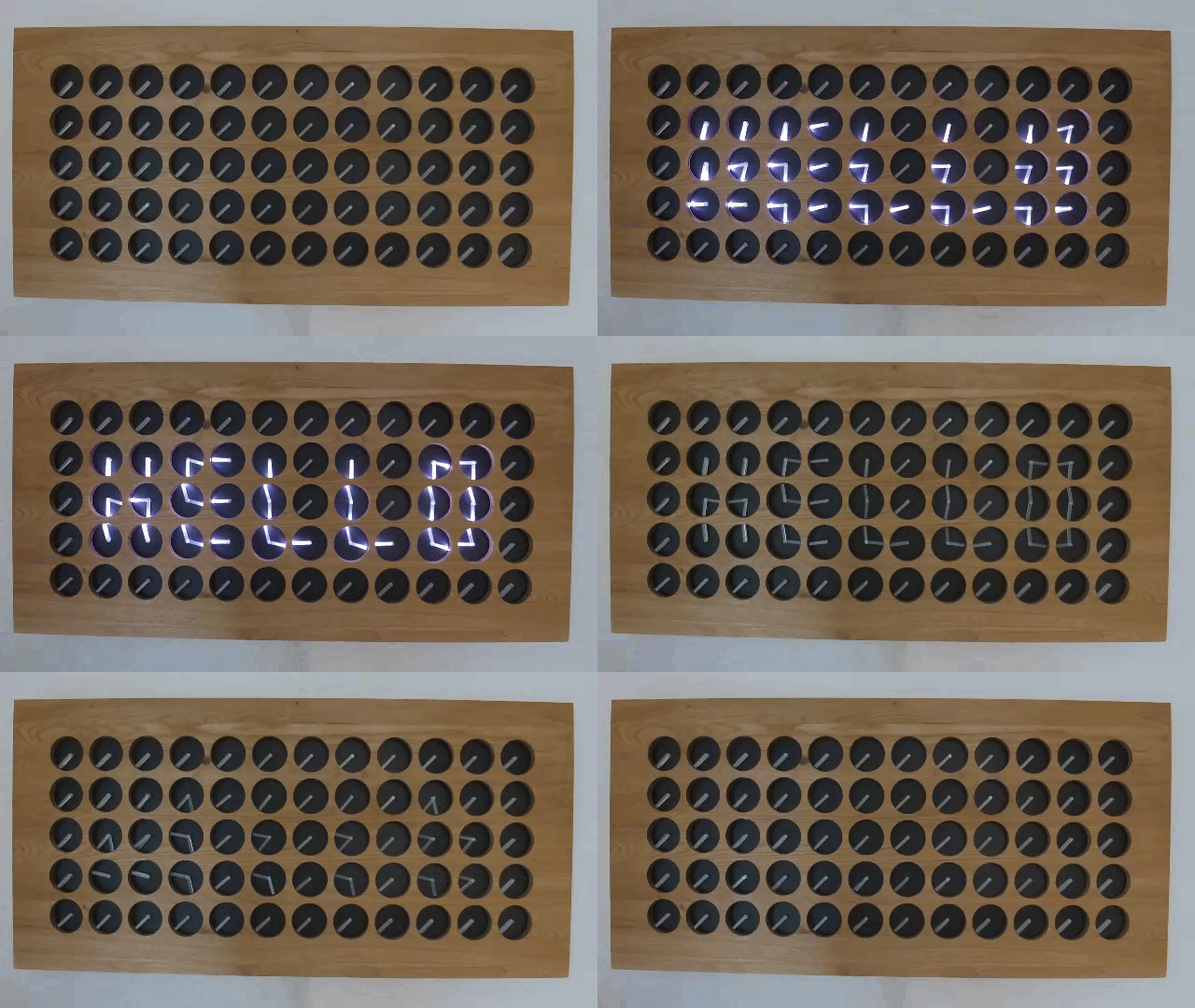
Some people just want to have their cake and eat it too, but very few of us ever get to pull it off. [Erich Styger] has, though with V5 of his “MetaMetaClock”— a clock made of clocks, that uses the orientation of the hands to create digits.
We’ve seen previous versions of this clock. As before, the build is exquisitely detailed and all relevant files are on GitHub. This version keeps the acrylic light-pipe hands of version 4, but adds more of them: 60 clocks vs 24. Larger PCBs are used, grouping the dual-shaft steppers into groups of four, instead of the individual PCBs used before. Each PCB has an NXP LPC845 (a Cortex M0 microcontroller) that communicates on an RS-485 bus. Placing four steppers per microcontroller reduces parts count somewhat compared to previous versions (which had each ‘clock’ on its own modular PCB) albeit at the cost of some flexibility.
While the last version used veneers on its face, this version is cut by CNC by from a large slab of oak. It’s certainly the most attractive version yet, and while bigger isn’t always better, more clock faces means more potential effects. Date? Time? Block letters? Arbitrary text? Kaleidoscopic colours from the RGB LEDs? It’s all there, and since it’s open source, anyone who builds one can add more options. A BLE interface makes it quick and easy to wirelessly switch between them or set the time.
It’s nice sometimes to watch projects like this improve incrementally over time. [Erich] mentions that he plans to add Wifi and a web-based user interface for the next version. We look forward to it, and are grateful to [jicasi] for the tip. Just as it is always clock time at Hackaday, so you can always toss a tip of your own into the box.
Eventually [Erich] will have enough clocks for Bad Apple, but this version can do short text strings among many other effects. Check his blog for more demo videos.
Il Ministro Giuseppe Valditara ha firmato un decreto che autorizza ulteriori 164 interventi, per un investimento complessivo di quasi 104 milioni, destinati alla costruzione di nuovi #asili o alla riconversione di edifici non già destinati ad asili i…
Il Ministro Giuseppe Valditara ha firmato un decreto che autorizza ulteriori 164 interventi, per un investimento complessivo di quasi 104 milioni, destinati alla costruzione di nuovi #asili o alla riconversione di edifici non già destinati ad asili i…
[David]’s project was inspired by a product that Hayes produced in the 1980s, which provided a serial-port based real-time clock solution for computers that lacked one on board. The heart of the project is an Arduino Uno, which itself uses a Dallas DS3231 RTC module to keep accurate time. [David] then drew from an IEC driver developed by [Lars Pontoppidan] for the MM2IEC project. This enables the Arduino to report the time to the VIC-20 via its IEC port.
The project is a neat way to provide a real-time clock source to programs written in Commodore BASIC. It’s also perfectly compatible with the IEC bus, so it can be daisy chained along with printers and disk drives without issue. [David] hasn’t tested it with a Commodore 64, but he suspects it should work just as well on that platform, too.
If you’ve ever wanted to build something clock-based for the VIC-20 but didn’t know how, this is a great piece of hardware to solve that problem. Meanwhile, you might find joy in reading about real-time clock hacks for other systems like the Raspberry Pi. Meanwhile, if you’re working on your own nifty timekeeping projects, don’t hesitate to let us know!
Mio fratellino (storia lunghissima che racconterò, forse, un'altra volta) è ipovedente. Purtroppo essendo nato sordo, non parla nemmeno. Grazie agli impianti cocleari sente e capisce quasi tutto, ma non emette suoni. Grazie alla tecnologia, però, sta imparando a comunicare. Sa leggere e scrivere al computer, anche se solo su nostro input, mai in modo spontaneo. Usa una tastiera fisica per ipovedenti, con tasti grandi e ad alto contrasto, e la gestisce discretamente bene. Recentemente ci siamo dotati di una lavagna interattiva per supportare il suo percorso educativo e di sviluppo. Ho collegato la tastiera alla lavagna, ma non vuole usarla: preferisce stare in piedi e utilizzare quella virtuale direttamente sullo schermo della smart board (o forse semplicemente associa la tastiera fisica al computer... poco importa!).
Problema: la tastiera virtuale dobbiamo ri-attivarla spesso, inserire il CAPS LOCK (sa leggere e scrivere solo in maiuscolo) e con certe app non funziona.. Ecco perché avrei bisogno di una tastiera virtuale — che rimanga sempre visibile, o almeno di facile attivazione, sullo schermo della smart board — ad alto contrasto e con lettere maiuscole. La lavagna è basata su android.
Mio fratellino (storia lunghissima che racconterò, forse, un'altra volta) è ipovedente. Purtroppo essendo nato sordo, non parla nemmeno. Grazie agli impianti cocleari sente e capisce quasi tutto, ma non emette suoni. Grazie alla tecnologia, però, sta imparando a comunicare. Sa leggere e scrivere al computer, anche se solo su nostro input, mai in modo spontaneo. Usa una tastiera fisica per ipovedenti, con tasti grandi e ad alto contrasto, e la gestisce discretamente bene. Recentemente ci siamo dotati di una lavagna interattiva per supportare il suo percorso educativo e di sviluppo. Ho collegato la tastiera alla lavagna, ma non vuole usarla: preferisce stare in piedi e utilizzare quella virtuale direttamente sullo schermo della smart board (o forse semplicemente associa la tastiera fisica al computer... poco importa!).
Problema: la tastiera virtuale dobbiamo ri-attivarla spesso, inserire il CAPS LOCK (sa leggere e scrivere solo in maiuscolo) e con certe app non funziona.. Ecco perché avrei bisogno di una tastiera virtuale — che rimanga sempre visibile, o almeno di facile attivazione, sullo schermo della smart board — ad alto contrasto e con lettere maiuscole. La lavagna è basata su android.
Mio fratello ha 13 anni, in piena pubertà. Mentre il suo sviluppo cognitivo è attorno ai 6-7 anni. Difficile dirlo
Lui vive con mia madre, che non è più giovanissima (70). Anche se se la cava bene con la tecnologia, a volte può essere un ostacolo.
Io e miei altri fratelli andiamo spesso a darle una mano, ma ecco..non siamo sempre lì con loro. Per questo avrei bisogno di app semplici da utilizzare (dell'installazione posso occuparmene io)
Ciao, uso la tastiera Heliboard, che è un progetto open source. I tasti sono maiuscoli e si può personalizzare nei colori e nella grandezza.
La visibilità della tastiera avviene quando un campo "scrivibile" ottiene il focus, quindi direi che dipende o dalla app che usate come board, o dai criteri di accessibilità del dispositivo. Possono essere alterati?
Diversamente, potresti provare a chiedere supporto agli sviluppatori, o qualcuno abile col codice del progetto open, provando a spiegare la situa in inglese e affidandoti a qualche anima pia che possa sviluppare l'opzione di non nascondersi.
Anche se, una tastiera visibile, che non può scrivere, diventa di intralcio e peggiora l'usabilità dell'interfaccia.
@Tassoman grazie mille! Proverò Heliboard. Per quel che riguarda i criteri di accessibilità del dispositivo, credo che siano piuttosto limitati ma ammetto che non ci ho smanettato molto.
Sul fatto di avere la tastiera visibile quando non bisogna scrivere, è vero è di intralcio e probabilmente gli confonde il campo visivo già limitato. È solo che con lui dobbiamo sempre essere pronti. Magari un secondo vuole scrivere e quello dopo no...
@Low res Loud audio grazie di cuore. Non conoscevo il sito ma ho visto che alcuni ausili li abbiamo già (tipo la tastiera low vision o comunicatore CAA - che non utilizza 🙁 ). Darò un'occhiata, magari scopro qualcosa di interessante.
Le tastiere che ho provato dello Store non soddisfacevano le nostre esigenze - ma ammetto che non ho avuto molto tempo per testarle e smanettare.
@Low res Loud audio grazie. La comunicazione è un grosso problema, negli anni abbiamo provato di tutto. Le PECS con lui non funzionano molto perché tende a mostrarci la prima scheda che gli capita in mano e trascinarci fisicamente verso quello che vuole, indipendentemente dall'immagine sulla scheda. Anche coi dispositivi "comunicatori" funziona poco, non ha pazienza. La sua richiesta deve essere soddisfatta nel giro di pochi secondi..altrimenti si arrende e non usa più lo strumento che invece dovrebbe facilitare la comunicazione. Ora adottiamo un approccio misto: LIS semplificata (c'è un metodo chiamato PORTA sviluppato dalla fondazione Svizzera a favore di persone sordo-cieche), qualche volta scritte al computer, schede tipo PECS (solo per alcune cose), ma è difficile perché ormai è grande.. Noi in famiglia lo capiamo abbastanza bene, ma dobbiamo fare in modo che possa farsi capire anche dal mondo esterno.
@Low res Loud audio grazie mille. S la sua situazione è complessa e purtroppo non ci sono molti professionisti in canton Ticino in grado di darci un aiuto concreto, per questo abbiamo sviluppato delle strategie un po' fai-da-te. Da condividere avrei tantissimo.. e fa piacere sapere che c'è qualcuno in grado di comprendere 🥰
@poliversity Mi spiace. Non saprei da che parte prendere. Situazione troppo complessa - so che ci sono tastiere virtuali ma non ho idea per android. Provare a contattare gente tipo Leonardoausili (è un sito web) o la lega del filo d'oro
@aimee80 non si può fare molto con queste cose qua, se uno un ausilio non ne vuole sapere, non lo userà (come gli anziani col bastone; quanto fa incazzare i parenti?)
@Elena Brescacin lo so, non lo forziamo assolutamente. È che in estate esisteva solo la LIM e la piscina per lui, ora non entra nemmeno nella stanza dove ci sono i dispositivi 😅
Behind the Blog: Speculation, Distraction, and Smart Glasses
This is Behind the Blog, where we share our behind-the-scenes thoughts about how a few of our top stories of the week came together. This week, we discuss Wikipedia's ethos and zooming in on a lot of pictures of cops' glasses.
EMANUEL: I’m going to keep it very short this week because I’m crunching on a feature, but I wanted to quickly discuss Wikipedia.
This week I wrote a story about a pretty in-the-weeds policy change Wikipedia’s community of volunteer editors adopted which will allow them to more quickly and easily delete articles that are obviously AI generated. One thought I’ve had in mind that didn’t make it into the last few stories I’ve written about Wikipedia, and one that several people shared on social media in response to this one, is that it’s funny how many of us remember teachers in school telling us that Wikipedia was not a good source of information.
Upgrade to continue reading
Become a paid member to get access to all premium content Upgrade
Elliot and Dan got together this week for a review of the week’s hacking literature, and there was plenty to discuss. We addressed several burning questions, such as why digital microscopes are so terrible, why computer systems seem to have so much trouble with names, and if a thermal receipt printer can cure ADHD.
We looked at a really slick 5-axis printer that COVID created, a temperature-controlled fermentation setup, and a pseudo-Mellotron powered by a very odd tape recorder. We also learned little about designing 3D printed parts with tight tolerances, stepping a PC power supply up to ludicrous level, and explored a trio of unique entries for the One Hertz Challenge.
And for the Can’t Miss section, we looked at what happens to planes when they get hit by lightning (and how they avoid it), and say goodbye to the man who launched a lot of careers by making model kits.
It was also exciting to learn that the first day of Supercon is Halloween, which means a Friday night sci-fi cosplay party. It’s gonna be lit.
Più o meno una volta al mese, torno a scrivere qualcosa 😁 Le cose stanno iniziando ad andare meglio (non lavorativamente), anche se il mio tempo libero è sempre pochissimo. Comunque domenica mattina partiamo in vacanza e non vedo l'ora. Abbiamo proprio bisogno di ricaricarci un po'. Andremo in Slovenia 😀
Io, molto a rilento, sto cercando di togliere google e tanto altro schifo dalla mia vita. E questo mi fa sentire bene.
Congressman Raja Krishnamoorthi's office said this was “a formal investigation into Flock Group Inc. over its role in enabling invasive surveillance practices that threaten the privacy, safety, and civil liberties of women, immigrants, and other vulnerable Americans.”#Impact
Congress Launches Investigation into Flock After 404 Media Reporting
Two members of Congress have launched a formal investigation into automatic license plate reader (ALPR) company Flock and demanded it turn over details of all searches of its national camera network concerning Immigration and Customs Enforcement (ICE), Customs and Border Protection (CBP), and abortions. The move comes after 404 Media revealed that local cops were performing lookups in Flock on behalf of ICE or for immigration enforcement, and that a Texas officer searched cameras nationwide looking for a woman who self-administered an abortion.
The congressional investigation is just the latest impact from those articles, which have resulted in a wave of similar coverage around the country and Flock making major changes to its platform. The letter announcing the investigation explicitly cites 404 Media’s articles.
This post is for subscribers only
Become a member to get access to all content Subscribe now
The Halo 3C is a vape detector installed in schools and public housing. A young hacker found it contains microphones and that it can be turned into an audio bug, raising privacy concerns.#News #Hacking
A couple of years ago, a curious, then-16-year-old hacker named Reynaldo Vasquez-Garcia was on his laptop at his Portland-area high school, seeing what computer systems he could connect to via the Wifi—“using the school network as a lab,” as he puts it—when he spotted a handful of mysterious devices with the identifier “IPVideo Corporation.”
After a closer look and some googling, Garcia figured out that a company by that name was a subsidiary of Motorola, and the devices he’d found in his school seemed to be something called the Halo 3C, a “smart” smoke and vape detection gadget. “They look just like smoke detectors, but they have a whole bunch of features like sensors and stuff,” Garcia says.
As he read more, he was intrigued to learn that the Halo 3C goes beyond detecting smoke and vaping—including a distinct feature for discerning THC vaping in particular. It also has a microphone for listening out for “aggression,” gunshots, and keywords such as someone calling for help, a feature that to Vasquez-Garcia immediately raised concerns of more intrusive surveillance.
Upgrade to continue reading
Become a paid member to get access to all premium content Upgrade
Vendo monitor 23" Dell U2312HM, condizioni estetiche perfette, neanche un graffietto. Pixel perfetti, non c'è n'è uno bruciato o spento. Il connettore VGA balla leggermente: se spostate il pc tutti giorni da un po' fastidio, se lo tenete fisso, non ci sono problemi.
Sono inclusi il cavo di alimentazione e quello VGA/HDMI.
Zona di consegna Milano/Pavia. Visto il prezzo e le dimensioni, non credo convenga la spedizione.
Vendo monitor 23" Dell U2312HM, condizioni estetiche perfette, neanche un graffietto. Pixel perfetti, non c'è n'è uno bruciato o spento. Il connettore VGA balla leggermente: se spostate il pc tutti giorni da un po' fastidio, se lo tenete fisso, non ci sono problemi.
Sono inclusi il cavo di alimentazione e quello VGA/HDMI.
Zona di consegna Milano/Pavia. Visto il prezzo e le dimensioni, non credo convenga la spedizione.
Price: 50 € :: Questo è un articolo disponibile su FediMercatino.it
Si prega di rispondere con un messaggio diretto/privato al promotore dell'annuncio.
Negli ultimi anni l’Esercito statunitense ha accelerato lo sviluppo delle armi a energia diretta, e sulla base dei risultati ottenuti ne sta valutando un impiego più ampio anche nel contesto della difesa antimissile. “Le tecnologie per i laser a energia
The Boys con Marc Valentine in Italia a Settembre per cinque concerti. freezonemagazine.com/news/marc… Arrivano a Settembre nel nostro paese The Boys con Marc Valentine per una serie di cinque concerti che si preannunciano molto interessanti. The Boys sono una delle leggende del Punk Uk. Nati dalla fuoriuscita di Matt Dagerfield dai London SS che unì le forze con Casino Steel, cui si affiancarono Honest John
L'articolo proviene da #StartMag e viene ricondiviso sulla comunità Lemmy @Informatica (Italy e non Italy 😁) Trump ha chiesto le dimissioni immediate dell'amministratore delegato di Intel, Lip-Bu Tan, accusato di conflitto di interessi con la Cina: in effetti l'imprenditore ha investito in molte aziende cinesi e Cadence Design (l'azienda che ha
Video obtained and verified by 404 Media shows a CBP official wearing Meta's AI glasses, which are capable of recording and connecting with AI. “I think it should be seen in the context of an agency that is really encouraging its agents to actively intimidate and terrorize people," one expert said.#CBP #Immigration #Meta
oltretutto chi sposta la produzione negli usa sposterà parte di produzione... non può spostare tutto. per importare dall'italia magari materie prime o parti comunque necessarie dovrà lo stesso pagare i dazzi... davvero utile quindi alla fine è comunque un'inculata e non conviene. in un mondo globalizzato come questo è veramente assurda la logica di trump. più tasse per tutti (negli usa)
ma che fine hanno fatto tutti quelli che prima delle elezioni osannavano tanto trump... negando persino i fatti tipo il suo tentato colpo di stato di 4 anni prima... eh beh... adesso che ha vinto siete tutti contenti? coglioni... bella la vostra idea di destra...
L'articolo proviene da #StartMag e viene ricondiviso sulla comunità Lemmy @Informatica (Italy e non Italy 😁) Tsmc sarà esentata dai dazi al 100 per cento sui microchip imposti da Trump. Ottima notizia per l'azienda e per l'intera economia di Taiwan. Ma le tensioni commerciali con l'America non sono risolte.
Un gruppo di grandi istituzioni finanziarie internazionali, tra cui J.P. Morgan Chase, Ing e Commerzbank, ha deciso di accettare la sfida della banca multilaterale pensata per portare avanti i progetti di difesa dell’Europa e dei suoi alleati. La Defence, Security and Resilience Bank (Dsrb) infatti si pone l’obiettivo
La Marina Australiana ha scelto la Mitsubishi per costruire la sua prossima generazione di fregate. Pochi giorni fa, il ministero della Difesa australiano ha infatti annunciato che la versione potenziata della classe “Mogami”




aimee80
in reply to aimee80 • •Ho dimenticato dei dettagli:
Mio fratello ha 13 anni, in piena pubertà. Mentre il suo sviluppo cognitivo è attorno ai 6-7 anni. Difficile dirlo
Lui vive con mia madre, che non è più giovanissima (70). Anche se se la cava bene con la tecnologia, a volte può essere un ostacolo.
Io e miei altri fratelli andiamo spesso a darle una mano, ma ecco..non siamo sempre lì con loro. Per questo avrei bisogno di app semplici da utilizzare (dell'installazione posso occuparmene io)
Tassoman
in reply to aimee80 • • •Ciao, uso la tastiera Heliboard, che è un progetto open source. I tasti sono maiuscoli e si può personalizzare nei colori e nella grandezza.
La visibilità della tastiera avviene quando un campo "scrivibile" ottiene il focus, quindi direi che dipende o dalla app che usate come board, o dai criteri di accessibilità del dispositivo. Possono essere alterati?
Diversamente, potresti provare a chiedere supporto agli sviluppatori, o qualcuno abile col codice del progetto open, provando a spiegare la situa in inglese e affidandoti a qualche anima pia che possa sviluppare l'opzione di non nascondersi.
Anche se, una tastiera visibile, che non può scrivere, diventa di intralcio e peggiora l'usabilità dell'interfaccia.
github.com/Helium314/HeliBoard
GitHub - Helium314/HeliBoard: Customizable and privacy-conscious open-source keyboard
GitHubaimee80
in reply to Tassoman • •@Tassoman grazie mille! Proverò Heliboard.
Per quel che riguarda i criteri di accessibilità del dispositivo, credo che siano piuttosto limitati ma ammetto che non ci ho smanettato molto.
Sul fatto di avere la tastiera visibile quando non bisogna scrivere, è vero è di intralcio e probabilmente gli confonde il campo visivo già limitato. È solo che con lui dobbiamo sempre essere pronti. Magari un secondo vuole scrivere e quello dopo no...
aimee80
Unknown parent • •@Low res Loud audio grazie di cuore. Non conoscevo il sito ma ho visto che alcuni ausili li abbiamo già (tipo la tastiera low vision o comunicatore CAA - che non utilizza 🙁 ). Darò un'occhiata, magari scopro qualcosa di interessante.
Le tastiere che ho provato dello Store non soddisfacevano le nostre esigenze - ma ammetto che non ho avuto molto tempo per testarle e smanettare.
aimee80
Unknown parent • •Anche coi dispositivi "comunicatori" funziona poco, non ha pazienza. La sua richiesta deve essere soddisfatta nel giro di pochi secondi..altrimenti si arrende e non usa più lo strumento che invece dovrebbe facilitare la comunicazione.
Ora adottiamo un approccio misto: LIS semplificata (c'è un metodo chiamato PORTA sviluppato dalla fondazione Svizzera a favore di persone sordo-cieche), qualche volta scritte al computer, schede tipo PECS (solo per alcune cose), ma è difficile perché ormai è grande..
Noi in famiglia lo capiamo abbastanza bene, ma dobbiamo fare in modo che possa farsi capire anche dal mondo esterno.
aimee80
Unknown parent • •Da condividere avrei tantissimo.. e fa piacere sapere che c'è qualcuno in grado di comprendere 🥰
Poliversity - Università ricerca e giornalismo
in reply to aimee80 • •@Elena Brescacin @Elena Brescacin hai qualche suggerimento per @aimee80?
(scusate, ma l'ho visto solo ora)
aimee80 likes this.
Elena Brescacin
in reply to Poliversity - Università ricerca e giornalismo • •aimee80
in reply to Elena Brescacin • •Elena Brescacin
in reply to aimee80 • •aimee80
in reply to Elena Brescacin • •