
Task Manager Linux: l’alternativa leggera per monitorare il tuo sistema
linuxeasy.org/task-manager-lin…
Gestisci i processi su Linux con Task Manager di DonutsDelivery. Un'utility leggera e intuitiva per monitorare CPU, RAM e sistema senza rallentamenti. L'articolo Task Manager Linux:
404 Media has obtained a cache of internal police emails showing at least two agencies have bought access to GeoSpy, an AI tool that analyzes architecture, soil, and other features to near instantly geolocate photos.#FOIA #AI #Privacy


Cops Are Buying ‘GeoSpy’, an AI That Geolocates Photos in Seconds
📄
This article was primarily reported using public records requests. We are making it available to all readers as a public service. FOIA reporting can be expensive, please consider subscribing to 404 Media to support this work. Or send us a one time donation via our tip jar here.The Miami-Dade Sheriff’s Office (MDSO) and the Los Angeles Police Department (LAPD) have bought access to GeoSpy, an AI tool that can near instantly geolocate a photo using clues in the image such as architecture and vegetation, with plans to use it in criminal investigations, according to a cache of internal police emails obtained by 404 Media.
The emails provide the first confirmed purchases of GeoSpy’s technology by law enforcement agencies. On its website GeoSpy has previously published details of investigations it says used the technology, but did not name any agencies who bought the tool.
“The Cyber Crimes Bureau is piloting a new analytical tool called GeoSpy. Early testing shows promise for developing investigative leads by identifying geospatial and temporal patterns,” an MDSO email reads.
The emails show MDSO has access to the “global” GeoSpy model, which lets it geolocate photos from around the world, and a custom model specifically trained for Miami-Dade County. GeoSpy claims that its custom models provide results to an accuracy of one meter, according to the emails. 404 Media has not independently verified those claims, and on its site GeoSpy changes that claim to “Our AI can pinpoint locations in supported cities within 1-5 meters accuracy.”
“The one-time fee covers data collection, compute resources, research and development, and engineering hours,” a June 2025 email from GeoSpy to the agency reads. That fee changes “based on region size and density,” according to the email.
💡
Do you know about any other interesting tools law enforcement are using? I would love to hear from you. Using a non-work device, you can message me securely on Signal at joseph.404 or send me an email at joseph@404media.co.In all, MDSO’s access cost $85,500, according to documents attached to the emails. That includes the custom Miami-Dade County model for $38,000, two annual GeoSpy licenses each costing $5,000 with 350 searches, and an additional 150,000 searches for another $37,500.
A presentation included in the emails says the only other law enforcement agency using GeoSpy is “LAPD’s Robbery and Homicide Bureau.” 404 Media previously reported on LAPD’s interest in the technology, but the new emails say LAPD did acquire a license for the tool.
A screenshot of one of the emails. Image: 404 Media.
404 Media first covered GeoSpy last year. Made by Graylark Technologies from Boston, the tool is trained on “millions” of images worldwide “enabling it to recognize distinct geographical markers such as architectural styles, soil characteristics, and their spatial relationships,” according to marketing material available online. In essence, it does the same sort of tasks an open source intelligence (OSINT) researcher or GeoGuessr player might do but automatically, allowing someone with much less or no geolocation experience to potentially figure out where a photo was taken. Because it is a relatively new technology, it is unclear how well exactly Geospy performs, though.The MDSO’s Cyber Crimes Bureau is the part of the agency with access to GeoSpy, according to the emails. But the bureau has offered to perform lookups for other parts of the Sheriff’s Office. In one MDSO form attached to an email, law enforcement officials can put in a request for a set of images to be run through the software.
playlist.megaphone.fm?p=TBIEA2…
“That said, the tool is not foolproof and remains in a testing/validation phase. During this pilot, we’d like to make our analysts available to run GeoSpy queries in support of your active cases,” the email, sent by a lieutenant in the Cyber Crimes Bureau, reads. “Our intent is to provide timely, analyst-assisted leads that may help you advance major cases. GeoSpy outputs should be treated as lead information only and corroborated through standard investigative methods.”The email acknowledges that results may include false positives, and asks officials to limit sharing personally identifiable information (PII) to what is necessary and authorized for the request.
A screenshot of the GeoSpy request form. Image: 404 Media.
In one response, an official wrote, “It sounds like it could be useful to us in Robbery.” The Cyber Crimes Bureau official said “Yess. Would be cool to help you guys out.” Officials from the Special Victims Bureau and Homeland Security Bureau also expressed interest.Another email from an intelligence analyst says if the tool has enough success, “other bureaus can explore purchasing it.”
A screenshot of one of the emails. Image: 404 Media.
Joseph R. Peguero Rivera, from MDSO’s Public Affairs Office, told 404 Media in an email the agency “purchased a limited number of GeoSpy licenses to evaluate its potential use in investigations involving online child sexual abuse material (CSAM). The Cyber Crimes Bureau was involved because these cases frequently involve digital evidence obtained from online platforms, where any additional contextual information can assist investigators in narrowing leads.”He said that the use of GeoSpy has not led to any arrests. “To date, use of GeoSpy has been limited and largely exploratory. While it has been reviewed in a small number of cases, it has not resulted in any significant investigative breakthroughs or arrests. No case outcomes were driven solely or primarily by information generated by the tool,” he wrote.
Screenshot of a presentation included in the emails. Image: 404 Media.
The 2GB cache of emails includes MDSO officials discussing 404 Media’s previous GeoSpy coverage. When we reported the LAPD had expressed interest in the technology, 404 Media found Daniel Heinen, the CEO of Graylark Technologies, had uploaded a photo from inside the Secret Service’s Miami field office. 404 Media determined that with clues in the picture and by then contacting the Secret Service. At the time, local Miami law enforcement agencies, including MDSO, did not respond to requests for comment.“Please that is [sic] we bring folks here for training or demos that they do not take selfies or photos for posting later. Thanks,” George Perera, the commander of the Cyber Crimes Bureau, wrote in an internal email responding to 404 Media’s article.
The LAPD did not respond to a request for comment.
When 404 Media first covered the technology, GeoSpy offered a public version of the tool that anyone could use. A day after 404 Media contacted Heinen, GeoSpy closed off public access.
But GeoSpy may soon be available to other, non-law enforcement markets. Under an “Industries” section, GeoSpy lists “Insurance.” GeoSpy did not respond to a request for comment for when the tool might be available to the insurance sector.
Major George Perera | A Tactical Pause | Law Enforcement Podcast
Host John Creamer talks with Major George Perera of the Miami-Dade Sheriff’s Office about AI, cybercrime and emerging tech in law enforcement.Fiore Comm (Kids Inc. of the Big Bend)
Aldo Luchi, interverrà al dibattito pubblico sulla legge regionale sul fine vita a Carbonia
AUSER, via Liguria 69 – Carbonia
Giovedì 19 febbraio 2026
Ore 17:00
L’avvocato Aldo Luchi, attivista della Cellula Coscioni di Cagliari, parteciperà al dibattito pubblico sulla legge regionale sul fine vita.
Interverranno anche: i Consiglieri regionali Roberto Deriu, primo firmatario del testo, Peppino Canu (Sinistra Futura) Gianluca Mandas (M5S) Maria Laura Orrù (AVS) Salvatore Cau (OC) Luca Pizzuto (SF) il Responsabile alla Sanità Bruno Palmas e Luisa Poggi, segretaria cittadina di SF. Modererà: Ottavio Olita, scrittore e giornalista.Evento organizzato da Sinistra Futura
L'articolo Aldo Luchi, interverrà al dibattito pubblico sulla legge regionale sul fine vita a Carbonia proviene da Associazione Luca Coscioni.
La Cellula Coscioni di Torino organizza l’incontro pubblico “Fine vita in Piemonte: a che punto siamo?”
Piazza Moncenisio 3 – Torino
Mercoledì 18 febbraio 2026
Ore 21:00
La Cellula Coscioni di Torino, promuove un momento di confronto pubblico sul tema del fine vita e dell’autodeterminazione, un’occasione per riflettere sullo stato di applicazione dei diritti riguardanti il fine vita nella Regione Piemonte e sulle prospettive per un pieno riconoscimento della libertà di scelta, dal testamento biologico all’aiuto medico alla morte volontaria.
Interverranno: Davide Di Mauro, Coordinatore Cellula Coscioni Torino, Giulia Sbiroli, medico di emergenza-urgenza, Paola Angela Stringa, Giurista per le libertà, Cellula Coscioni Torino. Introdurrà e modererà: Alice Ravinale, capogruppo AVS in Consiglio Regionale Piemonte
L’evento è organizzato in collaborazione con Alleanza Verdi Sinistra Piemonte.
L'articolo La Cellula Coscioni di Torino organizza l’incontro pubblico “Fine vita in Piemonte: a che punto siamo?” proviene da Associazione Luca Coscioni.
Felicetta Maltese parteciperà all’evento “Riflessioni sul fine vita” a Poggibonsi
Teatro Politeama SALA SET Piazza Fratelli Rosselli, 6, Poggibonsi SI
Mercoledì 18 febbraio 2026
Ore 18:15
Felicetta Maltese, Coordinatrice della Cellula Coscioni di Firenze, parteciperà all’incontro pubblico “Riflessioni sul fine vita – Etica, diritto e autodeterminazione”, l’evento sarà un’occasione per approfondire la situazione normativa attuale e avere una visione completa sotto diversi punti di vista.
Interverranno insieme a Felicetta Maltese: Paolo Grossi, già Presidente della Corte costituzionale Francesco Cipriani, medico igienista e già direttore Osservatorio epidemiologico della Toscana Maurizio Mori, professore di Bioetica, Università di Torino,Francesca Menichincheri, consigliera comunale di Firenze, Andrea Vento, medico rianimatore e scrittore. Coordinerà l’incontro: Laura Montanari, giornalista.
Evento patrocinato dal Comune di Poggibonsi.Per maggiori informazioni: futurapoggibonsi@gmail.com
L'articolo Felicetta Maltese parteciperà all’evento “Riflessioni sul fine vita” a Poggibonsi proviene da Associazione Luca Coscioni.
Practice Makes Perfect: The Wet Dress Rehearsal

If you’ve been even casually following NASA’s return to the Moon, you’re likely aware of the recent Wet Dress Rehearsal (WDR) for the Artemis II mission. You probably also heard that things didn’t go quite to plan: although the test was ultimately completed and the towering Space Launch System (SLS) rocket was fully loaded with propellant, a persistent liquid hydrogen leak and a few other incidental issues lead the space agency to delay further testing for at least a month while engineers make adjustments to the vehicle.
This constitutes a minor disappointment for fans of spaceflight, but when you’re strapping four astronauts onto more than five million pounds of propellants, there’s no such thing as being too cautious. In fact, there’s a school of thought that says if a WDR doesn’t shake loose some gremlins, you probably weren’t trying hard enough. Simulations and estimates only get you so far, the real thing is always more complex, and there’s bound to be something you didn’t account for ahead of time.
Do Not Pass Go
So what exactly is a Wet Dress Rehearsal? In the most basic of terms, its a practice launch where everyone involved does everything exactly the way they would on a real launch, except when the countdown hits zero, nothing actually happens.
It’s the final test of the vehicle and the ground support systems, the last check of fit and function before launch. But there’a also a logistical element. In other words, it’s not just a test of whether or not the vehicle can be fully fueled, it’s also a verification of how long that process takes. Many of the operations that are performed in the WDR would have already been tested in isolation, but this may be the first, and only, time to practice running them concurrently with all of the other elements of the countdown.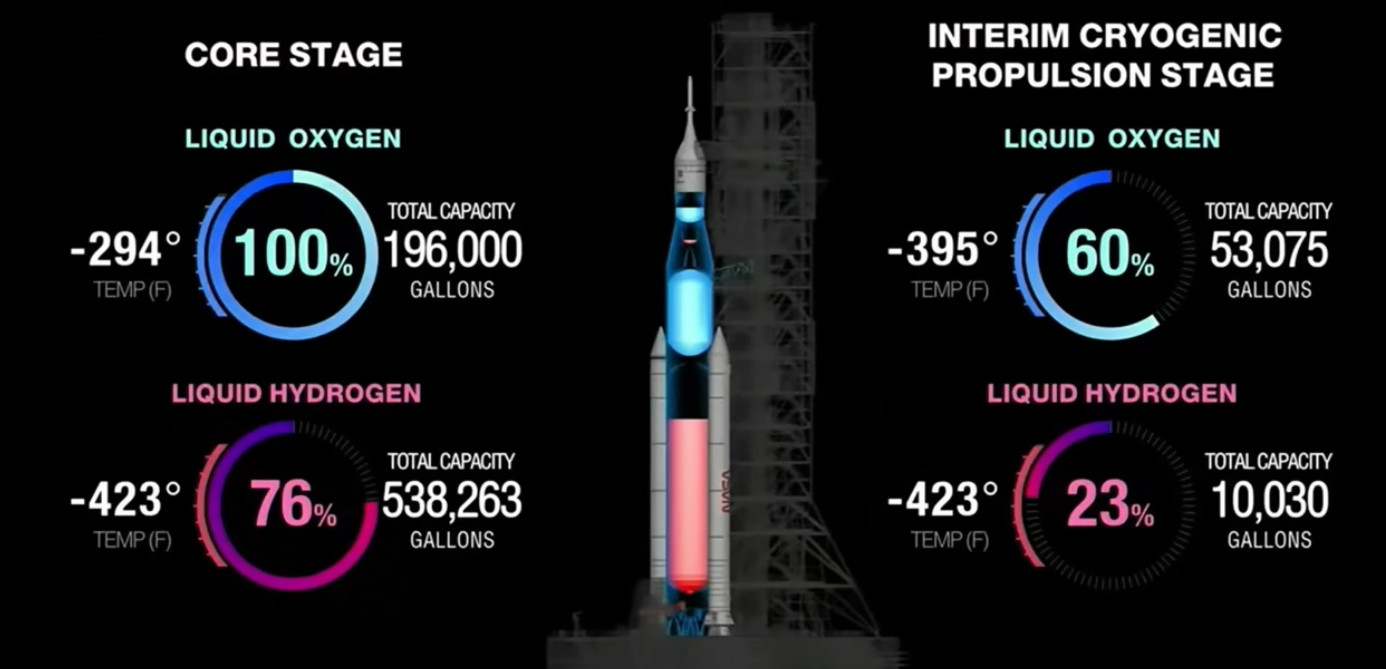
There’s also the human element. Hundreds of individuals have a part to play as the clock ticks down to zero, from the team in mission control to the driver of the astronaut transport vehicle. This is where the Wet Dress Rehearsal truly earns it name. In a sense, launching a rocket is a bit like a theater production. Every player needs to not only have their individual role memorized, but they need to work together effectively with the larger ensemble on the big night.
Although a WDR is meant to simulate an actual launch as closely as possible, the rules are slightly different. If the rocket was actually going to be released there are other variables to contend with, such as the launch window, which is the period of time in which the rocket can actually leave the pad to reach its intended orbit. On a real launch, a delay significant enough to keep the vehicle from lifting off during its pre-determined launch window would generally result in an automatic abort. There is no such constraint for a rehearsal however, which gives teams more flexibility to conduct tests and repair work.
It should be noted that the Artemis II astronauts were not aboard the vehicle for the recent WDR, although ground teams did simulate the process of loading the crew into the Orion capsule. This is partly for the safety of the astronauts should something go wrong during the rehearsal, but is also due to the fact that the Moon-bound crew is kept in quarantine until the actual launch day to reduce the likelihood they will get sick during the mission.
Light the Fires
As mentioned above, for the purposes of the Wet Dress Rehearsal, nothing actually happens when the launch clock hits zero. It’s a test of the pre-launch activities, so actually starting up the engines isn’t part of the exercise.
But of course, testing the engines is an important aspect of launch preparation as well. Such a test is generally referred to as a static fire, where the engines are briefly run while the vehicle is physically held down so as not to leave the pad. Operationally, a wet dress rehearsal could proceed directly into a static fire. On the other hand, a full WDR is not required to perform a static fire.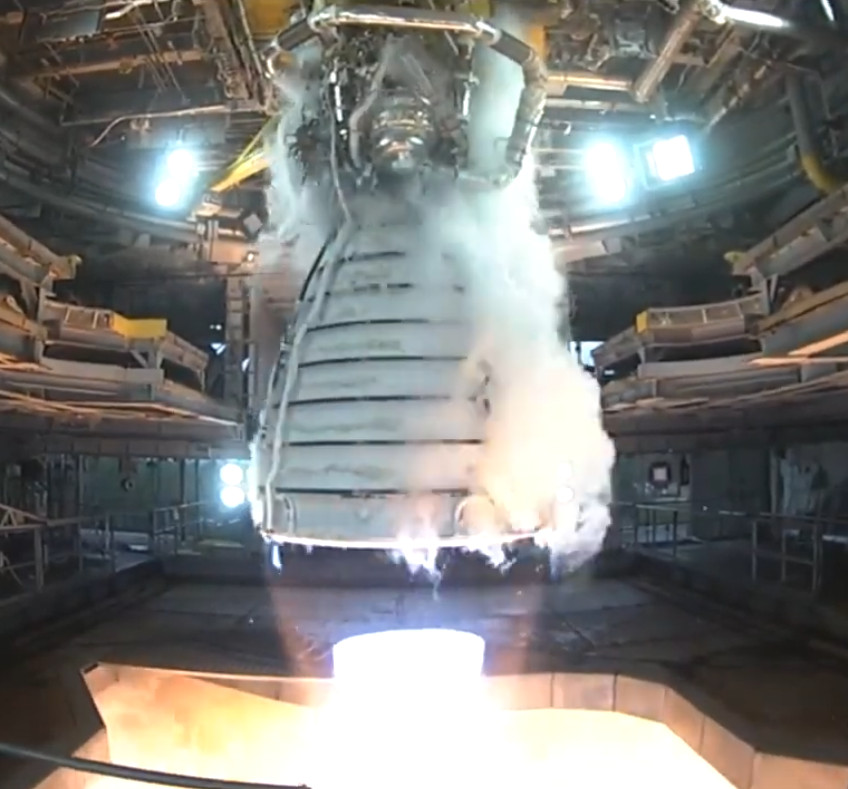
While static fire tests are common for modern rockets such as the Falcon 9, NASA has decided not to conduct them during the Artemis I and II missions. The SLS rocket uses lightly modified RS-25 Space Shuttle Main Engines (SSMEs), which are not only flight proven, but were individually tested before integration with the vehicle. There is also an argument to be made that a full-up static fire on the SLS, like the Space Shuttle before it, isn’t truly possible as the vehicle’s Solid Rocket Boosters (SRBs) can only be ignited once.
The Artemis I rocket did however conduct what NASA calls a Green Run back in 2021. This saw the first stage of the SLS fire its four RS-25 engines for eight minutes to simulate an orbital launch. The first attempt at the Green Run saw the engines shut down prematurely, but they did run for the full duration in a subsequent test.
Although such a test wasn’t conducted for Artemis II, and are not expected for any of the future SLS rockets, NASA is preparing for a Green Run test on the Exploration Upper Stage (EUS). This is an upgraded second stage for the SLS which is intended to support more ambitious missions after the Artemis III landing, although the timeline and status of those missions is tenuous at best.
The Road to the Moon
According to NASA’s latest update, the issues during the Artemis II Wet Dress Rehearsal has pushed the testing campaign back until at least March, at which point they will run a second WDR. But that certainly doesn’t mean it will be the last.

Even if the second WDR for Artemis II goes off without a hitch next month, that doesn’t mean the actual launch won’t be hit with its own delays due to technical glitches, poor weather, or any one of a myriad of other possible issues. Getting a rocket off the ground is never easy, and it only gets harder when there are humans onboard and the destination is farther than anyone has flown since the 1970s. An almost endless number of things need to go exactly right before we’ll see Artemis II lift off the pad, but when it goes, you definitely won’t want to miss it.
Questo account chiude!
Ciao, Poliversici amici!
Di recente ho installato una mia istanza personale, e non c'è ragione di tenere in piedi 2 account per fare sostanzialmente la stessa cosa: accedere al Fediverso con un profilo personale.
Però non ha senso mantenere in piedi anche questo account, a consumare risorse.
il nuovo account si chiama simone@s.quiete.eu. Questo di poliverso chiuderà tra qualche giorno.
Se mi seguite, dovreste avere già ricevuto un invito a seguire l'altro account, o potete comunque farlo ora. Da parte mia dovrei avervi già seguito dall'altro account.
Amo Poliverso.org, e non è detto che, prima o poi, non possa spostarmi di nuovo qui; il bello del Fediverso è proprio di potere cambiare casa digitale liberamente secondo le nostre esigenze.
Di sicuro, continuerò come posso a sostenere la piattaforma!
Ci vediamo di là!
Correlating Electric Cars With Better Air Quality

Although at its face the results seem obvious, a recent study by [Sandrah Eckel] et al. on the impact of electric cars in California is interesting from a quantitative perspective. What percentage of ICE-only cars do you need to replace with either full electric or hybrid cars before you start seeing an improvement in air quality?
A key part of the study was the use of the TROPOMI instrument, part of the European Sentinel-5 Precursor satellite. This can measure trace gases and aerosols in the atmosphere, both of which directly correlate with air quality. The researchers used historical TROPOMI data from 2019 to 2023 in the study, combining this data with vehicle registrations in California and accounting for confounding factors, such as a certain pandemic grinding things to a halt in 2020 and massively improving air quality.
Although establishing direct causality is hard using only this observational data, the researchers did show that the addition of 200 electric vehicles would seem to be correlated to an approximate 1.1% drop in measured atmospheric NO2. This nitrogen oxide is poisonous and fatal if inhaled in large quantities. It’s also one of the pollutants that result from combustion, when at high temperatures nitrogen from the air combines with oxygen molecules.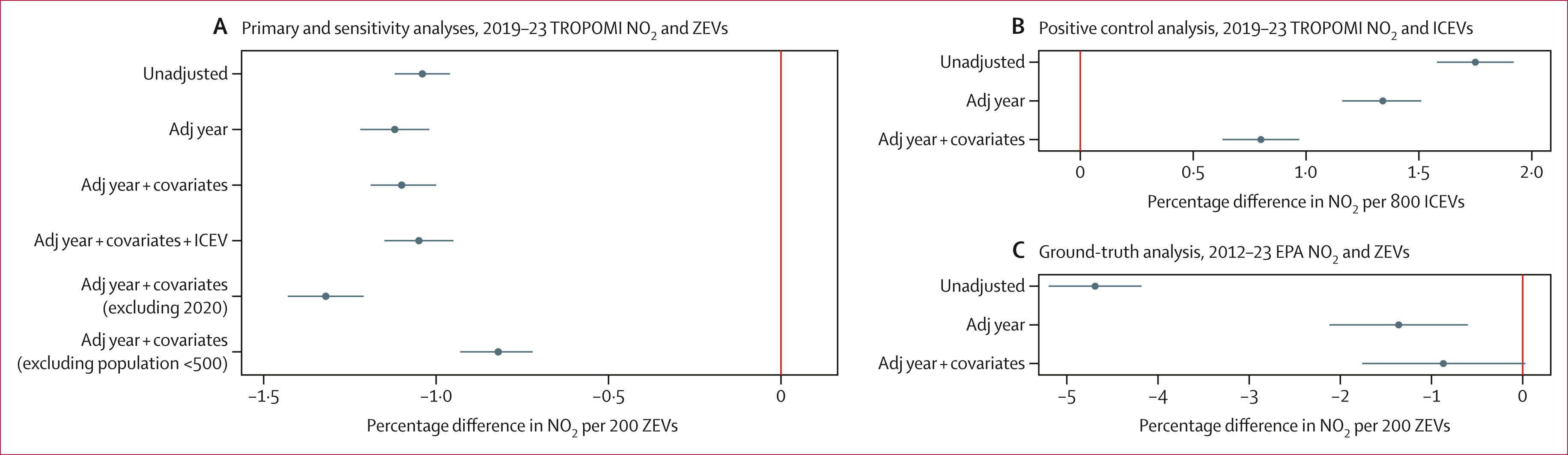
Considering the massive negative health impact of nitrogen dioxide on human health, any reduction here is naturally welcome. Of course, this substance is only one of the many pollutants generated by cars. We are also seeing a lot of fine particulate matter (PM2.5) generated from car tires, with a significant amount of microplastics coming from this source alone.
Add to this the environmentally toxic additive 6PPD that is added to tires along with e.g. carbon black, all of which help to make tires last longer and resist e.g. UV radiation and ozone exposure. While 6PPD isn’t necessarily directly harmful to humans, the PM2.5 pollution definitely is. As for carbon black and other additives, they’re still the subject of ongoing research.
One of the things that make statistics exciting is that of nuance from understanding the subject matter. Without that the adage of ‘Lies, Big Lies and Statistics’ applies, with spurious correlations being often promoted due to either ignorance or for unsavory purposes.
In the case of this study by [Sandrah Eckel] et al., it would seem that they did their due diligence, and the correlation makes sense objectively, in that having fewer ICE cars in favor of non-ICE cars would improve air quality. That said, as the tires of electric vehicles tend to wear faster due to their heavier weight, it remains to be seen whether it’s a net positive.

Sudo in crisi: il pilastro di Linux cerca supporto per sopravvivere
linuxeasy.org/sudo-in-crisi-il…
Sudo è in crisi? Il maintainer Todd C. Miller cerca fondi per mantenere l'utility, Il mancato supporto potrebbe portare rischi per la sicurezza Linux e il futuro del comando più usato. L'articolo
Radioamatori come eroi nazionali
Oro, quadri e sculture. Jean Boghossian in mostra a Catania
@Giornalismo e disordine informativo
articolo21.org/2026/02/oro-qua…
Nato in Siria, ad Aleppo, da famiglia cristiana armena, Jean Boghossian è un artista belga-libanese che vive tra Bruxelles e Montecarlo, dove da giovane era artista orafo. Per le sue creazioni d’oro
Automatisierte Datenanalyse: Innenausschuss in Sachsen-Anhalt winkt massiv kritisiertes Palantir-Gesetz unverändert durch
netzpolitik.org/2026/automatis…

AJU reshared this.

quattroruote.it/news/viabilita…
Le ragioni del “No” al Referendum costituzionale sulla giustizia. Zugliano (UD), 24 febbraio e 3 marzo
@Giornalismo e disordine informativo
articolo21.org/2026/02/le-ragi…
Il Centro “Ernesto Balducci” di Zugliano (UD), unitamente ad Articolo 21 Fvg e