🇵🇸 Proiezione + cena benefit Laylac center: To kill a war machine 🇵🇸
ZAM - Milano, via Sant'Abbondio 4 (domenica, 15 febbraio 18:30)
SERATA BENEFIT LAYLAC 🇵🇸
Domenica 15 febbraio a ZAM alle 18:30 si terrà la proiezione del documentario “To Kill a War Machine” sul gruppo Palestine Action e sulla lotta contro le fabbriche di armi.
A seguire cena sociale alle 20:30 (prenotatevi attraverso i nostri canali!)
Contributo 10€ in benefit a Laylac - organizzazione palestinese che opera nel campo profughi di Dheisheh
Vi aspettiamo per vedere, discutere e mangiare insieme 🇵🇸
Cascina Torchiera - Piazzale Cimitero Maggio 18, Milano (lunedì, 16 febbraio 19:00) Vi aspettiamo dalle 19, come ogni stramaledettissimo lunedì dell'anno con
il "Mercatork" di frutta, verdura e autoproduzioni
In questo spazio si pratica l’autogestione come espressione di responsabilità verso se stess* e tutto ciò che ci circonda. Come uno strumento di libertà e liberazione dai canoni del consumismo, come presa in carico del benessere collettivo e del pianeta
Quindi ricordati di lavare piatto e posate nell’area lavastoviglie
Riutilizza il bicchiere e quando hai finito di usarlo mettilo nei contenitori predisposti
Non buttare rifiuti per terra, utilizza i posacenere e bidoni della raccolta differenziata
Se hai dubbi CHIEDI: il tuo interessamento sarà apprezzato e ti sentirai parte di ciò che stai vivendo. Collabora alla buona riuscita dell’esperienza per tutt*, sii rispettos* e condividi la presa bene ❤
Lasciare pulito ciò che trovi pulito è Autogestione.
Lasciare pulito ciò che trovi sporco è Cura.
Lo spazio della Cascina è accessibile alle persone con difficoltà o disabilità motorie
BabaruM - Via F.Anderle 3, Volano - TN (Saturday, 14 March 18:00) BaBa Associazione Culturale é lieta di invitarVi ZooBass per il suo secondo Format: Gourmet for People. Siamo felici di annunciare questa cena speciale, che era tra i nostri desideri da tempo.
★SAPORI DEL MONDO★ Home Restaurant "Sapori del Mondo"
è un piccolo progetto che racchiude amore per le cucine tradizionali del mondo e profuma di casa!
Dopo il prosecco di benvenuto, il menù della serata...
Tris di sushi roll veggy (ripieni di verdure e tamagoyaki) e tsukemono (cetrioli e cetrioli in salamoia fatti in casa);
Green curry thai soup con noodles di crepes (Zuppa di latte di cocco con verdure e noodles di crepes);
Tofu in salsa teryaki e melanzane in salsa di sesamo;
Creme caramel vegano aromatizzato alla curcuma e cannella.
30€ costo cena
⚠️PRENOTAZIONE OBBLIGATORIA⚠️ al numero 345 958 6585 (Giulia) FateVi Furbi e non perdeteVi quest'appuntamento. Posti limitati !!!!
✮✮✮ ORARI ✮✮✮ ► 18:00 Apertura Cancelli BabaruM ► 20:00 Cena Culturale SAPORI DEL MONDO ► 23:00 Chiusura Cancelli BabaruM
✮✮✮ Per tutti gli associati ✮✮✮
Per entrare a BabaruM ci vuole la tessera, costa 10€ e vale fino a fine Marzo 2026, comprende l’entrata libera a tutti gli eventi RICORDATE DI PRE TESSERARVI SUL NOSTRO SITO (inaltoadestra) : www.babaassociazioneculturale.it PRE REGISTRAZIONE ONLINE OBBLIGATORIA
VENITE a Trovarci in:
Bicicletta 🚲
Autobus 🚌
Correndo 🏃
In punta di Piedi 💃
Sussurrando DolciParole al vostro vicino🎎
Ad oCCHIcHIUSI 🙈
portatevi con voi solo Sorrisi e voglia di Divertirvi…. i brutti musi saranno
SENZA CONSENSO E’ STUPRO: BLOCCHIAMO IL DDL BONGIORNO!
Murazzi - Lungo Po murazzi, lato destro (domenica, 15 febbraio 15:00) Domenica 15 febbraio mobilitazione cittadina contro il disegno di legge sul reato di violenza sessuale.
Il DDL proposto in queste settimane dalla senatrice della Lega Giulia Bongiorno cancella il consenso dalla legge sul reato di violenza sessuale e rappresenta un gravissimo attacco alle donne, alle persone trans e non binarie e a tuttə coloro che vivono sulla propria pelle la violenza patriarcale.
Questo DDL ha già ricevuto l’approvazione della commissione giustizia al Senato e - se diventasse definitivamente legge - si tratterebbe di un enorme arretramento e peggioramento rispetto all’attuale norma contro la violenza di genere e sessuale, che di fatto aprirebbe la strada alla normalizzazione e all’istituzionalizzazione dello stupro.
Non possiamo accettarlo!
Dopo la partecipatissima assemblea tematica, scendiamo in strada per un primo momento di mobilitazione cittadina contro il DDL Bongiorno: ci vediamo domenica 15/02 alle 15 ai Murazzi
Balon - via Vittorio Andreis, 10152 Torino TO, Italia (sabato, 21 febbraio 10:30)
Con i disertori russi ed ucraini per un mondo senza eserciti e frontiere
Sabato 21 febbraio giornata di informazione e lotta antimilitarista ore 10,30 al Balon
Sono passati quattro anni dall’accelerazione violenta della guerra impressa dall’invasione russa dell’Ucraina. Il conflitto è sempre più aspro: i morti sono centinaia di migliaia su entrambi i fronti.
Il governo italiano si è schierato in questa guerra inviando armi, arrivando a schierare 3.500 militari nelle missioni in ambito NATO nell’est europeo. Presto aprirà una base militare Italiana in Bulgaria.
La guerra in Ucraina ha nel proprio DNA uno scontro interimperialistico di enorme portata, che rischia di innescare un conflitto ben più ampio, tra potenze dotate anche di armi atomiche. Fermarla, incepparla, sabotarla è una necessità imprescindibile.
In Ucraina ci sono duecentomila disertori, in Russia decine di migliaia di persone hanno attraversato i confini per sottrarsi alla chiamata alle armi. In Russia e in Ucraina gli antimilitaristi si battono perché le frontiere siano aperte per chi si oppone alla guerra. Noi facciamo nostra la lotta per spezzare i confini e per l’accoglienza di obiettor, renitent, disertor
Noi non ci arruoliamo né con la NATO, né con la Russia. Rigettiamo i vergognosi giochini di Trump, Putin e dell’UE sulla pelle di popolazioni stremate dalla guerra, messe a tacere da regimi, che reprimono duramente chi vi si oppone concretamente.
Il prezzo di questa guerra lo paga la povera gente. Ovunque. Lo pagano oppositori, sabotatori, obiettori e disertori che subiscono pestaggi, processi e carcere.
Lo paghiamo noi tutti stretti nella spirale dell’inflazione, tra salari e pensioni da fame e fitti e bollette in costante aumento. Provate ad immaginare quante scuole, ospedali, trasporti pubblici di prossimità si potrebbero finanziare se la ricerca e la produzione venissero usate per la vita di noi tutti, per la cura invece che per la guerra. Il decreto riarmo del governo Meloni prevede un miliardo di euro per rendere sempre più mortale l’arsenale a disposizione delle forze armate italiane.
L’Italia è impegnata in ben 43 missioni militari all’estero, in buona parte in Africa, dove le truppe tricolori fanno la guerra ai migranti e difendono gli interessi di colossi come l’ENI.
Vari progetti di legge puntano al graduale ritorno della leva obbligatoria sospesa nel 2005. Serve carne da cannone per le guerre che vedono l’Italia in prima fila. Le scuole e le università sono divenute terreno di conquista per l’arruolamento dei corpi e delle coscienze.
L’industria bellica italiana, in prima fila il colosso Leonardo, fa profitti miliardari. L’Italia vende armi a tutti i paesi in guerra. Un business di morte. Occorre capovolgere la logica perversa che vede nell’industria bellica il motore che renderà più prospera L’Italia. Un’economia di guerra produce solo altra guerra.
La guerra è anche interna. Il governo risponde alla povertà trattando le questioni sociali in termini di ordine pubblico: i militari dell’operazione “strade sicure” li trovate nelle periferie, nei CPR, nelle stazioni, sui confini. Ogni forma di opposizione sociale e politica viene criminalizzata con un insieme di norme vecchie e nuove che garantiscono una sempre maggiore impunità alla polizia e trasformano in reati normali pratiche di lotta. Solo un’umanità internazionale potrà gettare le fondamenta di quel mondo di libere ed uguali che può porre fine alle guerre.
Oggi ci vorrebbero tutti arruolati. Noi disertiamo. Noi non ci arruoliamo a fianco di questo o quello stato imperialista. Rifiutiamo la retorica patriottica come elemento di legittimazione degli Stati e delle loro pretese espansionistiche. In ogni dove. Non ci sono nazionalismi buoni. Noi siamo al fianco di chi, in ogni angolo della terra, diserta la guerra. Vogliamo un mondo senza frontiere, eserciti, oppressione, sfruttamento e guerra.
Inizia:Sabato Febbraio 21, 2026 @ 10:30 AM GMT+01:00 (Europe/Rome)
Finisce:Sabato Febbraio 21, 2026 @ 1:00 PM GMT+01:00 (Europe/Rome)
Con i disertori russi ed ucraini per un mondo senza eserciti e frontiere
Sabato 21 febbraio giornata di informazione e lotta antimilitarista ore 10,30 al Balon
Sono passati quattro anni dall’accelerazione violenta della guerra impressa dall’invasione russa dell’Ucraina. Il conflitto è sempre più aspro: i morti sono centinaia di migliaia su entrambi i fronti.
Il governo italiano si è schierato in questa guerra inviando armi, arrivando a schierare 3.500 militari nelle missioni in ambito NATO nell’est europeo. Presto aprirà una base militare Italiana in Bulgaria.
La guerra in Ucraina ha nel proprio DNA uno scontro interimperialistico di enorme portata, che rischia di innescare un conflitto ben più ampio, tra potenze dotate anche di armi atomiche. Fermarla, incepparla, sabotarla è una necessità imprescindibile.
In Ucraina ci sono duecentomila disertori, in Russia decine di migliaia di persone hanno attraversato i confini per sottrarsi alla chiamata alle armi. In Russia e in Ucraina gli antimilitaristi si battono perché le frontiere siano aperte per chi si oppone alla guerra. Noi facciamo nostra la lotta per spezzare i confini e per l’accoglienza di obiettor, renitent, disertor
Noi non ci arruoliamo né con la NATO, né con la Russia. Rigettiamo i vergognosi giochini di Trump, Putin e dell’UE sulla pelle di popolazioni stremate dalla guerra, messe a tacere da regimi, che reprimono duramente chi vi si oppone concretamente.
Il prezzo di questa guerra lo paga la povera gente. Ovunque. Lo pagano oppositori, sabotatori, obiettori e disertori che subiscono pestaggi, processi e carcere.
Lo paghiamo noi tutti stretti nella spirale dell’inflazione, tra salari e pensioni da fame e fitti e bollette in costante aumento. Provate ad immaginare quante scuole, ospedali, trasporti pubblici di prossimità si potrebbero finanziare se la ricerca e la produzione venissero usate per la vita di noi tutti, per la cura invece che per la guerra. Il decreto riarmo del governo Meloni prevede un miliardo di euro per rendere sempre più mortale l’arsenale a disposizione delle forze armate italiane.
L’Italia è impegnata in ben 43 missioni militari all’estero, in buona parte in Africa, dove le truppe tricolori fanno la guerra ai migranti e difendono gli interessi di colossi come l’ENI.
Vari progetti di legge puntano al graduale ritorno della leva obbligatoria sospesa nel 2005. Serve carne da cannone per le guerre che vedono l’Italia in prima fila. Le scuole e le università sono divenute terreno di conquista per l’arruolamento dei corpi e delle coscienze.
L’industria bellica italiana, in prima fila il colosso Leonardo, fa profitti miliardari. L’Italia vende armi a tutti i paesi in guerra. Un business di morte. Occorre capovolgere la logica perversa che vede nell’industria bellica il motore che renderà più prospera L’Italia. Un’economia di guerra produce solo altra guerra.
La guerra è anche interna. Il governo risponde alla povertà trattando le questioni sociali in termini di ordine pubblico: i militari dell’operazione “strade sicure” li trovate nelle periferie, nei CPR, nelle stazioni, sui confini. Ogni forma di opposizione sociale e politica viene criminalizzata con un insieme di norme vecchie e nuove che garantiscono una sempre maggiore impunità alla polizia e trasformano in reati normali pratiche di lotta. Solo un’umanità internazionale potrà gettare le fondamenta di quel mondo di libere ed uguali che può porre fine alle guerre.
Oggi ci vorrebbero tutti arruolati. Noi disertiamo. Noi non ci arruoliamo a fianco di questo o quello stato imperialista. Rifiutiamo la retorica patriottica come elemento di legittimazione degli Stati e delle loro pretese espansionistiche. In ogni dove. Non ci sono nazionalismi buoni. Noi siamo al fianco di chi, in ogni angolo della terra, diserta la guerra. Vogliamo un mondo senza frontiere, eserciti, oppressione, sfruttamento e guerra.
Csoa Gabrio - Via Millio 42, Torino (sabato, 21 febbraio 18:00) INCONTRO RETE DI MUTUO AIUTO TRANS* 🏳️⚧️💖
Sei una persona trans? Vuoi contribuire a formare una rete di scambio di conoscenze ed esperienze con altre persone trans? Sei stancx di dover sempre passare per istituzioni e persone cis per dirimere i tuoi dubbi?
Vogliamo costruire uno spazio orizzontale di AUTO-MUTUO-AIUTO tra persone trans* dove poterci scambiare e fornire gli strumenti per gestire la nostra salute. Crediamo nei principi dell'auto-gestione, dell' auto-organizzazione, della solidarietà e del mutualismo.
Non vogliamo offrire un servizio o uno sportello, ma creare una realtà di mutuo aiuto, fra pari, da dentro la nostra comunità, dove poter mettere insieme conoscenze ed esperienze, tra noi e tra persone transfemministe alleate. Navigare la propria salute come persone trans è spesso complesso, tra gatekeeping, leggende metropolitane, stereotipi negativi e personale sanitario non adeguatamente preparato, quando non proprio discriminatorio. Questo momento vuole essere uno spazio per infrangere quegli ostacoli alla nostra autodeterminazione, e creare dei momenti di solidarietà concreta tra persone trans, qualsiasi sia il loro percorso.
Se hai qualcosa da condividere, porta le tue conoscenze, se hai qualcosa su cui vuoi saperne di più, porta i tuoi dubbi. Ci vediamo al CSOA Gabrio, Consultoria FAM il 21/02 dalle ore 18! ❤️
Matrici Aperte - Via Elia Capriolo 41C, Brescia (giovedì, 19 febbraio 15:00) LABORATORIO APERTO
Tutti i Martedì (14:00-23:00) e i Giovedì (14:00-21:00) Matrici apre il laboratorio per chi ha bisogno di stampare ma anche per chi vuole solo bere un bicchiere in compagnia! Potete venire a fare serigrafia, incisione calcografica, xilografia e tecniche grafiche sperimentali. Per l'utilizzo del laboratorio chiediamo un contributo libero a supporto del progetto. Portate carta e matrici da casa, noi mettiamo a disposizione strumenti e spazio per i vostri lavori. Ci sono due postazioni serigrafiche, due torchi calcografici, sala acidi e piani da inchiostrazione. Dalle 18.00 (ma anche dalle 14.00 per lx ubriaconx) apre il baretto con vino, birre, pirli e gin tonic di pessima qualità! -c'è pure il pinkanello!-Chi suona strumenti è ben accettx. Sarà aperto e consultabile anche l'archivio con libri serigrafici, fanzine e distro a supporto di movimenti e collettivi!
Fattoria del Dono di San Lazzaro - Via scuole del Farneto 1, San Lazzaro di Savena (BO) (venerdì, 13 febbraio 18:30) 13 febbraio 2026 dalle 18.30 alla Fattoria del Dono Serata dedicata a: La pace che non c'e! Aggiornamenti sulla vita e la terra in Palestina Arvaia - Mondeggi Bene Comune -Giuditta Pellegrini Reportage - Meri Calvelli
WANTED - Presentazione e mostra di Bandidas - C.RUDE Collettivo
Serigrafia Canaglia - Via Zampieri 4/2a (domenica, 15 febbraio 18:00) Domenica 15 Febbraio vi aspettiamo in Serigrafia Canaglia per la presentazione di “Bandidas”, la seconda antologia di C.rude con quattro brevi storie a fumetti!
Ci sarà una piccola mostra con tavole originali e serigrafie a tema!
Baumhaus - 25/2, Via Sebastiano Serlio, La Zucca, Navile, Bologna, Emilia-Romagna, 40128, Italia (lunedì, 16 febbraio 18:30) Una pratica dolce e resistente adatta a tuttə, guidata da Claudia Yogapau e Giusyaloe
Porta il tappetino e la tua voglia di condividere questo momento 🇵🇸✊🏽🇵🇸✊🏽
Evento a offerta libera (l'intero incasso verrà devoluto alla causa, daremo maggiori dettagli in merito prima della pratica)
Palestra Penta Gramma - 18, Via Guglielmo Marconi, Vergato, Unione dell'Appennino Bolognese, Bologna, Emilia-Romagna, 40038, Italia (sabato, 14 febbraio 10:30)
PRESIDIO SOLIDALE DAVANTI AL CARCERE DI PIAZZA LANZA
Catania Piazza Lanza - Piazza Lanza (sabato, 14 febbraio 14:00) SABATO 14 FEBBRAIO 2026 DALLE 14:00
PRESIDIO SOLIDALE DAVANTI AL CARCERE DI PIAZZA LANZA (CT) PER PORTARE VICINANZA ALLX RECLUSX
"Appare evidente che stiamo vivendo in una società piena di carceri, di repressione, di controlli asfissianti che si addentrano fin nei comportamenti individuali e intimi. Il carcere è l’espressione più brutale e immediata del potere e, come il potere va distrutto, non può essere progressivamente abolito. Chi pensa di poterlo migliorare per poi distruggerlo ne rimane prigioniero per sempre."
No Sui Nostri Corpi! Contro la modifica della legge sul Consenso - Mobilitazione Territoriale diffusa
Roma - Roma (domenica, 15 febbraio 09:00) I Centri antiviolenza promuovono mobilitazioni contro il ddl Bongiorno, considerato un attacco ai diritti e all’autodeterminazione delle donne e delle persone LGBTQIA+. L’iniziativa prevede presidi nelle piazze italiane il 15 febbraio.
PRESTO AGGIORNAMENTI SU APPUNTAMENTI A ROMA PER LA MOBILITAZIONE DIFFUSA DEL 15 FEBBRAIO
Continuiamo la mobilitazione permanente contro il ddl Bongiorno!
Dopo l'assemblea cittadina del 9 Febbraio alla Sapienza, chiamiamo tutte, tuttɜ e tutti a partecipare alla tappa intermedia di questo percorso prevista per il 15 febbraio, data simbolica in cui ricorre il trentennale della introduzione della legge sulla violenza sessuale, presidiando una piazza in tutte le città d’Italia per manifestare il nostro dissenso contro il ddl Bongiorno e condividere la costruzione del corteo nazionale a Roma del 28 febbraio, insieme alle centinaia di centri antiviolenza, collettivi, associazioni e reti che stanno aderendo in questi giorni.
Il ddl Bongiorno è irricevibile e non è solo una questione tecnico-giudica ma politica, perché rappresenta uno strumento di arretramento grave che vuole cancellare anni di lotte per i diritti delle donne riducendole al silenzio e lo scudo ostinato di una cultura dello stupro che normalizza la sottomissione delle donne e delle persone LGBTQIA+ e delle libere soggettività al dominio maschile patriarcale.
Sappiamo di avere bisogno di ogni persona di questo paese, come accadde nel 1996, come è accaduto per le legge sul divorzio e per le grandi rivoluzioni culturali di questo paese.
Scendiamo in piazza, riempiamo le strade per dire NOSUINOSTRICORPI e giù le mani dalla legge sulla violenza sessuale.
Non arretreremo di un passo sulle nostre libertà e sui nostri diritti.
Vigliano Biellese - Teatro Erios - Via Quintino Sella 51 (sabato, 14 febbraio 21:00) Spettacolo della stagione di danza al Teatro Erios.
La compagnia LostMovement offre un’esperienza di danza intensa e coinvolgente, che affronta tematiche legate all’identità di genere, all’orientamento affettivo e sessuale e alla libertà di espressione, centrali nella cultura e nelle istanze della comunità LGBT+.
The companies have launched a pilot program in Atlanta, where “during the rare event a vehicle door is left ajar, preventing the car from departing, nearby Dashers are notified, allowing Waymo to get its vehicles back on the road quickly.”#waymo #News
Waymo Is Getting DoorDashers to Close Doors on Self Driving Cars
Waymo, Google’s autonomous vehicle company, and DoorDash, the delivery and gig work platform, have launched a pilot program that pays Dashers, at least in one case, around $10 to travel to a parked Waymo and close its door that the previous passenger left open, according to a joint statement from the company given to 404 Media.
The program is unusual in that Dashers are more often delivering food than helping out a driving robot. It also shows that even with autonomous vehicles, and the future they promise of metropolitan travel without the need for a driver, a human is sometimes needed for the most simple and yet necessary tasks.
“Waymo is currently running a pilot program in Atlanta to enhance its AV fleet efficiency. In the rare event a vehicle door is left ajar, preventing the car from departing, nearby Dashers are notified, allowing Waymo to get its vehicles back on the road quickly,” the statement said. “DoorDash is always looking for new and flexible ways for Dashers to earn, and this pilot offers Dashers an opportunity to make the most of their time online. Waymo's future vehicle platforms will have automated door closures.”
💡 Do you know anything else about this, or anything else we should know about Waymo? I would love to hear from you. Using a non-work device, you can message me securely on Signal at joseph.404 or send me an email at joseph@404media.co.
Waymo said the partnership started earlier this year. It declined to share details about how Dashers are paid, such as whether they may receive tips or which entity is paying for these jobs, but said, “the payment structure is designed to ensure competitive and fair compensation for Dashers.”
(Waymo said the response was on background, but 404 Media never agreed to such a condition. It is standard journalistic practice for both a company and a reporter to need to agree that a conversation is on background or off the record beforehand; this is to prevent companies simply saying something is off the record when answering basic questions.) playlist.megaphone.fm?p=TBIEA2… 404 Media contacted both Waymo and DoorDash for comment after an apparent Dasher posted on Reddit about receiving such a job.
“Craziest Offer,” the thread starts. It includes a screenshot of the DoorDash app, saying the Dasher is guaranteed $6.25 for the work, with $5 extra “upon verified completion.” The job would see the Dasher travel around 0.7 miles, according to the screenshot.
“Close a Waymo door,” the job reads. “No pickup or delivery required.”
Anyone who has spent any amount of time in or near people who are really interested in energy policies will have heard proclamations such as that ‘baseload is dead’ and the sorting of energy sources by parameters like their levelized cost of energy (LCoE) and merit order. Another thing that one may have noticed here is that this is also an area where debates and arguments can get pretty heated.
The confusing thing is that depending on where you look, you will find wildly different claims. This raises many questions, not only about where the actual truth lies, but also about the fundamentals. Within a statement such as that ‘baseload is dead’ there lie a lot of unanswered questions, such as what baseload actually is, and why it has to die.
Upon exploring these topics we quickly drown in terms like ‘load-following’ and ‘dispatchable power’, all of which are part of a healthy grid, but which to the average person sound as logical and easy to follow as a discussion on stock trading, with a similar level of mysticism. Let’s fix that.
Loading The Bases
Baseload is the lowest continuously expected demand, which sets the minimum required amount of power generating capacity that needs to be always online and powering the grid. Hence the ‘base’ part, and thus clearly not something that can be ‘dead’, since this base demand is still there.
What the claim of ‘baseload is dead’ comes from is the idea that with new types of generation that we are adding today, we do not need special baseload generators any more. After all, if the entire grid and the connected generators can respond dynamically to any demand change, then you do not need to keep special baseload plants around, as they have become obsolete. Example electrical demand “Duck Curve” using historical data from California. (Credit: ArnoldRheinhold) A baseload plant is what is what we traditionally call power plants that are designed to run at 100% output or close to it for as long as they can, usually between refueling and/or maintenance cycles. These are generally thermal plants, powered by coal or nuclear fuel, as this makes the most economical use of their generating capacity, and thus for the cheapest form of dispatchable power on the grid.
With only dispatchable generators on the grid this was very predictable, with any peaks handled by dedicated power plants, both load-following and peaking power plants. This all changed when large-scale solar and wind generators were introduced, and with it the duck curve was born.
As both the sun and wind are generally more prevalent during the day, and these generators are not generally curtailed, this means that suddenly everything else, from thermal power plants to hydroelectric plants, has to throttle back. Obviously, doing so ruins the economics of these dispatchable power sources, but is a big part of why the distorted claim of ‘baseload is dead’ is being made.
Chaos Management
The Fengning pumped storage power station in north China’s Hebei Province. (Credit: CFP) Suffice it to say that having the entire grid adapt to PV solar and wind farms – whose output can and will fluctuate strongly over the course of the day – is not an incredibly great plan if the goal is to keep grid costs low. Not only can these forms of variable renewable energy (VRE) only be curtailed, and not ramped up, they also add thousands of kilometers of transmission lines and substations to the grid due to the often remote areas where they are installed, adding to the headache of grid management.
Although curtailing VRE has become increasingly more common, this inability to be dispatched is a threat to the stability of the national grids of countries that have focused primarily on VRE build-out, not only due to general variability in output, but also because of “anticyclonic gloom“: times when poor solar conditions are accompanied by a lack of wind for days on end, also called ‘Dunkelflaute’ if you prefer a more German flair.
What we realistically need are generators that are dispatchable – i.e. are available on demand – and can follow the demand – i.e. the load – as quickly as possible, ideally in the same generator. Basically the grid controller has to always have more capacity that can be put online within N seconds/minutes, and have spare online capacity that can ramp up to deal with any rapid spikes.
Although a lot is being made of grid-level storage that can soak up excess VRE power and release it during periods of high demand, there is no economical form of such storage that can also scale sufficiently. Thus countries like Germany end up paying surrounding countries to accept their excess power, even if they could technically turn all of their valleys into pumped hydro installations for energy storage.
This makes it incredibly hard to integrate VRE into an electrical grid without simply hard curtailing them whenever they cut into online dispatchable capacity.
Following Dispatch
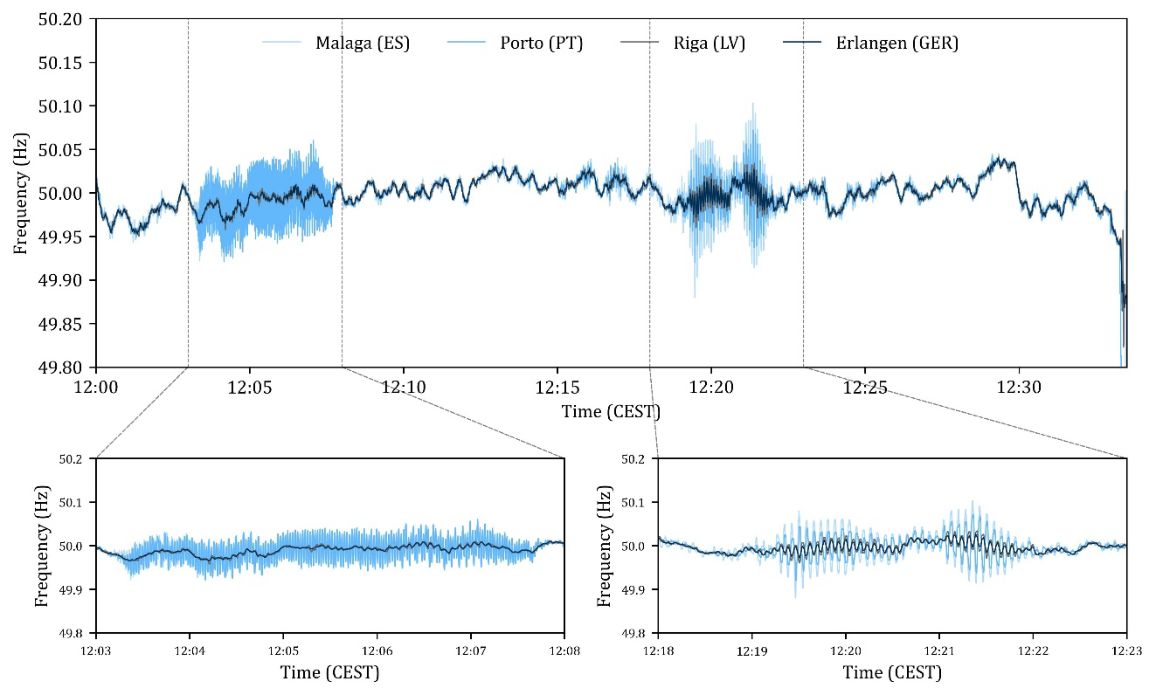
Essential to the health of a grid is the ability to respond to changes in demand. This is where we find the concept of load-following, which also includes dispatchable capacity. At its core this means a power generator that – when pinged by the grid controller (transmission system operator, or TSO) – is able to spin up or down its power output. For each generator the response time and adjustment curve is known by the TSO, so that this factor can be taken into account. European-wide grid oscillations prior to the Iberian peninsula blackout. (Credit: Linnert et al., FAU, 2025) The failure of generators to respond as expected, or by suddenly dropping their output levels can have disastrous effects, particularly on the frequency and thus voltage of the grid. During the 2025 Iberian peninsula blackout, for example, grid oscillations caused by PV solar farms caused oscillation problems until a substation tripped, presumably due to low voltage, and a cascade failure subsequently rippled through the grid. A big reason for this is the inability of current VRE generators to generate or absorb reactive power, an issue that could be fixed with so-called grid-forming converters, but at significant extra cost to the VRE generator owners, as this would add local energy storage requirements such as batteries.
Typically generators are divided into types that prefer to run at full output (baseload), can efficiently adjust their output (load follow) or are only meant for times when demand outstrips the currently available supply (peaker). Whether a generator is suitable for any such task largely depends on the design and usage.
This is where for example a nuclear plant is more ideal than a coal plant or gas turbine, as having either of these idling burns a lot of fuel with nothing to show for it, whereas running at full output is efficient for a coal plant, but is rather expensive for a gas turbine, making them mostly suitable for load-following and peaker plants as they can ramp up fairly quickly.
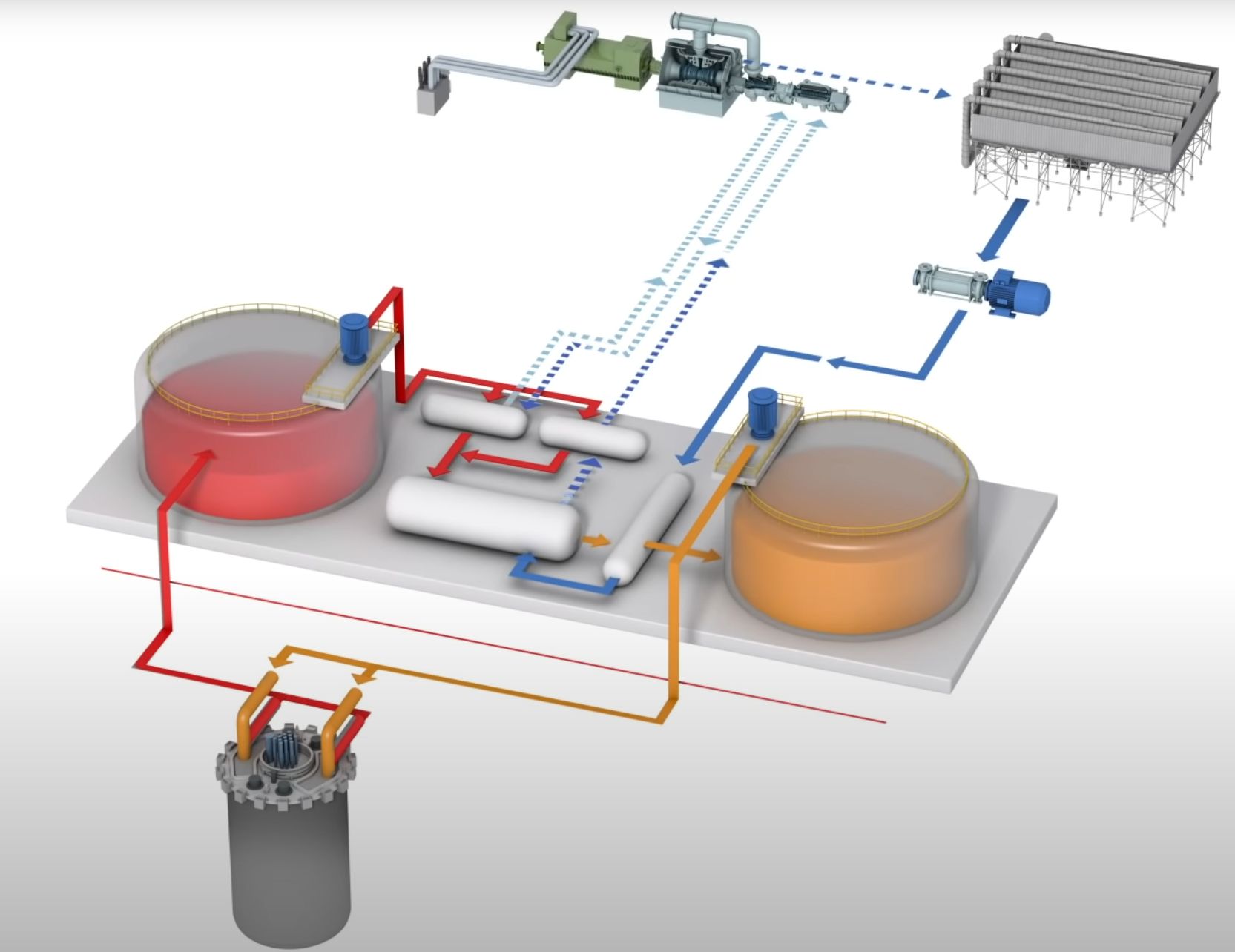
The nuclear plant on the other hand can be designed in a number of ways, making it optimized for full output, or capable of load-following, as is the case in nuclear-heavy countries like France where its pressurized water reactors (PWRs) use so-called ‘grey control rods’ to finely tune the reactor output and thus provide very rapid and precise load-following capacities. Overview of the thermal energy transfer in the Natrium reactor design. (Source: TerraPower) There’s now also a new category of nuclear plant designs that decouple the reactor from the steam turbine, by using intermediate thermal storage. The Terrapower Natrium reactor design – currently under construction – uses molten salt for its coolant, and also molten salt for the secondary (non-nuclear) loop, allowing this thermal energy to be used on-demand instead of directly feeding into a steam turbine.
This kind of design theoretically allows for a very rapid load-following, while giving the connected reactor all the time in the world to ramp up or down its output, or even power down for a refueling cycle, limited only by how fast the thermal energy can be converted into electrical power, or used for e.g. district heating or industrial heat.
Although grid-level storage in the form of pumped hydro is very efficient for buffering power, it cannot be used in many locations, and alternatives like batteries are too expensive to be used for anything more than smoothing out rapid surges in demand. All of which reinforces the case for much cheaper and versatile dispatchable power generators.
Grid Integration
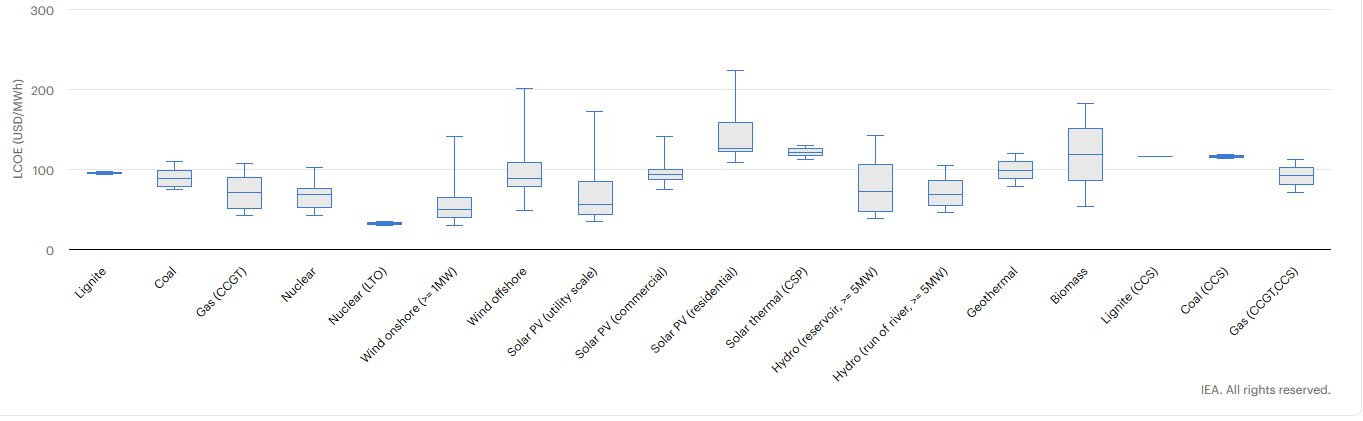
Any power generator on the grid cannot be treated as a stand-alone unit, as each kind of generator comes with its own implications for the grid. This is a fact that is conveniently ignored when the so-called Levelized Cost of Energy (LCoE) metric is used to call VRE the ‘cheapest’ of all types of generators. Although it is true that VRE have no fuel costs, and relatively low maintenance cost, the problem with them is that most of their costs is not captured in the LCoE metric.
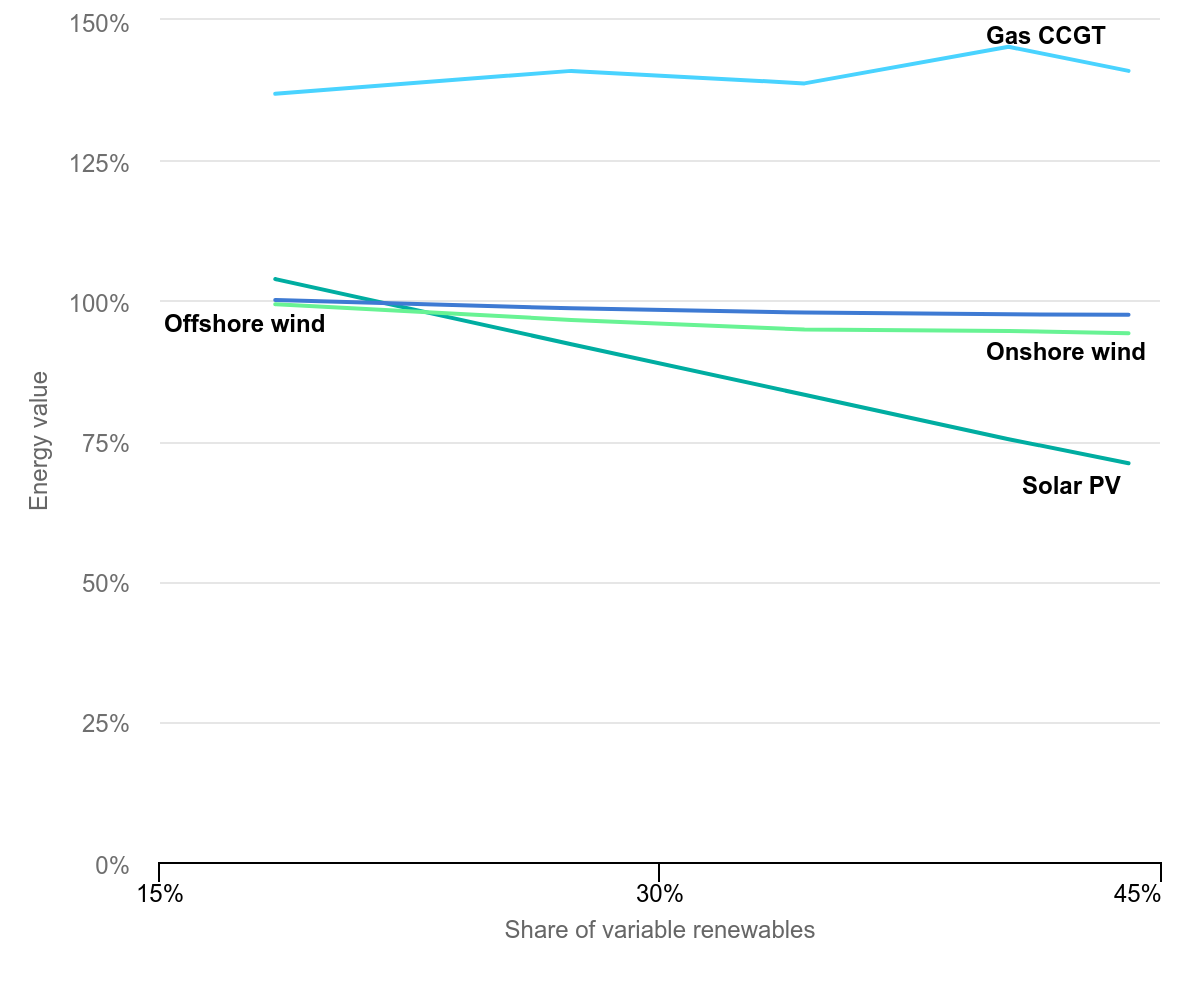
What LCoE doesn’t capture is whether it’s dispatchable or not, as a dispatchable generator will be needed when a non-dispatchable generator cannot produce due to clouds, night, heavy snow cover, no wind or overly strong wind. Also not captured in LCoE are the additional costs occurred from having the generator connected to the grid, from having to run and maintain transmission lines to remote locations, to the cost of adjusting for grid frequency oscillations and similar. Levelized cost of operation of various technologies. (Credit: IEA, 2020) Ultimately these can be summarized as ‘system integration costs’, and they are significantly tougher to firmly nail down, as well as highly variable depending on the grid, the power mix and other variables. Correspondingly the cost of electricity from various sources is hotly debated, but the consensus is to use either Levelized Avoided Cost of Energy (LACE) or Value Adjusted LCoE (VALCoE), which do take these external factors into account. Energy value by technology relative to average wholesale electricity price in the European Union in the Stated Policies Scenario. (Credit: IEA, 2020) As addressed in the linked IEA article on VALCoE, an implication of this is that the value of VREs drop as their presence on the grid increases. This can be seen in the above graph based on 2020-era EU energy policies, with the graphs for the US and China being different again, but China’s also showing the strong drop in value of PV solar while wind power is equally less affected.
A Heated Subject
It is unfortunate that energy policy has become a subject of heated political and ideological furore, as it should really be just as boring as any other administrative task. Although the power industry has largely tried to stay objective in this matter, it is unfortunately subject to both political influence and those of investors. This has led to pretty amazing and breakneck shifts in energy policy in recent years, such as Belgium’s phase-out of nuclear power, replacing it with multiple gas plants, to then not only decide to not phase out its existing nuclear plants, but also to look at building new nuclear.
Similarly, the US has and continues to see heated debates on energy policy which occasionally touch upon objective truth. Unfortunately for all of those involved, power grids do not care about personal opinions or preferences, and picking the wrong energy policy will inevitably lead to consequences that can cost lives.
In that sense, it is very harmful that corner stones of a healthy grid such as baseload, reactive power handling and load-following are being chipped away by limited metrics such as LCoE and strong opinions on certain types of power technologies. If we cared about a stable grid more than about ‘being right’, then all VRE generators would for example be required to use grid-forming converters, and TSOs could finally breathe a sigh of relief.
It is no secret that we often use and abuse bash to write things that ought to be in a different language. But bash does have its attractions. In the modern world, it is practically everywhere. It can also be very expressive, but perhaps hard to read.
We’ve talked about Amber before, a language that is made to be easier to read and write, but transpiles to bash so it can run anywhere. The FOSDEM 2026 conference featured a paper by [Daniele Scasciafratte] that shows how to best use Amber. If you prefer slides to a video, you can read a copy of the presentation.
For an example, here’s a typical Amber script. It compiles fully to a somewhat longer bash script:
import * from "std/env" fun example(value:Num = 1) { if 1 > 0 { let numbers = [value, value] let sum = 0 loop i in numbers { sum += numbers [i] } echo "it's " + "me" return sum } fail 1 }
The slides have even more examples. The language seems somewhat Python-like, and you can easily figure out most of it from reading the examples. While bash is nearly universal, the programs a script might use may not be. If you have it, the Amber code will employ bshchk to check dependencies before execution.
According to the slides, zsh support is on the way, too. Overall, it looks like it would be a great tool if you have to deploy with bash or even if you just want an easier way to script.
We’ve looked at Amber before. Besides, there are a ton of crazy things you can do with bash.
“Per vedere l'invisibile. Spunti per una spiritualità dell'immagine”. E' questo il tema della 67ª edizione della Settimana di Spiritualità promossa dalla Pontificia Facoltà Teologica Teresianum che si svolgerà dall'1 al 5 marzo.
Il Garante nazionale dei diritti delle persone private della libertà personale (Gnpl), a seguito della notizia della morte di un giovane di nazionalità marocchina nel Centro di permanenza per i rimpatri (Cpr) di Bari-Palese, avvenuta nella mattinata …
Il nostro tributo al #DarwinDay del 2026 è dedicato alla #guerra e ai motivi per cui essa non debba mai essere considerata un fattore positivo per l'evoluzione umana e sociale
Darwin Day 2026: la guerra, come entropia della storia; la pace, come ritmo della vita
Il nostro tributo al #DarwinDay del 2026 è dedicato alla #guerra e ai motivi per cui essa non debba mai essere considerata un fattore positivo per l’evoluzione umana e sociale informapirata.it/2026/02/12/da…
Il settimo incontro a Washington in meno di un anno tra Trump e Netanyahu si è chiuso apparentemente senza un accordo tra i due alleati su come procedere nei
Gestisci i processi su Linux con Task Manager di DonutsDelivery. Un'utility leggera e intuitiva per monitorare CPU, RAM e sistema senza rallentamenti. L'articolo Task Manager Linux:
404 Media has obtained a cache of internal police emails showing at least two agencies have bought access to GeoSpy, an AI tool that analyzes architecture, soil, and other features to near instantly geolocate photos.#FOIA #AI #Privacy
Cops Are Buying ‘GeoSpy’, an AI That Geolocates Photos in Seconds
📄 This article was primarily reported using public records requests. We are making it available to all readers as a public service. FOIA reporting can be expensive, please consider subscribing to 404 Media to support this work. Or send us a one time donation via our tip jar here.
The Miami-Dade Sheriff’s Office (MDSO) and the Los Angeles Police Department (LAPD) have bought access to GeoSpy, an AI tool that can near instantly geolocate a photo using clues in the image such as architecture and vegetation, with plans to use it in criminal investigations, according to a cache of internal police emails obtained by 404 Media.
The emails provide the first confirmed purchases of GeoSpy’s technology by law enforcement agencies. On its website GeoSpy has previously published details of investigations it says used the technology, but did not name any agencies who bought the tool.
“The Cyber Crimes Bureau is piloting a new analytical tool called GeoSpy. Early testing shows promise for developing investigative leads by identifying geospatial and temporal patterns,” an MDSO email reads.
This post is for subscribers only
Become a member to get access to all content Subscribe now
Aldo Luchi, interverrà al dibattito pubblico sulla legge regionale sul fine vita a Carbonia
AUSER, via Liguria 69 – Carbonia Giovedì 19 febbraio 2026 Ore 17:00
L’avvocato Aldo Luchi, attivista della Cellula Coscioni di Cagliari, parteciperà al dibattito pubblico sulla legge regionale sul fine vita.
Interverranno anche: i Consiglieri regionali Roberto Deriu, primo firmatario del testo, Peppino Canu (Sinistra Futura) Gianluca Mandas (M5S) Maria Laura Orrù (AVS) Salvatore Cau (OC) Luca Pizzuto (SF) il Responsabile alla Sanità Bruno Palmas e Luisa Poggi, segretaria cittadina di SF. Modererà: Ottavio Olita, scrittore e giornalista.Evento organizzato da Sinistra Futura
La Cellula Coscioni di Torino organizza l’incontro pubblico “Fine vita in Piemonte: a che punto siamo?”
Piazza Moncenisio 3 – Torino Mercoledì 18 febbraio 2026 Ore 21:00
La Cellula Coscioni di Torino, promuove un momento di confronto pubblico sul tema del fine vita e dell’autodeterminazione, un’occasione per riflettere sullo stato di applicazione dei diritti riguardanti il fine vita nella Regione Piemonte e sulle prospettive per un pieno riconoscimento della libertà di scelta, dal testamento biologico all’aiuto medico alla morte volontaria. Interverranno: Davide Di Mauro, Coordinatore Cellula Coscioni Torino, Giulia Sbiroli, medico di emergenza-urgenza, Paola Angela Stringa, Giurista per le libertà, Cellula Coscioni Torino. Introdurrà e modererà: Alice Ravinale, capogruppo AVS in Consiglio Regionale Piemonte L’evento è organizzato in collaborazione con Alleanza Verdi Sinistra Piemonte.
Felicetta Maltese parteciperà all’evento “Riflessioni sul fine vita” a Poggibonsi
Teatro Politeama SALA SET Piazza Fratelli Rosselli, 6, Poggibonsi SI Mercoledì 18 febbraio 2026 Ore 18:15
Felicetta Maltese, Coordinatrice della Cellula Coscioni di Firenze, parteciperà all’incontro pubblico “Riflessioni sul fine vita – Etica, diritto e autodeterminazione”, l’evento sarà un’occasione per approfondire la situazione normativa attuale e avere una visione completa sotto diversi punti di vista.
Interverranno insieme a Felicetta Maltese: Paolo Grossi, già Presidente della Corte costituzionale Francesco Cipriani, medico igienista e già direttore Osservatorio epidemiologico della Toscana Maurizio Mori, professore di Bioetica, Università di Torino,Francesca Menichincheri, consigliera comunale di Firenze, Andrea Vento, medico rianimatore e scrittore. Coordinerà l’incontro: Laura Montanari, giornalista. Evento patrocinato dal Comune di Poggibonsi.Per maggiori informazioni: futurapoggibonsi@gmail.com
If you’ve been even casually following NASA’s return to the Moon, you’re likely aware of the recent Wet Dress Rehearsal (WDR) for the Artemis II mission. You probably also heard that things didn’t go quite to plan: although the test was ultimately completed and the towering Space Launch System (SLS) rocket was fully loaded with propellant, a persistent liquid hydrogen leak and a few other incidental issues lead the space agency to delay further testing for at least a month while engineers make adjustments to the vehicle.
This constitutes a minor disappointment for fans of spaceflight, but when you’re strapping four astronauts onto more than five million pounds of propellants, there’s no such thing as being too cautious. In fact, there’s a school of thought that says if a WDR doesn’t shake loose some gremlins, you probably weren’t trying hard enough. Simulations and estimates only get you so far, the real thing is always more complex, and there’s bound to be something you didn’t account for ahead of time.
Do Not Pass Go
So what exactly is a Wet Dress Rehearsal? In the most basic of terms, its a practice launch where everyone involved does everything exactly the way they would on a real launch, except when the countdown hits zero, nothing actually happens.
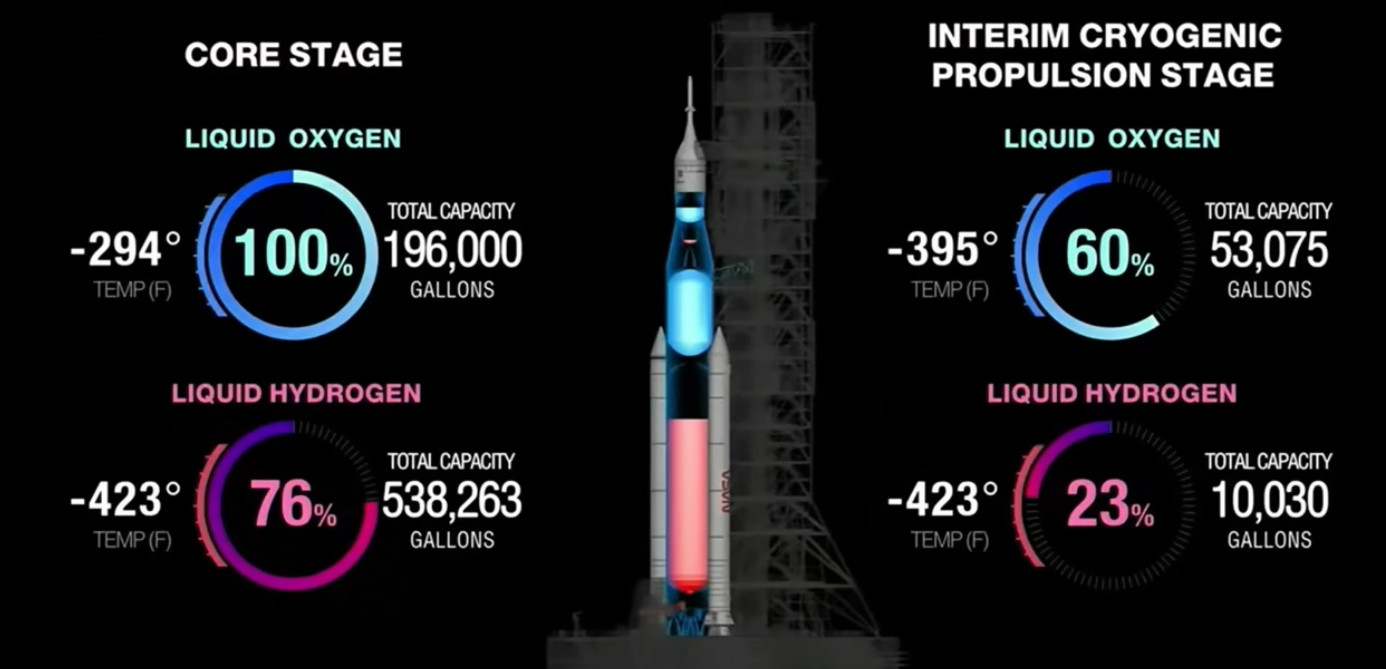
It’s the final test of the vehicle and the ground support systems, the last check of fit and function before launch. But there’a also a logistical element. In other words, it’s not just a test of whether or not the vehicle can be fully fueled, it’s also a verification of how long that process takes. Many of the operations that are performed in the WDR would have already been tested in isolation, but this may be the first, and only, time to practice running them concurrently with all of the other elements of the countdown. A real-time graphic displayed propellant load status during the Wet Dress Rehearsal live stream. There’s also the human element. Hundreds of individuals have a part to play as the clock ticks down to zero, from the team in mission control to the driver of the astronaut transport vehicle. This is where the Wet Dress Rehearsal truly earns it name. In a sense, launching a rocket is a bit like a theater production. Every player needs to not only have their individual role memorized, but they need to work together effectively with the larger ensemble on the big night.
Although a WDR is meant to simulate an actual launch as closely as possible, the rules are slightly different. If the rocket was actually going to be released there are other variables to contend with, such as the launch window, which is the period of time in which the rocket can actually leave the pad to reach its intended orbit. On a real launch, a delay significant enough to keep the vehicle from lifting off during its pre-determined launch window would generally result in an automatic abort. There is no such constraint for a rehearsal however, which gives teams more flexibility to conduct tests and repair work.
It should be noted that the Artemis II astronauts were not aboard the vehicle for the recent WDR, although ground teams did simulate the process of loading the crew into the Orion capsule. This is partly for the safety of the astronauts should something go wrong during the rehearsal, but is also due to the fact that the Moon-bound crew is kept in quarantine until the actual launch day to reduce the likelihood they will get sick during the mission.
Light the Fires
As mentioned above, for the purposes of the Wet Dress Rehearsal, nothing actually happens when the launch clock hits zero. It’s a test of the pre-launch activities, so actually starting up the engines isn’t part of the exercise.
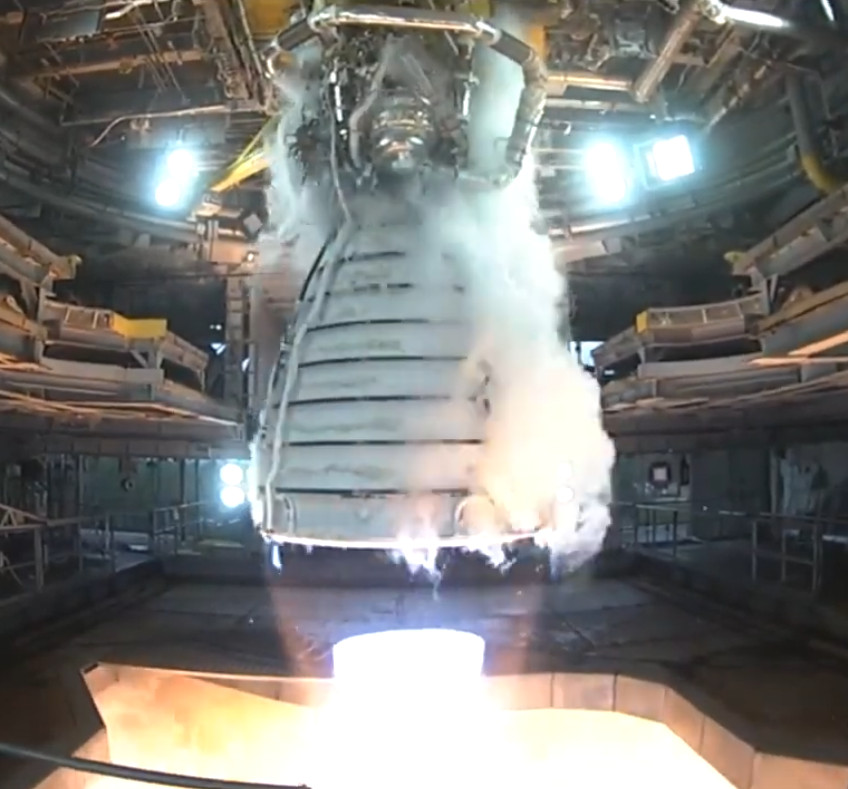
But of course, testing the engines is an important aspect of launch preparation as well. Such a test is generally referred to as a static fire, where the engines are briefly run while the vehicle is physically held down so as not to leave the pad. Operationally, a wet dress rehearsal could proceed directly into a static fire. On the other hand, a full WDR is not required to perform a static fire. An RS-25 engine during a test run. While static fire tests are common for modern rockets such as the Falcon 9, NASA has decided not to conduct them during the Artemis I and II missions. The SLS rocket uses lightly modified RS-25 Space Shuttle Main Engines (SSMEs), which are not only flight proven, but were individually tested before integration with the vehicle. There is also an argument to be made that a full-up static fire on the SLS, like the Space Shuttle before it, isn’t truly possible as the vehicle’s Solid Rocket Boosters (SRBs) can only be ignited once.
The Artemis I rocket did however conduct what NASA calls a Green Run back in 2021. This saw the first stage of the SLS fire its four RS-25 engines for eight minutes to simulate an orbital launch. The first attempt at the Green Run saw the engines shut down prematurely, but they did run for the full duration in a subsequent test.
Although such a test wasn’t conducted for Artemis II, and are not expected for any of the future SLS rockets, NASA is preparing for a Green Run test on the Exploration Upper Stage (EUS). This is an upgraded second stage for the SLS which is intended to support more ambitious missions after the Artemis III landing, although the timeline and status of those missions is tenuous at best.
The Road to the Moon
According to NASA’s latest update, the issues during the Artemis II Wet Dress Rehearsal has pushed the testing campaign back until at least March, at which point they will run a second WDR. But that certainly doesn’t mean it will be the last.
While admittedly no two missions are the same, Artemis I went through four WDRs before it flew. Even then, the last one was aborted before the countdown was completed. Interestingly it was a hydrogen leak that caused that final rehearsal to be cut short, indicating that it may be a more dynamic problem than NASA realized at the time.
Even if the second WDR for Artemis II goes off without a hitch next month, that doesn’t mean the actual launch won’t be hit with its own delays due to technical glitches, poor weather, or any one of a myriad of other possible issues. Getting a rocket off the ground is never easy, and it only gets harder when there are humans onboard and the destination is farther than anyone has flown since the 1970s. An almost endless number of things need to go exactly right before we’ll see Artemis II lift off the pad, but when it goes, you definitely won’t want to miss it.
Di recente ho installato una mia istanza personale, e non c'è ragione di tenere in piedi 2 account per fare sostanzialmente la stessa cosa: accedere al Fediverso con un profilo personale.
Però non ha senso mantenere in piedi anche questo account, a consumare risorse.
il nuovo account si chiama simone@s.quiete.eu. Questo di poliverso chiuderà tra qualche giorno.
Se mi seguite, dovreste avere già ricevuto un invito a seguire l'altro account, o potete comunque farlo ora. Da parte mia dovrei avervi già seguito dall'altro account.
Amo Poliverso.org, e non è detto che, prima o poi, non possa spostarmi di nuovo qui; il bello del Fediverso è proprio di potere cambiare casa digitale liberamente secondo le nostre esigenze.
Di sicuro, continuerò come posso a sostenere la piattaforma!
Although at its face the results seem obvious, a recent study by [Sandrah Eckel] et al. on the impact of electric cars in California is interesting from a quantitative perspective. What percentage of ICE-only cars do you need to replace with either full electric or hybrid cars before you start seeing an improvement in air quality?
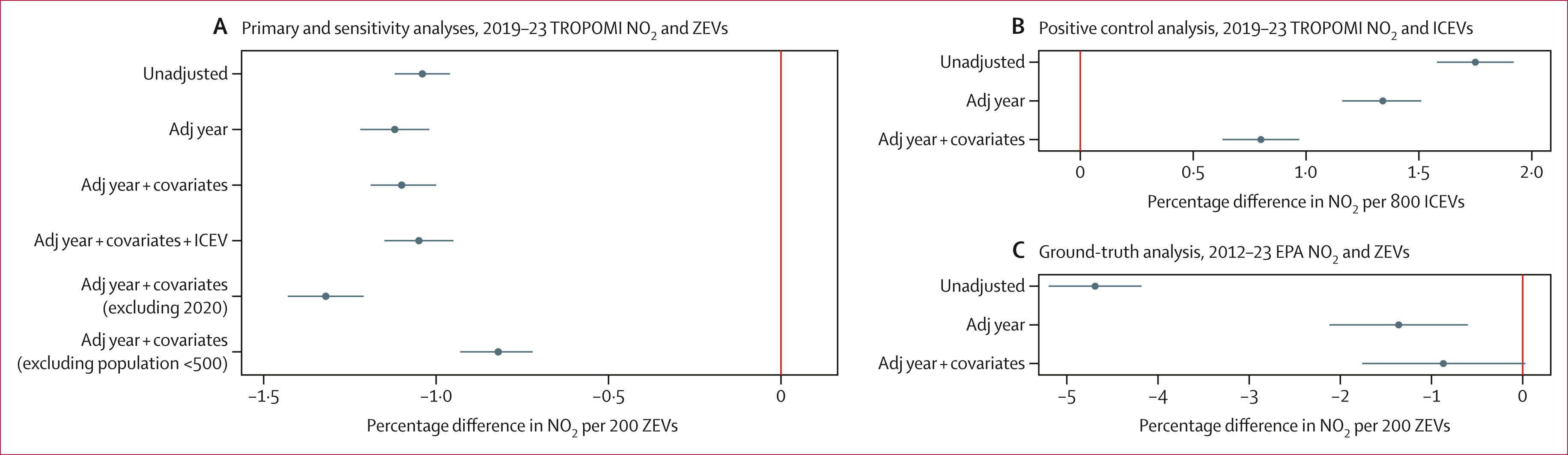
A key part of the study was the use of the TROPOMI instrument, part of the European Sentinel-5 Precursor satellite. This can measure trace gases and aerosols in the atmosphere, both of which directly correlate with air quality. The researchers used historical TROPOMI data from 2019 to 2023 in the study, combining this data with vehicle registrations in California and accounting for confounding factors, such as a certain pandemic grinding things to a halt in 2020 and massively improving air quality.
Although establishing direct causality is hard using only this observational data, the researchers did show that the addition of 200 electric vehicles would seem to be correlated to an approximate 1.1% drop in measured atmospheric NO2. This nitrogen oxide is poisonous and fatal if inhaled in large quantities. It’s also one of the pollutants that result from combustion, when at high temperatures nitrogen from the air combines with oxygen molecules. Estimated adjusted associations of annual vehicle registration counts and annual average NO2 in California from longitudinal linear mixed effects models (Sandrah Eckel et al., 2026) Considering the massive negative health impact of nitrogen dioxide on human health, any reduction here is naturally welcome. Of course, this substance is only one of the many pollutants generated by cars. We are also seeing a lot of fine particulate matter (PM2.5) generated from car tires, with a significant amount of microplastics coming from this source alone.
Add to this the environmentally toxic additive 6PPD that is added to tires along with e.g. carbon black, all of which help to make tires last longer and resist e.g. UV radiation and ozone exposure. While 6PPD isn’t necessarily directly harmful to humans, the PM2.5 pollution definitely is. As for carbon black and other additives, they’re still the subject of ongoing research.
One of the things that make statistics exciting is that of nuance from understanding the subject matter. Without that the adage of ‘Lies, Big Lies and Statistics’ applies, with spurious correlations being often promoted due to either ignorance or for unsavory purposes.
In the case of this study by [Sandrah Eckel] et al., it would seem that they did their due diligence, and the correlation makes sense objectively, in that having fewer ICE cars in favor of non-ICE cars would improve air quality. That said, as the tires of electric vehicles tend to wear faster due to their heavier weight, it remains to be seen whether it’s a net positive.
“Definire i requisiti minimi per la piena comunione con la Chiesa cattolica e stabilire uno statuto canonico per la Fraternità”. Questo l’obiettivo del dialogo che si è svolto oggi, durante un incontro tra il card.
Sudo è in crisi? Il maintainer Todd C. Miller cerca fondi per mantenere l'utility, Il mancato supporto potrebbe portare rischi per la sicurezza Linux e il futuro del comando più usato. L'articolo
@Giornalismo e disordine informativo articolo21.org/2026/02/oro-qua… Nato in Siria, ad Aleppo, da famiglia cristiana armena, Jean Boghossian è un artista belga-libanese che vive tra Bruxelles e Montecarlo, dove da giovane era artista orafo. Per le sue creazioni d’oro















AUSER, via Liguria 69 – Carbonia
Giovedì 19 febbraio 2026
Ore 17:00
Piazza Moncenisio 3 – Torino
Mercoledì 18 febbraio 2026
Ore 21:00
Teatro Politeama SALA SET Piazza Fratelli Rosselli, 6, Poggibonsi SI
Mercoledì 18 febbraio 2026
Ore 18:15