Cybersecurity & cyberwarfare ha ricondiviso questo.

The media in this post is not displayed to visitors. To view it, please go to the original post.

Sette vulnerabilità in FatFs mettono a rischio milioni di dispositivi IoT ed embedded
#tech
spcnet.it/sette-vulnerabilita-…
@informatica


Sette vulnerabilità in FatFs mettono a rischio milioni di dispositivi IoT ed embedded


Sette nuove vulnerabilità in FatFs, la libreria FAT/exFAT più diffusa nel mondo embedded, mettono a rischio milioni di dispositivi IoT, controllori industriali, drone, telecamere di sicurezza e persino hardware wallet. A scoprirle è stato il team di ricerca runZero, che ha rispolverato un audit di sicurezza del 2017 usando un approccio decisamente più moderno: Visual Studio Code e GitHub Copilot in modalità “auto”, con prompt semplici e nessun tooling custom. Il risultato è stato sorprendente: bug che il fuzzing manuale non aveva mai individuato sono emersi con relativa facilità.

Per chi lavora su sistemi embedded, firmware o dispositivi IoT, questa vicenda merita attenzione non solo per i dettagli tecnici delle CVE, ma anche per quello che rivela sulla fragilità della supply chain del software embedded.

Cos’è FatFs e perché è ovunque


FatFs è una libreria open source compatta, scritta in C, che permette a dispositivi con risorse limitate di leggere e scrivere volumi formattati FAT e exFAT — gli stessi filesystem usati da chiavette USB e schede SD. Proprio per la sua leggerezza è stata integrata, spesso tramite vendoring (copia diretta del codice sorgente nel proprio progetto), in un numero enorme di piattaforme embedded:

  • Espressif ESP-IDF
  • STMicroelectronics STM32Cube
  • Zephyr RTOS
  • MicroPython
  • ArduPilot
  • RT-Thread
  • Mbed
  • Samsung TizenRT
  • SWUpdate

A valle di questi framework troviamo dispositivi IoT di consumo, controllori industriali, drone, hardware crypto wallet, telecamere con slot SD, chioschi pubblici, ATM e persino macchine per il voto elettronico con lettori USB. La maggior parte di questi dispositivi non dispone delle protezioni di memoria che diamo per scontate su desktop e smartphone, a partire dall’ASLR (Address Space Layout Randomization).

Le sette vulnerabilità


Tutte le CVE condividono lo stesso schema di innesco: il dispositivo legge un volume di storage o un’immagine firmware malformata, FatFs gestisce male i dati corrotti, e da lì partono corruzioni di memoria, crash o fughe di informazioni. Due delle sette CVE, la 6682 e la 6683, sono implicate anche nei processi di aggiornamento firmware over-the-air, il che estende la superficie di attacco ben oltre il semplice accesso fisico al dispositivo.

Le tre vulnerabilità più severe (CVSS 7.6, High)

CVE-2026-6682 - Integer overflow in mount_volume() (FAT32)
Un overflow intero può produrre metadati di dimensione file
controllati dall'attaccante. Se questo valore viene usato come
lunghezza di lettura da codice a valle, si arriva a corruzione
di heap/stack e potenziale esecuzione di codice arbitrario.

CVE-2026-6687 - Stack overflow in f_getlabel() (exFAT)
La gestione della label exFAT non limita correttamente la
lunghezza del campo, permettendo scritture oversize nel buffer
della label. Corruzione di memoria diretta nel firmware.

CVE-2026-6688 - Overflow nei filename lunghi
Quando fno.fname supera le dimensioni del buffer fisso nel
codice chiamante, il problema si manifesta tipicamente in
wrapper che usano strcpy o sprintf senza controlli di bound.

Le quattro vulnerabilità di severità media (CVSS 4.6–6.1)

CVE-2026-6685 (CVSS 6.1) - Wraparound in sottrazione unsigned
nella gestione della dirty-cache su volumi frammentati: può
corrompere memoria o causare corruzione silente dei dati,
particolarmente pericolosa in sistemi di logging e controllo.

CVE-2026-6683 (CVSS 4.6) - Divide-by-zero in exFAT nei percorsi
di sync/write, innescabile con media malformati: crash affidabili
e possibile "brick" del dispositivo durante update firmware.

CVE-2026-6686 (CVSS 4.6) - Esposizione di cluster non
inizializzati quando si estende un file oltre EOF: può rivelare
dati residui di file precedentemente cancellati (data leak).

CVE-2026-6684 (CVSS 4.6) - Loop di scansione GPT nelle versioni
precedenti a R0.16: può causare scansioni illimitate e denial
of service al boot. Corretta in R0.16, ma resta presente in
gran parte dei deployment embedded esistenti.

Il vero problema: chi la corregge?


FatFs è mantenuta da un solo sviluppatore. runZero ha tentato ripetutamente di contattarlo e ha coinvolto JPCERT/CC nel processo di coordinamento, senza ottenere risposta. Il risultato è che, delle sette CVE, solo quella relativa alla scansione GPT (CVE-2026-6684) ha una patch upstream disponibile, nella versione R0.16.

Ma anche questa correzione non risolve automaticamente nulla: praticamente tutti i produttori che integrano FatFs lavorano su copie vendorizzate e modificate localmente. Ogni patch upstream deve quindi essere validata con cura prima di essere incorporata nel proprio codice, un processo che — come insegna il precedente di PixieFail (le nove vulnerabilità in EDK II divulgate nel 2024) — può richiedere anni, non settimane.

Cosa fare se sviluppi o gestisci dispositivi con FatFs


Se sei tra chi costruisce firmware che interagisce con storage FAT o exFAT, le priorità immediate sono chiare:

  • Individua la copia vendorizzata di FatFs nel tuo codice e verificane la versione
  • Fai il audit del wrapper code che circonda le chiamate a FatFs, in particolare come vengono gestiti nomi file e dimensioni
  • Presta particolare attenzione a qualsiasi punto in cui fno.fname viene copiato in un buffer di dimensione fissa
  • Pianifica la validazione e il rilascio di patch per la tua base di codice specifica

Se invece gestisci dispositivi che integrano FatFs senza averli sviluppati (telecamere, NAS embedded, sistemi industriali), tratta le porte fisiche e i canali di aggiornamento firmware come superficie di attacco: limita chi può inserire fisicamente supporti removibili, monitora gli advisory di sicurezza dei vendor e applica gli aggiornamenti firmware non appena disponibili.

runZero ha pubblicato immagini disco proof-of-concept, un test harness e una dimostrazione di exploit basata su QEMU in un repository di accompagnamento. Alla data di divulgazione (1 luglio 2026) non risultavano attacchi noti che sfruttassero attivamente queste vulnerabilità — ma la disponibilità pubblica di PoC e tooling di fuzzing basato su AI riduce drasticamente il tempo necessario perché qualcuno le sfrutti.

Conclusione


Il caso FatFs è un promemoria di quanto sia fragile la catena di fornitura del software embedded: componenti piccoli, utili e copiati ovunque, che diventano difficili da correggere proprio per la loro diffusione capillare e la mancanza di un processo di manutenzione strutturato. È anche un caso di studio interessante sull’uso di strumenti AI-assisted (Copilot in modalità agente) per il security auditing: un processo che nel 2017 richiedeva settimane di fuzzing manuale, nel 2026 è stato in parte automatizzato con risultati migliori. Per i team che gestiscono flotte di dispositivi embedded, il messaggio pratico è di trattare ogni libreria di terze parti vendorizzata come debito tecnico da monitorare attivamente, non come un componente “impostato e dimenticato”.

Fonte: Security Affairs e 4sysops, basato sulla ricerca originale di runZero.


Cybersecurity & cyberwarfare ha ricondiviso questo.

The media in this post is not displayed to visitors. To view it, please go to the original post.

Accenture Data Breach: Hackers Claim Theft of 35 GB of Source Code and Azure Credentials
#CyberSecurity
securebulletin.com/accenture-d…
Cybersecurity & cyberwarfare ha ricondiviso questo.

"Unlike water used in a dishwasher or a toilet — which often returns to a treatment facility to be recycled — the water in cooling systems vanishes into the air. It becomes water vapour and escapes into the atmosphere. This fundamental difference is why data centre water use is not comparable to that of typical household use, where water cycles back through municipal systems."

irishexaminer.com/opinion/comm…

reshared this

Cybersecurity & cyberwarfare ha ricondiviso questo.

The media in this post is not displayed to visitors. To view it, please go to the original post.

The media in this post is not displayed to visitors. To view it, please go to the original post.

✨ GDID: come Microsoft ha aiutato l’FBI a incastrare un presunto membro di Scattered Spider
#CyberSecurity
insicurezzadigitale.com/gdid-c…

@informatica


GDID: come Microsoft ha aiutato l’FBI a incastrare un presunto membro di Scattered Spider


Si parla di:
Toggle

Per anni Scattered Spider ha costruito la propria reputazione criminale sulla capacità di restare invisibile, nascondendosi dietro VPN, servizi di anonimizzazione e infrastrutture usa e getta. Ora, atti giudiziari appena desecretati mostrano come gli investigatori statunitensi abbiano comunque ricostruito l’identità di un presunto membro del gruppo grazie a un ingrediente inatteso: un identificativo univoco che Windows assegna a ogni installazione e che Microsoft ha fornito all’FBI dietro ordine del tribunale.

Chi è Peter Stokes e cosa gli viene contestato


Al centro del caso c’è Peter Stokes, 19 anni, cittadino con doppio passaporto statunitense ed estone, arrestato in aprile in Finlandia mentre tentava di imbarcarsi su un volo diretto in Giappone, con la collaborazione della National Bureau of Investigation finlandese. È stato successivamente estradato negli Stati Uniti e ha affrontato la sua prima udienza davanti a un tribunale federale di Chicago il 30 giugno 2026. I procuratori lo accusano di aver fatto parte di Scattered Spider, il collettivo cybercriminale noto anche con gli alias Octo Tempest, UNC3944 e 0ktapus, e di aver partecipato a molteplici intrusioni informatiche, furti di dati e schemi di estorsione.

Secondo l’accusa, le autorità federali attribuiscono al gruppo oltre 100 intrusioni di rete e più di 100 milioni di dollari in pagamenti di riscatto dal 2022 a oggi, con un modus operandi che combina ingegneria sociale, furto di credenziali, SIM swapping e compromissione di ambienti cloud enterprise.

GDID: il “device fingerprint” che nessuno può disattivare


Il dettaglio tecnico più rilevante della vicenda riguarda il Global Device Identifier (GDID), un identificativo univoco assegnato da Microsoft a ogni installazione di Windows per finalità di telemetria a livello di dispositivo e per l’erogazione di alcuni servizi di piattaforma. Secondo l’affidavit dell’FBI reso pubblico, un account ngrok utilizzato durante una delle intrusioni contestate era stato creato attraverso una VPN — ma Microsoft, dopo aver ricevuto un ordine del tribunale, è stata in grado di associare quell’attività a uno specifico GDID.

Da lì, gli investigatori hanno incrociato il GDID con la telemetria storica di Microsoft, individuando ulteriori indirizzi IP riconducibili alla stessa installazione Windows in periodi diversi. Questi indirizzi sono stati poi correlati con i log di accesso ottenuti da Snapchat, Apple, Facebook, con i registri di viaggio e con altre fonti digitali, costruendo — secondo l’accusa — un pattern coerente che collega il dispositivo a Stokes. Microsoft, va precisato, non ha monitorato l’attività in tempo reale: ha fornito telemetria storica e informazioni sul dispositivo solo dopo un iter legale formale, e aveva già inoltrato segnalazioni penali su Stokes come possibile membro di Scattered Spider fin dal 2024.

Timeline del caso


  • 2024 — Microsoft inoltra alle autorità le prime segnalazioni penali su Stokes come possibile membro di Scattered Spider
  • Maggio 2025 — intrusione contro un rivenditore statunitense di gioielleria di lusso: l’help desk IT viene manipolato con ingegneria sociale per resettare le credenziali di un dipendente
  • Maggio 2025 — esfiltrazione di circa 100 GB di dati e richiesta di riscatto da 8 milioni di dollari in criptovaluta; l’azienda rifiuta di pagare ma subisce perdite operative stimate in circa 2 milioni di dollari
  • Aprile 2026 — Stokes viene arrestato a Helsinki mentre tenta di imbarcarsi su un volo per il Giappone
  • 30 giugno 2026 — prima udienza federale a Chicago dopo l’estradizione


Non solo telemetria: un mosaico di prove digitali


Nonostante il dibattito online si sia concentrato quasi esclusivamente sul ruolo di Microsoft, l’affidavit chiarisce che gli investigatori si sono basati su molteplici fonti indipendenti: log dei provider cloud, infrastruttura sequestrata, comunicazioni intercettate e prove digitali raccolte nel corso di un’indagine più ampia. È un promemoria importante per chi si occupa di threat intelligence e incident response: l’attribuzione moderna raramente si basa su un singolo indicatore, ma su una correlazione incrociata tra fonti eterogenee — piattaforma, cloud provider, social network, dati di viaggio — che insieme riducono drasticamente lo spazio delle identità plausibili, anche quando l’attaccante ha fatto ampio uso di VPN e servizi di anonimizzazione.

Implicazioni per i difensori e per il settore


Il caso Stokes offre due lezioni parallele. La prima riguarda la resilienza dei processi organizzativi: l’attacco alla gioielleria di lusso è iniziato con un classico vishing/social engineering contro l’help desk IT, lo stesso schema che ha permesso a Scattered Spider di colpire catene alberghiere, compagnie aeree e assicurazioni negli ultimi anni. Rafforzare le procedure di verifica dell’identità per il reset delle credenziali — con callback verification, domande di sicurezza fuori banda o approvazione multi-step — resta la contromisura più efficace e meno costosa contro questo genere di intrusioni.

La seconda lezione riguarda l’attribuzione: la vicenda GDID dimostra che le piattaforme cloud e i sistemi operativi moderni generano una quantità di telemetria sufficiente a ricostruire pattern comportamentali anche a distanza di mesi, sollevando al contempo interrogativi legittimi sulla portata e sulla durata di conservazione di questi dati per finalità che vanno ben oltre il semplice funzionamento del prodotto. Per i team SOC, il takeaway operativo è monitorare con attenzione l’uso di strumenti di tunneling come ngrok all’interno del proprio perimetro: la loro presenza, specie se associata ad accessi VPN anomali, resta uno dei segnali più affidabili di attività Scattered Spider in corso.

Indicatori e TTP noti

Gruppo: Scattered Spider (alias Octo Tempest, UNC3944, 0ktapus)
Soggetto: Peter Stokes, 19 anni, cittadinanza USA/Estonia
Arresto: aprile 2026, Helsinki (Finlandia), tentata fuga verso il Giappone
Estradizione/udienza: 30 giugno 2026, tribunale federale di Chicago

TTP osservate:
  - Vishing / social engineering verso help desk IT per reset credenziali
  - SIM swapping
  - Furto di token/sessioni cloud (Azure, SaaS enterprise)
  - Tunneling via ngrok per infrastruttura C2 temporanea
  - Esfiltrazione dati seguita da estorsione in criptovaluta

Caso di riferimento: intrusione maggio 2025 contro rivenditore di gioielleria di lusso USA
  - ~100 GB di dati esfiltrati
  - Richiesta riscatto: $8.000.000 in criptovaluta (rifiutata)
  - Perdite operative stimate: ~$2.000.000

Fonte identificativa chiave: Microsoft Global Device Identifier (GDID)
  - Fornito all'FBI dietro ordine del tribunale
  - Correlato con IP storici, login Snapchat/Apple/Facebook, dati di viaggio

Fonti: CyberScoop, atto d’accusa FBI (U.S. Attorney’s Office, Northern District of Illinois), BreachNews.

Cybersecurity & cyberwarfare ha ricondiviso questo.

The media in this post is not displayed to visitors. To view it, please go to the original post.

Dario Dieci, Linux alla riscossa: l'intervento di @alternativalinux al @devconf


Dario Dieci ha dedicato al popolare sistema operativo Linux Mint il blog alternativalinux.it e l'omonimo canale YouTube; inoltre offre consulenze per l'impiego di Linux in azienda

@devconf@citiverse.it

youtube.com/live/e1Ege3H-SFQ

Questa voce è stata modificata (1 mese fa)
Cybersecurity & cyberwarfare ha ricondiviso questo.

The media in this post is not displayed to visitors. To view it, please go to the original post.

LA VIA DELLA RICONQUISTA: Gianluca Aurelio al @devconf


L'ALTERNATIVA OPEN SOURCE
AI LOCALE PROJECT N.O.M.A.D.
LA FABBRICA DISTRIBUITA
DEMOCRATIZZARE L'HARDWARE

...e...

SPOSTARE LA FIDUCIA
Dalle Multinazionali Centralizzate...
...a piccole realtà locali fidate.
@devconf@citiverse.it

youtube.com/live/e1Ege3H-SFQ

Cybersecurity & cyberwarfare ha ricondiviso questo.

The media in this post is not displayed to visitors. To view it, please go to the original post.

You've Been Owned. Not Own. Dal floppy disk al cloud: come abbiamo ceduto la nostra sovranità digitale… e come ce la stiamo riprendendo: Gianluca Aurelio al @devconf


Dal software in scatola alla trappola del cloud: quando il software risiedeva sul tuo hard disk. Potevi usarlo offline, prestarlo o rivenderlo. Oggi non compriamo: affittiamo licenze d'uso e i nostri dati vivono sul "computer di qualcun altro", in mano a poche grandi aziende

Siamo passati dall'essere proprietari all'essere inquilini digitali.


@devconf@citiverse.it

youtube.com/live/e1Ege3H-SFQ

Cybersecurity & cyberwarfare ha ricondiviso questo.

#Telegram-Hosted #RedWing #Malware Lets Anyone Rent #Android #Spyware Tools
securityaffairs.com/194942/mal…
#securityaffairs #hacking
Cybersecurity & cyberwarfare ha ricondiviso questo.

GDID: come Microsoft ha aiutato l’FBI a incastrare un presunto membro di Scattered Spider


Atti giudiziari desecretati rivelano come il Global Device Identifier (GDID) di Windows abbia aiutato FBI e Microsoft a identificare Peter Stokes, 19enne accusato di appartenere a Scattered Spider. Dalla richiesta di riscatto da 8 milioni contro una gioielleria di lusso all'arresto a Helsinki.
The media in this post is not displayed to visitors. To view it, please go to the original post.

Si parla di:
Toggle

Per anni Scattered Spider ha costruito la propria reputazione criminale sulla capacità di restare invisibile, nascondendosi dietro VPN, servizi di anonimizzazione e infrastrutture usa e getta. Ora, atti giudiziari appena desecretati mostrano come gli investigatori statunitensi abbiano comunque ricostruito l’identità di un presunto membro del gruppo grazie a un ingrediente inatteso: un identificativo univoco che Windows assegna a ogni installazione e che Microsoft ha fornito all’FBI dietro ordine del tribunale.

Chi è Peter Stokes e cosa gli viene contestato


Al centro del caso c’è Peter Stokes, 19 anni, cittadino con doppio passaporto statunitense ed estone, arrestato in aprile in Finlandia mentre tentava di imbarcarsi su un volo diretto in Giappone, con la collaborazione della National Bureau of Investigation finlandese. È stato successivamente estradato negli Stati Uniti e ha affrontato la sua prima udienza davanti a un tribunale federale di Chicago il 30 giugno 2026. I procuratori lo accusano di aver fatto parte di Scattered Spider, il collettivo cybercriminale noto anche con gli alias Octo Tempest, UNC3944 e 0ktapus, e di aver partecipato a molteplici intrusioni informatiche, furti di dati e schemi di estorsione.

Secondo l’accusa, le autorità federali attribuiscono al gruppo oltre 100 intrusioni di rete e più di 100 milioni di dollari in pagamenti di riscatto dal 2022 a oggi, con un modus operandi che combina ingegneria sociale, furto di credenziali, SIM swapping e compromissione di ambienti cloud enterprise.

GDID: il “device fingerprint” che nessuno può disattivare


Il dettaglio tecnico più rilevante della vicenda riguarda il Global Device Identifier (GDID), un identificativo univoco assegnato da Microsoft a ogni installazione di Windows per finalità di telemetria a livello di dispositivo e per l’erogazione di alcuni servizi di piattaforma. Secondo l’affidavit dell’FBI reso pubblico, un account ngrok utilizzato durante una delle intrusioni contestate era stato creato attraverso una VPN — ma Microsoft, dopo aver ricevuto un ordine del tribunale, è stata in grado di associare quell’attività a uno specifico GDID.

Da lì, gli investigatori hanno incrociato il GDID con la telemetria storica di Microsoft, individuando ulteriori indirizzi IP riconducibili alla stessa installazione Windows in periodi diversi. Questi indirizzi sono stati poi correlati con i log di accesso ottenuti da Snapchat, Apple, Facebook, con i registri di viaggio e con altre fonti digitali, costruendo — secondo l’accusa — un pattern coerente che collega il dispositivo a Stokes. Microsoft, va precisato, non ha monitorato l’attività in tempo reale: ha fornito telemetria storica e informazioni sul dispositivo solo dopo un iter legale formale, e aveva già inoltrato segnalazioni penali su Stokes come possibile membro di Scattered Spider fin dal 2024.

Timeline del caso


  • 2024 — Microsoft inoltra alle autorità le prime segnalazioni penali su Stokes come possibile membro di Scattered Spider
  • Maggio 2025 — intrusione contro un rivenditore statunitense di gioielleria di lusso: l’help desk IT viene manipolato con ingegneria sociale per resettare le credenziali di un dipendente
  • Maggio 2025 — esfiltrazione di circa 100 GB di dati e richiesta di riscatto da 8 milioni di dollari in criptovaluta; l’azienda rifiuta di pagare ma subisce perdite operative stimate in circa 2 milioni di dollari
  • Aprile 2026 — Stokes viene arrestato a Helsinki mentre tenta di imbarcarsi su un volo per il Giappone
  • 30 giugno 2026 — prima udienza federale a Chicago dopo l’estradizione


Non solo telemetria: un mosaico di prove digitali


Nonostante il dibattito online si sia concentrato quasi esclusivamente sul ruolo di Microsoft, l’affidavit chiarisce che gli investigatori si sono basati su molteplici fonti indipendenti: log dei provider cloud, infrastruttura sequestrata, comunicazioni intercettate e prove digitali raccolte nel corso di un’indagine più ampia. È un promemoria importante per chi si occupa di threat intelligence e incident response: l’attribuzione moderna raramente si basa su un singolo indicatore, ma su una correlazione incrociata tra fonti eterogenee — piattaforma, cloud provider, social network, dati di viaggio — che insieme riducono drasticamente lo spazio delle identità plausibili, anche quando l’attaccante ha fatto ampio uso di VPN e servizi di anonimizzazione.

Implicazioni per i difensori e per il settore


Il caso Stokes offre due lezioni parallele. La prima riguarda la resilienza dei processi organizzativi: l’attacco alla gioielleria di lusso è iniziato con un classico vishing/social engineering contro l’help desk IT, lo stesso schema che ha permesso a Scattered Spider di colpire catene alberghiere, compagnie aeree e assicurazioni negli ultimi anni. Rafforzare le procedure di verifica dell’identità per il reset delle credenziali — con callback verification, domande di sicurezza fuori banda o approvazione multi-step — resta la contromisura più efficace e meno costosa contro questo genere di intrusioni.

La seconda lezione riguarda l’attribuzione: la vicenda GDID dimostra che le piattaforme cloud e i sistemi operativi moderni generano una quantità di telemetria sufficiente a ricostruire pattern comportamentali anche a distanza di mesi, sollevando al contempo interrogativi legittimi sulla portata e sulla durata di conservazione di questi dati per finalità che vanno ben oltre il semplice funzionamento del prodotto. Per i team SOC, il takeaway operativo è monitorare con attenzione l’uso di strumenti di tunneling come ngrok all’interno del proprio perimetro: la loro presenza, specie se associata ad accessi VPN anomali, resta uno dei segnali più affidabili di attività Scattered Spider in corso.

Indicatori e TTP noti

Gruppo: Scattered Spider (alias Octo Tempest, UNC3944, 0ktapus)
Soggetto: Peter Stokes, 19 anni, cittadinanza USA/Estonia
Arresto: aprile 2026, Helsinki (Finlandia), tentata fuga verso il Giappone
Estradizione/udienza: 30 giugno 2026, tribunale federale di Chicago

TTP osservate:
  - Vishing / social engineering verso help desk IT per reset credenziali
  - SIM swapping
  - Furto di token/sessioni cloud (Azure, SaaS enterprise)
  - Tunneling via ngrok per infrastruttura C2 temporanea
  - Esfiltrazione dati seguita da estorsione in criptovaluta

Caso di riferimento: intrusione maggio 2025 contro rivenditore di gioielleria di lusso USA
  - ~100 GB di dati esfiltrati
  - Richiesta riscatto: $8.000.000 in criptovaluta (rifiutata)
  - Perdite operative stimate: ~$2.000.000

Fonte identificativa chiave: Microsoft Global Device Identifier (GDID)
  - Fornito all'FBI dietro ordine del tribunale
  - Correlato con IP storici, login Snapchat/Apple/Facebook, dati di viaggio

Fonti: CyberScoop, atto d’accusa FBI (U.S. Attorney’s Office, Northern District of Illinois), BreachNews.

reshared this

È possibile decolonizzare l’intelligenza artificiale?


@Informatica (Italy e non Italy)
Organizzazioni, collettivi e istituzioni fuori dal mondo occidentale si interrogano su come sfruttare le potenzialità delle intelligenze artificiali generative e svincolarsi da Big Tech. Ma il valore della sfida politica si scontra con la disparità di potere.
L'articolo È possibile decolonizzare l’intelligenza

Cybersecurity & cyberwarfare ha ricondiviso questo.

P2P File Transfer: Condivisione Sicura Browser-to-Browser


P2P File Transfer permette condivisione file browser-to-browser con crittografia AES-256, WebRTC e WebAssembly, senza server intermedi
L'articolo P2P File Transfer: Condivisione Sicura Browser-to-Browser proviene da Linux Easy.
E' vietato riprodurre questo articolo senza autorizzazione.
Questo feed RSS è destinato ai lettori, non agli scraper o aggregatori.
Linux Easy viene rilasciato con Licenza...

🔗 Leggi il post completo

Cybersecurity & cyberwarfare ha ricondiviso questo.

The media in this post is not displayed to visitors. To view it, please go to the original post.

🚨 nuova rivendicazione #ransomware Italia 🚨

🏴‍☠️ gruppo #SpaceBears
🧬 BiesSse Tape Solutions S.P.A. | Sedriano (MI)
🎯 settore: C - Manifatturiero
🔗 biessseworld.com
🗓️ 08 luglio 2026

📄 sample: -
▪️ dati esfiltrati dichiarati: -
▪️ dati esfiltrati pubblicati: -
⏲️ scadenza: 14 luglio 2026

reshared this

Cybersecurity & cyberwarfare ha ricondiviso questo.

Senza volersi fare illusioni, la situazione è questa: Trump tende ad assopirsi, deambula descrivendo arabeschi, sta visibilmente prendendo peso (o gonfiandosi), ha uno stato mentale dove non si comprende dove termina l'istrionismo patologico e dove inizia il danno cognitivo. Scrutare la sua condizione di salute lo accomuna ai dittatori: forse ne sarebbe lusingato.
Cybersecurity & cyberwarfare ha ricondiviso questo.

The media in this post is not displayed to visitors. To view it, please go to the original post.

Un blog federato basato su file di testo: git log per social media con Madblog + ActivityPub + Indieweb: @fabio al @devconf


COS’È MADBLOG

  • Un server in Python che serve una directory di file ditesto come un blog
    • Copia un file .md → l’articolo è live
    • Modificalo → i cambiamenti vengono propagati
    • Cancella il file → l’articolo è rimosso


  • Eseguilo da un:
    • Repository git (versioning e backup gratuiti!)
    • Un vault Obsidian
    • SyncThing
    • ..


@devconf@citiverse.it

youtube.com/live/e1Ege3H-SFQ

Cybersecurity & cyberwarfare ha ricondiviso questo.

The media in this post is not displayed to visitors. To view it, please go to the original post.

Cosa puoi fare adesso: @giuseppe_aceto racconta #Relatronica al @devconf


  1. Vai su relatronica.com: Esplora #NextHuman. Leggi il manifesto.
  2. Porta #Neuralforming nella tua scuola: un gioco. Una conversazione. Un parlamento. Gratis.
  3. Condividi. Parla. Disorganizza. Il futuro non si costruisce da soli. Si costruisce insieme.
  4. Sostieni il progetto: ma non come donazione, bensì come atto di partecipazione civica

@devconf@citiverse.it

youtube.com/live/e1Ege3H-SFQ

Cybersecurity & cyberwarfare ha ricondiviso questo.

The media in this post is not displayed to visitors. To view it, please go to the original post.

Il futuro si decide insieme. Dal CERN a Relatronica: tecnologia, partecipazione e democrazia: @giuseppe_aceto al @devconf


IL NOSTRO MANIFESTO
«Immaginare il futuro è un atto politico,
e il design è lo strumento per renderlo
accessibile a tutti.»
Designer, ricercatori, attivisti.
Indipendenti. Open source.
Non vendiamo dati.
Non mostriamo pubblicità.
Il nostro lavoro esiste
perché il futuro deve restare aperto


@devconf@citiverse.it

youtube.com/live/e1Ege3H-SFQ

Cybersecurity & cyberwarfare ha ricondiviso questo.

The media in this post is not displayed to visitors. To view it, please go to the original post.

Qualche esempio che ci aiuta a capire il concetto di sovranità: @storiespettinate al @devconf


  • La CPI, Corte Penale Internazionale vs Microsoft
  • Il Cloud Act o Clarifying Lawful Overseas Use of Data Act (USA 2018)
  • il "Deutschland-Stack" scritto per lo Schleswig-Holstein nel 2025


Non è ideologia!


@devconf@citiverse.it

youtube.com/live/e1Ege3H-SFQ

Cybersecurity & cyberwarfare ha ricondiviso questo.

The media in this post is not displayed to visitors. To view it, please go to the original post.

Sovranità digitale: perché è una scelta politica necessaria per il futuro: @storiespettinate al @devconf


L’autorità e la capacità di uno Stato di controllare infrastrutture, dati e regole digitali senza dipendere da attori esterni.

Quale tipo di controllo?

  • INFRASTRUTTURALE — chi possiede server, cavi, chip, data center
  • GIURIDICO — quale legge si applica ai tuoi dati
  • OPERATIVO — chi può “spegnere il rubinetto”

@devconf@citiverse.it

youtube.com/live/e1Ege3H-SFQ

Cybersecurity & cyberwarfare ha ricondiviso questo.

The media in this post is not displayed to visitors. To view it, please go to the original post.

Si apre la seconda giornata del @devconf con @lorenzodm


Cos'è il DevConf e perché è necessario in Italia?

@devconf@citiverse.it

youtube.com/live/e1Ege3H-SFQ

Cybersecurity & cyberwarfare ha ricondiviso questo.

☕ CYBERBRIEFING — Mercoledì 8 luglio 2026

👉 Leggi tutti gli aggiornamenti delle ultime 24 ore:
ilpuntocyber.rfeed.it/article.…

#newsletter #cybersecurity
@informatica

Cybersecurity & cyberwarfare ha ricondiviso questo.

The media in this post is not displayed to visitors. To view it, please go to the original post.

Dove trovare esempi di Madblog? Fabio Manganiello al @devconf


@devconf@citiverse.it

youtube.com/live/e1Ege3H-SFQ

ESP32 Keeps Tabs on Your Local Airspace


The media in this post is not displayed to visitors. To view it, please log in.

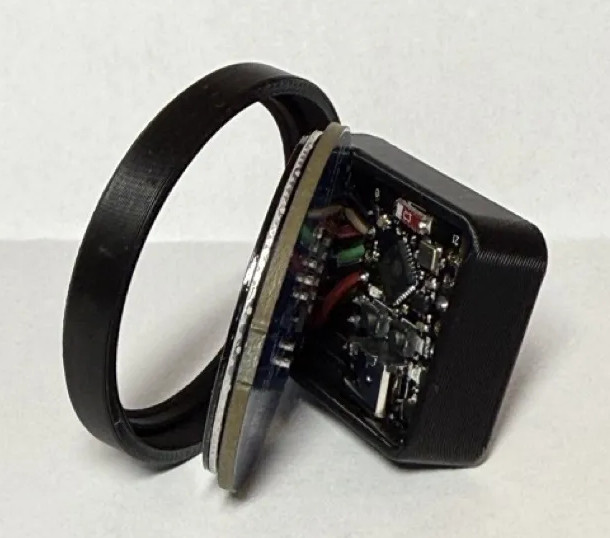
We know, we know. Despite being called ESP32-Plane-Radar, this project from [Mateusz Juszczyk] isn’t actually using radar. But thanks to the round LCD this desktop gadget does a fantastic job of recreating a classic radar display, and by pulling in Automatic Dependent Surveillance–Broadcast (ADS-B) data, the visuals even match nearby real-world aircraft.

Perhaps the best part of this project is just how easy it is for others to get in on the action. Although the presentation certainly looks professional — and expensive, if we’re being honest — there’s nothing particularly exotic going on here. Specifically, there’s ESP32-C3 Super Mini behind the scenes cranking through the ADS-B data and pushing it out to a circular GC9A01 display. A minimalistic 3D printed enclosure holds both components, and while it’s undeniably slick as-is, we can’t help but think there’s potential here for more elaborate designs.

As you probably guessed from the lack of a radio in the parts list, the code [Mateusz] provides doesn’t actually sniff ADS-B out of the air. It connects to the local network over WiFi, and then hits adsb.fi to pull in crowdsourced flight data. Since the device has to connect to the network anyway, the code also offers up a web-based configuration interface which puts a little more polish on what’s already an impressive presentation.

We used a round GC9A01 display on the Vectorscope back in 2023, so if anyone ports this over to their old Supercon badge we’d love to see it in action.

Thanks to [Mauricio] for the tip.


hackaday.com/2026/07/08/esp32-…

Cybersecurity & cyberwarfare ha ricondiviso questo.

The media in this post is not displayed to visitors. To view it, please go to the original post.

Januscape: 16-Year-Old Linux KVM Flaw (CVE-2026-53359) Lets Malicious VMs Corrupt Host Kernel Memory
#CyberSecurity
securebulletin.com/januscape-1…

The Atari Jaguar Runs Linux


The media in this post is not displayed to visitors. To view it, please log in.

Among the many forgotten might-have-beens of the games console world, the Atari Jaguar occupies a special place. It was the final gasp of Atari Corporation, the Jack Tramiel-era incarnation of the famous pioneering game console brand that brought us the ST line of computers, and like Marlon Brando’s Terry Malloy character from On the Waterfront, it coulda been a contender. But the early ’90s games business wasn’t kind to the console from Sunnyvale, and it was squeezed from behind by the SNES and Genesis/MegaDrive, and in front from the PlayStation. Thirty years later then, can it run Linux? [Cakehonolulu] is here to show us how.

With only 2 megabytes of RAM and space for 8 megabytes of ROM, this is hardly a powerhouse. But its 16-bit 68000 processor is a supported Linux architecture, albeit with the -nommu flag on compilation. The “Jerry” DSP chip has the required serial port and timer to boot a first Linux kernel, and after a bit of hackery to make it jump to the ROM location, something boots. There’s no init process until the flat executable file for a -nommu kernel is navigated, but with that past a BusyBox userspace and a graphics driver for the “Tom” graphics chip gives it a chunky on-screen console. The code can be found in a GitHub repository, for the curious.

It seems to be the moment for 68k consoles to receive the Linux treatment, as it’s only a few weeks since we saw it on a MegaDrive. Other ’90s consoles aren’t far behind though, with the Nintendo 64 falling to the penguin a few years ago. Meanwhile, the Dreamcast had Linux running decades ago.


Jaguar image: Evan-Amos, Public domain.


hackaday.com/2026/07/07/the-at…

Gazzetta del Cadavere reshared this.

It’s Now Imperative That You Copy That Floppy


The media in this post is not displayed to visitors. To view it, please log in.

In the early 1990s, Don’t Copy That Floppy was an anti-piracy campaign that attempted to connect with computer-savvy youth through the power of hip-hop. While somewhat difficult to imagine given our current draconian Digital Rights Management (DRM) hellscape, warning kids about the potential legal ramifications of duplicating floppy disks containing copyrighted software was seen as necessary since at the time there was usually nothing preventing users from simply copying the contents of one disk to another.

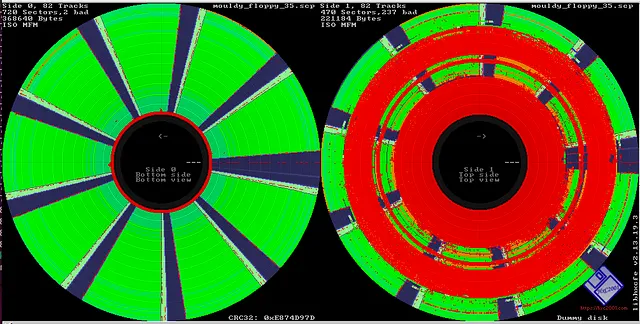
Unfortunately 30+ years down the road, we’re now finding that somebody really should have been backing up some of those disks. Which is why the University of Cambridge of launched the Future Nostalgia project and produced Copy That Floppy! — a phenomenal guide on preserving the contents of floppy disks while we still can.
Visualizing a disk’s flux stream can identify debris and damage.
There’s no telling how much data could potentially be lost to time because its stuck on such an antiquated and fragile storage media, and the situation only gets worse with the passage of time. The problem isn’t just that modern computers don’t have floppy drives. The disks themselves degrade with age, a process which is accelerated if they aren’t stored properly.

As such, Copy That Floppy! only briefly touches on the most ideal situation — that is, buying a USB floppy drive and making copies of the bog standard 3.5 inch disks you might come across. It then moves right on into more advanced topics, such as interfacing with less common drive types, how to safely clean floppies, and the use of advanced tools such as Greaseweazle to analyze captured disk images.

We’ve seen demonstrations of some of these techniques before, and a few years back Adafruit got interested in floppy preservation with modern hardware. But in-depth guides like these that pull all that information together into one place are valuable resources.


hackaday.com/2026/07/07/its-no…

It’s Full Steam Ahead for This Motorized Canoe


The media in this post is not displayed to visitors. To view it, please log in.

In some parts of Canada, you’ll rarely hear someone use the phrase “whatever paddles your canoe” instead of the more usual “whatever floats your boat”– and apparently, at least for one Swede, that’s steam power. The video, linked and embedded below, is a detailed tour of a canoe equipped with a small boiler and an outboard motor that has been converted to run using steam pressure by [Kenneth Karlsson].

The canoe itself appears to be a Grumman of the “prospector” type, wide in body to hold all the gear you’d need for extended wilderness trips– or, in this case, a small boiler. Amidships is the ideal place, as it won’t affect the balance of the boat. Amidships is an odd place to put an outboard– in the North American homeland of the canoe, if you aren’t moving under your own power, it is more common to cut off the curved stern of the canoe and mount the outboard to the newly-made transom. [Karlsson]’s choice to put the outboard off one side will be less maneuverable than a stern mount, but saves the need to modify the canoe and makes for much shorter steam lines. Shorter steam lines means less hose to potentially leak and scald the occupants, as well as fewer losses, so we can’t really argue with the tradeoffs.

The engine is an old two-stroke outboard that has a single steam cylinder retrofitted to it, along with a heat exchanger to warm up lake water with exhaust steam before it heads the boiler. The water is filtered first, of course, but we do hope the new owner– who posts on YouTube with channel “Steam Canoe” is diligent about cleaning the boiler. It doesn’t look like super high pressure steam, but the vapour phase of water is always something to be respected.

If the potential of scalding steam leaks and boiler explosions put you off, but you still won’t pick up a paddle, canoes can be rigged with sails— or you can just hand the paddle to a robot arm. Though given this is Hackaday, maybe you’d rather skip the canoe and climb aboard the good ship Benchy instead.

youtube.com/embed/jpMV3rDrhmQ?…


hackaday.com/2026/07/07/its-fu…

Reverse Engineering and Self-Hosting the OBI Smart Energy Tracker


The media in this post is not displayed to visitors. To view it, please log in.

Sold by German DIY store OBI, the OBI Energy Tracker is a €15 set of two devices, one of which you essentially stick on top of your existing electricity meter. This then allows for electricity usage to be measured and tracked, with the data sent to the second, gateway device. This latter cloud-bound device is linked to an OBI account via the heyOBI app. This correspondingly called for the gateway device to be reverse-engineered and freed from its cloud-based shackles, a task that [Aaron Christophel] happily took upon himself.

The whole process is also covered in two videos, with the first providing all the essentials on reprovisioning the original firmware for a local MQTT server in English, while the second, German-language video focuses on custom firmware for the ESP32-C3 inside of the gateway device.

Inside the reader device is a Cortex-M0+-based BAT32G135 MCU that communicates with the meter via its IR protocol. This is then communicated via 868 MHz LoRa to the gateway device that will be placed somewhere within Wi-Fi reach by the user. Inside this latter device is as mentioned the ESP32-C3, which by default runs firmware that communicates via secure MQTT with an AWS cloud instance for the typical cloud-based shenanigans.

The aforementioned reprovisioning option doesn’t require firmware flashing, just a handful of steps to follow. This involves fetching the 32-bit TEA key, generating your own PKI, running your own MQTTS-capable broker and having the provided Python script handle the rest from there.

Flashing custom firmware is the other option, with straightforward UART/JTAG reflashing sadly disabled by the manufacturer. With the effort required here you could perhaps argue that simply connecting the reader device to a custom gateway device might be a lot easier, especially if you already have a LoRa transceiver and associated hardware.

youtube.com/embed/2jMEaRuSJ18?…

youtube.com/embed/U4Vvf0kHnEk?…


hackaday.com/2026/07/07/revers…

When An Engineering Education Doesn’t Teach You How To Really Make Anything


The media in this post is not displayed to visitors. To view it, please log in.

In the sweltering temperatures of an unusually hot European heatwave, I found myself having a chat with a friend of mine from my university days. After discussing the health of his cat who had solved the problem of a fur coat on a hot day by flattening himself out on the concrete floor in the coolest place in the house, we moved on to tech matters. We’ve known each other for not far short of four decades, so this is familiar territory for us. The problems that come with taking a prototype to manufacturing, a process which even the most seasoned of engineers can slip up on.

The Difference Between Making, And Making For Manufacture


If you’ve ever taken a project and replicated it, you will know the progression. If you’re making five or ten widgets, you can debug and rework as needed, tweak things, and get things going. If you’re making more then this, the process consumes a greater proportion of your time, until a point at which manufacture becomes impractical. Maybe that’s around fifty boards, sometimes more or less.
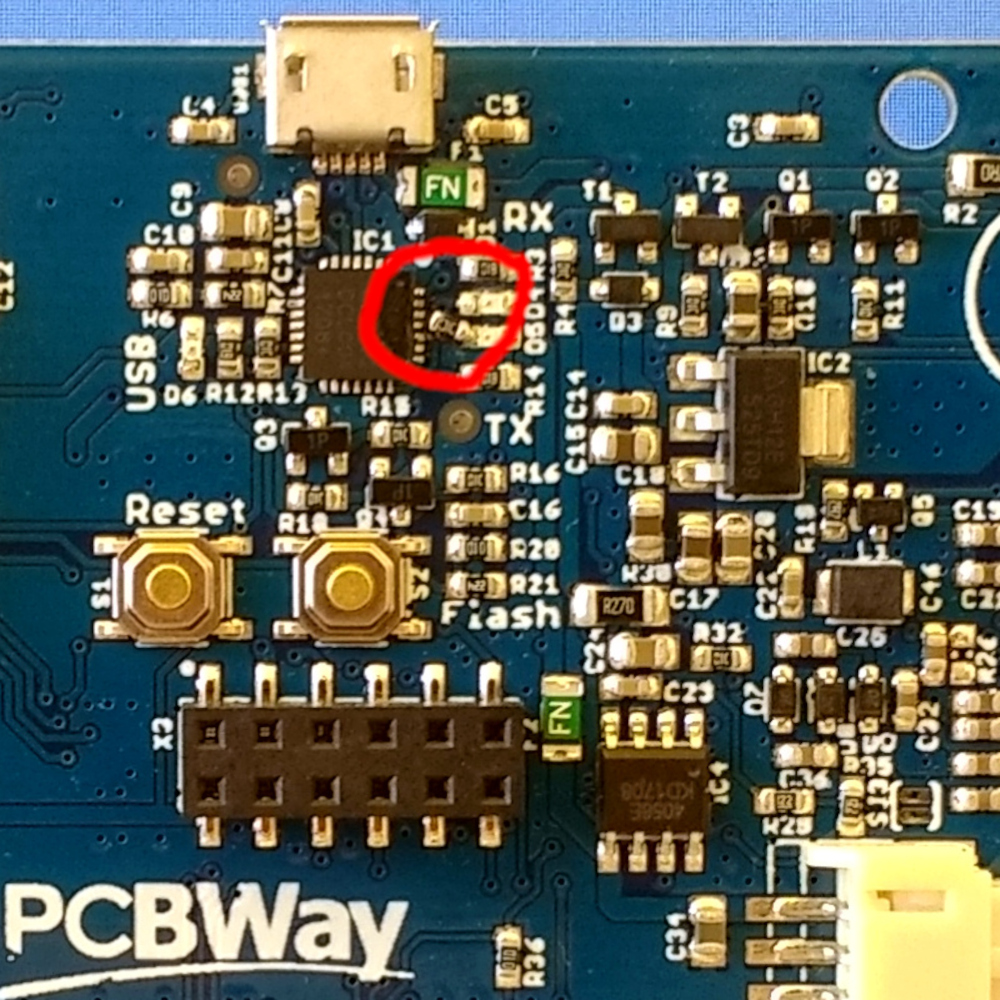
A picture of a printed circuit board covered with components, with a red ring drawn round a reworked part.This rework on the SHA2017 badge was caused by counterfeit parts rather than bad design, but the work it created was very costly for the team.
The skill a professional engineer picks up here is designing for manufacture. It’s something I picked only progressively over the years, and learned with a bang when I became peripherally involved in the production of electronic conference badges. You learn to be much more exact in your PCB design to avoid those reworks and bodge wires, you pick your parts with much greater care, and pay far more attention to power supplies, decoupling, thermal issues, impedances, and ground isolation. Something that works has to become something that always works, first time. You go from having several spins of the prototype PCB to having maybe a couple, and you reach a point at which you can order 5000 boards and have less than 50 of them that need attention. My friend describes himself as more of a software expert than hardware, but he’s learned this process over the decades far more than I have.

One comment he made hit the mark so well that it prompted me to start writing this: that when hiring recent graduates they would design things that could not be volume manufactured, while the new hire apprentices’ designs could. This fit so well with our common experience when we came through an engineering education that it posed the question, were we failed by it? We both attended the University of Hull, on England’s north-east coast, but this isn’t specific to Hull or even our generation as the problem of inadequate preparation applies to so many other institutions. Last year I talked about a couple of young engineers wrestling with an analagous experience here in the 2020s, and they were a long way from the Humber.

Do Universities Secretly See Their Job As Training More Academics?

A brick-and-concrete university building, a lawn and paved path in the foreground.Hull University Electronic Engineering Department, where I learned most of what I know about electronics (except how to make things for manufacture). Hullian111, CC BY-SA 4.0.
My overwhelming memory of my degree course was shared by my friend, that about half of it was composed of useful stuff, and the other half of it was either trying to teach you to be an electronic engineering academic like the people delivering the lectures, or a course that seemed only to be there because they had someone who could teach it.

My Achilies’ heel was the mathematics, something I was later told improved in later years when the engineering department wrested its students away from the maths department. We had a very small amount of practical work, including simple transistor circuits, digital logic using real 74-series chips, laying out a PCB using crêpe paper tape on acetate film, and oddly considering it was outdated even in the early 1990s, wire-wrapping.

It’s easy to sit here and say that a university course teaches too much theory and not enough practice, but the fact is that universities aren’t there to teach you to solder. Indeed, while it’s a super-useful thing to be able to do and I’d urge every electronic engineer to learn it, soldering your own projects is not what makes you an engineer. Instead there has to be an exploration of where the boundary lies between the theoretical and the practical, and education should straddle that line rather than stay only on one side of it. It’s in deciding where that straddling point stops that the key lies.

There are university courses that manage that boundary by splitting it entirely. They combine time in industry with time studying, and a student on one of those courses would in theory learn the skills of a real-world engineer in their work placements. There are also industry sponsorship schemes placing students into industrial environments, but they are so few and the competition for them so fierce, that they might as well not exist for most students. Even the world of hackerspaces which gives the students a rare chance to mix with professional engineers in their off-time, is actively discouraged by universities. For a student in a full-time, study-based course, the challenge comes in how to bridge that gap into real-world manufacturing despite all these challenges, and learn something useful without the luxury of a real-world environment.

Torturing The Students With Diabolical Designs


The temptation for most courses is to start yet another group project. A team of six students are tasked with getting something working together, and learn stuff. The trouble with group projects though is that they either completely don’t work like our early 1990s assignment to make a telephone exchange from a Transputer link adapter chip, or a few participants end up doing all the hard work like my two young friends mentioned earlier. Group projects are inexpensive for an institution, but they look better than they really are.
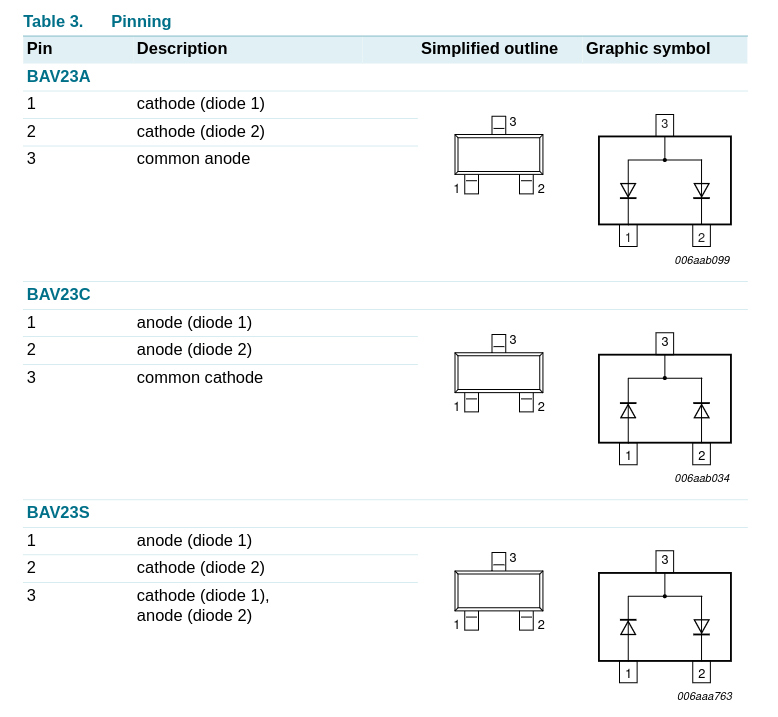
An excerpt from the datasheet for the NXP BAX23 dual switching diode, showing the three different pinout options for the same package.Component pinouts like this one from the NXP BAV23 datasheet are a spectacularly evil trick to play on an unsuspecting student.
The hardware hacker world has been marked by a series of epochs, as new technologies bring with them a flowering of creativity. There’s one of those that I think has the potential to delover something impossible back in the 1990s when I was a student, and allow individual students to learn the art of manufacture without a group project in sight. I’m talking about inexpensive PCB manufacture, which allows multiple spins of a design to be completed with a bearable wait, and for not a lot of money.

So if I wanted to teach a bunch of students about designing for manufacture, I’d give them a ready made small project in software form, as EDA files, and as a BOM with a board assembly house. Of course, the project would be fatally flawed but fixable with probably two or maybe three spins, but I wouldn’t tell them that. Instead their first task would be to send the files off and receive a ready-made PCB, or if I was feeling charitable I could give them that first spin ready-made, and tell them to get on with it.

I would throw everything I could at this unfortunate design, a wrong-but-plausible footprint, badly thought out earthing, an accidental oscillator, and all the really annoying things which we’ve all in our time found. I am sure you could think of more diabolical but superficially plausible features. Their task would involve diagnosing the board and redesigning it before sending the files off to the assembly house. A week later they’d have that next spin, they’d have to hunt down any remaining bugs and repeat it all, and so on. I learned this process with my friends in the making of an event badge for 5,000 people, and I think it’s possible that you could learn it as a single trainee engineer with a much smaller board.

It may be unfair to throw all that is wrong with engineering education at the door of universities, even though it’s certain that there are some extremely low hanging fruit. But arriving in the workplace completely lacking an essential skill is perhaps the point at which something should be said. The question is, when it comes to designing for manufacture, is anyone listening?


hackaday.com/2026/07/07/when-a…

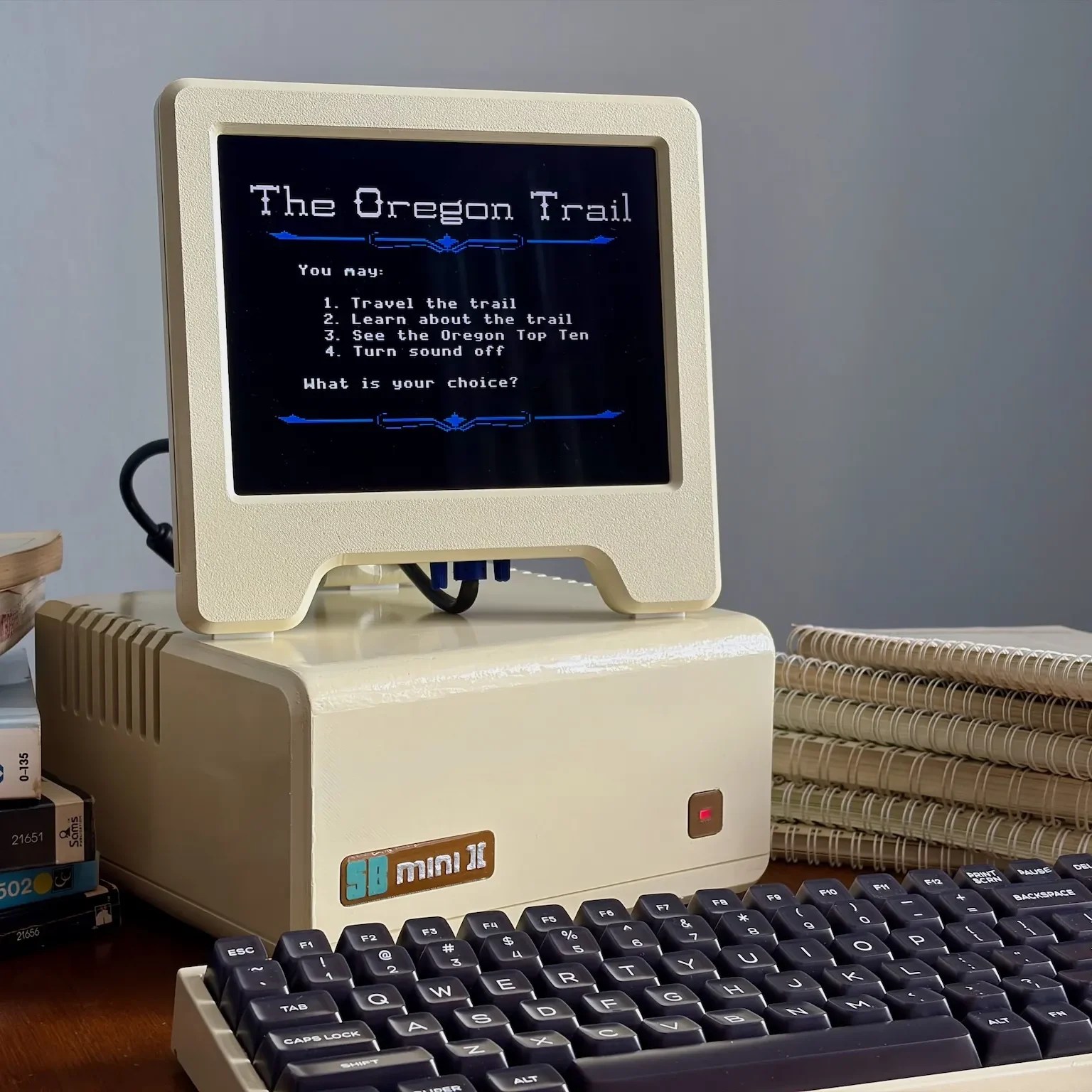
SB Mini II is a Homebrew Apple II Clone


The media in this post is not displayed to visitors. To view it, please log in.

On the one hand, the original Apple II has been copied over and over again since at least the early 80s, so maybe this hack is old hat to the greybeards around here. On the other hand, this is the year 2026. When Apple released it back in 1977, who could have predicted people would still be building these things nearly five decades later?

In that sense, a homebrew Apple II in the current year is pretty remarkable. It’s a really well done project by [simonboak], nicely open sourced with a case to match, so is worth looking at on its own merits.
It doesn’t run DOOM, but neither did the original. Oregon Trail is more this unit’s speed.
Unlike the later models, the original Apple II only used commercially available ICs, making it an easy target for recreation. No FPGAs required, just good old-fashioned DIPs. OK, these are modern CMOS versions of the chips, but other than that, the biggest concession to modernity is space on the board for a Raspberry Pi Pico to allow for connecting a USB keyboard.

The accompanying blog post lists some other differences from 1977’s favorite home computer: SRAM vs DRAM — because you know the Woz would have used it if he could — and omitting the composite video circuitry in favor a late-model VGA card. There’s no need for the composite output since he’s eschewing the period-appropriate CRT for a retro-styled LCD monitor, which is also 3D printed and available on Printables. It’s crazy to think that the Apple II family lived long enough not only to see the dawn of VGA but also well into its sunset.

If a homebuilt Apple ][ doesn’t impress, what about a PC-compatible circa 1995?


hackaday.com/2026/07/07/sb-min…

Is Now the Time for Volumetric 3D Printing?


The media in this post is not displayed to visitors. To view it, please log in.

Art of 3D printer in the middle of printing a Hackaday Jolly Wrencher logo

Of all innovations adopted by the maker community within the past couple of decades, one stands among the rest on top for anything regarding manufacturing. It goes without saying here at Hackaday how many projects have been reliant on using the technology to turn their ideas into reality. 3D printing has been a maker community invention and, in return, has expanded this hacky community into something that anyone with an imagination can get into. It also goes without saying that the layer-based tech imposes limits on what we can actually create: think overhangs and layer adhesion. However, there’s a possibility that a recent offshoot of this scrappy community has the power to eliminate some of these faults.

Volumetric additive manufacturing (VAM) is a young technology that has a similar start to many new tech toys, including the original SLA of the first 3D printers. That is expensive and completely stuck in the laboratory… Fortunately, that’s not where 3D printing as a whole stayed, as the RepRap project managed to bring the obscure technology to the hobbyists’ main stage. An entire group of people formed and spent countless hours until the useless pieces of poorly extruded plastic could form parts impossible to make with anything else. A cool quirk of history is that it likes to repeat: examples spur recreation, and this appears to be happening with the technology found within VAM printing.

History


Hold up for a second. While we have covered VAM here before at Hackaday, it’s not exactly the most well-known tech or the easiest to understand. So what is it? Starting from the beginning and simplest forms, VAM is similar to the more common SLA printing. Using a light source and light sensitive resin, both of these methods can create entire physical objects by solidifying or curing specific areas of a vat or vial of resin. SLA will often use something like a laser and layer by layer “draw” the model until the entire geometry is finished. A quirk of most of many photosensitive resins is that they need to overcome a threshold before they can start curing. This allows VAM to do something a bit different. The earliest methods of VAM used intercepting lasers which allowed selective curing only where these beams were intercepted. One singular spot at a time would be able to overcome the threshold required for printing, allowing you to build up most geometries.
Xolography Print
This works, but for more complicated models there’s more effective methods. One type has been covered here before called Xolography, still using intercepting beams, however with differing wavelengths which allows for more finite control. This is effective, but the resin is complex, requiring two-wavelength-photon-sensitive photoinitiators. Introduce the current standard in VAM printing, computed axial lithography (CAL). This method finds itself using existing methods found in traditional tomography, such as CT scanners. CAL methods are basically reverse tomography, where a model is used to create projections to be projected in printing. These projections allow dose control in each “voxel” of resin from changing the projection as the volume of resin is rotated. When ideal, this means that the entire model is printed at once. No layers needed for printing, and printing in minutes rather than hours.

Open-Sourced


Cool, but why should you care about this tech? Because you could start using it now! Just like the RepRap project before it, VAM has OpenCAL. OpenCAL was started by the same lab that originally created the axial version of the technology. UC Berkeley released the first OpenCAL around 2019 which was… well a start.

Functionally practical for only big budget research, it was far too expensive and complicated for any hobbyist with a 9-5 to realistically touch. Last year saw a new model presented at Open Sauce which used a consumer projector and common hobbyist electronics. While this was an improvement, there are three barriers to VAM printing; the hardware, software, and chemical resins make it a challenge for any individual alone. A newer version of the hardware was quickly put together for this summer. This helps with the hardware element, but there’s two new aspects being released alongside OpenCAL V2 for other unsolved problems.

youtube.com/embed/TWZ4I2GLYgI?…

Software: Tomo

Tomo with the Thinker model being prepped
For a little while now there have been various software packages available for allowing easier use of whatever VAM printer you might have, however these had various problems. From being undocumented to being complicated for anyone without comfort in command line , something different would be needed. A standalone application would certainly work, and low and behold that’s exactly what’s being tried here, called Tomo. Tomo allows you to use an OpenCAL printer with little thought or expertise, or ideally any other type of VAM printer.

Chemistry: Formlabs Resin

Large form factor VAM print
Material science is always a particular challenge for the open source community. Unlike software, you can’t distribute unlimited copies of your perfect mix of photosensitive resin without special chemical clearances and certainly not for free. Some of the first 3D printers from RepRap would use a nylon weed wacker line in place of the standard PLA of today. Unfortunately there’s less flexibility in the fine tuned resin found in VAM. This resin has to have a nonlinear photo-reaction for selective curing, be fairly transparent to the reactive wavelength, and be very viscous to prevent resin movement during printing. Formlabs, which makes resin printers and resins, has gotten into the act. Through talks between the OpenCAL team and Formlabs, an agreement for production of this special resin is being worked out, allowing for far cheaper material.

Hardware: OpenCAL

OpenCAL V2 printerOpenCAL V2 printer
Of course this leaves the printer itself. OpenCAL is designed for a variety of different sized printing volumes, projectors, or anything else you might have in mind. Expect printing anything from this printer to finish in the span of minutes. While it can do the same small prints found in the older model of OpenCAL, experiments involving larger form factors have been attempted. But if you want more details make sure to check out the documentation here or join their Discord channel!

Future of VAM Printing


So how far can this technology really go? Could it pass traditional methods of 3D printing? Well, it’s certainly faster than traditional printing, however, there’s still plenty of trouble when trying it out. How do you remove partially cured resin off your print? How do you actually tell when the print is done? These are problems that are being fixed right now by the community, and maybe you can be the one to fix something holding it back. It’s fair to say that the community that has propped this technology up to where it currently stands is who is going to decide where it goes.


hackaday.com/2026/07/07/is-now…

Cybersecurity & cyberwarfare ha ricondiviso questo.

U.S. #CISA adds Adobe ColdFusion, Joomlack Page Builder, Langflow, and JoomShaper SP Page Builder flaws to its Known Exploited Vulnerabilities catalog
securityaffairs.com/194927/hac…
#securityaffairs #hacking

È il momento d’oro dei data center. Trainati da cloud, AI e PA digitale


@Informatica (Italy e non Italy)
L’Italia, con 251 infrastrutture attive al giugno 2026 e un valore di mercato atteso a 14,97 miliardi di dollari entro il 2031, si posiziona come hub emergente della data economy mediterranea. Stato dell’arte, trend di mercato, quadro normativo e prospettive di

Cybersecurity & cyberwarfare ha ricondiviso questo.

🏆 Phish Stories DC34 winners are in!

👑 Ruler: v33na
🧙 Wizard: Erik Smith
🤡 Jester: Groucho Marxist

One of our strongest fields yet, every entry made this one hard in the best way.

Full writeup and every entry in the DEF CON Forums:

forum.defcon.org/node/255953
#DEFCON34 #DEFCON

reshared this

Cybersecurity & cyberwarfare ha ricondiviso questo.

The media in this post is not displayed to visitors. To view it, please go to the original post.

364 – Vendono bambini su Vinted? camisanicalzolari.it/364-vendo…
Cybersecurity & cyberwarfare ha ricondiviso questo.

#CISA Deploys #Anthropic’s #Mythos AI to Hunt Vulnerabilities in U.S. Government Code
securityaffairs.com/194913/ai/…
#securityaffairs #hacking
Cybersecurity & cyberwarfare ha ricondiviso questo.

Ha ora inizio la seconda giornata del #DevConf

Se non potete seguire la diretta, potrete seguire gli aggiornamenti di @macfranc sul gruppo "devconf" che può essere seguito anche dal vostro account del Fediverso all'indirizzo @devconf

youtube.com/live/e1Ege3H-SFQ

@informatica

Cybersecurity & cyberwarfare ha ricondiviso questo.

The media in this post is not displayed to visitors. To view it, please go to the original post.

RSS Lookup: trovare i feed RSS di qualsiasi sito web


RSS Lookup è uno strumento open source e gratuito per trovare i feed RSS di qualsiasi sito web, anche quando non sono visibili.
blog.lealternative.net/2026/07…

Cybersecurity & cyberwarfare ha ricondiviso questo.

The media in this post is not displayed to visitors. To view it, please go to the original post.

Due anni di Maho. Fabrizio Balliano al @devconf


Release a calendario, ogni 2 mesi
«Sorry, we will break things» ma con criterio e documentazione
Tagliamo i rami secchi per far crescere foglie nuove
Niente badanti di progetti che aspettano solo di migrare altrove
(E sì: anche nuove feature ecommerce)

@devconf@citiverse.it

youtube.com/live/nhreRdzRTxo

Cybersecurity & cyberwarfare ha ricondiviso questo.

⚠️Ieri siamo stati costretti ad effettuare alcuni test sul server di Poliverso che perciò non è risultato raggiungibile fino a poche ore fa.❌

I problemi potrebbero continuare anche oggi e nella mattinata di domani.
Ci scusiamo per il disagio!

@Che succede nel Fediverso?