
Dire Wolf e SNOWFANG: la nuova minaccia ransomware scritta in Go
@Informatica (Italy e non Italy 😁)
Negli ultimi mesi, il gruppo ransomware Dire Wolf ha fatto la sua comparsa nel panorama cybercriminale, distinguendosi per l’uso di un malware chiamato SNOWFANG, sviluppato in linguaggio Go. Questo ransomware, attivo da maggio 2025, ha già colpito numerose organizzazioni in settori
VRML and the Dream of Bringing 3D to the World Wide Web

You don’t have to be a Snow Crash or Tron fan to be familiar with the 3D craze that characterized the rise of the Internet and the World Wide Web in particular. From phrases like ‘surfing the information highway’ to sectioning websites as if to represent 3D real-life equivalents or sorting them by virtual streets like Geocities did, there has always been a strong push to make the Internet a more three-dimensional experience.
This is perhaps not so strange considering that we humans are ourselves 3D beings used to interacting in a 3D world. Surely we could make this fancy new ‘Internet’ technology do something more futuristic than connect us to text-based BBSes and serve HTML pages with heavily dithered images?
Enter VRML, the Virtual Reality Modelling Language, whose 3D worlds would surely herald the arrival of a new Internet era. Though neither VRML nor its successor X3D became a hit, they did leave their marks and are arguably the reason why we have technologies like WebGL today.
Inspired By Wheels

With an internet-based virtual reality a highly topic concept, David Raggett from Hewlett Packard Laboratories submitted a paper back in 1994 titled Extending WWW to support Platform Independent Virtual Reality. This imagined a virtual reality layer to the WWW by the end of the millennium featuring head-mounted displays (HMDs) and tracking of a user’s limbs to fully integrate them into this virtual world with potentially realistic physics, sound, etc.
Describing these virtual worlds would be at the core of this VR push, with SGML (standardized general markup language) forming the basis of such world definitions, much like how HTML is a specialized form of SGML to define the structure and layout of a document. The newly minted VRML would thus merely define 3D worlds rather than 2D documents, with both defining elements and their positioning.
Although nothing revolutionary by itself – with games and 3D modeling software by then having done something similar with their own file formats to define 3D models and worlds for years already – VRML would provide a cross-platform, fully open and independent format that was specifically made for the purpose of this online VR experience.
All Starts With Polygons
The interesting thing about VRML is perhaps that it was pushing for a shared online 3D experience years before the first commercially successful MMORPG came onto the scene in 1999 in the form of EverCra^WEverQuest. VRML was pitched in 1994 and by 1995 the very RPG-like MMO experience called Colony City (later CyberTown) was launched. This created a virtual world in which members could hold jobs, earn virtual currency and purchase 3D homes and items that were all defined in VRML.
CyberTown endured until 2012 when the company behind it shut down, but there’s an ongoing push to revive CyberTown, with the revival project‘s GitHub project giving a glimpse at the preserved VRML-based worlds such as the home world. These .wrl files (short for ‘world’) use the VRML version 2.0 standard, which was the 1997 version of VRML that got turned into an ISO standard as ISO/IEC 14772:1997, with the specification itself being readily available over at the Web3D website.
As defined in part 1 of the specification, each VRML file:
- implicitly establishes a world coordinate space for all objects defined in the file, as well as all objects included by the file;
- explicitly defines and composes a set of 3D and multimedia objects;
- can specify hyperlinks to other files and applications;
- can define object behaviors.
VRML got combined with the Humanoid Animation (HAnim) standard to make realistic humanoid articulation and movement possible. Much like HTML documents, it are often the external resources like textures that determines the final look, but basic materials can be defined in VRML as well.
A very basic example of VRML is provided on the Wikipedia entry for a simple triangle:
#VRML V2.0 utf8
Shape {
geometry IndexedFaceSet {
coordIndex [ 0, 1, 2 ]
coord Coordinate {
point [ 0, 0, 0, 1, 0, 0, 0.5, 1, 0 ]
}
}
}
The interesting part comes when the material and texture appearance properties are set for a shape, albeit with basic lighting, no shaders and similar advanced features. All of these would see major improvements by the late 90s as consumer graphic cards became commonplace, especially during 1999 when we saw not only NVidia’s impressive RIVA TNT2, but especially its revolutionary Geforce 256 GPU with its hardware transform and lighting engine.
At this point video games began to look ever more realistic – even on PC – and with the release of new MMORPGs like 2004’s World of Warcraft and EverQuest II, the quirky and very dated look of VRML-based worlds made it clear that the ‘3D WWW’ dream in the browser was effectively dead and the future was these MMORPGs and kin.
It also seems fair to say that the fact that these games came with all of the assets on installation discs was a major boon over downloading hundreds of megabytes worth of assets via an anemic dial-up or crippled cable internet connection of the late 90s and early 2000s.
A Solution In Search Of A Problem

One could argue that science-fiction like Snow Crash provides us with the most ideal perspective of a VR layer on top of the Internet, where its Metaverse provides a tangible addition to reality. This same concept of a metaverse where the mind is no longer constrained by the limitations of the body is found in animated features like Ghost in the Shell and Serial Experiments Lain, each of which feature digitalized, virtual worlds that unchain the characters while creating whole new worlds previously considered impossible.
In these worlds characters can find information much faster, move through digital currents like fish in water, inhibit the digital brains of Internet-connected devices, and so on. Meanwhile back in reality the way we humans interact with virtual worlds has barely changed from the 1980s when NASA and others were experimenting with VR interface technologies.
Why move clumsily through a faux 3D environment with cumbersome input devices strapped to your body and perhaps a display pushed up to your noggin when you can just use mouse and keyboard to tappity-tap in some commands, click a hyperlink or two and observe the result on your very much 2D monitor?
As around 2003 the latest web-based VR world hype came in the form of Second Life, it followed mostly the same trajectory as CyberTown before it, while foregoing anything like VRML. After some companies briefly had a presence in Second Life before leaving, it became a ghost town just in time for Facebook to rename itself into Meta and try its hand at the very creatively named Metaverse. Despite throwing billions of dollars at trying to become at least as popular as CyberTown, it mostly left people with the feeling of what the point of such a ‘metaverse’ is.
Never Stop Dreaming
The Web3D Consortium was set up in 1997 along with the standardization of VRML, when it was called the VRML Consortium. Its stated goal is to develop and promote open standards for 3D content and services on the web. It currently pushes the somewhat newer X3D standard, which among other things supports multiple syntax types ranging from XML to classical VRML. It also supports modern physically based rendering (PBR), which puts it at least somewhat in the same ballpark as modern 3D graphic renderers.
Meanwhile there is the much more significant WebGL, which was originally created by Mozilla, but has since found a loving home at Khronos. This uses the canvas feature of HTML 5 to render 2D and 3D graphics using OpenGL ES, including support for shaders. The proposed WebGPU would merge the web browser and GPUs tighter still, albeit with its own shader language instead of the standard OpenGL ES one.
With these new technologies it would seem that rendering prettier 3D worlds in browsers has become easier than ever, even as the dream of bringing 3D worlds to the WWW seems as distant as the prospect of VR games taking the world of gaming by storm. Barring major human-computer interface advances, the WWW will remain at its optimum with keyboard and mouse, to browse through 2D documents. This alongside 3D game worlds controlled with the same keyboard and mouse, with said worlds rendered on a very much 2D surface.
Here’s to dreaming that maybe some of those exciting aspects of sci-fi will one day become science-fact, and to those who strive to make those dreams reality, in lieu of simply being given a nanotech-based Primer as a shortcut.
Verwaltungsdigitalisierung: Bundesrechnungshof fordert messbare Ziele
netzpolitik.org/2025/verwaltun…

Vulnerabilità critiche in Trend Micro Apex One: aggiornamento urgente
Un bollettino di sicurezza urgente è stato diramato da Trend Micro al fine di informare i propri clienti circa delle vulnerabilità critiche, sfruttate attivamente dai malintenzionati, riguardanti l’esecuzione di codice remoto nella console di gestione Apex One on-premise.
Le falle di sicurezza, identificate come CVE-2025-54948 e CVE-2025-54987, interessano la Trend Micro Apex One Management Console in esecuzione sui sistemi Windows. Entrambe le vulnerabilità derivano da debolezze nell’iniezione di comandi che consentono ad aggressori remoti pre-autenticati di caricare codice dannoso ed eseguire comandi arbitrari sulle installazioni interessate.
L’azienda ha confermato che è stato osservato almeno un caso di sfruttamento attivo, il che rende urgente l’adozione di misure di protezione immediate. Queste vulnerabilità prendono di mira specificamente Trend Micro Apex One 2019 Management Server versione 14039 e precedenti.
| ID CVE | Punteggio CVSS | Tipo di debolezza | Riferimento ZDI | Vettore di attacco |
|---|---|---|---|---|
| CVE-2025-54948 | 9.4 (Critico) | CWE-78: Iniezione di comandi del sistema operativo | ZDI-CAN-27834 | Basato sulla rete, nessuna autenticazione richiesta |
| CVE-2025-54987 | 9.4 (Critico) | CWE-78: Iniezione di comandi del sistema operativo | ZDI-CAN-27855 | Basato sulla rete, diversa architettura della CPU |
Il secondo CVE rappresenta essenzialmente la stessa vulnerabilità, ma prende di mira un’architettura di CPU diversa, ampliando la potenziale superficie di attacco per gli autori di attacchi dannosi che cercano di compromettere l’infrastruttura di sicurezza aziendale.
Riconoscendo la natura critica di queste falle, Trend Micro ha rilasciato uno strumento di mitigazione di emergenza denominato “FixTool_Aug2025” per fornire una protezione immediata contro gli exploit noti.
Tuttavia, questa soluzione a breve termine presenta un compromesso operativo significativo: disabilita la funzione Remote Install Agent, impedendo agli amministratori di distribuire gli agenti direttamente dalla console di gestione .
I metodi di distribuzione alternativi, come il percorso UNC o i pacchetti agent, rimangono inalterati.
L’azienda ha sottolineato che, sebbene lo strumento di correzione fornisca una protezione completa contro gli exploit noti, è prevista una patch critica completa verso la metà di agosto 2025.
L'articolo Vulnerabilità critiche in Trend Micro Apex One: aggiornamento urgente proviene da il blog della sicurezza informatica.
Dopo il mio articolo sulla formazione sistemica, un intervento di Wolfgang Ulrich che dice la sua sull'argomento. C'è una affinità interessante fra clinici che perseguono il progetto di una connessione fra il sé professionale e quello, diciamo, privato, in un modo lontano e alternativo alle logiche della cosiddetta "integrazione".
Dal mio blog (che mi procura tante soddisfazioni).
massimogiuliani.it/blog/2025/0…

Chi è il terapeuta sistemico e come deve essere formato? (di Wolfgang Ullrich) - Corpi che parlano, il blog
Il teatro ha molto in comune con la psicoterapia: entrambi sfruttano il medium del “gioco” che chiamo la rappresentazione giocosa...Corpi che parlano (Corpi che parlano, il blog)
L’uomo che da 30 anni cerca il mostro di Loch Ness
Ora... ognuno può pensarla come vuole e in molti penseranno che quest'uomo è un pazzo.
Ma metti che domani 'sto mostro esce dall'acqua e si fa un giretto sulla terraferma a favore di fotografi.
Steve Feltham potrà sparare un "VE L'AVEVO DETTO, STRONZI!" da cento megatoni.
😁😁😁
L’uomo che da 30 anni cerca il mostro di Loch Ness: ilpost.it/2022/11/10/uomo-cerc…

L’uomo che da 30 anni cerca il mostro di Loch Ness
Steve Feltham è arrivato sul lago scozzese nel 1991 e da allora passa le sue giornate scrutando l'acqua, invanoIl Post
Nicola Pizzamiglio likes this.
Poliversity - Università ricerca e giornalismo reshared this.
SIRIA. Suwayda sotto assedio. Diario da una provincia in ginocchio
@Notizie dall'Italia e dal mondo
Dopo le aggressioni delle scorse settimane, mai cessate del tutto, più di 170.000 sfollati sono arrivati a Suwayda da aree rurali devastate. Oltre 32 villaggi sono stati bruciati, saccheggiati e resi inabitabili
L'articolo SIRIA. Suwayda sotto assedio. Diario da una
#PrivacyCamp25: The draft programme is out now
PrivacyCamp25 will take place on 30 September, 2025 online and at La Tricoterie, Brussels. Curious about what we have planned? Check out the draft programme.
The post #PrivacyCamp25: The draft programme is out now appeared first on European Digital Rights (EDRi).
Poujol 𝖱𝗈𝗌𝗍 ✅ reshared this.
A PC That Uses Hot Coffee As Coolant

Modern computers generate a great deal of heat when under load, thus we cool them with fans and sometimes even water cooling systems. [Doug MacDowell] figured that water was alright, but why not use coffee instead?
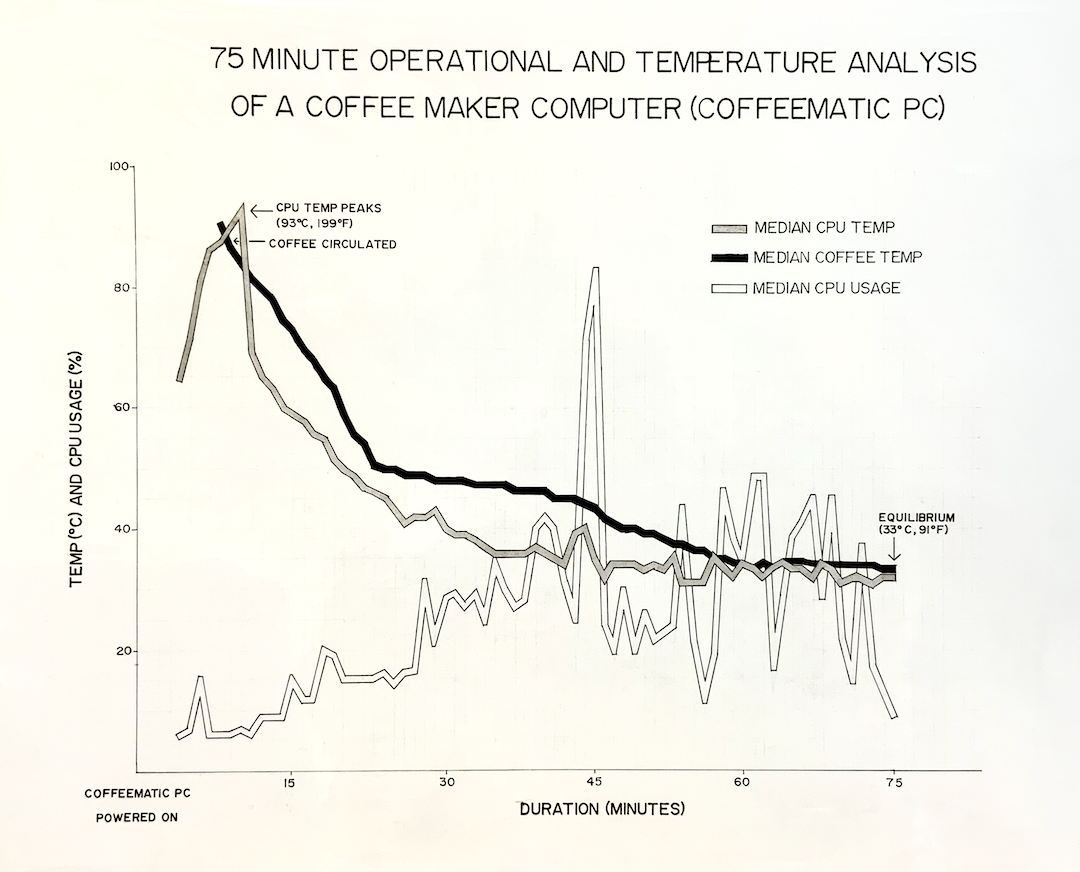
The coffee maker percolates coffee as per normal into the carafe, and from there, it’s then pumped through two radiators on top of the PC. From there, it circulates to the water block on top of the CPU, and then back to the carafe on the coffee maker where the cycle repeats. Doug notes the coffee is initially so hot (90 C) that the PC is at risk of crashing, but after 75 minutes circulating through the system, the coffee and CPU sit at an equilibrium temperature of 33 C.
You can’t really drink coffee from this machine. PC water cooling components are not food safe in any way, and [Doug] notes mold will become an issue over time. For short periods at least, though, it’s possible to sort-of-cool your computer with hot, fresh coffee if you really want to do that.
We’ve featured some great hacks of conventional coffee machines over the years, including this fantastic talk at Supercon 2023.
youtube.com/embed/dNBc4_DfB80?…
Ecco come Israele usa il cloud Microsoft per la sorveglianza dei palestinesi in Cisgiordania e Gaza
@Informatica (Italy e non Italy 😁)
Un'inchiesta giornalistica rivela che Israele ha sviluppato un sistema di sorveglianza che registra e archivia milioni di telefonate provenienti da palestinesi a Gaza e in Cisgiordania, tutte archiviate su

Hiroshima, Mattarella: 'liberare il mondo dalle armi nucleari'
(intanto, per dare il buon esempio, potremmo cominciare a liberare il territorio italiano dalle atomiche Usa)
imolaoggi.it/2025/08/06/hirosh…
Hiroshima, Mattarella: 'liberare il mondo dalle armi nucleari' • Imola Oggi
imolaoggi.it/2025/08/06/hirosh…

One year of the AI Act: What’s the political and legal landscape now?
The EU Artificial Intelligence (AI) Act came into force on August 1, 2024. This blog takes stock of the political and legal landscape facing its implementation and enforcement one year on, especially efforts to delay or even gut the law which would have far-reaching effects on people’s rights, especially when it comes to migration and law enforcement use of AI.
The post One year of the AI Act: What’s the political and legal landscape now? appeared first on European Digital Rights (EDRi).
Gazzetta del Cadavere reshared this.

L'amministrazione Trump vorrebbe distruggere un satellite per la rilevazione delle emissioni di anidride carbonica e non solo
Secondo quanto riportato in alcune indiscrezioni, l'amministrazione Trump avrebbe richiesto di terminare le missioni degli Orbiting Carbon Observatories (OCO-2 e OCO-3) per la rilevazione delle emissioni di anidride carbonica.Hardware Upgrade

Abbiamo scoperto cosa ha ucciso miliardi di stelle marine negli ultimi 15 anni
È stato un batterio dello stesso genere di quello del colera: ora che lo sappiamo forse sarà possibile risolvere una grossa crisi ecologicaIl Post
sondaggio noyb: solo il 7% degli utenti vuole che Meta utilizzi i propri dati personali per l'IA Mentre quasi il 75% degli utenti ha sentito parlare dei piani di Meta, solo il 7% vuole effettivamente che i propri dati vengano utilizzati per l'addestramento dell'intelligenza artificiale mickey07 August 2025
MORIS and I.R.I.S. was designed for Sheriff's Offices to identify known persons with their iris. Now ICE says it plans to buy the tech.
MORIS and I.R.I.S. was designed for Sheriffx27;s Offices to identify known persons with their iris. Now ICE says it plans to buy the tech.#News #ICE


ICE Is Buying Mobile Iris Scanning Tech for Its Deportation Arm
Immigration and Customs Enforcement (ICE) is looking to buy iris scanning technology that its manufacturer says can identify known persons “in seconds from virtually anywhere,” according to newly published procurement documents.Originally designed to be used by sheriff departments to identify inmates or other known persons, ICE is now likely buying the technology specifically for its Enforcement and Removal Operations (ERO) section, which focuses on deportations.
Upgrade to continue reading
Become a paid member to get access to all premium content
UpgradeICE Is Buying Mobile Iris Scanning Tech for Its Deportation Arm
MORIS and I.R.I.S. was designed for Sheriff's Offices to identify known persons with their iris. Now ICE says it plans to buy the tech.Joseph Cox (404 Media)

djpanini reshared this.
Part of Article I Section 8, and all of Sections 9 and 10, which address things like habeas corpus, nobility, and militias, are gone from Congress's website for the Constitution.
Part of Article I Section 8, and all of Sections 9 and 10, which address things like habeas corpus, nobility, and militias, are gone from Congressx27;s website for the Constitution.#archiving #websites #Trumpadministration
Stone tools found on the Indonesian island of Sulawesi reveal a long-lost population of human relatives; their identity, and how they crossed the sea, is a mystery.#TheAbstract #science
Million-Year-Old Evidence of Epic Journey Near ‘Hobbit’ Island Discovered by Scientists
Scientists have discovered million-year-old artifacts made by a mysterious group of early humans on the Indonesian island of Sulawesi, according to a breakthrough study published on Wednesday in Nature.The extraordinary find pushes the archaeological record of Sulawesi back by about 800,000 years, and confirms that hominins, the broader family to which humans belong, crossed treacherous ocean passages to reach the island, where they crafted simple tools.
The tool-makers may have been related to a group of archaic humans—nicknamed “hobbits” for their short stature—that lived on nearby Flores Island. But while the hobbits left behind skeletal remains, no fossils from the Sulawesi group have been unearthed. The tools, found at a site called Calio in South Sulawesi, are the only record of their existence for now.
“The discovery of these ancient stone tools at Calio is another important piece of the puzzle in our understanding of the movements of early hominins from the edge of the Asian landmass into the isolated zone of islands known as Wallacea,” said Adam Brumm, a professor of archaeology at Griffith University and a co-author of the new study, in an email.
“A major question remaining is the identity of the archaic humans of Sulawesi,” he added, noting that they might be Homo erectus, or descendents of this influential early human species that migrated from Africa to Asia. ”But until we have their fossils, who they were will remain a mystery.”
Stone tools dated to over 1.04 million-years-old, scale bars are 10mm. Image: M W Moore
The discovery was made by Budianto “Budi” Hakim, an Indonesian archaeologist who has spent decades searching for traces of archaic humans in Sulawesi. Hakim spotted one of the artifacts while scouring the region’s sandstone outcrops, prompting an excavation that unearthed a total of seven flaked tools crafted from chert rock. The remains of extinct elephants and pigs were also found in the sedimentary layers at the site, hinting at an ancient origin.The team used two independent methods to date the tools, both of which placed their age at a minimum of 1.04 million years old, making the artifacts the earliest evidence for hominin occupation of Sulawesi by far.
“Budi has been searching for this evidence for much of his life, so it is very exciting indeed,” said Brumm. “But it is not so surprising that we now have evidence for hominins on Sulawesi by one million years ago; we have long suspected that there had been a very deep history of human occupation of this island based on the discovery (in 2010) of stone tools on Flores to the south that date to at least a million years ago. Sulawesi was probably where the first hominins to set foot on Flores actually came from, so it made sense to us that the human presence on Sulawesi would go back at least as far as a million years, if not considerably earlier.”
“And personally, it did not surprise me that Budi unearthed this new find,” he continued. “He is a renowned figure in Indonesian archaeology and undoubtedly has the ‘golden touch.’”
The tools are sharp-edged flakes that were probably cut from larger rocks obtained from a nearby river channel. Like many tools made by hominins across time and regions, they would have been useful for cutting and scraping materials, though their exact purpose is unknown.
playlist.megaphone.fm?p=TBIEA2…
The tools “can’t tell us very much about the behaviour or cognitive capacities of these early humans, other than that they were tool-makers who clearly understood how to choose stones with suitable properties and to fracture them in a controlled way to produce a supply of usable tools,” explained Brumm. “Over the past 2.5 million years, many different hominin species (including our own, Homo sapiens) have made stone tools that are essentially indistinguishable from the Sulawesi tools.”In addition to their mysterious identity, it is unclear how these early humans crossed ocean waters to reach these island shores, given that the shortest distance between the Asian mainland and Sulawesi would have been 30 miles, at minimum.
“This is too far to swim (in any case the ocean currents are too strong),” Brumm explained. “It is also very unlikely these archaic hominins had the cognitive ability to develop watercraft that were capable of making sea voyages, or indeed of the advanced planning required to gather resources and set sail over the horizon to an unseen land.”
“Most likely, they crossed to Sulawesi from the Asian mainland in the same way rodents and monkeys are suspected to have done; that is, by accident, perhaps as castaways on natural ‘rafts’ of floating vegetation,” he concluded.
It’s incredible to imagine these early humans getting caught up in tides or currents, perhaps stranded at sea for days, only to serendipitously wash up on a vast island that would become home to untold generations. Hakim, Brumm, and their colleagues hope to find more evidence of this long-lost population in the coming years, but for now, the stone tools offer a rare window into the lives of these accidental seafarers and their descendants.
Hominins on Sulawesi during the Early Pleistocene - Nature
Early Pleistocene artefacts at Calio suggest that Sulawesi was populated by hominins at around the same time as Flores, if not earlier.Nature
Teure Arzttermine serviert: Bundesregierung wird auf Doctolib aufmerksam
netzpolitik.org/2025/teure-arz…


Con l’adesione al Safe l’Italia si allinea agli impegni con la Nato. L’analisi di Marrone (Iai)
@Notizie dall'Italia e dal mondo
La conferma si è fatta attendere ma è decisiva: l’Italia aderirà al Safe – Security Action for Europe – il fondo Ue per la difesa da 150 miliardi. Con l’aggiunta di Roma, sono diciotto gli Stati membri dell’Ue che hanno deciso di ricorrere ai prestiti comunitari per finanziare spese
Difesa e industria, così il governo pensa a una regia nazionale per la sicurezza
@Notizie dall'Italia e dal mondo
Secondo Milano Finanza il governo Meloni starebbe puntando a costruire un vero e proprio consorzio nazionale della difesa a guida pubblica. L’obiettivo? Integrare capacità industriali, attrarre fondi europei e generare occupazione, sviluppando tecnologie dual-use che abbiano ricadute anche civili,
La Lega ha presentato una legge per punire chi critica Israele - L'INDIPENDENTE
lindipendente.online/2025/08/0…

Ministero dell'Istruzione
Il Ministro Giuseppe Valditara ha firmato due decreti che stanziano complessivamente 45 milioni di euro, di cui 25 milioni per la #scuola in #carcere e 20 milioni per l'istruzione in #ospedale e #domiciliare, con il fine di potenziare l’offerta forma…Telegram


Altbot
in reply to Adriano Bono • • •L'immagine è un poster promozionale per un tour musicale intitolato "Ingaggiateci Stronzì Tour" di Adriano Bono, con il sottotitolo "The Reggae Circus". Il poster presenta un uomo con barba e baffi, indossando un abito di gala rosso con decorazioni dorate, un papillon rosso e un cappello a cilindro nero. L'uomo tiene una chitarra e sorride, con uno sguardo diretto verso l'osservatore. Sullo sfondo, c'è un'illustrazione di un circo con acrobati e artisti, che contribuisce a creare un'atmosfera festosa e vivace.
Il testo principale "INGAGGIATECI STRONZI TOUR" è scritto in caratteri grandi e bianchi, posizionato in alto. Sotto, in caratteri più piccoli, si legge "THE REGGAE CIRCUS di Adriano Bono". In basso, sono elencate le date e i luoghi dei concerti: sabato 9 agosto a Yumara, Maratea PZ; domenica 10 agosto a Azzurro Beach Praia a Mare, CS; lunedì 11 agosto a Cerasi Serata Strapagata!; e martedì 12 agosto a Colliano (SA).
Il poster utilizza un design vintage con sfumature di rosso e giallo, che richiama l'atmosfera di un circo storico. L'immagine e il testo insieme creano un'atmosfera di divertimento e spettacolo, promuovendo l'evento musicale.
Fornito da @altbot, generato localmente e privatamente utilizzando Ovis2-8B
🌱 Energia utilizzata: 0.402 Wh