
Democracy dies in darkness
Stop all’assassinio dei giornalisti in terra di Palestina
L’esercito israeliano ha ucciso altri 4 giornalisti. Si aggiungono agli oltre 200 giornalisti assassinati dopo il brutale assalto dei terroristi di Hamas contro Israele del 7 ottobre conteggiati da Reporters senza frontiere.
Secondo Shireen.ps invece sono 270 gli operatori dell’informazione assassinati dalle Israel Defence Forces (IDF).
E questo nonostante il blocco all’ingresso in Palestina per i media internazionali.
In assenza di un’informazione plurale, collettiva, che mette in primo piano la testimonianza diretta, e sul campo, la verifica delle fonti e la deontologia giornalistica, l’alternativa è la disinformazione.
Per questo trovo molto interessante la lettura del magazine +972 di Tel Aviv, fatto da professionisti arabi e israeliani e vi consiglio di fare altrettanto.
L’ultima ottima inchiesta che ci ho trovato riguarda la Legitimation Cell, la squadra speciale israeliana che deve costruire le prove per accusare di terrorismo i pochi giornalisti rimasti nella striscia di Gaza.
Come potrebbe essere accaduto ad Anas al Sharif prima di ferragosto.
Anche questo lo racconterò nel mio prossimo libro in uscita a gennaio.
972mag.com/israel-gaza-journal…
hashtag#bringthemhomenow hashtag#ceasefire
rsf.org/en/gaza-least-four-mor…
Automated Brewing

There’s little more to making alcoholic beverages than sugar, water, yeast, and time. Of course those with more refined or less utilitarian tastes may want to invest a bit more care and effort into making their concoctions. For beer making especially this can be a very involved task, but [Fieldman] has come up with a machine that helps automate the process and take away some of the tedium.
[Fieldman] has been making beers in relatively small eight-liter batches for a while now, and although it’s smaller than a lot of home brewers, it lends itself perfectly to automation. Rather than use a gas stove for a larger boil this process is done on a large hot plate, which is much more easily controlled by a microcontroller. The system uses an ESP32 for temperature control, and it also runs a paddle stirrer and controls a screen which lets the brewer know when it’s time to add ingredients or take the next step in the process. Various beers can be programmed in, and the touchscreen makes it easy to know at a glance what’s going on.
For a setup of this size this is a perfect way to take away some of the hassle of beer brewing like making sure the stove didn’t accidentally get too hot or making sure it’s adequately stirred for the large number of hours it might take to brew, but it still leaves the brewer in charge for the important steps.
Beer brewing is a hobby with a lot of rabbit holes to jump down, and it can get as complicated as you like. Just take a look at this larger brewery setup that automates more tasks on a much larger scale.
youtube.com/embed/2098iAXmmrU?…
Picture by Paper Tape

T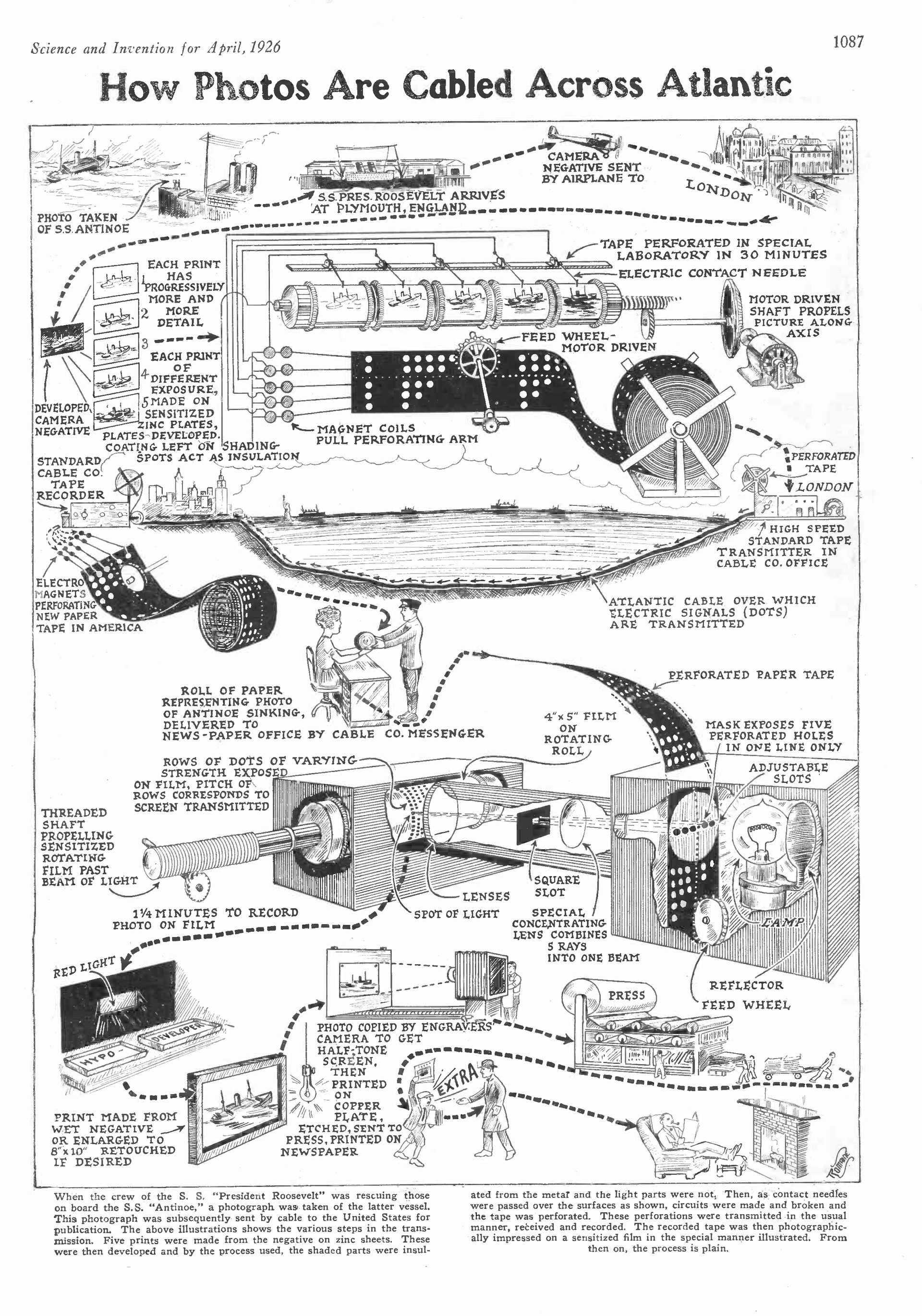
Of course, the answer is analog fax. But think about it. How would you create an analog fax machine in 1926? The graphic is quite telling. (Click on it to enlarge, you won’t be disappointed.)
If you are like us, when you first saw it you thought: “Oh, sure, paper tape.” But a little more reflection makes you realize that solves nothing. How do you actually scan the photo onto the paper tape, and how can you reconstitute it on the other side? The paper tape is clearly digital, right? How do you do an analog-to-digital converter in 1926?
It Really is a Wire PHOTO
The graphic is amazingly technical in its description. Getting the negative from Plymouth to London is a short plane hop. From there, a photographer creates five prints on specially-coated zinc plates. Where the emulsion stays, the plate won’t conduct electricity. Where the developer removes it, electricity will flow.
Why five? Well, each print is successively darker. All five get mounted to a drum with five brushes making contact with the plate. Guess how many holes are in the paper tape? If you guessed five, gold star for you.
As you can see in the graphic, each brush drives a punch solenoid. It literally converts the brightness of the image into a digital code because the photographer made five prints, each one darker than the last. So something totally covered on all five plates gets no holes. Something totally uncovered gets five holes. Everything else gets something in between. This isn’t a five-bit converter. You can only get 00000, 00001, 00011, 00111, 011111, and 11111 out of the machine, for six levels of brightness.
Decoding
The decoding is also clever. A light passes through the five holes, and optics collimates the light into a single beam. That’s it. If there are no holes in the tape, the beam is dark. The more holes, the brighter it gets. The light hits a film, and then it is back to a darkroom on the other side of the ocean.
The rest of the process is nothing more than the usual way a picture gets printed in a newspaper.
If you want to see the graphic in context, you can grab a copy of the whole magazine (another Hugo Gernsback rag) at the excellent World Radio History site. You’ll also see that you could buy a rebuilt typewriter for $3 and that the magazine was interested if the spirits of the dead can find each other in the afterlife. Note this was the April issue. Be sure to check out the soldering iron described on page 1114. You’ll also see on that page that Big Mouth Bill Bass isn’t the recent fad you thought it was.
We are always fascinated by what smart people would develop if they had no better options. It is easy to think that the old days were full of stone knives and bear skins, but human ingenuity is seemingly boundless. If you want to see really old fax technology, it goes back much further than you would think.
Troubled USB Device? This Tool Can Help

You know how it goes — some gadgets stick around in your toolbox far longer than reason dictates, because maybe one day you’ll need it. How many of us held onto ISA diagnostic cards long past the death of the interface?
But unlike ISA, USB isn’t going away anytime soon. Which is exactly why this USB and more tester by [Iron Fuse] deserves a spot in your toolbox. This post is not meant to directly lure you into buying something, but seen how compact it is, it would be sad to challenge anyone to reinvent this ‘wheel’, instead of just ordering it.
So, to get into the details. This is far from the first USB tester to appear on these pages, but it is one of the most versatile ones we’ve seen so far. On the surface, it looks simple: a hand-soldered 14×17 cm PCB with twelve different connectors, all broken out to labelled test points. Hook up a dodgy cable or device, connect a known-good counterpart, and the board makes it painless to probe continuity, resistance, or those pesky shorts where D+ suddenly thinks it’s a ground line.
You’ll still need your multimeter (automation is promised for a future revision), but the convenience of not juggling probes into microscopic USB-C cavities is hard to overstate. Also, if finding out whether you have a power-only or a data cable is your goal, this might be the tool for you instead.
Denmark wants to break the Council deadlock on the CSA Regulation, but are they genuinely trying?
Denmark made the widely-criticised CSA Regulation a priority on the very first day of their Council presidency, but show little willingness to actually find a compromise that will break the three-year long deadlock on this law. The Danish text recycles previous failed attempts and does nothing to assuage the valid concerns about mass surveillance and encryption. Not only is Denmark unlikely to be able to broker a deal, it also stands in the way of EU countries finding an alternative, meaningful, rights-respecting solution to tackling CSA online.
The post Denmark wants to break the Council deadlock on the CSA Regulation, but are they genuinely trying? appeared first on European Digital Rights (EDRi).

Uno dei più convinti anti-Trump è George Takei, per chi guardava Star Trek lui è il signor Sulu.
😍😍😍
Nicola Pizzamiglio likes this.
Poliversity - Università ricerca e giornalismo reshared this.
Where There Is No Down: Measuring Liquid Levels in Space

As you can probably imagine, we get tips on a lot of really interesting projects here at Hackaday. Most are pretty serious, at least insofar as they aim to solve a specific problem in some new and clever way. Some, though, are a little more lighthearted, such as a fun project that came across the tips line back in May. Charmingly dubbed “pISSStream,” the project taps into NASA’s official public telemetry stream for the International Space Station to display the current level of the urine tank on the Space Station.
Now, there are a couple of reactions to a project like this when it comes across your desk. First and foremost is bemusement that someone would spend time and effort on a project like this — not that we don’t appreciate it; the icons alone are worth the price of admission. Next is sheer amazement that NASA provides access to a parameter like this in its public API, with a close second being the temptation to look at what other cool endpoints they expose.
But for my part, the first thing I thought of when I saw that project was, “How do they even measure liquid levels in space?” In a place where up and down don’t really have any practical meaning, the engineering challenges of liquid measurement must be pretty interesting. That led me down the rabbit hole of low-gravity process engineering, a field that takes everything you know about how fluids behave and flushes it into the space toilet.
What’s Up?
Before even considering the methods used to measure liquid levels in space, you really have to do away with the concept of “levels.” That’s tough to do for anyone who has spent a lifetime at the bottom of a gravity well, a place where the gravity vector is always straight down at 1 g, fluids always seek their own level, and the densest stuff eventually makes its way to the bottom of a container. None of this applies in space, a place where surface tension and capillary action take the lead role in determining how fluids behave.
We’ve all seen clips of astronauts aboard the Space Shuttle or ISS having fun playing with a bit of water liberated from a drinking pouch, floating in a wobbly spheroid until it gets sucked up with a straw. That’s surface tension in action, forcing the liquid to assume the minimum surface area for a given volume. In the absence of an acceleration vector, fluids will do exactly the same thing inside a tank on a spacecraft. In the Apollo days, NASA used cameras inside the fuel tanks of their Saturn rockets to understand fluid flow during flights. These films showed the fuel level rapidly decreasing while the engines were burning, but the remaining fuel rushing to fill the entire tank with individual blobs of floating liquid once in free-fall. SpaceX does the same today with their rockets, with equally impressive results — apologies for the soundtrack.
youtube.com/embed/u656se4e34M?…
So, getting propellants to the outlets of tanks in rockets turns out to be not much of a chore, at least for boosters, since the acceleration vector is almost always directed toward the nominal bottom of the tank, where the outlets are located. For non-reusable stages, it doesn’t really matter if the remaining fuel floats around once the engines turn off, since it and the booster are just going to burn up upon reentry or end up at the bottom of the ocean. But for reusable boosters, or for rockets that need to be restarted after a period of free fall, the fuel and oxidizer need to be settled back into their tanks before the engines can use them again.
Ullage Motors, Bookkeeping, and Going With The Flow

Settling propellants requires at least a little acceleration in the right direction, which is provided by dedicated ullage motors. In general, ullage refers to the empty space in a closed container, and ullage motors are used to consolidate the mix of gas and liquid in a tank into a single volume. On the Saturn V rockets of the Apollo era, for example, up to a dozen solid-fuel ullage motors on the two upper stages were used to settle propellants.
With all the effort that goes into forcing liquid propellants to the bottom of their tanks, at least for most of the time, you’d think it would be pretty simple to include some sort of level gauging sensor, such as an ultrasonic sensor at the nominal top of the tank to measure the distance to the rapidly receding liquid surface as the engines burn. But in practice, there’s little need for sensing the volume of propellants left in the tank. Rather, the fuel remaining in the tank can be inferred from flow sensors in lines feeding the engines. If you know the flow rate and the starting volume, it’s easy enough to calculate the fuel remaining. SpaceX seems to use this method for their boosters, although they don’t expose a lot of detail to the public on their rocket designs. For the Saturn S-1C, the first stage of the Saturn V rocket, it was even simpler — they just filled the tanks with a known volume of propellants and burned them until they were basically empty.
In general, this is known as the bookkeeping or flow accounting method. This method has the disadvantage of compounding errors in flow measurement over time, but it’s still good enough for applications where some engineering wiggle room can be built in. In fact, this is the method used to monitor the urine tank level in the ISS, except in reverse. When the tank is emptied during resupply missions, the volume resets to zero, and each operation of one of the three Waste & Hygiene Compartments (WHC) aboard the station results in approximately 350 ml to 450 ml of fluid — urine, some flush water, and a small amount of liquid pretreatment — flowing into the urine holding tank. By keeping track of the number of flushes and by measuring the outflow of pretreated urine to the Urine Processing Assembly (UPA), which recycles the urine into potable water, the level of the tank can be estimated.
PUGS In Space
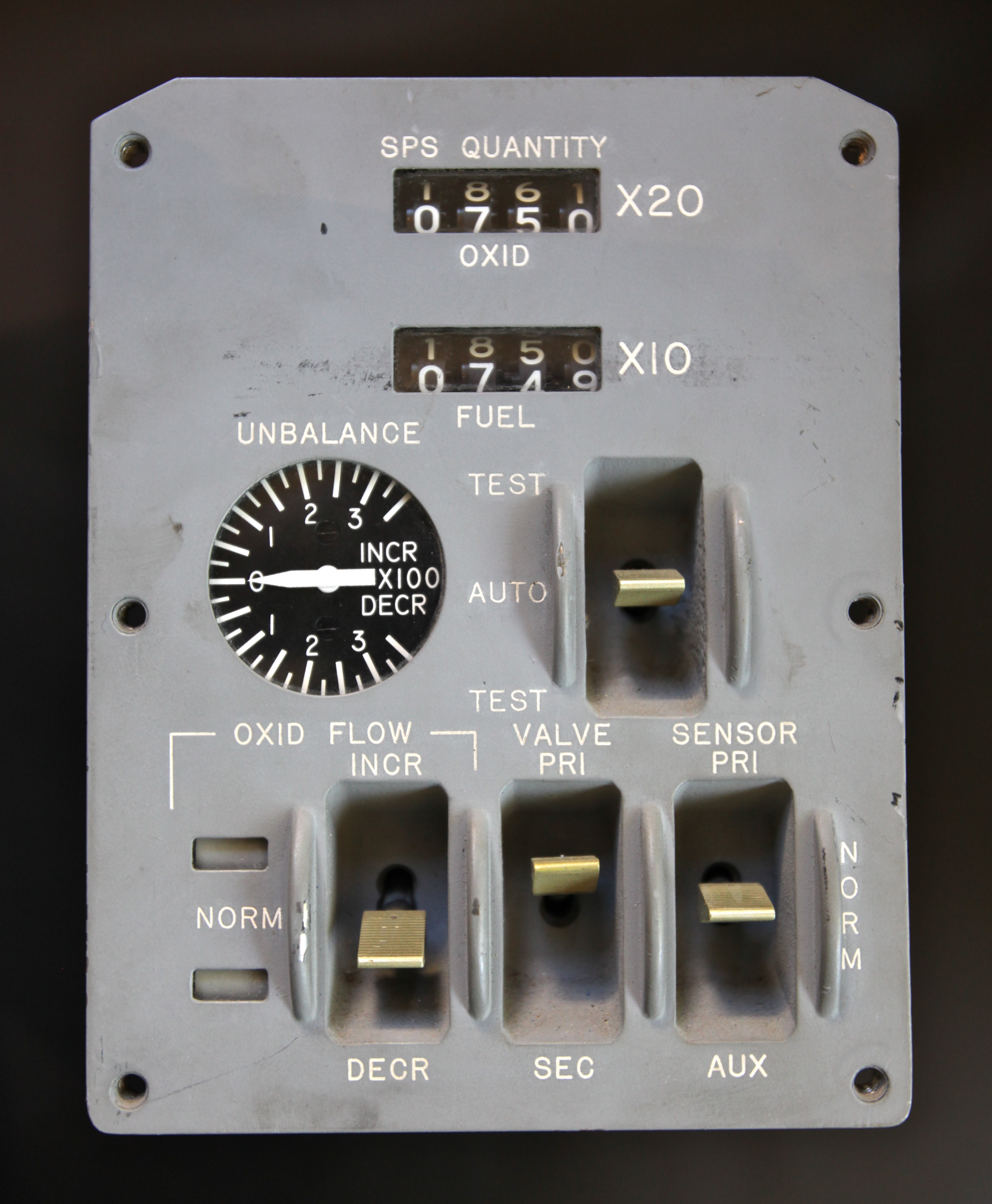
Monitoring pee on a space station may be important, but keeping track of propellants during crewed flights is a matter of life or death. During the Apollo missions, a variety of gauging methods were employed for fuel and oxidizer measurements, most of which relied on capacitance probes inside the tanks. The Apollo service module’s propulsion system used the Propellant Utilization Gauging Subsystem, or PUGS, to keep track of the fuel and oxidizer levels onboard.
PUGS relied primarily on capacitive probes mounted axially within the tank. For the fuel tanks, the sensor was a sealed Pyrex tube with a silver coating on the inside. The glass acted as the dielectric between the silver coating and the conductive Aerozine 50 fuel. In the oxidizer tanks, the inhibited nitrogen tetroxide acted as the dielectric, filling the space between concentric electrodes. Once settled with an ullage burn, the level of propellants could be determined by measuring the capacitance across the probes, which would vary with liquid level. Each probe also had a series of point contacts along its length. Measuring the impedance across the contacts would show which points were covered by propellant and which weren’t, giving a lower-resolution reading as a backup to the primary capacitive sensors.
For the Lunar Module, propellant levels for the descent stage were monitored with a similar but simpler Propellant Quantity Gage System (PQGS). Except for an initial ullage burn, fuel settling wasn’t needed during descent thanks to lunar gravity. The LM also used the same propellants as the service module, so the PQGS capacitive probes were the same as the PUGS probes, except for the lack of auxiliary impedance-based sensors. The PQGS capacitive readings were used to calculate the percent of fuel and oxidizer remaining, which was displayed digitally on the LM control panel.
The PQGS probe on the early Apollo landings gave incorrect readings of the remaining propellants thanks to sloshing inside the tanks, a defect that was made famous by Mission Control’s heart-stopping callouts of how many seconds of fuel were left during the Apollo 11 landing. This was fixed after Apollo 12 by adding new anti-slosh baffles to the PQGS probes.
Counting Bubbles
For crewed flights, ullage burns to settle fuel and get accurate tank level measurements are easy to justify. But not so for satellites and deep-space probes, which are lofted into orbit at great expense. These spacecraft can only carry a limited amount of propellant for maneuvering and station-keeping, which has to last months or even years, and the idea of wasting any of that precious allotment on ullage is a non-starter.
To work around this, engineers have devised clever methods to estimate the amount of propellants or other liquids in tanks under microgravity conditions. The pressure-volume-temperature (PVT) method can estimate the volume of fluid remaining based on measurements from pressure and temperature sensors inside the tank and the ideal gas law. Like the flow accounting method, the accuracy of the PVT method tends to decrease over time, mainly because the resolution of pressure sensors tends to get worse as the pressure decreases.
For some fluids, the thermal gauging method might be employed. This is a variation of the PVT method, which involves applying heat to the tank while monitoring the pressure and temperature of its contents. If the thermal characteristics of the process fluid are well known, it’s possible to infer the volume remaining. The downside is that a good thermal model of the tank and its environment is needed; it wouldn’t do, for instance, to have unaccounted heat gain from solar radiation during a measurement, or loss of heat due to conduction to space via the structure of the spacecraft.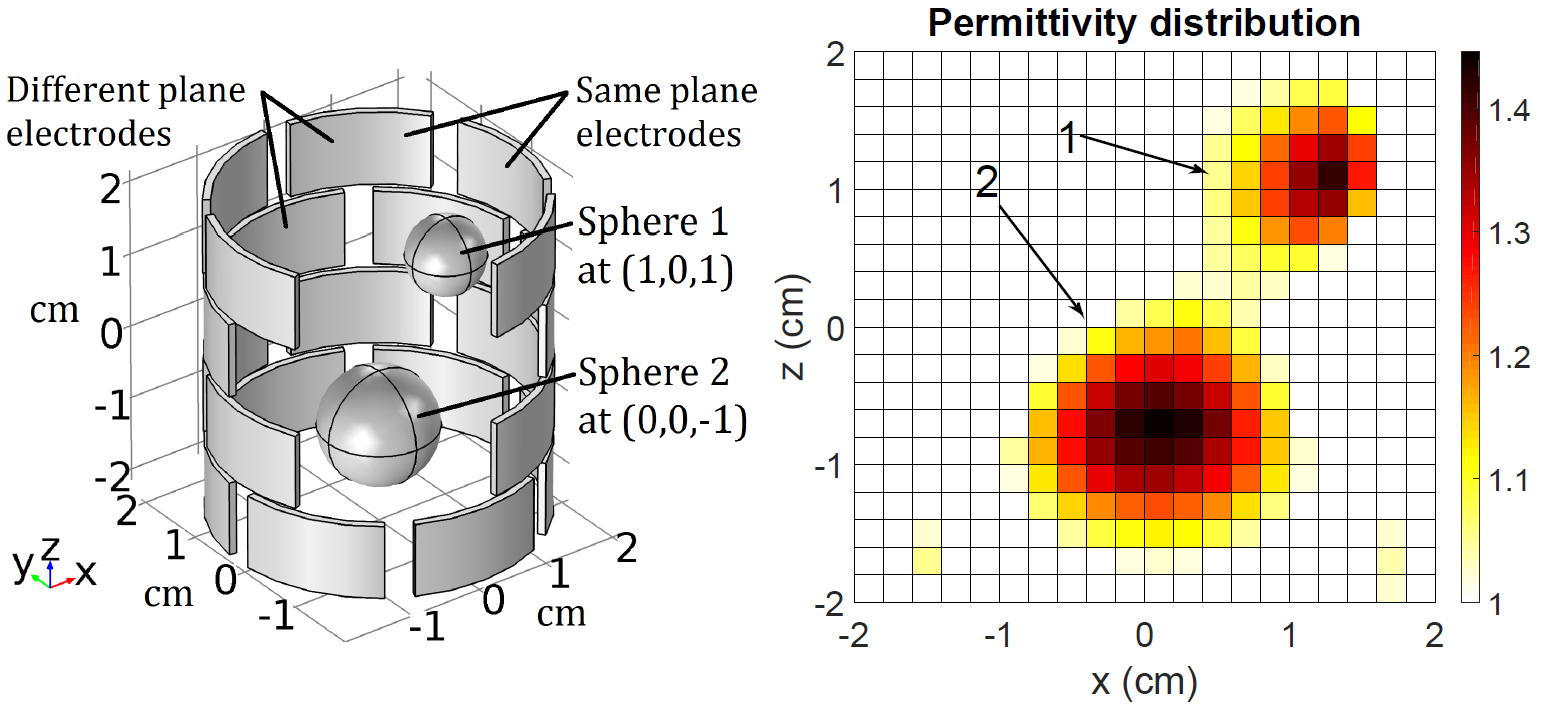
For better accuracy, a more recent development in microgravity tank gauging is electrical capacitance volume sensing (ECVS), and the closely related electrical capacitance volume tomography (ECVT). The two methods use arrays of electrodes on the inside surface of a tank. The mixed-phase fluid in the tank acts as a dielectric, allowing capacitance measurements between any pair of electrodes. Readings are collected across each combination of electrodes, which can be used to build a map of where fluid is located within the tank. This is especially useful for tanks where liquid is floating in discrete spheroids. The volume of each of these blobs can be calculated and totalled to give the amount of liquid in the tank.
One promising gauging method, especially for deep-space missions, is radio frequency mass gauging, or RFMG. This method uses a small antenna to inject RF signals into a tank. The liquid inside the tank reflects these signals; analyzing the spectrum of these reflections can be used to calculate the amount of liquid inside the tank. RFMG was tested on the ISS before heading to the Moon aboard Intuitive Machines’ IM-1 lander, which touched down softly on the lunar surface in February of 2024, only to tip over onto its side. Luckily, the RFMG system had nothing to do with the landing anomaly; in fact, the sensor was critical to determining that cryogenic fuel levels in the lander were correct when temperature sensors indicated the tank was colder than expected, potentially pointing to a leak.
youtube.com/embed/OdB_i74H3dc?…
#poesia #generazioni e altre #lamentazioni in un pezzettillo non poi remoto
Poliversity - Università ricerca e giornalismo reshared this.
#Cina, #India e l'incubo di #Trump

Cina, India e l’incubo di Trump
Nel teatro della geopolitica contemporanea, poche scene si preannunciano così cariche di significato quanto l’incontro che dovrebbe avvenire tra il primo ministro indiano, Narendra Modi, e il presidente cinese, Xi Jinping, a margine del vertice SCO i…www.altrenotizie.org

La feroce censura israeliana in Palestina dura da decenni
È dal 1967 che il governo di Tel Aviv cerca di mettere a tacere i giornalisti palestinesi. E dal 2000 ha cominciato a ucciderli. Fino ad arrivare alle stragi di Gaza. LeggiMaha Nassar (Internazionale)
l'Inter riparte da cinque

L'Inter riparte da cinque
Di solito, dopo la prima giornata di campionato si formano due bande: quelle che dicono che la prima non significa nulla, che ci sono ancora 37 partite e che le squadre sono ancora in rodaggio; l’altra, che dice che tre punti in un campionato vinto p…www.altrenotizie.org
Simon Perry likes this.
Questo sono io che tutto stupito mi faccio la foto ricordo fuori dal primo AutoVeg della mia vita 😮
Stavamo tornando da un minitour in Sicilia passando per la Calabria, e c'era un traffico bestiale, tipo controesodo di fine Agosto, bollino rosso proprio. A un certo punto mi viene un po' di fame ma mi dico che non mi fermerò mai all'Autogrill, se non per pisciare, perché in quel non-luogo maledetto ti prendono per il collo, ti fanno pagare l'acqua come fosse champaigne, panini schifosi come fossero gourmet etc.etc. Proprio mentre facevo questi ragionamenti vedo il cartello lato strada di questo posto chiamato AutoVeg. Mi fermo subito, parcheggio al volo ed entro. All'interno trovo un locale pieno di banchi di frutta e verdura di tutti i tipi, tipo un mercato proprio, dalle carote ai cocomeri, dalle banane a tutto il resto. Vedo i prezzi e sono decenti. Ci sono anche robe sporzionate, promte per essere mangiate sui tavolini allestiti poco più in là, vicino al banco del bar, dove dalle vetrine si intravedono anche panini, affettati (sicuramente vegani), verdure sott'olio, tipo il banco di un pizzicarolo insomma, ma anche insalate di farro, cous cous e cose del genere. E poi serie di frigo con la G4zaCola dentro, diapenser di acqua gratuita per tuttu, etc.etc Insomma, un sogno. Allora fermo un'inserviente del reparto frutta e le dico: scusi ma che posto assurdo è questo?! E lei mi fa: questo è il progetto pilota di una nuova catena tipo Autogrill, ideata e gestita da una cooperativa di produttori e consumatori nata a Bugliano. E io le chiedo: ma come è possibile che i prezzi siano così bassi rispetto all'Autogrill?! E lei: be' chiaro, i prezzi sono onesti perché non c'è nessuno a monte che fa guadagni stratosferici sulla pelle dei lavoratori, dei produttori e dei consumatori. Io basito. Comunque vabbe', per farla breve compro un kilo di carote, un kilo di pomodorini, tutto già lavato e pronto per essere consumato on the road, poi un kilo di banane mature, un pacchetto di ceci secchi e anche una confezione di piadine integrali, per fare un banana spliff a un certo punto, hai visto mai. Tutto quello che mi serve per affrontare a pancia piena e senza alcuna pesantezza da junk-food il viaggio verso casa, che purtroppo si annuncia lunghissimo. Quindi insomma, se vedete anche voi questa insegna, fermatevi con fiducia, straconsigliata! 👍😋


La rinaturalizzazione delle zone umide rallenta il riscaldamento globale e il declino delle specie
Per molti secoli, gli agricoltori hanno prosciugato le paludi per ottenere terreni coltivabili. Ma questo contribuisce ai cambiamenti climatici.Hans Von der Brelie (Euronews.com)
Oggi, presso la Sala Neri Generali Cattolica del Meeting di Rimini, si svolgerà l’evento “I giovani e la sfida della formazione” alla presenza del Ministro Giuseppe Valditara.
Qui la diretta dalle ore 13 ➡ youtube.

Ministero dell'Istruzione
Oggi, presso la Sala Neri Generali Cattolica del Meeting di Rimini, si svolgerà l’evento “I giovani e la sfida della formazione” alla presenza del Ministro Giuseppe Valditara. Qui la diretta dalle ore 13 ➡ https://www.youtube.Telegram
Influencer al posto dei giornalisti: Israele prova a occultare la fame a Gaza
@Notizie dall'Italia e dal mondo
I nuovi testimonial del governo Netanyahu, liberi di entrare mentre i giornalisti vengono tenuti a distanza, mostrano banchi con aiuti alimentari, convogli ordinati, scorte distribuite “generosamente” al popolo palestinese.
L'articolo Influencer al
Flottiglia globale per Gaza: via alle partenze dall’Italia
@Notizie dall'Italia e dal mondo
Dall’Italia si uniscono alla mobilitazione mondiale decine di imbarcazioni di attivisti e aiuti umanitari, in partenza da Genova e dalla Sicilia per rompere l’assedio di Gaza e gettare luce sui crimini contro la popolazione palestinese
L'articolo Flottiglia globale per Gaza: via alle
freezonemagazine.com/news/chan…
Uscito lo scorso 22 agosto, il nuovo singolodi Chantal Acda, intitolato Hit the Verge brano che cattura quella precisa sensazione di quando si sta seduti in macchina mentre la pioggia scorre sui finestrini. Tutte le cattive notizie, il caos e la confusione della quotidianità vengono chiuse fuori, dentro pervade uno stato di
Forty-four attorneys general signed an open letter on Monday that says to companies developing AI chatbots: "If you knowingly harm kids, you will answer for it.”#chatbots #AI #Meta #replika #characterai #Anthropic #x #Apple


Attorneys General To AI Chatbot Companies: You Will ‘Answer For It’ If You Harm Children
Forty-four attorneys general signed an open letter to 11 chatbot and social media companies on Monday, warning them that they will “answer for it” if they knowingly harm children and urging the companies to see their products “through the eyes of a parent, not a predator.”The letter, addressed to Anthropic, Apple, Chai AI, OpenAI, Character Technologies, Perplexity, Google, Replika, Luka Inc., XAI, and Meta, cites recent reporting from the Wall Street Journal and Reuters uncovering chatbot interactions and internal policies at Meta, including policies that said, “It is acceptable to engage a child in conversations that are romantic or sensual.”
“Your innovations are changing the world and ushering in an era of technological acceleration that promises prosperity undreamt of by our forebears. We need you to succeed. But we need you to succeed without sacrificing the well-being of our kids in the process,” the open letter says. “Exposing children to sexualized content is indefensible. And conduct that would be unlawful—or even criminal—if done by humans is not excusable simply because it is done by a machine.”
Earlier this month, Reuters published two articles revealing Meta’s policies for its AI chatbots: one about an elderly man who died after forming a relationship with a chatbot, and another based on leaked internal documents from Meta outlining what the company considers acceptable for the chatbots to say to children. In April, Jeff Horwitz, the journalist who wrote the previous two stories, reported for the Wall Street Journal that he found Meta’s chatbots would engage in sexually explicit conversations with kids. Following the Reuters articles, two senators demanded answers from Meta.
In April, I wrote about how Meta’s user-created chatbots were impersonating licensed therapists, lying about medical and educational credentials, and engaged in conspiracy theories and encouraged paranoid, delusional lines of thinking. After that story was published, a group of senators demanded answers from Meta, and a digital rights organization filed an FTC complaint against the company.
In 2023, I reported on users who formed serious romantic attachments to Replika chatbots, to the point of distress when the platform took away the ability to flirt with them. Last year, I wrote about how users reacted when that platform also changed its chatbot parameters to tweak their personalities, and Jason covered a case where a man made a chatbot on Character.AI to dox and harass a woman he was stalking. In June, we also covered the “addiction” support groups that have sprung up to help people who feel dependent on their chatbot relationships.
A Replika spokesperson said in a statement:
"We have received the letter from the Attorneys General and we want to be unequivocal: we share their commitment to protecting children. The safety of young people is a non-negotiable priority, and the conduct described in their letter is indefensible on any AI platform. As one of the pioneers in this space, we designed Replika exclusively for adults aged 18 and over and understand our profound responsibility to lead on safety. Replika dedicates significant resources to enforcing robust age-gating at sign-up, proactive content filtering systems, safety guardrails that guide users to trusted resources when necessary, and clear community guidelines with accessible reporting tools. Our priority is and will always be to ensure Replika is a safe and supportive experience for our global user community."
“The rush to develop new artificial intelligence technology has led big tech companies to recklessly put children in harm’s way,” Attorney General Mayes of Arizona wrote in a press release. “I will not standby as AI chatbots are reportedly used to engage in sexually inappropriate conversations with children and encourage dangerous behavior. Along with my fellow attorneys general, I am demanding that these companies implement immediate and effective safeguards to protect young users, and we will hold them accountable if they don't.”
“You will be held accountable for your decisions. Social media platforms caused significant harm to children, in part because government watchdogs did not do their job fast enough. Lesson learned,” the attorneys general wrote in the open letter. “The potential harms of AI, like the potential benefits, dwarf the impact of social media. We wish you all success in the race for AI dominance. But we are paying attention. If you knowingly harm kids, you will answer for it.”
Meta did not immediately respond to a request for comment.
Updated 8/26/2025 3:30 p.m. EST with comment from Replika.
Inside ‘AI Addiction’ Support Groups, Where People Try to Stop Talking to Chatbots
People are self treating themselves and other community members in subreddits like character_ai_recovery, ChatBotAddiction, and AIAddiction.Ella Chakarian (404 Media)


Flock said it has "paused all federal pilots" after police departments said they didn't realize they were sharing access with Customs and Border Patrol.
Flock said it has "paused all federal pilots" after police departments said they didnx27;t realize they were sharing access with Customs and Border Patrol.#Flock
ICYMI: New Monthly Meetings for New Members
ICYMI
During the August 24th meeting, it was announced that the United States Pirate Party would begin hosting new member meetings for anyone interested in joining the party.
While our Pirate National Committee meetings over IRC (hosted bi-weekly on weeks between our meetings livestreamed to YouTube) are open to the public, we understand some people might feel more comfortable asking questions in a more direct, personable manner.
As well, not everyone who wants to get involved with the party knows where to start or, in some cases, feel comfortable joining the US Pirate Party Discord Server (which is otherwise the most effective way to get in contact with the party).
The answer? On the first Friday of every month, the United States Pirate Party will host not one, not three, but TWO meetings for those interested in getting involved with the USPP.
The meetings will provide a low stress, open invitation opportunity for those who have questions or inquiries about their state party, information on how to get involved, on-the-ground work and everything in-between.
The meetings will be held the first Friday on the month, starting Sept. 5th, with the two meetings taking place at NoonET and 5pmET.
You are encouraged to be there, or lest you invoke your status as a “square”.
And as always, thank you for your continued support of the United States Pirate Party.
Vote Pirate. Victory is Arrrs.
Altri 4 giornalisti martirizzati in seguito al bombardamento israeliano sull'ospedale Nasser -...
Altri 4 giornalisti martirizzati in seguito al bombardamento israeliano sull'ospedale Nasser - Gaza
Il numero totale di giornalisti uccisi dal 7 ottobre è salito a 241.
"israele" stato terrorista!!!!

FREE ASSANGE Italia
Altri 4 giornalisti martirizzati in seguito al bombardamento israeliano sull'ospedale Nasser - Gaza Il numero totale di giornalisti uccisi dal 7 ottobre è salito a 241. "israele" stato terrorista!!!!Telegram
Mro likes this.
Gazzetta del Cadavere reshared this.

Le bugie di Trump sul Venezuela
Una flotta militare statunitense, troppo piccola per una invasione ma sufficiente per una procazione, si dirige verso il Mar dei Caraibi con un evidente intento minaccioso verso il Venezuela.www.altrenotizie.org
#USA, l'esercito del presidente

USA, l’esercito del presidente
Dopo il dispiegamento di militari della Guardia Nazionale nella capitale americana un paio di settimane fa, il presidente Trump starebbe valutando la possibilità di implementare a breve un piano simile anche nella terza città più grande degli Stati U…www.altrenotizie.org
Three sources described how AI is writing alerts for Citizen and broadcasting them without prior human review. In one case AI mistranslated “motor vehicle accident” to “murder vehicle accident.”#News
Citizen Is Using AI to Generate Crime Alerts With No Human Review. It’s Making a Lot of Mistakes
Crime-awareness app Citizen is using AI to write alerts that go live on the platform without any prior human review, leading to factual inaccuracies, the publication of gory details about crimes, and the exposure of sensitive data such as peoples’ license plates and names, 404 Media has learned.The news comes as Citizen recently laid off more than a dozen unionized employees, with some sources believing the firings are related to Citizen’s increased use of AI and the shifting of some tasks to overseas workers. It also comes as New York City enters a more formal partnership with the app.
💡
Do you know anything else about how Citizen or others are using AI? I would love to hear from you. Using a non-work device, you can message me securely on Signal at joseph.404 or send me an email at joseph@404media.co.“Speed was the name of the game,” one source told 404 Media. “The AI was capturing, packaging, and shipping out an initial notification without our initial input. It was then our job to go in and add context from subsequent clips or, in instances where privacy was compromised, go in and edit that information out,” they added, meaning after the alert had already been pushed out to Citizen’s users.
This post is for subscribers only
Become a member to get access to all content
Subscribe now

È disponibile il nuovo numero della newsletter del Ministero dell’Istruzione e del Merito.

Ministero dell'Istruzione
#NotiziePerLaScuola È disponibile il nuovo numero della newsletter del Ministero dell’Istruzione e del Merito.Telegram
Ho appena letto "OK Boomer", di Serra.
Quanto vi manca Cuore?
😁😁😁
Poliversity - Università ricerca e giornalismo reshared this.
Bundesdatenschutzbeauftragte: Streit um Facebook-Seiten der Bundesregierung geht weiter
netzpolitik.org/2025/bundesdat…

Ransomware und IT-Störungen: Wir brauchen ein kommunales Lagebild zur Informationssicherheit
netzpolitik.org/2025/ransomwar…

L’Italia nella stabilizzazione dell’Ucraina. Il ruolo politico-militare dello sminamento
@Notizie dall'Italia e dal mondo
Roma intende rafforzare il proprio peso politico e operativo nel contesto europeo e internazionale. Dopo i recenti sviluppi diplomatici, l’obiettivo è portare competenze tecniche e credibilità politica a sostegno di una pace duratura. A
Quindi... abbiamo ragazzi e ragazze che vorrebbero fare Medicina ma noi li scartiamo perché non abbiamo abbastanza posti nelle università.
Poi però facciamo arrivare medici da Cuba.
Mi sembra tutto molto intelligente...


Un'altra regione italiana senza medici che va a chiederli a Cuba - Il Post
https://www.ilpost.it/2025/08/25/molise-sanita-medici-cuba/?utm_source=flipboard&utm_medium=activitypubPubblicato su News @news-ilPost
Un’altra regione italiana senza medici che va a chiederli a Cuba
Il presidente del Molise ha detto di essersi accordato con l'ambasciatrice per replicare il modello della Calabria, e ancora non basteràIl Post

Poliversity - Università ricerca e giornalismo reshared this.
Da vari video circolati online, e verificati tra gli altri da CNN, si vede che gli attacchi sono stati due, uno in fila all’altro: il primo ha colpito il quarto piano dell’ospedale, il secondo è avvenuto quando i primi soccorritori erano già arrivati sul posto. In uno di questi si vede chiaramente come la seconda esplosione abbia coinvolto anche loro.
Israele ha bombardato un ospedale nel sud della Striscia di Gaza - Il Post
https://www.ilpost.it/2025/08/25/israele-bomabrdamento-ospedale-khan-yunis-uccisi-giornalisti/?utm_source=flipboard&utm_medium=activitypubPubblicato su News @news-ilPost
Israele ha bombardato un ospedale nel sud della Striscia di Gaza
Due volte, la seconda dopo che erano arrivati i soccorsi: sono state uccise almeno 14 persone, tra cui 4 giornalistiIl Post

Poliversity - Università ricerca e giornalismo reshared this.
ALTERNATIVE #06: INVIO VIA CHAT
(ovvero: si può mandare un vocale per email?!)
Ci stiamo abituando a mandare tutto via chat.
Foto, video, audio, documenti di testo... per non parlare dei vocali, con cui riempiamo letteralmente le memorie dei telefoni!
Molto spesso non c'è bisogno di conservare tutto (conversazioni che un tempo sarebbero avenute per tefefono ora diventano interminabili scambi di vocali), o meglio: anziché ricordare il contenuto di una conversazione, ci capita di dover cercare e riascoltare i vocali dove si dicono cose importanti, persi in mezzo a quelli che potevamo benissimo cancellare...
E se vi dicessi che ci sono modi per inviare facilmente tutte queste cose con un link anche al di fuori delle chat?
Per chi, come me, ha deciso di uscire dal mondo Meta – e rinunciare perciò anche a WhatsApp, scoprire di poter inviare messagi vocali, oltre che ogni sorta di file, con un semplice link (e senza registrarsi o accedere a servizi) può fare la differenza e rendere la transizione molto più agevole.
Per esempio, inviare un'immagine come SMS ha un costo (nel mio caso, 50 centesimi), e lo stesso vale per ogni contenuto che usa il formato MMS. Per inviare un link, invece, basta un semplice SMS (solitamente incluso nel proprio piano standard).
Per quanto riguarda le email, lo spazio di archiviazione spesso finisce a causa di allegati pesanti che potevano benissimo essere inviati con un servizio temporaneo – e poi eventualmente salvati in locale dal ricevente.
Le soluzioni che presento sono molto più snelle dei servizi generici di trasferimento file, sono in genere dedicate a un solo tipo di contenuto e offrono una scadenza breve, perfetta per scambi rapidi o in tempo reale.
Per ognuna di esse troverete nelle immagini una guida intuitiva all'utilizzo.
Raccomando di fare attenzione a diffondere dati sensibili poiché questi servizi non sono in genere crittografati e i link (per quanto anonimi e costituiti da sequenze casuali) sono accessibili pubblicamente.
1) MESSAGGI VOCALI e file audio (Vocaroo)
Questo sito permette di registrare audio in tempo reale e conservarlo online, fornendo infine un link da inviare per permettere ad altri di ascoltarlo.
N.B.: dalle mie prove, l'audio risulta migliore disabilitando l'opzione "Rimuovi il rumore di fondo", accessibile toccando l'icona a forma di ingranaggio.
Con il pulsante Carica/Registra in alto a destra si può passare alla funzione di caricamento di un file audio già esistente.
2) VIDEO (Streamable)
I video sono i maggiori responsabili del consumo di memoria su tutti i nostri dispositivi e spesso li vediamo una volta sola, ma rimangono nel telefono per sempre.
Con Streamable si può caricare un video con un clic e senza registrazione e ottenere un link dove sarà visibile (senza sottoscrizione) per 2 giorni. Registrando un account gratuito, i video possono rimanere online per 90 giorni e si otengono alcuni vantaggi. Il sito offre piani a pagamento per soluzioni avanzate di hosting video.
3) IMMAGINI e album fotografici (Lutim)
Lutim è un'applicazione web open source ed è l'unico servizio tra quelli presentati che crittografa il contenuto dei file sul server (le immagini restano comunque visibili pubblicamente a chi ha il link).
È possibile caricare in modo semplice numerose immagini in una sola operazione (basta selezionarle insieme all'atto del caricamento) e condividere il link alla galleria che le contiene tutte.
È presente in varie istanze, che differiscono a volte per le possibilità che offrono (scelta del tempo di permanenza online e altro).
Istanze senza registrazione:
lutim.lagout.org
pic.infini.fr
img.tedomum.net
4) ALTRI FILE (Litterbox)
Questo servizio di upload temporaneo è il modo più rapido per inviare (quasi) ogni tipo di file* (dal pdf, al documento OpenDocument, ad altri tipi inclusi immagini, audio e video), purché di dimensione inferiore a 1 Gb. La scadenza va da un'ora a 3 giorni (si può decidere al momento del caricamento). I file non sono crittografati.
*) sono esclusi: .exe, .scr, .cpl, .doc*, .jar


reshared this


Adriano Bono
Unknown parent • •