
Supersized Calculator Brings the Whole Intel 4000 Gang Together

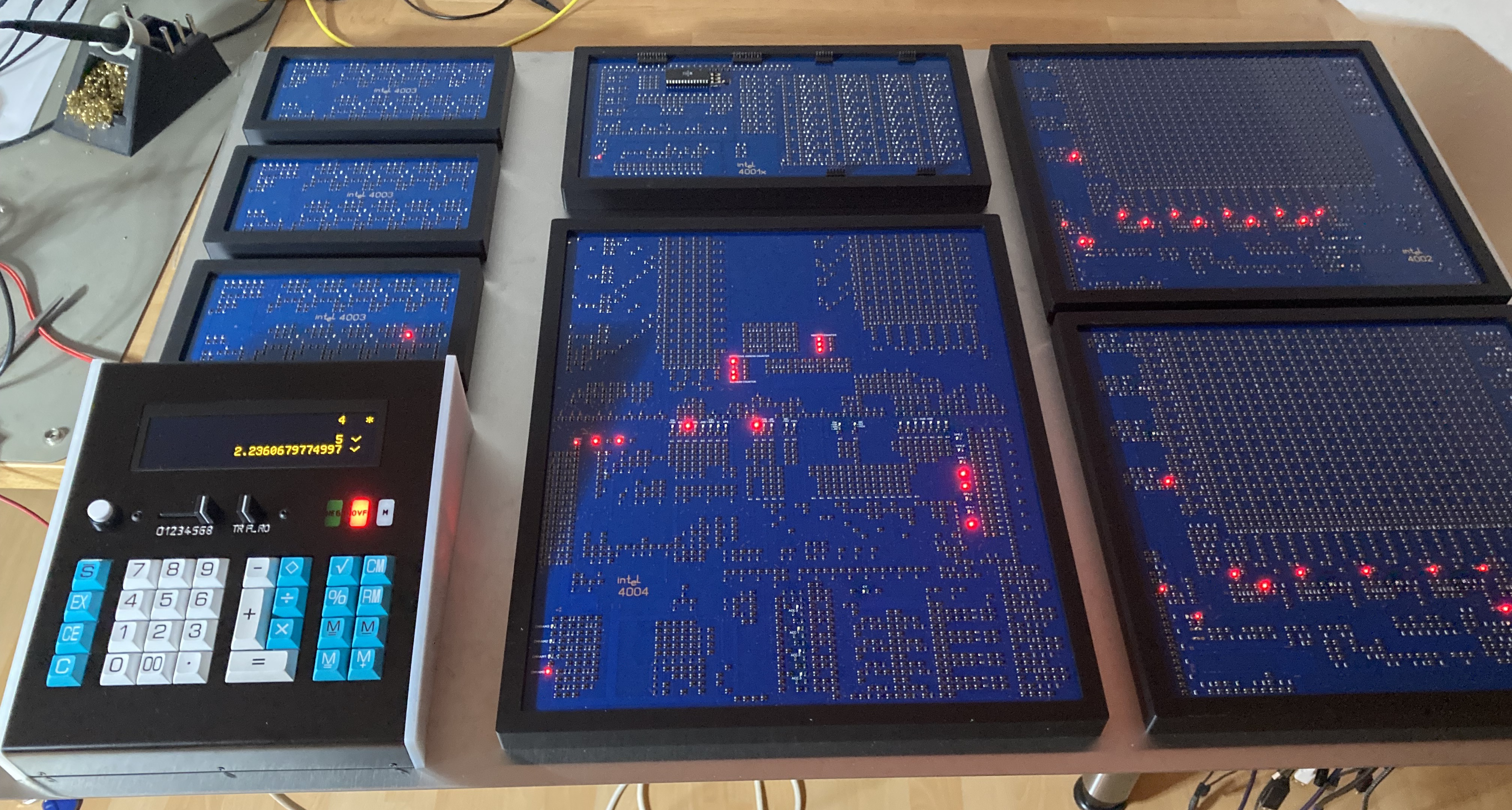
Though mobile devices and Apple Silicon have seen ARM-64 explode across the world, there’s still decent odds you’re reading this on a device with an x86 processor — the direct descendant of the world’s first civilian microprocessor, the Intel 4004. The 4004 wasn’t much good on its own, however, which is why [Klaus Scheffler] and [Lajos Kintli] have produced super-sized discrete chips of the 4001 ROM, 4002 RAM, and 4003 shift register to replicate a 1970s calculator at 10x the size and double the speed, all in time for the 4004’s 50th anniversary.
We featured this project a couple of years back, when it was just a lonely microprocessor. Adding the other MSC-4 series chips enabled the pair to faithfully reproduce the logic of a Busicom 141-PF calculator, the very first to market with Intel’s now-legendary microprocessor. Indeed, this calculator is the raison d’etre for the 4004: Busicom commissioned the whole Micro-Computer System 4-bit (MCS-4) set of chips specifically for this calculator. Only later, once they realized what they had made, did Intel buy the rights back from the Japanese calculator company, and the rest, as they say, is history.
Since its history, it belongs in a museum– and that’s where this giant, FET-based calculator is going. If you happen to be in Solothurn, Switzerland, you’ll be able to see it at a new history of technology exhibit opening at the Enter Museum in 2026. Do check out the write-up and links at 4004.com if you want to learn about this important piece of human history.
Hackaday Links: November 16, 2025

We make no claims to be an expert on anything, but we do know that rule number one of working with big, expensive, mission-critical equipment is: Don’t break the big, expensive, mission-critical equipment. Unfortunately, though, that’s just what happened to the Deep Space Network’s 70-meter dish antenna at Goldstone, California. NASA announced the outage this week, but the accident that damaged the dish occurred much earlier, in mid-September. DSS-14, as the antenna is known, is a vital part of the Deep Space Network, which uses huge antennas at three sites (Goldstone, Madrid, and Canberra) to stay in touch with satellites and probes from the Moon to the edge of the solar system. The three sites are located roughly 120 degrees apart on the globe, which gives the network full coverage of the sky regardless of the local time.
Losing the “Mars Antenna,” as DSS-14 is informally known, is a blow to the DSN, a network that was already stretched to the limit of its capabilities, and is likely to be further challenged as the race back to the Moon heats up. As for the cause of the accident, NASA explains that the antenna was “over-rotated, causing stress on the cabling and piping in the center of the structure.” It’s not clear which axis was over-rotated, but based on some specs we found that say the azimuth travel range is ±265 degrees “from wrap center,” we suspect it was the vertical axis in the base. It sounds like the azimuth went past that limit, which wrapped the swags of cables and hoses that run the antenna tightly, causing the damage. We’d have thought there would be a physical stop of some sort to prevent over-rotation, but then again, running a structure that big up against a stop would be very much an “irresistible force, immovable object” scenario. Here’s hoping they can get DSS-14 patched up quickly and back in service.
Speaking of having a bad day on the job, we have to take pity on these Russian engineers for the “demo hell” they went through while revealing the country’s first AI-powered humanoid robot. AIdol, as the bot is known, seemed to struggle from the start, doddering from behind some curtains like a nursing home patient with a couple of nervous-looking fellows flanking it. The bot paused briefly before continuing its drunk-walk, pausing again to deliver a somewhat feeble wave to the crowd before entering the terminal stumble and face-plant part of the demo. The bot’s attendants quickly dragged it away, leaving a pile of parts on the stage while more helpers tried — and failed — to deploy a curtain to hide the scene. It was a pretty sad scene to behold, made worse by the choice of walk-out music (Bill Conti’s iconic “Gonna Fly Now,” better known as the theme from Rocky).
youtube.com/embed/LyfCLRkXKYs?…
We just noticed that pretty much everything we have to write about this week has a “bad day at work” vibe to it, so to continue on with that theme, witness this absolutely disgusting restoration of a GPU that spent way too many years in a smoker’s house. The card, an Asus 9800GT Matrix, is from 2008, so it may have spent the last 17 years getting caked with tar and nicotine, along with a fair amount of dust and perhaps cat hair, from the look of it. Having spent way too much time cleaning TVs similarly caked with grossness most foul, we couldn’t stomach watching the video of the restoration process, but it’s available in the article if you dare.
And the final entry in our “So you think your job sucks?” roundup, behold the poor saps who have to generate training data for AI-powered domestic robots. The story details the travails of Naveen Kumar, who spends his workday on simple chores such as folding towels, with the twist of doing it with a GoPro strapped to his forehead to capture all the action. The videos are then sent to a U.S. client, who uses them to develop a training model so that humanoid robots can eventually copy the surprisingly complex physical movements needed to perform such a mundane task. Training a robot is all well and good, but how about training them how to move around inside a house made for humans? That’s where it gets really creepy, as an AI startup has partnered with a big real estate company to share video footage captured from those “walk-through” videos real estate agents are so fond of. So if your house has recently been on the market, there’s a non-zero chance that it’s being used to train an army of domestic robots.
And finally, we guess this one fits the rough-day-at-work theme, but only if your job is being a European astronaut, who may someday be chowing down on protein powder made from their own urine. The product is known as Solein — sorry, but have they never seen the movie Soylent Green? — and is made via a gas fermentation process using microbes, electricity, and air. The Earth-based process uses ammonia as a nitrogen source, but in orbit or on long-duration deep-space missions, urea harvested from astronaut pee would be used instead. There’s no word on what Solein tastes like, but from the look of it, and considering the source, we’d be a bit reluctant to dig in.
Poliversity - Università ricerca e giornalismo reshared this.
The Simplest Ultrasound Sensor Module, Minus the Module

Just about every “getting started with microcontrollers” kit, Arduino or otherwise, includes an ultrasonic distance sensor module. Given the power of microcontrollers these days, it was only a matter of time before someone asked: “Could I do better without the module?” Well, [Martin Pittermann] asked, and his answer, at least with the Pi Pico, is a resounding “Yes”. A micro and a couple of transducers can offer a better view of the world.
The project isn’t really about removing the extra circuitry on the SR-HC0, since there really isn’t that much to start. [Martin] wanted to know just how far he could push ultrasound scanning technology using RADAR signal processing techniques. Instead of bat-like chirps, [Martin] is using something called Frequency-Modulated Continuous Wave, which comes from RADAR and is exactly what it sounds like. The transmitter emits a continuous carrier wave with a varying frequency modulation, and the received wave is compared to see when it must have been sent. That gives you the time of flight, and the usual math gives you a distance.
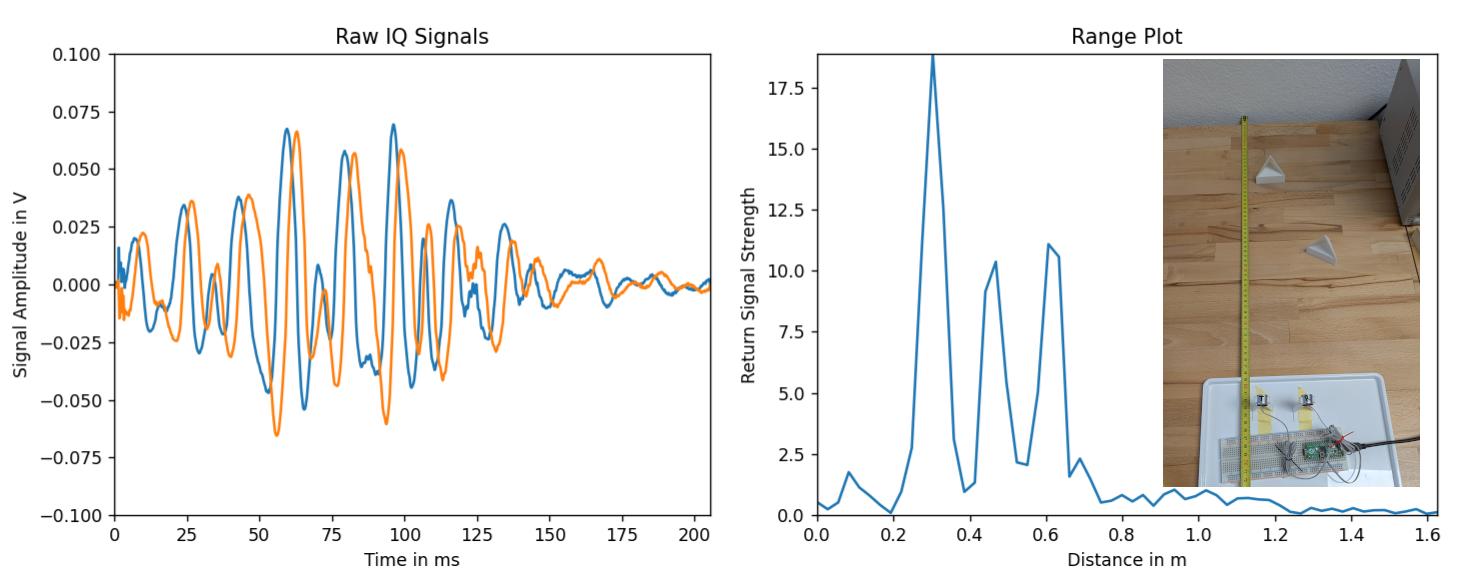
Since he’s inspired by RADAR, it’s no surprise perhaps that [Martin]’s project reminds us of SDR, and the write-up gets right into the signal-processing code. Does it work better than a chirping module? Well, aside from using fewer parts, [Martin] can generate a full range plot for all objects in the arc of the sensor’s emissions out to 4 meters using just the Pico. [Martin] points out that it wouldn’t take much amplification to get a greater range. He’s not finished yet, though — the real goal here is to measure wind speed, which means he’s going to have to go full Doppler. We look forward to it.
This isn’t the first time we’ve seen the Pico doing fun stuff at these frequencies, and Doppler RADAR is a thing hackers do, so why not ultrasound?
Google è pronta a lanciare Gemini 3.0: sarà davvero la svolta nella corsa all’AI?
Google si avvicina alla presentazione ufficiale di Gemini 3.0, il nuovo modello di intelligenza artificiale destinato a rappresentare uno dei passaggi più rilevanti nella strategia dell’azienda. Secondo quanto indicato internamente, il rilascio sarebbe imminente e programmato entro la fine dell’anno, come confermato dal CEO Sundar Pichai.
Negli ultimi giorni l’attenzione attorno al modello è cresciuta rapidamente. Su X e in diversi server Discord, alcuni appassionati di IA sostengono che Gemini 3 sia già in fase di test avanzatissimi, ipotesi alimentata dalla consueta modalità di sperimentazione riservata con cui Google prova spesso le sue tecnologie. L’interesse è stato ulteriormente amplificato dalla presenza del modello nei discorsi di analisti e addetti ai lavori, che lo considerano il prossimo banco di prova per valutare la capacità dell’azienda di tornare protagonista nella corsa all’intelligenza artificiale generativa.
Le aspettative sono elevate: Gemini 3 dovrebbe mostrare progressi significativi nella programmazione e nella produzione di contenuti multimediali. Tra le novità attese figura anche un aggiornamento di Nano Banana, lo strumento di Google dedicato alla creazione di immagini.
Il contesto in cui arriva questo lancio è particolarmente competitivo. Dall’uscita di ChatGPT alla fine del 2022, Google è stata spesso descritta come un gruppo costretto a rincorrere. La pressione ha portato a una riorganizzazione interna e all’integrazione accelerata dell’IA generativa nei prodotti principali dell’azienda. Negli ultimi mesi, però, i dati sembrano indicare una ripresa: l’utilizzo di Gemini è in crescita e il modello non ha inciso negativamente sul business pubblicitario, storicamente centrale per Google.
Per recuperare terreno, l’azienda ha fatto leva sul proprio vantaggio strutturale: oltre a sviluppare i modelli, dispone dell’infrastruttura cloud e dei canali di distribuzione necessari a integrarli rapidamente nei suoi servizi. Questo approccio le ha permesso di rimanere relativamente autonoma rispetto alla rete di alleanze sempre più fitta che caratterizza il settore.
La sfida più immediata resta il confronto con OpenAI, che quest’anno ha introdotto il nuovo ChatGPT 5, accolto con grande attenzione ma con un impatto inferiore alle aspettative. Secondo fonti citate da Business Insider, Gemini 3 sarebbe considerato “estremamente impressionante” da chi ha avuto modo di testarlo, tanto da poter rappresentare un’occasione concreta per Google di rialzare la testa e tornare a competere ai massimi livelli.
Resta tuttavia un ostacolo importante: il brand. ChatGPT continua a essere il nome più riconoscibile nel pubblico generalista, analogo al ruolo che “Google” ricopre nella ricerca web. Sebbene l’app Gemini abbia raggiunto 650 milioni di utenti attivi mensili, il servizio di OpenAI continua a mantenere una presenza superiore con circa 800 milioni di utenti settimanali. La diffusione crescente di Gemini tra gli utenti più giovani potrebbe contribuire a ridurre il divario, ma la distanza rimane significativa.
Le scelte compiute negli ultimi anni in materia di infrastrutture cloud, progettazione di chip e investimento nella ricerca sembrano ora iniziare a produrre risultati tangibili. Se Gemini 3 dovesse confermarsi all’altezza delle aspettative, Google potrebbe trovarsi nella posizione di rilanciare in modo deciso la propria corsa nell’intelligenza artificiale generativa.
L'articolo Google è pronta a lanciare Gemini 3.0: sarà davvero la svolta nella corsa all’AI? proviene da Red Hot Cyber.
The King of Rocket Photography

If you are a nerdy kid today, you have your choice of wondrous gadgets and time wasters. When we were nerdy kids, our options were somewhat limited: there was ham radio, or you could blow things up with a chemistry set. There were also model rockets. Not only were model rockets undeniably cool, but thanks to a company called Estes, you could find ready-to-go kits and gear that made it possible to launch something into the heavens, relatively speaking. But what about photographic proof? No live streams or digital cameras. But there was the Estes AstroCam 100. [Bill Engar] remembers the joy of getting film from your rocket developed.
Of course, photography was another nerdy kid staple, so maybe you did your own darkroom work. Either way, the Astrocam 110 was a big improvement over the company’s earlier Camroc. In 1965, if you wanted to fly Camroc, you had to cut a 1.5-inch piece of film in a darkroom and mount it just to get one terrible black-and-white photo. Or, you could buy the film canisters loaded if you had the extra money, which, of course, you didn’t.
You might think it would be easy to strap a consumer-grade camera to a model rocket. The problem is, the rocket is moving fast. A regular camera of the era would give you a nicely exposed blur, but that’s about it. You had to send your little 1.5-inch film to Estes, who would use special processing methods to account for the fast shutter speed.
By 1979, the company came out with the Astrocam, and it took a standard but small 110 film cartridge. This gave you lower resolution, but was easy to shoot, easy to develop, and — even better — in grainy ASA 400 color. By 1993, the camera had upgrades and could use 200-speed film.
[Bill] treats us to plenty of pictures of his boyhood neighborhood. He also mentions that you can still get 110 film if you look for it, so if you pick up a camera on eBay, you could still fly it. Or, 3D print the latest from Estes. If you want to mount some serious cameras, maybe try liquid fuel.

servizi editoriali a cura di MG
#editing #schede #pareri #ufficiostampa #curatele #lezioni #conferenze
reshared this
De Cataldo torna in libreria con ‘Una storia sbagliata’
@Giornalismo e disordine informativo
articolo21.org/2025/11/de-cata…
Un intreccio tra il noir di denuncia e la memoria storica degli anni ’70: un periodo segnato dal terrorismo e culminato nel rapimento Moro. La storia, quella ufficiale, è sbagliata, distorta e in contrasto con
Giornalismo e disordine informativo reshared this.
Salvare Alberto Trentini non è né di destra, né di sinistra. È solo giusto, urgente, umano
@Giornalismo e disordine informativo
articolo21.org/2025/11/salvare…
Presidente Meloni, Alberto Trentini è da un anno in un carcere del Venezuela, senza neanche un’imputazione.
Giornalismo e disordine informativo reshared this.
Perché Epstein è un guaio serio per Trump
@Giornalismo e disordine informativo
articolo21.org/2025/11/perche-…
Se vi aspettate che dai “file” su Epstein emerga una foto o un video di Trump che fa sesso co una minorenne vi sbagliate, non accadrà. Ma se vi aspettate che Trump riesca con diversivi e minacce a uscire indenne anche da questo scandalo vi
Giornalismo e disordine informativo reshared this.

In un paese normale, davanti ad un partito che organizza una manifestazione in auto per protestare contro le piste ciclabili, uno si domanderebbe "ma che problemi hanno?".
Qui sali nei sondaggi...

Fratelli d’Italia ha organizzato una protesta in macchina contro le piste ciclabili
A Roma, contro le politiche di mobilità sostenibile del sindaco Roberto GualtieriIl Post

like this
reshared this


Using Multiple Quadcopters to Efficiently Lift Loads Together

Much like calling over a buddy or two to help with moving a large piece of furniture and pivot it up a narrow flight of stairs, so too can quadcopters increase their carrying capacity through the power of friendship and cooperation. However, unless you want to do a lot of yelling at your mates about when to pivot and lift, you’d better make sure that your coordination is up to snuff. The same is true with quadcopters, where creating an efficient coordination algorithm for sharing a load is far from easy and usually leads to fairly slow and clumsy maneuvering.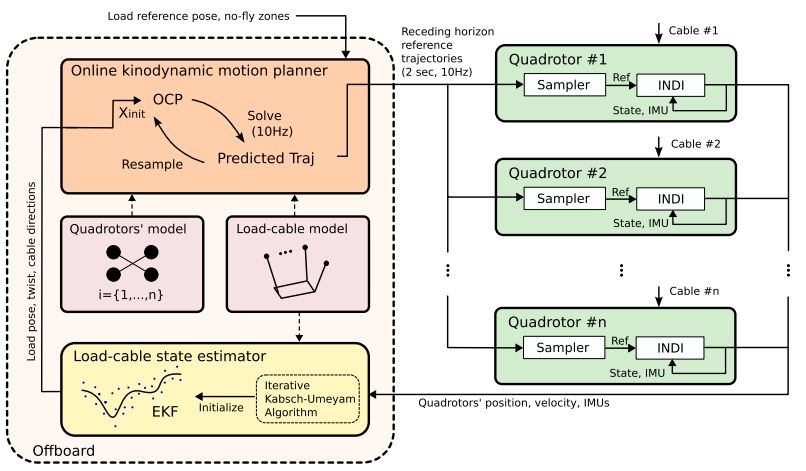
Recently. researchers at the Technical University of Delft came up with what appears to be a quite efficient algorithm for this purpose. In the demonstration video below, it’s easy to see how the quadcopters make short work of even convoluted obstacles while keeping themselves and their mates from getting tangled.
The research by [Sihao Sun] et al. appears in Science Robotics (preprint), in which they detail their trajectory-based framework and its kinodynamic motion planner. In short, this planner considers the whole-body dynamics of the load, the cables, and the quadcopters. An onboard controller for each quadcopter is responsible for translating the higher-level commands into specific changes to its rotor speeds and orientation.
Along with tests of its robustness to various environmental factors, such as wind, the researchers experimented with how many simultaneous quadcopters could work together with their available computing capacity. The answer, so far, is nine units, though they think that the implementation can be further optimized.
Of course, sometimes you just want to watch synchronized drones.
youtube.com/embed/tMvNCUuXai8?…
James likes this.
Il Louvre ingannato da due burloni belgi! Hanno appeso un loro dipinto accanto alla Gioconda
La sicurezza del Louvre è di nuovo sotto accusa dopo che alcuni burloni sono riusciti a ingannare le guardie e ad appendere il loro dipinto nella stessa stanza della Monna Lisa.
Il duo belga Neel e Senne ha guadagnato notorietà online introducendo clandestinamente un loro dipinto nel museo. Il dipinto è finito nella stessa sala in cui era esposto il capolavoro di Leonardo da Vinci, e per qualche tempo è rimasto nascosto al personale del museo.
Secondo le normative, è severamente vietato introdurre opere d’arte o oggetti d’antiquariato al Louvre e i visitatori vengono sottoposti a controlli approfonditi tramite metal detector. Tuttavia, Neil e Senne sono riusciti a eludere il sistema : hanno realizzato una cornice per quadri con mattoncini LEGO di plastica, evitando così sospetti durante i controlli di sicurezza.
L’incidente è avvenuto poche settimane dopo un furto audace: il 19 ottobre, uomini travestiti da operai edili hanno rubato otto gioielli della collezione della Corona francese. Il loro valore è stimato in circa 88 milioni di euro.
In seguito al furto, sono emersi interrogativi sull’impegno del museo in materia di sicurezza. I media francesi hanno osservato che gli esperti sollevano da oltre un decennio preoccupazioni circa le vulnerabilità del suo sistema di sicurezza. Uno degli episodi più eclatanti ha riguardato l’uso della password “LOUVRE” per il server di videosorveglianza nel 2014. Non è chiaro se tutti questi problemi fossero stati completamente risolti al momento del recente furto.
Un rapporto pubblicato la scorsa settimana dalla Corte dei Conti francese ha concluso che dal 2018 al 2024 il Louvre ha dato priorità a progetti “ad alta visibilità e attrattivi” a scapito della manutenzione delle infrastrutture, delle riparazioni e dei miglioramenti della sicurezza. Questa critica è ora particolarmente forte in seguito sia alla rapina che allo scherzo virale.
Non è la prima volta che Neel e Senne dimostrano come usare il travestimento e la sicurezza di sé per entrare in luoghi inaccessibili. All’inizio di quest’anno, hanno fatto notizia per essersi intrufolati gratuitamente alla finale di Champions League fingendosi operai. L’incidente del Louvre non ha fatto che rafforzare l’impressione che anche i luoghi più famosi e sicuri non siano sempre preparati ad affrontare scenari insoliti.
L'articolo Il Louvre ingannato da due burloni belgi! Hanno appeso un loro dipinto accanto alla Gioconda proviene da Red Hot Cyber.
An AI By Any Other Name

While there are many AI programs these days, they don’t all work in the same way. Most large language model “chatbots” generate text by taking input tokens and predicting the next token of the sequence. However, image generators like Stable Diffusion use a different approach. The method is, unsurprisingly, called diffusion. How does it work? [Nathan Barry] wants to show you, using a tiny demo called tiny-diffusion you can try yourself. It generates — sort of — Shakespeare.
For Stable Diffusion, training begins with an image and an associated prompt. Then the training system repeatedly adds noise and learns how the image degenerates step-by-step to noise. At generation time, the model starts with noise and reverses the process, and an image comes out. This is a bit simplified, but since something like Stable Diffusion deals with millions of pixels and huge data sets, it can be hard to train and visualize its operation.
The beauty of tiny-diffusion is that it works on characters, so you can actually see what the denoising process is doing. It is small enough to run locally, if you consider 10.7 million parameters small. It is pretrained on Tiny Shakespeare, so what comes out is somewhat Shakespearean.
The default training reportedly took about 30 minutes on four NVIDIA A100s. You can retrain the model if you like and presumably use other datasets. What’s interesting is that you can visualize the journey the text takes from noise to prose right on the terminal.
Want to dive deeper into diffusion? We can help. Our favorite way to prompt for images is with music.
Sam Altman e suo marito Oliver e il sogno dei bambini geneticamente modificati
La ricerca dell’immortalità è una fissazione che attraversa la Silicon Valley. Allo stesso modo, l’idea di perfezionare i bambini attraverso la modifica genetica rappresenta un’altra ossessione. Sam Altman, l’uomo che ha reso l’intelligenza artificiale familiare al grande pubblico grazie al diffuso utilizzo di ChatGPT, è la mente dietro a questa società considerata controversa e con molteplici interrogativi etici.
Il laureato di Stanford (dichiaratamente gay) e suo marito Oliver Mulherin, fanno parte di un gruppo di miliardari che hanno investito in Preventive, una startup che lavora per mettere al mondo un bambino geneticamente modificato per prevenire una malattia ereditaria.
La proposta, illustrata in un articolo pubblicato sul Wall Street Journal, rischia di suscitare non soltanto un’estesa opposizione da parte della comunità scientifica, ma anche considerevoli difficoltà giuridiche. Modificare i geni degli embrioni al fine di generare bambini è proibito negli Stati Uniti e in altri Paesi. Di conseguenza, Preventive sta valutando l’opzione di operare in giurisdizioni più tolleranti, ad esempio negli Emirati Arabi Uniti.
La Silicon Valley ospita diverse aziende che operano in questo settore. Una corsa alla vendita di tecnologie innovative per modificare il processo riproduttivo tradizionale e creare bambini personalizzati è in atto. L’obiettivo, secondo milionari come Altman, è quello di generare bambini protetti da specifiche malattie ereditarie o con una minore propensione alle malattie cardiovascolari, tuttavia le potenzialità sono ben più estese e includono la creazione di bambini con un’intelligenza superiore, o la possibilità di scegliere caratteristiche fisiche come il colore della pelle o degli occhi.
L’altra figura di spicco dietro Preventive è Brian Armstrong , CEO di Coinbase, che ha accumulato la sua fortuna con le criptovalute. Secondo persone vicine ad Armstrong, l’imprenditore avrebbe preso in considerazione l’idea di lavorare in segreto e presentare un bambino geneticamente modificato per stupire la comunità scientifica prima che potesse opporsi al processo.
“Sono entusiasta di investire in Preventive”, ha scritto sul suo account X. “Oltre 300 milioni di persone in tutto il mondo convivono con malattie genetiche”, ha continuato. “È molto più facile correggere un piccolo numero di cellule prima che la malattia progredisca, come in un embrione”.
Anche Oliver Mulherin , marito di Altman, ha chiarito la sua intenzione di sostenere gli sforzi dell’azienda per la prevenzione delle malattie. “Sam mi sostiene, come sempre, in tutto il mio lavoro e in questa causa”. Ora sono una delle coppie più potenti della Silicon Valley. La loro prima apparizione pubblica insieme è stata a una cena alla Casa Bianca nel 2023, ospitata da Joe Biden. Si sono sposati nel gennaio 2024 alle Hawaii , in una cerimonia intima con pochi invitati.
Mulherin è un ingegnere informatico australiano che ha preso parte a diversi progetti di intelligenza artificiale. Ha lavorato per aziende come Spark Neuro e Broadwing prima di entrare a far parte di Meta, la società madre di Facebook e Instagram, per due anni.
Vivono a Russian Hill, uno dei quartieri più esclusivi di San Francisco, e trascorrono i fine settimana in una casa nella Napa Valley. Intendono donare gran parte del loro patrimonio – circa 3 miliardi di dollari – a cause che possano creare abbondanza attraverso la tecnologia e l’innovazione, e fin dall’inizio hanno chiarito di voler formare una famiglia.
Nel febbraio 2025, hanno confermato la nascita del loro primo figlio tramite maternità surrogata. Per Altman, 40 anni, è stato un punto di svolta. Dice che l’arrivo di suo figlio ha cambiato completamente le sue priorità. “Ricordo di aver avvertito un cambiamento neurochimico nella prima ora , ed è successo così velocemente. È incredibile. Ma ora sarà tutto diverso.”
A rafforzare la sua recente paternità c’è l’accordo raggiunto con Microsoft qualche settimana fa per trasformare OpenAI in un ente di pubblica utilità, valutato circa 500 miliardi di dollari . Microsoft acquisirà una quota del 27% nella società, facilitando la raccolta di capitali e la preparazione della prevista IPO in futuro.
Ciò aumenterebbe ulteriormente la fortuna e la visibilità di una figura rispetto a visionari come Steve Jobs e Bill Gates. Nato a Chicago il 22 aprile 1985, Altman è cresciuto nella periferia di St. Louis, Missouri , consapevole di essere gay fin da giovanissimo, ma non disposto a rivelarlo fino al raggiungimento di una certa maturità.
“Crescere gay nel Midwest negli anni 2000 non era la cosa più cool del mondo”, ha dichiarato in un’intervista del 2016 al New Yorker . Oggi, compare nelle liste delle persone gay più influenti del pianeta, convinto che l’intelligenza artificiale cambierà il mondo in meglio . Resta da vedere se ciò sia vero.
L'articolo Sam Altman e suo marito Oliver e il sogno dei bambini geneticamente modificati proviene da Red Hot Cyber.
Making a Machine to Sort One Million Pounds of LEGO

You know what’s not fun? Sorting LEGO. You know what is fun? Making a machine to sort LEGO! That’s what [LegoSpencer] did, and you can watch the machine do its thing in the video below.
[Spencer] runs us through the process: first, quit your day job so you can get a job playing with LEGO; then research what previous work has been done in this area (plenty, it turns out); and then commit to making your own version both reproducible and extensible.
A sorting machine needs three main features: a feeder to dispense one piece at a time, a classifier to decide the type of piece, and a distributor to route the piece to a bin. Of course, the devil is in the details.
If you want to build your own, you might want to track the new Sorter V2 that is under development. If you are building V1, you can find what you need on GitHub.
Once you’ve got your LEGO sorted, you’re free to take on other projects such as Building A Drivable, Life-Size 3D-Printed LEGO Technic Buggy, Making Steam-Powered LEGO Machines, and Building The DVD Logo Screensaver With LEGO.
youtube.com/embed/tuIczAiV4_w?…
I black hacker chiedono il Riscatto? Checkout.com risponde: finanziamo chi vi dà la caccia
Il servizio di pagamento Checkout.com è stato vittima di un tentativo di estorsione: il gruppo ShinyHuntersha affermato di aver avuto accesso a dati aziendali e ha chiesto un riscatto.
Un’indagine ha rivelato che gli aggressori si erano infiltrati in un vecchio sistema di cloud storage utilizzato dall’azienda da diversi anni. Questo servizio, di proprietà di un fornitore terzo, non era stato correttamente disattivato: è stato questo errore ad aprire la strada alla compromissione.
La violazione non ha coinvolto una piattaforma di pagamento funzionante, bensì un archivio utilizzato prima del 2020. Conteneva documenti interni, materiali per l’onboarding di nuovi clienti e altri file organizzativi.
L’azienda stima che l’incidente abbia interessato meno di un quarto della sua base clienti attiva. Tuttavia, l’infrastruttura di pagamento vera e propria, comprese le credenziali delle carte e l’accesso ai fondi dei commercianti, non è stata interessata: questo segmento non era affatto connesso al sistema vulnerabile.
Checkout.com sottolinea la propria piena responsabilità: il servizio obsoleto avrebbe dovuto essere disattivato e rimosso tempestivamente. L’azienda ha già iniziato a identificare i clienti interessati e li sta contattando direttamente. Sta inoltre collaborando con le forze dell’ordine e gli enti regolatori.
Nonostante le richieste degli estorsori, Checkout.com si è rifiutata di pagare e ha dichiarato di non avere alcuna intenzione di fare concessioni ai criminali.
L’azienda ha invece deciso di devolvere il riscatto a sostegno della ricerca sulla criminalità informatica. I fondi saranno devoluti a due centri universitari, Carnegie Mellon e Oxford, che studiano la criminalità informatica e i suoi metodi di prevenzione.
L’azienda afferma che sicurezza e trasparenza sono alla base della fiducia nel settore dei pagamenti. Checkout.com si impegna a correggere i propri errori, rafforzare la sicurezza e assistere i clienti interessati dall’incidente. I rappresentanti del servizio ricordano ai commercianti che possono contattare i propri referenti aziendali per ulteriore assistenza.
L'articolo I black hacker chiedono il Riscatto? Checkout.com risponde: finanziamo chi vi dà la caccia proviene da Red Hot Cyber.

Antonio Rotelli likes this.
Trump, Hong Kong e la corsa globale a regolamentare le criptovalute
Nel corso del 2024 sono arrivati diversi segnali di un cambio di passo nel rapporto tra istituzioni e criptovalute. Il 6 marzo, il presidente Donald Trump ha firmato un ordine esecutivo che introduce una “riserva strategica di Bitcoin”, impegnando il governo statunitense a non vendere i circa 200.000 BTC già in suo possesso e ad aumentare le scorte senza incidere sul bilancio federale.
Il 18 luglio è stato poi approvato il Genius Act, che definisce un quadro normativo per le stablecoin ancorate al dollaro. Pochi giorni dopo, il 1° agosto, Hong Kong ha reso operativa la sua nuova regolamentazione sulle stablecoin, con un sistema di licenze e requisiti sulle riserve a tutela del rimborso.
Dopo sedici anni di sviluppo in un contesto di sostanziale assenza di controlli pubblici, un settore nato come terreno anarchico e decentralizzato supera oggi i 3,5 trilioni di dollari di capitalizzazione. Le recenti iniziative legislative mostrano come le criptovalute si stiano progressivamente inserendo nell’architettura finanziaria globale.
Due tradizioni intellettuali hanno influenzato questo ecosistema: da un lato la corrente “cypherpunk” degli anni ’90, che vedeva nella crittografia uno strumento per difendere privacy e libertà individuale; dall’altro la riflessione economica ispirata al saggio di Friedrich Hayek del 1976, La denazionalizzazione della moneta. Ripercorrere le teorie di Hayek consente di ricostruire l’evoluzione del denaro, l’origine del monopolio statale sulla coniazione e i tentativi di introdurre forme di valuta privata, oggi replicati nel cyberspazio.
Le prime forme di scambio non nacquero come invenzione governativa, ma come risultato spontaneo delle interazioni tra gruppi umani. Prima del 4000 a.C., comunità di poche centinaia di persone barattavano beni tramite “valute naturali” come bestiame, sale, conchiglie o cereali. Questi mezzi consentivano di conservare valore e facilitare le transazioni, pur presentando limiti legati alla scarsa portabilità e divisibilità.
Con il progresso della metallurgia e la crescita delle città-stato, metalli come oro, argento e rame iniziarono a circolare per le loro caratteristiche fisiche più adatte agli scambi. Le transazioni si basavano sul peso e sulla purezza del metallo, un sistema noto come “moneta a pesatura”.
Il passaggio decisivo avvenne nel VI secolo a.C., quando il Regno di Lidia, nell’odierna Anatolia occidentale, emise le prime monete metalliche standardizzate. La posizione geografica, al centro di importanti rotte commerciali, e la disponibilità del prezioso elettro – una lega naturale di oro e argento presente nei depositi del fiume Paktoros – favorirono questo sviluppo. Le monete recavano il simbolo della dinastia, la testa di un leone, e avevano peso e purezza certificati, riducendo i tempi di valutazione e rendendo più agevoli gli scambi.
Dalla seconda metà del VII secolo a.C., la pratica si diffuse rapidamente alle città-stato dell’Egeo e all’Impero persiano, imponendosi nell’arco di un secolo come modello monetario. Nel V secolo a.C., Grecia, Persia e gran parte del Mediterraneo avevano adottato sistemi di coniazione centralizzati.
Un’evoluzione analoga caratterizza la storia della carta moneta, inizialmente frutto di iniziative private e solo in seguito oggetto di monopolio statale.
L'articolo Trump, Hong Kong e la corsa globale a regolamentare le criptovalute proviene da Red Hot Cyber.
Lo stress degli algoritmo dei social network genera burnaout nei creators
Un nuovo progetto di ricerca ha dimostrato che l’industria dei contenuti online, che ha offerto alle persone migliaia di nuovi modi per guadagnare denaro, sta anche sottoponendo a un notevole stress mentale chi la realizza.
Creatori di video, blogger, streamer e creatori di cortometraggi stanno affrontando sempre più crisi emotive e l’instabilità di questo lavoro rimane una delle principali fonti di stress.
Lo studio è stato condotto dall’iniziativa Creators 4 Mental Health in collaborazione con il gruppo di analisi Lupiani Insights and Strategies. Inizialmente sono state condotte interviste approfondite con 14 autori provenienti da Stati Uniti e Canada, per poi sottoporre a un sondaggio online oltre 540 persone. I risultati sono stati allarmanti: molti partecipanti hanno riportato un grave disagio psicologico e uno su dieci ha ammesso di aver avuto pensieri suicidi.
I creatori di contenuti hanno indicato l’instabilità finanziaria come causa principale del burnout. La maggior parte ha affermato di essere stressata dall’imprevedibilità del proprio reddito. Attribuiscono questo problema alla dipendenza dagli algoritmi : un partecipante ha spiegato che a un certo punto la portata può diminuire dell’80% senza una ragione apparente, lasciando la persona a chiedersi cosa abbia sbagliato. Quando il reddito dipende direttamente dalle statistiche, qualsiasi calo delle visualizzazioni diventa un duro colpo emotivo.
Il monitoraggio ossessivo delle metriche non crea minore pressione. Il 65% degli intervistati ha ammesso di controllare costantemente le statistiche e ritiene che questa abitudine peggiori il proprio benessere. La stanchezza cronica è al terzo posto, con il 62% dei partecipanti che afferma di essersi spinto fino a uno stato che potrebbe essere descritto come burnout.
Tuttavia, solo una minoranza ha accesso al supporto psicologico. Nove intervistati su 10 hanno dichiarato di non riuscire a ottenere supporto professionale, anche se ne avessero bisogno. Per i creativi autonomi, la situazione è ancora più difficile: la mancanza di colleghi professionisti rende le esperienze più isolanti e le opportunità di condivisione sono praticamente inesistenti. Tra il 61% e il 66% dei partecipanti ha ammesso di non aver mai fatto parte di alcuna comunità professionale o di non aver mai partecipato a eventi per creativi.
Anche la fiducia nelle piattaforme su cui gli autori pubblicano i loro lavori è bassa. Un intervistato su cinque ha dichiarato di sentirsi sicuro del social network scelto. I continui cambiamenti degli algoritmi alimentano la paura per il futuro: gli autori non sanno mai come il prossimo aggiornamento influirà sui loro guadagni e sul loro pubblico.
In questo contesto, molti si stanno rivolgendo a strumenti basati sull’intelligenza artificiale. Due terzi degli intervistati utilizzano già l’IA e la trovano utile. Tuttavia, gli atteggiamenti verso le nuove tecnologie sono contrastanti: i partecipanti le considerano utili, ma temono anche potenziali problemi di copyright, accuratezza della rappresentazione e correttezza algoritmica. Queste preoccupazioni erano particolarmente comuni tra coloro che avevano già incontrato gravi difficoltà emotive.
I ricercatori sottolineano che il settore, che ha ispirato milioni di persone per dieci anni, è diventato una fonte di gravi rischi per chi vi lavora quotidianamente. E senza strumenti di supporto, community e regole chiare per la piattaforma, la situazione non potrà che peggiorare.
L'articolo Lo stress degli algoritmo dei social network genera burnaout nei creators proviene da Red Hot Cyber.
The Fastest (68k) Macintosh Might Not Be an Amiga Anymore

Amiga and Atari fans used to lord over their Apple-eating brethren the fact that Cupertino never moved to the most advanced 68k processors — so for a while, thanks to 68060 accelerator cards, the fastest thing running Macintosh software was an Amiga (or Atari). After all these years, the Macintosh community is finally getting the last laugh, as [zigzagjoe] demonstrates an actual Macintosh booting with a 68060 CPU for the first time in a thread on 68KMLA. Video or it didn’t happen? Check it out below.
The Mac in question is a Quadra 650, which is a good choice since it was about the last thing Apple sold before switching to PowerPC, and ran the 68040 processor. [Reinauer] had already produced a 68040-to-68060 socket adapter (the two chips not being pinout compatible), so the hardware part of the battle was already set. Software, however? That was a different story, and where [zigzagjoe] put in the effort.
We’re spoiled by decades of backwards compatibility in the x86 instruction set; Motorola wasn’t as kind back in the day, and the 68060 isn’t fully compatible with the earlier 68040’s instruction set. They did provide a translation that [zigzagjoe] was able to build into his custom ROM, though, which is how he’s able to get the Mac to boot and install System 7.1, the newest version that would boot.
Alas, the full 66 MHz clock speed [zigzagjoe] proved unstable. To make branch prediction work, he had to clock down to 50 MHz. Considering the ‘040 clocked at 25 MHz in the Quadra 650, that’s still a considerable improvement in clock speed.
At 66 MHz and giving up branch prediction, DOOM runs at 16.4 FPS. It slowed down (14.3 FPS) at 50 MHz, and branch prediction. We expected branching to have a greater impact, but apparently not. While DOOM is perhaps not the best benchmark on this hardware, it does answer the most important question you can ask of any bit of kit: yes, it does run DOOM!
While Apple has long since abandoned the 68k in favour of PPC, x86, and finally their own implementation of ARM, there are always enterprising upgraders.
youtube.com/embed/KXSWiKu-ASA?…
Hyundai Paywalls Brake Pad Changes

Changing the pads on your car’s brakes is a pretty straightforward and inexpensive process on most vehicles. However, many modern vehicles having electronic parking brakes giving manufacturers a new avenue to paywall simple DIY repairs.
Most EVs will rarely, if ever, need to replace their mechanical brake pads as in most driving situations the car will be predominantly relying on regenerative braking to slow down. A hot hatch like the Ioniq 5N, however, might go through brakes a lot faster if it spends a lot of time at the track, which is what happened with Reddit user [SoultronicPear].
Much to their chagrin, despite buying the required $60/wk subscription to the National Automotive Service Task Force (NASTF) and the $2,000 interface tool, [SoultronicPear]’s account was suspended because it was not intended for use for anyone but “service professionals.” Not exactly a Right-to-Repair friendly move on Hyundai’s part. After trying a number of different third party tools, they finally found a Harbor Freight T7 bidirectional scan tool was able to issue the parking brake retract command to perform the pad swap, albeit not without throwing some error codes in the process.
Electrification of vehicles should simplify repairs, but manufacturers are using it to do the opposite. Perhaps they should read our Minimal Motoring Manifesto? There is a glimmer of hope in the promises of Slate and Telo, but we’ll have to see if they make it to production first.
(Neural) Networking with a Business Card

A PCB business card is a great way for electrical engineers to impress employers with their design skills, but the software they run can be just as impressive as the card itself. As a programmer with an interest in embedded machine learning, [Dave McKinnon] wanted a card that showcased his skills, so he designed one that runs voice recognition.
[Dave] specifically wanted to run a neural network on his card, but needed to make it small enough to run on a microcontroller. Voice recognition looked like a good fit for this, since audio can be represented with relatively little data, a microphone is cheap and easy to add to a circuit board, and there was already an example of someone running such a voice recognition network on an Arduino. To fit the neural network into 46 kB, it only distinguishes the words “one” through “nine,” and displays its guess on an LED seven-segment display. [Dave] first prototyped the system with an Arduino, then designed the circuit board around an RP2040.
The switch from Arduino to the RP2040 brought with it a mysterious change: it would usually recognize the word “eight,” but none of the other numbers. After much investigation, it turned out that the new circuit was presenting samples at a much higher rate than the older one had, which was throwing the network off. [Dave] increased the sampling period and had the user speak the numbers slowly, which solved the issue.
The microcontroller was well chosen; the RP2040 is good enough for machine learning that there are dev boards explicitly designed for it, and even comparatively less powerful Arduino boards can do surprisingly good voice recognition. On the hardware side, [Dave] cited some of the Linux business cards we’ve seen as inspiration.

Using the Pyroelectric Effect to Identify Broken MLCC Capacitors

Vintage computer hardware can fail in a variety of fascinating ways, with [Bits und Bolts] dealing with an interesting failure mode, in the form of degraded MLCC capacitors on Voodoo 2 graphics cards. These little marvels of miniaturized surface-mount technology enable the placement of ceramic capacitors with very little space required, but as they degrade over time or due to physical damage, they can cause big issues in a circuit.
In the case of the two Voodoo 2 GPUs that [Bits und Bolts] was trying to fix, the clue that something was wrong was graphical glitches, which seemed to be related to something dragging down the 5V rail. Using the standard ‘inject voltage and see what gets hot’ method, he discovered a couple of dead MLCCs and replaced them. But something was still dragging the rail down. Unfortunately, whatever it was wasn’t enough to heat up the part in question, and no sane person wants to desolder hundreds or even thousands of MLCCs on a PCB and see whether it makes a difference.
Ultimately, the pyroelectric effect was used to hunt down the culprit, saving countless hours of work. This is a property of certain naturally electrically polarized crystals, in which the material generates a voltage when heated or cooled. Materials like that used in MLCCs, for example.
With a hot air gun set to 200 °C and aimed at a specific MLCC, it was possible to measure changes not only in resistivity but also in voltage between the 5V rail and ground. The voltage spike was relatively minor for the smaller MLCCs, but the larger ones showed a significant voltage swing of around 2.5mV.
The culprit turned out to be a large MLCC, which showed only a weak pyroelectric effect and a resistivity that didn’t drop as quickly as that of similar MLCCs on the same board. After replacement, the faulty MLCC did indeed measure as faulty, and the card’s 5V rail now showed a healthy resistance level to ground.
In addition to knowing what kind of resistivity you should measure on a PCB’s voltage rails relative to ground, this method provides a fairly painless way to quickly find a dodgy MLCC. Just make sure not to try this method on electrolytic or tantalum. Heating those up won’t go well.
We often treat decoupling capacitors as more art than science, but of course, we shouldn’t. MLCCs can even exhibit the piezoelectric effect, too.
youtube.com/embed/4oZlt9Dl43I?…
Il bollettino di guerra quotidiano delle morti sul lavoro
@Giornalismo e disordine informativo
articolo21.org/2025/11/il-boll…
La strage nell’indifferenza, quella di cui nessuno parla (tranne raramente) e nessuno vuole vedere. Un bollettino di guerra sul lavoro che fa paura. Non fredde statistiche, non freddi numeri, ma
reshared this

The Engineering Behind Valve’s new VR Headset

Valve’s new Steam Frame is what all the well-connected YouTubers are talking about, but most of them are talking about what it’s like to game on it. That’s great content if you’re into it, but not exactly fodder for Hackaday — with one exception. [Gamers Nexus] gives us a half hour of relatively-unedited footage of them just chatting with the engineers behind the hardware.
It’s great stuff right from the get-go: they start with how thermal management drove the PCB design, and put the SoC on the “back” of the chip, sandwiched betwixt heat pipes. We don’t usually think of taking heat through the PCB when building a board, so it’s a neat detail to learn about before these things get into the hands of the usual suspects who will doubtless give us teardown videos in a few months.
From there wanders to power delivery — getting the voltage regulators packaged properly was a challenge, since impedance requirements meant a very tight layout. Anyone who has worked on this kind of SBC might be familiar with that issue, but for those looking in from the outside, it’s a fascinating glimpse at electrical sausage being made. That’s just the first half.
The heat-regulation conversation is partially repeated the next conversation (which seems to have happened first) where they get into the cooling requirements of the LCD screens. This requires less than you might think, as they like to run warm for fast refresh. It’s really more about keeping your face cool. They also they discuss acoustic vibration — you don’t want your integrated audio shaking your IMUs apart — and why the prototype was being blasted with freakin’ laser beams to monitor it.
If you haven’t seen or read any other coverage on the Steam Frame, you’re going to miss some context here, but if you’ve not hid under a rock for that announcement, this is amazing detail to have. We’re hugely impressed that Valve let their engineers out of their cubicle-cave to talk to media.
Sure, it’s not an open-source VR headset, but compared to the deafening silence coming from the likes of Meta, this level of information is still awesome to have.
youtube.com/embed/3NSjvJDe6Ic?…
Ho scoperto che #AIMP ha un tag editor che ti permette di caricare anche un'immagine.
Adesso la mia vita non avrà più senso finché non avrò messo le copertine degli album di provenienza a tutti i miei mp3.
😍
Poliversity - Università ricerca e giornalismo reshared this.
La legge di Onan
@Politica interna, europea e internazionale
L'articolo La legge di Onan proviene da Fondazione Luigi Einaudi.
Politica interna, europea e internazionale reshared this.
Does anybody know how to change the mp3 tags that are displayed by AIMP?
In the image below I'd like to see the "date" tag ("1982") instead of the "album" tag ("Collezione").
#AIMP

Poliversity - Università ricerca e giornalismo reshared this.

L 'Alchimista Digitale
in reply to Max - Poliverso 🇪🇺🇮🇹 • • •