Every AI Subscription Is a Ticking Time Bomb for Enterprise
Every AI lab is losing money serving your company right now. They know it. And they are doing it on purpose.www.thestateofbrand.com
reshared this
Every AI lab is losing money serving your company right now. They know it. And they are doing it on purpose.www.thestateofbrand.com
reshared this
L’UE e le “conversion therapy”: tra tutela dei diritti e retorica propagandistica
#PoliticalNotes
ilglobale.it/2026/05/lue-e-le-…
@politica
ilGlobale - Quotidiano di informazione economica, politica e tecnologicailGlobale.it
reshared this
An old-style graphics system as found on many 8-bit computers and on early PC graphics cards drew its characters by retrieving their bitmaps from a ROM. With a little sideways thinking, [GloriousCow] has exploited this process to make a CGA card perform graphical tricks it was never designed to do.
The CGA card clocks its character ROM continuously across the whole screen, even at the edges where nothing would normally be displayed. By placing the ROM in tandem with a Raspberry Pi Pico 2 they were able to use this ROM clocking as a synchronization signal, and inject whatever pixel data they chose.
The result is a CGA card that can display 60 Hz high-res graphics in text mode, albeit with a very retro one bit color depth. It can overlay the text and the graphics too, because the ROM is still present. One fun result of this is a bouncing DVD logo screensaver, on a DOS PC.
There’s a PCB and a promise of more, meanwhile we suggest you take a look at an impossible feat using a similar technique: NES Doom.
Francesca Romana D’Antuono, copresidente di Volt Europa, lo sa bene: l’umanità è in pericolo. Non per la crisi climatica, le guerre, il costo della vita o i salari bassi. No: siamo invasi dagli alieni di Plutone.
Per questo Volt lancia “Negozio Umano”: l’adesivo per riconoscere negozi, botteghe e attività ancora gestite da esseri umani.
Una parodia? Certo. Ma dietro iniziative come “Negozio Italiano”, promosse nell’area di Roberto Vannacci e arrivate anche in Emilia-Romagna, c’è qualcosa di molto serio: l’idea che una vetrina debba diventare un confine, che il commercio locale si difenda dividendo le persone tra “noi” e “loro”.
Noi pensiamo l’opposto: negozi, artigiani e botteghe si sostengono con affitti sostenibili, accesso al credito, rigenerazione urbana, meno burocrazia e servizi nei quartieri.
Non con bollini identitari.
Il problema non sono gli alieni di Plutone. È chi vede nemici dove ci sono persone.
#NegozioUmano #SatiraPolitica #CommercioLocale #NoAlRazzismo #Vannacci #EuropaFederale #Volt #VoltItalia #VoltEuropa
reshared this
Quegli adesivi sono utilissimi invece, spero arrivino anche a Firenze.
Mi aiuterebbero a scegliere in quali negozi entrare e in quali no e ad evitare che i miei soldi finiscano in mano ad un razzista.
Finalmente Vannacci ne ha fatta una giusta 😁
like this
reshared this
E se domani gli USA spegnessero il cloud? KDE riceve 1,3 milioni dalla Germania
📌 Link all'articolo : redhotcyber.com/post/e-se-doma…
A cura di Marcello Filacchioni
#redhotcyber #news #europa #opensource #kde #sovreigntechfund #sicurezzainformatica
Il Sovereign Tech Fund sostiene KDE con 1,3 milioni di euro per rafforzare l'infrastruttura e migliorare la sicurezza dei componenti chiaveMarcello Filacchioni (Red Hot Cyber)
Cybersecurity & cyberwarfare reshared this.
E noi amiamo la vita se troviamo la via per viverla
Lunedì 25 maggio alle ore 18:00, Centro Studi Sereno Regis, via Garibaldi 13, #Torino.
Mahmud Darwish
Incontro sulla #Palestina tra il dolore e la #Poesia.
Con Martina Marchiò, vicepresidente di #MediciSenzaFrontiere; Tareq Aljabr, poeta e traduttore; Marica Tarantino e Mirca Leccese, di Torino per Gaza.
Proiezione del cortometraggio vincitore del #NazraFilmFestival 2023: Vibration from #Gaza.
Cinciallegra likes this.
reshared this
Le VPN rappresentano strumenti essenziali per la privacy e la sicurezza degli utenti di tutte le età. Nascondendo gli indirizzi IP degli utenti’, le VPN aiutano a proteggere la posizione degli utenti’, ridurre il tracciamento ed evitare la profilazione basata su IP. Le persone utilizzano le VPN per molti motivi diversi: per connettersi da remoto alla rete della propria scuola o del proprio datore di lavoro, per evitare la censura o semplicemente per proteggere la propria privacy e sicurezza online. Sebbene poter accedere alle VPN sia particolarmente importante per i gruppi vulnerabili come attivisti, dissidenti o giornalisti, le VPN migliorano la protezione di base di tutti online.
blog.mozilla.org/netpolicy/202…
In the context of concerns around young people’s interactions with digital technologies, the UK’s Department for Science, Innovation and Technology is consulting on additional measures to prepare young people for ...Svea Windwehr (Open Policy & Advocacy)
reshared this
These days wireless microcontrollers featuring built-in WiFi and Bluetooth are all the rage, with Espressif’s range of ESP32 MCUs being the default option for commercial and hobbyist projects alike. This makes Qualcomm’s recently released QCC74x MCU rather interesting, as specification-wise it would seem to be placed firmly in ESP32 territory.
On the radio side you get 1×1 WiFi 6, Bluetooth 5.4, and IEEE 802.15.4 (e.g. Thread and Zigbee), coupled with a single-core 352 MHz RISC-V CPU with FPU and DSP features and 484 kB of SRAM. The SDK for this MCU is hosted on Codelinaro, featuring the typical FreeRTOS-based stack, though confusingly Bluetooth and Zigbee support are currently marked as ‘not supported’. This might still be in progress.
Where the competition with Espressif feels clear is in the pricing, with the highest-performance evaluation board (QCC748M EVK, pictured above) listed for $13 (before taxes/tariffs). This gets you 8 MB of PSRAM built-in with unspecified link speed, but likely the same QSPI as used for the NOR Flash. USB support is available on this higher-end tier, while absent on the QCC743. Development documentation is also available, and looks fairly complete based on first glance.
Overall the QCC74x looks to be an upgrade to the older and significantly less powerful QCC730 MCU. Depending on software support and final pricing it could make for an interesting competitor to some of Espressif’s modules like its ESP32-C series or ESP32-S2, though the upcoming ESP32-S31 would seem to have it matched or beat on all metrics.
Security Affairs Malware newsletter includes a collection of the best articles and research on malware in the international landscapePierluigi Paganini (Security Affairs)
Cybersecurity & cyberwarfare reshared this.
A new round of the weekly Security Affairs newsletter has arrived! Every week, the best security articles from Security Affairs.Pierluigi Paganini (Security Affairs)
Cybersecurity & cyberwarfare reshared this.
Attackers are exploiting a critical flaw in the WordPress Funnel Builder plugin to inject skimming code into WooCommerce checkout pages.Pierluigi Paganini (Security Affairs)
Cybersecurity & cyberwarfare reshared this.
MCP, A2A e AG-UI: lo stack dei protocolli per agenti AI nel 2026
#tech
spcnet.it/mcp-a2a-e-ag-ui-lo-s…
@informatica
reshared this
Zombie API: il rischio nascosto nelle tue vecchie integrazioni (e come eliminarlo)
#tech
spcnet.it/zombie-api-il-rischi…
@informatica
reshared this
Prezzo: 0 €
Regalo sacchetti aspirapolvere come in foto.
reshared this
A newly disclosed Android 16 design flaw dubbed 'Tiny UDP Cannon' allows any app with basic permissions to bypass VPN lockdown mode and reveal the device's real IP address to remote attackers.dark6 (Secure Bulletin)
reshared this
Attackers compromised the official JDownloader website between May 6-7, 2026, replacing legitimate Windows and Linux installers with malicious versions containing a Python-based Remote Access Trojan.dark6 (Secure Bulletin)
reshared this
Google Project Zero has demonstrated a two-vulnerability chain that silently roots Google Pixel 10 devices without any user interaction, combining a Dolby media framework flaw with a newly discovered VPU kernel driver bug.dark6 (Secure Bulletin)
reshared this
A critical Linux kernel race condition flaw (CVE-2026-46333), dubbed 'ssh-keysign-pwn,' allows local unprivileged attackers to steal SSH private keys and read hashed passwords from /etc/shadow.dark6 (Secure Bulletin)
reshared this
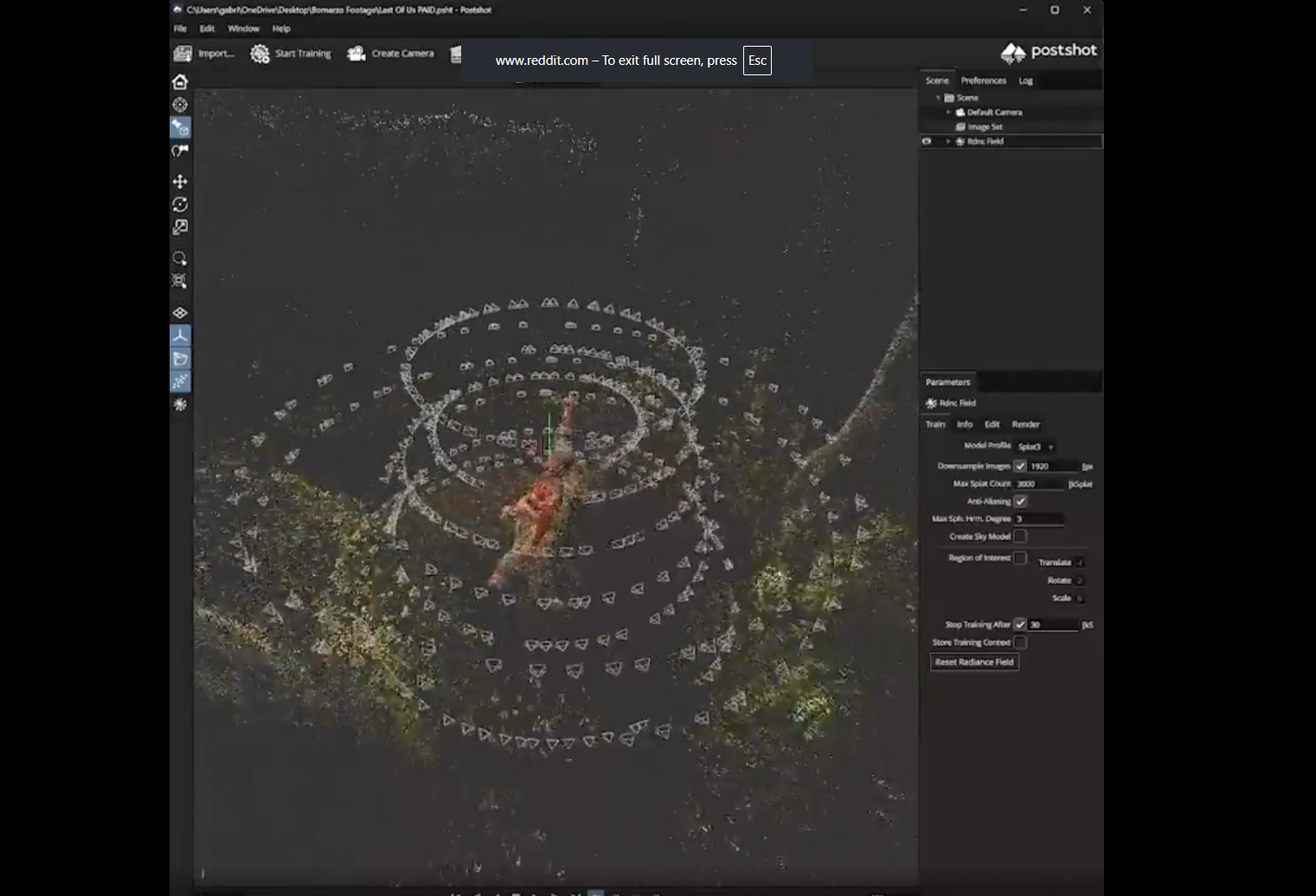
Here’s a pretty clever method [Dung3onlord] used to capture 3D scenes from a PlayStation 5 without needing any specialized software. All that’s needed is a series of high-resolution screenshots, and a few software tools.The process is essentially photogrammetry, it just uses screenshots as the input instead of photographs.
Instead of sneakily yanking 3D assets from the runtime, he fires up the game’s photo mode on his PS5. By capturing an orbiting video of a static scene (making sure to hide the game’s user interface, something photo mode in games is good for) he ends up with a video file whose content — essentially a series of screenshots — can be used to reconstruct the original 3D scene. The workflow [Dung3onlord] uses has rather more steps, but conceptually that’s all there is to it.
The whole process is remarkably similar to photogrammetry, a method of turning a bunch of photographs from different angles into a 3D point cloud. We’ve seen photogrammetry used to digitize objects because point clouds can be turned into 3D models, essentially allowing one to 3D scan an object using little more than a digital camera.
In [Dung3onlord]’s case, once the point cloud is cleaned up and background removed, the scene is used to generate a gaussian splat which is then viewed through a VR headset.
Gaussian splats are especially well-suited to displaying colorful, organic 3D scenes that look pretty fantastic from any angle and are computationally simple to view. Want to see for yourself? [Dung3onlord]’s resulting scene is available to be viewed online.
It’s pretty cool stuff, but using photo mode as a way to capture game content, then reconstructing that content with tools intended for use with photos is an inspired solution. Be sure to check out the video overview of the process below.
Capture and view PS5 characters on a Quest (link and quick guide in the comment)
byu/Dung3onlord inOculusQuest
reshared this
Although Windows CE doesn’t use the NT kernel, it’s similarly designed to run on a wide variety of system architectures. Since the Nintendo 64 uses a MIPS CPU it should basically just run either kernel. You might assume that the N64’s rather limited specs are a bit of a problem, but fortunately Windows CE is designed to run on a digital potato, and requires only a MB of RAM. Since that just so happens to be what the N64 has under the hood, [Throaty Mumbo] was optimistic about getting Windows CE running on the 1990s game console.
The idea for this project came when [Throaty] was tinkering with an IBM Workpad Z50 laptop that uses almost the same CPU as the N64 and also runs Windows CE. Although said laptop is probably a lot more practical of a platform to run Windows on, this didn’t mean that it wouldn’t be a fun challenge.
Since CE was intended to be customized by companies for their own embedded hardware this means that you can use an official SDK, such as Microsoft Windows CE 2.11 Platform Builder. Making Windows CE 2.11 run on an N64 thus involves creating a board-specific configuration and compile that against said SDK.
If you want to give it a shot yourself, the entire project is available on GitHub which is where you find most of the technical details as well. When using a flash cart such as the EverDrive, you can also put applications on the SD card and run them from within the Windows GUI. You’ll still be limited by the N64 hardware, but otherwise the experience is very smooth as the video below demonstrates.
youtube.com/embed/eGS9su_inBY?…
Gli hacker puntano l’acqua potabile: è allarme rosso in Polonia!
📌 Link all'articolo : redhotcyber.com/post/gli-hacke…
A cura di Carolina Vivianti
#redhotcyber #news #sicurezzainformatica #hacking #attacchiinformatici #cybersecurity #malware
Scopri di più sugli attacchi informatici contro impianti di trattamento delle acque in Polonia e come la sicurezza nazionale sia a rischio. Leggi oraCarolina Vivianti (Red Hot Cyber)
Cybersecurity & cyberwarfare reshared this.
Studenti, hacker etici e professionisti in arrivo a Roma anche dall’altra parte del mondo: la RHC Conference è iniziata
📌 Link all'articolo : redhotcyber.com/post/studenti-…
A cura di Marcello Filacchioni
#redhotcyber #news #cybersecurity #sicurezzainformatica #rhcconference
La Red Hot Cyber Conference è alle porte. Scopri di più sulla più grande conferenza italiana di cybersecurity e innovazione tecnologica. Leggi ora!Marcello Filacchioni (Red Hot Cyber)
Cybersecurity & cyberwarfare reshared this.
Intervistare un'AI è una dichiarazione di ignoranza Ho pensato molto prima di decidere di fare questo video.Marco Camisani Calzolari
Cybersecurity & cyberwarfare reshared this.
Basta un singolo byte errato per accedere a milioni di server di posta elettronica
📌 Link all'articolo : redhotcyber.com/post/basta-un-…
A cura di Bajram Zeqiri
#redhotcyber #news #cybersecurity #hacking #vulnerabilita #exim #gnuTLS #TLS #debian #ubuntu
Una vulnerabilità critica è stata scoperta nel server di posta Exim, che consente l'esecuzione di codice remoto senza autenticazione. Scopri di più su come proteggerti.Bajram Zeqiri (Red Hot Cyber)
Cybersecurity & cyberwarfare reshared this.
When you visit certain large sites in Firefox or Safari, the browser may detect your visit and change its behavior. It could be as simple as lying about its identity, or it may totally change how it renders the page. But according to a post by [Den Odel], this isn’t a conspiracy between browsers and big Internet — rather, it is a byproduct of Chrome’s dominance.
Here’s how it goes. Chrome puts out a new feature and everyone rushes to implement it on their site. Maybe the new code breaks other browsers. Maybe the other browser supports the feature, but the website doesn’t detect it correctly or is unaware. Maybe it just relies on some quirk of Chrome. Regardless, Firefox and Safari will change to match the site rather than mess up the user’s experience.
If you want to check it out, Firefox will show you what it does and let you disable specific fixes if you visit the about:compat URL. For Safari, you’ll have to read code from a file named quirks. Bugzilla tracks the fixes for Firefox, if you want more details.
Browsers are huge and complex so even niche browsers, today, usually use one of a handful of rendering engines. It seems that the question isn’t if a big company should control the way the web works. It is more a question of which one is currently dominating.
Given that some of the more famous demos were by Honda and Tesla, you might be forgiven for thinking you need pockets as deep as a car company to get into humanoid robotics — and maybe that was true once, but now Asimov v1 is here. It doesn’t have a positronic brain, and you’ll have to code in the Three Laws for yourself, but at least you have the freedom to, because Asimov is open source.
It’s not exactly cheap: the kit version comes with a target price of $15,000 USD, but they do provide the Bill of Materials on the GitHub repository so you can try and hunt down some deals. Still, compared to the millions poured into these sorts of robots in the early days, we have to consider it accessible. With 25 total degrees of freedom, you’ll have to source a lot of actuators, but at least the onboard compute will be easy to get. Rather than begging CERN for spare positrons, you’ only need a Raspberry 5 and a Radaxa CM5.
No word on if this robot can write a symphony — though we’ve seen software that can — and its 5 kg personal best for squats and 18 kg single-arm lat raises aren’t going to impress the bros at the gym. But hey, at least now you have someone to shake your chair for sim gaming. If you’re wondering what the deal with these androids is, well, so were we.
Pwn2Own Berlin 2026 ended with 47 zero-days and $1.29M in payouts, as DEVCORE dominated the competition across all categories.Pierluigi Paganini (Security Affairs)
reshared this
For the few people who have spent the past weeks living under a security rock, the Linux kernel has found itself the subject of multiple severe bugs in the form of Copy Fail and Dirty Frag, both of which allow for privilege escalation. They’ve made many people very upset, and also potentially put many thousands of systems at risk of exploitation. Worse is that system managers are generally left to twiddle their thumbs while waiting for patches to be rolled out. This is where NVIDIA engineer [Sasha Levin] has proposed a ‘kill switch’ for affected kernel functions.
The basic concept seems rather simple, with this feature merely intercepting a call to the affected function and instead returning a predefined return value. This makes it less extreme than hitting a general SCRAM button on the entire kernel, and could theoretically allow the affected systems to keep running until the patched kernel becomes available.
A disadvantage of this is that it obviously modifies the kernel, patching it in-memory so that you need to reboot the system to clear it. Another potential disadvantage is that it opens a potentially massive attack vector, with people in the Cybersecurity sub-Reddit roundly rejecting the idea. Amidst all the other anxious conversions there is also the concern that this particular patch was at least partially generated by an LLM (Claude Opus 4.7) , so one may hope that if it does gets merged into mainline it’ll at least be properly vetted by multiple pairs of well-caffeinated human eyes.
Con l'aiuto di Palantir, gli agenti dell'ICE hanno a disposizione sui loro iPhone una lista di 20 milioni di persone
L'utilizzo dei sistemi Palantir da parte dell'Immigration and Customs Enforcement (ICE) significa che i funzionari dell'agenzia hanno di fatto a disposizione sui propri iPhone un elenco di 20 milioni di persone, aumentando la velocità con cui l'ICE può individuare le abitazioni da perquisire e le persone da arrestare
adhocfungus likes this.
reshared this
Cybersecurity & cyberwarfare reshared this.
While a punch card is perhaps the lowest-density storage medium available, it has some distinct advantages. As [Bitroller] points out in the write-up of his punch card project, if he was using stainless steel instead of PLA his 3D printed punch cards would likely outlast everything he owns, and survive a five-alarm fire to boot. If you have 16 bytes you really, really don’t want to forget — or are willing to store your private key in a shoe box — this project might be of interest.
The nice part is that he’s built a handy Python script to generate printable files for the punch cards, which encode 16 bytes of information and 4 bytes of error correction using the Reed-Solomon algorithm. That’s just enough for a password and the error correction means up to two bytes can be recovered in the case of read failure.
The reading is where this gets interesting — again, [Bitroller] provides a handy script, but this one uses OpenCV to read the entire punch card at once from a webcam image, using the contrast between a black table and the light-colored PLA cards. It’s massively overkill and would have needed a supercomputer in the days when punch cards were common I/O, but that’s what makes this a great hack.
We only have one quibble: if you use additive manufacturing, can you still call it a punch card? Nothing was punched out, after all.
If you think punch cards are totally irrelevant in the modern day, well, you might be right– but that doesn’t stop us from playing with them. If punch cards make you think of Big Iron in the early days of computing, maybe think further back– they were used for everything from Jacquard looms to the original MIDI.
In between the Nixie tube era of the 50s and 60s and the advent of multi-digit vacuum fluorescent displays (VFDs) common in 80s and 90s consumer technology, there was a brief time in the early 70s where single-digit VFDs were commonplace. Superficially these devices look like Nixie tubes, but have a number of advantages to them including lower voltage, lower power requirements, and lower cost. [maurycyz] recently found a number of these salvaged from old calculators and used them to build a retro-themed clock.
[maurycyz] was not able to find datasheets for this display, but was able to reverse-engineer each of the digits. Similar to vacuum tubes there is a heater which has a few ohms of resistance, and from there each of the segments of the digit can be deduced by probing the 13 signal wires. These are analog devices in some respects, so a lot of experimentation had to go into driving the displays to find their optimal conditions. A quartz crystal was used for timekeeping with an AVR128DA28 microcontroller chosen to provide control for the digits, using seven pins as segment drivers and four as grid drivers. Each digit uses around 0.14 watts, so with all four digits on it can consume a little over half a watt. A simple wood enclosure rounds out the build.
As Nixie supply wears thin, VFDs like this can be an excellent stopgap or replacement while still building retro-themed displays like this clock or this calculator which uses similar VFDs for each digit.
Russia-linked APT group Turla turned its Kazuar malware into a stealthy P2P botnet for long-term access to compromised systems.Pierluigi Paganini (Security Affairs)
Cybersecurity & cyberwarfare reshared this.
Ghostwriter colpisce il governo ucraino con PDF georeferenziati, PicassoLoader e Cobalt Strike
#CyberSecurity
insicurezzadigitale.com/ghostw…
reshared this
The Gentlemen smascherati: quando il secondo gruppo ransomware al mondo diventa la vittima
#CyberSecurity
insicurezzadigitale.com/the-ge…
reshared this
@Informatica (Italy e non Italy)
Il backend del gruppo ransomware-as-a-service The Gentlemen è stato violato e i dati interni pubblicati. Check Point Research ha analizzato il leak, rivelando struttura organizzativa, identità dell'amministratore, tattiche di
@Informatica (Italy e non Italy)
Il gruppo bielorusso Ghostwriter (FrostyNeighbor) ha lanciato una nuova campagna di spear-phishing contro enti governativi e militari ucraini, utilizzando PDF-esca che impersonano Ukrtelecom con geofencing per eludere il
Ora che c'è l'intelligenza artificiale, Mythos, AI superdotate che rilevano bug mai visti prima, nel reparto IT succede più o meno questo quando arrivano le comunicazioni di Security 🚨💀☕🔥☕ 🚬
Le avete mai viste queste comunicazioni che iniziano con: “Patch critica da installare IMMEDIATAMENTE.”
E all’improvviso i sistemisti iniziano a fissare il vuoto come veterani di guerra che hanno già visto troppi venerdì sera andare male. 😶🌫️
E poi dicono: Security vive troppo nel futuro, dicono, tipo : “Hanno scoperto una vulnerabilità gravissima! Gli hacker potrebbero colpirci da un momento all’altro!” 🧠💻🕵️♂️
#redhotcyber #meme4cyber #meme #comico #cyber #hacking #hacker #infosec
Cybersecurity & cyberwarfare reshared this.
Un dipendente di Meta racconta senza filtri l'orrore di lavorare lì in questo momento (sia chiaro: non provo alcuna empatia verso questi privilegiatissimi schiavi volontari, nda).
Piangere sotto la doccia. Prendere un congedo per problemi di salute mentale. Ecco com'è lavorare per il colosso tecnologico durante l'apocalisse del lavoro nell'ambito dell'intelligenza artificiale.
sfstandard.com/pacific-standar…
Crying in the shower. Taking mental health leave. This is what it’s like to work at the tech giant during the AI job apocalypse.Emily Dreyfuss (The San Francisco Standard)
reshared this
parappappero
in reply to ugone • • •ugone
in reply to parappappero • • •