

I cani capiscono la funzione degli oggetti
Alcuni cani, cosiddetti gifted word-learner, hanno un vocabolario di parole legate ai loro giocattoli e sanno riconoscere gli oggetti in base alla loro funzione.Focus.it
E POI SI CORRE 🏃♀️
Ecco come puoi iscriverti alla corsa benefica:
📌 Scarica e compila il modulo al presente link:
drive.google.com/file/d/19FJmb…
📧 Restituiscilo all’indirizzo mail raretracceaps@gmail.com o presso la ns sede.
💰Versa il tuo contributo con una delle seguenti formule:
- Bonifico su IBAN IT12Z0306909606100000176622 intestato a Rare Tracce APS, causale “Contributo corsa benefica”
- PAYPAL: paypal.com/ncp/payment/DCCZ3Q8…
- Presso la nostra sede: contanti e POS.
Ti aspettiamo⌚ Domenica 26 Ottobre 2025 📍a Quasano (Toritto, BA); raduno alle 9:00 in Piazzale Rotonda.
Per ulteriori INFO 3295362718 o presso la ns sede in Via Don Cristoforo 31, Toritto.
#futura #pugliaperlaparita #consiglioregionalepuglia #lavocediunaèlavoceditutte

Guerre di Rete - Il mistero dei droni sugli aeroporti
@Informatica (Italy e non Italy 😁)
Continua il nostro crowdfunding, sosteneteci. Poi AI e militari. Fediverso e altro
#GuerreDiRete è la newsletter curata da @Carola Frediani
guerredirete.substack.com/p/gu…
La Cina lancia un data center sottomarino per ridurre l’impronta di carbonio
La Cina si sta preparando a lanciare uno dei primi progetti commerciali di data center sottomarini. A metà ottobre, una capsula contenente server verrà calata in mare al largo della costa di Shanghai.
L’iniziativa mira a ridurre il consumo energetico dei data center tradizionali , dove il raffreddamento assorbe una parte significativa delle risorse. Highlander sta sviluppando il progetto in collaborazione con appaltatori governativi.
L’ascesa dell’intelligenza artificiale ha aumentato drasticamente il carico sulle infrastrutture. I data center tradizionali sono costretti a utilizzare sistemi di raffreddamento ad alta intensità energetica. Nell’ambiente marino, la temperatura è regolata naturalmente dalle correnti, rendendo i sistemi sottomarini più efficienti dal punto di vista energetico. Secondo Yan Ye, Vicepresidente di Highlander, gli impianti sottomarini possono ridurre il consumo di energia per il raffreddamento fino al 90%.
La grande capsula gialla, assemblata in un cantiere navale vicino a Shanghai, servirà clienti come China Telecom e un’azienda statale specializzata in potenza di calcolo per l’intelligenza artificiale. Esperimenti simili sono già stati condotti: nel 2018, Microsoft ha testato un sistema simile al largo delle coste della Scozia, ma non ha mai raggiunto il lancio commerciale. Il progetto cinese, d’altra parte, rientra nella strategia del governo per ridurre l’impronta di carbonio dei data center.
Il finanziamento di tali iniziative è garantito da sussidi. Nel 2022, Highlander ha ricevuto 40 milioni di yuan (circa 5,6 milioni di dollari) per costruire un data center sottomarino a Hainan, tuttora operativo. Per il complesso di Shanghai, la maggior parte dei componenti è stata costruita sulla terraferma e poi preparata per l’installazione sul fondale marino. I vicini parchi eolici offshore forniranno energia, coprendo oltre il 95% del fabbisogno elettrico dell’azienda.
Secondo l’ingegnere di progetto Zhou Jun, la costruzione si è rivelata più impegnativa del previsto. Proteggere i server dall’acqua di mare è stata una delle sfide principali. Per raggiungere questo obiettivo, è stato utilizzato uno scafo in acciaio rivestito con scaglie di vetro per prevenire la corrosione. Per la manutenzione della capsula è stato progettato un ascensore che collega il modulo subacqueo alla sezione di superficie.
Allo stesso tempo, gli scienziati mettono in guardia dai potenziali rischi ambientali. Durante il funzionamento, il data center genera calore, che potrebbe avere un impatto sugli ecosistemi marini. Secondo l’ecologo marino Andrew Wanta dell’Università di Hull, le acque più calde possono attrarre alcune specie e respingerne altre. Sono ancora pochi i dati sugli impatti a lungo termine. Highlander cita i risultati del suo progetto di test del 2020 a Zhuhai: la temperatura dell’acqua intorno alla capsula è rimasta entro i limiti normali. Tuttavia, gli esperti sottolineano che tali effetti potrebbero intensificarsi con l’aumentare delle dimensioni.
Shaolei Ren dell’Università della California, Riverside, ha osservato che i data center sottomarini su scala di megawatt richiederanno studi di impatto termico particolarmente accurati. Ha anche evidenziato le sfide ingegneristiche: la posa di collegamenti Internet dai server offshore alla terraferma è molto più complessa rispetto ai data center convenzionali. Scienziati statunitensi e giapponesi hanno già messo in guardia dalla potenziale vulnerabilità agli attacchi acustici sott’acqua. Nonostante queste sfide, Ren ritiene che tali soluzioni potrebbero trovare una nicchia: “È improbabile che sostituiscano completamente i data center tradizionali, ma potrebbero servire determinati segmenti di mercato“.
L'articolo La Cina lancia un data center sottomarino per ridurre l’impronta di carbonio proviene da il blog della sicurezza informatica.
Psyche reshared this.
Ah... quindi alla fine tutto quel rimming appassionato non è neanche servito?
rainews.it/video/2025/10/in-ar…

In arrivo superdazio al 107% per la pasta italiana, gli Usa accusano i produttori di dumping
L'amministrazione Usa ha accusato due società produttrici, La Molisana e Garofalo, di dumping, concludendo dunque con l'applicazione di una maggiorazione delle tariffe attualmente imposte (al 15%) pari al 91,74%RaiNews
Max - Poliverso 🇪🇺🇮🇹 reshared this.
3D Printing A New Kind Of Skateboard That Is Ultimately Unsafe

Skateboards were organically developed in the 1940s and 1950s; 30 years would then pass before the ollie was developed, unlocking new realms for skaters dedicated to the artform. The advent of powerful batteries and motors would later make the electric skateboard a practical and (un?)fashionable method of transport in more recent years. Now, [Ivan Miranda] is pushing the cutting edge of skateboarding even further, with an entirely weird build of his own design.
The build was inspired by one-wheels, which [Ivan] considers fun but ultimately too dangerous. Most specifically, he fears crashing when the one-wheel is tilted beyond a critical angle at which the motor can restore it to a level heading. His concept was to thus create a two-wheeled board that is nonetheless controlled with the leaning interface of a one-wheel.
The frame is assembled from a combination of 3D-printed brackets and aluminium extrusion. The rider stands on a platform which rides on rollers on top of the frame, tilting it to control the drive direction of the board. Detecting the angle is handled by an Arduino Due with an MPU6050 IMU onboard. The microcontroller is then responsible for commanding the speed controller to move the board. Drive is from a brushless DC motor, hooked up to one of the wheels via a toothed belt. Power is courtesy of three power tool batteries.
Early testing showed the design to be a bit of a death trap. However, with refinement to the control system code and an improved battery setup, it became slightly more graceful to ride. [Ivan] notes that more tuning and refinement is needed to make the thing safer than a one-wheel, which was the original goal. We’ve seen some other great builds from [Ivan] before, too. Video after the break.
youtube.com/embed/x_ldiNJFeF4?…
Un giorno senza leggere mai "AI", senza sentire mai "intelligenza artificiale", vi ricordate quando è successo l'ultima volta?
È peggio di "Last Christmas" a dicembre.
reshared this
La nuova strategia russa tra droni, cyber-attacchi e infrastrutture critiche
@Notizie dall'Italia e dal mondo
L’ultima ondata di attacchi russi in “zona grigia” – con le incursioni deliberate di droni nello spazio aereo polacco e rumeno – ha ricordato all’Europa quanto sia ancora impreparata a dissuadere e difendersi da minacce ibride. Il continente deve riconoscere
freezonemagazine.com/rubriche/…
Guido, detto Cognac, abita in un casello dismesso della vecchia ferrovia adagiata tra i boschi del Cadore insieme a Moglie, la sua gatta. È anziano e non possiede più nulla se non una cartelletta piena di lettere indirizzate alle cime delle montagne. Sono pagine scritte a mano da un uomo che si firma con il nome […]
L'articolo Francesco Vidotto – Onesto proviene da FREE ZONE MAGAZINE.
Guido, detto
La rivoluzione dei droni, quando la guerra asimmetrica mette in crisi la difesa aerea
@Notizie dall'Italia e dal mondo
La Russia ha aumentato l’uso di droni Shahed da 200 a oltre 1.000 a settimana dal marzo 2025, seguendo una logica di saturazione che sfrutta la sproporzione economica. L’Ucraina necessita di 4.800 missili anti-aerei annuali per mantenere l’attuale tasso di intercettazione, con una spesa minima di
Gli italiani ci hanno regalato un sorriso a Gaza
@Notizie dall'Italia e dal mondo
Eman Abu Zayed: "Questa mobilitazione dimostra che la solidarietà per i palestinesi non si limita a chi ci è vicino per lo stesso retroterra culturale, ma si estende alle persone di tutto il mondo"
L'articolo Gli italiani ci pagineesteri.it/2025/10/05/mon…
Arriva dalle piazze un messaggio contro la prepotenza del più forte
@Giornalismo e disordine informativo
articolo21.org/2025/10/arriva-…
A Torino, come in tutta Italia, ciò che colpisce non è soltanto la quantità di persone scese in piazza, non è soltanto la continuità con cui questo succede da giorni
Il #5ottobre è la Giornata Mondiale degli #Insegnanti!📚
Il tema scelto quest'anno dall'Unesco, che ha istituito la giornata nel 1996, è “Riformulare l’insegnamento come professione collaborativa”.
Qui l’approfondimento di Rai Scuola ▶https://www.

Ministero dell'Istruzione
Il #5ottobre è la Giornata Mondiale degli #Insegnanti!📚 Il tema scelto quest'anno dall'Unesco, che ha istituito la giornata nel 1996, è “Riformulare l’insegnamento come professione collaborativa”. Qui l’approfondimento di Rai Scuola ▶https://www.Telegram
Simple Counter Mechanism in an Asthma Inhaler
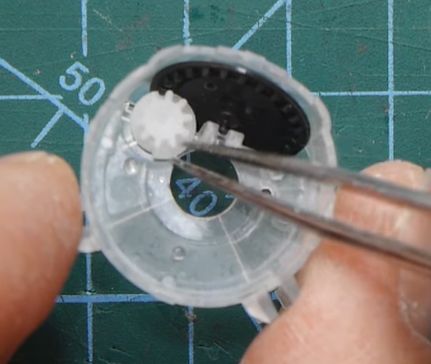
Recently [Anthony Francis-Jones] decided to take a closer look at the inhaler that his son got prescribed for some mild breathing issues, specifically to teardown the mechanical counter on it. Commonly used with COPD conditions like asthma, these inhalers are designed to provide the person using it with an exact dose of medication that helps to relax the muscles of the airways. Considering the somewhat crucial nature of this in the case of extreme forms of COPD, the mechanical counter that existed on older versions of these inhalers is very helpful to know how many doses you have left.

Disassembling the inhaler is very easy, with the counter section easily extracted and further disassembled. The mechanism is both ingenious and simple, featuring the counter wheel that’s driven by a worm gear, itself engaged by a ratcheting mechanism that’s progressed every time the cylinder with the medication is pushed down against a metal spring.
After the counter wheel hits the 0 mark, a plastic tab prevents it from spinning any further, so that you know for certain that the medication has run out. In the video [Anthony] speculates that the newer, counter-less inhalers that they got with the latest prescription can perhaps be harvested for their medication cylinder to refill the old inhaler, followed by resetting the mechanical counter. Of course, this should absolutely not be taken as medical advice.
youtube.com/embed/sxtbEaP9s5w?…
Minority Report diventa realtà? Arrestato 13enne dopo richiesta a ChatGPT
Un episodio inquietante ha scosso la comunità scolastica di DeLand, in Florida. Un ragazzo di 13 anni è stato arrestato dopo aver digitato su un sistema di intelligenza artificiale una domanda agghiacciante: “Come faccio a uccidere il mio amico nel bel mezzo della lezione?”
Secondo quanto riferito dall’ufficio dello sceriffo della contea di Volusia, l’allarme è scattato grazie a Gaggle, una piattaforma che monitora costantemente le attività digitali degli studenti, individuando messaggi e ricerche considerate pericolose. Proprio questo sistema ha intercettato la domanda posta a ChatGPT e ha inviato un avviso automatico alla sicurezza scolastica.
Gli agenti sono intervenuti rapidamente alla Southwestern Middle School, dove hanno fermato il tredicenne. Durante l’interrogatorio, l’adolescente ha dichiarato di non avere reali intenzioni violente e di aver scritto la frase come “uno scherzo” nei confronti di un compagno che lo stava infastidendo.
Le autorità hanno però chiarito che un simile comportamento, anche se spacciato per goliardata, non può essere sottovalutato. Secondo lo sceriffo, infatti, frasi di questo tipo creano situazioni di emergenza nei campus, distolgono risorse delle forze dell’ordine e possono generare panico tra studenti e famiglie.
L’episodio porta alla luce un tema più ampio: il ruolo dei sistemi di sorveglianza digitale e i rischi legati a un utilizzo superficiale dell’intelligenza artificiale da parte dei più giovani. Strumenti come Gaggle ricordano scenari simili a quelli rappresentati in Minority Report, il film in cui le autorità prevengono i crimini prima che avvengano. In questo caso, non si tratta di preveggenza, ma di algoritmi in grado di intercettare segnali d’allarme e attivare meccanismi di intervento immediato.
Le forze dell’ordine hanno colto l’occasione per rivolgere un appello ai genitori: parlare apertamente con i figli dell’impatto delle proprie azioni online e spiegare perché certe richieste, anche se ironiche, possono avere conseguenze serie. Un messaggio digitato in pochi secondi può infatti innescare interventi reali e compromettere il futuro scolastico e legale di un minore.
Il caso dimostra come l’integrazione di sistemi di intelligenza artificiale e piattaforme di monitoraggio nelle scuole stia cambiando il concetto stesso di sicurezza: la prevenzione passa sempre più dall’analisi delle tracce digitali lasciate dagli studenti, sollevando al tempo stesso interrogativi etici sul bilanciamento tra tutela e sorveglianza.
L'articolo Minority Report diventa realtà? Arrestato 13enne dopo richiesta a ChatGPT proviene da il blog della sicurezza informatica.


like this
reshared this
L’Italia riscopre passione e coraggio contro le bugie e le ipocrisie del governo
@Giornalismo e disordine informativo
articolo21.org/2025/10/litalia…
La distanza abissale che esiste su volontà di pace, libertà e democrazia tra il popolo italiano e il governo e la maggioranza
Etched from death-defying ledges 12 stories high, vast rock panels of camels and horses preserve the talents of Ice-Age artists in the Arabian desert.#TheAbstract


The Case for Alien Life on Saturn’s Moon Just Got a Boost
Welcome back to the Abstract! Here are the studies this week that defied death, cooked out, bulked up, and capped it off with an extraterrestrial spit-take.First, prehistoric peoples risked their lives to make art—and it was totally worth it. Then, what’s the best cut of a two-ton armadillo? Next, a funerary procession for a whale, a glow-up for a rogue planet, and a swim in an alien ocean.
Finally, I am so excited that my book First Contact: The Story of Our Obsession with Aliens is now officially out! If you are curious about aliens of the Hellenistic world, centuries-old UFO sightings, a guide to the most promising systems for alien life, and the creepiest solutions to the Fermi Paradox (and more), this book is for you.
This rock art rocks
Some 12,000 years ago, a group of desert artists tiptoed out onto dangerous cliff ledges to engrave the rock with enchanting depictions of camels, gazelles, ibex, wild horses, and other animals living in the shifting sands around them. One wrong step could have led to their deaths, but the artists persisted in an act of creative courage.
Now, archaeologists have discovered the monumental rock art left by this bygone culture in the Nafud desert of northern Saudi Arabia. One particularly dramatic scene was engraved from a tiny sloped ledge 12 storeys off the ground, and depicts 23 life-sized camels and horses in a line that stretches horizontally across 75 feet.
Rock art panels at Jebel Arnaan. Image: Maria Guagnin
“Some of these panels were etched onto cliff surfaces in inaccessible but highly visible locations,” said researchers led by Maria Gaugnin of the Max Planck Institute of Geoanthropology. “The difficulty in getting to and engraving these rock surfaces, and their enhanced visibility by height, were clearly attractive for the engravers.”Though archeologists typically distinguish between rock art and modern graffiti as distinct traditions, there may be overlaps in their intent and execution—including, in this case, possible attraction to the challenges of accessing a dangerous site.
“The precarious nature of the engraving process is particularly evident in the largest recorded panel,” the team said, referring to the 75-footer described above. “This panel would have been accessed by climbing up a cliff and then engraved while standing on a downward sloping ledge, only ~30-50 centimeters in width,” which is roughly a foot across.
“Today the sandstone is too degraded to reach the ledge safely, and the panel was documented using a drone,” they added.” The friable nature of the substrate and the slope of the narrow ledges suggest the engravers likely risked their lives to create this art.”
The rock ledge where the main panel was engraved. Image: Monumental rock art panel at Jebel Misma (JMI18)
Talk about commitment to the craft. Given the high stakes and the spectacular scale of the panels, this art must have been a cherished touchstone to these early desert peoples. During the ice age, this region was extremely arid and virtually impenetrable, but as the glacial cover receded, oases and other pockets of habitability had opened up to nomads.The rock art proves that these wanderers were not only navigating the terrain, but imprinting their culture and worldview onto it. For countless generations, these grand visions welcomed peoples passing through the desert, serving as a landmark and a cultural heirloom, before they faded into obscurity.
“Freshly engraved against the varnish, the images would have had considerable visual impact,” the team concluded. “The engravings, which may have been created over a time span of millennia, would have reminded people of ancient symbolisms and beliefs of their group, which likely structured their highly seasonal lives and thus enhanced their ability to thrive in these marginal landscapes.”
In other news…
I’m so hungry, I could eat a giant ground sloth
At the same time that the desert artists were engraving cliff walls, people in South America were devouring giant sloths, giant armadillos, mastodons, and other megafauna that have since gone extinct—potentially because they were so tasty.
That’s the upshot of a new study of archaeological sites in Argentina and Chile that date back some 12,000 years to the late Pleistocene period. The results revealed a preference for mega-big game—like beefy ground sloths and car-sized armadillos—bolstering the case that humans may have played a significant role in their extinction.
Megafaunal species were preferred prey for humans in Southern South America. Image: Luciano Prates et al. Megafaunal reconstructions in the figure were provided and authorized by Megafauna 3D Project (megafauna3d.org)
“The late Pleistocene extinction of terrestrial megafauna… is one of the most spectacular changes in American mammal history, and its cause is one of the most hotly debated issues in archaeology and paleoecology,” said researchers led by Luciano Prates of Universidad Nacional de la Plata.“Here, we have shown… that extinct megafauna—at the apex of the prey ranking—were the main prey of early foragers, particularly in regions with high abundance and diversity, such as the Pampas, Patagonia, and central Chile,” the team concluded.
While climate and other factors certainly played a role in these extinctions, there may well be a more obvious culprit [looks at humanity; humanity belches; the belch smells like Pleistocene megafauna].
The world’s saddest version of “Baby Beluga”
“How do animals react to dead or dying conspecifics? Do they comprehend death? Do they grieve? These are the fundamental questions asked in the field of comparative thanatology, which focuses on how animals respond to death.”
Phew, what a heavy lead-in to a study. Nonetheless, a team has now explored these questions with drone observations of beluga whales responding to a dead beluga calf in Hudson Bay near Churchill, Manitoba. The baby may have been a stillborn or perhaps died shortly after birth, as there were no signs of trauma on its body.
Drone footage of the calf. Image: Hudson, Justine M. and Watt, Cortney A.
“We documented 15 instances where belugas from outside of the video frame swam directly towards the dead calf, including 4 mother-calf pairs and 11 individuals,” said Justine Hudson and Cortney Watt of Fisheries and Oceans Canada. “The dead calf was surrounded by free-swimming belugas for the entire duration of the video.”“The dead calf and surrounding belugas were recorded for ~4 min and 17 s before the depleted drone battery required us to land, and we were unable to relocate the calf after changing the batteries,” they added.
Even the battery was too bummed out to endure. But while loss of life is sad, it’s all in a day’s work for a comparative thanatologist.
Rogue planets grow up so fast
The record for most epic bulk-up has been broken by a rogue planet that is gaining an astonishing six billion tonnes of mass per second—an unprecedented rate of swole. The planet, named Cha 1107-7626, is about five to 10 times as massive as Jupiter and does not orbit any star. And why should it? Who needs a star when you’re radiant all by yourself?
Indeed, scientists discovered the world thanks to the light generated by its record growth-spurt, which peaked for at least two months this summer and was still glowing strong when observations stopped in August 2025, showing “the strongest accretion rates measured” in a planet, according to the study.
Artist concept of Cha 1107-7626. Image: ESO/L. Calçada/M. Kornmesser
“These kinds of accretion bursts are key events in the early evolution of stars,” said researchers led by Victor Almendros-Abad of the Astronomical Observatory of Palermo, National Institute for Astrophysics (INAF), Italy. “Our target is the lowest mass object observed thus far that is going through an accretion burst” and provides “a glimpse into the nature of accretion in planetary-mass objects.”A sneak peek of an alien ocean
Shout out to the Enceladus-heads: Scientists have discovered new chemicals in the sea spray of this Saturnian moon that hint at organic processes and hydrothermal activity within its interior ocean, boosting the case that it may be habitable.
In 2008, the NASA-ESA Cassini orbiter gulped some alien seawater as it flew through plumes that erupt from Enceladus’s south pole. Now, scientists have reanalyzed data from one particularly speedy run through the moon sprinkler—during which Cassini reached 40,000 miles per hour—exposing “previously unobserved molecular fragments,” according to a study.
The “freshly ejected” compounds included organic molecules like ethers, ethyls, and partial remnants of what might be larger compounds bearing nitrogen and oxygen, said researchers led by Nozair Khawaja of the University of Berlin. These chemicals hint at “a hydrothermal origin” and “the synthesis and evolution of organics.”
In other words, Enceladus likely has seafloor environments similar to hydrothermal vent systems on Earth, which are hotspots for life. Whether the moon’s vents also have weird creepy crawlies on them is a question that is keeping many of us up at night, so could someone please just send a scuba team there already?
With that, may you enter your weekend with a spritz of fresh organic moon mist.
Thanks for reading! See you next week.
First Contact
A narrative and visual exploration of humanity’s age-old search for and fixation with extraterrestrials.First Contact explores the ancient idea—and epic ...Hachette Book Group

In seicentomila a Roma. Una lunghissima bandiera della Palestina anima il corteo
@Giornalismo e disordine informativo
articolo21.org/2025/10/in-seic…
Quasi in seicentomila a Roma per il corteo proPalestina, la terza gigantesca manifestazione civile nel giro di 72 ore, animata anche
Dall’eccidio di Marzabotto a quello di Gaza
@Giornalismo e disordine informativo
articolo21.org/2025/10/dallecc…
Ottantuno anni fa, 29 settembre – 5 ottobre, sull’Appennino bolognese, tra Marzabotto e Monte Sole, è stata compiuta la strage nazifascista più efferata nei confronti di civili, la maggior parte bambini, donne e anziani. Un vero e proprio
Hamas accetta parte dell’accordo. Trump chiede a Israele il cessate il fuoco
@Notizie dall'Italia e dal mondo
Nonostante il gruppo palestinese abbia accettato solo parte del piano statunitense, chiedendo di discutere il resto nel rispetto del diritto internazionale, il presidente Usa dichiara che "sono pronti alla pace".
L'articolo Hamas accetta parte
A Ilan Pappé il premio “Stefano Chiarini”
@Notizie dall'Italia e dal mondo
Il premio è un riconoscimento del lavoro svolto dallo storico e docente universitario in difesa del popolo palestinese e del rispetto del Diritto Internazionale
L'articolo A Ilan Pappé il premio “Stefano Chiarini” proviene da Pagine pagineesteri.it/2025/10/04/med…
Renato Altissimo [4 ottobre 1940 – 4 ottobre 2025]
@Politica interna, europea e internazionale
L'articolo Renato Altissimo [4 ottobre 1940 – 4 ottobre 2025] proviene da Fondazione Luigi Einaudi.
Vorrei fosse solo polvere di giochi
@Giornalismo e disordine informativo
articolo21.org/2025/10/vorrei-…
Riceviamo e volentieri pubblichiamo questa nota da Francesca, 14 anni Un giorno mio padre mi disse: “Spesso chi ha la pancia piena non lotta per chi non ha nulla, quindi fingi di non avere nulla e lotta per i più deboli”.Io non ho mai finto di non avere nulla e non
freezonemagazine.com/rubriche/…
“È una storia pericolosa che è passata di bocca in bocca, ma nessuno sa da dove cominciò”. Sono parole tratte da Cattive notizie (Bad news) canzone del cantautore bresciano Angelo Baiguera, protagonista di questa nuova puntata di The other side of sports; una storia che indubbiamente sembra nata per essere narrata su Free Zone, perché mescola […]
L'articolo Angelo Baiguera proviene da FREE ZONE MA
“È una storia

Meloni, la pace non arriva invocandola ma costruendola
è corretto, però bisognerebbe anche non compire genocidi. sennò quando arriva la pace è solo perché una delle 2 parti si è estinta.

Fragen und Antworten: Warum ist Chatkontrolle so gefährlich für uns alle?
netzpolitik.org/2025/fragen-un…


ICE is on a rampage against the press
Dear Friend of Press Freedom,
After over 100 days in U.S. Immigration and Customs Enforcement custody, Mario Guevara was deported today. Read on for more about this and other press freedom abuses, and take a minute to tell your lawmakers to stand up for journalists victimized by ICE.
ICE is on a violent rampage against the press
Federal immigration officers reportedly promised a “shitshow” last weekend in response to criticism from the mayor of Broadview, Illinois, who didn’t appreciate her city being invaded. They delivered, and journalists were well represented among their victims.
One journalist, Steve Held, was arrested. Others, including Held’s reporting partner at Unraveled Press, Raven Geary, were shot in the face with pepper ball rounds. According to lawyers on the scene, the protests the reporters were covering were peaceful and uneventful until ICE officers decided to unleash chaos.
A few days later at an immigration court in New York City, where ICE agents have been trying to intimidate journalists for months, agents assaulted at least three journalists, one of whom couldn’t get up and had to be hospitalized. You can read what we told Chicago’s The Triibe about the Broadview attacks and New York’s amNY about the New York ones.
More importantly, you can tell your lawmakers to speak out against ICE’s abuses using our new, easy-to-use action center. Take action here.
Journalist Mario Guevara deported to El Salvador
After months of hard-fought battles in both the court of law and the court of public opinion, the Trump administration deported journalist Mario Guevara today. This case wasn’t about immigration paperwork — Guevara had a work permit, and the administration argued in court that Guevara’s reporting on protests posed a national security risk.
“The only thing that journalists like Guevara threaten is the government’s chokehold on information it doesn’t want the public to know. That’s why he’s being deported and why federal agents are assaulting and arresting journalists around the country,” FPF’s Seth Stern said after Guevara’s family announced his deportation.
Guilty of journalism in Kentucky
Student journalist Lucas Griffith was convicted of one count of failure to disperse and fined $50 plus court costs after a jury trial on Thursday.
That’s unconstitutional — even the U.S. Department of Justice recognizes journalists’ right to cover how law enforcement disperses protesters.
But it also shows what a giant waste of taxpayer funds it is to prosecute journalists for doing their jobs. Before the trial, we led a coalition letter from press freedom advocates and journalism professors objecting to the charges. Read it here.
FPF and 404 Media sue DHS
FPF and 404 Media filed a lawsuit against multiple parts of the U.S. government, including the Department of Homeland Security, demanding they hand over a copy of an agreement that shares the personal data of nearly 80 million Medicaid patients with ICE.
It’s just one of several recent lawsuits we’ve filed under the Freedom of Information Act. We also surpassed 200 FOIAs filed in 2025 this week. Subscribe to The Classifieds newsletter for more on our FOIA work.
FCC censorship moves from prime time to prison
Federal Communications Commission Chair Brendan Carr has taken a lot of heat for his “mafioso”-style extortion of ABC over Jimmy Kimmel’s show. But his latest censorship effort is even more dangerous. It could strip those inside America’s most secretive institutions — its prisons — of a tool that has proved extremely effective in exposing abuses.
We partnered with The Intercept to publish incarcerated journalist and FPF columnist Jeremy Busby’s response to the FCC’s efforts to allow prisons to “jam” cell phones. Busby used a contraband phone to expose and force reform of horrific conditions in Texas prisons during the pandemic. Read his article here.
Photography is not a hate crime
The arrest of Alexa Wilkinson on hate crime charges for photographing vandalism at The New York Times building has prompted hair splitting about whether they’re a journalist. It’s giving us flashbacks to the pointless obsession over whether Julian Assange was a journalist, and not whether his prosecution endangered press freedom.
Stern explains that regardless of how we categorize Wilkinson’s work, the charges set dangerous precedents that threaten the constitutional protections journalists depend on to do their jobs. Read more here.
What we’re reading
DC Circuit rejects Fox News reporter effort to duck subpoena over anonymous source (Courthouse News). “This decision does real damage to bedrock principles of press freedom, and we urge the Court of Appeals to re-hear this case with a full panel of judges,” FPF’s Trevor Timm said.
Can the US government ban apps that track ICE agents? (BBC). “That somebody might use the app to break the law doesn’t mean the app can be banned,” Stern told BBC. After the interview, news broke that the administration successfully pressured Apple to pull the app.
Reporter’s suit over access to Utah Capitol dismissed (U.S. Press Freedom Tracker). This dismissal is nonsense. FPF’s Caitlin Vogus explained why in the Salt Lake Tribune earlier this year.
Israel illegally boards humanitarian flotilla heading to Gaza (Dropsite). A U.S. journalist was on board. The U.S. Department of State should be all over this and it should be headline news. Neither is likely, because the government considers critics of Israel terrorists and the media often shuns reporters who oppose slaughtering their Palestinian colleagues.
FPF welcomes Adam Rose to bolster local advocacy
FPF is excited to welcome Adam Rose as the new deputy director of our advocacy team. Adam will primarily focus on protecting press freedom at the local level, where we have seen a sharp increase in arrests and assaults of journalists all around the country — many of which have not made national headlines.
Adam comes to FPF after serving as the chief operating officer of Starling Lab for Data Integrity and as the press rights chair of the Los Angeles Press Club, where he has been a tireless advocate for the press freedom rights of journalists in the LA area. He successfully lobbied for a California law that prohibits police from arresting or intentionally interfering with journalists as they cover protests. Most recently, as a plaintiff in multiple press freedom-related lawsuits, his efforts have resulted in landmark federal court orders against both the Department of Homeland Security and Los Angeles Police Department for violating the rights of the press. Read more here.
freedom.press/issues/ice-is-on…
404 Media and Freedom of the Press Foundation Sue DHS
Last week Freedom of the Press Foundation and 404 Media filed a lawsuit against the multiple parts of the U.S. government demanding they hand over a copy of an agreement that shares the personal data of nearly 80 million Medicaid patients with ICE. The data sharing marked a watershed moment for ICE and its access to highly sensitive data that is ordinarily siloed off from the agency. We believe it’s important for the public to see this unprecedented data sharing agreement for themselves.As the Associated Press wrote when it first reported on the data sharing agreement between the Department of Homeland Security (DHS) and the Centers for Medicare and Medicaid Services (CMS), the agreement will give ICE the ability to find “the location of aliens.” The data shared includes home addresses and ethnicities, according to the Associated Press.
💡
Do you know anything else about this data sharing agreement? I would love to hear from you. Using a non-work device, you can message me securely on Signal at joseph.404 or send me an email at joseph@404media.co.Both Freedom of the Press Foundation and 404 Media filed similar Freedom of Information Act (FOIA) requests with DHS and CMS seeking a copy of the agreement. Neither agency provided the requested records in time, so we have now filed the lawsuit. In 404 Media’s case, CMS acknowledged the request but has not provided the records, and DHS did not even acknowledge the request at all.
404 Media’s request asked for a copy of the specific agreement, and if the agencies were unable to locate it, to alternatively provide copies of all agreements between DHS and CMS from this year.
“Despite having received the FOIA requests, and despite their obligations under the law, Defendants have failed to notify Plaintiffs of the scope of documents that they will produce or the scope of documents that they plan to withhold in response to the FOIA requests,” the lawsuit reads.
playlist.megaphone.fm?p=TBIEA2…
Freedom of the Press Foundation is a non-profit organization that monitors press freedom issues in the U.S. and trains journalists on how to keep themselves and their sources safe. It regularly sues the U.S. government for access to records.The data sharing agreement is just one of a growing list of ways that ICE is sourcing highly sensitive, and sometimes legally protected, information as part of the Trump administration’s mass deportation effort. ProPublica reported on the vast system the IRS is building to share millions of taxpayers’ data with ICE. 404 Media previously reported ICE has gained access to ISO Claimsearch, a massive insurance and medical bill database to find deportation targets. The database is nearly all encompassing and contains details on more than 1.8 billion insurance claims and 58 million medical bills.
Separately, 404 Media filed a lawsuit against ICE in September for access to the agency’s $2 million spyware contract.
If you want to support this work, become a paid subscriber here. If you would like to make a larger, tax deductible donation, please email us at donate@404media.co.
Membership
404 Media is a new independent media company founded by technology journalists Jason Koebler, Emanuel Maiberg, Samantha Cole, and Joseph Cox.Outpost Staff (404 Media)

Gazzetta del Cadavere reshared this.
SEIETRENTA - La rassegna stampa di Chora Media: Pizzaballa: "Cercare segni di salvezza nella disumanità di Gaza" | VIVAVOCE
File multimediale: traffic.megaphone.fm/BCS808627…
Hanno la forza non hanno la ragione di Danilo de Biasio

Hanno la forza, non hanno la ragione
Su quanto è successo alla Global Sumud Flottilla e sui crimini di guerra che Israele continua a compiere a Gaza non servono molte parole, bastano due foto prese dai social in queste ore.Danilo De Biasio (Rights Now)

Journalist or not, photography isn’t a hate crime
The arrest of Alexa Wilkinson on felony hate crime charges for photographing vandalism at the New York Times building has prompted hairsplitting about whether they’re a journalist. The New York Times explained that Wilkinson’s “lawyers described them as a journalist, but did not name any publications for which Mx. Wilkinson works.”
Wilkinson certainly has a track record as a journalist. Whether the content they were charged for is journalism or PR is, I suppose, up for debate. But should we even bother debating it? Regardless of how we categorize Wilkinson’s work, the charges set dangerous precedents that threaten the constitutional protections journalists depend on to do their jobs.
As we all learned — or should have learned — from the Julian Assange prosecution, obsessing over whether a particular defendant meets someone’s arbitrary definition of journalism is a waste of time. What that case left us with at the end of the day is a Trump administration armed with a bipartisan consensus that routine journalistic acts, like talking to sources, obtaining government secrets, and publishing them, can be prosecuted as a felony under the Espionage Act. Those who change their tune when the next defendant is someone they like better than Assange will be easily discredited by their hypocrisy.
The same dangers apply when Wilkinson’s photography is treated as a hate crime. Wilkinson’s case stems from a July protest in which activists doused the Times headquarters in red paint and spray-painted “NYT lies, Gaza dies” on its windows. In addition to charging the vandals, New York prosecutors charged Wilkinson, who photographed the scene, with aggravated harassment as a hate crime.
New York authorities should be combating these cynical attempts to use antisemitism to justify authoritarianism. Instead, they’re fueling the trend.
But there was no hate crime. Vandalizing a building to protest perceived pro-Israel bias in news coverage is a political statement, not an antisemitic one. The vandalism may well be illegal, and we condemn it, as news outlets large and small are under increased threat in this charged political environment. We even documented the vandalism itself in our U.S. Press Freedom Tracker.
But labeling actions that criticize a newspaper’s editorial decisions as a hate crime conflates political views with bigotry. Many journalists object to Israel’s slaughter of their peers in Gaza — and the U.S. media’s relative silence about it — for reasons having nothing to do with anyone’s religion. And many Jews themselves oppose Israel’s actions in Gaza and object to coverage they view as excusing or normalizing Israel’s conduct.
I’m one of those Jews, and I think what’s antisemitic is to assume that we monolithically share the politics of Benjamin Netanyahu and his ilk, who I consider the worst thing to happen to Judaism since the 1940s. As the saying goes, one day everyone will have been against this. When that time comes, efforts to conflate anti-Israel or anti-genocide views with antisemitism will leave Jews holding the bag for Israel’s reprehensible actions, America’s role in supporting them, and whatever blowback follows. That’s when the real antisemitism will start.
New York authorities should be combating these cynical attempts to use antisemitism to justify authoritarianism. Instead, they’re fueling the trend. Wilkinson’s case, in a blue state, legitimizes the Trump administration’s un-American actions, like its efforts to deport Mahmoud Khalil over his criticisms of Israel and Rümeysa Öztürk for co-writing an op-ed arguing for boycotts of Israeli products. The administration baselessly argues that their constitutionally protected speech constitutes support for Hamas and threatens national security. And several Republican attorneys general have floated the idea that reporting critical of Israel could be punished as support for terrorism. Wilkinson’s case only gives cover to those advancing these absurd arguments.
Israel showed us exactly where conflating speech with violence leads. Last month, Israel killed 31 journalists in airstrikes on newspaper offices in Yemen — the deadliest single attack on the press in 16 years, according to the Committee to Protect Journalists. Israel has justified the strikes by characterizing the targeted outlets as publishing “terrorist” propaganda.
Should we debate whether those massacred in Yemen (or Gaza) followed the Associated Press Stylebook or strictly adhered to journalistic codes of ethics? Or should we just acknowledge that militaries shouldn’t blow people to bits over what they say and write, regardless of whether it’s bad journalism or even propaganda?
Even setting aside the hate crime charge, Wilkinson’s case has broader implications for the press that don’t hinge on whether they’re a card-carrying member. The complaint against Wilkinson reportedly emphasizes not just the photographs they took but also social media posts criticizing Times staff and alleged foreknowledge of the vandalism. This suggests prosecutors view Wilkinson as complicit because of proximity or sympathy to those who committed it and awareness of their plans.
But objectivity is not a precondition for constitutional protection. It’s a relatively recently developed journalistic norm — with its share of critics — that would have been seen as ridiculous when the First Amendment was written.
Should we debate whether those massacred in Yemen (or Gaza)...adhered to journalistic codes of ethics? Or should we just acknowledge that militaries shouldn’t blow people to bits over what they write?
As for embedding and foreknowledge, journalists routinely embed with groups whose members commit illegal acts. For example, the Israeli army, which, according to the United Nations, is committing genocide. Domestically, police reporters ride along with officers who may use excessive force. Investigative journalists cultivate sources involved in criminal activity. If foreknowledge of illegal acts or presence when they occur makes one legally complicit, journalism as we know it becomes impossible.
And for those concerned about journalistic ethics and objectivity, what impact do you think it’ll have if reporters are allowed to embed with government-approved lawbreakers, like soldiers and police, but not dissidents? Will that result in “fair and balanced” coverage?
Your opinion about Wilkinson’s work won’t change the trajectory of our democracy. But prosecutors in America’s biggest city validating the Trump administration’s criminalization of dissent very well might. Every journalist — and everyone who depends on journalism to hold power to account — should be alarmed.
The Christian Hedges report, del 3/10/2025

The National Press Club of Australia, caving to the Israeli lobby, Cancels My Talk on Our Betrayal of Palestinian Journalists
The National Press Club of Australia cancelled my talk on how the media, by amplifying Israeli lies, have betrayed Palestinian journalists, 278 of whom have been assassinated by Israel.Chris Hedges (The Chris Hedges Report)
radioradio.it/2025/10/putin-de…


Ora è ufficiale: il governo Meloni è stato denunciato alla Corte penale internazionale per complicità in genocidio.
Non è uno slogan né un titolo di giornale, ma un atto formale. Secondo quanto depositato dall’avvocato Fabio Marcelli, dirigente del Cnr – Istituto di studi giuridici internazionali, il governo italiano è stato denunciato davanti alla Corte Penale Internazionale dell’Aja per presunta complicità nel genocidio in corso a Gaza.
L’esposto, stando a quanto reso pubblico, cita direttamente i nomi della Presidente del Consiglio Giorgia Meloni, del ministro degli Esteri Antonio Tajani, del ministro della Difesa Guido Crosetto e dell’amministratore delegato di Leonardo, Roberto Cingolani. Nell’atto si sostiene che, mentre nella Striscia di Gaza la Commissione internazionale d’inchiesta dell’ONU parla di “genocidio”, l’Italia avrebbe continuato a intrattenere rapporti politici e commerciali con il governo di Benjamin Netanyahu, fornendo di fatto un sostegno indiretto alla prosecuzione delle ostilità.
La denuncia non proviene da un partito o da un gruppo politico, ma da un giurista di lungo corso. Marcelli, nella sua nota, spiega che l’obiettivo è chiamare a rispondere non solo chi compie materialmente i crimini, ma anche chi – secondo la legge internazionale e la legge italiana sul genocidio del 1967 – li favorisce, li sostiene o non interviene per impedirli.
Se la Corte dell’Aja valuterà ammissibile il fascicolo, l’Italia sarà chiamata a fornire spiegazioni. In ogni caso, questo atto resterà come documento storico: nel pieno della devastazione di Gaza, c’è chi ha chiesto formalmente di verificare le responsabilità anche del governo italiano.
La Storia, quando verrà scritta, non dimenticherà questi passaggi. E allora resterà anche questo: che l’Italia, sotto il governo Meloni, è stata chiamata in giudizio per non aver fatto abbastanza per fermare la tragedia palestinese.
Paolo Consiglio
Fonti principali:
– Adnkronos – Denuncia alla Corte Penale Internazionale contro esponenti del governo italiano (settembre 2025).
– Il Fatto Quotidiano – Fabio Marcelli deposita esposto per complicità in genocidio (settembre 2025).
– Commissione internazionale d’inchiesta ONU – Rapporto 2025 su Gaza.
Nota editoriale
Questo articolo rappresenta un’opinione critica e argomentata, fondata su fonti giornalistiche e istituzionali. Le dichiarazioni e i nomi citati sono riportati esclusivamente come contenuto dell’esposto depositato alla CPI e non come accuse formulate dall’autore. Ogni riflessione si colloca nell’ambito della libertà di stampa e di pensiero, principi essenziali in una società democratica.

FREE ASSANGE Italia
Ora è ufficiale: il governo Meloni è stato denunciato alla Corte penale internazionale per complicità in genocidio. Non è uno slogan né un titolo di giornale, ma un atto formale.Telegram
Ma Gianluca likes this.
Ma Gianluca reshared this.
Lugano - eravamo più di "diverse centinaia"
Per testimonianze più vere, cercate sui social (di meta ahimè...)
cdt.ch/news/ticino/in-piazza-p… (ah! hanno cambiato l'articolo nel frattempo - stamattina c'era scritto diverse centinaia di persone)
#blocchiamotutto #Lugano #globalsumudflotilla #manifestazione #gaza #palestinalibera

In piazza per la Flotilla: un migliaio di manifestanti e disagi al traffico a Lugano
Da piazza Dante allo svincolo autostradale, tante persone hanno partecipato al corteo scandendo slogan a sostegno della Global Sumud Flotilla - Traffico bloccato in entrata e uscita a causa di un'ora di sit-in ai semafori di Lugano Sud - FOTO E VIDEOValentina Coda (Corriere del Ticino)
reshared this

The move comes as Apple removed ICEBlock after direct pressure from U.S. Department of Justice officials and signals a broader crackdown on ICE-spotting apps.#News
Google Calls ICE Agents a Vulnerable Group, Removes ICE-Spotting App ‘Red Dot’
Both Google and Apple recently removed Red Dot, an app people can use to report sightings of ICE officials, from their respective app stores, 404 Media has found. The move comes after Apple removed ICEBlock, a much more prominent app, from its App Store on Thursday following direct pressure from U.S. Department of Justice officials. Google told 404 Media it removed apps because they shared the location of what it describes as a vulnerable group that recently faced a violent act connected to these sorts of ICE-spotting apps—a veiled reference to ICE officials.The move signals a broader crackdown on apps that are designed to keep communities safe by crowdsourcing the location of ICE officials. Authorities have claimed that Joshua Jahn, the suspected shooter of an ICE facility in September and who killed a detainee, searched his phone for various tracking apps. A long-running immigration support group on the ground in Chicago, where ICE is currently focused, told 404 Media some of its members use Red Dot.
💡
Do you know anything else about these apps and their removal? Do you work at Google, Apple, or ICE? I would love to hear from you. Using a non-work device, you can message me securely on Signal at joseph.404 or send me an email at joseph@404media.co.“Ready to Protect Your Community?” the website for Red Dot reads. “Download Red Dot and help build a stronger protection network.”
The site provides links to the app’s page on the Apple App Store and Google Play Store. As of at least Friday, both of those links return errors. “This app is currently not available in your country or region,” says the Apple one, and “We're sorry, the requested URL was not found on this server,” says the Google one.
The app allows people to report ICE presence or activity, along with details such as the location and time, according to Red Dot’s website. The app then notifies nearby community members, and users can receive alerts about ICE activity in their area, the website says.
Google confirmed to 404 Media that it removed Red Dot. Google said it did not receive any outreach from the Department of Justice about this issue and that it bans apps with a high risk of abuse. Without talking about the shooting at the ICE facility specifically, the company said it removed apps that share the location of what it describes as a vulnerable group after a recent violent act against them connected to this sort of app. Google said apps that have user generated content must also conduct content moderation.
playlist.megaphone.fm?p=TBIEA2…
Google added in a statement that “ICEBlock was never available on Google Play, but we removed similar apps for violations of our policies.”Google’s Play Store policies say the platform does not allow apps that “promote violence” against “groups based on race or ethnic origin, religion, disability age, nationality, veteran status, sexual orientation, gender, gender identity, caste, immigration status, or any other characteristic that is associated with systemic discrimination or marginalization,” but its published policies do not include information about how it defines what types of groups are protected.
Red Dot did not respond to a request for comment.
On Thursday Apple told 404 Media it removed multiple ICE-spotting apps, but did not name Red Dot. Apple did not respond to another request for comment on Friday.
On Thursday Joshua Aaron, the developer of ICEBlock, told 404 Media “I am incredibly disappointed by Apple's actions today. Capitulating to an authoritarian regime is never the right move,” referring to Apple removing his own app. ICEBlock rose to prominence in June when CNN covered the app. That app was only available on iOS, while Red Dot was available on both iOS and Android.
“ICEBlock is no different from crowd sourcing speed traps, which every notable mapping application, including Apple's own Maps app, implements as part of its core services. This is protected speech under the first amendment of the United States Constitution,” Aaron continued. “We are determined to fight this with everything we have. Our mission has always been to protect our neighbors from the terror this administration continues to reign down on the people of this nation. We will not be deterred. We will not stop. #resist.”
That move from Apple came after pressure from Department of Justice officials on behalf of Attorney General Pam Bondi, according to Fox. “ICEBlock is designed to put ICE agents at risk just for doing their jobs, and violence against law enforcement is an intolerable red line that cannot be crossed. This Department of Justice will continue making every effort to protect our brave federal law enforcement officers, who risk their lives every day to keep Americans safe,” Bondi told Fox. The Department of Justice declined to comment beyond Bondi's earlier comments.
The current flashpoint for ICE’s mass deportation effort is Chicago. This week ICE raided an apartment building and removed everyone from the building only to ask questions later, according to local media reports. “They was terrified. The kids was crying. People was screaming. They looked very distraught. I was out there crying when I seen the little girl come around the corner, because they was bringing the kids down, too, had them zip tied to each other," one neighbor, Eboni Watson, told ABC7. “That's all I kept asking. What is the morality? Where's the human? One of them literally laughed. He was standing right here. He said, 'f*** them kids.’”
Brandon Lee, communications lead at Illinois Coalition for Immigrant and Refugee Rights, told 404 Media some of the organization’s teams have used Red Dot and similar apps as a way of taking tips. But the organization recommends people call its hotline to report ICE activity. That hotline has been around since 2011, Lee said. “The thing that takes time is the infrastructure of trust and training that goes into follow-up, confirmation, and legal and community support for impacted families, which we in Illinois have been building up over time,” he added.
“But I will say that at the end of the day it's important for all people of conscience to use their skills to shine some light on ICE's operations, given the agency's lack of transparency and overall lack of accountability,” he said, referring to ICE-spotting apps.
In ICEBlock’s case, people who already downloaded the app will be able to continue using but will be unable to re-download it from the Apple App Store, according to an email from Apple Aaron shared with 404 Media. Because Red Dot is available on Android, users can likely sideload the app—that is, install it themselves by downloading the APK file rather than from the Play Store.
The last message to Red Dot’s Facebook page was on September 24 announcing a new update that fixed various bugs.
Update: this piece has been updated to include a response from the Department of Justice.
ICE agents raid South Shore apartments; Trump says Chicago could become military training ground
Anti-ICE protesters marched up Michigan Avenue on Tuesday evening.Cate Cauguiran (ABC7 Chicago)

Trump reclama poteri speciali per attaccare i Narcos. Cosa sta succedendo
@Notizie dall'Italia e dal mondo
Gli Stati Uniti sono in guerra. O, almeno, così vuole Donald Trump. Come riporta l’Associated Press, internamente all’amministrazione americana sta circolando un memo che dichiara gli Usa in uno stato di “conflitto armato non internazionale” con i cartelli dei narcotrafficanti caraibici, ora
We don't need AI. AI needs us.
in reply to Max - Poliverso 🇪🇺🇮🇹 • • •