
Record-Breaking Robots at Guinness World Records

If you ever wanted to win a bar bet about a world record, you probably know about the Guinness book for World Records. Did you know, though, that there are some robots in that book? Guinness pointed some out in a recent post.
Ever wonder about the longest table-tennis rally with a robot or the fastest robotic cube solver? No need to wonder anymore.
Our favorite was the fastest robot to solve a puzzle cube. This robot solved the Rubik’s Cube in 103 milliseconds! Don’t blink or you’ll miss it in the video embedded. Of course, the real kudos go to the team that created the robot: [Matthew Patrohay], [Junpei Ota], [Aden Hurd], and [Alex Berta].
Another favorite was the smallest humanoid robot. In order to win this record, the robot must be able to move its shoulders, elbows, knees, and hips just like a human. It also has to be able to walk on two feet. This tiny little guy meets the requirements and stands only 57.6 mm (2.26 in) tall! Created by [Tatsuhiko Mitsuya] in April 2024, this robot can be controlled via Bluetooth.
We’ve seen entries in this category before — check them out in Almost Breaking The World Record For The Tiniest Humanoid Robot, But Not Quite.
youtube.com/embed/Ogchiuuhxnc?…
Mem3nt0 mori – The Hacking Team is back!

In March 2025, Kaspersky detected a wave of infections that occurred when users clicked on personalized phishing links sent via email. No further action was required to initiate the infection; simply visiting the malicious website using Google Chrome or another Chromium-based web browser was enough.
The malicious links were personalized and extremely short-lived to avoid detection. However, Kaspersky’s technologies successfully identified a sophisticated zero-day exploit that was used to escape Google Chrome’s sandbox. After conducting a quick analysis, we reported the vulnerability to the Google security team, who fixed it as CVE-2025-2783.
Acknowledgement for finding CVE-2025-2783 (excerpt from the security fixes included into Chrome 134.0.6998.177/.178)

We dubbed this campaign Operation ForumTroll because the attackers sent personalized phishing emails inviting recipients to the Primakov Readings forum. The lures targeted media outlets, universities, research centers, government organizations, financial institutions, and other organizations in Russia. The functionality of the malware suggests that the operation’s primary purpose was espionage.
We traced the malware used in this attack back to 2022 and discovered more attacks by this threat actor on organizations and individuals in Russia and Belarus. While analyzing the malware used in these attacks, we discovered an unknown piece of malware that we identified as commercial spyware called “Dante” and developed by the Italian company Memento Labs (formerly Hacking Team).
Similarities in the code suggest that the Operation ForumTroll campaign was also carried out using tools developed by Memento Labs.
In this blog post, we’ll take a detailed look at the Operation ForumTroll attack chain and reveal how we discovered and identified the Dante spyware, which remained hidden for years after the Hacking Team rebrand.
Attack chain
Operation ForumTroll attack chain
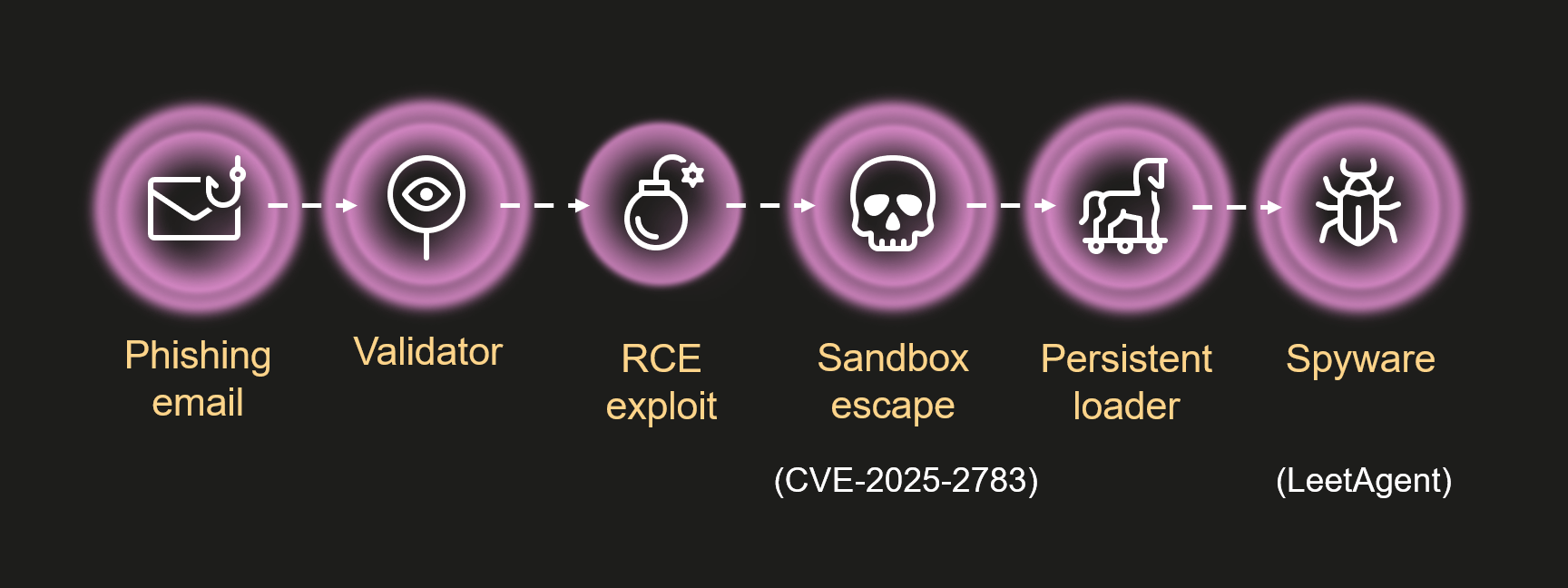
In all known cases, infection occurred after the victim clicked a link in a spear phishing email that directed them to a malicious website. The website verified the victim and executed the exploit.
When we first discovered and began analyzing this campaign, the malicious website no longer contained the code responsible for carrying out the infection; it simply redirected visitors to the official Primakov Readings website.
Therefore, we could only work with the attack artifacts discovered during the first wave of infections. Fortunately, Kaspersky technologies detected nearly all of the main stages of the attack, enabling us to reconstruct and analyze the Operation ForumTroll attack chain.
Phishing email
Example of a malicious email used in this campaign (translated from Russian)
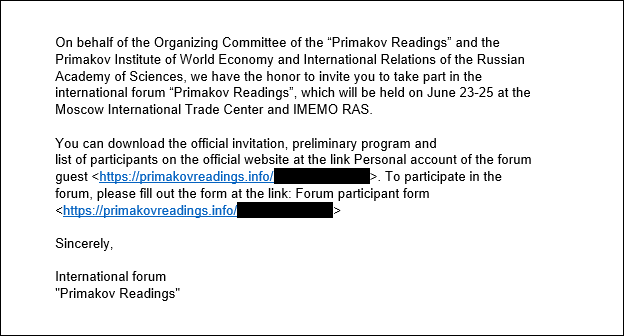
The malicious emails sent by the attackers were disguised as invitations from the organizers of the Primakov Readings scientific and expert forum. These emails contained personalized links to track infections. The emails appeared authentic, contained no language errors, and were written in the style one would expect for an invitation to such an event. Proficiency in Russian and familiarity with local peculiarities are distinctive features of the ForumTroll APT group, traits that we have also observed in its other campaigns. However, mistakes in some of those other cases suggest that the attackers were not native Russian speakers.
Validator
The validator is a relatively small script executed by the browser. It validates the victim and securely downloads and executes the next stage of the attack.
The first action the validator performs is to calculate the SHA-256 of the random data received from the server using the WebGPU API. It then verifies the resulting hash. This is done using the open-source code of Marco Ciaramella’s sha256-gpu project. The main purpose of this check is likely to verify that the site is being visited by a real user with a real web browser, and not by a mail server that might follow a link, emulate a script, and download an exploit. Another possible reason for this check could be that the exploit triggers a vulnerability in the WebGPU API or relies on it for exploitation.
The validator sends the infection identifier, the result of the WebGPU API check and the newly generated public key to the C2 server for key exchange using the Elliptic-curve Diffie–Hellman (ECDH) algorithm. If the check is passed, the server responds with an AES-GCM key. This key is used to decrypt the next stage, which is hidden in requests to bootstrap.bundle.min.js and .woff2 font files. Following the timeline of events and the infection logic, this next stage should have been a remote code execution (RCE) exploit for Google Chrome, but it was not obtained during the attack.
Sandbox escape exploit
List of in-the-wild 0-days caught and reported by Kaspersky
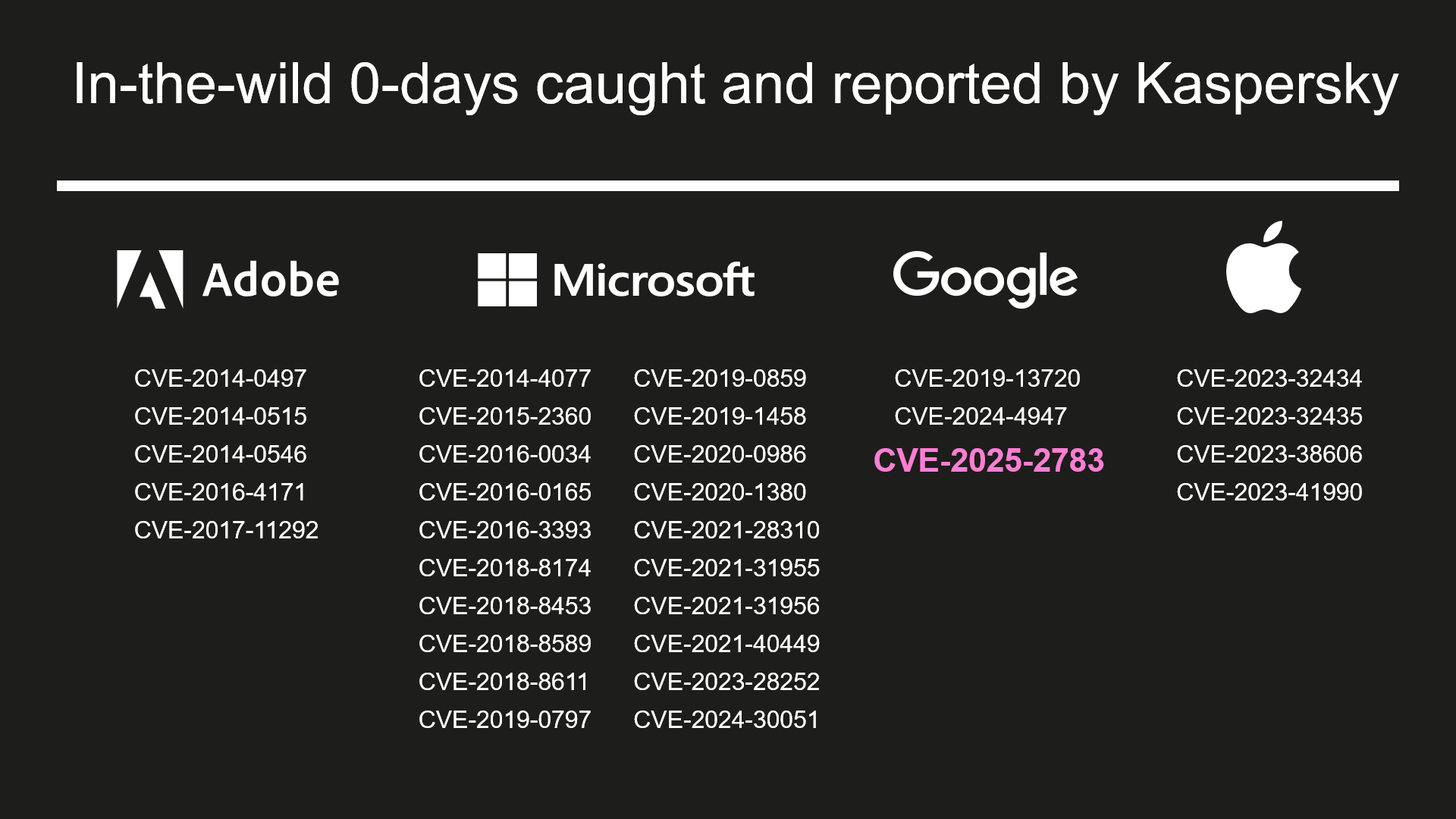
Over the years, we have discovered and reported on dozens of zero-day exploits that were actively used in attacks. However, CVE-2025-2783 is one of the most intriguing sandbox escape exploits we’ve encountered. This exploit genuinely puzzled us because it allowed attackers to bypass Google Chrome’s sandbox protection without performing any obviously malicious or prohibited actions. This was due to a powerful logical vulnerability caused by an obscure quirk in the Windows OS.
To protect against bugs and crashes, and enable sandboxing, Chrome uses a multi-process architecture. The main process, known as the browser process, handles the user interface and manages and supervises other processes. Sandboxed renderer processes handle web content and have limited access to system resources. Chrome uses Mojo and the underlying ipcz library, introduced to replace legacy IPC mechanisms, for interprocess communication between the browser and renderer processes.
The exploit we discovered came with its own Mojo and ipcz libraries that were statically compiled from official sources. This enabled attackers to communicate with the IPC broker within the browser process without having to manually craft and parse ipcz messages. However, this created a problem for us because, to analyze the exploit, we had to identify all the Chrome library functions it used. This involved a fair amount of work, but once completed, we knew all the actions performed by the exploit.
In short, the exploit does the following:
- Resolves the addresses of the necessary functions and code gadgets from dll using a pattern search.
- Hooks the v8_inspector::V8Console::Debug function. This allows attackers to escape the sandbox and execute the desired payload via a JavaScript call.
- Starts executing a sandbox escape when attackers call console.debug(0x42, shellcode); from their script.
- Hooks the ipcz::NodeLink::OnAcceptRelayedMessage function.
- Creates and sends an ipcz message of the type RelayMessage. This message type is used to pass Windows OS handles between two processes that do not have the necessary permissions (e.g., renderer processes). The exploit retrieves the handle returned by the GetCurrentThread API function and uses this ipcz message to relay it to itself. The broker transfers handles between processes using the DuplicateHandle API function.
- Receives the relayed message back using the ipcz::NodeLink::OnAcceptRelayedMessage function hook, but instead of the handle that was previously returned by the GetCurrentThread API function, it now contains a handle to the thread in the browser process!
- Uses this handle to execute a series of code gadgets in the target process by suspending the thread, setting register values using SetThreadContext, and resuming the thread. This results in shellcode execution in the browser process and subsequent installation of a malware loader.
So, what went wrong, and how was this possible? The answer can be found in the descriptions of the GetCurrentThread and GetCurrentProcess API functions. When these functions are called, they don’t return actual handles; rather, they return pseudo handles, special constants that are interpreted by the kernel as a handle to the current thread or process. For the current process, this constant is -1 (also equal to INVALID_HANDLE_VALUE, which brings its own set of quirks), and the constant for the current thread is -2. Chrome’s IPC code already checked for handles equal to -1, but there were no checks for -2 or other undocumented pseudo handles. This oversight led to the vulnerability. As a result, when the broker passed the -2 pseudo handle received from the renderer to the DuplicateHandle API function while processing the RelayMessage, it converted -2 into a real handle to its own thread and passed it to the renderer.
Shortly after the patch was released, it became clear that Chrome was not the only browser affected by the issue. Firefox developers quickly identified a similar pattern in their IPC code and released an update under CVE-2025-2857.
When pseudo handles were first introduced, they simplified development and helped squeeze out extra performance – something that was crucial on older PCs. Now, decades later, that outdated optimization has come back to bite us.
Could we see more bugs like this? Absolutely. In fact, this represents a whole class of vulnerabilities worth hunting for – similar issues may still be lurking in other applications and Windows system services.
To learn about the hardening introduced in Google Chrome following the discovery of CVE-2025-2783, we recommend checking out Alex Gough’s upcoming presentation, “Responding to an ITW Chrome Sandbox Escape (Twice!),” at Kawaiicon.
Persistent loader
Persistence is achieved using the Component Object Model (COM) hijacking technique. This method exploits a system’s search order for COM objects. In Windows, each COM class has a registry entry that associates the CLSID (128-bit GUID) of the COM with the location of its DLL or EXE file. These entries are stored in the system registry hive HKEY_LOCAL_MACHINE (HKLM), but can be overridden by entries in the user registry hive HKEY_CURRENT_USER (HKCU). This enables attackers to override the CLSID entry and run malware when the system attempts to locate and run the correct COM component.
COM hijacking in a nutshell

The attackers used this technique to override the CLSID of twinapi.dll {AA509086-5Ca9-4C25-8F95-589D3C07B48A} and cause the system processes and web browsers to load the malicious DLL.
This malicious DLL is a loader that decrypts and executes the main malware. The payload responsible for loading the malware is encoded using a simple binary encoder similar to those found in the Metasploit framework. It is also obfuscated with OLLVM. Since the hijacked COM object can be loaded into many processes, the payload checks the name of the current process and only loads the malware when it is executed by certain processes (e.g., rdpclip.exe). The main malware is decrypted using a modified ChaCha20 algorithm. The loader also has the functionality to re-encrypt the malware using the BIOS UUID to bind it to the infected machine. The decrypted data contains the main malware and a shellcode generated by Donut that launches it.
LeetAgent
LeetAgent is the spyware used in the Operation ForumTroll campaign. We named it LeetAgent because all of its commands are written in leetspeak. You might not believe it, but this is rare in APT malware. The malware connects to one of its C2 servers specified in the configuration and uses HTTPS to receive and execute commands identified by unique numeric values:
- 0xC033A4D (COMMAND) – Run command with cmd.exe
- 0xECEC (EXEC) – Execute process
- 0x6E17A585 (GETTASKS) – Get list of tasks that agent is currently executing
- 0x6177 (KILL) – Stop task
- 0xF17E09 (FILE \x09) – Write file
- 0xF17ED0 (FILE \xD0) – Read file
- 0x1213C7 (INJECT) – Inject shellcode
- 0xC04F (CONF) – Set communication parameters
- 0xD1E (DIE) – Quit
- 0xCD (CD) – Change current directory
- 0x108 (JOB) – Set parameters for keylogger or file stealer
In addition to executing commands received from its C2, it runs keylogging and file-stealing tasks in the background. By default, the file-stealer task searches for documents with the following extensions: *.doc, *.xls, *.ppt, *.rtf, *.pdf, *.docx, *.xlsx, *.pptx.
The configuration data is encoded using the TLV (tag-length-value) scheme and encrypted with a simple single-byte XOR cipher. The data contains settings for communicating with the C2, including many settings for traffic obfuscation.
In most of the observed cases, the attackers used the Fastly.net cloud infrastructure to host their C2. Attackers frequently use it to download and run additional tools such as 7z, Rclone, SharpChrome, etc., as well as additional malware (more on that below).
The number of traffic obfuscation settings may indicate that LeetAgent is a commercial tool, though we have only seen ForumTroll APT use it.
Finding Dante
In our opinion, attributing unknown malware is the most challenging aspect of security research. Why? Because it’s not just about analyzing the malware or exploits used in a single attack; it’s also about finding and analyzing all the malware and exploits used in past attacks that might be related to the one you’re currently investigating. This involves searching for and investigating similar attacks using indicators of compromise (IOCs) and tactics, techniques, and procedures (TTPs), as well as identifying overlaps in infrastructure, code, etc. In short, it’s about finding and piecing together every scrap of evidence until a picture of the attacker starts to emerge.
We traced the first use of LeetAgent back to 2022 and discovered more ForumTroll APT attacks on organizations and individuals in Russia and Belarus. In many cases, the infection began with a phishing email containing malicious attachments with the following names:
- Baltic_Vector_2023.iso (translated from Russian)
- DRIVE.GOOGLE.COM (executable file)
- Invitation_Russia-Belarus_strong_partnership_2024.lnk (translated from Russian)
- Various other file names mentioning individuals and companies
In addition, we discovered another cluster of similar attacks that used more sophisticated spyware instead of LeetAgent. We were also able to track the first use of this spyware back to 2022. In this cluster, the infections began with phishing emails containing malicious attachments with the following names:
- SCAN_XXXX_<DATE>.pdf.lnk
- <DATE>_winscan_to_pdf.pdf.lnk
- Rostelecom.pdf.lnk (translated from Russian)
- Various others
The attackers behind this activity used similar file system paths and the same persistence method as the LeetAgent cluster. This led us to suspect that the two clusters might be related, and we confirmed a direct link when we discovered attacks in which this much more sophisticated spyware was launched by LeetAgent.
Connection between LeetAgent and commercial spyware called Dante
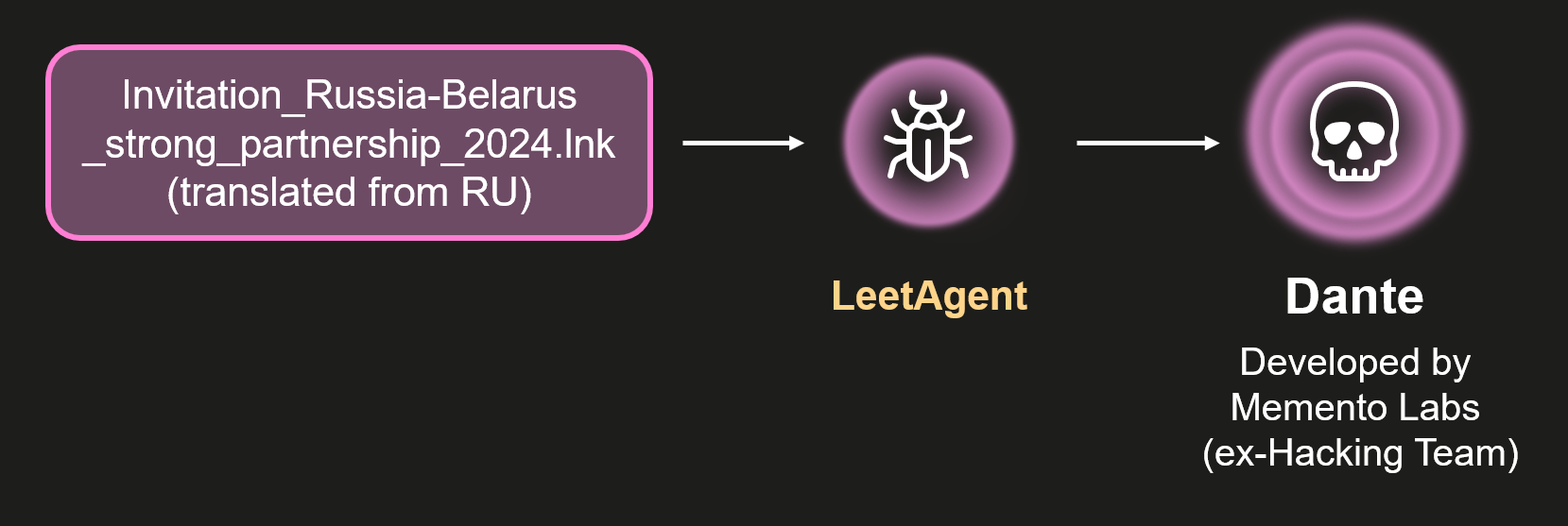
After analyzing this previously unknown, sophisticated spyware, we were able to identify it as commercial spyware called Dante, developed by the Italian company Memento Labs.
The Atlantic Council’s Cyber Statecraft Initiative recently published an interesting report titled “Mythical Beasts and where to find them: Mapping the global spyware market and its threats to national security and human rights.” We think that comparing commercial spyware to mythical beasts is a fitting analogy. While everyone in the industry knows that spyware vendors exist, their “products” are rarely discovered or identified. Meanwhile, the list of companies developing commercial spyware is huge. Some of the most famous are NSO Group, Intellexa, Paragon Solutions, Saito Tech (formerly Candiru), Vilicius Holding (formerly FinFisher), Quadream, Memento Labs (formerly Hacking Team), negg Group, and RCS Labs. Some are always in the headlines, some we have reported on before, and a few have almost completely faded from view. One company in the latter category is Memento Labs, formerly known as Hacking Team.
Hacking Team (also stylized as HackingTeam) is one of the oldest and most famous spyware vendors. Founded in 2003, Hacking Team became known for its Remote Control Systems (RCS) spyware, used by government clients worldwide, and for the many controversies surrounding it. The company’s trajectory changed dramatically in 2015 when more than 400 GB of internal data was leaked online following a hack. In 2019, the company was acquired by InTheCyber Group and renamed Memento Labs. “We want to change absolutely everything,” the Memento Labs owner told Motherboard in 2019. “We’re starting from scratch.” Four years later, at the ISS World MEA 2023 conference for law enforcement and government intelligence agencies, Memento Labs revealed the name of its new surveillance tool – DANTE. Until now, little was known about this malware’s capabilities, and its use in attacks had not been discovered.
Excerpt from the agenda of the ISS World MEA 2023 conference (the typo was introduced on the conference website)

The problem with detecting and attributing commercial spyware is that vendors typically don’t include their copyright information or product names in their exploits and malware. In the case of the Dante spyware, however, attribution was simple once we got rid of VMProtect’s obfuscation and found the malware name in the code.
Dante spyware name in the code
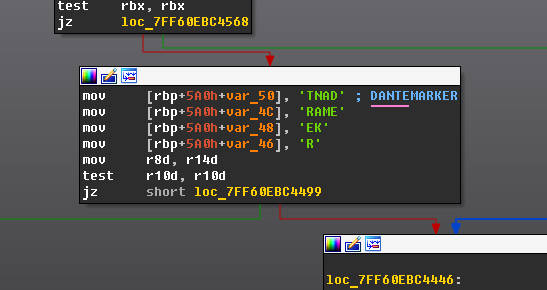
Dante
Of course, our attribution isn’t based solely on the string “Dante” found in the code, but it was an important clue that pointed us in the right direction. After some additional analysis, we found a reference to a “2.0” version of the malware, which matches the title of the aforementioned conference talk. We then searched for and identified the most recent samples of Hacking Team’s Remote Control Systems (RCS) spyware. Memento Labs kept improving its codebase until 2022, when it was replaced by Dante. Even with the introduction of the new malware, however, not everything was built from scratch; the later RCS samples share quite a few similarities with Dante. All these findings make us very confident in our attribution.
Why did the authors name it Dante? This may be a nod to tradition, as RCS spyware was also known as “Da Vinci”. But it could also be a reference to Dante’s poem Divine Comedy, alluding to the many “circles of hell” that malware analysts must pass through when detecting and analyzing the spyware given its numerous anti-analysis techniques.
First of all, the spyware is packed with VMProtect. It obfuscates control flow, hides imported functions, and adds anti-debugging checks. On top of that, almost every string is encrypted.
VMProtect anti-debugging technique
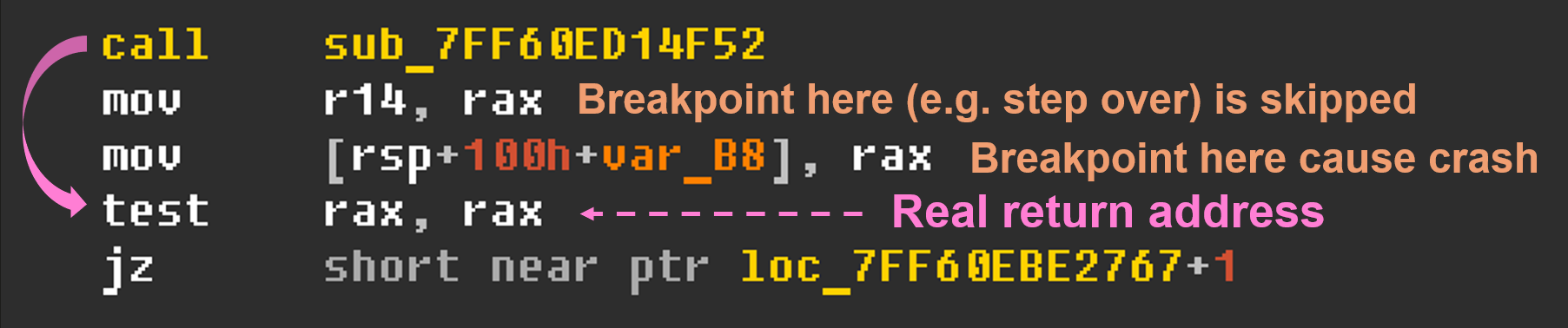
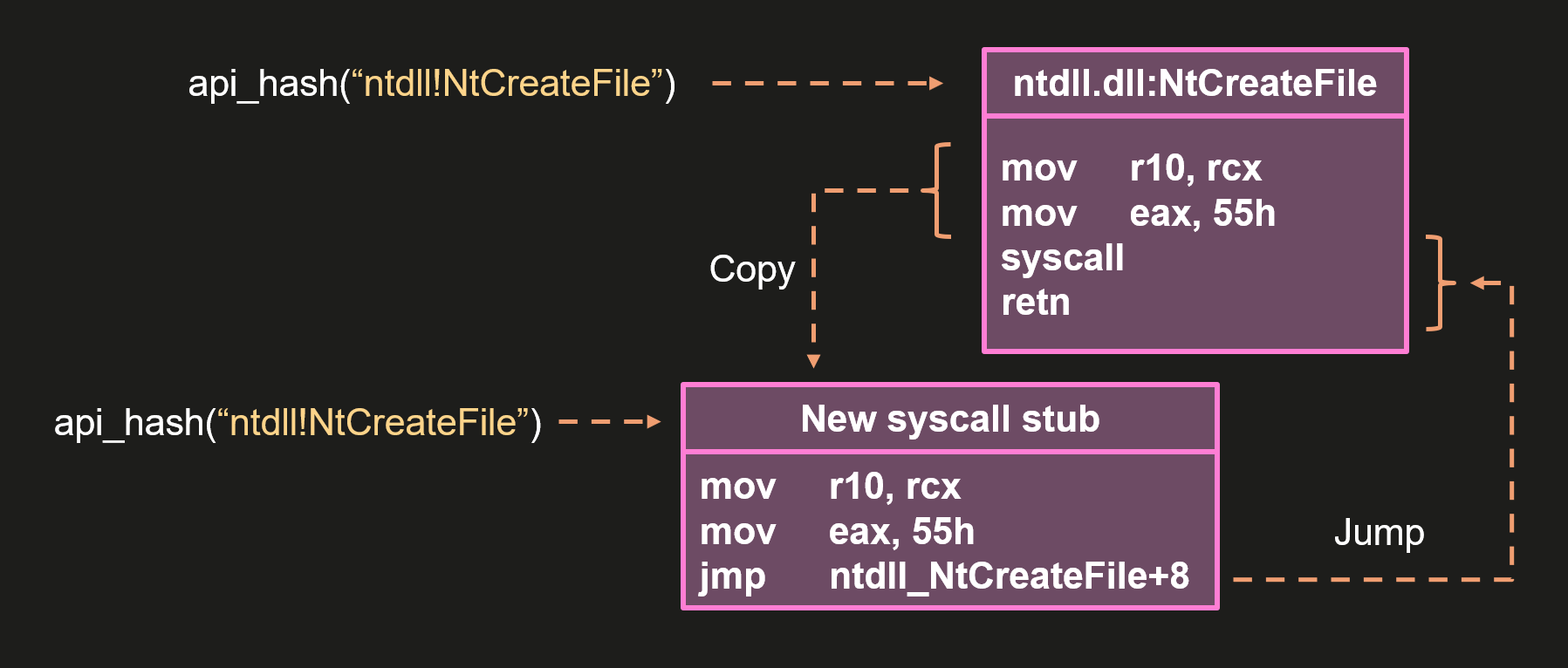
To protect against dynamic analysis, Dante uses the following anti-hooking technique: when code needs to execute an API function, its address is resolved using a hash, its body is parsed to extract the system call number, and then a new system call stub is created and used.
Dante anti-hooking technique (simplified)
In addition to VMProtect’s anti-debugging techniques, Dante uses some common methods to detect debuggers. Specifically, it checks the debug registers (Dr0–Dr7) using NtGetContextThread, inspects the KdDebuggerEnabled field in the KUSER_SHARED_DATA structure, and uses NtQueryInformationProcess to detect debugging by querying the ProcessDebugFlags, ProcessDebugPort, ProcessDebugObjectHandle, and ProcessTlsInformation classes.
To protect itself from being discovered, Dante employs an interesting method of checking the environment to determine if it is safe to continue working. It queries the Windows Event Log for events that may indicate the use of malware analysis tools or virtual machines (as a guest or host).
The strings Dante searches for in the event logs

It also performs several anti-sandbox checks. It searches for “bad” libraries, measures the execution times of the sleep() function and the cpuid instruction, and checks the file system.
Some of these anti-analysis techniques may be a bit annoying, but none of them really work or can stop a professional malware analyst. We deal with these techniques on an almost daily basis.
After performing all the checks, Dante does the following: decrypts the configuration and the orchestrator, finds the string “DANTEMARKER” in the orchestrator, overwrites it with the configuration, and then loads the orchestrator.
The configuration is decrypted from the data section of the malware using a simple XOR cipher. The orchestrator is decrypted from the resource section and poses as a font file. Dante can also load and decrypt the orchestrator from the file system if a newer, updated version is available.
The orchestrator displays the code quality of a commercial product, but isn’t particularly interesting. It is responsible for communication with C2 via HTTPs protocol, handling modules and configuration, self-protection, and self-removal.
Modules can be saved and loaded from the file system or loaded from memory. The infection identifier (GUID) is encoded in Base64. Parts of the resulting string are used to derive the path to a folder containing modules and the path to additional settings stored in the registry.
An example of Dante’s paths derivation

The folder containing modules includes a binary file that stores information about all downloaded modules, including their versions and filenames. This metadata file is encrypted with a simple XOR cipher, while the modules are encrypted with AES-256-CBC, using the first 0x10 bytes of the module file as the IV and the key bound to the machine. The key is equal to the SHA-256 hash of a buffer containing the CPU identifier and the Windows Product ID.
To protect itself, the orchestrator uses many of the same anti-analysis techniques, along with additional checks for specific process names and drivers.
If Dante doesn’t receive commands within the number of days specified in the configuration, it deletes itself and all traces of its activity.
At the time of writing this report, we were unable to analyze additional modules because there are currently no active Dante infections among our users. However, we would gladly analyze them if they become available. Now that information about this spyware has been made public and its developer has been identified, we hope it won’t be long before additional modules are discovered and examined. To support this effort, we are sharing a method that can be used to identify active Dante spyware infections (see the Indicators of compromise section).
Although we didn’t see the ForumTroll APT group using Dante in the Operation ForumTroll campaign, we have observed its use in other attacks linked to this group. Notably, we saw several minor similarities between this attack and others involving Dante, such as similar file system paths, the same persistence mechanism, data hidden in font files, and other minor details. Most importantly, we found similar code shared by the exploit, loader, and Dante. Taken together, these findings allow us to conclude that the Operation ForumTroll campaign was also carried out using the same toolset that comes with the Dante spyware.
Conclusion
This time, we have not one, but three conclusions.
1) DuplicateHandle is a dangerous API function. If the process is privileged and the user can provide a handle to it, the code should return an error when a pseudo-handle is supplied.
2) Attribution is the most challenging part of malware analysis and threat intelligence, but also the most rewarding when all the pieces of the puzzle fit together perfectly. If you ever dreamed of being a detective as a child and solving mysteries like Sherlock Holmes, Miss Marple, Columbo, or Scooby-Doo and the Mystery Inc. gang, then threat intelligence might be the right job for you!
3) Back in 2019, Hacking Team’s new owner stated in an interview that they wanted to change everything and start from scratch. It took some time, but by 2022, almost everything from Hacking Team had been redone. Now that Dante has been discovered, perhaps it’s time to start over again.
Full details of this research, as well as future updates on ForumTroll APT and Dante, are available to customers of the APT reporting service through our Threat Intelligence Portal.
Contact: intelreports@kaspersky.com
Indicators of compromise
Kaspersky detections
Exploit.Win32.Generic
Exploit.Win64.Agent
Trojan.Win64.Agent
Trojan.Win64.Convagent.gen
HEUR:Trojan.Script.Generic
PDM:Exploit.Win32.Generic
PDM:Trojan.Win32.Generic
UDS:DangerousObject.Multi.Generic
Folder with modules
The folder containing the modules is located in %LocalAppData%, and is named with an eight-byte Base64 string. It contains files without extensions whose names are also Base64 strings that are eight bytes long. One of the files has the same name as the folder. This information can be used to identify an active infection.
Loader
7d3a30dbf4fd3edaf4dde35ccb5cf926
3650c1ac97bd5674e1e3bfa9b26008644edacfed
2e39800df1cafbebfa22b437744d80f1b38111b471fa3eb42f2214a5ac7e1f13
LeetAgent
33bb0678af6011481845d7ce9643cedc
8390e2ebdd0db5d1a950b2c9984a5f429805d48c
388a8af43039f5f16a0673a6e342fa6ae2402e63ba7569d20d9ba4894dc0ba59
Dante
35869e8760928407d2789c7f115b7f83
c25275228c6da54cf578fa72c9f49697e5309694
07d272b607f082305ce7b1987bfa17dc967ab45c8cd89699bcdced34ea94e126
VFETs are (Almost) Solid State Tubes

We always enjoy videos from [w2aew]. His recent entry looks at vertical or VFETs, which are, as he puts it, a JFET that thinks it is a triode. He clearly explains how the transistor works as a conductor unless you bias the gate to form a depletion zone.
The transistors have a short channel, which means they conduct quite well. The low gate resistance and capacitance mean the devices can also switch very quickly. These devices were once in vogue for audio applications. However, they’d fallen out of favor until recently. The reason is that they work quite well in switching power supplies.
How good is the on resistance? So good that his meter reported the probes were shorted instead of measuring the resistance. Pretty good. We’ve seen these VFET transistors used as switches to drive magnetic field coils many years ago and they replaced much more complex circuitry.
The curve tracer in the video is a beautiful instrument of its own. The digital displays give it a high tech yet retro look. A curve tracer, if you haven’t used one, plots stepped voltages against current flowing, and is very useful for examining semiconductor devices. While not as fancy, it is possible to make one to connect to a scope quite easily.
We are pretty sure that it is a Tektronix 576. We watched a repair of a similar unit, the 577, if you’d like to see some (probably) similar insides.
youtube.com/embed/93ke5wM0gZ0?…
Hackaday Links: October 26, 2025

There was a bit of a kerfuffle this week with the news that an airliner had been hit by space junk. The plane, a United Airlines 737, was operating at 36,000 feet on a flight between Denver and Los Angeles when the right windscreen was completely shattered by the impact, peppering the arm of one pilot with bits of glass. Luckily, the heavily reinforced laminated glass stayed intact, but the flight immediately diverted to Salt Lake City and landed safely with no further injuries. The “space junk” report apparently got started by the captain, who reported that they saw what hit them and that “it looked like space debris.”
We were a little skeptical of this initial assessment, mainly because the pilots and everyone aboard the flight were still alive, which we’d assume would be spectacularly untrue had the plane been hit by anything beyond the smallest bit of space junk. As it turns out, our suspicions were justified when Silicon Valley startup WindBorne Systems admitted that one of its high-altitude balloons hit the flight. The company, which uses HABs to gather weather data for paying customers, seems to have complied with all the pertinent regulations, like filing a NOTAM, so why the collision happened is a bit of a mystery.
Their blog post about the incident contains a clue, though, since they have made an immediate change to “minimize time spent between 30,000 and 40,000 feet,” which is the sweet spot for commercial aviation. They also state that future changes will allow them to monitor flight tracking data and autonomously avoid planes. From this, we gather that the balloons can at least control their altitude, which perhaps means this one somehow got stuck at 36,000 feet. We’d love to know more about these HABs; we wonder if there’s any way to track and recover these things like there is for radiosondes?
In other initially fake news, there was a bit of a stir in amateur radio circles with a report that Hytera ham radios were being banned from sale in the U.S. The report came in a video from Matt Covers Tech, and suggested that Hytera’s handy talkie radios had somehow fallen afoul of regulators. We did some checking around but couldn’t come up with anything to back up this claim until the indispensable Josh (KI6NAZ) over at Ham Radio Crash Course got ahold of the story and did his usual bang-up analysis. TL;DW — no, Hytera handy talkies are not being banned from sale in the U.S., but yes, the company does seem to be in a heap of trouble with the FCC and the federal government over some of their other shenanigans, to the point of felony indictments.
youtube.com/embed/RsX3JztCcLU?…
Back in the day, pranks were pretty simple and, with the possible exception of a burning poop-filled paper bag catching the bushes next to your front step on fire, mostly harmless. But pranks seem to scale with time and with technology, to the point where it’s now possible to stuff a dead-end street with 50 Waymos robotaxis. The stunt, which prankster Riley Walz describes in high-tech terms as “the world’s first Waymo DDoS” attack — we seriously doubt that — was carried out in a decidedly low-tech manner by enlisting 50 co-conspirators to simultaneously order a ride to San Francisco’s longest dead-end street. The Jaguar robotaxis dutifully reported to the address, packing the narrow street with waiting cars. Nobody got into the cars, resulting in a $5 missed-ride charge, but even if the riders did show up, we assume the autonomous cars would have had the robot equivalent of a stroke trying to figure out how to get out of each other’s way. Like most pranks, it was pretty cool as long as you weren’t the one on the receiving end. It’s not clear whether there were any repercussions for Riley — again, we doubt it — but we can imagine there would have been had anyone on that street needed fire or EMS while the attack was in progress.
If you’ve been worried about AI, you’re not alone. And while there’s plenty to be concerned about, according to Andy Masley, water use by AI data centers shouldn’t be one of them. In his excellent analysis, he looks at all the details of AI water use and comes to the convincing conclusion that, all things considered, U.S. data centers really don’t use that much water — about 0.2% of the 132 billion gallons consumed nationwide every day. Even then, that fraction of a percent includes the water needed to generate the electricity for those data centers; take that out, and the number drops to about 50 million gallons a day. And those figures are for all data centers; limited to just AI data centers, that number drops to about 0.008% of the freshwater consumed daily nationwide. We haven’t checked Andy’s math, of course, nor have we vetted his bona fides or checked to see if he has an axe to grind in this area. But it’s an eye-opening article nonetheless.
And finally, if you just can’t get enough of the surveillance state while you’re out in the world, you can now extend pervasive monitoring tech into the very heart of your home with the world’s first toilet wearable. The aptly named Throne One clips to the rim of your toilet and uses an array of sensors to monitor your gut health. The company doesn’t specify what sensors are used, but since the main data points seem to be where your poop falls on the Bristol Stool Scale and measuring hydration by urine color, there’s got to be a camera in there somewhere. There’s also allowance for multiple users, and while we suppose the polar opposite of facial recognition could be used to distinguish one butt from another, we’d imagine it would be simpler to determine who’s using the toilet via Bluetooth. There’s also a microphone, to listen in on “urinary dynamics” for those who pee standing up. Honestly, while we’d never actually use this thing, we’d love to do a teardown and see what’s inside. New in box only, of course.
Friendica over Facebook
I use Mastodon from time to time and i am now trying Friendica.
People say that Friendica is really awesome and can do a lot of things, etc...
and ok it has groups like #Facebook does and other features that i have yet to explore, but i am quite disappointed i must say, most groups are basically dead with 3 users and no posts or very few posts.
On facebook i can find groups about weird things like VCR Fanatics or cool stuff, but here there is nothing ....
Am i missing something here? 🥺
Friendica o Mastodon
homehack.nl/when-to-use-friend…
Ho trovato questo articolo che tratta brevemente i due, certo è un po' vecchietto, ma immagino che renda l'idea. Ci smanetterò ancora sopra.
Anche se, a meno di sbagliarmi, anche su #Mastodon posso interfacciarmi con #BlueSky e altri social federati
Friendica
Non so, non so particolarmente convinto da questo Friendica.
Sicuramente ha molte più opzioni di Mastodon, ma mi pare tanto primordiale ancora e quando infili tante cose poi alla fine non viene bene niente. 😁
Quanta gente utilizza questo social network?
RFF20. Die My Love, un viaggio dentro la mente di una donna in bilico tra desiderio, maternità e follia
@Giornalismo e disordine informativo
articolo21.org/2025/10/rff20-d…
Presentato alla XX edizione della Festa del Cinema di Roma, nella
Giornalismo e disordine informativo reshared this.
E adesso diamo voce a tutti gli “imbavagliati”. Voci e proposte dal Premio Morrione
@Giornalismo e disordine informativo
articolo21.org/2025/10/e-adess…
Non basta più denunciare, bisogna reagire pubblicamente, con una grande manifestazione nazionale che dia voce a tutti gli
Giornalismo e disordine informativo reshared this.
Liliana Rampello: Sei romanzi perfetti. Su Jane Austen, 2014 e Un anno con Jane Austen, 2025
@Giornalismo e disordine informativo
articolo21.org/2025/10/liliana…
Il prossimo 16 dicembre ricorre il duecentocinquantesimo anniversario della nascita di Jane Austen, la
Giornalismo e disordine informativo reshared this.
Dal lager alla scuola: Giuliana Tedeschi. Una testimonianza
@Giornalismo e disordine informativo
articolo21.org/2025/10/dal-lag…
Giuliana Tedeschi (Milano, 9 aprile 1914-Torino, 28 giugno 2010), nata Fiorentino, milanese di nascita, si trasferisce a Torino in occasione del matrimonio con Giorgio Tedeschi, architetto originario
Giornalismo e disordine informativo reshared this.
Examining the First Mechanical Calculator

Blaise Pascal is known for a number of things, but we remember him best for the Pascaline, an early mechanical calculator. [Chris Staecker] got a chance to take a close look at one, which is quite a feat since there were only about 20 made, and today we only know where nine of them wound up.
This Pascaline was lost for many years, and turned up in an antique store, where they thought it was a music box of some kind. The recent owner passed away, and now this machine is going to go up for auction, probably for more than we can afford. While he wasn’t able to handle the antique, he has plenty of knock-offs that were made back when people actually used them, which wasn’t that long ago. One of these is transparent, so you can see the mechanism inside.
The idea is to use the wheels like an old-fashioned phone dial to add counts to an output wheel. A linkage moves the next input wheel every time the current output wheel passes nine. Of course, if you have a multi-digit carry, it might take a little more elbow grease than just flipping the dial one normal position.
The Pascaline could subtract, too, but modern versions use a more efficient method. Pascal was worried about the extra elbow grease required to push the carry, and the Pascaline actually stored energy to drive the carry mechanism. Pretty forward-thinking for someone building the very first mechanical calculator.
This Pascaline was unusual because it was made for surveying and used old French units. If it were made today, for example, it would have inch wheels that would carry a foot when they went past 11.
What a beautiful machine. You’d like to think that if you lived in the 1650s, you’d dream up this machine. But, to be honest, we probably wouldn’t. We can’t say anything about you.
We’ve seen Pascaline machines before, of course. While we love complex mechanical computers, there’s a certain charm to the simple ones, too.
youtube.com/embed/CROrLQpN6dc?…
Federico likes this.
Mantova: le voci di un futuro migliore, nel segno delle buone notizie
@Giornalismo e disordine informativo
articolo21.org/2025/10/mantova…
“C’è un vecchio detto, secondo il quale le cattive notizie corrono più veloci di quelle buone. In parte è vero, Aldo Moro scriveva che il bene non fa notizia. Questo è
Giornalismo e disordine informativo reshared this.
Linux Day Napoli 2025 – Grazie!
nalug.tech/linux-day-napoli-20…
Segnalato dal LUG di #Napoli e pubblicato sulla comunità Lemmy @GNU/Linux Italia
Grazie! Anche questa edizione è giunta al termine. Mesi di febbrili preparativi che terminano in una giornata intensa e piena di cose da fare. La soddisfazione che si ha a fine evento è enorme! Ci
reshared this
La Russia testa il nuovo missile a propulsione nucleare Burevestnik. Putin: "Arma unica"
una nuova tecnologia che fa la stessa cosa di una vecchia tecnologia forse non è così nuova... ma forse l'unica vera differenza è le vecchie armi russe è tecnologia ucraina e parti di ricambio ucraina... queste sono prodotte spero per putin senza dipendere da kiev... e questo è forse l'unico motivo per cui ha senso per lui gioire. è come se la russia fosse ripartita da zero.
Un altro atto storico del movimento di liberazione curdo: il ritiro dei combattenti dalla Turchia
È giunto il momento che il governo turco accolga le richieste del movimento di liberazione curdo e adotti le misure legali e politiche necessarie per rendere questo processo reciproco e bilaterale.
A seguito dell’annuncio odierno, il Congresso nazionale del Kurdistan (KNK) accoglie nuovamente con favore i passi coraggiosi e determinati compiuti dal movimento di liberazione curdo verso una pace giusta in Turchia.
In risposta all’appello per la pace e una società democratica lanciato il 27 febbraio dal leader del popolo curdo Abdullah Öcalan, la parte curda si è dimostrata determinata ad adottare misure concrete per giungere a una soluzione pacifica della questione curda. A seguito di questo appello, il PKK ha dichiarato un cessate il fuoco unilaterale il 1° marzo e ha successivamente convocato il suo 12° Congresso a maggio, annunciando la decisione del partito di sciogliersi e porre fine alla lotta armata. Per riaffermare le sue decisioni in materia di pace e una società democratica, 30 combattenti per la libertà curdi, guidati dalla co-presidente dell’Unione delle comunità del Kurdistan (KCK) Besê Hozat, hanno bruciato le loro armi in una cerimonia pubblica l’11 luglio.
Questa mattina è stato compiuto un altro passo. Nelle montagne del Kurdistan meridionale (regione del Kurdistan iracheno), il movimento di liberazione curdo ha annunciato il ritiro di tutti i combattenti dalla Turchia, in conformità con la decisione del 12° Congresso del PKK, per promuovere il processo di pace e società democratica.
L’annuncio è stato fatto da Sabri Ok, membro del Consiglio Esecutivo della KCK, insieme a 25 guerriglieri per la libertà, tra cui Vejîn Dersîm, membro del comando provinciale di di Serhat delle Unità femminili libere (YJA Star), e Devrîm Palu, membro del consiglio di comando delle Forze di difesa del popolo (HPG) giunti dal Bakurê Kurdistan del nord alle Zone di difesa di Medya, nel Kurdistan meridionale. La KCK ha chiesto che insieme al rilascio di Abdullah Öcalan, lo Stato turco adotti immediatamente misure legali e politiche specifiche.
È giunto il momento che il governo turco accolga queste richieste e adotti misure concrete per rendere questo processo bilaterale e reciproco. Lo storico processo di transizione può essere organizzato all’interno di un quadro specifico, e richiede che ad Abdullah Öcalan, l’architetto di questo processo, sia consentito di vivere e lavorare liberamente come capo negoziatore per la parte curda.
Invitiamo pertanto l’Unione Europea, il Consiglio d’Europa e tutti gli Stati che svolgono un ruolo in Medio Oriente a sollecitare il governo turco a trovare una soluzione politica alla questione curda. Le concessioni della parte curda sono una chiara dimostrazione della sua determinazione, perseveranza e convinzione nel trovare una soluzione pacifica e garantire una vita migliore a tutti i popoli della Turchia e della regione.
È necessario riconoscere e apprezzare i passi storici compiuti dalla parte curda. La Commissione Europea, gli Stati membri dell’UE e gli Stati Uniti dovrebbero utilizzare tutti i mezzi a loro disposizione per incoraggiare la Turchia a partecipare onestamente a questo processo e rimuovere immediatamente il PKK dalle loro liste di organizzazioni terroristiche.
Consiglio Esecutivo del Congresso Nazionale del Kurdistan
26.10.2025
L'articolo Un altro atto storico del movimento di liberazione curdo: il ritiro dei combattenti dalla Turchia proviene da Retekurdistan.it.
La prigioniera politica curda Zeynab Jalalian è tornata in prigione un giorno dopo l’intervento chirurgico
La prigioniera curda Zeynab Jalalian, condannata all’ergastolo, è stata riportata nella prigione di Yazd solo un giorno dopo essere stata sottoposta a un intervento di embolizzazione dei fibromi, nonostante il peggioramento delle sue condizioni di salute.
Kurdistan Human Rights Network (KHRN) ha riferito che, a fronte del peggioramento delle sue condizioni e della crescente pressione internazionale, Zeynab Jalalian è stata recentemente trasferita sotto stretta sorveglianza in un ospedale privato di Yazd, dove è stata sottoposta all’operazione. Durante il trasferimento indossava catene alle caviglie. Tuttavia è stata riportata in carcere solo 24 ore dopo, prima di completare le necessarie cure post-operatorie.
Negli ultimi mesi, le autorità carcerarie hanno ripetutamente bloccato il suo trasferimento in ospedale e le hanno negato l’accesso alle cure mediche, adducendo vari pretesti, mentre la sua salute continuava a peggiorare.
Il 16 settembre 2025, un gruppo di 22 organizzazioni per i diritti umani e 13 difensori dei diritti umani, coordinati da REDRESS e KHRN, hanno rilasciato una dichiarazione congiunta chiedendo il suo immediato accesso alle cure mediche, la fine delle molestie e delle minacce e il suo rilascio incondizionato.
In precedenza, il 1° maggio, nove relatori speciali delle Nazioni Unite avevano espresso seria preoccupazione per la detenzione prolungata e arbitraria di Jalalian, il suo peggioramento delle condizioni di salute e le segnalazioni di torture e altre forme di maltrattamento. Avevano esortato le autorità iraniane a garantirle l’accesso immediato e incondizionato a cure mediche adeguate in un ospedale civile indipendente, avvertendo che “il tempo è essenziale”.
Zeynab Jalalian, a cui sono state negate le visite dei familiari per diversi anni, continua a soffrire di molteplici problemi di salute. Nonostante ciò, l’organizzazione di medicina legale di Yazd l’ha dichiarata idonea alla detenzione.
Nel frattempo, gli organi di sicurezza hanno subordinato il suo rilascio alla manifestazione di rimorso e pentimento.
L'articolo La prigioniera politica curda Zeynab Jalalian è tornata in prigione un giorno dopo l’intervento chirurgico proviene da Retekurdistan.it.
Assemblea nazionale di Rete Kurdistan Italia
Le popolazioni del Kurdistan e del Medio Oriente stanno vivendo un passaggio cruciale. Dopo anni di guerra, invasioni e tentativi di cancellazione politica e culturale, si apre oggi un nuovo scenario complesso: la prospettiva di un processo di pace in Turchia e il futuro incerto delle conquiste curde in Siria e in Iraq.
Il 12° congresso del Pkk ha sancito la fine della lotta armata e la volontà di portare avanti la battaglia sul piano politico, con l’annuncio ufficiale dello scioglimento dell’organizzazione armata e la nascita di una prospettiva politica che mira a trasformare la tregua in un percorso di pace irreversibile.
Una commissione parlamentare, sostenuta dalla maggior parte dei partiti turchi, sta ora discutendo il percorso di pace. La sfida è enorme: superare decenni di conflitto, cambiare leggi liberticide, democratizzare la Turchia e garantire giustizia per tutte le comunità.
Anche la caduta del decennale regime di Bashar Assad ha aperto nuove prospettive e pericoli. Negli ultimi mesi Ankara ha intensificato la pressione contro le Forze democratiche siriane (Sdf), l’alleanza curdo-araba che ha guidato la resistenza contro l’Isis. Il governo turco continua a considerare le Sdf una mera emanazione del Pkk e il presidente turco Erdogan minaccia nuove operazioni militari contro il Rojava se i curdi non accetteranno lo scioglimento delle proprie strutture difensive. Dietro queste minacce si nasconde la volontà di liquidare l’esperienza dell’Amministrazione autonoma democratica della Siria del nord-est.
La risposta curda è arrivata con chiarezza da parte di Abdullah Öcalan: il Rojava è una linea rossa. La prospettiva di cancellare le conquiste democratiche dei curdi non è accettabile né in Siria né in Turchia. Allo stesso tempo, nel Kurdistan del sud (Iraq), aree come Shengal e Makhmour continuano a subire attacchi e restrizioni, nel silenzio della comunità internazionale.
Oggi più che mai è vitale rafforzare gli sforzi di solidarietà con il popolo curdo e di pressione sul governo turco affinché le prospettive di pace si realizzino e il conflitto lasci spazio alla lotta politica e civile.
È in questo contesto che invitiamo tutte e tutti all’Assemblea nazionale di Rete Kurdistan in Italia, aperta a realtà organizzate, movimenti e singoli solidali con il popolo curdo. Sarà un momento per discutere insieme del nuovo scenario, delle responsabilità internazionali, del ruolo della solidarietà dal basso e delle prospettive per la costruzione di un Medio Oriente libero, democratico e giusto.
Programma;
10:00 Aggiornamenti da Turchia, Siria, Rojava, Iraq, Campo di Makhmour, Shengal e Iran
A seguire dibattito
13:30 – 15:00 Pranzo
A seguire dibattito, presentazione progetti e programmazione
Bologna, 25 Ottobre 2025 – dalle ore 10:00 presso Centro Sociale TPO, Via Casarini 17/5
L'articolo Assemblea nazionale di Rete Kurdistan Italia proviene da Retekurdistan.it.
Tempo di speranza: il futuro del processo di pace in Turchia e nel Levante
Un incontro con il giornalista turco, torinese di adozione, MURAT CINAR, per discutere del processo di pace in corso tra kurdi ed Erdogan, il futuro del Rojava, il disarmo del Partito dei Lavoratori del Kurdistan, i riflessi sull’area mediorientale.
“C’è un uomo che dal profondo di una cella, su un’isola, in mezzo al Mar di Marmara, dove è stato tenuto in isolamento per oltre 26 anni, proprio come Nelson Mandela, ci parla di pace dopo 41 anni di conflitto armato tra guerriglia del Pkk ed esercito turco, mentre il mondo precipita in un abisso bellico e prevalgono logiche di sterminio di interi popoli…”
SABATO 11 OTTOBRE ALLE ORE 15.30
LABORATORIO CIVICO “CARLA NESPOLO”
VIA FAA’ DI BRUNO 39 – ALESSANDRIA
Al termine, ricco buffet.
Non mancate! Per info: 335 7564743 Organizza:
Associazione Verso il Kurdistan – ANPI di Alessandria – Città Futura

L'articolo Tempo di speranza: il futuro del processo di pace in Turchia e nel Levante proviene da Retekurdistan.it.
“Çand”- festival della cultura curda
Arriva “Çand”- festival della cultura curda. Dal 16 al 18 ottobre, al Centro Socio Culturale Ararat (largo Dino Frisullo). Tre giorni di musica, cinema, letteratura, danza, buon cibo e tutta la poesia del crepuscolo nel cuore di Testaccio.
Tutti i giorni porte aperte dalle 17.30 con mostre fotografiche, infoshop e cena a cura della comunità curda di Roma.
L’iniziativa è promossa e sostenuta dall’Assessorato alla Cultura di Roma in collaborazione con l’Ufficio d’Informazione del Kurdistan in Italia e con il supporto di Zètema Progetto Cultura.

L'articolo “Çand”- festival della cultura curda proviene da Retekurdistan.it.
Presentazione della programmazione della Biblioteca nazionale centrale di Firenze per il 2026
Il 27 ottobre alle ore 15.00, presso la Sala Galileo della Biblioteca, la Direttrice, dott.ssa Elisabetta Sciarra, presenterà le principali linee programmatiche dell’Istituto per il 2026, in relazione agli obiettivi e ai compiti dell’amministrazione.
Saranno illustrati i maggiori programmi di spesa in termini di esecuzione di lavori e acquisizione di servizi, nonché le attività e gli eventi previsti, con particolare riferimento alle risorse economiche, umane e strumentali impiegate.
Ingresso da via Magliabechi n. 2.
Per informazioni:
bnc-fi@cultura.gov.it
L'articolo Presentazione della programmazione della Biblioteca nazionale centrale di Firenze per il 2026 proviene da Biblioteca nazionale centrale di Firenze.

Report, un membro del Garante per la privacy beccato nella sede di FdI il giorno prima della multa. Il Pd: «Inaudito» – Il video
A diffondere il filmato che ritrae Agostino Ghiglia in via della Scrofa è la stessa trasmissione condotta da Sigfrido RanucciAlba Romano (Open)
Tra i blog federati basati su Ghost e rilanciati dal nostro account non poteva mancare quello del fedilug.it
FediLUG Italia è una iniziativa indipendente del fediverso, lanciata nel giugno 2025 dal collettivo FediLUG.
Ma di cosa si occupa il Fedilug?
La nostra missione è diffondere conoscenza, informazione libera e passione per la tecnologia open source. Qui non ci sono padroni: la tua voce, i tuoi interessi e la comunità che ci unisce guidano ogni contenuto. Iscrivendoti supporti direttamente questa causa, perché la tua sottoscrizione è la linfa vitale che mantiene vivo questo progetto. Senza abbonamenti non potremmo continuare a esistere, quindi ti diciamo sin da ora grazie per essere parte della rivoluzione digitale che stiamo costruendo insieme!
Per seguire l'account Ghost dal fediverso puoi seguire @FediLUG Italia mentre l'account ufficiale Mastodon è su @FediLUG Italia
Se vuoi essere aggiornato sulle notizie che riguardano il Fediverso, segui il gruppo Activitypub @Che succede nel Fediverso?
Grazie a @Michele Agostinelli per la segnalazione!
reshared this
Dacian Fall 2025, la Nato scalda i muscoli in Romania. Così si rafforza la cintura orientale
@Notizie dall'Italia e dal mondo
Il 22 ottobre la Nato ha completato la prima fase dell’esercitazione denominata Dacian Fall 2025, si tratta di un’operazione multinazionale su larga scala che mette alla prova la capacità dell’Alleanza di dispiegare forze delle dimensioni di una brigata in tutta Europa. In
Notizie dall'Italia e dal mondo reshared this.

Il rischio del contropotere etico
@Politica interna, europea e internazionale
L'articolo Il rischio del contropotere etico proviene da Fondazione Luigi Einaudi.
Politica interna, europea e internazionale reshared this.
Questo post viene ripubblicato sulla comunità Lemmy @Che succede nel Fediverso? dalla quale è possibile seguire tutti gli aggiornamenti e le notizie sul #Fediverso
Nel pomeriggio di sabato 8 novembre, all’interno del Festival Glocal di Varese, è in programma l’incontro “Social network senza algoritmo, community e informazione locale”, dedicato al Fediverso e al rapporto tra piattaforme digitali, libertà di espressione e giornalismo di prossimità.
L’appuntamento si terrà alle 18 alla Sala Corsi di Materia (via Confalonieri 5 a Castronno VA) e vedrà la partecipazione di @filippodb ⁂ (amministratore del server Mastodo.uno), @Victor Van Dort (Bologna.one), @Emanuele Cariati (Varese.social) e @Michele Pinto, direttore dei quotidiani Vivere e fondatore di senigallia.one.
like this
reshared this

Ho visto "la donna nella casa di fronte alla ragazza dalla finestra", su Netflix, e c'è una cosa che proprio non ho capito.
A una donna è morta la figlia, durante gli otto episodi della serie va tre volte al cimitero davanti alla sua tomba, viene inquadrata la lapide e nelle tre inquadrature riporta tre frasi diverse.
La prima volta è una cosa tipo "se l'amore avesse potuto salvarti saresti ancora qui". La seconda non mi ricordo e la terza "non si è mai soli in paradiso".
Tra l'altro questo particolare non ha proprio nessun ruolo nella storia, è proprio una cosa senza nessuno scopo. E ovviamente non può essere un errore, è stato fatto apposta.
Ma che senso ha? 😳
Poliversity - Università ricerca e giornalismo reshared this.
La fortuna di accorgersene
È come respirare: finché non manca l’aria, non ci pensiamo. Così accade con la serenità, con l’amore, con l’amicizia vera, con la salute, con il tempo che ci resta. Quando si spegne una di queste luci, ecco che il buio ci insegna quanto eravamo ricchi di luminosità. C’è anche chi confonde la fortuna con il merito, e viceversa. Chi si attribuisce il merito di ciò che il caso gli ha regalato, e chi si flagella per non avere ciò che altri hanno trovato per strada.
La verità è che la vita non distribuisce equamente, ma non è nemmeno un gioco crudele. È più simile a un mazzo di carte: non possiamo scegliere le prime, ma possiamo decidere come giocarle. E qui entra in scena l’elemento più sottovalutato di tutti: la coscienza della fortuna. Rendersi conto di essere fortunati è la vera forma di intelligenza emotiva. È la differenza tra vivere e sopravvivere, tra accumulare giorni e collezionare attimi. Chi sa riconoscere la propria fortuna non diventa arrogante, ma grato. E la gratitudine, si sa, è una calamita: attira altra fortuna, o meglio, la fa emergere da dove già c’era. A volte basta una pausa. Un momento di silenzio in cui guardare ciò che si ha senza la lente del desiderio. Scopriremmo che la vita, anche con le sue contraddizioni e ingiustizie, ci ha fatto più doni di quanto crediamo. Siamo sopravvissuti a noi stessi, alle nostre paure, ai nostri errori. Abbiamo ancora persone che ci cercano, occhi che ci ascoltano, un cielo sopra la testa.
Non è poco. Il problema è che la società non ci educa alla gratitudine, ma alla competizione. Ci fa credere che la fortuna sia un traguardo, non una condizione del cuore. Così corriamo, confrontiamo, invidiamo, e finiamo col sentirci perennemente sfortunati solo perché qualcun altro ha di più. Ma la fortuna, come l’acqua, non si misura in litri: si misura in sete. Chi ha meno desideri, paradossalmente, ha più fortuna. Essere fortunati, quindi, è come essere felici: non basta esserlo, bisogna accorgersene. Perché la consapevolezza trasforma l’evento in esperienza, la casualità in destino, la distrazione in stupore. E chi riesce a dire “sono fortunato” senza vergognarsi, senza paura di attirare la sfortuna, ha già compiuto un atto di coraggio controcorrente. C’è un che di eroico nel riconoscere la propria fortuna.
Perché significa ammettere che la vita, pur non essendo perfetta, ci ha comunque scelti come protagonisti di un film che vale la pena guardare fino ai titoli di coda. E magari, ogni tanto, sorridere anche delle scene più assurde. Forse, alla fine, la vera fortuna è proprio questa: sapere di essere vivi, coscienti, fallibili, ma ancora capaci di stupirci. E se ce ne rendiamo conto, allora sì — siamo davvero fortunati.
Robot e lavoratori
@Politica interna, europea e internazionale
L'articolo Robot e lavoratori proviene da Fondazione Luigi Einaudi.
Politica interna, europea e internazionale reshared this.

DNA from the teeth of French soldiers that died in the disastrous 1812 retreat from Moscow revealed previously unidentified pathogens.#TheAbstract


What Really Doomed Napoleon’s Army? Scientists Find New Clues in DNA
Welcome back to the Abstract! These are the studies this week that were exhumed from their graves, worked scatological miracles, and drew inspiration from X-rays.First, a diagnosis 200 years in the making confirms, once again, that Napoleon’s retreat from Russia was a terrible, horrible, no-good, very bad time. Then: crystal pee, life-giving poo, and the artistic side of radiotherapy.
As always, for more of my work, check out my new book First Contact: The Story of Our Obsession with Aliens, or subscribe to my personal newsletter the BeX Files.
Let’s dive in (to poopy waters)!
Bonaparte’s battlers beaten by beets
Of all the classic blunders, the most famous is getting involved in a land war in Asia (source: The Princess Bride). Napoleon Bonaparte’s troops learned this lesson the hard way during their disastrous retreat from Moscow at the wintry tail of 1812, which claimed the lives of 300,000 soldiers—more than half of the French army—largely from exposure and disease.
While the epic death toll has been notorious for centuries, the exact pathogens responsible for the losses have remained a matter of debate. Contemporaneous reports from the field suggested that typhus and trench fever commonly afflicted the army. But when scientists sequenced DNA from the teeth of 13 soldiers, they did not find the bacteria that causes those diseases.
Instead, the results revealed the presence of “previously unsuspected pathogens” that suggest paratyphoid fever and relapsing fever were major killers during the mad rush from Moscow, according to a new study.
“Throughout Napoleon’s Russian campaign, paratyphoid or typhoid fever was not mentioned in any historical sources of our knowledge, likely due to…nonspecific and varied symptoms,” said researchers led by Rémi Barbieri of Institut Pasteur in Paris. “Our study thus provides the first direct evidence that paratyphoid fever contributed to the deaths of Napoleonic soldiers during their catastrophic retreat from Russia.”
The team noted the sample size of 13 soldiers, whose remains were exhumed from a mass grave of French troops in Vilnius, Lithuania, is too small to make sweeping judgments. It’s possible that DNA analysis on other remains would reveal the presence of typhus, trench fever, and other pathogens.
“A reasonable scenario for the deaths of these soldiers would be a combination of fatigue, cold, and several diseases, including paratyphoid fever and louse-borne relapsing fever,” the team added. “While not necessarily fatal, the louse-borne relapsing fever could significantly weaken an already exhausted individual.”
Albrecht Adam’s 1830 painting “Napoleon among his retreating troops at the Berezina” aka “I’ve made a huge mistake.”
The study also speculated that these poor soldiers suffered from consumption of contaminated beets, based on a contemporaneous report from the French army physician J.R.L. de Kirckhoff.‘Diarrhea was common among us in Lithuania,” de Kirckhoff wrote, according to the study. “One powerful contributing factor to this illness was that we encountered in almost every house, from Orcha to Wilna, large barrels of salted beets (buraki kwaszone), which we ate and
drank the juice of when we were thirsty, greatly upsetting us and strongly irritating the intestinal tract.”
As if it weren’t horrible enough to struggle through frosty frontiers and debilitating diseases, the French army may have also subsisted on toxic taproots. Napoleon’s devastating Russian campaign marked a turning point that eventually contributed to his downfall and exile in 1814. You’d think that such a calamitous episode would dissuade any other psychopathic dictators from making a similar error—and yet…
In other news…
Urine for a sparkly surprise
You’ve heard of the goose that lays golden eggs, but what about the python that pisses crystals? Scientists studied the oddly beautiful solid urine excreted by many reptiles in a new study that describes these “urates” as “a clever and highly adaptable system employed to handle both nitrogenous waste and salts.”
Python urates. Thornton, Alyssa et al.
“Of all the possible uric acid forms, why would evolution favor a metastable crystal form as the vehicle for waste management?” asked researchers led by Alyssa Thornton of Georgetown University.Well, why not make your tinkle twinkle, if given that adaptive option? Fortunately, the study presents a more informed hypothesis, proposing that the urates help reptiles conserve water and remove ammonia in a detoxed solid form. It’s just a bonus that their urine is pee-dazzled in the process.
The poop pump that powers the ocean
We’ll shift now from pretty pee to excellent excrement. This newsletter has previously covered how whale dumps are the secret sauce of the ocean, as their waste nourishes ecosystems through a phenomenon known as the “whale pump.”
Now, a study “quantifies nutrient release via feces and urine by baleen whales” using models that confirm that whale excrement has “cascading effects on the food web” at high latitudes by providing fecal fuel to marine microbes across many northern seas.
“Collectively, blue, bowhead, fin, humpback, sei, and minke whales are estimated to release [a total of] 815 tons of nitrogen and 325 tons of phosphorus recycled daily” in the Barents, Greenland, Norwegian, and Iceland seas, said researchers led by Carla Freitas of Research Station Flødevigen in Norway. “These findings underscore the ecological importance of whale-mediated nutrient cycling and emphasize the value of using ecosystem models to assess the broader effects of whales on marine productivity.”
This productive poop is just one of many reasons why whale conservation is so critical to preserving healthy seas. If America runs on Dunkin’, so the slogan goes, then the ocean runs on dumpin’.
The art of radiotherapy
What do Alexander Solzhenitsyn, Sheryl Crow, and the C.S. Lewis biopic Shadowlands have in common? They all used radiotherapy for creative inspiration, according to a new study that probed the question: How are radiation sciences portrayed in film, art, music, and literature?
“The representation of illness in art is therefore more than just a cultural curiosity,” said researchers led by Ad A. Kaptein of Leiden University Medical Center. “Artistic representations help to provide insights for theoretical models that themselves may be helpful for structuring interventions in behavioural medicine and health psychology.”
Georges Chicotot’s 1907 painting: “First trials of cancer treatment with X-rays.”
To that end, the team pulled together a fascinating collection of creative depictions of radiotherapy, from Crow’s 2018 song about her breast cancer treatment—entitled “Make It Go Away (Radiation Song)”—to paintings depicting radiation treatments, such as the 1907 work by Georges Chicotot entitled “First trials of cancer treatment with X-rays.”The findings “help contribute to a deeper understanding of health humanities offering diagnostic and therapeutic approaches that address and reduce fear, improving quality of life and quality of medical care via medical and psychological methods,” the team concluded. Despite the often grim nature of this topic, the study left me beaming.
Thanks for reading! See you next week.
Jaws vs. the Megalodon: This Time, It’s Peer-Reviewed
The epic shark may have been a full 80 feet long with a slender build, according to new research.Becky Ferreira (404 Media)
😢


È morto a 74 anni Mauro Di Francesco, attore in molte commedie degli anni Ottanta e Novanta - Il Post
https://www.ilpost.it/2025/10/25/morto-mauro-di-francesco-attila-abbronzatissimi-sapore-di-mare-2/?utm_source=flipboard&utm_medium=activitypubPubblicato su News @news-ilPost

Poliversity - Università ricerca e giornalismo reshared this.
Bloccato in casa dal solito colpo della strega, guardo Netflix bevendo un Earl Grey e mangiando una fettina di panettone.
Alla fine è vita pure questa... 🤩
Poliversity - Università ricerca e giornalismo reshared this.
KW 43: Die Woche, in der wir uns über das Scheitern einer Verordnung gefreut haben.
netzpolitik.org/2025/kw-43-die…


#Ucraina, la diplomazia è un miraggio

Ucraina, la diplomazia è un miraggio
Le diplomazie americana ed europea continuano a girare a vuoto attorno al problema della pace in Ucraina, insistendo su proposte inaccettabili che rischiano di provocare l’effetto contrario a quello ufficialmente desiderato: una soluzione definitiva …www.altrenotizie.org
Rights remain under attack by ICE
Dear Friend of Press Freedom,
It’s been 213 days since Rümeysa Öztürk was arrested for co-writing an op-ed. Read on for news from Illinois and California, and tips on how to limit exposing your location.
Rights remain under attack by immigration officers
Freedom of the Press Foundation (FPF) is helping communities in California and Illinois fight back against attacks on the press during the recent immigration crackdowns. Our deputy director of advocacy, Adam Rose, joined the American Constitution Society, the Center for Media and Democracy, and Common Cause for a briefing about federal immigration officers’ recent attacks on the press, as well as efforts to fight back in court in both Chicago, Illinois, and Los Angeles, California. Journalists in both cities were able to obtain court injunctions ordering law enforcement to stop targeting the press. Rose is also the press freedom chair for the Los Angeles Press Club, one of the plaintiffs in the LA court case.
Unfortunately, those orders have not stopped U.S. Immigration and Customs Enforcement’s rampage against the First Amendment. Rose cited repeated violations of journalists’ rights during “No Kings” protests in LA this weekend, even after LA’s city council ordered lawyers to withdraw a ridiculous motion seeking to lift the injunction.
And yesterday, the Chicago plaintiffs filed a notice with the court that agents violated the order by assaulting and attempting to seize a phone from a bystander exercising her right to record their operations. Another notice flags video of top Border Patrol official Gregory Bovino tossing a tear gas canister into a crowd as if he’s throwing out a ceremonial first pitch. These are just a couple of several violations they’ve raised with the court.
Help us fight for private prison transparency
ICE’s network of for-profit detention facilities is expanding rapidly under the Trump administration. Even though these private facilities hold human beings in federal custody under federal law, they operate in secret and are not subject to the Freedom of Information Act. That needs to change.
Use our action center to tell your member of Congress that FOIA should apply to private facilities. And for more on FOIA — particularly, how to use it during a government shutdown — read the latest issue of our secrecy newsletter, The Classifieds.
Write to your member of Congress here.
Deported journalist speaks out from El Salvador
Earlier this month, the Trump administration deported journalist Mario Guevara following his June arrest while livestreaming a protest. The government proceeded with the deportation despite Guevara’s work permit and even though the baseless charges against him were dropped, arguing that his livestreaming law enforcement presents a “safety threat.”
This week, the U.S. Press Freedom Tracker, a project of FPF, interviewed Guevara from El Salvador. “It’s not the way I want to come back to my country — deported like a criminal,” he told the Tracker’s Briana Erickson. “I was frustrated, but until the last minute, I still had the hope to stay in the United States because I believe in the justice of the country.
“I was the first one, but I don’t think I will be the only one,” he added.
How to limit exposing your location
Not every journalist needs to worry about location tracking — but when it matters, it really matters.
Our digital security team’s latest guide helps you assess when location tracking risks apply to your work — and what steps you can take to mitigate those risks when they do. Read it here.
What we’re reading
The press leaves the Pentagon (Columbia Journalism Review). The Pentagon’s demand that reporters surrender their right to publish news in exchange for access to press conferences is “a classic case of unconstitutional prior restraint,” FPF’s Seth Stern told CJR.
Judge orders ex-police chief who led raid on Kansas newspaper to stand trial for deleted texts (Kansas Reflector). Yes, deleting those texts was a crime, but this reminds us of prosecuting Al Capone for tax evasion. The former police chief has done a lot worse, like illegally raiding the Marion County Record’s newsroom and its publisher’s home, likely resulting in co-owner Joan Meyer’s death.
He tracked and posted videos of ICE raids in LA. Now this TikTok streamer is in federal custody (Los Angeles Times). Carlitos Ricardo Parias, who documented immigration raids, was shot during an altercation with immigration officers and is now in federal custody. FPF’s Rose explained to the Los Angeles Times that the First Amendment protects everyone’s right to record law enforcement, from journalists to cop watchers.
The secretive office approving Trump’s boat strikes (The New York Times). We shouldn’t have to guess what the law is. The Justice Department must release its memo authorizing these deadly strikes.
Disney+ cancellations surged as boycotts for Jimmy Kimmel’s suspension kicked in — here’s how big the spike was (Business Insider). Censorship is bad for America and bad for business. When companies stifle free expression, customers will take their money elsewhere.
Upcoming events
Oct. 29: FPF’s Caitlin Vogus will join an online panel of experts to break down how the Federal Communications Commission and Federal Trade Commission are targeting journalists and the First Amendment, and how to fight back. Register here for the Center for Democracy and Technology’s Future of Speech Online 2025, “Working the Refs” panel on Oct. 29 at 12:10 p.m. EDT.
That same day, join us for a conversation about making public records-based reporting free, featuring Vogus as well as our Chair on Government Secrecy Lauren Harper, in conversation with leadership at Wired and 404 Media, including Wired Global Editorial Director and FPF board member Katie Drummond. The event starts at 2 p.m. EDT; RSVP on Zoom here.
Oct. 30: Join an online discussion on Oct. 30 at 1 p.m. EDT about digital safety and legal rights for journalists reporting on immigration in the U.S., featuring FPF Director of Digital Security Harlo Holmes and several other experts from the U.S. Journalist Assistance Network. Register here.
The Canadian Centre for Child Protection found more than 120 images of identified or known victims of CSAM in the dataset.
The Canadian Centre for Child Protection found more than 120 images of identified or known victims of CSAM in the dataset.#News
AI Dataset for Detecting Nudity Contained Child Sexual Abuse Images
A large image dataset used to develop AI tools for detecting nudity contains a number of images of child sexual abuse material (CSAM), according to the Canadian Centre for Child Protection (C3P).The NudeNet dataset, which contains more than 700,000 images scraped from the internet, was used to train an AI image classifier which could automatically detect nudity in an image. C3P found that more than 250 academic works either cited or used the NudeNet dataset since it was available download from Academic Torrents, a platform for sharing research data, in June 2019.
“A non-exhaustive review of 50 of these academic projects found 13 made use of the NudeNet data set, and 29 relied on the NudeNet classifier or model,” C3P said in its announcement.
C3P found more than 120 images of identified or known victims of CSAM in the dataset, including nearly 70 images focused on the genital or anal area of children who are confirmed or appear to be pre-pubescent. “In some cases, images depicting sexual or abusive acts involving children and teenagers such as fellatio or penile-vaginal penetration,” C3P said.
People and organizations that downloaded the dataset would have no way of knowing it contained CSAM unless they went looking for it, and most likely they did not, but having those images on their machines would be technically criminal.
“CSAM is illegal and hosting and distributing creates huge liabilities for the creators and researchers. There is also a larger ethical issue here in that the victims in these images have almost certainly not consented to have these images distributed and used in training,” Hany Farid, a professor at UC Berkeley and one of the world’s leading experts on digitally manipulated images, told me in an email. Farid also developed PhotoDNA, a widely used image-identification and content filtering tool. “Even if the ends are noble, they don’t justify the means in this case.”
“Many of the AI models used to support features in applications and research initiatives have been trained on data that has been collected indiscriminately or in ethically questionable ways. This lack of due diligence has led to the appearance of known child sexual abuse and exploitation material in these types of datasets, something that is largely preventable,” Lloyd Richardson, C3P's director of technology, said.
Academic Torrents removed the dataset after C3P issued a removal notice to its administrators.
"In operating Canada's national tipline for reporting the sexual exploitation of children we receive information or tips from members of the public on a daily basis," Richardson told me in an email. "In the case of the NudeNet image dataset, an individual flagged concerns about the possibility of the dataset containing CSAM, which prompted us to look into it more closely."
C3P’s findings are similar to 2023 research from Stanford University’s Cyber Policy Center, which found that LAION-5B, one of the largest datasets powering AI-generated images, also contained CSAM. The organization that manages LAION-5B removed it from the internet following that report and only shared it again once it had removed the offending images.
"These image datasets, which have typically not been vetted, are promoted and distributed online for hundreds of researchers, companies, and hobbyists to use, sometimes for commercial pursuits," Richardson told me. "By this point, few are considering the possible harm or exploitation that may underpin their products. We also can’t forget that many of these images are themselves evidence of child sexual abuse crimes. In the rush for innovation, we’re seeing a great deal of collateral damage, but many are simply not acknowledging it — ultimately, I think we have an obligation to develop AI technology in responsible and ethical ways."
Update: This story has been updated with comment from Lloyd Richardson.
Largest Dataset Powering AI Images Removed After Discovery of Child Sexual Abuse Material
The model is a massive part of the AI-ecosystem, used by Stable Diffusion and other major generative AI products.Samantha Cole (404 Media)

simona
in reply to simona • •