
Making Glasses That Detect Smartglasses

[NullPxl]’s Ban-Rays concept is a wearable that detects when one is in the presence of camera-bearing smartglasses, such as Meta’s line of Ray-Bans. A project in progress, it’s currently focused on how to reliably perform detection without resorting to using a camera itself. Right now, it plays a well-known audio cue whenever it gets a hit.
Currently, [NullPxl] is exploring two main methods of detection. The first takes advantage of the fact that image sensors in cameras act as tiny reflectors for IR. That means camera-toting smartglasses have an identifying feature, which can be sensed and measured. You can see a sample such reflection in the header image, up above.
As mentioned, Ban-Rays eschews the idea of using a camera to perform this. [NullPxl] understandably feels that putting a camera on glasses in order to detect glasses with cameras doesn’t hold much water, conceptually.
The alternate approach is to project IR in a variety of wavelengths while sensing reflections with a photodiode. Initial tests show that scanning a pair of Meta smartglasses in this way does indeed look different from regular eyeglasses, but probably not enough to be conclusive on its own at the moment. That brings us to the second method being used: wireless activity.
Characterizing a device by its wireless activity turned out to be trickier than expected. At first, [NullPxl] aimed to simply watch for BLE (Bluetooth Low-Energy) advertisements coming from smartglasses, but these only seem to happen during pairing and power-up, and sometimes when the glasses are removed from the storage case. Clearly a bit more is going to be needed, but since these devices rely heavily on wireless communications there might yet be some way to actively query or otherwise characterize their activity.
This kind of project is something that is getting some interest. Here’s another smartglasses detector that seems to depend entirely on sniffing OUIs (Organizationally Unique Identifiers); an approach [NullPxl] suspects isn’t scalable due to address randomization in BLE. Clearly, a reliable approach is still in the works.
The increasing numbers of smartglasses raises questions about the impact of normalizing tech companies turning people into always-on recording devices. Of course, the average person is already being subtly recorded by a staggering number of hidden cameras. But at least it’s fairly obvious when an individual is recording you with a personal device like their phone. That may not be the case for much longer.
The Department of War aims to put Google Gemini 'directly into the hands of every American warrior.'
The Department of War aims to put Google Gemini x27;directly into the hands of every American warrior.x27;#News #war


Pete Hegseth Says the Pentagon's New Chatbot Will Make America 'More Lethal'
Secretary of War Pete Hegseth announced the rollout of GenAI.mil today in a video posted to X. To hear Hegseth tell it, the website is “the future of American warfare.” In practice, based on what we know so far from press releases and Hegseth’s posturing, GenAI.mil appears to be a custom chatbot interface for Google Gemini that can handle some forms of sensitive—but not classified—data.Hegseth’s announcement was full of bold pronouncements about the future of killing people. These kinds of pronouncements are typical of the second Trump administration which has said it believes the rush to “win” AI is an existential threat on par with the invention of nuclear weapons during World War II.
playlist.megaphone.fm?p=TBIEA2…
Hegseth, however, did not talk about weapons in his announcement. He talked about spreadsheets and videos. “At the click of a button, AI models on GenAI can be used to conduct deep research, format documents, and even analyze video or imagery at unprecedented speed,” Hegseth said in the video on X. Office work, basically. “We will continue to aggressively field the world’s best technology to make our fighting force more lethal than ever before.”Emil Michael, the Pentagon’s under secretary for research and engineering, also stressed how important GenAI would be to the process of killing people in a press release about the site’s launch.
“There is no prize for second place in the global race for AI dominance. We are moving rapidly to deploy powerful AI capabilities like Gemini for Government directly to our workforce. AI is America's next Manifest Destiny, and we're ensuring that we dominate this new frontier,” Michael said in the press release, referencing the 19th century American belief that God had divinely ordained Americans to settle the west at the same time he announced a new chatbot.
The press release says Google Cloud's Gemini for Government will be the first instance available on the internal platform. It’s certified for Controlled Unclassified Information, the release states, and claims that because it’s web grounded with Google Search–meaning it’ll pull from Google search results to answer queries–that makes it “reliable” and “dramatically reduces the risk of AI hallucinations.” As we’ve covered, because Google search results are also consuming AI content that contains errors and AI-invented data from across the web, it’s become nearly unusable for regular consumers and researchers alike.
During a press conference about the rollout this morning, Michael told reporters that GenAI.mil would soon incorporate other AI models and would one day be able to handle classified as well as sensitive data. As of this writing, GenAI’s website is down.
“For the first time ever, by the end of this week, three million employees, warfighters, contractors, are going to have AI on their desktop, every single one,” Michael told reporters this morning, according to Breaking Defense. They’ll “start with three million people, start innovating, using building, asking more about what they can do, then bring those to the higher classification level, bringing in different capabilities,” he said.
The second Trump administration has done everything in its power to make it easier for the people in Silicon Valley to push AI on America and the world. It has done this, in part, by framing it as a national security issue. Trump has signed several executive orders aimed at cutting regulations around data centers and the construction of nuclear power plants. He’s threatened to sign another that would block states from passing their own AI regulations. Each executive order and piece of proposed legislation threatens that losing the AI race would mean making America weak and vulnerable and erode national security.
The country’s tech moguls are rushing to build datacenters and nuclear power plants while the boom time continues. Nevermind that people do not want to live next to datacenters for a whole host of reasons. Nevermind that tech companies are using faulty AIs to speed up the construction of nuclear power plants. Nevermind that the Pentagon already had a proprietary LLM it had operated since 2024.
“We are pushing all of our chips in on artificial intelligence as a fighting force. The Department is tapping into America's commercial genius, and we're embedding generative AI into our daily battle rhythm,’ Hegseth said in the press release about GenAI.mil. "AI tools present boundless opportunities to increase efficiency, and we are thrilled to witness AI's future positive impact across the War Department."
Pentagon rolls out GenAI platform to all personnel, using Google’s Gemini
Other “frontier AI capabilities” will join Gemini on the new GenAi.mil platform, meant to make generative AI tools available to all three million military and civilian personnel, the Department of Defense announced.Sydney J. Freedberg Jr. (Breaking Defense)

Libertà per Alberto Trentini
@Giornalismo e disordine informativo
articolo21.org/2025/12/liberta…
Sono 389 giorni che Alberto Trentini è sequestrato in Venezuela, detenuto in carcere senza una motivazione, ma rispetto ai casi Regeni, Paciolli, Rocchelli, Alberto è vivo. E’ ancora vivo. “Cosa stanno facendo lo Stato italiano, il Governo italiano, il Popolo italiano per porre fine a
Giornalismo e disordine informativo reshared this.
Stipendi a rate da luglio e futuro incerto all’agenzia Dire
@Giornalismo e disordine informativo
articolo21.org/2025/12/stipend…
Il Cdr dell’agenzia Dire, su mandato dell’assemblea di redazione, che ha affidato un nuovo pacchetto di cinque giorni di sciopero, ha proclamato uno sciopero per il 9 dicembre. E’ l’ennesimo atto
Giornalismo e disordine informativo reshared this.
Giornalisti in Siria: tra verità e sacrificio
@Giornalismo e disordine informativo
articolo21.org/2025/12/giornal…
A un anno dalla caduta del regime di Assad, oltre alla gioia per la liberazione, costata un milione di vittime e tredici milioni di profughi e sfollati, la Siria fa i conti con ferite e minacce vecchie e nuove. Il percorso verso una forma
Giornalismo e disordine informativo reshared this.
Competizione Ibrida e risposta multi-dominio: la riorganizzazione della Difesa nel Piano Crosetto
@Informatica (Italy e non Italy 😁)
Il dominio cyber è il terreno principale della competizione ibrida. Lo sviluppo di una nuova concezione di cyber defence passa per la riorganizzazione omnicomprensiva, flessibile e adattabile nell’ambito di tutti i
Informatica (Italy e non Italy 😁) reshared this.
G4 iMac Becomes a Monitor with a MagSafe Secret

The G4 iMac is one of the more popular computers in the restomodding scene given its charm and unparalleled ergonomics. Most modern machines that people squeeze in don’t have a disc drive anymore though, so [EasternBloc Engineering] has fitted a retractable MagSafe charger into the drive bay of the machine.
In this example, the iMac has become simply a monitor, instead of an entire all-in-one computer, and the original 15″ display has been replaced with a lightweight 22″ monitor on a 3D printed VESA mount. The narrow confines of the iMac neck meant [EasternBloc Engineering] had to sever the connectors from the HDMI and power cable before reconnecting them once they were fed through.
The really novel part of this restomod is the engineering of the retractable MagSafe charger mount that pops out of the drive bay. [EasternBloc Engineering] started by looking at repurposing an original disc drive, but quickly turned to a bespoke 3D printed solution. Using a LEGO motor and gears for the drive, the system can stick its tongue out at you in a more modern way. A straight in-and-out mechanism like on an original disc drive would’ve been easier to implement, but we appreciate the extra time for angling the phone that respects the ergonomics of the machine. We hope the files will become available soon for this part of the mod since electromechanical components are more interesting than the VESA mount.
We’ve taken a look at how to implement MagSafe (or Qi2) into your own projects and also a few different G4 iMac restomods whether you prefer Apple Silicon or a PC-based approach.
youtube.com/embed/CVLD5OtLygU?…
E alla fine… Dietrofront! Trump riapre le vendite dei chip Nvidia H200 alla Cina
Sembra che alla Casa Bianca non abbiano molto le idee chiare… almeno a giudicare dall’ennesimo cambio di rotta sulla vendita dei chip avanzati di Nvidia alla Cina, con l’amministrazione Trump che dopo mesi di restrizioni ha deciso di autorizzare nuovamente l’export dell’H200 verso clienti selezionati.
Il presidente degli Stati Uniti Donald Trump ha autorizzato Nvidia a riprendere la vendita del chip avanzato H200 a una selezione di clienti in Cina, dopo mesi di restrizioni imposte nell’ambito delle tensioni tecnologiche tra Washington e Pechino. L’annuncio è arrivato l‘8 dicembre attraverso un messaggio pubblicato dal presidente sui social media, in cui ha ribadito la volontà di garantire la sicurezza nazionale, sostenere l’occupazione negli Stati Uniti e mantenere l’industria americana dell’intelligenza artificiale in una posizione di leadership globale.
La nuova disposizione non riguarda soltanto Nvidia, ma si estenderà anche ad altri produttori statunitensi di semiconduttori, tra cui AMD. La decisione arriva a pochi giorni dalla visita a Washington di Jensen Huang, amministratore delegato di Nvidia, impegnato in colloqui intensivi con l’amministrazione statunitense.
Negli ultimi mesi, Nvidia è stata al centro del confronto strategico tra Stati Uniti e Cina: le precedenti restrizioni imposte da Washington avevano bloccato l’esportazione verso Pechino dei modelli di chip più avanzati dell’azienda. A luglio, la Casa Bianca aveva già allentato parte dei vincoli, pur imponendo a Nvidia un contributo obbligatorio del 15% sui ricavi generati in Cina. In risposta, secondo fonti locali, le autorità cinesi avrebbero invitato le aziende tecnologiche nazionali a sospendere gli acquisti di chip Nvidia progettati appositamente per quel mercato.
In una dichiarazione diffusa a BBC News, Nvidia ha espresso apprezzamento per la nuova posizione dell’amministrazione statunitense, sottolineando che la possibilità di operare nel mercato cinese può contribuire alla crescita del settore manifatturiero americano e tutelare migliaia di posti di lavoro qualificati.
Il chip H200 rappresenta un prodotto di fascia alta, seppur inferiore di una generazione rispetto all’attuale piattaforma Blackwell, considerata uno degli standard più avanzati nel campo dei semiconduttori dedicati all’intelligenza artificiale. L’annuncio della Casa Bianca ha avuto un immediato impatto positivo sui mercati, con un lieve incremento del valore delle azioni Nvidia.
Trump ha precisato che, nell’ambito del nuovo accordo, il 25% dei ricavi derivanti dalle vendite approvate confluirà nelle casse degli Stati Uniti. La BBC ha chiesto ulteriori chiarimenti sul meccanismo di questo contributo, un tema che potrebbe alimentare il dibattito tra i membri del Congresso più rigidi nei confronti della Cina.
Secondo Alex Capri, docente della National University of Singapore, la riapertura alla vendita degli acceleratori H200 potrebbe consentire ai due Paesi di guadagnare tempo per affrontare questioni più delicate, come la gestione delle terre rare – materiali cruciali per la produzione di componenti elettronici, di cui Pechino detiene una posizione quasi monopolistica. Capri ha aggiunto che, pur potendo trarre vantaggio dall’accesso agli H200, la Cina continuerà a lavorare per ridurre la propria dipendenza dai chip statunitensi. In passato, le autorità cinesi avevano già invitato le imprese locali a rinunciare ai modelli H20 prodotti da Nvidia e a privilegiare semiconduttori sviluppati internamente.
Sul fronte della sicurezza, un’analisi dei ricercatori del Center for Security and Emerging Technologies (CSET) della Georgetown University segnala che l’Esercito popolare di liberazione ha già fatto ricorso a chip avanzati progettati da aziende statunitensi per rafforzare capacità militari basate sull’intelligenza artificiale. Cole McFaul, analista senior del CSET, ha affermato che l’accesso a semiconduttori più performanti potrebbe facilitare ulteriormente lo sviluppo di sistemi militari cinesi basati su IA e contribuire a rafforzare il vantaggio strategico di Pechino in scenari operativi futuri.
L'articolo E alla fine… Dietrofront! Trump riapre le vendite dei chip Nvidia H200 alla Cina proviene da Red Hot Cyber.
Gazzetta del Cadavere reshared this.


A Deep Drive Deep Dive Into a Twin-Rotor Motor

Compromise is key to keeping a team humming along. Say one person wants an inrunner electric motor, and the other prefers outrunner. What to do? Well, if you work at [Deep Drive], the compromise position is a dual-rotor setup that they claim can be up to 20% more efficient than standard designs. In a recent video, [Ziroth] provides a deep dive into Deep Drive’s Twin-Rotor Motor.
This is specifically a radial flux permanent magnet motor, like most used in electric vehicles today — and don’t let talk of inrunners and outrunners fool you, that’s the size of motor we’re talking about here. This has been done before with axial flux motors, but it’s a new concept for team radial. As the names imply, the difference is the direction the magnetic field is orientated: axial flux motors have all the magnetism oriented along the axis, which leads to the short wide profile that inspired the nickname “pancake motors”. For various reasons, you’re more likely to see those on a PCB than in an electric car.
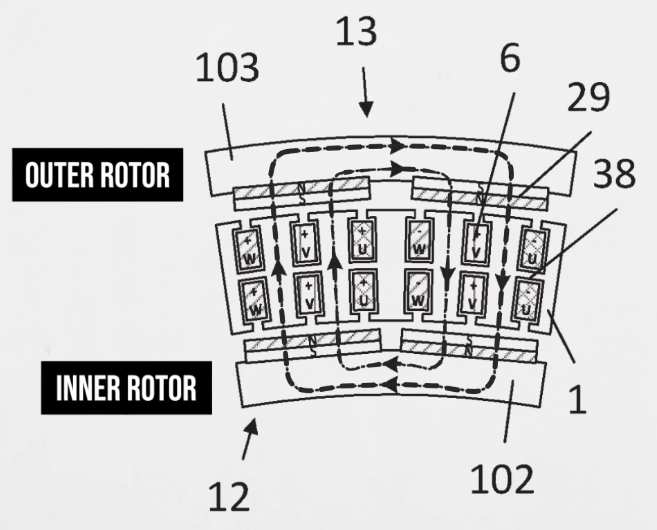
Of course you can’t use magnet wire if your coil is self-supporting, so instead they’re using hefty chunks of copper that could moonlight as busbars. In spite of needing magnets on both inner and outer rotors, the company says they require no more rare-earths than their competitors. We’re not sure if that is true for the copper content, though. To make the torque, those windings are beefy.
Still, its inspiring to see engineers continue to innovate in a space that many would have written off as fully-optimized. We look forward to seeing these motors in upcoming electric cars, but more than that, hope they sell a smaller unit for an air compressor so after going on a Deep Drive deep dive we can inflate our rubber raft with their twin rotor motor boater bloater. If it works as well as advertised, we might have to become twin-rotor motor boater bloater gloaters!
youtube.com/embed/Ir_JKMdWaUg?…
Thanks to [Keith Olson] for the tip.
Taiwan rafforza la difesa dei cavi sottomarini: pene più dure dopo anni di sabotaggi
Negli ultimi anni le infrastrutture sottomarine che circondano Taiwan – cavi elettrici, condotte del gas e sistemi idrici – sono state danneggiate in più occasioni, con particolare attenzione ai cavi di comunicazione. Il 9 dicembre lo Yuan Legislativo ha approvato in terza lettura una serie di emendamenti alla Legge sull’elettricità, alla Legge sulle attività del gas naturale e alla Legge sull’approvvigionamento idrico, all’interno del pacchetto normativo noto come “Sette leggi sui cavi sottomarini”.
Le nuove norme stabiliscono pene più severe per chi manomette intenzionalmente tali infrastrutture: la reclusione può arrivare fino a sette anni, con una multa massima di 10 milioni di dollari taiwanesi. È prevista inoltre la confisca delle imbarcazioni o delle attrezzature utilizzate per commettere il reato, indipendentemente dal loro proprietario.
Il tema è particolarmente sensibile perché, secondo le autorità taiwanesi, diverse navi provenienti dalla Cina avrebbero danneggiato i cavi sottomarini in più episodi recenti. Preoccupazioni analoghe sono state espresse anche dalla Commissione USA-Cina per la Revisione Economica e della Sicurezza, che ha definito la rete sottomarina taiwanese altamente vulnerabile. Un’interruzione coordinata di tutti i cavi, secondo la Commissione, causerebbe perdite economiche stimate in 1,73 miliardi di dollari taiwanesi al giorno.
Gli emendamenti approvati il 9 dicembre aggiornano l’articolo 71-1 della Legge sull’elettricità, l’articolo 55-1 della Legge sulle attività del gas naturale e l’articolo 97-1 della Legge sull’approvvigionamento idrico. Le nuove disposizioni introducono pene da uno a sette anni per chi danneggia o mette in pericolo strutture legate allo stoccaggio, alla distribuzione del gas naturale o alle condotte e ai cavi utilizzati per il servizio idrico. Nei casi di danno colposo, è prevista la reclusione fino a sei mesi o una multa fino a 2 milioni di dollari taiwanesi.
Una novità rilevante riguarda la gestione delle prove e la prevenzione della recidiva: qualsiasi strumento impiegato per il reato – inclusi mezzi nautici e macchinari – dovrà essere sequestrato e smaltito.
Durante la stessa sessione plenaria è stata inserita anche una risoluzione per rendere pubbliche, tramite il Ministero dell’Interno, le mappe delle condotte e dei cavi sottomarini, così da evitare che eventuali indagati possano dichiarare di non essere a conoscenza della loro posizione. La diffusione delle informazioni, secondo il legislatore, dovrebbe agevolare sia la cittadinanza sia il lavoro delle forze dell’ordine e dei pubblici ministeri.
Intanto, il Comitato Trasporti dello Yuan Legislativo ha già completato la revisione preliminare delle restanti quattro leggi del pacchetto: la Legge sulla Gestione delle Telecomunicazioni, la Legge Meteorologica, la Legge sui Porti Commerciali e la Legge sulle Navi. Le versioni provvisorie introducono, tra le altre misure, la confisca immediata per chi mette a rischio apparecchiature sottomarine, multe fino a 2 milioni di dollari taiwanesi per danni a strutture meteorologiche e sanzioni fino a 10 milioni di dollari per violazioni delle norme di identificazione delle imbarcazioni.
Il legislatore Wang Ting-yu ha spiegato che l’intero pacchetto normativo consentirà di proteggere non solo i cavi per le telecomunicazioni ma anche condotte idriche, oleodotti, gasdotti e infrastrutture chimiche, garantendo così una tutela complessiva. Ha sottolineato che le nuove norme forniranno una base legale più solida alle autorità taiwanesi per intervenire, sia in mare sia sulla terraferma.
Wang ha però riconosciuto alcune criticità operative: individuare eventuali imbarcazioni coinvolte, soprattutto se registrate con bandiere di comodo, resta complesso. Secondo il legislatore, molte di queste navi risultano registrate in Paesi terzi, mentre gli effettivi controllori sarebbero cittadini cinesi o residenti di Hong Kong e Macao.
Per rafforzare l’attività investigativa, ha affermato, sarà necessario potenziare la ricognizione aerea della Guardia Costiera, accelerare l’individuazione dei punti danneggiati e aumentare la capacità di inseguimento. Solo con un’identificazione tempestiva sarà possibile applicare efficacemente le nuove sanzioni.
Wang Ting-yu ha inoltre evidenziato l’importanza della cooperazione internazionale. Molte navi sospettate di sabotaggio, ha spiegato, tendono a dirigersi rapidamente verso porti esteri dopo l’operazione. Una collaborazione con altri Stati sarebbe quindi indispensabile per assicurare alla giustizia chi danneggia intenzionalmente le infrastrutture sottomarine di Taiwan e per chiarire se dietro tali operazioni vi siano attori statali.
L'articolo Taiwan rafforza la difesa dei cavi sottomarini: pene più dure dopo anni di sabotaggi proviene da Red Hot Cyber.

#UE, la "Fortezza" cancella l'asilo

UE, la “Fortezza” cancella l’asilo
Le politiche anti-migratorie adottate in sede europea e in molti paesi membri sono da tempo modellate sulle proposte delle forze di estrema destra ed apertamente xenofobe, nonostante nel vecchio continente ci si continui ad atteggiare a baluardo dell…www.altrenotizie.org
Il nuovo video di Pasta Grannies: youtube.com/shorts/dIfZwWtTfhY
@Cucina e ricette
(HASHTAG)
Cucina e ricette reshared this.
Instagram is generating headlines for Instagram posts that appear on Google Search results. Users say they are misrepresenting them.#News #AI #Instagram #Google
Instagram Is Generating Inaccurate SEO Bait for Your Posts
Instagram is generating headlines for users’ Instagram posts without their knowledge, seemingly in an attempt to get those posts to rank higher in Google Search results.I first noticed Instagram-generated headlines thanks to a Bluesky post from the author Jeff VanderMeer. Last week, VanderMeer posted a video to Instagram of a bunny eating a banana. VanderMeer didn’t include a caption or comment with the post, but noticed that it appeared in Google Search results with the following headline: “Meet the Bunny Who Loves Eating Bananas, A Nutritious Snack For Your Pet.”
Jeff VanderMeer (@jeffvandermeer.bsky.social)
This post requires authentication to view.Bluesky Social
Another Instagram post from the Groton Public Library in Massachusetts—an image of VanderMeer’s Annihilation book cover promoting a group reading—also didn’t include a caption or comment, but appears on Google Search results with the following headline “Join Jeff VanderMeer on a Thrilling Beachside Adventure with Mesta …”
Jeff VanderMeer (@jeffvandermeer.bsky.social)
This post requires authentication to view.Bluesky Social
I’ve confirmed that Instagram is generating headlines in a similar style for other users without their knowledge. One cosplayer who wished to remain anonymous posted a video of herself showing off costumes in various locations. The same post appeared on Google with a headline about discovering real-life locations to do cosplaying in Seattle. This Instagram mentioned the city in a hashtag but did not write anything resembling that headline.
Google told me that it is not generating the headlines, and that it’s pulling the text directly from Instagram.
Meta told me in an email that it recently began using AI to generate titles for posts that appear in search engine results, and that this helps people better understand the content. Meta said that, as with all AI-generated content, the titles are not always accurate. Meta also linked me to this Help Center article to explain how users can turn of search engine indexing for their posts.
After this article was published, several readers reached out to note that other platforms, like TikTok and LinkedIn, also generate SEO headlines for users' posts.
“I hate it,” VanderMeer told me in an email. “If I post content, I want to be the one contextualizing it, not some third party. It's especially bad because they're using the most click-bait style of headline generation, which is antithetical to how I try to be on social—which is absolutely NOT calculated, but organic, humorous, and sincere. Then you add in that this is likely an automated AI process, which means unintentionally contributing to theft and a junk industry, and that the headlines are often inaccurate and the summary descriptions below the headline even worse... basically, your post through search results becomes shitty spam.”
“I would not write mediocre text like that and it sounds as if it was auto-generated at-scale with an LLM. This becomes problematic when the headline or description advertises someone in a way that is not how they would personally describe themselves,” Brian Dang, another cosplayer who goes by @mrdangphotos and noticed Instagram generated headlines for his posts, told me. We don’t know how exactly Instagram is generating these headlines.
By using Google's Rich Result Test tool, which shows what Google sees for any site, I saw that these headlines appeared under the <title></title> tags for those post’s Instagram pages.
“It appears that Instagram is only serving that title to Google (and perhaps other search bots),” Jon Henshaw, a search engine optimization (SEO) expert and editor of Coywolf, told me in an email. “I couldn't find any reference to it in the pre-rendered or rendered HTML in Chrome Dev Tools as a regular visitor on my home network. It does appear like Instagram is generating titles and doing it explicitly for search engines.”
When I looked at the code for these pages, I saw that Instagram was also generating long descriptions for posts without the user’s knowledge, like: “Seattle’s cosplay photography is a treasure trove of inspiration for fans of the genre. Check out these real-life cosplay locations and photos taken by @mrdangphotos. From costumes to locations, get the scoop on how to recreate these looks and capture your own cosplay moments in Seattle.”
Neither the generated headlines or the descriptions are the alternative text (alt text) that Instagram automatically generates for accessibility reasons. To create alt text, Instagram uses computer vision and artificial intelligence to automatically create a description of the image that people who are blind or have low-vision can access with a screen reader. Sometimes the alt text Instagram generates appears under the headline in Google Search results. At other times, generated description copy that is not the alt text appears in the same place. We don’t know how exactly Instagram is creating these headlines, but it could use similar technology.
“The larger implications are terrible—search results could show inaccurate results that are reputationally damaging or promulgating a falsehood that actively harms someone who doesn't drill down,” VanderMeer said. “And we all know we live in a world where often people are just reading the headline and first couple of paragraphs of an article, so it's possible something could go viral based on a factual misunderstanding.”
Update: This article was update with comment with Meta.


Social Media Channel reshared this.
Keebin’ with Kristina: the One with the C64 Keyboard

[Jean] wrote into the tips line (the system works!) to let all of us know about his hacked and hand-wired C64 keyboard, a thing of beauty in its chocolate-brown and 9u space bar-havin’ glory.
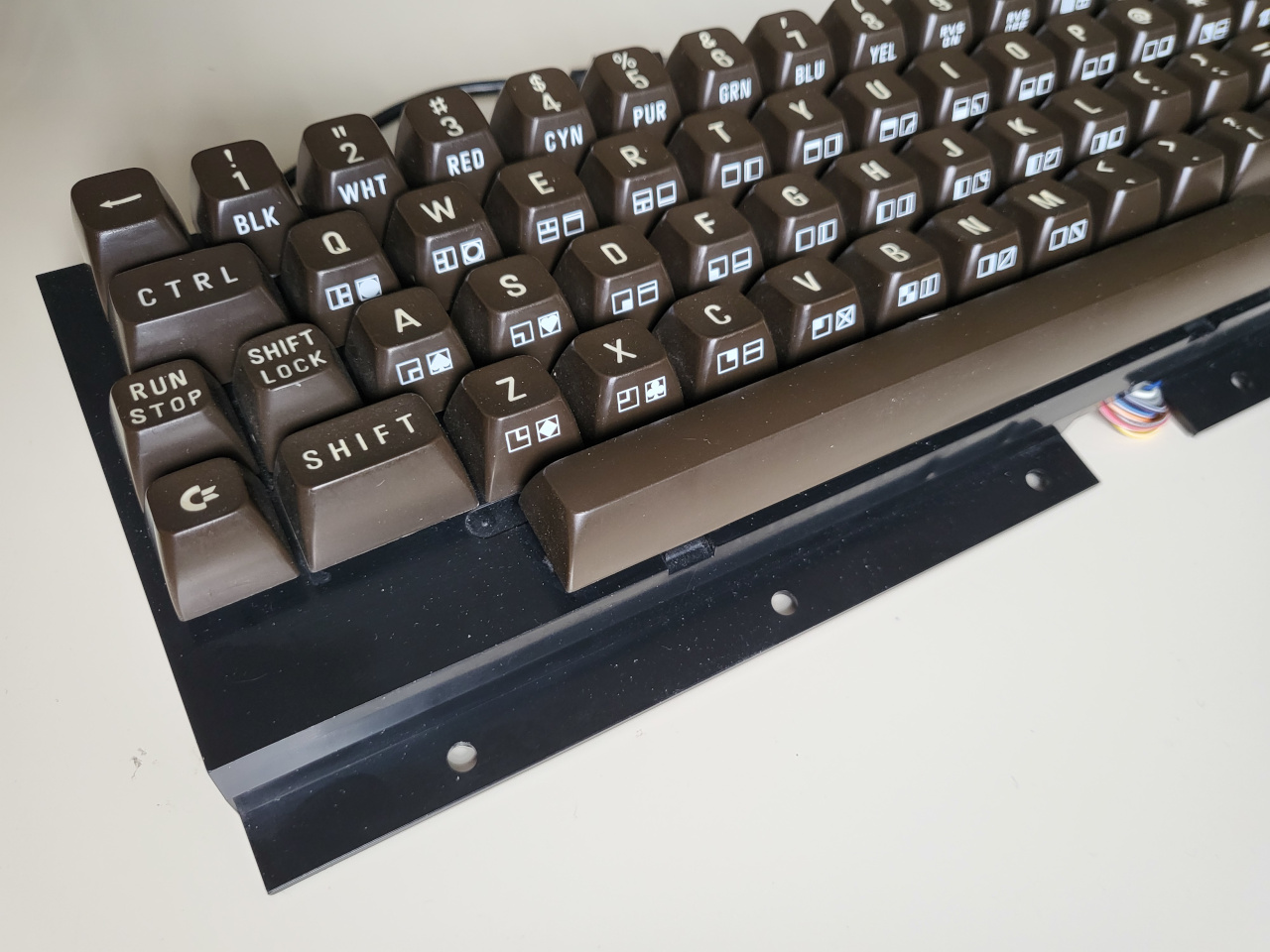
The big news here is that [Jean] added support for missing characters using the left and right Shift keys, and even added mouse controls and Function keys that are accessed on a layer via the Shift Lock key. You can see the key maps over on GitHub.
I’ll admit, [Jean]’s project has got me eyeing that C64 I picked up for $12 at a thrift store which I doubt still works as intended. But don’t worry, I will test it first.
Fortunately, it looks like [Jean] has thought of everything when it comes to reproducing this hack, including the requisite C64-to-Arduino pinout. So, what are you waiting for?
ArcBoard MK20 Proves That Nothing Is Ever Finished
I find it so satisfying that [crazymittens-r] is never quite satisfied with his ArcBoard, which is now in its 20th revision.
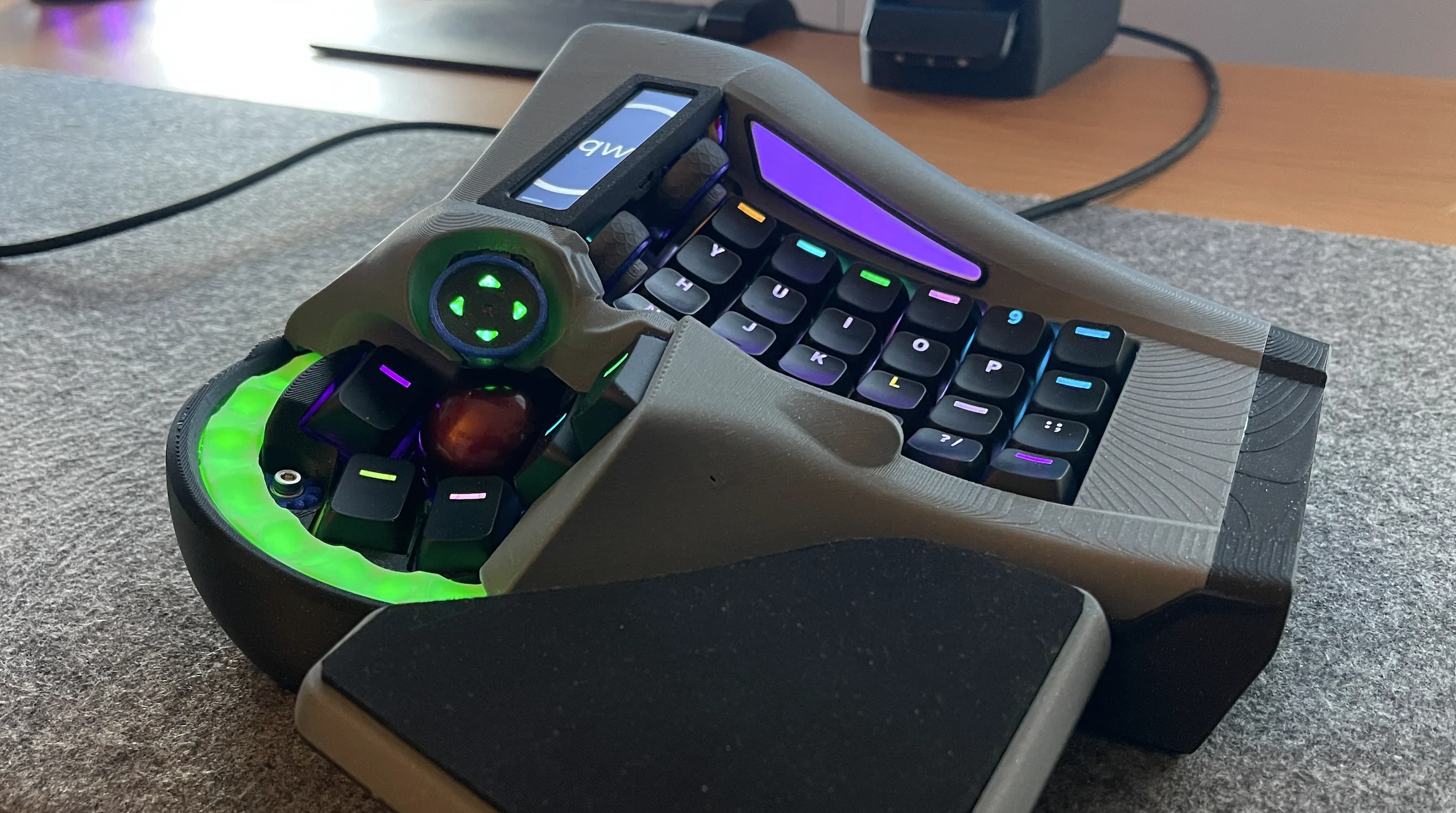
This is one of those times where the longer you look, the crazier it gets. Notice the thumb trackball, d-pad thingy, and the green glowy bit, all of which move. Then there are those wheels up by the YHN column.
A bit of background: [crazymittens-r] needed something to help him keep on working, and you know I can relate to that 100%. There’s even a pair of pedals that go with it, and you’ll see those in the gallery.
You may remember previous ArcBoards, and if not, know this: it’s actually gotten a lot smaller since mk. 19 which I featured here in May 2024. It still looks pretty bonkers in the best possible way, though, and I’m here for it.
Via reddit
The Centerfold: KaSe
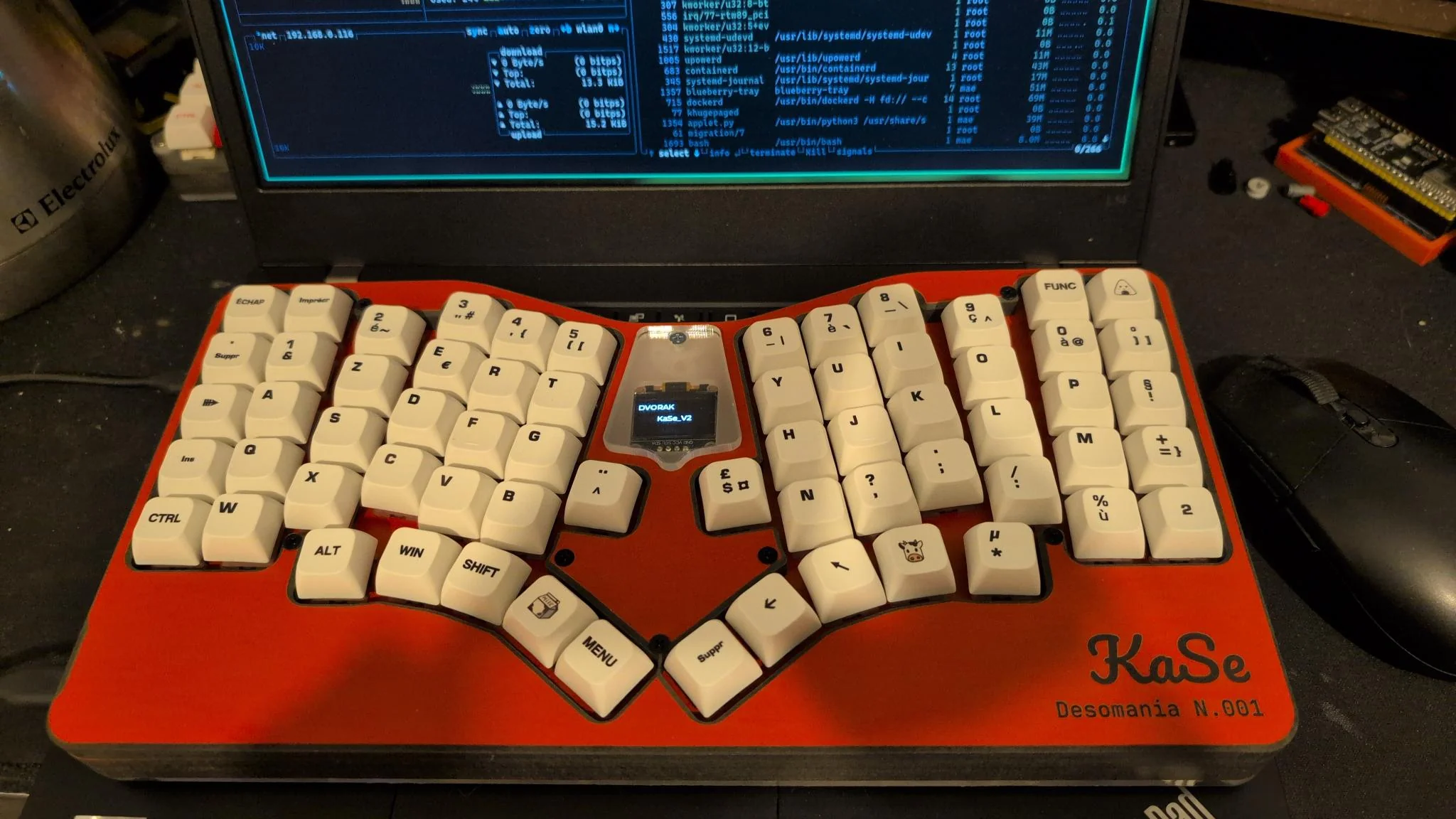
[harrael] had noble goals for this project, namely learning more about ESP32-S3s, USB/BLE HID, and firmware design, but the most admirable of all is sharing it with the rest of us. (So, if you can’t afford a NISSE…)
Do you rock a sweet set of peripherals on a screamin’ desk pad? Send me a picture along with your handle and all the gory details, and you could be featured here!
Historical Clackers: Typewriter Tom’s Typewriter Throng
I’m going to take a brief detour from the normal parade of old typewriters to feature Typewriter Tom, who has so many machines lying around that Hollywood regularly comes knocking to borrow his clacking stock.
And how many is that? Around 1,000 — or six storage units full. Tom received a call once. The caller needed six working IBM Selectrics ASAP. Of course, Tom could deliver, though he admits he’s probably the one person in all of Georgia who could.
Another thing Tom delivers is creativity in the form of machines he sells to artists and students. He also co-founded the Atlanta Typewriter Club, who have been known to hold typewriter petting zoo events where people can come and — you guessed it — put their hands on a typewriter or two.
Go for the story and stay for the lovely pictures, or do things the other way around if you prefer. But Typewriter Tom deserves a visit from you, even if he already got one from Tom Hanks once.
Finally, PropType AR Can Turn Anything Into a Keyboard
Yes, literally anything with enough real estate can now become a keyboard, or at least it would seem from TechExplore and the short video embedded below. Watch as various drinking vessels and other things become (split!) keyboards, provided you have your AR goggles handy to make the magic happen.
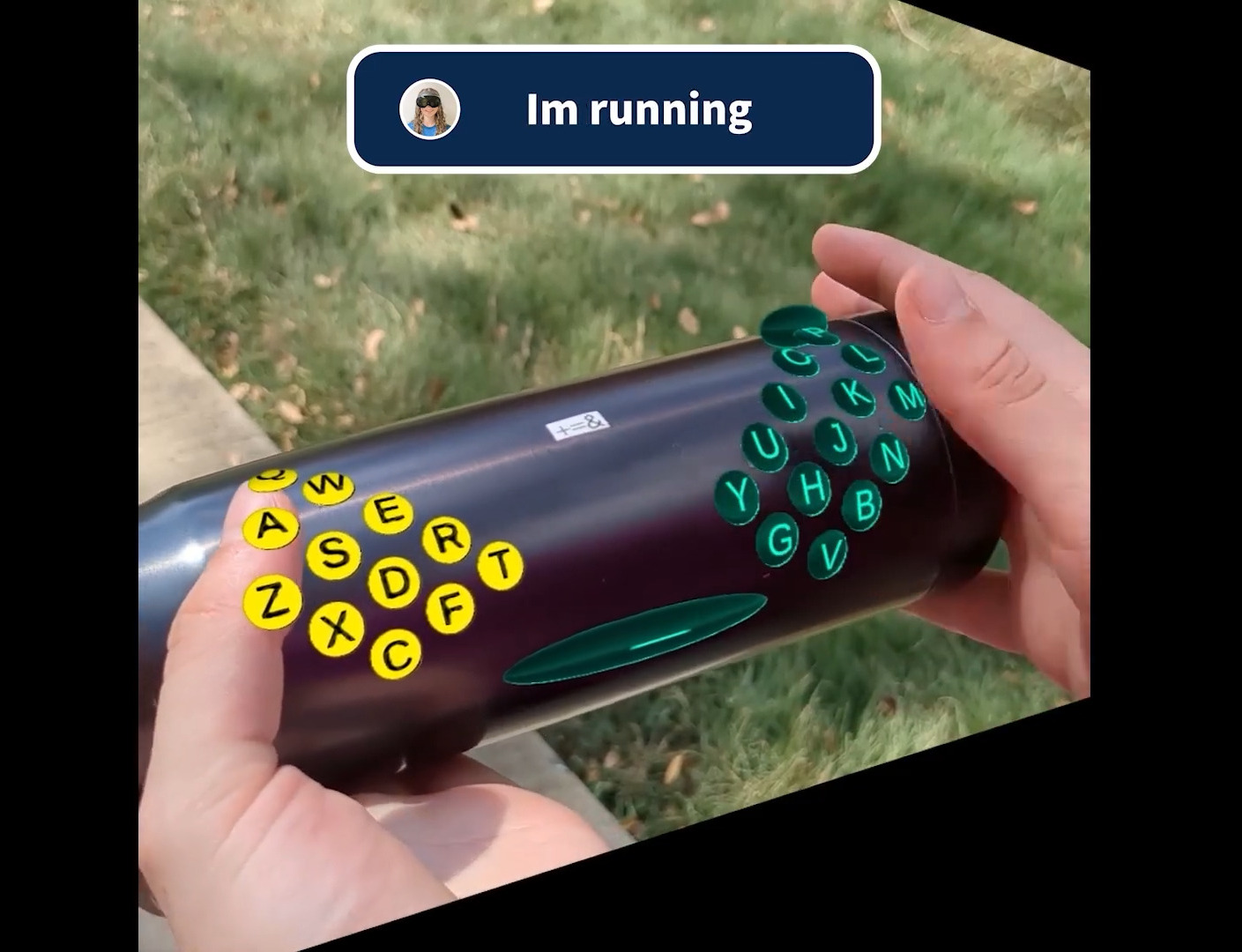
But the point here is that for augmented reality users, typing is notoriously difficult and causes something known as ‘gorilla arm’ from extended use. So in all seriousness, this is pretty cool from a problem-solving standpoint.
So how does it work? Basically you set the keyboard up first using the PropType editing tool to customize layouts and apply various effects, like the one you’ll see in the video. Be sure to stick around for the demo of the editing tool, which is cool in and of itself. I particularly like the layout on the soda can, although it might be difficult to actually use without spilling.
youtube.com/embed/7ZcFbvHClcU?…
Got a hot tip that has like, anything to do with keyboards? Help me out by sending in a link or two. Don’t want all the Hackaday scribes to see it? Feel free to email me directly.
Oblomov reshared this.
Super Simple Deadbuggable Bluetooth Chip

We’re all used to Bluetooth chips coming in QFN and BGA formats, at a minimum of 30-40 pins, sometimes even a hundred. What about ten pins, with 1.27 mm pitch? [deqing] from Hackaday.io shows us a chip from WCH, CH571K, in what’s essentially a SO-10 package (ESSOP10). This chip has a RISC-V core, requires only three components to run, and can work Bluetooth through a simple wire antenna.
This chip is a RISC-V MCU with a Bluetooth peripheral built in, and comes from the CH57x family of WCH chips that resemble the nRF series we’re all used to. You get a fair few peripherals: UART, SPI, and ADC, and of course, Bluetooth 4 with Low Energy support to communicate with a smart device of your choice. For extra hacker cred, [deqing] deadbugs it, gluing all components and a 2.54 mm header for FTDI comms onto the chip, and shows us a demo using webBluetooth to toggle an LED through a button in the browser.
You need not be afraid of SDKs with this one. There’s Arduino IDE support (currently done through a fork of arduino_core_ch32) and a fair few external tools, including at least two programming tools, one official and one third-party. The chip is under a dollar on LCSC, even less if you buy multiple, so it’s worth throwing a few into your shopping cart. What could you do with it once received? Well, you could retrofit your smoke alarms with Bluetooth, create your own tire pressure monitors, or just build a smartphone-connected business card!

Internes Dokument: EU-Staaten fordern ein Jahr Vorratsdatenspeicherung für Internet-Dienste wie Messenger
netzpolitik.org/2025/internes-…


The exact circumstances around the search are not known. But activist Samuel Tunick is charged with deleting data from a Google Pixel before CBP’s Tactical Terrorism Response Team could search it.#CBP #Privacy
Man Charged for Wiping Phone Before CBP Could Search It
A man in Atlanta has been arrested and charged for allegedly deleting data from a Google Pixel phone before a member of a secretive Customs and Border Protection (CBP) unit was able to search it, according to court records and social media posts reviewed by 404 Media. The man, Samuel Tunick, is described as a local Atlanta activist in Instagram and other posts discussing the case.The exact circumstances around the search—such as why CBP wanted to search the phone in the first place—are not known. But it is uncommon to see someone charged specifically for wiping a phone, a feature that is easily accessible in some privacy and security-focused devices.
💡
Do you know anything else about this case? I would love to hear from you. Using a non-work device, you can message me securely on Signal at joseph.404 or send me an email at joseph@404media.co.This post is for subscribers only
Become a member to get access to all content
Subscribe now

New videos and photos shared with 404 Media show a Border Patrol agent wearing Meta Ray-Bans glasses with the recording light clearly on. This is despite a DHS ban on officers recording with personal devices.#CBP #ICE #Meta
Border Patrol Agent Recorded Raid with Meta’s Ray-Ban Smart Glasses
On a recent immigration raid, a Border Patrol agent wore a pair of Meta’s Ray-Ban smart glasses, with the privacy light clearly on signaling he was recording the encounter, which agents are not permitted to do, according to photos and videos of the incident shared with 404 Media.Previously when 404 Media covered Customs and Border Protection (CBP) officials’ use of Meta’s Ray-Bans, it wasn’t clear if the officials were using them to record raids because the recording lights were not on in any of the photos seen by 404 Media. In the new material from Charlotte, North Carolina, during the recent wave of immigration enforcement, the recording light is visibly illuminated.
That is significant because CBP says it does not allow employees to use personal recording devices. CBP told 404 Media it does not have an arrangement with Meta, indicating this official was wearing personally-sourced glasses.
This post is for subscribers only
Become a member to get access to all content
Subscribe now

reshared this
#Sicurnauti, da oggi sono disponibili i contenuti sul tema “L'identità digitale e i social network” rivolto a #studenti e #genitori per gestire in modo consapevole i social network, proteggendo la privacy online.
Qui il video ➡️ youtube.

Ministero dell'Istruzione
#Sicurnauti, da oggi sono disponibili i contenuti sul tema “L'identità digitale e i social network” rivolto a #studenti e #genitori per gestire in modo consapevole i social network, proteggendo la privacy online. Qui il video ➡️ https://www.youtube.Telegram
Gli attacchi ransomware diminuiscono nel 2024, ma l’economia criminale rimane in espansione
Secondo un rapporto pubblicato di recente dal Financial Crimes Enforcement Network (FinCEN), l’attività globale del ransomware ha raggiunto il picco nel 2023, per poi crollare nel 2024. Questo calo è attribuito ai successivi attacchi ai gruppi ransomware su larga scala, tra cui ALPHV (BlackCat) e LockBit, attraverso indagini collaborative a livello internazionale.
Il FinCEN ha analizzato migliaia di segnalazioni ai sensi del Bank Secrecy Act (BSA) presentate da istituti finanziari tra gennaio 2022 e dicembre 2024, identificando 4.194 casi di ransomware e oltre 2,1 miliardi di dollari in riscatti. Questa cifra è quasi pari al totale segnalato negli otto anni dal 2013 al 2021.
4,5 miliardi di dollari: l’economia del ransomware tra il 2013 e il 2014
Considerando l’intero periodo (2013-2024), si arriva a circa 4,5 miliardi di dollari, il che dimostra che l’enorme economia criminale del settore ransomware è ancora in piena espansione. Secondo il rapporto, il 2023 è stato “l’anno più redditizio mai registrato” per i gruppi ransomware, con 1.512 attacchi e 1,1 miliardi di dollari in pagamenti di riscatto segnalati, con un aumento del 77% rispetto all’anno precedente.
Ma questa tendenza si è invertita nel 2024.
Mentre il numero di incidenti è leggermente diminuito a 1.476, il riscatto totale pagato è crollato a 734 milioni di dollari. Il rapporto attribuisce questo calo alle operazioni su larga scala condotte dalle autorità statunitensi ed europee contro Black Cat (fine 2023) e Lockbit (inizio 2024). In effetti, entrambi i gruppi sarebbero stati tra i gruppi di attacco “più attivi” all’epoca e, a quanto pare, stanno faticando a riorganizzarsi dopo la distruzione delle loro infrastrutture.
“La maggior parte dei pagamenti di riscatto era inferiore a 250.000 dollari”, ha affermato FinCEN, sottolineando che le piccole e medie imprese, così come le grandi aziende, continuano a subire perdite. I settori più colpiti sono quello manifatturiero, finanziario e sanitario.
I settori più colpiti dagli attacchi ransomware tra il 2022 e il 2024 sono:
- Produzione: 456 casse
- Servizi finanziari: 432 casi
- Settore medico: 389 casi
- Distribuzione al dettaglio: 337 casse
- Servizi legali: 334 casi
In termini di entità dei danni, il settore finanziario è stato quello che ha subito i maggiori danni, seguito da quello medico e da quello manifatturiero.
- Servizi finanziari: circa 365,6 milioni di dollari
- Settore sanitario: circa 305,4 milioni di dollari
- Produzione: circa 284,6 milioni di dollari
- Scienza e tecnologia: circa 186,7 milioni di dollari
- Vendite al dettaglio: circa 181,3 milioni di dollari
In particolare, si è scoperto che gli istituti finanziari rappresentano il settore più grande non solo in termini di portata degli attacchi, ma anche in termini di riscatto totale pagato. Sono attive 267 famiglie di ransomware, tra cui “Akira” è quella che compare più frequentemente.
I Ceppi dei ransomware
FinCEN ha riferito che tra il 2022 e il 2024 sono state segnalate in totale 267 diverse famiglie di ransomware.
Un piccolo numero di gruppi ha guidato l’attacco generale, e le seguenti famiglie sono quelle menzionate più frequentemente:
- Akira: al primo posto per numero di incidenti segnalati con 376 casi.
- Alphabet/BlackCat (ALPHV/BlackCat): al primo posto per ricavi derivanti dai riscatti, con circa 395 milioni di dollari.
- LockBit: circa 252,4 milioni di dollari
Tra gli altri personaggi ai vertici della classifica ci sono Black Basta, Royal, BianLian, Hive, Medusa e Phobos. Solo queste prime 10 organizzazioni hanno pagato riscatti per oltre 1,5 miliardi di dollari tra il 2022 e il 2024.
Circa il 97% dei pagamenti dei riscatti è stato effettuato in Bitcoin, a conferma che la criptovaluta rimane un mezzo di transazione fondamentale nell’economia del ransomware. Un colpo decisivo per le agenzie investigative: “Il riscatto diminuirà, ma gli attacchi continueranno.”
La cooperazione internazionale il punto di svolta
Il rapporto ha citato la cooperazione internazionale tra le agenzie investigative negli Stati Uniti e in Europa come fattore chiave nella significativa riduzione dei riscatti nel 2024. Con l’infrastruttura di Black Cat e Lockbit neutralizzata, la redditività degli aggressori è diminuita drasticamente e si ritiene che diverse organizzazioni stiano vivendo una fase di confusione durante la riorganizzazione.
Tuttavia, il fatto che il numero di attacchi non sia diminuito è un altro messaggio di allarme. Anche con riscatti più bassi, il numero di tentativi di attacco continua ad aumentare. Il rapporto prevede che “nuovi gruppi più piccoli continueranno a emergere e a riempire il mercato”.
FinCEN esorta tutte le organizzazioni a “segnalare immediatamente qualsiasi attacco ransomware all’FBI e a FinCEN”, sottolineando che è fondamentale monitorare le reti criminali e bloccare i fondi attraverso la condivisione di informazioni finanziarie.
L'articolo Gli attacchi ransomware diminuiscono nel 2024, ma l’economia criminale rimane in espansione proviene da Red Hot Cyber.
PCB Design Review: TinySparrow, A Module For CAN Hacking, v2

A year ago, I’ve design reviewed an MCU module for CAN hacking, called TinySparrow. Modules are plenty cool, and even more so when they’re intended for remaking car ECUs. For a while now, every car has heavily depended on a computer to control the operation of everything inside it – the engine and its infrastructure, the lights, and Sadly, ECUs are quite non-hackable, so building your own ECUs only makes sense – which is why it’s heartwarming to see modules intended to make this easier on the budding ECU designer!
Last time we saw this module, it was quite a bit simpler. We talked about fixing a number of things – the linear regulator, the unprotected CAN transceiver, and the pinout; we also made the board cheaper to produce by reducing the layer count and instead pushing the clearance/track width limits. This time, we’re seeing TinySparrow v2 , redesigned accounting for the feedback and upgraded with a new MCU – it’s quite a bit more powerful!
For a start, it’s got ESD diodes, a switching-linear regulator chain for clean but efficient power supply, and most importantly, an upgraded MCU, now with USB and one more CAN channel for a total of two! There’s a lot more GPIOs to go around, too, so the PCB now uses all four of its sides for breakout out power, programming, and GPIO pads. Only a tiny bit bigger than its v1, this module packs a fair bit of punch.
Let’s revisit the design, and try to find anything still left to improve – there’s a few noteworthy things I found.
Protection Almost Perfect
It took me a bit to try and find the ESD diodes mentioned in the README – I didn’t notice that they’re basically the only thing on the bottom layer. This is fine – protection elements like ESD diodes can be on a different layer, and as they’re SOT-23, they’re easy to solder on post-factum. This is quite a nice placement choice, in my opinion – you can basically solder this board with cheaper single-side assembly, use ESD-less boards for your bench testing, and then simply solder the few bottom side components onto “production” versions!


There is but one hiccup with the way they’re placed. ESD diode appnotes will tell you – there’s some extra considerations you can try and put into ESD diode layout. This design pulls connector tracks directly to the CAN ICs on top layer, and directly to diodes on the bottom one. Instead, you should try and route the signal “through” the ESD diodes – letting track inductance play in your favour, and not impeding the ESD diode’s impact.
Fortunately, by lightly rerouting 3.3V CAN transceiver power inputs and a few surrounding signals, we can put CAN+ and CAN- signals through vias under the package, so that the signal flows “in series” with ESD diode pads. Similarly, the ESD diodes get vias to ground, shared with transceiver ground vias, but oh well. It’s not perfect, but to my eye, it’s better than before, as far as ESD protection is concerned.


About the only problem I can see with the reroute, is having to reshuffle USB signals, putting them closer together. However, as long as they’re intra-pair length-matched, they’ll do just fine.
Vias Fit Inside Pads, But Maybe Don’t?
This is not the only change to consider as far as signal routing goes, but it’s the most major one. The next issue I see, is vias – specifically, vias inside component pads.
I’ve had a few run-ins with via-in-pad related problems. Previously, I’ve failed to assemble some boards specifically because of via-in-pad related problems, with solder paste wicking through the board and onto the opposite side. For 0402 components I used, this made a number of boards essentially non-solderable depending on how lucky I got reflowing them, and I had to run a new board revision to get the yield up.
This board’s files have a fair few hints about getting assembled by JLCPCB, and JLC can definitely do plugged vias, preventing any sorts of solder flowing through the board. If the designer or someone else takes the board elsewhere, however, that might no longer apply, which would be disappointing. Also, you might have to pay extra for plugging holes – just like with the previous review, let’s see if we can avoid it. Most problematic areas are around the transceivers, still – especially given the board files now have a custom rule for 0.5mm via-to-via distances. This is not a constraint I’ve seen actually stressed by JLCPCB, but I don’t mind – with just a little bit more signal shuffling, every newly moved via landed within the 0.5mm target area.


Pinout Considerations, Again
The VDC pin now has GND pins to match, and in general, there’s a lot more GND pins to go around – which is great! It’s pretty surprising to me that the VDC pin is duplicated and its trace goes across the board on an inner layer. This is supposed to be an at least somewhat unfiltered and unprotected car power rail, after all, and I don’t think that’d help things like noise integrity. Maybe this helps with testing because all the core signals are brought to the same corner, but to my eye, it has bad vibes.
The module could perhaps use a key pin – there’s zero omissions in the outer dual-row, which leaves for a possibility of inserting this module rotated 180 degrees by accident, likely obliterating at least something on the module. If these modules are ever meant to be swapped during testing, i.e. using machined headers, I’d try and remove one of the pins from the equation – there’s a NC pin in one of the corners already, thankfully.
There’s a pair of 3.3 V signals and GND signals on the opposite sides of each other. This is geometrically satisfying pinout-wise, and, it would short-circuit the module’s onboard regulator if the module’s ever rotated inserted 180 degrees. This is generally harmless with modern modules, but it could very well make the switching or the linear regulator heat up to finger-burning temperatures – last thing you need when trying to remove a module inserted incorrectly!


Thankfully, at the top, there’s a few unconnected pads, so perhaps GND and NC could swap places, making sure that 3.3 V lands on NC once rotated 180 degrees. The VDC pads could perhaps use the same consideration, but I’m comfortable leaving those as homework.
Moving Forward
It’s a joy to see how much the TinySparrow module has grown in its v2. From vastly improved layout to higher consideration given to design rules, nicer silkscreen, and a way more powerful MCU while at it, it’s that much more of a viable heart for a somewhat modern car, and it’d be quite nice to see some boards utilizing it in the future. I hope this review can help!
As usual, if you would like a design review for your board, submit a tip to us with [design review] in the title, linking to your board files. KiCad design files strongly preferred, both repository-stored files (GitHub/GitLab/etc) and shady Google Drive/Dropbox/etc .zip links are accepted.

arti likes this.
Vulnus vs. Bug: il Coaching tra maschere pirandelliane e patch di sistema
Siamo connessi, connessi a tutto, iperconnessi. La nostra vita professionale e sociale è scandita da deadline strettissime e da un’asticella che viene continuamente alzata, dobbiamo spingere. Ci imponiamo tacitamente di essere macchine perfette, sistemi infallibili, attivi, proattivi, sempre in allerta.
Un momento però: l’essere umano non è una macchina e, senza dubbio, non è perfetto.
In un sistema operativo o in un software complesso, sappiamo che, probabilmente, ad un certo punto si troverà un bug di sistema o una fragilità strutturale per poi attivarsi immediatamente per riparare o prevenire un danno o potenziale tale.
E allora, perché accettiamo la fragilità nei sistemi che creiamo, ma rifiutiamo la fragilità nell’essere umano che siamo?
Abbiamo delle vulnerabilità profonde, ferite nel nostro io, per le quali proviamo vergogna e che cerchiamo disperatamente di mascherare. Perché? Essere vulnerabili ci espone alla paura di non essere abbastanza, alla vergogna privata e silenziosa di essere imperfetti. L’imperfezione, di questi tempi, sembra qualcosa di non contemplato, non accettabile. Vogliamo vite perfette, carriere perfette, persone perfette.
La parola vulnerabilità deriva dal latino vulnus, che significa, appunto, ferita. La vulnerabilità è, per definizione, la condizione di poter ricevere una ferita, la paura di poter essere offesi o colpiti.
Per paura di questa ferita, adottiamo una strategia di occultamento: nascondiamo lo squarcio emotivo, sperando che non venga mai scoperto.
Questa strategia non è difesa, ma solo un rinvio del rischio. La maschera di perfezione che indossiamo non ci rende più forti; ci rende più rigidi e, quindi, più fragili di fronte a un fallimento inatteso, piccolo o grande che sia.
La necessità di mascherare le nostre fragilità ci costringe a vivere nella non-autenticità, un concetto esplorato in modo magistrale da Luigi Pirandello in “Uno, Nessuno, Centomila”.
Mettiamo delle maschere per rispondere a quello che gli altri si aspettano da noi: il collega perfetto, il capo infallibile, il genitore impeccabile. E noi cambiamo maschera a seconda del ruolo che interpretiamo e della persona che abbiamo di fronte. Nessuno sa chi siamo veramente.
Pirandello scrive nel suo romanzo:
“Imparerai a tue spese che nel lungo tragitto della vita incontrerai tante maschere e pochi volti.”
Vitangelo Moscarda, detto Gegè, il protagonista, sperimenta la crisi d’identità quando scopre che l’immagine di sé che egli possiede (Uno) è drasticamente diversa dalla miriade di immagini che gli altri proiettano su di lui (Centomila).
L’Uno è quindi l’identità che crediamo di avere, il nostro sistema di valori e il nostro senso profondo.
I Centomila, sono le maschere che indossiamo in base al contesto e alle aspettative altrui. Ogni maschera è un tentativo di proteggere l’Uno dalla ferita potenziale del giudizio.
Nessuno come il risultato della scoperta che il nostro “vero io” sia quasi irraggiungibile o inesistente sotto la stratificazione delle maschere, portando a una profonda crisi di identità. “Chi sono io, al di là del mio ruolo professionale e sociale?”. È il punto di rottura, il fallimento del sistema-maschera, dove il costo di mantenere la finzione supera la nostra energia vitale, portandoci a un profondo senso di vuoto, di smarrimento.
Questo disallineamento è l’equivalente umano di un sistema che opera su valori non allineati al proprio scopo fondamentale.
Qual’è il costo di vivere incastrato in Centomila maschere?
Mantenere le maschere richiede un enorme dispendio di energia cognitiva ed emotiva, aumentando esponenzialmente il rischio di burnout e stanchezza cronica.
La maschera, rigida e fragile, non è uno scudo ma è la nostra più grande area di vulnerabilità. Un piccolo fallimento o una critica può frantumarla completamente, causando un crollo del nostro equilibrio interiore.
I team e le relazioni prosperano sulla fiducia. Un leader che indossa una maschera costante non ispira fiducia autentica, limitando la collaborazione aperta e l’innovazione nel team.
Cosa distingue veramente l’Uno?
L’Uno può evolvere e riscriversi. L’essere umano ha qualcosa che anche l’Intelligenza Artificiale più avanzata, con tutta la tecnologia e l’evoluzione straordinaria, non potrà mai replicare: noi abbiamo il coraggio e la creatività necessarie per comprendere a fondo come funzioniamo e quindi, come possiamo trasformarci ed evolvere. Ognuno a proprio modo, con i propri tempi e la propria strada.
Questa capacità di trasformazione è la nostra funzionalità unica, la vera essenza dell’Uno che sfugge alla rigidità delle maschere. Laddove un sistema informatico, quando trova un bug, deve correre ai ripari con una patch esterna, l’essere umano ha in sé la spinta, quella miccia che è una combo potente di coraggio e creatività che può innescare un processo di trasformazione interna.
La ricercatrice americana Brené Brown ha dedicato anni allo studio di questo fenomeno, scoprendo che la vulnerabilità non è un difetto da eliminare, ma il luogo di nascita del coraggio, della creatività e della connessione.
“La vulnerabilità non è vincere o perdere. È avere il coraggio di farsi vedere ed essere visti quando non si ha il controllo sul risultato.” – Brené Brown
Se innescato, questo processo di accettazione porta all’annientamento della vergogna di fronte ad una vulnerabilità. Diventa, proprio come dice Brené Brown, l’accettazione del rischio, senza garanzia sui risultati, ma con la libertà di uscire dalla trappola del perfezionismo che ci imprigiona in quella percezione di non essere abbastanza.
Che ruolo può avere il Coaching in tutto questo?
Guardare in faccia le proprie vulnerabilità è impegnativo. Farsi domande che guardano in profondità è scomodo, può destabilizzare e può anche mettere in subbuglio quel sistema di valori che credevamo inespugnabile.
Proprio qui interviene il coaching: nel caos, quando il banco potrebbe saltare e la crisi d’identità del Nessuno si fa sentire.
Il coaching è un processo di esplorazione in modalità protetta del sistema-persona. Lavorare con un coach significa esplorare se stessi e il proprio potenziale in un ambiente sicuro, dove la riservatezza è una priorità assoluta e dove è possibile esporsi senza la paura del giudizio esterno che ci ha indotti ad indossare le Centomila maschere.
Il coach non fornisce la soluzione ma pone quelle domande scomode e mirate, una per volta, che aiutano l’individuo a eseguire la propria valutazione interna del rischio arrivando ad un piano d’azione personale. Il coach può supportarti attraverso domande che facciano luce su ciò che non hai mai detto ad alta voce o su ciò a cui non avevi ancora pensato.
Per esempio: cosa succederebbe se domani mattina cadesse la maschera del collega perfetto? Oppure, chi o cosa ti potrebbe aiutare a sentire meno la pressione quando un problema plana nella tua inbox? O, ancora più in profondità, qual è il valore che stai sacrificando per mantenere l’illusione di perfezione?
Immaginiamo un ambiente che permette l’esposizione controllata, un luogo per fare un passo fuori dalla trappola del perfezionismo, accettando l’incertezza e il rischio emotivo, dove il linguaggio è libero, la mente è libera, e il giudizio è completamente assente.
Ci vuole un po’ di coraggio per fare questo passo? Assolutamente sì. Il coraggio, come ci insegna Brené Brown, non è l’assenza di paura, ma la scelta di esporsi nonostante l’incertezza. Il guadagno potenziale è la libertà dal bisogno costante di approvazione e la possibilità di autenticità. Il processo inizia sempre da un piccolo passo coraggioso. Questo è il vero potere della vulnerabilità applicata.
Perché lasciare il posto alla vulnerabilità sul lavoro?
I professionisti sanno bene che il sistema più sicuro non è quello senza bug, ma quello che è costantemente monitorato e rapidamente aggiornato.
Analogamente, l’essere umano e l’organizzazione più resilienti non sono quelli che nascondono i loro difetti, ma quelli che sono in grado di accettare, esporre e gestire le proprie vulnerabilità in modo proattivo.
Quando un leader, o un collega, dimostra il coraggio di essere vulnerabile, innesca un potente meccanismo di fiducia reciproca nel team anzi, è proprio lì che si diventa un Team. Quando chi appartiene a quel gruppo di lavoro interviene laddove intravede un vulnus, un fianco scoperto,e supporta, diventando alleati, camminando insieme verso lo stesso obiettivo. Questo è un Team.
Se quelle Centomila maschere diventassero centomila alleati che vedono e accettano la stessa persona, ci sarebbe un enorme risparmio di energia e una crescita della resilienza collettiva, come una rete di supporto.
La vulnerabilità accettata ed esposta è una via per l’innovazione dove la creatività non può che fiorire.
Giù la maschera!
In questo mondo freddamente iperconnesso, proviamo davvero a connetterci, prima a noi stessi e poi verso gli altri, consapevoli che la perfezione non esiste, che il nostro coraggio e la nostra creatività sono contagiosi, il nostro modo di comunicare è contagioso.
Proviamo?
L'articolo Vulnus vs. Bug: il Coaching tra maschere pirandelliane e patch di sistema proviene da Red Hot Cyber.
Nigeria: vescovo di Kontagora a Fides, “gli ostaggi liberati sono in viaggio per riunirsi con le loro famiglie”
“I 100 ragazzi liberati si stanno dirigendo da Minna, la capitale dello Stato del Niger a Papiri per potere così riunirsi alle loro famiglie”, dice all’Agenzia Fides Bulus Dauwa Yohanna, vescovo di Kontagora, la diocesi dove il 21 novembre 315 person…


Further PPI GA Information
Dear All Members of Pirate Parties International and all interested parties,
The 2025-2026 PPI Winter GA will take place on Saturday, January 10th, 2026, starting at 09:00 UTC.
The event will be hybrid with some participants physically attending in Potsdam, Germany.
If representatives from your organization intend to participate in person, please let us know by
requesting a completely free ticket here: eventbrite.com/e/1975346809482
Discussion about the GA is currently on Discourse: ga.pp-international.net/
Further information is also available on our Wiki:
wiki.pp-international.net/wiki…
The meeting will take place on the PPI Board Jitsi Channel: jitsi.pirati.cz/PPI-Board
If we have connection problems we will revert to our Mumble:
wiki.pp-international.net/wiki…
If you have any statute amendments or new member applications, please make sure that you send
them to the board by December 10th. If you have any other motions or any other business, feel
free to bring them up before the meeting, and you are free to propose them at the meeting itself.
It is very important that we make a quorum, so please delegate your vote to another member if
you cannot come to the event. Please also forward this message to other PPI members.
Delegates should be announced to the board prior to the start of the GA. Each member may have
up to 6 delegates. Others are welcome to attend without voting. Rules of the GA can be reviewed
on the Wiki: wiki.pp-international.net/wiki…
We also remind full members to pay membership fees. We don’t want anyone not to participate if
they don’t have funds to pay membership fees, so please let us know if you require a discount or
accommodation. Please note that nascent members have no membership fees.
We hope that many of you can attend, either in person or online.
Good luck to us on having a successful event!
Thank you for your assistance,
The Board of PPI
reshared this
Perché l’Antitrust Ue indaga sull’IA di Google
Per vedere altri post come questo, segui la comunità @Informatica (Italy e non Italy 😁)
Google è finita di nuovo nel mirino dell'Antitrust Ue. Questa volta Bruxelles sospetta che il colosso stia alimentando la sua intelligenza artificiale coi contenuti di editori e creator startmag.it/innovazione/perche…
reshared this
I gemelli hacker che cancellarono i database del governo USA
@Informatica (Italy e non Italy 😁)
Non c’è minaccia interna più pericolosa di quella che già conosce le tue password. E quando quella minaccia ha il volto di due ex-condannati che riescono a farsi assumere da un contractor federale, la storia diventa un caso da manuale su come il sistema di controllo possa fallire in modo
Informatica (Italy e non Italy 😁) reshared this.
Corsari barbareschi catturati in Italia
Le incursioni corsare dal Nordafrica e dalle coste dell’Impero Ottomano hanno flagellato la nostra penisola per lungo tempo. Nel corso di queste razzie o di battaglie navali, capitava che marinai e corsari (specie nordafricani) finissero nelle mani
Arte e Cultura reshared this.
orwell.fun/objects/a705ff4f-7b…


Negozi,1 comune su 8 senza 'Alimentari'
12.00 Un comune italiano su 8 senza più un negozio di alimentari e uno su 16 senza neppure supermercati, ipermercati o grandi magazzini. Sono alcuni dati del sondaggio Ipsos diffuso in occasione dell'assemblea di Confesercenti. Va anche peggio a edicole e libreria, negozi sportivi e di giocattoli: oltre 3,8 milioni di residenti in oltre 3.200 comuni ne sono privi.Tracollo dei gestori carburanti: benzinai assenti in quasi 4mila comuni e lontani chilometri per 6,6mln di residenti. In un anno -21.700 imprese e +17mila addetti. #televideo #ultimaora