
2025 One Hertz Challenge: Square Waves The Way You Want ‘Em

On an old fashioned bench a signal generator was once an indispensable instrument, but has now largely been supplanted by the more versatile function generator. Sometimes there’s a less demanding need for a clock signal though, and one way that might be served comes from [Rupin Chheda]’s square wave generator. It’s a small PCB designed to sit at the end of a breadboard and provide handy access to a range of clocks.
On the board is a crystal oscillator running at the usual digital clock frequency of 32.768 kHz, and a CMOS divider chain. This provides frequencies from 2048 Hz down to 0.5 Hz for good measure. It’s a simple but oh-so-useful board, and we can imagine more than a few of you finding space for it on your own benches.
This project is part of our awesome 2025 One Hertz Challenge, celebrating all the things which strut their stuff once a second. It’s by no means the first to feature a 32.768 kHz divider chain, and if you have a similar project there’s still time to enter.

Jenny’s Daily Drivers: FreeDOS 1.4

When I was a student, I was a diehard Commodore Amiga user, having upgraded to an A500+ from my Sinclair Spectrum. The Amiga could do it all, it became my programming environment for electronic engineering course work, my audio workstation for student radio, my gaming hub, and much more.
One thing that was part of my course work it couldn’t do very well, which was be exactly like the PCs in my university’s lab. I feel old when I reflect that it’s 35 years ago, and remember sitting down in front of a Tulip PC-XT clone to compile my C code written on the Amiga. Eventually I cobbled together a 286 from cast-off parts, and entered the PC age. Alongside the Amiga it felt like a retrograde step, but mastering DOS 3.3 was arguably more useful to my career than AmigaDOS.
It’s DOS, But It’s Not MS-DOS
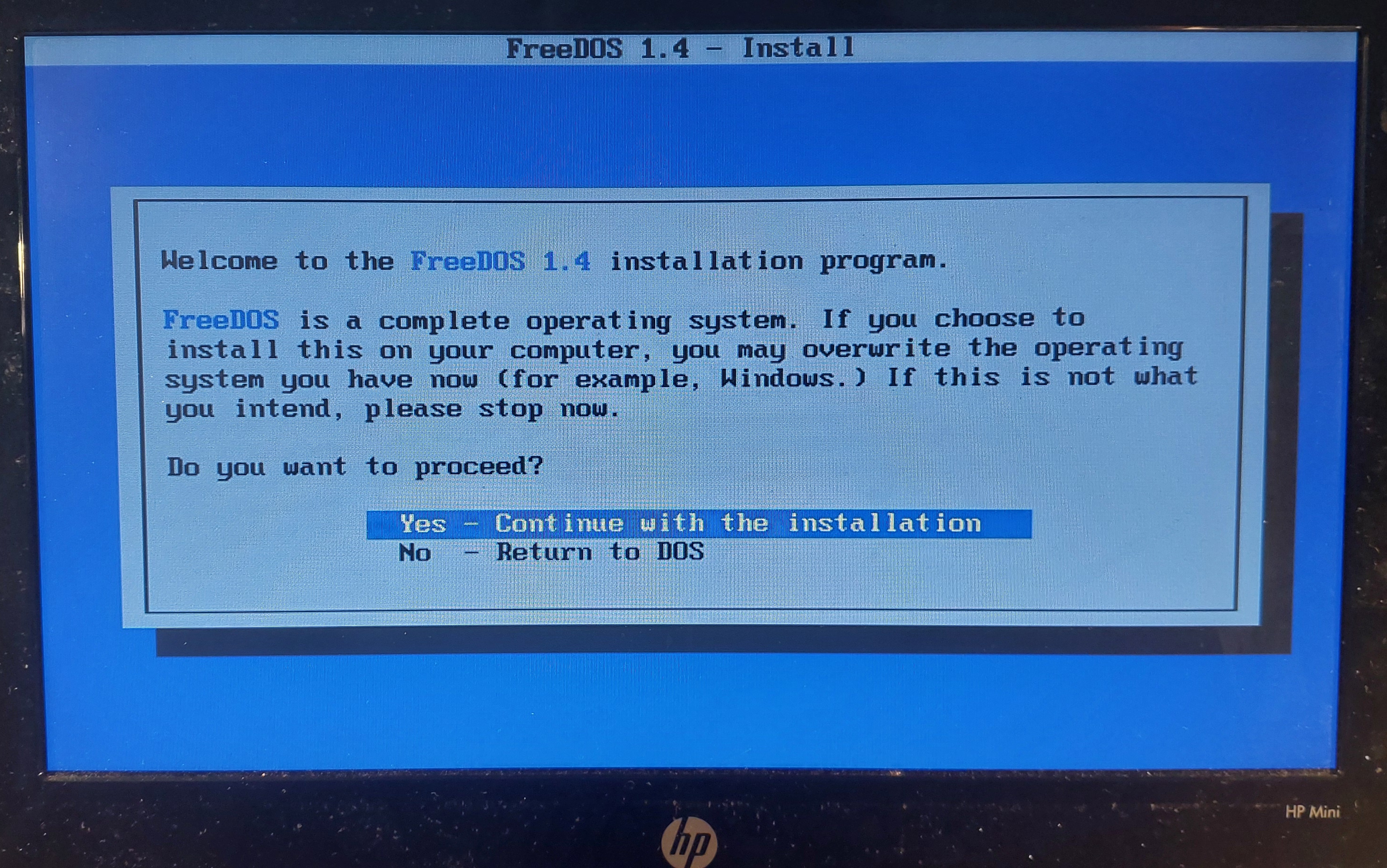
I don’t think I’ve used a pure DOS machine as anything but an occasional retrocomputing curio since some time in the late 1990s, because the Microsoft world long ago headed off into Windows country while I’ve been a Linux user for a very long time. But DOS hasn’t gone away even if Microsoft left it behind, because the FreeDOS project have created an entirely open-source replacement. It’s not MS-DOS, but it’s DOS. It does everything the way your old machine did, but in a lot of cases better and faster. Can I use it as one of my Daily Drivers here in the 2020s? There is only one way to find out.
With few exceptions, an important part of using an OS for this series is to run it on real hardware rather than an emulator. To that end I fished out my lowest-spec PC, a 2010 HP Mini 10 netbook that I hold onto for sentimental reasons. With a 1.6 GHz single core 32 bit Atom processor and a couple of gigabytes of memory it’s a very slow machine for modern desktop Linux, but given that FreeDOS can run on even the earliest PCs it’s a DOS powerhouse. To make it even more ridiculously overspecified I put a 2.5″ SSD in it, and downloaded the FreeDOS USB installer image.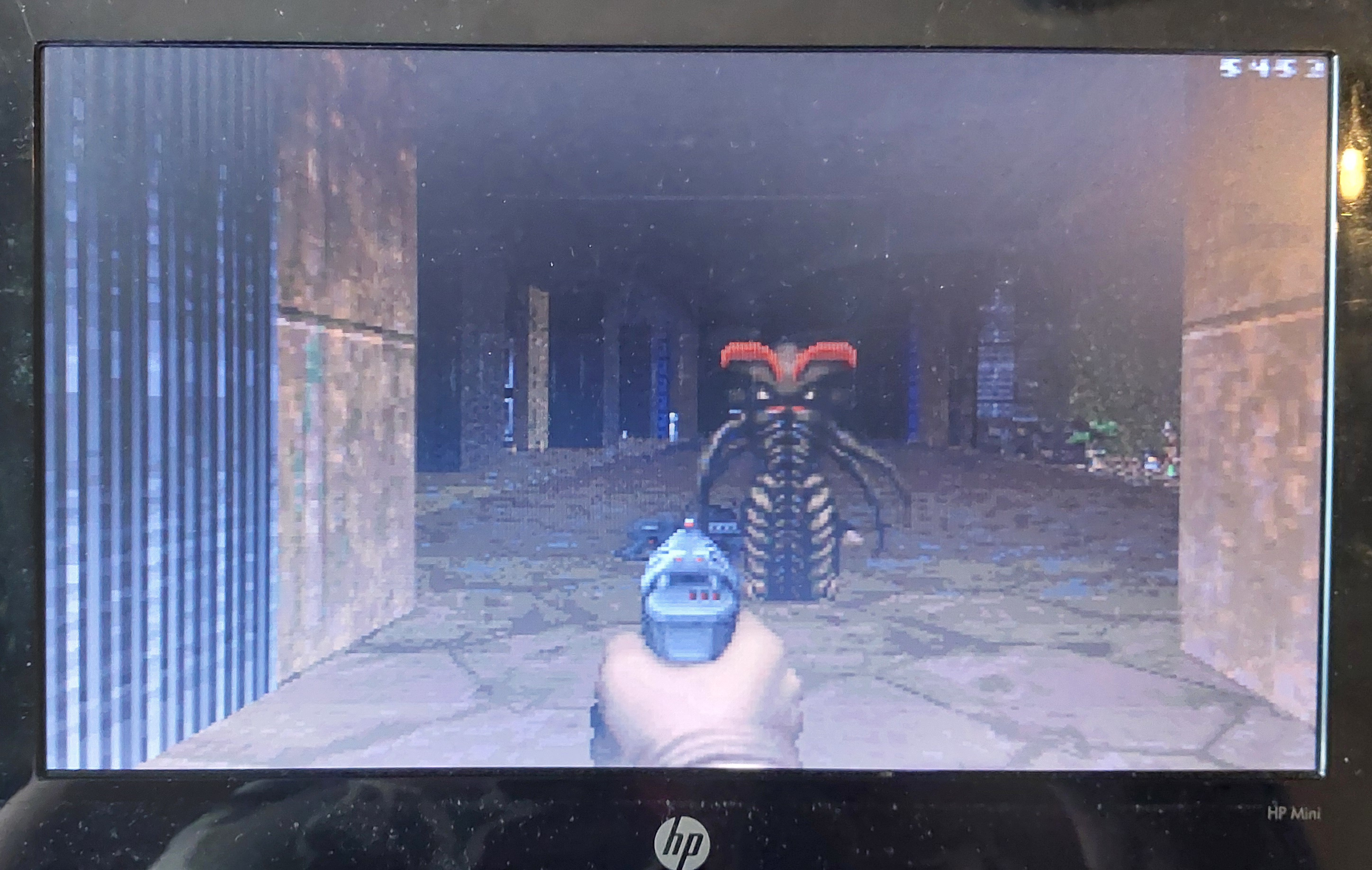
Installing FreeDOS is simple enough, just a case of booting from the install drive and following the instructions. There’s no automatic disk partitioning, but fortunately due to all that practice in the ’90s I’m a DOS FDISK wizard. I went for the full installation of every FreeDOS package, because with a machine this powerful, why not!
Booting into FreeDOS on a machine this much faster than a DOS-era PC is so fast as to feel almost instantaneous. The tiny size of the executables, the miniscule amount of resources required, and the speed of the SSD ncompared to an MFM or IDE hard drive makes it like no other OS I have tested, not even RiscOS on the Raspberry Pi. It almost doesn’t feel like the DOS I remember!
DOS has two config files for drivers and configuration, and while CONFIG.SYS and AUTOEXEC.BAT have morphed into FDCONFIG.SYS and FDAUTO.BAT they are exactly the same. Yet again, all that experience from the ’90s paid off, and I was immediately at home editing out all the default items relating to things such as a CD-ROM that I just don’t have.
I Wasn’t Networked When I Last Used DOS, And I’m Not This Time Round Either
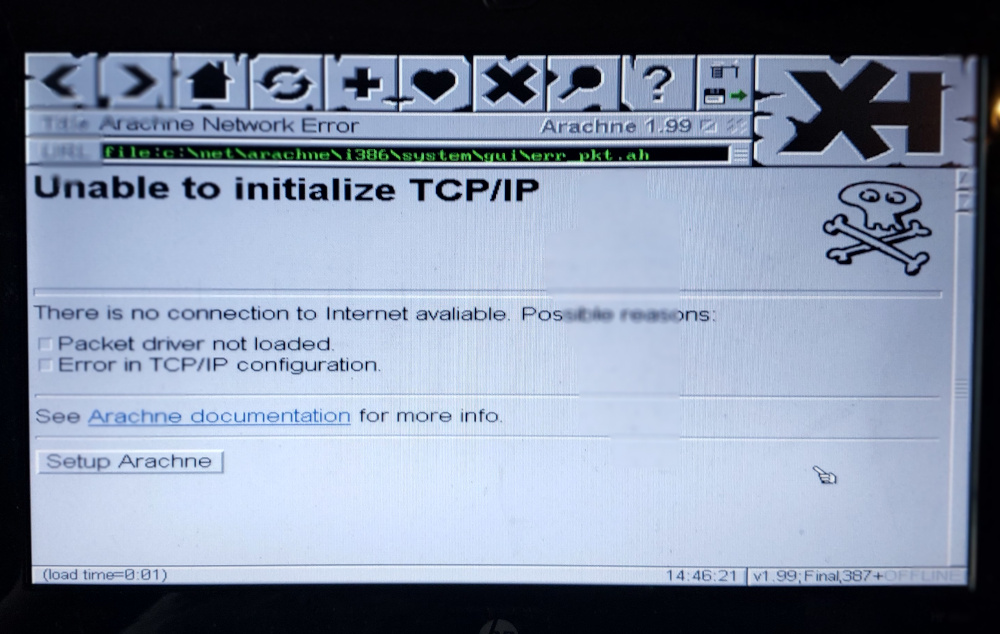
Navigating around the DOS command line I found all the different software that had been installed. There’s a package manager called FDIMPLES to manage it all, though since I had everything on my install medium I used it mostly to see what I had. Yes, it comess with DOOM, in fact in two different versions. I’m most interested for my work in using it with an internet connection though, so before I could try Arachne or Dillo to browse the web I needed to set up a network connection. And here I hit my first FreeDOS snag. It comes witht he excellent Crynwyr colelction of DOS network card drivers, but sadly the RealTek chip or the Broadcom wireless card in the HP are both too new to even have a DOS driver. So I could look at Arachne, but not do anything with it.
If I can’t write for Hackaday in a browser on this machine, can I use a word processor? Sadly there’s none included in the package list, but the FreeDOS website suggests Ability Plus. This is a former commercial package now freeware, so I downloaded it and transferred it to the HP. Sadly no matter what memory configurations I tried, I couldn’t get it to run. For a laugh I also tried Microsoft Word 5.5 which also refused to run, but given Microsoft’s shenanigans with DR DOS back in the day, that was hardly a surprise. I’m not giving up though, so this is being written in the FreeDOS editor.
A Distraction-Free Writing Powerhouse
For the past couple of months then, this quaint old laptop with a space-helmeted Wrencher sticker on the front has been my occasional companion. It’s been on the road with me, on the Eurostar through the Channel Tunnel, and into more than one hackerspace. Using DOS again has been an interesting experience, and sometimes frustrating when it comes to mixing up the forward slash and the back slash on returning to Linux, but it’s not been an unpleasant one. For a start, this is probably the fastest-responding computer I own, then there’s the distraction-free aspect of it, with no networking and a single-tasking user interface I have nothing to get in the way of my writing. Oddly I don’t remember my old 286 being like this, but the truth is I must never have appreciated what I had. Getting your work off a DOS machine with no network, floppy, or serial port is a little inconvenient and involves booting from a USB installation medium, but being honest that’s probably less of a chore than using a LapLink serial cable was back in the day.
If you need no-frills and no distraction computing and don’t mind forgoing drivers for all but the most ancient peripherals, then try FreeDOS. If it’s not quite the DOS for you but you still want to put a toe in the open-source DOS water, an alternative might be the DR-DOS derived SvarDOS, and if you want the real thing but don’t mind the version everyone hated, there’s always MS-DOS version 4. For myself though, I think I’ll stick with FreeDOS. Of all the operating systems in this series so far it’s the only one I’m going to hang on to; this little HP will come out of the drawer whenever I need to just go away and write something.
A Portable 12 VDC Water Chiller for the Chemistry Lab

Having a chiller is often essential for the chemistry laboratory, but what if you’re somewhere without easy access to water, nevermind a mains outlet to plug your usual chiller into? In that case you can build a portable one that will happily run off the 12 VDC provided by a mobile source like the accessory outlet in a car while reusing the water from its reservoir, as demonstrated by [Markus Bindhammer] in a recent video.
The build uses a compressor-based freezer as the base, which is significantly more capable than the typical Peltier-cooled refrigerators that cannot cool as fast or efficiently. The changes he made involve running in- and outlet tubing into the freezer’s compartment, with a submerged 12 VDC water pump providing the water to the outlet. This pump is controlled by a variable speed controller board that’s put in a box on the outside with the power lead also sneaking into the freezer. With these modifications in place the freezer’s functionality isn’t significantly impacted, so it can be used as normal.
After filling the compartment with water, the lid is closed and the freezer engaged. The pump controller is then switched on, with the water flow adjusted to fit the distillation job at hand. Although in this case a fairly small freezer was modified, nobody is saying that you cannot also do it with a much larger freezer, and fill it with ice cream and other treats to help it and lab critters cool down faster.
youtube.com/embed/eRXgIcXboKU?…
Australia’s Space Program Finally Gets Off The Pad, But Only Barely

Australia is known for great beaches, top-tier coffee, and a laidback approach to life that really doesn’t square with all the rules and regulations that exist Down Under. What it isn’t known for is being a spacefaring nation.
As it stands, a startup called Gilmour Space has been making great efforts to give Australia the orbital launch capability it’s never had. After numerous hurdles and delays, the company finally got their rocket off the launch pad. Unfortunately, it just didn’t get much farther than that.
You Will Not Go To Space Today
Gilmour Space was founded back in 2013, and established its rocketry program two years later. The company has a straightforward mission—it aims to provide Australian-made launch vehicles for putting satellites into orbit. Over the past decade, the company has been working hard on establishing a spaceport and building a series of ever-larger rockets, inching its way towards its stated goal.
The company aims to reach space with the Eris rocket. The 23-meter-long, 30-tonne vehicle came about after years of engineering work, and stands as Australia’s only realistic bid to join the exclusive club of nations capable of orbital launches. The three-stage rocket uses four hybrid rocket motors in the first stage, one in the second stage, and a liquid rocket engine in the third stage. It’s intended to carry payloads up to 300 kg into orbit. The Eris was first assembled and staged on the company’s launch pad in Bowen, Queensland, in early 2024, and even fully fueled up for a dress rehearsal in September last year. However, local aviation authority CASA was not yet satisfied with preparations, and had not provided the required permits for launch. Since then, the wait has continued, with an expected launch date in March 2025 passing by without fanfare. Even with CASA approval, the Australian Space Agency was still not satisfied with Gilmour’s preparations.
Ultimately, the company would wait long eighteen months for complete regulatory approval to launch their Eris rocket from the Bowen orbital spaceport. Ultimately, everything finally fell into place, with the company set to launch on July 30.
youtube.com/embed/4H7Lw8vuS1Q?…
The launch began as so many do, with smoke billowing from the pad as the four first-stage rocket motors ignited. Seconds later, Eris began to inch into the sky… only to falter at low altitude. Having barely cleared the top of the launch structure, the rocket began to fall back to Earth, toppling over sideways while creating a relatively small fireball in its failure. One presumes the payload—a jar of Vegimite sandwich spread—was lost.
Speaking after the event to ABC News, Gilmour Space founder Adam Gilmour speculated as to what happened. “From the videos, it looks like we lost one of the main engines a few seconds into the flight,” he stated. “I’m hoping the next rocket goes to orbit, and if it does, then the next rocket after that will be our first commercial one that takes satellites up.”
It may not have been much to look at, but the company was nonetheless positive about finally making forward steps towards its eventual goal. “Today, Eris became the first Australian made orbital launch vehicle to lift off from Australian soil — achieving around 14 seconds of flight,” stated the company. “For a maiden test flight, this is a strong result and a major step forward for Australia’s sovereign space capability.” Gilmour Space noted its multiple successes—all four rocket engines igniting successfully, the rocket clearing the tower, and the positive operation of its flight software and control systems. While the launch failed to get far off the pad—for reasons yet to be fully determined—the company was ultimately upbeat, and looks towards its second test flight of the Eris rocket.
youtube.com/embed/hWUQrFSYZqA?…
Indeed, this result has long been expected by Gilmour Space founder, Adam Gilmour. In interviews earlier this year, he noted that the complexities of large scale rocketry meant he didn’t expect grand achievements from the first test flight. “It’s very hard to test an orbital rocket without just flying it,” he told the Sydney Morning Herald in March this year. “We don’t have high expectations we’ll get to orbit… I’d personally be happy to get off the pad.”
Gilmour Space still has a long way to go to reach orbit—roughly 100 km or so, given the rocket only just got off the pad. Still, it’s hardly the first space program to face early failures on its way to the heavens. If anything, the test launch actually happening has reignited interest in the project, bringing renewed attention to the Australian effort to finally join the space club.
Bitchat, l’app di messaggistica indipendente da internet di Jack Dorsey genera dubbi sulla Privacy
La nuova app di Jack Dorsey, Bitchat, è improvvisamente sbarcata sull’App Store e ha suscitato grande scalpore, non tanto per la sua innovazione quanto per il suo creatore.
Il fondatore di Twitter e Block ha scritto personalmente il codice core dell’app in un weekend di inizio luglio, per poi renderla disponibile per il download su iOS. L’attenzione era rivolta alla semplicità e alla privacy, ma quel minimalismo nascondeva rischi che stanno già iniziando a emergere.
La caratteristica principale di Bitchat è la sua totale indipendenza da Internet. Il programma funziona sulla base di una rete mesh Bluetooth, consentendo agli utenti di scambiare messaggi senza Wi-Fi e comunicazioni mobili, se si trovano entro un raggio d’azione di circa 100 metri. Questo approccio rende l’applicazione particolarmente utile in condizioni di segnale debole, ad esempio durante festival, in montagna o durante calamità naturali. Esempi di soluzioni simili sono già esistiti: ad esempio, l’applicazione Bridgefy è stata utilizzata attivamente durante le proteste di Hong Kong, quando era fondamentale non essere intercettati tramite Internet.
L’interfaccia di Bitchat è estremamente essenziale: niente registrazione, login o profilo. L’utente accede immediatamente alla chat e può impostare un nome a piacere, modificabile a piacimento. Tutto ciò rende l’esperienza di comunicazione semplice e pressoché anonima, ma allo stesso tempo si apre a possibili abusi.
Il ricercatore di sicurezza Alex Radosha ha affermato che il sistema potrebbe essere facilmente falsificato perché l’identificazione dell’utente manca a livello architetturale. Ha sottolineato che “i dettagli contano in crittografia”, suggerendo che l’apparenza di sicurezza in questo caso non garantisce una vera protezione. Lo stesso Dorsey ha detto che il programma non era stato sottoposto a verifica indipendente e potrebbe contenere vulnerabilità. Allo stesso tempo, continua a presentarlo come una piattaforma di comunicazione privata.
La situazione è aggravata dal fatto che decine di app false con lo stesso nome sono già apparse sul Google Play Store, raccogliendo migliaia di download. In assenza di una versione ufficiale per Android, questo apre la strada agli aggressori che possono sostituire l’app e iniettare codice dannoso sotto le mentite spoglie di Bitchat.
Pertanto, il tentativo di lanciare un’applicazione di messaggistica radicalmente decentralizzata e semplice si è scontrato con questioni fondamentali di sicurezza e autenticazione. Quello che sembrava un nuovo passo verso la comunicazione privata e offline si è rivelato una dimostrazione di quanto facilmente l’atmosfera delle “giuste vibrazioni” possa trasformarsi in una vulnerabilità se le basi tecniche non sono protette in modo sicuro.
L'articolo Bitchat, l’app di messaggistica indipendente da internet di Jack Dorsey genera dubbi sulla Privacy proviene da il blog della sicurezza informatica.
Teure Arzttermine serviert: Bundesregierung wird auf Doctolib aufmerksam
netzpolitik.org/2025/teure-arz…


Con l’adesione al Safe l’Italia si allinea agli impegni con la Nato. L’analisi di Marrone (Iai)
@Notizie dall'Italia e dal mondo
La conferma si è fatta attendere ma è decisiva: l’Italia aderirà al Safe – Security Action for Europe – il fondo Ue per la difesa da 150 miliardi. Con l’aggiunta di Roma, sono diciotto gli Stati membri dell’Ue che hanno deciso di ricorrere ai prestiti comunitari per finanziare spese
Difesa e industria, così il governo pensa a una regia nazionale per la sicurezza
@Notizie dall'Italia e dal mondo
Secondo Milano Finanza il governo Meloni starebbe puntando a costruire un vero e proprio consorzio nazionale della difesa a guida pubblica. L’obiettivo? Integrare capacità industriali, attrarre fondi europei e generare occupazione, sviluppando tecnologie dual-use che abbiano ricadute anche civili,
Kilopixel by Ben Holmen turns a CNC machine and a thousand wooden blocks into pixel art.#art #coolthings


Watch This Guy’s Interactive Wooden Pixel Machine Make Art in Real Time
Sitting in my office in NYC, I sent a CNC machine in a guy’s workshop in Wisconsin a 40 by 25 pixel drawing and watched it flip hand painted wooden blocks across a grid, one by one, until the glorious smiling 404 Media logo appeared—then watched it slowly erase, like a giant Etch A Sketch, moving on to the next drawing.Designer Ben Holmen created the Kilopixel, a giant grid made of 1,000 wooden blocks that a robot arm slowly turns to form user-submitted designs. “Compared to our modern displays with millions of pixels changing 60 times a second, a wooden display that changes a single pixel 10 times a minute is an incredibly inefficient way to create an image,” Holmen wrote on his blog detailing the project.
Choosing what to make the pixels from was its own hurdle: Holmen wrote that he tried ping pong balls, Styrofoam balls, bouncy balls, wooden balls, 3D printed balls, golf balls, foam balls, “anything approximately spherical and about 1-1.5in in diameter.” Some of these were too expensive; others didn’t hold up well to paint or drilling. Holmen settled on painted wooden blocks, each serving as one 40mm pixel. To be sure each block was exactly the right size, he built 25 shelves and drilled 40 holes into each, threading the blocks onto the shelves using metal wires. “This was painstaking and time consuming - I broke it down into multiple sessions over several weeks,” he wrote. “But it did create a very predictable grid of pixels and guaranteed that each pixel moved completely independently of the surrounding pixels.
youtube.com/embed/d5v3DRdMQ8U?…
From there, he used a CNC machine, which moves on the X, Y, and Z axes: across the grid, up and down, and the flipping finger that pokes inward to turn the pixel-blocks. Holmen wrote that he connected a Raspberry Pi to the CNC controller, which queries an API to get the next pixel in the design, activates the “pixel poker,” and reads a light sensor to determine whether the pixel face is painted black or raw wood.Two webcams stream the Kilopixel to Youtube, with a view of the whole grid and a view of the poker turning the blocks one by one. “The camera, USB hub, and light are hung from the ceilingwith a respectful amount of jank for the streaming phase of this project,” Holmen wrote. Anyone with a Bluesky account can connect their account and submit a pixel drawing for the machine to create, and people can upvote submissions they want to see next. Once it’s finished, the system uploads a timelapse of the painting to the site and posts it to Bluesky, tagging the submitter.
Drawn by @[url=did:plc:pt47oe625rv5cnrkgvntwbiq]Sam Cole[/url], completed in 44m39 Draw your own at kilopx.com
— kilopixel (@kilopx.com) 2025-08-05T20:33:14.719821ZI'm recording timelapses for every submission - this took 41 minutes in real time. Soon you'll be able to submit your own images to be drawn on my kilopixel! Can't wait to share this with the world and see what y'all come up with
— Ben Holmen (@benholmen.com) 2025-07-21T04:59:32.203Z
This entire process took him six years. I asked Holmen in an email what it cost him: “Probably around $1000 and hundreds of hours of my time,” he told me.And the project isn’t over: It still requires some babysitting. Sometime early Tuesday morning, the rig got misaligned while working on an elaborate pixellated American Gothic, with the flipper-finger grasping at the air between blocks instead of turning them. Holmen had to manually reset it in the morning, entering the feed to tinker with the grid.
He said he plans to run it 24/7, but that it might not go flawlessly at first. “I've had to restart the controller script twice in 10 hours, and restart the YouTube stream once,” he said on Monday, before the overnight error. “I am planning to run it for a few days or weeks depending on interest, then I'll move on to a different control concept. I don't want to babysit a finicky device all the time.”
playlist.megaphone.fm?p=TBIEA2…
When I checked Kilopixel’s submissions on Monday, someone had drawn the Hacker News logo—a sure sign that a hug of death was coming. I asked Holmen if he’s had issues with overload. “Just one—I undersized my web server for the attention it got,” he told me on Monday evening. “It's been #1 on Hacker News for about 10 hours, which is a lot of traffic. kilopx.com has received about 13,000 unique visitors today, which I'm very pleased with. The article has received about 70,000 unique visitors so far.”The Kilopixel experiment might also be setting a time-to-penis record: In the six hours it’s been online as of writing this, I haven’t seen anyone try to make the robot draw a dick, yet. Holmen mentioned “defensive features” built into the web app in his blog for mitigating abuse, but so far people have behaved themselves. “I expect the best and worst out of people on the internet. I built an easy way for admins to delete gross or low effort submissions and enlisted a couple of trusted friends to keep an eye on the queue with me,” Holmen told me. “I'm certain there are ways to work around things, or submit enough to make cleanup a chore, but I decided to not lock things down prematurely and just respond as things evolve.”
Time to Penis / TTP
Time to Penis, abbreviated to TTP, is a video game development metric and slang term for the time it takes players to generate a penis-shaped object via any available means.Philipp (Know Your Meme)

Shared ChatGPT indexed by Google; how Wikipedia is fighting AI slop; and the history of how we got to Steam censorship.#Podcast
Podcast: Google Is Exposing Peoples’ ChatGPT Secrets
We start this week with Joseph’s story about nearly 100,000 ChatGPT conversations being indexed by Google. There’s some sensitive stuff in there. After the break, Emanuel tells us about Wikipedia’s new way of dealing with AI slop. In the subscribers-only section, Sam explains how we got to where we are with Steam and Itch.io; that history goes way back.
playlist.megaphone.fm?e=TBIEA5…
Listen to the weekly podcast on Apple Podcasts,Spotify, or YouTube. Become a paid subscriber for access to this episode's bonus content and to power our journalism. If you become a paid subscriber, check your inbox for an email from our podcast host Transistor for a link to the subscribers-only version! You can also add that subscribers feed to your podcast app of choice and never miss an episode that way. The email should also contain the subscribers-only unlisted YouTube link for the extended video version too. It will also be in the show notes in your podcast player.
- Nearly 100,000 ChatGPT Conversations Were Searchable on Google
- Wikipedia Editors Adopt ‘Speedy Deletion’ Policy for AI Slop Articles
- The Anti-Porn Crusade That Censored Steam and Itch.io Started 30 Years Ago
The 404 Media Podcast
Tech News Podcast · Updated Weekly · Welcome to the podcast from 404 Media where Joseph, Sam, Emanuel, and Jason catch you up on the stories we published this week. 404 Media is a journalist-owned digital media company exploring the way …Apple Podcasts

La Lega ha presentato una legge per punire chi critica Israele - L'INDIPENDENTE
lindipendente.online/2025/08/0…

Ministero dell'Istruzione
Il Ministro Giuseppe Valditara ha firmato due decreti che stanziano complessivamente 45 milioni di euro, di cui 25 milioni per la #scuola in #carcere e 20 milioni per l'istruzione in #ospedale e #domiciliare, con il fine di potenziare l’offerta forma…Telegram


Bastian’s Night #437 August, 7th
Every Thursday of the week, Bastian’s Night is broadcast from 21:30 CEST (new time).
Bastian’s Night is a live talk show in German with lots of music, a weekly round-up of news from around the world, and a glimpse into the host’s crazy week in the pirate movement.
If you want to read more about @BastianBB: –> This way
Ponte sullo Stretto, sì al progetto definitivo. Salvini: “Ci sarà la metro e 120mila posti di lavoro”
@Politica interna, europea e internazionale
Il Ponte sullo Stretto si farà: parola di Matteo Salvini. Esulta in conferenza stampa il ministro delle Infrastrutture e Trasporti, che parla di “giornata storica”, dopo che il Cipess ha approvato il progetto definitivo per la realizzazione del ponte che
furlantarro88 likes this.
Siamo partiti a piedi dal WTC e abbiamo percorso tutta la Rambla fino a Plaza Catalunya.
Lungo la Rambla, ovviamente, non c'è molto traffico, forse anche a causa dei lavori in corso.
Arrivati a Plaza Catalunya, però... non c'era traffico eccessivo nemmeno lì: tanti mezzi pubblici, tanti taxi (per la gran parte elettrici) e pochissimo traffico privato. Anzi, in alcune zone ho avuto l'impressione che il traffico privato non ci fosse proprio.
Abbiamo proseguito per Passeig de Gracia per andare a vedere le architetture di Gaudi e c'era poco traffico anche lì.
Da lì abbiamo raggiunto, sempre a piedi, la Sagrada Familia passando per Carrer de Mallorca.
In questa zona meno taxi, un po' di mezzi privati in più, ma sempre ben servito dal trasporto pubblico.
Niente strobazzamenti di clacson, traffico fluido e rilassato.
Ritorno in metropolitana, puntualissima e con fermate in punti strategici.
Consiglio la visita al nostro ministro delle infrastrutture #salvini , vedi mai...
#barcelona #barcellona #traffico #mezzipubblici #mobilita #sostenibilita
Nicola Pizzamiglio likes this.
veramente intervento chirurgico piu impegnativo !!


6 agosto 1945: bomba atomica a Hiroshima – Giorni di Storia
giornidistoria.net/6-agosto-19…

Poliversity - Università ricerca e giornalismo reshared this.
informapirata ⁂ reshared this.

Si presenta come vittima di complotti, rafforzando il senso di persecuzione tra i suoi sostenitori.
Usa il potere mediatico per intimidire, screditare o ridicolizzare chi lo critica.
Alimenta un clima di scontro più che di dialogo.
Si, è un ottimo presidente!!
simona likes this.
La mia opinione su Nanjou-san wa Boku ni Dakaretai

Ho scoperto questo manga di recente e me ne sono innamorato. Affronta tematiche importanti senza banali superficialità, offrendo uno spaccato "chiaramente un po' romanzato" della vita degli studenti delle superiori. Onestamente, non ne ho mai abbastanza!
🌕⭐: Non amo dare voti assoluti, ma questo per me se li merita tutti. Aspetto con impazienza i nuovi capitoli.
Fermi tutti, perché siamo davanti all’ennesima figura da clown del duo Meloni-Tajani.
Inviano un diplomatico a Caracas, in Venezuela, per trattare la liberazione di una quindicina di nostri connazionali detenuti.
Hanno solamente annunciato la visita alle autorità venezuelane, senza concordare altro. Quindi, all’arrivo del diplomatico italiano, dopo averlo fatto attendere per qualche ora in una sala d’attesa, lo hanno rispedito in patria con le seguenti parole: "Non siamo più al tempo delle colonie."
Uno schiaffo diplomatico e una becera figura a livello internazionale per quel governo che ogni due per tre ci fa la manfrina della “credibilità internazionale”.
Questo accade quando non hai idea di cosa significhi diplomazia e rispetto diplomatico. Questo accade quando sei servo. Questo accade semplicemente perché l’asino può fingersi cavallo, ma prima o poi dovrà ragliare.
E ha ragliato per la seconda volta in pochi giorni, dopo averlo fatto in Libia, dove anche da lì il Ministro degli Interni Piantedosi è stato rispedito a casa in malo modo!
GiuseppeSalamone

Slavs and Tatars - L'intreccio tra identità, spiritualità e post colonialismo
🧭 Quando spiritualità, politica e tradizioni si intrecciano, nascono spazi inaspettati, capaci di superare ogni binarismo.
Slavs and Tatars, collettivo di arte e ricerca, ci ricorda che le identità non sono mai chiuse: sono fatte di passaggi, contaminazioni, transiti fra mondi come i simboli e i rituali che attraversano l’Eurasia.
Nel dialogo con Kathleen Reinhardt e Leah Feldman, il loro lavoro appare come un continuo attraversamento: dalle pratiche spirituali e conviviali (come il samovar o la condivisione del tè) a quelle linguistiche e politiche, sempre alla ricerca di ciò che sfugge alle categorie imposte.
La loro idea di postcoloniale non si rifugia nell’identità da difendere, ma apre possibilità: celebra le mescolanze, crea collettività mai precostituite, né dettate dall’alto.
Penso a certe risonanze con il lavoro di Mona Hatoum: anche lei capace di trasformare simboli domestici e geografici in strumenti di disorientamento critico.
Simboli come il Simurgh, il cetriolo sotto sale o la lingua stessa diventano strumenti per costruire mondi condivisi, lontani da logiche etno-nazionali e imperiali, offrendo “ospitalità” a chi spesso, nei musei o nei discorsi ufficiali, non trova spazio per riconoscersi.
Anche qui nel Poliverso e su Friendica possiamo fare delle nostre interazioni un laboratorio di attraversamento, ascolto e ridefinizione reciproca.
Quali confini sentiamo il bisogno di attraversare?
Come si intrecciano, nelle nostre storie, le radici spirituali e politiche che portiamo dentro?
🔗 moussemagazine.it/magazine/sla…
@Arte e Cultura @Cultura, Storia, Libri, Arte, Architettura, Scuola, Design, Fumetti e Bookwyrm @arthistory group
#arte #artecomtemporanea #SlavsAndTatars

Slavs and Tatars: Being One with Many, Being One Through Many. Leah Feldman, Kathleen Reinhardt, and Payam
Spanning languages, regions, and disciplines, the art collective Slavs and Tatars—founded by Payam Sharifi and Kasia Korczak—has, since its inception as aMousse Magazine
like this
reshared this
se non metto il titolo cosa succede su mastodon?
Succede esattamente quello che succede con un post Mastodon: semplicemente lo vedi come un post mastodon.
Comunque con Friendica puoi scrivere post con titolo o senza titolo. L'unica differenza è che se linki un post con titolo, chi lo visita lo vede come se fosse un articolo di wordpress, mentre se lo posti senza titolo sembra più un post di Facebook.
La modifica che hai fatto ora però serve solo per chi vede il tuo post dal proprio account mastodon
in particolare se si taggano i gruppi, che fosse meglio così.
Sì, con i gruppi è meglio usare il titolo, ma ormai Lemmy e NodeBB riescono a estrapolare il primo paragrafo come se fosse il titolo e quindi puoi aprire un thread anche da mastodon.
Io per esempio (ma solo quando ho tempo da perdere) certe volte scrivo un post senza titolo vero ma con titolo "finto".
Se infatti scrivo all'inizio del post un paragrafo come
[h1][b][url=https://informapirata.it]Questo è il mio blog[/url][/b][/h1]
seguito da un testo qualsiasi come
 Testo del paragrafo
@test@feddit.it
Il risultato sarà questo:
Questo è il mio blog
Testo del paragrafo
@Test: palestra e allenamenti :-)
e sarà visibile così anche da Mastodon:

Nicola Pizzamiglio likes this.
Franc Mac likes this.
arthistory group reshared this.
The lawsuit alleges XVideos, Bang Bros, XNXX, Girls Gone Wild and TrafficFactory are in violation of Florida's law that requires adult platforms to verify visitors are over 18.
The lawsuit alleges XVideos, Bang Bros, XNXX, Girls Gone Wild and TrafficFactory are in violation of Floridax27;s law that requires adult platforms to verify visitors are over 18.#ageverification
Contracting records reviewed by 404 Media show that ICE wants to target Gen Z, including with ads on Hulu and HBO Max.#News #ICE
ICE Is About To Go on a Social Media and TV Ad Recruiting Blitz
Immigration and Customs Enforcement (ICE) is urgently looking for a company to help it “dominate” digital media channels with advertisements in an attempt to recruit 14,050 more personnel, according to U.S. government contracting records reviewed by 404 Media. The move, which ICE wants to touch everything from social media ads to those played on popular streaming services like Hulu and HBO Max, is especially targeted towards Gen Z, according to the documents.The push for recruitment advertising is the latest sign that ICE is trying to aggressively expand after receiving a new budget allocation of tens of billions of dollars, and comes alongside the agency building a nationwide network of migrant tent camps. If the recruitment drive is successful, it would nearly double ICE’s number of personnel.
💡
Do you work at ICE? Did you used to? I would love to hear from you. Using a non-work device, you can message me securely on Signal at joseph.404 or send me an email at joseph@404media.co.“ICE has an immediate need to begin recruitment efforts and requires specialized commercial advertising experience, established infrastructure, and qualified personnel to activate without delay,” the request for information (RFI) posted online reads. An RFI is often the first step in the government purchasing technology or services, in which it asks relevant companies to submit details on what they can offer the agency and for how much. The RFI adds “This effort ties to a broader national launch and awareness saturation initiative aimed at dominating both digital and traditional media channels with urgent, compelling recruitment messages.”
Upgrade to continue reading
Become a paid member to get access to all premium content
Upgrade

Dopo tanto lavoro, Ghost ha finalmente attivato la federazione Activitypub (e non solo). Ma quali sono le newsletter e i blog italiani basati su #Ghost?
@Discussioni sul Fediverso italiano
Al momento questi sono quelli che abbiamo censito e che ricondividiamo per tutti gli interessati:
1) oradecima by Martino Wong: @oradecima by Martino Wong
2) Dungeonauta: @Dungeonauta
3) Monryse: @MonRyse
4) Mindthechart Intelligence: @MindTheChart Intelligence
5) Restworld: @Restworld Blog
6) Il Blog di Davide Benesso: @Davide Benesso: curiosità e automiglioramento
7) Gaming Review: @GamingReview.it
8) WPC Tech: @WPC Tech
9) The Submarine: @The Submarine
10) Manolo Macchetta: @Manolo Macchetta
11) Flavio Pintarelli: @Flavio Pintarelli | Writer & Strategist
12) Giovanni Bertagna: @Giovanni Bertagna - Blog
CONOSCI ALTRI BLOG E NEWSLETTER BASATI SU GHOST? ALLORA SEGNALACELI!
like this
reshared this

Ghost: blog e newsletter italiane likes this.
Ghost: blog e newsletter italiane reshared this.

E' più semplice a farsi che a dirsi.
Ghost: blog e newsletter italiane likes this.
Ghost: blog e newsletter italiane reshared this.
Ghost: blog e newsletter italiane likes this.
Ghost: blog e newsletter italiane reshared this.
Helsinki, l'atto finale dell'Europa

Helsinki, l’atto finale dell’Europa
Lo spirito di Helsinki è svanito, e con esso la vecchia idea di sicurezza europea Questa settimana ricorre il 50esimo anniversario di un evento storico per la diplomazia europea.www.altrenotizie.org
Assalto alla Freedom Flottilla: chi sono gli incursori israeliani
@Notizie dall'Italia e dal mondo
Il commando Shayetet 13 è lo stesso impiegato nelle operazioni più violente contro la popolazione palestinese
L'articolo Assalto alla Freedom Flottilla: chi sono pagineesteri.it/2025/08/05/med…
Nicola Pizzamiglio likes this.
We oppose efforts to change Section 230 protections
Section 230 of the Communications Decency Act (CDA230), specifically section 230(c) which reads:
(c)Protection for “Good Samaritan” blocking and screening of offensive material
(1)Treatment of publisher or speaker
No provider or user of an interactive computer service shall be treated as the publisher or speaker of any information provided by another information content provider.
(2)Civil liability
No provider or user of an interactive computer service shall be held liable on account of—
(A)any action voluntarily taken in good faith to restrict access to or availability of material that the provider or user considers to be obscene, lewd, lascivious, filthy, excessively violent, harassing, or otherwise objectionable, whether or not such material is constitutionally protected; or
(B)any action taken to enable or make available to information content providers or others the technical means to restrict access to material described in paragraph (1)
is the reason we have user shared content on millions of sites around the Internet. It is what protects the comment sections of our site and all others on the Internet.
Efforts to tamper with Section 230 have made people worse off and harmed our 1st Amendment rights. With FOSTA and SESTA, Congress excluded consensual sex work from Section 230 protections. The resulting law has made consensual sex work more difficult and more dangerous for sex workers while not stopping sex-focused human trafficking.
The Massachusetts Pirate Party categorically opposes efforts to exclude any human activity from Section 230 protections or to limit or expire Section 230 protections in whole or in part.
Adopted at our July 13th, 2025 member meeting.
Justizstatistik 2023: Polizei hackt alle fünf Tage mit Staatstrojanern
netzpolitik.org/2025/justizsta…

Alberto V
in reply to Andrea R. • •Andrea R.
in reply to Alberto V • •Magari devo chiedere all'IA di whatsupp 😀