
OWASP Top 10 2025: le nuove minacce per le applicazioni web, Supply chain tra le prime tre
L’OWASP aggiorna dopo 4 anni la sua lista delle TOP10 relativa ai rischi più pericolosi per le applicazioni web, aggiungendo due nuove categorie e rivedendo la struttura della classifica.
L’organizzazione ha pubblicato una bozza della versione 2025 che risulta aperta ai commenti fino al 20 novembre. Questo documento è una versione quasi definitiva della Top 10 di OWASP, che riflette le attuali minacce per sviluppatori e amministratori web.
Come nell’edizione precedente, il Broken Access Control è rimasto al primo posto. Questa categoria è stata ampliata per includere anche levulnerabilità SSRF, che in precedenza si classificavano al decimo posto.
La Security Misconfiguration si classifica al secondo posto, in crescita rispetto al quinto della classifica del 2021. I problemi relativi alla supply-chain invece si classificano al terzo posto. Si tratta di una versione ampliata della categoria Componenti vulnerabili e obsoleti, che comprende problemi e compromissioni nell’ecosistema delle dipendenze, nei sistemi di build e nell’infrastruttura di distribuzione. Secondo OWASP, questi rischi erano tra le principali preoccupazioni della comunità professionale durante il sondaggio.
Seguono Cryptographic Failures, Injection (incluse XSS e SQL injection) e Insecure Design: tutte e tre le categorie hanno perso due posizioni, occupando rispettivamente il quarto, quinto e sesto posto. Authentication Failures, Software or Data Integrity Failures e Logging & Alerting Failures hanno mantenuto le posizioni precedenti, dal settimo al nono posto.
Una nuova categoria nella top ten è “Gestione errata di condizioni eccezionali”, che conclude l’elenco. Include errori nella gestione delle eccezioni, risposte errate alle anomalie, gestione impropria degli errori e guasti logici che si verificano in condizioni operative di sistema non standard.
Le 10 principali modifiche OWASP rispetto al 2021 (OWASP)

I rappresentanti dell’OWASP hanno sottolineato che la struttura dell’elenco del 2025 differisce da quella del 2021. L’analisi ora tiene conto del numero di applicazioni testate durante l’anno e del numero di sistemi in cui è stata rilevata almeno un’istanza di una specifica CWE (Common Weakness Enumeration).
Questo approccio consente di monitorare la prevalenza delle vulnerabilità nell’intera gamma di prodotti testati, indipendentemente dal numero di occorrenze dello stesso problema all’interno di una singola applicazione. Per l’analisi sono state utilizzate 589 CWE, rispetto alle sole 30 del 2017 e alle circa 400 del 2021.
Per valutare la sfruttabilità e l’impatto tecnico, OWASP ha utilizzato i dati CVE, raggruppandoli per CWE e calcolando i valori medi in base ai punteggi CVSS. A causa dei limiti dei test automatizzati, sono state selezionate solo otto categorie sulla base di questi dati. Le restanti due sono state ricavate da un sondaggio della comunità in cui gli esperti hanno identificato i rischi che consideravano più critici nella pratica.
La classifica OWASP Top 10 2025 riflette quindi uno spostamento dell’attenzione della comunità dai classici errori di implementazione ai problemi di configurazione, architettura e supply chain che portano sempre più spesso a compromessi nelle moderne applicazioni web.
L'articolo OWASP Top 10 2025: le nuove minacce per le applicazioni web, Supply chain tra le prime tre proviene da Red Hot Cyber.
Non è il dark web a vendere i tuoi dati. Sei tu che li metti in saldo ogni giorno!
Fatto spiacevole: quello dei dati personali è un mercato molto appetibile e di particolare valore per i cybercriminali, per motivi tutt’altro che difficili da immaginare. Non parliamo solo di scam o furti d’identità, ma di un complesso di attività illecite che possono trovare impiego nei modi più disparati. Questo riguarda sia i dati esposti online sia quelli reperiti all’interno dei marketplace del dark web, con il comune intento di realizzare dei guadagni diretti o indiretti.
Appreso che un utilizzo indesiderato dei nostri dati personali esiste ed è anzi una buona fetta di mercato per i cybercriminali, a questo punto, potremmo ritenere che tutta la normativa sulla privacy sia totalmente inutile. Insomma: se un cybercriminale vuole commettere una serie di attività illecite, certamente l’essersi procurato i nostri dati personali violando le regole probabilmente non è neanche degno di essere contrassegnato come “ultimo dei suoi problemi”. Ma bisogna ragionare sul perché i nostri dati personali diventano tanto facilmente reperibili, scoprendo così attraverso pochissimi passaggi logici che una maggiore attenzione da parte di chi svolge operazioni sugli stessi a riguardo ne ridurrebbe la disponibilità.
Per quanto non sia possibile avere uno scenario in cui il rischio di vedere i nostri dati personali impiegati in attività illecite viene azzerato, può essere desiderabile quanto meno uno in cui il saccheggio degli stessi sia particolarmente difficoltoso e il bottino meno remunerativo. Insomma: è chiaro che nel momento in cui i costi superano le opportunità, solitamente un cybercriminale desiste. A meno che non sia particolarmente motivato, ovviamente.
Questo però richiede una premessa. Ogni soggetto che raccoglie e impiega i dati personali è chiamato a garantire la protezione dei dati personali per tutta la filiera in cui sono svolte operazioni sugli stessi, andando così ad attenzionare proprio quegli aspetti rilevanti individuati dalla norma. Ovverosia: verificare che i dati siano lecitamente acquisiti, ne siano definite le finalità e vengano raccolti e conservati solo i dati necessari a perseguire le stesse.
Ovviamente, tenendo conto che ogni operazione deve essere svolta in sicurezza.
Non c’è privacy senza sicurezza.
L’aspetto che emerge è indubbiamente quello della sicurezza, per logica e rilevanza. Questo è richiamato non solo dalla norma, ma si pone come premessa: il trattamento in sicurezza dei dati personali garantisce una mitigazione per i rischi che incombono sull’interessato. Senza sicurezza, non può infatti parlarsi di protezione adeguata.
Un generale e più elevato livello di sicurezza contrasta il mercato del cybercrimine, ma questo richiede un effort condiviso da più attori ovverosia tutti i soggetti che svolgono operazioni sui dati. L’orientamento è fornito dalla normativa che obbliga a ragionare su quali dati raccogliere, perché e soprattutto per quanto tempo. Motivare ogni passaggio comporta una maggiore attenzione, e una maggiore attenzione consente di superare tutta una serie di criticità collegate a inconsapevolezza, incuria e disattenzione.
Ecco dunque che il rispetto della privacy – intesa nella sua accezione di protezione dei dati personali – è la premessa affinché i dati siano trattati in modo sicuro. O meglio: più sicuro rispetto allo scenario alternativo in cui non ci sono i presidi imposti dalla norma.
Il fattore culturale.
Un approccio culturale che tiene conto dei rischi per gli interessati richiede che i soggetti che decidono sulle sorti dei dati personali sono responsabilizzati ma anche una maggiore attenzione diffusa al tema. Questo comporta che le garanzie di protezione dei dati personali sono criteri di selezione. Certo, parliamo di garanzie percepite e dunque può essere possibile una strategia di privacywashing, ma un utente o consumatore esprime una domanda di servizi più attenti al rispetto della norma e quindi maggiormente sicuri.
Questo, di fatto, aumenta il costo per il cybercrime in questo ambito.
Meno dati facilmente disponibili comporta infatti costi maggiori.
It’s the market, baby.
L'articolo Non è il dark web a vendere i tuoi dati. Sei tu che li metti in saldo ogni giorno! proviene da Red Hot Cyber.
Paolo Redaelli reshared this.
Resurrecting Conquer: A Game from the 1980s

[Juan] describes himself as a software engineer, a lover of absurd humor, and, among other things, a player of Nethack. We think he should add computer game archaeologist to that list. In the 1990s, he played a game that had first appeared on USENET in 1987. Initially called “Middle-earth multiplayer game,” it was soon rebranded with the catchier moniker, Conquer.
It may not seem like a big thing today, but writing multiplayer software and distributing it widely was pretty rare stuff in the late 1980s or early 1990s. In 2006, [Juan] realized that this game, an intellectual predecessor to so many later games, was in danger of being lost forever. The source code was scattered around different archives, and it wasn’t clear what rights anyone had to the source code.
[Juan] set out to find the original authors [Edward Barlow] and [Adam Bryant]. Of course, their e-mail addresses from USENET were long dead. With persistence, he finally found [Barlow] in 2006. He was amenable to [Juan] porting the code over, but didn’t know how to contact [Bryant].
[Juan] continued to leave posts and follow up leads. He did eventually find [Bryant], who read one of the posts about the project and offered his permission to GPL the code. This was in 2011, nearly five years after the release from [Barlow]. He also discovered there was a third author who was also game. Unfortunately, [Richard Caley] had already passed away, so there was no way to obtain his release.
You can compare the original version with the new updated version from [Juan]. A software accomplishment worthy of Indiana Jones.
We love digging through old code. Especially for software that was especially influential.
PPI board meeting on 18.11.2025, 14:00 UTC
Ahoy Pirates,
Our next PPI board meeting will take place on 18.11.2025, 14:00 UTC / 15:00 CET.
All official PPI proceedings, Board meetings included, are open to the public. Feel free to stop by. We’ll be happy to have you.
Where:jitsi.pirati.cz/PPI-Board
Agenda: Pad: https://etherpad.pp-international.net/p/ppi-board-meeting-2025-08-05-vnly0cj
All of our meetings are posted to our calendar: pp-international.net/calendar/
We look forward to seeing visitors.
Thank you for your support,
The Board of PPI
Gazzetta del Cadavere reshared this.
Global efforts to protect the environment
PPI’s main delegate at the United Nations Office of Geneva, Mr. Carlos Polo, attended events of the Environmental Programme (UNEP) this August. We attach some pictures of his visit, and we offer some comments about the efforts of our organization in helping to shape environmental policy.
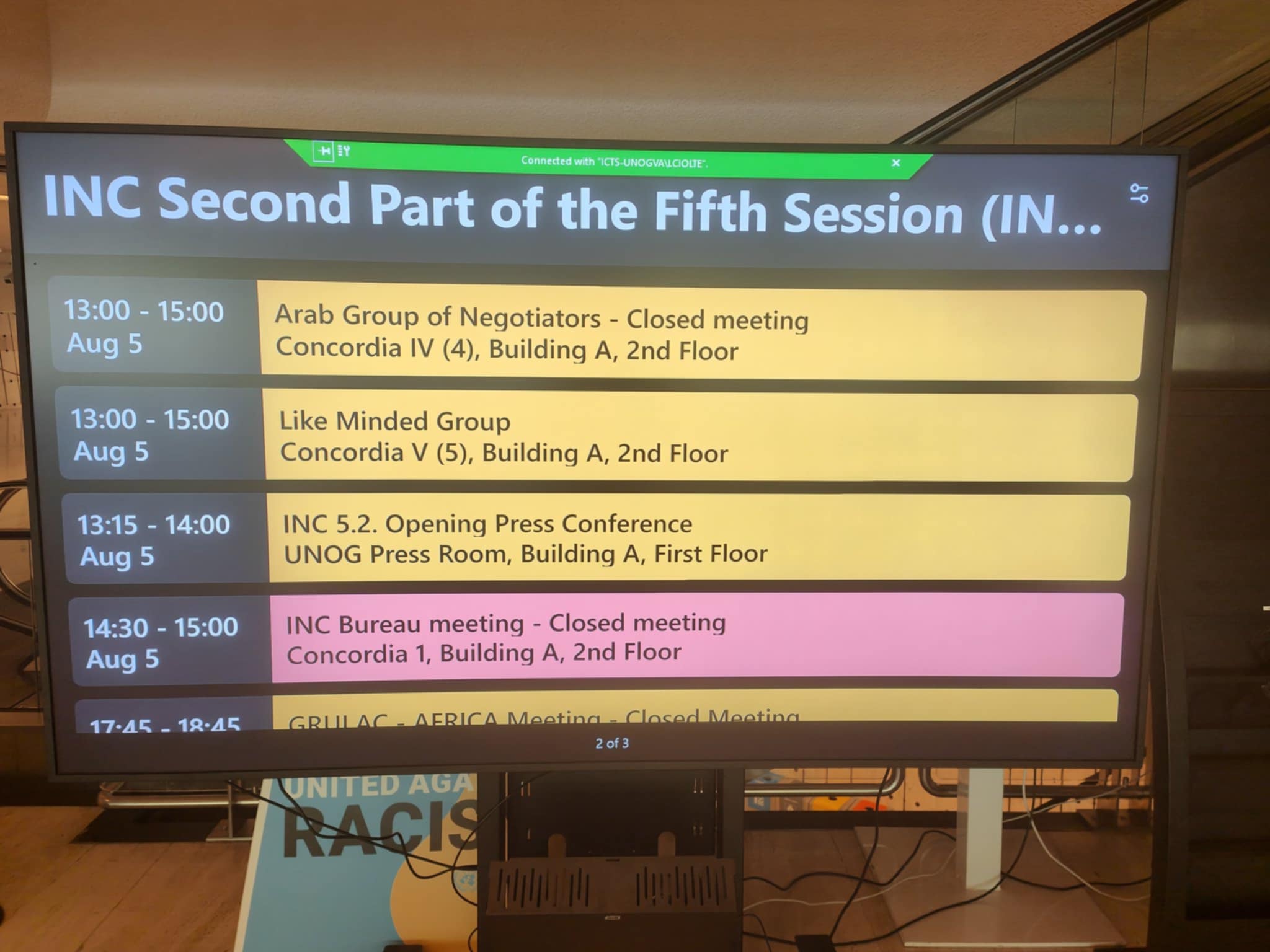


The UNEP oordinates environmental work across the UN, but it is not the only organization. The UN has now created the UN Convention to Combat Desertification (UNCCD), the Convention on Biological Diversity (CBD), and the United Nations Framework Convention on Climate Change (UNFCCC). Each organization deals with separate environmenal issues and hosts its own conferences that include negotiations between nations and sometimes ask for statements and opinions of NGOs like our own. Currently the UNFCCC is hosting the COP conference in Brazil.



Carlos was able to observe the UNEP negotiations, but as we are not a nation (aka Party) we do not have a voice. Furthermore, we are not yet members of any of these conventions. PPI needs to establish more direct activities that promote environmental protection so that we can be accepted as members of these organizations, in addition to the Economic and Social Affairs Committee (ECOSOC) where we are already members.

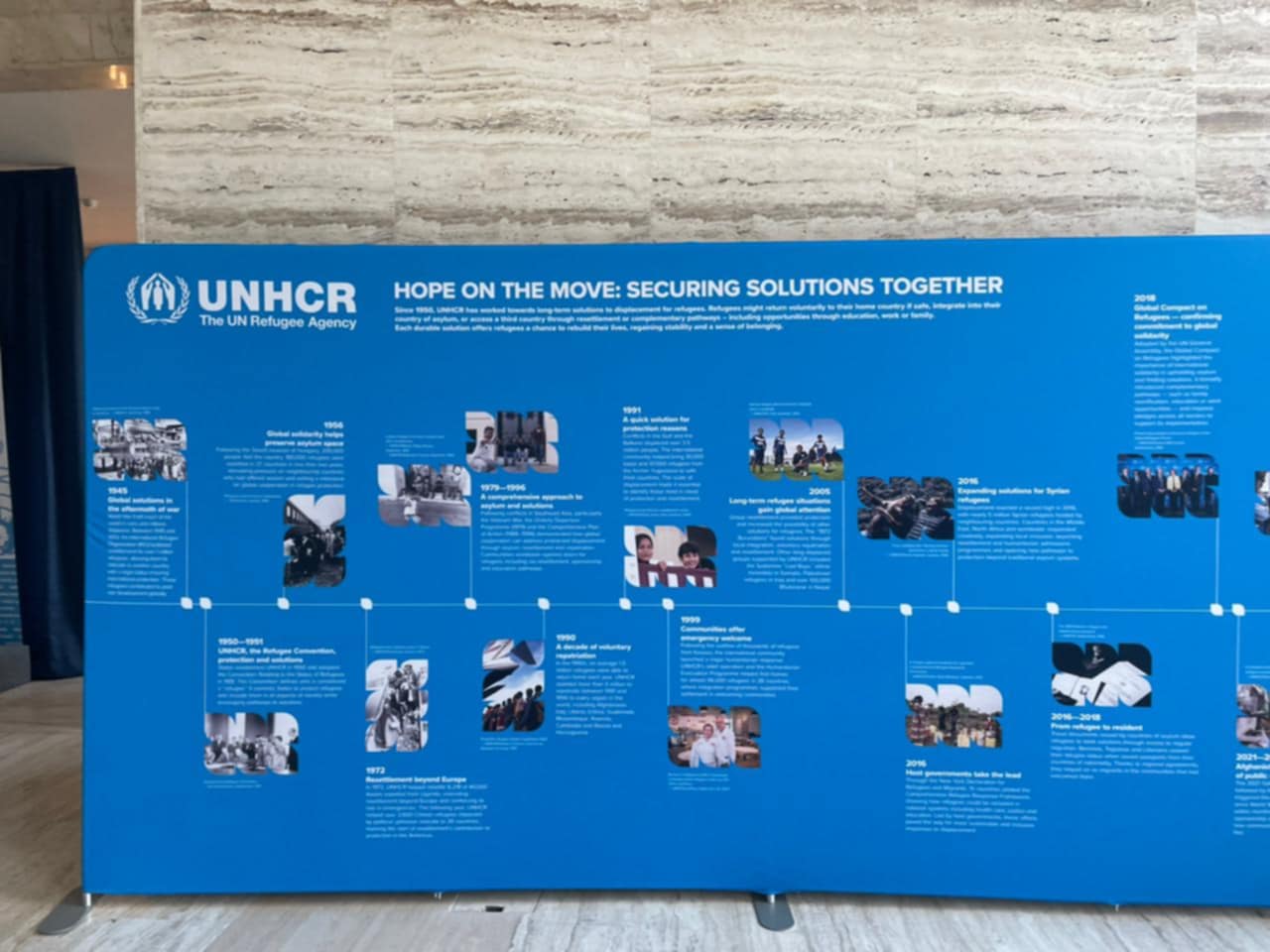
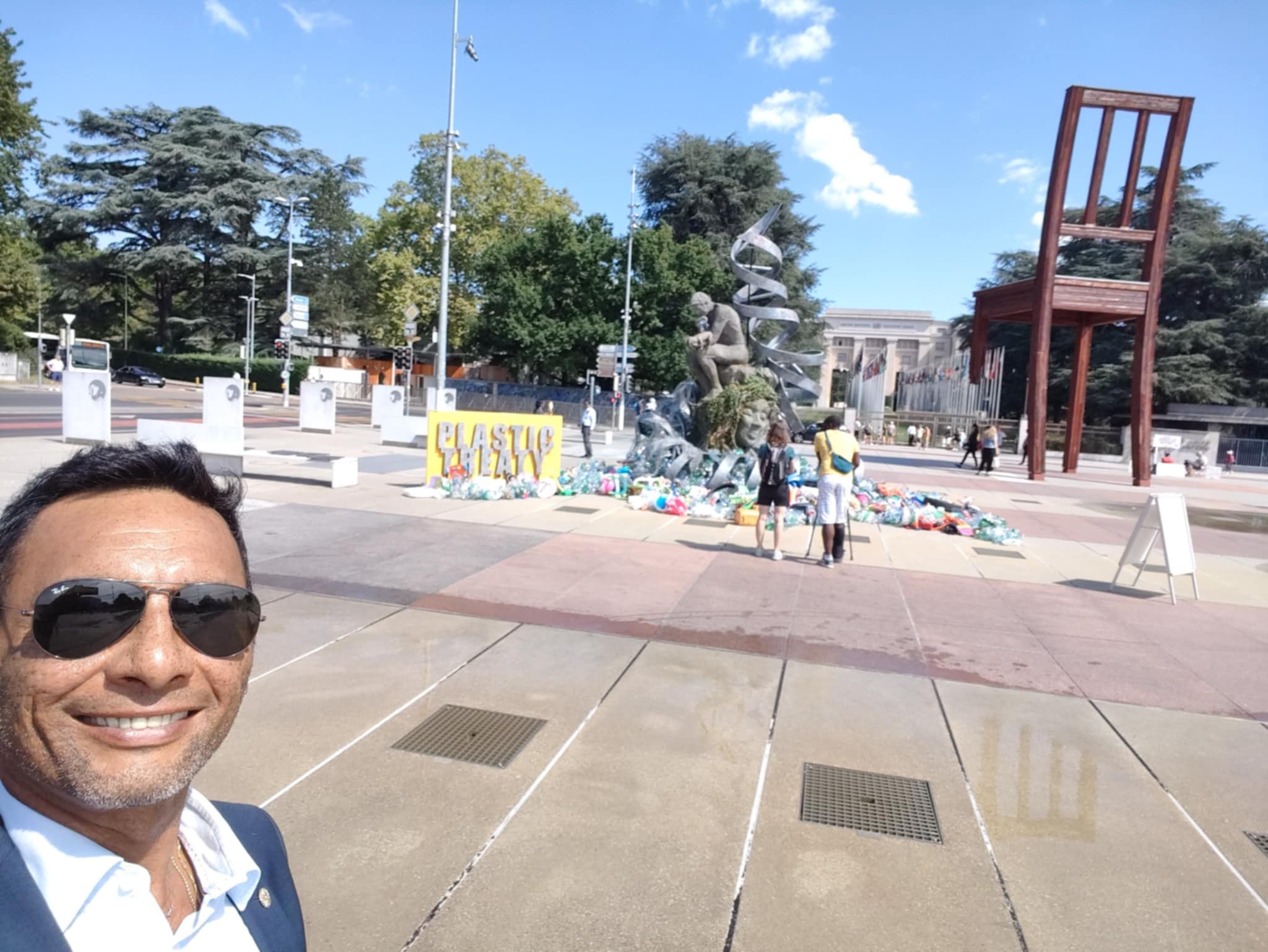
We are hoping to make a bigger impact on international environmental governance. As an NGO, our abilities are limited. NGOs often watch from the back of the room. Our speaking time is scarce. The actual negotiation where the decisions are made take place behind closed doors, and we are simply able to only provide statements at the conference or as a published policy statement. One additional opportunity is that we can host side events. We have discussed cohosting a side even with other NGOs. If anyone is interested in collaborating, please contact us.
board@pp-international.net
Donations
pp-international.net/donations…
pp-international.net/2025/11/g…


Wayland’s Never-Ending Opposition to Multi-Window Positioning

There are many applications out there that use more than one window, with every modern-day platform and GUI toolkit offering the means for said application to position each of its windows exactly where it wants, and to restore these exactly in the configuration and location where the user saved it for that particular session. All toolkits but one, that is, for the Wayland project keeps shooting down proposals. Most recently merge request #264 for the ext-zones protocol by [Matthias Klumpp] as it descended into a 600+ comments spree.
This follows on an attempt two years prior with MR#247, which was rejected despite laying out sound reasons why the session protocol of Wayland does not cover many situations. In the breakdown video of the new ext-zones protocol discussion by [Brodie Robertson] the sheer absurdity of this whole situation becomes apparent, especially since KDE and others are already working around the Wayland project with their own extensions such as via KWin, which is being used commercially in e.g. the automotive world.
In a January 2024 blog post [Matthias] lays out many of his reasonings and views regarding the topic, with a focus on Linux desktop application usage from a scientific application perspective. When porting a Windows-, X11- or MacOS application to Wayland runs into compatibility issues that may necessitate a complete rewrite or dropping of features, the developer is more likely to stick to X11, to not port to Linux at all, or to use what eventually will amount to Wayland forks that patch around these missing API features.
Meanwhile X11 is definitely getting very long in the tooth, yet without it being a clean drop-in replacement it leaves many developers and end-users less than impressed. Perhaps the Wayland project should focus more on the needs of developers and end-users, and less about what it deems to be the One True Way?
youtube.com/embed/_MS8pSj-DLo?…
Emulating a 74LS48 BCD-to-7-Segment Decoder/Driver with an Altera MAX 7000 “S” Series Complex Programmable Logic Device
![[Gerry] holding up a DIP IC](https://poliverso.org/photo/link/365647 "[Gerry] holding up a DIP IC")
Over on the [Behind The Code with Gerry] YouTube channel our hacker [Gerry] shows us how to emulate a 74LS48 BCD-to-7-segment decoder/driver using an Altera CPLD Logic Chip From 1998.
This is very much a das blinkenlights kind of project. The goal is to get a 7-segment display to count from 0 to 9, and that’s it. [Gerry] has a 74LS193 Up/Down Binary Counter, a 74LS42 BCD to Decimal Decoder, and some 74LS00 NAND gates, but he “doesn’t have” an 74LS48 to drive the 7-segment display so he emulates one with an old Altera CPLD model EPM7064SLC44 which dates back to the late nineties. A CPLD is a Complex Programmable Logic Device which is a kind of precursor to FPGA technology.
This fun video runs for nearly one hour and there are all sorts of twists and turns. The clock is made from a 555 timer. The Altera USB Blaster is used to program the CPLD via JTAG. But before he can do that he has to re-enable JTAG on his CPLD because JTAG LOCKOUT has been used on his secondhand chip. JTAG LOCKOUT is something you can do so that you can use the various JTAG pins for other purposes in your design, at the cost of no longer being about to access via JTAG! Fortunately [Gerry] has the right equipment to do a full reset of his chip and thus reinstate JTAG support.
Just as he’s nearly finished his project he manages to short out and destroy his CPLD by dropping a wire into the wall power socket! Talk about unlucky! He has to go back to the drawing board with a similar model. And in the end he realizes he used the the 7447 (common anode) but actually needed the 7448 (common cathode), so he has to fix that up too. All in all it’s fun to see what was state-of-the-art back in 1998. If you’re interested in such things you might like to read Not Ready For FPGAs? Try A CPLD.
youtube.com/embed/0WAaH37rmEk?…
Il senso dell’umano, riflessioni a Città della Pieve
@Giornalismo e disordine informativo
articolo21.org/2025/11/il-sens…
Il 9 novembre a Città della Pieve grazie a Domenico Iannacone abbiamo dialogato sul “Senso dell’umano”. Un incontro di due ore e mezza presso il Teatro degli Avvaloranti, che ha scavato nella profondità del reale, dove
Giornalismo e disordine informativo reshared this.
“Fuori la politica dei teatri”, lo slogan che ha animato il corteo degli orchestrali a Venezia
@Giornalismo e disordine informativo
articolo21.org/2025/11/fuori-l…
Un messaggio, netto come accaduto pochissime altre volte, quello arrivato dal corteo di Venezia
Nessuno likes this.
Giornalismo e disordine informativo reshared this.
Presentazione molto partecipata, a Roma, del saggio di Bertoni e Vita sulla RAI
@Giornalismo e disordine informativo
articolo21.org/2025/11/present…
Presentazione di ottimo livello del saggio di Roberto Bertoni e Vincenzo Vita sulla RAI e le sue prospettive. “L’occupazione. Dell’editto
Giornalismo e disordine informativo reshared this.
Quel che ci toglie la riforma della giustizia. Intervista a Rocco Maruotti
@Giornalismo e disordine informativo
articolo21.org/2025/11/quel-ch…
Come Articolo 21, siamo e saremo al fianco dell’Associazione Nazionale Magistrati (ANM) nella battaglia referendaria contro la “riforma” imposta dalla
reshared this
Alberto Trentini, conferenza stampa a Milano ad un anno dall’arresto in Venezuela
@Giornalismo e disordine informativo
articolo21.org/2025/11/alberto…
Sabato 15 novembre, alle 12, nella sala stampa del Comune di Milano si terrà la conferenza stampa sul tema “Alberto Trentini da un
Giornalismo e disordine informativo reshared this.
Adesso basta! Chatcontrol 2.0 rientra dalla porta di servizio – Breyer avverte: “L’UE ci sta prendendo in giro”
Riportiamo la traduzione del post pubblicato da Patrick Breyer sul suo blog Poco prima di un incontro decisivo a Bruxelles, l’esperto di diritti digitali ed ex membro del Parlamento europeo, il Dott. Patrick Breyer, lancia l’allarme. Con un “ingannevole gioco di prestigio”, un controllo obbligatorio e ampliato della messaggistica privata viene imposto dalla porta sul retro…
Nessuno likes this.
VPN e verifica dell'età online: essere consapevoli per non fare cazzate.
@Privacy Pride
Il post completo di Christian Bernieri è sul suo blog: garantepiracy.it/blog/vpn/
Per accedere ai siti porno e di gioco d’azzardo è ora necessaria la verifica online dell’età… P A N I C O ! L’allarme è stato lanciato da tempo, ma solo ora le persone si stanno rendendo conto delle implicazioni in termini di privacy. La…
reshared this
Il nuovo video di Pasta Grannies: youtube.com/shorts/P0d1ob0x-Vc
@Cucina e ricette
(HASHTAG)
Cucina e ricette reshared this.
"Origine di 3I/Atlas, ora abbiamo la conferma che l'enigmatico oggetto interstellare non è un'astronave aliena"
ahahahaha ma no... ma davvero? mannaggia. e io che avevo già formato il comitato di benvenuto...
Le parole vanno scelte
ildivulgatoreculturale.blog/20
È rimasto qualcosa che non sia tutelato dall'UNESCO, a parte il petrolio, l'herpes e Mario Giordano?


Per la cucina italiana patrimonio dell'Unesco arriva il primo semaforo verde
https://www.wired.it/article/cucina-italiana-patrimonio-unesco-documento-iscrizione/?utm_source=flipboard&utm_medium=activitypubPubblicato su Cultura @cultura-WiredItalia
Per la cucina italiana patrimonio dell'Unesco arriva il primo semaforo verde
Un documento tecnico dell'organizzazione culturale dell'Onu riconosce il valore del dossier e spiana la strada verso il voto finale a dicembre in IndiaPietro Deragni (Wired Italia)
Poliversity - Università ricerca e giornalismo reshared this.
#Shutdown, il salvagente di #Trump

Shutdown, il salvagente di Trump
La fine dello “shutdown” più lungo della storia americana sembra essere a portata di mano dopo l’approvazione al Senato di Washington, con l’appoggio decisivo del Partito Democratico, di una misura semi-temporanea per sbloccare il bilancio federale.www.altrenotizie.org
Endof10 @ SFSCON auf Peer.tv
lugbz.org/endof10-sfscon-auf-p…
Segnalato dal LUG di #Bolzano e pubblicato sulla comunità Lemmy @GNU/Linux Italia
In der Abendausgabe von der Nachrichtensendung „Das Journal“ auf Peer.tv am 08.11.2025 ging ein Beitrag über die SFSCON und Endof10 @ SFSCON 2025 online! Interviewt wurden unter anderen unsere Mitglieder Paolo
GNU/Linux Italia reshared this.
Waves within Earth’s mantle can carry traces of past continents across hundreds of miles, explaining why their chemical fingerprints appear in unlikely places.#TheAbstract


Remnants of Lost Continents Are Everywhere. Now, We Finally Know Why.
🌘
Subscribe to 404 Media to get The Abstract, our newsletter about the most exciting and mind-boggling science news and studies of the week.Tiny remnants of long-lost continents that vanished many millions of years ago are sprinkled around the world, including on remote island chains and seamounts, a mystery that has puzzled scientists for years.
Now, a team has discovered a mechanism that can explain how this continental detritus ends up resurfacing in unexpected places, according to a study published on Tuesday in Nature Geoscience.
When continents are subducted into Earth’s mantle, the layer beneath the planet’s crust, waves can form that scrape off rocky material and sweep it across hundreds of miles to new locations. This “mantle wave” mechanism fills in a gap in our understanding of how lost continents are metabolized through our ever-shifting planet.
“There are these seamount chains where volcanic activity has erupted in the middle of the ocean,” said Sascha Brune, a professor at the GFZ Helmholtz Centre for Geosciences and University of Potsdam, in a call with 404 Media. “Geochemists go there, they drill, they take samples, and they do their isotope analysis, which is a very fancy geochemical analysis that gives you small elements and isotopes which come up with something like a ‘taste.’”
“Many of these ocean islands have a taste that is surprisingly similar to the continents, where the isotope ratio is similar to what you would expect from continents and sediments,” he continued. “And there has always been the question: why is this the case? Where does it come from?”
These continental sprinkles are sometimes linked to mantle plumes, which are hot columns of gooey rock that erupt from the deep mantle. Plumes bring material from ancient landmasses, which have been stuck in the mantle for eons, back to the light of day again. Mantle plumes are the source of key hot spots like Hawai’i and Iceland, but there are plenty of locations with enriched continental material that are not associated with plumes—or any other known continental recycling mechanisms.
The idea of a mantle wave has emerged from a series of revelations made by lead author Tom Gernon, a professor at the University of Southampton, along with his colleagues at GFZ, including Brune. Gernon previously led a 2023 study that identified evidence of similar dynamics occurring within continents. By studying patterns in the distribution of diamonds across South Africa, the researchers showed that slow cyclical motions in the mantle dislodge chunks off the keel of landmasses as they plunge into the mantle. Their new study confirms that these waves can also explain how the elemental residue of the supercontinent Gondwana, which broke up over 100 million years ago, resurfaced in seamounts across the Indian Ocean and other locations.
In other words, the ashes of dead continents are scattered across extant landmasses following long journeys through the mantle. Though it’s not possible to link these small traces back to specific past continents or time periods, Brune hopes that researchers will be able to extract new insights about Earth’s roiling past from the clues embedded in the ground under our feet.
“What we are saying now is that there is another element, with this kind of pollution of continental material in the upper mantle,” Brune said. “It is not replacing what was said before; it is just complementing it in a way where we don't need plumes everywhere. There are some regions that we know are not plume-related, because the temperatures are not high enough and the isotopes don't look like plume-affected. And for those regions, this new mechanism can explain things that we haven't explained before.”
“We have seen that there's quite a lot of evidence that supports our hypothesis, so it would be interesting to go to other places and investigate this a bit more in detail,” he concluded.
Update: This story has been update to note Tom Gernon was a lead author on the paper.
🌘
Subscribe to 404 Media to get The Abstract, our newsletter about the most exciting and mind-boggling science news and studies of the week.Enriched mantle generated through persistent convective erosion of continental roots - Nature Geoscience
Convective erosion and lateral transport of metasomatized continental keels may generate enriched mantle geochemical domains sampled by oceanic volcanism, according to a geodynamic modelling study.Nature

IRAQ. Elezioni, poche attese di cambiamento in un Paese stanco e disilluso
@Notizie dall'Italia e dal mondo
Gli elettori sono andati alle urne sapendo che è difficile scardinare apparati consolidati di potere. L'affluenza perciò è stata bassa. I risultati definitivi si conosceranno nei prossimi giorni
L'articolo IRAQ. Elezioni, poche attese di cambiamento in un Paese
Notizie dall'Italia e dal mondo reshared this.


Software engineer Hector Dearman built a zoomable map of every issue of BYTE magazine.#archives #magazines #publishing #byte
Visualize All 23 Years of BYTE Magazine in All Its Glory, All at Once
Fifty years ago—almost two decades before WIRED, seven years ahead of PCMag, just a few years after the first email ever passed through the internet and with the World Wide Web still 14 years away—there was BYTE. Now, you can see the tech magazine's entire run at once. Software engineer Hector Dearman recently released a visualizer to take in all of BYTE’s 287 issues as one giant zoomable map.The physical BYTE magazine published monthly from September 1975 until July 1998, for $10 a month. Personal computer kits were a nascent market, with the first microcomputers having just launched a few years prior. BYTE was founded on the idea that the budding microcomputing community would be well-served by a publication that could help them through it.
This post is for subscribers only
Become a member to get access to all content
Subscribe now


di fatto, continuando nella pratica dell'installance, e della dissipazione delle opere, i luoghi che a queste sono dedicati possono essere solo la perdita o - paradossalmente - al contrario, le collezioni (vari pezzi miei in giro per istituzioni oppure privati).
pensare a una mostra è estremamente difficile in effetti.
mi hanno invitato in Francia per questa primavera, 2026. avrò uno spazio mio a disposizione. credo non sarà facile gestirlo, proprio per la natura anarchica del mio lavoro. vedremo.
reshared this
L’altro Venezuela. Quella base militare in Nicaragua finanziata con i soldi del Cremlino
@Notizie dall'Italia e dal mondo
Nelle ultime settimane il tema della presenza russa in America Latina è tornato ad essere oggetto di attenzione, come diretta conseguenza dell’accrescersi delle tensioni nel teatro caraibico: qui gli Stati Uniti stanno portando avanti una serie
Notizie dall'Italia e dal mondo reshared this.
La nuova intesa di Avio che rafforza il legame tra Roma e Washington
@Notizie dall'Italia e dal mondo
Nel momento in cui le catene di fornitura della difesa occidentale cercano nuovi equilibri, Avio decide di investire ulteriormente oltreoceano per rafforzare la propria posizione. L’azienda italiana, specializzata nella propulsione spaziale e missilistica, ha siglato due intese con
Notizie dall'Italia e dal mondo reshared this.
Public records show DHS is deploying the "Homeland Security Information Network" at college protests and football games.#FOIA
DHS Is Deploying a Powerful Surveillance Tool at College Football Games
A version of this article was previously published on FOIAball, a newsletter reporting on college football and public records. You can learn more about FOIAball and subscribe here.Last weekend, Charleston’s tiny private military academy, the Citadel, traveled to Ole Miss.
This game didn’t have quite the same cachet as the Rebels' Week 11 opponent this time last year, when a one-loss Georgia went to Oxford.
A showdown of ranked SEC opponents in early November 2024 had all eyes trained on Vaught-Hemingway Stadium.
Including those of the surveillance state.
According to documents obtained by FOIAball, the Ole Miss-Georgia matchup was one of at least two games last year where the school used a little-known Department of Homeland Security information-sharing platform to keep a watchful eye on attendees.
The platform, called the Homeland Security Information Network (HSIN), is a centralized hub for the myriad law enforcement agencies involved with security at big events.
CREDIT: Ole Miss/Georgia EAP, obtained by FOIAball
According to an Event Action Plan obtained by FOIAball, at least 11 different departments were on the ground at the Ole Miss-Georgia game, from Ole Miss campus police to a military rapid-response team.HSINs are generally depicted as a secure channel to facilitate communication between various entities.
In a video celebrating its 20th anniversary, a former HSIN employee hammered home that stance.“When our communities are connected, our country is indeed safer," they said.
In reality HSIN is an integral part of the vast surveillance arm of the U.S. government.
Left unchecked since 9/11, supercharged by technological innovation, HSIN can subject any crowd to almost constant monitoring, looping in live footage from CCTV cameras, from drones flying overhead, and from police body cams and cell phones.
HSIN has worked with private businesses to ensure access to cameras across cities; they collect, store, and mine vast amounts of personal data; and they have been used tofacilitate facial recognition searches from companies like Clearview AI.
It’s one of the least-reported surveillance networks in the country.
And it's been building this platform on the back of college football.
Since 9/11, HSINs have become a widely used tool.
A recentInspector General report found over 55,000 active accounts using HSIN, ranging from federal employees to local police agencies to nebulous international stakeholders.
The platforms host what’s called SBU, sensitive but unclassified information, including threat assessments culled from media monitoring.According to aprivacy impact study from 2006, HSIN was already maintaining a database of suspicious activities and mining those for patterns.
"The HSIN Database can be mined in a manner that identifies potential threats to the homeland or trends requiring further analysis,” it noted.
In anupdated memo from 2012 discussing whose personal information HSIN can collect and disseminate, the list includes the blanket, “individuals who may pose a threat to the United States.”
A 2023 DHS “Year in Review” found that HSIN averaged over 150,000 logins per month.Its Connect platform, which coordinates security and responses at major events, was utilized over 500 times a day.
HSIN operated at the Boston Marathon, Lollapalooza, the World Series, and the presidential primary debates. It has also been used at every Super Bowl for the last dozen years.
DHS is quick to tout the capabilities of HSINs in internal communications reviewed by FOIAball.
In doing so, it reveals the growth of its surveillance scope. In documents from 2018, DHS makes no mention of live video surveillance.
But a 2019annual review said that HSINs used private firms to help wrangle cameras at commercial businesses around Minneapolis, which hosted the Final Four that year.
“Public safety partners use HSIN Connect to share live video streams from stationary cameras as well as from mobile phones,” it said. “[HSIN communities such as] the Minneapolis Downtown Security Executive Group works with private sector firms to share live video from commercial businesses’ security cameras, providing a more comprehensive operating picture and greater situational awareness in the downtown area.”
And the platform has made its way to college campuses.
Records obtained by FOIAball show how pervasive this technology has become on college campuses, for everything from football games to pro-Palestinian protests.
In November 2023, students at Ohio State University held several protests against Israel’s war in Gaza. At one, over 100 protesters blocked the entrance to the school president’s office.
Areport that year from DHS revealed the protesters were being watched in real-time from a central command center.
Under the heading "Supporting Operation Excellence," DHS said the school used HSIN to surveil protesters, integrating the school’s closed-circuit cameras to live stream footage to HSIN Connect.
“Ohio State University has elevated campus security by integrating its closed-circuit camera system with HSIN Connect,” it said. “This collaboration creates a real-time Common Operating Picture for swift information sharing, enhancing OSU’s ability to monitor campus events and prioritize community safety.”
“HSIN Connect proved especially effective during on-campus protests, expanding OSU’s security capabilities,” the school’s director of emergency management told DHS. “HSIN Connect has opened new avenues for us in on-campus security.”
While it opened new avenues, the platform already had a well-established relationship with the school.
According to aninternal DHS newsletter from January 2016, HSIN was utilized at every single Buckeyes home game in 2015.
“HSIN was a go-to resource for game days throughout the 2015 season,” it said.
It highlighted that data was being passed along and analyzed by DHS officials.
The newsletter also revealed HSINs were at College Football Playoff games that year and have been in years since. There was no mention of video surveillance at Ohio State back in 2015. But in 2019, that capability was tested at Georgia Tech.
There, police used “HSIN Connect to share live video streams with public safety partners.”
A2019 internal newsletter quoted a Georgia Tech police officer about the use of real-time video surveillance on game days, both from stationary cameras and cell phones.
“The mobile app for HSIN Connect also allows officials to provide multiple, simultaneous live video streams back to our Operations Center across a secure platform,” the department said.
Ohio State told FOIAball that it no longer uses HSIN for events or incidents. However, it declined to answer questions about surveilling protesters or football games.
Ohio State’s records department said that it did not have any documents relating to the use of HSIN or sharing video feeds with DHS.
Georgia Tech’s records office told FOIAball that HSINs had not been used in years and claimed it was “only used as a tool to share screens internally." Its communications team did not respond to a request to clarify that comment.
Years later, DHS had eyes both on the ground and in the sky at college football.
According to the 2023 annual review, HSIN Connect operated during University of Central Florida home games that season. There, both security camera and drone detection system feeds were looped into the platform in real-time.
DHSsaid that the "success at UCF's football games hints at a broader application in emergency management.”HSIN has in recent years been hooked into facial recognition systems.
A 2024report from the U.S. Commission on Civil Rights found that the U.S. Marshals were granted access to HSIN, where they requested "indirect facial recognition searches through state and local entities" using Clearview AI.
Which brings us to the Egg Bowl—the annual rivalry game between Ole Miss and Mississippi State.
FOIAball learned about the presence of HSIN at Ole Miss through a records request to the city’s police department. It shared Event Action Plans for the Rebels’ games on Nov. 9, 2024 against Georgia and Nov. 30, 2024 against Mississippi State.
It’s unclear how these partnerships are forged.
In videos discussing HSIN, DHS officials have highlighted their outreach to law enforcement, talking about how they want agencies onboarded and trained on the platform. No schools mentioned in this article answered questions about how their relationship with DHS started.
The Event Action Plan provides a fascinating level of detail that shows what goes into security planning for a college football game, from operations meetings that start on Tuesday to safety debriefs the following Monday.
Its timeline of events discusses when Ole Miss’s Vaught-Hemingway Stadium is locked down and when security sweeps are conducted. Maps detail where students congregate beforehand and where security guards are posted during games.
The document includes contingency plans for extreme heat, lightning, active threats, and protesters. It also includes specific scripts for public service announcers to read in the event of any of those incidents.
It shows at least 11 different law enforcement agencies are on the ground on game days, from school cops to state police.
They even have the U.S. military on call. The 47th Civil Support Team, based out of Jackson Air National Guard Base, is ready to respond to a chemical, biological, or nuclear attack.All those agencies are steered via the document to the HSIN platform.
Under a section on communications, it lists the HSIN Sitroom, which is “Available to all partners and stakeholders via computer & cell phone.”
The document includes a link to an HSIN Connect page.
It uses Eli Manning as an example of how to log in.
“Ole Miss Emergency Management - Log in as a Guest and use a conventional naming convention such as: ‘Eli Manning - Athletics.’”
On the document, it notes that the HSIN hosts sensitive Personally Identifiable Information (PII) and Threat Analysis Documents.“Access is granted on a need-to-know basis, users will need to be approved prior to entry into the SitRoom.”
“The general public and general University Community is not permitted to enter the online SitRoom,” it adds. “All SitRooms contain operationally sensitive information and PII, therefore access must be granted by the ‘Host’.”
It details what can be accessed in the HSIN, such as a chat window for relaying information.
It includes a section on Threat Analysis, which DHS says is conducted through large-scale media monitoring.
The document does not detail whether the HSIN used at Ole Miss has access to surveillance cameras across campus.
But that may not be something explicitly stated in documents such as these.
Like Ohio State, UCF told FOIAball that it had no memoranda of understanding or documentation about providing access to video feeds to HSINs, despite DHS acknowledging those streams were shared. Ole Miss’ records department also did not provide any documents on what campus cameras may have been shared with DHS.
While one might assume the feeds go dark after the game is over, there exists the very real possibility that by being tapped in once, DHS can easily access them again.
“I’m worried about mission creep,” Matthew Guariglia, a senior policy analyst at the Electronic Frontier Foundation, told FOIAball. “These arrangements are made for very specific purposes. But they could become the apparatus of much greater state surveillance.”
For Ole Miss, its game against Georgia went off without any major incidents.
Well, save for one.
During the second quarter, asquirrel jumped onto the field, and play had to be stopped.In the EAP, there was no announcer script for handling a live animal interruption.
Scoop: Inside DHS's vast college football surveillance effort
Documents obtained by FOIAball reveal how the feds surveil SEC, Big Ten games.David Covucci (FOIAball)


Through the Spyglass: Thanks for Nothing
Do you know your neighbors?
How familiar are you with the person who lives next door to or above you? Down the street or down the hall? Across the street and kitty-corner from where you live?
Did they grew up in the town or city you both live in? Did you? Did they serve? Did you? Are they a U.S. citizen? Are you?
Are you sure?
Is the qualification “I was born here”? What if your parents weren’t? Did you come here legally? Are you white enough? Are you the right kind of Christian?
What if you’re not Christian? What if you’re something non-Abrahamic at all? Let’s pretend you’re a Sikh.
In fact, let’s pretend you are Bhagat Singh Thind.
So who are you? You’re Bhagat Singh Thind, born October 3rd, 1892 near Amritsar, Punjab in what is today modern day India. You come to the United States around just 20 years old and, just five years later, you’re recruited by the U.S. Army to fight in the Great War, the War to End All Wars, or as it has sadly become known, World War I.
Recruited in July, honorably discharged by December. Thank you for serving your country.
A week before your discharge, you receive your certificate of U.S. citizenship while wearing your U.S. Army uniform. Except, three days before your discharge, the federal government catches wind of the news and revokes it. After all, you’re a “Hindoo” (you’re not; you’re a Sikh) and not a “white man”, so no citizenship for you.
Thanks for nothing.
So you try again. You move from Washington to Oregon and you apply for citizenship around five months later. The federal official that revoked your citizenship the first time goes to the Oregon judge and tries to sabotage your chances.
The judge, taking into account your arguments for citizenship and your military record, grants you citizenship for the second time. Thank you for serving your country.
Not satisfied, the Bureau of Naturalization, who this whole time has been seemingly out to get you and refusing to let this be a precedent, appealed to the higher courts until landing before the Supreme Court.
Their task was to answer these two questions:
“Is a high caste Hindu of full Indian blood, born at Amritsar, Punjab, India, a white person within the meaning of Section 2169, Revised Statutes?”
(Again, you are Sikh.)
&
“Does the act of February 5, 1917 (39 Stat. L. 875, Section 3) disqualify from naturalization as citizens those Hindus, now barred by that act, who had lawfully entered the United States prior to the passage of said act?”
They find the answer to the first question is “No”, making the second question moot. You’re not white, so you cannot be naturalized. The Bureau of Nationalization strips you for a second time in 1926.
Thanks for nothing.
It wouldn’t be until the mid 1930s when Congress passed into law that all WWI veterans would be granted citizenship, regardless of race. For a third time, you seek citizenship.
This time, you finally get it. It’s the real thing, the Bureau of Nationalization isn’t breathing down your neck, and you are finally a U.S. citizen. Thank you for serving your country.
This all happened roughly 100 years ago, but the question of “what is a citizen” remains at large and, as was before, at the whim of the State. Bhagat Singh Thind was finally granted citizenship not because of a reversal of the Supreme Court’s decision, but because of a law by Congress that honored WWI veterans. Not goodwill, but a just reward for military service.
So what is a citizen? Is it someone who shows they are willing to die and kill for their country? Is it someone who won the “born under the right circumstances” lottery that did nothing otherwise to “earn” their citizenship? Is a citizen someone who pays taxes and nothing else? Is it who the State decides is worthy? Are you always going to just agree with what the State says?
If you take a step back, you might realize “Does any of that really matter?”. Someone like Bhagat Singh Thind, who served in the U.S. Army, had to jump through countless hoops to received that illustrious seal of approval from Uncle Sam. But if he was living next door to you, and he served your country, and he was shopping in the same stores and sent his kids to the same school. Would you care about his legal status? Or would you see him as your neighbor?
Bhagat Singh Thind was finally granted that citizenship as a thank you for serving in the Army during WWI. Not every immigrant in this country can or will put their life on the line for the whims of the U.S. government. Hell, there are people born in this country that won’t do that. Your commitment to the state apparatus nationwide shouldn’t matter in a local setting.
How committed are you to your neighbors? To me, that is the truest sense of community and belonging. The local stuff, the stuff that impacts you, matters far more than national narratives.
The United States Pirate Party preaches to anyone seeking office to “run locally” because “it is where the impact will be felt the most”. Service to your neighbors and community, where you rest your head at night, is a cause we champion. Our ideals are applied nationwide, but felt most locally.
The USPP also believes in the free movement of all Americans, from Greenland to Patagonia. We don’t believe the imaginary lines drawn on a map should be inhibiting of the people who share this great American continent.
So when people speak of “illegal immigrants” living in communities across the United States, it strikes me as ridiculous. Uncle Sam said my neighbor is illegal? Why? Didn’t come here the right way? Didn’t get your permission to cross an imaginary line and enter society as essentially a lower caste laborer?
If you are upset by the state narratives of “illegal immigration”, I ask you: what about them coming here bothers you? It doesn’t flatter you that they left everything behind to start a new life where you call home? Is it the taxes? You feel like your hard earned money is being taken and they somehow have it easy?
First of all, these migrants are all almost certainly renting. So the landlord would be paying taxes… with their money.
Second, if they aren’t paying income tax, is that because they aren’t receiving a check, since tax is automatically deducted? If they’re being paid income cash, who is to blame? Are they to blame for taking it, or do you point the figure at the business owner who gave a job to them and decided to pay them under the table.
That job wasn’t stolen, and certainly not by the immigrant. Can the so-called “job creator” really ever allow the jobs they create and give out to be “stolen”? Or did they willingly pay someone cheaper instead of someone in a position to demand more.
Do not let the State turn you against your neighbors when they are trying to live like you. Do not allow Uncle Sam to cause you to fail to see the humanity of your neighbors.
Don’t be terrorized and made fearful. They are human; they bleed like you.
As of writing, the United States of America has decided to unleash masked terrorists onto the streets of cities across the U.S. in order to corral and correct what it calls an “illegal immigrant problem”. This organization is named “ICE”.
Before continuing, I must affirm something to you, dear reader. Merriam-Webster defines “terrorism” as “the systematic use of terror, especially as a means of coercion”. Further, they define “terror” as “violence or the threat of violence used as a weapon of intimidation or coercion”.
Now, dear reader, consider what ICE is doing. Simply ask: is ICE using violence or the threat of violence as a weapon of intimidation or coercion?
It was recently Halloween, and kids were unable to peacefully Trick-or-Treat in certain Chicagoland locations due to ICE harassment, including tear-gassing.
ICE, in their raids and targeting, has arrested “legal” citizens. They have arrested parents in front of their children. They have made arrests in South Shore, Chicago, in the middle of the night via a warrant-less raid and informed the residents they’d “only be released if they had no outstanding warrants”.
The State decides whether or not you’re upstanding and “worthy”. It doesn’t matter if you go through all the proper rigmarole or serve the country. It doesn’t matter if you think you’re white enough. The State is the final authority in the matter.
But you know better. You know your neighbors are good people just trying to make an honest living. You know the crime of “falsifying” is a common one. You’ve seen kids use fake addresses to get into better school districts. You’ve had friends of friends not change their ID, despite not living in a specific state full time and instead continuing to pay to that state. You know the system isn’t followed to a T by everybody.
You know, deep down, this entire thing is bullshit.
Uncle Sam is a fickle dude with some skeletons in his closet. These skeletons are, unfortunately, in the front yard. He can decide you’re unworthy of citizenship if he so chooses.
When Washington D.C. tells you from thousands of miles away to turn on your back on your neighbor because they’re “not a citizen”, I want you to remember that they are still your neighbor.
And to the volunteer officers of ICE: thanks for nothing.
reshared this
Chicagoans are making, sharing, and printing designs for whistles that can warn people when ICE is in the area. The goal is to “prevent as many people from being kidnapped as possible.”#ICE #News
The Latest Defense Against ICE: 3D-Printed Whistles
Chicagoans have turned to a novel piece of tech that marries the old-school with the new to warn their communities about the presence of ICE officials: 3D-printed whistles.The goal is to “prevent as many people from being kidnapped as possible,” Aaron Tsui, an activist with Chicago-based organization Cycling Solidarity, and who has been printing whistles, told 404 Media. “Whistles are an easy way to bring awareness for when ICE is in the area, printing out the whistles is something simple that I can do in order to help bring awareness.”
Over the last couple months ICE has especially focused on Chicago as part of Operation Midway Blitz. During that time, Department of Homeland Security (DHS) personnel have shot a religious leader in the head, repeatedly violated court orders limiting the use of force, and even entered a daycare facility to detain someone.
💡
Do you know anything else about this? I would love to hear from you. Using a non-work device, you can message me securely on Signal at joseph.404 or send me an email at joseph@404media.co.3D printers have been around for years, with hobbyists using them for everything from car parts to kids’ toys. In media articles they are probably most commonly associated with 3D-printed firearms.
One of the main attractions of 3D printers is that they squarely put the means of production into the hands of essentially anyone who is able to buy or access a printer. There’s no need to set up a complex supply chain of material providers or manufacturers. No worry about a store refusing to sell you an item for whatever reason. Instead, users just print at home, and can do so very quickly, sometimes in a matter of minutes. The price of printers has decreased dramatically over the last 10 years, with some costing a few hundred dollars.
0:00
/0:04
1×A video of the process from Aaron Tsui.
People who are printing whistles in Chicago either create their own design or are given or download a design someone else made. Resident Justin Schuh made his own. That design includes instructions on how to best use the whistle—three short blasts to signal ICE is nearby, and three long ones for a “code red.” The whistle also includes the phone number for the Illinois Coalition for Immigrant & Refugee Rights (ICIRR) hotline, which people can call to connect with an immigration attorney or receive other assistance. Schuh said he didn’t know if anyone else had printed his design specifically, but he said he has “designed and printed some different variations, when someone local has asked for something specific to their group.” The Printables page for Schuh’s design says it has been downloaded nearly two dozen times.
This post is for subscribers only
Become a member to get access to all content
Subscribe now3D Printing Patterns Might Make Ghost Guns More Traceable Than We Thought
Early studies show that 3D printers may leave behind similar toolmarks on repeated prints.Matthew Gault (404 Media)
A man running a Danish copycat of the r/WatchItForThePlot subreddit was assured of posting no less than 347 nude scenes from films, and downloading over 25 terabytes of data from copyrighted works.#Reddit #copyright #denmark
Danish Redditor Charged for Posting Nude Scenes from Films
In a landmark case for Danish courts and internationally, a man was sentenced to seven months’ suspended imprisonment and 120 hours of community service for posting nude scenes from copyrighted films.He’s convicted of “gross violations of copyright, including violating the right of publicity of more than 100 aggrieved female actors relating to their artistic integrity,” Danish police reported Monday.
The man, a 40-year-old from Denmark who was a prolific Redditor under the username “KlammereFyr” (which translates to “NastierGuy”) was arrested and charged with copyright infringement in September 2024 by Denmark’s National Unit for Serious Crime (NSK).
In a press release, NSK wrote that KlammereFyr was a moderator for the subreddit r/SeDetForPlottet, which is a Danish version of the massive subreddit r/WatchItForThePlot, where people post clips of nude scenes—almost always featuring female actors—out of context. NSK said that KlammereFyr shared “no less than 347 nude scenes, which were played no less than 4.2 million times in total” in the subreddit. He’s also convicted of having shared and downloaded “over 25 terabytes of data with copyrighted works via the file sharing service superbits.org without the consent of the copyright holders,” and was also posting stolen images to the porn platform RedGifs.
The subreddit was set to private after media coverage about actors’ rights groups denouncing the practice, Torrent Freak reported last year. The subreddit is still invite-only, and a message says, “Denne subreddit er lukket ned, og vil ikke blive genåbnet” (“This subreddit has been shut down and will not be reopened.”)
playlist.megaphone.fm?p=TBIEA2…
According to Danish news outlet DR, the Danish Actors' Association and the Rights Alliance reported KlammereFyr to the police in 2023, “on behalf of the Danish Actors' Association, Danish Film Directors and the affected film producers DR and TV 2.” At the time, Danish actor Andrea Vagn Jensen, who had nude clips of her in movie scenes shared online, told DR: “It’s just abuse. You deliver something for the production and the story, and then you end up being molested that way.”“Illegal sharing of films and series is never harmless, but in this case, we have seen the far-reaching consequences of scenes being taken out of context and placed in a pornographic context,” Maria Fredenslund, CEO of Rights Alliance, wrote in a blog post after KlammereFyr pleaded guilty last week. “This is both violent and very serious for the actors and producers who have been affected. I am therefore pleased that copyright law also protects works in practice, not least the actors’ right of respect, and provides the opportunity for redress after such serious violations of their professional integrity and person. With artificial intelligence and the ease of creating deepfakes, it is becoming easier to produce and share offensive content. This is another reason why it is important for the authorities to help emphasize the seriousness of this type of violation.”
A recently proposed bill in Denmark would amend the country’s copyright laws to protect the rights of ordinary people as well as public figures to their own likenesses, even if they’re used in AI or deepfake content.
Convicted for sharing nude scenes in case on actors' right of respect
He shared sex and nude scenes with over 100 female actors in a Reddit group. He has now pleated guilty in a criminal case for violating the right of respect.Victoria (RettighedsAlliancen)

Lettera aperta: L'omnibus digitale porta deregolamentazione, non semplificazione L'EDRi, l'ICCL e la noyb inviano una lettera alla Commissione per esprimere le loro preoccupazioni in merito alla riforma Omnibus proposta. mickey11 November 2025
"L'Fsb ha rivelato di aver sventato un piano dell'intelligence di Kiev e di Londra per dirottare un Mig-31 e inscenare un falso attacco contro una base della Nato"
ma chi credono di prendere pe ril culo?
Csg prepara l’Ipo e Euronext lancia le imprese. L’Europa della difesa cerca la via del mercato
@Notizie dall'Italia e dal mondo
La difesa europea sta entrando in una stagione di trasformazione che passa non solo dai governi ma anche dai mercati finanziari. Dopo anni di consolidamento industriale, i grandi gruppi e le medie imprese del settore cercano oggi una
Notizie dall'Italia e dal mondo reshared this.
valigiablu.it/crisi-verita-inf…
molto intreressante
"È questo il paradosso della modernità: nel tentativo di costruire una società razionale, basata sui fatti, abbiamo creato un mondo dove la verità non basta più. Il fact-checking non dissolve la fede, ma la rafforza, perché la critica viene percepita come aggressione."
"Il risultato è un mondo dove ognuno abita il proprio “uovo”. E in questo caos epistemico gli autoritarismi prosperano (divide et impera!). Nel vuoto di significato sempre più diffuso, subentrano figure che offrono una nuova fede, semplice, emozionale, polarizzante. Oggi i social e in generale i media digitali (compreso giornali e televisioni) frammentano la realtà in bolle epistemiche, le piattaforme che promettono libertà (come X/Twitter e Grokipedia) creano caos informativo, e nel caos l’autoritarismo ritorna potente come promessa di ordine ideologico e sociale. Oshii lo aveva predetto: quando la fede è cieca resta solo l’illusione del significato."
"L’assenza di catarsi è la risposta più terribile alle domande odierne: smascherare la falsità della fede non basta a guarire l’umanità, la verità da sola non salva."
**********************************************************************
"Così, nel tentativo di liberarci dai miti, li abbiamo resi onnipresenti. Il risultato è una società che non riesce più a distinguere la verità dal mito perché ogni fede è anche un’identità, e mettere in discussione una credenza significa mettere in discussione sé stessi. È per questo che la lotta alla disinformazione, per quanto necessaria, appare sempre più sterile: smascherare un’illusione non distrugge il bisogno che l’ha generata, anzi, lo esaspera, lo polarizza. Il ragazzo che rompe l’uovo, credendo di liberare la ragazza dalla menzogna, non fa che condannarla al vuoto. E l’umanità, che ha bisogno di miti per sopravvivere, collassa. "
**********************************************************************
"Credere senza verità, perché quel credere è ciò che dà forma all’esistenza, la radice del problema non è la falsità delle informazioni, ma la fame di senso che spinge a credere in esse. Se la fede cieca genera isolamento, la ricerca della verità assoluta produce solitudini parallele, la distruzione del contenuto lascia solo gusci."
"Spesso chi smaschera la disinformazione lo fa con atteggiamento fideistico, convinto di appartenere al giusto, al campo della razionalità. Ma entrambe le posizioni creano identità, trovando senso nella medesima logica."
"La lotta alla disinformazione non può essere vinta, perché non è una patologia sociale, ma una lotta contro la natura stessa del credere, la disinformazione è il modo in cui la società riformula la fede perduta. L’unica salvezza è l’accettazione, convivere con l’illusione, ma sapendola tale. L’unico modo di non restare pietrificati è di accettare il ciclo, riconoscere la natura illusoria ma necessaria delle nostre credenze. L’unico modo per risolvere non sta nel distruggere le credenze, ma renderle consapevoli di sé."
"Dal punto di vista concreto, la lotta alla disinformazione cambia natura. Non è più “difendere la verità contro la menzogna”, ma “difendere processi trasparenti contro manipolazione opaca”. Non combattiamo chi crede cose false, ma chi distrugge i metodi condivisi. Il problema non è se qualcuno crede ai complotti, ma quando qualcuno deliberatamente inquina il processo di verifica (deepfake, bot, manipolazione algoritmica). È un crimine contro il metodo, non contro la verità."

L’illusione necessaria: vivere senza verità nell’era della post-verità - Valigia Blu
Siamo nell’era dell’informazione, ma paradossalmente oggi anche la verità ha bisogno di essere creduta. Non ci basta più sapere: vogliamo appartenere, trovare un senso all’esistenza.Bruno Saetta (Valigia Blu)
Simon Perry likes this.
Meta merda ^2: tanta tanta merda. - GarantePiracy - Christian Bernieri (fucking good) DPO.
Giovedì la musica reggae incontra il surf presso la #Grooveria di #Fiumicino 🙂
Due passioni che da sempre rappresentano delle vere e proprie specialità della cittadina di mare alla foce del Tevere si fondono questo Giovedì 13 Novembre, quando il format musicale Reggae Lovers de La Grooveria e quello letterario Cadenze Letterarie di Dino Tropea si intersecheranno, dalle 19.00 in poi, con un programma a base di: aperitivo musicale a cura del sottoscritto #AdrianoBono; a seguire presentazione del libro “Surfing My Way” di Alessandro Dini insieme all’autore e con interventi vari; poi musica di nuovo, sia live che in dj-set, sempre con Adriano Bono ma questa volta inna wicked combination con l’ospite speciale della serata, il mitico Ras Mat-I aka #NewRoy, campione italiano di toasting e sing-jay style. Che siate amanti del #Reggae oppure del #Surf, oppure meglio ancora di tutte e due, accorrete in massa, se divertimo 🌊🏄🙌😋
Disclaimer: la foto è una suggestione artificiale puramente dimostrativa, in realtà Adriano Bono non ha mai praticato surf, meno che mai con l’ukulele in braccio 😛


L'immagine è un manifesto per un evento intitolato "Cadenze Letterarie & La Grooveria (Letture & Musica che lasciano il Segno)". L'evento si terrà il 13 novembre 2025 alle ore 19:00 presso Lungomare della Salute 53.
Il poster ha uno sfondo scuro con diverse immagini sovrapposte, tra cui un primo piano di un uomo che fa surf su un'onda e altre immagini più piccole di persone che fanno surf.
In alto a destra c'è il logo "La Grooveria". Il poster contiene anche il titolo "SURFING MY WAY" con il nome dell'autore "Alessandro Dini".
Al di sotto del titolo, c'è un elenco di partecipanti all'evento: "Presenta: Dino Tropea – scrittore & curatore letterario, Intervengono: Alessandro Dini autore, Dott.ssa Sonia Buscemi, Psicologa, Dott.ssa Maria Grazia Imbimbo, Mental Coach".
Il testo continua con la descrizione: "SURFING MY WAY non è solo un libro, ma un viaggio nell'anima del surf italiano. Con Alessandro Dini, pioniere e testimone di questa avventura, ripercorreremo quarantacinque anni di onde, sogni e libertà. A rendere la serata ancora più suggestiva, musica live ispirata al mare e allo spirito della serata con Adriano Bono e New Roy".
In basso, è indicato che l'evento è sponsorizzato da "Dirty surf shop Fiumicino".
Sono presenti anche dei loghi di sponsorizzazioni tra cui "Insicime", "Royal Riders" e un altro logo sconosciuto.
Infine, in basso a destra si trova un indirizzo email "dino.tropea[@]gmail.com".
Fornito da @altbot, generato localmente e privatamente utilizzando Gemma3:27b
🌱 Energia utilizzata: 0.245 Wh
Un uomo si trova in piedi su una tavola da surf in mezzo all'acqua. La tavola da surf è di colore chiaro, probabilmente bianca o beige. L'uomo indossa pantaloncini corti colorati, una maglietta chiara e un cappello scuro. Sta tenendo uno strumento musicale, che sembra essere un ukulele, e lo sta suonando. L'acqua attorno a lui è verde e increspata, con delle piccole onde che si formano. Lo sfondo è occupato da un cielo chiaro e una fascia di terra lontana.
alt-text: Un uomo in piedi su una tavola da surf verde in acqua verde, suona un ukulele. Indossa pantaloncini corti colorati, una maglietta e un cappello. Ci sono onde intorno alla tavola. Lo sfondo mostra una striscia di terra lontana e un cielo chiaro.
Fornito da @altbot, generato localmente e privatamente utilizzando Gemma3:27b
🌱 Energia utilizzata: 0.128 Wh
Belgio: nasce “Trump”, un nuovo partito di estrema destra
@Notizie dall'Italia e dal mondo
In Belgio l'estrema destra francofona si rifonda dando vita ad un partito denominato "Trump" che ha copiato metà del suo programma dalla sinistra radicale
L'articolo Belgio: nasce “Trump”, un nuovo pagineesteri.it/2025/11/11/eur…
Notizie dall'Italia e dal mondo reshared this.


VOGLIONO TOGLIERE LA REVERSIBILITÀ DELLE PENSIONI PER LE UNIONI CIVILI.
Io non credo che nessuno di noi si stia rendendo conto di cosa stia accadendo davvero.
Lo Stato che avevamo, nel bene e nel male, poteva avere dei difetti ma era comunque migliore di questa "cosa" in cui lo stanno trasformando.
Abbiamo visto che tutto quello che ritenevamo impossibile o improbabile sta accadendo.
L'unico modo per fermare tutto questo era il voto.
Non soltanto il voto è andato in un certo modo, ma il consenso di questi farabutti aumenta.
Stanno smantellando ogni cosa, ogni conquista, ogni diritto.
E le persone applaudono, o restano inerti. Cos'altro serve? Pensano che tutti questo non le riguardi?
Io davvero non riesco a capire.
Non riesco a capire perché "ah, ma la sinistra".
Il pericolo che si è concretizzato, e continua, è ben peggiore di quello di una sinistra sconclusionata, e viene dimostrato ogni giorno.
Mi dispaice, ma chi non fa qualcosa con il voto per arginare tutto questo per me è la causa del problema, tanto quanto chi sceglie consapevolmente questo orrore.
Mi trovo in uno uno stato di shock quotidiano, come quando ti esplode una bomba accanto e sei frastornato, perdi la capacità di udire, di decidere cosa fare.
#diritti #fascismo #italia #declino
Fonte: Il Sole 24 ORE

reshared this
Meta merda ^2: tanta tanta merda.
@Privacy Pride
Il post completo di Christian Bernieri è sul suo blog: garantepiracy.it/blog/meta-mer…
Si va in scena, anzi, Meta va in scena. “Tanta tanta merda” si diceva un tempo agli attori, augurando loro grande successo, perché quanti più spettatori arrivavano a teatro con carrozze trainate da cavalli, quanta più merda rimaneva sulla strada antistante. Tanta
Privacy Pride reshared this.
Il Kazakistan nella tela di Trump, gli USA sfidano Russia e Cina in Asia Centrale
@Notizie dall'Italia e dal mondo
Il Kazakistan aderisce agli accordi di Abramo. La Casa Bianca punta sull'Asia Centrale per accaparrarsi le terre rare e ridurre l'influenza nell'area di Cina e Russia
L'articolo Il Kazakistan nella tela di Trump, gli USA sfidano Russia e Cina in Asia
Notizie dall'Italia e dal mondo reshared this.
simona
in reply to simona • •